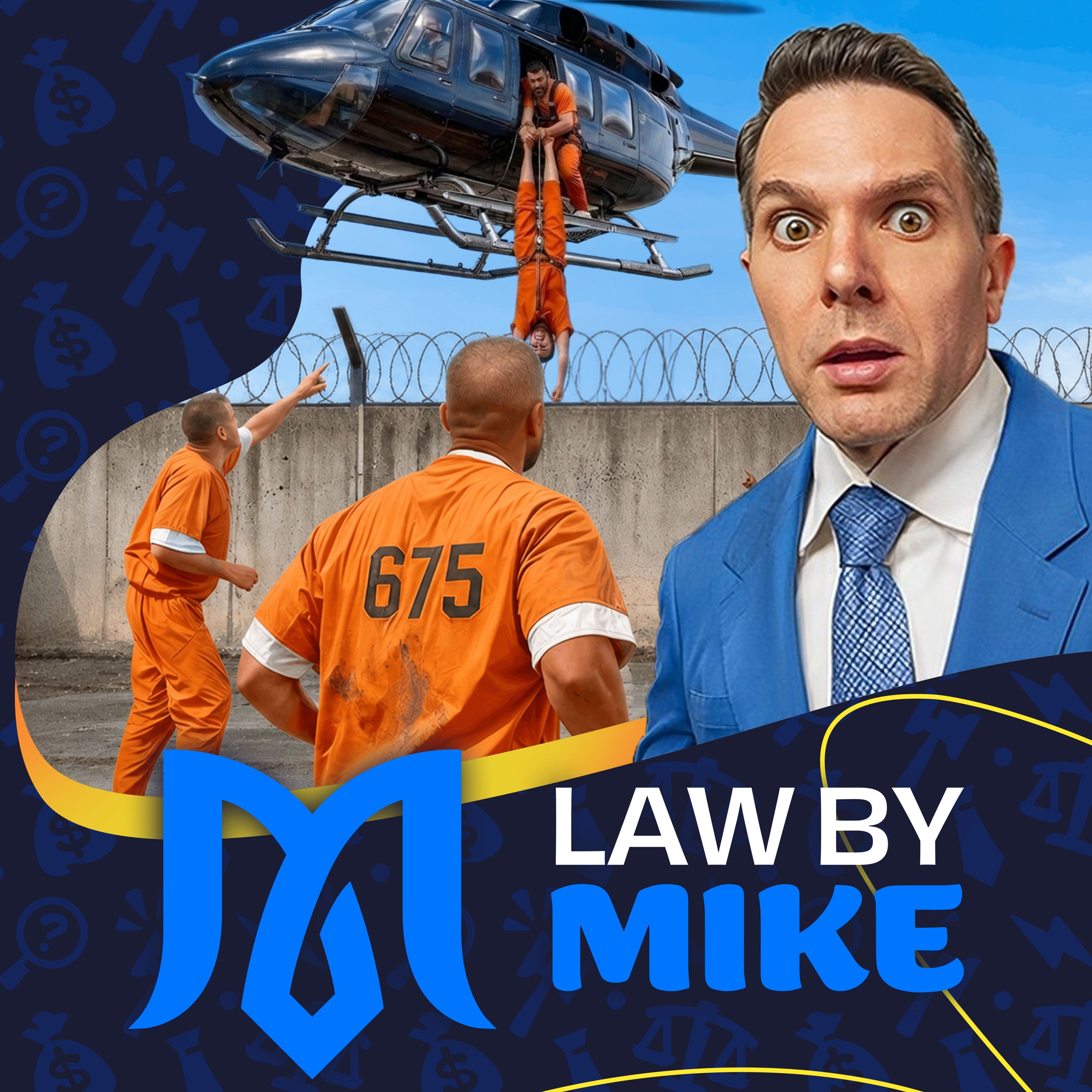
The video examines some of the most serious legal cases involving YouTubers across the globe, moving from pranks to criminal offenses. In Rome, drone flights near historic sites violated local drone laws. In India, visiting a protected island to contact a remote tribe led to arrest and charges of endangering indigenous people. In Russia, a YouTuber faced prison for allegedly exposing state secrets. Scotland and Spain saw cases involving offensive content and public humiliation, with fines and moral violations. In the UK, prank videos involving false robberies led to jail time for inciting fear. Germany’s case involved false terrorist threats, while Argentina’s case involved forced labor and exploitation. The most severe case was in Argentina, where a YouTuber was sentenced for enslaving a colleague. The video concludes with a major case in Thailand involving a high-profile YouTuber who was fined for trespassing on railway property by placing coins on tracks—a potentially dangerous act that could injure or kill. Despite massive subscriber counts, no YouTuber is immune to legal consequences. These cases demonstrate that even seemingly harmless pranks or explorations can cross legal boundaries, especially in sensitive cultural, environmental, or security contexts, and highlight the importance of respecting laws, cultural protections, and human rights.
- YouTubers have done a lot of risky things,
but only a select few have ever actually landed themselves
in jail for it.
And today, I'm reviewing the biggest YouTuber crimes
from around the world,
ranking them from reckless pranks to serious criminal cases.
Each YouTuber is going to get more popular than the last,
and the final case proves that not even 15 million
subscribers can save you from legal justice.
But first, let's start with a couple of YouTubers
who broke the law in another country
and somehow got away with it.
First, we're headed to Rome, Italy,
where Logan and Jake Paul almost got arrested
for flying a drone around the famous Roman Colosseum.
According to his vlog, authorities kept the drone.
Jake had also filmed aerial shots,
but says he landed his drone when he learned what happened.
You need a special permit to fly a drone
or take aerial photos around Rome's historic center.
And many European cities have the same law
to protect their ancient monuments from damage,
and even to protect tourists who are gathered near them
if the drone were to fall on someone.
Logan and Jake Paul got lucky
because they didn't end up getting arrested,
but these next YouTubers didn't get so lucky.
Next, we're heading to a forbidden island
off the coast of India,
where a can of Diet Coke got one YouTuber arrested.
I'm serious.
25-year-old Mikhailo Viktorovich Polyakov,
or Neo-Orientalist as he goes by on YouTube,
visited North Sentinel Island
to try to contact the remote tribe that lives there.
The Sentinelese are one of the world's last remaining
uncontacted tribes living on one of the most
isolated islands on Earth.
They fiercely resist outside contact,
and several people who've attempted to visit the island
have been attacked.
In 2018, an American Christian missionary
was shot with arrows while trying to reach them
and ultimately died on the island.
And before that, in 2006,
two fishermen were killed when they fell asleep
in their boat and it washed up there.
What made Neo-Orientalists think it was a good idea to visit?
I have no idea.
- So the goal, introduce this Paleolithic tribe
to modernity by giving them this Diet Coke.
- Seems like a terrible idea.
- 10,000 years.
- Just let them be, they want to be isolated.
This might seem like the adventure of a lifetime,
but what he did was incredibly stupid.
Not only could he have been attacked by the tribe,
but he also could have gotten them sick
with a modern illness that their immune systems can't handle
and end up wiping out the entire tribe.
That's why Indian law prevents anyone from going there
to protect them.
When he made it back to mainland India,
he was spotted by a local fisherman who called the police
and he was arrested two days later.
He stayed in an Indian jail for at least three weeks
while awaiting a trial in which he was facing
up to five years in prison.
In the United States, the closest comparison
would be entering protected tribal land without permission,
a form of trespassing that can carry legal consequences.
This next case takes us to Russia,
where a YouTuber with more than 800,000 subscribers
was arrested for exploring a place he thought was abandoned.
Andre Pease, AKA Urban Tourism,
built his channel exploring abandoned factories,
bunkers, Soviet-era facilities,
and other places most people would never think to visit.
But eventually, Pease's explorations took him somewhere
that wasn't abandoned.
Russian authorities accused him of obtaining information
about restricted facilities,
including the secret Metro 2 system beneath Moscow,
which the Russian government neither confirms
nor denies actually exists.
Police arrested Pease shortly after,
and prosecutors accused him
of sharing state secrets outside of Russia.
Even though he denied the charges,
he was eventually convicted of illegally obtaining
and disseminating state secrets
and sentenced to five years in prison.
If this had happened in the US,
and Pease had obtained and shared information
related to national defense,
he could have potentially faced charges
under the Espionage Act,
which could carry up to 10 years in federal prison,
a fine or both.
He ultimately served three years of his sentence before
being released on parole.
So remember kids, if you want to go explore abandoned buildings,
make sure they're actually abandoned first.
Our next YouTuber crime takes place in Scotland,
the land of bagpipes and haggis.
Why would you train your dog that
and say those words too?
Okay, wow, so this video was uploaded
by the Scottish YouTuber who goes by the name Count Dankula.
In the video, you can see that he taught
his girlfriend's dog a certain problematic word
in a problematic salute.
Well, believe it or not,
he was actually arrested for this video
and forced to pay a fine of over $1,000.
- Wouldn't that be protected by free speech,
even if it's offensive?
- Well, yes, in the United States it would be protected,
even though it's highly offensive.
But Scotland falls under United Kingdom laws,
and this act was considered grossly offensive
by their definition.
And because he broadcast the video online,
it's illegal under their 2003 Communications Act.
These pranks are going from bad to worse,
but this next one is no exception.
Reset was a Spanish YouTuber who had 1.2 million subscribers
before he was sentenced to 15 months in prison
and banned from social media.
It all happened because he thought it would be funny
to fill an Oreo with toothpaste
and trick a homeless man into eating it on camera.
- Hola, senor, necesitas ayuda?
- The man reacted how any man would react
and ended up vomiting.
- Oh my gosh, he vomited?
That's so messed up.
The homeless man threw up and was humiliated,
so the Spanish court convicted Reset with violating the man's
moral integrity.
He didn't end up going to jail
because it was his first offense
and instead had to pay the man around $22,000.
In California, adding a harmful substance to food
can mean up to five years in prison.
If you know or should know,
it will injure the person who eats it.
Messing with people's food is no joke.
Now let's head to the UK where four YouTubers were arrested
after faking an art heist
at London's National Portrait Gallery.
But pay attention to this one because later in the video,
an even bigger YouTuber got arrested for doing
the exact opposite.
- Are you guys getting pranked?
Are you guys getting pranked?
Please, you have to pay him, come on.
- Wow, well, they have all the evidence
of them doing it on video.
Okay, I get that this is supposed to be a prank,
but if everyone around you thinks they're witnessing
an actual robbery, maybe you've gone a little too far.
The police arrested the group that day,
and they were eventually charged
with using threatening or abusive behavior intended
to cause fear or provoke unlawful violence.
In 2016, all four pleaded guilty and were sentenced
to between 16 and 20 weeks in jail.
In the United States, if the stunts caused people
to reasonably believe there was an actual robbery
or imminent violence, you could potentially face charges
depending on the circumstances.
Our next crime takes us to Germany where a YouTuber
who had almost 1.5 million subscribers was charged
for throwing a duffel bag at strangers' feet
and pretending there was a vice in it.
- You must be saying something about having a device
in the bag.
Oh yeah.
Threats like these are always taken seriously.
In the day he uploaded the video,
there was a real terrorist attack in Nice, France
that killed 86 people.
Police charged Apo Red with assault, coercion,
disturbing the peace, and posting footage of people
without their consent.
In the US, you can legally film people in public spaces,
but making a false, terrorist,
is a serious crime that can carry heavy fines
and up to five years in prison.
Apo Red received a seven-month suspended prison sentence
and 200 hours of community service.
But now we're moving from not-so-harmless pranks
to straight-up criminal activity.
And these YouTubers are even bigger
than the ones we've mentioned.
Next up, we're heading all the way over to Kazakhstan
where the YouTuber BaldinBankrupt was detained
at a space center by Russian authorities.
The site is known as Baikonur Cosmodrome,
and it's the world's first and largest operational site.
It's the largest space launch facility in the world.
It's where the Soviet Union launched Sputnik
and where Russia still launches rockets into space today.
Despite being located in Kazakhstan,
Baikonur is leased and operated by Russia,
and large parts of the facility are heavily restricted.
BaldinBankrupt, whose real name is Benjamin Rich,
went there without permission.
He was detained for several hours
and questioned about what he was doing there.
Ultimately, he had to pay a fine of about $80,
which is pretty light compared to what could have happened
if the space center
was still a military facility
like it was originally built for.
In the U.S., trespassing on a military base
can be punishable by up to six months in prison,
a $5,000 fine or both.
Breaking into a space center sounds serious,
but Benjamin got off so easy, it only got two stars.
Let's head over to Canada for our next crime.
The story begins with a YouTuber on the side of the road
mourning his girlfriend,
who he said had been killed by a drunk driver.
The YouTuber was ImJStation,
a Canadian creator who built his channel
around sneaking into places without permission
and filming himself there.
Those videos eventually got him arrested
and charged with trespassing.
But instead of slowing down,
he found an even bigger formula,
his infamous 3AM videos,
where he would supposedly summon ghosts,
demons and other supernatural creatures.
The videos racked up millions of views
and turned him into one of YouTube's biggest creators.
So when his girlfriend supposedly passed,
he was so heartbroken that he even tried to contact her
from beyond the grave via a Ouija board.
Except the only problem was she wasn't actually dead.
He had made the whole story up for sympathy and views online.
But the craziest part is that wasn't the crime.
Faking a death isn't automatically a crime in the US,
but using that lie to steal money,
file false documents or obstruct an investigation could be.
Depending on the facts,
a death hoax could also lead to a lawsuit
for causing severe emotional distress.
So what did he get arrested for?
His girlfriend accused him of abuse.
Toronto police later charged him with assault
and assault with a weapon.
In the US, assault with a weapon can be a Class A felony,
punishable by large fines, several years in prison,
and a permanent felony record
that can affect your future jobs
and your ability to rent a house.
While the results of the arrest are a bit unclear,
he went on a four-year-long hiatus from YouTube
after the hopes and the assault charge,
until YouTube let him come back
with the Second Chance program.
Now we're moving on to our biggest crimes in the video,
and things are about to get serious.
Our next crime took place in Argentina,
where the YouTuber Yao Cabrera
is currently serving a four-year sentence
for enslaving one of his video editors.
Don't worry, Carlos, I'd never do that to you.
The case he was convicted in was brought against him
after he offered an editor who was struggling financially
a salary, food, and a place to stay.
But the court found that he exploited her vulnerability
and forced her to work under threats.
She went on to report to Argentinian authorities
that he made her work long hours without the promised pay,
and that she would only leave on Sundays
after finishing her work.
She also said she was given too little food,
and it was sometimes spoiled.
In the United States, involuntary servitude
and forced labor are federal crimes,
punishable by up to 20 years in prison,
and depending on the severity, even life in prison.
One of the worst parts is all of his social media accounts
are still up, so he could potentially still be earning money
from the videos the victim edited for him.
That is for sure five stars.
Next is Gideon,
who was arrested in Paris and spent a night in jail
for hanging up his own painting in the Louvre
right next to the Mona Lisa.
He got the idea from Nico Amalana,
who did the same thing and managed to get away with it.
But Gideon clearly wasn't going to just walk
into one of the most heavily guarded museums in the world
carrying a giant painting.
So he and two friends came up with a plan
to sneak it inside piece by piece.
Each of them carried a different part of the frame,
and instead of entering together,
they used different entrances around the museum
so they wouldn't attract attention.
- Is that gonna be hanging right next to history
till the end of time, or?
- No, it's not gonna hang till the end of time.
Here he goes.
Oh, he got it up.
The same spot that Nico did, I'm pretty sure.
People are seeing that he hung it up.
- This is the Clap Lisa.
Beautiful, isn't it?
You like it?
- I love it.
- Beautiful.
- What's the Mona Lisa?
- Exactly, what's the Mona Lisa?
It's the Clap Lisa.
Smile, although may look constipated.
- Gideon, that's how you normally look.
- They were all there,
for the clapped kid standing in front of the clapped Lisa.
- I mean, out of all the pranks that we've seen so far,
this one I actually enjoy watching.
Doesn't mean he won't get in trouble.
After a crowd formed near the painting,
Gideon got caught and police on rollerblades
came to arrest him.
Now, I wanted to hear Gideon's side of the story,
so let's see if we can actually get him on the phone.
So what exactly were you charged with
when they arrested you?
- So I was charged with destruction of property, pretty much.
The security at the Louvre were saying
that I had damaged the wall when I had took down my picture
of the Mona Lisa off of their wall.
- How long were you in custody before they let you out?
- So they had me in there for a straight up 24 hours.
- Were you fined?
Did you have to go to court,
or was the case eventually dropped?
- Nicko, shout out to Nicko,
he went there, took pictures of the wall showing,
like, look, there was no damage at all.
So since I didn't necessarily break any law,
they didn't have anything to hold me on,
so they ended up releasing me.
They didn't give me a fine or anything,
but I was trespassed,
so I can never step back foot in the Louvre ever again.
- How does French jail compare to American jail?
- The French jail food is way better.
It was actually some gourmet stuff.
It was actually pretty clean and everything.
I had to sell to myself, thankfully,
but I would just say, just with the stress factor
of you not knowing how another country's laws work,
I would say the stress factor is the highest it's ever been.
I've never been in a situation where I was actually
that stressed out while I've been in jail before.
So stress-wise, I would say it's the worst.
Food-wise, the best.
- All right, that's all I got for you, Gideon, thanks.
He was charged with damage to property,
which could have gotten him up to two years in prison
and a 30,000 euro fine.
But earlier this year, he was arrested again,
this time in Michigan.
Police charged him with breach of peace and stalking
after he and a group confronted a man
they believed was squatting in a home.
The charges were later dismissed with prejudice.
Gideon may have a massive audience,
but now we've reached the biggest YouTuber
in the whole video.
Back in 2017, police in Thailand arrested my mate Nate,
who has 15 and a half million subscribers,
for trespassing on a railway and damaging railway property.
However, the damage being done to the property
was placing coins on the tracks
to see how flattened they would become
once ran over by the trains.
He was threatened to be kicked out of the country permanently
but was ultimately fined for 5,000 baht,
or about $150, and investigated for other videos.
He got away with a slap on the wrist,
but even in the United States,
he could have been arrested and fined for trespassing
because most train tracks are private property
owned by the railway company.
Also, if you put a penny on a railroad track,
that penny could become a projectile when the train passes,
which could fly out and seriously hurt
or even kill someone nearby,
which would result in serious criminal charges.
Who do you think was guilty, and who was innocent?
Did the punishments match the crimes?
Let me know in the comments down below.
I hope you enjoyed this video, and if you did,
I think you'll like this one,
where I focus on YouTuber crimes in the US.
Podcast Summary
Key Points:
Logan and Jake Paul nearly faced arrest in Rome for flying a drone near the Colosseum without permits, highlighting drone regulations in historic sites.
Mikhailo Polyakov was arrested in India for visiting North Sentinel Island, violating laws protecting uncontacted tribes and risking harm to their culture and health.
Andre Pease was convicted in Russia for allegedly accessing and sharing state secrets related to secret facilities, including the disputed Metro 2 system.
Count Dankula was fined in Scotland for teaching his dog a provocative phrase and salute, violating UK laws on offensive content under the Communications Act.
Reset, a Spanish YouTuber, was fined and penalized for tricking a homeless man into eating toothpaste-filled Oreo, violating moral integrity laws.
Four UK YouTubers were jailed for faking an art heist at the National Portrait Gallery, facing charges of inciting fear and unlawful violence.
Apo Red in Germany was charged with false threats and harassment after pretending to have a terrorist device, drawing attention during a real attack.
Yao Cabrera in Argentina was sentenced for enslaving a video editor through financial exploitation and coercion, a serious violation of labor and human rights laws.
Summary:
The video examines some of the most serious legal cases involving YouTubers across the globe, moving from pranks to criminal offenses. In Rome, drone flights near historic sites violated local drone laws. In India, visiting a protected island to contact a remote tribe led to arrest and charges of endangering indigenous people.
In Russia, a YouTuber faced prison for allegedly exposing state secrets. Scotland and Spain saw cases involving offensive content and public humiliation, with fines and moral violations. In the UK, prank videos involving false robberies led to jail time for inciting fear.
Germany’s case involved false terrorist threats, while Argentina’s case involved forced labor and exploitation. The most severe case was in Argentina, where a YouTuber was sentenced for enslaving a colleague. The video concludes with a major case in Thailand involving a high-profile YouTuber who was fined for trespassing on railway property by placing coins on tracks—a potentially dangerous act that could injure or kill.
Despite massive subscriber counts, no YouTuber is immune to legal consequences. These cases demonstrate that even seemingly harmless pranks or explorations can cross legal boundaries, especially in sensitive cultural, environmental, or security contexts, and highlight the importance of respecting laws, cultural protections, and human rights.
FAQs
Yes, several YouTubers were arrested for trespassing. Examples include Neo-Orientalist on North Sentinel Island, Andre Pease in Russia, and Nate in Thailand who trespassed on railway tracks.
Mikhailo Viktorovich Polyakov, known as Neo-Orientalist, visited North Sentinel Island to contact the isolated Sentinelese tribe. He was arrested two days later after being spotted by a local fisherman and faced up to five years in prison.
Yes, Andre Pease, known as Urban Tourism, was convicted in Russia for illegally obtaining and disseminating information about restricted facilities, including the secret Metro 2 system, and sentenced to five years in prison.
Yes, Count Dankula was arrested for teaching his girlfriend’s dog a problematic word and salute in a video, which was deemed grossly offensive under UK law and resulted in a fine over $1,000.
Yes, Spanish YouTuber Reset was convicted of violating a homeless man’s moral integrity after tricking him into eating toothpaste-filled Oreo cookies, resulting in vomiting and a $22,000 payment to the man.
Yes, four YouTubers were arrested after faking an art heist at the National Portrait Gallery, charged with threatening or abusive behavior that caused fear of violence, and sentenced to 16–20 weeks in jail.
Chat with AI
Loading...
Pro features
Go deeper with this episode
Unlock creator-grade tools that turn any transcript into show notes and subtitle files.
 PodcastTranscript AI