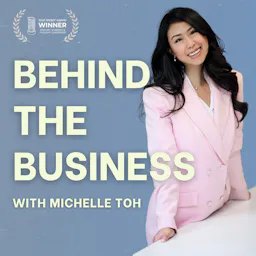
'Your Rich BFF' Vivian Tu's top money tips: How she made $7M a year by 31
1h 15s
Vivian Toe, a former JPMorgan trader and now a top creator in the financial education space, built her brand "Your Rich BFF" to break down complex financial topics in a friendly, relatable way. Raised in a frugal immigrant household, she grew up with a scarcity mindset but later discovered that wealth and self-worth are not just about income, but about confidence, autonomy, and personal agency. Her journey from Wall Street to content creation was marked by resilience, including overcoming workplace judgment for being "too girly" and navigating family resistance to her career shift. Vivian emphasizes that financial literacy should be personal, empowering, and accessible—challenging stigma around money talk and debt. She shares key advice such as treating debt as a tool, prioritizing relationships, and speaking openly about finances. Her business, now generating over $7 million annually, is fueled by brand deals, platform revenue, and audience engagement, and she manages it with a team while maintaining financial discipline. Despite her success, she remains grounded, noting that wealth doesn’t equate to indulgence—she prioritizes long-term stability, transparency, and responsibility. Her mission is to become a generational financial guide, making finance feel human, achievable, and inclusive for everyone, especially those from marginalized or underserved backgrounds.
I think something that people still don't 100% get is that it's dangerous not to invest. You cannot save your way to rich. You have to invest. Welcome. I'm Michelle Toe, a journalist most recently with CNN and this is behind the business, a show about the people behind top consumer brands, category creators and emerging disruptors and how they push through to make the most of both work and life each day. Today I'm here with Vivian Toe, founder and CEO of Your Rich BFF. She's one of the biggest stars of the creator economy with more than 10 million followers across social media. She builds herself as your favorite Wall Street girly who teaches you all the lessons on money you didn't get in school, breaking down everything from the economic cost of war to how the latest rate cut will impact you to how to manage your paychecks. Vivian is a former JP Morgan trader who went on to media sales before becoming a content creator full time. She also has her own book, podcast, numerous brand deals and let's just say a growing slate of content that earns her millions of dollars a year. Sorry, I just want to let that sink in. You said you made seven million dollars last year. If not me, then who? And I just know no one's going to hustle me. What is the end game for you here? When any person closes their eyes and thinks about money or finance, they see my face. Vivian, thank you so much for being here. Thank you so much for having me. So I just want to start off by saying that what you're doing is truly a public service in my opinion. So much has been said about how financial literacy is something that should be taught in schools, but as someone who was trained on Wall Street, you're really paying it forward in my view. So I just like to shout that out. Thank you. For those who aren't aware, what does your brand, your rich BFF stand for? You know, I think it's what I really wanted, you know, is at the beginning of my adult life. I felt really lucky. My first job was in finance. It was literally dealing with a lot of money, mostly rich people, mostly hedge funds, mostly asset managers. But the really formative thing for me in that time was I met my mentor, who was the first rich Asian woman I had ever seen in my life. And I don't mean like a little bit rich, I mean like very rich. She owned her own New York City apartment, had a new designer bag every day. And I knew she was really rich because she had a dog. And it is so expensive to have a pet in the city. And I wanted to be like her for all of the most shallow reasons, but ultimately it taught me that if I was going to be able to get a handle on my money, like I could have whatever life I wanted. And I always used to joke that she was my rich friend. And that is essentially how your rich BFF ended up being like this concept of once I had learned a lot about money, all of my friends from college were asking me questions or when I pivoted into the media and tech world. All of my new colleagues were like, "Hey, can you explain our 401k to us?" And so they would ask the question, and I became the rich friend. And I actually wanted like your rich friend or like rich best friend or something like that. And all of those handles were taken, which is why I have your rich BFF because that was the first one that I stumbled upon that actually wasn't already taken on TikTok. So that's where the your rich BFF moniker came and I think a lot of people focus on the rich, right? Because I do talk about money. I talk about finance. But the most important word in that title to me is actually BFF, best friend forever. Because for so long, when we've talked about money, it's been from the form of like your dad's accountant or a professor or like a parent lecturing you and none of that really sticks with me because I don't want to be talked down to. And I don't think my friends do either. So the whole premise is your rich BFF teaches you money and finance like a friend. And that's really why I think people have gravitated towards a brand. Really fascinating. So it actually started out with you having what you viewed as your own rich BFF. Yes. Exactly. Yeah. I wanted to ask you about that later, your mentor at JPMorgan. Her name was Jean Maul. Yeah. Yeah. Yeah. Yeah, I think you've talked about her before. So more on that later. But you know, just to take a step back, tell us a bit more about how you got here from the very early days, right? Growing up, how do the topic of money play a role in your life? Was it something that you were always taught to be really conscious of in your household or did that come more so later as an adult? Conscious? Yes. I am the only daughter to two Chinese immigrant parents, no pressure. And they've always been really, really frugal. I think we talked a lot about budgeting and saving. But there wasn't the conversation of like, you need to ask for a raise every year. You need to demand your worth. You need to be investing. You need to be growing your wealth. Like those were not conversations that were had. And I think as a little kid, there was a big scarcity mindset in kind of like what was available to me. It felt like the best and safest route that I could take to guarantee myself success in my life was to become a doctor, lawyer, engineer, get the corporate job, climb the ladder and win. And that was enough. But that was perfect. It didn't occur to me that I could start my own business or like make money in any other way, but like building a brand. Like that was for other people, it wasn't for me. I think we come from relatively similar background. I mean, you grew up here in the States. I'm from Hong Kong, but my parents are also immigrants. Yeah. Asian Chinese. Are you first, John? Yeah. I was born here. Yeah. So I totally know what you're saying. Well, what's really interesting is I know that you're kind of known now across the internet for certain key pieces of advice that you think everyone should know, right across the board. Can we just get a few of those off the bat? What are like three things that you like to tell everyone, no matter who you are? Yeah. I would say one, debt is a tool. It's not morally good or bad. When rich people borrow money, we call it leverage, but when poor people do it, we call them broke and point our finger and it's just a very different conversation based on who you are. So I think we have to take away that shame and guilt when it comes to debt. I would say two, the most important financial decision you ever make is actually your partner. A lot of people underestimate their relationships. They think, oh, there's love in this marriage. That's enough. No, it's not the top two reasons why couples fight are intimacy and money. So imagine if you're able to eliminate half of the most common fights, isn't that naturally going to make your relationship better and stronger, of course? So I think it's really important that you have somebody standing by your side. That's a true partner that's going to support you. And then I would say last but not least, like, it's okay to talk about money. We've been told for a really long time that it's taboo and tacky and that people who care about money are gold diggers and all this negative stuff. But have you ever been to a country club? Have you ever been to a member's only social club? Because I'm seeing guys smoke a cigar, beer in hand, teeing off, and they're like, what's in your portfolio? Or how much is your kid's private school? And they're having those conversations. So why is it that two women who look like us can't have that same conversation? But you feel like for a long time, the conversation has been limited to a certain part of society. And you obviously want to democratize that. Yeah, because if you didn't already have money, you couldn't talk about it. And it's like, well, how am I supposed to have it if I can't talk about it? It's crazy. Yeah, it's really interesting. I also heard that you like to have a motto, isn't it, up or out every two years? Yeah. And ask for a raise every year. So that, I would say, is a good motto to have when things are a little bit more stable than they currently are for being honest. There's been more recent research that came out. So typically, it forms to this study that if you did not go up or out every two years or so, you need to be getting a raise or leaving a job every two years to essentially earn what you're worth. Otherwise, over the course of your lifetime, you'll make half as much. And I don't want to make half as much. But right now, during periods of economic stability and certainly job market instability, you're seeing the amount you would make staying at your job versus job jumping, starting to converge. And there's no real huge premium right now for job jumping. So I always like to tailor my advice to reality. Like, three years ago, I was saying, I was telling everybody, I was like, leave your job, find a new one. They'll pay you for it. But now it's like, hey, things are a little bit shakier. If you got a good thing going. If you think you can negotiate a raise while sitting your butt in that chair, do that. Because you're going to be better off. But maybe in a couple more years, I'll be back there, you know, with my big sign telling everybody to leave their job and find a better paying one. Yeah, absolutely. And your professional journey is really interesting because I feel like you've kind of lived nine lives. I have. I have. I'm on my third do-over. That's what I tell people. Yeah. Okay, so tell us a bit more because your first job was on Wall Street, as we mentioned, at J.P. Morgan, highly competitive world, was that always the dream for you? And looking back, how did that experience come to shape your future trajectory? Yeah, it kind of was the dream, right? So I told you I had my three options, Dr. Lawyer Engineer, couldn't be a doctor because if I paper cut myself, I'm like, oh, I'm, I'm queasy, I don't feel good. Lawyer, frankly, I don't read fast enough to be a lawyer. I'm like a very slow reader. Engineer, like, I can barely get the remote for the TV to work right half the time. So it's not for me, but when I got to the University of Chicago, which is where I went to college, it's an incredible feeder school for Wall Street jobs. And so it's actually a lot easier to get a job on Wall Street if you have gone to a university like that because all the banks, all the hedge funds, you don't even have to go to them. They come to campus and interview. And so it's quite a natural progression and I took that path. not because I'm smart or had something.
some incredible vision for my future, but because I was a follower. Other people were doing this. And I was like, well, it seems like if it's good enough for them, it's good enough for me. Let me try. I'll take the interview. I ended up getting this job. And it was incredibly formative. Like, to your exact point, like, when I interned, there were three internship seats. It was me and two other young men. And halfway through the summer, you know, the team realized that the two other young men were not a fit. Two more young men rotated, they rotated away. Two more young men rotated in. And at the end of the summer, even though five interns had sat on that desk, only I got the job. And there was only one seat. So in part, I feel very proud that I was able to outhustle, outwork, outwit some of my peers. But on the other hand, I'm like, that felt unnecessarily cutthroat because you're playing with young people's futures, right? Like, to have five interns on a desk and only have one seat, it feels a little troublesome. But this is all to say, I don't regret the start of my career because coming up in an environment where my butt was in my seat at 5.45 in the morning, I didn't leave until 7 p.m. at night, I learned how to outwork anybody. I think that is also one of my strongest traits is that I work harder than other people. I also believe that I move faster than other people. When you're an equities trader, it's not like you're trading bonds or you're trading like, you know, very complex products. You're trading stocks. But you better be able to move quick. And your reaction time, better be fast. When a ticket comes, it might need to have been done three seconds ago. And so you are literally racing algorithms. And so I feel like I have a very fast response time. I'm able to make very logical analytical decisions with limited amounts of information. And I move faster than everybody else. By the time you've bought of the three options, I've already done one of them. And I've already found out that it didn't work, and I tried the second one, and it worked. And so that ended up being kind of something that was really helpful when I decided to change careers. I've always had this like blind confidence in that I could always outwork the person sitting next to me. So even though I was going into a new industry with media, I was like, I just can't imagine that it would be that hard for me to learn. I'll just put in more hours than the person sitting next to me. And I was right. You're like, I got this. Within three years, I was the top seller of the company. Yeah, really fascinating. Tell me about the decision to call yourself your favorite Wall Street girly. Is it true your boss in finance used to call you too girly for the job? And it's that where this came from. So I think if you've seen any of my content, I'm an incredibly petty person. I hold a grudge just to grumpy gills over here. I'm an airy, so please, it's in my nature. But I had a manager at my first job tell me that I was too girly. And he didn't like how my nails clicked on the keyboard, didn't like how my makeup looked, didn't like how I dressed, and like there were just things about my identity that I was not going to be able to change that rubbed in the wrong way. And I felt like that was just the greatest injustice. Because if you had said like, oh, Vivian can't do the math fast enough. Or Vivian is not analytical enough. Or Vivian is not doing enough background research on these companies. I can live with that. Because those are things I can change. But saying you don't like the fact that I'm who I am, I think you're a loser. Well, it wasn't a merit-based. It wasn't merit-based. And it wasn't anything that I was going to fundamentally be able to change. It sounds a bit sexist as well as going on. It's deeply, deeply. So not only did he get a lovely dedication in my very first book, Rich AF. It's a New York Times bestseller. But also the tagline I think has worked out to be perfect. So I'm Vivian. Now you remember my name, your Rich AF. Now you remember my handle, your favorite Wall Street girlie. Your favorite, just endears me to the audience. Wall Street, you know exactly what my credentials are. So you have a reason to listen. And girly, I think I've always been really proud of being a young woman. There was a time, especially in, I'm Chinese. In Chinese culture, having a daughter versus a son was seen as a negative. But I feel so lucky that my parents never, ever made me feel that way. They were so proud to have a daughter. And so I was very proud to be a young woman. And I've always been really proud to be a young woman. So I think that when I say girly, I mean it as a term of love. Like I am a type of person talking about this information that has not talked about this information before. And I'm speaking to an audience that's never gone this education before. And I'm proud to be girly. Yeah, absolutely. Well, it's really interesting because also that was something I discovered before this interview, right? Kind of more of the thought behind your aboniker. Because high finance has traditionally been seen as an old boys' club. It just has been for years and decades. And I was curious if that's why it's significant to you now to reclaim what that word means as well, right? girly. You know, one of my very first videos that went viral, viral, viral was me explaining what was going on with GameStop. And why there were more shorts out than even stock available. I was explaining essentially what had happened. And I had a man comment, oh, this girl got on Yahoo Finance for five minutes and suddenly thinks she's an expert. And I, in part, understood it, right? Because look at me. I don't look like the guys and the white button down with the Patagonia vest. I don't look like that. I wear bright colored outfits. I wear big, fun earrings. I look a certain way and I get that led to people naturally underestimating me. Because I remember during mid-pandemic, when random men who lived in their parents' basements were giving out free, crappy financial advice, people took them seriously because they were men. And because maybe they had a suit on. But I, as someone who had cut my teeth, built an entire career on Wall Street, beat out all of my competition to get there, got all three licenses I needed to even click the buttons and, you know, practiced actual, you know, institutional, like, trading. Like, it was interesting to me that people didn't believe me. Yeah. And so, I felt like this was my opportunity to, like, not only reclaim that Wall Street persona, but to show people that you have a bias of what you think someone who is good with money looks like. Yeah. Because I am someone who's very good with money. Right. Exactly. Standing firm on your identity. Yeah. And it's a little bit of an FU, isn't that, to, like, you know, all the haters. And we talked about this. I'm very petty. I'm right about petty. Yeah. Well, I was really interested to read about one of your first mentors when you just mentioned, Jean Ma, who really seemed like you changed your life. Yeah. Tell us a bit more about how she played a role in your story. It's so refreshing to hear stories of women helping women in the workplace. Didn't she, like, buy you lunch every day and be checking on you a lot? Yeah, I mean, so she and I are still really close. She's on my wedding. I saw her probably go about a month ago for dinner. But I think what she really did for me was showed me that there doesn't only have to be one woman who wins. It's not a zero sum game. Yeah. I think that only happens when you come from an environment or a background where scarcity is really, really prevalent. Because when you look at a C-suite, I think the stat, right, is there's more guys named John as CEOs of Fortune 500 companies than there are women. Right, right, right. And it's like, that's crazy. So of course, we're going to feel competitive with each other. But once we start to get the numbers up, we don't have to feel that way. Still waiting in line? Again, that's time you'll never get back. Save time and money with stamps.com. Over 4 million businesses have skipped the line with stamps.com, join them to save up to 90% off carrier rates from your computer or phone right now. Print postage for certify mail, register mail, and packages in seconds. Then schedule a pickup right from your home or office. For a limited time, go to stamps.com and use code podcast for a free welcome gift. Taxes and fees apply. When I found out I was going to be a parent, I immediately felt a lot of anxiety and worry. So I went on to better help to try to look for a therapist to help me with that. My relationship with my family and with my boyfriend and with myself were suffering. I really needed help. I was ruminating a lot, really getting those thoughts out to a therapist and getting feedback was just life changing. Discover what better help online therapy can do for you. Visit betterhelp.com today. Back up to your story again, because you after JP Morgan went on to Buzzfeed, which ironically proved much more lucrative than your trader job. A lot of people don't know this, I think. You've said that at one point you were making as much as 600K a year. 625. Ooh, okay, all right. How did this experience then lead you to putting out your own content online? You talked about how your friends were approaching you. It's so funny. People all think that I made a bunch of money on Wall Street. I did not. My first two years, I made good money. It was certainly enough to live a wonderful early 20s lifestyle. But I was also putting in 80 hours a week minimum to be able to do my dog well. But when I went to Buzzfeed, I worked in digital media strategy sales. And sales is what you kill. If you work harder, if you send more emails, if you make more phone calls than the guy sitting next to you, you'll likely get paid more. And I did. I always made more calls. I sent more emails. I followed up. I took more people out to lunch. I took more people out to dinner. I was taking people out to get their nails done. I was like, whatever it takes to get me,
on your, you know, your buy, whatever it took. And ultimately, I realize that I really thrived in that kind of environment. Like some people find like when they have a quota on their back or like a sales number that they have to hit, it's stressful. For me, it was like a rush. Every time I would close a deal and like, they had this little like a TV system in the office where each person had a deal song. And when you would close a deal, it would go through the system and then your song would play. It's like the bell on selling songs on it. - Yes, yeah. - And so there was a time where that song, people didn't even like that song anymore. They were like, you gotta switch your song 'cause we've heard this song so many times this week, like you gotta change it. - What was the song? - I mean, I think it was like, I don't even know what it's called, it's like, I break it up. I pick it up, I pick it up. It's like a rap song about like, you know, cash, whatever. I can't believe I just told you. - Oh, but so ideal song was break it up. - I love it. - Anyway, for me, I really, really just loved that environment. And it gave me an opportunity to make a ton of money. And what ended up happening was that while I was doing all of this and growing my book of business, all of my new colleagues were like, hey, can you help us with our 401(k)s? What's the health insurance plan situation? Like, can I just copy your open enrollment? And I'm like, you have two kids and live in the suburbs. You should not be copying my open enrollment because like, your kids need to go to the doctor and I go to the doctor once a year, maybe. And so I started teaching all of my colleagues and they were like, oh, I have more questions tomorrow. I'm like, don't, please don't. I would like to eat my salad at lunchtime in silence. And so I started putting the content online and my very first video ended up going viral, you know. Three million views, 100,000 followers by the end of the week. - I saw that. And you know, that is actually just such a rare story, isn't it? - No, I know because most people have to make content for years before something hits. - So what was your initial vision then? It was just simply to get your colleagues and friends off your back and just send to your friends. - I thought maybe if I got lucky, if I was lucky a couple hundred people would watch my content. - Right. But like, it was never to set out to be a creator. I had no dreams of that. So at what point did that light bulb moment come that you realized, okay, this could be something really big? - Honestly, almost immediately. Just because of what had happened, I was so confused. I post this video, I look at it, nothing. You know, seven hours later, like four people had watched those. Like the people, no one's gonna see this, it's no biggie. Okay, so I go about my day. Later on that night, I'm sitting down, I'm watching a movie with my then boyfriend, no husband. And all of a sudden, I feel like my phone is getting so hot. And that normally only happens in two instances, when it's charging and when it's in the sun. And so I'm like, why is my phone getting all weird and hot? And then I see all of these notifications. I open it up, I'm like, that's weird. I have 7,000 followers. That's more people that follow me on my personal Instagram, like my secret Instagram. And I'm like, where did they come from? And then this video, I'm like, oh, that's crazy. Like this video has like, you know, tens of thousands of views. That's wild, that's really cool. Over then, the course of the week, it just kept getting more and more and more eyeballs on it. And I ended the video basically being like, tell me what your money questions are. And I just had thousands of comments of questions. And that's what fueled all of the other content. Yes, I would just respond to those questions. Yeah, that took up loads of your time already. And you were doing this on the side initially, obviously, right? It was like a year and a half, wasn't it? Yeah, I was at my full-time job for a year and three months. So embarrassing too, because the following Monday, I had to go back into the, it was mid-COVID, so we didn't go back into the office. But I had to log back on my computer and I had to call my boss and be like, hey, I have to tell you something. And I was like, I went viral this weekend. I just wanted to flag it since this is a media company. We had a policy. You're not really supposed to be doing, not creating content on the side, but you have to flag these kinds of things. Right, you don't want to make them aware. Yeah, and he was like, I don't care. You're good. Keep bringing in the money, you're doing a great job. I was like, cool, sick, awesome, good job. Ultimately, when I started getting brand deal offers, I had to rung all of them by my employer, because again, media company, I'm so grateful that I did the smart thing, did that, and they told me, no biggie, keep going. Like, it was made very clear to me that it was okay as long as it did not impact my work at the company. But because of that, I was able to keep my full-time job, work there, have the stability of a paycheck, non-stop, for a year and three months, while I got my feet under me. And then ultimately, when I realized that your HPF was run rating, more than I was even making at my day job. I was like, maybe I should try and do this full-time. And I think it was also because I was just so burnt out, like so deeply burnt out. I was working Monday through Friday, you know, and this is not a nine to five job, like I'm in sales. So I work as hard as I can to try and make money. Ben Saturday, I would ideate seven ideas. Sunday, I would change into seven different outfits, and record all seven of them. So it looked like it was a new video every day. You know, and I had not taken a day off. And it was so exhausting. You're like, I have to choose. I have to choose. And I thought about it, and I was like, I have loved my career in media. I have loved my career at BuzzFeed. I've done such a good job. I'm really proud of the work I've done. I have not made any enemies. My boss loves me, my peers love me. I think if your HPF didn't work out, I could probably call him again and beg for my job back. And he would probably give it to me. And so I was like, I don't want to look back on this moment when I'm 50 or 60, and regret not having taken that chance because I can always go back to the show. And now a quick word about our sponsor, Factor. It's officially fall, which means we're all getting back in the string of things, and I couldn't be busier. So finding time to cook can be tough. And that's why I love Factor. They deliver chef-prab dietitian-approved meals right to your door. And I just finished my first week. It makes it so easy for me to always have something healthy and delicious. And I'm personally not a male-prepper because I can't stand eating the same thing for a week. So I was really excited to see how many options Factor has, from smokey goota chicken to truffle butter filet mignon. It's smart at FactorMales.com/btb50off and use code www.btb50off to get 50% off your first box plus free breakfast for one year. That's code www.btb50off at FactorMales.com for 50% off your first box plus free breakfast for one year. Get delicious ready to eat meals delivered with Factor. This offer is only valid for new factor customers with the code and qualifying auto-renewing subscription purchases. - Right, and I think a lot of people don't realize that so many of the big decisions in life actually are in fact reversible for the most part of it. - Yeah, you can control all delete most things. - Right, right, right. - I always believe that. And I think even things that you can't undo, most often you can get out of, you can fix with a bandaid. - So you didn't want to miss the moment, but I'd love to hear more about how you made that switch because you've said, as a child of immigrants, you were taught to value stability, fear of risk. I think you've also said in the past that you've grown up being taught, not to talk about money with anyone outside the family, which is totally against that, right? As someone from a similar background, as you know, I can very much relate. But how did you grapple with the notion of, you know, the reactions from your community, your parents, picturing the lunches with Asian aunties, we all often have to go to, right? Like, how did you handle that? - So I had actually had a really horrible, terrible experience with this when I left JPMorgan because my parents, I cannot tell you, my parents were so proud when I got that job. You know, they were blowing up the WeChat, telling aunties like, "Oh yeah, you know Vivian just working at JPMorgan," like, my mom was doing that. - Yeah. - But then when I went to BuzzFeed, like, there was no penational for the Asian-American community. Like, my mom was like, "What are you doing?" Writing quizzes about what kind of cheese you are. Like, she was not impressed. And we got into a huge fight and didn't talk for a couple of months. And I'm in the only daughter. And so it really upset me that they were so unsupportive 'cause I was in an environment where like, I wanted to leave so badly. I had been, you know, rotated away from my mentor given to this new manager who was terrible, treated me terribly. And I was like, I need to be like, I need to like eject C out of this position. And I like, didn't understand why my parents couldn't see that. - Yeah. - So I was terrified. When I was going to take this full time, I was like, "Oh, we're gonna do this again." Like, this is gonna even worse, because now I don't even have a job to go to, it's just me sitting at home. - Right. - And I was so terrified to tell them. And you know what's so funny? I didn't even tell them about your HPFF for nine months. Like, they didn't know about it until nine months in. And at that time, I was still working a full-time job. So they were like, "Oh, this is just like a nice way to supplement your income." "Ha, ha, he, he." But when I decided to take a full time, I was really scared to tell them. But ultimately I did. And I thought my parents had been abducted by aliens because they responded with, "Okay, you know your career. You know what's best." And I was like, "Are you in drugs?" Like, there's no way you would ever say this to me. But I think, you know, I always joke, like, even old Chinese parents can learn new tricks. Like, they, they had realized what had occurred in the conversations for my last job. But for this one, they were a lot more supportive. And they frankly have no idea what I do for a living. But I think they had to grapple with,
the idea of their only daughter being happy or not, or trying something really important to me. So they tried to be as supportive as they could, and I don't think it was until relatively recently, I started giving my mom something to brag about. You know, when I make big lists, like the time 100 creators list, or Forbes, or something like that, like now she knows what she understands what it is, but it wasn't even those. The pivotal moment was when she saw my content being ripped and stolen and repurposed to sell an English language course on Shao Hongsu. - Oh, that's so fun. - Like the Chinese TikTok apps. She was like Vivian, you've made it. Like people know, I'm like, mom, send me this. This person stole my content. Like they're trying to leave this to legal. Yeah, like I need to send this to my attorney, and my mom was like, this is so cool. They're using your video to sell this course. I'm like, I don't want that, mom. That's when you know you've made it, especially in China. - Yeah, but like it just like, it made me laugh so hard because I was like, my mom is so thrilled that my content has been stolen and then being used to sell English languages courses, but it like, you know, she was reading all the comments, like in Sicily and people were like, wow, this woman speaks such great English. It's like, I'm a native born US citizen. Like of course I speak great English. But also just like, oh great. Now I can learn English and about the economy at the same time. And she saw the impacts that my content was having. And I think that's when they finally got it. - Shipping, building, admin, payroll, marketing. You're managing all the things. So why waste time sending important documents the old fashioned way? Mail and ship when you want, how you want with stamps.com. Print postage on demand 24/7 and schedule pickups from your office or home. Save up to 90% with automated rate shopping. That's why over 1 million small businesses trust stamps.com. Go to stamps.com and use code podcast to try stamps.com risk-free for 60 days. - What about the transition on your own though, right? Because only 4% of internet creators globally make more than 100K a year of green to Goldman Sachs estimate. How did you financially plan for this? Did you have a fallback plan in mind? - Oh yeah. I had set aside $100,000 in cash because I was like, so the year that I made, 625 grand was the year right before I left. And I was like, okay, I need to set this money aside. And this will be my nest egg. And in case I don't make a dollar from your HBFF for the next year, I'm still going to be able to live my life exactly as I currently do. And I don't mean like, oh, just like bare bones in it. I mean, still pay rent, still bond vacation, still eat the same way, still go out with my friends. I want to live exactly the same way. And I had this $100,000. And fortunately I never ended up needing it. But I did have a very rude awakening of like building systems for myself when I started working for myself because when you go and you work at a place like JPMorgan or even a place like BuzzFeed, there are standing weekly meetings with the team. There are catch ups with your boss. There are times to do things. Like your week is relatively structured. The first Monday after I quit my job, I woke up on that Monday, bright and early, normal time, I got dressed, and then I sat at my kitchen table. And I was like, oh no, what do I do now? Right. How do I structure my, like what do I want to do today? And I had all this freedom in the world, but it was so overwhelming to have that free time. So then I had to split up my week. I'm like, okay, this is going to be time for filming, this is going to be time for ideating, this is going to be time for emails, this is going to be time for this, this is going to be time for that. Give us a specific. Yeah, so I split my week a lot with time for ideation. So that's like I can be in my full sweatpants sweatsuit. I'm just ugly on the couch, just ideating. I have days where I have full glam like this, where I do interviews, where I record content, where I'll do podcasts, things like that. Then there are days where it's more the technical stuff of like, oh, I've got to respond to emails, I've got to work on my book, I've got to talk to my editor, I've got to talk to the person who does the social assets for the podcast clips, whatever. But like, there are different modes, and I always joke about it being, I get to be a part-time hawk girl. So sometimes I'm talent in front of the camera, but other times I need to be a CEO, and other times I need to be the person who has greasy hair and is in my sweatpants, and I'm just trying to get the work done. Yeah, absolutely. So time-batching was really essential to you. - So important. - I was also gonna ask, obviously your rich BFF has gone from you being a one-man band to an entire team that now supports the business. What does the org now look like? - Yeah, so I've got agency representation, management, I've got an attorney, my PR team, business manager, so they handle accounting, anything with a dollar, basically payroll, stuff like that. Then I have two full-time employees that help me with content, with everything that I need. They help with the podcast, with like just assistant stuff, and then also I have a couple folks who are part-time, so editors, part-time freelancers, who will help with like the newsletter. I've got someone that we are currently hiring to full-time help me with some ventures that I'm interested in. There's just a lot, now it's over two dozen people. - Wow, yeah. - It's phenomenal. You now run a consistent seven-figure business, right? I believe you've said that all in, you made about $7 million last year, is that right? - Yeah. - To the big times. Can you kind of break down a bit of the business model for those wondering, like what makes up all the different revenue streams for someone like you? - Yeah, definitely. So we've got brand partnerships. That's a very, very large portion of my business since I'm a digital first creator. I also get paid by the platforms. And admittedly, those payments have gotten like chunkier in recent months and years, because the meta-platforms TikTok YouTube, they're all kind of fighting for eyeballs. So what used to be, oh, I'll cut a $200 check from one of the platforms. It can now be a couple thousand dollars a month, which is really cool. There is affiliate revenue from anything from like a like to know it or an Amazon book advance, advertising revenue from the podcast, speaking revenue, small amount of TV revenue as I do appearances, working on some stuff on my own side. And then trying to think if there's anything else. I think there's just always going to be more opportunities. And then also like me being able to take that money and make strategic investments. - So I just want to let that sink in. You said you made $7 million last year. And you're still, by the way, do you mind my asking, how old are you? - I'm 31. - Wow. But everybody gets really excited about the $7 million number, right? But then we have to talk about where it goes. It's not like I take $7 million and it goes my pocket, right? I have the $7 million immediately 25% off the top goes away because that goes to agents management attorneys, right? So we're already down, a quarter of that. Then I have flat rate retainers for folks like my publicist, business manager, the two girls that work for me full time, the like four different editors that work for me part time, another full time employee that we're currently hiring. We have a dev person who helps with the website, who helps with the build, stuff like that, designers. They all have to get paid. Then there's a ton of expenses, right? Like hundreds of dollars every single month for web hosting, for the fact that I have the domain at yourwitchbf.com, thousands of dollars every single month on social tools to like actually help do the work that we need to get done, pay thousands of dollars in licensing every year to be able to have that one song at the front of my podcast episode. I have to pay money for that. That's not free music. Then I have to travel. When I travel for certain things, that's out of pocket. People don't talk about how expensive it is to get style, to get glam, but if you show up to a certain type of event, not looking a certain type of way, you're not putting your best foot forward and you got to dress for the job that you want. So that's all expenses, all expenses. It's also very expensive to just run the business, right? I think I spent like $22,000 on camera equipment last year, podcasting equipment, mics, like if you're getting the high quality stuff, it's expensive. So I spend a ton of money on that. And I would say then, about 40% of it goes to Uncle Sam. Right. And then I can maybe think about paying myself. And so I think people get really excited about a $7 million number, but there are a lot of people who rely on me to pay their bills. And so it's a huge responsibility as well. Well, I think the reason people get so excited is because it's all self-made, isn't it? It's literally all generated by you. That's a lot of pressure at times. Does it get to you? Yes and no. One, I think there is a level of pressure and responsibility I take when I hire. Because I don't want to hire someone in two months to be like, I can't afford to pay you. I don't want to do that. So there's a huge level of responsibility to make sure that everybody on my team is taken care of. There's a huge level of responsibility to make sure that I'm running a very smart and sustainable business. Like, let's be real. I see other influencers, and I see how they spend their money. And I'm like, how can you afford that? Because I feel like I made more money than you last year, and I would not buy that. That's our value system to everybody to each their own. But in another sense, you say the $7 million is all self-made, you're right. And I ask myself all the time, if not me, then who? Because I have met some of the world's most impressive people. Me and my girls, I feel like we're all smarter than them. We're harder working than them.
We are willing to grind it out more than them. I see how people spend their time. I see how I spend my time and I just know no one's gonna hustle me. So I feel like I deserve this. - Do you ever stop back and think though, like, wow, like I can't believe how my life has turned out? - Yeah, of course. I mean, I really thought that I was gonna get rich climbing my way up the Wall Street ladder. And that would have been a really wonderful life. - Yeah. - And then when I pivoted and moved into sales, I was like, wow, I can't believe I'm making so much money. If I keep doing this, at one point maybe I can be the chief revenue officer somewhere. That's gonna be a really wonderful life. - Yeah. - And then when I decided to work for myself, I built all of this. And it didn't happen overnight. But sometimes, in moments like this are a nice reminder to sit back and smell roses. - Yeah. - Like, look at all of this. I built this. I'm proud of that. - 100%. - I think you've even said you became a millionaire at age 27. Is that correct? Talk to me about that moment. - Yeah. - Because that is just unreal. - But you know what? It's not the sexy millionaire that everybody thinks. Like, you get a million dollars. Most of it was locked up. Right? Like, a lot of that money was in my 401k, in Roth IRAs, IRAs. Don't ruin the moment. I know, but here's the thing. Everybody thinks, oh, millionaire status. Like, she can go and buy a Lambo. It's like, yeah. If I didn't want to be a millionaire anymore, I can buy nothing. I have all of this locked up in my retirement savings accounts. I have a lot of this locked up in equity. Yes. I had a million dollars by 27. I was still living in one bedroom apartment with like, you know, a washing machine that you'd put quarters in in New York City when that happened. Right. And, you know, even though I had a million dollars, I didn't feel rich. Right. And I would say like, even now, I still am very, very mindful of how I spend my money. Because every dollar that I take and spend on something that is fun and frivolous, and I'm not saying I don't, I do. But every dollar has an opportunity cost for me. Absolutely. I have to be mindful. And I always will be. Maybe that's just my life. That's very responsible. Yeah. By the way, I think your parents will be proud of that one. I think a huge reason you've resonated so much with audiences is that you have this way of blending really sharp insight like your takes on work culture and the psychology behind money with a really personal, relatable presence. I mean, you've shared everything from your egg freezing journey to family moments, to your own purchases. What do you think, though? Is it about that mix that's really helped you connect so deeply with audiences? And has it ever felt uncomfortable being so open? Being so open, you certainly get a lot of weirdos on the internet. Please, I shared my embryo freezing process. The number of weird people in my DMs being like, this is unnatural. Like, you should just have a baby's the old fashioned way. I'm like, how disrespectful of you to make that comment to me? Because you don't know why I did this. I'm very lucky. I did this as an insurance policy. I did this because I want to have a career when I have it. And think about children later. In a case that I may not be able to. But there are plenty of people out there who struggle with infertility. Like, how dare you say that to me? That's so rude. And I have to just remind myself, these are losers. These are weirdos on the internet. Nobody who has a happy, successful life makes these weird comments to other people. As for sharing my life, I think that's why I appeal. Because I always believe that someone who is well-rounded is always going to be more appealing. Like, are you going to follow the fitness influencer who only eats chicken breast and broccoli? Or are you going to follow the fitness influencer who's like, yeah, I actually only work out four days a week. I eat healthy most of the time. But that's not to say I'm not going to have a slice of pizza this weekend. Of course, I'm not eating chicken breast and broccoli every single day. That sucks. I don't want that. But like, I feel like I'm someone who's like, you can make smart, responsible decisions 80% of the time. And then the other 20 gum nuts have fun. Do what you want. Because I show people that I'm on vacation. I show people that I'm grinding it out. I am, you know, boss babying it up. But I also have time for those fun purchases. I also have these important moments of my life that I share with other people and tell them what it costs. And people love that. And sometimes that content, even though I'm like, this isn't as helpful, people are just curious. No way talks about what it costs to do egg freezing. And I went out and I was like, yeah, it's roughly 25G's. And I think people were grateful that I said that. Yeah. Because it gave them a ballpark of like, if this is something I want, I need to think about how I'm going to financially be able to afford it. Yeah, absolutely. So then you realize how much of your own story can just play into it as well and help others just simply by living your life. I mean, like people went nuts when I told them what was in my prenup. They were like, I can't believe she just said that. And I was like, is this contentious? But then, you know, most of the comments were like, this actually gave me courage to talk to this about with my partner. It is interesting though, Vivian, because I know you've said in the past that actually a lot of people don't know that you're also somewhat of a private person behind the scenes when it comes to circumstances. Yeah. Of course, as we all might be. I don't think it's that like, it's not even that necessarily I'm a private, private person. It's like, I'm pretty private when it comes to public facing. Like, I'll tell my closest girlfriends everything. But I would say that as I've gotten older, I've become a little bit more of an introvert. So the way that I like, I still love being with groups and talking to people that's like the extroverted part of my personality. But at the end of the day, the way I recharge is being in my sweatpants on my couch with my husband take out in front of me. We are eating it. We are watching a movie and going to bed at like 9.30 p.m. Yeah. And that is what really brings me joy. Well, staying on the topic of putting yourself out there for a second, you once told a story about a girl that you know accidentally messaging you your own video. Yeah, clearly intending ever someone else saying, what did she say? Uh, she's so cringe. That struck me, right? Because it's the exact type of judgment that prevents so many people from going out and pursuing what they're dreaming of. How did you handle it? And what would you say to other folks who might be holding back from starting their own venture because of that fear? I called her out on it because I was like, I know you meant this for somebody else. And I'm now I'm going to make your skin crawl. But it hurt my feelings. Of course. But again, I look back and I think of that moment and I laugh so much because like this girl never left our hometown. She probably has a dead end job that she doesn't like. She probably wishes she was doing what I was doing and making the kind of money and living the type of life I have. At the end of the day, most times I would say judgment and an attempt to shame is projection. Like you are so terrified that you cannot achieve these goals. You don't want me to either. It's like, um, crabs in a bucket. I'm from Maryland. So maybe that's like a Maryland only phrase. But like when crabs are being sold by the bushel, they're in these like big barrels. And the strongest tallest, biggest crabs always try to get out of the barrel. And instead of all of these crabs working together to escape the bucket, escape the barrel. The like smaller, weaker little crabs will hang on to like the hind legs of the stronger bigger crabs. So the stronger bigger crabs can't escape. But if they had just somehow strategically worked together, they could probably all get out of the bucket. And it's that's my own perspective of like this, right? Like when people who hate on you are saying all of these nasty things, it's probably just because they feel it in security in themselves. And they don't want you to do it because they can't. And as you get older, you really realize to employ that mindset, right? You realize it's not really about you. I mean, I just feel like I care so much less about what people think of me these days. Because especially when it comes to material possessions in my early 20s, you would catch me buying stuff that I had no business buying. I certainly could not afford it. I was trying to flex. I was trying to be a cool rich girl. Like what? Like designer bags, shoes, accessories, clothes, like just everything. Yeah, I would do everything. And now, so funny, I wore this necklace and someone online commented, like, look at this girl talking about saving money while wearing this designer necklace. And I was like, I got it off of Amazon. And someone was like, wow, I can't believe she just told us that. And it's like, what do I have to prove? Everybody on the internet can Google and find out that per your stat, that the New York Times reported that I made $7 million last year. You know I can afford it. I can afford pretty much anything, like retail that I would want to buy these days. I don't need to buy it, though, because you know I can afford it. So why wouldn't I just get the dupy thought it was real anyway? Yeah, exactly. Let's talk about what's coming up for you. What's next on your roadmap? Yeah, I've got a lot of exciting projects coming. If you want to follow along, you can check me out at your rich BFF on all social media. There are some really, really cool projects that should be launching early next year. So I'm really excited to share them when I am allowed to. But I really do hope everybody loves them because they're just more ways through new mediums to convey a lot of that information that I want everybody to learn. Yeah. And looking further ahead, what is the ungame for you here? So if we were to sit back down again in, let's say, 10, 20 years, where would you want to be? I mean it. Like, because for a while, like it was the Suzy Orman, Dave Ramsey, Jim Kramer's of the world. And that was like for our parents' generation.
be that for this generation. I think that the work that I'm doing is hopefully going to change the lives of so many people for the better. So I want to be known as like the face of finance. Did you always have this innate confidence just throughout your whole life or was it something that you feel like you built up over time? I don't know if it's just like confidence or feeling like I had to prove that I could do everything being the daughter of immigrants. But I remember when I was a little kid, I was, I can't remember, probably like the middle school, middle school age, there was a test in our biology class and I ended up getting a really bad grade on it. Like I mean barely passed C, like a bad grade and I was normally an A student and I brought this test home and my mom was furious that I got this bad grade on it. And then she sat with it for a minute and she asked me when you were taking this test and it was very clear you did not know what the answers were. Did you ever think about like cheating? And I said, well, no, because I assumed that if I didn't know it, no one else in the class would either. And I think it was just the belief that I was always going to be able to figure it out whether I was going to pull random answer for my brain or whatever, but I just didn't ever think that I was lesser than anyone else, even if I had less than less money, less skills, less connections. I felt like I'm really lucky that I grew up really frugal with my parents, but like I was never want for any sort of basic necessity and I got to start life at the start line versus some people start life out in the parking lot. And so I will say that I have a lot of privilege and that like all of my needs were met, but also there was just this sense of like blind belief that I could do anything. Yeah, absolutely. Can't let you go without getting some quick financial advice. Yeah, let's do it. We're living in a really uncertain economic climate as you already talked about. What are some of the most pressing questions you're seeing from audiences right now? And what's been your response to some of them? Yeah, I think a big question is like, is like, should I pull all my money out of the market? Like, should I even keep investing? Like, what's the situation with my job security? Like, our tear is going to make my entire life more expensive? Like, what's going on? Like this one big, beautiful bill? Like, how's that going to impact my finances? All of those questions. And I think the funniest question that I recently got was just straight up, are we cooked? Like, certainly it was a Gen Zier who asked me this. But like, it just feels like there are so many factors out of your control. And I hate that feeling of feeling helpless. And so my response to that was, you're never cooked. I don't care who's president. I don't care what is going on in policy. I don't care what's going on in the market. I don't care what's going on anything. You still have the ability to drive this bus. You still have the ability to make the smartest possible decision with the limited amount of information you have. And maybe this goes back to my Wall Street background of if you have three seconds to make a call, what call are you making? In this case, it's if you have a certain amount of information, you don't know what policy changes are going to happen. You don't know how politics are going to play out. You don't know where the market's going to go. You don't know what your career's going to look like. What is the smartest financial decision you can make for yourself today? And you're always going to be able to make the smartest decision for you. And so I always say, no matter who the president is, no matter what's going on in the news, no one's here to save you. You got to save yourself. So that's something you keep reminding everyone in this in certain time. Yeah. Generally speaking, what do people still not understand about building wealth in your experience? People are like, oh, but if I invest my money, like, what if I lose it? And it's like, you might for a short period of time. But if you're investing in a diversified portfolio, I mean, they have run Monte Carlo simulations. And over a 40 year period, the odds of you losing money are like almost nonexistent. The odds of you making money are actually incredibly high over a 40 year period. Yeah. What I will emphasize is that buying one stock is not investing. That's gambling. When I say investing, I mean, a diversified portfolio, a bunch of different exposures, domestic, international, small, mid-large cab. I'm talking all the industries. Each yet, like, yeah, exactly. If you don't invest and you put all your money into a savings account, and even if it's a good savings account, high yield savings account, your money will likely not keep up with inflation. And you will have less and less overtime. And at the current way that society is going, you cannot save your way to rich. You have to invest. It's the only way a single person can have a two-income household. Yeah. That's one thing you would tell everyone. Every single person. Yeah. All right. This brings me to a segment. We're calling what it takes. Where an audience member gets to ask for advice or hear more on what it takes to get where you are. Today, Hanako, a designer based in Hong Kong, asks, "In your work at my rich BFF, you've helped people navigate generational wealth gaps. What's one financial habit you wish every new parent in high-cost cities like Hong Kong would start on day one?" Hmm. I would say, like, having even, like, just talking to your kids about money and setting up systems for them to practice. So one thing that really frustrates me is it's like, "Oh, little Johnny at the dinner table asks, "Mom, dad, how much do you make?" And they don't ask that. And then teenage Johnny is like, "How much is our apartment or our house worth?" They don't ask that. "Oh, can we, like, afford that? Don't ask that." And then suddenly you turn 18, you turn 21, you graduate from college and they're like, "How do you not know anything about money?" It's like, "What do you mean? Every single time I offered to, like, have this conversation, you didn't want to have it." So what I really encourage people to do is, like, when you are going to the grocery store with your young child, help them have them help count change or explain to them how tax works. Like, "Oh, if we buy only two things, you have to pay tax on two things and it's a lot less than if you have to buy a whole card of stuff." For teens, it's like, "Hey, you're getting allowance. We're going to tax some of this allowance. We're going to set some of this allowance aside, and this is actually what you're left with to spend on the movies and going out with your friends." Maybe for college age students, it's even like, "Hey, for that money that you made during your summer internship, let's sit down and talk about how we're going to invest this together." There are age-appropriate conversations you can have at every single step. So making sure you don't miss out on those, because a lot of people do. Thank you, Vivian. Now we're going to end with a quick rapid fire round, ready? What is the biggest bad in the investing world right now? I don't even know how to explain it. There are now sites where you can invest, and I say that with huge air quotes, invest on outcomes. So you can basically gamble on who will win the New York mayoral election, or you can gamble on who will win the Super Bowl, or gamble on how likely it is that certain things will be set or tweeted by certain celebrities. That is not investing. That is very literally sports gambling with no sports involved. I feel like we have to really make a clear distinction of investing is buying and holding a diversified portfolio for a long period of time, not trying to finger to the wind, pick out some thing that's going to happen. What do you think is overlooked right now? I think boring stuff. I think it is still sexy to buy index funds. And people are like, well, we're at an all-time high. It's like, yeah, I feel like we've been in an all-time high for a lot of the time. That's because as there's more innovation, the economy can grow. That is the whole premise. I am not going to sit here and make a bet against America, but I'm also not going to sit here and be a dodo bird and put all of my money in domestic markets. Like diversify. Buy index funds. Be boring. What is your number one tip to a new creator starting out? Post it all. There is content that I put four hours into that gets one view, and there's content that I put four minutes into that gets a million views, and I'm like, this is so rude because I didn't even put makeup on for this one. Everybody thinks I'm ugly now, but that's fine. It just makes me laugh. Like, you never know what's going to go viral and you never know what's going to hit. And that's always worth splurging on. For me, my sleep, I am really crazy about spending on my sleep. Like, I have a purple mattress, silk sheets, like down pillow, like blackout curtains, like for me, I am not someone who's like, oh, I only got five hours of sleep last night. I can't function. I need probably close to nine hours of sleep every night, like before I'm like a good person. And so for me, I always spend on sleep. Yeah, I'm kind of the same way. How do you mentally get in the zone before a big event? Oh, I listen to rap music always like the one that you're just signing earlier. Yeah, I mean, I, oh, my God, I still can't believe I told you that. But like right now, I feel like any song that Glorilla makes makes me feel like I could lift up a tree. That is so funny. What is some of the best advice you've ever received? Don't get Botox off of Groupon. And I say this a little tongue in cheek. This is from my mentor. What she meant by that is you either buy nice or you buy twice. So that is a representation of spending, right? If you try to get cheap on certain things, especially important things, like things injected into your face, you might not end up with the outcome that you want. So sometimes it makes sense to make the initial investment buy nice. So you don't have to go and fix a problem later. Yeah. And very literally, it could be actually a big horror story. Yes. Well, sad Vivian. Thank you so much. I've enjoyed our conversation. Of course. for joining us on Behind the Business. For more stories on business and leadership, follow our show on Apple Podcasts, Spotify, YouTube, or wherever you get your podcasts. See you next week.
Podcast Summary
Key Points:
Vivian Toe built her brand as "Your Rich BFF" to teach financial literacy in a relatable, friend-like way, countering traditional, intimidating financial advice.
Her journey from Wall Street trader to content creator was shaped by early experiences of financial scarcity, immigrant family values, and a pivotal mentor who modeled wealth and confidence.
She challenges common beliefs about debt, money, and relationships, emphasizing that financial decisions should be made with emotional intelligence and that money conversations should be democratized.
Vivian’s success in the creator economy stems from authenticity, relatability, and a strong personal narrative, including her openness about life experiences like egg freezing and personal finances.
She emphasizes financial responsibility and sustainability, noting that even with high earnings, she maintains a disciplined approach to spending and wealth preservation.
Her brand revenue comes from brand partnerships, platform monetization, affiliate marketing, and speaking, with a growing team managing operations and content.
She faced pushback from family and society for being "girly" in finance, but reclaims the term as a proud expression of identity and inclusivity.
A core mission is to shift financial education into a public service, making it accessible, empowering, and aligned with real-life experiences across all backgrounds.
Summary:
Vivian Toe, a former JPMorgan trader and now a top creator in the financial education space, built her brand "Your Rich BFF" to break down complex financial topics in a friendly, relatable way. Raised in a frugal immigrant household, she grew up with a scarcity mindset but later discovered that wealth and self-worth are not just about income, but about confidence, autonomy, and personal agency. Her journey from Wall Street to content creation was marked by resilience, including overcoming workplace judgment for being "too girly" and navigating family resistance to her career shift.
Vivian emphasizes that financial literacy should be personal, empowering, and accessible—challenging stigma around money talk and debt. She shares key advice such as treating debt as a tool, prioritizing relationships, and speaking openly about finances. Her business, now generating over $7 million annually, is fueled by brand deals, platform revenue, and audience engagement, and she manages it with a team while maintaining financial discipline.
Despite her success, she remains grounded, noting that wealth doesn’t equate to indulgence—she prioritizes long-term stability, transparency, and responsibility. Her mission is to become a generational financial guide, making finance feel human, achievable, and inclusive for everyone, especially those from marginalized or underserved backgrounds.
FAQs
Vivian Toe believes financial literacy should be taught in schools, but she emphasizes that personal, relatable education is more effective. As a former Wall Street trader, she shares practical, accessible financial insights through her content, breaking down complex topics like 401k plans and economic impacts in a friendly, non-intimidating way.
The 'BFF' stands for 'Best Friend Forever,' highlighting that financial advice should come from a trusted, relatable friend, not a distant authority figure. Vivian emphasizes that people are more likely to listen and retain information when it feels personal, supportive, and conversational rather than lecture-like.
First, debt is a tool, not a moral failing—rich people use it as leverage, while poor people are often labeled 'broke.' Second, your relationship is one of the most important financial decisions, as money and intimacy are top causes of conflict. Third, it's okay to talk about money openly, as societal shame around the topic limits financial awareness and growth.
Her experience at J.P. Morgan taught her discipline, speed, and the value of working hard. She learned to make quick, logical decisions under pressure, which later helped her transition into content creation and build a strong foundation in financial decision-making.
She uses the term to reclaim a stereotype and challenge the male-dominated image of finance. Her identity as a woman with a bold, colorful style and authentic financial knowledge helps break down biases and shows that financial expertise isn't limited to traditional appearances or gender norms.
After working in media sales, her colleagues began asking her for financial advice like 401k details. When she started sharing this knowledge online, her first video went viral, leading to thousands of viewers and questions. This sparked her full-time journey into content creation, where she built a successful, multi-streamed business.
Chat with AI
Loading...
Pro features
Go deeper with this episode
Unlock creator-grade tools that turn any transcript into show notes and subtitle files.
 PodcastTranscript AI