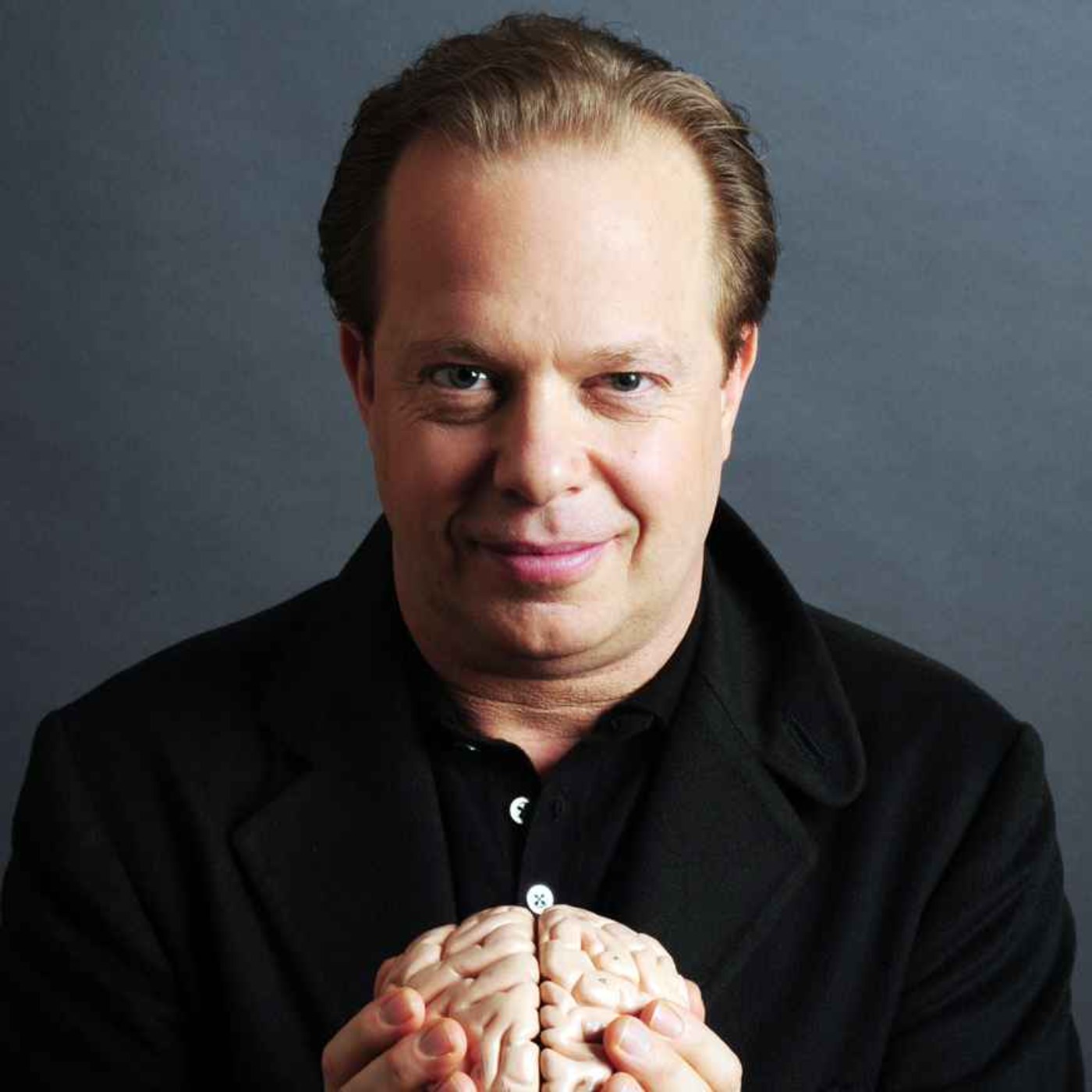
Your Personality Is a Program. And It Can Be Rewritten - Dr. Joe Dispenza
21m 3s
In the Resilient Mind Podcast, Dr. Joe Dispenza explores the concept of rewiring one's personality to shape a new future. He emphasizes the brain's role in reflecting past experiences and how changing thoughts, behaviors, and emotions can lead to a different personal reality. Overcoming addiction to negative emotions involves rewiring the brain through consistent practice. Dr. Dispenza highlights the importance of presence, purposeful intention, and conscious effort in achieving transformation and creating from a future state. Ultimately, by releasing the grip of past emotional patterns and forgiving oneself and others, individuals can reclaim their life force and invest it in healing, growth, and creating a new identity.
Transcription
3544 Words, 19646 Characters
Welcome to the Resilient Mind Podcast. In this episode, you'll be listening to your personality as a program, and it can be rewritten with Dr. Joe D'Spenza. Enjoy. So how many people here actually woke up this morning and consciously created a future? (audience laughs) You know, the biggest reason why people don't do it is because you don't really believe it's true. You see, if you knew on a gut level that it was absolutely true, would you ever miss a day? Come on. And would you ever let any thought slip by your awareness that you didn't want to experience? So your brain, according to neuroscience, is organized to reflect everything you know in your life. Your brain is a record of your environment. It's a record, an artifact of your past. So if you believe this then, then does your environment control your thinking or does your thinking control your environment? So if you wake up in the morning and you get out of bed on the same exact side as you did the day before, you shut the alarm clock off with the same finger, you slip into your favorite slippers, you shuffle into the bathroom when you use the toilet like you always do, then you walk over to the mirror and you look at yourself to remember who you are, then you get into the shower and you wash yourself in the same routine way, then you groom yourself to look like everybody expects you to look, then you go downstairs and you drink coffee out of your favorite mug, then you drive the work the same way as you did the day before, you see the same people that push the same emotional buttons, you do the exact thing that you know how to do and you memorize and can do so well that you're an expert at, then you hurry up and rush home so you can hurry up and check your emails, so you could hurry up and go to bed so you can hurry up and do it all over again. Now here's my question, did your brain change at all that day? We could say that you were thinking the same thoughts, performing the same actions that create the same experiences that produce the same emotions, but secretly expecting something to change in your life, would you agree? So then as the environment turns on different circuits in your brain, you begin to think equal to your environment. As you see the same people and go to the same places and do the same things at the same time, it's the external environment that's turning on different circuits in your brain, causing you to think equal to everything that you know. And as long as you think equal to everything that's familiar and known to you, what do you keep creating more of? - The same. - The same life. Now the quantum laws still applying to you, you're just thinking equal to everything that you know and you keep creating more of the same. To change, to truly change is to think greater than your environment. In every great person in history knew this, whether it was William Wallace or Mahatma Gandhi or Martin Luther King or Queen Elizabeth I or Joan of Arc, they all had a vision. They all had an idea. Couldn't see it, couldn't smell it, couldn't taste it, couldn't feel it, but it was alive in their mind. It was so alive in their mind that they began to live as if that reality was actually happening now. So can you believe in a future that you can't see or experience with your senses yet? But you've thought about enough times in your mind that your brain is literally changed to look like the event has already happened. Naroscience says it's absolutely possible. Now, your personality, your personality creates your personal reality, that's it. It's that simple. And your personality is made up of how you think, how you act and how you feel. So the present personality who's sitting here today, you, has created the present personal reality called your life. Would you agree? Would you also agree then if you wanted to create a new personal reality that on a fundamental level, you would have to change the thoughts that you were thinking, the behaviors and habits that you're demonstrating, and the emotions that you've memorized that's become part of your identity. And most people try to create a new personal reality as the same personality and it never works. We have to become somebody else. So then as you keep thinking the same thoughts, performing the same actions and living by the same experiences that produce the same emotions, there's a principle in Naroscience that says, "Nerve cells that fire together, wire together." And if you keep repeating the same states of mind and body over and over again, your brain begins to fire in the same sequences and the same patterns and same combinations. And whenever you make your brain work in a certain way, that's called mind. Mind is the brain in action. So as you remind yourself every day who you think you are, you're causing your brain to fire in the exact same ways. And as they fire and wire in the same patterns over time, the brain moves into a very finite signature. And that's called your personality. Now that box in your brain isn't literally a box, but it's the most commonly wired, neurologically fired programs that run redundantly because we keep doing the same things over and over again. To change your mind then is to make the brain work and new sequences and new patterns and new combinations to begin to make the brain work differently. And the one ingredient that allows us to do that is knowledge or information. Because every time you learn something new, you make a new connection in your brain. That's what learning is. Learning is forging new connections. Remembering is maintaining or sustaining those connections. So now, every time you have a thought, you make a chemical. And if you have a great thought or an unlimited thought or a joyful thought, you turn on a set of circuits in your brain that fires in a very specific sequence, pattern and combination, that produces a level of mind that turns on another part of the brain that makes a chemical for you to begin to feel exactly the way you were just thinking. Great or unlimited or joyful. Now, if you have a negative thought or an unhappy thought or a self-depreciating thought, you turn on a different set of circuits in a different combination, a different sequence and a different pattern, that produces a different level of mind. And the brain then begins to make a different batch of chemicals that signals the body for you to begin to feel exactly the way you were just thinking, negative or unhappy or unworthy. So the moment you begin to feel the way you think because the brain is in constant communication with your body, you begin to think the way you feel, which makes more chemicals for you to feel the way you think, and then you think the way you feel, and then you feel the way you think, and then you think the way you feel. And some people do this for 20 or 30 or 40 years. Now, the redundancy of that cycle over time creates what I call a state of being. And a state of being is when your mind and body are working together or your thoughts and feelings are aligned to a concept. So thoughts are the language of the brain, and feelings are the language of the body. And as people get caught in this cycle of thinking and feeling and feeling and thinking, over time, they condition their body to memorize that emotion as well as the conscious mind. And whenever the body knows as well as the mind, that's called a habit. A habit is when your body is the mind. Now, 95% of who you are by the time you're 35 years old is a set of memorized behaviors, set of emotional reactions, beliefs, perceptions, attitudes, that run just like a computer program. So 5% of your conscious mind begins to work against 95% of what you memorized. So the person wants to think positively, but they're feeling negatively. They want to create their dream board and put up their future life, but they feel unworthy. That's mind and body and opposition. We have to recondition the body to a new mind. So how many people here know someone who's memorized suffering? Doesn't have to be you, it could be anybody. And you say to that person, hey, did you read the book I gave you? What do they say? No. Did you see the DVD I gave you? Oh, no. Hey, listen, we're going to go out to dinner. We're going to go see some stand-up comedy. We're going to go for a walk along the water. You want to come? No. What are they saying? I'm insisting on this neurochemical order that no person, no thing, no experience can move us from it. And we have these three brains to allow us to move into a new state of being. And the quantum field, universal mind, whatever you want to call it, responds to who you're being. Not what you're thinking, not what you're feeling, but the combination of how you're thinking and how you're feeling called a state of being. Now, most people wait for what? Crisis or trauma or disease or loss or diagnosis to really want to change. They wait to the point where the ego's brought to such a low level that they cannot go on business as usual any longer. That's when we begin to look at how we're thinking or what we believe or how we act or attitude or what emotions we're living by. And my message is, why wait? We can learn and change in a state of pain and suffering, which tends to be the human model. Or we can learn and change in a state of joy and inspiration. Now, you want to learn the hardest part about all of this. You ready? The hardest part of all of this. The hardest part of all of this is making the time to do it. That's it. That's it, making time for your precious self. Think about the emotions that are associated with stress. It's anger, it's hatred, it's violence, it's hostility, it's judgment, it's competition, it's control, it's envy, it's jealousy, it's insecurity, it's fear, it's anxiety, it's vigilant, it's hopelessness, it's perilousness, it's guilt, it's shame and psychology. Calls all of those emotional states, normal human states of consciousness. Those are altered states of consciousness. So if you're feeling any one of those emotional states, more than likely you're having a stress response. The problem is we get so conditioned into it that we don't know how to feel any other way. So I think we describe change in this work as being greater than your body. We want being greater than the body that's been conditioned emotionally into the past. And being greater than the body when it's programmed into a predictable future. Executing a will that's greater than the program. Executing a mind that's greater than the body and moving it into the present moment takes a lot of energy and takes a lot of awareness and you've got to sit with it long enough to get good at it. So in order for you to change, you have to be able to move from that place of knowns, familiar past, predictable future into the present moment, the unknown, okay. To change is be greater than your environment. Every person, every object, everything, every place has a neurological network in your brain because you've experienced it, okay? So if you're not being defined by a vision, the future and you open your eyes and you plug yourself back in the three-dimensional reality, you see your coworker, you see your ex, you see your boss, you see your friend, you see your cell phone, you see the news, and now the environment is actually controlling the way you're feeling and the way you're thinking. So now it's no longer your personality, creating your personal reality. Your personal reality is creating your personality. Your environment is controlling the way you're thinking and feeling. So to change is be greater than your environment. It does not respond the same way, not to think the same way, not to act the same way in the same conditions, okay? And not being a predictable future in the familiar past, you got to be in the present moment, means overcome time, okay? That's our model for change. When you're in the stress, the arousal stress hormones causes you to really feel like your body. The arousal causes you to put all of your attention on your body because you're the priority when you're in survival. When you're in survival and the brain is in the arous state, your attention is, you're not going inward now. You can't get vulnerable. You can't drop your guard, you know, like the video there. Drop your guard. You got to drop your guard to do the vulnerable. But if you won't drop your guard if the threat of the danger is out there, you don't want to go in. It's not time to create. It's not a time to go in. It's not time to learn. It's time to run, fight and hide, right? So the arousal causes put all of our attention on the environment. And when you're under stress and you're trying to predict the future based on the past, you're obsessing about time, right? So if the change is to be greater than your body, to be greater than your environment, to be greater than time, and the stress hormones cause us to put all of our attention on our bodies, our environment and time. It means when we're under stress and we're in survival, it's really hard to change. It's really not a time to change. It's time to run, fight and hide, okay? Overcome the addiction to those emotions, lower the volumes and then give people the application and have them work with it. They're going to break an addiction. What happens when you break an addiction? You go through with sorrows. Come on, just a little suffering, come on. Come on, just a little judgment, just eat that. Come on, you know, that's so, the body's craving. The body's the mind is craving those chemicals and so overcoming an addiction to something outside of this is one thing. But overcoming the addiction to the chemicals of the emotions that are within us is lots of huge thing, right? And so it's funny because if you're addicted to something like I don't know, sugar or caffeine and none of these are, you know, have you own belief on them? But if you're addicted to alcohol or whatever, nicotine and you say, I'm gonna quit, I'm gonna quit and you say that with intention with your conscious mind. And then, you know, I throw my feet up on the table, I grab a sugar donut and a cup of coffee and I got, you know, powder all around my mouth and you're still, you know, you're still trying to overcome it. Your body's gonna say, start tomorrow. This is not a good day for you. Come on, one bite, everybody else is doing it. You know, all of that, those are the voices in our head that lead to the same choices, right? So, but if you truly broke the addiction to the emotion, I'm to them, to the substance and you walked in, you could have the sugar and not have the sugar or the coffee or not have a cup because you're not addicted to it and it's no tug any longer. You wake up in the morning and now what? Most people grab their phones, scroll through texts, check the news, tap into the familiar world. But what if instead you started your day by going inward? Let's be realistic. How fast can someone feel real change from this work one day? Two days within a week, here's the truth. Knowledge precedes experience. The more you understand what you're doing and why you're doing it, the more naturally the how will unfold. This is not just a time for learning theory, it's a time for embodying it, practicing, applying, personalizing the knowledge until it becomes second nature. You have to move from understanding into experience. When people get it, really get it. They become present when they meditate. They're not zoning out, they're intentionally tuning in. If I feel one emotion, I activate one set of genes. If I feel another, I suppress others. That's not spiritual fluff, that's biology. So if I rehearse a new way of thinking, feeling and acting, I'm literally rewiring my brain over time, thought becomes habit, a motion becomes personality, identity becomes reality. But here's the catch. Your old voice, I can't do this, I'm too tired, this is too hard, that voice, that's the program. And if you keep listening to it, you keep being the old self. But what if you replace that voice with one that says anything is possible. I'm open the synchronicities, I believe change is real. What if you got so present in your practice that you didn't think about your emails, your errands or your phone? That kind of presence anchored in purposes where things start to shift. First you might notice small things, your back doesn't hurt like before, you sleep more deeply, you feel lighter. These aren't coincidences, their feedback that what you're doing is working. Now, let's talk about someone with a lot of emotional baggage, childhood trauma, physical illness, psychological wounds, we're not trying to fix them in one week. Their victories aren't about instant healing, their victories are about staying seated when the body wants to run, it's about sitting in the fire of discomfort and lowering the volume of the emotion instead of reacting. Because that moment, that's the one that matters most. People think I'm doing this wrong, no, if it's uncomfortable, you're doing it right. That's the moment when you face yourself. The mind wants to escape, but if you stay, breathe and bring the body back into the present, you win. We never tell people to dig through the past, we tell them overcome the emotional charge. 'Cause once you break the bond to the emotion, the memory loses its grip, what's left is wisdom. Now, don't get me wrong, insight can be powerful. Seeing how childhood shaped your beliefs is important, but insight alone doesn't rewire behavior. You can understand your trauma and still live from it every day. Some people live inside the identity of their pain. I am this way because of what happened to me. That's not liberation, that's repetition. We've seen people with brutal past, the abuse, betrayal, grief, sit through their meditations and reach a moment where everything cracks open. And suddenly they look back with love. Even for those who hurt them, why? Because they've become free. The body once addicted to those emotions has been liberated. And when that happens, the whole system changes neurologically, chemically, genetically. You can't keep thinking the same, making the same choices, feeling the same emotions and expect to become someone new. You want new results? You need a new mind, a new energy, a new identity. Even forgiveness, real forgiveness is in the thought. It's not about saying, I forgive you. It's a state of being where the emotion no longer exists. There's no charge. And when there's no charge, there's no longer a reason to keep the past alive. People ask me, but Joe, my ex betrayed me. I can't forgive them. I tell them, start by forgiving yourself for your own peace. Think of something you've done that you regret. What kind of forgiveness would you want? Give that to someone else. And you start releasing the old pain within you. You're not doing anything wrong. But the real question is, how long do you want to stay there? Because staying in those emotions, anger, resentment, hurt, that's giving away your energy. And you need that energy to heal, to grow, to create. The more you fixate on the past, the more you solidify that identity. Forgiveness isn't weakness, it's freedom. It's reclaiming your life force from the past and investing it in your future. The moment you stop repeating the same emotional story, when your body no longer reacts in that same pattern, you shift from being defined by the past to creating from the future. That's transformation. That's the work. - Thank you for listening. Continue strengthening your mind by subscribing and listening to our other episodes.
Podcast Summary
Key Points:
Dr. Joe Dispenza discusses rewriting one's personality as a program to create a new future.
The brain reflects everything known in life, creating patterns of behavior and thought based on past experiences.
Changing one's personal reality requires altering thoughts, behaviors, and emotions consistent with the desired future state.
Overcoming addiction to negative emotions involves rewiring the brain and body through focused practice.
Presence, purposeful intention, and conscious effort lead to transformation and the ability to create from the future.
Summary:
In the Resilient Mind Podcast, Dr. Joe Dispenza explores the concept of rewiring one's personality to shape a new future. He emphasizes the brain's role in reflecting past experiences and how changing thoughts, behaviors, and emotions can lead to a different personal reality.
Overcoming addiction to negative emotions involves rewiring the brain through consistent practice. Dr. Dispenza highlights the importance of presence, purposeful intention, and conscious effort in achieving transformation and creating from a future state.
Ultimately, by releasing the grip of past emotional patterns and forgiving oneself and others, individuals can reclaim their life force and invest it in healing, growth, and creating a new identity.
FAQs
You need to truly believe in a future that you can't see or experience yet, but have thought about enough times in your mind to change your brain to reflect that reality.
Your personality, made up of how you think, act, and feel, creates your personal reality. To change your reality, you need to change your thoughts, behaviors, and emotions.
To change your mind, you need to make your brain work in new sequences and patterns by learning new information that forges new connections in your brain.
Emotions trigger specific sequences in the brain that produce chemicals affecting how you feel. Negative emotions wire the brain differently than positive ones.
Overcoming emotional addictions is crucial as these emotions wire the brain and body in specific patterns, leading to a habitual state of being.
By stopping the repetition of old emotional stories and reactions, you can shift from being defined by the past to creating a new future.
Chat with AI
Loading...
Pro features
Go deeper with this episode
Unlock creator-grade tools that turn any transcript into show notes and subtitle files.
 PodcastTranscript AI