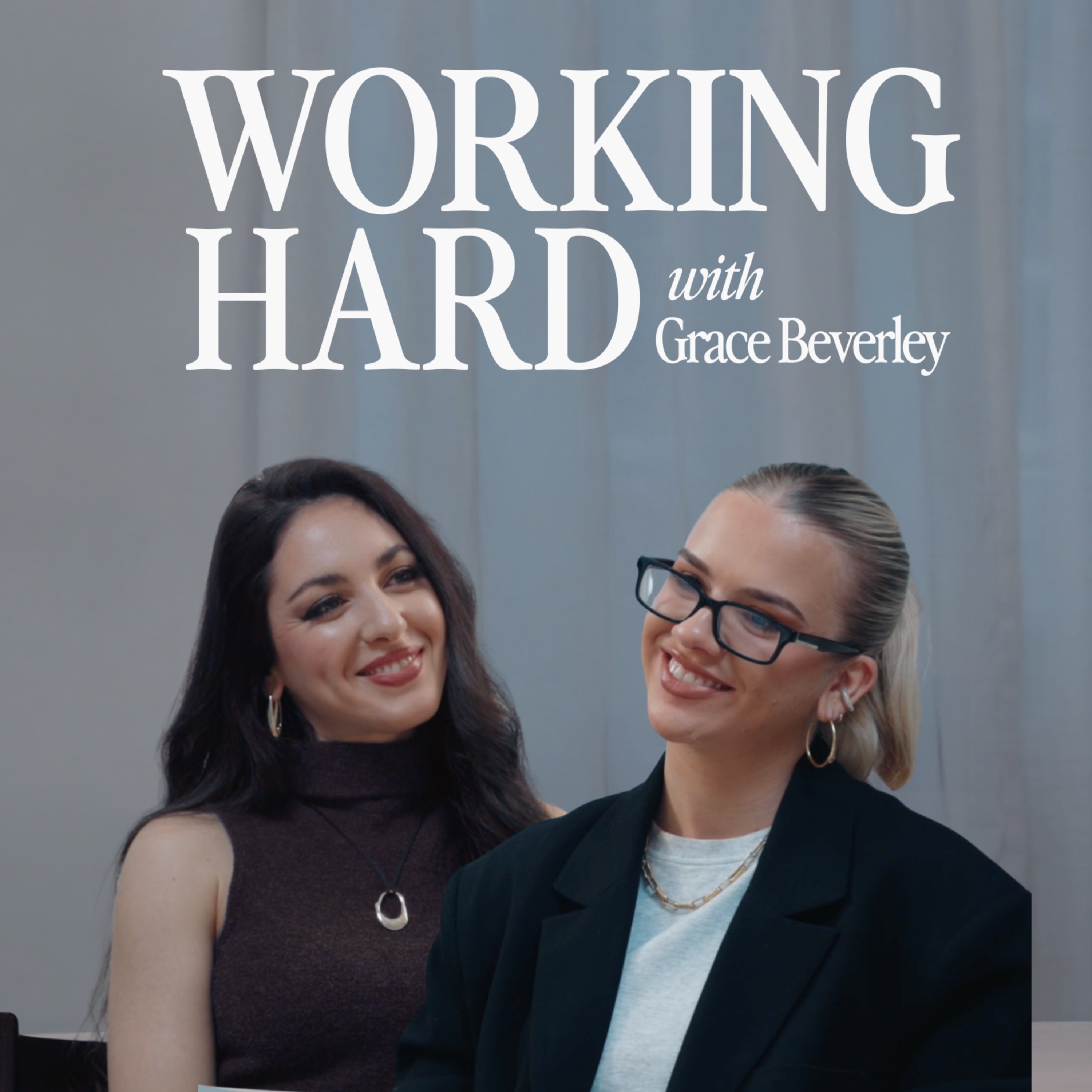
Your 2026 mindset glow up: how to remove self doubt and make this your most successful year yet with Dr Shadé Zahrai
80m 18s
In this podcast episode, Grace Beverly interviews Dr. Shadeza Rae, a behavioral researcher and coach, who delves into the significance of physicality and communication in achieving success. Dr. Shadeza emphasizes how body language and posture can influence confidence and how clear, concise communication without unnecessary complexity is essential in conveying competence. She shares personal experiences that shaped her views on self-doubt and the impact of early beliefs on behavior in adulthood. Dr. Shadeza also highlights the importance of communication style and the power of using language that is easily understood rather than relying on jargon or big words. Through her insights, she encourages listeners to adopt intentional behaviors and mindset shifts to enhance personal and professional growth.
Transcription
17310 Words, 92715 Characters
(upbeat music) - What is up, I'm Grace Beverly, and welcome back to Working Hard, the podcast shit guide book on how to improve your own life and achieve what you actually dreamed of doing, because life's too short for boring podcasts and bad advice. What is up and welcome back to Working Hard? - I am so excited to get into this episode. I promised a good lineup January, and we are kicking off with probably one of my favorite episodes we've ever done. And I know that's a big claim, but I do think this episode lives up to the hype. Today's guest is someone that I have been so excited to have on, because if there is ever a time where we need to stop getting in our own way and start trusting ourselves again, it's just as we approach the start of the new year. Dr. Shadeza Rae is a behavioral researcher and a leadership and confidence coach. She's advised the world's biggest companies and her work has had over 300 million views. I knew I wanted to get Shadeza on for so long, and there was only one day she was in the UK this year and we've managed to make it happen. So if you're heading into the new year feeling stuck or second guessing yourself or craving like a mindset reset that actually last, this episode has been designed for you. And before we get into my chat with Shadeza, it would be such a big help if you would go and follow the podcast on whatever platform you're listening to it on, because each Monday in January, we have got an episode designed to make 2026. Your best year yet, your most intentional year and the year you actually hit those goals that you've set at the beginning of the year. And if you hit follow, you will get every episode exactly where you want it every single Monday morning. Dr. Shadeza Rae, are you currently more working hard or hardly working? I would say I'm working hard, but I feel like I'm hardly working because I absolutely love what I do. Best answer. It's always the aspirational answer that one. And I'm very interested in the answer to my next question because obviously you've got a PhD in behavioral change. So I'm interested in whether you believe in the concept of new year, new me. I believe in the concept in the sense that yes, we absolutely can change. But I'm also very aware of the research and my own personal experience that no matter how hard we try sometimes we do not change as much as we wish. So we know what we need to do but we don't take the action. There's a knowing-doing gap. And we'll come on to how we actually-- We will come on to that. Fill that gap. Yeah, because that's very important. And I think that one of the most important things for me, when I think about new year, new me, is like what that's telling you. For example, if you're going into the new year and you're thinking over and over, new year, new me, new year, new me, it's probably a good indicator that there are lots of things in your life that you do want to work on and you do want to change and you want to kind of alter the way you approach them or whatever it might be. And I think that's-- it's more of a solid indicator than it is actually an instruction that you don't then necessarily just need to sort of change every part of your life. But it is-- if you're getting that a lot-- and I feel like after a few years of planning very well for my next year, I get it less and less. Because I feel like I've fallen short on fewer things during the year. But I do think it's a great indicator if you're having that, like you're coming into January and you're thinking, you're not. I need to do a new year, new me. It's very kind of indicative of where you could go. Is there anything that you do at the start of every new year that gets you into the right headspace, the right mindset, the right place for the year ahead? I'm very big on intentionality. So something I try to do every day, and I'm also looking to do every-- the beginning of every year is I ask myself with intention, how do I want to be showing up firstly every day? What is the intention that I'm bringing into this day? What kind of energy am I showing up with? And then when it comes to the year, it's what kind of energy do I want this year to exude? How am I going to allow that to align behind my behaviors, my actions, how I think, how I interact? And each year is defined by something a little bit different. So this year for me was a year of completion, because I finished the PhD research. I finished writing the book. And they were big, big things. And then this coming year is the year of essentially just expansion, where I can go and spread that message. And at the same time, we discover who I am. Because when you're doing something and pouring yourself into something for so long, you can start to forget who you truly are beyond the things that you're delivering. So that's really my intention for the next year. And I do encourage everyone to do that, to take some time away. Of course, you can think of the goals and how much you want to change. But what is that defining intention that you want to have for the year to come? I really like what you said there as well about how the intention is not just about the year ahead, but it's about each day. And I think that something we get really excited about, because we get the big dopamine hit of planning, is going into each new year with all of this incredible planning and goal setting and all of that and going into each day with absolutely none of that, because you cannot have one without the other. And if I had to choose one, I would choose the daily one, because that's more likely to be those small changes that get you where you want to get to, as we know, from habit theory and all of those different things. Whereas it's so funny that we put so much emphasis on this planning and of course, on this kind of big yearly planning. And of course, that's important, like, without the big yearly planning, that you can't know that the individual days are in the right direction. But I find it so strange how we kind of plugged into ourselves over and over and over this. You have to approach your year like this. And every day, it's kind of like, well, best of luck today. Whoops. And just enjoy what you need to do today and don't think of how it ties into the wider aspect. Obviously, you've got a lot of very interesting insight into these areas, and that's why I want to talk to you so much, especially at this time of year. Could you just give us a little bit of a recap on how you got to where you are in your career and just some context on who you are in your background so that when we're going into more depth about these things, our listeners can kind of know your perspective. This person's picky to me. My friend isn't her. Yes, let's begin there. OK, so I'm going to take you all the way back. I've been reflecting on this question a lot, because where did my passion for people originate and where did my fascination for self-doubt come from? And I believe it came from a really early experience I had when I was about four or five years old. So I'm from a Persian family, beautiful, supportive, loving family. And so when I was about four or five, we used to go over to my grandparents' house and they would make all the Persian food. And then I'll say dinner. Best-- I'm glad you say that, I agree. I love Persian food. At the end of dinner, there would be a little bit of a chance that would begin. And it was Shade, that boy had bed air set. Now translated, that is, Shade has to dance for us. And now as a four or five-year-old, I was like, sure, I didn't mind jumping up and dancing. And they got so much enjoyment out of it. And I got enjoyment out of making them happy. And then it was happening week after week, year after year. And as I was becoming older, I started realizing I really don't enjoy this expectation that I must get up and perform. But it makes everyone so happy. And I didn't know how to say no. And so I would keep doing it, even though deep down I really didn't want to do it. I never communicated that to anybody. So I was also reinforcing this as well. But that within me, I became-- or I had this internalized view of, OK, I must perform to please. And when I'm pleasing other people, then I am acceptable. And now, as an adult, I'm still trying to shake this people pleasing that became such a deeply ingrained part of who I am from this experience that could have been completely innocuous. Let's get the kid to dance. And at the time, I enjoyed it initially. But these are the habits that we start to develop and build that form beliefs about who we are and our role. And especially as women, this is a really big one. Because so many of us are raised to believe that we are-- we should be the good girl. We should be the polite one, the collaborative one. The one to go and check that everyone's OK. Would you like some tea? Do you need some coffee? Shall I take your plate? And then these becoming ingrained beliefs that we have about our role in the world. And so when it comes to especially the workplace, we're now trying to assert that, OK, no, we have value to offer. And there's a part of us that's defaulting to how we were as kids. I need to do the right thing. I need to say the right thing. I can't say that because they hurt their feelings. And then they'll be upset with me. And for me, that was really where it began. I realized I had a lot of self-doubt, even as a kid. Now, through my journey, I won't take you to the whole thing. But I was always fascinated by people. But I studied psychology and law. Because I did really well in high school. And I had a lot of pressure from everybody to make the most of your grades. So I did the psychology part, which is great, because I enjoyed that. But then the law was just to satisfy everybody else. But I found that so hard. And because it was so hard, I had to put so much into it. So I forgot about my passion for people, because I just needed to prove that I could do it, prove that I could belong. And that's never a good reason to pursue anything. Finish the law degree. Worked in a legal industry for four years. It was soul-sucking. I was miserable. I would wake up on a Monday morning feeling sick, physically sick, because I knew I had to go into work. And I thought, my body's telling me something. Why am I not listening to it? So then I thought, OK, Lord, no more, I cannot do this. So I jumped over to banking and finance. Of course. Yeah, of course. Like logic, naturally. I don't know why I did it, but I just needed anything. I know. I'm like, no, I'm like, great. They'll still be happy. Well, my dad worked there. So I talk about-- and it's funny, because my entire life-- I don't know where this came from. But in my entire life, my dad has been the one that I want to impress. And I want to please. And my parents got divorced when I was 15 or 16. And then my dad moved to another city. And my parents, you know, as amicable as good as it could have been. But because dad wasn't there, I also felt like I needed a reason to get in touch with him. Dad, look at my report card. Look at what I've done. And even now, my husband Faisal's like, why do you only call your dad when you have good news? Why don't you just call him to have a chat? So again, I'm trying to shake off these deeply held beliefs that were formed so early in life. Fast forward many years, I'm in the banking and finance space, questioning, what am I doing here? Full of imposter syndrome. And again, feeling that sense of unease, like I've made the wrong choice. But then I realized, hey, I'm surrounded by people because the company had 30 to 40,000 people in it. And so I thought, how can I bring my love of people to what I'm doing? And I started observing patterns in this organization, especially among those who were succeeding and thriving and doing really well, and then others who wanted to, but were not. And I was asking myself, what is the difference between these two? How can I look at what they're doing and emulate that and try to be more of that? So I did. I started emulating how they'd show up, how they'd speak, how they would interact. And of course, had to develop a level of competence. And I started getting recognized. I was getting all these proof points of, hey, what they do works. At the time I wasn't even fully aware of it, I was just kind of copying. Now, in that process, I lost myself, didn't know who I was, but hey, I was advancing in my career. Then we get to a point where I finally realize that my passion is not working in organizations. It's studying people and behavior. And really what differentiates those who succeed from those who don't. And that's essentially what I've dedicated the last five years to doing. Deep diving into what drives success and performance and happiness, and what fundamentally holds us back. When we set that new year, new me goal, and then we do not achieve it. And that's something that I nerd out on, because I just think it's so incredibly fascinating. But it's really been driven by my own self-doubt, trying to solve that. But I think that's where the most powerful things come from, is like a true innate understanding of what people who face this go through. - The limited dreams. - Yeah, exactly. Such so much better way of putting it. No, you said it great. But when you were at that stage and you were looking at those things that people in the workplace were doing, obviously we'll come on to the research you've done and what you've found since then. What were those initial things that you noticed that set aside people who were trying to succeed from those who actually were showing up in a certain way and were succeeding? So there were two elements that I picked up on. One of them related to physicality. How they held themselves when they walked into a room. How they made eye contact with people. How they would often smile their posture. How they lean in meetings. And I noticed that it came so naturally to them, whether or not it did, maybe they had learned how to do it. But now I know the power of what's called embodied cognition. How your body will reflect how you feel. If you feel insecure, if you doubt yourself, your body and your brain, they're priming you to protect yourself. So you'll naturally slouch and lean back and not make eye contact. Which then reinforces how you feel and doesn't help the situation. But what they were doing, again, knowingly or unknowingly, they were hijacking any potential discomfort by sitting there and telling themselves, "Hey, I'm here, I'm leaning in, I'm safe." So there was this whole piece around physicality and we know, especially as women, we are judged so quickly on so many things. And one of the earliest measures of a first impression come down to physical appearance. And of course, how we dress is one thing. But another one is actually how we hold ourselves, our bodies, our posture. And this happens in such a subconscious level, so quickly, I know everyone listening on what he's like. - Everyone listening on what he's saying. - My mother used to say, "Poster, shot a posture." And so I'll often hear her in my head, posture. You know, they've done studies looking at school kids and posture and they had, you know, one group slouching to do an exam and the other group sitting upright, the group that sat upright felt like they could think more clearly, had better recall and end up performing better. - Wow. - posture is powerful and yet we forget that. So that was one thing they did. - I've just seen their way. - My team just said-- - Everybody's up, right? Everyone has worked to think. - Well, you know, there's something called the opposite action, which is something that I write about in the book, which is when self-doubt is priming you to one to shrink, to lean out, to not say the thing, to lean back, do the opposite, notice what you're doing and do the opposite even if you don't feel it. Because again, it's that way of hijacking your body's natural response. You know that there's no physical threat. So why not give your body what it needs, get the oxygen in, the expansive pose. So physicality was something they did really well. The other thing that they did really well came down to how they actually communicated. So my communication suffered when I was full of self-doubt because I was always overthinking or hesitating and I did the classic, or I fell into the classic traps. The sorry if this is a silly idea, prefacing what I'm gonna say before I say it. You know what you do? Well, what happens when you say that? People think it's a silly idea because you're priming them to think that way. Or I'm not sure if this makes sense. Well, guess what? You've just primed people to think that it's not going to make sense. They didn't do that. They just said what they needed to say. They also didn't use fillers like just, look, I'm just thinking I'm just checking in. They didn't have fillers in their communication. They also didn't say I think. So something that was really interesting that I came across. They rarely ever said I think we should do this. I think this is the right approach. They would use things like I recommend, I propose. Based on the information we have, this would be the best approach. Listen to how different that sounds. I think this would be the best approach versus based on the information that we have, this would be the best approach. One screams confidence and conviction without being aggressive or domineering. And the other ones are like, I'm not really sure. So they were the two things, the physicality and then how they speak. Now I fell into this mistake early on because I didn't feel like I belonged. I tried to compensate by using big words. Big fancy words to elevate my credibility. So of course I learned every single acronym and every single corporate terminology. And I'd throw it into a sentence. The sentence barely made sense now because it's too complicated for people. And I was wondering why it wasn't having the effect that I wanted it to. And it's only when I discovered research later that found that when you use unnecessarily big words, it actually undermines your competence and it makes people think you're less intelligent. - Oh, interesting. - Very, very interesting. So the ability to be clear, clarity in your language and easily understood is actually a bit of a business superpower. - And I've seen just as a kind of small tangent, I've seen a lot of academic research on the fact that academia in particular, a lot of the most complex information is presented in such a complex way, which keeps these industries gate kept and keeps academia kind of siloed to certain types of people from certain backgrounds and all of this. And then I saw a lot of work on the fact that actually if you can describe big ideas in simple ways, that is the mark of true intelligence and that is the mark of true competence. And I've always tried to take that in and never try to describe something in such a complex way to feed the ego rather than actually have clarity. - Because you alienate people when you do that. Because there are people who inherently are not going to understand or not going to be able to connect with that. And in my view, I think a lot of us do it because it's a mask that we wear. And I think in the academic space, having spent time in there, I started looking at, so there is a push with a certain group of researchers who are actually encouraging people to write like humans. Because academia really, the goal of academia is meant to be to influence the beneficiary and the beneficiary depending on what field you're in, is the end person, right? It's the leader in the organization. It's the entrepreneur, it's the employee. It's the person who wants to improve their health. But they're writing these papers for other academics and then it doesn't get translated, which is where a lot of my work comes in, which is helping to translate the complex into the simple. But it's something that, yeah, so many of us do and I think a lot of women do it to try and, especially when you feel like you don't belong at the table. - Right, oh, you're not being taken seriously. - Exactly. - So a question I have based on the research that you've shared and those things that you noticed as well and you're in the corporate space that set aside people who are doing well from people who weren't, I take all of that and I agree with all of that. And I over time have really tried to implement a lot of those things. So, you know, in posture, in terms of how you present things in terms of not softening things, in terms of all of that. However, being a woman, I've now had to take some of that back down so as not to come across to abrasive, particularly as, and this is me just being completely honest, particularly as a business owner, when it is women's job, I guess, to still be quite likable in order to lead. Like you do still have to have an element of likability for people to take your leadership as a woman. I'm not saying that is right. - Correct. - I'm just saying that is the case. So, I went through a period of time where I stopped softening a lot of my language, so I stopped saying, maybe not sorry that this might be a silly idea, but I would take away that if this makes sense or whatever it might be. And I started feeling like it was too harsh for some of the people I was managing. I'd love to know if you've kind of, if you've perceived that at all. Because I also just think, I mean, I think about it all the time, the fact that I, as a woman, leading an organisation and also on social media, inherently have to be likable to be accepted and to be deemed as worthy of success. So I always want to. - We will unpack that as we go through, please. But it is statistically true, we know it is. And it's also, I think, being piled on with social media and cancel culture and the whole idea that I would hate for anyone to walk out of any of my organisations being like, oh, but she was really firm. Or they probably wouldn't use firm because I'm a woman. But yeah, the kind of bossy or needed this or whatever it might be versus that just being the correct way to be speaking in an organisation and the language that I was using would never have been an issue if I was a man. So I've softened some of it again so I don't come across too strong. - Yeah, bossy strong, kind of demanding all of these things that I wouldn't want someone to walk away thinking despite the fact that all of these things are probably necessary to run a good business. So this is just for personal therapy really. - Oh, this is so much fun. Okay, there's so many things I want to share. Okay, the first thing I want to say is that when it comes to these credibility killers, we only really need to be worried about them where our credibility is in question. - Sure, okay. - So as a business owner, as an entrepreneur who has a clear track record of success, when you're dealing with your team, you don't really need to be worried about that. - Right, so maybe that is why I need to suffer. - Yes, because as a leader, your role is to gain the buy-in and the connection and create that culture, whereas if you were, for example, speaking to investors, speaking to VCs, speaking to someone else who has done a lot more, including that may not be in your best interests. Maybe you felt that and maybe you adjust. So a lot of people talk about code switching. Early in my career, I code switched where I'd walk into a meeting and I would become someone else, but then I realized, well, so long as I'm still being authentic and have integrity, you can be really strategic about code switching and you switch it on when you need it to get the outcomes that you need, right? And then as a leader in your team, you're gonna scale it down because you know that that's gonna get the outcome that you need. - That's so interesting that you say that and I think that explains it so well, because I've always heard this advice that I need to stop softening all of this stuff, not necessarily to me directly, but, you know, through consuming research and content and all of this. And I've never felt it appropriate for my own workplaces, like I've tried and then I've been like, no, do you know what? That's just gonna make people terrified of me. Like it just, it is. And I already walk into the workplace as the owner of the business and that's probably not that helpful. I'm 100% code switching, 'cause I'm not saying that I soften in other areas when I'm working with investors, when I am working with freelancers, so I think maybe take me less seriously than they would take a male client. All of these different things, I do not soften at all. So that is very interesting too. And I also think that that taps into where women can be so great in the workplace, is we are so, and I'm gonna generalise, but I generalise for a reason, we're generally so empathetic and that people pleasing ability is not always right, but it does also allow us to tap into a kind of, how should I act that is appropriate to this audience that makes them feel more comfortable or more likely to do what I need from them or whatever it might be? And actually, kind of if we're taking this box of tools, as this is how you stack in the workplace, we could add a real strength on top, essentially looking at it and saying, great, and on top of this, as someone who is empathetic and understands other people's emotions when they're in a room with me, I can also switch things on and off as is needed to be able to progress how I need to. And I feel like that's really powerful. - Absolutely. And I'm loving hearing these things. - Fantastic, done, end up, we're done. - We're done. - But it's important to acknowledge that a lot of the guidance that exists is blanket guidance and it doesn't apply to everybody. And so when it comes to a lot of these tips around elevating how you're perceived in the workplace, it is only an issue if your credibility is in question and for women, especially in, so it doesn't have to be male-dominated industries, but it's in, so it's called the Prove It Again bias. In industries traditionally dominated by men, even if that's changed now, women have to prove their credibility again and again and again and again, whereas men are just assumed to have it. And so we have a much higher bar, unfortunately, this is not how it should be, but it is. We have to acknowledge as a much higher bar. And so that ability to strategically code switch to have that emotional intelligence, 'cause many women resonate with being able to feel, feel people state. And this is the idea of emotional contagion. We're more in tune with it. Emotions are contagious. And if you can sense someone else's state, you can then influence them much better by giving them what they need. Now, I want to quickly touch on something you shared earlier about how the same behavior can be interpreted differently, whether you're a man or a woman. Actually, before I share that, I want to rewind a little bit because there's this fascinating little anecdote story. Dr. Jessica McCarty is an expert at understanding the human drivers of fire. She studies all sorts of amazing things. She was at a NASA meeting. And this was about maybe 15 years ago. She's at a NASA meeting. And she's sharing some of the insights that she's, you know, she's studied and she's aware of. She says, "A white male postdoc interrupts her in the middle of what she's sharing, which is her expertise." And says, "No, no, no, you don't understand the human drivers of fire. You need to read the research by McCarty at Al." And she sits back. She pulls back her hair to reveal her name tag. She's like, "I'm McCarty. It's my research." And this is an example of the proven again bias where the person who was the absolute expert in that space got interrupted by someone with less experience, assuming certain things about them. - Those are the little like dialogues that go on my brain, like behind the scenes. I'm like, "This is what's going to happen to me today." And I'm going to be able to prove I'm right. - Well, so it's interesting you say that. Because I think one thing we need to acknowledge is we don't live in a fair world yet. We don't. And we need to acknowledge that and not get upset when it happens because it's going to happen. The real measure comes down to, what are we going to do if and when it happens? And so there's this really brilliant way of thinking about how we handle these setbacks. And so what, again, when we look at the literature and we found this to be incredibly impactful, it's called an implementation intention. So Grace, you said sometimes you think about, "Oh, this is going to happen today." So you anticipate, "Okay, what is the end state?" Like what do I want to achieve today or how do I want this meeting to go be really clear on that so that you can see yourself achieving that because that's going to shift your self-image and that's important and we'll talk about that later. But then you need to go, "Okay, what are all the things that could get in the way?" Like I'm going to get interrupted here. Someone might critique that. Someone might try and undermine this. Then what will you do if and when that happens? What is your recovery plan? Because when you can anticipate these things happening and then you visualize yourself responding to them when they happen, you're no longer afraid of them happening. You know exactly how you will handle yourself. And it is a remarkable superpower to be able to do that. Some people say, "Don't think about what could go wrong. Just focus on success." But then if we do that and then something goes wrong, suddenly we flounder. You know, then we feel insecure. We might say something that we later regret or we might just get shut down. What's your response when someone tries to undermine credibility or says something like what happened to Dr. McCarty? - My natural response? - I don't know. It depends on the environment that it would happen in. - Well, I get it online a lot, you know. I, for example, the thing that springs to mind is I made a video on in response to a quote from a J. Rowan podcast where he said, you know, it's tough out here. All the richest women in the world are only rich because of the man there with wealth basically. And I did a response to that. I sent you being like, should we talk about the reasons for that and then going through the fact that, you know, only 2% of funding goes to women. So all of these richest men who have been rich because they've been VC-backed companies. That opportunity is not a forward to women all of this. The amount of responses I had to that being like, well, if you worked in VC or you understood this or whether if you had a good idea, you would blah, blah, blah. And like, I've done like, I've done three separate - You're like two million funders. - Let me show you my name. Like as in just the assumption. - Yeah. - I, well, unfortunately, my entire internal dialogue, 24/7 is this happening? - You think maybe, like as in not even in a negative way, but you're saying, you know, when you're able to imagine scenarios and rather than just imagining them happening, imagining what your response is. Unfortunately, that is just my constant internal dialogue. That's not a bad thing though. - Unless it's just, although it does, you know, it's a bit much easier. - We need to tone it down from this meditation as well. - I, you know, I talked about in therapy before the fact that I constantly assume every single person is going to, undermine, tell me I'm wrong, whatever it might be, like any of these things, that is my default. I go into every conversation, assuming that's gonna be the case. - You think this one? - Not necessarily. - Good, it's the support cast we're talking about. It's the same. - Well, but that is definitely my natural response. Which is meant, I think I'm pretty good at overcoming those situations because I assume they're going to happen every single second of every single day. I would love a little bit less noise. - Less noise, probably the mindful. - A sign of help. - Well, I'm gonna give you a little tip for the less noise. So it's great what you're doing. The strategy is, is fantastic. But if you tend to then get stuck in the rumination and the overthinking, what I encourage you to do is to have a little notebook, physical notebook, buy a pretty one that you like. - Oh yeah, one of my own. - Yes, exactly, exactly, you've got them. - So have that one here, literally right here. - And then have a really beautiful pen that you love. And then every time one of these thoughts comes into your head and you know you've done the work, you've done the preparation, and you know that, okay, this sort is unnecessary. You write it down. Give it a physical outlet. Then you say, okay, I don't need to worry about you right now. I've got my plan, I'm good. I'll deal with you later, close the book. Then when the another one comes in, you give it a physical outlet. Then you have to allocate about five minutes a day, maybe after work. I mean, do you have an end of, you probably don't have an end of-- - Oh, that's good. Well, I'm good, you go to that now. - Brilliant discipline. So it might be, you know, just five minutes then, not before bed because your brain will keep going. And that becomes your worry time. So you have an alarm that will go off on your phone saying, you can worry now, you pull back your notebook, you have a look at your worries and you go, okay, well, I've already planned for all of these. I'm good. This is called stimulus control for worry. It sounds really simple, but studies have found that it's remarkably effective at helping you manage your overthinking because your brain is trying to protect you and doesn't want you to forget anything. So by going through this process, you're essentially saying to it, hey, it's good. I know what I'm gonna do. I've got it handled. I've written it down. It's a fantastic exercise to do before bed. If you have worries, you just write the worries down. Don't allow yourself to worry about them, wait 'til the next day, but you capture them somewhere so they don't forget. One thing I do that's a little similar to that is every time I have a problem that I need to solve, but I cannot solve in that moment. So for example, I have a full day of meetings. I cannot be thinking about this problem all day. I actually have a specific problem solving matrix. This is a little table that I put it in. And it goes like, why am I worried about this problem? What are three things I could do to solve this problem? Why should this problem not be concerning me today? And second, I get it down. It's out of my brain. And I think one of the reasons for that as well is because I have such a bad memory that I'm constantly worried that I'm gonna forget everything. So the reason it's going around in my brain is to try and stop me being the type person that forgets things that I actually need to solve. And so that is why I'm so big on all of these organizational tactics. It's great to hear their backspice, science. - Yeah. - Truly just to be able to get on with my day, otherwise I will ruminate, overthink, focus on something that I don't need to focus on. - And that process that you go through of essentially rationally checking these, do I need to worry about this? We call that bringing the fact checker into your brain's border because the brain is essentially, it has these different functions in these parts. And when they're all working together, it's great, it's a dream team, but we're not overthinking. It's like an office-wide meltdown. And so you can bring in what we call these external consultants in to help us rationally process our thoughts. Now one thing I wanna quickly return to, just 'cause it's fascinating. And I think anyone who's listening or watching will get a lot of value from this. So there was a bit of a teaching experiment done. It was actually in the early 2000s, so quite a while ago now, but I don't think much has changed. And so what they did, it was at Columbia University. And so these professors had their group of students and they gave them a case study. It was a case study about Heidi Royson, who's a highly, highly accomplished Silicon Valley executive, former Apple exec, incredible business woman, remarkable track record of success. And it was a case study about her in business. Now they had another class and they gave them the same case study, but they changed one thing. They changed her name from Heidi to Howard. And now they're reading about it as if it's a man. So these classes are going through the process of analyzing the case study, doing what they need to do. At the end of it, they ask the students, how would you describe the leader in this case study? The group that had the Howard case study, so this is exactly the same words. All that is changed is the perception of whether it's a man or a woman, Heidi or Howard. Those that had Howard case study, they described him as a great guy, a titan of industry. Someone I would love to work with, those who had Heidi's article, case study, described her as self-serving, power-hungry, definitely not someone I want to work with. How is it possible that the exact same words, the exact same behaviors perceived so differently, right? And this touches on what you were sharing earlier, how we started this conversation. Unfortunately, we're living in a world where there are perceptions. Now here's the part that kind of really blows my mind. These perceptions weren't just from the men. They were from the women too. Of course. We chose how deeply ingrained this is. Yeah, and it's so deeply ingrained as well, because we've been taught that we need to fight for the one position that is at the top, because there's so little space for women. And it's this, you know, it makes this culture where women tear down women and all of this, which isn't our fault actually. It's because of this concept that, well, only one of you can succeed, whereas 100 men can succeed. So, you know, best of luck, you better bring each other down, rather than creating seats at the table, all of these different things. But I think, I mean, I'm so aware of it, and I've been so constantly aware of it ever since kind of finding out about the first studies that suggested that, you know, the more successful you are as a woman, the less likeable you are. It's negative correlation versus positive correlation for men, and that is really tough, particularly in a world of social media where likability is your currency. And you have to be likable in order to be successful for a lot of different things. And it just, it really compounds. And I think, I don't know, if you have a solution to it, my only solution to it is to just realize, well, that probably means that the further I progress in my career, the more okay I'm going to have to get with being disliked. And I'm going to have to, and it's not going to be a reflection of how good I am at my job, or how morally sound I am or any of these things. Of course, there'll be some allowance of that, and like, need to make sure it's down the right track there. But you've just got to become fine with it. And it's a lot of exposures therapy against people pleasing, because I am a people pleaser, and have had to grow out of a lot of that, and have tried really hard to, and I think in certain areas, really have managed to, but knowing that the only option to get to further success is going to be being not liked. - By the way, discomfort. - Yes. It's just not so great. - No, it's not. - But we do just have to get okay with it, because I think it's going to be quicker to do that. - Yes. - I think we also need to change the system. - We also need to change the system, of course. The more aware we are of the system, the more likely we are to be able to change it, and to be able to know when we're doing that about other people. I have so many memories of when I've thought of a woman who is particularly successful, and I've instantly jumped to my mind like, "Oh, but I've heard they're really hard to work with," or "I've heard they so I've heard they so I've heard this," and it's like, have I heard any of the equivalent about the man? - Mm-hmm. - No, because it's not even a headline. - Yeah. - Like it's not even, or yes, that person who built that massive company is pretty hard to work with. They probably weren't built to be the best person ever. They were probably built to be really, fucking great ability at a company. That doesn't mean you need to want to be friends with them, but it doesn't mean that they shouldn't be able to be successful. I want to come on speaking a bit about imposter syndrome, though, because I know you start the book talking about the fact that imposter syndrome and feeling like you didn't belong, almost made you drop out of university, yes. What would you say to anyone who was listening to this and is in that situation now? Anyone who feels like an imposter, who feels like they don't belong, who feels like they're undeserving of their success or their position, I would say that you're not alone. Some studies estimate up to 82% of people have felt like imposter's, and if you feel like an imposter, instead of thinking, oh no, I don't belong here, instantly shift to what an incredible opportunity I have to learn and grow. What is my next step? And that way you're reframing it in your mind, you're trusting yourself to learn, to grow, to capitalize on that opportunity, and then you're gearing yourself towards taking action so you can make it count. If I can take your mind back to where we started around how I was noticing in the workplace, people who succeeded did something differently, and I covered two of the elements that I saw, which was how they showed up physically, and then what they were saying verbally, I've now discovered through my five years of in-depth PhD research with over 4,000 people all around the world, and looking at decades of literature from the past 50 years, that there was something else that they had, that everyone else did not have. We call it big trust, and it is the ability, the capacity to trust themselves, no matter what they were facing, to trust themselves when it counted in the moments that were important to them, especially when there was uncertainty about an outcome. And this ability to trust yourself is so powerful. Grace, if I were to ask you, what do you, so without thinking about it too much, what do you think is the opposite of self-doubt? Self-trust. Yeah, I kind of gave it away, because I primed it. Yeah, usually. But also, if we talk about it a lot more, I'll see you guys at the front person. I'll certainly get someone off the street. Yeah, we should, actually. Well, when we ask people, we generally find that 95% of people will instantly come back with confidence. Right, 3% will say self-relief, and then 2% will say clarity or purpose are one of these other things. But generally, we think that confidence is the opposite of self-doubt. And so, as women, as professionals, as entrepreneurs, as creators, we're waiting to feel confident before we do the thing. Right. Before we pitch the business idea, we launch the hot side hustle that we have. Whatever it is, we're waiting or asking for the raise. We're waiting to feel ready. Because we tell ourselves, when I feel confident, when I feel ready, that will be the time that I will do it. But you see, confidence is the wrong goal. When we actually look at what the driver of confidence is, it doesn't come before you do something. Confidence comes after you've done it. Because when you do the thing, you take the step, you tick that thing off the list. You have a proof point in your brain, hey, I can do this. You're building a little bit of skill, a little bit of competence, which increases what's called your self-efficacy, which is the belief you can do it, which then is what creates confidence, and then you feel more motivated to keep going. So you cannot achieve that state of confidence before you do something, which means confidence is the outcome. So then what on earth are we waiting for? What we need is actually self-trust, which we call big trust. It is the absolute unshakable trust that I have skills I can rely on. I have qualities I can rely on. Even if I don't know how to do everything I can learn, I can ask people for help. And even if things don't turn out the way that I want, I will be okay. That is the essence of self-trust and big trust. And it's specifically because the next question that we get asked is okay, what does that mean? What does it mean to trust yourself? And I'm big on measurable things. I love looking at the data. I think it comes from my legal training. To the point though, that sometimes I struggle to have an opinion because I'm like, let me get back to and have a look at the research. So that's not good, I need to shake that off. It's good to have an opinion. But anyway, I was having a look at what is self-trust because if we can distill what it is, then we know how we could build it. It's not a feeling, it's not bravado, it's not just, I can do this. What the literature shows, what my own research has found is that it fundamentally comes down to four things that shape how we see ourselves. Because how we see ourselves determines whether we take that first step. It determines whether we keep going when that obstacle comes up. It determines how we bounce back when we experience failure. And it determines whether we achieve that new year goal or whether we give up. Because if we fundamentally deep down don't believe that we can, or we're worthy of it, or we can control everything about it, we're not going to do it. And the piece of control is a big one. A lot of the time we will not do something unless we feel like we have certainty. The only certainty we have is about what we can control. And if we constantly remind ourselves, hey, I can control my thoughts, my interpretations, my responses, how I react when someone tries to undermine me or undercut me, we feel this incredible sense of personal power. I would love to share what these four drivers of self-trust are. - Geez. - Okay, let's dive into this. Now we go into the masterclass element. Now why it's important to know what these are is that we then realize that if any one of these are missing or weak, that is where self-doubt attacks us. And that's why self-doubt has so many different shapes and forms. For some people, it's in poster syndrome. For other people, it's people pleasing, which are very different. For some people, it's playing the victim, which is very, these are old forms of self-doubt. Now, to demonstrate just how powerful it is, I want to share with you a study from the '70s. - Please. - Powerful, powerful study. I love that you're so open to it. - I'm so open to it. - Not that you'd say no. I don't want to know about the study from the '70s, okay. Psychology professor by the name of Robert Kleck. He had a group of students and he wanted to understand the role of expectation. So that was sort of the reasoning for his study. He split them into two. With one group of students, he drew a scar on their face. From the side of their right ear to the side of their, you know, the right side of their mouth. Big ugly scar, and he let them see themselves in a mirror. So they can confirm, okay, I've got this big ugly thing on my face. The other side, pedno scar. He then sent them all into conversations with strangers. Now, at the end of the conversations, they had to report how did they find the conversations. The group with the scar overwhelmingly reported that they felt it was tense. They felt judged. They felt like it was really uncomfortable. They felt like they were treated differently because of the scar. Now, we would almost expect that. But here is where it gets really interesting. Let's rewind a little bit. Before Robert Kleck sends them into these conversations, he tells this group, "I'm gonna apply some moisturizing cream to the scar so that it sets and it doesn't crack." Okay, great. So as the researcher is applying this moisturizing cream, they remove the scar. There is now no scar, but they believe there is one, because they haven't seen themselves in a mirror. They go into these conversations with strangers, believing. They have this visible disfigurement on their face, and they interpret the response of their conversation partner as being tense. They were judged. They felt that they were distant. It was entirely in their heads. And how they know that is they had third parties watching on video. They couldn't notice any difference. This is the power of what's called expectation bias. What we believe about ourselves shapes what we experience, because it determines what we pay attention to, and how we interpret what is happening, even if it doesn't happen. And so now, when we're talking about self trust and self doubt, we need to be asking ourselves, what kind of scars am I carrying with me? What kind of scars am I taking into every meeting, every relationship, every opportunity that I have? If I deep down believe that I am unworthy, I am going to continually find myself in situations where I do not feel worthy, and I'm going to find ways to confirm that I am not worthy, and I keep living this reality. That's why you see some people in relationships. They just keep repeating the same patterns, because deep down, they haven't fundamentally changed how they see themselves. They're carrying that scar. - That's so interesting. - I find it mind-blowingly fascinating. So now when we look at self trust, self trust is entirely a self perception that we have, because it's not objective. It's entirely a belief. It's the absence of scars, if you like. And so we need to acknowledge itself doubt then, is an expectation that we have, that then shapes what we experience. So let's look at these four drivers of self trust. The very first one, relates to the psychological trait of self esteem, and we refer to it as this trainable capacity of acceptance. Self-acceptance, self-acceptance is a habit. Now let's look at what it's like when you don't accept yourself. When you do not fundamentally accept who you are, you become a people pleaser, because you outsource your sense of value and worth to others. If they approve of me, then I'm a value. If they don't approve of me, it's like a compulsive need that I have to win it back. And I will contort, and I will say yes to whatever they need in order to be that, so that I feel like I'm enough. The other way it shows up is the pressure to prove. You feel like you need to prove yourself. So you work really, really, really hard. You keep pushing yourself, because you feel like your work and your output is a reflection of your value. - No. - And so am I, it's like reading a book, huh? - Look at that. - Yeah, I know, right? - But I'm so stranger than I was. - Do you ever feel guilty when you take a break? - No. (laughs) - Oh, god. - This is really common with people who are low on self-acceptance, because they've tied their words to productivity. It's called productivity guilt. Again, very common among people who are high performance. - Oh yeah, all the things you're describing. - All the things I'm all. - I feel like if we looked at your doubt for a while, so what happens with these four things is it shapes a doubt profile, a bit like a Myers-Briggs or a disk or a strength finder, and depending on where you are, so based on what you shared with me, I'm gonna share with you at the end what I think your doubt profile is. - Yes, okay. - Because I'm unlearning more. - Can I give you a little bit more information? - Please. - Just 'cause I was going to say, that I don't actually doubt myself with a lot of these things. I doubt other people's perception of me. Does that make sense? Like, I don't go into these situations thinking I can't do this, because I think I've built a lot of self trust and I've done a lot of hard things. - Really? - And I've done, like, I trust my ability to, I don't know, start a business, or take a risk or whatever it might be. Pretty inherently, actually. But I don't trust that other people do with me. How does it feel if they don't? - Oh, I'm doing a shattering. - Okay, so self confidence. - Yeah, so what but like as in, yeah, I'm definitely a people-pleaser and I definitely need other people. I also think I have an inherent need for other people to see that in me. Like I need them to see that I am capable. - So that you just feel like that? - So that I feel capable despite the fact that I do know I am? - Okay, so now we move on. Okay, so this is where the profile comes in, yeah, it's so fun. Okay, so this is what a lack of acceptance looks like. It's also the shrinking syndrome, so some people are afraid of success, because they feel like if they get it, they'll be increased scrutiny and then they won't be able to maintain it. - Not me. - All this, right? That's not you, great. And then the other one's a really interesting one. It's called Chardonnfroider. So it's where someone gets enjoyment out of someone else's failures. That is a sign that you are not accepting yourself and that's why you feel so happy when someone else stumbles, makes you feel better about yourself. - Yeah. - But it's not healthy. So this is what a lack of acceptance looks like. So then the opposite of that is when you fundamentally accept yourself, you don't take feedback personally, you don't take other people's opinions personally, you don't feel the need to people, please. You may still enjoy making other people happy, but if they're not happy with you, where they disapprove, you don't take that personally. - Yeah, that's what I'm not gonna. - Don't worry, me too. I'm a recovering people, please. Then also you don't have that incestant critical voice in your head. So that's acceptance. And it's a habit and we can build it, which is amazing. Even though these are all based on personality traits, which for a very long time, it was believed for decades, it was believed that personality is stable across the lifespan. It develops early in life. It's kind of like locked in by seven, and then that's it. We now know and my own research has confirmed that you can change a personality, but you have to actively target it through what's called an intervention. You have to intervene. And so essentially why I wrote Big Trust is because I want to give people the intervention to fundamentally change their personality by developing and strengthening these trainable attributes. So that is number one acceptance. We moved to number two, which we call agency, which relates to the psychological trait of self-efficacy. This is the belief, or rather it answers the question of, can I do it? Do I have the skills and abilities and capacities? And whether that means I have the skill now or I need to learn it, that's still part of it. Do I believe I can learn? And I can keep going and I can persist when things get hard. So that's the whole realm of, can I actually do this thing? Now, if you believe in your agency, you believe in your skills. When you don't, you feel like an imposter. I don't belong here. People think I'm, so the thing with imposter syndrome is I think we've thrown the term around so often that it's lost, it's true meaning. Imposter syndrome is actually not a term that's in the literature. It was the imposter phenomenon. It was a phenomenon of human behavior that was discovered in the '70s. And then somewhere along the way, someone called it a syndrome, which made it feel pathological, like something is wrong with us. It's not, it's a phenomenon of human behavior. It's really common. So, but when we experience imposter syndrome, we believe that other people think we're smarter or more capable than we really are. That's what it is. So we don't feel like we've deserved our success. So there needs to be some degree of track record of like, hey, I've built a business. Hey, I've performed really well in the past. If you're starting a new role and you've never done it ever before and you feel like an imposter, that's actually not imposter syndrome. That's just, hey, you've never done it before. It's your day. You need to learn, give yourself the place. Exactly, totally fine. So, low agency looks like. Imposter syndrome, it looks like comparing to others, but not in terms of, oh, I feel unworthy because that, no, it's comparing skills. That person is so much better on social media than I am, I could never do it. That person is really good at communicating. I'm not that good, I could, this constant comparison of people who are ahead of you and it makes you feel like you can't. And then the other way it shows up is again that idea of waiting to feel ready. So we occupy ourselves with preparation and planning and strategizing and then we actually don't take the first step 'cause we don't believe deep down that we can. So that is agency. The third one is a really interesting one. Now Grace, have you ever come across someone who complains all the time? Yes. Is it resentful of everyone and everything else? Yes, and it's the type of person that I am really good at putting up with. I'm really good at putting up with reasonable people and I cannot, it's challenging. I think too much. And they tend to be very resentful, blaming other people. Never their fault. And they tend to repeat the same stories of how they were hurt in the past. I actually, it's making me sweat. I'm sorry, fan you down. We all know someone like this. This is a form of self-doubt. Even though on the surface it looks like someone who's just not willing to take ownership. And in a way it is. It's a form of powerlessness, but it's self-imposed. Now we do need to acknowledge here though. There are some people who genuinely are marginalized, discriminated against their experience. A prejudice, that is a different kind of victim environment that we're talking about where they genuinely are powerless. We're not talking about that. That needs to be addressed. We're talking about the rest of us who otherwise have choices about who we work with and where we work and what we do. And the decisions that we make every day. Some people choose to live in a state of low autonomy where they feel powerless because it's easier to feel powerless and doubt your power than it is to do something to change it. It's just like when you're at the airport and everyone is taking the elevator or the escalator. There's a huge line. No one's taking the stairs. The stairs will get you there quicker. Yes, it requires a little bit more effort, but people choose comfort over effort. Because the brain is wired to ensure that the body functions the way that it needs to using the least amount of metabolic energy. That's what it's desired to do. So it's wired to actually keep you comfortable and to get you to choose the easy option. That's why discomfort is difficult and why so many people see discomfort as a sign that I shouldn't be doing this. This is not for me. This is too hard. And so people who are low on autonomy, which relates to an external locus of control. They do not focus on what is within their control and instead of focusing on everything outside of their control. So then naturally, how do you think they feel? Powerless because they are powerless, right? But there's an element of choice here. We can choose to shift our focus at any time. So that's that one. And the complaining piece is so damaging because we don't realize every time we complain about something, you see the brain can't really tell the difference between what is real and what is imagined or like the subconscious or so. So when we are reliving an experience through complaining, we are essentially reliving it in vivid detail and feeling the same way we did when it happened, which then makes it even worse and more deeply engraids it. And then we feel even more powerless. We also become a magnet. We attract other people who complain. And we repel the people who could help us like yourself, right? So that is our third one. It's super interesting. It's that self-imposed victim mentality staying in your comfort zone. And the complaining that nothing is changing, that's because you've done nothing to change it. That's our third. Now we move to our fourth, which is associated with all the emotions that come with self-doubt. So self-doubt, insecurity, doubt, you know, downing your worth, your value. It has a very strong emotional profile in and on the body. The fourth pillar, or attribute, is what we call adaptability, specifically in the context of your emotions, related to self-doubt. Can you manage the emotions that come with self-doubt? Can you manage the emotions of every day? Because strong negative emotions lead us to, if we have a natural inclination to doubt ourselves, lead us to doubt ourselves even more. Because everything just becomes too much. We become more stressed and more frustrated. And then we get stuck in what's called a meta-emotion cycle, where we feel frustrated ourselves, or guilty or whatever, and then we feel frustrated that we're feeling frustrated, or we're stressed, and then we're stressed that we're so stressed, or we're worrying, and then we worry about how much we worry. Right? They don't help things. These are the drivers of not only self-doubt when these things are weak, but if we can learn to strengthen these things, everything in life becomes easier. And that is what self-trust means. So someone's decision to take that step, to persist when things get hard, come down to their answers to these four questions. Acceptance is, am I worthy of this? Am I not? As I am? The second question is, can I actually do it? Can I do the thing? The third question is, do I have any power over the outcome? And then the fourth question is, can I handle the emotions that come with it? Some people who cannot manage their emotions, will anticipate, okay, well, if something goes wrong, I know how that feels, and I don't ever want to feel that again. And no, I can't handle it, and you know, I'm not going to do it. And it's a little bit of subconscious questioning checklist that we go through that determines if we take this step. So now that you know all of those, let's have a little look at Grace's doubt profile. That's all. Okay, I'm going to share with you what I think. Now bear in mind, I know about your incredible success in business, I know what you do on social media, I know what you've shared with me here. That's the extent of it. So there's a lot more, we know the tip of the iceberg, there's a lot more grace beneath, but based on what I know, and what you've shared with me. Your acceptance is conditional, where if someone doesn't accept you, you feel a need to win it back. Yeah. And part of it is probably also because you recognize that in business, you need that acceptance in order to progress. So there's this kind of like mid-soso level of acceptance. Your agency, I would imagine, is quite high. You believe you can do. You've got a track record, you believe you can do it. What you set your mind to, you'll find a way. Yes. Your autonomy is extremely high. You focus on what you can control. And that has allowed you to offset your kind of shaky acceptance. Because you're already anticipating, okay, what are all the things that could get in my way? What am I going to do, which means that there's not going to be uncertainty? You're focusing on what you can control. Yeah. And that's the beauty of the doubt profile is even if something is lacking, if someone has been successful, it's usually because they're counter-balancing with something that they do really well. Interesting. And I do focus a lot on things I can control. And I have used, I think I've very much used the things I can control to almost bring me without acceptance. I would say that even looking way back at before I'd started my businesses or when I first did, those were specifically what was giving me that acceptance and that self-confidence, rather than it coming inherently. At all. It was very much from these external things of starting a business and getting more money and getting a certain degree and all of these different things. Those were adding into, well, I thought those were adding into the acceptance, but I think maybe my acceptance will always be a certain or unconditional, but they definitely the things that I control have been the things that I have focused on so heavily, which is why I think I've over-indexed in them in some areas because I've been, I feel like I can't necessarily control the acceptance thing and I can control these other main elements. And so has that been a conscious choice that you've made? I think I've recognized that when I have done better in the things that I can control, I need to worry less about being liked. And that's probably why I didn't like a career that much on social media because the likability was actually the number one currency, which I just didn't enjoy because I was like, oh, it's already my one currency. So we don't need to add that. You don't need to make me more of a people please actually in order to be a better person, I need to be more in this direction. So definitely, but then I think in turn, it's made me focus too much on certain things like I, in terms of like work and putting so much focus on success in the workplace and success in academia and all of these different things because yeah, it was definitely a conscious decision to build those things and therefore be like, almost in my head, well, you can't think I can't X, Y and Z because I have done this, really in my sense. - Brilliant, so this is an example of an intervention where you've chosen to intervene to fundamentally change. I mean, look, some of these could have been personality traits that you were raised with, you saw mirrored or modeled by your parents, or you could have intervened and actually fundamentally changed some of your personality elements that are able to really guide you to success. What we find is in people who are really successful. There is usually something that is lower than others and they have been able to compensate and that has what has led them to their success because let's say if you didn't have very high autonomy, you would constantly be focusing on things outside of your control to the point that you would become hesitant to take step because what about all these things that could go wrong? What if they don't like and you get stuck in the what ifs? So the fact that you've got that is a really great indicator that that is an absolute super strength of yours. Now, when it comes to emotional adaptability, typically people who struggle with acceptance can also be driven by an underlying sense of anxiety or cortisol, which also drives that sense of feeling guilty when they stop working. - Oh, yeah. - And so even though you may not describe yourself as an emotional person, there is something going on there. It might be at like a social level as well where it's fueling this thing but it's not necessarily getting hugely in your way but life would be a lot easier if it was a little bit stronger. So that's how I, again, kind of very high level based on what we know. That's how I would assess your adaptability. - Oh, I really like that and that is super helpful and thank you so much. - You're so welcome. - Free consultancy. I think that is so incredibly interesting and I think that I've always seen self-doubt and confidence as so much more black and white. And I think that that really enforces how much more through dimensional it is and how much power you have over changing the certain aspects. And I think that's, I mean, obviously, not really why you wrote the book and I've stopped the research but I think that that it is incredibly empowering to know that yes, you might be a people pleaser, yes, you might be someone who has conditional acceptance or a victim mentality or any of these things. These are the ways you can change those. These are the ways you can intervene. I feel like that's particularly effective because the only way I've ever thought I can intervene is by building self-trust, which is of course important but all that's been associated with for me has been doing more and working more and achieving more. So I've built that self-trust by being like, oh, you can do literally anything you set your mind to. So I've mitigated that side but that's been my only source of solution rather than kind of working on the acceptance aspect or whatever it might be. Fascinating. And I'd be so interested as well as to how men and women traditionally differ on the self-doubt profiles as well or the doubt profiles. So interestingly, a lot of this doubt profile depends on so when we're assessing people, they will do an assessment which is in the book. It's a self-diagnostic, it's 12 questions it's based on a psychometrically validated tool that we've adjusted to be related to doubt. And so we require people to have a degree of self-awareness because they're assessing themselves. And this is one of the biggest challenges with research when you're doing self-report. When it comes to self-doubt, you kind of have to do self-report 'cause some people can just fake it but deep down they're full of doubt. So if you're asking someone else, they might say, no, this person is full of confidence. Like I'm sure people would say, grace is like high on the self-trust level but then when we get to it, it's like, well, we're all human and actually no one is yes, super high on all of it. We find that women tend to be more in touch with that vulnerable side of them where they're willing to answer, this is our experience, they're willing to answer accurately on the self-doubt scale questionnaire that we have. Whereas a lot of men will give their answers and then it's only when we speak to them after we're like, oh, you didn't answer honestly, did you? So we don't know whether it's a lack of self-awareness or just an active choice, social desirability bias comes into it. Where it's like, I wanna give answers that I think are gonna make me look good, even if it's anonymous. People do that, which is the whole other piece. So again, self-awareness is massive. 80% of people think they're self-aware. Research by Tasha Eurick found that only 10 to 15% of people actually are. - Perfect. - Yeah, that's what he's for. - I think it's comforting because it's like, you know, yeah, it's an iceberg. We see ourselves up here, but there's so much going on and part of life is to figure out all of that other. - Right, that's what I was gonna say. And I could imagine that people who listen to this type of podcast probably over index on self-awareness and accountability and various different things because you're obviously often putting yourself in a more uncomfortable listen in not saying listen to the podcast is uncomfortable, but in terms of, you know, actually analyzing who you are and where you lack in all of these different things in order to be able to work out how you can progress. - Yes. - And I want to ask you a really simplified question. So I'm well aware that this doesn't look at necessarily everything you've just said, but on a surface level, if someone were to ask you, how do I become more confident? What would you say? So I'd say confidence is the wrong goal. You want to make it self-trust. - Sure. - And then, okay, so excluding them doing the doubt profile and us going, okay, you need to focus here, it would really be to go through the mental process of determining what is their self-image because remember that idea of the scar. Like how do you see yourself and how you see yourself is gonna be based on those four questions. Do you feel like you're worthy? Do you fundamentally feel like you are? Do you feel like you can do the thing? Do you feel like you have control over the outcome? And do you feel like you can manage your state? And the biggest piece that people lack is in the moment when self-doubt is driving their thoughts, they think, no, I can't do this. I'm not worthy either. Whereas if they take a step back when they don't have the emotion clouding their mind and they can be irrational, they can say, well, you know what, in terms of worthiness, I had experienced a failure before. Yeah, it really hurt, but I was still me. I still had the people that loved me. I was able to bounce back and keep, bounce forward rather and keep moving forward. So maybe I am actually enough as I am and I can still grow from there. Okay, let's move to the next thing. Well, can I do the thing? Well, the moment it feels like no, but hold on. I've never done this before, so it's okay to feel that way. But I have done this, this, this, and this. And that's evidence that I can do hard things. I've been in positions that I haven't known all the answers before and I figured it out. So why can't I just bring all of those qualities to this? Okay, I'm feeling more capable now. Do I have control over the outcome? Well, the truth is, no one has control over an outcome. What do I have control over? What I can control within my realm of influence, my thoughts, my reactions, my interpretations of things. So I'm going to do that. I'm always going to ask myself, instead of why me, I'm going to ask what next? And then finally, when it comes to emotions, a lot of the time people will get so caught up in that emotional storm that it's too hard and they give up. So you've got to take, you know, exercise all of the control we have about the deep breaths, the, do some mindfulness, go for a walk around the block, make sure you're getting your exercise, make sure you're eating healthy, and then ask yourself, what do I need to do to put myself in the right emotional state for this thing? What does that look like? And how can I do that? And so it's a bit of a long question because there's no simple, simple answer. But when you can go through that process, bar the specific tools that we have in the book and I maybe I can share a few of them for people, that gives you that sense of, okay, I can trust myself in this. I don't know what's going to happen, but I'm still me at the end of it, and I can choose to learn and bounce forward. That's what I would say. - Yeah, and I think that's what's really powerful about that as well is that you've said, you know, it's not a simple answer, but the reason it's not a simple answer is because it's not a simple undertaking. And I think that there is so much desire for quick fixes and hacks for things that are, well, the reason why everyone wants the quick fix because everyone's struggling with it, you know, kind of pretty deep and important and loaded way. And therefore, it's never going to be quick. Like it has to be, if it's something worth fixing and a lot of people want to fix it, it's probably going to be more complex and it's probably going to be something that's going to need you to, as you say, have a lot of self-awareness, be able to work on a number of different things, fail a few times, come back, try again, all of these different things. And obviously, coming into the new year now, what would you say are those kind of big traps that people fall into again and again when it comes to looking at this next year and wanting to design what their life's going to look like and where their mindset is kind of falling short? So what we typically see is people are really aspirational, which is beautiful, it's great. They have this vision of who they want to be. But here's the problem. That vision of who they want to be when we really get down to it, they don't fundamentally believe that they can. They don't have the trust in themselves that they can. And so that self-image that they have is so far removed from who they believe they are now. And so that's why they give up. That's why they hesitate. That's why they don't follow through because there's a fundamental mismatch between who they are now, who they want to be. They become afraid by this gap and then they keep themselves small. And so what's really important to do is to visualize, again, visualize where you want to be, who you want to be. Okay, so we have this little exercise we love to share with people, which is, I love a to-do list. Some people are against the to- I love a to-do list. I love ticking things off my to-do list. My first line on my to-do list is right to-do list. So I get to tick it off. As the first thing, it's great. dopamine heat is fantastic. I encourage people to have a to-be list. Okay, so no where you want to go, but then who are you gonna be when you get there in terms of the qualities that you're going to have developed and exhibited to get there, right? So these are the qualities like courageous, considerate, innovative, generous, whatever that looks like, disciplined, right down your to-be list. And remind yourself that you can align behind these things. Each and every day, it's like, you know, we started with what are you doing the year and then what do you do each day? This is the same principle. Where you want to get to, you need to be super clear on that. We know from the research around having this positive, they call it positive fantasies in the literature, like visualize where you want to go. But then also, who are you gonna be to get there? And then what that allows you to do is that every day, even if you don't achieve the goal that you set for yourself, you don't get critical, you don't become, you don't attack yourself, you just go, okay, well, did I at least align behind these to-be qualities? And if you did, you say fantastic, tomorrow I will then get back to the goal. A lot of people will find that, let's say they want to do 21 days of exercise. And then they don't do day five. And then they give up. Why? Why did you give up? Go back to it the next day. It's like if you forget to drink water one day. Sometimes we do, we're so busy. And you're like, well, okay, I'm not gonna- - It's just like forever now, right? We do this to ourselves. You can get back onto things. In fact, there's this great strategy from Seinfeld, Jerry Seinfeld, the comedian. When he was learning how to do standout, he had this big calendar that he'd stick on his wall. It's like a big ugly calendar. And every day he would practice, whether he would go to a standout club, whether he would be at home in the mirror. And every day that he'd practice, he would put a big green tick in that calendar box for the day. And so what that did, it did two things. He would visually see this progression of ticks that made him feel really good about progress. And, you know, he's doing it. Also, if he missed a day, he didn't say, oh, well, that's it, no more green ticks. He just picked up the next day. And it made him want to not break the chain. And that idea of being able to visually track what you're doing, also making it so small that you can't not do it. So some people as well, like if we use the example exercise because I think a lot of people set these kinds of health goals and get fitter and look at whatever, whatever it may be. We might say, okay, I want to do one hour of yoga every day. And then the next day comes and we're like, oh, no, I overslept. I've only got 20 minutes left. Oh, well, that's 20 minutes you could have spent doing yoga. You don't have to set these arbitrary limits. It's just about the person you want to be if on your tubeless, it was disciplined. I'm going to get up and do the 20 minutes. I'm going to get up and do the two minutes. So at least I can put the tick there. So that's something to think about when people are setting these goals. Yeah, okay, no where you want to go. That might change. But who are you going to be on the way there and when you get there? And then how do you make sure you're aligning behind that? Right, and so stop biting a hole and you can chew as well. Clearly, we are so, we said our standards so high. Oh, one more of them. Yeah, and I think that one thing that I've introduced that I've always found helpful, particularly around the exercise example, but not just this, is I always have a next best thing. So for anything I'm trying to do, like every day, I have a next best thing version. So for example, if I was trying to exercise every day, which I'm not, I would have a next best thing of, well, if I don't exercise that day, I could go on a walk and set all. I could, like, as you say, do some yoga at home or whatever it might be. Of course, those are versions of exercise, but those are probably things that I would be doing that day anyway. But it allows yourself to not get into that failure spiral. And of course, if you're just doing the next best thing every day of the week, then maybe you're cheating yourself a little bit. But sometimes you need to give yourself the opportunity to not need to do the 10 out of 10 version of it. Like just doing a something out of 10, pretty important and often gets you where you want to get to. But we're so all in all nothing as people and in terms of progress. And I think it's just, yeah, it does us down. And if you know it, it's not the right way to look at goals. No, I agree. And you know what's really powerful about what you're doing? You're coming up with your next best thing when you're not already in the situation of feeling like you failed. And that's the mistake a lot of us make. We're like, no, if I don't do the big goal, then I'll think of what the next goal is. But you're already criticizing yourself. You're feeling like you didn't measure up and you're going through that whole spiral. So this is called behavioral activation where you're thinking, OK, if this thing happens, I know what my plan is going to be. And I'm planning that now, because in the moment, I'm not going to be able to think about the other option. And again, it's been shown to be incredibly powerful. For when we are, it's even great. They actually say behavioral activation is really useful if you tend to get in a lot of very depressive states, very low mood. And sometimes this happens. I mean, as women, gosh, my husband will remind me, your cycles do. What do you mean? He goes, because you're depressive right now. You're really sad. You're pulling my energy down. I say, what? No, I'm not. And I look at my little tracking app. And I'm like, yep, you're right. And so when I'm in that state, I can't think of what I need to do. So I pull out my phone. And I've got my, OK, here is what I'm going to do on these days. I'm going to preserve my energy. I'm going to go for that walk. I'm going to go and see that friend. I don't feel like it, but I know it's going to help me. And so that's the way that we can kind of proactively control how we're going to respond in those moments. So with all of this in mind, I'm setting goals and getting where we want to get to. What would your advice be for someone who has made a lot of changes in their life and successfully implemented a lot of this? And he's now going round and a lot of people that they see are kind of saying, oh, you've changed. You've changed. What would your advice be for that? So when we go through a lot of growth, the people in our lives who will say, you've changed are those who knew us often before. And we're much more comfortable with who we were before. And when they say you've changed, it's never really coming from a great place, is it? They're not trying to make you feel good about yourself. They're trying to make you feel insecure and trying to make you feel guilty, like you've left us behind. It often comes from a place of insecurity, like your success is shining a spotlight on what they haven't achieved. Or they're just unfortunately not the most supportive people in your life and they all have their reasons. So without diving into that, the best response when someone says you've changed is, thank you. Thank you for noticing. I've been working on that. It's been a priority for me. You take something that otherwise would be a negative and a dig and you flip it into something where you're taking ownership. You're trusting yourself, you're trusting your choices. You're not trying to people please your way around making other people feel comfortable and you're acknowledging that you are not the same person that you were. Something that comes up a lot is whenever people, again, highly successful people go back home for Christmas, for family events, whatever it is, they feel like they devolve into an earlier version of them with their siblings and they actually don't like how it feels because they feel this expectation and then they become this version of themselves because when they've tried to not be that version of themselves, they get the family saying you've changed, you've changed and that can be really difficult and that's where self-trust comes in. Knowing that you're enough as you are, you've gone on this journey, you've developed these skills and not everyone will be okay with that, but you have to be okay with that. You don't need to compromise who you are and how you're showing up to make other people feel a little bit better about themselves. You can instead be the light that also guides them and shows them what's possible. In fact, there's this really beautiful thing that I've gotten the book, this idea of comparison versus emulation, a lot of the time people say you've changed because they're comparing their life and where they are to where you are. Maybe they haven't moved, maybe they're still living in their childhood home, maybe they haven't changed their job, maybe they're miserable and that idea of their comparing and they're feeling like they are inadequate because of that or unworthy because of that or they could never do what you've done. And when we get stuck in this comparison, we allow other people's success to make us feel small and that's why it's easier for us to say you've changed than it is for us to acknowledge and celebrate their success. So what we encourage people to do if you have a tendency to compare is not, oh my goodness, look how far ahead they are. I feel bad about myself. It's, wow, look at what they've achieved, look at what's possible for me. And then you emulate rather than compare, you look at what have they done to get there to change their lives. Even if it's not exactly where you wanna go, what are the qualities they're demonstrating? How can I apply that in my own life? And for women, this is so important in a lot of organizations in business, there are not a lot of role models that are in positions of senior influence. And the problem with that is that there's a psychological theory of role modeling which suggests that unless we see people who are like us in positions that we wanna aspire to, we're less likely to feel like we can do it because we don't have anyone who has carved the path for us. And then because there's so few of them, as you said before, Grace, there's this whole scarcity competition mentality. So a lot of women will actively opt out because they say, I don't wanna compete against everybody. I don't like how it feels, I don't want that life. And so again, until we can change the system, we have to make sure we're not opting out of something purely because we don't have the role model there to work towards. So we have to remind ourselves, okay, there is still room for us. We have to create that path ourselves. And if you can, take other women with you. That's such good advice. And I really, really, really agree with that. And I'd like to talk quickly about something you speak about in the book, which I think is really important and kind of ties into all of this, which is the lie of being ready for change. What would you say to someone who's listening to this, who feels like they're ready for change, or who wants to change, but doesn't know if they're ready? You're ready the moment you decide that you are. You are ready the moment you decide to trust yourself and take that step. Trusting deeply that no matter what happens, you will figure it out. No matter the uncertainty of the outcome, you will be able to learn and move forward. So readiness comes when you take this step. That's so good. But so good. That might be one of the best pieces of advice I've ever been given, which is a great time because at the end of every episode, I ask you what is the best piece of advice that you've ever been given? My mother gave me advice all throughout my childhood, which was if you want it, ask for it. If you don't ask, you'll never know. The worst you're going to get is a no, and then at least you know. And I think this is so important for women because we often wait to be asked. We wait to be pat on the shoulder. We wait to be given the promotion opportunity or to be recognized. And this is why so many women, especially in organizations, are doing the work, delivering incredible outcomes, and yet they see that person over there getting promoted, or this one getting the opportunity. And they're thinking, why are people not giving me that opportunity, it's because they're waiting for it. There was a study published in Harvard Business Review in 2021, and they looked at four Fortune 500 companies, and they found that 60% of leaders either did not know or could not remember what their teams did. Because leaders are busy too. Managers are busy too. And so if you're waiting to be given that open, they're probably not even remembering what you're doing. - That's such a good start. - That's such a good variety. - And it's not that they dislike you or they're trying. No, it's just purely a matter of the reality. Think about it. - Think about it. - They have to stop just managing here. - They're also trying to get noticed by their hire. You know, there's all of these things. So you need to demonstrate, and this is the piece around visibility. A lot of women shy away from visibility, because we think it's posting. We don't want to self-promote. You need to think of it as it is not self-promotion. It is value promotion. You're sharing the value that you're adding to the company. And you know who's gonna benefit? The company. The company is benefiting from you being there. So rather than shy away from it, keep what we like to call an achievement portfolio, which is a track record of everything you've delivered, I encourage people at the end of every week to keep this. A word document, a Google sheet, whatever it is. Track what you delivered. Track the impact that it had, and importantly, track the qualities and the skills that you applied to get there. And then what's going to happen is when you have your performance conversations, when you have your one-to-ones, you send this document to them, because the other thing that happens is what's called the primacy and recency effects, where if you're having a one-to-one with a manager, or a shareholder, or a stakeholder, whatever it is, they probably remember what you did a week, two weeks, maybe three weeks ago. They don't remember anything before that. They remember what's recent. So you need to remind them of all the value you've been delivering. If you want the opportunity, say, I'm really ready for that opportunity. What do I need to demonstrate to prove it to you? If you want to raise, go and ask them. I believe that what I'm contributing to the company, don't say, I believe I deserve it. No, it's not about deserving. It's about demonstrating it. I believe that I am demonstrating my value. I've gone above and beyond. I've delivered x, y, and z. And so I would like to discuss an increase to my compensation to reflect that, right? Have the courage. So I asked my husband to marry me. I asked for my 245% raises. I have asked, I didn't ask this. This happened just because the universe aligned. But this is the power of asking. If you do not ask, you will not know. Honour me, don't focus on things outside your control. It all comes down to self trust. It does. Oh, well, I feel like that's the perfect place to end. Thank you so much. You've been incredible. Thank you so many, James. Drop the perfect episode for going into the new year. Thank you so much. Thank you for having me and I wish everyone listening and watching an amazing year to come.
Podcast Summary
Key Points:
Dr. Shadeza Rae is a behavioral researcher and a leadership and confidence coach.
She emphasizes the importance of physicality and communication in success.
Clear and concise communication without unnecessary complexity is key to conveying competence.
Summary:
In this podcast episode, Grace Beverly interviews Dr. Shadeza Rae, a behavioral researcher and coach, who delves into the significance of physicality and communication in achieving success. Dr.
Shadeza emphasizes how body language and posture can influence confidence and how clear, concise communication without unnecessary complexity is essential in conveying competence. She shares personal experiences that shaped her views on self-doubt and the impact of early beliefs on behavior in adulthood. Dr.
Shadeza also highlights the importance of communication style and the power of using language that is easily understood rather than relying on jargon or big words. Through her insights, she encourages listeners to adopt intentional behaviors and mindset shifts to enhance personal and professional growth.
FAQs
She believes in the concept that change is possible, but highlights the challenge in taking action and addressing the knowing-doing gap.
She emphasizes setting intentions daily and yearly, focusing on the energy and mindset one wants to embody.
She noticed the importance of confident physicality, including posture and eye contact, as well as clear and assertive communication without using fillers or qualifiers like 'I think.'
Her childhood experiences led to internalizing beliefs about needing to perform to please others, which influenced her self-image and behavior in adulthood.
She highlights that using unnecessarily complex language can undermine competence and intelligence, while clear and understandable communication is a valuable business skill.
Chat with AI
Loading...
Pro features
Go deeper with this episode
Unlock creator-grade tools that turn any transcript into show notes and subtitle files.
 PodcastTranscript AI