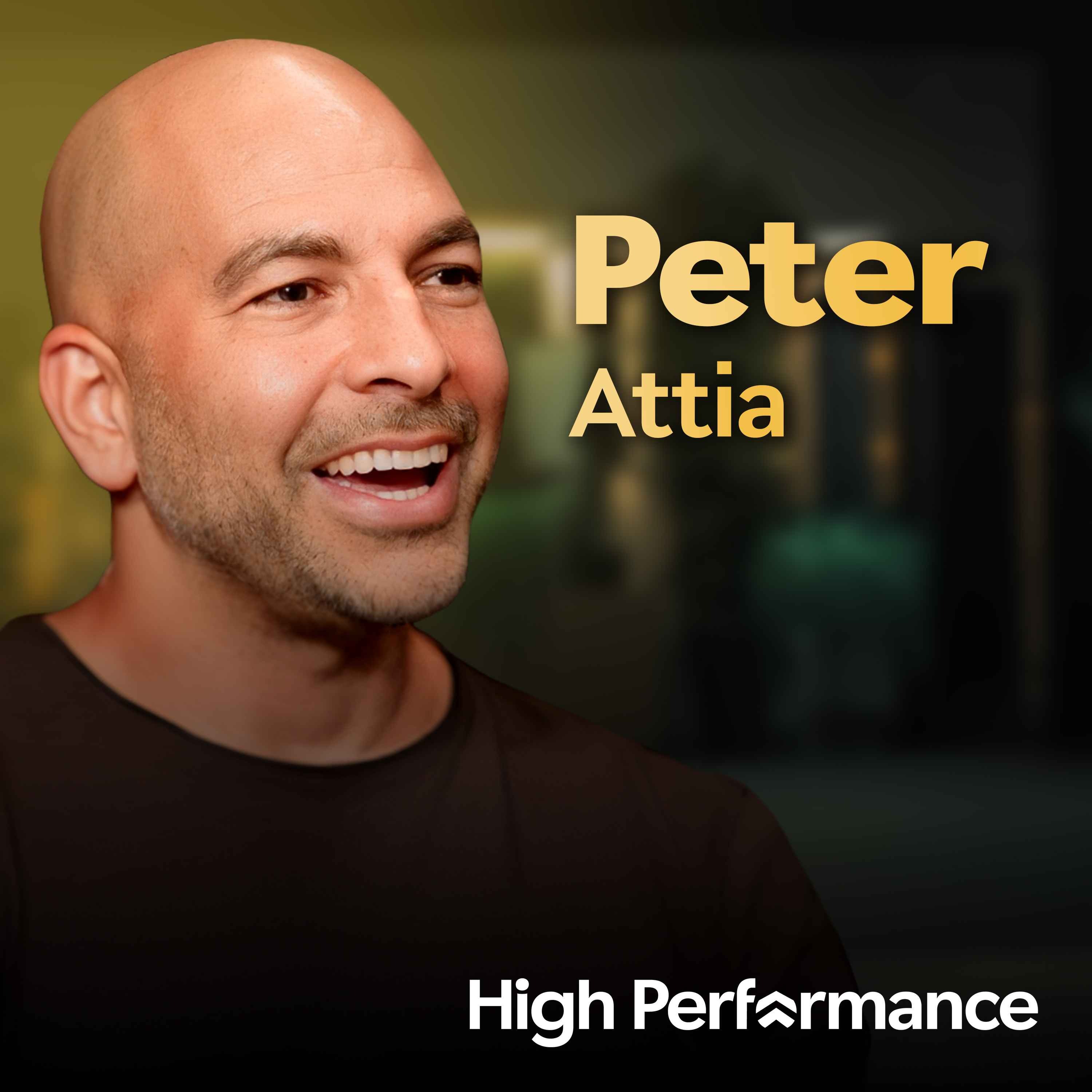
World’s #1 Longevity Expert: What Fitness & Diet Should Look Like After 30 | Peter Attia (E385)
51m 34s
The transcription discusses the resurgence of creatine as a supplement, highlighting its cognitive benefits in addition to muscle performance. It also addresses concerns about the overprescription of testosterone replacement therapy and the popularity of unregulated peptides. The potential health benefits of SGLT-2 and PCSK-9 inhibitors are emphasized, although medical supervision is necessary. Additionally, essential supplements like magnesium, vitamin D, and EPA/DHA for cardiovascular and cognitive health are recommended, with a focus on maintaining optimal levels through proper supplementation.
Transcription
8945 Words, 48295 Characters
Creatine is back in vogue. There's a little overhype around it, but I absolutely think this would be on the list of supplements that make sense for almost everybody. Testosterone replacement therapy is probably being over-prescribed. There's also a tendency to sort of over-promise these next class of drugs. These would be drugs that would actually allow people to gain size and strength, even independent of training. You're listening to high performance. Thanks to everyone who's already subscribed if you've not. Right now is the time because you'll get new episodes of the moment they drop and your support helps us bring more world-class guests onto the show. Tap subscribe right now and keep growing with high performance. Well Peter, welcome back to high performance. Thanks for having me. It's actually just over two years ago. Can you believe that we met up in London and recorded our last conversation? It feels like two minutes. In the intervening two and a bit years since we last spoke, what area of longevity has been most exciting for you? I don't know that there's been any one area. I mean, I think as we've seen just how impressive the metabolic drugs are, so the GLP1 agonists and GIP agonists, I think we've come to realize that those drugs do a lot more than just help people lose weight. They also seem to be protecting from both heart disease and dementia, independent of weight loss, which is a pretty remarkable finding and I think has enormous implications. And so I think we also want to turn our attention to other types of drugs that are in the pipeline that will help deal with some of the other aspects of aging, namely what's called sarcopenia or muscle wasting. I think that over the next decade, we're going to see some of these drugs come out of the pipeline into the clinic where they can help people, especially as they age, preserve lean mass. So are there drugs already available that can do that? Or are we talking about things that are kind of in the future at the moment? Yeah, there's nothing in any clinical term that does that. I mean, obviously something like testosterone and anabolic steroids play an important role in those regards. But those medications, those hormones, and again, testosterone would be the most common of these. They're not a panacea. I mean, you know, they simply enable a person to train longer and harder and recover better. But these next class of drugs, and there was one that actually looked like it was going to go into clinic, but it had some negative side effects metabolically. And so the company that was pursuing it sort of voluntarily decided not to put it into the final stages of testing. But these would be drugs that would actually allow people to gain size and strength, even independent of training. And I always want to caution people that that doesn't mean that you shouldn't be training because training does a lot more than just give you size and strength that obviously improves functional performance, and that's always going to be important. But the fact that an elderly person could mitigate the inevitable reduction of muscle size and muscle strength by taking a medication is, it's not something that's guaranteed to happen, but I just think it's promising. And some of the stuff I see out there right now is pretty exciting. Unrelated to that, I still remain somewhat optimistic that we're going to come up with better and better therapies for cognitive health, both in terms of treating the early stages of what's called mild cognitive impairment, and also just for preserving cognitive function as people age. Again, this is a really important thing to any patient I talk to is that they want their body to work and they want their mind to work as they get older. And they're actually more concerned about that than they are concerned with how many years they're going to live. I like a lot of people was pretty negative when I saw all the conversations about weightless jobs, because I was like, hold on, this is so indicative to me of modern society, you can't be bothered to go to the gym, you don't want to educate yourself about healthy eating, you think it's much quicker and easier, which is to give yourself a job and therefore you're going to lose weight. And I was so anti-it. Now, I haven't read the amount of research you have, but the things I have seen have basically made me question the fact that I judged it too early and I was too narrow-minded in my view. So what have you seen that you would use to educate someone like me that used to have that opinion that it was for the idol? Yeah, look, I don't think your opinion circa five years ago was unwarranted. I had kind of a similar opinion, but for slightly a different reason. So my reason was not, and forgive me for saying this, but just as a shorthand, I mean, I think you came to it through maybe a more understandable and judgmental lens, which is like, hey, just on first principles, this seems like not a good idea. My initial sort of opposition to it on mass, obviously, I thought it made a lot of sense if you were morbidly obese or had type two diabetes, but the idea that, hey, if you're 15 pounds overweight, is this really a good idea? It was largely born out of anecdotal evidence that we had seen in our patients where they were just disproportionately losing lean mass as well as fat mass. So the person lost 15 pounds and they weren't that overweight to begin with, they would still half of that muscle, if not two-thirds of that would be lean mass. And that was sort of problematic because it wasn't really improving body composition per se. It was just improving the number on the scale. Now, a lot of things have changed since then. First is, I think people and physicians are much more much wiser about at least explaining to patients how to use these medications and how lower doses used over longer periods of time tend to be better than mega doses that you have to back off. Also, as the compounds have shifted, so as we've moved from semi-glutide to tersepotide, the side effect profile is better. It seems to have less of the negative side effects, which allows people to not have to restrict protein as much, which tended to, again, just, I don't have data on this, but other than my patients, but I just noticed patients had a harder time eating protein, and that also contributed to it. And I think, finally, people are now understanding, like, hey, you still, this isn't a substitute for exercise. I mean, if anything, this actually ups the ante a little bit, and you better spend more time in the weight room, because if you don't, you're not going to necessarily recompose your body in the way that you want. So that's one piece of it. I think the other piece of it is simply the data, right? So when you now look at the published data of the trials, where we've moved from just patients with type two diabetes to patients who are obese to patients who are overweight, and you start to stratify patients and look at other outcomes. So, for example, a very important outcome is what's known as mace, major adverse cardiac event. And what we see is that mace events are going down independent of weight loss and improvements in metabolic health. This is a very important finding because it suggests that these drugs are doing something beyond just restricting your appetite. We see similar benefits in some of the biomarkers around cognitive health. I don't think that this is definitive, but I think it is highly indicative. And why would it be lowering episodes of mace? You know, I think there are many possible reasons it could be doing it. One of them could simply be that it is lowering glucose levels, even within a normal range. And anything that lowers glucose and insulin within a normal range is also going to improve cardiovascular and cerebral vascular outcomes. And again, that's not very surprising because we see data like that when we just look at all comers for hemoglobin A1C. So hemoglobin A1C is a blood test that gives you sort of a snapshot, a backwards looking snapshot of the last three months of your average blood glucose. And we typically have used it to stratify people who have diabetes or don't where that cutoff is 6.5%. But if a person has a hemoglobin A1C of 5.5%, which is considered completely normal, and another person has a hemoglobin A1C of 5%, which is also completely normal, but even lower, their all-cause mortality is going to be lower, meaning the lower the average blood glucose, the lower the all-cause mortality, even within the non-diabetic range. So I would guess, if I had to, that might play this single greatest role, but there may also be benefits elsewhere, and I think we still have to figure these things out. And one of the things that I've been thinking about is TRT, some sort of testosterone replacement therapy. For men of my age, should we all be investigating our testosterone levels? Yeah, I think investigating it absolutely. I think it's an important thing to know. My intuition is that testosterone replacement therapy is probably being overprescribed. I can't speak to the UK at all, but I think here in the US there's probably a bias towards overtreatment, and I think there's also a tendency to sort of over-promise what it implies, you know? I think that within physiologic levels, TRT is not a panacea. If you're sleeping poorly and eating poorly and not exercising, and you're under a lot of stress at work, and your testosterone is low, which would be a very likely scenario, and the causality would be lifestyle towards low testosterone. When guys in that situation are led to believe, hey, if we give you testosterone, it's going to make everything else better. I think that's a misrepresentation. That said, when you take an individual who's doing their best to eat well, sleep well, exercise well, all those things, and their testosterone is low, replacing that testosterone to a level that's closer to 80th percentile. A lot of guys, maybe 2/3 of guys will noticeably feel better and perform better, which means they'll be able to train harder, which means they'll recover better, and they'll sort of recoup the benefits of that. But it's always worth stating, you know, just giving a person testosterone doesn't really do much of anything if they aren't able to leverage it in terms of their training. So, the reason I asked the question is because exactly like it's in the US here in the UK, the conversation about testosterone is everywhere. Adverts, text messages, it's like, this is the answer for any man who doesn't look or feel like they're 21. There were two other things that I've just exploded in conversation in the last year over here. Wait, wait, let me see if I can do this. Gone. Creating the very well and peptides. Yes, yes. How did you know and why are you shaking your head? Well, I guess, because I suppose peptides are the most talked about thing here in the United States as well. So, okay, why is that? I think it's easier to talk about something in the absence of data where the marketing story is the thing to talk about than it is to get into the messy nuance of things where there's data. Why is nobody on social media talking about SGLT2 inhibitors and PCSK9 inhibitors? I mean, these drugs have a far, far greater impact on length and quality of life. What was that again? Yeah, exactly. So, SGLT2 inhibitors, which are a class of drug that were developed initially for people with type 2 diabetes, and we now realize that look, they're probably neuroprotective, meaning they probably independent of whether or not you have diabetes or not will help you live longer. They're certainly renal protective, so they protect the kidney against age-related, kidney decline, they protect the heart against heart failure. PCSK9 inhibitors are probably the most important class of drugs that lower cholesterol and reduce mace, and therefore reduce the probability of dying from the single most common cause of death. Those are two drugs that are amazing, and nobody talks about those drugs. Instead, people want to talk about peptides. Peptides, of course, is a really sort of silly term because a peptide just means a sequence of amino acids that forms a short, straight, tiny little protein. There are lots of peptide drugs out there, but when people use the term peptide, they're actually referring to sort of the non-regulated variance of these things, so the things that you can buy over the counter. Now, the fact that they're not regulated should always give a person pause, and I know it's really become very popular to sort of dunk on pharma, and there's plenty of reasons to be skeptical of pharma companies. But one thing you can't lose sight of is pharma companies are highly regulated. So, at the bare minimum, when you buy something from pick your favorite pharma company, you have a very high degree of confidence of what you're actually getting. You have a very high degree of confidence of how it was produced. It's produced under something called good manufacturing processes, GMP conditions, and they're free of contamination. By definition, they have to have done studies to demonstrate safety and efficacy. They almost always know the mechanism of action. How does the drug work? What does it bind to? What is the downstream effect? All of this stuff that we kind of take for granted every time your doctor writes you a prescription, whether it be for testosterone or a PCSK9 inhibitor or an SGLT2 inhibitor. Once you go into sort of this funky land of unregulated things like peptides, and you're just buying them on the internet because influencers are telling you to buy them, it's actually kind of remarkable how much of everything I said you have to give up. So, you have absolutely no assurance whatsoever that it's being produced in a reasonable fashion. You have no assurance whatsoever that what they're telling you on the bottle is what you're getting. It's almost unheard of that you understand the mechanism of action for many of these things. There are some exceptions. So, CJC-1295, we actually do know the mechanism of action, and there actually is something that it does. But that would be the exception. The majority of the peptides out there, including the most popular of them all, which is BPC157, there's pretty much no reason that I can think of that you'd want to take one of these. And at best, I think it probably has no negative impact. And at worst, you might risk getting a batch that's a little contaminated and you're not just wasting your money, but you're potentially putting yourself at risk. So, that's kind of my broad take on peptides. And should people be investigating the opportunity to take SGLT-2 inhibitors and PCSK-9 inhibitors? Well, again, the challenge with these medications is you have to have a doctor that is sophisticated enough to kind of understand, like how to utilize those. And, again, with PCSK-9 inhibitors, it's pretty straightforward because we're really treating what's called hyperlipidemia. And with SGLT-2 inhibitors, again, you need somebody who's sort of paying attention to the research and really understands the use case outside of the class that it was developed for, which is patients with type 2 diabetes. And, again, in patients with type 2 diabetes, the SGLT-2 inhibitors and the GLP-1 agonist have kind of revolutionized care. But, again, I think there's a growing case for people without diabetes to be using some of these drugs. But you're trading one problem for another, because now you are dependent on someone who has prescriptive authority to kind of understand your case specifically as an individual. I also mentioned creating, which is absolutely everywhere at the moment. And the big conversation over here in the UK, and I'm sure it's the same in the US, is the potential impact on cognitive function. Yeah, this is interesting. And I'm not entirely sure what has spawned this, because, of course, as you know, I mean, I'm quite a bit older than you, but I still feel like we were probably in the same circles in the 80s and 90s as kids lifting weights. And so we knew about creatine. I mean, we were, we have this store in the US. It was just a gym browse, though. It wasn't for everyone. Yeah, I mean, look, we used creatine like our lives depend at it when I was in high school. I mean, it was, yeah, I mean, all the muscle magazines told us, now, of course, back then you would load it for, you would take 20 grams a day for, I think, 10 days or a week. And then you would go down to five grams a day. Today, most people believe you just take sort of a steady state all the time. But you're correct. What we, what we knew back then, because the way that creatine monohydrate works was understood 30, 40 years ago, just as it is today. But most of the benefits were viewed as performance wise, muscle performance wise. Whereas today, you're, you're correct. We're seeing that once you saturate the muscle level, actually, there are some cognitive benefits as well. But I'm not sure, Jake, if that's the reason that it's become so much more talked about today, is it that we now realize that there's these cognitive benefits and there are studies that show that or is it just that, hey, you know, every once in a while, everything goes through a cycle and creatine is back in vogue. But I do think that there's a little over hype around it. But I absolutely think this would be on the list of, you know, a short list of supplements that make sense for almost everybody to be, to be taking. What else would be on that short list? I think some form of magnesium should be on the short list for virtually everybody. It is pretty hard to, first of all, it's pretty hard to overdo it. If you're taking the right forms of magnesium, now you can definitely overdo it if you're taking poorly absorbed magnesium, like magnesium oxide. And if you overdo that, you're going to have a lot of GI distress. But if you start to look at the slower absorbing types of magnesium, which are really great for abrogating muscle cramps or, you know, people that have skipped, you know, very, what are known as benign skipped beats like PVCs. Magnesium works wonders there. It can be helpful with sleep when it's combined with another molecule called L3inate. So magnesium L3inate has an easier time accessing the brain. And therefore, it can be helpful with sleep. It may even have some cognitive protective benefits. So again, I just think most people feel better when they have magnesium in some combination of those three forms. I think vitamin D should be on everybody's short list if their level is low. But again, this is one of the important supplements where you can measure a level and determine, hey, do I need to be supplementing? And so certainly where you live in the winter, you're going to probably find yourself having lower levels of vitamin D. And I think anything below 30 should absolutely be supplemented. So if your level of vitamin D is below 30, I think you really need to supplement it. I don't think you need to go crazy on it. You know, I think a level between 30 and 60 is probably adequate, maybe even up to 80. But you certainly don't need to be walking around with the vitamin D level north of 80. I think another supplement that people should be thinking about is EPA and DHA. So these are the a subset of what are called omega-3 fatty acids. So these are polyunsaturated fats that are in the omega-3 class that are of marine origin. And not everybody needs to need to supplement these. But if you're not consuming a diet that's particularly high in fatty fish, which I think truthfully most people are not, then I think there are some cardiovascular and neurologic benefits to those levels being high enough. And that's also something like vitamin D where you can measure levels using certain labs. And therefore you can sort of titrate to getting a level that's at the right spot. So I would say EPA, DHA, vitamin D, creatine, the various forms of magnesium. And then the final one I'd put on that list that everybody should at least be considering is probably a complex B vitamin, a methylated complex B vitamin. So B12 and B6 to some extent. But mostly B12 methyl folate. I think for many people a little bit of that is not, is a reasonable thing to consider. There are probably a few others I could think of if I really scratched my head. But I think those would be, if you could only limit yourself to five, those would be the ones I'd start with. I want to talk to you about the currency of aging. You talk about muscle mass being the currency of aging. So I know a lot of people will be listening to this now that think, well, I do cardio and I want the dog and I'm in my, you know, late 40s, early 50s. Surely that's enough. I'd love you just to really lay bare to these people. Why lifting weights and both men and women at this kind of age is a really vital message that you keep on sharing and probably can't share often enough actually. Yeah. And to be clear, I don't think it's the only currency. I mean, I think if you only lifted weights and you didn't do anything for your cardio, you would also, you know, you'd be better off than somebody who didn't exercise, but you'd also be missing a very important pillar of resilience towards aging. You know, if you think about it, when you engage with the world, you have to be able to exert force and absorb force at the simplest level walking, right? Walking requires delivering force to the ground, the ground delivers force back to you that propels you forward. I mean, that's the most people take that level of strength for granted. Okay, so let's go one step further. If you wanted to be able to run, well, now you have to exert a lot more force on the ground. By the way, the faster you want to run, the more force you have to exert on the ground. For context, the fastest human that has ever run, you say in bold, he's exerting about seven times his body weight in force every time he strikes the ground. That's what it takes to go as fast as you say in bold, just for context. Wow. Now for the rest of us who are not going to be running that fast, if you want to be able to climb up a flight of stairs, you are exerting force on the step more force than you would if you were walking on flat ground. And at that point, because your muscles are demanding so much oxygen, you need the cardio benefits to go with it. If you want to pick something up off the ground, if you want to pick up a child, if you want to get up, if you want to be able to sit down on a toilet and stand up, I mean, all of these things that the people listening to us are because they're probably our age or taking for granted, these things become very difficult as you age, right? So everything physically becomes limited as you age based on primarily two things, your ability to exert force on the world and absorb force that it gives you back and your ability to deliver oxygen to your muscles to make those things happen. And what is it? What are those two things that I just described? Well, the latter is what cardio training is training your body to do. cardio training trains your heart and lungs to deliver hemoglobin carrying oxygen to muscles and get carbon dioxide back for ventilation. And resistance training is all about training the muscle to have capacity to contract, generate force, and relax. And so if we don't train that system, at some point, we're all going to fall below a certain threshold that makes it really difficult to enjoy the things we want to enjoy in life. And so what I would argue I hope without much controversy is that the longer you want to be able to physically engage in the world, the higher your level of strength and cardio respiratory fitness needs to be, to give you the most degrees of freedom as you go through the world and carry out not just your activities of daily living, but hopefully activities of recreation and, you know, entertainment. So the average age of the people that listen to this podcast, male and female is just over 40. If someone comes to you just over 40, a male and a female, what are the things that you would like to see them be able to do that would make you think, you know what, by the time you hit 80, I think you can pick up your grandchild and bend down on WSU laces. Yeah. So we have a very detailed set of tests that we put patients through and then they're graded by age and sex. So there are components of that that are cardio respiratory. So for example, how high does your VO2 max need to be? We can talk about what VO2 max is, but how high does your VO2 max need to be at 40 to ensure that between the ages of 80 and 90, you're never rate limited. Okay, so we'll start with that. Every activity that a person can think to want to do has a certain amount of oxygen delivery that is needed. That's called VO2, ventilation of oxygen. So you and I sitting here talking, oh, has a pretty low ventilation of oxygen requirement. It's probably on the order of six to seven milliliters of oxygen per minute per kilogram of body weight. Okay, so pretty darn low. You know, to be able to walk around at a reasonable pace, maybe two to three kilometers per hour, you need to be able to ventilate about 10 milliliters per kilogram of body weight per minute. If you wanted to walk sort of briskly, that might need to be 20. If you wanted to play a very leisurely game of paddle ball or something like that or a very leisurely game of doubles tennis, well, now it's got to be about 30. And the more you want to be able to do, the higher that number goes. So the first thing we always want people to do is define what they want to be able to do in the last decade of their life. This is called the marginal decade. So when a person spends a lot of time thinking about the things they want to do, oh, I want to be able to have sex. By the way, how high a VO2 do you need to be able to have sex? I want to be able to travel. I want to be able to pull my own luggage through a train station. I want to be able to carry a piece of luggage up a flight of stairs. So you kind of define these things, and then you ask the question, well, how much does this parameter, this physiologic parameter decline with age? And the answer is about eight to 12 percent per decade. So if you define that, hey, for me to have the highest quality life, when I'm 85 or 90, I need a VO2 max. My maximum VO2 needs to be at least 28. You can extrapolate back from that to what it needs to be at 40. And I mean, I'm not going to do the math in my head, but if you need to be at say 30 at 80, you know, you need to be at about 50 to 55 at 40. So then what you should do is test yourself at 40. And if you're not at that level, then you need to train to get to that level. And if you are at that level, you need to train to maintain that level. But we basically take that approach to every single aspect of training. And that applies to strength, and that applies to reactivity, and that applies to explosiveness, it applies to power, it applies to everything that we measure in people, and we measure, you know, about 30 things in people, 30 different metrics of which VO2 max is one, but the same approach, which is what we call backcasting. So you take the metric, you figure out how much of each of these metrics you need to achieve your personal goals. In the marginal decade, we call that the Centenary and Decathlon. You project it back to where you are today, and then you train to fill the gaps because everybody has gaps. Most people have a much higher appetite to do things later in life than they realize in terms of how difficult it's going to be. I'm sure all 30 of the things that you test people for are important. Which other ones are up there with the VO2 max for importance for you, and someone comes into your clinic in their mid-40s? Generally, things that involve carrying very heavy hip extension. So, for example, like being able to do a step up onto a box, being able to eccentricly load on a step down. So eccentricly is loading while the muscle is lengthening. So again, most people, when they're older, get into trouble first, because their brakes fail more than the gas fails. So the gas is how you step up onto the curb. The brakes is how you step off the curb. So when you step up onto something, that requires concentric strength, the strength of a muscle that is contracting. When you step down off a step, you're actually requiring strength in any long-gating muscle that's referred to as eccentric strength. And that's one of the places where people are going to fail first. And so if you really look at some of the most common injuries that people have when they get older, it's falling. And a lot of falls are driven by basically two things. It's an eccentric failure followed by a lack of reactivity. So the first thing is they don't have the eccentric strength to control something going down and perhaps even more importantly, they don't have the reactivity of hand and foot to catch the mistake. And that's something you actually have to train for. I mean, all of this is something you have to train for. You have to train for it with the specificity of an athlete. So jumping exercises, single leg exercises, all of these things are really important ways to train the various components in the world. And when it comes to VO2 max, Peter, is that about getting yourself as out of breath, as possible, as often as possible? Or is it more like zone 2, zone 3 for a longer period of time? Any form of cardio training above zone 2 will improve VO2 max, but the lower the level of intensity, the less benefits you're going to get. So if you actually want to improve your VO2 max, you cannot limit yourself to low intensity exercise. You must do high intensity exercise. The sweet spot is, so there's a bit of an inverted U, right? If on the X axis, you have duration, slash intensity, and then on the Y axis, you have effect on VO2 max. It's an inverted U. So very, very long low intensity and very, very short high intensity are a little suboptimal. So 30 second all-out efforts will increase your VO2 max, but not nearly as much as 3, 4, and 5 minute efforts. So the real sweet spot for zone 2 is sort of somewhere between 3 and 8 minutes of extended, very, very hard work at about a work to rest ratio of 1 to 1. So if you're going to do 4 minute intervals or 5 minute intervals, you want to do 4 or 5 minutes at the hardest level you can do, and then take 4 or 5 minutes to recover, and then repeat that over and over and over again. And for most people, a workout like that once a week is really valuable. You know, obviously if you're a very elite athlete, you're going to do it more, but for the rest of us, one workout like that a week, two at the most is probably all you need, and then the remaining workouts can be at a slightly lower level of intensity, again, depending on your volume. So if you have a lot of volume, if you're training six, seven hours a week of cardio, then you really need to lean into zone 2, because with so much cardio training, you cannot do it all at a higher level of intensity. But if a person's only doing two hours a week of cardio, you know, frankly, they shouldn't be doing any zone 2, because at two hours, they have to make all of that work zone 3, 4, and VO2 max. That's really interesting, because I think that we don't look at the zones we're in. We look at the amount of time. I was in the gym for an hour. I've done three sessions this week. I've done three hours on my peloton this week. Well, three hours on your peloton in zone 1 is very different to three hours on your peloton on zone 4, right? Oh, absolutely. Yeah. So if a person, I mean, the way we do it with patients is we start with time. So, yeah, you tell me this week, Jake, how many hours are you going to do on your cardio? And if you tell me this week, it's 2, and next week, it's 3, and the next week, it's 2 and a half, and the next week, it's 4. On a week-by-week basis, we're going to determine what zones you will spend your time in as a function of time. But the general rule is the shorter the amount of time, the higher the intensity level needs to be. If you told me you only have two hours a week to do cardio, you're never going to be below zone 3 or 4. Yeah, and that is probably about right, Peter. I mean, the amount of travel and the two kids and the businesses and the recording, and I think if I can get in the gym and do two to three, 45 minute rides on a peloton. Yep. And yeah, so none of those should be zone 2 in your case, because you don't have enough volume to- How much of that ride should be in zone 3 or 4, the whole thing? Well, I mean, look, again, my recollection of doing peloton rides is, you know, there's a warm up and there's a cool down and stuff, but I would be targeting workouts that are at or above what's called threshold. So, my favorite, when I used to do peloton, my favorite guy on there was going to Matt Wilpers, because he does really good zone training. Now, you have to understand, Matt does what are called FTP zones, and there are seven of those. So, the zone 2 that he's talking about is even a lower level of intensity than the zone 2 I'm talking about. The zone 2 I'm talking about is closer to his zone 3, but I would do, you know, I would look at a class that Matt Wilpers is doing where you're doing FTP training, right? So, you're looking to boost that functional threshold power, which is around zone 4. What's FTP? Functional threshold power. It's the highest power you can hold for one hour. So, yeah, and there are hit classes, right? High intensity interval training classes, there's Tabata classes, but the bottom line is when your volume is as low as yours is, which is perfectly understandable for a guy with many kids and many jobs. Yeah, you don't really need to be spending much time in zone 2. Even though I train probably more than you, I probably only do one zone 2 workout a week. Most of my cardio is going to be above zone 2. What does your workout week look like? Well, it varies by week, but, you know, if I can be on the bike at least four times or three times on the bike, two times in the pool, but I want to have at least four cardio sessions. So four to six cardio sessions would be where I'd like a long an hour. Yeah, 45 minutes on the short end, maybe an hour, 15 on the long end. So probably averages an hour, and then four times resistance training. I do think it's an important thing for us to talk about, though, because I think that people think, if I get in the gym a couple of times a week, I'm kind of doing enough. You know, I'm ticking by, I'm getting on okay. But as you're saying, where we are now, it's not just about where we are now, it's where we are now compared to where we will be in 40 or 50 years. What does your weight training like? Are you different muscle groups on different days? Are you like a high rocks guy or a crossfit guy? What's your. No, different muscle groups on different days, but lots of what look like really boring things as well. Lots of work on stabilizing muscles, lots of work on, yeah, just things that look like they're not that interesting. You know, lots of bouncing stuff, lots of movement stuff, lots of rotator cuff and all sorts of things that might look kind of uninteresting, but also a lot of power stuff. So jumping explosive movements, things like that. I think the only thing that's significantly different from what I was doing maybe five years ago is I really don't axially load very heavily. So I'm not doing, you know, the heaviest, heaviest stuff I'm doing, I'll do a belt squat as opposed to a back squat. And I'll do much more single leg stuff where I don't need to load nearly as much. So single leg RDL instead of deadlift, you know, box step ups. It's kind of less taxing on my body than it used to be, at least tax, much less taxing on my back than it used to be. Why is the mobility routine so important for people to consider as well as cardio and heavy weights? You know, I think because ultimately that's what we're training for, right? You're training to be able to do things in life. You're training to be able to navigate a world around us. The world around us is not always straightforward. The example I gave earlier, if you're stepping off a curb and you lose your footing, which is, by the way, that's something that can happen to anybody. It's not just something that happens to an older person. You could be dark. You could not be paying attention, whatever. You do have to be able to have feet that can react to the world around you. So I think everybody's training should incorporate some jumping. I go through phases where I'll do some rope jumping. I used to skip a lot growing up because I'm boxing. So for me, at least jumping rope is kind of fun. But any just bouncing around, single leg back and forth side to side, all those sorts of things, just preserve foot reactivity, which I think is kind of an important thing as you think about something as simple as going for a hike or walking on any uneven surface. And we spoke last time you joined us in London about ketogenic dieting. I'm sure I read some of you've moved away from that a bit. Is that right? Oh, yeah, a long time ago. I was on a ketogenic diet from 2011 to 2014. So it's been over 10 years since I did that. What does your diet look like now? I'm on kind of a seafood diet, so I see food and I eat it. That's a good diet pizza. No, I don't follow any particular diet. I'm just trying to make sure I hit my targets on protein, aiming for probably 150 to 180 grams a day of protein. truthfully, most days I don't hit 180, but I do think most days I'm hitting about 150. I'm about 80 kilos, so you can sort of do the math on that. Thereafter, again, it's just kind of a bit of common sense stuff. Luckily, I enjoy cooking, I like to eat. I have an appetite for healthy food. I do have an appetite for unhealthy food as well. I just don't tend to be as surrounded by it, but I'm really not that dogmatic about what I eat, and I just sort of go where the flow is with my family. So if we're having pizza, I'm having pizza. If we're making steak, I'm not particularly fanatical about it. Luckily, as I said, all of my kids and my wife, we have an appetite for good food. We like to make salads. We like to roast vegetables. I suppose you could call a balance diet. Before we finish, we do need to talk about the fact that this isn't all about exercise and movement. So much of longevity actually is about managing stress. It is about making sure I guess this sort of work, life, health, triangle, so that you're actually the happiness and the joy in your life is a huge indicator for your longevity. I agree with that. And even if it's not, meaning even if being happier doesn't make you live longer, what's the point in living period if you're really, really unhappy or you're really, really disconnected or lonely or whatever it might be? So, and then of course, on top of that, I think there is evidence that although it can't be tested in a sort of prospective way, I think there's reasonable enough evidence that unbalanced, happier people that have better relationships are also at lower risk of disease and do live longer. So, there's two reasons to consider it right there between quality of life and length of life. And what do you do with your clients when they come to you to try and improve their kind of emotional health, if you like? Yeah, in many ways, this is kind of the by far the least formulaic aspect of what we do. Not that anything we do is formulaic, but at least with exercise, like we really, really have kind of a structure. I think when it comes to emotional health, everybody is kind of, you've got to figure out where, what is, what is everybody's issue? Where are they struggling? Are they struggling with emotional regulation? Are they struggling with sense of purpose? Are they struggling with depth or quality of relationships? Are they struggling with addiction? Addiction sometimes can be a loaded word, so just call it maladaptive behaviors. So, I think we look at those four things in exquisite detail and we dive into all of them. So, before we move to the quickfire questions, you'll have a lot of people that come to you who have a lot of drive, you have a podcast called drive, you know about the importance of drive because you've had a successful career. What's your thoughts on the balance between career ambition and longevity and drive and destructive behaviors? I think it's complicated. It's funny, my podcast is really named after a car drive, but everybody assumes it's drive in the way that you just said it. Well, for people listening to this, they won't see that you've got an air and senotisha on one of your heroes and that before we started this recording, we had a long conversation about the other love of our lives, apart from my family, which is Formula One. That's right, that's right. I was kind of hoping we would do a whole podcast on Formula One. Well, next time we will. Look, I think life without purpose is brutal. I can't imagine waking up every morning and not having some sense of purpose, but of course, sense of purpose doesn't have to come in the form of a job. I think, you know, your purpose can come in so many things, including caring for your children. But I think a couple things probably need to be true, right? And perhaps the most important of them is your sense of purpose must involve something beyond yourself. I think that's tough for some people, right? Like, I think for some people, they're at a stage in their lives where maybe their only purpose is advancing their own career or advancing their own performance or things like that. And my intuition is that that is something that's not really sustainable indefinitely. Or at least it's not, it's not joy maximizing. And look, anybody who's got children immediately recognizes like this gift of having kids where caring for them and making them a bigger part of your purpose than yourself is just so instantly rewarding despite all of the difficulties that come with it, because it's not easy, obviously, to have kids. And there are many moments of frustration. But I think a big part of what makes it so rewarding is that it instantaneously provides you with a sense of purpose beyond yourself. And so now, if you layer on top of that, well, what does it mean to have a career that is not just about making money, but is about helping somebody or providing value to somebody outside of yourself, those things matter. And then this idea of how much drive goes into that, to me, it's a tough question answer because it's a question of like, well, what's the alternative? And I don't think there's a right answer. I think people like me will forever intertwine personal life and work life. There's not there's not really a distinction. Like my work is my life, my life is my work, and my family understands that. But for some people, they like to have more separation between those things, and I think that's fine. I don't know. I just don't. I think you just have to kind of have the right structure in your life to understand that. But you also have to have to think about what is maladaptive. And I know for myself, when I'm working too much, what's maladaptive is not how much I'm working, it's what it's taking me away from. And I think there, it's helpful to have a partner who can call you out on that and who can say like, we haven't been spending time together as a family or we haven't been doing these things that normally are important to us collectively outside of work. So I don't know that that's a great answer. But I think it's less easy for me to define by time and more easy to define by attention. I think you're right, and it's actually not a bad answer, it's a great answer, because often it's not you that can see what you also not just need to be doing, but shouldn't be doing. I think that's one of the hardest things, the ability to say no to things, that understanding that no is a one word sentence, right? It's not easy. I've got some quick file questions before we bid you farewell and let you get on with the rest of your day, Peter. The one thing, and we've spoken a bit about this before, the one thing people are wasting their money on at the moment in this world of health and wellness that just simply doesn't matter. Peptides. The one thing people ignore too much that you see in your clinic that they absolutely should not. Emotional health. For someone completely overwhelmed, if they could do just one thing this year, what would you like to see them do? Find 30 minutes to exercise six days a week. What's one area of your own health or performance that you're still trying to figure out that isn't easy even for you? Nutrition. And finally, your golden rule to living a high performance life in 2026 and beyond. Give more than you take. That, my friend, would make it a very nice world if everyone gave more than they took, right? You know, as a farewell, you know, the word cell comes from the old English word cell N, which means to give. So the whole origins of selling is about giving, not getting. And I think that would change the world if people understood that, you know? Yeah, I agree. We should all at least try, huh? Absolutely. Well, you've certainly given plenty to us today and plenty to many people over the years. Lovely to talk to you. Next time you in the UK, don't be a stranger. Come and see us in London and speak soon. Sounds good, my friend. Thank you. Well, that is quite simply a masterclass from Peter Atty on the science of longevity. And as always, this podcast exists to provide as much value as possible for you from people that you can trust. I really hope that some of my questions answered some of the questions that you've got. I think things that really stood out for me, or training up in zones four or five cardio zone four or five. I mean, for Peter to say that if you only got a couple of hours a week, you need to be up in that range. Like, I find it so hard to train above like zone three. So I'm on the peloton and I'll do 45 minutes and I will work as hard as I can and I just get into zone four. So I need to think really carefully about that. Really interesting about magnesium. And so often, I think magnesium gets about a wrap because people just go, "Oh, you shouldn't take magnesium for sleep unless you're one of the one percent that it helps." But actually, there's so many other things that magnesium does for you. It's so important. And the more you read up on that, the more I think you'll benefit from it. If you don't take creatin at the moment, you heard what Peter said. Please think about doing that as well. And finally, really just think about your muscle mass. I said this often to my daughter, my 12-year-old daughter, who is just getting that stage where she thinks a lot about her body. And I say to her often, it's not about being thin. It's about being strong, like strong strength power. These are all the things that really matter. But look, if you're in your 40s and you do a couple of gym sessions a week, like me, thinking that you're ticking the box and that that's enough, it's better than most, but I'm not sure it is enough because it's quite simply where you are today, will determine your quality of life when you're retired and I want you to enjoy those days. If you got a lot from this conversation with Peter, please hit subscribe so you don't miss an episode. We've now got 700,000 subscribers on our YouTube channel, so thank you if you're one of them. You know, most people that listen or watch our shows still don't subscribe. I'd love it if you could. You can find us on YouTube, Apple podcasts, Spotify, all good podcast platforms. We've got a brand new book out called Microhabits if you want to lean further into high performance. And please ping this episode to someone that you think could benefit from hearing it. Until next time, remember high performance is not about perfection, it's about progression. Have a good one.
Podcast Summary
Key Points:
Creatine is making a comeback with potential cognitive benefits in addition to muscle performance.
Testosterone replacement therapy may be overprescribed and over-promised, with lifestyle factors playing a significant role.
Peptides are a popular but unregulated supplement trend, lacking safety guarantees.
SGLT-2 and PCSK-9 inhibitors offer significant health benefits but require medical supervision.
Supplements like magnesium, vitamin D, and EPA/DHA are recommended for overall health.
Summary:
The transcription discusses the resurgence of creatine as a supplement, highlighting its cognitive benefits in addition to muscle performance. It also addresses concerns about the overprescription of testosterone replacement therapy and the popularity of unregulated peptides. The potential health benefits of SGLT-2 and PCSK-9 inhibitors are emphasized, although medical supervision is necessary.
Additionally, essential supplements like magnesium, vitamin D, and EPA/DHA for cardiovascular and cognitive health are recommended, with a focus on maintaining optimal levels through proper supplementation.
FAQs
Creatine, magnesium, vitamin D, and EPA/DHA are some supplements that make sense for almost everybody to take.
Creatine offers cognitive benefits in addition to performance benefits and has been understood for its muscle performance benefits for decades.
There are no clinical drugs available for muscle wasting and sarcopenia currently, but there is ongoing research on drugs that may help in the future.
Regulated pharmaceutical drugs undergo strict testing and have known mechanisms of action, while unregulated peptides lack regulation, leading to uncertainty in their production, content, and effects.
There is a growing case for people without diabetes to consider taking SGLT-2 inhibitors and PCSK-9 inhibitors, but it is important to have a doctor who understands their use outside of their initial target conditions.
Testosterone replacement therapy may be overprescribed and over-promised, and its benefits are most noticeable in individuals who already maintain a healthy lifestyle.
Chat with AI
Loading...
Pro features
Go deeper with this episode
Unlock creator-grade tools that turn any transcript into show notes and subtitle files.
 PodcastTranscript AI