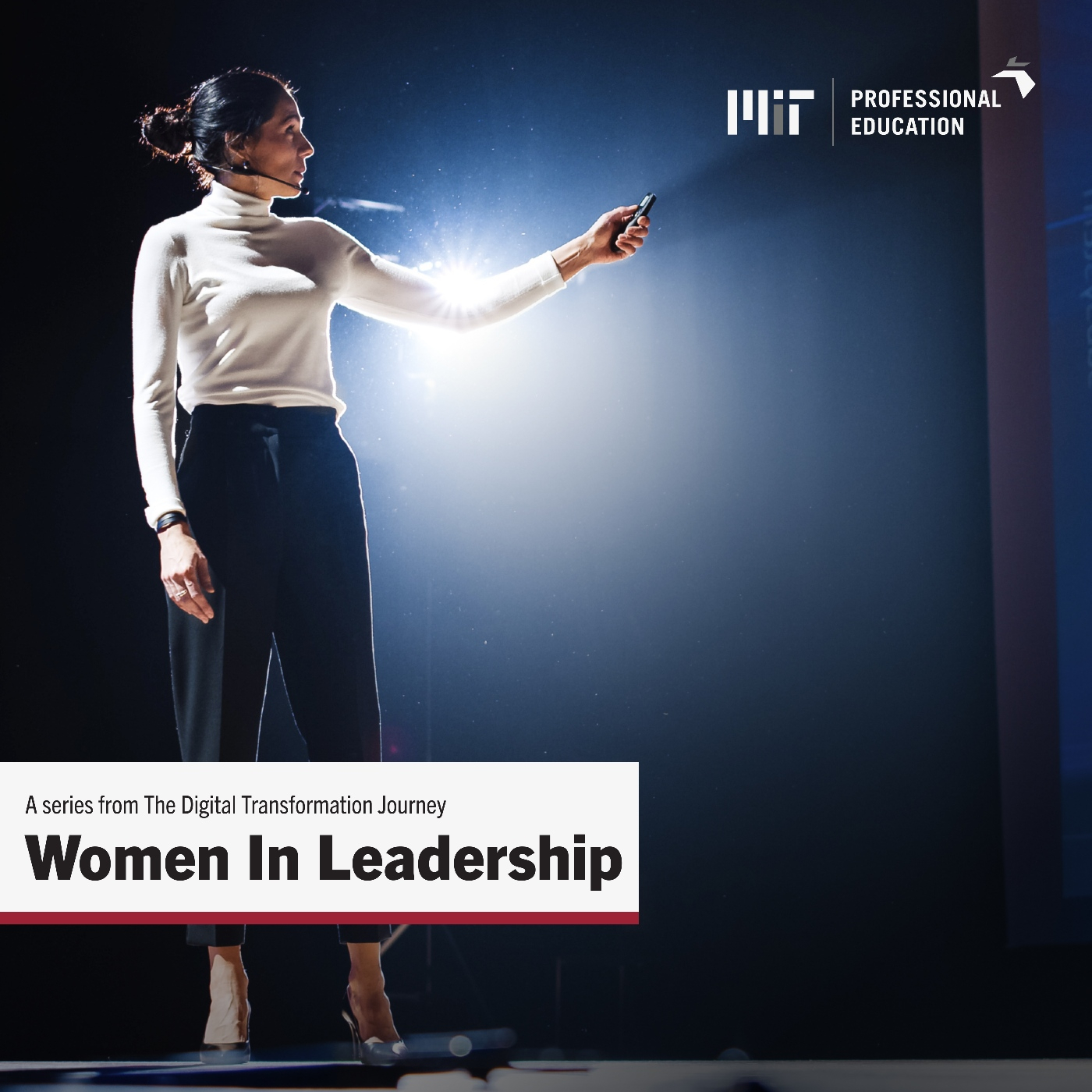
Women in Leadership Ep. 4 │ Public Speaking and Body Language: Convey your Message Effectively
11m 30s
This MIT Professional Education podcast episode features Professor Anna Frebel discussing public speaking strategies for women in leadership. She highlights that public speaking, while anxiety-inducing, is vital for visibility and connection. To enhance delivery, she emphasizes the importance of storytelling, using animated body language, and varying vocal tone to make content memorable. For managing nerves, Professor Frebel recommends practical techniques like breathwork and physical grounding, such as wearing high heels to feel more confident and poised. When addressing difficult audience interactions, including sexist questions, she advises maintaining composure, not taking it personally, and focusing on the overall audience's impression rather than the individual. Preparation is underscored as foundational, ensuring clarity and reducing room for misinterpretation. By integrating these methods—storytelling, breath control, and confident demeanor—speakers can improve their presence, handle challenges effectively, and leave a positive, lasting impact.
Welcome to the Women in Leadership podcast series from MIT Professional Education, a space dedicated to inspiring and supporting women in leadership roles. In this podcast, we speak with experts who share their insights and advice on how to navigate common challenges faced by women in leadership, as well as how to foster the development of aspiring professionals. Join us as we explore the world of women in leadership in this exciting and necessary conversation. According to Jitnax, women are twice more likely than men to suffer from anxiety when speaking in public. This is especially unfortunate as facing an audience is not just an inevitable part of leadership but a frequent one as well. Whether addressing the small team online or presenting to a crowded auditorium, the ability to engage one's listeners is vital to the success of any discussion, presentation or career. In this episode of Women in Leadership, we explore the art of public speaking with MIT Professor Anna Frebel. Professor Frebel is not only a dedicated astronomer but also a certified breathwork coach, leadership expert and advocate for community and collaboration. She believes that public speaking is a great source of visibility and a means of connecting with an audience while also conveying essential information. Here, she discusses how breathing and body language can be used to convey our intentions more effectively. I think public speaking in any way is the wonderful way to gain visibility and to present your results to an audience and to really connect with them. People will only take away from a speech or a talk what they can remember in terms of a story. So storytelling is really, really important. The question is how can we tell the most compelling stories. If I were to read something in a really boring fashion, you would probably remember a lot less, right? But if I animate it and I use my hands and I go up and down with my voice and I'm maybe not with my my head, then you have a much easier and more vivid way of remembering things. So we can use body language a great deal to convey this story that we want to get in and we're really impacting the audience this way. So there are, of course, many ways, a classic thing is that you probably shouldn't give your talk like this because you're closing your way off to the audience. You can, you know, much better to have sort of be open, you know, wave your hands around a little bit, not too much, not too little, just to emphasize things. Another thing that I use and it's very simple and perhaps subtle, but the impact I think can be profound is that I use a breath exercises before certainly big talks, important talks, perhaps a little bit nervous to to come myself down. And so there you can Google it. There are lots of exercises like box breathing that you can do. I have even a little yoga exercise that fits in the bathroom stall that I can do just to kind of get my brain going, but my body have my body become. There is a sort of age old notion that women in difficult or important situations, you know, nervous and not standing with two feet on the ground and, you know, can't make solid decisions. But that I don't buy into that because if you, you know, have ways to calm yourself, you will A give a better presentation and B you will be more calm. And that is what's being conveyed that you have it all covered because you literally stand with two feet on the ground on the stage. And you convey your message this way, right? So I think that's the very powerful way to improve your performance in some fashion. And also to come across as much more calm and solid. And this is exactly what you want because this is what people remember about you. They will remember not just the story, but they will also remember how you delivered that. And I've gotten very many comments after talks that when a fire alarm went off or something like, oh, you were so calm. And I was like, well, it was just a fire alarm. So, you know, but nobody remembers anything about my talk from that on, but they do remember how you how you react to things and about things and how you handle it. And if you feel like you are a little bit nervous beforehand, this is a really great way to get your power sympathetic nervous system going and it only benefits that come from that. According to Professor Forever, people will only take away what they remember as a story. So finding and highlighting a narrative is very important. By being animated, using hand gestures and modulating your voice, your listeners are more likely to experience a story with you and therefore remember it later. At the same time, no matter how well you deliver your class, speech or presentation, there is always a chance of unwelcome questions or interjections. Professor Forever highlights how by maintaining composure, an effective public speaker can actually turn these inconveniences to her advantage and use them to create a positive lasting impression. Here, she shares some insight on how to deal with a sexist audience. Yeah, that's a big one. I think the most important thing is to recognize that that's a them problem and not a you problem, which is just another way to say, like, don't take it personal, don't get sucked in. I think that's very important. Another really important aspect of having someone to ask an off question is, again, how you react to that, because at the end, what actually matters is not so much how you deal with this person, but how everyone else will receive how you handle that situation. So unfortunately, these are unfortunate tests that you might be put through, but it's much more important to actually think of everyone else in the room than that particular person who's trying to test you. So I think really thinking about that it's a them problem and not a me problem is the first step because that allows you to keep your confidence. If your confidence gets gets a hit while you're on stage, that that will be visible in your body. And again, this is what everyone else will will see because they're just watching you in your body on stage and how you react to an off question. I have found it helpful in the past to wear very high heels or in shields, but big, you know, sturdy ones, not the ones you fall over. That's that's no good. But to wear high heels because it just made me feel better about myself and knowing that if someone asks a question, I'm going to take three steps to the side in my awesome heels and I will answer the question briefly succinctly. I will may not actually even answer the question. I will say something in response. That's sort of in the direction of answering the question and then I will march back to my pulp and I will keep talking. Right. So that's my personal way of handling these things. I think high heels serve me better than ballet flats just because it's sort of this procedure I have taking a few steps that remind me my two feet on the ground. Actually, I'm even elevated. I'm better than the ground by four inches. I can handle that. And everyone will see that they will nobody will ever remember what question was asked of you. They will remember how you handled that. That is certainly one one trick that I have been using. Another thing I think that helps with the confidence is just to be very sure of your presentation in terms of the structure and the message and the impact that you have been conveying or that you want to convey. You're able to fully connect with the audience and really drive home your main message and your main takeaway points already gives you confidence that you set the right things that there was nothing to misunderstand. Anyone who has a clear off question will just be a big outlier because everyone else in the room knows, wow, this is really an off question. What's up with that person? Again, the rest of the audience matters much more than an individual trying to ask, try to see how you react if you get pushed a little bit. So be yourself, find a way to what keeps your confidence in the moment and just realize it's a them problem. As Professor Freble emphasizes, preparation is key. If your presentation is clear and polished, you will feel more confident and leave less room for odd or irrelevant questions. In the case these do occur, the simple techniques she mentioned can help you maintain control and keep perspective of what's important, the lasting impression of the majority. So if you've previously struggled with a challenging audience or public speaking in general, try incorporating her recommendations into your repertoire, practice using body language and breathing exercises to enhance your storytelling and your presence. Thank you for listening to our Women in Leadership podcast series from MIT Professional Education. We hope this episode has offered some useful insight and helped inspire you to become a catalyst for positive change and equity within your organization. Remember, leadership is about having the courage to put yourself forward, the drive to succeed and the passion to make a difference. Find out more about our Women in Leadership course on our MIT Professional Education website in the Spotify description of this episode. [BLANK_AUDIO]
Podcast Summary
Key Points:
Public speaking is crucial for leadership but often induces more anxiety in women, making effective techniques essential.
Storytelling, body language, and vocal modulation are key to engaging audiences and making messages memorable.
Breathing exercises and physical grounding techniques (like wearing sturdy high heels) can reduce nervousness and project confidence.
When facing challenging or sexist questions, maintain composure, view it as the questioner's issue, and focus on the broader audience's perception.
Thorough preparation and a clear presentation structure build confidence and minimize misunderstandings, helping to handle disruptions gracefully.
Summary:
This MIT Professional Education podcast episode features Professor Anna Frebel discussing public speaking strategies for women in leadership. She highlights that public speaking, while anxiety-inducing, is vital for visibility and connection. To enhance delivery, she emphasizes the importance of storytelling, using animated body language, and varying vocal tone to make content memorable.
For managing nerves, Professor Frebel recommends practical techniques like breathwork and physical grounding, such as wearing high heels to feel more confident and poised. When addressing difficult audience interactions, including sexist questions, she advises maintaining composure, not taking it personally, and focusing on the overall audience's impression rather than the individual. Preparation is underscored as foundational, ensuring clarity and reducing room for misinterpretation.
By integrating these methods—storytelling, breath control, and confident demeanor—speakers can improve their presence, handle challenges effectively, and leave a positive, lasting impact.
FAQs
The podcast is dedicated to inspiring and supporting women in leadership roles by sharing insights and advice on navigating common challenges and fostering professional development.
Public speaking is a frequent and inevitable part of leadership that provides visibility and connects with audiences, yet women are twice as likely as men to experience anxiety when speaking publicly.
Using animated gestures, open posture, and vocal modulation helps convey stories more effectively, making them more memorable for the audience.
Breath exercises like box breathing or simple yoga routines before a talk can calm nerves, improve performance, and help convey confidence and composure.
Recognize it as the other person's problem, not yours, and focus on maintaining composure; your reaction matters more to the audience than the question itself.
Wearing sturdy high heels can help you feel more grounded and confident, allowing you to move purposefully and handle challenging questions with poise.
Chat with AI
Loading...
Pro features
Go deeper with this episode
Unlock creator-grade tools that turn any transcript into show notes and subtitle files.
 PodcastTranscript AI