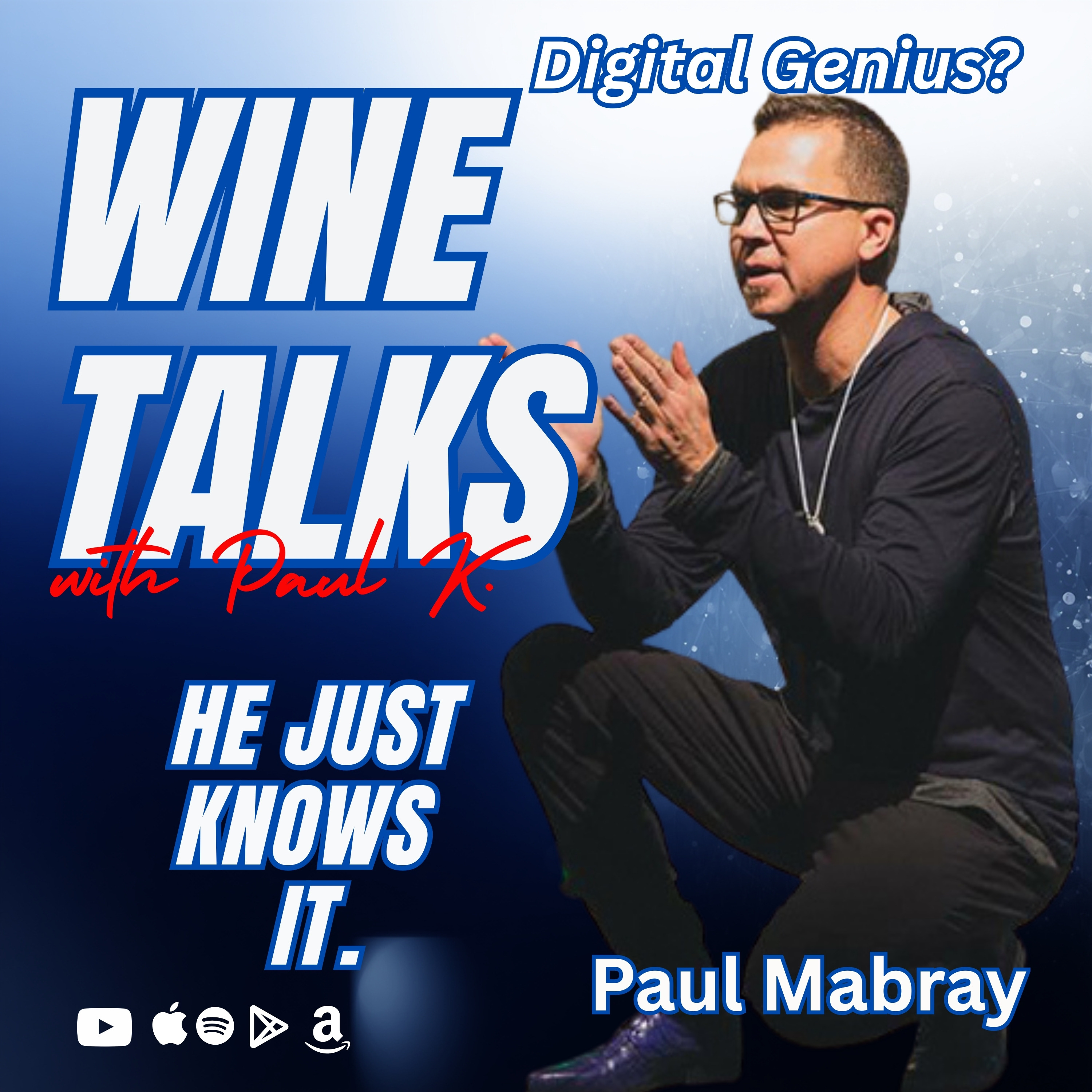
Wine Talks with Paul Mabray: Navigating the Digital Evolution of the Wine Industry
59m 19s
This transcript features a conversation between two industry veterans, Paul Mabrey (CEO of Pix) and the host, discussing the evolution of the wine business from the 1980s to the present. They reflect on the early days of wine clubs, when handwritten manifests and embossed credit card slips were the norm, and wholesalers actively opposed DTC shipping, fearing lost control and tax issues. The development of the first wine club processing software at Niebaum-Coppola in the 1990s digitized the system, but regulatory hurdles persisted until the 2005 Granholm decision loosened the three-tier system. The dot-com era saw massive investment in ventures like Virtual Vineyards and Wine.com, which burned through hundreds of millions of dollars and faced cultural clashes between wine buyers and brand managers. Despite these failures, the infrastructure built then—such as warehouse fulfillment centers—still supports the industry today. The COVID-19 pandemic finally drove widespread consumer adoption of online wine purchasing, building trust that e-commerce can deliver quality and service. However, the speakers note that wineries historically neglected e-commerce due to reliance on tasting room tourism, which provided steady growth. Looking forward, they emphasize that luxury wine brands must compete asymmetrically against giants like Amazon by leveraging unique service and product quality, while regulatory changes continue to accelerate DTC opportunities. The conversation also touches on the need for modern software that combines e-commerce, point-of-sale, and club management to meet Amazon-like consumer expectations.
A glass of wine is a time capsule that transports you across time and space to a location. So you're chasing France from 10 years ago in a glass. You're chasing France from yesterday. So whether you're looking introspectively at what's in the bottle, it is that kind of space time machine. Sit back and grab a glass. It's wine talks with all kids. Let them know wine talks that we are in studio today at Manrovic, California, a beautiful day in Southern California, we're broadcasting all the way up to Napa Valley with Mr. Paul Mabrey. I'll get to the introductions in just a second. Wine talks, of course, available on Pandora, I Heart Radio Spotify, wherever you hang out for your podcasting. We are there. And always sponsored by the original wine of the monthclub now supporting the sweet series by a dynamic in Napa series. But let's get to our guest because this is going to be a ton of fun. We're going to talk old times and new times and what's going on in the horizon. Here this is Paul Mabrey and he is president and CEO of Pix. But you Pix, Pix wine. Wine. See I sent you an email. I sent you an email and I put Pix. Wine.com and that got all sent thing. But welcome to the show. Thanks for having me. It's going to be Paul Squared here on this show. It's nice. That's right. Paul Squared. Yeah. We have a lot to talk about. We've got a lot of fun stuff to talk about in the industry. We want to talk about what's happening in the industry. And I want this to be sort of interesting for the people in the industry that we talk to every day. And I want the consumers to understand sort of what we're up against on the things that are happening every day and get a feel for your background and what your prognostication is, which is I can't wait to hear. Frankly. Yeah. No, no. Unless I'm going to be a consumer ever growing, I think ever in the history of the world. So I think you're right. We're going to talk about the COVID, COVID effect and the post-COVID effect. You've had some story history in the consulting side of this business as well as the digital side because you look like based on your experience here, starting in Nebon, Copa, the famed Francis Ford Copa, the winery, having bought one of the original wineries in Napa Valley, right? Yeah. The old Gustav Nebon, who was England the winery of his own by a huge blind. He got bought over and got turned into that kind of lower class wine. But it was one of the original great wineries of the Valley, England. You know, Gustav Nebon, he's a ship captain. Yeah. It's interesting. I forgot about the Hewblank part of that, which would have been one of the first corporate takeovers if you want to call it that in the Napa Valley. Yeah. Hewblank was one of the first kind of corporate enemies coming in. He was spirit-sided. Didn't they have Quaribo, I think, in that time? Yeah. Right. The other one was Nestle came in pretty big and they owned the barrenger if you don't want to. If you remember, wait that way. Yeah. That's a great rattling of the cage here because the growth of the wine businesses, obviously phenomenal. I'll have to do it with the judgment pairs. We'll talk about that a little bit. But back in those days, and I remember featuring a 79 charbono from Ingol. Look, so that was before or after Francis Ford Coppola bought it. That was probably after he bought it. He bought it in his savings bag. He bought the front in the state, the Ingol, the state. So he bought the actual house behind the estate and the big property. I think it's right somewhere around that time he bought the front in the state from New Blank and then kept buying more of it over time off the look in the history books. Yeah. He loved it. He was popular. I remember buying the wine and it must have been like, well, I bought it. So when I didn't buy the company from my father till 1988. So the wine was already like 10 years in the bottle, but it's charbono, right? So you got to let him have changes. So going back to those days, you were mentioning that you were the club manager. My father handed me this sort of binder full of things happening in the industry that I got to go back and pull that out. But 1988, he said, here, you're going to take this over. I bought it from him actually. He wouldn't negotiate it actually. And then he said, here's what I understand about what's going on. And I think for sure there were five wineries that seemed to have embraced this idea of a monthly club, a club where there's a direct to consumer concept. We didn't even call it that back then, right? It was just part of the club, right? Yeah. It was a wine club and it was an extension of people just showing up the valley and they realized that they could send them wine almost like a paid tasting program. It was like a cashier instrument and Earl Martin, who said, hey, everyone else is doing clubs. He analyzed the entire valley's clubs and let's build on it. It was a very unique wine club. It actually came with a pasta, a movie from Francis were Copa, American Zoetro magazine. So it was really kind of that first lifestyle package. And now it seems really innovative, but it's like plated plus wine today, right? It's like all these news, subscription and comedy things way back in the mid 90s. So pretty exciting. I can tell you the shippers needed us. You know, you'd have long set of chini or different pieces of the pack. It was a fun time, a fun experience. Well, it certainly was a different time when it came to shipping. But I'm fascinated to hear this time. I'm going to make a note about the subscription model and we'll move it forward a little bit later. But certainly from the shipping side, and I'll never forget this. UPS would pull up. You did a 15 handwritten manifest, you know, with carbon paper. And you know, if you threw 25 extra boxes on the truck, no one will even notice their cared and you pretty much shipped where you felt like it. Not knowing that actually was there were problems going on. And my wife just sat through a whole seminar yesterday with the ship compliant and there's always new so much more coming down the pike. We'll talk about that in a minute. But that was rather, you know, ground breaking, even though there were a handful of other clubs was that the idea that the winery can go direct to the consumer to the extent that they can get tasting room prices for their wines and augment the experience of being part of their experience. Well, let's go back in history a little bit even more about that. I mean, it was not only innovative in the sense that they were trying to connect with consumers, but the backlash from full sellers back in those days saying like if you ship wine DTC, we won't carry your wines, right? That was a real, or they would say to the world that, hey, wines that were going to ship from the wine, we would encourage underage drinking that you wouldn't be able to collect taxes from them. There's no system to record this. And I'll give you another interesting act though that you'll like. So back then, the wine club was very fast and they had almost library cards where they had the consumers information written and they'd hand key in the credit card and we'd take three week banking and kick our we actually hired a guy. His name was Rob Trump and he wrote Access for Dummies and he programmed the first wine club processing software ever for Nebom Coppola that took those three and a half, four weeks of handking and made it to 72 hours. And we thought we were superheroes, right? So I, you know, we were all part of this revolution of digitizing and changing those tools that opened up. Wines West was a first for film house, you know, if you remember that one. Yeah, right. That's right. Sure. That's fascinating because when I was laughing, my father's 92 now and I was saw him a few weeks ago. And laughing about we had binders and every binder had a sleeve for customer and he had bought an embossing machine. So he would fake effectively fake the credit card to the extent that it was, you could emboss a, you know, what do you used to call it, a validator. You know, we used to slide the thing across at the department store. You know, if you're buying something, they would slide that across and emboss the credit card slip. So every customer of ours had one of those homemade embossed credit cards along with these, an address of the same, what same method and we would hand validate the address. So, you know, it's interesting that you, that you talked about this access thing. Well, let's go back to the wholesalers for a second. I used to have to fake my way into the wholesalers spirits. Why the wholesalers spirits warehouse? What was the wholesalers association? My experience was the W.A. So they did not want to see me around there. I used to have a friend, Tom Gosh in the business and he would give me his badge and then I'd go to sneak around and just hear what they're saying because the lobby group, and I want the listeners to understand this, the lobbyist for the liquor industry and the wine industry is very, very strong and it seems to be loosening a little bit. But it's all left over prohibition things and including the fact that I want to get a liquor license now here and I can't, a third party has to get it because prohibition didn't allow you to manufacture things and sell them retail at the same time at that point. So that's just, that's just interesting. It is changing. You probably sense that. That stranglehold is not quite as strong as it was for, of course it's been what, 50 years, 40, 30 years. Yeah, fractured in 2005, yeah fractured in 2005, and that was the first domino and it's just the beginning of the dominoism and it's accelerating and I think co-edible, you can accelerate it more. Yeah, and not just in technology, but in the regulations and the consumer is going to get what they want at the end of the day, even as much as you lobby, you know, overturned. Yeah. So you're talking about software and the first program, which is great because I've been doing a lot of research. I've had, I can't tell you how many demonstrations I've had on software and when I bought the company in '88, in 1993, I put it on, on this first network computer system, you know, as, you know, no, no value I think it was, right? And I, and we've, I've evolved the subscription model behind the scenes here, the database over the years.
part of it with the guy that designed the software. And as I've looked around trying to find a replacement and a front end for the web, I have not found anything is capable. Now, I understand my thing is clunky because it's old school. But as far as its functionality, as far as what it does, and the granularity of the selections, the way the system thinks, I have not seen yet. And we're rewriting it now with the premise of what we know works for what we do, and then modernize the technology and get a customer-facing website and all that. But I'm fascinated by the idea that some of the stuff that we've thought of in 1993 hadn't been thought of yet, or hasn't been implemented. Have you seen some of the latest things out there and what's going on with these pieces of software? Well, for sure. I mean, I was the guy that drove them. I need 2000 GWR.D.M.L.I.N. Direct, which was the first e-commerce SaaS OmniChannel software solution. So it was wine club processing. It was e-commerce. And it was a point of sale all integrated in one. And it was groundbreaking. I used to knock on wine resources. And guys, there was this thing called the internet. We were going to sell the wine to be on it. Like, oh, all your so cute come back when that internet tag goes away. And here's a funny wine club processing story. Credit card, gatewaysways had never seen transactions in loads like we were putting together. So we had hundreds of wineries, sometimes processing, and then same day, which means thousands of people's credit cards. We get calls from the gateways saying, the policing, are you trying to spoof credit cards and rob people? And they turn us off all the time because they thought we were like this big puppy mill of stolen credit cards that we were processing. Wow. That was early on in this concept, right? I mean, well, you're going to go back that time. That's interesting, because go ahead. Yeah. But the modern seven is great. Commer seven. If you haven't checked them out, they do an amazing job. I'm not sure. Yeah. They may not be suitable for your kind of business, because you're probably turning the chair. And you've got some parts kind of codified and hardened the year you're going to have trouble breaking loose. But they're the best of breed right now. Yeah, it is. Yeah, I would say part of it is where you used to what we're doing. And so in I understand it where you're in the technology business, I had a I owned a software company for years, which was not in this industry. But it's hard to break loose from the manual system and implement it when you've got to think differently to make things more effective. But it's the I think the consumer's demanding more Amazon-like service and capabilities. And that's very hard for a small company to put together and compete. Well, especially because they're-- I mean, like fighting against Amazon is a losing battle in success. So we should take what's smart for them. And because we're a luxury, good product, we should fight asymmetrically. We have different advantages that they don't have about how we can present service or how we can do things that the consumer wants to do. And so I'm looking at you right now. You have that nice ball of the focus one on your table. The consumer does that. Is that showing publicly how should the home could be? Of course. But that's-- they don't want to come in hot truck. They don't want to yell the tag on their door. They want to get that wine when they want to put a premium for that quality of wine. Right? Our case of that. We're two cases of that. So we have to remember that we're different. And we can play differently accordingly. It was a good point. Well, you've got the experience to understand that. I mean, you were the first person in any podcast that had done over 100 and talked to some old timers that even remembers the term virtual vineyards.com. Yeah. And people don't know that listener that was the predecessor of wine.com. And I had the luxury of, and maybe you were there. I don't know. I went to two seminars. One was from the finance side where they were looking for the money to make this work. And the other was the marketing side, where they had discussed what they were doing to the Southern California Direct Mail Association. And one of the things I was fascinating back then, and maybe you can reflect on this, I had four customer service reps in one IT guy. This is 19, whatever, virtual vineyards shopping. And they had four IT guys in one customer service person. And I'll never forgotten that ratio flip. And not understanding it really, because the internet was new. But didn't they burn through a couple of slugs of a couple hundred million dollars each before they landed on their fetus wine.com? So both they merged wine shopper.com. We raised hundreds of millions of dollars from a client of Perkins, which is a big VC, and Jeff Bezos. So they had a partnership with Amazon wine and chauper dead and virtual vineyards. They both bought and elevated prices, bought the URL, wanted to come and merge. And Perkins, we're probably about 400 plus million dollars together. And then that way completely complete, like everything else. And I think that there's a lot of stories that might have happened. I mean, a lot of that infrastructure that they built is the infrastructure that the industry uses today to do three tier or DTC, whether it was the technologies or the warehouse fulfillment centers. The other piece is there was a pretty bad cultural clash between those two organizations. They were psychologically different types of businesses, meaning that the virtual vineyard guys were amazing wine buyers and stewards. And the wine shopper guys were a lot of brand managers and wholesaler by district men. So those are like the opposite mental model in the same building. So I'll never forget. One day we were in the streets fighting, like almost like backstreet story. We were nice in the alley. And the next thing you know, we're seeing the cue calls next to each other. So it was a really weird job. West Side Story, digital West Side Story. Yeah. Exactly. West Side Story. Sorry. Yeah. Yeah. Well, that's interesting. We all saw the not just with virtual vignages of wine.com or lots of dot com debacles. I remember somebody coming to my father and laws of wine to sell early on on the internet, custom furniture building online. You can design your own furniture and get it built. And that probably didn't work either. But it seems-- it's fascinating to me that here we are in 2021. And it took the pandemic to bring many, many people to the web to buy wine. And as you probably have seen and all of us are starting to witness, yeah, we're not going to have that same sustained spike that COVID brought to us because people aren't shutting anymore. However, it's not going back to the previous levels because there's some trust now that you can get good wine on the internet. And you can have a guarantee. You can have customer service. And my theory is-- and maybe you can shed light on this-- my theory is that took a long time to come around from the time that dot com bust of virtual vignages. In other words, you have nobody really understood dot com back then. And then trying to buy an emotional product like wine that it took 40 years to get-- somebody had theory, but to get 40 years forward for us to-- or 30 years to be confident in that. Is there more of that to come? So when I first started Warned Rack, I would have never thought that shoes would be wine as a category online. And Zappos Trugas is quite wrong. It's $1,000, $3 billion, right in that piece. I think wines problems were multifaceted. And I think that that was part of the issue. So we can always talk about the regulatory hurdles that cause the permitting and retailers and get the same licensing as wineries. So there was no access point. As Grant Home opened up, it was also about the apathy that most of the wineries had towards e-commerce was also a hindrance to that. Meaning that we were getting double digit growth in either volume or then obviously in dollars after that. And so why has changed that? And in 2009, when we had our first big hiccup with the procession, everyone switched to DTC. The DTC meant tastier room. And our Eno Tourism at every juncture across all of the major wineries and whether it's Napa Sonoma, Santa Barbara, Oregon is huge. They have a huge volume of people going through there. So why care about e-commerce, why feed that horseman? They're getting fed every day by this huge volume. I think that the stats depending on who you talk to, Napa gets 2.9 to 4.2 million people a year that come through this valley. That's a pretty good feeder pool to be honest with you. So if it wasn't broke, why fix it? On the wineries side, on the retailer side, they've definitely suffered from being left behind. They did not get to follow up in Grant Home. We actually abandoned them the wine industry and just said, hey, we're going to do it for wineries and retail is pretty yourself. So the bad news for that is that, or the good news, actually, to be honest with you, is we prove wrong everything that the wholesaler were saying. They said, oh, there's going to be an error. Oh, there's going to be no permitting. Oh, there's going to be no taxation. We built that infrastructure. And the retailer's Grant Home check is in the mail. That thing's coming soon. I promise you. You know, that's-- I've always said-- and this I'm going back 20, 30 years. Fine. If the wholesaler's got a problem with this, let us pick a wholesaler and pay a fee to what it want to say, a competition fee, because that's the word about it. We know the excuses that they gave the government-- the government's underage drinking all that as much hog watch. They just want to protect their base. Grant, OK, I'll pay you. If you don't carry my brand, I'll pay you something, just to filter through your system. Just let's just do it. Why restrict the consumer access?
when it's just a political, you know, Stonewall. Well, you said something about the model up in NAPA. And I had a conversation with the NAPA value register beat writer for the wine business just before COVID. I mean, I think it was early March last year, late February. And it was Sarah Cleerman. And I thought it was going to be this great-- She's good. And I thought we met at the Oxbow. And I thought it was going to be this glaring article about Paul Calumcare and what a great guy I am. But I don't think she ever wrote the article actually. But she was asking me questions. And the questions that she was trying to understand for herself was, how are we going to help these small wineries that have the charge $150 bottle because the cost of grapes is so high in NAPA right now? And how do we get them to digitally market? Because many of them are relying on tasting your traffic. And unless she was prognosticating what was going to happen with COVID-19, I don't know because it was just not really on the horizon yet when we spoke. But her comment to me was fascinating, which she said, we're just learning how to chat here. And I thought, okay, this is interesting because we're really farmers, right? I mean, if you want to live the lifestyle of a wine owner and a wine maker, you've got to be a farmer. So if I'm a farmer, what do I know about putting some money in front of a monitor and waiting for the chat button to ring so I can have customer service? And so we kind of hash that out a little bit. Yeah, I think I actually bumped you out of that article because I was in the article about that to taste your-- Oh, well, look at that. Holy cow. Well, maybe not. But you know, look, you say that about farmers. And yes, there is a large group of farming that's involved in wine. The reality of most wine are your ownership. They're general farmers. I mean, look, they were barons of industry and other industry, great CEOs or doctors or venture capitalists and now bought properties. And they have people that farm. They don't-- or maybe there is still a good subset of the world that do farm. But it's a synergy between business and farming. I think that the problem is that we've been so product focused and maker focused. They were not seller focused. I think that's the key. We focus on what great wine we make. But once you're making, you've got to sell it. And that's probably what behind. And I think that that's the growth of the industry. The fragility of the wine, Tessirum models, been exposed for some time. I'm sure you watched Robin Millen do Silicon Valley bank report every year. That model has shown its fragility through fires, earthquakes, brownouts, and over the Tessirum model, how it's doing seated tastings. We knew it was weak. It was the perfect storm, though, of COVID plus fires. It showed us we can no longer depend on it. We have to go broaden our search for e-commerce. So that's that great awakening between wineries now knowing they they can sell. And it's successful for them. They actually see the proof. Consumers knowing that they can buy and retailers selling and saying, "Look, let's start getting more aggressive about breaking down these barriers and finding more juicy ways." Is the beginning of the gold major wine online? That's what COVID really is catalyzed. And it's just going to get better. I mean, it's like it's like an engine that starts, right? More and more people are investing in. You're going to see more and more competitors coming to it, but also more knowledge sharing, more expertise, better tools. So anytime I come or send them, they'll get better. Maybe they'll be able to adapt for your model quickly, because more people are adopting it and using it, making it better. Well, we started from scratch. We're using a. A-coth. Of all the e-commerce platforms, the one that I thought was the most comprehensive would be loyal. As far as we do business, and then putting a wordpress over it, and then of course all the connections. It's interesting with getting a little digitally geeky and database geeky. I was talking to the guys of the wine exchange down here, which are wonderful marketers and good pallets. And we were talking at a lunch and he's like, "Yeah, it's cool away these things work, right? You've got this database, you tie in all these services, like ship compliant or UPS or your credit card building company. The problem is those guys don't talk to each other. So you've got to write something around the idea that, you know, if possible, the UPS person needs to talk to another piece of the software that's tangential part of your database. And that part is a very important piece of, you know, making these things function properly. But we won't get into that granularity. But I got an interesting scenario for you. I was on a panel for USC Business School, got us for a couple of years now. And I was sitting between two completely opposite wine theories or philosophies. The guy on my left was a friend of mine from college. He owns the winery Hammer Sky in Pasaroblus. He hosts weddings and chapels and he's got tours and he's got the tasting room. And we all know how hard that is, right? It's all the pieces are moving. And the right side of me was a gentleman that had just started a brand. And so he was renting, you know, alternating proprietorship. You know, two somewhere and he was, you know, renting the barrels and renting the wine maker and all that and beautiful, beautiful wines. But inherently very expensive just because of the methodology for making the wines. If you and I did that, one of those two today, which one would you give a chance to make, to actually turn a profit? Yeah, that's one. That's the reason why I'm so happy. It was going to rush out after you answered this and try and do it. Look, I mean, neither of them are the right answer. I mean, the right answer is what is, you know, what my answer would be, which one of those brands has tried to reach consumers and Boston and Austin that are not getting on the plane and flying to Pasaroblus to taste their wines? Right. How are they going to touch it when South Beach, Florida or in Anchorage, Alaska? And be able to let them buy their wines and how they communicating their value exchange. And I think whether that's a luxury expensive product, it's $150. So just a retail price or it's, you know, a good story of a farmer or the hammer skies. It looks as good wines. I mean, it doesn't matter. The reality is they have to get out Pasaroblus to taste their wines. The taste of your wine is not a sustainable growth model. It's a limiting factor. It's a stupid model. I mean, it's cool. If you can't sell wine, it's the most effective model. Right. If you can get someone in front of you to taste your beautiful setting that's Hey, doggy. We love dogs. We love dogs. Yeah. They're obviously, yeah. Beautiful setting, you know, a little drunk with their loved ones. Yes. If you can't sell wine doing that, you can't sell wine anywhere. Right. A bad piece. So, and it's a dumb model because you're asking people to get on a plane and come to you and then ship the wine home to them to acquire them as a customer. That's a really ridiculous concept. Is that any dumber than some of the state laws that I think most of them are gone now, but for a while there, that in order for you to receive wine at your state, you had to have visited the winery in the first place. I think that's also just this compounded the compounds the dumbness and then. And the speedy level goes to 10 at that point. Yeah. Well, there's a scenario right now that's happening and I think what you're saying in part of it is, and this is your specialty in this industry is brand building, which is a hard thing to do in any industry. You know, it's particularly when you've got trying to get shelf space on the retail side or a house portal restaurant. Those are hard things to do with the competition that's out there, particularly with the consolidation of some of the wholesalers and their books are getting thicker. And they're sending people to Hawaii to spiff you if you sell 10 cases or something. It's very hard for you and I as an upstart winery to get the presence that we want. And so there's a group out there. Let's just talk about the category. I mean, yeah. There's no other product in the world like wine with that much competition for mouth share and stomach share. Meaning that, you know, what was it? 160,000 new wines are coming this year to the TV. Think about that. There's not 160,000 types of milk, 160,000 types of butter or bread or cereal. And it compounds because it doesn't go bad. Right. The wine is stay good. So next year, it's not 160,000. It's going to be 320,000 and then that's right. Goes on. Yes, some of the white wines degrade out. But like right now, I estimate there's about 1.2 to 1.4 million products for sailing the United States. Everything from some old port from 1919 to, you know, a boat box, right? Yeah. The wood actually, yeah, the other day, I had a wooden three-liter board oh box. I thought it was brilliant packaging. I don't know if it's for simple, but it was actually a wooden box with a bladder inside of it. So what do you make then of a consumer walking into vans as I do quite often in her most of each and every single wine has a shelf-talker? And see they've got us rating on it, which is like, you know, a whole other industry we could talk about. Or the discount price based on six bottles or whatever it is. I mean, what does a consumer do when they see this? Yeah, it's paralyzing. I think that's the problem. That's one of the things that I'm trying to solve is it's a tough situation, right? How do you help people make a decision and discover? Because really wine, one of the reasons that it's hard to have brand loyalty is it's easy to be promiscuous. You walk into vans one day, you walk into a wine store the next day, you go to a restaurant, you don't have, there's so much selection, and it's amazing. The discovery is part of the journey in wine. And even if you find a blue chip brand you like, you're never always at the same place at the same time, or you don't want to drink the same thing all the time either. So. Well, I'm glad you said that, and it's an important part of consumerism. My wife buys tide and she buys. will light and those are the brands that she trusts. It winds up more emotional product than that. And if, you know, I talked to my clients and people come into our tasting room and digitally speak with them about the idea of, "Wine is a wonderful subject. You can learn as much as you want. You'll never stop learning." You know, the MW, they got their degree in 1964 is a totally different experience for the MW trying to get their degree today. There's so much more to know and that will continue to grow. But as a consumer, you can decide that I like this brand and I'm going to continue to buy it. And at some point, I think everybody sorted their pallets says it's time to change. Then we're going to look for something else. And then we look to the shop and then I got, you know, a shelf-talker and a rating from James Suckling on everything there is and it's hard to understand. And I think that puts a ton of value in not only a wine shop owner who's tasted the wines for you to help you understand your pallet and guide you to something interesting or the department manager of the store or your wine club pervader, whatever it is, to help you sort of walk down the path. But it is an emotional product. Let me run this scenario by you. There's a group trying to bring some caucus wines in. I'm Armenian and Armenians making wine. I mean, they found the oldest intact winery in Armenia 6,000 years ago, right? Somebody left their shoes. So. But this is an interesting scenario. I had that conversation with the president of KJS the other day about it. It's such a different product that you can't come out of business school with your thesis and say, you're going to apply this and take over the industry, right? You can do all the things that you would normally do to sell a widget. You can do the videos. You can do the media. You can do the Facebook. You can do all the things you wanted to do. And you might get some traction with somebody because you got a better widget than the other guy. But wine, that's a hard decision for me, for somebody to make to change. And to come into the industry, and this is happening, I'm going to take over the network. I'm going to have my own wholesalers. I'm going to have my own salespeople supplier reps on the street trying to sell this wine. It's not a popular area. It's not a popular grave. No one's even heard of it. And I'm going to try and get some traction with the consumer in the wine world. By covering all the business school bases, and then finding out that it doesn't really work. Well, I mean, the problem with using business school basics versus applying the context of wines, that is the situation. The context of wine has a lot of complexity, not only in the product selection, the route to market, but also the consumer behaviors at different times. So I mean, micro targeting and really profiling behaviors is key, but it's about discovery and introduction. Like you talk about that wine. It's very hard to try. Let's call it Canary Island wines. Why would you try that wine unless someone introduced you to it and helped you discover why it was and helped you understand why it had that kind of salinity in it. Why did you choose Canary Island? You know what? It just was an obscure place that makes amazing wines. It came to head. Yeah. My head. It was just had one last week. I was floored by it. They're great. I'm having a calarez tonight where I'm taking a Tino to have a white calarez. Have you never had that from Portugal, though, like the smallest, most, ABA in the world that's like going extinct at beaches. It's amazing. Yeah. I have no, no, no. I have to go back and look at my tasting notes. But I was floored by this Canary Islands. L'Ubran Negror or Negror, or I forgot the name of the grape. But I just bought it to put it in my cellar because-- and that made that goes back to what we were talking about, which is when I get home from work, I want a profile. So we no longer say what's for dinner. We say what is in the glass? What do I feel like drinking? And then we're going to try and cook around it, or door dash around it. But it seems that-- and I've had this conversation with many people that the variety of wines and the variety of palettes and the variety of flavors is now sort of guiding us. So usually with the fish and others and foodies, we're talking about what we're drinking first, rather before what we're eating. You know, I think that even you, as we are a spectrum of humans, I mean, so first of all, wine is a big category. It's everything from alcohol delivery to existential experience in the glass. That's what it is. And some days, I know you and I have probably come home and you're like, I've had a long day. I want red or white. I want cold. I want to taste it. And I don't care what it really is. It's just been one of those days. Other days, I'm trying to introduce something to some friends. I want it to be really magical. In other days, I just like a good palette cleanser. That's interesting to me, but not crazy. That's just the food. So I think that we forget that we're not one dimensional either. There's not an eno file. It's not always an eno file. Sometimes it's just red or white. Sometimes it's just bubbles. Bubbles to a new part of my consumption regimen after having Steven Spirier on a call, tasting some bride, valley, and Geesborne English sparklers, I became a huge fan. And so now everybody looks at me like, what do you celebrate? I'm not celebrating anything. Celebrating life. I'm just going to have a glass of sparkling wine. Because it should be part of your regimen. I was looking at your PowerPoint presentation that looks like you had put together for some Burgundy and Makers. Is that what that was for? The one in Geesborne a long time ago? Yeah, the Geesborne, yeah. It was-- there was no audio to it, but the points were a rally valid, and I understood what you're going with it. But have you seen an international difference in approach to the market? Because they're shipping the world's or a lot easier than ours. Their palace are a lot different than ours. And it's part of their lifestyle from when they were child. In fact, they just got done. You'll laugh at this. I do speak some French, and I'm learning, continuing to learn. I was watching a video the other day. It was about-- as recent as 1981, the French law now prohibits wine at high school lunches. But until 1981, you could have a glass of wine at your lunch at high school. And I can't imagine that palace for his high school when I was there. So that's pretty recent in my view. So their look out on wine and their daily life is different than Americans. So what do you see as a difference in the industries in the marketing of wine throughout Europe? So you can break the world into two kind of the new world old world pretty easily, and they behave differently accordingly. So the old world is pretty reticent against-- and they are much more farmers. But they're reticent against direct consumer. They're reticent against technology. And each of the individual countries are not very-- they're not great explorers of wines not from their countries. So France and Italy don't get outside of France and Italy. They're changing quickly, for sure, especially since COVID. The new world is definitely much more jeeply savvy, much more trying to connect directly to the consumer and trying to understand who they are. Much more trying to find tools, websites, e-commerce, and everything. The other ones are used to selling to a negotiating onto a sales to an import or who sells to a wholesaler, who sells to-- so the amount of layers-- they just want to make the wine and sell it differently. And there's some cultural differences. Until recently, in Italy, if you ask people in Italy about e-commerce, they didn't want to use e-commerce, because they didn't trust it. Even though it's the same country, they didn't have a trust level. And we're going to send them the right thing. That's changing. But all these different cultural barriers that occurred from this-- this is the way we've done business for hundreds of years, essentially. That's-- that's-- you know what? The whole response is right there. This is the way we've done it for hundreds of years, right? The famed chef, Jacques, he was the bleishow, who started the patina group. And he just is now making wine in the province on a domain called Calla. And he was telling me the day, you know, he signed on with a German director, the consumer company. And they're killing it with his wine. And he's-- you know, whatever he ships to America is a hand-sale. And of course, it's West Coast. And Rosé is not big here yet. It's getting bigger. But there was a huge difference in the viability of the market in Germany compared to Los Angeles, even. Which I thought was pretty fascinating. You know, my wife was talking about-- [INAUDIBLE] Yeah, I mean, well, I don't know. I'm sure you've seen it. But it seems to me all the great regions and smaller regions of the world now are making some kind of rosé out of their indigenous grapes. And so you get wonderful array of character in rosé from Tuscany to Bordeaux to Pura Rat. I mean, it's fascinating to taste. And I'm enjoying it actually getting a chance to span the globe doing that. I don't need to be able to have time to talk about canned wine, your plastic bottle wine, but we'll try. My wife was listening to the Schild Compliance seminar yesterday. And they were talking about some of the rules that were changing out there-- winery, direct versus retail versus three tier, all the stuff that we're used to talking about. And a lot of wineries now, apparently, I'm-- states, apparently Michigan stung somebody and caught them not selling only the brands that they make that they're collared to.
And I started to think about this. The cola for the listeners is the federal registration of the brand and the label and all the pertinent information that goes with that. And he gets assigned to you as a winery. So you only you can produce that wine unless you assign that cola to somebody else. So it's sort of the legal link between what's in the bottle and what's on the label and what you're buying. So a lot of states now are saying, we're gonna allow wineries to ship direct. So if you have a cola, if you have a O2, you can make a wine. And then I've said, of course, it seems more popular now than it has been. You can buy, you've always been able to buy juice. The wine is to you to say about 95% of wine is not bottled by the estate, something like that. Maybe I'm wrong with that and you can shed some light on that statistic. But it seems like now the state legislator when the point I'm trying to get to are kind of forcing everybody into some kind of branding, private labeling, ways to get wine into that state where we require you to go buy juice from somewhere else. If I'm a retailer and I want to sell wine to Michigan, I have to have the one control the wine, the legal control the wine. And so I might just go out and buy some juice, put in the bottle and brand it to my brave vineyards and ship it in. Is there a shift in what is on the shelf because of that? Trying to not have the whole comment. - We've been making a transition towards private label control level for some time. I mean, if you look at us versus the UK, they did that a long time ago. I think we were, yeah, I mean, they're like 70% private label, 30% branded and we were the opposite, you know, or less, even less. So, and like there's a lot of value in that piece. There's margin release, there's interesting trust, you know, they trust you as a retailer, they trust you as a thing. But I don't think it's a regulatory thing. I think it's more just an adjustment of the market in general. They're trying to understand how to keep their brands. I mean, if you're a retailer and you build all these brands and they don't allocate it, they don't give it to you. You know, you're not making that, you don't have equity in that to sell it or onwards. If you own that brand as your private label, it becomes a part of your asset base, right? - That's right, yeah. And if you sell a lot of it, that it's even a bigger asset. - Right? - Are you getting yourself a brand off and keep the retail shop, right? - Right. - And you just made a big, I mean, there's a lot of interesting things. - Which is its own sort of industry. - Yeah. - Because I pitched this idea and you said already that wine could be an existential experience. And I tell stories all the time about it with my consumers. And we want that to continue. We want people to feel something, right? When they have a glass of wine, a good glass of wine makes you feel something, makes you connect to the earth, and makes you shut down for the day, and makes you think, and makes you talk. I mean, whatever it is, right? Sometimes you talk too much, but whatever. So, but there is a the therial value to a glass of wine. That's different than all over the beverages. Could you define that? Because I have a hard time defining it. I know, why is that different for a glass of wine than a glass of Jack Daniels or even a craft beer? - So a glass of wine is a time capsule that transports you across time and space to a location. And oftentimes you're doing in a social situation mostly that you're engaging with someone. So whether you're looking introspectively at what's in the bottle, it is that kind of space-time machine that you're traveling through that and understanding how it barocitates, or Australia, and you're zeling your experiencing that's a different place. And also, like I said, a different time. It came from the past, right on that piece. And the fact that it is a social beverage is the social beverage, right? You're not out pouring Jack Daniels with all your buddies. You don't drink a whole bottle of Jack Daniels. If you do, it's a bad day the next day, but like wine is meant to share. The vehicle that's built at the right alcohol level at the right size level, perfectly suited for sharing at a meal. - Doesn't it seem like then, I'm sure you'd deal with it all the time with friends and family that aren't in the business that so much of the conversation at the dinner table will come around to the glass of wine. I mean, you might be a real estate person talking to the wine person talking to somebody that sells mattresses, but if you're having a good glass of wine, the bottle gets passed around, they look at the label, they read the back, and all of a sudden the conversation is on wine. 'Cause people are inquisitive about what it is. - Well, it's by nature also a complex product, right? It's not a simple product. It doesn't have a simple taste profile. I mean, there's so much difference in different bottles of wine and different varietals from peanut and water to shirah from so many on block. And even within the varietals, there's so much variation that it's always in adventures, that discovery component. And what hits your nerves in that discovery piece is also part of that inspiration. And you're like, wow, I've never tasted gooseberry, or I've never, this is like stone fruit. What is a stone fruit? And that other kind of people call it. And so these are, when you find those flavor metaphors in your mouth and you're like, wow, that's something I didn't expect, or something, or it's almost like ratatouille, the children's where he goes. (laughing) - The aha moment. - The aha moments, right? And that's what the matter is. - And that's, it is fascinating about wine. Now you say that that you can continue to have those aha moments, like what I had with the Canary Islands red. All of a sudden it's like, aha, I've never tasted this before, hard to describe, some people are better at the others, but you sense something, and that creates that moment. Going back to the business side just for a second. - You're? - I had a great interview with Mike Hula and a barefoot sellers. And I've told a story a few times, but you think, great. And he came into my office in 1989, trying to sell this chateau, the feet, the lafitte of California. And I thought, I really thought when he walked out of the place, what are the stupidest things I ever heard of. Right, now it's the biggest brand in America. So that tells you how much I'm coming from. But he made a good point, and this is, kind of goes back to the shelf talker thing, and it kind of goes back to the private labels. I mean, almost any name that's got Ridge Creek, Napa, Sonoma, Cliff, they're all taken, right? So we're starting to see all these crazy names that are showing up on shelves, as well as labeling and merchandising. I mean, it is merchandising. And we are in the business to sell things, and a winery wants to sell its wine, so it can make some wine next year. So let's not take the RIF, the ball, what we're trying to do. But he was told by the buyer at Lucky's, the old market chain, I want to be able to see your label from four feet away when somebody's walking up to the wine section. And that's how he came up with stealing the name from Barefoot Bynum with this foot on the label. So you can simple, white background, blue foot, or whatever color I was, and I can see it. And it turns out that guy never bought it for own. But are we not barraged with branding and labeling and colors and embossing and foil tops? And I mean, now a lot of glass is changing in shape. You're seeing all kinds of tormented bottles and things. And how is that playing out into the consumers? Look, everything is branding. I mean, look from the regions naming themselves regions so that you can understand what the value you're getting from Borkdale or Burgundy. There's always been branding. The reason that the little feet's put their name on it was that wine was their brand from the beginning. And it represented a quality level. And the transformation that you're seeing, yes, there's not the same creeks, but the world of wine has changed from the aristocrats owning wine or landowners in Europe to real human beings, normal kind of American dream here in Cout-- and then spreading across the world. And of course, we're trying to find different ways to touch the consumer that makes them happy. You and I are old enough to remember critter labels. There was a whole trend for just years where there was like koalas and kangaroos and dogs. The blue-- --bob, eemoos and raccoons. It was everything. I think what we're trying to find is what hits the nerve ending of a consumer. And one of the greatest brands-- and I'm not saying necessarily the quality of the juice in the bottle. Like, the prisoner is one of the most magical stories of a wine in history. Dave Finney and those guys made a wine. It was a California blend that had an SRP that was equal to a single vineyard or an appellated caverny here and now. That is-- what did they do? They hit the nerve of a consumer. So even about the flavor profile, all of the gestalt of those things together, the label, the name, what was in the bottle, and it worked. You get somebody-- I guess somebody winds here on Tuesday. You catch a label once a wine or a name where they've sort of tried to-- and this is an interesting part of branding. And I'm going to touch on one of that subject that looks like we've almost got 45 minutes under our belts already. But the innocent bice-- you've got all these names now that they're sort of-- in other words, in the back of the mind of the wine maker of the proprietor, they're thinking, oh, maybe it's the name, the prisoner's what made this successful. And it partially true, but sometimes just luck brant, blind luck in branding and getting on the street. But there's a lot of knockoff names, the fugitive. And this is bystander. Oh, it's definitely-- and you kind of look at it, go, oh, yeah, understand what you're trying to do. But that really isn't the point. It's something else that it made this successful. And kind of evidence by this-- and this is the business part.
And maybe I just heard from a retired gallow, you know, Gorilla marketer back in the day. And I was making a comment about Snoop Dogg's Callie Red. And it was front and center, the best spot on the shelf the other day at the market. This is about, I don't know, during COVID sometime. And I walked to the market, what, I go, what is, and I come on, we know what this stuff is, right? It's the criminal mind, and sugar it up, whatever. But whatever. And, but right front, you turn your head, and I'm six foot two, is right there. So it's the best spot in this shop. Two weeks later, I went back and it was on the bottom shelf. So I couldn't decide whether it was bumped down to the bottom shelf because it wasn't selling, or some Gorilla marketer, you know, aka gallow style, just came and moved it. We up, I'm sure, I'm not asking for an answer, but it's both of those scenarios could have happened, right? Yeah, I mean, look at that. Look, I'm not a Snoop Dogg of the wine, and it is a flavor of profile. It doesn't match my palate, but it's a million cases this year, right? And let's talk differently like that. Introducing people to the category is what, like, someone like Michael Huland, whether I liked his wines or not, which I didn't, but I love the man, I would never drink barefoot wines myself personally, but it introduced a whole category. Sutterhome Y. Xinvendel brought so many people to the category, and some of those people moved up. And that's the what we need. We know more of that entry level, because we're not fighting against each other. We're fighting against hard celtures. We're fighting against other alkbav beverages that consume our mouse share and stomach share. That's a really good point. We're competing against those new beverages. And Y. Xinvendel, my dad had met Bob, Trincarre of the day, about the week he made that stuff, and was like, didn't know what to do with it. And here that was really the door opening for many people to drink wine in the first place. And now, of course-- Are you not all in James Mark? Yeah, Bartlett James. That's right. Bartlett James. Yeah, I was talking to San Antonio guys. I was talking to San Antonio friends, those were bully brothers in there. Great friends of mine. And they, of course, presented to the Stellarosa. And we were talking about it. I don't know. Rumors are doing three million cases. I don't know if that's true or not. But he made the comment. And I bought it when it first got here. And I'm talking about 20 years ago. He said, you know, it took us 20 years to do that. Here's a wine that's sweet. It's got a nice package. It's very indigenous looking to the Lombard region of Italy. It's certainly palatable. There are better mosquitoes all over. I mean, we're pedigreeed ones, but this one people like. And now, this part I don't agree with. It's got blueberry flavoring and pompom use and all kinds of different things. But people are buying it. But the point of the comment is, that was a 20 year brand, grinding it out in the marketplace to get recognition and now it'd be very, very successful. Can it take that long or can it take a week? Well, it's all-- I mean, look, they're lucky success. We don't know exactly what pops either a luxury brand or a general brand. I mean, look at butter and jam with John Treshardt. I mean, that's what a great success story for him. Huge. Huge blew up. I mean, you look at Apothec, which is the opposite. Apothec was years of them sample testing at Gallo and came out with a formula people like. And their innovation on top of that is making even seasonal lines, which is something we've never seen before. I mean, you see seasonal candies, you know, during Halloween. And it makes the lungs, which is-- that's not bad either. And what they find is those seasonal lines, not only they didn't take or cannibalize from themselves, they added more to the car during those periods of time. So this is good for our industry. I know people poo poo those lines, but we need more of those industry lines. I think Gallo is really settled into their shoe saying, we are the gateway to bring consumers to the market. You guys do what you want after that. And Deloca was the same. The wine group is the work of-- Yeah, it's work. And they do a good job at it. I mean, look, they're good humans. They try to do a lot-- Oh, good guys. Sustainability. I mean, the big wine could be really bad. And they're not. They're trying to do the best they can for our business. And for the world. That great conversation with Pat Roni, not too long ago. And they're going public. And he does a great job. I may even buy some juice from here in the future. The last question is, what do you think media, Facebook media, video, GIFs, webinars? Do you think this is a must have for the future of marketing of wine from a winery? So I think that our job is to meet the consumer where the consumer is. And if they're using GIFs, if they're on video, if they're on Facebook on the Twitter, it's our job not to make them come to us. It's our job to meet them where they are. And so you touch them with our-- And we do it at our own detriment by ignoring them. I used to run a big social media company called Vintinc. And I can't tell you how many people would tweet or Instagram at wineries they never answered, because they didn't believe in Instagram at wineries. And if you take that metaphor and you apply it, you can definitely see, look, if you had a phone in your office called Instagram at a rank every day, and you didn't answer it, is that really doing healthy thing for your business? That's a good point. It's ridiculous. Right? It's ridiculous. And so just because you don't believe in it, doesn't believe in the other consumers now. And so I don't know the prioritization of those, how you grow into all those platforms over time is a different story. But the reality of this is there are gigantic places where consumers are interacting with wine and are calling your phone. And if you choose not to answer it, do you do it to your own detriment? You know, let me just throw some out there then we'll call it quits and tell you my plans of coming up I think in a couple of weeks. But that's a really important part. And it has a lot to do with the comment from Sarah Claremont about the chats. When COVID hit here, I had customer service after the phone, and we do email marketing, we do text marketing. And when we turn the phones off, because COVID became too honorious, the sales volume spikes so fast that, I mean, literally like three days after the 17th is like, wait a minute, what's going on? We realized that we could handle four or five chats at a time, and when you can only handle one call. And so we've-- and everything's moving that direction. Anyway, people are used to being on their phone. They used to texting in order. They used to replying with one ball or two or 12. And now they're used to communicating via text. I'm not sure it's a good thing for human communications, but it's a good thing for business. Because one person can literally do four times amount of work on the chat with a keyboard. And that was an interesting thing to find. Well, look, technology is just a scaling factor for more human connections. And let's also remember we're not homogenous either. So different age groups, different people like different messaging and different platforms. Some people will love call us still. Some people will love a catalog mail still. Deciding on who those customers are and their value to you and then using those tools is fundamental. And I think you're right. Absolutely. My wife, she runs a winery about T. Guiner here in Karnero. So I'm always heart be on her about more digital, more digital. She constantly reminds me. She's like, look, I have old boomers. Most of those people have a flip phone ball. You're asking me to text. So you need to calm down a little bit. My God, I can't text my brother, because he has a flip phone. And so she's right. But we have to have to balance our customer footprint and plan for the next generation and build infrastructure to support as each of these platforms become more pervasive. And we can test what works best for those customers. It's been a pleasure having on the show a wealth of information. I'm coming up on the fourth for the Raymond Vineyard's release of the new entryway and hang out with JCB a little bit. Hopefully get a chance to see you. Or I think I got fly up. I'm gonna fly up in the day in the morning and hang out and I'll probably have to leave this area at the end. My wife's gonna be out of town. Well, maybe I should stay too longer then, huh? So, let's know if we get together. It'd be great to get to see if not. I hope we can do this again. Yeah, both of those. Please let me know. I'm happy to host you and then have you. Couple of glasses of wine together. And I love John Charles. He's one of my favorite people. That is great. You know, I did a podcast with him. And I was in the Raymond Poolhouse, which is incredibly, you know, French. And I was supposed to be interviewing Dane Nutsen. And John Charles was supposed to stop in and say hi and just sort of sit in the chair and talk a little bit. He ended up staying for an hour. An incredible conversation about Baccaro Crystal and all his passion. And I'm getting two podcasts out of the thing 'cause then thanks stuck around. We had another hour. So I was really appreciative of his humility to do that. And he's a very interesting guy. And obviously, very knowledgeable in our industry. So pleasure having you on the show, Paul. Thanks so much. Hope to see you soon. And I'll let you know what my plans are. Yes, please, Paul. Great to meet you. I'm looking forward to it. Thank you. My pleasure. Thank you.
Podcast Summary
Key Points:
Wine is described as a "time capsule" that transports the drinker to a specific location and time.
The discussion covers the evolution of the wine industry from handwritten club management in the 1980s to modern digital DTC (direct-to-consumer) systems.
Early wine clubs faced backlash from wholesalers who argued DTC shipping would enable underage drinking and tax evasion.
The first wine club processing software was developed by Rob Trump (author of *Access for Dummies*) for Niebaum-Coppola, reducing processing time from weeks to 72 hours.
The 2005 Supreme Court decision (Granholm v. Heald) began loosening the three-tier system’s stranglehold, accelerating DTC growth.
The dot-com era saw significant investment in wine e-commerce (e.g., Virtual Vineyards, Wine.com), but early efforts failed due to cultural clashes and infrastructure challenges.
The COVID-19 pandemic drove a sustained spike in online wine buying, building consumer trust that is unlikely to revert to pre-pandemic levels.
The conversation contrasts the tech-heavy approach of early dot-coms with the industry’s historical reliance on tasting rooms and tourism.
Summary:
This transcript features a conversation between two industry veterans, Paul Mabrey (CEO of Pix) and the host, discussing the evolution of the wine business from the 1980s to the present. They reflect on the early days of wine clubs, when handwritten manifests and embossed credit card slips were the norm, and wholesalers actively opposed DTC shipping, fearing lost control and tax issues. The development of the first wine club processing software at Niebaum-Coppola in the 1990s digitized the system, but regulatory hurdles persisted until the 2005 Granholm decision loosened the three-tier system.
com, which burned through hundreds of millions of dollars and faced cultural clashes between wine buyers and brand managers. Despite these failures, the infrastructure built then—such as warehouse fulfillment centers—still supports the industry today. The COVID-19 pandemic finally drove widespread consumer adoption of online wine purchasing, building trust that e-commerce can deliver quality and service.
However, the speakers note that wineries historically neglected e-commerce due to reliance on tasting room tourism, which provided steady growth. Looking forward, they emphasize that luxury wine brands must compete asymmetrically against giants like Amazon by leveraging unique service and product quality, while regulatory changes continue to accelerate DTC opportunities. The conversation also touches on the need for modern software that combines e-commerce, point-of-sale, and club management to meet Amazon-like consumer expectations.
FAQs
It was an early direct-to-consumer subscription model that combined wine with lifestyle items like a pasta and a movie magazine, aiming to connect wineries with consumers beyond the tasting room.
They used handwritten manifests, carbon paper, and manual credit card embossing, with customer info stored in binders. A programmer later created the first wine club processing software to digitize these tasks.
Wholesalers opposed it, arguing it would encourage underage drinking and tax evasion. They threatened to stop carrying wines from wineries that shipped DTC.
It fractured the three-tier system, allowing more direct-to-consumer wine shipping and accelerating regulatory changes that benefited both wineries and consumers.
They burned through hundreds of millions in venture capital, faced cultural clashes after mergers, and dealt with technological challenges like credit card gateways flagging bulk transactions as fraud.
They relied on high tasting room traffic (e.g., 2.9–4.2 million visitors yearly in Napa) and saw DTC through tourism as sufficient, so e-commerce was not a priority.
Chat with AI
Loading...
Pro features
Go deeper with this episode
Unlock creator-grade tools that turn any transcript into show notes and subtitle files.
 PodcastTranscript AI