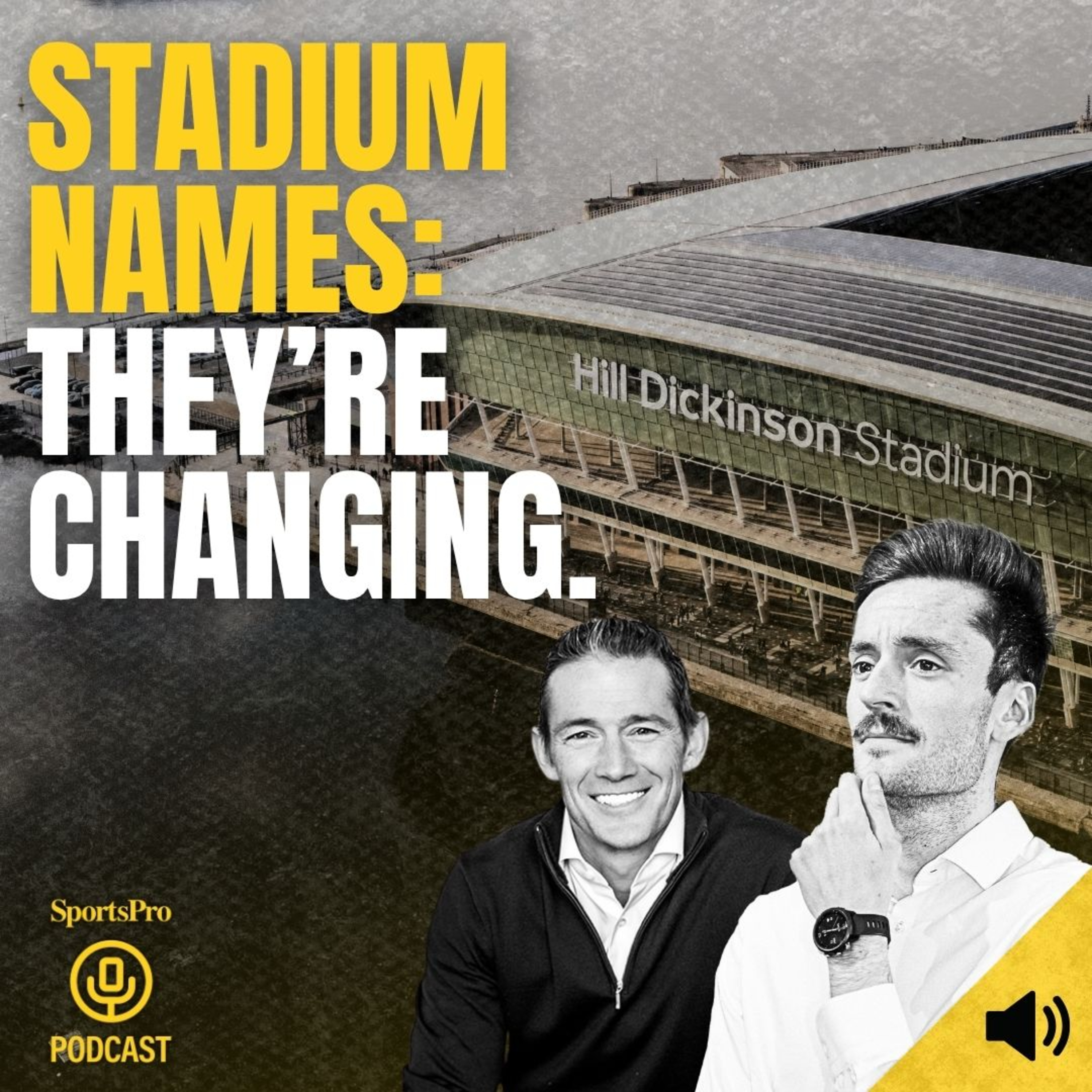
Will stadium naming rights ever catch on in Europe?
from SportsPro Podcast
41m 36s
In this SportsBroad podcast interview, Al Guido discusses the business of stadium naming rights, contrasting the mature US market with the emerging European opportunity. He highlights that naming rights are the top sponsorship asset, offering immense TV exposure that can quickly deliver ROI, as seen with Levi’s at the 49ers’ stadium. The recent Everton deal with Hill Dickinson exemplifies how success depends on finding a brand with local ties and global scale that aligns with the club’s story. Guido notes that European clubs face hurdles such as historic stadium names, fan resistance, and shorter sponsorship terms, making new venues like Everton’s a better starting point. He emphasizes that both buyers and sellers often misunderstand the value: brands may hesitate at 10-year commitments, while clubs sometimes overemphasize media exposure over hospitality, digital, and activation benefits. Additionally, European factors like relegation risk and shorter match durations require careful negotiation. Overall, Guido sees strong growth potential for naming rights in Europe if clubs and agencies properly educate the market and craft narratives that resonate with fans and sponsors alike.
Hello and welcome to the SportsBroad podcast. I'm Sam Carp, the head of editorial here at SportsBroad and you're about to hear an interview with Al Guido, president of the San Francisco 49ers and chairman and chief executive of US-based sports marketing agency Elevates. Now on this occasion, Al was on to talk all about the business of stadium naming rights and more specifically whether venue sponsorships are ever going to properly catch on here in Europe. We discussed the health of the global stadium naming rights marketplace today, some of the key differences between the European and North American market and some of the misconceptions about the opportunity on both the buy and sell side. We also talked about Elevates role in securing Hill Dickinson as the naming rights sponsor for Everton's new home, the nuances of selling the opportunity in Europe and the all-important question about overcoming the skips is in the fact. As you can tell, there was plenty to get into so I won't keep you wasting any longer. Here's Al Guido. Al Guido, president of the San Francisco 49ers and chairman and chief executive of Elevates, welcome to the SportsBroad podcast. Thanks, Sam, you're on Sam's real pleasure. Yeah, how are you doing? I said welcome, but really I should have said welcome back because I'm sure you've been on the SportsBroad podcast before with some of my colleagues and on stage at SportsBroad, you've definitely racked up a few caps there, I think. So welcome back to really been a little bit more of this. Well, I'm a big fan of SportsBroad and so everything that you guys do is good to be back on. Great stuff. Well, yeah, let's get into it. It's actually quite a unique time in the year to be talking to you because the time recording new NFL season has just got underway. 49ers got off to a winning start against the Cial C-Horg. I'm sure that was a good news to you after the buildup. What just before we get into it, what's this time of year like for you as president of that organisation? It's exciting. It's busy, of course. I mean, the 49ers season is always, it's really, it's anticipation all summer long, you know, leading up to it, the work that gets put in. And then on top of that, Sam is, you know, I'm sure we're going to get into it, but we're also hosting the Super Bowl in the World Cup. I know it's quote unquote next year, but it's February, so it's this year's Super Bowl 60. And so there's just a lot of planning and preparation that goes into it. It's a really busy time. Yeah, for sure. And a big part of that business or a growing part of that business as well with Alive is sponsorship sales representation. And increasingly, you know, you're being entrusted by sports organisations to sell stadium name rights, not just in the US, but globally, it seems to be an increasing opportunity, which we're going to kind of get into today on the back of some of the one particular recent deal that you guys help secure here in the UK, which a few of our listeners, I'm sure, will be able to guess which one I'm talking about. So, but I mean, you probably have quite a unique perspective in that you obviously sort of, you know, you sit a little bit on the sell side with the 49ers already. And then also in that sort of in-between space with Alive, which I guess is also kind of straddles that sell side as well. Do you kind of view the general health of the stadium naming rights landscape today and sort of how are you sort of seeing it involved? It's very healthy. I mean, as you sort of let into, you know, we were proud to represent Everton and Hill Dickinson Stadium. And Sam, I think it's not just naming rights, but in general, if you think about the power of live sports, I don't know that it's ever been a better time. And certainly there are tailwinds and headwinds depending upon what sport you may be in. But I think about global football and the premiership, you know, the visibility, not just in Stadia, but frankly, you know, online on TV, it's just never been better, right? And the truth of the matter is, if you look at the media, that's being spent and the dollars that are being spent against these broadcast rights, you can sort of think about like if it's so valuable to those media companies because of those eyeballs, it's no different than a sponsor or a brand that wants to, you know, put their name on it. And Sam, the big thing about naming rights different than, frankly, any other team related sponsor is you are picking up the TV visible aspect of it. Your name and your impressions are just picking up so much, you know, there's so much greater than any other partnership. And, you know, in my home base of the San Francisco 49ers, we have Levi's, the jeans company, that took on the name of your rights partner. They're globally, you know, they're located here from a headquarters spec, but obviously they're global in brand. And I think the CEO, Chip Berg, you know, former CEO, Chip Berg went on record after cerebral 50, literally just two years into the deal and said, just from an impressions value, right? That they had already gotten their ROI on that investment just because of the sheer nature of NFL football games and the ratings they get. And I think as the world's strengths, Sam, meaning as all of these sports grow in their global aspirations, not only they followed in their home countries, but they're followed all around the world. And that the social and digital footprint of these fan bases have just continued to grow brands are trying to latch on to that meaningful ways. And so if you look at the last call it, you know, five-ish years, you know, a lot of it's around new stadium infrastructure, you know, give our friends down in LA, a lot of credit with SoFi and look what Anthony Nodos done with that naming rights and what it's meant to SoFi's business. You know, I like to think that Hill Dickinson, it was really cool watching the first game there and seeing it, you know, I was in the US watching it on NBC and peacock, right? And having how many times it was named in the broadcast and how many times of aerial shots of that building came up. And so I like to believe that it is truly the greatest asset in sports sponsorship. And we're only going to see it grow not just in value, but in the number of teams and or stadiums that want to put a name and rights partner on their building. Yeah, that's interesting. I guess the what was so unique about the Everton deal was I suppose quite impressive about the Everton deal is that, you know, they succeeded where a lot of clubs in this market in particular have failed. You know, you've you mentioned where you were and some Francisco and North America specifically, a very mature market for stadium naming rights. Very few venues in the major leagues that don't have a naming rights sponsor attached to them. And then, you know, the market I'm in the UK Europe a little bit more broadly. That's not necessarily the case. You know, there's various theories as to why that might be. And so I could tell you a little story. So I am, I follow Crystal Palace. And so I was a member about 10, 15 years ago now. Maybe, yeah, maybe more. Some pictures of signage outside cellar's park somehow emerged on social media, on Twitter, of the one to that stadium. And people are obviously kind of drawing their own conclusions as to what that might mean, whether a kind of naming rights deal would have been secured. And something was about to be announced. And it kind of naturally, you know, sparked quite a bit of outrage because cellar's park and I've had a had a state, a naming rights sponsor attached to it. And we never kind of heard anything about it again. So there was kind of, you know, lots of people obviously thought it was sort of a plan to gauge what the reaction might be. But I suppose that kind of speaks to one of the reasons that it's been a bit more of a challenge for for naming rights deals to catch on here in Europe. I mean, what's your take on that? Why do you think it is that, you know, we haven't seen that that sort of maturation here in Europe compared to the States? I think you nailed it. I mean, I generally think just from a feeling and a passion and a pride and authorship, it's harder when you're talking about stadiums that are the age of your stadiums. Right. It's not as if they haven't gone through renovations, but they've been some of them been around a lot longer. And there's, you know, fans identify with how the stadium is called today. Right. I mean, obviously, in Everton, good as in was like, you never would have thought about calling it anything but good as in, right? And so, but when you build something new, it does give you a chance to kind of restart. So I think it's hard. And I don't, it's fascinating. Sam, I talked a lot of teams and CEOs built in the UK and Europe. And they like to believe it's a little bit different, but I'll sort of point you to, you know, to write in the States, Lambo field. Yeah. Right. It does not, it's not, you know, and so, and then arrowhead stadium now has kind of key at arrowhead stadium. I mean, mile high stadium in the Denver Broncos, you know, Yankee Stadium, right? And so, if this is not a new thing in my opinion, it is hard at times. And sponsors do have a hard time because when something is called X stadium for so long, and then you put a brand name on it, sponsors are always going to wonder one, the pushback from the supporters and two, it will ever really be called, you know, what they're named, dispenser it. And so the reality is it is definitely easier when you're starting a new because you're, you have a clean slate. The one thing I think that we'll see you over time, Sam, but my general sense here is that financial fair play and a lot of the things that are happening within the ecosystem of the sport. And we've always known that these sports are commercialized. They are for profit entities. And now that there's so much stigma around how much revenue a club can generate. And then vis-a-vis put that back onto the pitch. My sense is if the story and the narrative is correct from the club to the supporters to the brand, you can sort of, you know, you can, you can thread that needle, but it has to be thread very carefully because you don't want to do it in a way that, you know, kind of, you know, makes the supporters angry. And I think this is where Hill Dickinson made a lot of sense. This is where Levi Stadium made a lot of sense because you had a local brand, right, that also was a global, you know, institution. But most of the people
view them as local supporters. And so when I think about, it'll Dickinson conversation will leave by stadium conversation. It's the story arc that matters. If you think about Levi Strauss, I mean, it literally was the genes people wore during the gold rush. And so it was so synonymous with everything about the Bay area that when you put that name on the stadium, it just fit. The genes were literally the genes the mascot wore before they were even our naming rights partner, right? And so I think this is the job of the agency and the club to find a brim and part in the fun that fits, right? The narrative of the club that the supporters will back. And that is not an easy, you know, needle to thread, but it is doable. Yeah, I was about to say that. How easy is it to see that? Because you think of them. I'm sure people, if people had to take a wild guess at who the ever-send naming rights sponsor was going to be at the start of the process. I'm not sure many people would have landed on Hill Dickinson. I imagine there were quite a lot of layers that the team had to unpicked to find a commercial law firm with that, with some of those unique ties that you mentioned. Yeah. What's kind of the strategy there then in terms of how you go about identifying the right partner, who takes those boxes, I suppose, you know, who has those community ties, but can also kind of, you know, match the global appeal of a Premier League football club, for example. I think if you look at most stadium name rights deals, and I mean this around the globe, most of them had the businesses that sponsor the stadiums have a local presence. It might not be the headquarters. It might be the second office or location, but they do really have a local presence, right? Because they need to activate in that market for it to make sense for them. There's very few and there are some that are just global brands that don't have offices that are just looking for media value of those teams, and that's understandable given this size in the nature of some of these clubs. And so I think first you're trying to find someone that has a connection to the club, as best you possibly can. Second, you're looking for a global scale because of truth and matteries, these are expensive propositions. And to obviously pay for this expensive proposition, you got to probably be a global brand, right? They themselves need to understand activation within the club and what it means to be a name your rights partner. And so all of that stuff goes into it, Sam. Then there's areas that the club might care about. And this might be some of the areas that people have tripped up in the past, or whether it's, hey, what value are we looking for? And something you need to be aligned with your owner around. What is the true value of a name your rights partner? You might need to decide what trade-offs you're willing to take. Some companies that might be larger in their services or their products might take up more categories than you might want. Right? So I might think about it as like, let's use Levi's as example. I'm certainly thrilled at the dollars that Levi's pays us. And I'm very appreciative of it. It also helps the, from a team perspective, that there are genes company. They don't compete with anyone else, right? And so I think as you think about from just a club's perspective, and I'm sure you have a lot of listeners here on the business side, it really truly is about sort of what is that proper fit from the right brand in the local market that has global appeal that has activation knowledge around how they're going to bring their brand brand to market. And then how does that set you up across your other sponsorship portfolio to where you can make sure that your marketing mix, we call it your asset architecture or your asset mix, makes sense for your commercial stack. Yeah, it's interesting as well, because I want to go back to something that you said before about the naming rights being the kind of most powerful asset, and your, your conversation with your partner at Levi's about how they'd already sort of, you know, realize the ROI on the media value of a loan. And I think one of the things that I sometimes find or wonder about the European market in particular is whether there's sometimes a little bit of a misunderstanding about the naming rights opportunity. And you kind of, you sort of alluded to it a little bit there in terms of, you know, the asset stack and like the various benefits that come with a naming rights deal. There's obviously is that kind of exposure element in the media value that you mentioned, but there's also a lot beyond that right. A lot of companies that do the stadium naming rights deals, tend to use its build things like trust. They do it as a posting opportunity. All those various other elements that we have. And then also I wonder if in the European market, there's a little bit of a misunderstanding around, well, you know, some brands maybe bulk at the idea of making such a long term commitment. You know, the idea of a 10 year deal, a 10 year sponsorship deal in Europe is pretty little bit more alien than it is maybe in the US, where I brand see that as a long term investment and know that they're going to get the value out of it. What I kind of expose some of the, yeah, on that note, what's often some of the most, you know, common misunderstandings or misconceptions you see, maybe, you know, both on the buy and the sell side, because I imagine the some rights holders who approach selling naming rights and in the same way that they'd maybe try to sell a shirt, it's one ship, for example, and do focus on that media value alone, when there are so many different benefits beyond that. Yeah, I think you, I mean, you nailed it. From a brand perspective, most of the brands you talk to already truly understand, like the level of naming rights. You don't take, brands don't take a meeting about naming rights, without having, you know, at least a good enough knowledge around what it means. Now, the IP, you mentioned the same, the IP that goes into that deal. You know, of course, there's the media exposure within the stadium. There's hospitality assets because they're local and they want to take guests and customers to it. There's a social and digital platforms that it lives on. There's the LEDs and all the other things, right? So there is a marketing mix or an IP mix that goes into that. You were spot on, you mentioned in your question, I think the one challenge we see in the European market, different than American market is the term length. You know, we're used to seeing jerseys are so valuable in so many different ways because they travel with the brand, right? You can argue naming rights partners have the 20-ish or 30-ish matches in the stadium on those days, right? But in the reality is it's valuable because it's on TV on those. The jersey, which is what brands have obviously valued in that market, one, it's easier than global nature because you're really on the front. You're picked up in retail. You're traveled everywhere, every social and digital clip you put on, whether it's Instagram or TikTok or you name it, right? Of your players carries your media impression of your jersey. And so I think in the States where before we had jersey patches, because we didn't have them until the NBA decided really to do them. I guess maybe they have the less first, right? But naming rights was always at the top of that food chain from a brand sponsor perspective. So if you sell in the States, it's like, I start with naming rights. I go to the next thing. Now it's interesting with the jersey patches, you know, it's not the same as it is for, you know, Europeans, right? Or it's more prominent. You can see it in the NBA. It's more of a patch than it is actually a jersey, right? And so it's funny in the way that Europeans are so used to getting pitch jersey sponsorships and they're used to it, right? And they understand that IP where naming rights are sort of like, okay, well, how am I getting the level of exposure that I need to get to knowing that I only might spend, you know, I might have 30 matches. The other part of it, Sam, is the duration of the game, right? That you ended up itself, the game is, you know, quote unquote, right? 90 minutes plus or minus the pre post that might happen within the time frame of which he gets covered. Where in American football, you're talking about a four hour experience on television. Right? So it's just very different in that regard. And so once you educate the buyer on the value proposition, it does then get to the trade-offs of the ownership group, which is like, you know, what is the dollars that you're willing to take, understanding that naming rights is just different. You know, to the brand, how comfortable you are you, signing up for a 10 year deal. You know this, Sam, I mean, a lot of the conversation, especially if you're not in the top tier, gets into the relegation. How do you negotiate that, right? What does that look like? I mean, Everton obviously was really close a couple of years. And you know, when they went through that ownership transfer. And so how do you talk to Hill Dickinson around what the relegation risk is, how the value proposition may change? I mean, that is just unique to certain brands. Now, Hill Dickinson not unique to because they understand their fan to the club. But if it's an American brand that has quote unquote global headquarters. The CMO may or may not really understand how to value that risk profile. Right? And so I think those are some of the unique aspects that just frankly don't happen in America. Yeah, I suppose how do you sort of overcome some of those things then if you, if you do, you know, as far as the golden question, right, is the thing that you're trying to kind of, trying to prove to those brands all the time is sort of making sure that they can see the value irrespective of where that team is, you know, and to like make it, that's probably where the question, those other benefits come into it right beyond the kind of media value question and sort of using it as an asset for other purposes and some of those other objectives, like I mentioned, around, you know, around B2B opportunities and, you know, positioning it as a community asset and potentially, you know, the multi-purpose element that we're increasingly seeing with some of the sunburns use as well. Well, you just nailed it. I think you have to unpack each, each one, right? And whether you consider them objections or whether you consider them just good, good, you know, qualifying questions. First is the
the sheer amount of events and you nailed it. I think that the new stadium and give Tottenham a lot of credit. I know there's been a lot of discussion around the value proposition, but they have put in a lot of events and prior to that Wembley, right? I mean, the amount of events that get put into Wembley Stadium is just different than some other primarily stadiums, right? And so, and you know the same, that also gets to a conversation with the club because we know how religious the pitch is in your, and certainly the UK, right? And the inability or the thought that like you would never put anything but football on the pitch, right? And so, but with new technology, with the things that we're seeing, you saw probably what Real Madrid is doing within their pitch and how they might be thinking about it. I give, you know, global football a lot of credit. I leave I stadium put in, call it, you know, geek out on your podcast listeners, like the sub-air system, we can keep natural grass and pitches available and very, very good while also still having other events, technologies come a long way. And so I think first and foremost, in Everton, the value proposition was not that you were just buying a primary league football team. It was that you were buying a 365 day platform, right? That there was gonna be hundreds of private events that get held inside the hospitality spaces. There may be a couple of concerts, they may be international or American football that make it played. And so how the ownership group thinks about how they activate the stadium is just very different. Now it's easier to do in a newer venue versus an older venue, just given operations. And so that's what makes these newer renovations and or large renovations really sort of start the conversation with brands around what's possible. You know, as far as it relates to like the relegation and all those things, it's really just part of the negotiation. I mean, it's no different than Jersey Patch. The reality is there's a value for a primary league team given the visibility and there's a value for a championship team. And that's just true. And so I think you just go into those conversations honestly and knowingly and figure out what your risk mitigation is. What I will say, Sam, I would say the benefit of the longer term nature of it is for some of the larger clubs is, you're gonna see some yo-yoing in their performance on the relative pitch. I mean, the primary league is hard, you know, most competitive arguably league in the world, right? And so yeah, you'd love to believe that you can aspire to or always be in the top three or four, but the truth of the matter is it's tough, right? And so your partner knows that and they wanna go on that journey and that ride with you. And so, you know, if you're on a 10 year or 20 year deal, it's not gonna be, the value's not gonna be derived by any one season in that, right? Or any two seasons in that deal. And so I just think in my heart of hearts, once a brand understands, hey, I'm here for the long run. I'm financially stable, I'm building a global platform in a business. I understand that there's performance risk on the pitch. Sometimes that I can't, nobody can control. You might have injuries, you might have other issues. And then it's really up to the club to make sure that they're delivering on that value proposition in a way that's meaningful to the brand. And so you just gotta unclick all of those or double click on all of those questions. And I do think the more that folks like Hill Dickinson or others who have naming rights start to talk about the value that they see in that naming rights, other brands will latch onto that and also decide to do it in the future. - Yeah, for sure. It's an interesting work because you guys have obviously just secured this similar brief that you had with Aviton for Valencia as well for the name of Staya, which are two very passionate fanbases. They're brave, what agency would take those on now? But they have brave ones to go for. But I mean, in terms of that, is there hope, I guess, for those that not everyone, not every club's gonna have a new stadium in the next sort of decades? But I guess at the same time what we're also seeing is maybe, then if this is the right phrase, but almost the Americanization of the fan experience over in this country where we are actually seeing clubs recognize now that is important to keep your fans at venue for longer than those 90 minutes, revolutionise the kind of the pre and post game offering and they're also looking at what we were speaking about before, bringing more events into the venue, whether that is more entertainment, more music. Does that kind of, the fact that you're opening yourself up to a different audience there, beyond that core, I suppose football or whatever sport it might be that is the chief tenant, is that another opportunity there that potentially opens itself to maybe a naming right still further down the line? - Yes, and so I'll start with the Valencia piece. And I'll get, we actually encourage, or we look forward to working with clubs that have what I would call outsized fandom. The reality is, right, and passionate fan bases is because without that, there are no supporters. There are no naming rights partners that would be interested. And so we lean into that, like that is the beauty of sports, whether, when Elevator looks to service a client or maybe looks to make an investment in something, the outsized fandom, like the fact that it is, quote unquote religious, or it is like what you build your calendar around, that is good for all of us in a sports role. We want that, we should lean into it. As far as, and the one thing I find a funny Sam on the Americanization, because it gets talked about a lot, and supporters or fans of teams might push back on it. And let me just kind of debunk this theory for a second. I actually don't believe any of this is the Americanization of sport. I, if you look at what Barcelona does within the museum and their tour business and their real estate, right, American clubs are trying to pattern that. If you look at what, you know, give Manchester United or others in the commercial form of what they did on the sponsorship side around how they sell LEDs or their global patch, and then the Premier League, right, you could be watching and seeing one LED sponsor in one country, you can see it in another. That didn't, that does not exist in American football in the NFL, right? And now you see the NFL is trying to play games internationally and open up global markets. And so what I would say Sam is like as an agency, we're trying to take the best commercialization from all parts of the world. There are definitely areas and like there is a cultural element don't get me wrong. That is unique in these markets. But what I would say is like, again, they're all for profit entities. Their job is to win games on the pitch or the diamond or the ice or the court or the field, whatever you want to call it. And the more revenue they can generate, the better the fan experience can be, the more sponsors that feel authentic to the club that people can rally around, is only good for the success of the actual franchise. And so sure, is there a push pull? Don't give me your own, right? I grew up a fan, I sat in Upper Dexas stadiums because that's all I can afford of a ticket to get in. 20 years ago, I took in my first primarily game, I walked up to Manchester City and I bought a ticket, I sat in the Upper Dex, I had a bunch of pints, I had a ton of fun, and I understood, and I understood that yes, you're right. The two experiences are not the same. But what quickly became clear to me is that fandom is fandom. It's not American fandom, it's not UK fandom, it's not Spain fandom or Italy fandom, it is fandom. And every media company, every agency, even the ones I compete with, are doing really, really well because fans are demanding more content from their teams. I saw this that the other day, Sam, the TV, the media buying business, right, around sports and entertainment is a $90 billion tab. The Amazon, the Apple's, the Google's via YouTube, are not just spending on sports media because they want to, it's because that's where the eyeballs are. And if you're a brand and you're trying to capture eyeballs or to your point, grow B2B market, or gain trust in what your services may or may not be, let me ask you, or your listeners, where else do you put your money? There's no other police that you're capturing the power of life. I have three daughters, 16, 14, 12. I promise you, I don't know the last television show they watched live. Yeah. The only thing I know that they watched live is sports. And so if you believe that that's where we're headed, is in an on-demand society that sports is the one thing that you cannot script. It is the power of life. And I'm a brand that wants to capture that passion and attention. There's no other place to do it. For sure, it went a little bit like we could end the podcast there, 'cause that was stirring. I've still got a few more questions. But I want us to come back, 'cause we've obviously spoken about the ever-send deal and one stadium that you've mentioned a couple of times is Spurs and Tottenham. And 'cause they take a lot of the boxes that we've spoken about right in terms of multipurpose, they've hosted a ton of high-profile concerts at that venue, Taylor Swift, Beyonce. The fan experience is really good. They get people to that grounds two hours beforehand because the experience in the con course is great.
know, you mentioned the points before they pulled good points at that grounds, self-pouring points in some cases. So why have they struggled, do you think, for example, in the way that an Everson has, I suppose with Everson, one of the good things about that deal is that you guys have done a few months before they played the first game in the venue. And it's fairly well known, I suppose, that once the ball was kicked and in a football stadium and people start calling it one name, it's increasingly hard to make them call it another, which is maybe part of the challenge, because you know, what from your perspective do you think would have been the challenge there, I suppose? Yeah, Sam's hard to say, because I'm not in those walls. You know, I have a lot of respect for what they did. I think you're right in the challenge now is it is being called something else. And you know, games have been played in the stadium and events have occurred. And so to put a state, you know, it's always much harder, always much harder to place a name on the stadium after it's opened. You know, a couple have done it. It's always always harder to change a naming rights. You know, whether it, you know, something that's why term is so important, because if I'm a partner, one, I want the long term, because I want to create that IP. If I'm a team, it's really hard to sell, because, yeah, I look down the street at the San Francisco Giants, who were once 18 T Park for so long, right? And still, I see people on the streets that may still call it that now give oracle credit or it's oracle park now, but changing naming rights is difficult no matter where you are. And whether it's a donor name, like we see in the university space in America, where it's college stadiums are named after donor names, and then they want to go to a brand if it's taught them. And so I think that that is a challenge. You know, Sam, I do think that in fairness to the taught them, they were trying to change from what I gather. They were trying to change a value proposition market around how naming rights was valued versus other assets. And that's always hard to do when you're trying to reset a market. You know, I had the pleasure working for the Dallas Cowboys when we reset the market as it relates to what you, what your fans or listeners might call debentures, right? What week, what week, what mean my call PSLs? When you're trying to reset a market, it's always very difficult. And so I don't know where they stand. Elevate never represented taught them. I know the few agencies have taken a crack at it. But my general sense is it's going to be hard now that it's been, you know, the current name for so long. Sure. And I just wanted to also promote kind of category perspective as well, because historically we've seen, you know, financial services, insurance, be, you know, very reliable and reliable categories to call upon for rights holders when it comes to stadium naming rights, guest airlines as well as a few that we could rattle off. But how do you kind of see that evolving? And do you maybe see that different in Europe as well? Do you think, you know, there's some of the stats that you rastled off before about the eyeballs on sport and it being, you know, the only place where the people are tuning into for live? We've sort of seen, obviously, Amazon do it a little bit with climate pledgerina in Seattle. But do you think we'd sort of think we're sort of maybe going to see a bit of an evolution and see some of those really, you know, you know, maybe tech giants get involved a little bit more and maybe a little bit of a diversification of the categories that we see investing in these opportunities? Yeah, hard to say. I think that the tech giants will be very selective in the other, they are looking for marquee assets that are differentiated. I do think Sam the one challenge and certainly in the UK and broader Europe is also the footprint. You know, we, we, you mentioned it in America, it's just more spread out, right? I mean, you know, it's, it's unfathomable to Americans that two rival teams will be two miles apart, right? Or four miles apart, right? Like it's unfathomable that that's the case. Like we have to fly on a two hour flight to get to our rival, right? That's just not the way it works in the rest of the world. And so with that territory, you know, you might see like a JP Morgan chase think about the America is very different, right? JP Morgan Chase has multiple different naming rights in America, but they're in a very different regions and segments and the demographics in which they hit, which is some of the challenge in the UK, right? It's just a proximity load. We all know, of course, the London based teams, right? It's like how you think about that. So I do think you'll see more non traditional companies do naming rights deals because the wow factor like right, you know, for a company that I don't want to call them challenger brands because you need to have the financial wear with all to be able to do this. But I do think you'll see the non traditional category start to take some of this on or ones, you know, we'll see what the AI boom might mean for spending over time, right? I mean, America, certainly, and I'm sure across the globe, like you see, it's not just call it, you know, the mag sevens or others. There are a lot of different AI companies that are coming online here. That'll be, they'll be multiple winners that come out of this. You know, if you look at, I know crypto in and of itself went through a difficult time, but still crypto arena, you got coin base who's spending a lot of money. And so I don't know what the next category is. Sam, I do think that you're still going to see financial services and technology. You probably lead the food chain. Some of that is because of not just their financial wear with all, but their global footprint allows them to activate their customer base in all of those regions. And so, and that's also some of the challenge, right? Some of the challenge in in these companies there, they might be American headquarters and so educating them on a global fandom or footprint might be very, very different. And so we'll see, like we did the first deal with a French based company in ledger with the San Antonio Spurs. You know, a lot of that was because of what ledger's aspirations were in the US. Some of that because of Wembe Yammer, right? On the court. And so that's what I mean is I do think that this, the world is shrinking, meaning fans are becoming fans across the globe. And so my hope is that there's more, there's more inside of each one of those categories. Like I look at what, so far, what when so far, did that deal? Yeah. If you if you ask them now, it doesn't shock anybody given their footprint. But when they actually sign that deal, it's shocked the world, right? And then you think about what chime is spent and all their companies. And now you have this IP like IPOs are coming back. Harnit just happened the other day, right? And so you, there is this world where some of these in the financial category can be split a number of different ways. It's not just the quote unquote big banks. There are these tech-ish financial companies or FinTech companies that might be looking to maybe make a splash here and there. Yeah, sure. I guess we're going to maybe another one I wrote about them quite recently and they seem to be spending a fair bit in sponsorship at the moment. So yeah, maybe that one of the next ones to go and look at sports illustrated, right? It means sports illustrated just did a naming right steel and red bull, right? We're red bull arena. And if you actually rewind the tape 24 months ago, they were not a naming rights person you would have called, right? Most people would have viewed them as an old magazine. Now they're a fantastic good ticketing company today who's trying to build their ticketing company brand, right? And they built a very good technology from all from what I gather. And so I just in my opinion, I think you see these big companies back by these big institutions, whether private equity or such, that are trying to attract eyeballs in the sports space and stand out in a significant way. And the good news is there's ample opportunities for them to do it. Sure. And then just for let you go out and going back to our espouse, you're specifically, it feels like we're at a point now where right is hold is perhaps, you know, exploring this opportunity more and more. It feels like maybe fan attitudes and maybe softening a little bit. You alluded to it earlier in terms of you alluded to FFP. And I feel like fans are increasingly kind of aware of the importance of, you know, sponsorship deals and how their impact on performance on the pitch basically, whereas, you know, I think in the past, they wouldn't have thought so much about that. But there are, there are a lot more conscious of that now and perhaps would be a little bit more receptive if they knew that, you know, the revenue coming from the naming right still was going to originate the next player they were bringing in a transfer. But, you know, so how do you kind of see this evolving and suppose over the next decade, you expect some we're going to see kind of an increase in volume in Europe in particular? I do. I do. I think you're going to see a lot of infrastructure projects, you know, happen, whether it's stand expansion, right, because the truth doesn't matter as they do need to generate revenue. These buildings are also older. Their use of life needs to be changed. And so with that comes new opportunities. Sam, I think from, you know, when I talk to my seat, and this is the beauty of running a team, right, I know what it feels like to sit in the seat of an operator, right, and a president of a club that does that that absolutely like we are here because of our fans. I think fans in today's world, like they really respect and understand transparency, right, when you tell them the reason why you're doing that, they get it. They really do get it. They don't have to love it all, but they get it. And you have to meet every fan where they are. I think the challenge of any operator, any club, is to make sure that you have a price for every fan.
And so they may care about the sponsor they may or may not, right? Hopefully they do. And hospitality's even changing. You know, we mentioned taught them and how they change what hospitality looked like in that market. Now, whatever it's done in hospitality looks very different when you go to an Everton game today at Hill Dickinson Stadium. The actual seating product looks very different than a lot of clubs in the UK. And so, but there's also the supporters sections. This is a Porter stands, right? There's things in which every team and that's why I say I don't really think this is a UK or European thing. I honestly think this is just more broadly sports is that there are fans from every socio economic background, right? From, you know, different parts of the world, all of us have built global fan bases and we need to meet our fans where they are. Sometimes that's brands. Sometimes that's the fandom selves, the consumer. And so what I tell everybody is when they look at their infrastructure and they look at their pricing and their commercial stack, there is a area, there's a fan, there's a spot for every fan. And if there's not, then the team's got to do a better job. Sure. Well, I always a pleasure chatting to you. We really appreciate your time and yeah, all the best with the rest of this NFL season and hopefully we'll get you back on scene. Thanks Sam. I really appreciate it. Very kind of you guys. [Music]
Podcast Summary
Key Points:
The global stadium naming rights market is very healthy, driven by the power of live sports and increasing media visibility.
Naming rights are the most valuable sponsorship asset due to TV exposure, offering greater impressions than other partnerships.
In Europe, challenges include long stadium histories, fan attachment to traditional names, and shorter-term sponsorship cultures.
Successful deals require a local brand with global appeal that fits the club’s narrative, like Hill Dickinson for Everton or Levi’s for the 49ers.
Misconceptions exist
European clubs must address unique factors like relegation risk and shorter game durations, which differ from the US market.
Summary:
In this SportsBroad podcast interview, Al Guido discusses the business of stadium naming rights, contrasting the mature US market with the emerging European opportunity. He highlights that naming rights are the top sponsorship asset, offering immense TV exposure that can quickly deliver ROI, as seen with Levi’s at the 49ers’ stadium. The recent Everton deal with Hill Dickinson exemplifies how success depends on finding a brand with local ties and global scale that aligns with the club’s story.
Guido notes that European clubs face hurdles such as historic stadium names, fan resistance, and shorter sponsorship terms, making new venues like Everton’s a better starting point. He emphasizes that both buyers and sellers often misunderstand the value: brands may hesitate at 10-year commitments, while clubs sometimes overemphasize media exposure over hospitality, digital, and activation benefits. Additionally, European factors like relegation risk and shorter match durations require careful negotiation.
Overall, Guido sees strong growth potential for naming rights in Europe if clubs and agencies properly educate the market and craft narratives that resonate with fans and sponsors alike.
FAQs
It is very healthy, driven by the growing power of live sports and global football visibility on TV and online. The value of naming rights is enhanced by TV exposure, which provides significant impressions and ROI for brands.
In North America, naming rights are more mature and common, while in Europe, older stadiums with established names make it harder to rebrand. New stadiums in Europe offer a clean slate, but fan attachment and term length (e.g., 10-year deals) are bigger challenges there.
Brands may underestimate the value beyond media exposure, such as hospitality and digital assets, while rights holders might focus too much on media value alone. Another misconception is that naming rights are similar to jersey sponsorships, but they offer different exposure and activation opportunities.
Elevate identified Hill Dickinson as a local brand with global scale and a connection to the club, ensuring a good narrative fit. The deal succeeded by threading the needle between fan support and commercial value, similar to Levi's Stadium's local-global appeal.
New stadiums offer a clean slate, avoiding fan attachment to an old name, which makes it easier for a brand to be accepted. Older stadiums face pushback from supporters and concerns about whether the new name will be used in practice.
Fan sentiment is critical, as supporters often resist changing traditional stadium names. A successful deal requires a brand that fits the club's narrative and is seen as local or authentic, like Hill Dickinson for Everton or Levi's for the 49ers.
Chat with AI
Loading...
Pro features
Go deeper with this episode
Unlock creator-grade tools that turn any transcript into show notes and subtitle files.
 PodcastTranscript AI