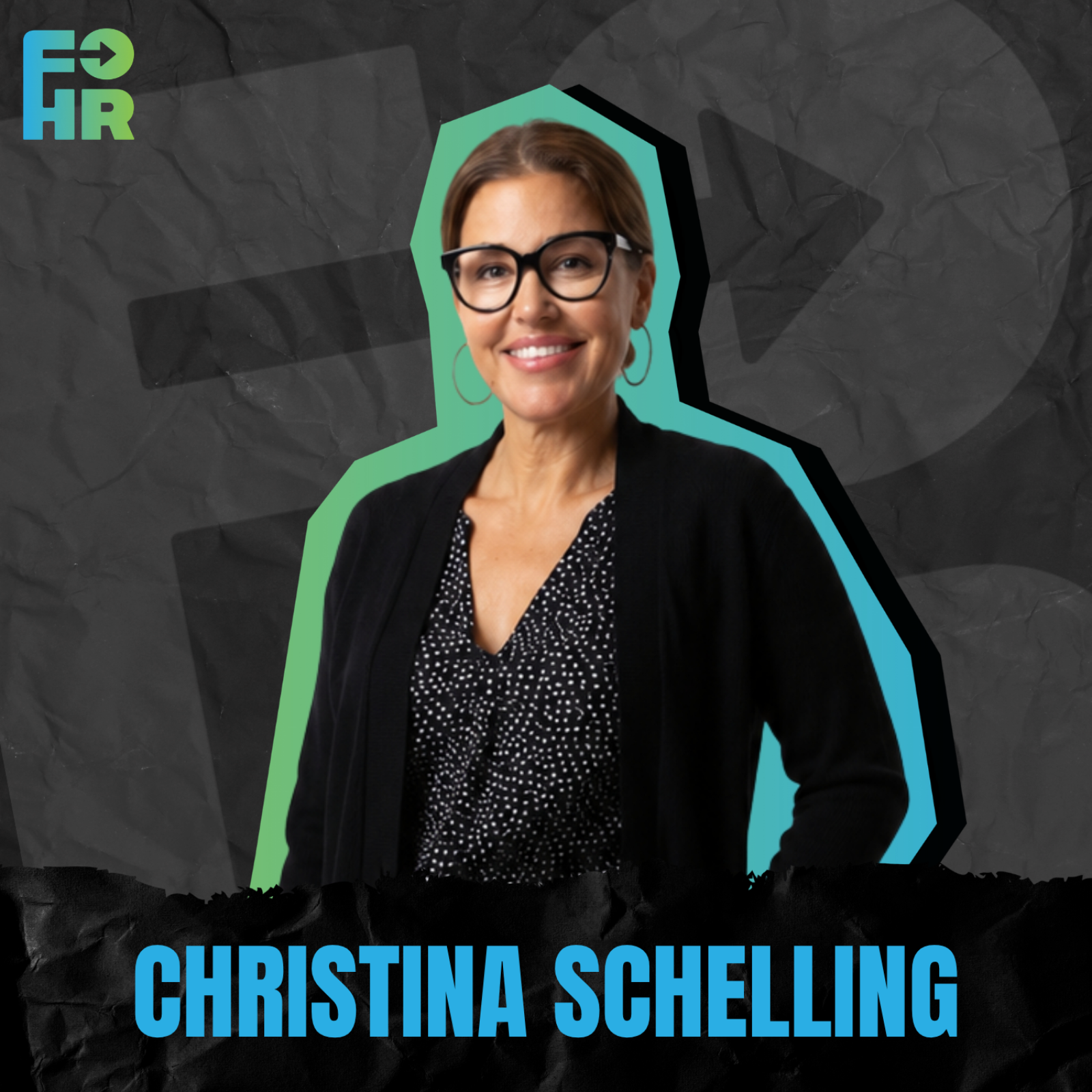
“Why Verizon Made Its HR Business Partners a Center of Excellence” Christina Schelling, SVP, Human Resources, Verizon
39m 39s
Christina Shelling, Head of HR Business Partners and Talent Management at Verizon, shares insights on transforming HR from a transactional support function to a strategic, business-impact-driven role. She emphasizes the shift from being a "business partner" to a "business builder," where HR leaders own workforce outcomes, organizational effectiveness, and culture change. Verizon’s new HR operating model includes a dedicated HR Business Partner Center of Excellence that fosters collaboration, shared goals, and joint problem-solving across business units. Success is measured through clear, enterprise-wide metrics like workforce planning, succession readiness, and culture transformation. A key innovation is the use of AI to enhance internal mobility by creating comprehensive employee profiles and leveraging machine learning to infer skills and career paths, resulting in double the internal mobility and higher employee engagement. Christina highlights the importance of clean data, co-creation with vendors, and practical, real-world application of tools. She advises HR leaders to embrace a mindset of continuous learning, leverage external perspectives, and avoid perfectionism in favor of progress. Ultimately, she envisions HR as a workforce architect—strategically designing people, processes, and cultures to drive performance. The episode underscores that the future of HR lies in agility, data sophistication, and deep collaboration across business functions, with a core belief that HR will be better tomorrow than today.
(upbeat music)
- This is the future of HR Podcast, episode 205.
- It's a great question because often you hear
HR business partners, you've shifted to more strategic.
So what does that mean?
What do I do next and tell me what success looks like?
We wanted to care for all of those questions
and so defining what success looks like
was really important and making sure
that we had shared metrics
across all of the HR business partners
across all of the business.
And the shared set of metrics was really four things.
- How can you create an HR business partner
center of excellence?
Why does HR need to shift from owning programs
to owning business outcomes?
- Hi, I'm your host, JPL8.
And this is the future of HR Podcast.
The only podcast whose mission is to inspire
the next generation of HR leaders.
On each episode, I interview successful HR executives
and thought leaders who are reimagining,
rethinking and leading our field into the future.
During our candid conversation,
you will learn about their career journeys,
their lessons learned along the way,
and their insights on how to take our field,
and most importantly, your career to the next level.
Over the past three years on future of HR,
I've talked with more than 175 CHROs
and HR thought leaders about what separates
good HR leaders from the great ones.
And one thing is clear,
the best HR leaders see themselves as business leaders
with HR expertise.
But here's the challenge,
most HR leaders were never taught to think,
communicate and operate that way.
That's why I created the NextGen HR Accelerator,
a four week intensive virtual program
for HR directors and managers
who want to have more impact and influence.
Together we build your business and financial acumen,
sharpen your strategic thinking,
and develop the communication skills
to influence executives and deliver measurable results.
You also get a targeted 360 feedback
and two coaching sessions with me.
Over 150 HR leaders from companies like Nike,
Prudential, Cardinal Health, McDonald's,
and Coca-Cola have already graduated.
Our next cohort starts September 15th
and enrollment closes September 4th.
Visit futureofhr.com or drop me a line
and reserve your spot today.
And with that, my guess this week is Christina Shelling.
Currently Christina serves as the head of HR business partner
and talent management organizations at Verizon.
And this role she's responsible for leading
the enterprise town strategy or force planning
succession and executive leadership development
for Verizon's 100,000 employees.
Before joining Verizon, she helped HR executive roles
at the Estee Lauderd Company's
Prudential, Financial, and American Express.
And early in her career, she served as a leadership analyst
at the Central Intelligence Agency
or commonly known as the CIA,
or she gained a unique perspective
that informs her approach to talent and culture.
Christina's work and thought leadership
has been featured in CNBC,
the Wall Street Journal and Economist,
and in my conversation with Christina today,
we're gonna explore what it really means
to be a strategic HR partner.
Why she created a center of excellence
for HR business partners,
how HR's playing a critical role in Verizon's business
and transformation,
and how they're using AI to scale internal mobility
and career growth.
I'd love to hear your thoughts on this episode,
so feel free to drop me a line and link in and say hello.
And with that, here's my conversation with Christina.
Christina, welcome to the future of HR podcast.
How are you?
- I'm wonderful, thanks for having me.
- It's great to have you on the podcast,
and I'm really excited to talk with you today
because we're gonna get into what it means
to be a strategic HR business partner
and how we can support HR business partners,
which we are both really passionate about.
But I want to start off talking a little bit more about
some of the incredible companies you've worked for,
who are known for these strong HR teams and practices
like American Express, Prudential, Estee Lauderd,
and of course, Verizon, where you are currently.
What have you learned from these great experiences
and companies that have helped you define
what great HR looks like?
- I've had real privilege of amazing companies to your point,
but also working for amazing HR leaders too.
To answer your question, I would highlight three things.
First, we've heard for a long time now
that HR executives need to be business leaders first.
And I think that remains true.
I would add, in addition to being a business leader,
we should be business builders,
and transition away from just weighing in on things
that fall into our area of expertise only,
and contribute to how we think building, driving,
and creating value plays out in strategy,
and as it relates to customers.
I think the second part is really around
architecting the workforce.
And that's evolved a bit over the years,
and especially now in the era of AI.
But great HR really requires leading discussions
on business value and how do we add to that?
How do we create the most optimal operating models
to realize that value?
And even things like process and governance and technology,
I think also play into that as we think of it,
how do we architect the workforce of the future?
And frankly, today.
And then the third piece we've said for a while now
is really that shift from transactional
to strategic and influential.
And so moving away from that order taking mindset
to that advisory and influencing mindset,
I think is really important.
- Yeah, I love how you're framing this up
because it's something I've been thinking a lot about
that we've got to go from business partner
to business builder,
because the last 30 years we've focused
on being a strategic business partner,
which is done really well.
It's gotten us to this great point,
but now we have more influence,
more expectations on HR than ever before.
And frankly, I think our organizations
need us more than ever before.
So everything you said just really resonates
that we've got to move from transactional
to that strategic creating value
and now being workforce architects, which is a lot.
If you're nervous listening to this and saying,
"Wow, that feels like my job has got expanded."
It's like, "Well, welcome to HR in 2026."
- In Verizon, you recently evolved your HR operating model
of focus on making your HR business partners
truly strategic and business focused.
Can you tell us more about the new operating model
and the expectations for the HR business partner role
and how that shifted?
- Yeah, absolutely.
And this is something we've been on a path towards.
And I don't think we're ever done
for many years and many years to come.
And similar to other companies,
we've really shifted towards a center operational
kind of place that we call pods
that serve different operational service.
We also have our COEs like other organizations
around talent rewards and learning and development, et cetera.
And then our HRBP COE is really enabling
our HR business partners to be
that strategic extension of the broader HR strategy
and that strategic kind of people extension
of a business strategy.
- And so as you guys have made this shift,
a lot of companies, by the way, are doing this.
Almost every company, HR team I talked to, is working to
figure out how to elevate their HR business partners
to be even more than just that business partner
really is onto the business.
But actually, we talked about being a business builder,
really helping shape where the organization's going.
As you think about the expectations in your mind
and maybe to talk a little bit about how that shifted
in terms of, 'cause you were already strategic.
I mean, Verizon's already a world-class company.
And so I think a lot of people were like,
wait, Verizon had to get better, just give us a little more
context on what that shift looks like.
We wanted to care for all of those questions.
And so defining what success looks like was really important
and making sure that we had shared metrics
across all of the HR business partners
across all of the business.
We were very clear, the first is advancing workforce plans.
HR business partners, you own workforce plans.
The second was around organizational effectiveness
and not just moving boxes and focusing on org charts
but real understanding of the right structure,
the right people, the right roles,
what's co-located next to what to make sure efficiencies
and processes are smooth, where's the decision authority?
How does governance work?
Really thinking about what that org effectiveness expectation is
as far as a measure of success.
We also said succession is your job, HR business partners.
And so yes, we have a COE that builds tools and templates
but you HR business partners,
we own the focus on building and strengthening succession pools
and slates and making sure we've got those best leaders
when we need them.
And then the fourth thing, JP,
and this goes into the transformational place of Verizon
was really around igniting culture change.
And in HR sometimes we use softer words
to talk about the role we play in culture.
Sometimes we stay stewarding culture or facilitating culture enabling
culture. All of those words are important, but we wanted something more powerful and more
aggressive in a sense of more ownership. So igniting culture was really important to us,
because there's real behavior change around this. There's real need to reinforce and incentivize,
especially when it comes to expectation of AI first companies. And also we have a pretty large
integration underway with a recent acquisition. And so culture is hugely important in one of the
biggest levers we have now. So success metrics were so important for us to make sure we knew exactly
what success looked like and what we were marching towards. And the last piece I think too was
around permission and empowerment. For a long time we've talked about HR having a seat at the table.
I have kind of a love hate relationship with that saying, because it doesn't matter if you have a
seat at the table unless you do something with it. And you do something with it very proactively
to apply your expertise, introduce the levers you can pull them to help with the business strategy
and shareholder strategy. And I think for HR folks sometimes we wait to be invited in. My message
to my HR business partners was assume you have the license to contribute and go from there.
Yeah, I love the piece or on the permission and we should underline it for a moment because
sometimes we are waiting. And it's not because we don't want to contribute or have the impact.
It's that we feel like that's the role we've gotten in. When you say support partner,
it doesn't really sometimes mean that we're going to be driving things. And so I love the idea of like
it is about shaping, initiating, not waiting. And igniting culture is another way. And so all
these verbs are very active. And if we kind of underline what I think you just talked about Christina
is this shift is really from programs to outcomes that really be responsible for these business
outcomes. And I think that is the shift, the mindset shift and then now the behavior shift.
And then the actual goal shift that we have to have for HR business partners. If you do want to
truly be strategic, we can't just take away transactional work. You're driving that. And I know
Verizon's in the middle of a pretty big transformation. It's evolving. The business of the future.
You said that the HR business partners have been really instrumental in driving that. Not just
from a culture perspective, but other areas. Can you maybe give us a little more context on
how they're on the front lines of this transformation and the role they're playing?
Sure, absolutely. And a lot of the measures of success or the priorities that I just mentioned
are really purposeful to help drive that turn around. And if you think about how we continue to
delight customers or enhance our customer experience, that only happens if you have the best people
in the right jobs at the right time. Thinking about how we enable all things that come with digital
and AI to better serve customers and create that seamless, omnichannel experience. It starts with
people and it starts with design. I also think as you understand work and how work happens and
what the work is, there is a huge opportunity for automation, augmentation, and being
super thoughtful of the way you design the workforce of the future to do all of the things we've laid
out in our turnaround. Yeah, it's really an important role. And it sounds like, I mean,
the expectations, I'm about expectations being higher when you're going through this transformation.
But I love that they are the front lines helping you drive what is so critical,
initiative critical for Verizon. So congratulations to the team for doing that. And I'm excited to
maybe have you back in a year or so to hear how everything works out and how the business
continues to evolve. You also, one thing I really love that you mentioned and we sort of passed
it. You actually call it your HR business partners a center of excellence. We typically call it
talent, center of excellence or rewards, center of excellence. Can you talk a little bit more about
why you decided to call it HR business partner center of excellence because I haven't heard it
before, but I absolutely love it. I wish I could take credit for this and I tried to think about
who came up with this. And honestly, it was a natural evolution of how we were starting to think
about ourselves as a group. It was really founded in wanting to have the HRBPs feel a part of their
own community. And that meant spending time together, making sure we've got shared goals and
expectations, making sure that we were learning together and investing in the upskill of ourselves
in each other. And I also think with HR business partners, oftentimes we try to stay connected
and we try to communicate with each other, but there was a need to really shift from adding
siloed value by business unit to shared value by enterprise and the collection of two of those
things together. So that was really important to us. It didn't dawn on me until we kind of came
together the first time that we didn't have the same type of community that the talent COE had
or the total reward COE had. And so now it felt kind of special and important that we had that
for ourselves. Yeah, and I think it's so cool about this is it may seem subtle. Maybe it's
like, well, it's semantics and this is like saying, well, as HR now, people operations or
CHRs or chief people officers, I think it's different because we haven't really acknowledged that
being an HR business partner is a center of excellence. There's excellence there that are
skills that maybe soft skills and there's some hard skills that really differentiate the best HR
business partners from average or good ones. And so I think having a center of excellence really
just is a nod to the important work they do in building that community and sharing issues
set across the enterprise. So I love that piece. Now you also have HR business partners and talent
under one roof, if you will, under you. What have been some of the advantages of having both those
teams combined or any disadvantages that you've seen? So we've seen tremendous upside from the
co-location of this. As we think about the talent, say we being responsible for tools, templates
around workforce planning, the build of the succession process, the build and facilitation of
a nine box or a talent planning solution, all of those things are only successful if they make
it from the beginning to the end. In the beginning starts with the talent, see we in the end is
with the HR business partner. And so success means end to end execution and a shared responsibility
from that without having to kind of throw it over the fence, but just seamlessly carry it through.
I think has been really meaningful and really powerful. I also think often HR business partners
feel like they do a lot, but maybe own little. And so now there is this expectation of ownership
for HR business partners as well. Sometimes shared, sometimes single kind of responsible owner
for really big important buckets of work like succession and workforce planning. And so
I think that that's been really powerful as well. And I think the best COEs build amazing tools,
but they can't always be the most realistic in practice because they're not on the other side
of execution. And the best HR BPs can execute the heck out of stuff, but sometimes wish they had
an opportunity to weigh in or steer it differently from the beginning. And now we have the best
of all of those worlds. Are you seeing, I think we always have, historically you'll see there's a
little bit of like you said, the COE creates something, they throw it over the fence, the HR
business partners are like, wow, thanks for the 15 slides. I have five minutes at the end of
this meeting to talk about performance management. I'm not going to get through any of this.
Instead of that co-creation. And I think the best COEs talent leaders are towards or
whoever are bringing the HR partners in to co-create. But are you seeing now that the teams are working
better together that they're going to each other more proactively that they're really partnering
differently because they feel like they're part of one team? Absolutely. Sitting on one leadership
team, they all have the same goals. And they're better outcomes, better products for involving
each other from the beginning. It's great. And do you feel like there ever be maybe some crossover?
Like do you see some talent leaders moving to an HR business partners or HR business partners
moving to talent? I'm a huge advocate of that. Anyway, I think this makes that even more possible
and easy in some instances. I think the best HR business partners are really good talent managers
and really work good workforce planners. And some of those talent management workforce
planning folks will be better even if they want to do that for their career duration if they've
had a stint as an HR business partner. I think one of the things that also has been a really good
value ad for the HRBPCOE is a shared investment in development as well as career passing.
And HR business partners can get really consumed in the day to day of the business and maybe not
get the same investment in development of COEs because of time or because of not having
that carved out as part of their responsibilities. And now you see HRBPs purposefully doing that
because it's their job to develop and kind of think about their own career advancement
similar to the COE. But I'm really hopeful that there's lots of mobility across in a much easier way.
Yeah, I think it's so important that we have that mobility and that if you are an HR business
partner who aspires to be a CHRO getting a stint and a COE or vice versa is just game-changing
for perspective and understanding how things go from idea to actual implementation.
Now, do you want to come back to the community built for the HR business partners?
Because I think it's really cool. Talk a little more about how you've been building
the community, developing HR business partners, and giving them what truly is a COE and a
center of excellence that really fits their needs.
One of the biggest things we did, I think at the beginning, was to create a shared set
of guiding principles.
What are the rules of the road as we go into this?
And so, I'll walk you through some of them, because I think that each one of them, although
maybe simple, is really important in the way that we do our day-to-day.
The first one was around building bridges, and the expectation that we balance business
priorities as well as enterprise priorities, and that's really that shared versus siloed
value ad.
We also don't need to be experts in everything, and that's very explicitly spelled out.
We don't need to be experts in everything.
And I think at one point in time, HR business partners felt like they did.
They were the HR voice at the table, and any question they came up that had to do with
people or work, they were supposed to be the experts in.
HR business partners felt good if they knew the answer and bad if they didn't.
And so, the principle lays out the expectation as we have a whole bench of experts in our
COEs and other places within HR, and we are stronger if we use that bench, and we are
stronger if we pull on the full strength of human resources, and being an expert is not
one of your goals.
Working with data and accelerating AI transformation was also really important, so the expectation
that you get very comfortable with prompting data, interpreting data, applying data, and
leveraging it to steer your advisory or to steer your business ad.
I think it's hugely important, maintaining an external perspective.
We talk a lot about looking outside to guide what's inside.
Again, when you're in a COE, your job is to investigate and assess and analyze and build.
And so, you get a lot of that external best practice exposure that can often get lost
in the day-to-day of an HR business partner.
And I think it's hugely important that HR business partners maintain and carve out time
for that external perspective and kind of stay current.
Prioritizing and investing in development in many forms.
We are only going to be the best strategic HR business partners if we continue to invest
and develop in ourselves and make that part of our day jobs.
And then the last one was progress over perfection.
This is a learning for all of us.
We're all at different places of HR/BP expertise.
And we also are in this AI era where everybody's learning, and everybody has to kind of adopt
the try it and figure it out and iterate. And also, at the same time, know that we're
not starting from scratch.
We're good at a lot of stuff.
So pull from that place of good and then also embrace the idea that perfection will mean
we never get started and progress means that we're moving forward.
Those are such great guiding principles and an HR operating model.
I love them.
I mean, they're so helpful because they could apply really across almost any HR team in
some ways.
They really do resonate when I think about the HR business partner role.
I'm wondering, Christina, is there one or two that really had a big impact on how people
are showing up that just seemed to resonate and we come back up on conversations or the
business leaders picked up on it?
Which one is that?
One of them is we don't need to be an expert in everything.
The comfort that bringing your talent partner, bringing your comp partner with you makes you
stronger the business stronger.
The delivery and collaboration and with and through each other, I think was huge.
I also think the investing and development piece in making that not a nice to do or something
you can get to in your spare time that nobody has.
But this is your job to stay current in your craft.
And so I think that was also hugely important.
Those are two really big messages, especially I think the development piece, I mean, expertise
goes without saying because a lot of times we will have felt that pressure if we better
have been an HR business partner that we supposed to know everything and it's hard.
And then I think that development piece and staying external but also how you continue
to sharpen your saw is so hard because every HR business partner, every HR leader is so
busy as you mentioned.
So I love you as a reinforcing that.
And as you're building this community, you are making that development investment.
You have an HR academy that I'm actually a speaker tomorrow actually.
So that's pretty exciting to come in and talk to the team.
But tell us more about what you've been doing to help develop the HR business partners.
So it is I think really progressive.
We've got a structured and unstructured plan laid out for the formal and formal.
So some of the formal pieces, including shared moments together, whether it be town halls
or ongoing coffee chats where we talk and learn with each other, we've got formal learning
events, whether it's our HR academy or very specific to the HRBP role, things like or
effectiveness, talent intelligence, talent and culture planning, which is how we call our
workforce plans and really deep diving into the craft and practice of those areas.
We recently had a nine box master class, which is beyond the what do the boxes and definitions
mean, but what's the realities of facilitation and what are the most common questions?
How do you delineate between a seven or an eight?
How do you push back when someone thinks their whole org are high potentials and really
walked through the tails from the front lines of facilitation with the group.
We have another master class coming up on executive interviews.
We've got a lot of change happening here and lots of really great mobility internally
and external hiring.
And so I often get the question, Christina, what questions do you ask in an interview?
You've interviewed tons of executives, you started your career as a CIA profiler.
What do you ask that we should be asking and what do you look for?
And so we're doing a master class with myself and a couple others that are just really strong
experts and good in this space.
So a little bit of what you need to know to be the best HRBP and also the realities
in practice of how you make this magic work when you've got all the tools, but the play
out in reality is something that's really important we cover.
And then JP, some of the informal stuff, we've got a Slack channel that we're always posting
white papers and podcasts and people we follow, such as yourself on social media.
And then we introduced as a company platform called AI Unlocked, which is all things AI
and part of that includes reaching out and matching with an AI buddy.
We use that in my world as well.
And it's not just AI 101 courses, but how do I apply AI in my day job and teach me
some tricks you know so that I can do it too.
I love it.
People might be listening to say, okay, well, you're Verizon, you have all these resources.
But the difference is that I think a lot of this organization needs to can do because
you're leveraging internal teams, leveraging knowledge you have is like, have your executive
recruiting team talk about how to do better executive interviews.
Have your talent leaders talk about how we do what would you do for nine bucks?
I think what's great about is very pragmatic and you're solving problems because what
HR leaders want is we want to get a skill that can help us be better in the moment, especially
for an HR business partner.
And that's where we've got to meet them in the moment.
So conceptual stuff that is very theoretical is nice, but it doesn't help us really get
ready for the moment.
We've got to push back when someone says, someone's a hypo and you want to ask questions to
help them think maybe they're not a hypo or at least you'd level set.
So I love the way you're doing that.
And you mentioned the AI buddy and AI of course is a pretty hot topic and I'm proud of
us for not talking about AI too much until this point in our conversation, but you guys
are doing a lot of really cool things in the AI space and you've had actual real results
and been pretty innovative.
Can you share more about what you've been solving or looking at solving with AI from an HR
perspective and some of the results you've had?
Yes, I'm happy to and I'll give you the specific HR examples.
We've got lots around customer experience and other companies are doing amazing things
there too, but there's two examples I would give.
The first one is around internal mobility and as a company, the size and scale of Verizon,
one of our biggest goals and I would even say unlock is to move our people more often
and faster across different silos, whether that be from customer experience to corporate,
from our network or engineering to our B2B business, there's such value in that and we
weren't seeing the movement in the volumes that we want or frankly need for having the
right workforce and even thinking about succession.
And so one of the solves or I guess it was an idea at the time and we've got some pretty
good success metrics around it was around making sure we had the right data on our people
in their internal talent profiles.
And so like other companies, we have an internal talent marketplace with profile information
which is basically the resume of your employees and with all of our best intentions and efforts,
we were hovering around less than 5% completion.
We had huge data gaps on our internal workforce.
We had a real strong understanding of the jobs that we had, we had the understanding of
the skills associated with those jobs, we know our people but we didn't know the skills
associated with our people and we thought the completion of the profiles and making that
a stronger completion or a set of data would really help us a bit.
We engaged with a third party to kind of build together.
I would say we said to them, you know, you give us lots of external market insights on talent.
Could you do that for our employees? Could you do what you do from external lens and infuse it
internally into our existing employee profiles? We did a pilot of about, I would say, 6,000 people
and we ultimately took all of the data that exists externally and infused it internally and it was
much more than linked in data. It was close to 100 places of data that we infused into our individual
employee profiles that gave us skills and experiences and then we went through a, okay, well,
let's validate this. How valid is this data? And the data of the lift and shift,
I'll call it from the outside to the inside, was well over 90% accurate.
But then with the help of AI, we had really amazing inferences that took place that gave us
inferred data, inferred experiences, inferred skills. And at a start, it was over 75% accurate
and only getting better. So we're really excited about that. Our employees edited if they wanted to,
they were deleted if they wanted to, added if they wanted to, and a couple things happened that were
really successful. First, employees were able to better craft their own narrative of themselves,
especially as it related to transferable skills with AI. Employees were able to see jobs they
were qualified for that they never knew they were qualified for because they only had a title
comparison before. They were also able to get nudges on jobs that they might not apply for but
should. They were able to lay out with the help of a tool that we have called Talent GPS,
what job they would want in the future and a path that shows here's your skill set, here's your
experience today to get to where you want to go. Here's the training and the certifications.
Here's a couple jobs you should take along the way to ultimately reach your destination.
We had zero attrition within that pilot group and then over time after six months we had
double the internal mobility with folks that had leveraged these tools then before we had it.
So less than 5% completion to almost 100% completion. We've maintained it and we've had huge wins
in cross functional, cross silo mobility, engagement, retention and also things associated with
feeling like they can develop an advance of horizon. So really, really strong results and
something outside of the box maybe. It is outside of the box but what I love about what you did is
that we had 5%, which I think is pretty common and that's one reason why Logist Talent Marketplace
tools fail is that people don't have time to put all in there. So you made it frictionless
by getting the information in and then people were like, well, now that my information's in there,
I've got to make sure it's right. You know, and I think that drove the accountability,
but then you able to really have the matching. I mean, it sounds like it went really well and
it's a really good model for other companies. You'll probably get some emails after this to say,
hey, Christina, like, how'd you really do it? What was the company? So I think that'll be great.
Thinking about more kind of advice and insight for HR leaders who want to have more impact with AI
around talent or people practices or maybe even as an HR business partner, what advice would you give
them on how to get better with AI? Three things, JP. First, AI is a team sport. HR is a huge leader here,
one of the top leaders in the AI overlay. I'll call it to the work world or the corporate world,
but you also need obviously IT, you need finance, you need legal and that's beyond before even the
buy-in of the business. So team sport, absolutely. Start with clean data. So even the example that
I just gave around our skills and employee profiles, we invested early on in a really clean job
taxonomy. We decreased the number of unique jobs by over 80%. We made sure we had real up-to-date,
clear understanding of tasks and work associated with that and skills associated with that.
And that investment has played out in a way that I couldn't even predict how valuable it would be,
not just with the skill piece that I mentioned, but also we now are able to create a bit of a
heat map based on that data that understands the biggest opportunities for AI around automation
and augmentation and where we steer implementation first for AI as we shift from pilots piloting to
this is a thing that's happening at the organizational work and job level. So I think the clean
data is really important and invest in that early and ongoing. And then the third thing I would
add is around co-creating with vendors. So don't just buy what vendors are selling. Vendors in our
experience have been amazing partners that were interested in building together. So some of the
examples that I gave weren't products we could pick. They were ideas that we had or problems we
were solving and said, "Hey, can you guys help us with this? Is this something you can do?"
And in some instances they said, "I don't know, let us go back and talk about it and see if we can."
And in some cases they could and in some cases they couldn't, but building together was really
important and the idea of co-creation across the business, but also with third-party partners,
I think was also important. And then finally I would say just start somewhere. The idea of waiting
till you have the perfect plan will take away from all the progress and learning and results.
And so you're never going to be done, so just start somewhere.
Great advice on AI. And I love to your point of going to those vendor partners you have and saying,
look, we've got a use case that they haven't thought of because that is actually for them like R&D.
And they're probably pretty excited about it. Well, maybe we can do this and so you might find
they're even more excited to do that and maybe for free than just by not asking. So I'd love that
advice. We talked a lot today though about what it means to be a strategic HR business partner,
the HR business partner as a future in some ways. If you're an next-gen HR leader listening,
what are some skills or where should they be focused and where should they get started to
work their way into this new HR business partner? The ability to manage talent and blend
the idea of talent and workforce and org effectiveness, I think is hugely important.
You need to have the kind of basics and tools and understanding and knowledge,
but you also have the, and you've said the word pragmatic, I think it's hugely important,
you have to understand how it applies in practice. So you need the theory, you need the design,
you need all of the information, but then how does that play out in practice? And I think that's
hugely important. The outside-in piece is also really important, even when you take something
like succession. You're not competing against yourself, you're competing against the outside
competition. So you need to know your internal talent, but most importantly, you need to know
the external talent at the competition so you can build a stronger succession bench and pool.
And so that outside-in applies to almost everything that you do. Master data translation,
focusing on clean data, but the right data, how you prompt it, how you interpret it,
how you apply it, how you leverage it to steer your strategies. And then the idea of embracing
co-creation and not being the expert in everything, whether it's co-creation with partners in HR,
co-creation on business strategy with folks in different areas of your organization, or co-creation
with external partners, they think is also hugely important now and in the future. Christine,
the last question for you, what is one word or phrase you believe will define the future of HR
over the next five to ten years? I'm going to cheat a little bit here. The one word I think would be
around workforce architect, and that's hugely important for the role of HR. But also at Verizon,
we have a credo here. And I've worked at lots of great companies with lots of great mission
statements, but one of the lines in our credo is, our best was good for today, tomorrow we will be
better. And I think that's a perfect way to kind of end the discussion and prompt for continued
progress and future building. I do believe Christine, HR will be better tomorrow as well.
Thank you so much for being on the podcast. We all learned a lot. Thank you.
Thank you so much for listening this episode of Future of HR podcast.
Thanks again to Christina for sharing how she's building an HR business partner center
of excellence that's igniting Verizon's culture. As always, you can go to futureofhr.com to
view all of our past episodes and learn more about our mission to inspire the next generation of HR
leaders. And if you enjoyed this episode of Future of HR, I think you'll enjoy my future of HR
newsletter, which is the only newsletter that's focused on helping you to elevate your career
and business impact. Go to futureofhr.com to subscribe and be sure to download my HR
leaders blueprint, which is 18 pages of real-world advice for my 100+ HR thought leaders with simple,
actionable improvement strategies to advance your career. We'll be back next week with another
great episode. Thank you for so much for being part of our Future of HR community.
Podcast Summary
Key Points:
HR business partners must evolve from transactional program managers to strategic business builders who own workforce outcomes and drive organizational effectiveness.
Verizon has redefined its HR operating model by establishing HR Business Partner Centers of Excellence (COEs) to foster shared goals, collaboration, and community across the enterprise.
Key success metrics for HR business partners include advancing workforce plans, improving organizational effectiveness, strengthening succession pipelines, and igniting culture change.
HR leaders are now expected to leverage data, AI, and external insights to make informed decisions, with a focus on clean data, real-time analytics, and practical application in day-to-day operations.
Co-creation with internal teams and external partners—such as vendors and talent experts—is critical to solving complex HR challenges and driving innovation.
The integration of talent and HRBP functions enables end-to-end ownership of critical work like workforce planning and succession, improving execution and accountability.
Continuous development, including master classes, informal learning, and AI tool training, is essential to build practical, future-ready skills in HR professionals.
The future of HR is defined by the role of the "workforce architect," emphasizing strategic foresight, agility, and a relentless commitment to continuous improvement.
Summary:
Christina Shelling, Head of HR Business Partners and Talent Management at Verizon, shares insights on transforming HR from a transactional support function to a strategic, business-impact-driven role. She emphasizes the shift from being a "business partner" to a "business builder," where HR leaders own workforce outcomes, organizational effectiveness, and culture change. Verizon’s new HR operating model includes a dedicated HR Business Partner Center of Excellence that fosters collaboration, shared goals, and joint problem-solving across business units.
Success is measured through clear, enterprise-wide metrics like workforce planning, succession readiness, and culture transformation. A key innovation is the use of AI to enhance internal mobility by creating comprehensive employee profiles and leveraging machine learning to infer skills and career paths, resulting in double the internal mobility and higher employee engagement. Christina highlights the importance of clean data, co-creation with vendors, and practical, real-world application of tools.
She advises HR leaders to embrace a mindset of continuous learning, leverage external perspectives, and avoid perfectionism in favor of progress. Ultimately, she envisions HR as a workforce architect—strategically designing people, processes, and cultures to drive performance. The episode underscores that the future of HR lies in agility, data sophistication, and deep collaboration across business functions, with a core belief that HR will be better tomorrow than today.
FAQs
It means moving beyond transactional HR work to become a business builder, shaping strategies, driving outcomes, and influencing organizational decisions with a focus on workforce effectiveness and business value.
Advancing workforce plans, improving organizational effectiveness, ensuring succession readiness, and igniting culture change, all measured to reflect tangible business impact.
To build a shared community, foster collaboration, and establish clear expectations, enabling HR business partners to work collectively as strategic leaders across the enterprise.
AI analyzes employee profiles and job data to infer skills and experiences, helping employees discover transferable skills, identify suitable roles, and create personalized career paths, leading to increased mobility and engagement.
They should master workforce planning, organizational effectiveness, data literacy, and co-creation—balancing theory with practical application to drive real business outcomes.
HR business partners are encouraged to regularly engage with external best practices, market insights, and industry trends to ensure their strategies remain competitive and forward-thinking.
Chat with AI
Loading...
Pro features
Go deeper with this episode
Unlock creator-grade tools that turn any transcript into show notes and subtitle files.
 PodcastTranscript AI