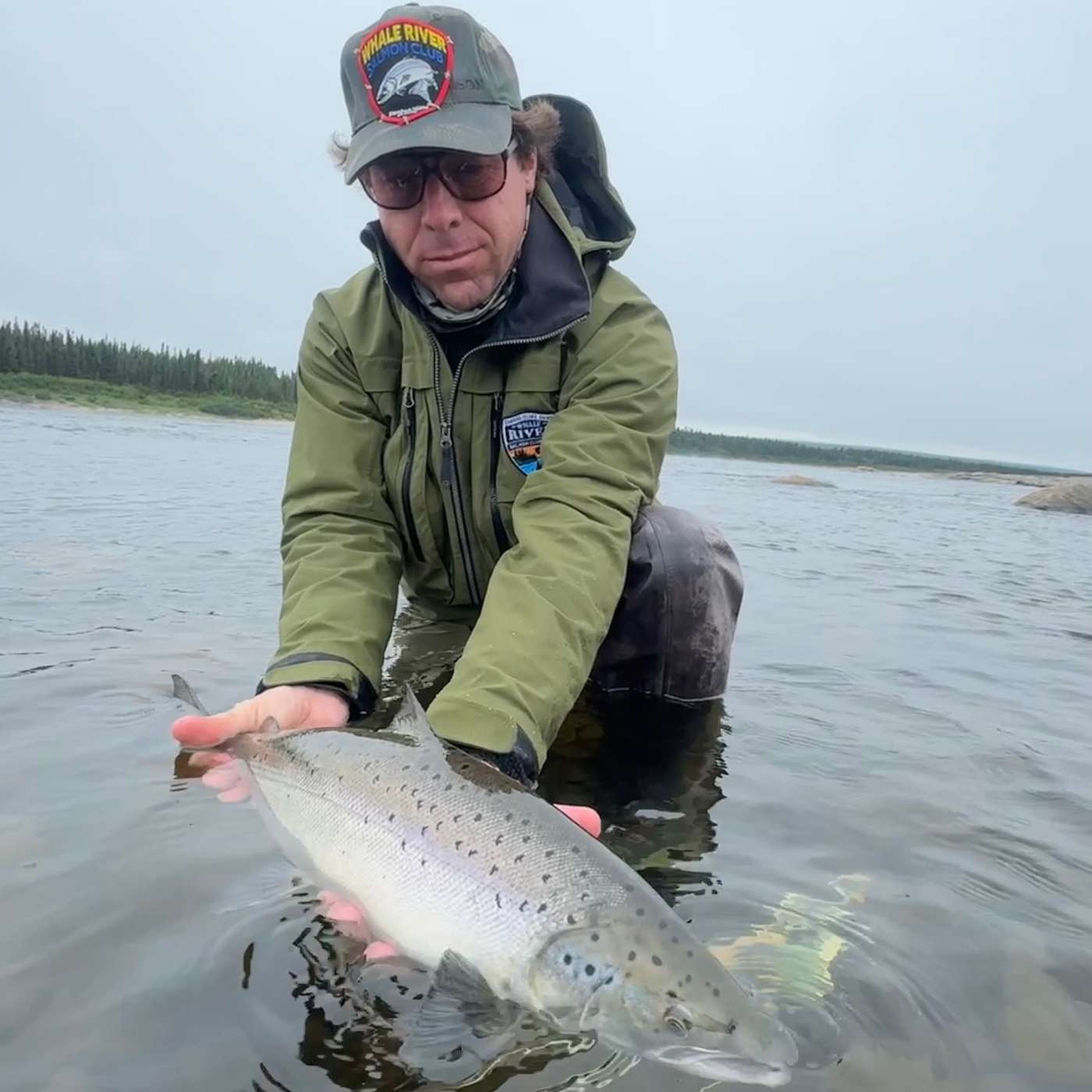
Alex Taylor, autor y conservacionista, discute la evolución de los retos medioambientales desde su libro de 2001, notando que problemas antes localizados, como las redes de enmalle, han sido eclipsados por crisis globales como el cambio climático y la industrialización pesquera. El salmón, central en su narrativa, simboliza resiliencia y es una especie clave cuyo declino afecta ecosistemas enteros. Su pasión por la pesca con mosca, que describe como una práctica artística y de conexión con lo salvaje, evolucionó hacia un activismo conservacionista. Esto se materializa en su apoyo al Fondo del Salmón del Atlántico Norte y, a través de Cox Enterprises, en iniciativas filantrópicas que priorizan la biodiversidad, como la protección de humedales para aves acuáticas. Taylor enfatiza la urgencia de actuar frente a amenazas como el calentamiento de los ríos y la expansión de la acuicultura en aguas islandesas, abogando por un enfoque holístico que trascienda la mera sostenibilidad corporativa.
Transcription
9233 Words, 49290 Characters
The salmon is inspirational, the salmon is always going to return home, the salmon fights through all kinds of obstacles. What originally drew you to fly fishing? I guess everything I do, I seek to make it more difficult on myself, the fish farming industry was going to come to Iceland and spread all over the country and I said, well, what are you all planning to do about that? They said, oh, what can you do? You can make all your conservation goals in the world happen. We could be carbon neutral, water neutral, waste neutral and still species are disappearing at an alarming rate. Alex Taylor, author, passionate fly fisherman, international conservationist and CEO of Cox Enterprises. Welcome to the last. Thank you. All right. Your book. I want to start with your book. In 2001, you wrote the book, the longest cast fly fishing journey of a lifetime. I've ever got that right. The book recounts a worldwide journey experiencing some of the world's most remote and beautiful fly fishing destinations. You said you wrote the book not just as a fishing memoir, but to point out the conservation challenges in all these fisheries, 25 years on, how have the conservation challenges changed? I mean, I think they've all become connected back then, first of all, thank you for inviting me. It was a pleasure to be on your podcast and diving into all this stuff. But back then, I just wanted to do a trip around the world. I was just fresh out of college. I was going to be coming to work at our family business and I figured I would probably be doing that for the rest of my life. And I wanted to do something on my own, get out, and I knew one thing I loved doing this fishing. And I came up with the idea of visiting these sort of pristine places that nobody's seen a lot and doing a book on it and talking about the challenges they face there and now when you look back on it, it's almost amateurish just thinking about how quaint those problems were and now they're just so big. Just climate change, but also globalization and commercialization. The explosion of fish industry has happened and so it's just much more intense now. But I've always been just passionate about nature and people that do things to protect it. Can you remember then, if it sounds like it's, as you said, blown up in the last 25 years and in retrospect, there's some quaint issues then. Can you remember a couple of the issues at the time you thought, "Oh my God, that's great." Well I remember, so I think the first chapter of the book is Botswana and we were talking about how the fishing there is so pristine and the real challenges, the locals with all their gill nets and you think, "God, if gill nets were the only problem we faced in the global fishing ecosystem now, we wouldn't really have that bigger problem." I mean, now it's the entire place is too hot, they either get too much rain or not enough rain. The global drought and flood is the problem and back then it was gill nets and that's sort of a, I won't say quaint, but it's comparatively. So it feels like the last 25 years, it's climate change that has accelerated. That's at the heart of it all, that's the crisis of our generation I think, it's the thing that affects every person on earth, it's the thing that affects every ecosystem and it's not, you know, you talk about 1.5 or 2 degrees Celsius, a lot of people just don't understand how that is a big, but when you do that, if your temperature went up 2 degrees for the rest of your life, you'd be a very sick person and if it goes up more than that, it has tremendous impacts on the world's rivers, the oceans, people's state of mind and that's what's happening now and so, you know, I try to keep my sanity by just focusing on inspirational things. The salmon is inspirational, the salmon is always going to return home, the salmon fights through all kinds of obstacles and the people that protect it or just, all the stories are cool and inspirational and they kind of keep me focused on my north star. I love that. So it's almost a metaphor isn't it, salmon, it is for me, it's hope, it's the antithesis of apathy and the salmon's journey regardless of whether you care about an Atlantic salmon or not, is that romantic odyssey is the thing that should inspire us way beyond the world of salmon conservation, I think it's a real. And you know from doing it, you'll cast for hours and see absolutely nothing and when someone says it's time to go home, you have to do it just one more time. Yeah. I mean, there's something wrong with all of us and salmon fishing, there's just, but that belief that this next time might be different and it happens enough where you're rewarded that last cast that it keeps coming back and you're like, I can't, I can't believe it happen. I know. It's almost like a hell, it's an addiction, I know, I know. And speaking of, of, of fishing, what originally drew you to fly fishing, because that's, you know, compared to the world of fishing, it's a niche, it's a niche part of it. I guess everything I do, I seek to make it more difficult on myself. So fly fishing is certainly the more difficult way to fish, but it's also, I guess, more traditional when you look in the paintings and read the old books, it's the, the people that I always admire, shoot with a side by side shotgun, they fish with a fly. It's where all the poetry and imagination is in fishing to me, you know, I'd be throwing a, throwing a jig in the water is, you know, satisfying sometimes, but there's nothing like, you know, tying a fly, casting it just right, seeing the take, it's, it's just so tactile. So it's almost the artistry of it, yeah, and the creative, poetic, I guess, I mean, these are words that I'm throwing out there, but they absolutely, it's the right brain and left brain. It's the technical casting, but it's also the mystery of it and the beauty of it, you know. And how much we pit ourselves against that fish and how difficult we make it for ourselves, but there's a, there's a sort of, there's almost like a dignity and a, and a, and a galaxy in that endeavor, isn't it? And a connection with the fish, so, you know, that, that take is delicate, if, if you, if you throw a hook in there with a, a lure or worm on it, you don't really see the take, it just happens, they're either on or they're not, and you just muscle them in. Yeah. With a fly, you know, you see the take, sometimes you have to kind of give it a little, you, you, you hook them very manually, and, and you can't just muscle them in, because you'll break the leader, you have to kind of let them go, yeah, work with them. It's, it's, and you're usually releasing fish, if you're fly fishing too. So there's a, there's a mindfulness about it that you, yeah, you want to hook them with a hook, and that's painful, but you're actually hoping to get them in and good shape and let them go. And I think it's interesting when you talk about that. There is, there's an elegance in that simplicity. And there are, the hunter element is, is way down on the list of priorities, isn't it? Yes, you want that moment of catching, the tug is the drug as they say, but, but the first thing you want to do after that is once you played it, is, is all, all energy is getting that fish back in the water. Yeah. And I've, I've seen that across the board for the last 20 or so years that I've been fishing. And especially with a salmon, just, it's, you know, you, you, you could cut the line right after you hook them. I mean, that's the most exciting part, but you don't want to, because you, you want to just connect. Yeah. It's been in the ocean for years now, and it's, here it is, and it's, you know, all the mystery, just all the silveryness of it. It's just, just the most beautiful form factor ever, and then just, all the things that came together for it to take a fly on the surface and see it and land it and, and watch her go away and it's, it's just like a, that wild animal is, it's connecting with that wild, it's completely wild. Totally. Completely wild animal. It's something very special about that. When did that hobby, if we can call fishing a hobby, like calling that obsession, you know, okay, so when did that become, or translate into a conservation course? When did you, when did it, I've always loved fishing. I lived out in Colorado, and I've always, I grew up on a creek where I, you know, experimented with, you know, brim and bass and things like that, but salmon started for me. I was given an opening on the whale river and on Gava up in Northern Canada. There's somebody, a bunch of old doctors that have been going up there for years, one of them passed away, and there was an opening on the, on the week and they, they offered it to me, and I've been going there now for just about 30 years, I mean, I'm getting old enough to say things like that, which is amazing, but I was with these, you know, these old guys that have, they make outrageous statements, they tell outrageous stories, they speak with great authority and, and wisdom and science. It's just, you know, the salmon scene is a, a beautiful one and a hilarious one. And salmon camp is just a, it's a, it's a, it's addictive. You have to go back every year. It's not like something you go, you go do once and say, oh, bucket list. There's no bucket list about salmon. I hate the term bucket list. Yeah, I do. And it's one of the reasons I love salmon so much is it's just the antithesis of that. It's a lifelong obsession and it will, it'll probably be the last thing I do. Yeah. Well, that's, yeah, let's hope. And there is something about going back and you only see these people sometimes, don't see you once a year in that same week or in that same period. And with that very simple endeavor, we're going out to try and catch a fish. All of us, we've all got the same collective goal. And it brings out the best in people, I think, you know, you talk about what you learned from these folks that you've been repeatedly meeting at the same time of the year, they're not talking about their jobs, they're not talking about the gripes of life. You're just there with a common goal and something very special about them. It brings together generations, I mean, a 90-year-old and a 20-year-old can really bond on a salmon river in a way that you can't really, you can't get on a basketball court and do that. You can't, there's really a few things that, you know, you might play chess or something, but this is a way to really bond as equals where it's a level. And they tell you, you know, and it's almost like the older you are, the more wise, the more you've seen things happen and the more, you know, your advice, your observations, it just have a depth to them. The guy that taught me how to salmon fished, I mean, I asked him to, you know, be there for, you know, all the big events in my life and he was, he was this sort of a presence, I'd call him like my godfather. Really? Yeah. And you met him on the river? Yeah. That's in point, isn't it? Yeah. And lovely. I'm sticking with conservation for a little bit. Tell us about the work that you and Cox are doing for the conservation of the Atlantic. Well, I've been maybe three, four, five years ago. I started turning the obsession into, you know, do something about it. I was standing in a river in Iceland with some friends and they were talking about how the, you know, the fish farming industry was going to come to Iceland and spread, you know, all over all over the country and I said, well, what are you all planning to do about that? And they said, oh, what can you do? They're, you know, they're a huge billion dollar industry. I said, well, there's got to be something. And so I've, you know, found, met the North Atlantic salmon fund. Yeah. I was found by Ori Vickfussin and legend. Yeah. Legendary conservationist and get it done guy, you know, somebody that just knew how to bring people together. He had respect for both sides and, but made good things happen. And so I started supporting them and just, I love watching, watching them do their thing. So it was really just a personal passion. And then, you know, following that, Cox Enterprises got more into, we've always been interested in conservation. So we have something called Cox Conserv, is where we seek to eliminate the carbon footprint of our company, the water footprint, and be zero waste to landfill. And we are the first enterprise wide company, I think in the world, at least in America, to be completely zero waste to landfill. We've reduced our carbon footprint by many, many megatons, many tons, I guess I should say megatons. There's only 51 megatons in the world, maybe that's gigatons. Big number. Big number. We've reduced our carbon footprint a lot, and our water footprint. And then on the philanthropic side of the, you know, we've been giving, we've put money every year into our foundation, and we've been focusing a lot on, you know, it used to be the environment, but now it's, there's this concept of biodiversity. And you can make all your conservation goals in the world happen. We could be carbon neutral, water neutral, waste neutral, and still species are disappearing at a alarming rate. So there's in addition to conservation, there's something called biodiversity, and it's doing things to protect ecosystems, and you know, what I call migratory animals like salmon, like waterfowl, and monarch butterflies, bees, things that are ecosystem wide, and, you know, keystone, you know, really, you know, indicative of the health of the planet. And so we've been doing stuff with waterfowl with salmon and some forests and things. So it goes, I didn't realize that, it goes way beyond just Atlantic salmon, it's, you push out into other species, other environments. Yeah. My predecessor in this job, Jim Kennedy, has spent a lifetime equally obsessed with waterfowl. So he loves duck hunting, he loves waterfowling, he just loves marshes, and he was very passionate about the Prairie Pothole region and the Dakotas, and up into Canada, and he, we did a tribute gift for his 50 years of raising money for them, donating money, and personally volunteering as a young person. He was doing the, he was the, the chapter chair in Atlanta for fundraising and all that. So we did $100 million donation to ducks unlimited to buy the prairie, as much of the Prairie Pothole region as they could and get it under conservation easement to protect. They're doing a great job. Ducks unlimited is an outstanding, a very effective organization. That's amazing. Putting money to work. Yeah. So wetlands, I mean wetlands that, we've lost, I know we've lost 80% of ours in the UK in about 30, 40 years I'm told. I'm guessing it's not. People don't go there because it's muddy and boggy and they don't, you know, the average person lives in the city and just never sees it, but out there in those wetlands is where you have invertebrates and, and, you know, sources of food for birds and, and safety for them to lay eggs, hatch, and ultimately, you know, learn how to fly. And we can't see it, but if you go out there, it's happening. And, but it's those areas are vanishing rapidly. They're like prehistoric earth almost on, they're like the genesis of, when the ice age was, when the ice of sheets were receding, they scraped these holes that created little pots, little, little pot, uh, potholes that had water in them, and they, they're just perfectly suited for rearing, uh, migratory birds. Yeah. Because of the invertebrates, because of all, because everything, it's interesting in super fish salmon that we were just watching. Did you know much about this biofilm and these migratory birds that are feeding off as these salmon decomposed, these pacific salmon decomposed in the wetlands or in the estuary areas or in the rivers as well. There's a film of really nutrition, nutrition dense, fish oil, and they're coming in from thousands of miles to feed on, on this invisible biofilm. Yeah. It's like, I, somebody once, you know, referred to a salmon is the only animal on earth that transports millions of tons of nutrients up thousands of feet out of, from sea level up, up mountains. Yeah. I just never thought of it that way. And then when they get up there, they, they'll die or they get caught in the, you know, barely them. And then the bear will walk off and spread its nutrients in the grass. And it's a, it's, they're, they sort of feed this whole ecosystem. Exactly. And people just don't put all that together. They don't. When they hear the word keystone species or indicator species and all the important labels that we give to this fish and why we need to save it, a lot of the thinking doesn't go beyond the river. And as you've just said, it's so much more important than just what happens in the water. Yeah. Talk to me a bit more about the urgency for the Atlantic's, for the conservation of the Atlantic's. Well, I think the, there's a, there's a few things going on. The water temperatures are getting hotter. So, you know, in places like Scotland, where, you know, salmon fishing was, you know, is a way of life. Still, the numbers have gone down a lot. You can still go to Scotland and find rivers with a lot of sufficient them. But more and more, the water's too low or, or, or it's too warm. And so, the numbers and, uh, the numbers are, are under pressure and, and then if there are salmon in there, if the water's too warm, you can't fish in the daytime. So they're, they're stressed out. So everything's moving north. It's going up to Iceland where things have been pretty untouched for a long time. And I think Iceland has such a beautiful coastline and it's rough ocean that does not freeze. So I think, you know, a lot of the salmon farm companies view it as a perfect spot to open up, you know, they can't, they, they, they still raise fish in, in Scotland, but it's getting so warm that they're, they're having huge die-offs and so more and more fish are dying. They want colder water. And so, you know, they've targeted Iceland as a prime location. They're still expanding in Scotland, though, sadly. Yeah. It's, it's amazing. Yeah. As in the, as in the agriculture business, it's still increasing their lives. Yeah. Even, even when people know very well what it, what it's done to their, to their, their coast. So on this show, we're, we obviously, we try and give a holistic picture of the, of the fish farming, certainly salmon fish farming industry and keep our audience up to date and, and hope that we're, we can educate some people into making their own decisions about whether they wanted to continue to eat, farm salmon or not. But it was, it was very interesting. I was talking to you earlier of camera and you said, when you go to restaurants with your children, how old are your children? They're 12, 10 and five. 12, 10 and five. They do exactly what my daughter does and ask the waiter all about where does the salmon come from. My daughter loves salmon. And so she says, Oh, can I get the salmon? I said, I don't know. Ask the waitress if it's from an open net pen farm. And if it is, I mean, yeah, she's like, it grows. But they always ask the question and you kind of go through the, the, the, the known dialogue with the, you know, I tried to make it too awkward for the waitress, but I do want them to tell their manager and just let them know that it's a question. Well, quite often they don't know themselves. Do they? Oh, yeah, it's from the ocean. It's, it's really nice. It's from the, I mean, in England, we get a lot of, as I'm sure you probably do here, actually, the branding of these farm fish, it says Scottish farm salmon, and there'd be a picture of a salmon leaping over a, a wear in the stainably raised ferrule, organic Scottish salmon. And then when you put the, the, the chef or the manager to task on that and perhaps try and educate them without coming across as rude or patronising, which is difficult in a restaurant, which is those places, they, they are as gobsmacked as anybody else, and they will consider taking it off the menu, but it's really difficult because it's cheap and for them to buy. And the upsell is, is, is much bigger than a lot of the other things they have on their menus. And they want something other than chicken and beef. Exactly. But there are, as we know, a myriad of alternatives. Just sticking on aquaculture for a little bit, your campaign, the campaign that you've got behind, and you're sort of supercharging and, and putting on steroids if we can use that term. When we're talking about aquaculture, is the off-table campaign? Just tell us a little bit, tell us. So when you ask the waitress or the waiter, where is the salmon from, you know, 99% guaranteed it's from an open-air pen farm, and so, you know, now you've got that awkwardness out there, and, you know, it's kind of like, well, what are we supposed to do, you know, why, why is this guy asking me that, well, I have a solution for you. You know, you can, you can, if the owner of the restaurant or the cook signs up, you can become part of the campaign, they'll send you a box with instructions for how do you incorporate this into your menu, the, the storytelling, how do you inform your customers of why you don't serve salmon, what you are going to serve, with the story behind the challenges of salmon, and so the off-table campaign is really just enlisting cooks to inform their, their customers about what the challenges are facing salmon, and even though you love it, why we don't serve it. And it's growing, isn't it? It's a growing campaign in North America, which is obviously a huge market. If anybody's listening, Chef, restaurant or anybody in the hospitality industry is interesting, and wants to learn about how they can get involved, is Google off the table. It's a fantastic campaign, and it does exactly what Alex just said. It gives you a roadmap on what you can do to get on the right side of the salmon fish farming industry. And align yourself with really some of the most celebrated chefs and food people in the world, who have spent a lot of time thinking about it, and, and, and doing, you know, doing the right thing. It's just nice to, sort of, once you, once you know, you can't unknow, and it's nice to sort of join a team and sort of do something about it. I think so, and I think it's all about awareness. And it's, it is heartening. I've seen some of the chefs and some of the campaigners influences that you've got on board, and it's very much in its infancy, isn't it? I think this campaign in North America. So I think it will grow and grow and grow, and as, as it should, absolutely. Yeah. Um, here's one, how does your personal passion for fishing and ribbers influence corporate decisions at Cox, mixing that passion with the corporate world? Well, it's my real life analogy for sustainability. Um, you know, there's a lot of different analogies, um, but for me, it's the hope of the salmon. Um, it's the fight, the knowledge that you can do it. It's not going to be easy, but the reward is going to be tremendous. You know, the idea of, um, you know, having a grandchild one day up on a river, uh, that is still filled with salmon taking dry flies, you know, just is, is, is very motivating. It sounds, yeah, I wouldn't talk about that 20 years ago, but now I start thinking about, you know, just leaving a better world behind, and right now, you're looking at them going away, and you're just looking at the spread of open net pen farms. And, uh, you know, you know, as soon as they establish themselves in a fjord somewhere, you can hit the stopwatch 10 and 20 years, they'll all be gone, or mostly, or, or they'll be so genetically diluted, they, they're not really a shadow of what they once were in that particular place. And, um, and so I just, you know, when we talk about business, we want to be sustainable, and we want this to be a business that is not, um, you know, mining for a finite resource or something like that, it is a business that is going to be perpetual in nature, you know, once you get in it, you really don't need to exit it. It, this, this should be a good business forever. And finding those types of things are hard, but, um, but if you find one, like we're getting into plastic recycling now, we're getting into controlled environment, agriculture, things that are solving a problem that exists out in the world in a way that can be a big business and, and thrive in cleaning the world up. So you, you want to almost commercialize, um, sustainability, sustainability for, I mean, it like, uh, you know, agri, you know, there's so many people on earth to produce food for them all is part of why the salmon are facing problems, because open up head farms. But what, uh, we're involved in controlled environment, agriculture, which addresses the issue of, um, you know, um, modern agricultural practices, which is you don't, you don't tell a field and let it lay fallow for a season and then replant it, you just keep pumping it with fertilizer, planting all year round, growing things, spraying it down with pesticides and fertilizer with a, you know, modified seed that'll grow fast. And, uh, pretty soon the soil is not actually soil, it's just sort of agate that holds the, the nutrients that you put into it and all that new fertilizer goes out into the ocean, you get the red tides, I don't know if you've ever been near a red tide, but if you, if you approach the ocean, I've, you know, down on the Gulf Coast, if you get within a hundred yards of the beach and take a deep breath, your, your lungs begin to sharply. It's like, um, it's like, you, it's, it burns bad and you have to, you kind of panic, you have to get away from it. That's the runoff. It's all the runoff from the agriculture, uh, in the, in the nutrients that they're pumping out into the ocean. Um, and you, you know, you see it down, it's kind of the impetus for Paul Jones and these other great conservationists that, um, started the Everglades Foundation, um, you know, all the nutrients that come out of the, the, the sugar fields, yeah, in, in through the, uh, the Everglades and out into the, the Florida Bay. And, and we go in the, in the right direction, I don't know what's going on in North America. I have, I know a little bit about the agricultural situation in the UK and, you know, it's very easy. When you say agriculture, it's a, you think more, it must be the farmers and they are, they're insidiously just not caring about the environment and we know it's much more complicated than that. A lot of the time farmers don't know. They're not incentivized in our case. Oh, and they're struggling to survive. They're struggling to survive. Unless we all move into the city and become, uh, you know, gamers, uh, there's not a lot of jobs out in the country and so what are you going to do? You have to, uh, if you've got to be an agriculture, you have to grow things that people are going to buy in order to grow them and not get squeezed out of the market by mega farms are really big companies. You have to grow them fast. Um, you know, there are companies out there that'll give you the right seed, give you the right spray, give you the right everything. And it's hard to, it's hard to go to loan. Yeah. And it's not, it's not the farmer's fault. It just is a, it is a state of affairs. It's the current business model. Yeah. Um, and, um, and cox are involved in, in trying to, so we own greenhouses. Um, uh, so on a, in a greenhouse, you can, you can grow 10 times the yield, um, on an acre of land that you could outdoors and you don't spray any of it with pesticides. We have no chemicals on it. It's never touched by hand and, uh, you can grow year round. Um, and so it has 90% 80 to 90% less water usage. So, uh, there's no pollutants going out into the ocean down the river. Um, there's much less water being used and, uh, and the, and the lettuce is, does not have to be, uh, uh, shipped across the country. So right now, if I buy spinach, say, here are whole foods in Atlanta, it was 99% chance grown in Southern California. Yeah. You know, shipped out to Detroit or Mexican, for, you know, St. Louis and, you know, distributed all over the southeast, and it's probably two, two weeks old by the time I get it. If you get hourly figurines, it's 24 hours old, very fresh, you don't need dressing on it. We need to cover up the pesticide taste. Yeah. You know, you don't need it with ours. It tastes like candy. It's delicious. And, and that's for sure. We can buy that in the stores and, uh, bright farms, bright farm salad. Highly recommended. Bright farm salad. Bright farms. Yeah. I'm going to check that out. And, uh, any, uh, any potential, any ambition to bring it overseas to, to where we can potentially, um, uh, is, uh, ambitious. There are players in Europe that are already doing it and they're probably expanding. But, uh, I would love for the world to be doing this. I mean, it's fantastic. I've actually thought of it. And, when you're, when you're trying to convince local communities not to allow fish farms in their, in their, uh, rural community, you know, one of the answer, one of the questions is, well, what else are we going to do? Jobs. Um, you know, one of my answers is you can open a greenhouse, you know, you could, you could tend to farm there. Could they do that in Iceland or Scotland? Yeah. Yeah. Yeah. Um, it wouldn't take a very big greenhouse to fill, to feed the entire, uh, the island of Iceland. Um, I think 80% of their leafy greens are imported. Yeah. Um, which I don't know. Yeah. I mean, there's, there's plenty of land, um, for greenhouses. Um, I don't, I think for, for a farm that would, uh, take 50 people to run, you would probably feed 10 Iceland's, um, it would, it would produce so much food. That's the ratio. I mean, I don't, I'm making that up, but it's something like that, it's, you know, if you, if you put one of our greenhouses outside of Reykjavik, it would be way too much food. You'd have to, like, slow, slow it down a little bit or make it smaller just because they make so much food and, you know, Iceland is only 300 plus thousand people. But why aren't they looking, you know, they will, there is a greenhouse company in Iceland. There is. Um, I haven't been to their greenhouses. I would assume that they could, they could probably get a lot more yield with robotics and investment in their plants, but I haven't seen it because they're all, that's always the argument that it's hard at least ethically to counter with, with aquaculture, isn't it? Creates jobs and it creates revenue and that's good for GDP. That's good for everybody. I think a lot of people in the industry would tell you in Iceland particularly that a lot of those jobs are not Icelandic jobs, they're, they're, uh, Eastern Europeans, they're moved to Iceland. Um, and so it's not really solving the Icelandic job problem. No, but it's a great PR, isn't it, when they take over a little village and the 20 people that live there, 10 of them will take a job on a fish farm, they've, they've solved the unemployment problem. Yeah. They help the school rebuild the playground and put in a new soccer field and whatever. Yeah, I know. It's, it's very thinly veiled, um, talk to me a little bit about loop. So, so a lot of our listeners will know about loop, um, loop is a fantastic fly fishing. They would only know about it if they are expert fly fishermen. Of course, of which all our listeners are, or birds, or, or potential experts. Um, but you, am I right in saying Cox acquired loop recently and you've got some ideas and some ambitions around what you want to do with it, beyond just selling tackle. Yeah, my whole life, whenever I go somewhere, I always go to a fly shop in the, whatever pound, I'm, you know, if I go to, you know, you could go to Paris and like, the first thing I'm going to do is try to find the fly shop of Paris, of course, or whatever, just to go check it out. More and more over the years, it's become the same stuff. I mean, you see the same five manufacturers selling the same gear and the same jackets and the same factory. Yeah, if it's a big shop, it's going to have the same stuff you, you found elsewhere. But one of the things I always loved about loop is if you go to an exotic place like, you know, some shop in Scotland or Iceland, it's going to be a loop store. And I've always, you know, it just, it was sort of like that exotic out there rod that you could get. And so I already had a lot of loop stuff. And I was in Reykjavik speaking at a conservation event. And the CEO of loop was in the crowd and asked for a meeting with me afterwards. So Chad Pike, who is from New York, but he's got businesses in Iceland. He said it up. He's the chairman of the North Atlantic Salmon Fund also. And so he arranged this meeting and he came and said, you know, we're looking for someone to purchase the company, but we only want to sell it to someone who cares about the environment and can kind of, you know, speak to a message of conservation. And I was like, we don't really make fly rods. I mean, I feel like someone should pinch me now because I love this company. I have all your stuff. But it wound up being such a small acquisition. I thought back to a discussion I'd had years ago about how much we admire Patagonia and how much it's going to sell. I was going to say, Ivan Schunard created this apparel company that sort of speaks about connecting people to nature. And you know, part of their, part of their profits go to nature. He actually donated his company to hold fast collective and said he gave it back to the planet kind of thing. How a business can be there with just solely minded on connecting people to nature and conserving. And so, you know, I came back and said, I know this is crazy, but, you know, loop might be what Patagonia was, you know, I don't know, 40 years ago or something, just an idea. And maybe we can turn it into if Patagonia started as a mountain climbing apparel company. This is a five fishing market, but more and more if we can make it cool. We can invest in it and we can grow the business while growing the message of conservation and wouldn't that be fun? And it is. It's a perfect, the Patagonia model that Ivan just so brilliantly carved out and is a shining light to any business, really, not just an outdoor business. Well, great shoes to fill, if you can, totally. He's so cool. You know, if we can do a little bit of what he did, I'll be just as proud as can be. And I'm sure, I mean, I'm guessing you'll know Ivan anyway, but I'm sure he can share with you some of the little tips. It's probably going to be tougher than it was. Well, he says, I said, how have you done it? And he said, you have to be out there all the time and you have to live the lifestyle. Yeah. So I'm like, all right. So I'm going to have to be doing a lot of fishing, which I'd love to do, but I don't know that I can do it quite as well. It might get in the way the day job a little bit. Yeah. Well, that's great. I mean, he's attracted such a great team. I mean, that company is run by professionals and really smart people and he can go out there and be that spokesperson and still, I mean, I was with him down in Patagonia and, you know, he's looking at the new product types and they're talking about zippers and fabric and, you know, he's sort of, he's editing the product with his folks on the side of the river. On the side of the river, and there's nobody to place to be, then at the call face, as he's saying. Totally. Well, that's brilliant. Well, we'll keep an eye. So, so you want to actually use the brand. What's the idea? I mean, is it similar to Patagonia that you want to, A, obviously build and sell very good quality, indurable, or durable, should I say, functional products. But you also want to send the message through this, through that, those products, that conservation is a huge priority for said brands. Yeah, we make most of our money off of media telecommunications, software, things that make the world, you know, run more efficiently, they connect people, they do a lot of good things. But more and more in this digital world, we are drawn to computers. Our kids are drawn to computers, they, they have trouble putting them down, they're addicted. You just, we get drawn into this digital world. I always say to myself, you know, when I think of truth, what is truth, to me, it's a salmon take, you know, it's, I saw that happen, that is, that actually happened, and it's real. And you know, I just seek the truth by going to some remote place in the middle of nowhere with the hope that I might see it, and, you know, they're there, but you won't actually believe it until you put the fire in the water, get the take, and it, and it happened. And it's just connecting back to nature is something the world needs to do more of. Yeah. Everybody is leaving. I was in Italy last year, and we're out in the country, and there's all these abandoned villages. And I'm like, where are they going? They're moving into the city to play video games, you know, is it so depressing that when you put it like that, it is depressing. I love that idea about using the word the truth, or the term the truth can be completely blown up in the taking, when the salmon takes your flight. There's so much truth and all that. There is, right? I mean, it sounds, maybe to people that aren't anglers, they go, that sounds a little, I don't know, pretentious or ridiculous, but it's none of those things. You know. You talk about people moving to the city and playing video games and, and being addicted to digital screens. So is loop, which it sounds like it's your, you know, you want it, you want to imbue your essence through the, through the brand. It's kind of find it, taking us back to our analog routes, and if the truth is a salmon taking a fly, then the kit that you need to do that, which as we know, if we're talking about fly fishing, kit is just simple strip back. And perfectly made, it's another thing is making things again. Making things crossmanship. Yeah. I mean, America was built by local artisans, craftsmen, farmers, so much of that has been regionalized and conglomerated and, you know, a lot of the things we make are off-short now, and, and that's fine, but, you know, the ability to make something is, is just cool. It's how cool is it. As a kid, there's nothing you enjoy more than putting Legos together, Lego logs, or building a tree house, or something, the satisfaction of envisioning and building something, you know, this is the smallest company we own, but it's, it's, it's, it's just got a lot of cathartic satisfying aspects to it, making things that connect people to nature, you can go out and give them, you can give them to your friends and, you know, stand in the rain with them and they work. Yeah. It's just cool. And there's something about the young generation, you've obviously got kids, do they fish? Oh, yes, they love it. Our first Atlantic salmon this summer. So did my daughter. Oh, it's, I mean, that's magic. Where did she catch it? The Lewis River on up in Labrador. Oh, right. Okay. My daughter, we took it to Iceland and it was the most magical experience, I think, of my life. Probably not hers, but for mine, certainly to witness that it was so, it was so powerful. Is there something about how are we going to get the younger generation more involved in salmon conservation? There's got to be more salmon. Well, I mean, if you take them out there and they don't, all they do is get eaten by bugs, it's not going to be really kids love to be with their parents, kids love to go on adventures. That's one of the great things. That's what, that's something we do have going for us is there's still places to go and when you do go salmon fishing, you've been on a plane, you've been in a car or you're in the woods. I mean, it's, it's electrifying. Yeah. We just need salmon to be there. Yeah. Yeah. And more and more, they're moving north. They're in places that are harder and harder to get. It's one of the, one of the things that loop came with was a couple of lodges up in Labrador. So, you know, people that are supporters of Atlantic Salmon Federation or North Atlantic Salmon Fund. You know, we take them up there. Our customers of our company, they just, they go up there and they're blown away. So more and more just exposing people, maybe creating little conservationists. I think so. You know, a couple at a time. Every year, somebody goes and gives to an organization they never would have given to. Otherwise, it goes back and tells someone about it. One of our most talented journalists, Mike Allen, he's the editor of Axios, you know, one of the most consequential journalists in the world. We took him up there and he caught a Atlantic salmon on a dry fly. I mean, so few people on earth have done this. Was he efficient? No, not at all. I mean, he loves nature. He loves everything. He's a, he's a journalist. He's curious. Um, but, uh, occasional, I said, Mike, you just don't know what you've just done. And he's like, I, my body's tingling. And he got it. I put a picture of it on his Axios newsletter and talked about it, you know, 500,000 people saw that. Maybe 1,000 of them, you know, hit the link and, you know, it's just even if you get one, yeah, people can make a difference. That's, that's a difference. That's brilliant. I think showing, as you've just said, showing the younger generation, if you're in a, if you're in a privileged enough position to, you know, to have places in Labrador where it's untouched or you can get to Iceland or some of these last bastions for the salmon. If you can show these young people what they're fighting for and why we're fighting for them, because that's face it, we're not going to see the fruits of our labor. I, as far as Sam, because we'll be lucky to see the fruits of our labor in our lifetime. Yeah. But they might see the fruits of our labor. Yeah. If you look, I mean, if you're a kid and you look through the history books and, you know, the history of mankind and where did people come from and how did, where, what are, what are, you know, arrowheads and things. You see people interacting with the woolly mammoth, which we killed every last one of them. Yeah. The, the buffalo. We killed every last one of them. There, there we have some domestic ones still, but, you know, you see the woolly mammoth, the buffalo and the salmon. Those are just the images. People on rocks, you know, trying to get one with a, with a spear. And the salmon are the last one that's still there. That's interesting. And, you know, the, the old cave drawings, I think, maybe the old, one of the oldest cave drawings is of the salmon. It's in France. Yeah. And, and, you know, they're still here. And it's like the last one, you know, we, we got it. We can't let the same thing happen with the woolly mammoth and the buffalo. That's, so that triary, isn't it, of these hunted animals and two of them have gone extinct in such, and especially the buffalo went in the blink of an eye, didn't it? Yeah. It's interesting. We have to learn third time lucky. Yeah. That's right. Lucky charm. Okay. That's, that's a sobering thought. I like it. Oh, I don't like it, but I like the way you brought it, should I say. Um, so coxio, go back to your day job. You're responsible for around 50,000 people. Yeah. Is that right? I think. 55 or so now. 55,000 people does fishing help shape your outlook. I only, I asked this question because I do something very different. I'm an actor. That's my day job. And fishing really does help shape my outlook as an actor. Life is stressful and getting outdoors is good. Working out is good. To go fishing, you, you know, you have to be way outdoors. Yeah. To go salmon fishing, particularly, you have to be so far outdoors, you're, you know, a hundred miles from the nearest, you know, anything. Yeah. And then you usually have to go on a pretty significant hike or something to get to where you're going to go. You have to be cold. You have to be out of your comfort zone. You have to do all the things that lower your blood pressure. Make you a healthy person. And, and then you have to have a little bit of practice and a little bit of luck and, you know, a little bit of humor, you know, you're with some people you probably like. Yeah. Most of the time anyway. And, and it's just, it's very good for you and it, and it, you, it clears your mind. I've, whenever I am trying to think of the solution to something or, you know, create a solution to something, you know, you can't, if you're trying to write a song or write a book, if you're trying to do it, it just doesn't happen. It's, it's when you're doing something else and your mind is empty, things just appear in your head. That's right. And I think salmon does that, you know, you're on a river focusing on this thing and other things are cranking in your head and they freeze them up to do their thing. Yeah. So did you make some big decisions out there on the river? Probably. Yeah. I mean, I can't, I can't pinpoint a major decision like on the river, but it, it, it, you know, the big, big strategic directions that you have to make, the big, you know, oh shit, gulp moments that you have to make, you kind of, you get to think through them when you're alone. Yeah. And when you're, when you have some free time. And, and you come back to a different person, don't you? The guy that, that is driving out to the river is very different to the guy that's coming home again. That's right. And the guy that comes home again is the one that's got the clear mind that can make the decisions. Yeah. More convicted around whatever it is. Yeah. You came with. Yeah. That's, that's pretty. So final three questions, we always ask on this podcast. I think we've already covered all the highly impactful and incredible work that you're doing as someone with, you know, powerful resource and a vital network. So we're going to skip straight to question two, which is what would you do if you had no money to save the Atlantic salmon for those folks at home? If you had no money, what can someone who's set it on the couch? Well, like my, my children did, you know, we all have projects in school where you tell a story, you raise awareness. And he just, you know, my son Winston just loved the idea of the Atlantic salmon because he was, he was at some event I was at. And so he decided when they said, what's something that's very important to you in school? And he said, the Atlantic salmon, everybody's like, what the hell is that? You know, most kids in Atlanta don't know a lot about Atlantic salmon. But he told the story of their life cycle, their migratory route. He knows all that, does he? He knows all that. He put it on a board. He told the story and it's a neat story. It's one of, you know, obstacles and resilience and hope and all that, all that beautiful stuff. And I think just telling it is a, is a, is a good thing to do. So if you don't have any money and you can't give vast sums or travel to Iceland and make a bunch of friends there and go fishing, you can, you can tell the story of the salmon because it's a cool story. Yeah. Okay. That's great. Telling the story, sharing the story. I couldn't agree. That's exactly what this podcast is all about. Yeah. Getting the story. Absolutely. You're doing it. Thank you. Final question. It's your last down earth. Where would you fish? And who would it be with? You can't do what I'm going to say, which was, I think he said, he'd fish a fantastic river in Patagonia with Penelope Cruz. That's taken. God, there's a lot of emotion in that question. Yeah. There is. It takes some, some people are gone. My, my first, my first salmon fishing buddy was Dr. Jim Manning up on the whale river. And he died a couple years ago, but it would be hard not to imagine one more salmon with him at the slick or in prices pool, or, you know, being in Iceland on the store, locks a river. Magic. Amazing. So, both salmon rivers. Yeah. Iceland, Canada, you know, fishing with my ancestors in Scotland. Did you ever do that? No. I didn't. Do you have Scully Shents? My father was born and raised in Scotland, and so I'm Scottish. Yeah. And I always think about, you know, a lot of it came from there when my beard grows out. It's red. It's red. You're a scot. Whereabouts? Um, um, we're from, um, Perth. From Perth? Yeah. Outside of Perth, a little small. Swelling Murray's are from. Yeah. Yeah. Interesting. Maybe I'll pass crossed on the river banks in the previous incarnations. Alex, thank you so much. Thank you. How's the lovely conversation? Thank you. I loved it. Yeah. Thank you for what you do. Thanks for bringing awareness to all of this. Well, hopefully there will never be a last salmon. But if there is, we're going to be here talking about it. Listen and follow the last salmon on Apple Spotify or wherever you get your podcasts and remember to keep in the fight for our salmon. The Last Salmon Season 2 is supported by the Missing Salmon Alliance.
Podcast Summary
Key Points:
El salmón es una especie inspiradora y una metáfora de esperanza, cuya conservación es crucial por su papel como especie clave en los ecosistemas.
Los desafíos de conservación, como la acuicultura industrial y el cambio climático, han crecido enormemente en complejidad y escala en los últimos 25 años.
La pesca con mosca representa una conexión artística y respetuosa con la naturaleza, enfatizando la captura y liberación.
La obsesión por el salmón fomenta comunidades intergeneracionales y se traduce en acción conservacionista personal y corporativa.
La conservación moderna debe ir más allá de la neutralidad ambiental (carbono, agua, residuos) para enfocarse en la biodiversidad y la protección de ecosistemas completos.
Summary:
Alex Taylor, autor y conservacionista, discute la evolución de los retos medioambientales desde su libro de 2001, notando que problemas antes localizados, como las redes de enmalle, han sido eclipsados por crisis globales como el cambio climático y la industrialización pesquera. El salmón, central en su narrativa, simboliza resiliencia y es una especie clave cuyo declino afecta ecosistemas enteros. Su pasión por la pesca con mosca, que describe como una práctica artística y de conexión con lo salvaje, evolucionó hacia un activismo conservacionista.
Esto se materializa en su apoyo al Fondo del Salmón del Atlántico Norte y, a través de Cox Enterprises, en iniciativas filantrópicas que priorizan la biodiversidad, como la protección de humedales para aves acuáticas. Taylor enfatiza la urgencia de actuar frente a amenazas como el calentamiento de los ríos y la expansión de la acuicultura en aguas islandesas, abogando por un enfoque holístico que trascienda la mera sostenibilidad corporativa.
FAQs
He seeks to make things more difficult for himself, and fly fishing is the more challenging and traditional method. It combines technical skill with artistry, poetry, and a deeper connection to the fish and nature.
They have become much larger and more interconnected. Issues like climate change, globalization, and the explosion of the fish farming industry have intensified, whereas past problems like gill nets now seem comparatively quaint.
The salmon represents hope and the antithesis of apathy. Its journey home, fighting through obstacles, is a romantic odyssey that inspires beyond just salmon conservation.
It started becoming a serious conservation effort about three to five years ago, sparked by a conversation in Iceland about the expanding fish farming industry and his subsequent involvement with the North Atlantic Salmon Fund.
Cox Enterprises focuses on eliminating its carbon, water, and waste footprints through Cox Conserves. Philanthropically, it supports biodiversity projects, protecting ecosystems and keystone species like salmon, waterfowl, and monarch butterflies.
Even if companies achieve carbon, water, and waste neutrality, species can still disappear at an alarming rate. Biodiversity efforts protect entire ecosystems and migratory animals that indicate planetary health.
Chat with AI
Loading...
Pro features
Go deeper with this episode
Unlock creator-grade tools that turn any transcript into show notes and subtitle files.
 PodcastTranscript AI