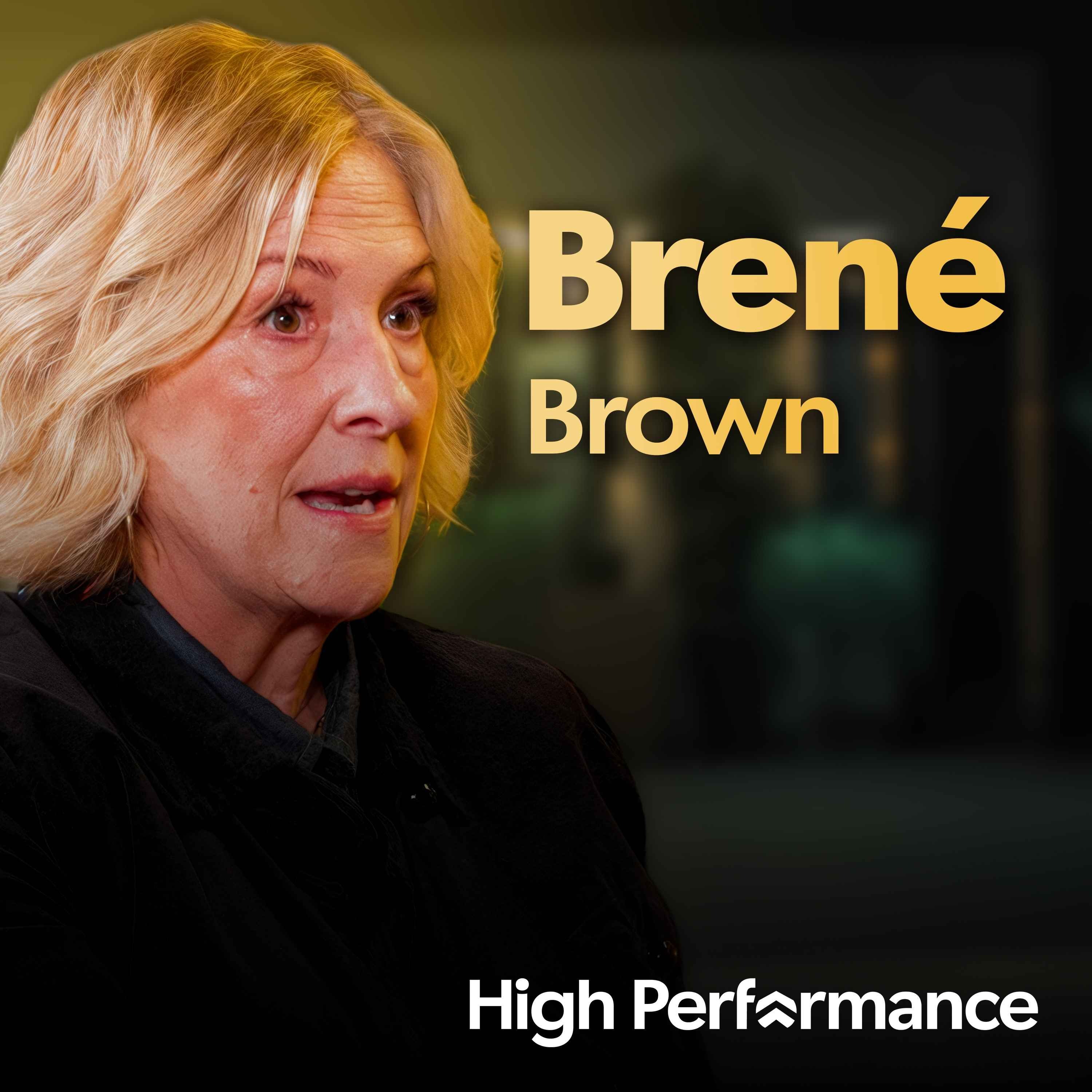
Why The Bravest Leaders Are Afraid All the Time | Brené Brown (E401)
from The High Performance Podcast
77m 57s
The conversation explores the concept of "armor" as a barrier to courage. The speaker explains that fear is universal, but people reach for armor (e.g., micromanaging, perfectionism, over-decisiveness) to self-protect. Over-decisiveness, for example, can be a way to avoid vulnerability and uncertainty. Armor is a developmental milestone, but by middle age it becomes harmful. The speaker emphasizes that self-awareness is the most critical skill for future leadership, and that coaching, therapy, and mentorship are essential for developing it. Yet help-seeking is often stigmatized as weakness, especially among men. The speaker notes that loneliness is a serious health risk and that true strength is being a person others can depend on. Men’s difficulty with vulnerability is partly due to fear of being judged by women as well as other men. The speaker concludes that transformation requires ongoing work, and recommends finding a coach or therapist who is research-based, tough, and accountable. The conversation underscores the importance of community and connection over rugged individualism.
(soft music) - Thanks very much for being here. Can I be so bold to start with a line of yours that I think is powerful and important for our audience, which is the opposite of courage is armor. And I think so many people listening to this will not even understand that maybe they're living with a suit of armor. And then if they realize they are, I think they may or not have the courage to be able to take that armor off. So what could we talk about now to allow people who are living behind a suit of armor to finally let go of it? - It's a powerful place to start because I think it's the underlying premise of all of my work. So when I first started researching courage, my hypothesis was, I call it DAW, dead ass wrong. My hypothesis was that fear got in the way of us being brave with our lives, with work, sport. We really, if we faced too much fear, we couldn't be brave. When I started the research, what I realized is the most courageous people I interviewed, whether it was a CEO or someone behind the pitch or someone running their family, the bravest people that we were afraid all the time. And in fact, one CEO told me when we were checking data, listen, if you're gonna make a list of folks that you're going to call daring leaders and you're defining that as not being afraid, don't put me on your list, I'm afraid every day. And so I was like, shit, like what's getting in the way and the more we went back into the data, what we realized is to be afraid is to be human. What happens when we go into fear is that we often reach for armor to self-protect. And we can get into this in a minute, but it's interesting about how this plays into age. So for me as a leader, I have arsenals, all kind of arsenals. I have my leadership arsenal where I keep my armor, I have my mom arsenal where I keep my armor, I've been with my husband for 40 years, I have that. But when I'm leading and I get afraid and I reach for my armor, I micromanage, my perfectionism gets ramped up. One of the things I just learned, and this is like, I've been doing this work for 30 years, I just learned six weeks ago. That's something I thought was a strength and can be at times is also armor for me. So I am very well known amongst my team for being incredibly decisive. And I have study decision making, I studied a lot under Bob Eiger and his idea of being both thoughtful and decisive, right? So my coach and I were talking about something and she said, I wanna invite you and as soon as you hear that, you're like, not an invitation to be self-reflective, Jesus, no. She's like, I wanna invite you to consider that sometimes your decisiveness is not smart, not strategic and a way that you're coping with anxiety. And you're making very fast decisions so you can tap out of a level of uncertainty that none of us are really wired to handle. Which is, I'm like, that's my line, dude. That's what I tell people. So I've been thinking about it a lot, especially because my team and I are running a lot of pre-mortems now. So we'll sit in a room, for those of you not familiar with the concept, Gary Klein, we'll sit in a room and we'll come up with a strategy or an idea and then a pre-mortem, as opposed to like post-mortem, your dead, how that happened. A pre-mortem is, it's six weeks or six months from now, this is completely failed. What do we think we'll be talking about? - Yeah. And when you run a pre-mortem, you start with very divergent thinking. You'll say something wild, you'll say something wilder and you have to have a real tolerance for divergent thinking before you get to like, shared understanding of some of the big barriers that we should be talking about. So armor is the barrier. We reach for it, we all have our own arsenals. I think, you know how babies have developed middle milestones. I think the developmental milestone of middle age is armor. I think it's when the universe pulls you close by the shoulders, looks your dead ass in the eye and says, you're getting close to dead. The armor's no longer serving, like serving. I think, yes, you needed this when you were young, maybe even needed it in your 30s, your kind of accomplishment and acquisition period, but this is killing you now and it's dragging you around and it's preventing you from really growing into your gifts. I need you to take the armor off. You're a grown-ass person. You have other tools. Take the armor off. And I think, so I think this is the work we would do with leaders and it's painful. - So clearly, there's two things that jump out there, but I want that you have a coach. I love hearing that because I'd like to explore what your rationale was for recruiting and having a coach, but secondly, what was the armor that your decisiveness was protecting? - My decisiveness protects my discomfort of vulnerability and uncertainty. Like if I just decide something, I don't have to stay in the vulnerability, vulnerability by definition is uncertainty, risk and exposure. If I can get really decisive, shut it down. We're pulling the money from that funding, put that team on something new. I don't have to sit with the things that good leaders sit with, paradox, complexity. I don't have to sit with it. I can just decide and move on. So my overly decisiveness could be reckless. - Okay. - And as a founder, it's not like I report to anybody. You know, and so I'm defaulting to two decisive not thoughtful enough because the thinking is stressful. Leaders, organizational leaders, are the only high performance people in the world. The only where coaching is not completely expected and mandated. Imagine supporting a football team that has no coaches. I mean, like, you know, and so to me, I was just doing an interview with the Wall Street Journal with the CEO, we're in year three of a huge transformation and they are winning. I mean, they are really winning by every performance metric. And someone said, I just don't understand how you do this, when the audience was tech leaders in the audience. And I said, one, you have a CEO who has prioritized winning over ego. They will rethink, relearn and redo and apologize and change course in a heartbeat if it means winning. And two, her senior leadership, 200 senior leaders have a massed over, you know, 3000 hours of coaching individually. And we don't have access to the coaching conversations for, you know, confidentiality reasons. But we do have an analysis of the topics and they are difficult feedback, managing through change, performance feedback. You know, we need help. If you worked for me and I had to give you some really tough feedback, you can be assured that before I sit down with you, I have role-played that with my coach. And you can be assured that she has said, you're being an asshole, you're not ready. I'm like, no, I gotta do this now. No, you don't, 'cause you need this person? Yes, does this person contribute a lot of value? A ton. Would you want to do this without this person? No, can you win without him? No, then you're not ready. I have a coach. I have a therapist. 'Cause coaching is not therapy, you know, like when it gets to family of origin staff, and look, I've been to the UK, y'all have these issues to trust me. And I have a mentor. And the mentor really will sit down with me and help me go through strategy and talk about really serious strategy issues, revenue issues, growth issues. But my coach, when I did the research for Strong Ground for the new book, I was asking a very specific question, what is the future of leadership? Again, I don't care what you're leading, 'cause I interviewed as many coaches as I, probably more senior leaders in coaches, but a lot of coaches, a lot of athletes. What is the future? And what is the skill set that we need to ready ourselves for the future of leading? And it was a big, it was like, it was the hardest chapter I've ever written in my life. It's an 80 page chapter that's broken down into little pieces, but at the very top of that, the thing that no matter what you know how to do, you will not win if you, not in this environment, not today. The number one thing is self-awareness. Do you know who you are? When you walk out of a meeting, or off the pitch, or the oval, and you say to yourself, God, I was just a total asshole. What's going on? Can you answer that? - Yeah. - You know? And if you can't manage yourself, you can't manage people. And I don't know anyone who's got the skill to manage themselves without help. - So how do you recruit then? So when you're looking for a coach, or a mentor, or as you say, even a therapist, what's the crisis?
to use to select somebody that you feel can raise yourself awareness and help you. I mean word of mouth is really important so I usually get recommendations so I think my mentor, my coach and my therapist all came from word of mouth so people I trust and people with whom I probably share values. So I'm a social scientist so I want someone who's research based. If you get super woohoo, I'm tapping out in a heartbeat. I'm like no we're not going to do this. If you seem grifty, like if you're trying to sell me something, I'm not going to do that. I need someone for me who knows what they're doing, keeps up with the research and the literature is tough and holds me accountable. You know and my style of person probably wouldn't work for everyone. I probably make some people squamous but I'm hard. I know it's hard to believe. And does this same conversation apply to people who are not leading teams in work or leading teams in sport but are leading a family at home? Yeah. I mean yeah. Life is tough and people are not okay. Period. People are not okay. You'll know that. In order to be as successful as you are, you've got to be tapped into the vibe in the world. People are not okay. I think they're only listening to our podcast because they're not okay. They're coming to look for answers for problems in their life. We're all selfish. Yeah. Self-motivated right? Yeah. So people are not okay. And I think this idea, I mean I've been sober for 28 years and one of the things that they say a lot in the program is to think the same thinking. I mean I understand some things similar about war and peace but to think the same thinking that landed me here can get me out. Right. It's just not right. I need to be challenged about what's happening. I mean I think you look at the UK, I mean look at the UK, penalty kick curse that happened for so long. You right? I mean I hate to get personal but here we are. Right. I know. He made a sad face if you're just listening. Who solved that? A kicking specialist? No, Pippa Grange, a psychologist. Yep. That's who solved it. Get the best kickers, you know some of the best kickers, some countries would dispute but some of the best kick penalty kickers in the world but it came down to the ability to manage anxiety and reset under pressure. You know you look at, you look at joke of it, you look at some of the, you know Venus and Serena, you look at, are you all familiar with the book, The Inner Game? Yeah, same call way. Yeah. I'm a super competitive. And what I've realized is I can continue to skill up which is potential but I can't but the biggest problem I have on the court is interference. Like if you clearly, if you call a ball out that was clearly in, I'm going to lose even if I'm a point away from winning, I'm going to become so distracted by that shitty call that you made. Yeah. That or even if you're across from me and I don't like the way you're treating your partner, I won't be able to get over it. Like focus is my problem. Okay. And like I can't, and so I think when we talk about this incredible inner game formula and if there's two games going on, no matter if you're watching a center court at Wimbledon, if you're watching my beloved Liverpool, if you're watching, you know, the Eagles, the University of Texas Longhorns hook them. And no matter who you're watching, at some point you're going to have to ask yourself as a coach. Do I have a potential problem or do I have an interference problem? And if you have an interference problem, not the game that you can see, not like poor defense against set pieces, but a real interference problem, a skills athletic coach is not trained to deal with that. That requires someone from sports psychology that requires, you know, that requires a different kind of coach. And that's what I'm talking about. If you look at the Super Bowl, the chiefs played the Eagles, the chiefs were going for a three-peat against the Eagles. But like if you had a tape recorder underneath the Eagles bench and you had a tape recorder underneath the chiefs bench, I guarantee you if you would have recorded what was happening on the sidelines and did a qualitative or quantitative analysis on it, you would have heard the absolute difference between playing to win and playing not to lose. The chiefs were playing not to lose. You get into negative emotional contagion, rumination, you can't let go. It's like, what are we doing? What are we, we, we, we, we, we, we, we, we, we, we're sucking out here. What are you doing, man? Get your, watch your ball handling. Why'd you turn over the goddamn ball? You know, that's what you would have heard. But I think if you looked at the Eagles, if you listen to the Eagles sideline, we've got this, we were trained for this, we know how to do this. Reset, back to basics. Come on, back to basics. We know this. Hold the line, back to basics. Like that rumination, Jacobich will talk about how kind of mindfulness and self-compassion really, you make a mistake and you say, I'm in a mistake, I made it because I'm human. That's hard. Let it go. Ready for the next point. But that's what coaching is. I hate how pathologized help seeking is. Why do you think that is a case? It's, it's this kind of male dominated thinking that help is weakness, that asking for help is weakness. And that, you know, I'm a fifth generation Texan, so we know this very well. It's like death by rugged individualism. You know, I can go it alone. Like what do you white snake? Like, you know, like, you can't go it alone. Like, here I go again. I'm on. Walking down the only path. You know, like, no, that's romantic for 30 seconds. And then you're just an asshole. I feel like since I was me, I'm now what am I 47, it definitely wasn't spoken about when we were at school, right? It just wasn't. No, no, no. But for the last 10 or 15 years, I think male mental health has been spoken about loads, male vulnerabilities been discussed all the time. We keep telling each other men are talking more. Yet we have this conversation against a backdrop of the most likely thing to call Daemon and I as a man under 50 in the UK is suicide, right? That remains a fact. About 20% of young people in the UK are suffering a problem, mental health disorder. Like, it's their issue starting young and remaining here. Why have we as men not be able to unpick this vulnerability problem? I feel like this entire podcast for six years has sat here and tried to tell men to open up and to share. And it's not weakness. And that like joy can be found on the other side of vulnerability. Yet men are still taking their own lives, an alarming rate. What more needs to be said or is this totally unsolvable? Well, I'm going to start by saying I don't think it's unsolvable, but then I'm going to follow that very quickly by saying I am not an expert in death by suicide or a lot of the factors that attribute to that. So I want to be really careful because one thing that I have found that's increasingly scary for me is on the one hand, I'm so grateful for podcasts like yours. And it's one of the reasons why I wanted to come on it. I think you have a lot of important deep and resonant and critically important messaging. And two, I think a lot of people, especially in the US, have turned a lot of the self-help into a grift and are talking outside of their areas of expertise. So I want to be really clear that I don't have a level of expertise, I don't have any expertise in this. It's a very serious issue and the variables contributing to suicidal ideation thinking about it or are complex. From a macro perspective, I believe that we're making headway when the culture turns against what's happening. So for example, in the US, you have political leadership that absolutely exemplifies toxic masculinity, right? There's an active campaign to vilify empathy. They're systemically removing brilliant black women from the workforce in the US. They're trying to get us back into the kitchen barefoot and pregnant. This is really happening right now. I think much more so in our country than it is yours. What that tells me is when people are acting like that, it tells me on a micro or a macro level exactly what you're afraid of. Right? When you act like that, you're telling me exactly what you're afraid of.
To me, that means we're getting closer. We're getting closer and closer. And I think we need to not be dissuaded. These conversations matter. Talking to, I mean, I think partially what's happening with loneliness and this I have studied is John Cacciopo at Chicago was a loneliness researcher. We died a couple years ago. I want to make sure you can share the link to his TED Talk with the podcast notes. We can do that. People hit the link at the bottom in the description. Yeah, it's really powerful because he's the one who kind of pulled all the research together that talked about loneliness is more deadly than smoking a pack of cigarettes a day, you know, kind of things like that. But one of the things that he said to me, or not to me, he said, I felt like it was to me, but it wasn't. I didn't know him. But I quoted his research a lot. Is that because we're a social species, what it means to be the best of the best is to be not a hyper independent person, but to be a person on whom others can depend. That is the top of us. That's why people weep when they watch Ted Lasso. That's why people love the anti-hero. That's why so we have in our minds told ourselves to need no one to want nothing. That's what it means. But as a social species, we die when that happens. And then to become a person on whom others can depend, that's what it means to me to be a good man. And is that really what you're saying if there are, if there are, you know, we do have a lot of male listeners to this show, if there are men listening to this who do feel that they're in a place of loneliness. Your recommendation is for them to connect. To connect something. Just to connect. Why do you find that so hard as men? Because the armor, because if you see me, I'm not lovable. If you see me and you know me. And let me tell you something. Let me just say something super hard. The number one shame of men around vulnerability is not other men. It's women. It's women who say, you know, because we too were brought up in an environment of what you're supposed to look like and act like and be like. And so we all have, you know, show me a man who can sit with a woman in struggle and not try to fix it, but just listen. I'll show you a guy who's done his work. Show me a woman who can sit with a man in real vulnerability and love it and love him and prize that as strength. I'll show you a woman who's done her work. You're so fucking wise. But there's a brilliant learning, bookbreddit. I've quoted to so many people about that, like, there's no app for transformation. Because we're in this fast moving. What's the solution now? So if there's so many listening to this, it's like, I need to do the work. What's the first step? I mean, first of all, I don't know enough about, I don't know enough about the NHS here. What I would say is it's become a point, the healthcare, sociality in the US right now, that it's hard to do your work. Because a lot of it's not covered by insurance. But I would say, you know, if you can find a coach or a therapist, they're different. And I would think of it just very, like, crudely. A coach is going to help you set goals, help you get to them, help you understand what's getting in the way. If you've got family of origin work you need to do, like mom and dad raise. I think we need both. Probably more of therapy, not a lot of coaches go into, like, I probably should not train to go into trauma, recovery, those kind of things. So you've got coaching, goal setting. I want something different. That can be super helpful and enough. Therapy something different. I love group work, like join a men's group, hang out with your buddies, when you're with your buddies, have a real conversation. You know, do a book club that's an interesting book by a tough guy who's honest, like whatever, whatever your, whatever your, like, gateway drug into vulnerability needs to be. I think that's it. The other thing I would say is social media is incredibly dangerous. We have to remember that like Instagram, Facebook, TikTok, whatever, whatever your drug of choices. These are not connection tools. These are communication tools. You may be able to communicate with old friends, but if you want to connect with them, that feels and looks different. They're communication tools, not connection tools, and there's a real difference there. So for example, if I lose my job and I go into LinkedIn or Instagram and say, "Loss my job today," it takes zero vulnerability for someone to say, "That's really tough mate. I'm wishing you the best." But imagine if I called you and you said, "First of all, you're going to be like, "Why is someone calling me? Someone dead?" Because I'm not texting you. You're going to be like, "Hello. Hey, do you have a minute? What's up? Everything okay?" I mean, everything. I'm okay, but I lost my job today and I'm in deep struggle. I will say I'm a guy or a woman like, "I don't even want to tell my partner or my wife. She's going to panic and I'm going to have to take care of her through this because you know she's pregnant. And now I don't have a job and I can't even take care of me through this right now. So I'm going to have to talk to her and I just need someone to talk to. Do you know the courage it takes to do that? And if the first line back from another guy could be, "Dude, it's a brave call. I'm so fucking glad you made it. I'm in the middle of a meeting right now. I just stepped out. I will be out of here in two hours. Can we meet forever? Can we meet for dinner? Can we meet here? Can we grab a pint?" Whatever it is. Not 12 pints because that's not helpful. But like, and that's an issue here. But you know. Or if you work for me and you come to me, I'm like, "Hey, everything okay?" And you're like, "Not really. My wife had a miscarriage yesterday." My first comment is, "Jesus, that's hard. I'm so grateful you told me. Thank you for sharing that with me." And then I just simply say, "What does support for me look like today?" And you say, "You know, I've got, I know we got this big deadline. And I feel like I can be here for, you know, and get it done. I'd love to be able to check out early. Absolutely. How comfortable are you letting the team know? I'm not comfortable at all. Okay. Let me just tell the team that you're going to be here for the next couple of hours. We're going to wrap up this and you're going to be taking the day. But again, I appreciate the courage to tell me and I'm here to support. And what do you find happens? Because I think people wouldn't know, that's the first step. What are the consequences once you come with that vulnerability and you greet it with that understanding and empathy? Well, first of all, it, first of all, we know from every study done over the last 15 years that trust and vulnerability are the primary drivers of performance in teams. Not, not, not, they're not the primary trust and vulnerability or not the primary drivers of a good culture on a team. They're the primary drivers of performance on a team. Okay. So if you're listening going, "Well, kind of bullshit is this? What about performance? Performance. Performance." Okay. So one thing it's doing is it's building trust in this team. It's building trust between you and your manager and your leader. And the thing is, I wouldn't say that to anybody. I would say that to someone who I believe has earned the right to hear it. There are a lot of people that get to work every day. I mean, I think 80% of people die never having experienced a great leader on the field or in the office. Why? Because people need coaches and people need to do their work. That's why. So, but if I've seen a glimpse of you that I know you have a capacity for this, you're going to see me as a human being. And let me tell you this, like we use, I just did Diary of a CEO, Stephen Bartlett, and he brought out this marble jar. And it's like, it's the metaphor we use for trust. Trust is a marble jar. And it's, you gain trust not by big moments, but like a lot of little marbles in the jar over time. If you have marbles in the jar with me and I have them with you, I can share this. I mean, vulnerability and trust slow stacking. It's not like, hey, second day on the job, just want to let you know, partner had a miscarriage. I'm holding back tears. I don't know you yet. I don't know if you're going to use it against me. I don't know if you're going to tell people, I'm going to be careful. So trust your gut. But no one has ever done a single brave thing in the world with no uncertainty or risk.
That's the, I mean, when I used to, I used to really struggle teaching vulnerability to leaders until one day I was working with special forces in the US. And I was standing in front of them, they had all had multiple deployments. And I said, you know, and they kind of were looking at me like, "Why is the vulnerability lady here?" And I said, you know, the definition of vulnerability is uncertainty, risk, and exposure. The emotion vulnerability I feel vulnerable is when we feel uncertain or at risk or exposed. I said, "Can anyone in this room, theoretically some of the bravest people in the world, can anyone in this room give me an example of courage that doesn't require vulnerability?" And it was one of those quiet periods, it was 30 seconds, but felt like a lifetime. And then all of a sudden, heads started to drop into hands. And people started moving and getting very physically uncomfortable. And one kid stood up and said, "Three tours. There is no courage without vulnerability." The very next week, I was with the Seattle Seahawks, Pete Carroll was still the coach. And I asked the team, the players, give me an example of courage on or off the field that doesn't require vulnerability. And of course, they were like, "Can we head a lot?" And I was like, "Head a lot." So they kind of got together and they came back and they were like, "No, there is no courage. There is no courage without vulnerability." And these are 350-pound guys who could lay the three of us flat in under four seconds, like these are talking guys, right? But there is no courage without vulnerability. And so somehow we have all been raised to be brave and taught not to be vulnerable. But calculus does not work. If you think you are being brave and there is no risk or uncertainty, you are not being brave. Hard stuff. We will be right back after a quick word from our partners. I think it is such an important and powerful message for people. And I think about, like, you and I have done this podcast for six years, right? And I still think we are two guys that wear armour, don't you? Oh, massively. Definitely. And I tell you one thing that I think is interesting is I like, I come from a world where I was a kid's TV presenter before, right? If you are going to present kid's TV for a living, you actually do need to wear some armour because that is an embarrassing job at times. But you are like an expert in mindset and behaviours. You work with the BSports teams in the world, but still, as you just said, wear armour, which I think shows how difficult it is to not have a suit of armour. I think you are better at dropping the armour. I work yourself on a ball than I am. I think I'd be under it. Why though? Fair judgement. Fair, I grew up in a boxing gym. So fair was very real in that environment, but being too confident, too sure of yourself, showing off, you'd soon get knocked down from it. So, yeah. Visually. Yeah. And emotionally. So the idea of not blowing you around some, the idea of not trying to get too high anywhere. But you're not in the boxing gym anymore, are you? No, no, no, no, but it's a lesson of life. It's a survival tool. Yeah, it's a survival tool. And I would also say as someone who's academically trained, we're taught that. If you're going to go in and work for coaches, you better go armour depth. Yeah. Because if they sense weakness, even if they're whole, all your work with them is without vulnerability. It's annoying. Like, if I'm going to go work with a coach, you'll say I'm going to go work with Arnie Slott. I have to be tough. Like even if I'm going to not end up talking about football at all, I'm going to be talking about the folks on the pitch, right? The players. I've got it, I've got it, like, I've got to be tough. I got to be armoured up. I got a prep for hours and hours, even though I'm going to try to move the conversation from running to 4-3-3-2. How are we grieving the death of this player? It doesn't matter, I've got to go in. I think one of the things that's interesting about the new research is the question is, and listen to the podcast when we've added Jal, because we all went through a tough fat process on our end, because sometimes I can get on a guy's podcast and it can be shitty, right? Yeah. Especially if it's got a sport spent. Yeah. I think there's two guys as well. Yeah. I mean, again, I'll run Unifoot Ways. But I am wearing a cowboy shirt. Can't wait for this race. I will do it. I will do it. I will do it. I will do it. I will do it. I won't be able to outrun you, but I can manipulate you and just thinking it starts in a different place where I'm going to be. There we go. You'll bring me out my arm, I leave me crying on the pavement and just run off some bit. Yeah, yeah, yeah, I can cry now. I could make you cry. Yeah. But I think you're both in the vet. I think you're both not that it matters, but I think you're both a very good balance of strength and vulnerability. And I think paradox is what's hard for people to hold. So the question becomes, if you're going to take off your armor, any of us, and I'm also often the only woman in a room. The number of locker rooms I've been in has been seen. Like some clothes on, dudes. It's different at this age because I'm like, pick up your stuff. But what do we replace the armor with? Are we going to go streaking naked through the world? No, because the world is not a safe place. Right? It's not a safe place. So the question becomes, what do we replace the armor with? And I think what we replace it with is the skill set that I'm calling grounded confidence in the new work. And it's a very robust skill and mindset collection that includes things like self-awareness, emotional granularity, anticipatory thinking, strategic thinking. Like we are going to be, if you want it, this is what's happening. Like I've never talked about this publicly, but I'm just going to go right now. We talk about the crisis with men right now. And you know, in the US, the broadcasters, you know, are talking about, well, and I mean, it's just through, there's a heated thing going on right now too with Diary of a CEO. Like women don't want to get married, women don't want to have babies, you know, men are falling behind academically and university. You know, I have maybe from a different perspective on it because I have a son and a daughter. You know, and what I would say is just like being, just like coming to terms with some privilege around whiteness is really tough. I think coming to terms with some privilege around what it means to be a guy, just things where like I really like would stop my daughter multiple times at the shopping mall and say, stop, just look at me, who's behind me, who's next to us, what cars are in the parking lot right now. You know, just things like that that yes to some degree with my son, but I, you have to raise a daughter carefully in the world, right? Yep. But you have to run it, you have to raise a son carefully in the world too. And if we're asking people to be more vulnerable, the question becomes, okay, I'll take off the armor. What am I going to replace it with? So for example, if I were to tell, I gave a commencement address, I said, lastly, stop ghosting people. It's chicken shit, it's cheap, it's chicken shit, and it's easy. I wish I wouldn't have said it. And I'll tell you why, because I didn't have time in a commencement dress to teach in the skills to not have to do that, to teach them how to do the text that says, I really appreciated, I mean, let's be honest. I really, you know, I know, I know we hooked up last week. I'm sorry if I was not clear, I'm not interested in a relationship and I want to be really upfront with you out of respect. That's it. But if we say don't ghost, and then we don't teach the skills that replace the armor, how do we do it? If we tell guys, be vulnerable. Yeah. Do you know how long it takes me to teach a 50 year old senior leader with 30 years of tenure, how to have a difficult conversation without being a dick? Months. Months, how to have a kind, respectful, straight shooting, straightforward, hard conversation. It is a skill set. But give us a quick synopsis on what that skill set requires for anyone listening to this. And what do they do? What is being a dick? Well, I'm going to give you an example. So, this, here's a really great takeaway for the people watching or listening. One of the greatest coaching tools that has ever come my way in my whole life, it's changed my life as a leader, as a mom, as a partner, as a friend, is it comes from Robert Kausauki, went to Carolyn Taylor, and then went to the conscious leadership group. And it's above and below the line. This has changed more lives of work we've done than I think anything we've done, besides reframing armor and fear. So, here's the line, and the line is fear. And when you're above the line, you're in some fear, but you're driving.
You're aware that you're in fear. You can say, "Shit, I'm fearful right now. This is tough." When you're below the line, you're in fear, but you are not driving. You're not even riding shotgun. You are hog tied in the trunk. And fear is at the wheel. And fear is driving. We take on one of three kind of personas when we're under the line. And this is from the drama triangle. We come victim, victim, villain, or hero. So if something's going on at work, someone's made a mistake, let's say, in my job, it's publicly facing hard. Because I am the publicly facing person, you know. And I go under the line, and I go into victim mode. I say, "No one understands how hard this is for me. You don't understand how hard this is for me. Because Joel's name is not out there. No one's tweeting at me, Brooke. They're like fuck Bernabé Brown on Twitter. Very victim. Or I get into hero mode. You know what? I'll do it myself. If I want this done well, I'll just do it myself. Hero. Or villain. I don't give a shit whether you like it or not. Here's what it is. Everything's triple checked. Everything's signed off. I see a sign off before it happens. Are we clear? Are we crystal clear? So very familiar, right? Very familiar. So hero, victim, villain. None of those are helpful because we're under the line. On top of the line, we're in fear, but because we can name it and we know we're in it, we go into one of three roles. Coach, co-creator, productive challenger. These are great roles, right? A coach. Okay. I know y'all care deeply about the work. Let's walk through how that happened and see if we can find a glitch in this system. Because I make up, this was not about not caring. But there's a systemic issue we need to address. Let's co-create a solution. Let me challenge the systems we all are using right now. So these are effective ways. So we were working with a senior leadership group, global company, publicly traded, big company. And there was a guy who, when you walk into a room as a facilitator, you immediately know who's going to be hard. Like, I would look at you too and probably be like. There is a tough touch. No, I wouldn't be a tough touch. I'd be actually, I'd probably pay y'all as helpful to me. Tough. Yeah. But also open to learning, curious, and if people see y'all going, they'll go. You know what I mean? But there are people I walk in that I'm like, this is going to be tough. This woman's going to be like this. They got their hands folded across their chest and they're like rolling their eyes. And this was one of those guys. Well, about four or five months into our training, he said, I'd like to share something. We were on a big team's call with all the senior leaders. And these are direct reports of the C-suite. I'd like to share an experience of the above and below the line protocol. I was like, we don't call it that, but okay. I was like, oh god, okay. He said I was giving very difficult feedback. And this guy's probably over $4 billion in revenue of a company that he probably, in his organization, within the company, probably has 10,000 people. And he said, so I was given some really hard feedback and I was angry as angry as I've ever been. And I got about 10 minutes into the conversation. I said, I am officially under the line. I will need to, the protocol says I'll need to postpone our conversation until I'm reflective about why I'm under the line. So we shall postpone from this moment. And the guy who was talking to you said, I am also completely under the line. And he said, I believe the protocol says that we take time out. We understand what's happening. We'll circle back in 30 minutes. So they came back together and he said, this is how I think I went under the line. The guy said, this is how they had this incredibly meaningful corrective feedback conversation, where they both took some accountability about what was going on. I don't think he was clear with expectations. I think the other guy made up a lot of assumptions. And they didn't share, they were working up different data. Different, you know, they were working up different data. And so interestingly, the guy he was giving feedback to was on the call. And said, I'm just going to say that I was the guy receiving the tough feedback. And in 25 years with this company, it was the most courageous active leadership I've ever seen. I would follow this guy into a fire. If he's willing to do this, there's nothing I'm not willing to do for him. That's incredible. Yeah. And so just the ability, but that's a freaking skill, man. That's like, here's an example from the pitch that I think is that I've been using a lot. Have you ever seen five-year-olds play soccer? Oh, yeah. We both have five-year-olds at play soccer. Same, same. Both my kids. Like flies around a honey pot. Follow the ball. The B, the B-Hive, right? Yeah. And it's really funny because at least in Texas, first of all, you're paying like a hundred bucks for this. And your kids are like sitting criss-cross applesauce on the ground, making a chain of daisies. Yet there's always going to be three or four fathers that are like, this is your house! Protect your house! And the kids are like, and the ants on the farm are, you know, like it's like the dads are like working out all the time. And the moms are, oh yeah, the moms are definitely. You should hear my wife as Spools have been. Yeah, yeah. No. Like I was raised by a father who was like removed from sporting events. But what was really funny is that when he came to see my kids play, and I was scared to death, and I had to have a call with my dad, like my dad's coming. He's like this guy. Like people felt sorry for me. And we were all athletes because my dad was so rough. And so the whistle blows and my kids start, and he's like, "Sis! He calls me "Sis! "Sis, I want to see you for a second." And I'm like, "Here we go." I was like, "This is it." And he's like, "Remain calm." And I was like, "Yes, dad." And he's like, "I don't like the pressure these kids are under. This is horse shit." And I was like, "What?" And he goes, "I don't want to have any of these. " Stop the parents from yelling right now. These are young children trying to grow developmentally. I was like, "Do they put you in parent jail at our games?" Like, "Who are you?" I think there's supposed to be something restorative and healing when you see your parents do that. But I was like, "Fuck you, dude. What is happening?" No. But anyway, so the pitch in the five-year-olds, so what happens when a high ball comes into a five-year-old, like over the shoulder? They lift their leg up and try to make contact with the ball over their shoulder with their foot. They fall over. And this happens until about 10, 11, 12, depending on how serious the soccer training is that they're getting. Then what happens is they see a high ball coming in. They anticipate the high ball. They have learned chest control. They come up. They take the ball on the chest. The ball drops. They put their foot on the ball to maintain possession because it's a game of possession, right? They got their foot on the ball. They look down the pitch. They see where this triker is. They don't kick it to the triker. They kick it to where the triker is going to be in two seconds based on where the goalie is in the cage. If you unfold, that is situational awareness, anticipatory awareness, temporal awareness, systems thinking, trust. There are huge skill sets going on there. This is what I mean by grounded confidence. You want people to take off armor. Start skilling people up. The first thing you have to do, I think with men specifically, is to tell them you don't know everything you're going to need to know to win. You are not birthed into this world because of your gender as a pre-wired winner. You two will need to work for it, skill up for it, take 14 chess balls and lose 13 of them. Lose possession, trying to get that ball under your foot from your chest. I remember I used to host Premier League and Champions League football in the UK before the World War II. I remember, I think it was my second or third live Premier League game ever. Myke Loving from Liverpool player was on co-coms, I was the presenter. During the game we would sit and watch the match in the stand. Sitting there with a couple of other people. It was so close to what was going on. The ball dropped to possibly Steven Gerrard, Annie as quick as the flash looked up, saw whoever the striker was at the time at Liverpool. My goodness, kick the ball so hard at this striker that it would have taken out of his head off. The person took it on their chest, spanned the defender, moved it forward with their right foot, looked up, missed the goal by a banninch. Myke Loving on commentary goes, "I'd be disappointed with that." This is at a level that happened. It was so fast, I could hardly see it. It was like my eyesight had gone blurry. That was the time when I thought the level that these people were operating at is nonsense that we see all the time. They were born to play football. They were born to dance in the ball. They were born to act. High performance are made, they're not born. I wonder whether that's why you love the sports analogies and talking them out sport as much as you do because you see these people.
Force themselves to be the best that they can be is not by accident. No, and I think it's like Sport is leadership theater in real time. So in four, you know, I can watch Two quarters of football and see exactly how strategy training operational excellence the ability and capacity to reset teamwork. I can see how it you know What I have to do like sitting in an organization for like four years like with a like a Camera on my head like no you can see You we have so much to learn from sport And I think as organizations and the world Increase in complexity There's even more transferability of skills. I think this is an interesting Well at f1 Yeah, like a big F1. Well, yeah me too. And William's racing fan. Can I tell you though about it? I'm looking off to work in sort of sport with elite sports and I quote and attribute you a lot And I'll tell you the one that resonates when I when I speak about you to in These sort of dressing rooms and boardrooms is the messy middle. Oh, yeah So I often refer to it as you know the gospel of most cancer the Cancer's law that everything looks like a failure in the middle and say but Brenna calls it the messy middle which resonates What do you tell and I always I don't think I've failed to get people to go I Recognise that and want to explore it so This does resonate in sport it does carry on but would you explain to our listeners and our and our viewers? What is the messy middle and how and how we navigate our way through it? So what's interesting? About this is boy, I learned so much, you know, I my mom was a big Joseph Campbell person So I kind of rolled my eyes a lot growing up like oh my god my mom and growing in Joseph Campbell and you know and now She died a couple years ago, but I think about her all the time about how great I wouldn't she's part of the through line to the story about why I'm sitting here, you know But I'll tell you what's interesting. I did a lot of work with Pixar. Bye and I thought I knew a lot about storytelling until you work with Pixar right and and One of the things that's really interesting that people don't talk about and this could be very helpful for your work about the messy middle is In the three-act story right that that everyone has you know cat nests or you know doesn't matter who what he wrote you're looking at so Act one of a three-act story is they give you They give you the land that you're living in so they you start to understand so I'll use Harry Potter's an example because it's ubiquitous We understand that there are wizards and muggles we understand that Harry's parents are gone we understand We're starting to learn about the the rules of the land, you know, there's hogwarts and there's this The end of act one there's always an inciting incident like a real problem comes The thing about the messy middle and act two and I was actually brought into Pixar to help them work through an act two of one of their films Okay, the thing about act two that is so interesting through the history of story across culture is Our protagonist our hero will try to solve the problem By any means that does not include vulnerability So if you want to know why people slide back to one yeah is because you cannot make it through the messy middle without vulnerability People think it's just fight and people are like I got a lot of fight in me The real challenge to act two and The only way to solve the entire problem of the journey is with absolute vulnerability Harry must understand that without Ron Hermione. He is nothing without asking for help He is nothing without facing his grief. He can't win. So all of act two is the fight of rejecting vulnerability to win and the very end of act two is the acceptance of vulnerability as a key to winning the fight a little bit Yeah, I mean, let me ask you this if you were betting people would you bet Even if it wasn't money, but would you bet on a team okay? Oh, you have two teams You have a team. I'm gonna use American football. You have a team that has Two two guys on the defensive line are out and you've got a backup quarterback You've got the exact same injuries on the other team, but they're not acknowledging them. They're just letting hurt players play I would never yeah always the first team acknowledge the vulnerability trained up some people to put them on the line You know, yeah, if that's why the messy middle In transformation One of the things I talk about a lot is and boils Williams racing what is a great example like I play it I play a podcast when I'm in front of senior leaders of him Do you oh? Yeah, I do because he said Apple cost with him or someone else is no someone else podcasts with him I don't know I don't think it's him because I only see him was it you yeah, was it y'all? We were looking of genuine the first one in and he said break everything break everything that y'all yeah Holy shit There's a full circle moment that I caught no wait. There's no such thing as synchronicity well This is like this is like a total for me is like a godwink It's a please listen to the full episode on your flight back to the US I have it was amazing. I only say so I mean like literally if you looked on my laptop right now It'll be it's in my deck break everything and and because I was like I took like six years of French and I was like Do you really say carte blanche like you did he's very posh? Yeah, yeah, he's like no really they have a go Blanche for me like he goes back, but yeah, and that party is I don't care about 24 I don't care about 25 I don't care you know that I mean I know the whole thing because I I've heard break everything you know and so I just say one thing yeah, I produce a spoke with your team yesterday and said Brené has got an amazing story about Transformation and Formula 1 We don't know what it is, but let's find out and now we find out it's Well, we're proud you like a tick-tock thing is this play about me? Yeah, I love this No, yeah, so it was and then of course finished within the construction Yeah, so but I so this goes back to the messy middle so I Play this when I talk about transformation because you're going to have to break some shit Yeah, if for real transformation first of all an organizational context Transformation is very overused as a term which drives transformation fatigue if everything's transformation Then nothing's transformation right? Yeah, sometimes it's just strategic change adaptive change and criminal change Not sexy, but we should call it what it is transformation requires breaking right? It just requires breaking Then this is a cue y'alls podcast that's I play this and what I say about the messy middle is Breaking is hard Because you have to break at the same time you at the same time you protect things that you never want to break and Making those decisions will be clear to some and not clear to others. It'll cause a lot of hostility And it didn't Williams racing like the breaking and not caring and the experimental stuff was probably hard for a lot of their folks I mean because if you attribute their wins their fifth place finish. I mean you had the car Carlos and Alex you had some interesting engineering changes, right? But really what you really had was high level experimentation and breaking The reason why the middle is messy is because I always say in transformation you're going from the tomb to the womb Something is dying old ways of working old mental models old mindsets are dying and Then there's the womb and new things are being birthed right the thing about the tomb in the womb It's those are both dark places Yeah, and you're not sure whether you're in the tomb of the womb because there's no twinkle lights or anything. That's just dark Yeah, having given birth I can tell you that there's some darkness in here I mean not in darkness is in like negative but like What's happening right now to my body? This is like an alien movie And circles circle back circle it just just for all the men listening that shit circles back No, yeah, and does it again at menopause so just look if you're dating anyone over 40 But that we're in the trenches. Yeah, yeah, just Look that's real if these bodies can make babies they can do all kinds of crazy shit Our first word every morning we wake up is we tend to live and say I'm sorry For whatever I've done that is an amazing way to start and also if you get to be like Below zero in the house right now. Yeah, like porcelain my husband was like sleeping wait I was like you're making too much noise and he's like because I'm in a fucking sleeping bag That has zippers on it and I've got a hand warmer for that hunters use I'm like and And I this is the way I'd love it. This is this is how I this is how I always pictured it. That's what I thought yeah
- Yeah. - With Steve. - Yeah. - But that's real. Yeah, and let me just tell you, just I just wanna go on record. Since, am I the first person to talk about menopause on your podcast? - I think you're up there, yeah. (laughing) But we need to have the more of these conversations. - Yeah, so here we go. - Come on. - I'm just gonna say, if at between 40 and 50, your balls shranked and your penises fell off. There would be a lot of investment in fixing that. (laughing) Billions and billions and billions of dollars. (laughing) It's the biggest disaster in medical history. And so, yeah, just know that it's real and that we don't like tie, and I saw a commercial 'cause I was watching old people TV. I was watching like, I don't know, like NCIS or something on the BBC or something. And there was like a commercial for old people 'cause there's a lot of women probably my age, but they're like, it's not them in a pause. It's not called, it's just menopause. There's no that. It's not like the Google. Are you on the Facebook? No, that's like, it's just menopause. But it's real and it's really hard. And usually you hit it right when you've got teens in the house. - Yeah. - Like, I'm surprised as me. He's like, how much information you have to search out for yourself. - Yeah. - And you go like, I sometimes wonder, you know, you go to the garage and you take your car in and they go, "Is this the first time you've ever seen a car? "Is this the first problem you've ever faced?" Because you work in this industry. You must have seen an engine that doesn't work, whereas, - 100 times. - And you see, is he not a pattern? It's a sense of beginning at time. - Since the beginning, as you come in, that you could just go. Here's, get this information, take this, here's the tablet. I'm surprised how little joined up thing in the risk. What else do you want to talk about? This is great. - Well, I do. Thank you for clarifying about the messier middle. 'Cause I say, I wanted to pay homage to you, 'cause I frequently reference you, but I wanted you to know that it's like what you make up when you mention it. - Oh, it is a mechanism. - I'm going to make you do it. - But without necessarily knowing what do we do about it? - So the question is, in order to get a peak of light in the messy middle without going backward, what is the unsaid thing? What are we not talking about right now? What is not in the room that everyone knows needs to be in the room? Because we know from the beginning of the time, the human story is, the messy middle is defined, when individuals and teams come together to solve a problem, but are avoiding the most vulnerable piece. This is especially hard with sports teams, because the amount of money involved in sports teams. So to name the thing really has far reaching financial implications, just say it out loud. There will probably be like people walking off saying, "Shitman, no one has brought up this because we can't." But that makes people like you and me really toughen our jobs. Because what is the unsaid thing in the room? You want to do that? You want to win or lose? If you want to win, put the unsaid thing on the table, unless really talk about what it means to be brave right now. As a reds fan, what do you think is happening with Liverpool this season? If someone's expecting some really technical, I think what I look at is, what is the analysis of what's happening on the pitch by people who are much smarter than I am around the technical pieces of football? So why are we conceding? I'm always flagged when we're conceding late in the game. I'm always flagged when the corners and the throat, when there's some poor defending against set pieces, that that that that that, what is the theme around what the analysts are saying? And the first thing that comes to me, one of the first things that come, always the first rubric that I run, is there a cultural, is coming off a championship? That's hard for a team. Like I think about University of Texas football. We went in with, I don't know if y'all, how familiar y'all are with American football, but we went in with our quarterback Archmanning, Manning Royalty, rated number one in the SEC, which is the big, not the only, but yeah. Yeah, criteria that. God sweet T in the SEC. And that pressure, and these are 18, I mean, all the football players are not much older, these are 18 to 21 year old, 20 year old college kids. The pressure post championship, the biggest, any team, not just the Liverpool, but any team post championship, will people think in organizations they'll call it complacency, but it's not complacency. It is, there's a real vulnerability and fear about maintaining status, maintaining the win. And so immediately I would go there, but then if you look at, and I'm curious, 'cause y'all know football much better than I do, when I look at the three or four things that Ann Lesser is saying about Liverpool right now, the word that comes up for me is focus. I'm not, these are all focus issues, and they're especially focus issues. If, I mean, this is more of a clop term, but kind of rock and roll football, a very intensive physical football, possession possession, quick turns, drive. That level of focus required for that kind of rock and roll soccer, which I think keeps, slot comes from historically too. Yeah. I would associate these problems with that diagnosis, but I'm curious if you see a focus issue as well. I mean, my take on it is that we can't separate the death of Diego Jotter in the summer from Liverpool's struggles. I don't think, from Liverpool's struggles this season, they've lost one of their best mates, their mourning, their grieving, and it's brother. And it's brother. And they had no time to recover from that, and then the season started. And I just think there will naturally be players, and this is no criticism of them, thinking this isn't very important compared to what happened over the summer. Yeah. And no one's really, I don't think people are talking about that enough. It went, it came in such a heartbreaking flash, but almost went away as quickly. And I think that's the business of sport. Yeah. But I also say, I don't know, I think, and that would ladder up to focus. Good it. Oh, for sure. For sure that would ladder. And sport, grief. I mean, grief is a focus killer. Yeah. And disconnection. Yeah, I don't know. It's not surprising to me, I don't think, but they don't look as cohesive either and connected. But I think there's something that I was well about. They lost players last year, and they brought in quite a five or six players that have come into the squad, so integrated them into the culture. You know, when the demands and the expectations, so I think you're going to get a different. Can I ask you about a line about Jürgen Klopp, which I loved, which is that you said he loved that team into victory? I think you did. That's great. I mean, he just, I was doing the podcast with Raj Bennett, and he was talking about how Jürgen Klopp like gave him a hug, and he's like, you don't understand what a club hug feels like. I'm like, I can see it on the sideline. Like, I think, I don't think there's a lot. I think there's very little space between love and winning. Like, I think you can love people into winning. That doesn't mean that you don't have high expectations and accountability, and the way that Klopp and Jürgen, I mean, that Klopp and slot coach, they're very physical. They develop very physical teams. Would you agree? Like, physicality, speed, the ability to turn a ball very quickly. I also like, one thing I love about slot that I use a lot in leadership too, along with your podcast, is this paradox of discipline and creative freedom. So I think one thing that slots really good at is technical precision. You'll learn, you'll play our plays, you'll play our strategy. And then once I think you've mastered that, then you can make creative calls on the pitch in the moment, but you will understand technically what we're trying to do out there. This is not a free-for-all. Although it looks a little loose right now, playgroundy. Yeah, the back does, for sure. Have you got a favorite ever Liverpool player? I mean, for sure, Steven Gerard. Why? Is there tape of the halftime talk that he gave when they were down? In Istanbul. Yeah, in Istanbul and Turkey. No, it's sort of got in some mythology, but nobody's ever, there was never anything captured. Yeah, this is the Turkey game, right? Yeah. Against Milan. Milan, yeah. Yeah. I've made up what he says, so I don't really want to know. But that's what I pretend like I'm saying to myself sometimes at halftime. And what is it? Oh, no, I can't say.
- No, no, no, no. - What about as a footballer? Did you, like his, the way he pulled that team and stepped up in the biggest of moments? - I probably, I probably, I don't know him as much as a manager that since he's taken on those roles. But I think as a player leader, I'm always going to believe in a team who has, the team that has the strongest player leadership. - I don't care what's going on the sidelines. - Yeah, to do what Steve and Jari did, season after season, year after year. He carried that entire city on his back as well as the football team. I mean, the season where they were trying to be successful, he was having injections, he was hard and new, still coming out, still performing. And we spoke to him on our show about, when he had that slip against Chelsea, and he just said, I just laid in the back of the car, and my wife drove me home and I cried all the way home, and it took me a long time to stop crying. What a way for his story, it Liverpool to end. I just think he's the most remarkable guy. It's something I wanted to show you actually. - You can hit play on that. - Hello, Brunei. - Oh my God. Oh my God. - Spokes are a good friend of mine, J. - Wait, wait, wait, wait, wait. - Wait, did you see Brunei? - Yeah, it's for you. - I don't know. - Hello, Brunei. - Where is it? - Oh my God, that's fucking God. He tells me that you're like, - I don't know. - That's what he's doing today, and doing a bit of work, so I'm really looking forward to it. - Did it work? - Yeah, I'll come on that. I'm sure it'd be really interesting for someone like myself. And he also tells me that you're a massive red as well. Great choice. Unfortunately, we're not doing too well at the moment, but that's up the boys, pick it up, and we can finish the season strong, but looking forward to one day, hopefully, being in your company as well. That'd be great to meet you face to face one day, and just wanna send some love and support. Apologies for being in your school off, and looking a bit rough, but it is very early and I'm on the school run. All very best, take care, bye-bye. - Get the front door. (laughing) - What a great friend. - I'm trying to not to cry. That's so sweet, that was so thoughtful. - We could talk for hours, but we'd like to finish with some quick file questions if you can. - Let's go. - If you wouldn't mind. - What are the three non-negotiables that are most important to you, the three non-negotiable behaviors? - Sleep well, eat well, move well, connect well, love well. - Yes. What's the greatest piece of advice you've ever received? The why? - I mean, I think something, I don't know if it's a piece of advice, but something I hold onto very tightly all the time, comes from atomic habits. Yeah, by James Clear, we don't rise to the level of our goals. We fall to the level of our systems. - Pretty. - And I think it's framed, and there's like lights shining on in our office, and I have it in my office at home. - Billy, why is courage being a learner not a Noah? - Because the future belongs to the curious, and curiosity requires a ton of vulnerability encouraged to say, I don't wanna know, but I care, and I'm willing to learn, and I'm willing to be uncomfortable. - Brilliant. Why does fear have a shelf life? - Why does fear have a short shelf life? Because neurobiologically, we can't stay afraid for very long. So we either disengage, or we hyper-normalize. So fear doesn't last for a long time. So in order to lead with fear, you have to be constantly doing pretty cruel things to remind us that you're dangerous. - And the final question, the answer you'd like to leave, ringing in the ears of our audience, what is the secret to everyone living in their own version of our high performance life? - There is no high performance without high levels of self-awareness. Know who you are if you wanna perform. - Brunette Brown. - Thank you very much. It was amazing. - Thank you. - Damien, J.A., well here we are, 24 hours later, we actually spoke for so long with Brunette, both of us have to go and get a train home, hence the different clothes. But it's actually quite nice to talk now about what we discussed yesterday, because it's kind of given us 24 hours, just to process the things that she shared with us. What do you think was the most valuable element of that conversation for our audience? - Oh, that's, I mean, there was so many nuggets that she offered, but I love the stuff around the armour plate in, moving it, I think I see it in so many elements, whether it's, she talks about the intellectual armour, you know, people are like the status armour, people feeling that they've got sort of armour themselves with knowledge. And yet, the ultimate is sometimes just going, "I don't know, I'm not sure what do you think. "Make yourself vulnerable." That was really powerful for me. - What about you? - I mean, I love the idea of when she, when she kind of gave us all these examples, when she sat in front of strong, powerful men, like, you know, massive sports teams, and said, "Tell me a time when being a vulnerable "didn't require courage or bravery." And they're like, "I can't think of it." And I think that for too long we had this idea, and if anyone's listening to this, and they still have this concept in their head, that if they are vulnerable, if they open up, if they're a tearful, if they're emotional, if they expose themselves, then they must be a weak person. She's basically giving us totally the opposite narrative, which is, you can't do any of that stuff, unless you're brave. Therefore, the bravest people are the vulnerable people. And I think that that is a key point of difference, particularly for guys. - Yeah, and I think what I, what she offered that I really took away from it was the hard edge around soft language, if you like. You know, when, like a phrase we frequently cite on air is psychological safety. It's one of the things that, the research tells us that it's also a gatekeeper to high performance, you know, that if you don't have psychological safety and you fail, your ability to recover, to be resilient and rebound, becomes severely impaired. So what Brenna is offering there is the fact that, you need to be vulnerable, you need to be able to say, I don't know, I've made a mistake here, I've cocked up, and be able to know that you're not going to be demonized for doing that, to be able to deliver the hard performance. And that's something we can all get a little bit better at. - So interesting. You know, Stephen Gerrard sent us that message, which you loved. I replied and said to him, "Brenna, I loved it." And look what he's responded with. - Dead to lead. - He is reading Brenna Brown's book, "Dead to Lead." But that's a really good example though to me, of where like Stephen Gerrard, you know, this sort of alpha leader for many years at Liverpool, this guy that was, the arrowhead that was taking them, making difficult calls, difficult decisions. He's still got that vulnerability to go, I don't have all the answers, I'm still willing to listen and learn. And his message was lovely as well, wasn't it? That squeal of delight when she realized that one of her heroes. - She spoke of it when she said, when he said, "Hey, Brenna, didn't she?" And then she was like, "Play that again, play that again." Oh, I loved it. Thank you so much. I'm really fascinating. And I thought, you know, you brought some really smart questions and a great approach to that. - Oh, well, I like how it's made, but it was a real privilege to get to see it. We've spoken about it so often over the six years we've been doing this. So, twice you get to have a certain touch where it was amazing. - Cheers mate. - Thank you mate. - That's it for this episode. Don't forget if you love the conversation with Brenna. We've spoken to so many incredible thinkers and leaders on this podcast. Feel free to send it and share it with anyone. That you think might benefit from it. I think this is the kind of chat that you're gonna come back to time and time and time again. If you don't already, please follow us on here. Please hit subscribe. Please get the episodes before anybody else. But please do come back for another deep conversation next time on high performance. (soft music)
Podcast Summary
Key Points:
Courage is not the absence of fear; the bravest people are afraid often. The real barrier to bravery is "armor" (self-protective behaviors like micromanaging, perfectionism, and over-decisiveness).
Armor serves as a developmental milestone, but in middle age it becomes detrimental. Letting go of armor is essential for personal growth and effective leadership.
Self-awareness is the top skill for future leadership. Coaching, therapy, and mentorship are critical for managing oneself and others, yet help-seeking is often pathologized as weakness.
Loneliness is deadly (more than smoking a pack a day). True strength lies in being someone others can depend on, not in hyper-independence. Men’s shame around vulnerability often comes from both societal expectations and women’s reactions.
Transformation requires ongoing work, not quick fixes. Finding a coach or therapist who is research-based, tough, and accountable is key.
Summary:
The conversation explores the concept of "armor" as a barrier to courage. , micromanaging, perfectionism, over-decisiveness) to self-protect. Over-decisiveness, for example, can be a way to avoid vulnerability and uncertainty.
Armor is a developmental milestone, but by middle age it becomes harmful. The speaker emphasizes that self-awareness is the most critical skill for future leadership, and that coaching, therapy, and mentorship are essential for developing it. Yet help-seeking is often stigmatized as weakness, especially among men.
The speaker notes that loneliness is a serious health risk and that true strength is being a person others can depend on. Men’s difficulty with vulnerability is partly due to fear of being judged by women as well as other men. The speaker concludes that transformation requires ongoing work, and recommends finding a coach or therapist who is research-based, tough, and accountable.
The conversation underscores the importance of community and connection over rugged individualism.
FAQs
It means that when we are afraid, we often put on emotional armor to protect ourselves, which actually blocks courage and vulnerability. True bravery involves facing fear without that armor.
Begin by recognizing that armor, like perfectionism or excessive decisiveness, often protects you from discomfort. Seek self-awareness through coaching, therapy, or honest reflection to identify and let go of these defenses.
Overly fast decision-making can be a way to escape the vulnerability of uncertainty and complexity. It avoids sitting with difficult emotions, but can lead to reckless choices.
A coach helps with performance and accountability, a therapist addresses deeper emotional or family-of-origin issues, and a mentor provides strategic guidance on career or business challenges.
Without self-awareness, you cannot manage yourself or others effectively. It allows you to recognize when you act poorly and understand why, enabling better leadership.
Recognize that asking for help is not weakness; it is a strength. Connect with others despite fear of being seen, and challenge the belief that independence equals worth.
Chat with AI
Loading...
Pro features
Go deeper with this episode
Unlock creator-grade tools that turn any transcript into show notes and subtitle files.
 PodcastTranscript AI