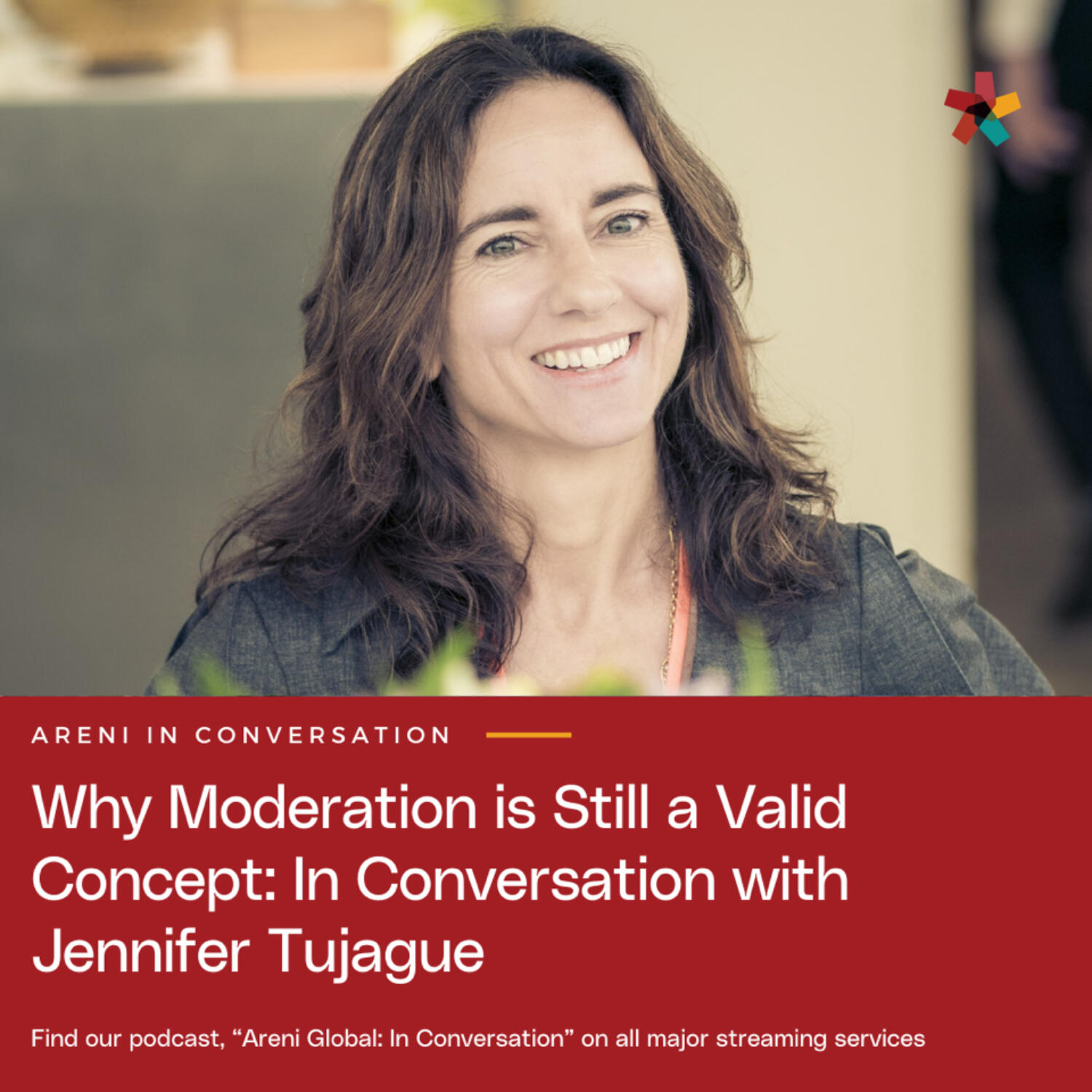
Why Moderation Is Still a Valid Concept: In Conversation With Jennifer Tujague
54m 12s
In this episode of the Rene Global Inc. conversation podcast, host Paulin Dicare interviews Jennifer Chu-Jag, Senior Vice President of Science and Research at the International Alliance for Responsible Drinking (IARD). IARD is a nonprofit that reviews and synthesizes existing research on alcohol and health, funded by 13 major alcohol producers but committed to scientific integrity through transparency and objectivity. The discussion addresses the current narrative that "no level of alcohol is safe," which has created confusion compared to earlier beliefs that moderate red wine consumption was beneficial. Jennifer explains that the science has not fundamentally changed; moderation is still a valid concept, with a J-shaped relationship between alcohol intake and overall health—light to moderate drinkers show slightly reduced risks, while heavy drinkers face increased risks. However, she notes that studies must control for biases like former drinkers in the non-drinker group and clustering of healthy behaviors. Light to moderate drinking still poses risks, especially for certain cancers (Group 1 carcinogens since 1988, linked to seven cancer types) and alcohol-related injuries, particularly in young men. Definitions of moderate drinking vary, and risks differ by age, sex, and region. IARD’s database contains around 180,000 articles, with over 100 new publications weekly, underscoring the complexity of the subject. The conversation emphasizes that while alcohol is a carcinogen, its risk level depends on dose and individual factors, and moderation remains key.
[MUSIC] Welcome to the Rene Global Inc. conversation podcast, where we talk about the future of fine wine. I'm Paulin Dicare, Director of Rene Global, and in this series, we bring your conversation with some of the most interesting and influential figures in and around the world of fine wine to talk about how the world is changing, how these changes impact the production, distribution and consumption of fine wine, and how that creates risks to be managed and opportunity to be seized. [MUSIC] Western societies are currently re-examining their relationship with wine and alcohol. For the last couple of years, the no safe level of alcohol narrative has come to the forefront, with headlines highlighting new studies leading to the conclusion that there is no alcohol consumption with that health risks, deeply challenging our established understanding of moderation. So has the science really changed, always moderation is still a valid concept? In this episode, we meet Jennifer Chu-Jag, Senior Vice President of Science and Research at the International Alliance for Responsible Drinking, a not-foot-profit organization dedicated to reducing harmful drinking. And we ask her what we need to know about the current research on alcohol, wine and health. [MUSIC] Well, Jennifer, thank you so much for being with me today. We have a very important conversation ahead of us. But before we start, can we just tell us about you and your current role? Sure, so I'm the chief scientist at the International Alliance for Responsible Drinking. And I started working with its predecessor organization in 2013, so it's been in this organization for quite some time. I lead a team of researchers that helps to kind of build and maintain the organization's foundation in the research on alcohol and health and alcohol policies. And what led you to take that role, what brought you at the IART, and maybe you can re-explain what IART is with people who haven't heard about the organization yet? Sure. IART is a membership organization of 13 of the world's largest producers of beer, beer's wines and spirits. And they come together, it's a pretty unique experience, but they come together under our organization around their shared objective of reducing harmful use of alcohol. So how did I get here? I've always been really interested in food and nutrition and health and the complexities of research in that area. And in the early 2000s, I had worked for a research group in California, the alcohol research group on methodology and measurement of alcohol studies. And one of the things that I just find most interesting is that like other foods, alcohol is a pretty complex and difficult to study subject. But alcohol, even more so than other foods, just because it's wrapped up in behaviors that we may not also have for other foods that we-- foods or beverages that we consume. And it also affects the body in different ways that foods don't necessarily do. So it's really that complexity that makes it just endlessly interesting, an interesting subject to me. And what's your specialty? Because I assume as a chief scientist, do you doctor yourself? I have a master's degree, a graduate degree, in nutritional epidemiology. OK. So I come from that background. So I'm going to address a big elephant in the room first. But is there any-- I mean, you're working for a group which is financed by the alcohol industry, with these major companies within the alcohol industries? Is there any ethical principle that your role relies on, like to be totally blank? How can we be sure that what you work on and what you publish and the science that you are relying on is actually not influenced by invested interest? Right. That's an excellent point and an excellent question. So my responsibility and the responsibility of my team is to educate and form our members on what the research says. Because they are not scientists. And they don't have a background in those areas at all. So it's a pretty big responsibility to be able to distill that information accurately incredibly so that they can be feel comfortable speaking about issues coming up in the local alcohol and health. So in order to do that and to do it well, we have to first build this foundation of knowledge around each issue in alcohol and health. So the relationship between alcohol and cardiovascular disease, liver disease, cancer, metabolic dysfunction, alcohol, anything. And we, as a group of scientists, adhere to basic principles of scientific integrity. So those are principles around being transparent, not only about who we're funded by. And we work for it. Yeah. Right. But also about our methods and how we process information, how we collect information. And what's included in our systematic reviews. So all that methodology we provide so that we're very transparent about how we do things. And then there are other principles around accountability and objectivity. And so the objectivity piece, I think, is really what we're getting at here. How do we make sure that we are minimizing our potential biases? Because everybody has a bias. Everybody comes from a certain perspective. And I think the important thing is to acknowledge that. And then to put in place procedures in order to minimize a potential bias or conflict of interest. So as we're going through and conducting systematic reviews, we have several places where the researchers are checked and double checked and triple checked by others people on the team. There's this very iterative process of documenting what we have found, the studies that we have pulled, information from the studies, and then how we summarize it in a document. And so just to be clear, IAOT doesn't produce research at all. What you do is you just review and summarize and extract the main key takeaways of each research paper that's published around the research around alcohol, right? Right, that's correct. So we don't do primary research, which should be going out and conducting a new study and collecting data on our own. We don't do that. We do secondary research, which is the collection of existing research and doing synthesis and analysis. Can you give us an idea of how big your database is? How many papers on alcohol has been published in research globally? 100s, 1,000s. So we are very fortunate to have full-time research librarians, research managers who comb the world of peer-reviewed published research and pull that into our IARred Research database. And that currently contains about 180,000 give or take, a few thousand scientific articles covering everything related to alcohol, health and alcohol policy. So it's a pretty vast universe out there. How often do people publish research on alcohol? Is that topic, is it one paper a week? Like globally, how many papers are published? I think it can easily be 100 or more publications a week. A week? Easily. And all of them being primarily researched, like new data? Not always. No. Sometimes these are commentaries or opinion pieces. Sometimes they are reviews.
or systematic reviews or metanalyzes, and those are looking at already published research and kind of pulling them all together to kind of synthesize the information on a given topic, kind of like what we would do. If you wanna see the big picture, you don't wanna just pull out A study or two, you need to look at it in the context of the rest of the research that's been published in that area to get a picture of whether this new study that's just come out. Is consistent, is it different? Is it, does it have different results for a good reason or do they use a different kind of methodology? And it's fascinating and it shows really well in the 100 papers or 100 publication, it shows straight away the complexity of the topic as you were saying right at the very beginning and how interesting and how complex the topic is to research. And one of the, when we talk about that research and actually what's happening at the moment with the narrative on alcohol and wine, the one of the biggest change of narratives that I have seen in my lifetime, I come from a time where the research was saying that a glass of red wine a day keeps the doctor away and that the moderate consumption of wine as part of the mediterranean diet could reduce your risk of cardiovascular disease. But of course, it's been an narrative for a very long time and I think everyone now knows that really well that over consumption can lead to all sorts of problems no including liver cirrhosis and any other sort of social problems. But now what we're here today is there is no safe level of alcohol and that in other words, there is no alcohol consumption without health risks. So the first question that I had on the topic for you is has the science really changed on this or is moderation still a valid concept today? - Great, that's a great question because we do hear a lot of mixed messages in the media about alcohol and health and what you were just saying about how, you know, you're going from red wine, you used to think that it was good for health and good for our heart especially. And now all of a sudden, we hear that like not even a drop of alcohol is safe to drink. So that's it. Those are two pretty extreme news. So how do we get from one to the other? - And how do we know which one is true? Also like how do we know on which foot to stand? - Right. Because that can be, you know, there is a lot of noise out there. So how do you kind of focus in on what's really going on? What does the research really say? Has this, has the science really changed or is it just the way that we talk about it that's changed? Are we just hearing certain views that are a little bit louder or noisier than others? And I think it can be quite confusing. We kind of hear the same thing going on in diet, right? And in food and like people, we hear about contradictory evidence about foods that we like to eat or don't like to eat and what's healthy and what's not healthy. But if you really take a step back, you see that like what has been true for a long time is still basically true. I'll use food for an example here. We've always known that you need to eat a good amount of fruits and vegetables. And foods that are rich in lean proteins and whole grains, right? That hasn't changed and that is still true. Despite the fact that we hear all this news about different types of diets. And so I think just like taking that big step back and kind of looking at what is the big picture and has it really changed. For alcohol, I would say that the big picture hasn't really changed. The moderation is still the main message. The fact that heavy drinking is associated with a lot of health issues is still correct, right? There has been more research around lighter and moderate drinking and that is helping to inform our knowledge about the risks associated with alcohol consumption. So what we see in the big picture is that overall in general, alcohol consumption has this J-shaped relationship with overall health, with all cause mortality. So that looks like light to moderate drinkers have this slightly reduced risk associated with their drinking and heavier drinkers have an increased risk. And that's kind of the message that we're used to hearing. Some people are claiming that previous research finding, finding those types of results has been flawed or biased because they didn't take into account the fact that their non-drinker reference group was made up of former drinkers who may have stopped drinking because of their ill health. Or that moderate drinking is really just related to other healthy lifestyle behaviors, right? So-- And that it's not just the moderate consumption of alcohol that gives you benefits or gives you to health condition. It's everything else that goes around it as well. Right. Like not smoking or having a healthier diet, walking, walking exercise-- Have any social connections. And yeah. Exactly. All of those things are really important. And we do know that healthy behaviors tend to cluster together, right? They probably reinforce each other. And is it fair to say that the contrabande is also true? That when you have non-medical healthy behaviors, they tend to cluster together as well? Yes. That would be true, too. So that's a really critical piece of information that researchers need to take into account when they conduct these studies, right? So they need to control for all of those other factors to make sure that they're really just kind of looking at the effect that alcohol or drinking pattern has. So that was the second of kind of the big challenges to those studies. So the claim is that the previous studies just didn't control for these things. And if you look back into-- if you look back at the research that's been conducted over, let's say, the last 20, 25 years, you'll find that, in fact, at least half of the studies are able to control for former drinkers and try to eliminate that bias. And of those that do that, about 70% of them still find that same JC in relationship. So we know, for sure, that high level of consumption of alcohol is detrimental to your health, and this is not going to change. But what I'm still a bit confused is when it comes to light and moderate drinking, because you said there's still some parts that researchers need to explore. What do we know about light and moderate drinking today in terms of health risks? And what would be the health risk related to light and moderate drinking? So yeah, OK, so that's a good question. It's difficult to answer. I'm going to try to answer it. OK, it's difficult to answer for a couple of reasons. One is because there's no universal definition of what light or moderate is. And researchers use different definitions. That makes it a little challenging. Can you give us a bit of some examples of those definitions? Like how they define and modify drinking, for example? Right. So in some studies, the researchers will use, let's say, sometimes they'll use like a drink-- their country's drinking guideline. And when the US, they would use up to one drink a day for women, up to two drinks a day for men, as the cutoff for, let's say, moderate drinking. Now, they might model that as from 0 to 1 drink, which is 14 grams a day for women, and 0 to 28 grams for men, as one category moderate drinking, and then anything over that would be heavier drinking. Other studies might use something like a 10 gram per day standard. They might want to look at something more refined, like an occasional drinker. So that would be even less. They may want to look at what a light drinker may be and decide that that's--
something less than one drink. So kind of depends on the researchers' questions. If they really want to drill in on the light end, they're going to use smaller groups to kind of try to tease out if risks change between drinking once a week versus three times a day on average. Some researchers are looking specifically at the number of drinks and then frequency. So is it better to drink small amounts every day? Or four glasses, four days? Yeah, right. So it's difficult-- my question on light and moderate drinking and its consequence on health risk is difficult to answer the question as you've just said, moderate drinking change in terms of how it's described and how it's defined. Why is it difficult to answer that question? I think because health risks also aren't universal. So there are a few things like age group, the sex and country or region where risks associated with alcohol will differ. So I'll give you an example. And this will kind of help answer the question of risks associated with light to moderate drinking. In many parts of the world, young men up to the age of 25 or maybe about 35 have a much higher risk of an alcohol-related injury or death from an alcohol-related injury, right? Much more so than older men do-- Do you drink in driving, for example, or-- Yes. --fulling from a ladder because they were drunk with something like that? Exactly. Yeah. Road traffic injuries are the biggest group of injuries. So that is a big one. But yeah, we're talking about any kind of unintentional injury or even intentional violence. Yeah. Because of course health risk is not just disease. It's all the accidents and injuries, of course. Right? Yeah. And in fact, for men in that age group, I think that is one of the leading causes of morbidity and mortality is injuries and alcohol-related injury. So modeling studies should tell us, show us that those risks start to increase even with lower amounts of alcohol consumption. So that's one of the big risks that we would attribute to some people for moderate drinking. Can I just check if my understanding of risk is actually accurate? But a health risk would be a statistical difference in my chance to actually encounter injury or accident or disease, right? So it's based on a statistical difference, right? Of something of a higher chance because of alcohol consumption. Compared to someone who, in this case, is a non-drinker. OK. Right? So would your risk as a moderate drinker increase compared to a non-drinker? OK. And so we know, for example, that in the case of young men, there is a significant statistical risk, even when they consume moderately. Correct. Yeah. And so I'm not saying that there isn't a risk for women who drink moderately too for those injuries, but it doesn't show to-- To say we are at the population wide. Yes. Yes. Any disease-related risk to light and moderate drinking? Yes. And so the disease that we hear most about is certain cancers. Yeah. That's the big one. We're going to dive deep into this one because I think that's the scary part and the scary word, as well. Yeah. There's a lot to discuss there. I was just going through the new campaign from Balanced North East, which is an alcohol program which is working to reduce alcohol harms in the UK. They've just launched the new campaign with the hashtag "Aggolistoxic" and their headline is actually this one. "Aggol is a group one carcinogen," which causes seven type of cancer, including bowel and breast cancer. And we know that Ireland is going to change the labeling from 2026, actually saying and stating on what would have alcohol, that alcohol consumption is directly related to causing seven types of cancer. What's the relationship between alcohol and cancer? What do we know? And what do we know about it? OK. So first of all, we know that alcohol has been identified as a carcinogen since the 1980s. And like you said, it's been given this group one status. And that group one-- Back in the 1980s. So this is not new. No, it's not new. OK. It's back in I think 1988. So that group one status relates to the level of certainty of the evidence. It's not a designation about the size of risk. OK. It's just about the certainty of the evidence. Do we have enough evidence to say that-- It's so misleading, though, because you see those big signs, like it's a group one person who's and you're like, gosh, it must be so dangerous. But actually, it's not that it's more dangerous. Is it just more proven? Exactly. There's more. There's more. There's more and better evidence just to support that alcohol is a carcinogen. OK. Two months. Yes. So it is not about that designation does not relate to the dose of the exposure and the related risk associated with that. It's in general. Other than it's being speaking, the substance is carcinogen. But we don't know how much we need to intake in order to develop cancer, right? Right. Well, other types of studies and research can give us an idea about that, not the IRC designation. OK. What we know from places like the World Cancer Research Fund, they do a job of contacting systematic reviews about alcohol in certain cancer types. And that's where we get our information of that alcohol is a risk factor for these seven types of cancers, oral, pharyngeal, and Lyrangial, esophageal, stomach, liver, colorectal, breast. I may have forgot one. But that's where that information comes from. And according to the WCRF, there's an increase in risk for any amount of alcohol for some cancers. But for others, the risk is apparent at higher amounts of consumption. So like I said, WCRF does these comprehensive reviews on the subject. So we feel fairly certain that that evidence is reasonable. And in fact, when we did our own reviews on the subject, our findings seemed to line up pretty well with WCRFs. OK. So what about the no-save level? Like you were saying for some type of cancers, it's been seen that regardless of the amount that you drink, you have more chances to develop one of those cancers, right? Is that-- are we sure of that, then? That is what we see in this research. And so breast cancer is the one that we hear most about. And risk seems to increase even with associated with light drinking in women. And then we hear mostly about breast cancer, because breast cancer is relatively common. It's not common, but it's not a rare cancer. All walk cancer, yeah. Right. I think in the US, the statistic is something like 13%. So 13% of women will be diagnosed with breast cancer in their lifetime. So that's not-- no, it's not insignificant. And it's surely one that being a woman you think about not every day, but like you have it on your corner on your head. Right? And we all have women around us that have contracted that form of cancer. So I think that's why you also read such an emotional one. So can you tell me a bit more about the risk, though, because I understand that crossing the street makes your life more dangerous. There's no crossing the streets that is safe from being hit by a car or something happening to you. But life is so much more enjoyable when you cross the streets.
and the risk are very, very small if you pay attention and both ways and et cetera. So what exactly, yeah, when we talk about no, no, you know, risk from the very first drop of alcohol, what kind of risk am I taking? Really, like, what's my chance, what's the statistic? Like, is it one in a million trunks to develop cancer? Like, how does it work? What other numbers around that? Honestly, I would say that I can't give you your risk or your statistic because that risk is going to depend on a lot of factors that only you and your doctor are aware of. And even at a population level, I think the risks can be slightly different in one population versus another. So I think some people find it very easy just to throw out a risk, but I think that might, that information, I'm not sure it's entirely helpful because really your risk is very individual. It's not the same as what it's going to be for the average population. You may have a history of breast cancer in your family or you may have other risk factors that would lead you and your doctor to kind of come up with what's best for you. And for some people, the best choice is not to drink alcohol. Yeah, I was just asking this because, you know, you hear about all of those scary headlines about, you know, if you're doing your health cancer, those kind of things, quite automatically. And then you read someone like Professor David Spakerhalter, I'm sorry for capturing his name, but a professor of statistic at Cambridge that, you know, referred some of the risk in the last Lancet report about this new safe level of alcohol. And he said, the Lancet study means that 25,000 light drinkers need an annual equivalent of 400,000 spot-of-jinn for one serious health problem among them each year. So those numbers are like, okay, I understand there's a risk, but it's so small, like does it really deserve all the headlines that we see everywhere? Yeah, I'm really happy to leave the statistics to Sir David Spakerhalter who is a proper statistician. But that does sound like it's a fairly small increase in risk. And so I think what's important is that people are informed so that they can make informed choices. Hey listeners, just interrupting the conversation for a few seconds. First, to let you know how grateful we are that you are listening to this episode. Thank you so much. And also to kindly ask you to subscribe to our podcast channel on whatever platform you are listening this episode on and to give us a cool rating. It's such an easy way to support us and it really makes all the difference. Thank you so much. Now, back to our conversation. Okay. And why do you think, I mean, again, you know, is that narrative which is so powerful? Why do you think that there's been so much focus, for example, on the media, on the on the canteen link, rather than an overall look at the relationship between our rules and our health in general? I think part of the reason is what you said previously, which is that, you know, cancer is an emotional and scary topic for many of us. Yeah. And part of that is because we may feel that we have less control over preventing and preventing cancer than we do for other diseases like cardiovascular, you know, let's say part disease. Both of those have been around for ages, right? But I think people feel like they understand heart disease and how to prevent it and they know that their, you know, procedures and medications available. Maybe that's what makes that less scary in comparison to a cancer where there's still a whole lot of unknowns. Yeah. And then we don't control anything like cardiovascular, you're like, well, if I don't eat too much fat, if I walk every day, you know, I might be, now, I might be in a good group, but cancer, you're like, I have no idea what I need to do not to get it. Is that what you mean? Actually, actually, there are a lot of risk factors in common, like, so the things that we do to protect our heart, many of those will also help us reduce our risk for cancer. So I hope that's somewhat helpful. I'm making you feel like you might have a tiny bit of control over your cancer risk. But I think most people, you know, aren't aware of, most people feel like there's so much known about cancer and that's what makes it a little scary. So is that part of the reason why this narrative is really kind of seems to be gaining more traction? Are we just paying more attention to it because it is a scary subject for many people? I'm not entirely sure. Or is it just a marker that some researchers to use to say that, well, if risk can go up, if your risk increases for certain cancers or any disease, then that means that there can't be any safe level. So if it's not safe for this one, these group of cancers, then any consumption might be risky. I'm looking at the meta-analysis published between 2000 and 2023 on alcohol consumption and all cause of mortality, graph that you sent me. And I was wondering, I'm going to put that graph, of course, in the show notes and in the transcript that will go with the podcast that you can see on our website. But I was wondering if you could comment that graph for me and tell me what it says. - Right. Yeah, that's great. Yeah, so this is a table of results of 22 studies that were published between 2023 on all cause mortality. - Okay. - Right, so that's death from all causes combined. And these are meta-analysis studies. So these are big studies that pool the results of a number of individual studies into one set of risk estimates. So we wanted to know if, first off, if what does that risk relationship look like? So if we compare the light to moderate drinkers with a non-drinking group, was there, was the risk at least the same or lower than the risk of a non-drinker? - Okay. - And we found in all cases that all of them were. So there are no cases where the light or moderate drinking group had a higher risk than the non-drinking group. - Okay. - In all cases. - Okay. - What's the right cross? - So next we look to see if there was a statistically significant lower risk for a light to moderate drinking group. - Okay. - You can do a non-drinking group. And in all but three meta-analyses, we found that that was true. - So light to moderate drinkers have lower risk than non-drinkers? - A statistically significant lower risk for at least one of their light to moderate drinking groups. - So that's a big thing. So in all cases of mortality, light to moderate drinkers have a lower risk than non-drinkers in dying, right? Or source combined? - Yes. - According to the results of these studies. - Okay. - Yes. And then finally we wanted to look at this question about former drinkers, right? And if that was really the explanation, because the claim is that, the claim is two things. One, that most studies don't control for former drinkers, but when they do, those J-shaped results disappear. - Mm-hmm. - So we found that about half of the meta-analyses were able to adjust or control for those former drinkers by like separating them out, or excluding them all together or some other way. So about half of them were able to control for that. And all of those studies still found a J-shaped curve. - Okay. So that's really interesting meaning that there are some type of cancers for which there is a zero safe level that your risk of developing those cancers are start from the moment that you drink alcohol, but all in all, when we look at all kinds of mortality, moderate drinkers have a bit of chance of a longer life than non-drinkers.
Right? That's what the all-cause mortality results show, yes. Do you think that the concept of no safe level is somewhat misleading at all? Right. I think for me that that that that concept or that phrase seems like seems like an oversimplification of a very complex issue. And I think that it just doesn't seem to match up with most people's common sense understanding of the risk related to alcohol consumption. And so it sort of falls short that way. Right? It's trying to just. It seems to be presuming that any consumption of any amount of alcohol at any time by any person is automatically unsafe. And I think that that's just. That can be potentially misleading. It doesn't seem to sit with kind of the bigger picture evidence about what I was just talking about kind of alcohol as part of a healthy lifestyle or alcohol consumption and all-cause mortality. It doesn't seem to match up with that. The fact that any amount at any time may be harmful to health, that might be true for some people, but it might be false for some people. And I think it's important to kind of have a more nuanced understanding of risk. And it's also more important for us to understand that there's a big difference between the risks associated with light drinking than there is associated with heavy drinking. So there's a difference between having less than or up to one drink a day versus five drinks or ten drinks, right? Would you agree with that? Yes, well, of course. Yeah. Even if I don't have one glass a day, I think, but usually when I have two glasses a day, either I don't drink or I drink two glasses usually, it's mostly how I do it. A question that I wanted to ask you as well, because one of the things that we've been saying or experimenting is that alcohol and wine are like social lubricant and they can contribute to someone in moderation, of course, to have dynamic social life, perhaps ever always been places where people were meeting and there was the heart of the community. We know that when a cafe closes in the village, it's the life of the village that diminishes. And of course, we understand the importance of getting together and in connecting with each other in, for example, mental health because, you know, global health is not just the absence of diseases so much more. Is there any scientific backup in this? Can we honestly say that alcohol and wine in moderation can be part of a connected, dynamic social life? Okay, there might answer this question in two parts. The first part directly trying to respond to kind of the social aspects, I would say I'm not the best person to answer that question because we focus mostly on harmful use of alcohol. So I have less expertise in the research that is available on the social aspects of drinking. I think we can acknowledge and we all know that that that is there. That's a reason why some people consume alcohol is part is for some of those effects, but I can't really speak to the research on that subject. There is an area of research around alcohol as part of a broader healthy lifestyle and there's a ton of research around alcohol as part of a healthy dietary pattern like the Mediterranean diet, which is also part of a lifestyle. So there's enormous amount of research in that area. And generally when moderate alcohol is part of several healthy lifestyle factors, we see that there is a reduced risk for premature mortality and morbidity and mortality from a number of diseases. So what are those healthy lifestyle factors? Some of them we've mentioned a couple of times. They would include not smoking, they would include regular physical exercise, they would include maintaining a healthy weight and there's one more healthy diet. And having your healthy flesh. Food and vegetables, loads of nutry, nuts and legumes and all of that olive oil as far as would be a big part of that too. That's right. Alright, so I guess it's what you were saying on the no say level kind of sentence being too simplistic because if you take risk as a whole, it's a much different picture and of course that's a meta-analysis and each situation is going to be different for each individual. So one of the things that I take from my conversation is know your situation, know your genetic heritage, know your situation in life and then calculate the risk for yourself. Or even better consult with your own healthcare provider. Yes, yeah, you don't have to do that on your own. Alright, we've talked just for the last part of that, that gives me a bit, you know, a bit of a smile on my face because of course like everyone whenever I'm cancer everywhere that that's something quite scary. But for the last part of our conversation we're going to talk about moderation a bit more because we've talked about moderated drinking. We've seen that defining it is very difficult but that's really something that at least the wine well has been involved in like we all promote moderation and moderated drinking because it's also a part of joy and pleasure and also because we want people to, you know, enjoy the taste and be able to enjoy it for a long period of time. So from your perspective what are the most efficient ways to promote moderate consumption of alcohol? I think in our everyday lives I think of promoting moderate drinking that includes actively offering more choices and providing plenty of water and food whenever alcohol is served to encourage slower pacing and really slower absorption of alcohol. I think it's really important to eat if you're consuming alcohol. That's probably like my number, a number, a number one message for me. And then I think one of the ways that industry members can promote moderate drinking is by sharing moderation and advice like this, right? Through your communication channels. So to stick with one to two drinks, have something to eat, alternate alcohol drinks with water and other these types of tips. So the situation where drinking is not recommended like when you pregnant or when you underaged. Right, exactly. Yeah, I'm really going to you say that because that's part, that's kind of the other side of moderation is avoiding harmful consumption. Right, and there are the ones that should be front of mind should be when not to drink. And so for some people and in some circumstances, any amount of alcohol is not a good idea. So that's pregnant during or around pregnancy when you think you're going to be driving and then for underage young people. Condinking heavy machinery like a tractor or a fault lift or things like that. And with certain medications. Okay. Right. So avoiding alcohol with certain medications too is important. On the personal level, it's also not drinking when I'm too tired. It doesn't, you know, again, that's it. When you have to know your own personal moderation strategy, but when I'm too tired, it's not a good idea to make. Yeah, that's right. Meaning how you, your body responds to alcohol, I think is critically important. So we are publishing this interview during dry January. And there's always that big question about the interest and the importance of those sobriety months in the calendar. And from your point of view, how are these sobriety months helping the general conversation on alcohol health and moderation? People often use dry January as an opportunity to reflect on their own drinking.
which is hopefully something that they can carry over throughout the year. Because we should be mindful of our drinking all the time, not just one or two months of the year. And I think that the popularity and the visibility of dry January may be helping to encourage growth in like a great proliferation of choices around beverage alcohol and non alcohol. And making those more available to people so that they can practice moderation and feel comfortable in any type of environment. Yeah, you could with you. Every situation that can encourage people to look at their consumption is a good occasion to do so. If we look ahead for you, what are the next big steps that I order, you know, conducting to reduce the harmful effects of alcohol? So I heard members are developing robust standards to reduce underage drinking, promote moderation, and reduce harmful consumption among adults. And we are reaching out throughout the value chain to amplify this effort. So from producers to retailers to delivery providers, social media platforms and influencers. One example is e-commerce. That's a big one. And that was such an e-bick one during COVID. We had a lot of conversation about this. Right. That's exactly when this started was during COVID when so much commerce moved to an online platform. We developed this set of principles and consulted with public health stakeholders, which led to developing training on those standards. And those standards are now being embedded in a lot of places through through through local. And the e-tgen delivery and Amazon, like all of those big platforms have enforced those measures like checking when they do like no delivery of alcohol with miners asking for ID cards, those kind of things, right? Those kind of things exactly and then also training around how to how to refuse sale or delivery to intoxicated individuals. So, so what we're doing now is broadening and widening those efforts and trying to bring in as many people as possible to kind of just make this as big as as big as we can. One last thought about one alcohol health and moderation to leave our audience with. I think I think moderation. I think moderation can work. Maybe it's not for everyone and there's certainly people for whom you know the best choice is not to consume alcohol. I think for those who choose to drink being mindful about your moderation all year round is a great idea. And like I said, always always always eat some food. Enjoy some food while you're while you're drinking alcohol. Thank you so much Jennifer. It's been fascinating. Thank you. Thank you, Pellene. Thank you for listening to this episode of a Rene global in conversation. A Rene global is a think tank dedicated to the future of fine wine. And when we're not podcasting, we are publishing reports, white papers, articles and marketing sites. So if you are interested in the global conversation around fine wine and what the future holds in terms of adoption, distribution and consumption, add over to our website www.rene.global. That's A-R-E-N-I and subscribe to our newsletter. All the links are in the show notes because whether you are producing or selling fine wine, you need to know what's happening in the world so you can make informed decisions. Until next time, cheers.
Podcast Summary
Key Points:
The International Alliance for Responsible Drinking (IARD) is a nonprofit that synthesizes existing research on alcohol and health, funded by major alcohol producers but adhering to scientific integrity principles.
The "no safe level of alcohol" narrative has gained prominence, but the overall science has not drastically changed; moderation remains a key message, with a J-shaped relationship between alcohol consumption and all-cause mortality.
Light to moderate drinking still carries health risks, particularly for certain cancers (seven types identified as Group 1 carcinogens since 1988) and alcohol-related injuries, especially in younger men.
Definitions of "moderate" drinking vary across studies, and risks differ by age, sex, and region, making it difficult to generalize findings.
IARD maintains a database of about 180,000 scientific articles on alcohol, with over 100 new publications per week, highlighting the complexity and volume of research in this field.
Summary:
In this episode of the Rene Global Inc. conversation podcast, host Paulin Dicare interviews Jennifer Chu-Jag, Senior Vice President of Science and Research at the International Alliance for Responsible Drinking (IARD). IARD is a nonprofit that reviews and synthesizes existing research on alcohol and health, funded by 13 major alcohol producers but committed to scientific integrity through transparency and objectivity.
The discussion addresses the current narrative that "no level of alcohol is safe," which has created confusion compared to earlier beliefs that moderate red wine consumption was beneficial. Jennifer explains that the science has not fundamentally changed; moderation is still a valid concept, with a J-shaped relationship between alcohol intake and overall health—light to moderate drinkers show slightly reduced risks, while heavy drinkers face increased risks. However, she notes that studies must control for biases like former drinkers in the non-drinker group and clustering of healthy behaviors.
Light to moderate drinking still poses risks, especially for certain cancers (Group 1 carcinogens since 1988, linked to seven cancer types) and alcohol-related injuries, particularly in young men. Definitions of moderate drinking vary, and risks differ by age, sex, and region. IARD’s database contains around 180,000 articles, with over 100 new publications weekly, underscoring the complexity of the subject.
The conversation emphasizes that while alcohol is a carcinogen, its risk level depends on dose and individual factors, and moderation remains key.
FAQs
IARD is a membership organization of 13 of the world's largest alcohol producers that work together to reduce harmful use of alcohol. It conducts secondary research by reviewing and summarizing existing studies on alcohol and health.
IARD adheres to principles of scientific integrity, including transparency, accountability, and objectivity. They have procedures like iterative checks and documentation to minimize bias.
The big picture hasn't changed much; moderation remains the main message. Light to moderate drinking still shows a J-shaped relationship with overall health, but heavy drinking is clearly harmful.
Risks vary by age, sex, and region. For example, young men face higher injury risks even with moderate drinking. Disease risks include certain cancers, but the size of risk depends on dose and other factors.
Yes, alcohol has been classified as a group one carcinogen since 1988. This designation indicates high certainty of evidence that it causes cancer, not the size of the risk.
Alcohol is a risk factor for seven types of cancer: oral, pharyngeal, laryngeal, esophageal, stomach, liver, and colorectal cancers.
Chat with AI
Loading...
Pro features
Go deeper with this episode
Unlock creator-grade tools that turn any transcript into show notes and subtitle files.
 PodcastTranscript AI