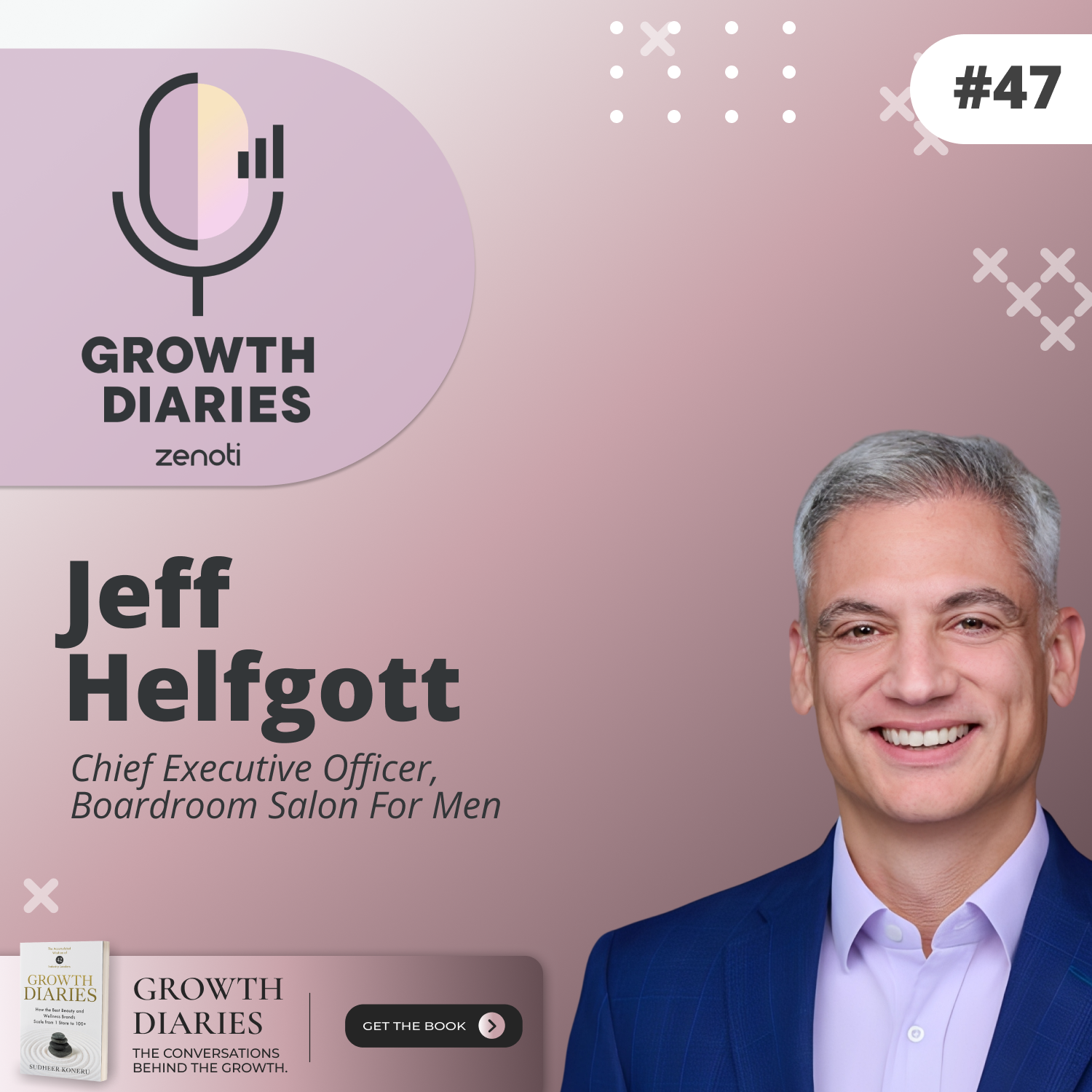
Jeff Helfkut, with a background rooted in discipline from early life experiences like barber shops, paper routes, and the military, brings a unique leadership perspective to Boardroom Salon. He joined the company in 2024 to revitalize its growth strategy by shifting focus from rapid expansion to thoughtful, sustainable scaling through franchising. Central to this vision is a membership model that offers flexible, customer-friendly terms, enhancing loyalty and staff morale without harming service quality. Jeff emphasizes that successful scaling requires deep community integration, strong franchisee support, and operational discipline—learning from 42 successful founders in his book *Growth Diaries*. He prioritizes transparency, with a focus on franchisee profitability and long-term relationships. Franchisee selection is rigorous, ensuring alignment with brand values and community trust. The company is also streamlining its product portfolio and investing in technology like custom applicant tracking systems to improve efficiency. Jeff’s military and corporate experience informs his leadership, emphasizing people, resilience, and accountability. With a clear strategy rooted in responsible growth, Boardroom aims to expand internationally while maintaining its premium, community-driven identity.
I've seen more brands die of indigestion than starvation. They grow too fast, they
sell a bunch of licenses, some of whom are too franchise candidates who maybe
should not have been there in the first place. And now you have a headache and no
one's happy. So what I am trying to do is grow thoughtfully.
The noting presents, growth diaries, the fascinating stories behind the best
lands and beauty, wellness and fitness hosted by Sudeer Koneru.
Jeff Helfkut has built a career out of walking into underdogs and turning them
into something worth paying attention to. He's gone from an army captain to a
McKinsey associate to the CEO of Excel Fitness. And now he's bringing that same
playbook of experience as CEO to boardroom salon for men. Today Jeff is here to
walk us through boardroom's journey. His plans as CEO for the company and the
secrets behind scaling a brand. Welcome to Grow Diaries Jeff and thanks for
making the time. It's great to be here. So Jeff, before of course today we're
going to talk about boardroom salon. But before that I think it would be very
interesting to hear a bit about how your journey was leading up to boardroom
salon because I know you were very interesting in different journey all the
way from serving in the army to a lot of corporate exposure. So I had a very
entrepreneurial background. I grew up in a small town in Connecticut. My first
job was actually in a barber shop sweeping hair. So I've kind of come full circle
now that I'm back at boardroom. But what I loved about that experience was being
part of a local barber shop in the town that I grew up on, gave me exposure to
how that barber shop was creating community. And it also taught me the value of
hustling for money, something that has kind of stuck with me for the rest of my
life. So from there I followed a number of other entrepreneurship activities I
did. What's very common having a paper out which teaches you sales and
delivery because you can not only just sell the papers you have to be good day
after day in the rain and the snow at delivering because people expect
their news. From there I actually started a web development company in high school. So I
was doing TML development, some light Java at a time which you didn't have to be
especially good at coding in order to make some good money as the web pages were
becoming more ubiquitous. But what I loved about it was you could use the
website as a way of solving problems for customers that they might not have
understood that they had. And one of my first clients was a local medical chain
that had multiple clinics throughout the area. And one of the problems that I
saw sitting at the front desk was the front desk was just burned with these
phone calls of people calling trying to figure out which location they're
supposed to be driving to. What were the landmarks nearby which doctor was
working at which location. So I built that all into the website. And again this
is late 90s, early 2000s before Google Maps can. Yeah. And it's why you mentioned
that. What are my best innovations at the time was having a pop-up link to
MapQuest with the individual clinics that had the specialties and the doctors
working there so people could print out directions. And we put what are the
landmarks near there so you can identify where you're close. At the time very
novel today table stakes. But that's what I loved about technology was not the
technology product itself but how it can solve business problems. So I was
intending to go into school to double down on my technology background and then
I took a hard pivot and took ROTC as an elective. And for those who don't know ROTC
is a kind of an introduction to the military that many colleges offer. Had no
intention of doing it. I'm not the best with authority so my parents were very
confused. But I fell in love with the people in the program and figured if the
people in this program which are highly moral people, strong values, strong
work ethic, but also knew how to have a good time when we could. If that's what
the army was like, that's where I wanted to be. So I made a very strong pivot
from going from a very high hourly pay job as a web developer to being a very
low hourly pay job as a front arms or combat arms officer. And it was right
around the time that 9/11 happened. So I graduated early because my thought was
if anyone should be fighting in the front line it should be someone like me that
doesn't have a family. And I was able to be in the initial deployment to Iraq in
2003 where I served with some nation's finest people. And I'm very thankful for
that experience. I did get injured on the job a couple of times. So I mentioned
Uncle Samson. It's time for you to find another line of work. And that's where
my corporate career began. So I started with a financial institution, USAA in
San Antonio. And they leaned on both my technology and my leadership
experience to give me the first managerial role that they hired so
indirectly out of the military into. And great place to learn what the
corporate world could be like. And I had incredible mentors there who convinced
me I was exceptional there. And I could be even better if I went to get my
graduate degree and then further my education. So so and wrote me a great
letter of recommendation. Got me to grad school from there. I built
relationships that got me a seat in a private equity back company in fitness.
We had a tremendous outcome with that. We were able to really create life
changing events for some of our employees through that process. And that's
led me to the position I'm into that. Cool. Interesting. So very different
background than most leaders I've interviewed. And I guess you had learned
very early the value of discipline looks like you've had paper routes and
barber shop and then the army. So I'm sure you bring a lot of discipline
DNA and even when I lunch with you, I felt you seem like a very disciplined
guy. Oh, I should be make sure I have back together if I'm going to go talk to
you. Cool. That's good. Great. So now coming to a boardroom. And of
course, you also had exposure to both myths looks like early on. That's
different, but empowers the tics and the fitness space and now boardroom.
So you're like not a stranger to the entire industry and gamut of formats.
So yeah, the idea of multi-unit businesses which are seeking to grow by
earning loyalty by creating great experiences is what I think my passion
is. In fitness, everyone shows up one to be better. And the best thing you
can do is give them the best environment with the greatest customer service
in a clean environment so that they can go feel good while they're getting
their exercise and in order to improve themselves. When I was in Med Spa,
similar idea, everyone is showing up because they wanted to meet their full
potential and their incredible injectors and estheticians that help uncover
the beauty that's already within. With men's grooming, it has been a category
that had been overlooked for many, many years. And now there is growing
acceptance of men investing in themselves. So that's kind of the parallel
that I draw is how can you create an exceptional experience through multiple
locations where you can't always be there to supervise yourself. Yeah, cool.
Yeah. And men's grooming actually we did some, I don't think we had enough
example, but in India, we ran a benchmark data and we found men were
spending more than women when it came to, if they showed up, they would
spend more, but the number of visits may not have been matched or something.
I forget, but data showed and then there were a bunch of businesses opening
up in India for only men kind of thing. You know, it's the right time.
You know, when I when I started my career, men who invest in their
appearance, where they had dragatory names for it, natural sexual. It was
one that was thrown around a lot. It is not a kind way of describing someone.
Now again, like there are 16 year olds, eight year olds on TikTok where a
look maxing is trending, but people will understand if I'm spending all my
time in front of a camera. And if I don't have the opportunity to leave the
house often, when I do, I want to look exceptional. Yeah. Cool. So maybe you
would share a little about how was boardroom founded in the first place. I
know, it was before you showed up at the door, but how did that come about?
The founder Bruce and his wife had their had phenomenal vision. They were very
much ahead of their time. But he was on the flight. And I think 2003, he was
part of a large travel company. And as he was on the plane, he was reading an
article about luxury experiences and as mostly centered around women. And he
was reading the experiences before he read. It was it was predominantly for
women. He's like, man, I would like that. You know, why aren't there things that
exist like this for men? So he did what many great entrepreneurs do. He went
all in on this, took out loans against his retirement. At times you're putting
payroll on credit cards. I know many of your listeners can can understand what
that experience is like. And it's scary being an entrepreneur. When you're a
high performing executive, your opportunity costs is high. You can keep on the
course and continue earning a great living and have a great outcome. But those
entrepreneurs that feel that fire, they're so passionate about their idea that
they have to go do it. He was one of those. And I'm thankful because what he
started in 2004 has weathered recessions, has reserved weathered COVID. And
through all that has come out thriving. And that's what attracted me to the
opportunity when I joined in 2024 was it's such a great brand that is such
loyalty, not only among the clients, but we've had an employee since
boardroom first opened 21 years now. That's right, especially in a men's grooming.
And I've heard of that in very luxury salon places like my Michael, but not
it's the exception. Yeah. And that's what makes it notable. Yeah. And that's why I was
excited to come here. A brand that has earned that loyalty is a worth spending time
with.
So when boardroom first started, of course, Bruce put all his money in and started the early stores and then how did he go about growing that, I mean, in terms of stores he went down franchising.
He started by growing corporate salons.
It's the easiest, the control is the clearest path and as he was doing it, there were so many people who were so passionate about it that they breached out to him and said we love to find a way to be part of this.
He didn't necessarily want investors, but find a way to expand the footprint through franchising was attractive.
And he grew that with some franchising and corporate store development until about 2013.
But then realized that he could go potentially a little bit faster if he was controlling the build schedule himself.
So he focused more on a corporate store development angle.
And for those who have been franchising, you know, there are so many incredible benefits and virtues of being in franchising.
It's also a lot of work.
You're hurting a lot of cats with entrepreneurs who love doing things their way and are not used to necessarily falling a playbook.
So for a lot of people, the corporate store development is really attractive and they did that and grew enough to attract attention of a private equity investor who made a substantial investment in late 2018.
And that supported him to continue opening corporate locations.
Yeah, I think, you know, private equity is interesting. It has the times of mixed reputation that I think is unfair.
I think a private equity is any other type of partner. You can have good partners and bad ones.
The great thing about having a partner at the table is it gives you more experts who are aligned with your incentives.
It also allows you as an entrepreneur to take some chips off the table every entrepreneur believes in their business.
But sometimes life happens and the timing was perfect because as he did the partnership a couple years later, COVID hit.
And de-risking your personal net worth after you built something big by having someone buy out some of your shares, but allow you stay invested for the upside.
And it being a really great bet for him and allow the brand to weather the storm without destroying the livelihood that he had built.
And now, since you have come on board, you are now going back to the franchising model again. Is that right? I mean, how is that?
It is. I came on board and I think this is a distinction I've learned through many years of investor backed high growth businesses that you can't have a thesis for your investment.
You have to have a hypothesis.
My hypothesis when I joined was let's launch a membership program and then accelerate through corporate store development.
But what I found as I spent more time in the industry was that this is a relationship business.
And the franchises who are living in market every day are wearing your logo.
They might have their vehicle wrapped.
If they're at Costco on Saturday or church on Sunday and someone comes up to them and says I had a bad experience, that franchise is going to fix it right then and there.
They're members of the car club. They're members of the golf club, the country club.
They are extending boardroom in every conversation they have and fighting people who are that passionate, who are employees is a lot harder.
So I thought boardroom was a fantastic model for franchising and so far so good.
A lot of you ask me how brands go from one location to a hundred without breaking. To find out I sat down with 42 successful founders and put their answers into one book, Growth Diaries.
It covers the invisible constraints and universal principles of scale. It's the playbook I wish I'd had when I was starting out.
Grab it at the link below back to the conversation.
So you right there you put in a lot of things around marketing like I've heard that where successful brands are those where they have local community integration.
So whether it's the you know golf course clubs or other places that you integrate.
So and only a franchise you can do that very effectively can a thing you know they have to be credible in those conversations and someone that is successful wants to be around other successful people.
Yeah, franchisees fit that bill beautifully cool. Then you said you have introduced a membership model and so do you want to share how does that work?
Because I'm a big fan of membership models. I think I've seen love industry some good businesses come out of the membership space.
So our business is a perfect fit for membership model. If you think about it, most men on average get 12 haircuts a year generally once a month.
So when I travel I think about am I going to get a haircut before I go or am I going to get a haircut there.
I am creating a problem for myself because I don't have a built-in solution.
And what we saw with the businesses on average we were seeing our clients who had been with us for four or five six years.
We were still only seen them four times a year.
So that data unlocked it inside of how if we know they're coming 12 times a year that's our total addressable market. Why are we only getting four what can we do to earn more of that loyalty and the feedback was not the service was poor they love the service that's why they've been members for multiple years.
They were saving it for special experiences where the haircut absolutely had to be right they're willing to make an investment board so we launched a one haircut amount subscription style membership which allowed our members to build a routine at a price point that was attractive for them.
But it also solved their problems of when am I going to get my haircut and I think we've been very generous on the membership terms knowing that people are busy over the summer they might go to Tahoe they might go skiing in the dolomites.
They might be traveling for weddings so they might not be able to use the credit in that month we allow them to accrue and in the unlikely event that they do cancel because our retention rates are better than Netflix on a month a month basis well very proud of that.
But when someone does cancel we allow them to use those unused credits for up to three months is a way of allowing us to try to rebuild the relationship that has ended.
And I think it also de-risk zones willingness to buy a membership if they know that there are very flexible terms if they do have to end it.
So it's been transformative for us I think of in fitness we had 99.99% of our guests were members.
In this industry I'm aiming for about 50% because one of our other insights is many people make their booking within about 50% of people make their booking within 24 hours of the actual appointment.
So that means if you are fully blocked with members it's hard for you to create the white space to build new members.
So we want to leave enough room on the calendar for walk-in so we can build new relationships but still also make sure that we're able to build a routine for our members.
Yeah it's interesting how you define the membership program because I think you know you said and what percent of it is if you're revenue today is from members it's about 43%.
That's sizable for a salon business I mean and I think massage and some of the spots are moved past because they've been doing it for a very long time.
But one insight what you shared which makes sense and you know for others also know is I think the more flexible you keep the membership program the more likely does people sign up.
But the flexibility doesn't end up costing the business much as much as paranoid owners may think it is.
So the other day was meeting with Hammer Nails CEO and they also found that okay keeping it flexible is actually a good thing.
Yeah I think one one insight that we had is men are afraid of commitment.
No and I got married at 40 so I'm not throwing any stones there.
Clearly like that fits a little bit so we're trying to make that fear of commitment lower by making it easy to cancel.
So but when you have a membership model some people get scared saying see employees the customer is not paying any money you know every time they come in because they've already been charged for their service.
Does it hurt your staff's morale because they don't get tips and the member feels I already paid for it tough luck.
We found that it actually increases the tips because the the pain is felt at two separate times.
If you're going up to the register and you're paying $80 for a haircut then you're looking at the tip and you're like it's getting close to 100 like that hurts.
If you were building the beginning of the month and then you're coming in for your service later you're more likely to feel more generous because the pain has been split into two pieces rather than one large one.
So that was one of our hypotheses that we had to validate and when we did our initial rollout of this membership program we only launched in a few of our locations in order to isolate.
If anything went wrong in one geographic market but also allowed us to kind of skin our knees a little bit and figure out what were the objections that the styles had.
And then test those hypotheses with the smaller groups so when we did roll it out more broadly we had actual functional data that we could show of here's actual behavior and how it's improved the livelihoods of the people who are servicing them.
That's very good insight because I think some people get scared of that so I want you to share that because I'm glad you were okay with sharing because it's good advice for others and you don't need to worry that your providers are going to be short on the tips etc.
Great but then the other thing is many businesses do memberships but the membership can also be like a DNA in the company it's not just a product you put on the menu and move on.
So what are you doing to say no I want this to feel like a member business.
You're absolutely right it doesn't become a feature needs to become the business model.
So when we've looked at it it's everything from before we launched how are we adjusting our reporting so that we can keep track of what is an appropriate close rate.
look at people who are coming in and based off the
usage behavior in the frequency of the visiting, we produced a list that would get emailed
every single day to our frontline team saying, "Here are the people that we think are high
potential member candidates. Please focus the conversations of them. We want you to mention
it to everyone, but these are the ones that we think we are most comfortable holding
you accountable to close because it's hard to hold the team to a certain close rate
unless you get your arms around which are the ones that are the best fit. If you are just
asking your team to close 50% of them who come in, but that day you're getting people
who are a bunch of new clients. It might be hard to convince them to take a membership
for a product that they're experiencing for the first time."
So what we wanted to do is say, "What's a realistic target based off who's coming in?"
Because we really wanted our team to feel good that this was authentically the best option
for this person and they really believed it because it's a lot easier to sell if you really
believe in what you're selling and we didn't want the team to be optimized over selling
stuff that didn't feel like a fit for that client.
Cool.
So that's an internally and then, by the way, soon I hope AI can do that. What you're doing
which is coach your stuff every day of time.
Get their list of here or four people, I think high-potential members walking in today.
But in terms of your guest experience also, you've been pretty passionate to try and solve
and say, "No, no, no, no, members should feel like they're special. It's not just a financial
product going to think."
Yeah, the idea of membership is it conveys exclusivity and Costco's is very clear.
If you're not a member, like you came and shop here, even at the food court now.
So while it seems like a low barrier, it still conveys exclusivity, which makes it more
special.
If you just do that off preferential pricing, that's fine, but you're training the team
to expect discounts as opposed to getting access to something that is more.
So we as a premium brand have been spending much more time trying to unlock what are other
exceptional experiences and benefits that we can unlock for our members that make them
even more excited to stay a member.
Cool.
And I think you've been challenging our team also to go get their luck together for you.
So that's a good, a good partner push, isn't it?
So now that you're doing franchising, obviously you're to select franchises and how have you
come up with any approach of who's an ideal franchisee that you're targeting or do you measure
people when you're engaging with them?
Yeah, I love that question.
We are very fortunate that we are backed by patient capital.
We have no doubt on the business, so I can grow at the rate that I think is appropriate.
And what I am trying to figure out is what is the best possible profile of franchisee who
will have the most likely hood of success, because this is a tenure relationship.
And I've seen more brands die of indigestion than starvation.
They grow too fast.
They sell a bunch of licenses, some of whom are to franchise candidates who maybe should
not have been there in the first place.
Our intent was to do about three to five this year and we're right on target for that.
And as my team demonstrates the ability to onboard them and set them up for success,
then I think we have earned the right to be opening the aperture to more people.
But I think of being a franchise or as an incredible responsibility, because you are asking
people to sign up not only their net worth, but their reputation aligned with your brand
in the community.
And if it goes sideways, they're the ones that have to face people at the school meetings
knowing that their business failed.
And in our industry, that comes with the lease.
So not only are you getting an SBA loan that might have a personal guarantee, but you're
signing a lease with a landlord that might have a personal guarantee.
I really want to make sure that we're doing all the diligence thing up front to make
sure everyone that we're picking has a high likelihood of success.
Cool.
Building a wellness brand is hard, but scaling it is even harder.
I'm often asked how the best beauty brands expand from one location to 100 without losing
their magic, so I sat down with 42 founders who have actually done it and put their scaling
secrets into my new book, Growth Diaries.
Grab your playbook at the link below, now back to the conversation.
So picking franchise is one in that way, but is there any role you play in and how you
approach picking locations, you know?
And yeah, that's one where I've acknowledged we are not large enough to afford enough expertise
to do that with confidence.
And what I've learned about real estate is it's an art and a science.
I had the opportunity to apprentice under someone who's the best I've ever met at the art
side of this.
His name is Travis Alvarado, he used to run Starbucks Development Through Texas, and he would
drive by any site and point out exactly what was going to be wrong with it and then predict
the revenue and gosh darn if that guy was right, every single time.
That's the art.
The science involves a lot of analytics, and I recognize that our size, we can't afford
that in-house.
So what I've chosen to do is partner with people who do this for a living, and I think
that's part of being a responsible franchise or is articulating what can I give you and
what can't I give you at the size, but if I know it's important to you or the partnerships
that I can bring with trusted vendors that help you get access to things that I cannot
provide, but I can facilitate.
And that's how we've thought about development, okay?
And since you've started franchising and that's the strategy you've started to push you,
what have you been doing to prepare?
Like you said, to support these franchises, you said no, I want to be sure I can do it,
so what does that imply for you?
Yeah, it was the end of '24, I came to the conclusion, franchises would be the right fit
for us.
And then over the next probably 14 to 16 months, we spend a lot of time valuing engineering
the box, trying to get the bill cost down without sacrificing the experience, targeting
a three-year payback.
Because most sophisticated investors are looking to make sure they're getting a timely return
on their capital for building a box.
And we've all heard stories of builds are more expensive than they've ever been before.
I wanted to make sure I was building a franchise system that I was comfortable with.
Two other things that I think are super important is one, obviously, Un economics is huge and
we did the first part of that by addressing bill cost, but there's the ongoing run rate.
And we had to change a lot of our marketing in order to make that even more effective.
And you shared some great data yesterday about new client traffic is down and many of these
personal care industries were up over 44% this year.
Nice.
Okay.
And as I look at the box that we have built in the mechanisms behind it to make this a
sustained level of improvement, that makes me very confident that if we sign something
up to be a franchisee, they're going to be successful.
Cool.
Great.
In supporting franchisees in terms of marketing, where do you see the line of what you do,
what they do?
Have you come up with the process for that?
Yes.
I love having this conversation because I look at this as a partnership.
We have to be working together.
You mentioned my military background, very few wars are won with just infantry.
You have to have planes.
You have to have ships.
They all have to work together in order to maximize the impact.
And I think of marketing the same way.
There are a bunch of things that I can do from a centralized perspective and we are a
world classed.
Our digital marketing is the best I've ever seen.
We've taken a growth hacking approach in order to drive incremental and sustained improvement.
We're doing retention marketing.
We've built a really great mouse shop on that.
But when you look at the spend, our national advertising fund is 2%, our local advertising
fund, where franchisee's own the spend is 3%.
So if you think about from a percentage, 60% of the accountability is on the local group
from a spend perspective in order to drive volume.
And that's where I think of us as a trusted mentor and aggregator of best practices across
franchisees.
Because from our view, we can see, wow, they're really doing a great job and then ask the
right questions to understand what's driving that at a local level.
And it really comes down to what we talked about before is how are you embedding through
the community?
A lot of people will do marketing that is, I'll say easy, but it is more attributable.
Because when you're doing digital, it's really easy to see how many clicks, how many visits,
the hard stuff that I think is more impactful is how you support your community and get
out into it and use that money to build better relationships.
And how have you approached this notion of, I mean, since you're building a men's grooming
of a niche brand of retail in your brand aura, yeah, retail is one of those things that
I think continues to allude the industry.
When I came from MedSpot, the expectation was 10% of your revenue is driven from products.
And what I've consistently seen in men's grooming is it's probably closer to 3%, name
4.
And that seems to be dropping off more.
I think some of it is because it's such a small part of revenue and such a small part
of profit, a lot of owners don't give it a lot of time and attention.
They invest it proportionally.
And I look at it as one of the things that's most controllable from a profitability perspective.
And this comes back down to exactly what we're talking about in memberships is your team
needs to love the products.
Yeah.
You also need to make sure that you have a portfolio that is manageable.
When I got to boardroom, I believe there were 162 different skews.
Wow.
Okay.
That's far too many.
I've seen this time and time again in different industries is you want to support your
stylists who say, well, I love this one product and then this client asks for this.
And before you know it, you have five different types of shampoos for men when most of them
were using a three and one, you know, two years ago before they met you.
So what we're trying to do is build a product portfolio around.
the sweet part of the bell curve to say here's what 80% of men need we're going to cover that and
give them a couple of options. If you need something more specific like a special hemp or a shampoo
for graying hair, we'll have a recommendation but we're not going to carry it because it's too
niche for us to be able to move frequently enough. So it sounds really good of like we're a comprehensive
service. We offer everything a man needs for all of your grooming services but what I find that does
is to focus on the things that you can be exceptional at. Great. So when it comes to employees because
I do think it's retail also is an employee DNA where many people don't want to sell and so it's
like a education process for them but how do you, where does I mean in front now it is in franchisees
but how much support do you have to do in hiring and retaining employees versus franchisee how do
you work with them? Yeah, a lot of franchiseeors are scared of that for the joint employer law
concerns and hopefully the legislation teams are able to influence that to be a little bit more
reasonable because I as a franchiseeor would like to be more hands on but I look at our responsibility
as a franchiseeor is to do a few things very well. One, build a brand that attracts more clients
and members than they would otherwise and give the tools to help retain them. We got to do that.
Number two, we have to build a flagship brand that attracts more styles and barbers because it's
a finite number of them out there and we really want to do whatever we can to make this the best
place for them to build their career and then last we have to be good at being a franchise support
but if we do those three things and we're going to be in great shape so we spend a lot of time
talking about franchisees support for recruiting initiatives everything down to weekly calls
with indeed at this point we're big enough employer and we spend a fair amount of time and money
making sure that we are maximizing those channels. Since you came on to grow boardroom and now you
have zeroed in on a plan and how you want to approach it how do you see the future of boardroom in
terms of international level? I'm excited for what it can be and I have been around enough systems
to know that the responsible growth is going to be the difference between a brand that's here
20 years from now and a brand that had tremendous promise but didn't make it and I think one of
the things that's scaring people away from the personal care industry is there are a lot of
well-intentioned brands that outgrow their ability to deliver the support that they need for their
franchisees so where I want to be is the brand that can can continue to say that we don't have any
unprofitable franchisees and I want to be growing it a rate that allows us to support that you
know you mentioned Aaron from hammer and nails he did something that I really respect and we've
done as well we actually show profitability in our FDD because we believe so much in transparency
if you're going to be making a partnership with a franchise agreement that's a 10-year relationship
at a minimum and if they extend it will be longer so we want to start that relationship with
radical transparency and that to me is a very important foundation which we're building
when I join we relaunch core values and our first core value is we are one boardroom and that means
our corporate stores which we have the majority of our stores are corporate stores we're out there
operating every day we know what it means to be running a salon but that doesn't mean that
it comes at the expense of our franchisees experience we have a great opinion of what it looks
like in our markets our franchisees are running every day and we need to be listening to them as well
the growth will be coming more from franchising so at this point I am using our corporate stores as
kind of a foundation and they're throwing off tremendous profits that allow me to invest in
this system that most franchise only groups can't do until they're much bigger you think about a
one million dollar box and if you're charging a 6% royalty that means that you get 60,000 from that
that's great when you have a corporate store that's at the same profit margin say 25% profit
margin off a million dollars that's the equivalent of four franchise locations from one corporate store
so when I think about the future I want to use that corporate base from the lessons from the
profitability to invest in where we think the growth will be coming from and set them up for success
cool so that's right I mean I also believe that you seem to have this view that it has to be
thoughtful and profitable growth which is here for the long term rather than you know very rapid
growth just to show growth for the sake of it and even it's a nerdy we've been very intentional
about how we have tried to focus on the markets we want to serve so one of the other things in terms of
growth is one thing in terms of stores but technology is also going through a major transformation
they talk about AI and get a whole conference just now salons and spas talking about AI what do
you see as it all the AI in you know the industry yeah I'm going to be a little controversial here
I think I'm very tech forward we built a custom applicant tracking system I believe so much in the
importance of recruiting that we invested as soon as I get my time to say no ATS out there does
what we want it to do so we're just going to build our own and I you know five years ago if I
built something this good I'd be trying to sell it now I realize that other people can be
building it too they can build something that's precisely what they want for their use case so for
something when I consider to be kind of small and minimal risk I think stuff like that makes a lot
of sense I don't want to spend time replicating other features that have more mass appeal because
candidly like groups like Zenote have a tremendous amount of money and tremendous amount of very
talented people who can bring experience replicating stuff that I might try to vibe code and do it
more effectively with better security and more supportability which is the big thing a lot of people
will build something but it's going to maintain it so I think in some ways AI will be incredibly
helpful for rapidly prototyping and for very small use cases that aren't tremendously risky
that help you with what I consider to be again more trivial tasks but there are so many people
who are investing so much money into creating things I'd rather wait for them to do it rather than
skinning our knees and then building something that you end up doing five times better it might
just come a month or six months later than we would have liked yeah so that's where again like I
look at it like the dot com boom I was building web pages and for a period of time I had a skill set
that technology had not caught up to automate and I made good money for that and that got narrow
and narrow and narrow and then it exceeded what I could do so if I invested a tremendous amount of
time on that I would have been out of business like three years so I look at this AI is the same
way as everything is moving faster and there are people who are exceptionally talented and very
well capitalized I am patiently waiting for you guys to be delivering what I need
yeah yeah I agree with that in the sense that your business is about helping people your
customers feel good about themselves walk out with that and so building those personal relationships
getting very good at it and it's important because that's your real business you know it's not
technology in reality so if you don't do that well then you're not going to go anywhere that fast
kind of thing yeah no one else can do what our teams do inside the four walls and I want that
will be so if I can sign giving you a very experience every year thousands of wellness businesses
open some reach 10 locations but very few reach a hundred if you want their exact roadmap I've
distilled the journeys of 42 industry giants into my new book growth diaries it reveals the four
phases of growth and the universal principles you need to scale order your copy using the link below
all right back to the show so you since you worked in the army and you moved here into the corporate
world whether it's at boardroom or in your previous roles how was that experience as it helped you
as it shaped in some way how you engage with these roles yeah I think the focus on people is
my north star and it comes from having the confidence of being in very stressful situations
to have some context one of my old mentors used to say no one's getting shot at here we can take
it down a degree and I find that to be really helpful for reminding myself that you know the end
of the day like we're running a business and it's extremely important and we all get to go home
and date right so I think that context is important it also reminds me that we are a people business
and I reach this point in my career because my supervisors in the army were exceptional
they gave me training and mentorship that allowed me to perform at my best and gave me patience
in grace when I made many mistakes a lot of which were driven from ego or ignorance so I look at
that as how can I pay that forward and give the same mentorship and the same grace with my
collective experience I thought that's very insightful the all gets stressed about a lot of small
things at work right stuff goes wrong and you know but you're not getting shot at you're going to go
home you know that's what you tell our wives about it in a far away that's a wonderful perspective
so you don't get that stress and so you you know bring the right thinking process to your people
okay now one of the thing see you entered this business when it was already there
round and warm and moving on so how did what are the steps you had to take to fit into it because
other execs have to do the same thing where they pick a brand and they're growing it building a
thousand location or finally looking doesn't happen with one person so how do you get settled
into this role the first thing you have to understand
time you have on the clock. If it's a business that's struggling or you have debt on the books that
is putting pressure, you might not have time to spend learning the business as much as you can.
You have to make the best decision you can with the information you have available. Most people will
say the more that you can spend time on the ground, the better you'll be. I'm a big believer of
spending time. I think I visited every boardroom corporate store in the first three months. I was
on the road a lot. What I love about that windshield time, especially in a large footprint, is
you get to drive right next to your regional operators. You get to learn. You get to talk, build
personal relationships. You see how they interact at dinner. You see how they interact with the team
when they walk in. There's a team light up or they like polishing everything because they're
expecting a wide glove inspection. You learn a lot. Not saying either those are bad or good. You just
learn what kind of leaders you have in the relationship they have with the field. Because so
much of what I do in my chair is dependent on the change management processes and the willingness
to be the conveyors of that message by mental management and the appetite for change in the
four-wall level. The best way to, I think, take over businesses, understand what the appetite and
what the aptitude is of the people with whom you'll be working. Cool. I think, yeah, spending time
at the grassroots level is a good way, I guess, as you said, to come up to speed, but good
reflection that do you have the time for it or don't you have the time for it? I think that's
the big thing is if you are working for a CEO or a COO or in my case, investors, you have to have
a conversation about saying expectations for what kind of window do you have to get your arms
around the business before they expect to see momentum. Where I see most of these relationships
sour professionally is where both sides didn't have a good conversation going into it. So one
thing that I've learned, this is a free tip, has been hugely impactful for me personally. Whenever I
sign up for a board role or when I joined boardroom, I actually create a non-legally binding
memorandum event or understanding that I sense of the person I'll be working with to say,
here's what I understand the challenge to be, where you want me to spend time, how much time we
have to accomplish it. And again, it's not legally binding at all, but it's a way of writing down
expectations and allows them to ingest it and say, no, you misheard me on this. You're the changes
I'd like to make. But then once you are in agreement, you can shake hands and you know, you're both
operating on the same playbook. And I've had to do that like as an example, every time there's a new
investor who comes once to be a part of Zinnori, it's like, okay, I think we should be very aligned
because if, you know, maybe in good terms, they may be, but I have to make sure otherwise we
will end up, you know, not doing anywhere in a hurry. Great. There's obviously a wellness industry
and you've also been part of fitness and now Ben's grooming. What do you do for your own personal
wellbeing? I think of life like when you go to those weddings, they have the towers of champagne
flutes, right? And then they pour the champagne and then it trickles down. You have finite champagne
in your bottle. And right now I'm prioritizing my kids, my wife, and then my job. And there's not
a lot of champagne at this point of my life to spill down into personal things as much as I'd like.
I have two kids under the age of four and I really want to be an involved dad and I am drinking
from the fire hose. So what I'm trying to do is get more creative in ways that I can fill many of
those cups at the same time. So as an example on this trip, we have some incredible family friends
that live here. So Sunday night, I flew in, I had the opportunity to pop in for a little bit here.
And then at night, I went off and spent time with the conferences over. Now most people are flying
back going to dare with someone else. It's personal to me tonight. So I'm trying to find ways to
inject things that are important to me in times of which I might not have otherwise considered
those opportunities. Because I am trying to be a more well-rounded person. But I also recognize that
time is finite and you only have so much to share. So I want to make sure I'm investing a while.
Yeah. I think that's wellness when investing time with your kids and family makes us feel in a good
zone and that's well being for us at different stages in life. So yeah, once they start sleeping,
better will be a different guy. Yeah. But until then, that's where the prior is. Is there a company
you've seen many companies? Is there a company that stands out that you admire? Oh, I don't even
know where to begin. You know, the first company that I work for USAAA taught me so much. It was not a
place that I wanted to be forever. But what I'm really thankful for is they taught me that
you can be a value-driven company and take care of your members, even if it's financially not
necessarily the best decision for you at the time. It pays off in the long term and they
demonstrate that in a number of ways. So I'm really thankful for that. They also taught me the value
that if you build such great relationships with your clients and members, that allows you the
opportunity to make a mistake because they trust you enough to know that you generally get things
right. So if you do make a mistake, they're willing to give you a second chance. So I'm hugely
impressed with what they've done. There's a company in Austin, Texas called P Terry's. It's a very
small, fast, casual drive-through burger concept. But the owner has been such an example of
someone who cares about the local community. He actually decided to sell the business and gave it
back to his employees. And he's been keeping the burger prices at like $3.54. That's exceptional
these days. So there are a lot of businesses that are doing great things that don't get a lot of
white space to talk about. And that's what I appreciate you asking the question,
opportunity to highlight people who are doing great things. Cool. And is there for founders so
that entrepreneurs is it a book that stands out that you would have, you know, that has influenced
you. Yeah. I think number one is traction. It's a classic. I use EOS at every company I advise or
I operate. There's another one, which is a slightly different tilt. It's called Good Inside.
It's by Dr. Becky. It's how to be a better parent and how to manage your emotions so you can
better manage what your kids are going through. And it's actually made me a better business executive
because the parallels are very similar. Like it comes from highlighting and giving yourself
some opportunity to say two things can be true. You can be upset about this, but I as the person
who's a responsible parent concerned about your safety or I as the executive who's the fiduciary
of all the employees have to hold the standard. And you are part of that standard. So it conveys
much more easily than you would think. I find a lot of my best learnings come from my personal life.
Cool. I wish I did that book that I had kids who were two years. So now they don't grow up.
So it's too late. Never too late. Never too late. Great, great. So Jeff, thanks a lot for making
the time. It was wonderful to hear your stories and actually see obviously your early years
between the army and the early days in school, the discipline that you built and just learning
the inside of the fact that you're not going to get shot. And when you go home and running a
business, very insightful. I thought personally so that people don't take things that seriously
in their building, their business. But yeah, and all the insights that our memberships and,
you know, I think boardroom is well set up to be in a nice category. And I'm sure you're
influencing the DNA and the culture of all the people that are on you. So thank you. It's been a
hoop. And thank you for listening. I think that's the big thing that I've enjoyed about our
conversations. Like I leave recognizing that you are here when I'm saying that matters tremendously.
(upbeat music)
Podcast Summary
Key Points:
Jeff Helfkut’s diverse background—from a barber shop and paper route to the military and corporate leadership—has shaped his disciplined, people-first leadership style.
Boardroom Salon was founded by Bruce and his wife on the vision of creating a premium men’s grooming experience, which has grown sustainably through corporate stores and franchising.
Jeff prioritizes thoughtful, responsible growth by focusing on franchisee success, community integration, and long-term loyalty over rapid expansion.
A membership model was launched to build loyalty, with flexible terms and retention incentives that improve both customer engagement and staff morale.
Franchisee selection is rigorous, emphasizing local credibility, operational capability, and alignment with the brand’s values to avoid brand dilution.
The company is investing in operational efficiency, product simplification, and AI-driven tools to support scalability without sacrificing service quality.
Jeff emphasizes transparency, trust, and mentorship—drawing from military and corporate experiences to build strong, resilient teams.
Boardroom’s future includes international expansion, driven by a foundation of profitability from corporate stores and a commitment to sustainable, responsible growth.
Summary:
Jeff Helfkut, with a background rooted in discipline from early life experiences like barber shops, paper routes, and the military, brings a unique leadership perspective to Boardroom Salon. He joined the company in 2024 to revitalize its growth strategy by shifting focus from rapid expansion to thoughtful, sustainable scaling through franchising. Central to this vision is a membership model that offers flexible, customer-friendly terms, enhancing loyalty and staff morale without harming service quality.
Jeff emphasizes that successful scaling requires deep community integration, strong franchisee support, and operational discipline—learning from 42 successful founders in his book *Growth Diaries*. He prioritizes transparency, with a focus on franchisee profitability and long-term relationships. Franchisee selection is rigorous, ensuring alignment with brand values and community trust.
The company is also streamlining its product portfolio and investing in technology like custom applicant tracking systems to improve efficiency. Jeff’s military and corporate experience informs his leadership, emphasizing people, resilience, and accountability. With a clear strategy rooted in responsible growth, Boardroom aims to expand internationally while maintaining its premium, community-driven identity.
FAQs
Jeff has a diverse background including working in a barber shop, running a web development company, serving in the military, and working in corporate environments. This experience has instilled in him a strong sense of discipline, community, and operational excellence, which he now applies to leading boardroom salon with a focus on thoughtful, sustainable growth.
Boardroom was founded by Bruce and his wife in 2004 after Bruce noticed a gap in the market for luxury men's grooming experiences. They took out loans to start the business, and it grew through corporate stores and franchising, eventually building a loyal customer base and strong employee retention.
Jeff believes franchising allows boardroom to expand sustainably by leveraging local franchisees who are deeply embedded in their communities. This builds trust, increases brand loyalty, and creates a relationship-driven business model that aligns with boardroom's values of community and customer experience.
The membership model offers a subscription-based plan that allows members to book haircuts on their schedule with flexible credit usage. It was introduced to build loyalty, ensure regular visits, and reduce the fear of commitment among men, especially those with busy lives.
Boardroom conducts rigorous due diligence in selecting franchisees and offers extensive support including training, marketing tools, and access to best practices. They emphasize transparency, brand consistency, and community integration to ensure long-term success and strong local presence.
Boardroom uses technology strategically, such as a custom applicant tracking system to improve hiring efficiency, and focuses on low-risk, high-impact tools. They avoid over-investing in generic AI solutions and instead prioritize tools that directly improve operations and team performance.
Chat with AI
Loading...
Pro features
Go deeper with this episode
Unlock creator-grade tools that turn any transcript into show notes and subtitle files.
 PodcastTranscript AI