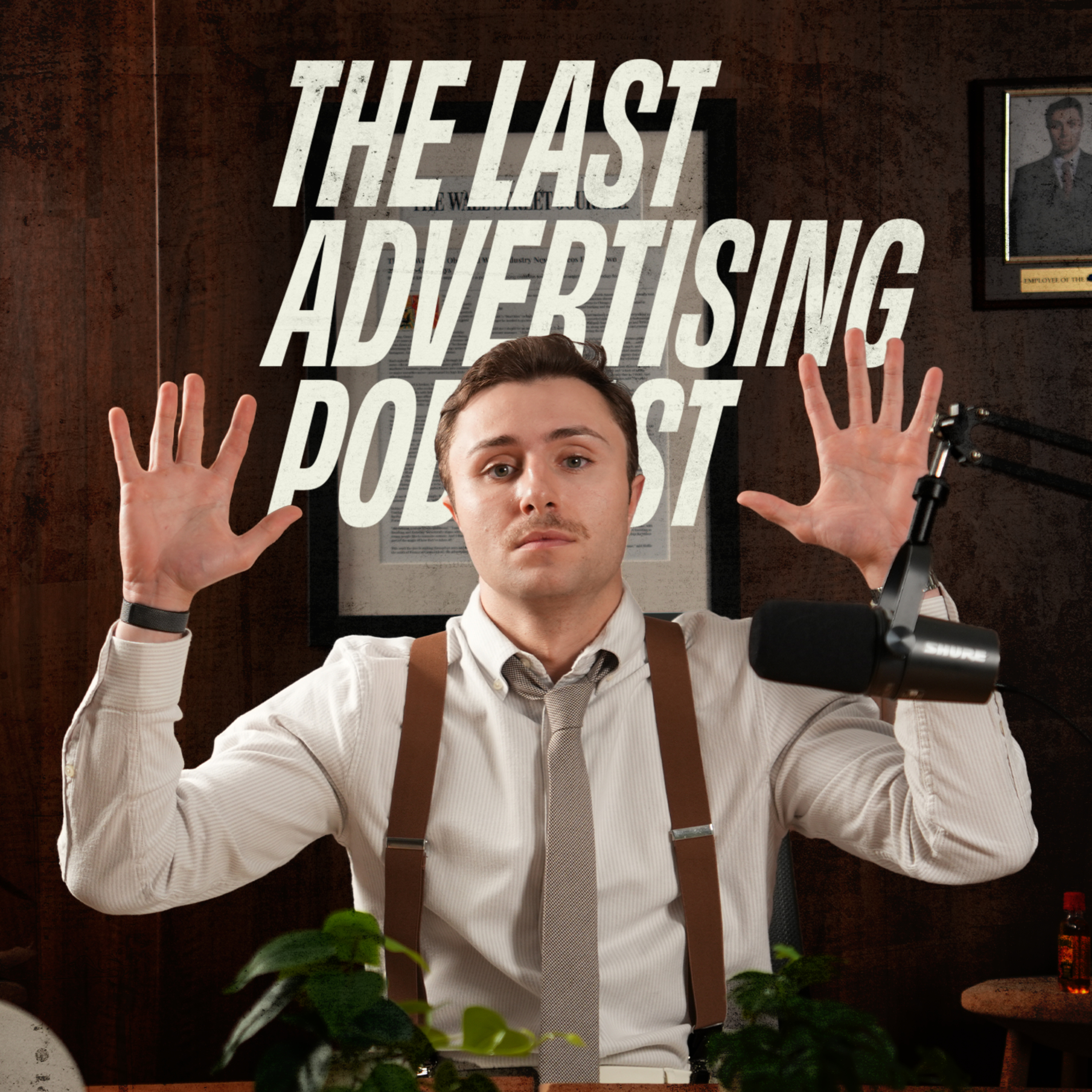
Why Making Things Matters More Than Ever | Jamie Umpherson, CCO, Runway & Runway Studios
33m 17s
Runway is an applied AI research company focused on empowering creators through cutting-edge tools for video, image, and ad production. As CCO, Jamie Umpherson leads a unique creative team that blends diverse professional backgrounds—such as film directors and product designers—into a fluid, collaborative environment. Unlike traditional agencies, Runway operates without rigid briefing or deck-based processes, instead using AI tools to rapidly visualize and iterate on ideas, turning abstract concepts into tangible, emotionally resonant content. This approach emphasizes the fundamentals of storytelling and insight over technical skill, allowing teams to explore creative possibilities in real time. A key differentiator is that Runway’s creative work is deeply internal, focused on showcasing the technology’s potential through short films and compelling campaigns—like the viral spec ad for a watch—rather than purely showcasing tools. Jamie shares his journey into advertising, highlighting that early success came from self-driven experimentation, portfolio building through personal projects, and a deep curiosity over technical proficiency. He stresses that the future of creativity lies in accessibility—removing software barriers—and that while AI accelerates execution, the core value remains in strong, original ideas. For new creators, he advises building a unique point of view through real-world experiences, such as working in bars or designing coupons, and actively engaging with tools like Runway through free trials and student ambassador programs. Ultimately, the most important factor is not technical mastery, but creative curiosity and the ability to communicate compelling ideas.
(upbeat music)
Jamie Umpherson, welcome to the Breaking and Entering podcast.
How are you doing today, sir?
- Doing very well, very excited to be here.
- Hell yeah, you are the CCO at Runway and Runway Studios.
Is that correct, sir?
- That is correct.
- All right, let's, let's frickin' do this.
We're talkin' offline and I ask you what you're passionate
about right now and it's about making things.
So that might be the center of this episode here,
how that can help the next generation,
how that can help people in advertising today.
Let's start off with what you do at Runway.
What is Runway for the folks that don't know?
- Yeah, so for those who don't know,
Runway is an applied AI research company.
We build models and tools that help you make things.
So videos, images, ads, short films, whatever it might be.
And that's kind of what I do all day, right?
I lead the creative team here
and we kind of spend all day, every day,
inside of the tools, making things,
trying to help people understand,
what's possible with the technology today?
- Right, so how does that, for me,
and for the folks listening,
how does it like differ from the marketing team?
Where, or are they the same team?
- Same but different.
So we have a marketing team as well,
but we all, we create all of the creative
that goes out into the world.
So brand marketing, product marketing, events,
all that sort of stuff.
We work hand in hand with the marketing team
to kind of put that all out into the world.
- So do they brief you guys?
And then you guys come up with a creative that follows that,
or is it kind of partnership?
It can go either way to figure it out together.
- A little bit of both.
I've been here now three and a half years and the team
has been growing steadily over time,
but for a long time, it was very much,
we're figuring out as we go from a creative perspective.
- So fair to call it the in-house agency in a way?
- In a way, if that's the easiest way
to sort of compartmentalize it,
but I would say it looks very unlike
a traditional in-house agency as well as any agency.
It's a very unique structure.
- So can we talk about that structure?
Like how does it differ?
Because there's an in-traditional agency,
you have an art director paired up with a copywriter,
and then an ACD or a creative director looking over them,
looking over the best ideas, selecting the best ideas,
selling it to the client.
How does that differ with you guys?
- Well, we don't really have any of that.
And so far as the process.
So again, it operates really differently.
So I come from an agency background,
which I'm sure we'll get into at some point,
but I'm the only agency creative here on the creative team.
We're kind of a mix of all sorts of different backgrounds.
So we have like former feature film directors,
we have former art department production designers,
former product designers, video editors,
sort of a motley crew of creatives
who are just really genuinely obsessed with the technology,
and figuring out ways to use it to do different things.
And so we work as a team very collaboratively.
We don't really have like a traditional briefing structure.
We don't build decks, you'll never build a deck
if you work at Runway, which is kind of a lovely idea.
- That's a campaign of its own.
- Yeah, it has to be sort of a high thing.
- Yeah, I am hiring right now.
But yeah, no, I think the nature of the tools
is that they allow you to be much more fluid.
It's less of like a linear pre-production,
production, post-production cycle.
You can kind of work through stages
and kind of come back loop around
when you find an interesting new nugget along the way.
And so we tend to try and stay as flexible
as we can in the process of putting creative out
so that we're not locking into something
that maybe, you know, bearing out in the process itself
isn't really doing the work that you wanted it to.
- Interesting, let's kind of hover here for a second
'cause I think this is, this is probably,
like understanding how Runway uses the product
and is probably indicative of how agencies
will operate one day.
Maybe, maybe not.
But like you have a creative team.
You guys are all the experts with the tool itself,
you know, it's probably finding the, you know,
testing out the new product before it's released
to the public.
So it's like, do you think, like, for your,
what's working for you guys, we'll clarify that way.
So what works with your team is like,
it's like one person interacting with the software.
They're kind of like one-on-one with each other
then they kind of, you guys kind of come back collectively.
Can you help me understand?
- Yeah, I mean, you can kind of think of it
like the traditional ideation process.
You get briefed with some problem you're looking to solve.
And I think traditionally most creatives,
myself included, you know, back in time.
You spend time either like interrogating ideas
in your head wondering can that work and that not work,
you know, jotting down in your notebook,
trying to figure out how this thing actually extends
from that little kernel of an insight
into something larger.
But what you can do now and how we approach it
as a team is you take that idea
and you start to produce it with the model, right?
You start creating imagery that might represent moments
in that script or you start generating the actual footage
and building out a rough cut.
And in that process, you're doing what you used to do
in the abstract of your mind, but you're doing it visually.
You're actually able to react to the idea on a screen.
And then if it's working great, if it's not,
you go back and you change.
- Right, 'cause in the traditional sense,
you would not start crafting an idea that wasn't approved
or you might do like a quick little mockup,
a sketch of some sort, even sometimes just a piece of paper.
And then you would show it on a Google slide
or actually like the actual tactile paper
to your creative director and that's around.
And then you'll know from there and after it gets a green light.
And why I think they, we've done that for so many years,
it's preserved time.
And like let's not go all in on a half-baked idea
that's not approved yet and like go and make it
'cause it's expensive, it takes time here.
But with runway, it seems like now that you guys
can just make it so quickly.
And it's not like an obstacle.
- Yeah, I mean, you can, in a way,
at this part of the process,
think of it as like a translation tool, right?
I think so often when you're trying to share an idea,
if it's a truly novel idea,
it's hard to communicate in a script or in a mockup, right?
It's really hard to get the entirety of an idea across.
And so what these tools allow you to do
is visualize it very closely to what you have in your head.
And so there's less lost in translation
as you share that idea,
whether it's with your creative director or your client
or your production team,
you can really utilize the tools to just be a translation device
between like the abstract thing floating around
and the thing that you actually wanna go and create.
- I love it.
So then that makes sense, then.
You have so many different perspectives on your team.
Not you said you're the only one from an agency background.
You're the CCO, which I like to hear.
Which makes sense to me.
So when you're reviewing the ideas,
then you can then pick which one you wanna go for
with and let's put more resources behind that.
Is that correct?
- Yeah, go forward, go backwards, go sideways.
Again, you can really get in there
and you're already, the truck's already down the road, right?
And you're now just navigating
which streets you wanna actually pursue to get to the end goal.
- I got it.
Yeah, no, this makes a lot of sense to me.
Anything else that might surprise somebody
that's working in an agency.
So already kind of more so low work,
different backgrounds here.
It is an internal like function.
So you're not doing this for external clients.
You run ways the brand.
So everybody speaks the brand language.
So that's where it differs a lot too.
But what else might surprise somebody working
in a traditional ad agency?
- Well, I think we do have individuals
who are creating things on their own,
kind of running as a solo team,
but there's also a lot of collaboration as well, right?
I think that's where a lot of the great stuff comes from
is from different points of view, friction, pushback,
working through something together.
And so we do that a lot internally as well.
And that tends to lead to the most interesting work.
We do also work with brands and studios
and different artists and filmmakers
to help them understand where to bring the tools
into their pipeline.
But primarily our focus here with runway,
working on the brand stuff,
and then runway studios more like the collaborations
with external partners.
- Okay, so you do work with external partners.
I stand corrected.
That's good to know as well.
So what have you guys made that you're the CCO,
you're overseeing the brand marketing materials,
the content that comes out for the brand on behalf of runway?
What have you guys done recently
that you're really proud of?
That's a good personification of what you all do?
- Yeah, I mean, we don't really do a lot of traditional work.
You know, we're doing product marketing,
we're doing all that stuff.
But what we tend to spend our most of our time on
is just utilizing the tools to create meaningful things,
short films, episodic content, things like that.
Just ways to showcase what the technology can actually do
in the hands of someone who's extremely talented,
has a point of view and knows how to use the technology.
And a few weeks back, we released a spec ad for a watch.
I think you covered it on the live show.
Thank you for that.
It was a spec ad for a watch.
And the concept there was pretty simple,
but really visually powerful.
It was, you know, you twist the dial on your watch
and you can change your age.
and it followed the story of a man who had the watch moving through life, forwards and backwards.
And it was just a really beautifully crafted spot. It was just a good ad. It wasn't really,
it wasn't selling runway. It wasn't selling AI. It was just a great piece of storytelling
with a really strong visual device. And I'm really proud of the team for that. That's just, again,
utilizing the tools in service of, you know, the creative ask. And what was the ask?
The ask was show it, you know, make a commercial, make a 30 60 second commercial using the tools
inside runway. That's the brief. And, you know, two weeks later, no, no, sorry, that one was
done in a day. You have yourself a little spec ad that I think it's over 113 million views now.
Yeah, is that like just showcase how awesome the product is with an ad? Is that like the brief like
a lot of the times like just play with it post something like showcase how amazing this the runway
software is? Is that the brief most of the time? We get specific on, on different asks. So if we
want to talk to marketers, advertisers, show them what they can do with the tools. That's the
specific brief that's who you're talking to, speak the language of what an agency wants to be
doing. Make the thing that they want to make that maybe the budget doesn't allow for or the timeline.
And so that's how that one came to be. And then we have others where we're creating short films
to try and showcase, you know, what filmmakers can do. Summer more VFX heavy summer more like
dialogue driven character driven. And so, you know, always looking for opportunities where we can just
not even talk about the tools, but just show what you can make with them is really the important
thing and where we spend a lot of our time as a team. It's a fairly it's actually a fairly simple
process. It seems like just identify the target audience of who would purchase runway or a
subscription, whatever it might be. Find that target audience and show the tool and how it works
and what they can create with it. Is that correct? Yeah, I mean like when I talk to all my agency pals,
I'm always curious to know, you know, what tools are you using? Are you using any? How are you using
them? And how are you thinking about them? You know, I think we're still very early in all of this
and definitely I think there's so much that will change with the technology itself, but also just
how we're bringing them into the process. And so, you know, I always like to be able to show things
to people that look like something they would want to create instead of just showing them
a sizzle of all of the things you could possibly create, if that makes sense.
Yes, absolutely. And yeah, I want to get into how you became at this role here, as the CCO of
this of this kind of of the of the lab, if you will. So let's kick it back. Like let's talk about
how you broke into advertising because I know you have an agency background, Jamie. I wanted to
learn how at what point did you say to a young Jamie to yourself, I want to work in advertising.
It was probably later than most. I was my mid 20s out of university. It was 2007, 2008, so not a
great time to be looking for a job. And I didn't really know what I wanted to do. And I didn't actually
know that advertising was a thing I could get into. And a pala mine, Omeda Medi, who I think is
a friend of the show, he was just getting into it. And he said, you know, I got this this gig as a
copywriter. And back then, I was like, oh, like, like legal copyright, which I don't think I'm the
first person to think that I thought that at least I hope not. Okay, great. Strengthen numbers here.
And so that kind of opened my eyes to this whole avenue of opportunity because I was always,
you know, as a kid in school, I was always making little videos, claymations, skits, things like
that, ways to get around like writing an essay or doing an assignment. I just wanted to make things.
And so when I found out about, you know, advertising as a pathway to do that, I got really excited,
but I didn't have any of the credentials to break in. I didn't go to portfolio school. I didn't
even know that portfolio school existed. But through through me, I kind of realized that there was
this whole thing, found a couple books to read, met a couple people who were from the agency world,
kind enough to to give me some advice. And they were just like put together a portfolio, put
together a book of ideas and just start sharing it around. And so I read the books. I listened to
a lot of Dan Balser's podcast. Don't get me started. I think we talked about that. And that
was kind of my education. And I started putting together a portfolio. I found like a photographer
on Craigslist offered to be their assistant in exchange for them shooting some spec ads for me.
And it was tough. You know, it was tough to break in, but eventually did. What did you, so
what did you study undergrad? Humanities. Humanities. Yeah. And so I know me broke into copywriting. He's
the CCO McKinney today. That's right. For folks that need the context there. And he said, you know,
this is a cool industry. You should check it out. And you're like, okay, I'm in, but I don't
have the credentials. So I need to make a portfolio. I need to study up. I need to nerd up.
You read the books. I'm assuming like, hey, Whipple, squeeze this. Like, yeah, that's like the
classic and copy. And did you narrow down our director or copywriter early on? That was the
really big question for me. And when I still haven't answered, by the way, I don't think you have to
anymore. I don't think you're good. And actually, like, you know, that's part of what I think actually
makes for the most interesting creatives in general, but especially now with the tools that are
coming to be. Yeah, I don't know what to do now. Like, I used to tell, you know, in 2020 when I was
breaking in, it was still pretty cut and dry. Like, you're either an art director or your
copywriter or your strategist or your account. And that's what I studied. And that's what I know.
Like, I even worked at a portfolio of school. And that's what they taught to. But I don't know
it to tell these young college students that are about to break into the industry. It's like,
should you specialize? Like, should you pick a lane? Like, I still kind of have that bias of like,
you should still claim something. But I don't know. Like, what do you think?
I mean, I was really fortunate in so far as, so I entered up calling myself a copywriter even
though I was very torn between the two. I felt like I had strengths in both sides, but I wasn't
like the best at either. And I got really lucky in my first internship. Or I got paired up with
a partner who would end up being my partner for about 10 years. Maria Risha, she's amazing.
And she kind of had a similar thing. She was a writer previously, but decided to go
forward as an art director. So we got paired up very early. And we were both like a kind of,
yeah, it was a bit of a mix up. And, you know, we had a really amazing working relationship where we
could kind of, you know, swap assignments throughout a project. I would do a little art direction.
She would do a little writing and kind of back and forth. And that allowed us to both sort of hone
the totality of the skill set, which I think as you progress through your career, it happens
naturally for everyone. And especially if you're going to move into a leadership position,
it's really important to understand both sides of the game. Yeah, you won't get, you won't be a
creative director if you don't understand both sides. It doesn't mean you have to be an expert
in execution on both sides, but it does blur together every creative director, every cco should
be able to speak the language of both. Exactly. Which I think to answer your initial question,
like what should, you know, the next generation be focusing on in terms of where to spend their time
and focus? I think it's just the fundamentals, right? It's not about being a really amazing writer
with perfect grammar and understanding of, you know, structures and all that stuff or an art director
who can push pixels in the most beautiful way. It's understanding what makes for great stories,
what a great idea looks like, what an image, the difference between an image that is on a screen
and an image that moves you. And that goes back to just the fundamentals. And I think that's going
to be more applicable now than ever, because it's always going to come down to the idea and the way
you're able to express that. Yes, I love this. Because back in the day, it was usual that the
copywriter was the idea person and the art director was the one that you would just execute the idea.
Like that was like the initial, like burn box, 60s, creative revolution. Copyrighters came up with
all the ideas. But now it's like everybody needs to know how to, like that's the main thing to
focus in on. And like what is a good idea? What's the insight? How can we make this into something
that's a big idea or good for the specific activation? Whatever it might be, whatever the scale of
it is, those fundamentals matter so, so much. And there are so many books that speak that truth
forever. Like, hey, Whipple, for example, still you can read that and you can get the fundamentals
of how you concept, how you come up with a good idea. That doesn't go away. It's just the execution
now, which is kind of liberating in a way, where now if I'm a student, I can spend more time looking
at the best ads, all the archives, all the DNA, D annuals, and like really nerd up about the history
and then think about my taste and spend less time watching YouTube tutorials on these other
softwares. And like, that's where a lot of the barriers to entry actually came in with a craft
and execution. Am I thinking the right way?
way, Jamie. Absolutely. I mean, I was deathly afraid of
illustrator and in design. And that's why I didn't think I had the
ability to be an art director was because there was that
technical barrier for me. I was amazing in Photoshop. And I
like to think I had pretty good taste. But it was the fact that
I needed to be proficient in illustrator and in design on
every application I saw, where I was like, well, I guess I'm
not going to be an art director. Yeah, I think about all the
people, you know, years ago, there's like only a couple of
years ago. And all the years before that, that wanted to be
an art direction, but couldn't because they weren't proficient
in those tools. Even myself, like, I, you know, knowing what
I, you know, if I had the tools today, like a runway, maybe I
would think about art direction, maybe I would think about
copyrighting a little bit more, because I've always found myself
a creative person, but I never dove deep into those tools to
learn it. I felt like I was so disadvantaged, discovering
advertising, like in college, where some of these people were
editing on their, their, their family computers, since they
were growing up, just because they nerded out on iMovie. And
then they learned some other tools, then watch YouTube
tutorials. I felt so disadvantaged. I never even considered it.
Yeah, I mean, that's kind of what it's all about, right? Is
like, removing those barriers, making it much more accessible
to bring an idea to life, bring it into the world in a way
where others can actually react to it and engage with it
without needing to spend months or years learning the
software. Yeah, yeah, I think the big danger, right? That we
hear on LinkedIn and all that is that it replaces the
fundamentals, like, and it could, like, I can use an AI, I can
use chat GBT to come up with an idea for an ad. And that's
the, that's the big warning. It's like, you can't skip that part
like for the most part. Yeah, I mean, I think that's true
without AI in the mix, right? We've seen it many times over,
you know, someone looks to an annual and a word book and they're
like, there's an idea. Let's make that. It's like, it's, it's
the same thing, like you, you need to have a point of you, you
need to have an interesting idea for something to resonate. And
I don't think AI changes that at all. If anything, it makes
the idea most important. If you want to go and use chat GBT to
come up with an idea, you're probably not going to get
something great, but you could use chat GBT to bounce back and
forth and ideas and discover something in the process. But
ultimately, it's going to come down to you curating, seeing the
little kernel of something building upon it, choosing which
directions to go. Those decisions aren't made for you. And if
they are, it's probably not going to be great. And so jumping
back to your role today and the environment that you're
overseeing a creative environment, how do you still foster
the fundamentals of a great idea? I know you're probably
hiring people that know it innately. They've discovered it
throughout their career, and they're in their different past
lives, past careers. But like now that they're in runway, and
they're immersing the tools, like for me, I feel like I might
get tied up and I might forget the fundamentals. So what are
you doing to kind of reinforce the good idea? I mean, for
me, I'm always looking for people who are just incredibly
curious creatively. They're always looking to try new things,
push in new directions. They have a really interesting
point of reference that they're coming from. For me, my
mentality from trying to break into advertising through my
whole career was my portfolio was even once I had like pretty
good client work, I was mostly featuring projects that I just
went and made on my own, because it was the work that excited
me. I'm a really strong believer in like making work for
yourself. And if you do a good job at that, you're going to
find an audience. Obviously, you're going to have to answer
client briefs and things, and that's all well and good. But if
you're going to present yourself to the world with a portfolio,
for me, what I always look for is, do you have a point of
you in there? Can I see the way your brain works? Can I see
what directions you choose to go? Whereas everyone else might
go the other way? To me, that's exciting and interesting. And
to me, that's the kind of individual, that's the kind of
creative who thrives with these tools. They just have that
curiosity. And now they have the ability to actually like pursue
those things. Right. So yeah, yeah. So breaking in today, what
would you do, Jamie, knowing what you know now, the tools that
exist today, all your advanced knowledge and runway, and
making and creating good ideas, like you just graduate
college now, it is 20. It's right now, we're recording this
on May 11th of 2026. And I just went to a graduation. What
are you doing to build your portfolio, Jamie? I would give the
same advice that I got with the first person from an agency
who met with me. And they looked at the book that I had put
together, which was not good, objectively not good. And
they advice that they gave me was go live your life for a
little bit, go get a point of view, go travel, go read, go
work another job, like develop a point of view that you have
on the world, and then decide what kind of work you want to
create. Where do you want to spend your time and your energy
and where can your point of view make interesting work? That's
the advice that I got. And that's what I did. And that's what I
would tell people coming to college today. What does that
mean? Like go like what am I what if I need what I'm playing
devil's advocate? I'm poking here. So riddle me this college
that parents pressure got to get you know, you don't have a
full-time job yet. What would we pay for? What do what do you
would you do there? You don't have a for you're going to go run
around? I guess like what did you do? What did I do? What do
you say in response to these pressures? Well, I managed a
bar for a little bit, which was a time. And then I designed
coupons for three years. I listened to Dan Balcer in the
morning. Well, exercising. And then I would go to a company
called save.ca. And I would design coupons for eight hours a day
for toilet paper, laundry detergents, et cetera. And in the
nights, I would read the books, get brushed up on the
fundamentals. So you know, I was like in a design role. How many
coupons did you make? Oh my God, I made so many coupons. So so
many coupons. They go like everywhere like where I get my
coupons texted to me and emailed to me. It's just like, here's
a link for 20% off at Chipotle. But you're living in the
brave new world of coupons. I come from the generation where
our our coupons were, these are actually pretty innovative at
the time. You could select the coupons you wanted as a
consumer online. And they would get printed and mailed to you
directly. It's very innovative stuff back then. That's
hang. That's pretty good. I remember those coupon books. I
would get one of those like a saver. Yeah, yeah, there was
actually some good stuff in there. I would like flip flip through
there. Absolutely. Yeah. But that's what I did. You know, like I
had to make money. I had to have a job. But it allowed me to get
a little bit of perspective on what I didn't want to be doing,
which was designing coupons. It allowed me to spend time
reading the books, getting the fundamentals, you know, living my
life as a mid 20 something and putting together a book very
slowly, finding people on Craigslist to help me shoot an idea,
begging my friends to, you know, be models in it or help me draw a
frame that I couldn't get. And then I just started hounding
agencies trying to get jobs and pitching them ideas. And
eventually I got my internship. How did you did you feel? Well,
how do I want to phrase this? Like, you knew you weren't going to
be designing coupons forever, right? I mean, for a moment,
I thought I might, but yeah, how do you deal with like the
deflation of that? Like, if you know, this isn't right for you,
you know, you have better taste or you're working on some higher
goal there. Like, how did you develop the patients and the
consistency and not give up and go into another industry? Like
sales or something or like, I don't know. I mean, you know,
I think it takes a certain kind of person to work in
advertising to begin with, right? You need that level of
conviction, that grit to push through. And, you know, you're
faced constantly with rejection. This isn't an easy field to
be in. Like, it's, it's a bad choice if you want a cozy life,
you know, you're constantly being told, no, that's bad. And
constantly being pushed to be better, which either it's going to
work for you or it's not. And I think in the context of that
first job, I was doing that for myself. I was saying, this is
not good enough, I can be better. And so I was doing the job,
I was honing my design skills. Look, they were coupons, but
I was making them look pretty good. It's like the 10,000 hour
thing that you're getting so many reps in on each little
design. Like, exactly. It's helping you for sure. And so
yeah, it just, it's a matter of time and conviction that, you
know, you're going to be able to get to where you want to be.
And it just takes takes work. Yeah, I hear so many people, you
know, they want to break into our direction or copywriting or
content creation, whatever it might be within an agency. But
they don't have the portfolio to pull it off right now. And
there's a couple of things that you can do. You can go to
portfolio school, investor of ECU brands and are getting a
master's degree. That's the money and time that's two years,
one to two years. That's one route. The next route is you can
break into an agency on the account set. And then, or you
can work on your own and, you know, find a sad job, manage a
bar, work, you know, work on coupons. But for the, besides,
a portfolio school one, you know, you're working, like, you're going to have to work your
nine to five or work a job, a day job of some sort. And then in addition to that work
on your portfolio, it seems to be the same case today. Like, you have to put in that extra
work to get to where you want to be.
I think so. Yeah. I think now you just have tools that can make that process easier. And
you can scale the ambition of your idea. You know, I was working with an eight and a
half, eight and a half by 11 piece of paper and pencil drawings to try and communicate
my ideas to my hopeful creative directors. Whereas now you can, you can create a incredible
high fidelity live action animated, whatever it is, spot that represents the idea. Ultimately,
you're going to be judged on the idea just like I was when it was a pencil drawing on
a piece of paper. They didn't care about the execution. They wanted to know, how does my
brain tick? Do I have unique thoughts? Can I find the interesting insights? It wasn't
about the drawing. But today, but today, it seems like the pressure is on for beautiful
execution. In addition, I think it's just like the pressures of, well, the job industry
is a little tough right now. I don't think anybody's denying that. So it does put a little
bit more pressure and basically, yeah, the eyesight on the execution itself, in addition
to a good idea. So having these tools could help that too. Yeah, I think it's all about
how do you differentiate yourself from every other portfolio that's getting submitted,
right? And same was true back then. Ultimately, the idea is the thing that's going to stand
out. Do you have a unique point of view? Do you have a unique insight? And then how
are you choosing to communicate it? You know, now you got the tools to really push it
and yes, there's definitely going to be an expectation that it's going to look great.
It's going to reflect some level of taste discernment. But ultimately, it's still going
to be about the idea. I love it. Jamie, with Runway, what should students, recent grads,
people that are just getting into the software, where should they go? And is there like a
free trial? How does it work for the folks that are just trying it out for the first
time? Yeah, you can head to rumwayml.com, sign up for a free trial. We also have a really
good student ambassador program with a lot of schools. So you should definitely check
to see if your school is on that list. And if not, you should reach out. And we have
a really great community of creative partners, we host events, but ultimately just get in
there and start experimenting. Again, like it's less about skillset that you're bringing
into it. And it's more about mindset. Do you have that curiosity? Do you have that drive
to want to try and figure things out? And if you have that, I think A, you're better set
up to be a really great creative in the long run and B, you're going to be better set up
to figure out how to use these tools to tell stories, bring your ideas to life. Golden.
Anything else we miss that we should have brought up, Jamie? I think that's pretty good.
I just, yeah, it's, it's good to finally make it on the pod. You made it. You made it.
Made it. And hopefully, but balsars listening to this, he's a friend of the program. Love
that podcast. It's so it all comes full circle. Yeah, congrats on all of this. This is, I
love to see the next generation bringing it back. Thank you, Sarah. Thank you. Awesome.
All right. Thanks, you know.
Podcast Summary
Key Points:
Runway is an AI-driven creative company that builds tools enabling users to generate videos, images, and ads, with a creative team that operates collaboratively and fluidly across stages.
Unlike traditional agencies, Runway’s structure combines diverse creative backgrounds—such as filmmakers, designers, and editors—into a flexible, in-house creative unit that prioritizes experimentation and iteration over rigid linear processes.
The core value lies in using AI tools to translate abstract ideas into tangible visuals, reducing miscommunication and allowing creatives to explore, test, and refine concepts rapidly, while emphasizing fundamental storytelling and insight over technical execution.
Summary:
Runway is an applied AI research company focused on empowering creators through cutting-edge tools for video, image, and ad production. As CCO, Jamie Umpherson leads a unique creative team that blends diverse professional backgrounds—such as film directors and product designers—into a fluid, collaborative environment. Unlike traditional agencies, Runway operates without rigid briefing or deck-based processes, instead using AI tools to rapidly visualize and iterate on ideas, turning abstract concepts into tangible, emotionally resonant content.
This approach emphasizes the fundamentals of storytelling and insight over technical skill, allowing teams to explore creative possibilities in real time. A key differentiator is that Runway’s creative work is deeply internal, focused on showcasing the technology’s potential through short films and compelling campaigns—like the viral spec ad for a watch—rather than purely showcasing tools. Jamie shares his journey into advertising, highlighting that early success came from self-driven experimentation, portfolio building through personal projects, and a deep curiosity over technical proficiency.
He stresses that the future of creativity lies in accessibility—removing software barriers—and that while AI accelerates execution, the core value remains in strong, original ideas. For new creators, he advises building a unique point of view through real-world experiences, such as working in bars or designing coupons, and actively engaging with tools like Runway through free trials and student ambassador programs. Ultimately, the most important factor is not technical mastery, but creative curiosity and the ability to communicate compelling ideas.
FAQs
Runway is an applied AI research company that builds models and tools to help people create videos, images, ads, and short films. It focuses on making creative technology accessible and practical for users.
Runway’s team is a diverse mix of creatives with backgrounds in filmmaking, design, and video editing. Unlike traditional agencies, they work collaboratively without rigid briefing or deck-based processes, emphasizing fluid iteration and shared creativity.
Runway works on both internal brand marketing and external collaborations with artists, filmmakers, and studios. The creative team primarily focuses on showcasing the technology’s potential through compelling content.
The tools allow creatives to quickly visualize ideas, test concepts, and iterate without long pre-production cycles. This reduces time lost in translation and enables more flexible, fluid creative development.
As CCO, Jamie Umpherson leads the creative team and ensures that creative work aligns with the brand’s vision. They oversee the development of short films and spec ads, emphasizing storytelling and strong visual concepts.
Runway values curiosity, originality, and a clear point of view in creative work. The focus remains on the quality of the idea, not just execution, ensuring that even with powerful tools, strong conceptual thinking is central.
Chat with AI
Loading...
Pro features
Go deeper with this episode
Unlock creator-grade tools that turn any transcript into show notes and subtitle files.
 PodcastTranscript AI