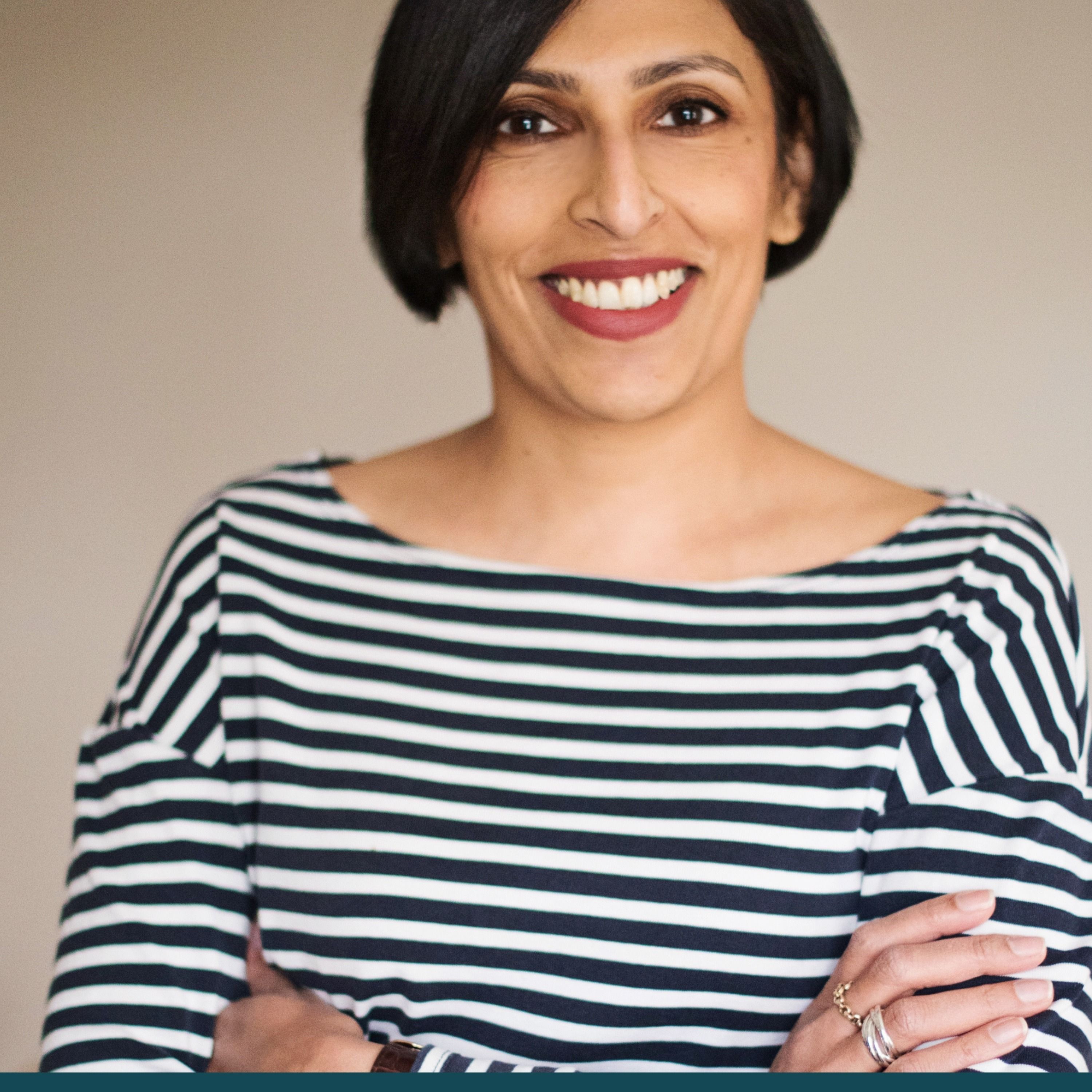
In this episode of the Curator Salon podcast, host Gita Joshi explores how artists in her community use AI-generated images as reference tools for painting or collage, sourcing specific elements like plants or leaves. She highlights that this practice improves vocabulary as users learn to describe styles, moods, and perspectives, which also aids in discussing art more confidently—a theme central to her upcoming book, *Framing the Invisible*. Joshi addresses criticism that AI users are merely “software users,” not true artists, drawing parallels to past technological shifts like digital photography and Canva, which expanded access without devaluing skilled professionals. She argues that the title “artist” requires no formal qualification, as art is defined by ideas embodied in material, not the tools used. Joshi challenges listeners to examine why others’ use of AI might trigger feelings of inadequacy, suggesting such reactions often reflect personal insecurities about one’s own practice or business. She also cautions against judgment over how far others take AI (e.g., replicating generated images in oil) and questions whether these debates are meaningful distractions from more important issues. Ultimately, she encourages artists to focus on their own goals and autonomy, rather than getting roped into unproductive conversations.
Hello and welcome to the Curator Salon podcast. I'm your host, Gita Joshi. And in this episode I wanted to talk about AI, AI images. And in my art community, in my membership, earlier in the week I was talking to some of the artists and they had been using AI to generate reference images from which they would then paint or produce collage. And I thought this was a really excellent way of using AI as a tool to source those kind of particular things that you might be looking for elements in a painting or artwork that you're already producing. And then you ask it to make, I don't know, like images of a certain plant or leaves or something like that, that you wanted to put in that perhaps you didn't have reference images for. So this is how artists in my community are using it. I thought this was a really interesting way of using AI, you know, AI generated images. And as we know, it has really improved over the last sort of 12 to 18 months. But of course, it's all about the quality of the input, right, the prompt that you give it. And this is just something that we kind of basically get to fine tune and develop. One of the things I really like about this is that it is improving people's vocabulary. Just because they have to give these instructions into AI, they have to start now understanding styles and moods and references. And basically just like this whole, you know, vocabulary that they had often been resistant to when it came to describing their work or talking about their work. And if you've been following me on social media, I have a new book coming out next month in May called Framing the Invisible. And this book is about how we see and understand art. And one of the purposes of this book is to help people actually understand what they're looking at, right? They might be sort of symbolism or motifs and metaphors and things like this that are hidden in the work, how the viewers experience is developed or, you know, that engagement exists because of the experience that the viewer brings to the painting or the artwork itself as well as, you know, knowing an artist's intent, how that can shape the viewers experience and so on. So all of this is really built to develop everybody's confidence around talking about art. I think a lot of times people are shy about talking about their work because they don't want to say the wrong thing. And one of the things I hope for this book to do is actually share that you don't get, you know, there is no wrong thing to say, right? If it's only like your knowledge of art history might be limited, but if you are coming at it with like what it makes you feel or what it makes you think of or what it is that you are noticing in the artwork and things like that, there's no wrong answer. And so with this comes this developed vocabulary as I say and going back to AI, this is also something that we get to, you know, use when we try to generate AI images for whatever purpose. And this is understanding styles and genres and angles and perspectives and all these sorts of things that maybe, you know, if you were getting a picture of a plant but you wanted it from a very particular angle or you wanted it in semi sunlight or something like this, right? You have to now start using words to describe what it is you're looking at. And I think that is really helpful for artists and, you know, even those art enthusiasts and people that are maybe coming to your studio to talk about art or see your work or buy your work and all those sorts of things as well. So that is what I did a reel about a few days ago and got some really interesting comments about this and that is what I wanted to riff on here because my answers to it are longer than I can put in a three minute reel. So let me just pull up some of the comments I got on it and I think they are really quite interesting. So one person says, "I don't think many artists are again using AI as a tool the way you describe. The problem is most artists have with AI is when people use it as a generative platform, pushing fully AI-generated images and video out as art." And my question to that is really like, why is that a problem? Like, why? And they go on to say there's also a bit of heartburn in the artist community with people calling users of AI software artists, they're software users and I really like that phrase right? You're just using software. You're not an artist. So here's the thing, like, you know, one of my thoughts on this is this was said when photography moved from analogue to digital, you know, that those people were like, "Oh, it's not real photography if it's not analogue." Then when everybody got, you know, we started getting really great cameras on our phones and iPhones and these things have developed and suddenly everybody thought, "Oh, we're all photographers." Well, no, we just had this resource, we had this tool. I do think it actually improved a little bit of visual literacy and things like that because, you know, somebody that is making fine art photography will all so understand that, you know, whether it's about light and dark or how that image is cropped in things like that. And just because we can take images on our phone cameras, doesn't necessarily make us great photographers, we just have a tool. And then it happened again with things like a software called Canva. I don't know if you've ever used that, but it's a really great software. And that's when, "Oh, everybody thinks they're a graphic designer." Well, do we or do we just actually have a tool? Because, you know, I have hired photographers and I have hired graphic designers in the time that all these things have been, you know, these software have been available. So, you know, if you're just making a on-sale now kind of a graphic post for your, I don't know, social media or something, then maybe that is what you need. But again, you know, you started kind of recognizing color combinations and you started understanding which fonts pair well together. So, again, there's a bit more to it, right? And, you know, we know that graphic designers have a very particular skill set. There's a quite a famous kind of commentary or meme or I don't know what you would call it. It kind of goes around social media every so often and it's about the White House, you know, where the press secretary stands in front of the White House spokesperson. Sorry, the White House spokesperson stands in front of a sign. And the kerning, which is the spacing between the letters, is not as it should be. And a lot of graphic designers kind of notice this and actually take, you know, just very uncomfortable with it and see what a, you know, rubbish kind of piece of graphic design that this is that's representing this whole nation. So, you know, that, you know, graphic designers, they, you know, they will know about kerning and widows and orphans and things like this, you know, these sorts of layout rules that there are because graphic design actually does come with a lot of rules. So, if you only know how to use Canva, then, you know, you've just got competency in a software. You, I don't think you should be going out there calling yourself a graphic designer. And so, you know, my point is that we've seen these sorts of tools appear in the public domain, whether it's of photography as I've said, the graphic design and all these sorts of things that don't actually, you know, they kind of add more resources into the marketplace. But they don't actually take away from, you know, the actually original or the more formally trained graphic designers or the photographers and so on. Now, something else that, what was that comment? Let me just go back and find it was yes, about people calling themselves artists in inverted, not inverted commas, what'd you call that? Air quotes. So, people calling themselves artists, we have to zoom out like I know that I'm talking to a community of visual artists and so every cell often I will use this very specific phrase visual artist because we're producing visual art. But there are other people that call themselves artists like pretty much the whole kind of acting and film industry. All those people call themselves artists whether they are writing or they are you know producers or directors, actors, you know dancers, recording artists like musicians, all of those also refer to themselves as artists. So, you know, we're not the only people calling ourselves artists but and this is a title that anybody can actually have for themselves if they choose to call themselves an artist, that's it, right? There's no qualification, it's not like being an architect or a lawyer or something where you need certain credentials and formal training. And one of the things that really comes up for me in this part of this comment is like what is that that is hurting you? The other people that maybe they can like just generate, put in a great prompt because they know how to do that, they have a piece of output and then you know they post that on Instagram for example as a piece of artwork. Like why does that hurt you as an artist and often times something like this can come down to somewhere you don't want to go, right? I'm going to talk about it, it's like yourself worth because you think that you have put in the hard yards and you've had the struggle and you've wrestled with a composition and the you know the resolving the painting and all those things and now somebody can like put in a great prompt and turn out an image and you know whatever, right? Stick it on a mug and sell it on print on demand on Shopify and monetize it faster than you might be able to sell your painting. Like that's just a choice that they're making. So you know we have to look at like why why why does that hurt like because they they haven't done the hard yards that you have.
Like, I don't know. And why is this a struggle for you? Because if all these things exist, some people do call themselves an artist, and then they'll put, like I said, designs on mugs and t-shirts, and a way they go. So understanding, maybe even sometimes just making it hard for yourself by getting into these discussions of like, well, they're not an artist because they haven't, you know, had 20 years of struggle because you've invested in your craft and fine-tuning it and, you know, art school, debt, or whatever you've got. Like, why is that? You know, these are just choices you made, right? And the choice you have at this point is, like, to not pay attention to those people that are producing AIR and maybe even if they're monetizing, if they are monetizing it, again, like, if that's a trigger for you, like, what is it? Like, is it you not showing up fully for your business? Is it because you can't actually articulate what it is you do? Or, you know, whatever it is, right? You don't want to actually show your work or you don't want to build an audience around it or you don't want to talk about it. Like, there's always going to be something back, coming back to you, unfortunately. This is a reflection if that is kind of triggering to, you know, refer to these people that can, you know, turn out artwork, you know, just by having great prompts and things like that. They're still not going to have necessarily the ideas embedded in the work. I saw a, a real the other day, actually, by, friend of mine, Gary Mansfield. He has a podcast called Ministry of Arts, which you should go and have a listen to. And he was interviewing Maggie Hamlin. And I think the question was, like, what is art or something like that? And in this episode, this little clip I heard, she basically quoted, I think, an art school tutor. So it's not even her own opinion. An art school tutor who had said something about the difference between arts and craft. And art and craft. And crafts is useful. And she said in this real, so it kind of assumes that art is useless if, you know, craft is useful than art is useless. And I don't agree. And it was interesting that she was quote, you know, like this woman's like in her 70s. Like why is she quoting somebody that said this to her 50 years ago? And you know, you'd think with a career of an art, she would have had another opinion. But anyway, you know, for me, art is ideas embodied in material or ideas given visual form. And this thinking is taken from Roberta Smith. If you don't know who Roberta Smith is, she's an excellent writer. And she's also known as Jerry Salt's wife. But the idea of ideas embodied in material or materials embodying ideas is way more interesting to me. And again, that is something that really comes from the human having the idea that they now want to put into visual form. And so, you know, yeah, maybe you could like, you know, reverse engineer that to create AI-generated imagery. But it's not a thing that can be taken away from you. Like that idea that you want to present about-- I don't know, let's say it's about the landscape, or the open environment, or something. A particular perspective you have on it. That is still yours. And that is what, in my opinion, makes you the artist. Because, you know, another place that we've had this kind of conversation, or is it really artists, like when artists use the ready made, right? We see it with Duchamp back in the day. We've seen it with artists like Mona Hadoum. And so on, or when artists outsource the production of their work, right? Anishka Poor does this. Kendo Wiley does this. Jeff Coons, for example. And, you know, they're outsourcing that the fabrication part of some of their work. That doesn't stop them being the artist, because they're the one that had the idea. So again, that is something that I really want to kind of get across in this episode. OK, and then there was another bit I wanted to share my thoughts on as well. So in this comment, would you say that if you are using AI as to replace or augment their imagination? And I don't know if I've said it already, but this, with my view on this, was like, you know, everything that we're consuming, every new story that we pay attention to is augmenting our perception or our imagination. So when you see a horror story about, you know, tariffs or something like that, or somebody commenting on these tariffs or, you know, market manipulation or whatever it is, that is actually changing your worldview and your imagination. So isn't everything that we consume, like whether it's visual, a new story, it's auditory, any of it, I think is actually augmenting our perspective, and it's all a distraction and augmenting our imagination. So, you know, it's not just AI that is doing that. It is all this stuff that is put in front of us. And so how do we curb that? You know, that is about discipline of how much time we spend on certain platforms or understanding very quickly that, you know, certain new stories and things like that are not for us because they're just going to put us into a lower vibration that is not, you know, supportive of where we want to be or what we actually want to achieve today or, you know, in this lifetime. So part of this comment is, if an artist can stop themselves at the point of using it as a figure model generation, great. But if they enter a few more prompts and the model is transformed into a new being in a surreal landscape and they replicate that in oils, is that too far? Okay, two parts to this. One is the judgment we put on things, right? So it's like if they can just go, okay, well, we just want some leaves and we want a figure standing there with her arms folded, then great. Like, there's a judgment around that. And this is something we have to be careful that we don't like put out there. Like, that is that person's view and that can be their point of view of how they have their own art practice, how they consume materials, how they use reference materials, all that kind of thing. But so what if somebody else does it a different way? You know, so I just want to be kind of mindful of, you know, whether you're reading comments or you are thinking about these things, it's like, where are you yourself, perhaps, sometimes being judgmental about how much, I don't know, training somebody has or what resources they have, or maybe they're using more photography than you do because you draw from life and things like that. You know, is that necessarily better, make you a better artist, or does that just actually make you judgmental? Sorry to throw out there, but this needed saying. But then here, but if they enter a few more prompts and the model is transformed into a new being and it's a real landscape and the replicated in oil, is that too far? In my opinion, I don't really have an opinion on this actually, you know, so if you are listening to this episode, I'd love to know what your opinion is. And again, it's like, where are we being in judgment and like, is this even something worth getting into? Like, is this actually just a distraction and we're getting roped into conversations and trying and being asked to have opinions on stuff that really actually doesn't matter. And would you actually only care if that artwork, that, okay, let's say it was an AI generated image and artists now trying, you know, paints the oil on canvas. Would you only care if it actually made it into the marketplace? Would you only care if they were selling it online? Would you care more or differently if they were selling it in a gallery? I don't know, it's a question for you. And again, maybe it's not even worth your time answering. It's like, is this even something we need to pay attention to? So, you know, this is my thought on some of these things. You know, we're getting roped into conversations that don't need us. Again, a lot of what is going on in the world right now is massive distraction from things that are happening behind the scenes, they're happening low key, it's distraction. You know, I don't know, things like tariffs can be drawing our attention away from other political agendas and things like this that really are way more important for us to be paying attention to than, you know, about things like this on AI art. So, I would just say, you know, just be careful of like, what you're consuming and where you're paying attention to and it's fine to have a conversation about it, but really do we need panel discussions and things like that as well. So, you know, so again, taking back your autonomy, right? And your freedom of choice and the freedom of, and the choices that you have in the conversations you get to have. And, you know, all these things even worth paying attention to. You know, I'm sure there are already, if not soon to be, yes, you know, panel discussions and TED talks and blah, blah, blah. But you have to just go back to the point of like, is this helpful for you to know at the stage you're at now and where you want to go? Like, you know, what do you want? Like, if you wanted to productize your art and put it on t-shirts and things like that, then, you know, yeah, it's going to be helpful to learn certain skill sets and probably learn how to use Shopify or Etsy or wherever. You can probably even find like AI things to help you with that. You know, I know that I've seen like, again, reels and TikToks and things like that where people kind of produce AI generated art and then they put it on t-shirts. But if that's not you, well, why do we care? Like, what those other people are doing? Like, you know, what is, what if any part of that is triggering? What is it that somebody's found in niche and they've actually gone home.
gone forth in it and then monetising that and probably know that it's not going to be a forever business and leave them to it. Like is it actually flagging parts of ourselves that are, you know, where we're not fully embracing, right? That we're feeling like, oh, we don't know enough, we're not ready enough. And then we see these people that are not like trained artists that just go in out there and doing whatever they want, you know. And I've seen also like reels and TikToks as well, like people selling artists coaching or like how to sell your art or, you know, create an art business. And they start with like find out what the marketplace wants. And they're basically always making abstract art that they're calling moody, right? But again, you know, if art is ideas and body now, what they're making is just decoration. And then they, you know, put a ton of Facebook ads behind it and stuff like that. So, you know, everybody can feel like threatened if you're going to get sucked into that vortex or you can stay in your lane, do what you need to do. Use AI as the tools to support you in where you want to go. So anyway, a bit more of this comment was, in my opinion, artists should be categorised as using AI or not using it and label their work as such. So, yeah, I don't know. What are your thoughts on that? I don't know if it is important for artists to label themselves as using it, you know, again, it goes back to the time when did people have to label themselves as using photograph to work from or if they used a projector to, I don't know, you know, project an image onto the canvas when they drew it and things like that. You know, these other tools, do we, is the back story to its production and the source material actually important or, you know, only when it is AI generated art, I think, you know, the residing encouragement of people to at least use the hashtag AI if that's all it is. But again, that is just on social media, that's not necessarily, you know, artists either. And again, you know, it's like what level of artists are we talking at? Because some people are going to find fun and freedom in being able to create images. But do we only really need to pay attention and care or get into any kind of discussion when it's in the marketplace? And also, does any of that really take away from you? Does it really? Or is just somebody else just doing their thing? Anyway, those are my thoughts on it. We've covered a lot. Join me over on Instagram and let me know your thoughts.
Podcast Summary
Key Points:
Artists in Gita Joshi’s community use AI to generate reference images (e.g., plants, leaves) for their paintings or collages, treating it as a practical tool.
Using AI improves vocabulary as users must describe styles, moods, and perspectives, helping them talk about art more confidently.
Joshi’s upcoming book, *Framing the Invisible*, aims to help people understand and discuss art without fear of saying the wrong thing.
Critics argue AI users are “software users,” not artists, but Joshi compares this to past shifts (analog to digital photography, Canva for graphic design) where tools didn’t replace skilled professionals.
Joshi challenges the notion that calling oneself an artist requires formal credentials, emphasizing that ideas embodied in material define art, not the tools used.
She warns against judgment over how others use AI (e.g., transforming prompts into oil paintings) and suggests such debates may be distractions from more important issues.
Summary:
In this episode of the Curator Salon podcast, host Gita Joshi explores how artists in her community use AI-generated images as reference tools for painting or collage, sourcing specific elements like plants or leaves. She highlights that this practice improves vocabulary as users learn to describe styles, moods, and perspectives, which also aids in discussing art more confidently—a theme central to her upcoming book, *Framing the Invisible*. Joshi addresses criticism that AI users are merely “software users,” not true artists, drawing parallels to past technological shifts like digital photography and Canva, which expanded access without devaluing skilled professionals.
She argues that the title “artist” requires no formal qualification, as art is defined by ideas embodied in material, not the tools used. Joshi challenges listeners to examine why others’ use of AI might trigger feelings of inadequacy, suggesting such reactions often reflect personal insecurities about one’s own practice or business. , replicating generated images in oil) and questions whether these debates are meaningful distractions from more important issues.
Ultimately, she encourages artists to focus on their own goals and autonomy, rather than getting roped into unproductive conversations.
FAQs
They use AI to generate specific reference images, like a particular plant or leaf, for elements they lack references for in their paintings or collages.
It forces artists to learn and use terms for styles, moods, and angles when crafting prompts, which builds their descriptive vocabulary for art.
The book helps people understand and talk about art by exploring symbolism, motifs, and how viewer experience and artist intent shape engagement.
They argue that using AI software is just using a tool, not creating art, similar to how using Canva doesn't make someone a graphic designer.
Art is about ideas embodied in material, and the human idea behind the work is what makes someone an artist, regardless of the tools used.
No, because that reflects the other person's choices; if it triggers you, examine your own insecurities about your business or artistic practice.
Chat with AI
Loading...
Pro features
Go deeper with this episode
Unlock creator-grade tools that turn any transcript into show notes and subtitle files.
 PodcastTranscript AI