Speaker 1I mean, ADHD is misunderstood regardless of whether you're a boy or a girl, man or woman, because once you're over the age of 14, even if you're a boy, generally you're not so overtly hyperactive anyway, because you've learned that that annoys people. And by people, I mean neurotypicals, actually. They're just being set up to fail. So I am super excited about
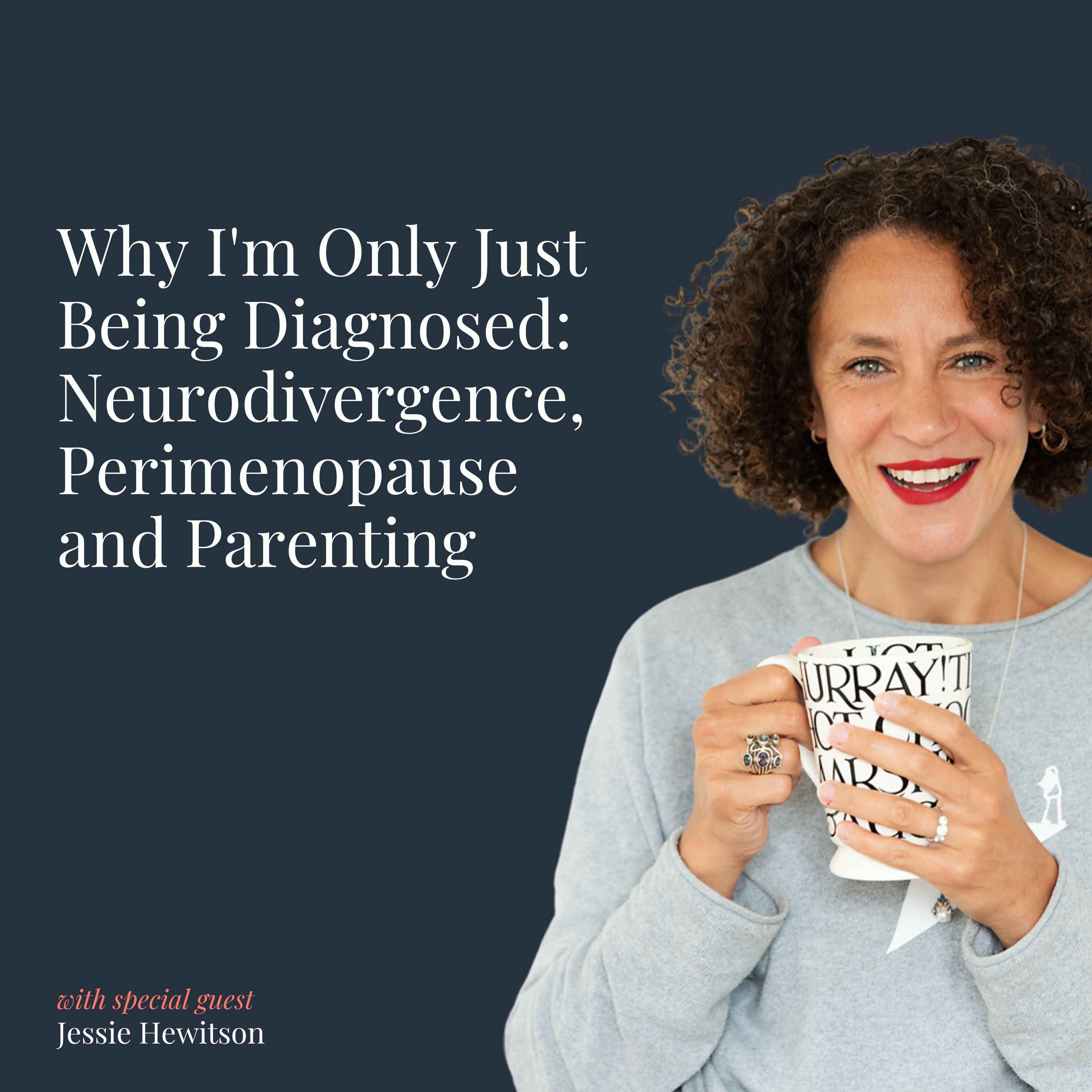
Speaker 2this particular episode because I have a returning guest. And let me just set some context in terms of why we're having this particular episode and why I've got this particular sort of returning guest. And I've been having conversations with friends and family and also with another guest regarding sort of an increase in peri- and post-menopausal women, resistant to peri- and post-menopausal women. And I've been having conversations with a first-time neurodiverse diagnosis. And I thought something's happening here. And I just knew the exact person I wanted to speak to about it. So I am delighted to have Jessie Hewitson back on the podcast.
Speaker 1Welcome back. Oh, thank you. I feel honoured to be returning.
Speaker 2Oh my goodness me, I couldn't think of anyone else. And of course, you've been on the podcast previously with your brilliant book, which I have recommended to almost anyone and everyone who talks about neurodivergence. To me, but it was a wonderful book about the journey really, and that you went to with your son in terms of his diagnosis and his burnout. Really, I think that's sort of what prompted the
Speaker 1book. Well, actually, in all honesty, I wrote it when things were going very, you know, going south with my son at school, and clearly he was struggling and I wanted to be at home more. So I thought, okay, I can write another book, get an advance, which will fund some time at home. And I can be more of a present mum because. I had a day job at that time, which was quite full on. So of course, I got the book deal. And then my poor son just completely had a breakdown and couldn't go to school at all. And so then I was kind of researching and writing this book while he was having a very tough time.
Speaker 2Yeah, and it really, I mean, we will share the link to the book in the show notes. And very genuinely, there's some incredibly practical things that we can do as parents. And it was really very much, I think what struck me most about the book that I took away was about reframing some of the scenarios that we often find ourselves in and the things that we, I guess, can find ourselves habitually doing as a parent, which when you've got an ADHD child, just simply those strategies don't work because they put you at loggerheads with them.
Speaker 1Yeah, certainly. That's absolutely right. I think we're all conditioned into how things have to happen or should happen. So I think once you've got an ADHD child, you've got to start thinking, well, does it really have to be this way? Does my son, for example, have to sit at the table without reading a book when he finds that excruciating, for example?
Speaker 2Yeah, no, it's brilliant. So I want to sort of dive in. And I guess if you're happy, Jessie, can we talk initially about your own journey? Because in lots of ways, the process of you supporting your son highlighted, something for you yourself. Can you talk, speak a little bit about that process for you?
Speaker 1Yeah. So in writing the book, I realised I'm ADHD myself. So I've got my sort of own, like really niche method of self-discovery in that I tend to write a book and then realise I'm that neurotype. Because I wrote my autism book and realised I was probably autistic, turns out I am. And then exactly the same thing happened with the ADHD. So I was like, oh, my God, am I just incredibly impressionable? And no, actually, I did get it confirmed by proper consultants. And also, you know, I had always felt an affinity with both my sons actually in different ways. So it was, it was interesting writing the book, because I was kind of trying to figure out how to help my son be happy, while also learning quite significant things about myself. So it was like two, two, discovering about myself as well as him.
Speaker 2Yeah. And do you, I mean, I guess we can kind of get into that sort of the meat as to, as to, are we seeing an increase in the, in women being diagnosed?
Speaker 1Yeah, we are. So a lot of the increase in ADHD and autism diagnoses is down to more women being identified, or arguably women being identified, as well as people of colour, you know, and, and I guess also the very high masking boys as well, that previously weren't being identified. But in the past, you know, in the early days, it used to be, if you got a diagnosis of autism, you were then autistic and learning disabled, because that's how you got identified. Anyone who wasn't learning disabled, it wasn't recognised that you're autistic too. Then thanks to Lorna Wing and the autism spectrum, we realised that's, you know, you can be not learning disabled and be autistic as well. But largely, it was boys, although, to be fair, Judith Gould had an autistic daughter as well. But, but on the whole, it was boys being identified. And then more recently, clinicians have got better at identifying girls and people of colour. So it's not, it's not that the diagnostic criteria have really kind of become easier to, to hit, if, if that makes sense. That's not what's happened. Because that just hasn't happened. It's more that clinicians are getting better at applying them to different people. Yeah.
Speaker 2And I think one of the things that you and I were speaking about before we press record is about how we typically, stereotypically think of ADHD, particularly with this sort of this hyperactivity, which comes very much with that stereotype of the young boy or, or that sort of pinging around, which is that hyperactive, but actually for, for, for most women, it presents in a different way.
Speaker 1Yeah. So myself and other women are often what's called the inattentive type of ADHD. So there's three categories for ADHD, hyperactivity and impulsivity, inattentive or combined, which means you're all of the above. So often women get the, and girls get the inattentive one, although some get combined as well. But the inattentive presentation is the girl who's away with the fairies, scatty, who's dreamy, who's staring out the window. So, you know, while ADHD boys were called naughty, those kind of labels were put on the ADHD girls, which is totally, totally me. So, and I think also, like, it was such an education for me, because I'd written a book on autism, thought I was pretty clued up in neurodiversity, for some reason, thought I knew about ADHD, but realised when I wrote my ADHD book, I didn't have a clue. So, for example, when I realised that you could be ADHD and not be hyperactive at all, because if you've got the inattentive type, you're not, that was such a revelation. So that's, for me, that was a key piece of information to make me realise, actually, maybe I could be, because I'm a couch potato, you know, I used to have the membership of the gym, and I only used it to take a shower after work, and I, you know, I just, I, my hobby is, like, watching true crimes on Channel 4. I'm, like, the least hyperactive person you could ever imagine. And I remember thinking, you know, could, could somebody who's, like, size 12 and never goes to the gym be ADHD? Because I thought you had to be a gym bunny and, like, always on the go. I mean, ADHD is misunderstood, regardless of whether you're a boy or a girl, man or woman, because once you're over the age of 14, even if you're a boy, generally, you're not so overtly hyperactive anyway, because you've learnt that that annoys people. And by people, I mean neurotypicals, largely. But, but so it's, it's, it's, it's a terrible descriptor for anyone, but it's a particularly terrible one for girls and women. So there's, there's nothing there for us to identify ourselves.
Speaker 2No, and quite often, I think, from a, when we're thinking about it in terms of younger children, the inattentive part of ADHD for young, for young girls can actually make them look like that they're really sort of paying attention, and they're listening to the teacher and doing all of the right things. And it's only when a question is directed at them, that they may then not be able to respond to it. But in all other aspects, the behaviour itself looks very much stereotypical, good girl sitting, listening and paying attention.
Speaker 1Yeah, so if you've got a child who's neurodivergent, or any kind of additional needs, like the worst thing is when they don't cause the teacher any problems. Because, they're not going to be picked up. I mean, that's an exaggeration, but often they're not picked up. And even when it's picked up, there isn't quite the same kind of need from the school's point of view to offer support there. And so inattentive girls very much fit that profile, they're not causing the teachers any problems. But, but for the child, it's, it's, there's a lot of anxiety there. Because when I was in school, I just didn't know what I was meant to be doing the entire time. And so I used to try and peek into it. what my you know to the desks to my left and right and they were like they're like covering it up dramatically they thought I was coughing and you know I was just trying to work out what the hell is this task and you couldn't ask the teacher you know and back then teachers were very scary but still to this day teachers feel like I've told you once and that should be enough yeah yeah so an intensive child there's they're just being set up to fail
Speaker 2and so when we think about this in terms of the rise in terms of peri and post-menopause if we accept that they're we're just getting better clinicians are getting better at picking picking it up and I'm assuming that one aspect of this is potentially as this was the case in your situation as we're seeing an increase in neurodivergent children being diagnosed that women are also seeing some of their behaviors reflected in what they're learning about their children and then asking that question of actually you know what's going on with their children and then asking that question of actually gosh I think that that's me too yeah
Speaker 1yeah exactly so I think we were saying that there is you know there is a lot of women being identified late 40s early 50s and you know possibly because their children have been identified maybe as teenagers or and then they're just starting to read up about ADHD and learning about it you know in an accurate sense rather than relying on how people talk about it in their own way and so I think that's a really good question and I think the media of which I'm part of but you know it's just we've got such a narrow discussion in the general public about ADHD so I think it's just when people are invested to do their own research they suddenly realize actually this is what ADHD is and then they realize it might apply to themselves as well and and I think also you know it's the research aspect and and we've also got the hormonal aspect to it as well yeah and I think that's a really good question and I think that's
Speaker 2there seem there is a sort of a link isn't there between that sort of the shift in the perimenopause and the shift between that sort of estrogen progesterone and also this the dynamic of how that then also plays in terms of dopamine that that then seems to highlight sort of potentially is that where it highlights things strategies and techniques that have been used either to mask or to manage those symptoms though those strategies no longer seem to work or are less effective so
Speaker 1if I can talk in a stereotyped way you've got your sort of 48 year old woman that maybe didn't realize she was ADHD but felt like she was rubbish at lots of things and feels a lot of shame and recognizes that she's disorganized or you know not very good at housework or you know not great at adulting I mean it may be that that becomes really good at housework and adulting but it it costs them so much energy to get there but what happens when they reach 48 is that they've they've created all these strategies without realizing it so they've it's you know you do that don't you compensate unconsciously for the things you struggle with and also because you're trying to be as good as other people who are you know doing it well and you want to be like them and so and and then I think you get to the point where you're sort of doing that beavering away and then your hormones change everything well not everything some key things and you you're hit with more increased executive function problems and um executive function is it's such so it has such an impact on your life but basically executive function is the the kind of mental processes that we all need to get tasks done and it's just it's incredibly broad but it affects every part of your life but it's basically if you've got good executive function skills and the reason why they're good is because you've got reliable dopamine in your head then you find it much easier to start a task you find it much easier to stay on task you can organize that task and you can also not interrupt people and all these other things you can fill in a form easily without having a breakdown but if you've got executive dysfunction all those things are difficult to do and so I think it's really important that you're difficult now what accompanies executive what's called dysfunction when you have problems in these area in this area often it feels like brain fog anxiety you know and just feeling like there's a barrier between you and the task it's oddly difficult but you can see it's not for other people so in my mind executive dysfunction feels a bit like the menopause anyway you know there's there's quite a lot of parallels and then when you hit the the menopause you're also getting so it's almost like a double dose of the menopause so you've been experiencing a lot of the symptoms the whole of your life but then they deepen and then the wheels come off certainly
Speaker 2in the UK for those that are listening in the UK the there's been so much in terms of championing for women about menopause and being able to you know get whether that's HRT or whatever but just an identification and being able to identify the symptoms of perimenopause and how much earlier that that starts and we've thought previously and all of the impact of that in lots of ways it sort of entrenched our view hasn't it that oh okay I've got brain fog that must be a menopause perimenopausal thing and and the rise in anxieties we potentially have been previously really dismissing it and it's only possibly for women who are either identifying it because they are going through it with their own children that they really are managing to understand what ADHD really is and not this stereotypical view yeah and
Speaker 1I think also we we just don't know enough about executive function do we because it's the key it's one of the key parts of ADHD and I I sort of think when we talk about so-called low or high functioning ADHD we're actually talking about executive function difficulties really because that's you know that I think there is a sliding scale and that is the thing that's going to make school you know means you're going to leave school without any GCSEs and you're going to find it you know getting a job and keeping it very very difficult or if you've got sort of you're kind of got kind of enough executive function skills to scrape by you know you'll manage things but it will be harder work for
Speaker 2you yeah and I wonder what the cost is for women because amongst those the women who are probably now sort of getting that identifying themselves or beginning to think that that that really resonates with them around this this neurodiversity I wonder how many of those are the generation that forged ahead in terms of women in senior positions that are juggling multiple different things they're juggling the raising the teens they're juggling maybe ailing parents they're juggling a super senior role how much are we seeing with those in terms of burnout and just you know things really coming to a head with that too and actually I think that's a really good question because I think that's a really good question when we talk a lot about women leaving the workplace because of menopause it's could that actually also be that they're leaving the workforce because the masking techniques are no longer serving them and actually it's about neurodivergence as well as
Speaker 1yeah I think all of the above and I think it's a really interesting point because you know in my sort of social group I do know of ADHD women kind of on the periphery of a burnout at all times where they're sort of trying to support their neurodivergent children aging parents but also with very successful jobs and as you said we're that kind of generation where you you could you know have it all but as we discussed you're often ending up doing it all and so you're dragged in every direction and I think the thing with ADHD is um people can often fall into two camps people pleasers or or slackers and they're not really slackers at all it's just people who are scared of failure who don't put themselves forward because they cannot bear the idea of falling short but the people pleasers the way they avoid rejection is by working themselves to the bone so that they you know they're the good girl or you know are doing everything brilliantly and I think also there's a real issue of people pleasing in ADHD because shame is such an intrinsic emotion for ADHDers because of everything we've just discussed so I think if you're a people pleaser doing a big job you know and possibly you've got a child having a complicated time at school because they're neurodivergent too and you've got aging parents I mean it's just overwhelming yeah
Speaker 2it's a perfect storm isn't it can we speak a little bit about this idea about rejection sensitivity because I'm not sure it's something that we talk about or that people are really aware that sits as part of that profile when we're
Speaker 1talking about ADHD yeah so rejection sensitivity dysphoria it's not a diagnosis but it's something that has been identified by Dr. William Dobson and it's seen as a key part of being an ADHDer and it's it's sort of been taken up by all consultants I know and all ADHDers who absolutely is agree that it's a central theme of their life so what it entails is a disproportionate reaction to either rejection or perceived rejection And for some ADHDers, it's close to unbearable, or even perhaps unbearable, because I have heard it speculated that the reason that there are high suicide rates could be around rejection sensitivity dysphoria. And actually, I find that quite plausible. So it's an extremely intense pain. And obviously, again, it's a sliding scale. But and we don't really know if it's to do with the kind of brain makeup of ADHD. But it also seems very plausible to me that if you're a person who's just been getting it wrong from birth, and you know, getting told off by teachers, annoying peers, just being too much, or, you know, receiving loads of criticism, it seems completely logical, isn't it that you're going to be completely sensitive to messing up again, or rejection. So so whether it's one or the other, we don't know. But it's absolutely certain that rejection is an extremely difficult emotion for ADHDers. And it has real challenges at work, as you can imagine, because if you're a manager, you know, trying to give performance feedback to an ADHD colleague, that's really, really difficult for you. And it's really, really difficult for the colleague. And also, you know, there are challenges within friendships, and it can it can make people, you know, have quite, quite big bust ups, I think, because they're sort of trying to manage these feelings. And it's, it has such a huge grip on their lives.
Speaker 2Yes. And of course, we talk a lot, just just generally and broadly about how shame, you know, shame is fundamentally about the fact that you're the bad person, there's a difference between regret and guilt, you know, I wish I hadn't done that, which is much more situational, but shame is very part of who you are. And of course, if that, having that level of shame, around feedback could be debilitating. And I'm assuming does that then feed into this potential, you either go one way in terms of overly in order to avoid it, you go over the not over the top, but your, your very, your drive is to avoid any negativity by always people pleasing and doing everything you possibly can. Or we get this sort of the alternative, which is not necessarily lazy, but just like, you know what, it's much easier if I just don't put myself in that situation, because then I won't get any of that rejection.
Speaker 1Yeah. So I think that is what happens. And I think, you know, when we think about ADHD as young or old, I think, bearing in mind that intense burden of shame they feel, and, you know, being empathetic towards that. And, and also, you know, with if you've got young ADHD kids, I think, you know, sort of naming RSD is very helpful. And, you know, and if someone's going through a sort of RSD crisis, you know, you can say to them, it's absolutely brutal, but you've done it, you've gone through it before, and you will get through it again. And then when they're out the other side, you know, think together about what if there's any kind of distraction methods you can use. But I mean, I've got a teenager and it does happen. And I just make sure those are the times I'm around. Yeah, we generally don't speak, but I'm there. We're watching our sort of Gordon Ramsey kitchen nightmares together on the sofa. No, and my, my son's in just total crisis, really. But it's just, you're just there saying, I'm here. And yeah, it's just, we can get through this together, but also maybe giving them the language to know that's what's happening. And, you know, at the time, gently questioning, do you think that's triggered some rejection sensitivity?
Speaker 2Yeah. And of course, you know, when we think about it from the perspective of a young person, often, it's not always the case, but quite often that lots of things have been going wrong before we start. Going down a route that there might be some neurodiversity. So there has been a huge amount of comparison against a neurotypical norm, and always been found to be falling short before you get that. So there's a huge amount of weight behind that already, before they get that diagnosis. So you can see how it's already heightened.
Speaker 1Yeah, yeah. And I think also that kind of like really dramatic emotions is, is quite, you know, something ADHD is. And I think that's one of the things that I think we can experience, isn't it? And so when I look, when my son was in a mainstream school, when I looked in the playground, you know, you could see those ADHD girls, you know, having a real, you know, sort of explosion or meltdown over something, you could see their peers, like, she's crazy, you know, like she's gone completely off the deep end, like they just find it so confusing and don't understand it, you know, and I think it's so difficult. I really feel for that ADHDer. Because, you know, we've all been there where your reaction is so completely worldly disproportionate. And you're kind of, even I think, when you're young, you're quite aware of it, aren't you? Because you can see other people don't do it, but it's so painful. Yeah. And you don't want to be that person, do you? Everyone wants to be the kind of level headed person.
Speaker 2Definitely. And I'm imagining it's probably, you know, it's similar for women as they're going through that peri and postmenopause, that you're having the same, the similar experience and that the strategy, that you've used previously, in terms of juggling multiple things and people pleasing and being everywhere for everyone, suddenly becomes less possible because of the just burnout, really, in terms of energy.
Speaker 1Yeah, burnout, exactly. All the executive function difficulties, so you're not able to. And I mean, when I, I now work for myself, but when I was working for a newspaper, I was quite conscious of, it almost felt childlike, you know, I had to be in the good book. And, and I think really, I think it is to do with that feeling of shame. And I think I always needed that pat on the head. So I was all I could never just do something. Well, it had to be so well that I was getting some feedback that made me feel less anxious about, about falling short.
Speaker 2Yeah. And that, of course, over, over time, and just becomes unbearable. Well, not unbearable, but it just, you, you notice that the energy that's required for that, you just don't have it in the same, in the same way. Certainly not if you're juggling the big career, and you're also juggling teenagers and parents and all of the other things that women who are people pleasing, who are, have that rejection sensitivity are bound to be doing.
Speaker 1Yeah, absolutely. It's, it's unmanageable in the long term. And, and actually not always that helpful for your boss as well. I mean, you get, you get great short term results. But it's quite needy, isn't it? And also, maybe they want you to stay for the long term, not just burn out.
Speaker 2Yeah. In your personal journey, as well for yourself, but also with your son, have there been some things that you've discovered that have been really helpful for you as a, as a woman, in terms of managing with that knowledge now, being aware of how it, that kind of executive functioning and that rejection sensitivity? dysphoria and just generally the the patterns of behavior that don't that maybe have not previously served you that you've been able to adapt and
Speaker 1to modify yeah I mean I don't know I don't think I'll ever fully make peace with it but I'm so rubbish at feeding children and I don't think in a child neglect way they do get fed but I never it's never organized it's never planned out you know I always want to be that person who's got the the plan at the beginning of the week you know every time you open my fridge it's pretty empty and I'm having to rush out to the shop and I've got no energy and they're having pasta and pesto again so I think it yeah I think it's that like obviously the feeding is just one step too far so if you're in a slightly in if you're in the position where you can just farm stuff out if you're in that privileged position where you can afford to I don't think twice don't get into this feeling like you've got to be the person cooking your children dinners and you know if you buy ready meals or do what what's ever necessary to to make make that easier I think also just after I got identified I do say no to more social stuff yeah I didn't seem to realize you could say that I just thought if you got asked you had to say yes even if you were going to angst about it for two weeks before it
Speaker 2yeah but that's good isn't it it's recognizing what you need to do and as you say I mean there's so much shame around this notion that as women women not fathers women that we should have this incredibly cooked from scratch organic with every aspect of all of the nutrients served and yet if that is part of that challenge for for us in terms of resources and energy we should be able to say to ourselves that that's just something that I find much more difficult and that I'm going to let that go I'm going to accept that for for me to be present in every other way I need to let that one slide yeah
Speaker 1I agree and also I remember somebody saying to me you know about relationships with other mums you know you've got this kind of motherland core kind of mum groups and and I always felt like oh god I need I should be doing that and maybe this is affecting my children because maybe they're not getting invited to stuff because I'm not in it with the other mums. But I think that's another thing that you should allow yourself to let go. You know, really, it's about prioritizing, isn't it? Number one is being on the sofa watching Gordon Ramsay's Kitchen Nightmares or whatever your thing is, isn't it? To be with your child who's feeling rejected and it's very painful to them. You know, number two is work. And, you know, I think also just being feeling able and it's your right to farm everything out that you can. I mean, like men get to farm, successful men get to farm out their executive function stuff all over the place. You know, they've got secretaries, they've got wives doing it. I mean, I know I'm talking about a 1950s model, but that's still a lot of that is still happening. So so I think we we should feel like we're able to farm out our executive function stuff, too. And chat GBT or AI, I think, is is really helpful for executive function and kind of leveling that playing field a bit. Because if I have a difficulty starting a task, I just, you know, either talk into it or throw all the words into chat GBT and it will get me started. So task initiation, it's brilliant.
Speaker 2Yeah, that's a really key point that I interviewed Professor Sam Waz recently about it. And he was saying quite often with that. It's the the more familiar. You are with the subject that certainly from a neurodiversity when we're talking about ADHD, the easier it is to do it. And when it's something that you're not less, it's not necessarily as familiar or you're not, it's not necessarily a key strength. It's the initial piece that gets you started, which is why as women in terms of that executive functioning, having that AI as a prompt to just get that inertia going can have such a really positive impact. And it is. We've got. We've got to, which is why I was so passionate about us having this conversation. We've got to stop this narrative as women that we've got to be this sort of everything to everybody. And we, you know, we're failing in some way if we farm things off because men don't for one moment sit riddled in shame that they've not been able to put children to bed or that they've not been able to cook a freshly made meal or any of that. And I think that that's important that we we recognize that that's. Something that we that there there is we can outsource so much without a huge cost.
Speaker 1Yeah, yeah. I think you're right, because I and also sometimes we need permission to do things, which is odd. Why can't we give ourselves permission? You know, like sometimes I a friend of mine brought in ready meals and I said, oh, my God, that was so great. And she's like, why don't you do it once a week? And I'm like, are you allowed to do that? And she's like, yes. But I was also thinking what you were saying. God, I've just completely forgot it. Oh, yeah. Task initiation. I interviewed an ADHD young guy and he said to me when he had difficulties with this, he has to write lots of boring sort of tenders because he works in a charity. He just opens a blank document and just writes 20 swear words down. And he said that's kind of amused his brain and warmed it up and then he can get into the task. So that's another top tip.
Speaker 2Yeah, well, it is. It's all really helpful. And I love what. You said, though, Jesse, as well about the sort of you're almost working with the priorities in reverse. So, like, what's the most important thing that I need to wear? The thing that I need to be able to do and that's be able to show up for my child in the way that they need me to, which is on the sofa watching the Gordon Ramsey.
Speaker 1Yeah, I'm not completely frazzled because now I look back at when I was on the front line of journalism, I feel really quite guilty. You know, my boss was getting all the good stuff from me, not my children. So I think we all do that as we get older, don't we think? You think about your energy, don't you? And where? But and again, AI is very good for priorities. So sometimes when I'm feeling really overwhelmed, I just say these are all the things I feel like I ought to be doing. And it says and it gives me a sort of priority list.
Speaker 2Yeah. So that could be good. And I think also just as women being able to identify and pick up with other women, our friends, our colleagues. People who matter to us for us to be able to, as you said, it's about giving permission, isn't it? And we won't give ourselves permission, but if we can spot someone who matters to us in our lives, who is overdoing too much or is going into a shame spiral or has got these ideas of what they should be doing, it's for us to be able to say, look, you don't need to be doing that. And as you say, you know, once a week, have a ready meal or once a week, let me do school pickup, whatever it might be. I think. In lots of ways, it's women supporting women as well.
Speaker 1Yeah, it is that. And it's also just having like if you are neurodivergent or if you are just completely overwhelmed, it's having other people in the same position, isn't it? I've I've actually got a dog and I've managed to find some other neurodivergent women and we formed a like neurodivergent dog walking group. And it's it's absolutely hilarious. And we spend quite a lot of our time talking about work and how ridiculous it is. And it's it's so it makes you feel so better, so much better for whatever you find difficult, because there's these great people who you really like and they're funny and smart and they find the same things difficult, too. So you suddenly realize, oh, it can't be that I'm a flawed, bad person if they're finding it difficult as well. But one person really made me laugh because she's she works in tech and she said that the one of their kind of taglines is thriving and ambiguity. She just. Said like what? Like that's that's like so ableist, like what autistic person stands a chance. That's your tagline. And she just felt like it was for neurotypicals to like cover their asses because they weren't actually clear about what they needed or wanted to do in the project.
Speaker 2Oh, my God. But I think that speaks so much, though, doesn't it? When you've got we often talk about having a tribe or surrounding ourselves when we are first born. And we forget that actually we we need that tribe all the time and that tribe changes and then being able to then meet up with, you know, particularly if we're in if this is if this episode is really resonating for you and you're sort of beginning to think, you know, identifying that terms that neurodivergence, just having other women that you spend time with, whether it's a dog walk or whatever it might be, just makes such a big difference.
Speaker 1But specifically, we're actually talking about women who struggle. Or fail at the same things you do. Don't don't. I mean, I remember actually when I had my NCT group, there was this absolutely lovely mum, but she she like sailed through motherhood. I'm sorry, you're just too sorted. This is not going to work. You know, what I needed was the other people like, you know, in tears because they couldn't work out what was going on with their baby as well. So I think there's such a power, isn't there, in finding a group of people who are also struggling with the same things you are.
Speaker 2Yeah, yeah. Because I think that that that grounds you that in in this, it's not just me. And particularly when we're talking about rejection sensitivity, it makes such a big difference.
Speaker 1Yeah, it reduces shame, doesn't it?
Speaker 2Yeah, definitely. Oh, my goodness, Jessie, it has been amazing. As always, I could talk to you for a, you know, all the time for a very long time. And that's been just brilliant. Thank you so much.
Speaker 1Oh, it's so nice speaking to you. My absolute pleasure. Thank you.
 PodcastTranscript AI