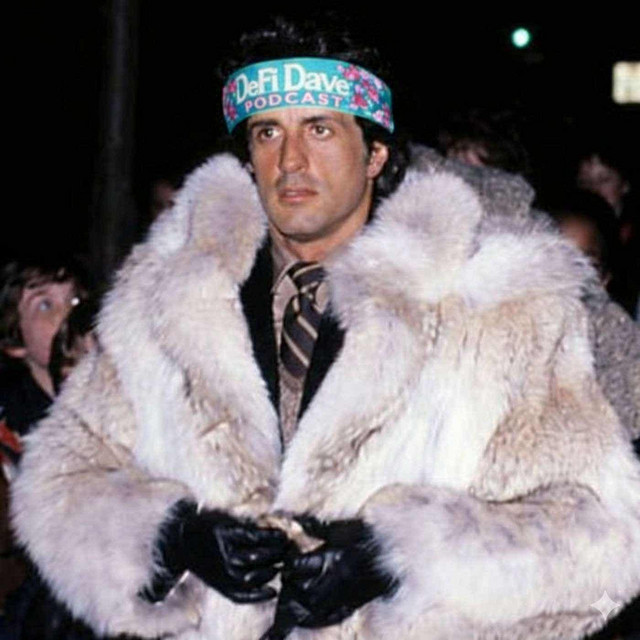
Why AI Will Cause an Indie Film Renaissance | Charlie Curran
from The DeFi Dave Pod
38m 9s
In this podcast interview, filmmaker Charlie Curran discusses his journey from traditional filmmaking and meme coin communities to becoming a creator of AI-generated video content. He explains that his interest in AI video began in 2023 with early models like Runway, which he saw as the future "camera." His creative process starts with dictating detailed shot-by-shot concepts via voice memo, which are then refined with AI assistants like Claude. He generates images and video using tools like Midjourney and Runway, assembling and editing the final product in Premiere Pro. A key example is his viral "Titty Killer" series, a raunchy slasher homage he created to fill a void left by modern Hollywood, which resonated widely and proved substantial audience demand. Curran believes AI is a powerful new filmmaking tool that can democratize production, allow for rapid proof-of-concept, and help secure funding for projects. However, he disagrees with the notion that AI will replace Hollywood, arguing instead that it will force a reinvention, as skilled professionals like actors and cinematographers will remain essential for high-quality, high-bandwidth storytelling.
All right, all right. Welcome back everybody to the deep by day pod sponsored by cap. Thank you cap shout out cap. Today we have on the man, the myth, the legend. You probably see them on your timeline in some form. Charlie Curran. Charlie is a filmmaker and editor, a man of culture, I must say, and it is an honor to have you on Charlie. How's it going? Oh, honor to be here. Thank you. Thank you for having me on. Yeah. How are you doing it? I'm doing pretty well, man. You know, I just got back from European travels for each CC and side quests. So, you know, still adjusting back, but I'm feeling pretty good. How are you doing? You've been busy. You've been a busy, busy man on that you've been all over my timeline. For good reasons, I hope for good reasons. Yes. Yeah. Yeah. No, it's been, it's been good. It's been a little crazy, but like good, good crazy. You know, like it's just everything's moving very fast. Like I had very ambitious plans and they weren't ambitious enough. Like it's just kind of like accelerated much quicker than I kind of expected it to. So very champagne problems over here. Yeah. And we're going to hear it all about it on today's episode. And we've known each other for a while. I've actually interviewed in for interviewed you for my last podcast. So, but we are running it back with this one. And so for people that who might not who you are, not might not know who you are or may have only seen your videos. Can you give a little bit of background about yourself and how you guys are filmmaking and like when I, when we met, you're really into trading mean points. And now you're making these AI keynote masterpieces. So take it away. Yeah. So I'm a filmmaker. I've been making movies since I was like 12 years old. However old you are in the sixth grade. It's when I got like my first camcorder. And like to my parents fear I told them in like no uncertain terms that I was going to be going to film school. And yeah. No, I did that. So I went to SCAD. I got my, you know, like undergrad and narrative filmmaking. And because of a student project that I had started it snowballed into like a feature film called C no evil, which was a documentary about the fashion photographer David Serenti who passed away of a hair when over the 90s. And so it's kind of like the hair and chic documentary in about like 90s youth culture and like the emergence of that. And like through that and moving to New York and working in the fashion industries because I was, I was determined that I would live there and work in fashion so that it wasn't like intellectual exercise. It was like a lived experience that I understood it. I kind of like just fell into the world of like commercial production, which I really enjoyed after spending, you know, eight years making a feature documentary. And because I enjoyed it because like you would get to work with the best crews, everyone would get their rates, you get tired of the best people, you get the best gear. And it was very quick, you know, like it was very fast, there was like a predetermined like a goal, you know, like you have to make the ad. And so I got to work with like a bunch of companies and it was really good. It was like a really formative experience. And so. Yeah, I kind of come from the world as a commercial film production. And then I fell asked backwards into the world of meme coins, which is kind of like how we met. Yeah. And I, you know, like I if I had to think of why that happened or how that happened, I think it was just because. Especially if you're COVID, there wasn't much going on in the art world that was really interesting to me. Like I don't think they really had much of a response or anything to say. And then I looked online and there was all these. Communities that were kind of doing this alchemy like in my mind, they were using like making original content and they were creating value through. Decoration of content. I mean, then like this like the their own mimetic languages and it was generative and it was these generative communities that thought were really interesting. I thought it was like the only thing happening. And so. I threw myself into that. Yeah. And I can't help but notice the commonality between meme coins in these AI videos because they really have the cutting edge of culture, whether as a, you know, a meme coin about a certain event. Or an AI video about a certain event. You're basically getting attention to a digital object with both fundamentally, but in different ways. No, yeah. I mean, like they're they're really similar because I feel like the meme coin trenches are like the perfect training ground. Brutal training ground, but like the perfect training ground like for someone to like understand or get like a real education on like how attention economies work because like. There's how do they work. I mean, you have to create value in the way that you create value is through the creation of meaning and that's storytelling. And so if you have infinity coins or an age of AI, you have infinity images now. How do you create value and it's it's their story, you know, it's. Tails all this time. And I feel like this is a big reason why Sora closed down their app because yes, you could generate infinite images, infinite videos, but if there's no story, no meaning behind those videos, it's not going to stick with with the viewer at all. Yeah, I think that like, I think Sora was aimed at like a more casual user, which is totally cool. And I think those empowering and some capacities. But the reason that it was really interesting at first and then kind of felt dated is that. I feel like they were using LMS to kind of flesh out a full encapsulated like 30 second story for people. But for more advanced users, it doesn't give you the kind of like granular control over like individual images or like shot construction. Like if you can tell the story yourself, you don't necessarily need that. You're already doing that in the telling of the story and like how you go about creating it. Yeah. And so for you, when you start first playing with AI, when you first have that aha moment when it was like, oh, shit, I can create masterpieces with this. I mean, I've always been interested in AI because I'm a fucking nerd. You know what I mean? So, um, for AI video, like for the generative AI stuff, it was around 2023. Right when like the first runway models were coming out, runway Gen 1 and Gen 2. And that was kind of my aha moment because I was working in, you know, like commercial production. And I was looking at the sort of like hockey puck graphs of the other like modalities of AI, like, you know, like chat bots and stuff and all the cap expand and the scaling laws. And I was like, okay, so they're going to figure this out. They're going to solve video. And then once they do that'll be the new camera. And so I should figure this out. I should play with this every day. And I wrote the CEO of runway, the AI video company. And I told them that I could not afford to keep doing this every day. But I thought it was really important. And he just told me to check my email. And then I had infinite credits. And so shout out runway. Yeah. So runway. Yeah. So I had runway. Now for sure. And and so I've just been doing this every day for the last three years. And most of the stuff I make, I don't even post. But in the last six months or so, the models have kind of hit this threshold where I really can do exactly what I want. And I can do it really quickly because I've been doing this for so long. So if the story comes out, I can get a video out in 30 minutes an hour and then kind of fire them, forget it. And some of them I just mute the notifications because it gets a little weird. You know, yeah, I I knew it was going to happen. But then sometimes I can know something's going to happen. And then it actually happens. And you're like, Oh, shit. Did it happen in the way you expected? Because it always happens in ways you don't expect. I think that I know there's tons of essential anxieties around AI. I know that there's a lot of pushback against the economic repercussions about it. But I was surprised by some of the like people that are anti generative AI specifically, like it's the furry community. It's concept artists. It's it's like a very strange level Alliance. And they just they're just not having it. And so I can always count on, you know, 100 comments of telling me to kill myself. And I think it's really funny. So I've kind of been baiting them to you. And they haven't really cut on of this yet. And so like whatever, like a Teddy killer, I'll just be like, ah, chat. Is this our question marker? You know, like if if a campyard then explain this and it's the same caption every week. And it throws them into this like blind rage. And I just can't stop laughing at it. I'm like, guys, be following it for for it again and again. It's like that at least once a week. It's the same caption. Yeah. I'm curious because you've been doing this for three years. How has your workflow evolved and what's your typical workflow like now? Do you use different models? Do you have like pre-save things? How does it work? So I mean, the hardest part is always just going to be what to make now that you can make anything, you know, and so I definitely subscribe to that idea that I'm going to push the quote, but need just something along the lines of never trust an idea that you had inside. And so I like to go for a walk when I do it. So I'll just turn on voice memo and I'll go for a walk and talk to myself like a psychopath with my airpods on. Yeah. And I'll flush out the concept, the idea, and then I'll explain the beach sheet shot for shot. And then I'll go through and explain every one of the characters and describe them. And I just treat it kind of like as if I was writing the beach sheet or like if I was transcribing. What's the beach sheet? A beach sheet is just kind of the actions that happen in a script. Okay. Like this happens in this.
happens, and this happens, and this happens. - Okay. - And so I go for a shot, so I just kind of construct it, like I would a normal film if I was storyboarding it. Like normally I would kind of write this transcription up and send it to a storyboard artist, but now I'm just creating the actual shot myself. So I don't treat it any differently. I'm composing it, shot by shot, and so I do that, and then I'll run it into Claude, and from there I'll generate my character references, I'll generate every character, every object, every location, either in mid-journey or in Anno Banana, or a combination of the two, and then edit them as I need to in Photoshop, so that's exactly what I want. And then from there I will go back to like my shot list, and I'll kind of annotate through dictation, the camera movement, the lens choice, the blocking, the character actions, I'll refine the dialogue as I search or read it out loud myself, and then I'll generate the prompts from that, and I'll give it every one of the shots that I've generated so that it knows exactly what's in the frame. And then from there I'll run it through an image to video, model like C-Dense 2, or Cling, or V-03, and then once I have all my stuff generated, you know, I'll pull my sound effects, and then I'll pull it all into Premiere, then I'll edit it. Like, you would any other film. - Yeah, I think the most interesting part of this or one of the most interesting parts is how much you're using dictation and voice for a direction instead of typing. I feel like for so long, the internet has been all about like, "Oh, what are you typing on?" You know, in messages, typing on screen. And obviously it's become more image-based, but still people comment under things. But I think the interesting thing about AI is because of just how AI works. It's just easier to interface it via voice. - Yeah, I mean, but that's the same way that I would interface if I was talking with a storyboard artist, if I was talking with a cinematographer, if I was talking with an actor. So it feels more natural to me like my process, 'cause I come from like a production background. So, you know, it sucks when you have to do this by text. Like if I have to send this email, I'd much rather get on a call and just explain the shot. - Explain the framing. - Explain the blocking, you know? - Yeah. - And yeah. - And so let's get into the content that you've made. I'm curious about the inspiration for it. I mean, obviously you have things that are relevant in pop culture and like you said, you get it out in 30 minutes, but you also have these bangers with the titty killer. Like where did the titty killer come from? - I mean, it was more like kind of like an exercise. How do you say it? How do you say this? - These are kinds of the movies that I was like raised on. Like I love horror films, I love genre films, I love like Rachi comedies, you know? I love like scary movie, like I love Halloween, I love like Leopardcon. All these movies at Hollywood was so good at making in the 80s and the 90s and the 2000s even. They just kind of abandoned like Hollywood, centralized, you know, through mergers, streaming happened and then there was like a cultural shift. And things went in a very particular direction and it became much more about prestige and kind of signaling political alignments or stances, you know? And suddenly like all these films that like, there used to be, I'm sure like a writer's room of dudes cranked out on Coke, just churning these things out in the 80s, like these kinds of films don't exist anymore. - No, no. - And they were making great films. And so I missed that and I was like, okay, like what is the ultimate distillation of all those films combined into one? And I was like, okay, it's a raunchy slasher film about a killer who was hunting large breasted co-eds in a small college town in the 80s, done, easy. And so I was like, "Titty Killer." And I just thought it was fun. And I was like, I want to make, like the promise of it after me is that I get to make the films that I want to make and no one can stop me. And as soon as I made it, it just kind of connected with everyone and a way that I wasn't necessarily expecting. Like I wasn't doing it for anyone but myself and you and a few other people in a group chat. I was just kind of having fun. And then all of a sudden everyone was like, yeah, wait, how can we don't have these movies anymore and they kind of projected everything that we've kind of been lacking onto this. And so I was like, I could do this all day. That's a fun afternoon for me. And so I just kind of kept going. And so we're on "Titty Killer 7" now. I'm working on that one. (laughing) - Yeah, I mean, you make a great point when you said, people connect with it for whatever reason. And you said you were surprised with the way people were connecting with, like you were surprised the way people were connecting with it. And I think it's because exactly what you said, it's because Hollywood doesn't make those movies anymore. There's kind of this like yearning and learning longing for these kinds of content, this kind of Americana. - Yeah, I mean, whenever you like look at any of these movies of our childhood that like we were raised on, the top comment on like letterboxes always, you could never make this anymore. And it's my question was just kind of why, why not? - Yeah. - And if you don't need $100 million to do it, if you don't need permission, why not? - Yeah, it's kind of like how YouTube and streaming really helps with the distribution of content. This is really, it just centralizes how content is made. So it's kind of like the final piece of the puzzle. - Yeah, and I think that X is a big part of it too in a weird way because it's been really wild. Like the people that I've, have ended up in my DMs or like the people that I've like, spoken to because of this, like I feel like I've spoken to like every chief marketing officer, every agency, every producer, like celebrities, teams, like people that I really admire in different aspects of like the arts. And I was just like really a titular. You know, like I don't know what that is. But I love it. And so like why, why wouldn't they? But I didn't expect that I guess is what I'm saying. And so it's been really cool. - Yeah, so you know, we've been going over the response, but like how else has it been? Like who have you been talking to? Is there anything in the works because of the city killer and all the videos that you're making? - It's kind of one of those situations where like the cooler, the thing that you're doing in life, the less you can talk about it until it's done. And so I won't go into like specifics of who I'm talking to, but we're definitely gonna make a feature film, a titular. And because I think that this is kind of, in a weird way, was like a theory that a lot of people had. And it's just like one of the first kind of like instances of an action where hypothetically, you should be able to use AI to make a trailer for a film that doesn't exist and then put it on the world. And then if it shows audience demand, that's enough to like raise the funding to like go and go on this mission and make it. And the fact that like it can rack up like 10 million views in 24 hours, I think that that's like more market proof than like most studios' plates have. And so everyone's like, okay, when are we doing it? And I was like, oh shit. - Yeah, it's like in startups, they talk about the one man unicorn and AI's gonna bring about the one man unicorn that cut me that's worth a billion dollars with just one guy and a bunch of agents. It's soon we're gonna see the one man blockbuster. Do you think that's gonna happen? Or do you think there's like other people that are gonna be involved? - I think it's gonna be like, I don't think it's gonna be the one man blockbuster. I think it's gonna be like the one man IP, you know? So like one person will like generate the proof of concept or like the product market fit to like show that like, this is deserving of capital expenditure, this is deserving of assembling the army to put it together. And then from there like, you might do it all generatively. You might, but like, you'll wanna work with actors, you'll wanna work with actresses, you always have higher bandwidth, you'll always be able to get more out of it. They'll bring more to the role than just what you can imagine. You'll wanna work with sound designers, you know, like cinematographer, you'll wanna work with like for motion capture, you'll wanna work with, gosh, you mean like, you want all of these specialties, like, and so that's why I don't subscribe to like the doom and gloom of like, it's over for Hollywood. This is just like a reinvention of Hollywood in the same way that it's always reinvented itself. Like, film is a technology, you know, it's always been at the cutting edge. - Yeah, and that actually leads to my next question very well because what are the ramifications of AI for the entertainment industry for Hollywood? And I agree with you, I think it's gonna be a rebirth. It just depends what's on that other side, but I'm curious, what do you think about the ramifications? So I think that Hollywood's had a slot problem for a lot longer than AI. I think that you see it with its lack of risk taking, its addiction to sequels, the films get bigger, the budgets get bigger, and it's the same thing. And you see it like, with this kind of like, atrifying theatrical, you know, ecosystem. And we've kind of, we don't really have indie film, like not in the sense that we used to, like in the 2000s. But I think that like, film, they might have favorite periods of film have always been at the kind of, the cost of the technological change, like whether it was like the French New Wave and like the cheap inexpensive, you know, like eight millimeter and 60 millimeter cameras, or if it was like the invention of like VHS, then all of a sudden it all locks the home box office. And suddenly like, they have a ton of money coming in and they have,
of pretty guaranteed revenue streams and they can take risks on younger filmmakers or digital video and DSLRs and the explosion of indie film that came out of that. And so I think that this is no different. I think that it's gonna mean that more people can make more films that they normally couldn't. You'll have the kids in the Philippines be able to make a $200 million looking like sci-fi film. You'll be able to hear all sorts of crazy stories that you normally wouldn't have heard from people that would not have been able to get through the system because they're not making a $150 million Marvel temple or they're not making whatever's in vogue. I think it reduces the amount of permission that's necessary for people to tell stories. And so I think you'll get an indie renaissance. I think it'll be a bit of a new Hollywood. And I think that Hollywood's been faltering for a long time and it's nothing to do with AI. It's just kind of in the same way that like a lot of companies like Over-Hired and now are using AI as a justification for cuts. I think that Hollywood's freak out. They would love to attribute it to AI but they were not doing so hot before that, you know? - Yeah, and I think we all felt that for a long time. It was just the same movies, the same sequels. Like it's not like, I feel like over the past 10 years we don't have the same classics. Obviously there's exceptions, but it's not like, you know, the 2000s or 90s or 80s or the times before that. - Yeah, I mean like we don't make those like smaller indie films anymore. We don't make a $5 million rom-com or $5 million like comedy anymore and we're worse off for it. And so I think that if you can like reduce the cost of production by a fifth or a tenth, it opens up all sorts of possibilities and it's not so risky to like give a new director a chance and the way that it is now. - Yeah. And so where do you see everything going within the next few years and like the next three years, five years with AI being used more and more to really liberate creators and liberate filmmakers? - I mean, this is what I'm trying to do. If I had my way with it, you would see all sorts of kind of like underserved genres and underserved audiences be able to like see the films that they want to see get made and they would get made at a level of production that would normally be impossible, you know, because of a cost $20, $100 million. So if you can 10 times like the production value of a million dollar budget, all of a sudden like you're able to make really crazy films, you know, with a lot higher risk threshold and you're able to take bigger swings. And so I think that that'll be really exciting. - Yeah. So basically what your argument is is because of AI, we're gonna be able to drive down the cost of production and because of driving down the cost of production, we'll be able to take more risk. - Yeah, I mean, if it doesn't cost $100 million to make a movie, you can get a little more risk with it. I think that everyone's, everything feels very safe and sterile and corporate and I think everyone's tired of it. I think that, I mean, that's why I think people, for some reason have this affinity for Tiddy Killer because it's so politically incorrect. It's a running boob joke. And, but people miss that, you know, like, it's supposed to be entertaining and it is. And I think that like Hollywood's kind of forgotten that. That's what Hollywood used to be really good at. - Yeah, and Hollywood even, you know, forget about AI. Hollywood is struggling as is as, I'm filming, is leaving Hollywood and California for not just other states. Like there's huge lots being built in New Jersey. There's one like down the street and pushwick for me. But also like around the world. So Hollywood was struggling before AI and I'm sure this is exasperating it. Like outside of AI, like where do you see the film industry and Hollywood going? I guess decentralizes in a way. - So the biggest kind of shock for me, like when I moved to like Hollywood was how few people actually working in the industry like movies, like they don't watch movies for fun. They don't enjoy movies. They kind of enjoy the cloud that kind of comes from saying you work in the entertainment industry. They enjoy the access or like proximity to like pretty people and the benefits that go with that. But when I tell them I watch 300 movies a year, they're like, they look at me like I'm retarded. They generally just do not compute. And that's not all of them. I found my people and there's so many film lovers here. But I feel like for a lot of them, it's just a business. And so Hollywood has strangely become a bit of like a traveling circus where this is where the deals are made. This is where everyone's based. But because of the tax incentives, it nothing's shot here. Everything's shot in like rural Australia or like in Eastern Europe or Toronto or you know, because of like the unions as well. And so there's a lot of kind of things that go into it. But I think that in my mind at least AI reducing the cost of production means that there's potential for it to like be a new Hollywood. And you saw that you know like in the '70s when like there was like this explosion of you know young new voices that came in. You have like easy rider. You have like George Lucas, Spielberg. You know like you have this like kind of like there's there's always ebbs and flows, you know, where like kind of the studio system kind of gets at your feed and too big and too to stale. And it's kind of like magnetizations. And then there's like an explosion where like it once again taps into like this like guys to like what people want to see. And I think that like the problem is the cost of production here especially and so it's my hope at least that like we see that happen again. Yeah. And when it comes to distribution, there's so many different streaming platforms. It's like nine and so we reinvented cable. And but it's more expensive and worse. Yeah. So I don't know. I think that like especially like in the age of AI I think it'll really come down to like taste and curation. And so I don't know what the answer will be because I feel like we do see like the consolidation of it. You see like with like the Warner Brothers sale, you know, like to Paramount and then Netflix. Like there's kind of like two players in the game now. And so I but I think that was AI and I think I think there's an opportunity for something to be similar to like the sound cloud of AI slop if you will, you know, like right now it's a short form, but the constraints are really like character consistency, like a consistent spatial geometry stuff like that. But as those get solved and like the generation times for the clips get longer, you'll start to see longer form content. And so there will be a place where it lives. And I don't necessarily know if it goes down the road of going straight to Netflix going to, you know, HB or go or whatever Paramount turns that into. I think there's I think there's opportunity for new kind of distribution as well. Mm hmm. One distribution channel that's worked very well for you is X Twitter. It will always be Twitter for me. I'm sorry, Elon and Nikita, please forgive me, but, but on X, it has, you know, like you said, tens of millions of views collect, collectively, maybe maybe a hundred million. I, who's counting? But why do you think Twitter has been the place where it's taken off the most? And also I've seen your videos on like other platforms like Instagram, like people copy and stuff. I'm like, and I feel like I'm lean or decaprio and once upon a time in Hollywood, I'm like, oh, look at that. But that's my boy. But, but yeah, why anything Twitter and like what a and how does it response vary from platform to platform compared to like, you know, responses on Twitter to Instagram to TikTok? So I only posted on Twitter. That's just kind of I guess like the platform that I was most interested in because I think that the most interesting people are on there. The people that I'm like interested in following are on there. I don't necessarily spend as much time in the other platforms. So I definitely have seen like a lot of people like rip it and then like repost it and it's gotten more likes. But I would wager that the likes are the views and likes on Twitter are more important because the people that are watching it are more interesting to me at least. You know, because it's like other artists or other thinkers or other people in like the creative fields or like people that I admire respect like they're not necessarily on Instagram or if they are it's like to keep up with their friends. You know, I mean, like it's not they don't use it the same way. And so it's been really and I don't think that I would have been able to form like the different like kind of connections or like introductions that like have kind of come about just spending way too much time on Twitter or X. If I was posting another platform like I feel like it would be a little more automatized a little more anonymous, you know, it's gonna be like a user. Yeah, although the algorithm has changed Twitter is still the internet town square and you're able to like talk to people and you know, see, think I mean how that's how we met. Yeah, I mean like there was I feel like there was this Mr. Beast quote strangely enough that like kind of like was like an ahamam for me. And he was talking about people complaining about the algorithm not boosting their content or like not giving their content like enough like kind of like push. And he said that you should substitute the word algorithm for audience. And I was like, oh, it's you know, so the algorithm is very good at surfacing what people want. And so if you think of it not as like creating it for the algorithm but creating something that people want to watch, the algorithm will go out of its way to put it in front of people because they want more people to spend time on Twitter. They won't.
people to watch original content. And so it is on is you make something people want to watch? They will shove it down their throats. Yeah. And once I started thinking like that, I was like, oh, okay. So I just make the stuff that I would want to watch. And because I can't guess what other people want to watch. Like I don't know. But yeah, enough other people like boobs that like it worked out. Yeah. The algorithm has really become the curator of sorts. And it's always getting feedback. It's always a be testing. I don't know. I talk. I'm just from being online for so long. I'm super fascinating with algorithms and how it affects audiences, how it affects people, how it affects creators. Because it's always evolving and always changing. And if you don't evolve with the times, and I guess that's just evolved with the algorithm, but also evolve with the audiences as well, you're just going to get left behind. I wish I could say that I like had as nuance of take on it or like you're much smarter than me in that sense. But I just, I'm just kind of like posting my stuff. Like I don't, I post the stuff that I think is funny. You know, like if I'm not laughing at it by the time I'm done with it, I just don't post it. Let me see where I like, I'm like, this is horrible. You know, like what were you thinking? Like a good real thumb that I've had for like whether I think something will do well or not is like if I think it's funny and I go to sleep and I wake up and I still think it's funny. I'll just be like, okay, final do this. And so like, you know, I'll try to coffee or pop an out of the wall and I'll just, and then I'll make it happen. And then usually those are the ones that do well. Like if, if I wake up and it's still funny to me, like the Mr. Beast one for instance, like where he, oh, that was the best one. Yeah. Unfortunately, they had to be taken down for reasons that I can't talk about, but that was a good one. Yeah. That was one of the one I like went back to watch the most because it was just so funny. Yeah. I had like a house guest over too. Like he was visiting from San Francisco and he was crashing in like the spare room and like he woke up and I'm like manically like trying to get Jeffrey out to see him to look right and he was just like, Charlie, what are you doing? And I was like, hold on, hold on, hold on. Trust me, trust me. Trust me. Okay, I had another question. So you sound like the opposite of an AI Dumer. I guess like an AI, what's the opposite of a Dumer? I'm kind of retarded right now. And I'm just, yeah. You're getting, sorry. So you sound like an AI optimist at heart. I guess like what is your response to the AI Dumer's not just in the creative fields, but in all fields because you know, AI's going to have like such a big effect on everything. It seems like. I mean, I don't know. Like we're coming up to this occasion. Like it's a singularity. I don't know what do me will get us. I don't think that you can stop it. Like you could shoot up a shoot up a data center, you know, or go full unibolum remote, but I don't think that that's going to work. Like I kind of like subscribe to like the Nick Land School thought that I think that, you know, this is an end point of capitalism. I was always headed towards this from like arithmetic, like crop yields to like matrix multiplication to large language models to to AGI. Like it's coming. It's, you know, if we don't do it, the Chinese will do it. So I think that there's a lot of benefits to it if we do it, right? Yeah. So so you subscribe to the idea that capitalism and AI are the same thing and like leading to yeah, basically the same conclusion. Yeah. Yeah. No, I've been thinking about, you know, how like with tokens and people are like running out of tokens or the models are kind of afterfeiting because they aren't as good as they used to be two months ago. Tokens are just if you think of it as like electricity, it's kind of like in these corporations are kind of like hog not hawking the electricity, but kind of like, you know, rationing that's a word rap kind of like rationing the electricity, but instead of electricity, it's tokens. I'm curious how in the future we manage token usage, honestly, because it's just energy. At the end of the day, it all comes down to that it's just energy, but with tokens and AI, it's just like a really condensed form of energy. I don't think anyone, I don't trust anyone at least, that has like a definitive answer to like what the economy looks like to like how human culture is organized. If we really do get like strong AGI, like I think it starts to like call on a question like fundamental things like value. It's kind of get really fucking weird. You know, so I don't know. I don't know, I don't know either. I'm just here along for the ride. Just talking to people I think are cool doing cool shit, so and you're up there for 100%. Oh, thank you. But it's definitely interesting, like I've definitely seen a lot of people start to get their AI set courses. I feel like I had my sense of vertigo maybe a few years ago when I was in San Francisco, like visiting a friend who was seeing AI research and he kind of laid it out for me and I was like, oh no. I'm on the beach and the tsunami is coming, but I think you get over it. It's just like it's tough watching everyone go through it at once. I feel like it comes in waves. Yeah, I feel like it's the opposite of crypto. In the sense that with crypto, when you get your aha moment, it's I felt like for me, it was like super positive. Like, oh my god, like empowering people with sovereignty. But with AI, the I am the aha moment is negative. It's like, oh no, this is going to, you know, completely wreck everyone's jobs and change the economy. blah, blah, blah. But at the end of the day, in both sides, you reach an equilibrium and it's like, oh, you know, life's still relative to the same day today. You know, maybe I was a little bit too extreme of where I thought things were going, but you return to baseline and then the future just kind of writes itself out. Yeah, I mean, I feel like I think that like politics would become a lot more important. I think like local politics, especially it would become a lot more important. And I think that, yeah, and I think that in the ideal scenario, you get huge advances in physics and material science and medicine and you cure a lot of diseases and you get abundant energy for everybody and you take away a lot of the drudgery. And then you hope that we have a strong enough political tradition that some of the spoils are shared in a way that makes it so that it's not just a few rubber barons, you know. Yeah. And that's always been the battle, honestly. You know, there's some new technology that comes about a lot of wealth in prosperity. Well, this created, it's just a matter of how evenly distributed is that prosperity. Yeah, I mean, I think it's going to get weird. I don't really have an answer. It's going to get weird, but you know what? We're here together and whatever happens happens. We're just along for the ride. But, you know, Charlie, we're going to the end of the time. Thank you so much. Where can people find you? Yeah, thank you for having me. I'm just for better worse, Charlie, be current on Twitter.com. So full docs. That's me. And if you want to follow me and keep up with this pod, make sure you follow me at DeFi Dave on Twitter, X, make sure you go subscribe wherever and like and follow and comment and reply wherever you're listening YouTube podcast, much appreciated. And Charlie, thank you so much and hope to see you soon. Keep making bangers. Thank you for having me. Thank you. Oh, well. Thank you.
Podcast Summary
Key Points:
Charlie Curran is a filmmaker who transitioned from traditional commercial production and meme coins to creating AI-generated video content.
His workflow involves conceptualizing ideas through voice memos, using AI models like Midjourney and Runway for asset generation, and editing in Premiere, treating AI as a new filmmaking tool.
His viral "Titty Killer" series taps into nostalgia for 80s/90s genre films, demonstrating AI's potential to create culturally resonant content and prove audience demand for new IP.
He views AI as a transformative but not replacement technology for Hollywood, enabling faster proof-of-concept and a potential rebirth of indie filmmaking by lowering production barriers.
Summary:
In this podcast interview, filmmaker Charlie Curran discusses his journey from traditional filmmaking and meme coin communities to becoming a creator of AI-generated video content. " His creative process starts with dictating detailed shot-by-shot concepts via voice memo, which are then refined with AI assistants like Claude. He generates images and video using tools like Midjourney and Runway, assembling and editing the final product in Premiere Pro.
A key example is his viral "Titty Killer" series, a raunchy slasher homage he created to fill a void left by modern Hollywood, which resonated widely and proved substantial audience demand. Curran believes AI is a powerful new filmmaking tool that can democratize production, allow for rapid proof-of-concept, and help secure funding for projects. However, he disagrees with the notion that AI will replace Hollywood, arguing instead that it will force a reinvention, as skilled professionals like actors and cinematographers will remain essential for high-quality, high-bandwidth storytelling.
FAQs
Charlie Curran is a filmmaker and editor who started making movies at age 12, studied narrative filmmaking at SCAD, and later worked in commercial production in New York. He also became involved in meme coin communities before focusing on AI-generated video content.
He became interested in AI video around 2023 when early models like Runway Gen 1 and Gen 2 emerged. Recognizing AI's potential to revolutionize filmmaking, he began experimenting daily after receiving support from Runway.
He starts by dictating ideas and shot lists during walks, then uses AI tools like Claude, Midjourney, and image-to-video models to generate characters and scenes. Finally, he edits everything in Premiere, similar to traditional filmmaking.
'Titty Killer' is a raunchy slasher film series set in the 80s, inspired by genre films Hollywood no longer produces. Charlie created it as a fun, self-driven project that unexpectedly resonated with audiences longing for such content.
He sees meme coins as a training ground for understanding attention economies, where value is created through storytelling—similar to AI videos, where meaning and narrative are essential to engage viewers amidst infinite generated content.
He believes AI will reinvent Hollywood rather than destroy it, enabling creators to prove audience demand for ideas cheaply. This could lead to more risk-taking and a resurgence of indie filmmaking, with AI serving as a tool alongside traditional roles.
Chat with AI
Loading...
Pro features
Go deeper with this episode
Unlock creator-grade tools that turn any transcript into show notes and subtitle files.
 PodcastTranscript AI