Speaker 1You're listening to a day one.fm show. If you want to show up well in content, you have to be polished, professional, you should look like Apple, like you should base your brand on some of these really big successful brands or like some of your big competitors. If I've learned anything from like 10 years in the marketing world, it's that the more you stand out, the better. And especially like today when AI has risen the standard, like it's so easy to create polished content, the more you can create something that stands out, that is unusual. If all your competitors are blue, be pink. Like if all your competitors are logical, be like highly emotional, like try and go against the grain. You're way more likely to stand out. Don't follow the crowd. Everyone goes left. You need to go right.
Speaker 2Comments and DMs. Is this a great signal that you might be onto something if you're a brand or a person, even in the early days?
Speaker 1I would say yes. I mean, you'd probably think that as well, right? If you're getting a lot of messages. If you're getting a lot of people that want to work with you, I would say that that's a lot more valuable than hundreds of thousands of impressions.
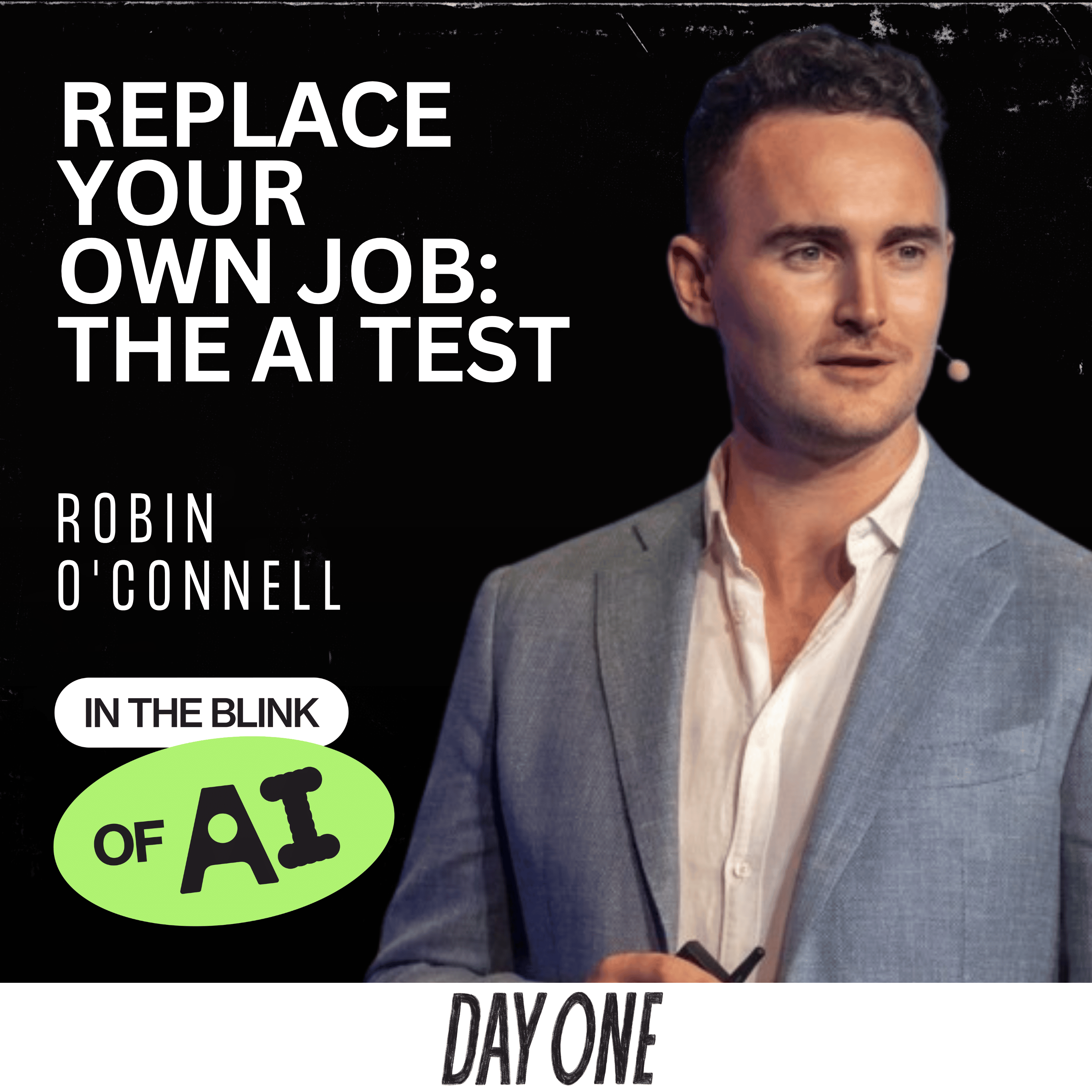
Speaker 2I'm pretty sure I DM'd you, right, Robin? So clearly you're going on that podcast. Exactly. Great conversion, that one. Exactly. Yeah. Hello and welcome to another episode of In the Blink of AI. I'm Georgie Healy and you guys, we have been smashing the podcast charts this week. It's thanks to you. It's 100%. It's 100% thanks to you. Listening to this episode, ranking the show has got us to the top 10 of business charts in Australia. Top 200 of all podcasts ever. We're currently at 188. That's across like entertainment and tech and business and pop culture and fashion. Crazy to see this show next to my heroes. So thank you. Thank you so much for your support. I will continue to make the show better and better. It's my favorite thing in the world. Thank you for being part of it. Today, LinkedIn has 1.3 billion members globally. The smaller accounts, those with 2,000 to 10,000 are the fastest growing segment on the platform. And today we have the most incredible guest to dissect that. We have Robin O'Connell. He leads LinkedIn's creative studio team in ANZ. He's been with the company for over 10 years. And we talk about replacing your job with AI. We talk about pumping out 10 AI posts at once. Should we be doing that? How to create a real, voice on LinkedIn that cuts through, gets traction, what good looks like, what are the results that would tell you you're on the right track? Can I speak from personal experience on this? And this is not sponsored. This is genuine. LinkedIn is my biggest platform. It has been a complete career changer for me. And it just started from posting regularly while I was at Google. And the traction I made on that platform gave me the confidence to leave the amazing brand that is Google and back myself as a personal brand. And I, I couldn't have done that without the LinkedIn platform. And that's genuine. But I made so many mistakes. There's so many things I wish I knew. I wish this episode existed before I started. So I really hope it makes a big difference for you guys, for your business or personal brand. And I can't wait to hear what you think. Let's dive in. You're listening to a dayone.fm show.
Speaker 3Founders scale faster on deal. Set up payroll for any country in minutes. Hire anyone, anywhere. Get visas handled fast and get back to building. Visit deal.com/dayone. That's D-E-E-L dot com slash day one.
Speaker 2Robyn, welcome to In the Blink of AI. Very pumped for this episode ever since we first spoke. And it's not your first rodeo. You've been on a podcast before. So I know that you're just a great storyteller. No pressure. No pressure. Yeah. So before we dive into the interview questions, if there's any AI hack that you use, anything you can share with our listeners.
Speaker 1Yeah, great question and delighted to be here. Thanks for having me on. I think the AI hack for me that comes to mind, the one that's had the most impact is kind of it's a little bit boring, but it is, I think, really interesting when you think about applying it and that is using an AI note taker to transcribe all of your meetings, which a lot of people do already. To some extent. But if you can do it consistently, like if you can keep getting those transcripts, I think the systems that you can build based on that get really, really interesting. So if you're a marketer, for example, and you're launching a campaign and you want to test that campaign concept, if you can use the transcripts of all those customer calls to train an agent or an instance of your AI to give you feedback, you now have really good insights into how your campaign might land based on actual customer verbatim kind of feedback and thoughts. And same as if you're a business owner and you want to brief in like a marketing agency, use those transcripts to help write the brief, to talk about customer problems, to give some verbatim quotes. I think the applications are really, really cool when you have that kind of base and foundation of like really, really good customer conversations. So a little bit of a boring hack, but I think really cool. So you can apply it if you do it consistently.
Speaker 2Robyn, the boring hacks are the ones that we use again and again and again. Exactly. The cool, like I cloned my voice or whatever it is. It's like, that's nice. Are you actually going to use that every day? Yeah. Tell the listeners again, like really briefly, why consistency is key with these note takers as opposed to, oh, well, this meeting's important, I'll do a note taker for that. I don't know if this one will be or won't be.
Speaker 1Yeah, well, if you only turn it on for like certain customers or a certain like business meetings, then you are only going to have certain pieces of information recorded. And often you'll bring bias into that. So maybe you'll turn it on when a conversation is going to be good. Or maybe it's a customer that you get on well with. But that's not the only data that we would want. And so consistency becomes really important to get the full breadth of like information, all your different customer types, all the different interactions that you have. It's hard saying that the customer should know that they're being recorded and we should be removing personal identifiable information. But consistency can lead to just better data and therefore better tools and workflows that we can build.
Speaker 2Great shout. I had a big rant about some AI note takers don't let the participant know that they're on the call. Yes. That makes me feel quite uncomfortable. Yeah. We like to know if there's AI there. Yeah. Okay. What is one thing you specifically think marketers should be using the AI for that would unlock more efficiency, growth, anything?
Speaker 1Yeah, I think it's a really good question. And I don't know if there's one thing. There are so many different ways we can be applying AI. But maybe my controversial take here might be, I think you should be using it to some extent to try and replace your job. And I know that that can be a little bit uncomfortable. But there's a couple of reasons for this. And the first is, I think, like when the business world looks at marketing, I think often you look at it from the outside and it looks pretty straightforward and you think, you know, I would be able to do that. Our marketers will know people have opinions about marketing and how advertising should be done. And I think that's led to a consensus that marketing might be one of the first ones that is like heavily replaced by AI when we think about different professions. And I don't think that that's true at all. And so this is a reason why I think marketers need to be learning the technology, applying it wherever possible and having this mindset of, can I replace elements of my work with AI and AI tools? Because what you will find if you do that is that it's not possible. Right. And you will see pretty quickly that AI won't be able to replace end to end workflows. And so I think it's about using it, targeting different aspects of your job, seeing where it can be used and then really importantly, where it can't be used and where it's still not applicable. And I think that is where we can add so much value in those areas.
Speaker 2Do you think people are scared to use AI to replace their job because they genuinely think that AI can replace their job? Is that why people are scared to try?
Speaker 1I think to some extent, yes, especially for those maybe earlier in their career. I also think that there's a really big element here of like information overload. And I think that there are so many advances that happen every single week. I think there's so many new tools for us to try. I think it can feel really, really scary from the outset, kind of thinking like, how am I supposed to get my head around all of this? And I think those two things in combination, like, well, actually, I'm a bit worried it might replace my job. Plus, I don't even know where to start. I think those two things together lead to marketers and a lot of different professionals just not using it that much in their day to day. But I think what I've seen with marketers that are really successful in this are they do a few different things. So the first is think about like an end to end workflow. Not necessarily sitting down at your desk and thinking about everything you do every day, but more like specific tasks, like you need to get a campaign live or you need to create some new resource for the field that you're working with or you're creating a piece of content and then thinking about how can you apply AI and just the newest technology to that in order for you to get ahead. And I think the critical thing here is to create a venn diagram right and you have one circle of like what's possible which is really exciting and we could kind of talk about all day but then the really really important circle is uh what's actually possible today so it's like possibility plus reality and the the overlap of those two circles the center point is where you want to focus and where you
Speaker 2want to build i have never heard that venn diagram example i love it what do you hear people say like oh i can't wait for the future where it's this yeah that you kind of either we need to dispel or maybe it's not there yet is there anything where you're like cool guys but we've got a lot in the present that we need to focus on as well there's so many different things because
Speaker 1i think like at the end of the day like ai became a part of our lives like we opened up chat gpt for the first time and we started using it and it is nothing short of magic right it is incredible and once you use it more and more you begin to realize how powerful it is and when you start thinking about how you can then apply ai to what you're building or working on the possibilities become endless pretty quickly and so you might say well we should be able to get ai to analyze our customer base and our crm you know decide what the ideal perfect customer is create advertising for that profile and then shoot it out to different platforms and put it live and that sounds very realistic because of the world of ai and what's possible today once you get into it and once you start to build you will see the limitations pretty quickly i mean like just the fact that a lot of these systems don't talk to each other is often
Speaker 2the biggest one right yes that's such a great point i mean with fable coming out it's like oh we've reached agi so of course the first thing i did is who's going to win the world cup and tell me every single match exactly the scores posted on linkedin i'm like guys we got it here we got it nailed it and everyone's like wait no penalty shootout like like like there's a bit of nuance there that it kind of missed even fable yeah exactly speaking of the things that in that end-to-end workflow for a marketer what can't ai do well that is perfect for a human being yeah
Speaker 1i think that's a really good question and it's one that like every marketer should be asking themselves because it's really where we should be focusing and and it's just kind of stepping out of that for a second and thinking about like marketing as a whole and if you think about how you market like how you go to market with your product with your solution with what you're selling the vast majority of people will go straight to okay what are the ads what do the ads look like what does the content look like but the thing about that is that advertising is a very small part of marketing right it's just promotion like one of the four p's and so if you actually think about where marketing adds value and where marketing can be strategic it's understanding your customer and your market really really well it's thinking about how you segment your market who you're targeting what your position is so why would people pick your brand ahead of your competitors or ahead of some other alternative options and then it's thinking about okay well what price is the solution how do we build a product where do we sell it and then how do we promote it and so along that line of thinking it's really important to think about how you're going to go about that journey like advertising is less than 10 i would say 90 of marketing is before the ad is created and i think that when i think of the ai tools we have available to us today and if the question is like what can't fable do or like what can't the best ai do i don't think it can create marketing strategy and i've been deep in the tools and and deep in using these things and i would say that it is unbelievable that i've been able to do that and i think it's at the tactics like at automating the shit out of your tactics essentially right it can scale things it can create so much content can ingest and understand so much information i don't think that it has the ability to write an end-to-end marketing strategy it can help you with elements and it can help you with tactics but it can't do it all i still think now and for a long time into the future you will need a marketer and you will need someone with a really solid understanding of
Speaker 3strategy to do that for you founder scale faster on deal set up payroll for any country in minutes hire anyone anywhere and get visas handled fast so you stay focused on scaling deal takes care of onboarding hr it eor benefits and compliance so your team can grow without borders it's why more than 40 000 fast-growing companies trust deal to move fast visit deal.com slash day one that's d-double-e-l.com slash day one
Speaker 2it reminds me of um so many things i don't know what a perfect marketing strategy is but i know a beautiful campaign when i see one i know when something like really hits and i have none of the the four p's underpinning my understanding of it but i love it we have a lot of business owners a lot of startups um and founders and operators that listen what should they focus on if there's four p's and there's ads and blah blah in the early days of seeing if something's gonna pop off what's the thing they should spend their human
Speaker 1time on if you could share if i could give like one one piece of advice there i think the role of marketing should be being the voice of the customer and really truly understanding the customer and i would give that advice to founders to people growing brands to people thinking about just trying to get in front of more people it all starts with step one of the strategy and step one is a really comprehensive understanding of your customer your audience who you're targeting um what's important to them it's having like really strong research backing that up and it's a bit of a house of cards here if you don't have that at the bottom everything else can tumble my favorite framing here is when it comes to strategy in general in the assumption lies the weakness right and most strategies fail because something has been assumed and so we should never really be assuming that we fully understand our customer we have to talk to them we have to understand them
Speaker 2we have to understand that market you don't have to comment on this but i found something very interesting as i'm growing my own brand and yeah and profile and i have been researching a little bit about how to do that and i've been doing a lot of research on how to do that and and i the number of creators i have heard from that have said they've grown a huge audience of people they don't want yeah like they accidentally built this brand and it's like i don't want my own customers yeah have you ever heard of that happening or is that a recent phenomenon with ai and growth and things like that yeah look it's almost a good problem
Speaker 1to have right because i mean you still have the following you have the brand and like you're going to have the equity and i guess you need to figure out what to do with that next but like it totally makes sense like you can grow in the wrong direction and you become you can kind of become famous for something that you don't want to be famous for or you can end up attracting an audience i guess that ultimately won't convert or you're not really looking to uh looking to do business with and so i think it's a nice problem to have in most cases but i think it can happen you kind of grow without too many not constraints but too many kind of um like focus areas for what
Speaker 2you're really trying to do yeah because with ai you know there's the hooks and this is content creation yeah specifically i'm sure it's a very niche part of the the big picture but yeah you can grow really quick and so i was kind of a little bit down on myself i was like i could have been going faster with ai yeah but ultimately i think what i'm doing is scalable at least at the moment oh yeah well i like my audience i know my audience and then maybe grow from there
Speaker 1yeah 100 and we've had this conversation before around like you know you see these guides that are like hey you can 10x your content with ai and you can you can like massively scale what you're doing to reach a bigger audience like i think like if you see a post that says hey i've replaced my marketing team and i'm growing to like a million dollars revenue comment delusional in the comments and i'll send you a pdf of how i did it you can ignore those posts for the most part because i really believe that like if you have the opportunity to create content and to create something to get in front of your audience and grow is it better to create like 10 pieces of average content with ai or is it better to focus in on a more repeatable powerful formula i would always urge you to do the second there and i've seen brands do this and i've worked with brands where they sat down and said you know we can use ai and we can do this and i've seen brands do this and i've worked with brands where we can create 10 or 20 pieces of content for our our leadership and our business and get them to post about it and talk about it that seems like a good idea but the alternate there is rather than creating generic content at scale for all those different people and getting them to post it what about if we looked at one or two that we know will be great at creating this content that have a story to tell that are motivated to do it and what if we actually invest in creating that content with them. So I think like day in the life, kind of like interview style with an executive who or with a leader or with anyone at your company that has a really good story to tell and when we go down that road and when we focus on something that's far more likely to be of high quality and to engage an audience that works really really well and then you can scale it and then you can apply the 10x you know you can use AI to create four different versions of the content for your paid media campaign to test it and you can formalize that process and apply it to different people and different stakeholders but it comes back to focusing on quality rather than quantity like quality first quantity second I think is a really good way of thinking about content and content marketing reps over research are you better
Speaker 2putting in the reps when you're freaked out and overwhelmed just to see how people react or research get that one piece of quality content
Speaker 1then put the reps in it's it's a tough question to answer and I'll tell you why it's because if you don't create the content and if you don't have a regular presence in market how could how can you expect people to remember you right you you lap the person on the couch every time right and so it's really really important that you are getting your content in front of people on a regular basis but if that means that you're just posting generic content you're using AI to create content that no one really wants to see like I would say that that doesn't really help you you need to find the balance and this goes for you know an individual trying to grow a brand and it goes for a company trying to grow a brand is we have to have regular presence in market but I really think that focusing on the high quality pieces of content that are more likely to get engagement are ultimately what's going to make you successful so if it was a binary choice one or the other I'd say focus on the quality content and then figure out the quantity afterwards in an ideal world you're trying to do both I'll make it about
Speaker 2me for a second I do get asked about my LinkedIn following which you know hard one but also like you know I've made so many friends on the platform and I will just tell people oh it's just showing up sometimes I rage bait sometimes it's thought leadership sometimes it's this just do that like just do whatever and then I'll notice they'll just post whatever and not get the traction and I'll be like yeah not like that and it's very hard it's very hard to kind of be if you were to tell a brand that is like I am starting out on LinkedIn for example as a platform do I rage bait to get the eyeballs like I know it depends on the brand but is there any way they can figure out what would work for them yeah it's I get that question quite a bit as well
Speaker 1what do you do when you're starting out on LinkedIn and I would say that like there's no one way to do it like there's no one way to get your go-to market right there's so many different ways that you can show up a lot of it comes back to the strategy that we were talking about who are you trying to reach what kind of a brand are you right favorite example of mine Monzo Bank in the UK uh Neo Bank kind of um a challenger for some of the more traditional banks guys I was in
Speaker 2tech for a year so I'm an expert they are the cards that are portrait mode instead of landscape mode there you go if you've even got a card right yeah yeah but yeah exactly and that's one of the
Speaker 1ways that they stand out but they are against the grain right they're non-traditional they're a new way of doing things their brand voice reflects that go to their LinkedIn page and check out their posts they are unhinged at times like they're really really funny like they are very unique to the market but I mean yeah it's uh it's a fintech company it's a bank like it's in that area and it stands out so much against its competitors because that's what it's trying to do it's trying to be seen as different it's trying to stand out and its brand voice is perfectly aligned to that and so if you are a brand starting out right now and you're thinking like how do I go from zero on a on a platform or how do I get that go-to-market right start with the strategy make sure that you're aligning your voice and what you're doing to your strategy you have to make sure you're getting from zero to zero and then you're going to start with the strategy and the right people right message right way of promoting yourself and just a couple of like tactical tips number one when I started in the content marketing world I had this idea that like if you want to you know show up well in content you have to be polished and professional you should look like apple like you should base your brand on some of these really big successful brands or like some of your big competitors if I've learned anything from like 10 years in the marketing world that I've worked with and the kind of go-to-market world it's that the more you stand out the better and especially like today when AI has risen the standard like it's so easy to create polished content the more you can create something that stands out that is unusual you know if all your competitors are blue be pink like if all your competitors are logical be like highly emotional like try and go against the grain you're way more likely to stand out and if you can achieve that you will see outsized results like that would be my main tip is don't follow the crowd everyone goes left you need to go right
Speaker 2world cup is right now I read that the reason they all have pink shoes right now is they probably all use the same algorithm that said oh well pink stands out against green yeah color theory but now they all have pink shoes Robin yeah should have picked orange right like any other color
Speaker 1that's a big problem for the makers of those shoes now because are they Nike Adidas or something else no idea they're just pink shoes yeah and so that's the problem with just blending in is there a perfect
Speaker 2split though if you could you know you're a brand or you're a personal yeah you you don't want to be all rage bait all clicks because that that gets boring okay that's another controversial take she's full of controversial takes you want a bit of thought leadership if it's all thought leadership it's like okay another lecture is there a good split I think like
Speaker 1there is the right split between like the posts and the content that drive outcomes like the logical stuff like the case study and like this is the example of how I worked with this brand and that stuff is really important right because you know if Monzo Bank only ever talk about the funny stuff like do they actually have something that can help me in my in my day-to-day that they need to get like the logical stuff in there as well and it's the same for us like you know if you know we need to have posts that are a bit more in the thought leadership side that showcase what we do that can show people and brands like what we're like to work with so that they can make that connection now that might not get you a huge amount of impressions and it might not go viral but a better way to measure that is like what's the outreach like are you getting people saying hey I've seen what you're doing on LinkedIn I'd like to work together are you getting DMs are you getting comments I think that's a really good way of measuring that content more so than the the mass reach element but it's important that like as you said if we only ever focus on that people that aren't like in market and thinking about working with us or working with our brand they're not likely to remember that because we haven't done enough to capture their attention so we still need the content that captures attention and kind of builds our brand and that might be you know rage bait stuff but it can look like a lot of different things I would see it more as like the mass reach way of getting out to as many people as possible and I think that's a really good way to measure how many people as possible building our brand getting remembered and I think a great content strategy does those two things we work on getting attention and getting remembered we also work on like logically getting people essentially like to be leads right to actually want to work with us
Speaker 2and to reach out comments and DMs is this a great signal that you might be on to something if you're a brand or a person even in the early days I would say yes I mean you'd probably think that as well
Speaker 1right like if you're a good brand you might be able to get a lot of people to reach out to you getting a lot of messages of people that want to work with you I would say that that's a lot more valuable than hundreds of thousands of impressions I'm pretty sure I DM'd you right Robin so clearly
Speaker 2you're going on that podcast exactly right conversion that one exactly yeah yeah it is a great point though I have friends that have much bigger followings and then they lament that I get more DMs and so I'm like I would love to have your following and they're like love to have your loyalty there you go so try and do both guys yeah exactly yeah that's the dream to do both I loved hearing about your dad using Chak GPT yeah can you please tell the listeners a little bit about him and what
Speaker 1he's using Chak GPT for yeah for sure so my dad lives in Dublin and he's a serial entrepreneur I guess you could say has owned and operated a lot of different companies built a lot of different brands over his lifetime and during COVID he had a retail technology business tough time to be in retail so with lockdowns of course it became quite difficult and he lost that business and so past few years he's been rebuilding and kind of thinking about what he's doing next he's uh combined like a love of his which is landscaping and gardening with his amazing business brain and so he's working in that space at the moment and what does he use Chak GPT for
Speaker 2because clearly he's got the business acumen yeah like is it just doing everything he did before a a little bit quicker.
Speaker 1great question this is where my bias comes into it a little bit right so my dad texts me says hey i'm using ai a little bit um in the business and i like i'd love to to chat a little bit about like where else i could use it and so i thought i would be jumping on the call like looking at like how to use chat gpt and why you should be asking it he has been going to people's back gardens for a project taking pictures of the space he's been going home and working with chat gpt and he's been kind of uploading his vision and he's like i want to use this product this material and he's working with the image generation area of chat gpt to essentially create images of the finished product of what it would look like post project and he's going back with an ipad and he's showing people what this will look like and i was blown away it is such a brilliant use of ai that i don't think a lot of people are doing in that space and so i was blown away by what i was doing in that space and so i was blown away by what i was doing in that space and so i was
Speaker 2blown away by what he showed me yeah imagine trying to describe the landscape yeah and which plants and why like it would be lost on me i'd be like that sounds expensive i don't understand
Speaker 1exactly and just visualizing it is just it's so helpful and so like there was two big lessons that i took away from this the first was don't underestimate dennis is dennis been my dad and then we love dennis the second one being like ai and that technology in the hands of the right people like the people with the eye and the people with the business acumen like that's where it gets
Speaker 2really really powerful unfair question do you think boomers like your dad are going to be able to leverage these tools better with their knowledge that they already have and years of experience yeah or gen z's who are maybe more technologically literate well that is such an
Speaker 1interesting question because gen z i think if you look at the data are using ai more and are more kind of ai native but my experience through my dad and through some of the other people that i've spoken to is like there's no age limit to this stuff like it is designed to be picked up and used and a really you know big learning for me the more that i've used ai and the more that i've kind of gotten into this world is it's the people with the expertise that are winning right like the
Speaker 2engineers if that makes sense so who should be using ai that might currently think it's not for them and get the best rewards out of it i would say like like anyone listening to this like you
Speaker 1are an expert in something uh and i think that's really important that it is the experts that are building the tools and so for me this kind of this started when i started like deep diving into the ai and building agents and i had a look at how they were being built and it's incredible like what these tools can do like they can look at your website and your crm and immediately understand you and your brand and they can look at trends affecting your audience and create content based on that and they can push that content out it's incredible but if you go below the the surface and if you look at how they're built and if you look at some of the output often they're built in a way that the marketing best practices or the real like core knowledge that you need is completely absent from the tools because there hasn't been an expert involved in the process it's been built by a a technical wizard but someone who doesn't have that level of marketing expertise and it kind of forced me to ask myself like what is the difference between someone with 10 years of marketing experience or 20 years of marketing experience and someone who doesn't have a experience in that area and yeah it's obviously the 10 years right the 20 years of knowledge but the argument would be like that's just data like couldn't you just upload that into the tool and and it would understand marketing and i think where it led me was really to the fact that for an expert and for a marketer all that experience yes it's having the information but it's also knowing when to ignore it you know what i mean like it is being able to apply it in very different situations marketing is not black and white the way we apply it the way we build brands is not black and white and these tools work best in black and white areas and so i think the perfect formula right now is the technical plus the subject matter experts building one of these tools or building one of those workflows i think that is where you can see some real magic
Speaker 2100 i can always tell when someone wants a podcast but is not a fan of podcasts because the questions they ask yeah i'm like mate have you ever listened to a podcast exactly it sounds so ai generated because yes i can get all the research about you robin yeah i can find out the latest headlines on where you work yeah i can get so much incredible context yeah and ask relevant things to the audience that i already have demographics on and i cannot listen to that episode because it is just not the way people like to listen to the podcast yeah and i'm not saying i'm an expert but you can't just let the tool dictate what would you call it like taste i hate this word taste being overused can't think of another word for it though
Speaker 1no it's like it's like acumen it is like expertise um i am with you on the word taste i i don't think
Speaker 2it's the right way to describe this as a marketer you must be like we you've ruined the word for
Speaker 1it's like a fad rather than an actual thing but yeah but you're right like there's a better word for it but it is that acumen it is that knowledge and again it comes back to like one of the earlier points we were talking about like using the tools now and understanding what you can and can't use them for is really important because you will learn quickly that today that acumen that knowledge that expertise that you have is still so essential and you know the debates open as to whether it my bet is that that's not going anywhere anytime soon the more time you've had in roles and seen
Speaker 2different market cycles and this has come and gone again like it's like what's that expression um history repeats itself there's nothing new under the sun people have been equivocating ai to when electricity like came yeah on the scene you know it was really dangerous so like it could do a lot of damage there's all this stuff but it can also do a lot of incredible things yeah 100 i could talk about electricity for a while okay so is it harder to teach a marketer how to use ai or is it harder to teach an engineer
Speaker 1marketing if you had to pick you have to pick i think that ai has been designed to be easy to use and no one designed marketing to be easy to to understand i think that's that that's really important like i do think it's quite easy to pick up the tools and use them and it's getting easier all the time as i said marketing isn't black and white today there are debates that are raging on as to whether brand purpose is important like should a brand have a deeper meaning or not and that does that affect how a brand grows um is it important to segment your market or just mass target uh you know how important is it to be differentiated as a product versus just being distinctive and look different these are ongoing debates in the marketing world where some of the best marketing minds in the business don't know the answer or two marketing minds might have very different kind of views on on what the answer is and so i would say that because of that ambiguity it is difficult to learn and it is difficult to teach it's also hundreds of years of of kind of uh of knowledge has gone in there as opposed to with the ai tools and using ai i do think that is easier to start using so i don't know if it's 100 black or white i don't know if it's 100 black or white i don't know if it's 100 white but if i had to pick i think i would prefer to teach a marketer how to
Speaker 2use ai less trend affected to engineering tools like here's a little bit more black and white perhaps like either the code fails or it doesn't yeah whereas marketing it's like well we just saw too much of that it's just not going to hit right but if you didn't know what you were doing in that space yeah exactly buried the lead you work at linkedin you have for quite some time what's the misconception you get about working there i keep asking you to give me back my top voice you keep saying no i will not do that yeah um anything else yeah i think it's um i mean a lot
Speaker 1of people think that it is uh at least my relatives think that it's all about um selling premium uh profiles and you're saying it's not it's not it's not the only parts and so the part of linkedin that i work in is uh linkedin for marketing kind of linkedin advertising and so i'm working for linkedin for marketing in australia you know i could be talking next week to someone who's working in new york for a team that helps governments and understand like workforce data and help like governments understand skills data related to how the workforce changes. Or we could be working, you know, in a different part of the world on talent acquisition and helping recruiters find the best talent. It's really, really diverse. There's so many cool ways you can partner with LinkedIn to use the entire ecosystem. And I think that's probably a bit of a misconception as people sometimes view it as a jobs platform or a newsfeed, but it really has grown to be way beyond that.
Speaker 2I'll speak for myself. You know, I've made friends through the platform, which is possibly the most embarrassing thing to say on air, like all my LinkedIn friends, but it genuinely has become a place where, well, we've got so much in common. I really love the way you think. This is an interesting person who's kind of brave sharing, you know, like there is an ability to meet people that become friends. But I think many of, I'll speak for myself, myself, I'm on the platform all the time. I don't really speak to people that work at LinkedIn, like, do you guys have the fanatical, like, are you guys updating your profiles a lot? Or are you too in it that you're like, that's, that seems weird? I don't know.
Speaker 1I think the vast majority of people at LinkedIn are using the platform every day and are kind of living and breathing it. Yeah. You do sometimes, like, it's like in kind of any job, you do get a bit like head down, bum up, like really like engrossed in the work. It is very nice to come up for air every now and again and to talk to someone who's using the platform, who has used it to build a network and build a profession and also make friends. And so it's, it's really nice to hear that kind of stuff.
Speaker 2You're like, do you have any friends outside of LinkedIn?
Speaker 1Yeah, I'm like, are you talking about me? Is that the?
Speaker 2Yes. You're my only friend now. Okay. That's really cool to know genuinely because I feel like there are a lot of us in the startup space that rely on the platform to survive as a business. It is just unlike any other platform, but it's quite cool. I think it did for me start as a job search and it's just evolved so much from there.
Speaker 1Yeah. It's kind of like, it's how a lot of people get started, but you're right. Like it has evolved so much, especially for startups and small business. Like that's where I love to kind of like work and to hear from people in those areas because, you know, getting the strategy right, for LinkedIn advertising or content or just how you're using the platform can have unbelievable effects. And I love hearing those stories.
Speaker 2I think my listeners would be very mad at me in the comments. If I didn't ask you about what we call AI slop, like they write their whole posts with AI and it's so many telltale signs. It's not even just the em dashes anymore, Robin. It's like other signs that are, if not this, it's that. And the way emojis are used. There's just so many tags. There are so many telltale AI signs so that when people post on LinkedIn, even if the content is good, it makes us cranky. Should we be posting, should we be using AI to create our posts or not?
Speaker 1I think it's a really interesting question. And I think like it comes back to part of the conversation we've had today is like about putting your best foot forward when you're creating content, no matter like what the platform is. And for me, a big part of that has been authentic. And being yourself in the content. And so I would always advise people to, when they set out to create content for LinkedIn, for any other platform, a great way to think about it is like, how am I providing value with this content? Like what will make this valuable to someone who comes across it? Either because it's entertaining, because it's informative, because it helps them in their day to day. I think that's a really powerful framing. And I think that that typically, in my experience, comes from people's like lived experience and what they've seen in their career and throughout their kind of professional journey. And so I would argue that the best content comes from you. Using AI to polish as a thought partner, to give feedback. I would never argue against that. I think that's a really smart thing to do and a really great way to use the technology. But I would say that when it comes to content, unless there's a piece of yourself in that content, I think it's going to be really difficult for it to do well, to grow your brand and really just to engage people.
Speaker 2Is this something that I genuinely think that comes from me and do I think I'm adding value by posting it? Tick, tick, we love. Yeah. Robin, should someone copy paste my entire LinkedIn post, put it through AI to create a sentence and then make that sentence the content? Do you have a comment underneath? I would say, no, no, I don't think we would not like that people.
Speaker 1Thank you. I feel like that was a, it was a personal dig at someone.
Speaker 2Some people don't do it.
Speaker 1Well, I think, I mean, comments are really interesting. I think that there you'll see like on the platform, they get more and more visibility and you'll see like an impression counter next to the comments.
Speaker 2This is a thing that we're seeing this blew up my group chat.
Speaker 1Yeah, because it's, I think there's been a realization that comments, are so valuable, like discussion is really valuable on the platform. And so when it comes to commenting, I would say bumping a post into AI and getting it to generate a content is not a good strategy. Actually joining the discussion is a really good strategy. It's a great way to get yourself more visibility, but also just to hear from other people to help the author of the posts. I think that is a really important point.
Speaker 2It's win-win. Yeah. Commenting on other people's posts. If you're a little bit shy to write your own stuff, but you love what other people write, there is upside to commenting.
Speaker 1Yeah, for sure.
Speaker 2Have you ever deleted a LinkedIn post because it didn't get enough likes?
Speaker 1I haven't actually. I've let it sit there in my shame. I've just allowed it to slowly die out. And I've thought, wow, I work in content at LinkedIn and I can't even create a good post.
Speaker 2That's so relatable. Thank you. I've been guilty of deleting before.
Speaker 1Yeah. It's tempting. I would say that it's hard to predict sometimes. Sometimes things will resonate. Sometimes they won't. It can be difficult to know what will work. But I would also say that I have had posts and I've heard experience from other people who have created content and it didn't have a great initial reaction, but the shelf life turned out to be really, really good.
Speaker 2This is another thing I'm noticing. Yeah. Yeah. Like Lazarus from the dead. Some of my posts are like. Oh, that did better than I thought, actually.
Speaker 1Yeah, exactly. And so my advice would be don't delete it and kind of leave it out there. And don't worry about it too much. Like a post without many likes is really not the worst thing in the world.
Speaker 2In this time, do you think it's best practice to have different social media personalities? Like as a marketing lead, not even at LinkedIn necessarily, would you say, you can be more entertaining on this channel, more professional on this channel, or is that just going to confuse people?
Speaker 1I guess, again, it does come back to the strategy a little bit. Like who are you trying to be? Who are you trying to reach? What are you trying to drive? And is what you're doing achieving those things? Like it all comes back to answering that question. I would say that like on LinkedIn, don't fall into the trap of like trying to sound too professional and thinking, oh, everyone sounds professional. On LinkedIn, I have to make sure that I'm really, really professional. I always encourage people to be themselves on the platform. Like people want to connect with people. Not like a really polished professional version of you that doesn't speak like that or that doesn't show up like that in the workplace. Like be the person that you are at work and you're more likely to create good content, to create connections with people, and ultimately just to see better professional outcomes.
Speaker 2Don't be too stiff and sterile. You're not going to resonate. Yeah. Spicy questions. Are you ready?
Speaker 1I don't know.
Speaker 2They're not that bad, I swear. If Ireland could win at the rugby or the football World Cup, if that was a world that existed, which one would it be?
Speaker 1I'll probably get some hate from this because the World Cup is currently on, the football World Cup, but it's rugby World Cup for me. I was born and raised watching Irish rugby. So for me, it would be the rugby World Cup. Please don't leave any mean comments.
Speaker 2Yeah, you've immediately cancelled. We're a big rugby nation, as you know. We're not very good at football here. The women are. Yeah, very true. Oof, I'm going to get myself cancelled now. Is the women's football team in Ireland quite strong as well? I feel like it is. Yeah, it is.
Speaker 1Yeah. I went to, I think it was a World Cup opener between Australia and Ireland in Sydney. It was a great game.
Speaker 2Yeah, I feel like I had a lot of friends that were there. Yeah. Strong. Next year. Yes. We're in. We have a lot of founders and business owners. Listen, look, you have touched upon this, but if there's one thing they should do this week, tomorrow, on the platforms to help grow their business, what is it?
Speaker 1I am a big believer in this idea of like building in public, like this idea that when you're building a business, one of the best things that you can do is talk about that on a platform like LinkedIn or anywhere. I've seen the results from brands that do this, right? that use their founders, that use the people that are growing the business and use their voices and it resonates so much with an audience and i think that that kind of content like talking about what you're building talking about how how it can help companies talking about the challenges that you have but also now the structures or processes that you've put in place whatever it might be like those professional learnings that come from your lived experience every single day it performs so well like it really really helps you connect with an audience and if you're wondering like what it looks like it's often it's like face-to-camera stuff where you're talking about like what's happening day-to-day at your company i think if you can get into the habit of like creating that kind of content you'll figure out really quickly what works and what doesn't work you'll set a great example for current employees and future employees i think it's a really good way of building a brand is kind of starting at the top and starting with just this concept of
Speaker 2building in public so do we wait until we've gone the vc route and raised capital before we show up and prove that we've made it or do we do it before we've even got any
Speaker 1validation i would say that like if you don't even have any validation if you're if you can't speak about the product then you should still be speaking about personal experience where possible um but in terms of actually speaking about like the product and what you're building the earlier the better but obviously there's some considerations there around like going through rounds of funding thinking about like if you're allowed to talk about things or you're not
Speaker 2allowed to talk about things oh i wasn't even thinking of that but i agree with you yeah do it sooner than you think like you don't have to wait for someone to give you a gold star before you're allowed to share it's a lot more memorable if people remember where you've come yeah exactly all right robin thank you so much for joining me where can people follow you how do you how to how to um get in touch with you and get support from you on linkedin robin o'connell
Speaker 1on linkedin my profile picture i think i'm wearing this exact outfit so you can't miss me i do need to
Speaker 2get uh some new clothes i'm gonna get comments like it's ai he's not real yeah i knew it and
Speaker 1robin o'connell on linkedin thank you so much mate thank you appreciate it
Speaker 2thank you so much for listening to in the blink of ai if you want to go deeper on anything we've spoken about today i write a weekly sub stack called attention is all i need yes it's hilarious it's a pun and essentially i go into ai rants tech news events i'm going to and more it's bite-sized and i hear it's awesome uh the link is in the show notes below
 PodcastTranscript AI