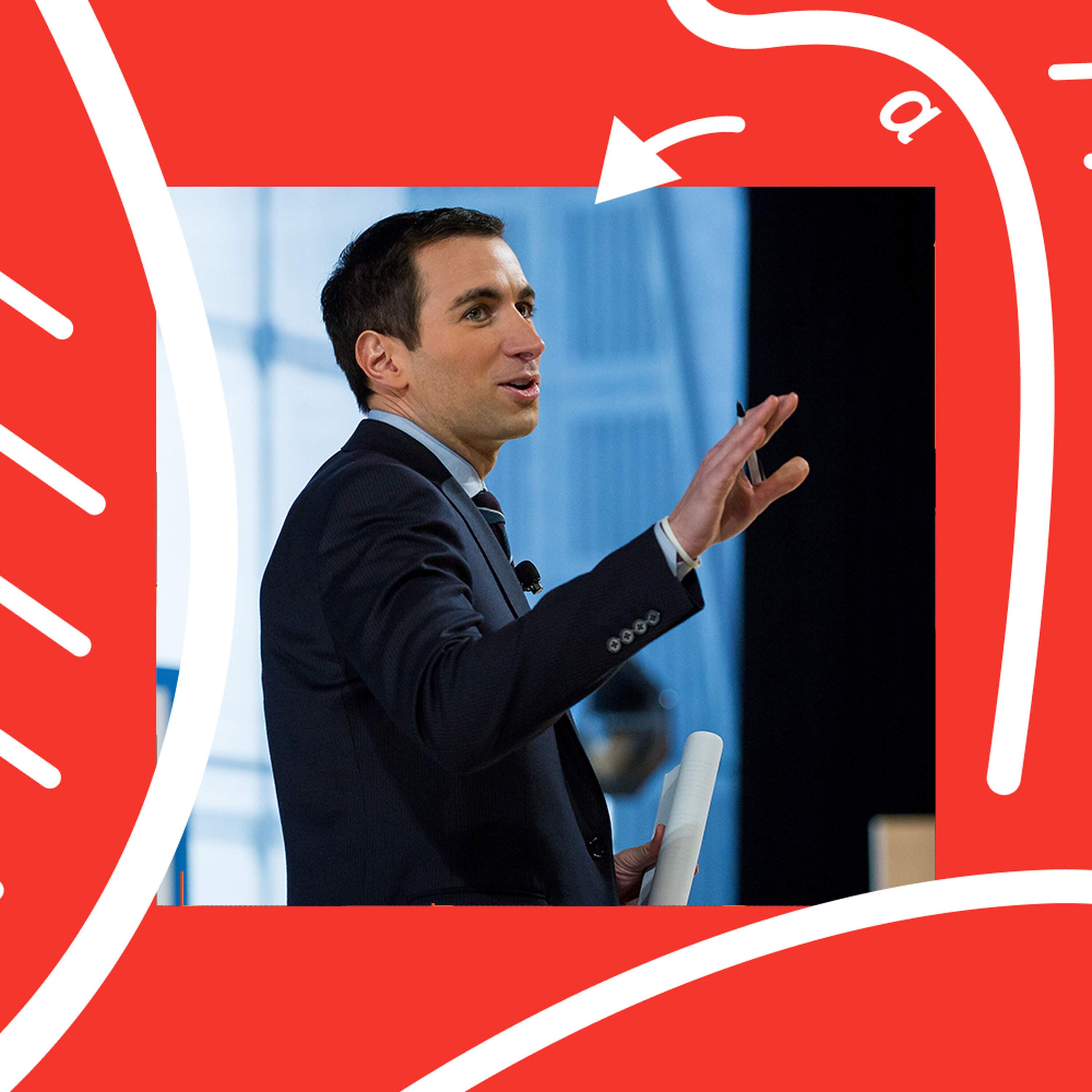
Why 2026 Is Beginning to Look Like 1929 (with Andrew Ross Sorkin)
36m 54s
This episode of Trumponomics features a discussion with Andrew Ross Sorkin about his book on the 1929 stock market crash and its eerie parallels to current economic conditions. Sorkin explains that the 1929 crash was a character-driven story of human decisions, not just economic forces, with many investors blaming themselves for their losses. He highlights the lack of regulatory frameworks—no SEC, Glass-Steagall, or capital requirements—which allowed rampant speculation and manipulation. Today, similar trends are emerging: deregulation, democratization of finance (e.g., retail access to high-profile IPOs like SpaceX), and a speculative frenzy around AI. Sorkin notes that while technological innovations like electrification in the 1920s and AI today drive bubbles, speculation is necessary for progress. However, he warns that leverage and confidence can turn a market correction into a broader crisis, as seen in the Great Depression. He specifically worries about an AI bubble: either it bursts due to unmet productivity gains or succeeds, leading to massive job losses and political backlash, as evidenced by growing public distrust of AI among young people. Sorkin concludes that while preventing bubbles entirely is impossible, better front-end guardrails and back-end crisis management are crucial to avoid catastrophic outcomes.
The Big Take podcast from Bloomberg News keeps you on top of the biggest stories of the day. "My fellow Americans, this is Liberation Day." Stories that move markets. "Chair Powell opened the door to this first interest rate cut." Impact politics. Change businesses. This is a really stunning development for the AI world and how you think about your bottom line. Listen to the Big Take from Bloomberg News every week day afternoon. On the iHeart Radio app, Apple podcasts or wherever you get your podcasts. Bloomberg Audio Studios. Podcasts, Radio News. I'm Stephanie Flanders, Head of Government and Economics at Bloomberg. And this is Trumponomics, the podcast that looks at the economic world of Donald Trump. How he's already shaking up the global economy and what on earth is going to happen next. This week we have something a little different. A conversation with arguably the world's most famous business journalist about something big that happened nearly a hundred years ago. But could very well be happening again. Thank you very much, Andrew Rossocken, for joining us. Thank you for having me. I'm excited to be here. It's quite unusual to have you, not least because you're a full-time journalist, for not just one, but two of our leading competitors. You're times in CNBC, but we're big enough to take it. But it's also quite rare to have someone who's primarily a business journalist. We most often have economic policy makers or economists or political reporters for that matter. But you do in your position, sit at the intersection of Wall Street and Washington and media. And that is where we're very interested in. We're there a lot. And I guess most important for this conversation, you have written two cracking books about two moments in economic history that I'm very interested in. And I think many of our listeners are interested in. The global financial crisis, too big to fail. And now most recently, 1929, obviously 1929, and what came after people are drawing more and more parallels with now. We're recording this on Monday, the 8th of June, after what is I think now being referred to a healthy pullback of a Friday in stocks. But obviously lots of discussion around how vulnerable this stock market might be. But I wanted to talk about the book and 1929 first, because I have to admit when I heard you were writing this book, I did wonder, am I going to want to read another book on that topic. It's a fantastic moment in history, if you're interested in economic history, but there have been a lot of books. I think when I love the JK Galbraith of the Great Crash, I think that's just like I've read that. Fabulous. I can't remember how many times. So why did you think there was room for another book if I can ask you the obvious question? I like you had read a lot of the other books as well. And for whatever reason, most of the books that have been written about this period to me were written by economists, they were written in a particular kind of style. And the kind of book that I always love to read more than any is the book that takes you inside the room with the characters that doesn't treat things as economic systems or economic cycles. And so much as really examines the people who make decisions that I would argue drive the economic systems and economic cycles. And put you in a place where you can understand their motivations, their incentives. You can understand their morality, whether they were aligned or unaligned with reality. And for me, I thought that was the opening. Could you write a character driven story that really puts you there and so that the reader, the public can really understand what was going on, not just in the sort of economic story, but in the personal story of these people. The truth is that the challenge was trying to figure out, could I find enough granular detail from diaries, from memos, from notes, from transcripts so that you really could feel like you were inside of their head. And famously, that is what you did. You were kind of the first draft of that bit of history for the global financial crisis, for that particular period where the bailout was being pulled together in 2008. You sort of think of the comparisons between those two books. I was talking to someone actually this weekend who happened to be quite a senior policy maker during the global financial crisis. And he had read 1929 and I said, what do you think of it? He was really impressed by the degree of detail, as you say, in the description of the characters. But he said the real lesson was that it was no one's fault. And he didn't think that was true of the global financial crisis. But what was the big thing that you took away from it? Once you got to know all these characters. Oh goodness. Look, I'm a believer, typically, and I probably believe this about 2008 as well, not that it's nobody's fault, but in fact that when you have a crisis of this kind of magnitude, it's everybody's fault. What is interesting, by the way, to me about 1929, oddly enough, when you get to this issue of fault or blame, if you read the diaries of people who lost a fortune in 1929, lost their home, had the margin call. Most of the diaries suggest that they blame themselves. They actually were not pointing fingers. They were not blaming others. They were saying, I shouldn't have done this. I had the phrase FOMO didn't exist back then. But they all had FOMO. They all, this fear of missing out. And that was a real poll for so many people who got into the market for the very first time. And some of them felt that they got suckered a little bit by a broker or two who had peddled them something. But they really thought it was their own doing, which is so very different than the feelings in 2008, which was to finger pointed everybody but yourself. I should say just caveat in fairness by the time we got to 1932 in the United States, if you read a lot of the same diaries, the finger point that has now begun because we've now moved to a whole new level of unemployment 25% unemployment in the United States and the economy had faltered to such a point where I think everybody was just grasping it's draws, but in the immediate aftermath in terms of faults when you say who is to blame. One of the things that people mean, I think when they say it wasn't their fault was that the system, you know, the Federal Reserve had barely just begun to exist. The infrastructure that is that was there to some extent in 2008. And then they had to kind of build some of their own things. All of that would had yet to be built and to be in the mind of an economist or a regulator or anything else. Literally no rules inside or trading was legal. There was no SEC. The investment banks and commercial banks were attached at the hip. This is before glass, Stegel. There were no capital requirement rules from the bank act, which came in 1940 none of it existed. And in fact, one of the things that fascinated me and I went searching for it. Today we look at a lot of the things that happened in the 20s and you say this is clearly wrong. This is you should be legal, if not immoral. And I was searching for somebody just one person who decided contemporaneously in the moment not to participate in some of the manipulation that was happening. And I couldn't find it. I thought there would be somebody who would be raising their hands saying, I cannot be part of this wildness immoral behavior. But it wasn't the case. You know, the markets are a funny thing. It's always been this battle of wits. And when you have no rules to the extent that there was manipulation, it was really people who thought that they were just outwitting the other side. If it's not against the law, then people do feel even if there's just something sort of iffy about it, they will often feel completely justified. I think the truth is they don't question what they're doing because it gets back to this idea of wits or trying to outsmart the other person. If you think about it long enough, whoever is buying a stock in that moment has to think that they're smarter than the person selling them the stock. And whoever's selling them the stock has to think that they are smarter in that moment than the person that happens to be buying the stock. And I think that's pretty much what the stock market is. And so when you think about how philosophically people think they think they are in the business of outsmarting somebody else. And you write about in the book, there was quite a lot of discussion about should we clamp down on speculation, everything else. All the discussion now is about removing guardrails and reducing regulation, freeing up banks, particularly from the administration, but freeing up banks not having crypto be subject to these regulations. Oh, we are dismantling the guardrails. I mean, it is happening right in front of us. In the past week, I don't know if you saw Goldman Sachs and Morgan Stanley, which are underwriting the SpaceX IPO, their analysts are now putting out research internally that's been used to sell the IPO that is bullish to the point that they are not going to sell the IPO.
putting up projections about where this company could be in 2030 and 2040. But after the.com bust, we actually changed the law so that bank analysts who arguably were conflicted because of their relationship to the underwriter of a stock were limited in terms of what they could do, what they could say, how the bank could use their research and things like that. And yet we've now changed the rules again all over again. I think when you think about crypto, whether you or when you think about the idea that people are trying to tokenize different private investments or take private credit or private equity or venture capital and wrap it in a public wrapper that looks like a stock. I mean, all of these things are new innovations. And by the way, they may be good innovations to some degree, but they don't come with what I would imagine would be the requisite guardrails to prevent things from going over the cliff. And the other pieces you're bringing new investors and anytime you bring new investors into the market, there should be a little bit of handholding. Maybe that sounds paternalistic, but I think that's the lesson of the last hundred years. That's such a parallel with the democratization of finance that you saw in the leader and the sort of late 20. Late 20s. That phrase, by the way, democratization of finance was used repeatedly in the late 20s. By the way, it was just used last week by Jamie Diamond when he was talking about the SpaceX IPO and the idea that that particular IPO is now going to a lot, a lot more shares for retail investors than just about any IPO in history. And when you look at that history, it does seem to be just when you open up everything. We saw that 401K's last year opened up to crypto and private equity is now more accessible, as you said, in various ways. And all of these IPAs coming down the track and the big debate about when they can get into the industry, you must have been found it more and more uncanny looking at some of the deep down about component parts. I mean, the last year, I mean, even said the last five years. I remember when the game stopped scenario was happening. 2020, 2021, I was thinking, oh my goodness, we are living in 1929. And there are so many elements to our market today that have these sort of eerie parallels. That's not to say that we're going to crash tomorrow, but it does suggest that memories are short. And if anything, the goal of this book, I always think to myself was, I never wanted to write a sequel to Too Big to Fail. I always consider this the prequel. So if you can remind people of what actually happened in the past, maybe it will prevent people from tipping over in the future. The other big parallel, obviously, is the role of technology. We talk about speculative fever, but it was around as now. A lot of it was around a real technological innovation, many technological innovations that were going to be pretty transformative for the economy. I mean, you had automobiles, you had radio, electrification, people, the limberg boom, you know, people getting on on planes. And yet, even with the transformative technology, you still had, as you described, the RCA stock which rose enormously ended up at, you know, 97%. It was the end video of its time. So how did you see that sort of parallel? Because it seemed to me, I mean, one of the things I thought was very striking is that was a technology, and we can talk about the now the concentration of, you know, how much of the returns in the stock market this year and how much of the economy has been driven by the AI boom. But electrification with probably some exceptions, people I assume were pretty positive about this stuff. It was liberating them. Whereas this technology, people are getting more and more frightened of maybe even angry at them. Oh, look, there's all sorts of questions about AI, but I do think that every time we've gone through a technological revolution, there has been a shocking amount of speculation. The question is, not whether you can prevent speculation, I would argue to you by the way that you need speculation in the system, that speculation to some degree built America. I mean, it really did. I was just talking to Jeff Bezos about two weeks ago. We were talking about whether we were in a bubble and he was making the argument that when you think about sort of the progress, technological progress of humanity, it has almost invariably come with a bubble, even if you go back and look at the biotech bubble, the most recent one. And anytime there's a bubble, there's lots of good investment and lots of bad investment. Questions, can you avoid it from becoming too much? But I think you almost have to embrace some semblance of it as sort of backward sounding as that may very well be. As an economist, that was one of the big lessons. There's thing that's still debated about whether Alan Greenspan was right to say, easier to clean up after a bubble as burst than to try and stop it going up. You basically still believe that even though we went through global financial problems. I still believe it. I just think that the question is, can you prevent the bubble from getting too big? And can you actually prevent a bubble on the front end? So there's always two sort of big policy choices when a crisis comes. One is, can you prevent it from happening at all? And if you can't prevent it from happening at all, and it does pop, then what do you do about it? I think that we could do a better job on the front end. And I know we could do a better job on the back end. But the idea of eliminating these bubbles entirely, I think, is a misguided effort ultimately. I think that's probably right. But I think that's not a politically popular thing to say. No, but I think it's more, again, with the sort of economics hat on, and what you care about is not the speculation or even the bubble, but whether it infects the broader economy. And that's obviously what you saw in the 30s. And that was because of the failure of credit and all of these things. If you look 1987, which was the kind of famously the first time, sort of in modern times, where you'd have that sort of spiral of selling that people experienced by the end of there was no impact on the economy. The market was barely affected by the end of the year. Even the bursting of the tech bubble in lots of countries, there was no recession. There was a very mild recession in the US. So a lot of it is about leverage. And you can reduce the amount of leverage that is built into a bubble or that speculation. I'm going to argue against my own book for a moment. You could make the same 1987 argument to some degree, about 1929. By the end of the year, if you would close your eyes and didn't know what happened during the year, the stock market looked like it had only fallen 17%. And if you just looked at it that way, you'd say, "Oh, not a big deal. What a blip." The problem was that ordinary Americans had gone to their brokerage house and were giving you, they were getting 10 to 1 leverage. And so when the 50% decline happened between October and November, it wasn't that they could ride it out. It was that the banks were calling and taking their homes. So it is interesting sort of how you can ride out or not a crisis. And then that crisis, what it does to confidence, which to me is ultimately the first domino in a sequence of dominoes that leads to the Great Depression. It was not pre-ordained in 1929 that you ultimately had to get to a 1932 style, 25% unemployment, Great Depression. [Music] Of course, everybody is talking about how dependent the economy is on the AI boom and or expectations around AI and the productivity associated with that. And I think we just model to your point. There's a 20% fall in the S&P, which is kind of similar to the tech bubble. But then that also affecting investment in the US, physical investment, which is obviously so much in AI now and general confidence and credit. If you saw what I kind of declined, you do worry about it affecting the economy. But I worry about two things in the context of AI. I worry about, are we in an AI bubble and that everybody can't afford effectively all the infrastructure investment, everything else that comes along with that. And it somehow pops along the way. People don't find the productivity that they were hoping for. Or there's some kind of technological shift that allows all these models to work without all of the chips and data centers on one end. But I also worry about what happens in success. And I don't know if you've modeled that out. Because in success, it probably means that we have to have a shocking amount of unemployment. I would think to make up, to make those productivity gains that would be necessary to justify those valuations, a lot of people would have to lose their jobs. Now, so many people lose their jobs, who is going to pay for all of this stuff. So to me, there's sort of a double-edged bubble in the AI world that is different than some of the previous ones we've lived through. And that was a little bit why I was trying to get to about the unpopularity. Because I do think there's a possibility that you get the backlash before the product of it. I mean, one of the
- We're having it right now. - One of the ways the bubbles might burst. You probably saw there was an NBC poll that's like, now AI is more unpopular than Donald Trump and ICE, but still just like, the only things that are more unpopular than AI now is Iran and the Democratic Party. (laughs) - Look at all of those commencement speeches in the United States in the last couple weeks. Every time the word AI was uttered, the kids were booing and they were booing because they're demonstrably worried about their own future. And that is visceral. You can feel it when you talk to these young people. - I mean, is that what could potentially be the trigger for the bubble bursting? If it actually looks like it's not gonna be politically tolerable to have the kind of productivity growth or at least on the timeframe that's needed for these valuations, people start to question, if you have regulation coming in, if it's just not gonna be possible to realize all of these miracles, is that the thing that people could say, oh, hang on, this isn't gonna happen, not because it couldn't happen, but because politically it's gonna be impossible. - Well, if it's gonna be politically impossible, I actually wonder whether technologically it's not gonna happen as fast as people think. Bloomberg just did a conference where they spoke with Daryl Amode's sister and she asked about employment. And here's Anthropic, they're going public very soon. They've warned people that there's gonna be massive job losses. And she was asked quite directly, does she think that there's been job losses yet? And effectively said, no, yes, we've seen job loss announcements and things like that and even companies like Square under Jack Dorsey have said, we're laying off people because of AI, but I think most people have yet to find actually the ROI on AI, the ROI, on AI. So much so that they are firing people. - No, I think that's what we find as well. And we also, we do all these things on passing the earning statements and other things and there does seem to be a lot of kind of AI washing. You don't wanna say restructuring, you say, we're discovering all these benefits from AI. Thinking about how that, however it happens, if you do have a crash or a financial crisis related to all the things that we've talked about, I was really struck and this may be partly for a bifurc expected because I saw a sort of dry run for the global financial crisis sitting in the US Treasury dealing with Asia Financial Crisis and LTCM back in the late '90s because I was talking to you, I went back to the Too Big to Fail. And reading that description of these policy makers, many of them like Tim Geithner had basically been lifelong public servants, just grappling with what the facts were and trying to come up with the right plan and then managing just about to get bipartisan support to do things and that seemed almost as far away in history as the 1929s. It feels like it completely, another world certainly, another Washington. So when you are writing your book about the next crash, what's the policy making piece gonna look like 'cause it doesn't feel like it's gonna look like that? - Okay, so here's to me the scariest part. The scariest part is that Ben Bernanke wrote the playbook in 2008 about what to do in a financial crisis. You missed it on the front end, what do you do on the back end? The back end is you write the check, you write lots and lots of big checks, you flood the zone with money. And he had done his dissertation at Princeton on the Great Depression, saw that they did not act at the time and so he did and we saw that that worked. Now it was not a politically popular thing to do but I think from a technocratic standpoint, you would argue it was a resounding success. We then did it again interestingly during the pandemic and nobody batted an eyelash. In fact, I remember being so surprised we were bailing out airlines and I thought to myself, I lived through this before. People were used to protesting the streets about bailing out the banks. Airlines, nobody has a problem with. The difference between 2020 and 2020 and 2021 was the ballots were for everybody. If you wanted a bailout of some sort, there was a loan for you. And so I think we now have this playbook, we think we know what to do and the lesson is write the check. Now the problem is the next time we have to write a check, I imagine it will have to be for $3, $4, $5 trillion for the T and it may be that there's bipartisan support for a check writing at that point because people will say it seems to work, let's do it again. What I don't know is whether you believe that there is some invisible line that lives inside the bond market that turned into a red line and the investor class around the world says, no, Ma, I'm not doing this anymore. - Which arguably they're already doing a little bit with US. - Look, I thought that this invisible line would have been a red line 20 years ago. So-- - Losing the triple A. - It's very hard for me to predict what the bond market will do in this regard. But that to me is the biggest worry. You know, people talk about corporate debt and leverage and that's a huge concern always. But I do wonder whether sovereign debt becomes the next big issue back in 1929 for its worth. We had a budget surplus. - Yeah, also last time I was at US Treasury, but I don't think that wasn't correlated but it was 2000 was the last time you had US, had a US surplus. I guess there's another element of this was relating those to, you might have a crash that no one understands because everything has been so overtaken by Black box AI. Banks have adopted all these things. And obviously that was a feature of the global financial crisis that there were these instruments that even the heads of the banks that had the most exposure to them didn't really understand how they worked. But that's true to a much greater extent potentially if you start having even more kind of automated AI-enabled trading. - Oh goodness, sort of. Yes. - So we might be late long enough. The next crisis might be one that just nobody even understands how to stop. - That might be. That's a book. That's a horror story. - The Big Tech podcast from Bloomberg News keeps you on top of the biggest stories of the day. - My fellow Americans, this is Liberation Day. - Stories that move markets. - Chair Powell opened the door to this first interest rate cut. - Impact politics, change businesses. Listen to the Big Tech from Bloomberg News every weekday afternoon on the I Heart Radio app, Apple Podcasts, or wherever you get your podcasts. (upbeat music) - We were talking about this at the start because you do feature the journalists in your book. And I had a sort of personal interest because my grandfather, Claude Kaban, who was times correspondent in the late 20s and 30s in Washington and New York, you feature a great story of that. - And he wrote a tremendous memoir. - Several memoirs, although they feature a lot of the same stories. But one of those stories I had to include in the book because it was just such an extraordinary moment where he's literally on the street as the crash is taking place and he ends up at a home down near Washington Square Park. - Of one of the financiers? - Of one of the major financiers, the Spires. And you see the sort of upstairs downstairs element of all of this because in the kitchen, literally the staff has their own ticker tape and they're literally trading in the kitchen. And just to me, it's had spoke so much about sort of what had happened to the culture in New York City at that moment. - They're sort of braving going out to upstairs to ask him what's going to happen. But when you already use quite a lot of the sort of journalists of the time and you've paint some of the sort of portraits, obviously what's striking about business journalism then versus now we like to think was that it was also deeply corrupt. - I think they're clueless. - They're clueless of the deal book. They were taking payments for pushing stocks in there. - Oh my goodness. There were journalists who were clearly on the payroll. I mean, literally taking money throughout. There would be these manipulator of efforts called a pool operations where a couple of wealthy investors would get together and say we're going to run up the price of a stock over the next two weeks and one of the things they would do in the process is pay off some journalists to tell them that the stock was going to be on the move for this reason or that reason. What was interesting is some of these manipulative efforts were done almost in public, meaning people knew that there was an operation, I put air quotes around the word operation in a stock. They knew that there was this effort to push up and people wanted to play in that, meaning they weren't. - They just told they would get out. - They thought if they could get in and off the train before the train went over, the cliff that they would make a small fortune. And so there was this bizarre speculative effort. By the way, it feels very similar to what's going on with meme coins and crypto in certain ways and things like that. - Obviously, like people at Bloomberg, you consider that you're playing it straight. I think probably as very much parallel to Bloomberg and maybe not some other parts of media at the moment, just being in the Trump administration no matter what it is, you're playing it straight. And I think part of your thing is the capacity to be in the room, to be trusted by these major business players.
But we are in quite extreme times and the line between public and private and the things that business leaders are getting involved in or justifying to themselves is kind of different maybe from 10 or 20 years ago. Look, I actually think you talked about 2008. I don't know if you'll agree with what I'm about to say. I think ever since 2008, every single business leader has become a politician. They spend more and more their time either in Washington DC or in Brussels or here in London or they're going to Beijing. They have become diplomats. Go look at the trip that President Trump did with President Xi Jinping and all of the CEOs who were led over there. By the way, very similar to 1929 when Thomas Lamont, who was running JP Morgan at the time and all of these CEOs are sent to Germany. I'm sorry, to Paris to deal with the German reparations. I mean, it really just gives you a sense of how business almost has eclipsed the classic politician. In every politician now thinks they're a CEO too. But in this Trump administration that has become, there is a lot more to be gained from just speaking a lot to Donald Trump being on the right side of Donald Trump. Absolutely. And it's not just that it's quite good to go along with him on the plane in the summit. You actually have to go. And if you do go, you may get this very direct reward for your company. And if you don't, you may actually be punished. My job is to put a spotlight on the decisions and machinations that are taking place behind the scenes that are politically driven. I mean, how many times have I had to write or talk about Tim Cook's role at Apple and the various things that Apple has done? Well, you've spent the last couple of months talking about tariffs and how every company in America has been silenced. We talk about doing interviews with CEOs, asking about tariffs, and they quiet down very quickly. We had that with the rare earth, actually. We wanted to have when it was becoming clear that the Chinese having imposed that restriction on rare earth was affecting a lot of companies. I was saying, we must be able to find a company that's affected by this, and nobody wanted to say nobody. We finally managed to get. To me, the real proof of the silencing of corporate America from a political standpoint is if you go look right after the Supreme Court struck down the tariff regime, the administration put in place. Very few of the big companies, I'm talking about Apple and Amazon, some even try to seek refunds at the time. Refunds that they were entitled to. Now they ultimately, Apple, I believe, has as so many others. But I remember interviewing the president. President Trump about this, and I said to him, do you realize that there are a number of large American companies that are not seeking refunds because they fear offending you. They fear retaliation. And he said something to the effect of, I'm honored to hear that. And I will remember those companies that don't seek the refunds. I listened to your Jeff Fessal's interview, and he did that. He cited in his optimism about the US. And obviously, this is also, I mean, we were talking about all these things. This is a moment where there's enormous, certainly, a lot more, we're sitting in London now, a lot more optimism about the US economically than there is about the UK or Europe. And he cited that classic fact about sort of in the early 1900s, Argentina's income per head and the US income per head were the same. And then you've seen this massive divergence. And I don't know about you, but when I was listening to it, I was sort of thinking to myself, it's funny that he uses that example because we have seen this economic divergence. And he said that was to do with the US system and all of these things that were attractive about the US. And how damaging is it ultimately for the business environment, for risk taking, for innovation in the US, for US capitalism, if maybe economically still diverging from Argentina, but politically, we seem to be kind of becoming more and more like that kind of vision of Latin American populism. Oh, look, I think the political polarization is so extreme, and I don't see it getting better anytime soon. And I can't even, I hate to say it, I want to be an optimist, I can't fathom what it is that brings both sides to a different place. And I think so much of it is emanating from a sense of economic inequality and really the difference between labor and capital and how that at the import of capital is now taking far priority over labor and what that does to the polarization long term. I think that underneath even the conversation I was having with Jeff Bezos. So that symbolized by these kind of immune, we are becoming more oligarchic in our economy. And then there also, there's sort of a sense of that spilling over into the nature of our politics and the way Washington politics is bigger. Absolutely, because what you now have is that money has completely infected the politics. I don't think there's a question that money is now influencing politics in a way that we've never seen before. And so that's part of the doom loop or the spiral. How do you get out of that spiral? I do not know the answer to that because I can't imagine that the oligarchs, the folks with the money are ever going to be advocating to undo that influence. I feel like this is a terrible note on which to end. So I'm trying to think of a better way of end. We sort of talked semi jokingly about you not wanting to write another book about this period or about another crash. But what does that look like? Politics was not as polarized going into 1929, certainly not going into the global financial crisis. How does that play into those? I think you go back in 1929. The politics were shockingly polarized. One of the reasons that the government didn't take the steps it probably should have was because of the transfer of power between Hoover and Roosevelt and how much they disliked each other on a personal level and the politics of that moment as well. So I think we've seen this movie before and the question is, can we take lessons from 1929 and try to apply them to today? Because I think if we actually did, if we actually sat back and thought about it long enough, we could avoid the next 1929. Okay. Likely more hopeful that, well, I guess even if we are heading for another crisis and we're not sure how we're going to get out of it, we know that you will write an excellent book about it. So Andrew Ross talking, thank you very much. Thank you. That was fun. Appreciate you. Appreciate you. Thank you. Thanks for listening to Trumponomics from Bloomberg. It was hosted by me, Stephanie Flanders, and I was joined by the New York Times columnist and CNBC anchor, journalist Andrew Ross Salkin. The economics was produced by Sam Asadi and Moses Andam with help from Amy Keane. And sound design was by Blake Maples and Kelly Garry. Please, to help others find us, rate and review Trumponomics highly wherever you listen. The Big Tech podcast from Bloomberg News keeps you on top of the biggest stories of the day. By fellow Americans, this is Liberation Day. Stories that move markets. Chair Powell opened the door to this first interest rate cut. Impact politics, change businesses. Listen to the Big Tech from Bloomberg News every week day afternoon on the I Heart Radio app, Apple podcasts, or wherever you get your podcasts.
Podcast Summary
Key Points:
The podcast features a conversation with journalist Andrew Ross Sorkin about his book on the 1929 stock market crash and its parallels to today's economy.
Sorkin emphasizes that the 1929 crash was driven by character-driven decisions, not just economic systems, and that many investors blamed themselves rather than others.
In 1929, there were no regulations like the SEC, Glass-Steagall Act, or capital requirements, allowing manipulation and speculation to flourish unchecked.
Current trends—deregulation, democratization of finance (e.g., retail access to IPOs like SpaceX), and AI speculation—mirror 1920s patterns, raising concerns about lack of guardrails.
Technology (e.g., automobiles, radio in the 1920s; AI today) fuels speculative bubbles, but Sorkin argues speculation is necessary for progress, though leverage and confidence can trigger broader economic crises.
Sorkin worries about an AI bubble
Summary:
This episode of Trumponomics features a discussion with Andrew Ross Sorkin about his book on the 1929 stock market crash and its eerie parallels to current economic conditions. Sorkin explains that the 1929 crash was a character-driven story of human decisions, not just economic forces, with many investors blaming themselves for their losses. He highlights the lack of regulatory frameworks—no SEC, Glass-Steagall, or capital requirements—which allowed rampant speculation and manipulation.
, retail access to high-profile IPOs like SpaceX), and a speculative frenzy around AI. Sorkin notes that while technological innovations like electrification in the 1920s and AI today drive bubbles, speculation is necessary for progress. However, he warns that leverage and confidence can turn a market correction into a broader crisis, as seen in the Great Depression.
He specifically worries about an AI bubble: either it bursts due to unmet productivity gains or succeeds, leading to massive job losses and political backlash, as evidenced by growing public distrust of AI among young people. Sorkin concludes that while preventing bubbles entirely is impossible, better front-end guardrails and back-end crisis management are crucial to avoid catastrophic outcomes.
FAQs
The episode features a conversation with journalist Andrew Ross Sorkin about his book on the 1929 stock market crash, drawing parallels to current economic conditions.
He wanted to write a character-driven story that puts readers inside the room with key decision-makers, using diaries and memos to reveal their motivations and morality, unlike economic-focused books.
In 1929, many blamed themselves for their losses due to fear of missing out, while in 2008, people largely pointed fingers at others.
In 1929, there were no rules against insider trading, no SEC, no Glass-Steagall Act separating investment and commercial banks, and no capital requirements, unlike modern regulations.
Both periods feature democratization of finance, technological speculation (e.g., AI vs. electrification), and removal of guardrails, with new investors entering risky markets.
He believes bubbles are inevitable and often drive progress, but efforts should focus on limiting their size and managing the aftermath rather than eliminating them entirely.
Chat with AI
Loading...
Pro features
Go deeper with this episode
Unlock creator-grade tools that turn any transcript into show notes and subtitle files.
 PodcastTranscript AI