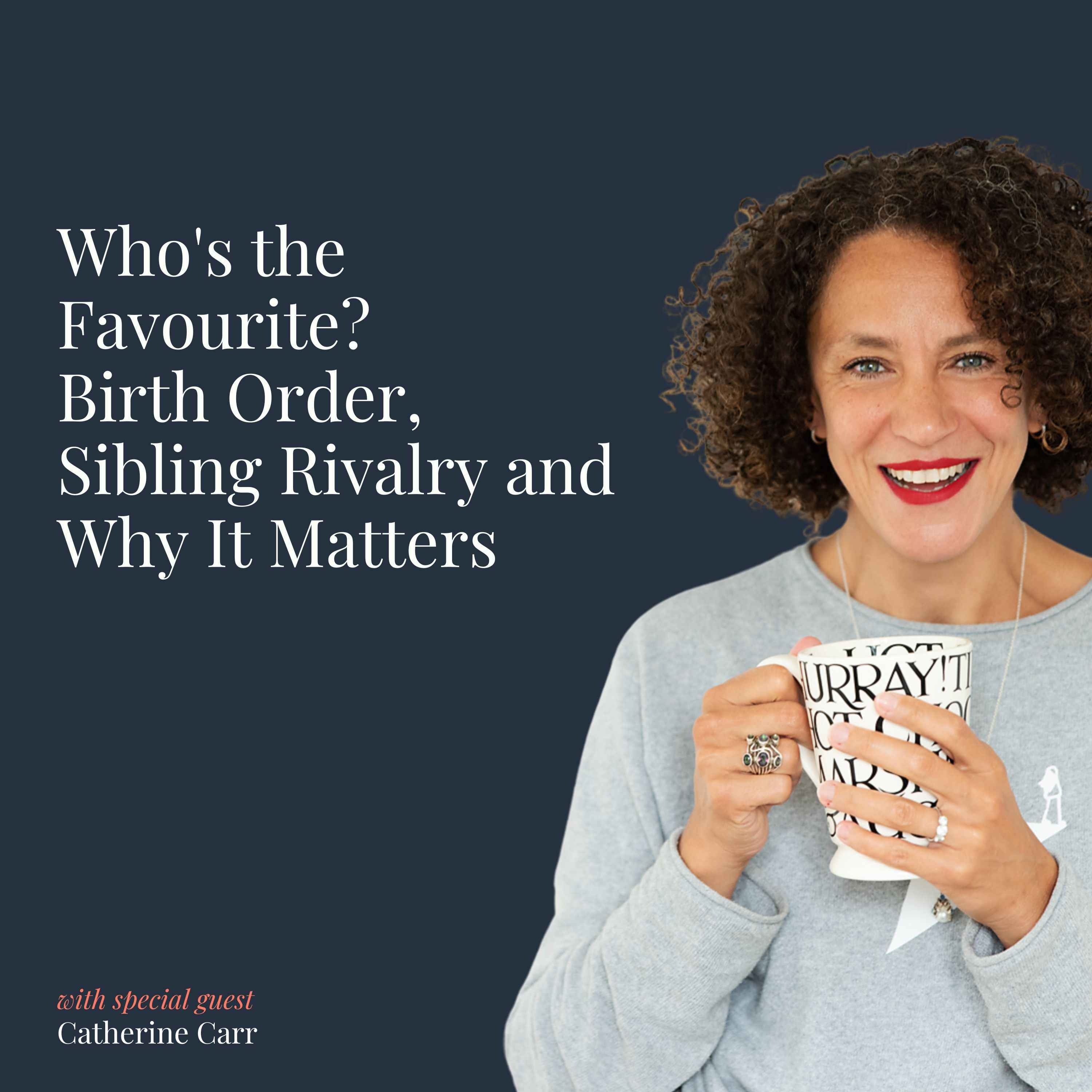
Speaker 1every child asks it usually not out loud but they're asking am i the favorite and at some point most of them do say it out loud you love her more than me you always take his side it's not fair and as a parent you give the only answer you have i love you both the same i treat you equally it's not a competition and they don't buy it because children are tracking something real not that you love one more than the other but that something is happening in your family something in the dynamic between your children which is shaping them quietly constantly in ways most of us have never stopped to think about today i'm talking to the person who spent years researching exactly what that something is this is the how not to screw up your kids podcast i'm your host dr mary hann so put yourself a cuppa find a comfy seat and enjoy the conversation this episode is about the sibling relationship the longest relationship most of us will ever have and what it's doing to your children right now my guest today is katherine carr katherine is a a book called who's the favorite which i will be honest with you i found slightly uncomfortable to read in the best way because it holds up a mirror to your family and you see things you didn't expect to see and being one of three there was a lot for me to see and a lot for me to understand katherine spent years talking to researchers psychologists and families to understand what's really happening between siblings and what she found is that we are massively under investing in this relationship we pour enormous energy into our relationship with our children the relationship between them we largely manage it referee it try to keep the peace and according to the research katherine spent years gathering that might be our biggest blind spot as parents in this conversation we talk about the roles children carve out in the sibling dynamic the golden child the invisible child the black sheep the caretaker and how the child is raised and how those roles once formed can quietly become cages we talk about birth order and what it actually means for the skills your child builds we talk about favoritism whether it really exists whether your children are right to suspect it and what actually matters and because this podcast is about anxious children we talk specifically about how the sibling dynamic feeds directly into our anxiety the connection is striking and i don't think it's talked about nearly enough we also talk about how the sibling dynamic feeds directly into our anxiety and how we talk about how the relationship that we have as a child and the dynamic and our birth order impacts us well into our adult life i found this conversation genuinely illuminating i think it will change how you watch your children together so without further ado here's katherine and i have to say a i have loved this book and i genuinely believe that it is a book that all parents truly ought to read whether you are an only child whether you are parenting an only child whether you've got siblings it's a brilliant book my sister will definitely be getting it for her christmas present um and the question i love katherine because i don't know about you but my children have asked that question explicitly multiple times of
Speaker 2course they have all children do they're desperate to know and people come up with good answers like you're my favorite blonde haired daughter you're my favorite child born in margaret and you're my favorite child born in march because well you can't say anything
Speaker 1else no exactly i've got one of each so i say you're my favorite daughter and you're my favorite son but it's hard
Speaker 2though isn't it it is and i think that the question's like the title is naturally obviously provocative and the book sort of goes way beyond it and yet at the same time the idea of favoritism is a thread that runs through the whole of the sibling experience and it sort of gives a a really clear indication to the lack of language that we have to talk about siblings because all we talk about is who's the favorite oldest baby middle and then we stop and that's all we seem to have in our boxes if you like our toolkit so it's a clever title on a lot of levels and i didn't come up with it that was my editor cecilia style well
Speaker 1we love it so thank you now you are a journalist and a podcaster and in fact you have got a podcast about siblings so what made siblings the thing that you kind of wanted to spend a lot of time creating a book around yeah
Speaker 2i do have a podcast about siblings called relatively which has been rebooted since the book has been launched and i started that in 2020 and the reason i started it was i was producing a politics podcast at the time and making programs for radio 4 which i was very much enjoying presenting producing whatever but i had this little burning desire to format and develop and do something independently that i was naturally interested in and i was on the phone to jenny and i was like jane garvey who used to present women's hour now works on times radio who's been a sort of de facto mentor to me really although she'd hate that title and i was saying to her you know god my sisters the drama i'm the middle of three you know the oldest her husband works for one particular institution my youngest sister she works for another particular institution all publicly funded should i say and i was like the stories i should make a podcast about my sisters you wouldn't believe it and jane was so wise she said well a don't you know i'm not going to be able to make a podcast about my sisters but b you should make a podcast about siblings because did you know it could be the longest relationship of your life and it was as if and i don't think i'm alone but it was as if someone had just sort of put a filter like an instagram filter on the world and all of a sudden i was thinking oh my goodness surely everyone else knows this it turns out people don't and i was obsessed that's where i started the podcast was born out of that and then i went to talk about the podcast on the radio and i was phoned up sort of within the hour by about two or three publishers or agents saying do you want to write a book about this because i don't think there is one
Speaker 1yeah i know and it's you've written it so beautifully in that you cover almost every aspect of the things that you might ordinarily think about with siblings but also the things that we don't think about and i love some of the interviews that you've got in there so you've got two boys yes does writing this book has it changed anything about how you watch them together and the
Speaker 2dynamic there it's so interesting because in your introduction you sort of said oh goodness you know all parents should read this and i set out to write the book and make the podcast without thinking about the parenting angle at all and because you've read the book you'll realize that when i get to the end unbeknownst to me i'd been on a parenting journey so i got to the end and i was like right so if that applies to me and my middle-aged sisters then crikey it applies to these two yeah it's made me think how to be a little bit i mean these words sound like i'm smug smuggingtons and i know what i'm doing every minute of the day but i'm not so set that idea aside but it makes me want to be just a bit more intentional about recognizing how my attention my resources my energies are spent with the children and how that might look to them and how i ask them to fill in for each other's not deficiencies but how i might ask one who's better organized to fill in for one who's less organized or how one who's better socialized fill in for one who's more awkward and how that might make them feel because i you know play with this idea in the book of sib sets the group of siblings in a family almost working as a unit sometimes and having different identities and they can borrow from each other and work as a cohesive whole but sometimes that's fractious i think there's so much in that kind of identity that's in opposition to each other or kind of trying to create some distance with each other that as parents if we're not in a relationship with each other we're not going to be able to not careful you can sort of impose patterns that you're not meaning to you know like oh you're the boy who'll do the job when i ask so you should just do it all the time all the time rather than doing the thing as parents which we don't want to do which is nag the one who's a bit rubbish at it because it's just frankly more work so that kind of thing and then i suppose how can i you can't make your siblings be friends and there's a lot in the book about why sometimes that's just too but insofar as i can it has made me think what are the conditions that i could try and create now that could help foster the best relationship between them possible the rest of it is up to them and life i'm sure there's some things i could do and look the book talks a bit about my sibling story which is that i was separated from one of my sisters by divorce so i have that as a very different baseline
Speaker 1yeah and it's it's so interesting about the different effects of sort of sibling and sister relationships and i think that's really important because i think that's age as well so i think in the book if i remember this rightly there's you sort of talk about that sort of biologically in lots of ways the optimal age gap is like two and a bit years isn't it but actually the quality of the relationships the sibling dynamics can actually be better with a larger age gap actually which is not necessarily what we would typically think of yeah i mean i
Speaker 2think it's a sort of you know let's just as a proviso say no one can really plan age gaps being what they are but yeah there are kind of strange things like it's more of an advantage let's say in some ways if you have a bigger age gap because maybe less rivalry about trying to sort of develop an identity that's discreet or different to your brothers or sisters but then maybe in some ways your development as an individual might be better served by having a smaller age gap rivalry is quite useful but so is the apprenticeship role of an older sibling that can teach you all sorts of skills that mean that when you potter into nursery age two and a half you can be a bit like I'm fine because I've learned a lot thanks very much so the optimal age gap I mean I sort of think those things are a bit of a nonsense to say because you're going to upset people who wanted more than one and whatever but I think it's interesting to think about all the nuanced ingredients and conditions which swirl around whatever children with whatever age gaps you have and say okay well this is what we've got aren't we lucky and how how does that what are the sorts of pressures that are coming to bear then on that relationship and if you know what age gaps can mean for your children bigger or smaller that helps you sort of think oh right you know more than 10 years it's like having two only children yeah four years they won't apprenticeship from each other very well two years they're going to be scrapping with each other but also learning okay I'm aware of that now it's part of that language that we can give to people to think about sibling relationships beyond the basics yeah yeah and I
Speaker 1think that's that I think when we look at it that way it can be much more helpful than thinking about it in terms of optimizing anything at all yeah I mean optimization is a word I'm not a big fan of absolutely not when you started writing the book and then when you were researching it and the conversations you've had and you've had some conversations with lots of different people including the Williams sisters which I thought was really fascinating in terms of the roles that they take on as well what were some of the things that are almost like common myths that you ended up either debunking or was just not borne out in terms of the research that you found? um I mean I didn't
Speaker 2talk to the Williams sisters I would have loved to I did quote a lovely uh yeah lovely interview by Simon Hattonstone who's just you know peerless and yeah they are fascinating absolutely fascinating on family roles I think I mean only children was probably the biggest myth and I know that's not siblings but if you look at what birth rates are doing across the world it is really wise of us to have a look at only children the myths about them were born out of some sort of crackpot 19th century early scientists in inverted commas who was a contemporary of Freud's who sort of observed how piglets and rabbits grew up in large broods and seemed to be resilient and then he did this weird study where he sort of wrote to all his friends who had private schools all over the states and looked for children who were peculiar or exceptional by which he means might have had a nervous disposition or a squint or a cleft palate or be gluttonous or a little nervy I mean all these weird Victorian terms and his research, again in inverted commas, showed that a high proportion in his mind of these exceptional or peculiar children came from were only children so he was like therefore only children are odd and it's I mean it is not even worth giving the term research to it was the 19th century you know the scientific research was not what it is now but unfortunately that stuck and the great depression didn't help because in the 1920s if you were poor you didn't have loads of kids because you couldn't feed them so there was a stigma and it's just the stigma that's the stigma that's the stigma that's the stigma that's the stickiest piece of nonsense research out there because actually when you look at research which has been done in the all the decades since these ideas about being selfish or not being able to compromise or share or collaborate have been totally disproven and actually there's a lot we can learn from only children because they know what it is to intentionally build the friendship siblings don't intentionally build their friendships generally when they're kids they're just at home together and so they foster beautiful relationships only children and they really look after them so I thought that was really interesting and as for the other stereotypes and things I suppose as I said at the beginning the birth order thing is where people get stuck it's like a sort of eddy an eddying pool where people just can't get out of this idea and I think there's some value in it because the first child is born to adults in an adult environment and the next child isn't and even that fact blew my mind when I first started thinking about this but I think how you take stereotypes like birth order and then how you kind of add on to it like a train like the next carriage to attach is what label did you have what was going on in the family at the time how old were your parents how much money where did you live so each child has this sort of sequence of things that affects their reality which will be completely different to their siblings reality so that idea of together but apart yeah blew the whole idea of shared childhoods out the water for me and that was probably the biggest revelation yes because
Speaker 1I mean obviously it's completely logical when you read it and when you stand back is that every child yes okay they may well be born to exactly the same parents and the whole kind of genetic aspect of it but their personality in terms of what they bring with them when they're born is going to be inherently different so the way they interact with their environment is going to be different but the environment is completely different for each child anyway not only in terms of the personality but also in terms of the way they interact with each other and how they interact with each other and how they interact with each other and how they interact with each other and how they interact with each other but also the the stage and age their parents are at the financial situation that you know what might be going on politically and economically at the time so of course it makes complete logical sense that you can't universally say that this is what happens with the eldest this is what happens with the youngest and but it is you kind of it is and then if you
Speaker 2add to that like ideas which are much more nuanced around family narrative or expectation and I look at the other Bennett sister on you know BBC and all of these daughters being beautiful and accomplished and trying to get married to save the skins of the whole Bennett family because that's what happened then you had to marry money and poor old Mary not being beautiful enough and therefore not really fitting the family narrative and how her relationship with her mother was markedly different to that relationship that her sisters had so not only do you end up in a sort of slightly different family in in a lot of ways to your siblings but that means and we know this as parents I think that you have really you you have a unique relationship with your parents and you have a unique relationship with your child because they're different personalities needs wants requirements and the way that your characters kind of gel or rub or whatever at different points together how could you have an identical relationship with any two humans on this planet it's so weird and yet that idea feels really controversial yeah
Speaker 1with siblings I got totally now the pod my podcast focuses on anxious children and I'm struck by how many of the patterns that you describe the golden child burdened by expectation the invisible child who learns their feelings don't matter the child squeezed out of a role they wanted and how they might feed directly into anxiety is that a connection that you make in the book not
Speaker 2explicitly but I think if you look on I mean I don't look on social media all that much but ideas around let's say eldest daughter syndrome and hyper vigilance and emotional caretaking and parentification all of those things I think I I do talk about that a little bit in the book with regards to siblings who might have explicit additional needs but also in terms of a slightly dysfunctional normal family where no child has a disability and I think overarchingly the idea that parents can cast children into a role in the way that they sort of show affection to the children in a way that messes up what should be a kind of natural little tribal sibling relationship and I think that's a really good set that works out their dynamic in a healthy and unsquashed way I think that is the link that I saw really clearly that by sometimes trying to do your best as a parent and trying to be a good mum by saying oh you're such a good little helper you're so good at helping with your little brother gosh you're such a good little helper this message that helping equals praise equals affection equals you it's easy to see how that might cast die for that that child and how actually left them alone to be the kids a bit more to figure it out a bit more themselves it might be a less of a distorted and squished and sort of I don't know what the word is really but almost fraught I think when people are performing children who feel they've been given a role and praise for it and then feel they have to perform it or asked not to be that role and to squash it seems bad so I you asked at the beginning about parenting my children that was where I thought oh right I need to be more explicit with my children that my affection for them is not dependent on them doing anything good being anything nice performing in any particular way they could be very very naughty very messy very whatever and I would love them the same yeah so I've tried to say that and they do laugh at me like yes we know you wrote a sibling book but I'm like it's really important to me that you don't feel if you mess up that this love has gone it's not that it would never be that as a mum obviously
Speaker 1it's incredible how much we at subliminal unconscious levels reinforce these things and in lots of ways you know when I think back um I've got two children I am a middle child I'm one of three when I think of the things that in lots of ways you were you sort of almost I don't know if ever ever any of the parenting books said this but you know you had you brought the second child home and you were encouraged to make a real fuss about the first and how much that they were helping and how welcoming they were of their sibling so of course we inadvertently literally walk into that trap of giving them that label of being super helpful in a way of really trying to kind of help navigate and steer this new addition and i wonder in lots of ways where you have bigger families with each subsequent child you have you have less of that worry and potentially more likely the children settle their roles within themselves rather than externally by the parents yeah i think
Speaker 2that's so interesting and my sister-in-law for example she has five children um she got pregnant with twins a happy accident so she had five under seven at one point so thoughts and prayers she's she survived but yes i mean your resources naturally are divided five ways and if you have premature twins on top of another child who's got something that needs doing there's less not fussing i wouldn't say that sounds judgy but there's less ability to hyper focus on all of the little things that said i would also say gender plays a huge role in sibling roles all the way through middle life and beyond and i think i would bet this house i'm sitting in that more um firstborn daughters were praised for getting the nappy bag and helping with their little sibling than firstborn boys just put that out there yeah they're probably the daughters that end up doing the elder care and um the majority of the grief work and stuff later as well yeah it shouldn't
Speaker 1be that way no and we are going to touch we're definitely going to i've got some questions specifically about how our childhood dynamics with our siblings really plays a role in that and i think that's a really good question and i think really play out in terms of adulthood and how we often return to that but i've just got a couple more questions specifically from the perspective of those who are listening from the anxiety bit and obviously we know the rates of mental health challenges within young children are going up we've got a 30 percent generally in terms of neurodiversity so i think that this is particularly relevant the piece that you wrote about about glass siblings a child who's seen through rather than seen because of a sibling's need kind of consumes the family attention from your what you looked at and discussed it what does that sort of invisibility actually do to that to that child and can you explain it a little bit more so parents can understand because i suspect this is probably something we're going
Speaker 2to see more and more of yeah i think it's like a lot of parenting of more than one child it it comes down to resources right we have a finite amount of money time and attention we don't have a finite amount of love luckily and if somebody has a big need at a time and it could be something other than disability it could be that you've got a tennis prodigy on your hands you know you've got to drive all over the country to play matches and the other one just has to come along for the ride that means that a lot of those resources are necessarily diverted because often you're in crisis mode then before it becomes chronic or or maybe chronic feels like crisis i don't know but i know from friends who've been in this situation that it's incredibly hard to balance such different needs the charity uh sibs uk does excellent excellent work and they support the child without the additional need or disability and they have a website with a person online to answer questions all the time and one of the with the interview with the person that claire i can't remember her surname which was bad the seat in an interview with the ceo and she just said you know she had a message from a little girl or there was a message from a little girl on the website saying i know my brother the one with the disability really loves playing this game and so i do play it with him a lot full stop do you think sometimes we could play the game that i like and i thought sort of never before have i heard it put so simply by such a young person that they recognize sort of to keep the peace or to keep someone else happy or to perform their role of helper or whatever that looks like which sometimes might be a joyful role that they want to do but sometimes might not be um they put their own needs further down the list and these children can sometimes slip in and out of parentified roles where they might be confided in by a parent about the other child in a way that's emotionally a bit too mature for them they might be lent on their school work and their social life can suffer and i think what was so startling to me is that schools in the uk don't automatically ask and find out whether a child in primary school has a sibling with a disability so sometimes they don't even know that a child can be late to school not doing their homework tired or whatever because they've got somebody at home that's melting down needing medication up in the night screwed their homework up they went to the hospital instead of doing their literacy and that to me was really stark because the needs of all children are important and those that are dealing with that at home should surely have their needs put first in an educational environment and i think that's a really important thing and i think that's a really important thing so and i think it's difficult because it's not just disability it's children with eating disorder as you say a mental health condition or somebody with chronic fatigue for example who needs different things and i i found it i found it a very moving chapter to write and along with a lot of the other chapters i was just made immediately aware of the lack of research and what research there is about glass siblings is deficit focused like oh no this is this is terrible the poor children and there hasn't been much research on hold on a second if these families are adequately supported by schools social services interested other adults blah blah blah the child who is without the additional needs has been shown and can be shown to develop an enormous amount of positive what's the word sort of resilience again is a tricky word isn't it but they can grow enormously and they're very mature and caring children but that shouldn't be just all they are or because sometimes they should just be put first but it's i think even that the language around that you know if you know a family where there's like three kids and one of them has down syndrome for example like we've been taught not to look at little girls and say gosh you're very pretty we wouldn't say that anymore you'd say something like oh your trainers look cool i bet they can run fast you know instead of saying oh i bet you're a real help to your mummy you should say something like gosh this looks like a lot how is it for you you know and i think it's a really important thing to be aware of and i think it's a really important thing to be aware of and i think it's a really important thing to be aware of and i think it's a really important you know and i thought these things are not even in our lexicon when it comes to siblings we just we don't even have a dictionary and so when i was writing those chapters i was like this is so helpful to me because now i'm going to look at these siblings and try and think so differently about their lives and their experiences and try and reflect that in the way that i talk to them
Speaker 1yes definitely and that acknowledgement goes such you know being no and it's not just children is it as human beings we want to be seen we want to be seen we want to be seen we want to be seen we want to be heard and asking questions that reflect that curiosity i think can be incredibly powerful for them and
Speaker 2also i think you know it's messy isn't it and sometimes i'm sure i don't have a child with a disability but you know they are tired of parents full stop and so i can imagine that creating and allowing space for the other children to be messy and upset and angry and furious might be difficult if you've got calm and you've got this system that works it might be hard to sort of disrupt that and say okay we're going to do this we're going to do this we're going to we've got to allow the other feelings to come out but that is what experts in the field encourage the supporting siblings who want a better word to be allowed to do to say it like it is
Speaker 1yeah just say it like it is yeah exactly that's that's really powerful and we will share the details for sibs as well in the show amazing charity claire casser that's her name there we are and now birth order research suggests that the youngest child the baby doesn't always face the same adversity as their older siblings what happens when that child grows up and hits their first real crisis i don't think it
Speaker 2necessarily happens but there is an excellent therapist i spoke to called drew law who has done some work with his practice in london and birth order and he was the one who said you know a hilariously he looked at some orchestras and he said the first violinists there's an over-representation of firstborns you know being excellent and slightly neurotic and then he said the percussionists are you and me you know it's me and you on the drums the chaotic middles just like and he said you know go for a drink with them but he did say in his work in the city that he came across very high-flying individuals barristers hedge fund managers you know investment bankers who were babies and because unlike their older siblings they'd never been dethroned to use a kind of freudian word they'd never been replaced on their mother's lap or in her their mother's affair they'd never been replaced on their mother's affection sometimes it made them less resilient to emotional knocks and when the first one came professionally and that's what's so interesting about siblings is that it's almost like a dormant thing waiting and then in a romantic relationship or a professional relationship whatever it is something just like dink it's like a little tinderbox with a little fuse on it and it can just ignite these latent dynamics you didn't know were there and with these babies he had that experience of being sort of replaced or dethroned or hurt or cast out of someone's affections professionally and it went back to this like but i'm i'm the special one everybody adores me it's not necessarily always true but i thought how fascinating that of course as older siblings as juliette mitchell says so beautifully you know we learn to sort of recognize that we are the same and sort of not the same and that our mother can love more and more and more and more than one it's such a hard thing to get your head around as a child and if you've never had to get your head around it yeah that must be wild yeah and
Speaker 1And of course, that sits with you, doesn't it? And as you say, it will then just expose itself at some point, doesn't it? Yeah, I think I think it does.
Speaker 2And I've done an episode of my podcast relatively with a therapist called Dr. Lisa Bruton, who said, you know, you do get people at work or in their marriages all of a sudden. I don't know when they have their first child or their first problem. And suddenly these sorts of birth order ways of coping with life assert themselves. And you realize, oh, crikey, we've got like a baby and a firstborn married to each other or two hopeless middles of being chaotic married to each other. And you realize you somehow something about that, not in a deterministic way, but probably in a formative way, somewhere has shaped something about how you see your place in the world and out in the big wide world. It might not show, but certainly when you're interacting intimately with people at work or in a relationship, somehow it's this is how you do it. So you just carry on. It's like your shadow. Your shadow identity following you around.
Speaker 1I think you do you say something about this sort of notion that was it like what you know, that common saying of like what what happens in Vegas stays in Vegas. But when it comes to siblings, it doesn't. It's what happens in
Speaker 2childhood does not stay in childhood. I heard it put even better. I was reading. I haven't read this before with Deborah Levy. Is it Deborah Levy? No, it's the book How to Lose Your Mother by the daughter of Erica Young, who wrote Fear of Flying. And. She said, you know, if you have a happy childhood, it ends. If you don't have a happy childhood, it never ends. And I thought, OK, that's interesting. Interesting. And I don't think you have to have an unhappy sibling dynamic, but all sibling dynamics are complicated. And the sibling dynamic never stops. It never stops. It just evolves and evolves and evolves.
Speaker 1Oh, my goodness. Can I take you back to this idea of roles? Because I sort of talk about this quite, quite a lot, because certainly in terms of the work that I do, when I'm supporting anxious children, it plays out to some extent in terms of how a child views themselves, whether that role has been given to them explicitly or whether that's sort of this implied. So you describe that, you know, that children carve out these distinct roles, you know, the golden child, the black sheep, the clown, the invisible child, the caretaker. How does that process actually happen? Is it conscious? Is it not?
Speaker 2I'm not sure. I mean, those roles, I think, probably belong more to. Slightly more dysfunctional families, I would guess, but I'm not I'm not an expert. But I think roles generally. So let's let's park those for a second and think about the funny one, the clever one or whatever. Yeah, I think children and there's an idea of differentiation or de-identification, which is that the firstborn kind of claims a role. And it could be, as I said before, like, you know, the birth order position is like the engine. What goes along with that culturally? And this is cultural. So I'm talking Western tropes, really. What goes along with being the firstborn might be responsibility, you know, hypervigilance, caretaking, a bit of parentification, whatever. That might be expected in other parts of the world. It might be go out and earn money quickly or, I don't know, go into the family business or whatever it is. So what goes along and the expectation that goes along with that might define part of your role. So let's say stereotypically the firstborn is really responsible and organized. So when the secondborn comes along, it must be. Right. They think in order to get my fair share of attention and resources, there is literally no point being organized and conscientious because that gig has been taken by that one over there, the verbal one. So I'm going to be, I don't know, creative and funny or sporty and noisy or whatever it is. And then the next one comes along and thinks, well, again, what is my niche? This idea of the niche theory, which was coined by Frank Salloway. How can I? How can I find my USP that will mean that I am known for and loved for being me uniquely? I don't think it's always subconscious. I think when children get older and I've I've heard this, you know, people whose parents sort of wanted their children to feel individual. So said, well, your sister does horse riding. That's Sarah's thing. So you can't do horse. I mean, this is a very first world example, but you can't do horse riding. You can do ballet. And it's like, I don't want to do ballet. But they were trying to be nice and say, let's create a series of individuals. So I think it's sometimes conscious, sometimes unconscious in our family. And the example I put in the book with my children, you know, firstborns tend to physically cotton on to things quicker. They just they're bigger, they're stronger, they're more coordinated. So our eldest, he's a good footballer and he loved football right from the start. And he was no surprise here, better at football age four than his brother was when he was age two. Because he was malcoordinated in a two year old. And that sort of carried on this idea that he's better. It's like, no, you're just two years older. But when it got to sort of the age of choosing hobbies, I think the younger one was like, well, he's the sporty one. And he was he was. But I don't really love screen time for kids and computer games and things like that. I'm a bit of a square. But he was, you know, into that a bit too much for my liking. And so I sort of had this idea, OK, maybe if the oldest one is sporty, maybe you could be athletic. So I did this really semantic little split. So you are very athletic. I've really noticed you. And that weirdly seemed to enable him to inhabit this idea about himself because he's just as sporty or athletic as his brother. But he didn't see it as something special until it had a little distinct label put on it. So I think it's a very difficult dance as parents trying to help them be seen as individuals, trying to let them do whatever the heck they want to do and that they're passionate about. Trying not to restrict them to that role because they might be athletic one year and then into calligraphy and Japanese the next. Great. Absolutely great. Who hasn't had a pivot? I have. So it's it's it's that sort of as this family therapist so beautifully described to me, the system like a family mobile of these dangling individual, you know, like animals on a baby mobile or something. Each is the member of the family and you're connected and that's beautiful. But you're also free to move and change your movement. And change and change will make others rearrange themselves around you. So having that flexibility as a family to not think, OK, we're settled now. Sarah does horse riding. Catherine does ballet. That is who we are as a family. Maybe it's not. And that's fine. And when the change comes, you've got to be kind of loosey goosey enough to kind of say you're safe in the system. We're all dangling together and you have changed and we will respond. That is fine. I think that's. So ideal is so far away from what most people manage, but I love the idea of it.
Speaker 1Yeah, I love that. And I think you gave some examples as well where despite that, you can still have when we think about it from that role perspective of what our children want and that differentiator, you can still have two children that are mad about football, that really love football. One could be offensive and one's defensive. So there's still a differentiator among that same identification of football being part of who they are.
Speaker 2Right. You could have one you like. Gosh, you know, you are so brilliant at. I am not a footballer, but, you know, the way that you tackle on the wing is is peerless. Your left foot is super. And then your next daughter. I think it's absolutely amazing. Your defensive stance. You are so strong. Doesn't mean they couldn't go to inhabit each other's skill set. But I think, as you said just a little while ago, being seen in whatever you're doing and loved for it, not because of it, is really the key, isn't it?
Speaker 1Yeah. That's a crucial part. And I think you talk a little bit about how parents. So, you know, siblings will be siblings, but the dynamic changes when parents then siblings can can adopt even in adulthood, a particular kind of relationship. But it changes almost the minute that the parents come in. What's going on with that?
Speaker 2I think because they can impose their expectations and things on the sibling relationship, it's like a system that sort of works. And it could work even if it's wonky donkey or unhappy or dysfunctional. So let's say moving away from sporty, funny and clever, you have fallen into a pattern where it's much more dysfunctional. And you have the golden child who's the bearer of the standard and the black sheep that everyone blames for all the problems of the family unfairly and the clown who tries to distract everybody. Maybe it's gone into something really not nice like that. Yeah. Out in the world, probably nobody in your workplace and you would know most of that. But when you're sort of back under the sort of pressure and the sort of in this environment with your parents, we've all felt it. You come back from university with all your new ideas and bands that you love and your cool new friends. You walk through the front door and you just it's painful. Sometimes you feel yourself being like forced into this groove and this dance. Sometimes you feel like sometimes it's comforting and lovely to fit in like that. And sometimes I think it's squashy and stunting and actually boring. But you tell the story and then dinner happens and you know, dad's going to get angry and then child B is going to try and placate and child C will storm off. And it happens like clockwork because we don't see each other as the kid who's gone to university and developed a love for indie music. We see them as a petulant 11 year old who couldn't sit through a mealtime without kicking off. Not fair. So it's not advice. I would hesitate to give advice. But if you are a parent of teens or emerging. adults listening to this. Could you throw some money at them and send them away? to a festival for the weekend or send them off to an airbnb or encourage them to go out for dinner or something where they learn to have an evolving grown-up and growing up relationship that is distinct and separate from the family system where the parents might not be helpful even though they're trying to be so that they are as the parents age and eventually die more robust as a unit and they know each other properly it's not just two-dimensional historic ideas from childhood relying on old jokes and stale anecdotes it is a real human to human grown up to grown up intentional chosen and nurtured relationship that's the and i talked to siblings i talked to someone yesterday who said he'd had to talk to his sister a week before her 50th birthday about how he felt hurt that she was taking their relationship for granted and he loved her so much and they've lost one parent and they will lose another before all that long and he wants to be in a good place with her to face that it is all around me i'm 48 it is one of the big stories of my life this yearning for where possible and not always possible but a yearning for a meaningful connection with someone who
Speaker 1can help you through the next stage yeah and as you say because that relationship is the longest that we're going to have it's you know that that profound sort of relationship that you do get and i know it's difficult because of course you know there's a there's that ingrained instinct isn't there like you will need to be your each other's best friends and you've got to like each other but we so often get in the way don't we with the refereeing and the yeah but actually i think what was borne out in a lot that certainly came out to me through throughout the book was just how allowing siblings to create the relationship and to manage conflict rather than getting actively involved in it means that they end up actually with a much healthier relationship they can do and if there
Speaker 2is a real falling out i think the roles thing still looms large you know a lot of estrangement and upset where one sibling is behaving actually badly like abusively meanly badly whatever there's still a tendency in older parents and middle-aged children for the older parents to turn to the more acquiescent child and say oh you've sucked it up they don't say this out loud but this is what they mean you've sucked it up you've sucked it up you've sucked it up you've sucked it up for 43 years and that's enabled this show to stay on the road so could you carry on sucking it up please and at some point the compliant child is allowed to say actually just as when it was harder to ask them to clear the table than it was harder to ask me could you actually just do the hard work of sorting them out and i'm doing fine thanks you know that tendency just to sort of smooth over the cracks and let's just keep going that's not pleasant and i see that a lot in siblings of mine age where they want to say to their parents i am not the problem here stop leaning on me and asking me to continually accommodate all this behavior because you know as parents of two boys they were rough with each other in the way that boys are they wrestle and stuff but it did make me think i listened to a glenn and doyle episode during lockdown which started my thinking on this about sibling violence we put siblings into a special category we either allow them to beat the hell out of each other when they're children and we say oh it's fine they're siblings which is wild if you think about it and then when we're older we expect people to sort of be best friends get on with each other come what may which is wild why don't we teach people to have good and healthy relationships with their siblings all the way through which includes the option to end it if it is as damaging or upsetting as any other relationship in your life that you would end or to take some time out yeah but where's the you know we need this language to be able to articulate what it is we're feeling about our relationship all the way through so that we can hopefully build better ones yeah
Speaker 1and i think when we frame it certainly i i feel having read the book when you're framing it from the perspective of the relationship that they're going to have is going to be for significantly longer than most relationships romantic relationships relationship with their parents then actually that reframes how you then deal with conflicts between them how you deal with conflict and how you deal with conflict and how you deal with conflict and how you deal with all of the relationship dynamic because actually if we know that that's going to be their longest relationship then i think as parents we maybe i would be thinking we should be thinking actually what are the skills that i need to equip each of my children with to be able to nurture this relationship amongst a whole host of other relationships to exert boundaries to have you know clear communications their needs and and valid to be able to validate themselves because that's going to stand them in good stead and if the if the relationship is going to stand them in good stead and if the relationship is robust enough it will last and if it isn't they've got the skills to be able to say this isn't serving me
Speaker 2yeah and you know i have i've had emails so surprisingly from older people i've had a lot of emails from 70 plus year olds one recently that said after falling out over a will very common i'm no longer in contact with my other siblings i can't remember how many there are forgive me i feel so alone nobody is alive who knew me as a child and i'm bereft so the stakes they can be high i've interviewed daisy goodwin about this whose mum disinherited her but not her siblings and she somehow was gracious and magnanimous enough to have the long view that she chose peace and a good relationship over time with her siblings over any other response now that's incredible i was going to say that takes up lots but even without big upsets i think there's a mellowing in midlife often you know we've all been battered around a little bit and some of those rivalries and conflicts we can let them go and having an eye on on the long game i think is quite valuable that doesn't mean we excuse as you just said so beautifully bad behavior but i think it should mean on the flip side that we invest in it a little bit more and we try to see our siblings as 3d humans like our friends you know
Speaker 1yeah totally i think so um oh my god katherine i could talk to you for hours this i've still got like it's my favorite i haven't been able to ask you but if for a parent that is listening to this now and as you say as you went through the journey of writing the book and at the end in sort of it wasn't necessarily your intention from that parenting perspective but are there things that sort of little takeaway messages that parents can think about you know if we could just sort of make them succinctly to a couple of could sort of really be a bit more intentional around that could have a really significant impact in terms of nurturing that thinking almost reverse engineering from that sort of relation add a healthy adult relationship all the way back what are some of the things two things that parents could be doing i think watching
Speaker 2language around praise and
Speaker 1what you're praising
Speaker 2for the distinction of sort of being loved for doing something or because you're doing that sort of thing yeah people sort of i think it's important to avoid any transactional affection or idea of transactional affection whatever that looks like in your family you don't love a child because they do what x or y you just love them because they're your child and i think the idea of favoritism is so alive because we are tired as parents and we're making it up we are busking and the amenable child is easier to parent and so that might look like a conflict-free easier relationship but that isn't necessarily great for that child you think like that yeah so i think being a little bit watchful because dna is real we get on with some of our kids better at different times you know my oldest was a real grump when he was eight he's a sunshine bundle now and that was difficult and i would have said oh he's a sullen child he is not a sullen child you know but those that language and like is very powerful i think as children um that would be one yeah and then because i'm a feminist who goes on about it all the time i would i would seriously think about how you're treating you girls and roles and responsibility and emotional caretaking because to me with girl women of my age that is a thing that sends a lot of 40 something plus daughters to therapy and i think that's tough right it's a tough gig to be given so in the same way we shouldn't always be talking about good little girls and noisy little boys i think we should extrapolate that and put it into the be watchful yeah oh my
Speaker 1gosh those that's two really powerful things that we can be doing katherine thank you so much i need to quickly remind everybody of the book we will have all of the links in the show notes um so that you can do that and i really genuinely would it's filled with so much insight and so much evidence as well you know this has been thoroughly researched and i would encourage everybody to read it and it's not heavy it's funny no it's not it's it's a really beautifully it's not a beautiful read yeah really thank you i just love this
Speaker 2conversation laughing yeah i love this conversation thank you so much for
Speaker 1your thoughtful questions what a joy katherine thank you so much that was such an epic conversation really enlightening with some incredible things to come away with and everyone listening the book is called who's the favorite by katherine carr i've put a link in the show notes and i would genuinely recommend this book to every parent full stop because i think not only does it inform us on the dynamic within our own children even with only children. But I think it, to me, it helped explain a huge amount in terms of my sibling relationships as well. So it is an absolute must read. For me, what I keep coming back to from this conversation that I had with Catherine is about the length of time that our children are going to have a relationship with each other and how that relationship outlasts all other relationships. And yet it's probably the relationship that we don't necessarily focus on other than that refereeing piece. So I think that stood out for me. And the one thing I'd ask you to do this week before the next sibling argument and before the next it's not fair is to just reflect and be mindful on the language that you use as a parent with your children and how that might be unintentionally reinforcing some of these roles. Now, I just want to give you a bit of a tease about Monday's episode. So on Monday, I'm back with this week's bucket emptying episode. And I'm going to be talking about the language that you use as a parent. And because the sibling conversation doesn't stay theoretical for long in most households, Monday's episode is about what to say in the moment when your child won't stop comparing themselves to their sibling, when everything becomes a competition and nothing feels equal. I'll give you exactly what to say and why it works. And if this episode was useful, please do leave a rating or review. It makes a huge difference in helping other parents find the best version of themselves. So until next time, look at the relationship between them, not just your relationship with them.
 PodcastTranscript AI