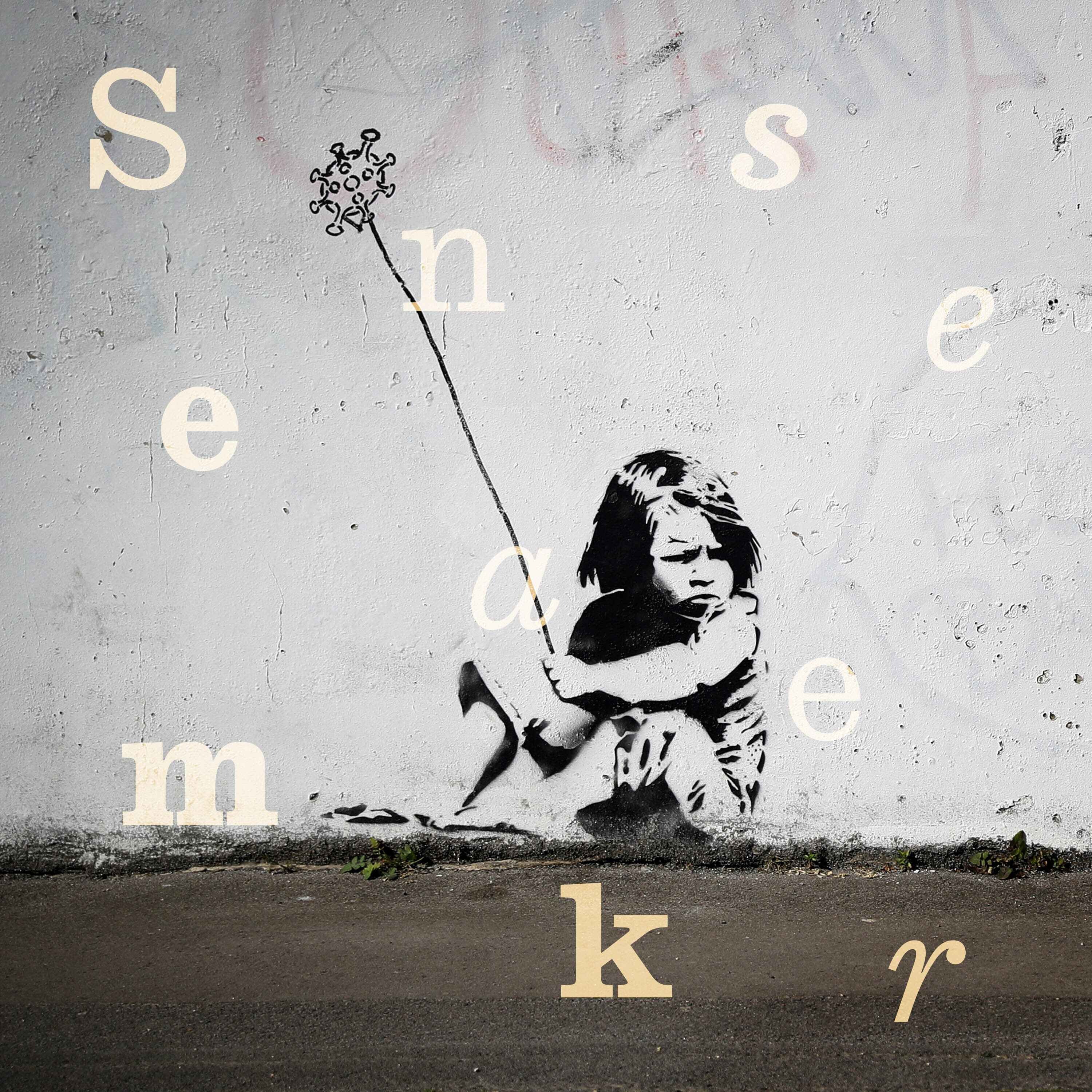
The episode explores the ongoing mystery of Banksy's identity, highlighting that journalist Claudia Joseph first identified him as Robin Gunningham in 2008 for The Mail on Sunday, but her story gained little traction. A recent Reuters report has revived this claim, noting that Gunningham changed his name to David Jones. Despite multiple confirmations from sources, Banksy's anonymity persists, partly due to public and media reluctance to unmask him. Many believe the mystery enhances his art's value and protects him from legal issues, as his graffiti is often illegal. Vanessa Thorpe, arts editor at The Observer, explains that fans and journalists often "print the legend," prioritizing the enigma over facts. She predicts that as interest in his identity wanes, attention will turn to his organization, Pest Control, which manages his work and funds charity projects like the Louise Michel rescue boat. This shift may lead to scrutiny of his political activities and funding sources. Ultimately, the episode underscores how Banksy's anonymity is both a protective shield and a marketable asset, while the debate over whether to unmask him reflects broader tensions between art, mystery, and accountability.
[MUSIC] The Observer. [MUSIC] Hello, I'm Casey and this is a sense maker from the Observer. One story every day to make sense of the world in this episode. >> It was a great enigma who was Banksy and he was sort of playing games and taunting people saying you can't find out who I am. And so I thought, well, I'll have a go. A recent report from the news agency Reuters claims to finally amass the street artist, Banksy. But were they the first? Banksy has been famous for almost 20 years. His art is often political and makes fun of people in power and several of his paintings have sold for millions. One called Love is in the bin went for a record 18.6 million pounds at auction. As soon as the gavel came down, a secret shredder hidden within the frame partially destroyed it. [MUSIC] Banksy is a pseudonym and although many people claim to know him or know someone who knows him, his true identity is rarely shared in public. My story wasn't picked up in the same way as the Reuters investigation was. I have no idea why, but the papers back in 2008 didn't follow up my story and a lot of people chose to ignore it. >> This is Claudia Joseph, a freelance journalist who in 2008 revealed Banksy's true identity for the first time in an article for the British newspaper The Mail on Sunday. We didn't have a name and we didn't have a picture. So I had to do a jigsaw identification really. My colleague Simon Trump and I do not his parents and his father just behaved in an extraordinary manner. He was sort of saying, you're very nice, but I'm not going to tell you anything. Nice night, well, I'm going to put your son in the paper on Sunday saying he's Banksy. >> Through her and her team's slew thing, Claudia came up with a name. The same name that Reuters now says is Banksy. Robin Gunning him. >> He's a nice middle class boy. He went to a private school and he now lives in Somerset in a little village and leads a very middle class lifestyle. I've had so many confirmations from police and friends of Banksy's and family members. I mean Banksy was hilarious when I actually did the story. I'll read you what he said as he said, I'm unable to comment on who may or may not be Banksy, but anyone described as being good at drawing doesn't sound like Banksy to me. And I thought, well, that's a very gracious way of avoiding the question. You haven't denied it, but you haven't admitted it. But obviously, I was correct. >> But if Claudia told the world who Banksy was 18 years ago, why are some people only now hearing his name? Different information, different clues, different proofs come out every so often. And it's exciting, like any mystery is exciting. In a way, it's a banker for journalists and for the media because they know that there's a ready audience there. So any fresh clues they get and any chance they get to say that they've proven it, even if people have said they've proven it one way or the other before, is a really tasty bit of information. This is Vanessa Thorpe, arts and media editor at The Observer. The Reuters report highlighted that Robin Gunningham changed his name to David Jones a few years ago, perhaps to prevent detection. But this revelation has attracted a backlash with some fans arguing that journalists should stop trying to tell the world who Banksy is. >> I think it's really interesting the way that fans and the media, or without ever discussing it, feel that it's something that ought to be protected. I'm not saying it's a bad thing, this effort to unmask him. But I think it's really interesting the pushback from the art world and from the media, because there's a feeling that it would diminish the story if you stop someone in the street. They're likely to say, oh, it's a mystery, they haven't found out who he is. That's partly due to that old saying print the legend. Whatever you know, what people think they know is incredibly powerful. Perhaps that helps to explain why Banksy has rarely faced criminal prosecution, even though spray painting public buildings is, in many countries, a criminal offense. Remaining somewhat anonymous helps Banksy to do his work without facing repercussions. >> It's still easier for him to work in anonymity. And he doesn't get trapped by people suing him saying, hang on, we've had to look after this work. We've got to protect it or we've had to have it very expensively removed. Or we've had to cope with lots and lots of visitors coming to take pictures of it and trampling all over part of our property. So it keeps him away from those slightly tautary disputes that might spring up. >> But as more and more people now discover who Banksy is, will his work start losing value? We'll have more after the break. Artists who are permits or recluses often have great power, whether it's Thomas Pinch and the writer or Eleanor Ferranti. Here's Vanessa Thorpe again. She highlights some issues that come with becoming a known public figure. >> People who either don't know who they are or we know that they want to keep away from society. And it would start the idea that he could be commissioned more. It would mean that he would be constantly being asked to defend or explain what he's targeted with his art. And I think it would certainly make the artist's life harder. But I think it will increasingly happen anyway because pest control is such a valuable entity now. >> Banksy set up pest control in 2009. Pest control also helps manage Banksy's boom, the Louise Michelle, which provides aid to immigrants trying to cross the Mediterranean Sea into Europe. Vanessa predicts that after they get bored of digging deeper into Banksy's life, journalists will soon start applying more scrutiny to the business behind the artist. >> I think people will target the organisation more and more, partly because they're funding charity work. And I think there are people who will find that either irritating or they're actually opposed to it. Because they feel that he's politically operating below the radar. And that is always a target, a legitimate target, really for journalism, to try and explain to the world what's happening and who's paying for it. >> Thank you for listening to The Sense Maker from The Observer. This episode was written and produced by Cheyenne Matalucco. The Observer.
Podcast Summary
Key Points:
Journalist Claudia Joseph claims she identified Banksy as Robin Gunningham in 2008, but her story was largely ignored by the media at the time.
A recent Reuters report also names Robin Gunningham (now David Jones) as Banksy, reigniting public interest in the artist's identity.
Banksy's anonymity protects him from legal repercussions for graffiti and allows him to avoid disputes over his artwork.
There is pushback from fans and the media, who believe unmasking Banksy would diminish the mystery and value of his art.
Vanessa Thorpe predicts future scrutiny on Banksy's organization, Pest Control, and its funding of charity work, as journalists may shift focus to the business behind the artist.
Summary:
The episode explores the ongoing mystery of Banksy's identity, highlighting that journalist Claudia Joseph first identified him as Robin Gunningham in 2008 for The Mail on Sunday, but her story gained little traction. A recent Reuters report has revived this claim, noting that Gunningham changed his name to David Jones. Despite multiple confirmations from sources, Banksy's anonymity persists, partly due to public and media reluctance to unmask him.
Many believe the mystery enhances his art's value and protects him from legal issues, as his graffiti is often illegal. Vanessa Thorpe, arts editor at The Observer, explains that fans and journalists often "print the legend," prioritizing the enigma over facts. She predicts that as interest in his identity wanes, attention will turn to his organization, Pest Control, which manages his work and funds charity projects like the Louise Michel rescue boat.
This shift may lead to scrutiny of his political activities and funding sources. Ultimately, the episode underscores how Banksy's anonymity is both a protective shield and a marketable asset, while the debate over whether to unmask him reflects broader tensions between art, mystery, and accountability.
FAQs
A Reuters report claims Banksy is Robin Gunningham, who later changed his name to David Jones.
Yes, freelance journalist Claudia Joseph revealed Banksy's identity in 2008 for The Mail on Sunday, but the story was largely ignored.
Anonymity helps Banksy avoid criminal prosecution for spray painting public buildings and prevents legal disputes with property owners.
Pest Control is an organization set up by Banksy in 2009 to manage his business, including charity work like the Louise Michel boat.
Some believe it might diminish the mystery and value, but others think it could lead to more commissions and scrutiny.
Fans feel that unmasking him would diminish the story and mystery, as many believe in the power of the legend.
Chat with AI
Loading...
Pro features
Go deeper with this episode
Unlock creator-grade tools that turn any transcript into show notes and subtitle files.
 PodcastTranscript AI