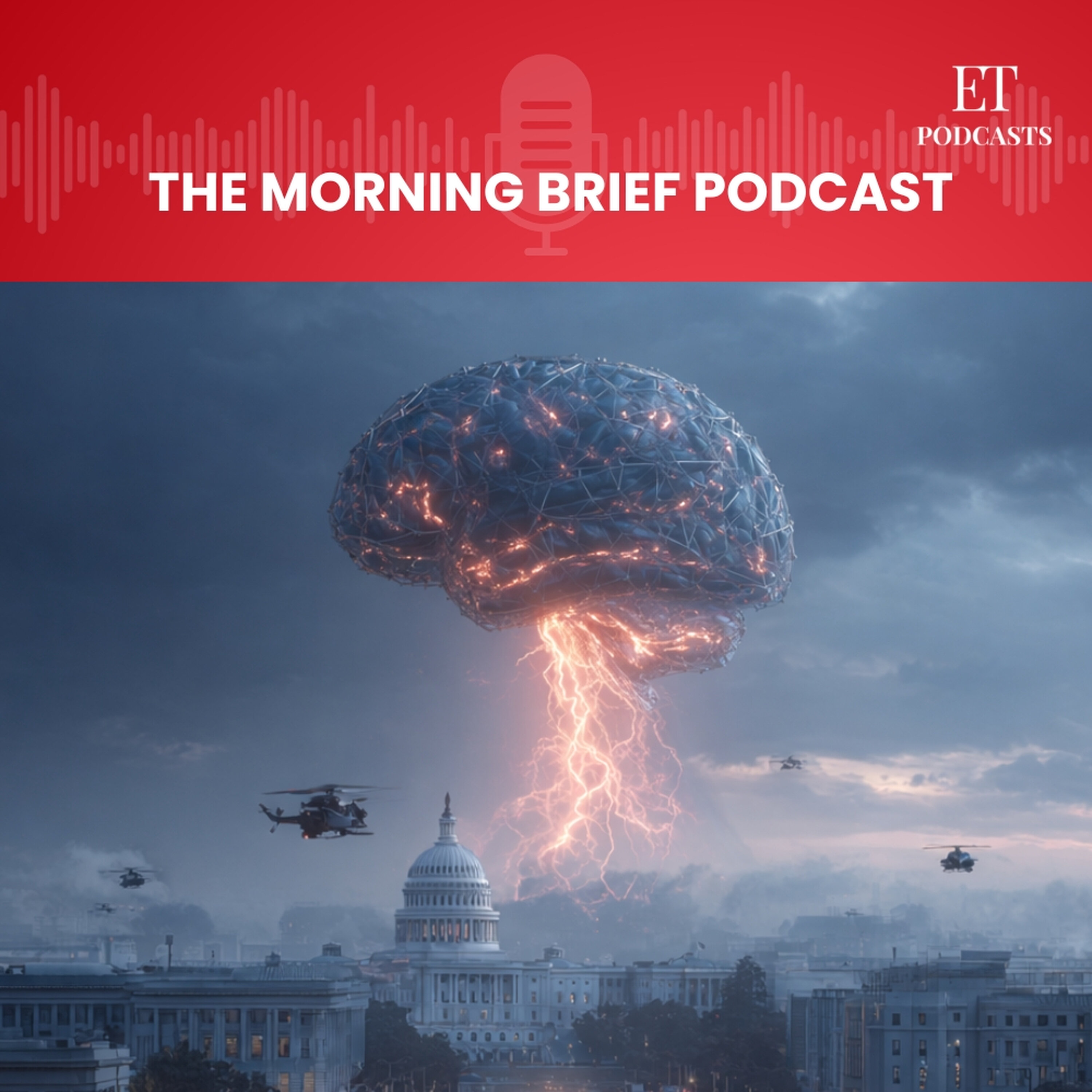
The discussion centers on AI's transformation into a geopolitical force, exemplified by conflicts like Anthropic's refusal to grant the U.S. Pentagon unrestricted access due to ethical red lines against lethal use, contrasted with OpenAI's classified deal. This tension underscores a broader clash: governments desire unfettered AI capabilities for warfare and security, while companies impose ethical limits to avoid reputational risks and moral quandaries. The debate extends to sovereignty, as nations and enterprises question the trustworthiness of foreign AI models, data privacy, and the lack of viable alternatives, despite efforts toward sovereign AI that remain hindered by reliance on global tech giants like NVIDIA and Microsoft. In warfare, generative AI is advancing beyond drones to include target identification and strategic decision-making, raising alarms over autonomous weapons and accountability. Ultimately, the interplay between corporate ethics, government demands, and global user distrust is redefining AI's role in geopolitics, with potential outcomes ranging from deeper collaboration to decoupling, shaping future technological and power dynamics.
Artificial Intelligence is no longer just a tool-powering chatbots. It is becoming a very powerful technology at the intersection of geopolitics, ethics and modern warfare. When the West Asia conflict started earlier this month, the US Department of War sought unrestricted access to clawed models from insurопay. But the company refused to cross its ethical red lines, which meant that its AI cannot be used for lethal weapons and mass availants. Within hours, the company was labeled as a national security risk to the United States. Soon after, open-air stepped in and signed a classified deal that accepted Pentagon's terms. But this move sparked a massive backlash. Several employees designed. When the US in fact, chat-duty usage dropped sharply, but this episode made one thing clear. While governments want unrestricted access to powerful AI systems, private companies are drawing their own ethical red lines. Meanwhile, countries around the world are beginning to ask deeper questions. Can foreign LLMs be trusted? What happens to the data fed to these systems? And should private companies even be working with defence departments? So should there be clear boundaries? To unpack these questions, I am joined by Abhisur Prakash, a geopolitical strategist, and author of five books including his best seller, The World is Vertical. It's Tuesday, 17th March. I am your host, Himanshi Lochabh, and this is The Morning Brief. Hi, Abhisur. Welcome to The Morning Brief. Abhisur, let's start with the basics. We know that anthropic has refused to give Pentagon unrestricted access to cloud models, because that would mean crossing their ethical red lines. Help us understand what are the red lines that we are talking about here, and how did OpenAI manage to enter the picture? And we saw this before and with OpenAI when they launched Shatchy PT in 2022, they didn't launch it in certain markets. They skipped China, they skipped North Korea, they skipped Iran, they skipped Russia, they skipped nations that were unfriendly with the United States. That was one of the first examples of AI, geopolitics, and business converging. Now you take into consideration what's happening with anthropic, on one hand you have anthropic, which is setting its own ethical and geopolitical positions on what it wants its AI to be able to do and doesn't want its AI to be able to have unlimited targeting capabilities to identify and coordinate missions a certain way. There are multiple tiers of AI models that these companies are offering, what individuals are getting is probably the least sophisticated compared to what governments are getting. So anthropic is saying to the US government, we want our AI to have certain cardrails, have certain parameters, and the US government is saying we want to be able to use this AI, however we see fit. So if the US government is using anthropics AI as they were during the Venezuela raid, this ropes in the company into all sorts of geopolitical, ethical, economic, political headaches, intentions, and quagmires in many ways. Now anthropic set its red lines a certain way, and this is not just about the evolution and big tech. This is also about an evolution in how businesses approach nations and geopolitics. What we've seen rushes invasion of Ukraine in 2022 is that more and more companies in the West are willing to set their geopolitical positions, are willing to put politics ahead of profits, and are willing to exit markets, cut contracts with suppliers, decouple from certain projects and avenues because they have their own geopolitical beliefs and philosophy. So what happens when the corporate world, the private companies are taking a contrary position to the governments, and the reason that I'm asking this is we know about the China's military civil fusion program where all the AI advancements, all the AI breakthroughs that companies like Baidu and Alibaba are making right from the chiplet or the model layer are automatically integrated with the countries, you know, defense systems. So keeping this in mind, who takes and who decides the position of up to what extent should AI be used in military operations? So this is the new battle between big tech and government that's playing out before this fight was over anti-competition, anti-monopoly, advertising control, etc. etc. Now the fight is over AI companies that have decided the ideology of their AI that have decided how to train their AI in certain data, which is affecting the outputs, AI companies that have set within the code guardrails that limit what the AI can do. And on the other side, you have governments saying for their own use, they want to be able to use these systems how they want. The two questions though, number one is are AI companies willing to make an exception regarding their own doctrines regarding their own philosophies regarding their own ethics when it comes to the geopolitical needs of their respective governments. And second is how do governments balance their own appetite for AI, which is in this case unlimited we want to use AI for everything and anything and don't limit us with the individual who also may want unfettered access to AI. So we are at the very precipice of this new battle that includes big tech, government and individuals. Andthropic opens the door but it's definitely not going to be the last flera. And what does it mean for users of AI tools outside of America, for instance, roughly 80% of charge, GPT users are outside America. And one of the reasons for the backlash after the Pentagon episode was that it could be used as a tool of mass surveillance. So even though open AI comes out and says charge, GPT for enterprise, charge, GPT for consumer and charge, GPT for defense are all three different things. But what does it mean for a closed source model provider and what does it mean for users of tools like charge GPT outside America? Well, individuals outside of the US are increasingly pushed to decide what services they use not just through the lens of pricing, capabilities, access, advances, but also through the lens of geopolitics and their own safety. They're seeing this already in Europe where European consumers are boycotting American goods because of what's happening between the US and the EU. So the same calculation exists for AI and technology platforms, which is do I trust this service? Do I trust the nation that this service comes from? But the most important question is there an alternative. Even if they don't want to use the American AI, who do they turn to? Even the Chinese models are not as advanced. And the same concerns that a user may have about American AI, they're likely to have about Chinese AI. And this leads to an important question, which is for at least 10 years now, governments, particularly in Europe, have been banged the drum of sovereign technology. But they want homegrown platforms, homegrown services, homegrown technology infrastructure that's very much a closed loop, for example, with cloud computing. Yet today there is almost no real sovereign AI in the world. That's not a sign of technology diversification. That's a sign of technology monopoly in a very geopolitical sense. So the big question right now is if there is distrust of American AI services, and if this distrust exists in government capitals, which most likely it does, what can they really do? And even if they want to go fully sovereign, what does this look like in application? If Germany says they want to build sovereign AI for the nation, but all of their chips are from Nvidia, all of the programming is from Microsoft, all of the energy infrastructure is being sourced from outside of Germany. But at the end of the day, we're going to be able to do that.
AI is supplied locally. Is that really sovereign AI or is that something else? - So in that context, do you believe right now, enterprise customers having these conversations and raising these questions to their model providers? Because AI is now being integrated into enterprise workflows from banks to retail to consumer companies. Our companies raising these questions and raising distrust with their model provider, especially the American one. - They are because sovereignty is safety. Nations and governments that are procuring AI, they're worried about, is this AI bias towards a certain nation? What will happen to the data that they feed this AI with? Can this AI be used against the country or the government or officials? But enterprise is a worried about something very different. As they look at the geopolitical state of the world today, whether it's AI from the US or AI from China or somewhere else, will this AI go offline in the future? There are big concerns in Europe right now that America has a quote unquote, "kill switch," which is that if tensions flare between the US and Europe, that America could simply cut the flow of critical technology services to the entire EU, effectively a technology blackout. So that is the ground that enterprises are standing on. And sovereign AI is a way to mitigate that risk. However, as I said before, there are big questions as to what is sovereign AI. You look at Norway, for example, where you have Stargate Norway, which is open AI's project to build democratic AI across the world, open AI is building the plant, the data center, and supplying the AI, the American AI, from a locally built data center to Norwegian people and businesses. So I don't know if that meets the measures of sovereign AI, if that meets the parameters of sovereign AI. In my eyes, this is a sign that nations are trying to meet multiple objectives at once, but their ability to do so is very much limited because they don't control the tools, they don't control the capital, they don't control the technology. - So do you believe that there could be a situation where private companies, the Google, the Metas, and Open AI as an anthropics of the world are better off not meddling with the state and the geopolitics and remaining outside of that conversation to protect their revenues and global business? - I don't think they look at it that way. They look at their business model, they look at their services, they look at their footprint very much as being geopolitical stakeholders, very much as their services have the power to change the balance of power in the world. And that's why these AI companies are in a very different boat to previous technology companies where geopolitics was important, but it wasn't part of the business DNA. Even anthropic, they passed a ruling and a corporate ruling last year where companies that are more than 50% owned by China cannot access anthropic AI. That was not because the US government passed a law and anthropic was complying with it. That was an objective decision by the AI company to meet an independently set geopolitical goal. So these technology companies are not on the periphery of geopolitics, they're not gonna exit the geopolitical playing field. They are very much playing geopolitics, deciding the flow of services, deciding who to partner with, which projects to sign with. These are signs of a deepening overlap between the American AI world and the US government. And as the geopolitical theater heats up as the competition intensifies, particularly between the US and China, I expect AI companies to play an even bigger role in lockstep with governments to help them compete and block adversaries. - Just lastly help us understand what is the potential of generative AI technology when it comes to usage in modern warfare? I mean autonomous weapons, drones have been actively used for the past three to four years. As generative AI becomes more powerful, more accurate becomes multimodal. And we're also going on to robotics very soon with physical AI and world models. Tell us what are the scenarios that, you know, one must imagine when we think of genie-ice potential in warfare going forward? - Well, I would just give a little bit of caution that we have seen certain types of warfare become more autonomous, but we haven't really seen in the past three to four years what we're seeing in the past two months. What I mean by that is the spotlight when it comes to AI and warfare has been largely on the Russia Ukraine war. You have drones that are now able to operate autonomously even if their GPS is being jammed, if their connectivity, if their communications are shut off line, they have enough quote unquote AI within them to still make it to the target, still inflict damage. We've seen AI being used in Venezuela to identify targets, AI being used in Iran to identify targets. That's completely different. That is a new age of AI in warfare. It's something I've been warning about for some time now that AI will reach a point where governments begin to give AI the power to make decisions that humans once made. Again, this brings to light a big question regarding what do AI companies want to get involved with? If it turns out that AI targeted a specific part of Iran that resulted in mass human casualties because the AI got the targeting wrong, the data it was fed was old or something else, that is going to paint a dark color over an AI company. It's going to be a huge reputational and ethical hit. So again, that's why a lot of AI companies are setting their own red lines. As to what we should expect to see next with AI and warfare, I think we are going to see governments attempting to use AI not just to identify targets, but to carry out operations. Instead of using AI for purely peripheral or small uses, they're using AI in the most strategic ways. And what starts with identifying targets ends up with driving operations, influencing commands, deciding how military assets are deployed. This goes beyond the US. This is something South Korea has been working on since at least 2017. They want to build what they call AI commanders that can analyze and monitor North Korean movements on the border and in turn tell Korean generals how they should move their military assets, their human positions on the ground to offset what North Korea is doing. Now, there is a separate issue that also requires some discussion, which is if governments like the US are fighting with technology companies for greater control of AI systems, then there are one of two possibilities. First, some AI companies will give governments what they want. They'll give them car table launch. The second possibility, however, is that governments begin to build their own AI. And this creates a strange paradox where on one hand, AI companies and governments are moving in lockstep because of geopolitics. But on the other hand, because of ethics, AI companies and governments could decouple and move in opposite directions. So we may be on the verge if this flare up continues or multiplies in the future. And that will further change how geopolitics functions because governments will have full control over the AI that's defining the decisions they make in the world. Great. Are we sure those were great insights? It's really great to connect with you. Thank you, Hermann. She-- The debate around AI's role in geopolitics and warfare is just beginning. Government see AI as a strategic asset that could shape the balance of power. Technology companies, on the other hand, are grappling with ethical and reputational risks on how their models are used. And cotton between our businesses and citizens across the world who increasingly depend on these systems, but may have very little control over how they evolve. That said for today, I am Imann Shilocham. and you have been listening to the morning brief.
This episode was produced by Vinay Joshi, Sound Design by Inurnil Patacharji. A new episode of the morning brief drops every Tuesday, Thursday and Friday, wherever you get your podcast. Keep listening, stay tuned.
Podcast Summary
Key Points:
AI's role is expanding from a tool to a geopolitical and ethical battleground, especially in military applications, leading to conflicts between governments seeking unrestricted access and companies setting ethical boundaries.
The incident involving Anthropic refusing the Pentagon's unrestricted access and OpenAI's subsequent deal highlights the tension between corporate ethics and national security demands, sparking debates on data trust, sovereignty, and surveillance.
Sovereign AI is emerging as a concern for nations and enterprises, but its feasibility is limited by dependencies on global tech monopolies, raising questions about true technological independence and security.
Generative AI is increasingly integrated into modern warfare, from autonomous drones to target identification, pushing governments toward AI-driven military decisions and intensifying ethical dilemmas for AI developers.
The evolving dynamic may lead to a decoupling between governments and AI companies over ethics, or closer alignment for geopolitical competition, reshaping global power structures and individual user trust in AI services.
Summary:
S. Pentagon unrestricted access due to ethical red lines against lethal use, contrasted with OpenAI's classified deal. This tension underscores a broader clash: governments desire unfettered AI capabilities for warfare and security, while companies impose ethical limits to avoid reputational risks and moral quandaries.
The debate extends to sovereignty, as nations and enterprises question the trustworthiness of foreign AI models, data privacy, and the lack of viable alternatives, despite efforts toward sovereign AI that remain hindered by reliance on global tech giants like NVIDIA and Microsoft. In warfare, generative AI is advancing beyond drones to include target identification and strategic decision-making, raising alarms over autonomous weapons and accountability. Ultimately, the interplay between corporate ethics, government demands, and global user distrust is redefining AI's role in geopolitics, with potential outcomes ranging from deeper collaboration to decoupling, shaping future technological and power dynamics.
FAQs
AI companies like Anthropic are establishing ethical boundaries that prohibit their AI from being used for lethal weapons, mass surveillance, or unrestricted targeting capabilities in military operations.
Governments seek unrestricted access to AI systems for strategic purposes, while private companies impose ethical limits, leading to conflicts over control and usage rights.
Non-US users worry about data privacy, potential mass surveillance, and geopolitical biases, questioning whether they can trust AI services from foreign nations.
Sovereign AI refers to homegrown, nationally controlled AI systems to reduce dependency on foreign technology and mitigate risks like service cutoffs or geopolitical influence.
Generative AI is employed for autonomous drones, target identification, and operational planning, with potential future uses in command decisions and strategic military deployments.
Enterprises fear AI services may go offline due to geopolitical tensions, such as a 'kill switch' being activated, disrupting business operations and data security.
Chat with AI
Loading...
Pro features
Go deeper with this episode
Unlock creator-grade tools that turn any transcript into show notes and subtitle files.
 PodcastTranscript AI