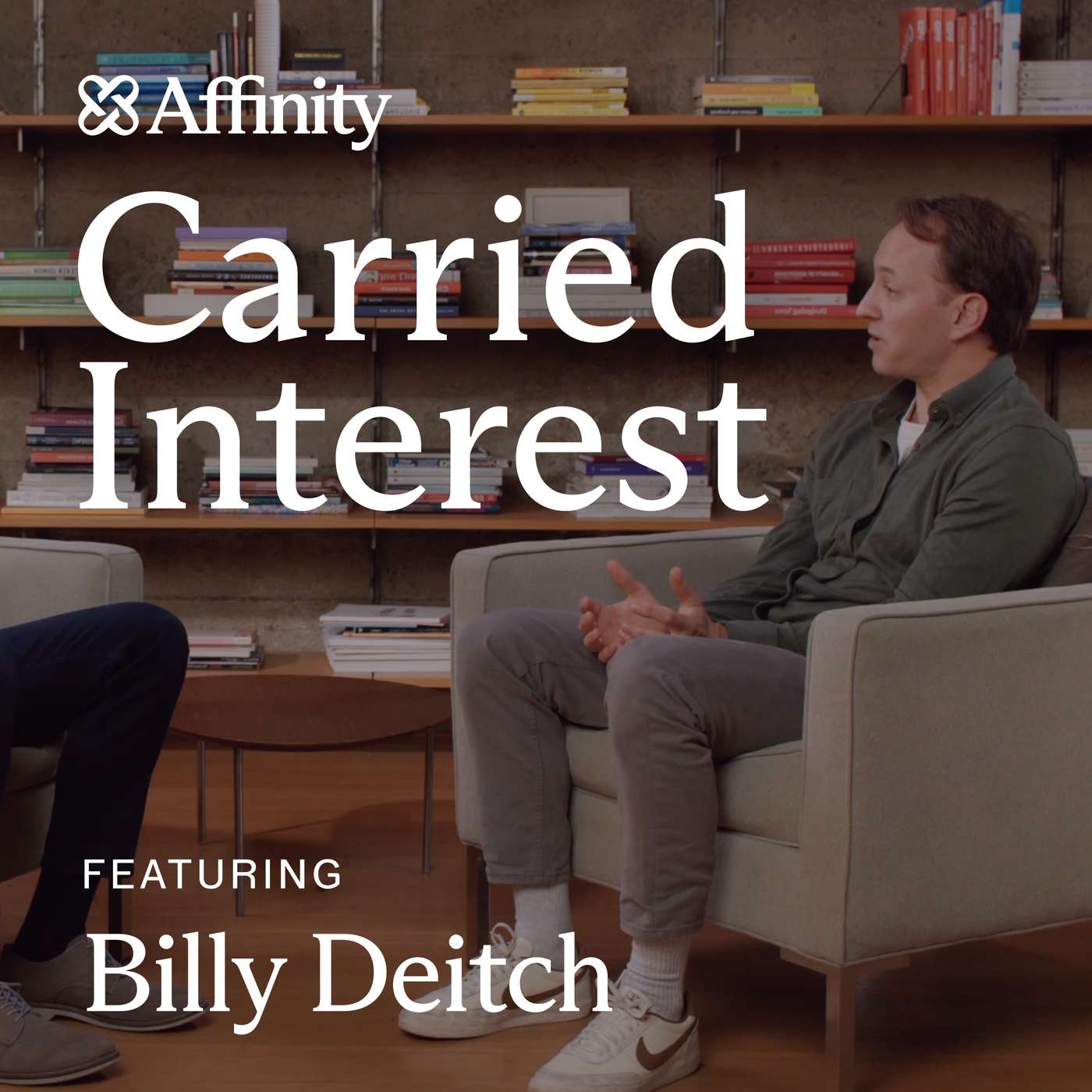
Where AI Actually Works in Healthcare | Billy Deitch, Oak HC/FT
39m 25s
Billy Dyche, a partner at Oak HCFT, combines deep healthcare expertise with a uniquely human-centered approach to venture investing. He emphasizes that true investor value comes not from flashy presentations but from proven performance, customer delivery, and trust—qualities he builds through empathy, active listening, and genuine partnership with founders. His career path, from investment banking to growth investing, reflects a deep alignment between personal values and professional focus, particularly in solving systemic healthcare challenges. At Oak, he invests strategically at early stages where product-market fit is established, enabling scalable growth through mentorship and access to a vast healthcare ecosystem network. AI is seen as a powerful enabler, especially in operational efficiency and care delivery, but with caution against over-hyped or superficial solutions. Dyche stresses that success is defined by long-term relationship integrity, mutual respect, and resilience through tough decisions—measured not just in returns, but in how companies and founders grow together. He advises new investors to embrace both their strengths and weaknesses, develop quantitative fluency, and maintain emotional balance, recognizing that investing is as much about human dynamics as financial outcomes. Ultimately, his personal success is tied to family and fulfillment—what he calls the "true ROI"—highlighting that the most meaningful impact comes from building trust, mentoring, and creating lasting value in a complex, evolving industry.
There's this balance, especially in venture,
around sizzle versus steak.
Too much sizzle really turns me off.
I think the steak is proven out when you talk to customers.
And they're like, no, these guys,
they take care of business.
They deliver for me as a customer.
That, to me, is such an important quality.
Now you have to have sizzle because you want to be someone
who's a pied piper and people want to follow you
and customers believe in you.
You can track capital in the future.
But you want it to be because you like deliver results,
not because you're really good at being salesy.
[MUSIC PLAYING]
Today's guest has built a career at the intersection
of health care and high-growth investing.
And in a sector full of noise, he's
developed a reputation for being the kind of investor
founders actually want in the room.
Billy Dyche is a partner at Oak HCFT.
One of the most respected health care focus growth
equity and venture firms in the country.
Before that, he was sharpening his skills
at Francisco partners and TPG Grove
and started his career in investment banking at UBS.
The resume gets Billy into the room.
But his ability to manage the human side of a deal
is what keeps him there.
He approaches this work less like a deal maker,
more like a counselor, part strategist, part
consigliary, part cheerleader.
And today, we're going to find out what that actually
looks like when the chips are down.
Billy, welcome.
Hey, thanks for having me.
You're very welcome.
Thank you so much for taking the time.
We just read through a resume that
sounds like both very action packs, a deal centered,
and investor driven.
Was there a time in your career where you decided,
hey, I want to go into investing.
And in particular, I want to end the adventure.
I was a history major in college
and kind of came out into the business world
and wanted to sort of gain some skills
and didn't really know where I wanted to take it.
Started an investment banking because I
went to an information session and they said,
there's really smart people here.
And you'll learn a lot.
And so I dove in.
And then after a couple of years,
realized I wanted to have skin in the game
and moved over to the investing side.
And growth investing has always
been what got me most excited.
That's why I joined the growth arm of TPG
in the early days there.
And then moved to Francisco Partners
where we were doing a lot of different types of deal,
but a lot of growth by out investing.
And then when the opportunity came to join,
though I can open our West Coast office,
I jumped at that.
And it got me focused entirely on venture
and growth investing, which is what I was most passionate
about in a sector that I really loved in healthcare.
And I felt I could make a true impact in the world.
And so it kind of combined a lot of parts of me
and I loved it.
Do you spend most of your time then focusing
in the healthcare sector specifically?
Yeah, over the course of my career,
it's kind of narrowed.
I began as a generalist at TPG and then increasingly
have shifted my focus entirely to healthcare.
And part of that is just it's what I find most interesting.
And I've always been like a big politics and policy junkie.
And what's cool about healthcare is that
everything that we invest in, that we do,
ties into that part of the world.
And in the US healthcare system in particular,
like the only way to fix some of the systemic problems
will be through entrepreneurial solutions.
And that's what we do at Oak
and that's what I love doing.
So from a history emphasis at Yale to UBS,
to growth investing and then eventually buy out,
was there a moment where you decided,
hey, I want venture instead of buy out?
Yeah.
Is there a reason why you wanted that specific asset class?
Yeah, for me from the beginning of my time in investing,
I've always loved sort of the world of venture and growth.
And the idea of working with an entrepreneur
or working with the CEO, working with a team
to say we have a great opportunity in front of us,
how do we go attack that and grow our business.
And when I joined Francisco partners,
it was a $2 billion fund.
And over the course of my time there,
it continued to expand now it's a multi-billion dollar funds,
multiple asset classes.
And while like incredible place, incredible firm,
for me we were getting away from more growth investing
just by the nature of the fund size
to having to do later stage investing,
which often meant more turnaround situations.
And that to me just wasn't as exciting.
And you sort of get one trip around the globe
and one trip in your life to do something that you really love.
And for me that was growth investing.
And so when the opportunity came to join Oak
and to open a West Coast office for us
and to focus in a sector that I really was passionate about
and to focus on a size and stage of company
that got me most excited.
It was kind of an opportunity that I had to jump at.
So I love the intellectual rigor
of what we're doing in Francisco partners,
but the opportunity to focus on what I really loved
was an opportunity I couldn't pass up.
Do you find any roots from your history emphasis at Yale
in the work that you do today all the time?
Because the idea of a liberal arts education
is that you learn how to kind of see the big picture
and take a lot of different sources of information
and then come together with like a thesis.
And how do you take what you're seeing from one company
and this conversation and what you read here
and what you're seeing in policy
and sort of skate to where the puck is going to be.
And that's kind of the skills you learned
as like a history major,
just pulling everything together
and seeing what the story is.
And I think in early stage investing
and growth investing, it's very similar.
Like you're connecting a bunch of dots
and then saying, oh, this company, this team is interesting
because of all these other pieces that I'm bringing into it.
So I actually think it helps me like every day.
Aside from your resume, we read in the intro
that you come with a counselor's approach.
I've been told that you come from a family of lawyers
that you're married to a psychologist.
How do you think that approach differs
maybe from what you see elsewhere in the market
or how do you hope that your particular angle
changes the way you interact with a founder?
- Yeah, I mean, that idea of being a counselor
is always resonated with me.
Like you said, my dad was a lawyer, my mom was a lawyer,
my sister's a lawyer, her husband's a lawyer,
my aunt is a lawyer.
And then as you mentioned, not only is my wife a psychologist,
her mother's a psychologist, her sisters a psychologist,
her aunt's a psychologist, her cousins a psychologist,
her grandmother was a social worker
and her father was a neurologist.
So like the brain, being a counselor,
advising people, helping people.
And something my dad said to me once was that like,
when he really loves his job
is when he feels like he's a true counselor
and people come to him for advice.
And I do find, that resonates with me.
Like, you know, what I am no psychologist
by any part of the imagination,
but I do find that like, it's really about people
and it's about understanding people.
And I think in the long run,
if you show up for people and you're empathetic
and you try and hear their perspective
and you try and support them and push them,
like that's a big part of what being a good board member
being a good investor is, is working with people
and trying to just be there as a support.
I mean, and then you gain trust
and then that partnership flourishes.
And I think that's kind of similar to being a lawyer.
Like you want to be that trusted advisor.
Say, hey, I've got a problem.
I'm gonna be open with you about it, can you help me?
And if you can do that, it's super rewarding.
Those are the days where you're like, wow, you know,
I'm not in the driver's seat of the company
and what the CEOs do and what the executives team do
is much harder than what I do every day.
But it felt really good to be able to help them
a little bit on that journey.
- So how do you balance the personal side of investing,
the personal side of being a board member,
that counselor approach?
With the obvious scientific or data oriented side
of investing where you have to drive returns,
there are goals, there are metrics,
there are targets that need to be hit.
How do you think about that in your own role
as you work with founders, as you evaluate deals?
- I mean, we are a very metrics driven organization.
I'm a metrics driven investor.
And I think like for me, they're sort of a balance
like at the end of the day,
team is what's most important to us.
But I would say the earlier stage,
the company is the more the team matters
and the later stage,
the more you need to put emphasis on the data.
At Oak, we invest across stages.
So we will do equipations and seed and series A
and we'll do growth rounds
and we will occasionally do a growth buyout
or buy and build scenario.
And you know, the later stage it is,
the more, there's more data to look at.
And the risk profile is different.
And so we sort of have to weigh that on a spectrum,
depending on what we're looking at.
- When you look at younger investors,
it feels like the data side is frankly easier to learn.
They can look at error metrics or retention
and they can say it doesn't clear the benchmark,
there's not clear the benchmark.
The personal side, the team evaluation,
feels a lot trickier.
What advantage?
advice would you give or what lesson would you share around how to nurture and build the
more interpersonal side of investing?
It's a lot of it is pattern recognition that you gain over time and continue to gain.
I've certainly made mistakes, you know, on people and misjudged them.
You have to be open to that and ready to learn from those mistakes and sort of find folks
that you work really well with because these are long-term relationships and you invest
in a company and you're going to sit on their board that could be upwards of a decade.
It's a person that you want to spend that time with and you have to keep that in mind.
I think this very much is a mentorship business and so the more you can surround yourself
with people who bring different perspectives and have different sort of pattern matching
skills and experiences, I think that is a way to kind of glean those and find what works
best for you.
And then I think to build those connections, I mean, you just have to be like yourself
authentically.
So much of the time people are trying to impress or there's bravado or there's like getting
maybe a little star struck or there's often a fault I find investors where they just
won't say no to a founder because they're worried about what will happen to my reputation.
And that's short-term thinking and the long-term perspective in my view is like if you can
be honest, if you can be vulnerable, you'll get those things back in return.
You've dedicated your career and Oak obviously has a heavy emphasis in the healthcare space.
What is about the healthcare market in particular that got you personally excited and that
you see as a firm that makes you really want to plan to flag spend significant time
in capital?
I remember it had a prior role.
I was evaluating a company and it was sort of security infrastructure and I was just
saying that it would be like I don't really care.
And it's really hard for me to go all in and do the analysis and do the work if I don't
really care at the end of the day what this company is doing.
But I've always loved politics and policy and I remember reading a book about how the
Affordable Care Act was sort of written and how the sausage was made and was interesting
to me about it was like you were never going to have a perfect solution if like the government
was creating it because of all the lobbyists and all the interest groups.
And you're going to end up with this imperfect solution which is what the ACA is.
And I sort of said if this is such an important problem, if we're going to fix it, it needs
to come from the private sector and wouldn't it be rewarding for me personally to be investing
in these companies that are going to fix our broken healthcare system that are going
to increase access to care and increase quality in lower costs.
And that's such a mantra of our firm and there's so much opportunity there and it's hard
and it's complicated and it's confusing and there's every acronym you can imagine.
And there's entrenched groups and there's bad incentives but like when you see a company
and we partner with a company that is you know making healthcare better for people,
like that's super rewarding and that feels really good when you look at what so much of
our portfolio does.
So that's why I think we're all in it because we're like wow, this makes a difference.
Absolutely.
It oak invests as you mentioned from incubation all the way through to what series buyouts
all the way through to buy up.
As you look across that span of a company's life, it feels like when I look at your portfolio,
your investment track record, you tend to do mostly A and B rounds.
What is it about that stage in particular that gets you excited?
Why is that the right time to enter?
What do you look for on a company like that that makes it a clear yes?
You know for us it's less about this stage and it's more about the impact that this
company can have and can this be a really big really impactful company that sort of changes
the way healthcare works for the better.
And so we'll look at a lot of different stages.
To your question about series A and B in particular, it's an interesting inflection point.
You usually have product market fit, you usually say, hey this, what this team has built
is going to have an impact and is really driving value for its customers whether that's payers
or providers or employers or pharma or the end healthcare consumer or the patients.
So you have that proof point, that product market fit.
And I think it's a time when the question is how do we scale?
And we can bring the pattern recognition that we have over dozens and dozens and dozens
of portfolio companies of saying, hey, we've seen this problem before.
And here's how we have seen companies navigate it.
Or here are people that we can bring in either to your management team or as advisors or
board members to sort of help you navigate the next stage of the company.
We've built a really deep network of executives across the healthcare ecosystem.
And so we think we can kind of bring unparalleled resources to a company in healthcare that's
ready to sort of take that next leap and we've done it over and over again.
No, it makes sense.
And it feels like companies at that stage, to your point, the product market fits established.
So you know they're delivering value and then the resources that you bring to bear can
really be multiplied in the way that they utilize and continue to grow.
These days, we're talking a lot about AI. I know in my own venture practice, we talk
a lot about AI.
In healthcare, what are you seeing?
What is the disruption that the market should be ready to experience because of AI?
How is it impacting what you do as an investor?
Well, I mean, it's everywhere.
It's undeniable.
The impact is incredible.
I mean, I've seen the evolution over the past three years, you know, there's a conference
I go to.
You know, a few years ago, it was just a couple of bleeding edge, you know, speakers who
are who are talking about AI and then the next year, everyone from these health systems
was saying, well, we formed our AI governance council.
And then this past year, just a couple months ago, you had CEOs up there speaking about
all the progress that they've made.
What's going to be interesting is what does that look like in a year or two from now?
Because there could be over inundation and people saying, whoa, we've got too many solutions
or we're overwhelmed.
So, you know, you got to think about what's kind of coming.
But I think we're in a moment right now where there's more openness to adoption of technology
within health systems, within payers, within sort of the entire ecosystem that we've seen
in decades probably since the adoption of EMRs, you know, early, early this century.
And so, it's, it is an exciting time and we're seeing things that we've never seen before.
And you've got to really take a keen eye to say, okay, well, what's a point solution?
What's an enduring company?
And I think investors across sectors are thinking that, but that's certainly something we think
about at our firm.
And it's also an interesting time because we're thinking about on the care delivery side
as well what does care delivery look like.
And we've got companies in our portfolio that deliver care to patients and we think the
clinician, the doctor are critical and they shouldn't be replaced by, you know, purely
by AI.
And what can we do to deliver better care by leveraging AI?
So it's something that we think about a lot both for new investments and within our portfolio.
Are you looking particularly for those that are just reducing costs with AI?
Like I think about administrative burden or others or you fundamentally looking for solutions
that wouldn't have been possible, care delivery solutions that wouldn't have been possible
without it.
I think it's both.
I mean, the lower hanging fruit is the administrative side.
Yeah.
And so we've seen that with, you know, it's just talking to one of our CEOs the other
day and she was saying to me, I want to do a review of everything we're doing and say,
like where should AI be stepping into our workflows and I think about areas like getting, making
it easier for patients to schedule, making, reducing our cancellation rate.
How can we be better about our claim submission and making sure the practice is getting paid?
How can we reduce the burden on doctors in terms of notes and submissions and everything
that takes them away from delivering care?
How can we make it so when a patient leaves they are better informed about what they need
to do to maintain their care?
A lot of that stuff I think is right there at the front lines and then it's also, okay,
how can we empower doctors to make diagnoses maybe they couldn't make before or, you know,
in areas where it's hard to get access to specialty care?
And we use AI to help empower a primary care doctor to deliver, you know, more care,
more information.
Then, of course, like thinking on the pharma side, what can we do to accelerate the discovery
of drugs?
We've made a lot of investments there because we think it's such an area that's right for
opportunity and we'll transform the world for good if we can bring some of these drugs
to Marka.
You've sat on a lot of boards for these types of companies across many stages.
If you put yourself into the mind of a founder, when they look at their board and their
chatting with their board, what should they expect?
What does a good board member do for a founder?
How should they know, hey, the investor that I'm working with is going to be a good board
member down the road?
Entrepreneurs are different on this.
I think there's folks who just the board is a check the box, which is fine.
And that can work.
And then, I think there's investors who are saying, all right, if I'm going to take
on capital, well, can I get more with that capital?
And are there people that I can learn from or leverage or can be a true partner to
me?
And so I think people with reputations were speaking truth to power for calling things
out, but being supportive in the hard times.
Not to me is what makes a good board member like it's easy to show up and cheer and say,
rar rar or just say yes to everything.
But if you can ask a question or roll up your sleeves when the chips are down or there's
a headwind that you have to navigate, I mean, not to me is like when you're really, really
providing value beyond just writing a check.
Here at Care to Interest, we like to talk about the relationships that sit behind deals.
And about a year and a half ago, you led around at Candid.
Nick and the team, what was it about them?
What was it about the business that led you to build that conviction and made you want
to make the investment?
Yeah.
I mean, that deal in that investment has been a super rewarding one just for me personally
in terms of partnering with the team and really seeing the company grow and blossom.
You know, the relationship there goes back well before the investment.
Even our interest in that sector, we, you know, our firm has been investing in technology
around revenue cycle management for over two decades.
Our co-founder and managing partner, Annie Lamont, was the first investor in Athena Health.
And so we've known the sector for a long time.
And it continues to have challenges and opportunities there.
We got to know Nick.
It was a company that we kind of mapped out and tracked for a long period of time.
You know, had made, looked for ways to get connected to him.
One of the early investors there was someone that I had built a relationship with, sort
of maintained that relationship and stayed close and he said, "Hey, it might be a good time
for you to circle back and reconnect with Nick."
And we got together and spent a lot of time hearing about the business, but also getting
to know each other personally, going to dinner together, everybody, each other's families
and in backgrounds.
And beyond sort of just the belief that we had in Nick and his co-founder Doug, that company
just checks so many boxes for us, you know, from a space we knew well with a large address
full market, founders with great pedigrees coming out of Palantir, you know, really accelerating
metrics, and then an incredible reputation for delivering for its customers.
And so we were thrilled to lead the round.
You know, there's some great momentum behind the company and we're really excited about
it.
So that's the story there.
We talked earlier about the way that AI is impacting healthcare specifically.
But more broadly, it's impacting careers, it's impacting the way that especially entry-level
investors are thinking about building their own career.
What are you seeing in the way AI is impacting investing as a field that changes the way
you work and what would you tell a young investor about how to change their career because
of it?
That's a tough one to answer, I mean, because it's changing like every day.
We had a woman on our team go out for maternity leave at December and she comes back three
or four months later and cloud code exists and co-work and the changes in that period of
time are astronomical and that's going to happen again and again.
But I do think for anyone starting their career in any field, it's being super fluent
in AI and just knowing, like, you know, I have a nephew who's a scientist and he's going
to go get his PhD and will PhDs be replaced maybe.
But at some point, there'll need to be humans who understand how to work with the AI and
I was saying to him, I feel like that's what he should be focusing on as he graduates
college is how do you be the one who is, you know, empowering the AI to make great discoveries
in partnership with you.
And I think for investing, it's how do you work with the AI to make great decisions,
you know, and I'm increasingly building into my own workflow and, you know, some things
are better than others and what I would also, what I worry about probably is learning
that pattern recognition, that skill development for people earlier in their careers who were
relying too much on an AI platform for research or, you know, writing things instead of actually
learning how to synthesize and think critically.
So that's the concern, but I think these are all things that no one really knows the answer
to.
And it feels like the counselor side, so to speak, of the investor persona becomes more important
as the analysis side becomes more and more AI-driven.
Yeah.
Yeah, we're just having a firm perspective, right, in a critical eye, the way I think
about AI tools right now is if it's something that would be really hard for me to do on
my own, like if it's something that's hard to do because it takes a lot of time, but
it's straightforward, AI's great at that today.
If it's something that would be just difficult for me and I don't even know if I could get
the right answer, maybe AI can do it, but it will confidently say that it got the right
answer.
And it's going to shoot something back and he's like, oh, I did this.
I did this market sizing analysis and you're like, I don't know if that was possible to
do and just continue to have a critical eye at the same time right now today is the worst
that AI will ever be because it's just going to get better tomorrow.
So maybe that answer changes, but I think at least in this moment, that's how I think
about applying these tools.
As you're looking at a deal and you're working to build conviction, what does that process
look like and maybe I think it would be helpful to know what are some non-financial metrics
that you look at that help you build a conviction around a deal or around a team?
Yeah, I mean, I think I'd answer that just thinking about the team if it's on the non-financial
side.
A term that I really like is a truth seeker and someone who is just willing to do what
it takes to get the right answer and take ownership and find what the truth is behind
something, even if they might not like the answer.
That's a characteristic I really like.
There's this balance, especially in venture growth around sizzle versus steak.
I think the steak is proven out when you talk to customers and people that have worked
with these folks before and they're like, no, these guys get what done, right?
They take care of business.
That to me is such an important quality.
Now you have to have sizzle because you want to be someone who's a pied piper and people
want to follow you and customers believe in you, you could track capital in the future.
So that's something that I think about a lot.
Is there just a sense of humility, I think that goes along with that.
And again, this is more maybe just a me thing, but life's too short for me to spend so much
of my time with people who have enormous egos.
And it gives me a little crazy and a little out there to start a company.
I mean, in and of itself, it's a little bit of a narcissistic thing to be like, I can
start a billion dollar company like that's, you know, that takes some self belief in some
ego.
And I respect the hell out of that.
And at least be self aware about that.
And I think that is something that really resonates with me if we're going to be spending
many, many, many hours together over many years.
So those are some of the things that I think about when I'm looking at teams.
No, it makes sense.
- Yeah, I think we all have seen the unicorn founders.
grow up and be successful as individuals.
I think it's pretty clear to us what it looks like when a company succeeds
in terms of the value of delivery for customers,
the value of delivery for investors.
What does it mean for you to succeed?
What does winning look like in kind of Billy's framework
from a personal perspective?
Yeah, from a personal perspective.
I mean, at the end of the day,
Oaks customers, our customers, are investors.
And that's pension funds and endowments
in a broad range of institutional investors.
And our job is to deliver returns for them
so they can deliver to their stakeholders,
whether that's pension holders or students
or whomever that might be.
So that's sort of job number one is for us to deliver
for our customers, just as it should be for any company we invest in.
I think for like me personally,
not every investment's going to go great.
And you want to come out of those circumstances
and in every circumstance,
with like there being mutual respect,
even if hard conversations were had along the way,
are there people around the table that you say,
I'd work with that person again,
because of like, I respect how they operate it
in this circumstance.
And they look at you and say,
I'd work with Billy again because he did the right thing,
even though it was maybe a hard thing,
or not in some people are mad at him.
But like there's respect there.
And that to me is so important
because not everything is going to go right.
And so you want to be known for doing the right thing
because that pays off in the long run
and it just makes it feel so much more rewarding.
- Yeah, I had an old boss in Venture
who used to tell founders
that were evaluating different firms
not to call the winners.
- Yeah.
- You'd say, call the companies we wrote off.
- Yeah. - Call the companies, the founders,
whose companies went to zero.
- Yeah.
- You'll learn a lot more about what kind of partners we are
from the founders who still didn't go.
- Yeah, yeah.
And it's, you know, things aren't going to go perfect
and there's going to be relationships
that don't go the way you want them to,
but hopefully there's people around the table
who say, well, you guys did the right thing.
And that's what we really care about as a firm.
- You work in Venture Investing,
which is traditionally a very long asset class,
10-year fun cycles, multiple-year extensions often after that.
In healthcare, a type of investing
that also requires a lot of patience.
- Yeah.
- What have you learned from being in an industry
and an investing type that both are such long horizons?
- It's difficult.
I think some people who maybe were in
some sort of operating role and move into Venture investing,
it's like, whoa, the feedback loop is really long
and you don't know if you're good at your job.
Technically, just by the dollars out and the dollars back
for a really long time, and that can be mad at it.
And so it takes a lot of intrinsic belief maybe
to say, like, no, I'm doing things the right way.
And like, I believe this will pan out.
And if you, you know, I've been in an investing role
since 2009, you know, and one way or another.
And so, you know, I've seen things go right and wrong
and you have a little bit of perspective
what you're good at, what you're not as good at.
But you do need to just kind of have a lot of patience with it
and healthcare is the same way.
I will say, like, because sales cycles can be so long
in healthcare, like companies that somehow
manage a short circuit that.
And break some of that friction.
Those are ones that I really get excited about
that we really lean into.
It's saying, okay, it is not easy to sell it to this market.
Why are they able to do so?
Let's understand that and see if there's more there.
And I think that's for anyone trying to build a company
in healthcare, it's a little bit of the same thing,
saying you're trying a bunch of different stuff,
but if you get that little wedge and you're saying,
well, this feels different.
That's what to lean into.
- So if you could roll back the clock,
back to when you were a history major at Yale,
coming out of school with no capital,
maybe limited connections, how would you do it differently?
How would an entry into an investing career today
be different for you?
- I think what I would tell someone now, I guess,
is like, identify the things that you think
you're innately good at and then try and add to that
with something that you're not as good at.
Like the counterfactual is hard to say
what I would have done differently.
I mean, but for me, in undergrad,
I had shied away from any numbers related course.
I took the ones I kind of had to.
I took an economics course, but I was a history major
and didn't do a whole lot with numbers.
And then I got an internship in investment banking.
And I said, okay, there's actually a lot of stuff here
for my history major that kind of applies and works.
And I think there's a lot of stuff that like about me
as a person that allow me to relate to people
and I can lean into that.
But I'm gonna learn a ton of stuff here.
I'm gonna learn how to use Microsoft Excel.
I'm gonna get way better at math in my head.
I'm going to learn just how to think about numbers
in the same way that, you know, things in,
or qualitative things that I could read
and turn into an idea in my head,
stare at a piece of paper that's just filled with numbers
and get the story there.
I'm really glad that I did that.
And it's funny, I just never would have thought
of myself as a quantitative person
for the first half of my life.
And the second half of my life has been
so quantitatively driven.
And I think that's helped me a lot by not just doubling
down at what I was already good at,
but trying to add to that.
And that's kind of what I would suggest to anyone
entering a field today.
- So Billy, when you look beyond investing
and you think about family, you think about personal life,
what matters most?
What is the portfolio that at the end of your career,
you hope produces the highest ROI?
- That one is like a pretty easy answer.
It's having kids who are happy
and fulfilled, I've got two daughters
and they provide you a lot of perspective
and the idea of them in 20 years from now
just being fulfilled and being happy makes me get choked up.
Having a loving partnership with my wife
and a lower handicapped than I have now.
- He would be a nice bonus feather in the cap,
but it's really those first two things.
- What keeps you excited here?
What keeps you energized as an investor?
And if you had to give advice to a new entrant
starting in the world of investing for the first time,
I guess what would you tell him?
- I think it is when, like some moments,
you feel, I don't know, less enthusiastic than others
or but then there's moments where you really feel
like you're helping and playing a role
in building a great business that you've invested in
and that you're part of building a great firm
and helping to mentor people on our team
and seeing our firm win and seeing us deliver
to our investors like when there's moments
of like proof and clarity on that,
those are days that feel really good.
In terms of like someone entering the industry,
there's a lot of luck involved
and like a lot of people in the investor's seat
pretend sometimes there isn't,
but like there's an obscene amount of luck
and never forget that.
Like both, like even for yourself if you're having wins,
just don't get too high and don't get too low
because there's a lot of pattern recognition,
there's a lot of expertise that goes into being
a good investor but there's a lot of luck
and don't let yourself get too discouraged
or too encouraged by things, right?
Try and remain level because there's a lot of cycles
and you'll have wins and losses along the way
and I think just trying to maintain that even keel.
It's a struggle for me sometimes
but it's something that I work on and think about a lot.
- Awesome.
- Well Billy, thank you so much for coming
for spending the time with us.
We really appreciate it.
- Thanks for having me.
- For more conversations like this,
make sure you follow Affinity on LinkedIn
and our YouTube channel @affinitypresents.
(upbeat music)
Podcast Summary
Key Points:
Billy Dyche emphasizes a balance between "sizzle" (charisma and vision) and "steak" (proven customer delivery and results) in venture investing, prioritizing real performance over salesmanship.
His approach is rooted in empathy and psychological insight, shaped by a family history of law and psychology, allowing him to serve as a trusted advisor and counselor to founders.
He focuses deeply on healthcare due to its systemic challenges and the potential for entrepreneurial innovation to transform access, quality, and affordability of care.
Oak HCFT invests primarily at seed and Series A/B stages, where product-market fit is established and scaling potential is highest, leveraging deep industry expertise and network to support growth.
AI is a transformative force in healthcare, with applications in operational efficiency and care delivery, but investors must critically evaluate whether solutions are cost-saving or genuinely transformative.
Key non-financial metrics for conviction include team integrity, humility, truth-seeking, and accountability—traits that foster long-term trust and partnership.
Success is measured not just by financial returns, but by mutual respect, resilience through hard conversations, and the ability to build enduring relationships with founders.
He advises early-career investors to combine innate strengths with new skills—especially quantitative thinking—and to maintain emotional balance, recognizing that luck and persistence both shape outcomes.
Summary:
Billy Dyche, a partner at Oak HCFT, combines deep healthcare expertise with a uniquely human-centered approach to venture investing. He emphasizes that true investor value comes not from flashy presentations but from proven performance, customer delivery, and trust—qualities he builds through empathy, active listening, and genuine partnership with founders. His career path, from investment banking to growth investing, reflects a deep alignment between personal values and professional focus, particularly in solving systemic healthcare challenges.
At Oak, he invests strategically at early stages where product-market fit is established, enabling scalable growth through mentorship and access to a vast healthcare ecosystem network. AI is seen as a powerful enabler, especially in operational efficiency and care delivery, but with caution against over-hyped or superficial solutions. Dyche stresses that success is defined by long-term relationship integrity, mutual respect, and resilience through tough decisions—measured not just in returns, but in how companies and founders grow together.
He advises new investors to embrace both their strengths and weaknesses, develop quantitative fluency, and maintain emotional balance, recognizing that investing is as much about human dynamics as financial outcomes. Ultimately, his personal success is tied to family and fulfillment—what he calls the "true ROI"—highlighting that the most meaningful impact comes from building trust, mentoring, and creating lasting value in a complex, evolving industry.
FAQs
Sizzle refers to the excitement and appeal of a company, while steak means proven results and customer validation. Billy believes that true investor credibility comes from delivering results, not just being salesy.
He is passionate about healthcare because it's a complex, policy-driven sector where entrepreneurial solutions can fix systemic problems. He sees a strong potential for impact and innovation in improving access, quality, and affordability of care.
A good board member is empathetic, supportive, and acts as a counselor—someone who listens, asks tough questions, and stands by the founder during hard times. Trust and mutual respect are key, even in difficult decisions.
He values both metrics and team dynamics, especially at earlier stages. While data is critical in later stages, he emphasizes team trust, integrity, and leadership qualities as foundational to long-term success.
AI is transforming healthcare by improving operational efficiency and enabling new care delivery models. Investors look for AI applications that reduce administrative burden, enhance diagnostics, and accelerate drug discovery—without replacing human expertise.
He looks for qualities like honesty, humility, and a 'truth-seeker' mindset—people who take ownership and find the real answer even if it’s uncomfortable. He values self-awareness and emotional intelligence in team members.
Chat with AI
Loading...
Pro features
Go deeper with this episode
Unlock creator-grade tools that turn any transcript into show notes and subtitle files.
 PodcastTranscript AI