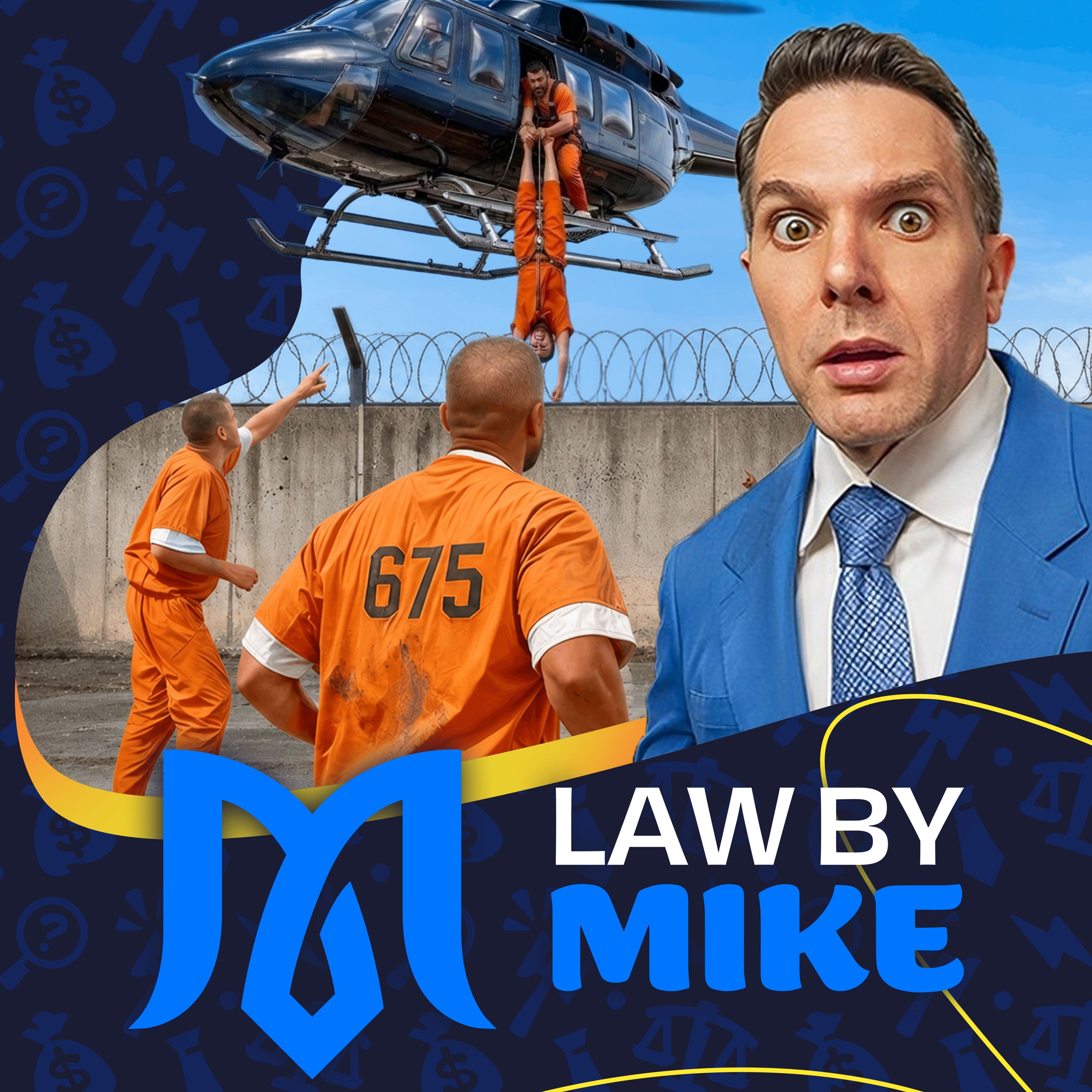
The transcript exposes numerous instances where police officers have violated legal and constitutional standards during public interactions. In one case, officers entered a home without a warrant, breaching the Fourth Amendment. Another incident involved a cop being punched after giving a finger gesture—protected free speech—showing that such gestures cannot justify physical force. A legally blind man was falsely arrested for carrying a walking stick, despite no criminal intent or evidence. Officers repeatedly failed to meet the legal standard of reasonable suspicion, detaining people without justification, including for refusing to show ID. One officer falsely accused a driver of drug use with no evidence, and another used inappropriate, unprofessional conduct during a traffic stop. A field sobriety test was administered without signs of impairment, and the officer's comment about the man's clothing was demeaning and unprofessional. In another case, excessive force was used when a man was complying with orders, and in a noise complaint, a cop forced a man onto the ground with no threat or resistance. These actions demonstrate systemic overreach and abuse of authority, highlighting the need for accountability, training, and adherence to procedural law. While some officers follow protocols, many clearly overstep, resulting in wrongful detentions, false accusations, and unlawful physical force—actions that can lead to civil rights violations and disciplinary action. The cases underscore that policing must remain lawful, respectful, and rooted in constitutional protections.
Police officers break the law a lot, from illegally searching people, to forcing
their way into homes without warrants. I'm breaking down crimes police officers
almost got away with, starting with an off-duty cop that lost his mind in a
road rage incident.
So he wants the truck to turn right on a red light.
So that lawn sign on the right looks to start with an 860 area code.
So area code 860, looks like it's Connecticut. So in Connecticut, turning
right on a red light is legal, unless a sign says otherwise. From what I can see,
there's no sign anywhere and nothing under the traffic lights. There's a
strong flow of traffic though, which may make the turn risky.
Ooh, he's laying down the horn. That's gonna. Oh man.
Now he's flipping the middle finger. While it's not very nice, it's protected free speech.
Oh no, the
Oh no, the
The other driver's getting out of the truck.
There's another video I found that shows more of the intersection. Let's check that out.
This is the moment everything goes wrong.
He's threatening a ticket.
Ooh. What? Oh man. He just got punched in the face.
Whoa.
He's assaulting a civilian.
Yeah, he's right. Assault of a civilian or battery. Now let's look at the statement the cop says afterwards.
Okay, does he show him doing the double finger?
I mean, who cares if he gave him the finger? That doesn't give you a reason to punch him in the face.
Okay. My fault.
Yeah, none of these things are a defense for hitting someone. You'll still get charged with a crime.
Okay. My question is this though. Because he's yelling at me and I actually show my badge, he's giving me the double finger.
I mean, I know it's trivial, but does he get hit with like, breech or whatever it is or nothing or it's just, it's all on me?
It's pretty ridiculous that he's trying to claim this guy breached the peace and that gives him some sort of defense.
It's not gonna hold up in court. Giving someone the finger is protected speech under the constitution.
So it's no defense to punch someone in the face. You're still gonna get hit with a crime. Nice try, buddy.
It's bad enough that this guy tried to throw his power around while he was off-duty.
But this next cop let his feelings control his every move.
She's getting arrested, clearly.
All right, he's putting her. See how the cop helps her get in backwards? That keeps her from hitting her head.
But it also lets him keep her hands out of the way for safety.
Looks like they're heading to the station now. In most cases, once someone's arrested, officers take them straight to booking.
The exceptions are if they need medical clearance or if the officer is transporting to another jurisdiction.
Did his camera just go dark?
Police officers are generally required by department policy to keep their body cams on during all interactions with the public, especially when a suspect's in custody.
What's happening now? This looks like a different officer is opening the door.
Oh! This guy was in the back of the cop car with the suspect. He locked himself in the cop car. Oh, man. Yeah, I don't see any reason why he needed to go back there unless, you know, for what.
In our next video, cops try to take advantage of a man that was blind.
What's this in your back pocket?
A simple. I just saw you walking at. It's a navigational aid. What's the problem? You a tyrant?
What's your name and date of birth?
I don't have to give that unless I'm. Yes, sir. I was. He's right. He doesn't have to give that.
Looks like you're carrying a gun in your back pocket. I'm stopping to make sure you're carrying it properly.
You don't have to. Have you ensured that it's not a firearm?
No, you keep turning so I can't see it. You don't have to be a to me.
Oh. Clearly not a firearm.
No, sir. I'm doing my job.
Am I detained?
Yeah, you are. What. He's detained? What? Detaining him just because he wouldn't show ID when she had no legal basis to
ask for it in the first place? That's a serious problem. You can really see her frustration taking
over here instead of following procedure.
You look like a weapon. She asked you to really send it, okay?
Now she's asking me for ID.
Okay.
I don't need the ID unless there's reasonable articulated suspicion.
Reasonable articulable suspicion.
And committing a crime or is about to do a crime.
He's absolutely right here. In order to detain or ask for the ID, he needs to show that he's
involved in the crime, is committing a crime, or is about to commit a crime.
Sir, and her suspicion was that you were armed, okay? And she's asking for your ID.
So the suspicion is that he was armed, but then he showed her that it's not a weapon.
So there's no more suspicion.
Well, now she has verified that I am not on site, so there is no problem.
Do you have your ID or not?
This is just cops getting mad that they're not getting their way, and this is not how
the law is supposed to be applied.
After that, Hodges is handcuffed.
What? They're arresting him?
This is not going to hold up in court.
That's when Hodges confirms that he is legally blind and carries the navigational aid to
help him when walking. He also tells deputies he was stopped while walking back from jury
duty.
Wow. He's legally blind, and they're arresting him for having a walking stick. This is crazy.
I mean, someone at the department is going to get punished for this.
After Hodges' ID card is retrieved, the supervising officer orders he be taken into custody for
resisting an officer and obstruction.
He was eventually arrested and charged with resisting an officer and obstruction, which
makes no sense.
Let's see what ended up happening, because this officer should definitely have gotten
in trouble.
So it looks like the officer ended up with a two-day suspension without pay and was required
to complete civil rights training.
Whoa, the sergeant was demoted, which is exactly what should happen to these next cops, because
they didn't just abuse the law, they straight up broke it.
Are you, uh. Michael?
And your name?
Officer Rodriguez.
First name?
Jim.
Jim. How are you, Jim? And your name? Please.
Please. Sorry. Badge number. What's that? Badge number, please. Let's go ahead and talk about
the incident. So they don't want to give his badge number. Don't know what you're talking about. Okay.
So you're not legally required to speak to officers at your door unless they have a warrant
or there's an emergency situation. He's completely within his rights not to answer any questions.
Step down here for me. Yeah. Nope. Nope. Hey. Whoa, whoa, whoa, whoa.
In the U.S., police cannot enter your home without either probable
cause or valid warrant signed by a judge. Based on what I've seen so far, they have neither. That
means they've already violated his Fourth Amendment rights, and we're only 10 seconds in.
Jack, come here. Now he's asking someone to record it, which is a good move because it
looks like the cops are overstepping here, and you want your own evidence. I'm injured.
Hey. Why are you cooperating? I am cooperating. You're violating my Fourth Amendment rights.
Hey. Oh, stop. Outside. Hey, you guys can't
report me here without a third warrant. Get the phone. Get the phone. Video me. Get the phone.
This is crazy. The cops really should not be in the house right now. It's smart that they're
recording. Asking his son to record is smart, as documentation protects you, even when emotions
are high. Though, yeah, I'm sure that had to be terrifying for this kid. What are you doing?
I'm really happy this kid is recording everything. What am I being detained for?
Just stop resisting. I'm not resisting. I'm not resisting. Don't take his phone.
He's clearly not resisting, and they're saying that he's resisting. That's why it's so good
to be recording this on your phone. Don't take this phone.
I'm good. I'm good. The cops absolutely can't take his phone. The kid is staying a safe distance
from them, and there's no reason to take his phone. You're not going to interfere with what
we're doing. This is my property. You're not going to interfere with an arrest. What's your name?
Yeah, I do not need to give you that. It seems like this kid's been watching some of my videos.
So even if the officer dropped his camera or gear inside, that doesn't automatically give
him the right to re-enter. Once he legally enters and retreats, going back in without a warrant would
only make things worse legally. That kid definitely knew his stuff, but watch how this next kid handles
it when a cop tries to pin an unfair charge on him. They're asking a lot of questions. This guy
doesn't need to answer those questions. He can simply say, I'm not discussing my day with you,
officer.
Very strange question to ask this guy.
And so does the odor of alcohol coming from your person.
Great. Let's do a test then.
If an officer believes you've been drinking, they can ask you to take a field sobriety test,
but they need some evidence of impairment first, like slurred speech, bloodshot eyes,
or erratic driving. I'm not seeing any of that here.
So officer Winters thinks I'm drinking tonight. We're about to do a test,
and he's going to find out I have nothing to drink. He's going to look stupid.
Yikes. Antagonizing an officer like that is technically protected under the first amendment,
but it's never a good idea. Up to this point, the guy's been calm and cooperative,
but you can see him starting to lose patience, and that's where things become a problem.
I'm going to have you stand with your heels and toes together with your arms down to your side.
So field sobriety tests like this are voluntary in most places, which means you can refuse them,
but refusing may make the officer think you're hiding something,
which could lead to an arrest anyway. Here, the kid's clearly just trying to comply and get it
over with. How many false accusations you got? Zero. It's about to be your first.
Oh man, this kid's funny.
Why are you shaking so much? It's freezing, man. Look at you. You got all these clothes on,
and I got shorts on, and it's raining, and you false accused me, so of course I'm going to be
a little nervous. I wear shorts when it's 30 below. Congratulations. Are we up?
What? What is that about? So officers are supposed to keep these interactions reasonable,
as the fourth amendment protects against unnecessary detention, and that comment
about his shorts is completely unprofessional. It looks like this interaction is going on way
too long. I don't see why they don't just give him a breathalyzer.
Let's go to the front of the car here. Oh, and now he's asking for it.
He's making it up right here. So it looks like it's time for the
breathalyzer. Under implied consent laws, if you're licensed to drive, you've basically
agreed to drive.
to take a chemical test if they lawfully arrest you for a DUI.
You can refuse, but it usually leads to license suspension and may count against you in court.
"Okay, you can relax. So I'm gonna read you a Miranda."
"What?"
"Right now you have the right to remain silent. Anything you say
can and will be used against you in a court of law. When's the last time you smoked weed?"
"What? So he's arresting him, but the breathalyzer didn't show that he was drunk."
"I blew a zero, so now you're trying to think I smoke weed. That's what's going on."
"You can't do that, man. You really can't do that."
"Absolutely I can."
He's 100% right. The officer can't legally accuse him of drug use without any sort of evidence.
They need probable cause, like bloodshot eyes, seen drugs, or smelling marijuana,
to even make that claim.
"How does it feel? How does it feel for me?"
"Remember I told you when you first pulled me over?"
"I had nothing to drink. He's gonna look stupid."
"But we just gotta do better than that. We just gotta do better than that. I deserve a policy."
The cop absolutely let his feelings get the best of him. Let's take a look at this next story,
where cops tried to arrest a man who said he was just trying to pay for
his groceries.
"How do you think he's shoplifting when he's standing there trying to pay with real money?
This is ridiculous."
"They're taking all his money."
"Oh, see, they're grabbing him here."
When dealing with someone who has a disability, officers are required to take extra care,
communicate clearly, and avoid any unnecessary physical contact.
"I'm crying."
Oh, they're like, they're really dragging him out of here.
This is hard to watch.
The man's not resisting and yet they're physically dragging him.
At this point, what they're doing could be considered unlawful detention.
I'm not seeing that he did anything wrong or criminal.
Do you have an ID on him?
Why are they asking for his ID? I don't see any crime here.
He was just trying to pay for those products.
Legally, the cops can only demand ID if there's reasonable suspicion that a crime happened.
Here, there's clearly none.
There's no theft and no threat, which means detaining him right now seems 100% unlawful.
So what's your name, man?
None of your business.
All right, then you're under arrest.
So because he refuses to give his name, they're putting him under arrest.
That doesn't make any sense.
You're going to be charged with incendiary entity, resisting officers, okay?
Resisting officers? How?
That's a big stretch.
Pointing out your rights like this is actually protective behavior, something that's
Next Cop desperately should have known, too.
You think that you're pulling me over?
Yeah, absolutely. There's a reason why I'm pulling you over.
For one thing, inclement weather, you don't have your lights on.
Two things, you're not wearing your seatbelt.
It's daylight. I don't need the lights.
And it's not weather. It's not raining.
Oh, so it's inclement?
It's not raining.
Okay, I'm not arguing with you. I'm telling you.
So the cop says inclement weather and that the driver doesn't have his lights on.
There's a law in Florida that says if there's reduced visibility, headlights have to be on.
But looking at this footage, a reasonable argument could be made that this isn't reduced visibility.
While cops are allowed to order you to step out of the vehicle,
they can only do so if the stop was lawful, which here is kind of questionable.
We're going to go back into the dash cam footage inside the car.
There's a cop.
Oh, what the heck? That's not okay.
Police are trained to use the minimum amount of force necessary to gain compliance.
Based on what we're seeing here, that punch is way outside the standard procedure.
Even though he was just hit by the cops.
What is your reason, sir?
What is your reason?
Another punch. This isn't right.
Even if the stop itself was lawful, breaking the window and pulling him out could be defensible.
But hitting him again after compliance?
This looks like excessive force and absolutely potential grounds for a civil rights lawsuit.
Let's see what happened after.
It looks like the driver filed a federal lawsuit.
And even though he pled guilty to resisting an officer and driving with a suspended license,
he's suing the officers for excessive force.
Yeah, that sounds about right.
I wish him the best of luck. This does not seem right.
But as you're about to see, some cops take their anger way further.
Because watch what this next cop does over a simple noise complaint.
Hey, let me see your ass.
Get on the ground. Get on the ground.
Get on the ground right here.
Get on the ground.
Mr. Gaillard attempts to comply with Officer Dukes' orders by getting onto his hands and knees.
But Officer Dukes forcefully uses his foot to attempt to force Mr. Gaillard.
The amount of force a cop uses is typically justified based on three main factors.
Like how severe is the suspected crime, whether the person is an immediate threat to the officer or anyone else,
and whether they are actively resisting or trying to run.
I don't see any of that here.
He was attempting to comply with Officer Dukes' commands when the force was employed.
Here the severity is not there. He's not trying to flee. He's not resisting.
And from what we can see, he's not posing an immediate threat.
If anything, he looks like he's trying to comply.
Which means the cop likely used excessive force here.
He had something.
That's what he had.
That doesn't look like a gun at all.
So the officer is claiming he had a gun, but it looks like he ended up finding some sort of crowbar or something like that.
And that matters in court because it can undercut the idea that there was an immediate deadly threat.
I'm not seeing a deadly threat here for the officer to draw his gun.
And take the actions he did.
Even finding this object is clearly not a gun based on how it's shaped.
So I don't see a good justification for the officer here.
Go back inside.
Go back in the house.
Ain't nobody talking to you.
I got a head from him.
Yeah.
So ordering someone to go back inside their home can get more legally complicated.
These people from their home are legally allowed to record or watch what's happening.
As long as they're not interfering with police duties.
So the officer says they don't give them cards, but then the female officer here is saying they do have a card.
And this right here isn't just bad.
It can be illegal depending on where this happened and what the intent was.
Because if a court concludes that he lied about having a card to avoid accountability, he could be charged with official misconduct.
And in some cases, even obstruction related charges.
You want to go to the hospital?
But it just doesn't make sense.
This goes to show you that while there are definitely some bad cops out there, there are also good cops out there genuinely trying to help and do their job.
And as always, stay out of trouble.
Podcast Summary
Key Points:
Police officers violated constitutional rights by entering a home without a warrant or probable cause, violating the Fourth Amendment.
An off-duty officer was punched after giving a banned gesture, and the use of force was unjustified and unconstitutional.
A legally blind man was wrongfully arrested for carrying a walking aid, despite no criminal activity or reasonable suspicion.
Officers unlawfully detained a man refusing to provide ID, violating the requirement of reasonable articulable suspicion.
Officers improperly accused a driver of drug possession without evidence, violating due process and probable cause.
A field sobriety test was conducted without valid signs of impairment, and the officer's comment about the man’s shorts was unprofessional and inappropriate.
An officer used excessive force by punching a compliant person and breaking a window, which constitutes unlawful conduct.
A noise complaint led to unjustified physical force, with no evidence of threat or resistance, and the use of force was disproportionate and illegal.
Summary:
The transcript exposes numerous instances where police officers have violated legal and constitutional standards during public interactions. In one case, officers entered a home without a warrant, breaching the Fourth Amendment. Another incident involved a cop being punched after giving a finger gesture—protected free speech—showing that such gestures cannot justify physical force.
A legally blind man was falsely arrested for carrying a walking stick, despite no criminal intent or evidence. Officers repeatedly failed to meet the legal standard of reasonable suspicion, detaining people without justification, including for refusing to show ID. One officer falsely accused a driver of drug use with no evidence, and another used inappropriate, unprofessional conduct during a traffic stop.
A field sobriety test was administered without signs of impairment, and the officer's comment about the man's clothing was demeaning and unprofessional. In another case, excessive force was used when a man was complying with orders, and in a noise complaint, a cop forced a man onto the ground with no threat or resistance. These actions demonstrate systemic overreach and abuse of authority, highlighting the need for accountability, training, and adherence to procedural law.
While some officers follow protocols, many clearly overstep, resulting in wrongful detentions, false accusations, and unlawful physical force—actions that can lead to civil rights violations and disciplinary action. The cases underscore that policing must remain lawful, respectful, and rooted in constitutional protections.
FAQs
No, police generally cannot enter a home without a warrant or probable cause. This violates the Fourth Amendment, which protects against unwarranted searches and seizures.
No, giving someone the finger is protected free speech and does not constitute a legal defense for assaulting a civilian. Such an act does not justify physical violence.
No, police must have reasonable suspicion of a crime before detaining someone. Refusing to show ID is not a valid justification for unlawful detention.
No, field sobriety tests are voluntary. Officers must have evidence of impairment before conducting a test, and refusing does not automatically lead to arrest.
No, officers must have probable cause—such as visible signs of impairment or drugs—to accuse someone of drug use. Random accusations without evidence are illegal.
No, police cannot take someone’s phone without consent or a legal basis. It is considered a violation of property rights and privacy.
Chat with AI
Loading...
Pro features
Go deeper with this episode
Unlock creator-grade tools that turn any transcript into show notes and subtitle files.
 PodcastTranscript AI