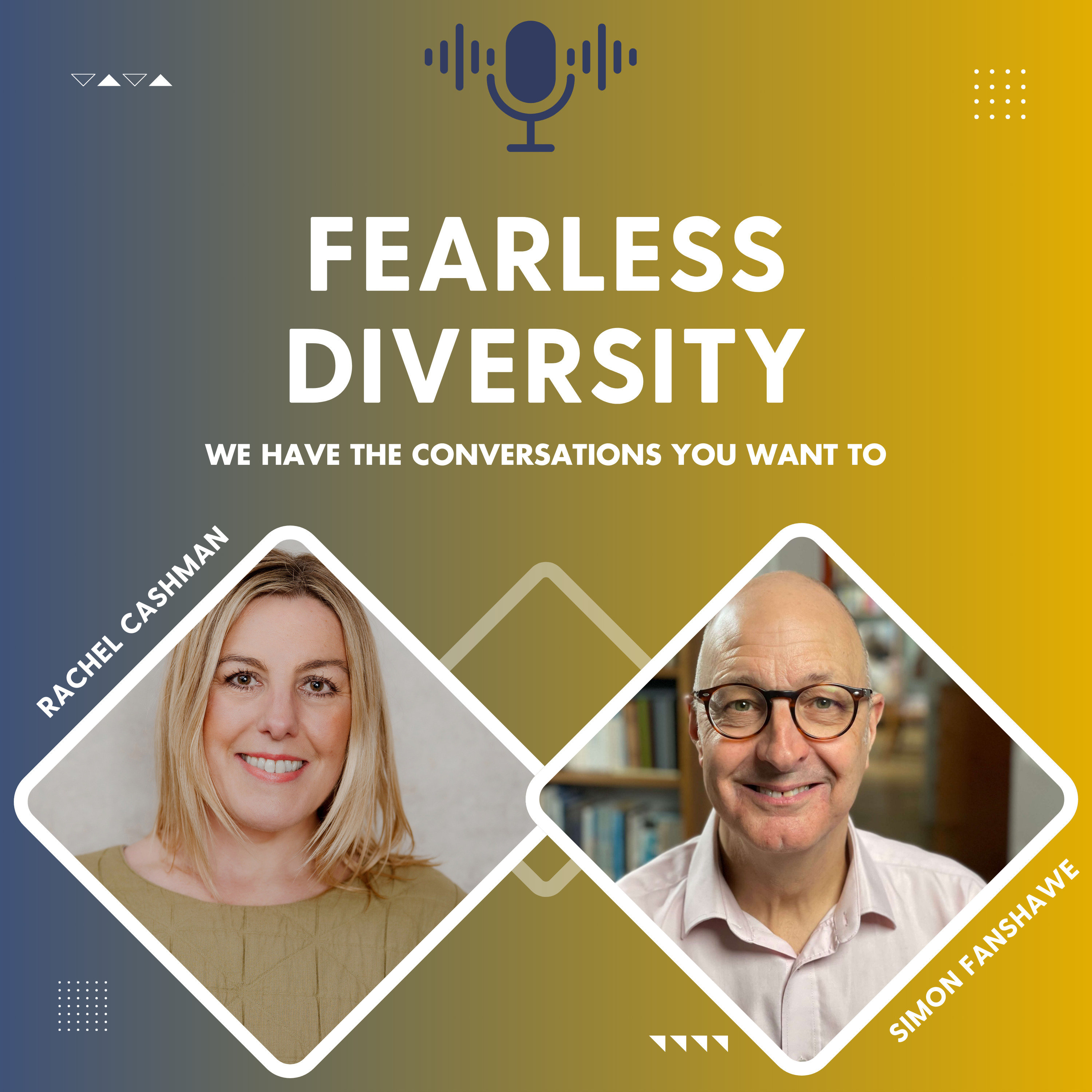
The discussion examines the intense challenges facing HR and EDI professionals today. They are described as "emotional shock absorbers," managing employee well-being, inclusion, and fairness amid widespread feelings of being unsafe and unheard. Despite rhetoric that people are central to business, HR is often sidelined at the board level, viewed as a procedural or "housekeeping" function rather than a strategic partner—a dynamic possibly influenced by gender, as many HR directors are women. The role has become relentless, compounded by generational divides, post-pandemic adjustment, technological disruption, and a shift toward more transactional, entitlement-driven employee expectations. This forces HR into a difficult oscillation between hyper-accommodating individual wants and enforcing necessary controls. Additionally, new legislation, like the Employment Rights Bill, aims to address workplace abuses but threatens to burden HR with more bureaucratic processes, potentially detracting from the core goal of building accountable, productive work relationships. The conversation highlights a critical gap between following procedural fairness and achieving genuine, human-centric outcomes.
Hello, I'm Rachel Cashman and you are? I haven't time in touch. Sorry, I got you there just as you were taking a drink with your water and so sorry, the timing was impeccable. And together this is fearless diversity and we have the conversations that you want to. The podcast that helps leaders kind of contain the chaos, protect the people and stay lawful, we hope whilst they do it. And today we thought we would ask the question, what does it mean to be an HR and EDI in organisations and business today? What does it mean to be responsible for fairness, inclusion and well-being at a time when everybody feels quite unsafe, unheard and unmanageable? And we're going to think about what's it really like to sit in the HR or EDI chair when every conversation seems to feel a bit like a referendum on values or on your ability and capacity? And also the extent in which you're kind of apparently mother, confessa, you know, looker-aft, nanny. And I mean everything seems to fall into their net and they don't seem to be taking terribly seriously at some level. I was intrigued. I was in a, some one of those nice supper things the other day was something very kindly says, you know, come and have supper and we'll give you wine and then contribute. And it was all about the HR director at the board, you know, and the kind of the premise for us or the proposition was, do HR directors have a voice at the board? And what was interesting was that the general view of the HR directors on the table, who by the way were all pretty senior, was that actually they sort of don't. And the question was why not? And there were two big things I think. One is that there's a question of organizations that will people are the most important thing, you know, they are absolutely central to our business. But actually they don't regard them as a strategic issue. They regard them as a kind of process issue as sort of, you know, an admon type of issues. But the other thing which is interesting too is that the one of the women said, she said, well, I just have to say this, she said, most HR directors are women and actually most board members are men. There's an absolute degree to which, you know, it sort of thought of as kind of as you just said, kind of clearing up, you know, it's a bit like doing the washing up after the party's over, it's, you know, it's you kind of when women do that. And that was kind of quiet, that took me slightly by surprise actually. But if we start with the why the kind of what's going on thing, what's the context for these people? I must say, when I meet them, but the thing that I was thinking was I wouldn't want to be them, you know, because I kind of admire what they do, but my goodness me, they just have to hold the ring on so much stuff. But it's a relentless role isn't it working in HR? And you know, I have seen over the last few months a real increase I think in HR directors and their teams feeling, I want to say almost at the end of their tether, right, because they're holding so much and the phrase that comes to mind is they're having to become the kind of emotional shock absorbers for their organisations. And it's that old adage, you know, if they're holding the shock and absorbing all for everybody else, who's looking after them? And I worry sometimes that we're not we as society, I mean, are not paying enough attention to the the breadth and depth of pressure and complexity that HR directors and their teams have to grapple with. I had a conversation with one the other day of let us just say a large global bank, I think that may be a topology, but a global bank. And we started off talking about some of the kind of just the everyday stuff at the moment. So all this stuff around the Supreme Court and, you know, with and through I'd send gender of the ideology and all that stuff. And she just fed up. She was going, I am just fed up with this. And she said, my team is happy to spend all their time talking about lavatories. And you know, this is a ridiculous waste of time. So I've just only one of the elements. One I think is the sort of activist element, which we've talked about before. One I think is the generational element. I mean, are the different demands now of work of that younger kind of crew than it than maybe we would make on them. And that's about the contract at work, isn't it? And then the last, the second thing I was going to element, my element was going to be the extent to which HR gets driven into process rather than purpose. And I think there's also something about HR professionals kind of holding all this unprocessed pain from the rest of their organization. So I was with an HR department recently. And the deputy director was actually in tears at Easter clock in the morning. And I said, you know, how, and it was just this not quite fed up as you describe your conversation. But more just the, the, and the tank was overflowing with all the different types of issues that they're having to deal with and grapple with. And you know, we always used to talk about the personnel department, didn't we? And the personnel department always seems to be a little bit more process-driven, right? The personnel is about recruitment and training. I'm not an expert in that. So I might have got completely the wrong way around, but it feels like that was a little bit more detached. Human resources is exactly that. It's human. So you're dealing with the complexity of human nature and people's relationship with each other. And if you are the people that are holding all of that for your organization and being relied on when the proverbial hits the fan by your bosses, scooping stuff up and the rest of the organization is upset or angry and mindful of the law and also maybe mindful of what the unions in the organization, what their position is, et cetera, et cetera. There's a lot of stuff to be carried with the department. And if you read this sort of what are we in business for? I mean, well, I'm actually, I was going to do three, the guild of HR professionals. I was going to read. No, I thought you were going to say, I thought you were going to say the, the guild did age, which I love on TV on it. Oh no. There was that. But now everybody's got, everybody's got a guild now, you know, I mean, the widget makers and the whatever and the HR professionals got a guild. You might like to know. And if this is ever a clip, then you see there, I've got certificate which I'm holding up to the screen here, which is so much for us today, been admitted to the Freeman of the company of human resource professionals. Oh my god. But I can't present to be one. I'm only there, I think, because I'm sort of a bit panther-classing. I think I think I'm quite jolly and they put me in the corner and say, oh, you know, he's quite smartly. But if you look at what they say they're involved in, human capital management, cultures where people can contribute productively, design workplaces of future generations, humanity at work, you know, they're these big concepts. And if you go to the CIPD and I know people have really mixed views about the CIPD, we believe work can and should benefit everyone, individuals and organisations, economies and societies. We're taking down the barriers to better work through the expertise and talents of our community of people, professionals. I reckon if you want to read those to any practical, professional, they could, what? Sorry, no, actually, I spent yesterday arguing about, you know, terms and conditions, compulsory redundancies, layoffs, consultations, whatever. So, and neither of us are professional, are we? I mean, that's, we have the luxury of coming in and working with people and I find that most of the time, I want to try and to help them get to core purpose and stand back at it, which is your point about the, the load, the tears, the, the demands that are being made on them. So my work tends to be far more, um, academic in the sense that it's usually when it's hit the fan and there's been a breakdown and it's usually, it's quite a material breakdown between two teams or people within a team or two individuals. And quite often I am sitting alongside HR as the technical experts and I am supporting and guiding the chief executive or the leader in how to repair the relationships in the team to avoid court, to avoid, you know, um, people leaving, to avoid material breakdown that damages in the long term. So we come at this actually from quite interesting but slightly different angles into our relationship of HR. And it's funny to me that the core of this is you can call it a breakdown, you can call it a reset, you, you can call it a development of the contracts at work. You know, if you go back to this, I mean, see, I'd be doing things like that, they all started, didn't they? And Rolfie Park and all that lot, they all started in time and motion studies and productivity studies, you know, the end sort of in the factory area, you know, the sort of round about the first world war before that. And so what you've, what you've got is a huge change obviously since then where you've got the general, you've got several generations that weren't now, each of whom have completely different expectations and expectations of life and technology. I mean, if you just think for a second, if you were 23 when mobile phones became every day, so round about 1997, you, you are now, you know, 50 something, whereas if you were a millennial, you were three in 1997. So in other, you grew up in a wholly different atmosphere and just in a really simple way. Frankly, if you look at what happened during the pandemic when people obviously went online, obviously went working from home, that had a fundamental change. And that technology was massive.
of parts of it, which makes managing expectations and relationships in a change technology world is completely difficult because if you're 50 or 55, I mean, I know it's dangerous to generalise about ages and generations, but if you're 50 or 55, actually managing people who are 20, 25 is quite a hard work because that's trying to understand what they want and what they're going to get out of work and what they're going to put into work. It's actually fundamentally different from what you were like when you were at that age. And I think there's also something about the pandemic, has the kind of post-pandemic trauma, the I think we're still, you know, living on the long tail of that as a society and workplace is a still adjusting course correcting, readjusting beyond that. And it's this kind of chronic uncertainty and I think a lot of leaders feel out at sea in that chronic uncertainty of which the kind of technological revolution that became exacerbated during the pandemic makes them feel almost more at sea. And so HR directors are also having to pick that up, you know, how do we anchor, how do we support our leaders to be anchored, or in this kind of sea of uncertainty? Well to add to that too, I mean, I was looking at some research today in preparation for this, and if this is very rough, but millennials, you know, and millennials are sort of between the ages are sort of, you know, 30 and 45, that sort of stage. But people who were born at that era, they're 30, 35 now. But they, they will during their working life have 15 or 16 different employers. The generation before them will have half that. So if you think about retention, you're going to keep people in a job. So they, they rock up. There's all sorts of things about they kind of got that reverse thing of reversal of JFK. So instead of, you know, ask not what you, you can do, you know, your country can do for you, ask what you can do for your country. They're coming in and going, what could you do for me? What, you know, so there's that reversal technology. It's a consumable, right? Like it's because technology is a bit of a consumable. It's it makes us a bit more transactional. And lots of society becomes more of a consumer relationship. It's all a bit like work as more of a consumable. But, and what that, but what that carries with it, I think, is quite peculiar because then there is this expectation. Then from younger people that work is there to deliver certain things to them. So a very sort of particular example. I don't know if I mentioned this before, but a couple of Christmases ago, a client told me that one of the groups, staff networks, LGBTQ, wherever network, I wanted to discuss Panto because it was there wanted to do drag. They wanted to just drag because of Panto season and they thought that'd be a fun thing to do. And she's like, okay, help yourselves because basically they wanted the room of the biscuits, you know, and to help yourselves. And then it turned out they were trying to do this 11 o'clock in the morning. And she went, no, no, no, no, no, no, no, no, you'll find that actually will be working at 11 o'clock in the morning and that is not work. The consequence of this was a massive argument. And the argument was all around kind of we're gay and this is part of who we are and therefore, you know, that sort of logic. And it seems to me there's a level of entitlement. I don't mean that in a bad way. Actually, I mean, I think the consequences are really tricky, but people have a level of entitlement now, which is exacerbated, obviously, both social media and things, that what they want, you know, it's legitimate to say, I do not want to work from home or I want to work from home. And the wanting is enough. So I think HR directors are kind of caught in this oscillation between like hyper accommodation of lots of people's wants and needs and interests. And this kind of hard control. And the hard control is supported by law at one side and maybe policy and company policy, you know, from another, but also performance control because HR people also, you know, have to deal with performance review and performance management and support leaders in doing that. So if you're an HR director now and you're having to flip between how do we accommodate and have this hyper accommodation of all of these different wants and needs alongside the hard control that's necessary for the function to deliver and the organisation to deliver, that can be very tricky to navigate, I think. But it was really hard for this colleague of mine, this client to say no. I mean, not hard in the sense that she was absolutely clear that she should say no, but it took a long time to say no. It took her like a week and a half or something just to go on saying no. Because she was scared to say no because she said no and they didn't hear it. Oh, never because it's the latter. Right. No, she had to know, no, she was absolutely clear that no was the right answer. Do it at six o'clock because this is not a work thing. And they, you know, they kind of came back with every weapon, you know. And you wonder too, I mean, the government's now got this, the employment's rights bill, which is going to add another set of obligations. So, you know, there's this idea that day one, it's called, it's sort of not day one, actually, it's day one plus. And there's a thing, there's a thing, what's it called, the beginning. It's for you come in day one, but actually they're now arguing about there's a period before day one. So it might be six months, it might be nine months, but basically it means that if you work for say a year for a company, you immediately have every single right. And does that make it a difficult, even more difficult now? Because, and also then coming with that is the whole sexual harassment thing and the coverage that the change there is instead of taking reasonable steps to prevent sexual harassment, the duty were ramped up to take all reasonable steps. So, you know, now what you're finding is that the kind of load on employers. And this is the moment at which isn't it that people start to say, I understand, A is the state involving itself too much and B is this getting complete, is the balance clipping in a way that's making staff completely able simply to stab their foot and say, I want this, I want that, I want the next thing and employers are going to have to say, oh, right then. Which is so I think I understand what you're getting at around employer concern with these extra regulations that the employment rates bill brings in. But my sense is that the reason this bill has, it's been one of the flagship bills in the first, you know, to come through in the first parliament. And it's because of systemic, abusive for what I've ever been to term unfair treatments of people in early stage career. And I guess, I'm not just early stage career, but early stage of employment in organisations. And I guess given that fact that you've just described people will have what was it, 14 more jobs in their lifetime? 14 or 15, yeah, 15 or 15, yeah. So you're going to imagine then you're going to be in that first year of employment a lot more routinely. So maybe the legislation is just is catching up with society's way of engaging with work. Yeah, but doesn't it just solidify it and give HR yet more processes to kind of, you know, they got, they'll end up, you know, what it drives surely is kind of desperate sense of caution where people won't employ as many people because they've been scared about employing it, which is, you know, what they were saying about France. But you know, it'll make them intensely cautious, isn't it? And I just wonder because it seems to me that HR gets drawn into process the whole time. And this will be more process, whereas actually, I mean, if you look at it in dispute terms, I mean, typically what happens there is, you know, there'll be more disputes as a result of this, the sexual harassment stuff. I mean, no one wants sexual harassment at work. But actually, if you start to put that kind of level of obligation in employers, don't you then just produce more process, more and HR's classically good defaulting to process rather than trying to help human relationships sort out. But what it will have to do is it will, it will no doubt create huge bureaucracy and audit trail because already, you know, when I go and work with organisations, I starting point that I always have is, and what are you going to be, and how are you going to be, and how is this going to be perceived in front of a judge? So if we get to the point that we're at employment tribunal, then working back from that, nobody wants to get there, but working back from that, have you in short, you have followed the law and that you've got a record of following the law, because I've told you before, haven't I, I once had to chair an appeals panel in an organisation that had gone on for years and years and years, and it was a, you know, obviously we won't name the case, but it was quite a complex case, double digit number of accusations, and the employer of say, let's say it was 20, and there wasn't the evidence for more than about nine or ten of the of the accusations, and that had gone over a long period of time. So you can see, I can see this from both angles, I can see this where we're requiring there to be more processes because actually we've got lots of employers at the moment who are not doing things well and are not doing things right, equally, if people are not going to be able to design the audit trails that they need with efficiency, you're just going to overburden each off in these enabling functions, and it's still going to detract from the real thing, which is how do you have the right relationships at work, where people are accountable for their behaviour and in service of doing the job? And what it says to me, too, is that people confuse process with fairness. So HR and the others think that, not all HR, I mean, I'm pretty careful here, but there's a, there's a default to this idea that some, if you follow their process, then it was fair, and actually there's a moment we're We can hang on a second. I mean, there's one. I don't know whether I'm. mentioned by name. Let's mention by name. The wonderful Angela O'Connor from the HR Lange. Angela once said to me, "I've never lost an employment tribunal." And I said, "I know, I said, I do do that." She said, "It's terribly simple." She said, "You look at the case." And if he turns out you think you're wrong as the employer, you apologize. She said, "I have to take more chief execs into dark and room." She said and told them to apologize. She said, "Because you only go to an employment tribunal when you know you haven't made a mistake and actually it's fair and right." And that seems to be one, that's great. And it seems to be so one is like more, more of that sort of directness. The other thing though, I did some work ages ago thinking about your kind of, it's sort of Donbian Donbary, if anybody's a dickens fan, it's that kind of endless legal case, you know? John Dyson, no, it's not Donbary and Donbary, sorry, Donbary and Sunsers, the John Dyson, John Dyson, I beg its pardon, I get my literary references right, for goodness sake, after all that money my parents spent on an education. And now of course I've got, I was going to say, I was working with one of the energy utilities, I won't say which, big, you know, big kind of international type company. And what we were trying to work on there was we were trying to work on whether there was something we could do, which would help managers resolve stuff and HR resolve stuff before it went formal. And what was quite interesting about it was that every time one raised a thing and what I'm in, I called it learn first. And the idea was that you would always try and get people in a situation when you could that they would learn rather than, well, you know, this thing when I could talk and learn rather than point and punish. What was interesting was that every time we tried to do it and the person I was working with was really trying incredibly hard to make this happen. Every time I tried to do it, there was somebody who raised a process point about why, well, he was supposed, why would this happen? So it was like, okay, who would trust the judgment that those two people reached? How would that be formally recorded? You know, do you know, do you know, it constantly got locked in process? Where's actually what you wanted someone to say? You wanted to see, oh, somebody's done, I'm saying, right, everybody, we're going to do a bit of leadership now. And what you've reminded me of is that adage, the process as the punishment, often for both the victim of the harassment or the concert and the person who's been accused of it because the process can go on for so long and it can be so complex and it can feel like a punishment for all, including those who are seeking to execute the process. Well, what happens is you do go back to this thing, don't you? Sometimes a lack of, not a lack of judgment in the sense of poor judgment, the failure to make a judgment. I mean, yeah, Angela, the point about Angela is Angela just made a judgment, right? This is right. This is, you know, we're going to win this, we're not going to win this, we're not going to win this, don't fight it. Get out there and we can see some of the employment type being was around at the moment. But don't you think a lot of people now are quite scared to use their judgment and then to deploy that judgment? So they almost want the backup of a piece of legislation or a process or the HR director, because I've seen this quite a lot where, you know, managers of people have got one going on at the moment and it would seem quite simple to many, right? But you've got a frontline service, you know, frontline service and you've got the other functions and the manager who has responsibility for an aspect of frontline service has been asked to go and sit with those frontline staff to be closer to those that they're, they're managing. And the manager's just refusing to do it. Now, it's just refusing to do it. And so the, and it's a challenge, right? It's a real challenge because the HR director is saying what's a reasonable management instruction now, what you don't want to do is the chief executive is several layers above and the chief executive's going well, and they've got all these different office moves to happen because we've got all these different things going on. So it's a perfectly reasonable proposition. But in this particular case, several rungs down from the chief executive, the manager of the person doesn't have the confidence to just tell them they've got to move. So it comes back to this kind of right, you know, the demand that I make. Well, let me ask you that. In so far as you know the answer to this question, why don't they have the confidence to say, actually Sparky, it turns out that's your job. By the way, you're going to move down there and actually we'll do that this week. Thank you very much. And presumably, I mean, what, yeah, so what's going on? That's not presumably what is, why do they not have that confidence? So, part of it is fear of the consequence. It's fear of the emotional response in the moments and it's fear of either the refusal and an argument and confrontation. So it's a fear of the other person's emotional irregular. And then me as a line manager, not me, them, but you know, the line manager having to deal with that in the moment. So for the HR people, what happens is they say, well, we'll only have that conversation if you're in the room. And HR's like, I don't need to be in a room to have a conversation about a chair. Like this is now getting silly. But what's driving this is fear of other of somebody else's reaction and the consequences of that. And then you say, well, you, it is a reasonable management instruction to ask Sparky to sit with their staff. But the sense of what's reasonable, I think. And when I talk to HR, in this instance, when I talk to the HR director, they will say a few years ago, would have been considered reasonable and people would have had the confidence to just go and execute that. Now people are all, is it reasonable? And I am yet, and then you come back on, well, what is the end point? Right? What is the point of what's the pathway to deliver the operational need in the organization? And the pathway really comes down to performance management, right? But that requires backup and that takes you back to process because people don't have the confidence in the conversation and the dialogue in the way that your friend Angela has had to deliver the message. So they're falling back on process. So you're giving them getting HR that's kind of buckling under all these additional requests. Not only they're falling back on process, as we know, they're falling back on faulty advice. So as we've seen in some of these NHS tribunals at the moment, you've had this so-called EDI and I put that in quote in it because I think it's a damaged concept now. But you have the EDI person standing up and saying, well, X, Y and Z, you know, the law says, you know, you can use the lose of your own identity or whatever. And actually the law doesn't say that at all. So there's faulty advice. You can see that in all sorts of different ways. There's definitely fear, I mean, you know, white people are frightened around race. We've talked about that before and different races are frightened around. So there's a whole kind of mess in there. But the thing about HR is, as HR contributed this, in other words, it feels to me like what, when you see HR not working well, it's because it's built up. It's got barnacles on the bottom of the boat. They've just kind of a created all this stuff and then they call it professionalism. You know, they say, oh, it's a profession of HR and actually what we're very good at is we're going to do this process and that process and next process. And what they've lost a sense of a purpose, but be fundamentally, if you go back to these big concepts, we champion cultures where people can contribute productively. End of, you know what I mean, I mean, I think people need to work at their best. I think people have, as when they step into leadership roles, I'm seeing this more and more and more, when they are required to do what would be routine engagements with their staff, routine dialogue, routine or productive conversations, they want HR to do it all for them. So I'm almost this parent-child relationship that is developing between HR departments who are expected to be parents and leaders who are behaving like children and I don't mean that in a condescending way, but they're needing spoon fed and ideally to have HR physically sit in the room. And you know, if we were to get rid of HR completely and I know we wouldn't, but just say, you know, blank sheet paper in the world and we would, would the world ends? Like what would happen if HR and I'm not decrying the HR profession, but if we suddenly got these people having to stand up on their own and stop this overreliance on these technical professionals to not just advise them but to do it for them and that's what I'm seeing a lot more of. Part of this, that's an interesting idea. So what, what would lead to, I guess that would be an interesting thought game, wouldn't it? For leaders to think to themselves, right, if I didn't have an HR department, what would I have to do? How would I make this work? That might be quite an interesting thought experiment because then you haven't got something to kind of rely on and you haven't got this idea that what you need in this particular case. You do need technical expertise because there's legislation and when it comes to consultation around redundancy, I mean there's this whole, you know, one of the employment bill things is about sight by sight consultation on redundancies as opposed to whole organisation because obviously employers were saying, well, I've got 10 there, 10 there and 10 there and the legislation says if you've got more than, you know, making this up, but if you've got more than 40, but they would separate it up to stop them being falling prey to the legislation. So you clearly have to have technical expertise. I get that. But that's a particular set of processes which are designed by legislation. But when it comes to when it comes down to it, I was having a conversation the other day with a client with in some training and one of the points I made them was that what interested me about this stuff is that
talk to people about, I give them scenarios, they almost always get drawn down into the detail of the issue of the scenario. And actually, that's not the issue. The issue of the scenario is merely the hook on which the people involved have hung the breakdown in their relationship. And the other thing people get hooked on is either end of the spectrum of interventions, so they're either completely passive, nothing to see here, so you get the manager that needs to tell the member of staff performance is not up to par, is left on their own to do it and goes into the room as I had recently, goes into the room and says you're doing a grand job. I mean, blurry around the edges and then the follow up documentation is very happy, we had a good meeting and HR are sitting outside the room, good, this is entirely not the script that we'd agreed, yeah, but you didn't come into the room with me, so I didn't feel like I could do it, and what they're not realising is they're actually setting the organisation back, so you get that, or the other end of the spectrum, where they go in and go, you're doing a terrible job, you're going to be sacked on Monday and then HR are like, whoa, whoa, whoa, whoa, no process, no following the law, you know, so you get this and I'm being deliberately obtuse with it, with the two very wide variants, but these are the things that we see and it comes back to competence and confidence, and there's something that is often said, I think it was the London Business School when I did some work with them in the pandemic, autonomy, belonging and competence are three facets of great leaders, so how do we cultivate the ability for leaders to lead the people side of their work, the HR side of their work with the people that report to them, autonomously, not overly reliant on HR, but a sense of belonging, so what I'm doing with my team over in this department, my colleague in another department would be replicating the same standards, because if you start to get that mismatch in one organisation, we're all screwed, so autonomy, belonging and competence, I feel like I've got not just the right technical skills, but I've got the right relational skills to be able to do this work and work in conjunction and partnership with my HR department, rather than expecting my HR director to be in charge. And saying no, or you can't do that or you've got to go through this process, I mean that's the thing I can't kind of go back to the whole time and it is part of the problem of legislation that melts on top of for each other, as I understand there's tons of stuff to get the head around, but when it comes down to it, I was really intrigued by this thing that you go back constantly, don't we, to the notions of core purpose? And you think, well, what are you here to do? You know, you're here to do X, Y and Z, I remember again, this is the thing with the group of people we were talking about, something completely different. We were talking about diversity and all that stuff, and the person said to me, in the coffee break, the person was the manager's thing, oh, they'll bring up working from home. And I said, why? And she said, well, they're just obsessed with the moment, that's the thing, and sure enough. But what was interesting was that they have spent the whole half of the morning talking about they didn't collaborate enough, they didn't meet enough, they didn't stimulate each other and challenge each other's ideas enough, and actually what we wanted to do is work from home. And as there's two interesting things about that, one is those seem to be contradictory, but the other thing is what do you mean you want to? Isn't the question, can I do my job working from home, or can I not do my job working from home? So similarly, if you go back up on that, then go to be your point is that the damage to the organisation point is, is this good for achieving what we're trying to achieve? Or is it not good for achieving what we're trying to achieve? So how do HR people dig themselves out of that whole process? - You're laughing, I'm laughing because I met somebody for a coffee at the weekend, and she's a listener, so sure. - I'm laughing because it wasn't a drink, it wasn't a drink, it was a coffee, it was a morning coffee, but she's listening to this. - Must've been hung over from the night before. - Until that was actually being a football, but and she'll know I'm talking about her, because she was saying that in her role she's now being required to travel several days a week to the office, but she's not had to do in the recent past, and the first question was, well what's the point? And quite the dissemitty, you know, what's the point? Am I going to be more productive? How is it going to make the work better and achieve more? And I think the jury's out in that particular instance. But again, this comes down to people's personal judgement about how they relate to the world of work, particularly since the pandemic, I think. And thinking about, if we have leaders that are good at this stuff, good at the relational stuff, don't hit either end of the continuum that I mentioned. Would that be less of a role for HR? I don't think it would be. I think it would just be that our HR professionals are able to work, what I always used to say, working at the top of your band, you know, they're able to work at the top of their professional expertise, rather than getting dragged into these routine operational management conversations and decisions on a daily basis. It's enabling them to do the bits of their professional expertise that only they can do. Well, it worries me too, because that strikes this thing where the CIPD and all these other organisations are talking about, you know, the profession, the professionalising HR, professionalising EDI and so on and so forth. And I'm all for competence and talent and skill and upping your ability to do it. But one of the problems is, I mean, is that people then start to rely on qualifications. They say, well, everybody needs to have the, you know, the whatever it is, diploma or this happens in housing at the moment. I mean, off the piece, but you know, at the moment, the last government said, oh, all housing professionals are supposed to have a, now they're going to have to have a housing, you know, qualification, you think, but that's not going to mean. There's nothing that says that's going to improve the service for residents. I don't really care whether people go out as in qualification. I'm interested in improving service for residents. So do you think the professionalisation is a problem? Do you think we should sort of abandon that kind of thing? I mean, maybe are we off-piece with all this? I mean, we're not understanding what HR are trying to do by professionalising, relying on process that that somehow makes it reliable and keeps you up to tribunals and so on and so forth. So are we standing outside with luxury? I don't think that they're mutually exclusive actually, you know, so I have no problem with the professionalisation of HR and I think that is probably something that is also quite motivating for people that are in the profession. How can they expand their professional qualifications, their knowledge, their learning, how can they bring that into making? I'm all for people as a collective of skills in any sector being the best they can be and so if professionalising that is part of it but where I worry is this relationship we have where either HR functions feel they have to do this or others rely on HR functions to be the rescuer, you know, to rescue every situation because they are the professional human resources bit, therefore they cover everything because I think any rescuer impulse can feel like it is doing good or feel like it's caring or feel like it's helping you but it actually disempowers everybody that is involved. So I want to see as much of a focus if you like on how do we help generalist managers, other leaders of people in organisations be the best people leaders they can be working in partnership with the professional HR experts that are brought in in the extreme situations that require that excellent professional expertise. And I also want from the other side of the thing is I want people to start realising that there's a relationship at work which means that you go in, you do the work, you get paid. I mean that's the fundamental thing. If you don't like doing the work, I mean I know that other circumstances which will mean this is not just a choice you can easily make but if you don't like the work you kind of got a decision to make, how do you go well either I'm not going to do it or I'm going to leave or I'll just kind of crack on and put up with it, not every job is interesting and I get all that but that fundamental contract, it does seem to me that employers ought to be sensible and go look here's the deal, we pay you and you do the work now there's some conditions to that and the conditions are we make sure for instance that you have a decent working environment that we don't work you 57 hours a week etc etc all that stuff so there's a compact and I agree there's things on both sides but I was once asked what is an employer's responsibility for the well-being of their staff for the mental health of their staff they said and I said well I think it's pretty limited I mean it seems to me that employers have got to provide a decent working environment and that might do to do with heat and light and blah blah blah and breaks and you know all that kind of stuff and a professional development and you know the stuff that you need to do your job to the best of your ability and you know I've got this thing about conditions for success everybody's got conditions of success and so good management works out what they are and then does them but beyond that what is wise an employer suddenly laid you know loaded up with all these other things and of course the thing is I think H.R. colludes with that as well and doesn't say actually it turns out it's your responsibility for your mental health will provide you with some basics for signpost but actually that's your thing and H.R. doesn't do that
enough. So as you know one of my specialisms is psychological safety at work and that is a concept that's had a huge amount of weaponization over the last few years and I'm often called in by HR directors that want me to help them explain to their staff why psychological safety is not well-being and why it's not okay to say I'm refusing to come to my performance review because that will damage my psychological safety at work. So just so the listeners can you know recap on what psychological safety is. It's not a corporate cuddle, it's not about being kind to people, psychological safety is about how are we accountable at work, how do we have the conditions that mean we can hold our agency, we can step into our agency and we are within ourselves between us and individual and amongst us with other people, we can challenge, we can innovate, we can take risk sensibly you know within boundaries, we can ask questions, we can be curious, we can do all of these things without being mocked or humiliated. So it's creating the conditions to be accountable for the work. So many people equate this now with psychological safety and well-being and it all being this kind of like this demand as you described at the top of the show you know I'm coming to work and I want to be treated in this way as an employee and if I'm not I'm going to either demand I'm treated differently or I'm going to say you're damaging my psychological safety or you're damaging my well-being. I am I noticed the other day it's slightly off of the directly employment thing but I don't know if you saw this there was a clip which went round a lot of it was Michael Gove, editor of the spectator, turning up to the spectator parliamentarian of the year awards or whatever they're called, some pot for you, some chat with a you know phone and kind of got in and was recording you know and he and he was asking people about Israel and Gaza and he asked Michael Gove but Israel and Gaza and Michael Gove just said are you invited here and he went what do you mean why do I want more what does that matter I'm asking you about Gaza and Palestine Israel and Michael kept on saying are you invited because if you're not you should go and he went over to the the the security person he said to the person invited could you ask them to leave until and so forth. What struck me about you this guy this young man had an absolute sense of his own entitlement that Michael Gove was under an obligation to answer his questions. Not just oh I'm asking you questions and what's your view or what's your opinion but there was some kind of the tone of his voice the tone oh so you're walking away now oh so you're not doing this and it struck me that that's a bit another stuff to work at the moment is there's a sense of entitlement and no one has the moment of self-reflection because hang on a second this is actually work so am I entitled to demand that. Do you remember the whole thing I work to live not live to work? So I feel like that's always got a bit muddled up these days with lots of people are kind of saying well I bring my life to work and I'm working to you know I'm working as part of my life and therefore I'm going to be able to pick and choose how I want to play bits of myself and bits of work into the bits of myself and I think all of this for me feels as part of this conflation and this complexity that has been almost beaded up by the pandemic and more and more I'm working with leaders now who talk about exactly this sort of example that you've described but it might be at their staff network meeting it might be a time-haul event you know if they're talking to all the staff or certainly like online meetings you know where they'll people put questions into the chat box and they won't get round to them and then the chief executive will find that somebody I had one recently had to do with the chief executive then got a knock on the door where somebody demanded to know why they hadn't answered the question on the online chat group in the company town hall and they're like well we had 400 questions so we've almost kind of lost this this sense of I don't want to use the word difference because it would be the wrong word but the kind of guardrails about how do we relate to work how do we relate to each other have become really really blurry and lots of the people I talk to say they've really noticed we're now what five years on from the pandemic and people would expect us to have moved on and everything be back to normal whatever normal is but actually that's not happened actually people are people are struggling more than ever to navigate what any kind of new normal means and it was happening before wasn't and it was exacerbated by the pandemic but this this breakdown and the kind of relationship at work and it is this thing where you don't want to go back to kind of just the rigid hierarchies but you do want people to accept that actually status and I mean businesses do have status in hierarchies and they kind of matter I spend an hour the other day with the chief executive because he wanted to be able to stand in front of everybody and explain in words that he could embrace which weren't clichés and whatever why they were pursuing the kind of policies they were to widen the pipeline to increase fairness and opportunity you know all the stuff that I do you know and I it was brilliant and I spent an hour with him not trying to convince him what I thought but spending time thinking what he thought and why he thought this important because he wanted his language and one of the things that's really interesting was he wanted to know how to respond to those kind of questions why you know why why the you know too few women in this sort of job or you know to mean but questions that were coming from a kind of hostile point of view and he wanted to be able to have the calmness and the confidence really to explain and it was great sessions it was really good fun and apparently I didn't go and see him but apparently you know he did well you know my boy did well so that was nice but but but what was interesting was that he's actually and it's a very it's a growing company and he's and he you know he's confident but he didn't feel confident about that which I thought was kind of interesting I mean I would really like us to think about maybe I'd love to hear people's ideas on this actually is how we help HR professionals and leaders rediscover their spine and their soul on some of this so how can they create the containment not just compliance like not just the process and how can they develop their courage not just sit comfortably in consensus when they when they know a bit like your guy you know I'm not feet I'm not don't feel comfortable in consensus and I meant to lead this and that triumvirate between HR the leader and the wider organization and I love this thing from the Guild of HR professionals if you think about a core purpose we champion cultures where people can contribute productively contribute productively you know in other words to that kind of overall goal so so one of the things I think is don't get diverted you know as HR don't get drawn into those diversionary things the subject itself because more often than not it's about the human relationships now HR people know that but often they're not in the structure where they can do it secondly remember Angela I've never been to an in-broadic tribunal O'Connor remember that because actually what she did was she made a really clear view and you can see we're playing at them as two big NHS tribunals at the moment do you look at you and go you're mad you're wasting time energy and money under the guise of this being about diversity or HR or whatever actually this should have been dealt with at a much more simple level according to the law beforehand you know and do you know what I mean so it feels to me like and you want leaders in the HR space you know the Peter cheese is the world at the CIPDs and so on and so forth and I've heard Nikki Arret who's the she's the grand wizard or whatever it is at the Guild of HR professionals at the moment I've heard her say the same thing you know they're she's tough but then but there's somehow the people below are not necessarily getting that message and it may be people are quite far below in HR and not getting that message so there's a couple of things I would say one I think we need to really get a handle on how we regulate fear inside organizations because fear is the emotion that drives a lot of these behaviors whether it's the reliance on the technical professionals whether it is the not stepping into our agency so how do we help organizations regulate the fear in their organization however it's manifesting and specifically around you know HR functions success means being kind of lawful and relational right and that's the kind of you know grown up kind of you know a form for it and I would love to see how can we really harness and how can we use say the important the new employment rights bill how can we use the kind of environment we're now in to take that professionalization of HR from where it is now and turn it from what feels like a firefighting function for many people who are in it and get drawn into the weeds into a strategic command center for your for your business because it is about human resources and people people are the other commodity but with all the kind of human dynamics and foibles that will make you a success or failure so focus on relationships try and work out what do I need to do to stop this going into process and resolve the actual human interaction relation you know what is the problem itself rather than getting stuck in the issue seems to me to be one of the big things we're saying we're doing a piece of work at the moment where we're going to produce a report and that is looking at training and policies in the NHS in University of Digital Commercial Companies and to the research on those three categories and what it one of the things it's going to do is it's going
to give you a checklist against which you could make some judgments about the policies that have been pursued in your organisation to help people. I was just picking up on your point about lawful and things that are related to core purpose. So we'll talk about that more in the new year and we'll produce it. But that should, those kind of things I think can really help returning people to core purpose. Yeah, I think the final thing I would say is how can HR directors and I do a lot of this with boards that I work with is to how can we create the allies in the executive leadership teams? So the HR directors are not themselves kind of out at sea holding everybody else. How do we ensure that there's connection and that culture is actually everybody's leadership job? And particularly where you might have operations leaders, finance leaders, comms leaders and HR leaders, how do we create that connection and communication between them to hold space in leadership cardra terms? Cardra. That's my work there. That's fancy. That's your word of the week. I always wonder where the cardra and genre I think all those are words end in R.E. Like that. I think they should probably be banned because they're sort of pseudo French, but we'll stake it for the ones. We'll give you one of them. I was very technical with Ben this week. We've really tried to get into the HR question partly. I think because actually it's quite faster for the moment to give HR a really bad time, but on the other hand, it's slightly faster for give HR a really bad time because HR partly deserves it. We're trying to steer it course through, I think, those two extremes. Are we in favour of HR against it, Rachel, at the moment? I am very much in favour of it because I personally feel very much like her kind of a mother hen, and I don't mean that in a patronising way. But it's because so many of the organisations I'm working with, the HR director or the HR team that work for the director are really having a tough time, and they're working really, really hard, and that I don't feel they're always getting the appreciation that they maybe deserve for the amount of stuff they're dealing with that people don't always see. Okay, and I would say to earn that reputation, I think they've got to draw themselves above process and start thinking about much, much, much being much more relational and much less process oriented. Well, it's been charming as ever, Rachel, to spend time in your company. Outside, you know, the normal social. Have I seen you for a little while? I've been locked away. I've been football mad, haven't I? I mean, this is the point of the season where I'm away almost every couple of days with my football husband, so I'll be temporarily divorcing them soon at the international break. And if I can just make the clear point that I am not a football husband. Anyway, thanks for listening everybody. If you're in HR, do you get in touch? We partly did this actually, I should say, because somebody suggested it. Somebody in HR suggested that we had a chat about this and so we have had a chat about it and I hope you've got something out of it. We've enjoyed it. I've certainly learnt something out of it. Thanks so much and good night from me. Thank you, man, for me.
Podcast Summary
Key Points:
HR and EDI roles face immense pressure, acting as "emotional shock absorbers" for organizations while often not being taken seriously at strategic levels.
HR directors, predominantly women, struggle for influence in male-dominated boards, with their work perceived as procedural rather than strategic.
The role is complicated by generational shifts, post-pandemic trauma, technological change, and rising employee expectations, leading to conflicts between accommodation and control.
Increasing legal obligations, like the UK's Employment Rights Bill, risk adding bureaucratic processes that may hinder genuine relationship-building and fairness.
There is a tension between following legal processes to ensure compliance and fostering healthy workplace relationships, with process often mistaken for true fairness.
Summary:
The discussion examines the intense challenges facing HR and EDI professionals today. They are described as "emotional shock absorbers," managing employee well-being, inclusion, and fairness amid widespread feelings of being unsafe and unheard. Despite rhetoric that people are central to business, HR is often sidelined at the board level, viewed as a procedural or "housekeeping" function rather than a strategic partner—a dynamic possibly influenced by gender, as many HR directors are women.
The role has become relentless, compounded by generational divides, post-pandemic adjustment, technological disruption, and a shift toward more transactional, entitlement-driven employee expectations. This forces HR into a difficult oscillation between hyper-accommodating individual wants and enforcing necessary controls. Additionally, new legislation, like the Employment Rights Bill, aims to address workplace abuses but threatens to burden HR with more bureaucratic processes, potentially detracting from the core goal of building accountable, productive work relationships.
The conversation highlights a critical gap between following procedural fairness and achieving genuine, human-centric outcomes.
FAQs
They often grapple with balancing fairness, inclusion, and well-being while feeling overwhelmed by demands, acting as emotional shock absorbers, and navigating complex human and legal issues.
HR is sometimes viewed as a process-driven function rather than strategic, and gender dynamics may play a role, with many HR directors being women and boards often male-dominated.
It has shifted from process-focused tasks like recruitment to handling the complexity of human relationships, well-being, and organizational culture, increasing emotional and strategic demands.
Younger generations often have different expectations of work, such as viewing it as transactional or consumable, which challenges HR to accommodate diverse needs while maintaining performance and control.
It adds obligations, such as extended rights from day one and stricter sexual harassment prevention, potentially increasing bureaucracy and caution but aiming to address systemic unfair treatment.
HR professionals often absorb organizational stress and unprocessed pain from employees, leading to burnout if they lack support, as they manage conflicts, well-being, and legal compliance.
Chat with AI
Loading...
Pro features
Go deeper with this episode
Unlock creator-grade tools that turn any transcript into show notes and subtitle files.
 PodcastTranscript AI