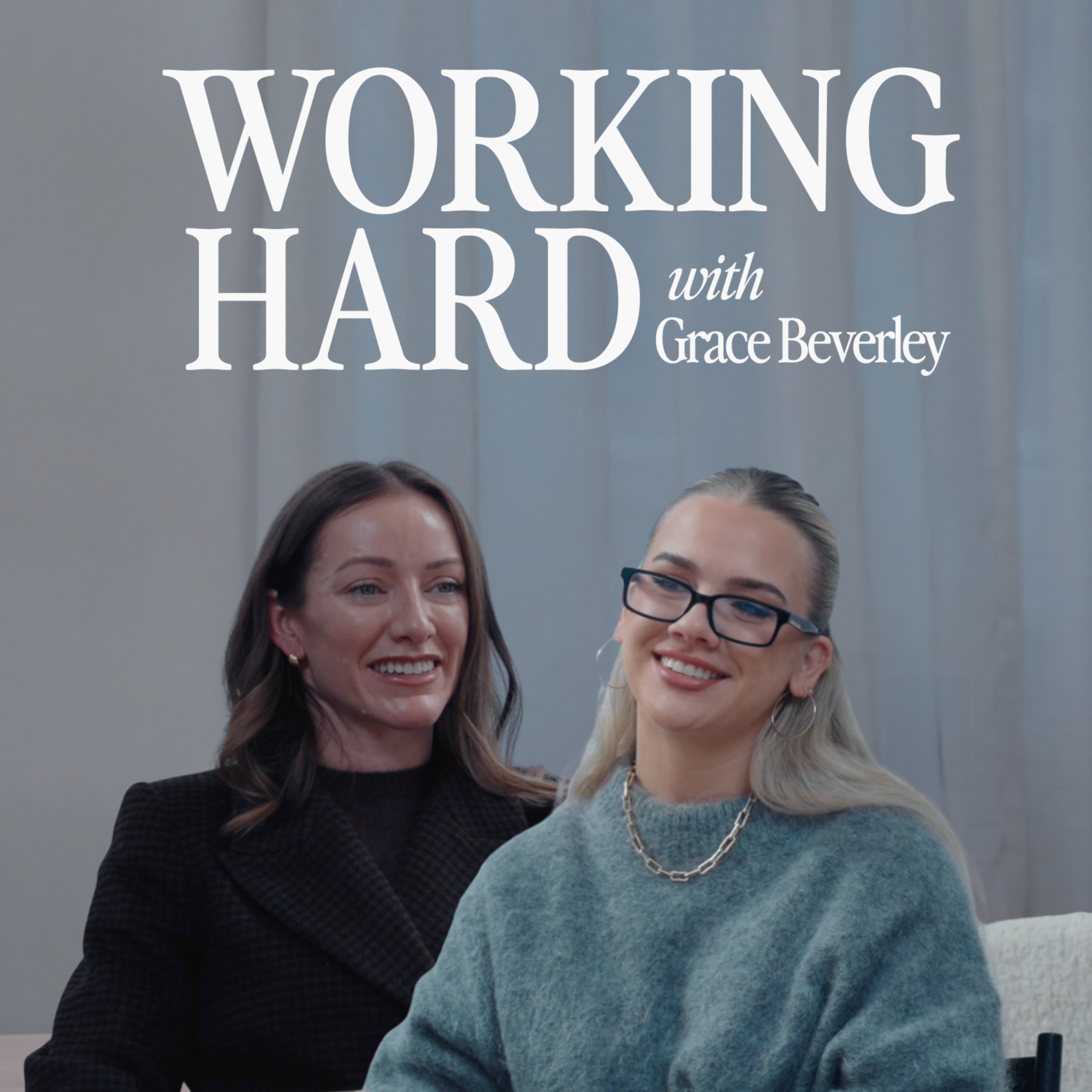
What you should actually be eating in 2026 to feel your best (a nutritionist's guide)
from Working Hard with Grace Beverley
56m 39s
In this podcast episode, Grace Beverly and performance nutritionist GQ Jordan discuss a sustainable approach to New Year’s resolutions, emphasizing that drastic overhauls often fail. Jordan explains that January’s “all-or-nothing” mindset traps people in cycles of restriction and guilt, while bodies need simple, consistent support rather than extreme diets. She recommends starting with foundational habits: establishing regular meal times (breakfast, lunch, dinner), drinking 2-2.5 liters of water daily, and gradually increasing physical activity (e.g., steps). The key is to add beneficial elements—like whole foods, hydration, and earlier bedtimes—rather than cutting out foods, which opens up positive opportunities. Jordan highlights that small, boring changes (e.g., a rotation of three breakfasts) build confidence and lead to lasting results, as consistency is more important than intensity. She advises listening to body signals (energy, sleep, mood) to track progress, rather than fixating on weight or external metrics. After holiday overindulgence, returning to regular routines gradually, without blame or panic, helps restore balance. The episode encourages celebrating the desire to improve health but warns against impulsive fixes, advocating for a patient, additive approach that fosters long-term well-being and avoids the pitfalls of diet culture.
[Music] What is up, I'm Grace Beverly and welcome back to Working Hard, the podcast-shake guidebook on how to improve your own life and achieve what you actually dreamed of doing, because life's too short for boring podcasts and bad advice. [Music] What is up and welcome back to Working Hard today? We're back for another episode of our New Year series, and we are doing a big fat New Year reset with someone who makes nutrition simple instead of stressful. I feel like that is what we need at this time of year, because so many of us get caught up in a January filled with, like, fat diets and wanting to overhaul your whole life, rather than thinking about the long term, which is really easy to do when I do it every single year. But I feel like we just need a good talking to by someone who knows their shit about nutrition. So GQ Jordan is a performance nutritionist who has built a huge online audience by breaking down metabolism, gut health, energy and sustainable habits in a way that actually feel doable. So if you're starting the New Year feeling low on energy or confused about what to eat or stuck in the all-or-nothing cycle, then this episode was designed exactly for you. Before we get into it, if this type of content is your bag, please give us a follow-up or whatever podcast app you're listening to us on. Hundreds of thousands of you follow us on Spotify, but we want that number to grow because a million people listen a month. So why don't you join them if you haven't already? GQ Jordan, are you currently more working hard or happy working? Working hard. Yeah, we're sure. Always? Always. It feels like I've been working hard for the past, maybe five years straight. But I am a bit of a glutton for punishment. I like the momentum. Yeah. I like that buzz that you get. Maybe it's a dopamine addiction, I'm not sure, but I like kind of that reward you get from constantly achieving, I suppose, in a sense. Yeah, I also, and I don't know if this is really controversial to say, but I just can't buy that that's always a bad thing. I agree that there are certain elements of things like phon addiction and dopamine addiction and all of this that make us generally, I don't know, we're doing too much all the time and we're kind of frazzling and operating. And I do get that at the same time. If you're lucky enough to be in a position that you get so much joy out of your work, because yes, you feel like it's highly challenging, but you also feel like you're highly skilled and you're able to do the things that are needed of you. That's a really fortunate position to be in. I just don't buy that it's all bad. I think there's a lot online about fixing all of this stuff. And I'm like, do you know what? A lot of the reason I am happy is because I'm moving it this space and I kind of like it. I wish I'd had a choice, but I do, I like it. Yeah. I know I'm the same. I think obviously this is awareness that you have to have of yourself. And I'm sure with your past with health issues and everything about that, you probably have a similar awareness of your body. And sometimes it is a balancing act. But I love what I do as well. I love what I do. I love helping people. I love educating and simplifying. And there is a real kind of, as I said, momentum in that there's an sense of achievement. And I just want to keep going. And obviously within the same breath I'm taking breaks. I am looking after myself regulating my nervous system on the go. But there's a lot of, I suppose gratitude in that as well. So I want to start with where we are right now. We're at the beginning of January. What do most people do in January when it comes to their food? It's the classic. All or nothing mindset, isn't it? It's that, you know, it seems like the, because all the messaging, completing up to the end of the year, in first of January hits, and we're like, okay, I must change. I almost overhauled my life. I must cut out everything that is deemed bad, bad and in verticals. And, you know, start that gym membership. Do, you know, XYZ. And that is just a trap. Our bodies don't need a complete overhaul. We need like a system that supports us in every aspect of our needs. Obviously we need good nutrition. We need lots of movement, lots of sleep, which is often the first thing to go when we're busy. Lots of those basic things. So when it comes to the first of January, it shouldn't be, you know, that complete overhaul. It should be what first step is the most achievable? What's the first step that's going to give me that confidence that will kind of set the tone for the weeks to come, for the months to come? Because when we have that initial confidence, we are more likely to kind of move on to the next stage and then keep kind of stacking on those habits that are going to help us feel their best. Yeah, and I think it's so easy to go into something at the new year and become really excited about the prospects of these goals that you might reach, which is important. And like it's an important don't mean hit to give ourselves so that we feel motivated. At the same time, setting more goals gives you more of that, but it doesn't actually give you more consistency or more chance of actually reaching them. Probably it would argue the opposite. And yeah, it feels better. So we're more likely to go in that direction. And I think, I don't know, I think the older I've got, the more I've realised that pretty much nothing in my life ever needs a complete overhaul. And if it does, still the best way to start is by changing little things rather than big things. And as someone who is very impulsive and does get very excited by goal setting and like the idea of being a whole new person, I think that I've realised very much over time that that never necessarily seems to be more consistency. And I always just need to slow things down. Like, say I want to get here. That's fantastic. Let's get there. But you're going to have to work out the plan for that over a few weeks, not in a very excitable three hours. Exactly. And it's going to maybe like you pile up one thing at a time and that's like not fun and it's not sexy and it's not the enjoyable kind of momentum type of change. But that's the lasting change and you just sometimes need to do that. It's true though. It's like the simple, it's, it is the boring things that get you most of the way. It's a simple change is that get you 90% of the way to your goal and then the last 10% is all of those like optimization kind of things. And you're so right. It's the consistency that is the slog. It's actually the consistency that you're at the end of the day. You're really proud of at the end because you're like, I stuck with it. I've done this. I've changed it up by little and at the end of it you're looking back and you're like, wow, I've really had a journey here. And that's when it comes to nutrition as well. It is those simple daily tweaks that can really ladder off to big changes. And this isn't like rocket science. This isn't new information. We've all heard of the like, you know, small shifts lead to big changes. But it's so true. And I think that's the kind of when we're coming, we're in the new year now. We were obviously like we're surrounded by all this, this messaging as I said before. And it just leads to a lot of overwhelm. And that noise is quite hard to dry an age. So like if I was advising anyone, it's kind of it's mirroring echoing what you're saying. It's just thinking back to the, you know, what are the, what's the smallest step I can take today that can fit into my routine? Because you want to meet yourself where you are as well. You know, everyone has different pressures, different responsibilities, different, you know, different workloads even. So meeting yourself where you are, challenging yourself a little bit. But that's going to really build that confidence and get you moving in the right direction. So anyone who listened to this episode as a great, I'm going to change my life, it's January. How would you recommend that they rethink the idea of this kind of fresh start? I'd say is it really serving you? Like what actually, what is the goal that you're working towards? Is it aligned to your values? Like what do you want to get out of it? Is it something that is genuinely going to impact your day to day? But you know, when we're working towards long-term goals, it there often is a long length of time between, you know, starting and actually finishing. But I like to focus on, you know, your day to day. What actually, you know, this signals from our body that we are making progress. Things that actually impact how we feel, how we show off, how we interact with our loved ones. And that often is, you know, okay, I'm drinking more water. I'm feeling more energized in the morning. I've got less headaches or my meals are more balanced. So my energy is more stable. I'm showing up to work better. I'm reading my deadlines, you know, with ease. I'm interacting with my kids. I'm able to play with them after work. I've got that energy. You know, those small signals that, okay, I'm actually making progress here. And I'm feeling it in my day to day. So focusing on those signals along the way can kind of help you maintain that progress and keep kind of your spirits up, I guess, on the way. And so if someone that was actually coming into this genre and they go, okay, I know January is gimmicky and kind of trying to redo your whole life is gimmicky. And maybe it's not the most effective thing. But I know I need a reset, like I have been eating really badly due to all of these different things. And I know that that's not what I deserve and not what I want from my life and my nutrition and all of that. What would you recommend to someone in that position? And also, what would you say are the signs that someone needs a reset rather than a diet? I would say it kind of goes back to what I was saying before the signals that your body is giving you on the day to day. Is your energy sustained throughout the day? Are you sleeping throughout the night? Are you waking up energized? Are you, is your mood stable? Also obviously, if you're your female, you know, has your cycle, what's that say?
is it regular, is it painful? You know, all of those signals our bodies give us. And if I was to advise someone coming into Jan, 'cause it is a healthy thing to want to improve our health, right? It's a good thing, so it should be celebrated. And if you want to make tweaks, that's something that, you know, should be definitely celebrated. So if I was to give advice, it would be to start with a regular meal pattern, like breakfast, lunch, dinner. Maybe instead of buying your meals out, try to start with breakfast and have a rotation of three different meals, ones that you know that you generally have the ingredients to in your pantry or your fridge, that you can rotate. So that rotation gives you a bit of variety, keeps you interested, but that kind of, that set number of three gives you a bit of safety as well. So once you have your breakfast set, then move on to your lunch, and then once that feels like it's mastered, then dinner. So all of those small tweaks, small additions, again, will ladder up over the course of a week of a month, and help you get that nourishment that you really need. And why does so many of us go into January, particularly after Christmas in the kind of general holiday period, she says, as an American, kind of feeling either kind of tired and sluggish or very wired. Like why do we come out of this period, just feeling like not necessarily like ourselves? - I'd say a few things, right? 'Cause it is food is more than fuel in this situation, its connection, its culture, its, you know, sitting gathering over a meal with friends and family and reconnecting. So a lot of it might be, maybe it's overindulgence in a particular food group, maybe carbohydrates tend to sing the way when it comes to Christmas and holiday meals. So blood sugar regulation comes into play there, you know, and having our blood sugar regulated means that our energy, as I said before, is sustained, but over time that will have an impact on our mood, on our adrenals, which is, you know, where our stress hormones are created and made. But also, it could just be our social battery as well. We have a finite amount of energy when it comes to socializing and the holiday period tends to be jam-packed in that sense. So there are multiple kind of drains in a way when it comes to coming over the holiday period and then into January and people just want to kind of be their hibernation, then just like, you know, as they say, we have a complete re-heal of their life because they're just ready to start the year afresh. And I do think that there's something that, particularly with women, and I say particularly with women because I talk about mental load, particularly with women. And also having grown up with things like diaculture, all of that, not that that doesn't affect men, of course, but there's been a very different diaculture that most women have grown up with. I also think there's something that's like after this period that first of all gives this real respite in the period where you feel like maybe for once you don't need to think about your food, which is really sad that we're kind of in that. But I, I mean, I don't think about my food all of the time, but over the past year or so, when I've really been concentrating on what I can do for my body, particularly with my PCOS, I have thought about food a lot, and it is so nice to have a period of time where I'm not thinking about my food. I think there's both the respite you get from the mental load relief there, but then also a lot of people come into January, maybe with this heightened level of anxiety around what they have eaten, what they should have eaten, whether they took it too far, all of these different things. Obviously we can't speak to individual people, but what would you recommend for someone who's kind of coming into this time of year actually thinking, God, I'm so glad I gave myself that rest because I, you know, finally didn't have to think about food for a while, but now I feel terrible, and I feel all of these different things that, you know, my body's not feeling how it should, all of that. What would you give, what advice would you give to someone who's feeling a little bit more in that headspace? I would say that it's kind of going back to what I touched upon. Like the food is more than just the fuel. It, as you said, having that respite from the mental load served a purpose for them, it charged their batteries in one way, but maybe defeated in another. But going into the new year, it's about looking at food as something that's supportive to, you know, and, you know, you might feel all these ways, but small changes and kind of slowing down in your approach will help you speed up over time. If you focus on, say, for the first week, just focus on having those regular meals like we talked about, getting like fresh whole foods instead of maybe more ultra-processed food, then just keep it really, really simple. And the change that you will feel, even within a week, of doing that, will be, like, tremendous. You're going to just feel your energy will increase, your sleep will deepen. And when we start to feel that it's just amazing how our hormones will start to kind of play ball and our experience of life will change. Because a lot of these things are either, you know, we talked about blood sugar really briefly. A blood sugar roller coaster has placed such a big, have such a big impact on our mood, on our cravings, on how we kind of see ourselves in a sense. So when we get those regulated and support our overall body innocence, we're just going to feel so much better, even in a short space of time. And that's just going to set the ball rolling, set the tone. And then it's just all about taking the pressure off and not blaming yourself. You are human, right? You are not just something to be a certain weight in number on a scale. You are so much more than that. And it kind of goes back to your everyday. Once you start to feel good in your everyday and show up as your best self and feel that inner kind of confidence, I suppose, that's going to just change everything. It's going to change how you approach your work, your workouts, your meals, your everything, and how you interact with everyone in their side. Yeah. And I think that something, as someone who's definitely had experienced a lot of the effects of diet culture in the past, and has-- I spent a lot of time in the fitness industry and really coming out of this period and thinking, oh my god, I shouldn't be here. I should be looking like this or feeling like this instead. There was never a time where I did anything in that week after that made me feel better if it was too intense. Like, even last week, for example, I was traveling loads and therefore eating out a lot and flying and all of these different things. And I don't really feel myself this week and I don't feel as good as I usually do. But at the same time, there's nothing that kind of getting my steps in and going back to my regular programming won't fix. And I think it's so easy to think, oh my god, I've got to fix XYZ in one day so that I feel better. And it's like, really, that is a control thing. And in a week, you'll feel better. If you just go back to your regular programming, don't restrict. That's always going to end up on the other side. And I think it's so easy to put yourself in that mindset of fixing, fixing. And it's like, well, when you realize that doesn't actually fix, that replicates the cycle again and again. 100% you stay stuck. You stay stuck. And that's the thing that you mentioned restriction there. It's restriction just closes your world in. It cuts things out. And it stops you from socializing. It stops you from interacting with food in a healthy way. It maybe changes your routine in the sense of more work I say, whatever. And that really just closes your world in. Whereas if we kind of think about what we can add in, that just opens up a world of opportunity. It opens our world up. Everything becomes more positive, more additive. And that's kind of, instead of restricting, let's think about what we can add into our day. Because we want to add in goodness. Whether that's, you know, Whole Foods instead of UPFs, whether that's more steps, more water, maybe an earlier bedtime, it sounds so simple. And as we said before, it's simple as often the thing that gets you most of the way there. And not to panic, right? It's not worth panicking over. You know yourself. If there is a reason why you feel this way, we can just, as you say, go back to regular programming. And you'll be back for you, note. So for someone who wants a reset then, that's going to last for more than two weeks, that's not going to make them feel restricted. And that's going to end up resulting in the overall change that they want. Where should they start? Support your foundations, you know, drinking off water. Infra-2 to 2 1/2 liters a day. Get your steps in, like, infra-10k steps. And if that seems too far, bring it down to what feels manageable and just start adding in over time. You know, we want it, as I said before, meet you where you are. Not kind of completely take on the weight of the world. We want to start making progress. As well as that, it's, you know, getting your regular meal times in. If you're skipping breakfast and then you're having, you know, cravings in the afternoon, let's link those kind of signals together. Bring in a good breakfast, have a good lunch, and a dinner, and then just see how you're going from there. Getting to bed early is so boring, because there's such good TV. I'm like, you know, at 9 p.m., I'm screens off, and then up to bed and read for an hour, and then try to get to sleep. And that really just sets the tone for the next day, because our hunger hormones are impacted by our cortisol levels, which, again, are impacted by our sleep hormones. So if we get to bed early, our cortisol levels the next morning are going to be in a happy median. That has a positive effect on the hunger hormones the next day. So we're less cravings, less hunger outside of the normal windows. So all of those things combined, you know, they might say.
quite light, but overall that is a really good reset and that is a really good foundation for health. That is sustainable and obviously science led as well. But something that is simple enough to work towards instead of cutting lots of things out or training for half marathon in a week. It's so funny how many times we have to hear the simple things and we just go, oh that's too simple. And then, or we just listen to that and it's like, yeah but I've tried that, I've tried that. It's like have you tried consistently doing all of those things? Because that was me over and over and over again. And I think that I've always been you know, I've always been kind of into different sorts of fitness and all of this. But until the last year, I've never been truly consistent on this variety of different things. Like getting good sleep, getting steps in, before even thinking about the workouts I'm doing, like it was so easy to be like, oh if I do this specific thing, am I going to get to that? Realistically, it's like well, as you said, those foundations. Unless you are getting good sleep, getting your steps in, eating regular balance meals for me as well, particularly having high protein meals that you know aren't solely carbohydrates or lacking fiber or any of those things that are going to give me a huge blood sugar spike and then a crash and all of this. I was trying to do all of the things around those things without actually just being like until you do those things, don't even ask to go to the next level. Just don't make sure. Yeah, exactly. And I think it's so easy to listen to this and be like, I've heard this, I've heard this, it's like, we'll have you done it. And that's what I say that because that's me. I don't say that because I'm above that. Yeah. But I think one of the things that we hear a lot around that as well is metabolism and the concept of metabolism and what boosts metabolism. I would love to know from you what actually does boost metabolism and what has no scientific backing. There are a few things that boost metabolism. We've got kind of two sides to where metabolism, the burn state and then the kind of growth state. And you will know that protein helps growth, muscle building and all of that. When it comes to the burn state, there are a lot of things that support it. Like you know, chili fakes. The sounds really strange, but it does actually help. That kind of ignite the fire, I suppose, in a sense. And I'm not just saying chili fakes. But you know, there are different things like exercise, obviously, is the best thing for kind of igniting your your metabolism in a sense. But you know, there are other supplements, but I don't really like to get into that because I think that food is often the best first kind of approach when it comes to supporting your metabolism. But as well as that, it's about kind of having your body in a state of safety as well, like reducing inflammation that supports your metabolism. And getting into that rhythm that we're talking about because our body kind of thrives in a safety in a rhythm. So that you know, there is consistency in there that it has, you know, it knows when it's getting fed, it knows when it's exercising, it knows when it's resting, that kind of thing. Again, it's also trying and seeing what works to you. I'm not saying all sorts of gimmicky things, but I think particularly when you said they're like these things can support metabolism, can boost metabolism, chili flakes and also not being in an inflamed state. I know that chili flakes make me inflamed. So it's also about like understanding your body and kind of this thing might work for someone else, but just because you see it online, it doesn't necessarily mean that it's going to work for you. And as someone who also works with supplements and like it's it's it almost cannot be expressed enough how much things need to be like until you've got those foundations, stop turning to things that feel quick because if they feel quick and you're doing none of the rest of the stuff, it's not going to help. Like I've been the first to say with all my PCOS stuff, for example, I've been like over the past year and a half, I've changed every single part of my life and not in a kind of like big overhaul. Well actually yes, in a big overhaul, but in a graduate level, I did it like three months at a time. But like supplementation on top of that until you've actually done the groundwork and just like making sure you're like it just it's not going to get you anywhere near where you want to be. And have to start doing other things first. It is that baseline, it is that foundation and with that, you don't have a launch pad for anything else. It is and we said it before, it's like that baseline, that foundation is going to get you 90% of the way there. When you have that, your body feels safe. It starts to work with you and not against you. And you start to get it's I also think it's about tuning into your body and building that trust back up because you know we talked about the diaculture kind of hangover that we're kind of I feel like we're living in again. And we kind of sometimes, and this is a broader way, but I think we tend to look externally for guidance on what's best for our body. When what we need to do is turn that inward and just really reconnect with those signals, build that trust back in your body and it is a slow process sometimes. You know, progress is slow but slow progress lasts in my opinion. And instead of kind of yeah, looking for the quick fixes, it's more about that sustainability. What is something that I can do that I know I can do day in, day out that will lead me to where I want to be? And just aligning our daily habits to our long-term goals, like it's only a matter of time, it's not a matter of if it's a matter of when. And you know, we could talk about the chili flakes, we could talk about you know, their supplements or what that are, you know, metabolic kind of, you know, fire starters or whatever you want to call it, but you're so right, it's about having those foundations in place. And really meeting yourself where you're at, that's that kind of like individual approach kind of way because you are different than me, you know, what works for you, might not work for me, might not work for the next person. And it is learning that kind of getting to know yourself and building that trust back up in yourself. If that is working with a practitioner, if your budget allows for that, that's amazing. If not, there are such there are simple steps that you can take that will just benefit your long-term health and get you to where you want to be as well. So looking at that and looking at the kind of day to day approach to how to improve your health and improve how you're feeling and all of that, what would you say is the kind of ideal plate for stable energy levels and going back to work in January and feeling good and not like you're kind of up and down all the time? It's, there's a really simple kind of breakdown of a place, half of your plate with vegetables or salads depending on what you want. A quarter of your plate's good quality protein that could be chicken, like oily fish is a really great one obviously for hormone supports and everything like that. And then a quarter of your plate's slow releasing carbohydrates. Those are carbohydrates that will be high in fiber as well or a lowered GL. That means that the rate at which the energy is released into your bloodstream is lower or slower than say a higher GL product like let's compare white potatoes to say brown rice, that kind of difference. But breaking down your plate into that half of half vegetables, quarter protein, quarter slow releasing carbohydrates is the way to go. And you know that's just thinking about that in ratios as well if that isn't your meal. If you're not actually eating awful plates and you're like making a salad or thinking about those ratios, it's going to help you have that you know blood sugar spores throughout the day. And what's your take generally because I think it is a bit of a hot take right now. What's your take generally on eating for blood sugar balance? I really rate it. I do rate it because it's not something to get bogged down in you know some days. It's all about context in your day really isn't it because some days you're going to have back to back meetings and it's just about keeping your energy kind of stable because that's going to help you before your best in those meetings. But overall blood sugar balance I think is a really great approach because it essentially is just supporting those energy levels that help us perform our best. It supports our stable mood. It impacts our stress levels as well in a positive way. It supports healthy inflammation levels as well. So it's just a great kind of daily routine to get into because it has so many benefits. Do you know what was the real hidden benefit for me as well like when I changed to eating for my blood sugar was that I was no longer thinking of things in terms of quantity and I was thinking of things in terms of other I guess other metrics. So what I used to do and I guess have always done as with a lot of other people is try and make sure that my meal is a certain out kind of like healthy and not too many calories generally and of course calories in us calories out like we you know whatever. But I think that I hadn't realised how much inflammation and blood sugar spikes were creating these different symptoms in my body that were nothing to do with weight gain and yet were making me feel a lot more inflamed, hold a lot more waterway and retention generally. And I started looking at things for example I wouldn't necessarily grab something that was a pure carb for a snack. I would add something. Which always in the past I thought about how do I make this as small as possible. Like not always I've you know had times where I've had a good relationship with foods but it's not always been smooth sailing and rather than looking at something and being like oh I cannot have that that is too big I would look at it and be like is that the right blood sugar balance? No I need to get some protein in there. And so I was adding rather than removing and actually that was really refreshing for me for the first time ever I was like God rather than thinking of this snack purely in terms of like how many calories I was thinking of it as the balance to protein to carbs generally. And I was like wow what a new way of thinking and eating and it became almost like fun again and it became
came something where I was no longer looking to how do I make things as small as possible. That really managed to break me out of a lot of the diet culture ways of thinking. That's so positive. I love that I'm smiling right now because that's what I try to help people do with my content and everything. It is just breaking through that linear view of food as reducing it down to its energy values into the calories. There's so much more to life than calories. And by adding things in you are just opening up your possibilities and your world and getting excited about food again. And it's quite creative I think when you think I know obviously we're thinking about a snack it's not that creative get over yourself. But like, it's my art. I'm an artist. It's my passion. It's my passion. It's my passion. It's my passion. Oh god, maybe. It can be quite creative if you're building a meal for your partner or your family or your friends over. It's like how can I make this as supportive as possible because it is a love language as well and it's a love language to yourself. How can I help myself feel my best? How can I support myself? Because you know, you're your only constant in this life and how you experience life is very directly impacted by food. So if we get confident in love with it again and creative with it, we can really reap the benefits in the day to day and just kind of get excited about it again. Instead of something to fear, it's something to get excited about. I mean, I go to bed looking for it to breakfast. I don't know about you. I really wanted to make sure that we had a segment in this episode about kind of realistic positive nutrition but for busy people because I know a lot of people who listened to this podcast are busy. They have all sorts of goals to reach and a lot of the time, you know, they might be food related but they absolutely know that food is going to tie into how they're feeling while trying to reach those goals and not feeling sluggish and all of that. So first of all, I'd like to ask what realistic kind of healthy eating looks like for someone who's always on the go. Well, I think it's also having your environment set up really does help you a lot of your busy person. It's kind of going back to your system supporting you as well as you supporting your system. So having the ingredients in your fridge and in your pantry is going to help you a lot. But it's knowing, I mentioned it before, but like having meals in mind that you know with any energy or mental input, you can just whip up or you can grab on the go, that kind of thing. That's running to your local sandwich shop. I won't name names because there are many different brands out there. But picking up something that is going to support you pairing it with maybe an egg pot to get that extra protein in. That's going to be supportive. Another day maybe your energy is really dipping after a work out and you need something that's a bit more carbohydrate, heavy, knowing to grab a sandwich on its own is going to support you in that sense. It's kind of reading the signs that your bodies are giving you. So when it comes to day to day eating, it would be having breakfast prepped if you can do that the night before. Something as simple as a chia pudding. If you don't have chia seeds, you can do overnight oats. A lot of the recipes are for ingredients max and you can prep them for days ahead. That just takes the sting out of the morning where maybe you're getting up at 5am or 6am, commuting, you have breakfast ready to go. And then lunch as well, maybe you don't have time to prep that, but it's about going to get your local lunch store or sandwich shop or whatever and knowing exactly what is going to support you in terms of getting the carbohydrates in, your fiber and your protein. And then dinner as well, you know, make it really simple and just add in, like we talked about, you know, having a spaghetti ballonets, adding in beans, adding in extra vegetables to the ballonets sauce. That's going to number one, really satisfy the comfort levels after a really hard day. But give you that protein, give you those pump proteins that are going to really support you and help you feel your best, you know, and recover from the day and then go into prepare for night for a good night's sleep. It's about making it as simple as possible and accessible as possible for you. And so what are some of your kind of favourite easy 5-10 minute meals that are nutritionally sound? Oh well, this is going to sound really unhealthy, but it's not. And then why kind of go to my favourite, so that are taking the comfort boxes as well as the favourite and the support of eating kind of things. Are a cheese on toast combo, but with, you know, half say 40 grams cheddar cheese, 40 grams cottage cheese with like a jalapeno relish mixed in on toast, such a good hitch after a rainy day, long commute, whatever you're feeling. And then add in, you know, add in a good side salad on the side or maybe a mixed bean salad if you're really lazy because those come in tins and I've got a few of answering. I quite like that, you know, that's a really good one. Obviously, I've got a young son, so we try to make meal times about, you know, having, you know, sitting down as a family. And I try to make the same meals for him as for us just to make sure that he's getting exposed to more foods. So, you know, I mentioned spaghetti bale nays before, that's something that we rely on quite a bit, a good chili, a good curry. And, you know, there are so many good recipes out there. And it's just about tweaking it to your needs, you know, with my son, I sometimes have to blend things down so that he doesn't get really picky about onions being in a sauce. But it's about finding a recipe that you know love, maybe it's one that you grew up with and tweaking it to fit your needs now. So adding in some fiber where you can, adding in a little bit more protein, adding in some colour, just to make it more interesting and not planned. I think that's the general approach. It's not something, I think there's an element of flexibility that we need with our food and with our routine because that makes it sustainable. But kind of knowing there's little add-ins that you can do. Yeah. And I think that that has always worked really well, like in my head when I've tried to, because if I think a lot of the time for me, it feels like there's always so much to do. And so adding on, like needing to cook a healthy dinner is just, it's a lot on top of that. And I think that, and I think that can take away that friction and take away that need to make more decisions is so important. We can often get, like wraps up in the idea that you need to have a breakfast that's really complicated and lovely in all of this. I've had my entire time at uni and would still do this again. I used to have an out-croport with a half a pan of blueberries and just like wouldn't literally have that every day. If it works, yeah. And it worked for me and it was high protein and it, you know, I literally would grab it on the way to the library. Sorry, not my deep-in library. But needs to ask. But I think especially with social media, it's really easy to think that like, oh, you're dinner needs to look like this and it's like, no, kind of be a tune-a-mail little bean situation, like, I can't do presents. Super easy to do, tasty all of that. And I think sometimes we overcomplicate things for ourselves because when we're doing something new or trying to do something right, we want to do it 100% right rather than 80% right or 60% right, which is already 60 to 80% better than you were originally. And I think that's easy to get kind of cooped up in. What I've done when I've tried to make sure, because I also, when I used to hear this stuff, I'd be like, okay, well, I don't know a few recipes that are that healthy. What I like to do is make sure I'm learning a new recipe every week. So whether that's like on a Saturday or whether that is on a day where I know I'm finishing not too late or whatever it might be. And then just knowing which ones are my favourites and repeating those so that I actually get to learn them off by heart and know that I then always have those ingredients. It's like, you might listen to something and think, well, I don't know this. It's like, great. This is the perfect time to start. Don't try and do five new recipes a week. But just like one a week or a month. Yeah. And that's where you get the love back for it as well. That's where, you know, if you don't, if it's at the weekend after, you know, you've got space to actually enjoy it and bring it into your rotation. Okay, so we've talked about all of this and we've talked about how to make sure you're, I guess, going into January with this reset mindset instead of a diet mindset, if you're wanting to do that, don't change anything if you also don't want to do that. But going into it with that kind of approach, what about when January gets busier and busier and everyone's back at work and February's rolling around and all of these goals and the idea of overhauling your nutrition or getting it better feels a lot less exciting. How do we stay consistent then? I think it's bringing it back to why you're doing it in the first place and just reminding yourself of that. That's the overarching thing, but actually staying consistent with it is. Making it kind of fun again, like we talked about, you know, bringing in new recipes. That's a really great way of keeping it fresh and, you know, bringing, if you're living with people, bringing them along the journey with you and making it into a group situation that makes it more social maybe as well. So you're not on your own in the deepest dark because moments of January and going into February. But it is just reminding yourself why you're doing it in the first place and January is the hardest, well, February, maybe might be the harder one. But, you know, January, February are the hardest times to kind of stick to things, I think, because, you know, pathetic files here or whatnot, but the weather is just so encroaching that, you know, we're trying to get motivated ourselves and if we can push past that and just kind of make it more interesting, not reinvent the wheel at all, just small steps, even if it's one kind of bit of progress a week. That's still progress. That's still more than you were doing, say, last week.
And as well as that, you know, we're talking about reset and staying consistent. Within that whole system, you need to build in the flexibility and build in the kind of fun in it. So whether that's, you know, you're trying to eat at home most at nights a week but going out with friends and having that connection aspect because that's really important to keep our motivation up. You need to build in flexibility so that you feel like there is some given it that you can stay sustainable, right? Because it's not a diet. It is a lifestyle change so it should be sustainable through your life. And, you know, motivation peaks and drops. It's a finite kind of source. It's going to go calm and go. So just kind of building in those moments where, you know, you get your energy givers back with that time, you know, with friends, maybe that's going on a night out. Maybe it's seeing family for a roast on Sunday, you know, building those interior systems so that you feel like this is the most sustainable approach for you. I think that's how I've kind of run it. And speaking of, I am someone who is busy and on the go, but I'm trying to eat healthy. So I thought we could do a meal deal evaluation as part of this episode because I always get the meal deal aisle and I want to be healthy, but I don't know what to get. So I have three different meal deals here that I would like you to rate out to ten. I'm going to assemble them. Okay. So I've rated the meal deal aisle and I have a few curveballs because I would like to get as much out of those meal deal consultation as possible. So I have it split between drinks, snacks, meals and crisps, which I know are snacks, but that was just a lot to happen one row. So I'm going to speak it through for the audio people, basically. So in the drink section, we have super smoothie, innocent, berry energise. We have a Coca-Cola filfat and then we also have a wild berry kombucha. In the snack section, we have a deliciously-ella dipped almonds. I actually love these. Naked bar, pepper army, grenade bar, fridge raiders, roasted chicken bits, protein pudding, chocolate addition and a 0% foyer, I believe it's pronounced. It looks like fake, if anyone else who refuses to pronounce it like that. Then the other snacks in the crisps section, I have sweet and salty, propagorn and paprika max crisps. And in the meals section, I have coven garden creamy tomato soup. I have chicken and tomato basil pasta and I have curfew, a homemade sandwich for comparison, just for fun. So I think this is a chicken sandwich, this is salad in it. So I'm going to have that as my main homemade, you know exactly what's going in it. That's a protein, home-albrecht, pretty great. Then as a side, and I, to be honest, I rather the 5% one because it just tastes better. The 0% is that anything against the 0% in terms of the ingredients? Nothing in there. No, not at all. It's just, you know, lower fat. It still has probiotics in there, which is great. Good source of protein, really great source of protein. But sometimes the flavor does kind of, you know, full source. So maybe a few berries if you've got extra budget for a drink. Oh, I think I go for the kombucha, but that's a personal preference. I think as well within your meal, it has to take all your boxes when it comes to, you know, satisfying you. You know, obviously you want to get some support in here, which these two are giving. They've got fiber, we've got protein. And, you know, some probiotic health benefits in this. But if I was able within a meal deal to like have an add-on, then I probably would add in the chocolate almonds just because you need a bit of happiness. And these are a source of happiness. Okay, so now you've chosen your ideal meal deal for your reasons. I'd love to go through and rate the different options for drinks, snacks and meals. Which, yeah, to be able to give some more advice for people who also get meal deal, aisle, decision fatigue. So on the drinks we obviously have the super barris me, the kombucha and the Coca-Cola. Could you take these and do some racing? Mm-hmm. Now this isn't to like demonize or kind of criticize anyone for their choices. Everyone will choose different things to support themselves depending on what their day is thought about context of your day. In isolation things are going to be more supportive than others. So the very smoothie is really supportive in the sense that it's going to give you a lot of nutrients. However, it is on the higher side with carbohydrates. So it's not going to be very supportive in terms of your energy regulation. So if I was to have this, I'd pair it with something with protein to make sure that we're kind of balancing out the energy. But very good for like for nutrients, right? You're getting a lot of different nutrients from this. Coke, this would be a not so supportive choice. However, in the context of your day, if you're having really balanced meals, and this is like a treat, that's fine because we need treats, well not that we're dogs, but you know, we need treats in like some kind of form of happiness in our food to keep us going. If coke is up for you, that's fine. If you're in the context of your meals, you are being worthy aware and getting lots of nourishment in that sense. Kombucha, it's, I love kombucha myself and I think this is a really supportive this has no sugar in it, which again is going to support you. It's got some gut benefits, but some people don't like the taste and that's completely fine. So it's, when it comes to choosing your items, there should be no guilt, no kind of pressure. You have different reasons for picking your drinks, your snacks, your mains. So it's about what works in the context of your day. But if I was to kind of rate them, these two are very supportive, not so supportive. Let's do mains next. So we have a tomato soup, we have a chicken and tomato pasta. This is actually a chicken sandwich from an unnamed member of our team, but I would like to pretend that it's not a chicken sandwich just because otherwise I think they could be quite similar to their old chicken options. Right, so if a sake of argument, this is a ham and cheese sandwich. Okay. Perfect. So I actually think that the pasta and chicken is a really good option because number one, it's, okay, you've got a source of protein in there. You've got some pasta, which is going to support you. It is white pasta, but it has been cooled. It's in the fridge also. That's going to increase the resistant starch, which supports your blood sugar even more. And it's got some, you know, it's got positive. It's going to taste really good. I think, I know, I haven't had it before, but I assume. With the soup, a really good option for a quick lunch, like what, takes five minutes to make. It says source of fiber on here, but I would say, yeah, it's not that great on the fiber side. That's marketing. When you're looking at packaging, just be aware of all those claims because it's always good just to look at the nutritional values and see the breakdown because a lot of marketing claims nowadays it was protein maybe last year and this year it's probably going to be more fiber. But good in the context of a meal, I'd say if you're pairing that with, you could even add a scoop of Greek yogurt into it when it's made to make it a little bit more protein-rich. But in the context of your day, it could be really nice and supportive. This is my kind of top tier one, I think. Ham and cheese sandwich on whole-wheel bread. I would notice, say, one, two, three. Of course, I have a place in your diet. It's just about how you pair them. That makes it supportive. It's about context. And that's really key when it comes to choosing your food. So if you, one day, just want the soup, go for the soup. If you want a sandwich, fine. It's like, what can you add in to make it more supportive? I love that. Now onto the mass of snacks. So personally, when I'm going for snacks in a meal deal, this is where I would get my quote-unquote balance because I would rather get a healthier savory option because I like a good snack. So I'd be able to do all that. That's just a little anecdote on me. A little tidbit. Yeah, I love it. You love it. If I was to choose, out of this, being in isolation, the best kind of choices, which are the best choices, again, the fire is just so supportive. It's really, it works in so many contexts in my idea. Now obviously, there would be people who are maybe lactose intolerant and that wouldn't be an option for them. So if that isn't an option for you, maybe NAKABars are really great, minimally processed, lots of good fiber in there. So that might be a good option as well. I haven't tried these yet, but I might still these. You could take them. Amazing. Well, it's a good way to try them. You could try them. Unfortunately, it's good right. I'm a sheep date. These are really great. I quite like this. You see, this isn't me making assumptions, but because it's from a lot of the mills, I'm assuming these are really great. And they are. Like, almonds are great source of protein, chocolate, great source of joy. So what more would you want? I think with all these things, popcorn, sweet and salty, not my vibe, but really good source of fiber. You know, popcorn is such a simple snack, but you get so much fiber from there. And fiber, obviously, we hear a lot about protein being really great for stabilizing
our energy levels, but fiber is really, it plays a huge part in there. So if we can up our fiber with snacks like these, that's a really great way of kind of introducing it into our diet. It's also really easy to make your own popcorn, which I know this isn't rocket sides either, but I've only recently made my own and I was like, wow, okay, that's me done, never buying them again. Okay, what else? Now with Pep around me, I've again never tried this. Okay, so it says 100% pork on it, but then you go to the ingredients list and it is not 100% pork, so that's a bit misleading. And it is, it would be considered an ultra-processed food, which we want to kind of weave out of our diet rather than introduce in. So I've just arranged these in order of support, I suppose, starting with the fire yoghurt, going down through by the almonds, the naked bar protein pudding, which looks pretty good to be honest. The sweet and salty popcorn, the protein bar, the scent of the frid raiders, the crisps of the Pep around me. And a lot of these foods, you know, this isn't me, you know, putting shade on any of these foods because these can be functional at different times, you know, a protein bar. With your, in a train, you're grabbing a train and there's nothing available, you just have to grab. It's better to have something like that in you, that's sustaining you and fueling you rather than going hungry. So it's all in context, I just want to kind of emphasize that because there's so much demonization and divisive language in food. And I think all foods have a place in your diet if you need them and if you build them in a really supportive way. But again, in isolation, this would kind of be my choice process, I suppose. It's easy to think that particularly with all this talk around ultra-process foods, it's easy to think that absolutely everything you'd get in a supermarket would not be great. And then that rules out. And it's so kind of demoralising and just demotivating for everyone who's on the go, who's not able to grab, I can't bring a cool bag of all my meals round for the whole day. And like that's the only way I could have home-cooked meals all day. And I just think that it's actually really comforting to look at options as a different things will bring different types of balance to your meal. But also there are great options that are in supermarkets and it's just sometimes about how you balance them out with the rest of the meal. 100%. And the rest of your day, some meals might not be balanced and that's okay. You need to build enough flexibility, not put too much pressure on yourself because that's not going to get you anywhere fast. So I have two final questions for you. One of them is when I ask everyone and the other one is something that I'd really like to have from you. What is one nutrition method that you would like to be deleted from the internet? Well there are a few. But one that kind of sticks out in my mind is the note of eating your skincare. That you might have seen last year, the carousel salad that went viral because it was claiming that it was your eating your retinal. And although it's not, it's a bit of a half lie. I think that it's important to give people the correct information when it comes to food. And although carrots are high in beta-carotene, which can be converted in your body, depending on your genetic makeup into retinal and support glowing skin, it's not the full truth. And I think white stuck with a struck accord with me is because I feel like the wellness industry has a there's a red thread going through it where it over promises and under delivers. And that for me just stuck in my mind as an example of us. I feel like we need to give people the correct information so that they can make informed choices. So I suppose that might be a bit of a, I don't know, a really good, I don't know, kind of puppetry or an example, but it kind of sings true to me. And what were the other ones? Just a few again. Quick fire. A few that you don't like. A few nutrition myths. Well, okay, it's not a myth in a sense, but there is a language around say weight loss. You know, calories in versus calories is, you know, how you have to be in a calorie deficit to lose weight. However, there is a way of doing it in an enjoyable way, way that you can actually feel good. And that's where you know blood sugar balance and proper nourishment and education around how to build a balanced place and nourish yourself properly with lots of healthy fats and whatnot comes into place. So I think for me, I just, I never want to hoodwink someone. And I feel like a lot of language online around food and around nutrition can be oversimplified for maybe clickbait reasons, but it leads, it keeps people stuck, I think. And I just want to open up people's kind of experience of nutrition to help them feel their best and, you know, get clarity rather than feel any confusion. Yeah, no, I think that's, I think that's very important. And you can clearly tell from all of your content and how that all comes through that it's, yeah, much more positive approach to nutrition which I love. And before we finish, I'd love to know from you what the best piece of advice is that you've ever been given. Slow down to speed up. I think we mentioned it in this podcast, but in every aspect of my life, whether that was retraining to be an nutritional therapist and leaving my career in pharma or, you know, my fertility journey, becoming a mom, you know, building up my brand and everything. Slowing down to speed up has really been something that has been ringing in the back of my mind almost like a little bit of a mantra or maybe safety barrier. But I think you can apply to every aspect of your life. I think we're constantly trying to keep going and we talked about it as the stars. You know, there is a slight dopamine hiss in achieving, but there's also a calmness in slowing down and it gives you a lot of consideration and yeah, just helps you in the long run. Yeah, I love that. Well, thank you so much for joining me. You've been fantastic and thank you for all your wealth of information. Well, thank you for having me. It's been a pleasure.
Podcast Summary
Key Points:
Avoid the "all-or-nothing" mindset in January; focus on small, sustainable changes instead of a complete overhaul.
Start with foundational habits
Prioritize adding beneficial elements (e.g., whole foods, movement, early bedtime) rather than restricting foods, to build confidence and lasting progress.
Listen to body signals (energy, sleep, mood) to gauge progress, not just external goals; consistency over time leads to meaningful change.
For a reset after holiday overindulgence, return to regular routines gradually; avoid intense fixes that perpetuate cycles of restriction and guilt.
Summary:
In this podcast episode, Grace Beverly and performance nutritionist GQ Jordan discuss a sustainable approach to New Year’s resolutions, emphasizing that drastic overhauls often fail. Jordan explains that January’s “all-or-nothing” mindset traps people in cycles of restriction and guilt, while bodies need simple, consistent support rather than extreme diets. , steps).
The key is to add beneficial elements—like whole foods, hydration, and earlier bedtimes—rather than cutting out foods, which opens up positive opportunities. , a rotation of three breakfasts) build confidence and lead to lasting results, as consistency is more important than intensity. She advises listening to body signals (energy, sleep, mood) to track progress, rather than fixating on weight or external metrics.
After holiday overindulgence, returning to regular routines gradually, without blame or panic, helps restore balance. The episode encourages celebrating the desire to improve health but warns against impulsive fixes, advocating for a patient, additive approach that fosters long-term well-being and avoids the pitfalls of diet culture.
FAQs
The most common mistake is the all-or-nothing mindset, where people try to completely overhaul their diet and lifestyle. Instead, focus on small, achievable steps that build confidence over time.
Start with a regular meal pattern like breakfast, lunch, and dinner, using a rotation of three simple meals. Gradually add in whole foods, more water, steps, and an earlier bedtime to support your foundations.
Signs include low energy, poor sleep, unstable mood, or irregular cycles. Focus on how you feel daily and aim for small, additive changes rather than restriction.
This is often due to overindulgence in certain foods, blood sugar fluctuations, and social exhaustion. Small tweaks like regular meals and whole foods can help restore energy and balance.
Instead of restricting, think about what you can add in, such as more whole foods, water, or steps. This opens up your world and prevents the stuck feeling that comes from cutting things out.
Support your foundations by drinking 2 to 2.5 liters of water daily, getting 10k steps (or a manageable amount), eating regular meals, and aiming for an early bedtime. Start small and build from there.
Chat with AI
Loading...
Pro features
Go deeper with this episode
Unlock creator-grade tools that turn any transcript into show notes and subtitle files.
 PodcastTranscript AI