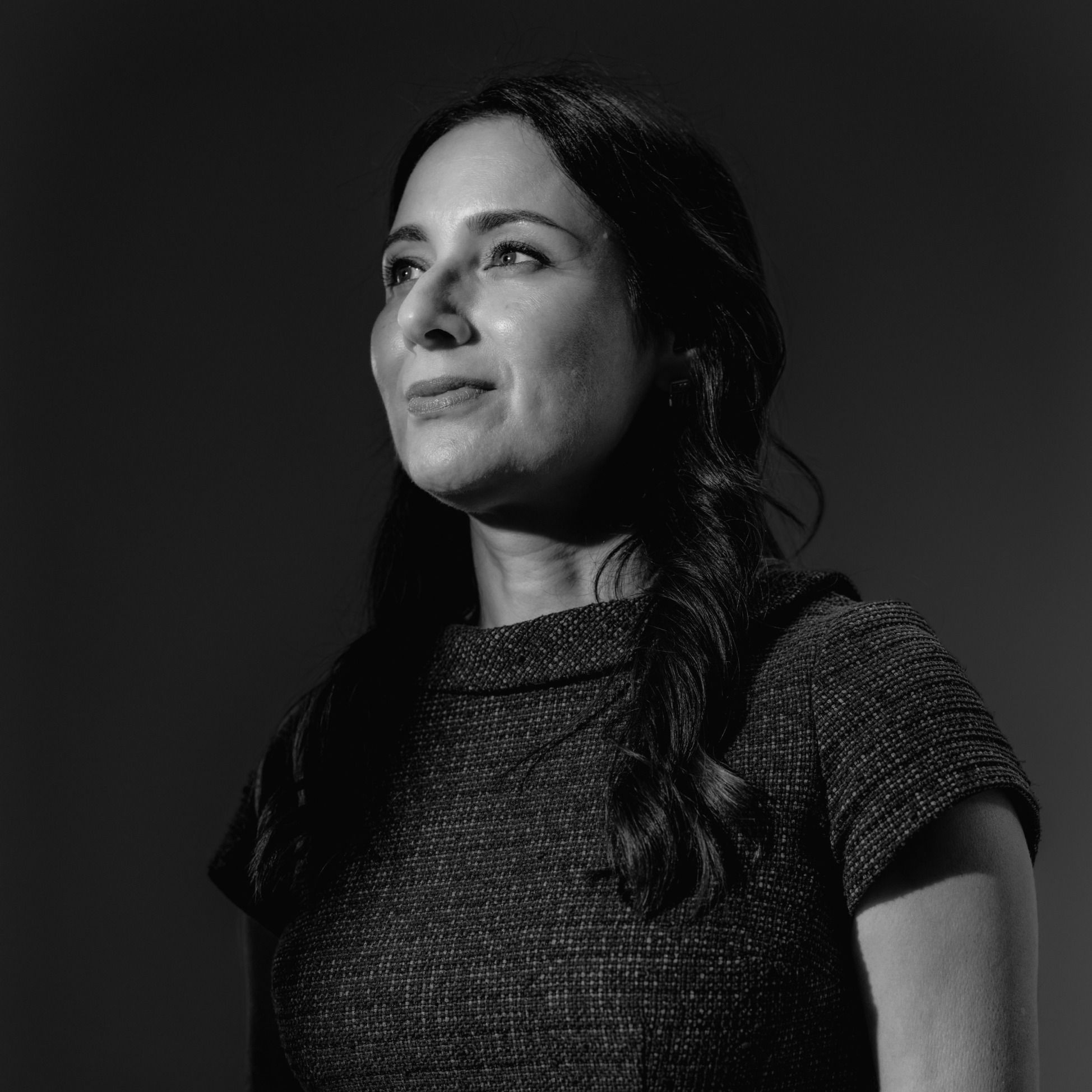
What This Democrat’s Surge in Texas Says About the Midterms
41m 57s
Gina Inohosa, a Texas state representative and Democratic candidate for governor, is running in a high-stakes race against incumbent Greg Abbott, aiming to become the first Latino governor and end decades of Democratic losses in Texas. She frames her campaign around a "one fight" against overwhelming corporate and tech power, particularly data centers and billionaire influence, which she says have exploited rural communities and undermined public services. Inohosa emphasizes economic populism—rooted in Texas history and the struggles of working families—over traditional liberal or progressive labels, arguing that culture wars no longer define the political moment. She highlights key issues like public school funding, ICE operations, and border security, while connecting personally to voters through her experience of a tragic pregnancy. Her campaign has gained strong support from women and Latinos, especially in the Rio Grande Valley, where economic hardship and fear of racial profiling have fueled voter disillusionment. Despite being vastly outspent and facing low name recognition, she has built a broad coalition by engaging across party lines and focusing on shared values of fairness and accountability. Inohosa also warns that if Democrats fail to invest in Texas, Republican redistricting could permanently hurt the party’s future in Congress. She believes victory would be a "political earthquake," restoring hope and power to ordinary Texans in the face of entrenched corporate interests.
We are facing almost existential crisis in this country because tech giants are having their way with us.
I'm LuLu Garcia Navarro and today I'm interviewing Democratic candidate for Texas governor Gina Inohosa.
I'm Gina Inohosa.
My pronouns are mom, Texan, and soon to be governor.
Inohosa, who is a state representative and Greg Abbott, the Republican incumbent, appear to be in a dead heat.
If she wins, she'd be the first Latino person to ever hold the office and the first Democrats since the 1990s.
If she loses, Abbott will head back for a historic fourth term.
All eyes are on Texas during these midterms because Democrat James Tallerico and Republican Ken Paxton's race could determine control of the Senate.
But Democrats have tried and failed for years to gain a foothold in Texas.
So what makes Inohosa think she can break the losing streak and what is her argument to voters who may have supported Abbott in the past?
We should say we reached out to governor Abbott who declined our request for an interview.
Here's my conversation with Representative Gina Inohosa.
But first a quick message.
If you're not a subscriber, we have some news for you.
You can now explore the times for free without a paywall during your first month in the New York Times app.
Just download the app and we hope you enjoy it.
Now onto the interview.
Welcome Gina Inohosa to the interview.
It's so great to have you.
Thank you, Lulu.
First day of early vote here in Texas.
I know.
I saw you voted this morning.
How was it?
Was it busy enthusiastic?
What was the vibe?
Yes, all of the above.
We've hit several spots already here in central Texas.
And in fact, we just came from San Marcos where we went to Texas state.
And there were so many students who were excited about voting.
I've heard great stories. So yeah, people are pumped.
Turn out high across the state.
I read that before you decided to run for governor,
you were thinking of running for state control,
which is a slightly less visible role in the state.
What was it like to see your name on the ballot for governor?
It's almost surreal.
I never plan to do this.
I never plan to run for anything.
Really, I just try to mind my own business, Lulu,
and somehow I'm ended up running for governor.
I started really on this path on this journey
when I ran for school board because they tried to shut down my son's school.
My son, my thail, was in kindergarten.
And he was at the most perfect school by our home.
And when I learned they wanted to shut it down, I just got mad.
And I ran for the school board.
And I won.
And it was part of a citywide community effort to save our schools.
And we did. But then I understood that the financial pressures
to shut down our neighborhood schools were coming from the state.
The state takes more and more of our money
and doesn't give it back to our schools.
And so I ran for the Texas House.
And that's where I've been for 10 years.
And my primary fight has been for public schools.
Originally, your ride, I was going to run for comptroller
because that's where the voucher program
was going to be administered.
School vouchers that take money from our public schools
to give to private schools.
And I thought, well, I'll fight vouchers
at the comptroller's office.
But nobody wanted to run against Greg Abbott.
And I just decided we had to.
We had to try.
You know, I was told by a Texas reporter
that in some ways you ran for governor
a position last held by your party in 1995
by another woman and Richards
as a sort of sacrificial lamb
because it was the longest of long shots.
You had no real chance.
But basically, some Democrat had to do it.
And so it might as well be you.
Did you see it that way, too, when you did it?
No, Lulu, I wouldn't have given up a year of my life
away from my family to be on the road all across the state
to be a sacrificial lamb.
No, I'm running to win.
It is not an easy endeavor to do this.
And it took everything out of me from this last year.
You know, what strikes me when you say you didn't run
as a sacrificial lamb is that the Democratic party
didn't seem to think that you could get as, you know,
as close as you've gotten and that you could win.
I mean, your campaign hasn't been supported
by national Democratic leadership until recently.
You've been vastly outspent by the Abbott campaign.
But, you know, cut to today.
And the polls suggest that you and Abbott are sort of neck and neck.
And I am just sort of wondering, what do you think changed?
Well, we saw from the very beginning
that as people got to know who I am, they were with me, right?
I had low name ID.
I have a house member in Central Texas.
So people knew me in Central Texas.
But Texas, like a country, is big and diverse.
There's a lot of people.
So it's taken a year to reach people.
So whereas my name ID was 20% or less when we first launched,
it is now 80% of Texas voters knew who I am.
We are still reaching those final 20%.
But the data has shown from the very beginning
that people were connecting with my plan for Texas.
People were connecting with my candidacy.
We just needed to reach them.
You know, I know you know this, but Texas keeps breaking democratic hearts.
I mean, it's sort of like this heartbreak
that happens over and over again.
And that's because white conservative rural voters vote at higher rates
than urban, black, brown, and younger voters.
There's low turnout in the state, which hurts Democrats often.
I mean, what are you doing differently than say better or work
who was the last Democrat to run against Abbott?
He had a lot of name recognition, a lot of momentum behind him nationally.
And yet he's still lost by 11 points.
Well, I don't know that I can really compare my candidacy to bethows.
It's a different time.
I mean, 2026 is a different time.
Like the data centers have been a physical manifestation
of a governor doing the bidding of the moneyed interest,
the biggest moneyed interest in the world, really,
and leaving the people of Texas to fend for themselves.
And so in that way, rural Texas has felt betrayed by Greg Abbott
because many of these data centers have descended upon rural Texas
where there are no rules, really.
And the result is that in this state
where we struggle from drought, for instance,
I was in the panhandle, Amarillo, talking to residents
where they are fighting the world's largest data center.
It is called Project Matador.
Its investors are Rick Perry, our former governor and his son.
They negotiated a deal to get all of their water
in this drought-prone area for the data center
from the city water supply.
When residents asked, "What happens if we run out of water?"
The response they told me they got from municipal water was,
"Well, we will have to turn off the residents first."
Right?
That's the environment we're living in in Texas.
And so people are understanding that we are fighting a fight right now
where it's like all of us in the same boat
versus like 15 billionaire tech dudes.
And the data centers are, again, that physical manifestation
of what I call the one fight.
Is Texas going to be a state by and for the people
or is this the billionaires world and we just live here?
You know, what I'm hearing you say and I've heard you talk about this a lot
and it's a common theme among all Democrats at the moment,
is that people are angry, which we know, right?
People are really mad about the economy,
about data centers, about a whole host of issues.
And I'm just wondering, you know, when you go out to these rural areas,
are you trying to get disaffected mega voters to turn your way?
I mean, what is the overall plan on who to persuade
because obviously your time and your resources are finite
so you have to pick and choose who you're trying to get to come over
to listen to your message and to vote for you?
Who's your coalition?
It's everybody.
I have not picked chosen.
I have been all over the state with all communities
and it is the same message.
It is not moderating a message to be clear.
It is not moderating a message.
It is reaching out to Democrats, Republicans,
Independents, with what is a populist message,
a message about doing the bidding of the people.
And so, yes, I need Trump supporters to support this race.
Trump won Texas.
Trump won the Latino vote in Texas.
Absolutely.
They are invited to be part of this coalition.
And in this time when people are disappointed in both political parties,
both Democrats and Republicans,
it creates a space and an opportunity for Texans to vote for the candidate.
What's been the thing that's most surprised you
when you're out among maybe communities
that you wouldn't naturally see as supporting you?
I mean, you know, you represented obviously Austin,
which is one of the most liberal places in the state.
Again, talking about the one fight.
When I was in red out Texas,
this is a suburb outside of Dallas.
Actually, it is a rule.
neighborhood community where they have big acreage lots in a school down the
street. They invited me in because they have seven data centers moving into
their community, right? And this one that's 900 acres large right next door to the
home that I was invited into. And I was sitting in a living room with MAGA and
they knew Greg Abbott had sold them out but they weren't sure about me and they
had questions. So I sat down and I said, okay, let's go. Ask me. And they wanted
to ask me like culture work questions, right? They wanted to ask me about
constitutional carry. I said, would you call constitutional carry? I call
Permanent List Carry and I voted against it because I believe we should have
background checks to have a gun. They asked me about Sharia law and I said, well,
I don't really know what Sharia law is but what I worry about is that regular
Muslim Texans are going to be discriminated against because people think they are
practicing this thing called Sharia law that probably most of them don't even
know what it is, right? And so we engaged, which I think is a rare thing for
people of different political parties and for leaders, elected democratic leaders
to sit down with MAGA and say, let's talk. And to agree to disagree, where we
disagree, to find common ground where we do, but then ultimately to recognize
while we have been fighting these culture wars for ten years in this country,
culture wars that are not winnable because it depend on your personal
experiences, your lived experience, that the only winners of these culture wars
have been tech giants that are massing our money and our power and all our data.
And if you believe recent reports are about to blow up the world, if we don't
come together fast to save ourselves, how persuasive do you think you've been?
I think people are tired of fighting culture war fights. I think there is an
opportunity if we choose to lead and we choose to take it to forge a new way
forward that is almost postpartisan in recognition of disappointment again in
both parties because both parties, frankly, are corrupted by corporate
influence. I mean, I have seen so many even Democrats grandstand on culture
war issues only to fight, only to vote with corporate interests and none of us
are better for it, right? I am not here to win moral victories. I am here to win
results for the people of Texas. I want to learn a little bit more about you.
Andrew background, you're a Texas state representative, who you've mentioned,
you're a labor lawyer, a former school board president. Your father was a
Democratic party chair in the state for 13 years and was a former judge. Your mom
was born in Mexico. What was your family like growing up? My parents started off
as legal aid lawyers. They represented farm workers and I was born to high school
sweethearts. They were very young when they had me. So in some ways I grew up
with them. I grew up in Brownsville on the border with Mexico, Matamoro's Mexico,
and back then we used to cross back and forth all the time. I mean, we'd go for
breakfast on the weekends to Mexico. We would go shopping for things in Mexico.
We were a by-national community. How did that make you see the United States?
Like, I've been there many times to that part of the country and to Brownsville
in particular. It's a very unique and specific place. And I just wonder how it
made you view America. What did what you sort of learned about America growing up
there? I think there's a kind of very strong patriotism that comes from growing up
on the border. I tell this story. I remember I specifically remember being a
little girl and crossing the border with my dad. I think we went to go eat breakfast
in Mexico and being struck by the extreme poverty by people begging on the
streets. And it really hurt to see through the eyes of a child. And I asked my
dad how come in Mexico, there are people begging on the streets and not in the
United States because we didn't have any of that then. And he said, and I'll
never forget. He said, because in Mexico, they have the rich in the poor and not
much in between. And in America, we have a strong middle class. And he said it
with a pride, right? My dad who also grew up on the border, said it with this
patriotism, this proud patriotism. And he was talking about the American dream.
And it has occurred to me that that sense of who we are, who our identity is as
Americans. And even as Texans, to some extent, is being lost. And that's so
many working Texans. And especially young people don't believe in the American
dream. They don't think it's real. They don't think that hard work pays. And we
have to get back to a time when hard work pays when the American dream is alive.
That is who we are. That is our strength as a country as a people. Because you
know the area really well. I am curious what you think has been happening
down in the Rio Grande Valley. You know, we've seen it swing from firmly
Democratic to Republican in 2016. It was a 60 point plus Democratic area. And
then it has been turning and turning. And then in 2024, Trump won it solidly. And
I just wonder what you think Republicans figured out to catch fire there. I think
there were a couple of things that were happening. I think one, Latinos
along the border were angry about border security, right? Because this was
remember at a time when we had the caravans crossing, we had people sleeping
under bridges. It felt chaotic. It did not inspire confidence. And border
communities were angry about that. And those are mostly Latino communities. I
also think that Latinos vote their pocketbooks. And Trump was promising to
deliver a kind of economic prosperity that was appealing. But fast forward to
today. And yes, we all want border security. But these ice raids are making us
less secure, not more secure, right? And people are really angry about the
racial profiling that's happened. We've had even Americans, American boys in
their way to enlist in the Marines pulled from their car by ice and beaten, right?
We had a man who was killed in Houston a few months ago on his way to work a
case of mistake and identity where they shot versus ask questions later. I could
go on. That is the reality we are dealing with in Texas. And Latinos are
angry and scared. And there is a motivation really to vote for change in this
election that I have not seen before. And not to mention the high cost crisis
that we're in in Texas where the price of gas, the price of electricity through
the roof, property taxes, through the roof, the cost of groceries. And they know
who's been in charge. They know who to blame.
I'd like to stay with immigration for a moment because I understand a little
bit of how you see it and what your platform is. Should you become governor?
Because as you know, many people see Democrats as weak on the border and
Abbott has used his authority to send the national guard down to the border
among other things, Operation Loan Star. And I wonder what approaches of
Trump or Abbott, do you agree with? I mean, we have seen the border become a
much more secure place, illegal crossings have plummeted under the Trump
administration. I think we cannot be treating people who have been in our
communities for 20 years, hardworking, law-abiding members of our community,
like we are treating somebody who needs to be vetted coming across the border.
Those are two different kinds of people who need to be treated differently.
We should have a path to legalization for people who are here.
We should also have order at the border and security at the border.
But again, just to understand sort of specifically, what exactly would you do
differently than governor Abbott has done in terms of border security?
Would you repeal SB4, which is the Abbott law that makes an authorized
entry into Texas, a criminal offence? Well, I wouldn't have the power to
repeal that. What would you try and propose it? Yeah. Would propose, I mean,
what do you think it should be repealed? I don't support, and I voted against it,
and I stand by it my record. But I'm not going to pretend like I'll have the
power to convince the legislature to do that. We still, even if I win, we still
have Republican control of everything in this state. And again, my agenda
will be one that 99% of us agree on, which is to secure the American dream.
To save Texas public schools, put money in your pocket, a populist agenda,
rather than fight fights that I know I can't win.
That's interesting. So what you're telling me is that you might not agree with
SB4, which also authorizes the state to remove those here illegally.
That's typically a federal function.
But you're not going to try and change it because you feel like you can't do
it. So then what's in it for Democrats who want to see substantial changes to
the law in Texas to put you in office if you won't be able
to deliver on sort of key issues for them.
- Well, Lutha, there are so many things in Texas.
This is not a blue state.
This is Texas where we have Greg Abbott
putting Texas National Guard in detention centers
so that these private prison companies
can maximize their profits.
We have kids being locked up with their parents
'cause Greg Abbott allows for the licensing
of these detention centers for little kids
to be locked up with their peers.
We have a governor who turns the other way
when Texans are being mowed down on our streets.
Like, there is a lot besides the repeal of SB4
and having a governor who has the courage to stand up
for Texans will be night and day in this state.
- I mean, how would you like to see ICE operate in Texas,
and I'm just trying to understand
if you become governor, how you would address
some of the things that you see are wrong.
- Right, I would use Eric again.
I would use everything from the bully pulpit
to the courts to defend the rights of Texans.
We have laws here in Texas where we can't have
masked agents, we have body cams, dash cams.
We don't have lawlessness that is resulting
and people being run over and killed by federal agents
like we have transparency, accountability,
basic protections for Texans that aren't being respected.
Do you think it needs to be reformed?
Do you think ICE needs to be reimagined?
Do you think ICE needs to be disbanded?
- I think what is happening needs to stop.
Who, ICE should not be doing this,
they should not be here, they should not be doing this.
Like what they are doing is causing more danger
to the people of Texas than it is protection.
People fear them, people are angry at them,
it is chaotic, people are these guys are not trained,
they should not be here.
- You know, one of the things staying with the border
that you've also spoken out about
is Elon Musk in particular.
You know, SpaceX is based in the valley.
It even has a town called Starbase there.
It employs thousands of people.
Musk has even pledged $20 million
to a local school district down there.
And you've been very critical of him
and the way he's operated his businesses in Texas.
And I'd love for you to explain why.
I'm actually more critical of the way Abbott
lets him abuse our resources, right?
I blame him less than I blame our weak leader
who doesn't defend Texans.
So here's the record.
The record is that Elon Musk has given Greg Abbott
half a million dollars to his campaign.
And he has received $1.6 billion in property tax breaks
for his company tariff app.
He's received tens of millions of dollars
just in cash from the state of Texas for Starbase.
He has received the governor's intervention
in contracting for broadband
so that he could receive a $100 million
of dollar broadband contract.
This is the reality we are living in.
Elon Musk has also been an enormous contributor
to the Republican Party, not only Greg Abbott,
but the Republican Party with large tens of millions
of dollars being poured into the race in Texas in particular,
but all over the country.
I mean, how do you see his role in the politics of your state?
Yes, he has an outsized influence
to say the least in our politics.
You should not be able to spend that much money.
That's gross that he has that kind of influence
over our political system.
I just think that there must be some tension there
because he is a big employer in the state.
He moved a lot of his businesses to the state of Texas.
You want people to have good paying jobs.
You want people to be employed.
And obviously, he's got a very successful series of companies.
So how do you imagine that you would manage that relationship
with someone who clearly supports a different agenda?
Well, listen, I launched this campaign
with the saying, my grandmother used
to tell me growing up, not that it has.
There's not a direct translation for this saying,
but it basically means know your worth and fight to defend it.
I mean, Elon Musk is lucky he is here.
Yes, there are good jobs that he is providing,
but also he's getting tremendous taxpayer dollars
that it's not justified really.
And you should get out of the state.
People see it.
He doesn't need to get out of the state.
He just needs to abide by the rules.
Like everybody else says, we all pay our taxes.
Why shouldn't Elon Musk pay his taxes in Texas too?
You know, Gina, you're sort of describing the way
that many Texans feel disinpowered
and the way that the economy has functioned
in your view against ordinary Texans.
But I do think Republicans would argue
that their policies have made Texas
one of the most business-friendly states in the entire country.
It has the second largest economy after California.
Isn't that good stewardship of the state?
Well, literally there's no question
that corporations love Greg Abbott and Texas,
but the reality is we have the most people
without health insurance of any state
despite the fact that Texans work more hours
than the national average.
We have the most children without health insurance
of any state in America.
We have the most people disconnected from their electricity
because they cannot afford to pay their bills
of any state in America.
We have the most bankruptcies of any state in America
and it is small businesses.
They're struggling to keep their doors open.
We have over 150 whole school districts
operating at four days a week
'cause they can't afford to operate at five days a week.
That is Greg Abbott's record.
So yes, there's a lot of money that flows through Texas.
There is a lot of money that is made in Texas
by the people of Texas,
but the people are not sharing in that economic wealth.
In fact, Texans are struggling more than they were 12 years ago.
Okay, we're gonna pivot a little bit
to something that you've talked about,
which is seeing yourself as a populist
and not a liberal or a progressive.
Your voting record in the state house
is by all accounts pretty liberal.
You were in 2019 ranked the most liberal member
of the Texas house.
And it was a title that you sort of openly embraced.
And I'm just curious how you define
the difference between populist and progressive
and tell me why you've landed on populist
as a label for yourself now.
I think populists meet the moment of our time.
Again, the one fight, the one fight in this country.
And it is about economic power
and populism is about economic power.
And whereas I do think in the past
we evaluated politics as right versus left,
I just don't think those labels
apply at this moment in history,
not in this moment in political history.
We see that things are so stacked against
working people in this country.
And so listen, it's just a label,
but if I were to pick a label to describe
what are my politics, it is economic populism.
It happens to be a type of politics
that is rooted in our Texas history
was LBJ's grandfather who was part of the farmer's alliance
that organized farmers against big railroads
that were taking advantage of them
in much the same way.
We have working Texans who are up against, again,
tech giants, big tech.
And so I chose this title to define what is my politics
because I do think that this has to be the politics
of the moment to meet the challenges of the moment.
Is part of it also that this sort of progressive liberal label
could be perceived as pretty toxic
by certain members of the state
that you're trying to get to vote for you?
No, it is not that.
Because what I think it is is that those labels
have been associated with culture wars.
And I just don't think that the culture wars
are the fight of 2026.
I'm just trying to sit with it.
I'm not trying to be difficult.
I'm just trying to understand a little bit.
So your populist progressive?
It's not an either or thing.
Well, look, I just think that progressive politics
is associated with culture wars.
And I have no interest in fighting culture wars at this time.
Fighting culture wars at this time is not a winnable fight.
It is the fight that divides us
because it is the fight about who we are
and our lived experiences.
And that is not the fight of 2026.
Well, I don't know that that's true.
I mean, I think it is culture wars,
but it's also being a progressive could be
about the way you use taxation to redistribute wealth.
It could mean the way you want to have the healthcare
system work in terms of supporting Obamacare,
Medicare for all. I mean it's not just a label that has to
do with culture wars, it means more than that.
- Well, and it may mean more than that to you,
but I think to a lot of people,
it means the culture war fights
because those are the fights we've been fighting
for the last 10 years.
- So comes back to my story.
- And I think that it's toxic.
- No, it's not that.
It comes back to it doesn't meet
the political moment of our time.
It is not what 2026 is about.
Look, we are facing almost existential crisis
in this country because tech giants
are having their way with us.
Like there is one fight.
And we are so caught up in fighting each other
in a divided nation,
fighting each other over the ways we disagree
about social issues and culture wars
that we're all about to lose.
And so I'm not gonna perpetuate that anymore.
- You clearly do understand that some of this,
these issues do motivate people.
And you know, you released a very personal ad early
in your campaign talking about the issue of abortion.
In Texas abortion is almost completely banned
from conception with no exception for rape or incest.
And you really discussed something
that was very personal to you.
Can you tell me that story
and why you wanted to talk about it?
- Yes, so my first pregnancy shortly after I was married
was diagnosed with, I was diagnosed
with a fetus that had trisomy 18,
which was described to me by doctors
as not compatible with life.
And I had to make a decision
about whether or not to terminate that pregnancy.
I had a week's time to decide that.
I consulted with my priest and the nun at my church.
I prayed with my husband.
We both took that time to figure out what to do.
My family was so supported.
I had a small Christian community
that held my hand along the way.
And I ultimately decided not to terminate that pregnancy
and carry it forward to term.
She didn't make it.
She died at nine months of pregnancy at birth.
And it made me who I am.
I probably would not be here.
Had not been for that experience.
It showed me my strength
and really put things in perspective for me.
- The doctor said, "I need you to understand."
She's not gonna live.
But I didn't understand.
But I wasn't the kind of choice.
I chose her.
- You know, that's such a very personal and painful story.
What were you sort of hoping people
would understand about you from that?
- I think Texans and I think voters want to know,
who are you?
Why are you doing this?
What motivates you?
So it was a formative part of my life,
formative experience in my life.
And I think the thing that I wanted to communicate
is that this is first and foremost a human experience.
We have so politicized pregnancy in this country,
but there are so many women, so many families
who have had their hearts broken
by pregnancies gone bad, right?
And to try to connect with people at a human level
with what my human hardship was
and how it made me stronger.
Do you see abortion as a cultural issue?
Do you see it as something that transcends that
as an issue of healthcare is an issue of human rights?
I do think it is an issue of human rights.
I do think it is a healthcare issue.
There are women who are dying in Texas
because they can't terminate a pregnancy
when they are in crisis because doctors
are facing 99 years in prison.
If they terminate a pregnancy to try to save a woman's life
and then they're overruled by a political board
and women are dying.
We just had our governor delay the release
of the maternal mortality report in this state
until after the election.
But we know we've heard so many stories of women dying
and we know it's going to be bad.
So absolutely, it is all of those things.
What would you like to do if your governor
on that issue or what would you propose to do
again understanding that the legislature is what it is?
I do think that we can come together
in a bipartisan way to save women's lives
and that is the commitment I've made on the campaign trail
to prioritize saving women's lives.
Obviously, as a woman, you are hoping to appeal to women
and as you've mentioned, including Maga women
and I just looked at the latest Maris poll
and you are ahead with women but not by much.
Are you doing well enough with women?
Do you think about that?
We have, well, the only reason we're winning
six major polls out of the last five weeks
is because of our strong support from women.
So I feel good about our support with women
and but look, we take no demographic for granted
and we're working again to appeal to all Texans
and but women from mothers who are concerned
about their public schools to women concerned
about the healthcare of their daughters
to women concerned about data centers
that have come into their community
and upending their home life and their communities.
Absolutely, we've garnered a lot of support from women.
A different demographic prominent Latinos
wrote a letter to democratic leadership
imploring them to give you financial support
and I'm going to quote a little bit of that letter.
They said we are asking you to invest
in a competitive race with the largest Latino electorate
in the country following an election cycle
where Republicans made alarming in roads with Latinos.
I mean, do you think the National Democrats
ignore Latino candidates like you?
Well, I don't really follow like other races, right?
But I would like them to invest in this race.
We have an opportunity of a generation to win here.
We've been dealt to phenomenal hand in Texas
and it would be very helpful to have more national support
in this race.
There are big national stakes in this race
and we know that Republicans in Austin
want to redistrict again in Texas, redraw maps
and they have decided to do so next year if they win.
We know there's no democratic control of Congress
when that happens.
We need a governor in Texas who will veto rig maps
and I will be that governor.
So those are the stakes, right?
And again, this is an opportunity of a generation
to win in 2026.
Yes, Latinos are key to that win number.
Bethel got 64% of the Latino vote in 2018
when I get that I win because there are more of us
in the voting population in Texas in 2026.
And look, this is not the time to be playing small ball, right?
Everything is on the line in 2026.
And so I think that's what motivates people
who are pushing national Democrats to invest in Texas.
Do you think the head of the DGA,
the Democratic Governors Association, Andy Bashir,
disrespected your candidacy?
Because he was reluctant to invest.
Well, I have a good relationship with him.
They did send a million dollars.
I'm grateful for that.
And we will come more so far.
Just respect, but a million dollars is not a lot in Texas.
It's such a big state as you rightly said, right?
It isn't, it's helpful, right?
We have mostly raised 95% of our contributions come
from small dollar donations.
I'm proud of what we've been able to raise.
We've raised now over $30 million in this race.
But that is people power here in Texas.
You just mentioned this issue that is so important, right?
Which is that Texas is forecasted
to add four congressional seats in 2030.
And they're planning to redraw the maps,
which could be very, very problematic
for Democrats in Congress.
Did you make the case to the national party about that?
Yes, I did make that case.
And I have made that case from the very beginning.
And we've been talking to anybody
who will listen about them from the very beginning.
And so that's why I think you're hearing
Democrats across the country really want
to make sure we have the investment we need to win
because the stakes are so high
and because the opportunity to win is even higher.
So we've just never had an opportunity like this.
And look, we have for the first time a ticket running in Texas.
We've had Betto in the past,
we've had Colin Auret in the past, but it was them.
And now we have me, we have James,
we have Democrats running up and down the ballot.
For the first time, we have Democrats running
in every Texas House seat, Texas Senate seat,
congressional seat, Democrats are working it
in every corner of the state up and down the ballot.
So yes, we have an opportunity of a generation
really to win in Texas.
If you lose, do you think it's the Democratic party
that's to blame that they should have invested
in you more and much earlier
or does the loss ultimately just reflect
The heartbreak of Texas for Democrats, Lulu, so when you're running for governor and you spend
a year of your life in the trenches every day running, you can't go into an election thinking,
"What if I lose?" So I can't even contemplate that reality. I am running to win. I think I will win
and we are working to win. Well, let's say you do win. It will be a political earthquake. What do you
think it will signify? You know, the thing that I am most excited about when I win is the feeling
Texans will feel to know their power, to know their power again, to know that we can go up against
big money, probably the biggest in the country, entrenched politics. Greg Abbott's the most
entrenched incumbent there is probably in America, and that we can win. And I just know there's
going to be this feeling of almost liberation when we feel our power again, and that's the thing
I'm most looking forward to. Gina Inosa, thank you so much for talking to me. I really appreciate it.
Thank you Lulu. That's Texas State Representative and gubernatorial candidate Gina Inosa.
To watch this interview and many others, you can subscribe to our YouTube channel at youtube.com/@simpletheinterviewpodcast.
This conversation was produced by Whiteorm. It was edited by Allison Benedict, mixing by
a theme Shapiro, original music by Dan Powell and Marion Luzano. Photography by Devon Yalkin.
The rest of the team is Priya Matthews, Seth Kelly, Powell and Newdorf Maya Tepler, Eddie Costas,
Jeremy Rockland, Gabby Contreras, Kathleen O'Brien, and Brooke Mentors. Next week, David talks to Martin
McDonough, director of the new film Wild Horse Nine. I'm Lulu Garcia Navarro, and this is the
interview from The New York Times.
Podcast Summary
Key Points:
Gina Inohosa is running for Texas governor as a populist candidate to challenge Greg Abbott, aiming to break decades of Democratic failure in the state.
Her campaign centers on a "one fight" against tech giants and corporate power, highlighting how data centers, corporate tax breaks, and policy decisions are undermining ordinary Texans.
Inohosa emphasizes economic populism, arguing that the American dream is under threat due to wealth concentration, lack of healthcare, and rising living costs despite Texas’s economic growth.
She has built broad coalitions across party lines, engaging both rural and urban voters, including MAGA voters, by focusing on shared concerns over policy, security, and fairness.
A key part of her platform is defending public schools, opposing data center expansion, and calling for transparency and accountability in ICE and border operations.
She frames her personal story of a difficult pregnancy as a powerful human element to connect with voters on issues of choice, life, and health rights.
Inohosa stresses that Texas faces existential crisis due to unchecked corporate influence, and she believes winning the governorship would restore public power and faith in democracy.
She argues that national Democrats must invest more in Texas to prevent redistricting and protect Democratic control in the face of Republican efforts to reshape state maps.
Summary:
Gina Inohosa, a Texas state representative and Democratic candidate for governor, is running in a high-stakes race against incumbent Greg Abbott, aiming to become the first Latino governor and end decades of Democratic losses in Texas. She frames her campaign around a "one fight" against overwhelming corporate and tech power, particularly data centers and billionaire influence, which she says have exploited rural communities and undermined public services. Inohosa emphasizes economic populism—rooted in Texas history and the struggles of working families—over traditional liberal or progressive labels, arguing that culture wars no longer define the political moment.
She highlights key issues like public school funding, ICE operations, and border security, while connecting personally to voters through her experience of a tragic pregnancy. Her campaign has gained strong support from women and Latinos, especially in the Rio Grande Valley, where economic hardship and fear of racial profiling have fueled voter disillusionment. Despite being vastly outspent and facing low name recognition, she has built a broad coalition by engaging across party lines and focusing on shared values of fairness and accountability.
Inohosa also warns that if Democrats fail to invest in Texas, Republican redistricting could permanently hurt the party’s future in Congress. She believes victory would be a "political earthquake," restoring hope and power to ordinary Texans in the face of entrenched corporate interests.
FAQs
She argues that Texas is facing an existential crisis due to the disproportionate power of tech giants, and she is running to defend the people's interests against corporate influence and economic inequality.
She identifies as a populist focused on economic power and the American dream. She chooses this label because it reflects the current political moment, where the struggle is against tech giants and economic injustice, not cultural or ideological divides.
She voted against SB4, which criminalizes unauthorized entry into Texas, but acknowledges she lacks the power to repeal it if elected. She emphasizes the need for border security and protection for residents without supporting policies that harm communities.
She says she is not criticizing Musk personally, but rather the way Texas leaders allow tech giants to receive massive taxpayer benefits, such as tax breaks and contracts, while ordinary people suffer economically.
She shares a deeply personal story of carrying a pregnancy to term after a diagnosis of a non-viable fetus, emphasizing that abortion is a matter of human rights and healthcare, not just culture.
She points to high rates of poverty, lack of health insurance, electricity disconnections, bankruptcies, and underfunded schools as evidence that Texas's economic wealth is not being shared with its people.
Chat with AI
Loading...
Pro features
Go deeper with this episode
Unlock creator-grade tools that turn any transcript into show notes and subtitle files.
 PodcastTranscript AI