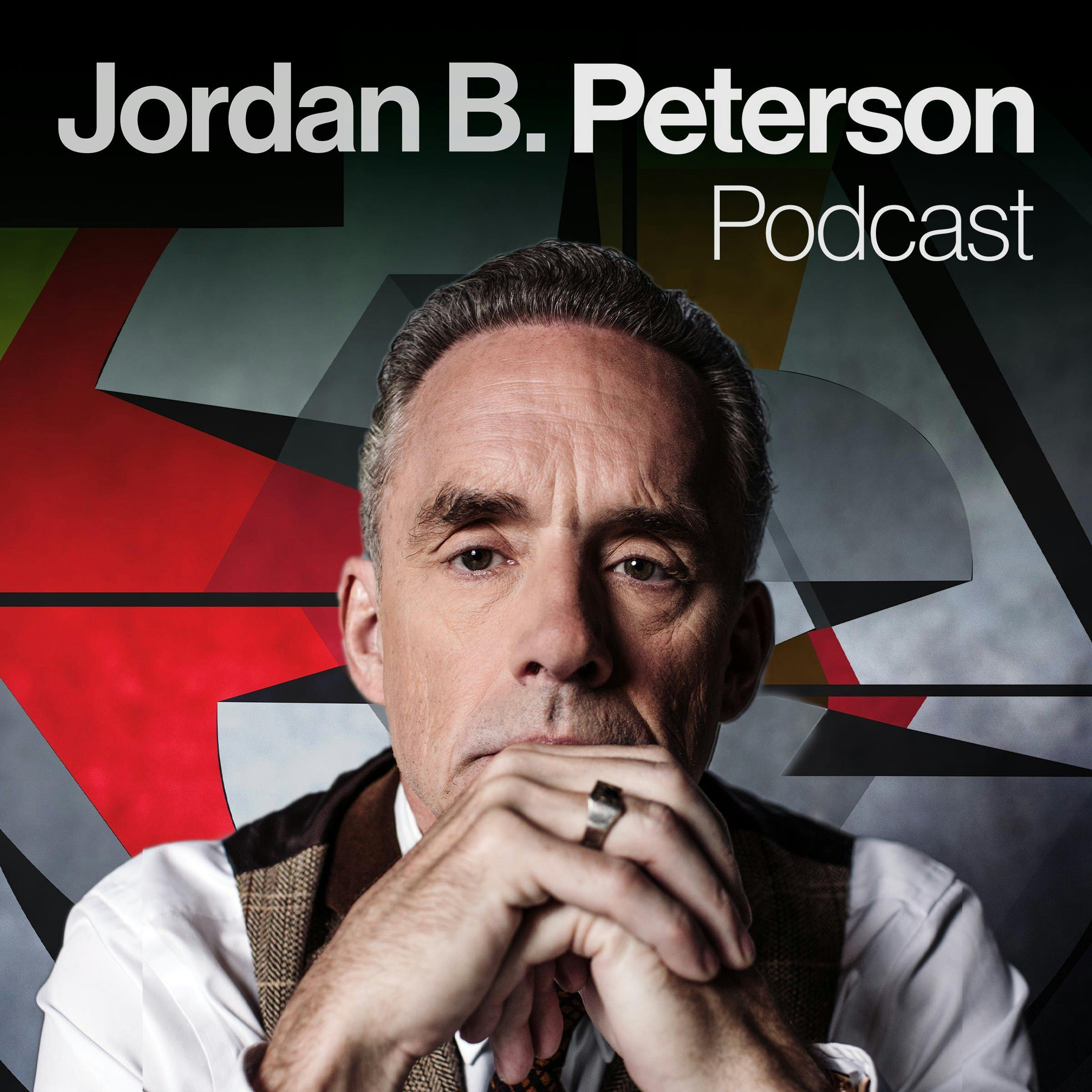
On average, the currency collapses every 30 to 40 years in most political jurisdictions for all of human history. Your storehouse of value, whatever it is, is going to be deflated terribly during your lifetime. The best currency of the last 100 years is the dollar. The winning currency of the 20th century, the best currency in the world, lost 99.9% of its value. That's a winner. Okay, now you come across Bitcoin and you talked about it as if it was abstracted gold. If God's not going to set up divine bank and solve all your monetary problems, what's the second best idea? We don't trust the government, we don't trust a local bank, we don't trust each other, and we want the bank to last for a thousand years. Let's go ahead and build out this Bitcoin network. My guest today, Michael Sailor, started a number of successful companies, successful by almost every standard. It wasn't sufficient to expand out the full scope of his ambition, and I would say that in the most positive sense. He became deeply interested in 2020 in Bitcoin in consequence, and has been at the forefront of a revolution in finance. His company now owns 3% of the Bitcoin in circulation, and the successful company that he built with blood, sweat, and tears, let's say 10 years ago, has become a hyper-successful company in consequence. He's been an evangelist for Bitcoin. He's used religious symbolism and terminology to describe it. He's on fire for Bitcoin, and we talked about things you really need to know today. You need to know who Michael Sailor is, where he got his ambition, how his grounding in fantasy and science fiction allied with the encouragement of his parents to produce the ambition in him that has culminated in this consequence. You need to know that Bitcoin is increasingly becoming an accepted monetary standard, like gold around the world. That's their revolutionary transformations on that basis in the last year, not least because of the new Trump administration. If you're young or if you're middle-aged or if you're old and you're trying to understand how you will store the work that will comprise much of your life, you need to listen to this podcast and hear what Michael Sailor has to say. You discovered Bitcoin as I understand it in March of 2020, which was relatively recently, and it had been around for a while, and you had been doing a lot of other things, but it moved your life laterally as I understand it. I'm curious, you're an engineer and a software engineer. I'm curious about what it was that you discovered and realized that produced this profound change in your orientation, and why you think it's justified, and why you evangelize for it as well, I guess. I discovered Bitcoin 30 years into my career, so I started a company late 1989. For 30 years, I'd been running an enterprise software company, MicroStrategy. We brought it public on the NASDAQ in 1998. Initially, we were focused upon one line of business, which is to sell software that allows banks or large retailers or insurance companies to analyze all of the data in their databases and assess risk and come up with marketing campaigns. If you wanted to figure out what sells with what and do market bats and analysis, or any kind of risk assessment, and you're a large enterprise, you would want to build a proprietary analytical system. We call that business intelligence. So that was successful. Then I was in my expansion area, in my 30s, and in my 40s, and I wanted to create lots of things, and so I launched 10 other businesses. I bought up all the domain names, like angel.com, and alarm.com, and strategy.com, and hope.com, and I launched businesses, and some of them were singles, some were doubles. I bought voice.com. I sold it for $30 million. I sold the angel business for about $100 million. The alarm.com business, we spun off. It's a multi-billion dollar publicly traded company today. And then I launched, I don't know, half a dozen or dozen other things. They just whiffed. They failed. What was your hit rate just out of curiosity? Can you estimate it? I would say that the thing I started with turned out to be the biggest success between 1990 and 2020, and then the next idea was a double, and the next one was a single, and the rest sputtered out. I spent a lot of time. They were my favorite idea, a great idea. I loved them. I invested a lot of money in them. It turned out the world didn't think the same way I did. And so, it's an important part of the story, because by 2010, we had overexpanded as a company, and we'd launched, I wanted to be the conglomerate, like the 10 different things. And I found that the one thing worked, and the other nine things didn't work, and I needed to focus. So we refocused on the core business, and for the next decade, I had two dual experiences. I had the experience professionally, and I had an experience personally in finance. Here's the professional experience. I worked 2,500, 3,000 hours a year with 2,000 people doing 100,000 things right. I tried everything under the sun. We had a 500 million dollar enterprise software business, and we found that we were the winner 99 out of 100 of our competitors, or 99 other competitors had gone bankrupt or left the industry. We were the winner, and we were competing against Microsoft. And Microsoft is Microsoft. And so we were the pure play, call it the David against the Goliaths. And so for the next decade, I spent huge amounts of money on development. It didn't work. I spent huge amounts of money on marketing. It didn't work. I rebuilt every information system in the company. It didn't work. I obsessed over systems for HR, obsessed over systems for sales, for marketing. I spent huge amounts of money on digital advertising. Everything you can imagine. I would fly around the world. I flew around the world for a month, and I talked in every city, everywhere, in order to get the message out. So I had tried every conventional thing imaginable, and 10 years later, the company was still about a 500 million dollar company. We were like a very low growth, and we were banging our head against a company, Microsoft, which is more pie. You could more easily leave the United States than you could leave the domain of Microsoft. They're just everywhere. So my professional experience is, I figured, I'm not a stupid guy. I worked very hard. I had brilliant people working with me. We tried everything imaginable, but we could not dint, you know, the digital monopolies of the world. We were this, we were this, I'll call us a zombie company. It's a publicly traded company that makes money that won't go on a business that's uninteresting because it's not growing 20% or 30% a year. It's not Google. It's not Facebook. It's not a monster. But it's, but you know, there are 10,000 companies like all right, right. Most companies are like ours. Sure. So we were there. And, and then here's my personal experience. I got very fast in it with technology. I wrote a book called the mobile wave. And in the mobile wave back in 2012, I published it in 2012. I wrote it 2010, 2011. And, and the book, the theme of the book is, what happens when software dematerializes, when the software runs on a phone, when the computer goes from under your desk to in your hand, when it's no longer solid state or liquid state, but it's vapor state. And you go to sleep with the phone next to you. What kind of software would happen in the mobile world? And of course, we know all about it, right? The Instagrams, the Facebooks, the, the Uber's, all of these things became possible during the mobile error. They were inconceivable when the software ran on a computer. So the theme of the book is, you know, software is going to leap from under our desk to our clothing. We'll wear it. We'll hold it. And it's going to become ubiquitous 24, 7365. And it's going to change it. We're going to dematerialize 27,000 devices. 20,000 device companies died so Apple could live. We're going to crush 20,000 retailers because everybody's going to want the Amazon. You're going to see 20,000 newspapers crush because Google and Facebook eats them. And, you know, the message of the book is, you know, you probably ought to just buy the Amazon stock or buy the Apple stock. And as an investor, I took, you know, a decent amount of money, call it 25 million dollars that I've made over the previous 20 years as a CEO and as a founder of a company. I invested in these stocks and I 20Xed it. If, you know, how do you make money in the tech world? You invest in some of them.
something everybody needs nobody can stop and very few people understand like most people in the year 2010 if you had said hey I really think that Amazon is going to work people would have said you're crazy Amazon's losing money no one's going to do this you know and they would have thought you're nuts and if you had said I remember with Apple you say well Apple I think this iPhone is a cool thing they would say well no eventually it will go to the price of $25 a phone like Nokia it's going to be commoditized they can't hold their margins are too high they're going to actually have their margins collapse like Dell or like Nokia and of course and of course the conventional wisdom wise Apple's not a good investment Amazon's not a good investment Facebook what is this goofy thing and of course for the next decade here's what happened I work an hour a month as an investor and I get rich you know make half a billion dollars not working on embarrassing all you got to do is just buy the magnificent 7 in 2010 and the conventional wisdom or Wall Street is if the stock doubles you should diversify you should sell half of it and if Apple doubles in price go buy some IBM and some HP and some other computer company but doubles again you sell some more of the portfolio and you buy the thing and their thought was you got to stay diversified but the problem is Apple won everybody else lost at one point Apple made all the money in the mobile phone business everybody else collectively lost money to compete with them Amazon one Samsung is well all of them yeah if you look at the winners yeah in this era right I mean Apple was a winner Amazon was a winner Google Facebook or winner Samsung is the winner in the in the far east um Walmart kept up every other retailer it's like there's two or three that kind of keep up maybe a Walmart maybe a target but there's 20,000 that went out of business I know as a clinical psychologist that any given teenager is going to fall prey to peer pressure from time to time if you listen hard enough people are likely to tell you everything our son who's in seventh grade he's starting to fall in with a with a bad friend group teenagers are desperate to fit in and obviously desperate to have friends and not to be the isolated target of exclusion and bullying how do we as parents get involved and engaged the reason people don't have these sorts of conversations is because they don't want the emotion and the longer you let it go on the more mess you're going to have to clean up our daughter was bullied at her school how do we protect our kids when this is happening don't let your kids drift away when they're teenagers they don't want to but they will if you don't pay attention do you think that's partly a consequence of the is there a radically centralizing tendency of the mobile world there is and it's so it's increasingly a winner take all because when everyone's connected the pre-dow distribution goes out of control that's what it looks like to me there's like one person occupies each niche or one company because everything's connected there's no micro markets anymore these all became dominant digital monopolies and and they became dominant because Apple can ship a new feature to the iPhone over the weekend to a billion people right across the electricity and before Apple you would have to code act or Polaroid or or fill in the blank would have to create a new device it would take a year and then they would have to sell it and it would take another year and there's a variable cost to it. So when the functionality becomes soft where there's a 99% gross margin and you can give it to a hundred million a billion yeah right Apple could do Apple music and give it's white IP leadership matters right and so they they dominated the rails and they be and they had these you know I used to say Apple is going to be the most valuable company in the world because it's the most valuable company in the world because it's the first time one company could deliver a feature to a billion people overnight now you know we never had that 30 years ago or 40 years ago so there are all these natural monopolies that built and at some point you know Microsoft dominated you know business software and how did you see that early I mean you the companies you listed off that was pretty good that was pretty good hit list and like you said you know you worked you worked yourself half to death but all the money that you made or the majority of the money you made was actually a consequence of an hour you said an hour a month and investment strategy but like what and this is your main to the Bitcoin question because one of the things you're doing is setting up the circumstance you could you saw the direction the digital world was going you bet money on it which is actually an indication of commitment to it and the bets that you made paid off my paid off in some ways more than your hard work on the business front you know yeah you got a roll back to you know first grade my parents told me they'd give me a dime for every book I read and I had a comic book addiction so one summer I read a hundred books and won some reading competition I started reading in first grade and that led me to a love of science fiction and fantasy especially science fiction and I read the big three Heinlein Quark and Asimov and my entire generation you know Elon Musk Jeff Bezos a lot of us were influenced by that so yeah I was reading ten a week when I was well in grade three and four my neighbor across the street had a wall of science fiction and he'd let me come in once a week and take you know as many books as I wanted and this I was reading exactly the same crew that you described I liked Ray Bradbury too well the famous book by Heinlein has have space it will travel and and in the book a precocious youth builds a spaceship gets picked up by you know bug guide monsters or by space aliens gal events around the universe saves the human race from bug guide monsters comes back and because he saved the human race through his courage and his capability he gets full tuition scholarship to MIT well I read that I guess by six grade not a set I was going to MIT oh yeah so I you know I liked you know and then Meyer you know we used to play Dungeons and Dragons we used to do board games we play all these simulation games and and you know when you play these games they give you a 64 page set of rules and I said a dice and you're creating a simulation of a naval battle or army battle or you know whatever it might be that was just before computers got big so I got very interested in all that that drove me down a path where I went to MIT I studied spaceship engineering at astronauts really and while I was there you know I studying studying astronomical engineering I stumbled across another course at the School of Management there called System Dynamics and I became fascinated with that it was the computer simulation of human behavior so the so people are building the big names and system diamond dynamic forest are founded the school and the idea was build a computer simulation that shows what happens if you change the dynamics of a traffic system in a city I mean the classic example is I build a beltway around the city and I build a hub and spoke system and I build super highways because I want to speed up travel time but invariably what happens is the city increases by a factor of 10 and the travel times go back to what they were yeah because of this because of the feedback right if you built the roads and then no one reacted to it then you would be able to get around faster but the world would be a much simpler place yeah another classic example is you remember the club of Rome study you know they declared that the world was going to run out of resources within 10 years and they declared it because all the oil reserves were for 10 more years but if you thought about it you would realize that an oil company only has an incentive to identify 10 years worth of reserves and everything after that's a diminishing return so we always have 10 years right worth of reserves and so if you time horizon issue not a resource issue if you see the world as a dynamic non-linear feedback system and you consider the human behavior or the reaction to what you do then you're much more sophisticated and you start to realize the simplistic linear models don't work and you have to consider human behavior and economics and urban planning and business planning and so I studied that I did my thesis in it I started building computer simulations I learned from the computer scientist in the in the school of management I got very fast they didn't in the school I got very interested in politics philosophy economics I ended up taking another degree in the history of science and you know as I started where did you take that MIT it was at MIT at the same time 1983 to 1987 and when I was there I was also an Air Force cadet you know the Air Force paid for my education to go through MIT I was very fortunate in that regard so this is all just backstory but I had the background as you know cadet and commissioned officer in the Air Force I grew up on Air Force basis my entire life my father was career non-commissioned officer so I lived on
military bases, moved a lot. So I saw the world. I had the science fiction background. I had the Dungeons & Dragons, the fantasy background. I got very interested in the history of science. That's all about paradigm shift. How do people embrace new ideas? Whether it's a Copernican revolution or whether it's relativity and Einstein's ideas or whether it's quantum physics or whether it's what happens when I introduce railroads or electricity or crude oil or radio. How does it change the culture? How does it change the politics? How does it change the economics of the civilization? That was my academic background. I always was fascinated by science and technology. I was surrounded by technologists at MIT. I got into the space. But the fantasy background was very important because in fantasy, there's this idea that if you know the name of a demon, you can summon them. You can control them. Names are very powerful. When the internet hit, I was typing out sailor at microstrategy.com in my email and I thought, "Well, it'd be a lot better if I just typed out
[email protected]." I started thinking about domains and inspired me to go and buy up all the domains I could. So I bought hope. How would you like to own hope? Like the nice thing about owning hope. That was when? What year was that? Between 94 and 98. Pretty early on. And so I thought, "Don't need domain names. Do you think you bought?" I bought a bunch, but I bought about 30 of the classics. My idea was the most valuable thing and that is a constructive word in the English language that has a positive connotation that everyone understand everybody can spell. So I bought Emma. I bought Michael. Michael.com. I bought mic.com. I bought hope. I bought voice. I bought angel. I bought alarm. I bought speaker. How did you pick the words? I mean, you laid off the criteria. I bought every good word that I could buy. It was a real estate, a digital real estate gold rush. If you would sell it to me, I would buy it. I figured, you know, what did I think? I think if the billion people learn to speak English, I'll give you an example. A billion people learn to speak English. How many of them know how to spell strategy? How many of them have a positive impression of strategy? Now, now I name my company microstrategy. Let me tell you for 30 years, half our customers mispronounced it, microstrategy. When you pick a word that's not in the English language, if you teach it to third graders or sixth graders, the education system is burning the word. What does hope mean to you, right? That's different than naming a company, celebrity likes. You know, celebrity likes is not a word we can spell and it's not a word that has a meaning, but hope. Angel, pretty strange opportunity to be able to buy words, which is essentially what happened. And it happened in the internet era. Now, if we go to mobile, my fascination was this idea that if software goes from the back office to the desk to my pocket, it goes from solid state to liquid state to vapor state. It's all around me. What happens when I can talk to it? What happens when it can talk back to me? Well, you know, now you have to you have to have an imagination. Science fiction, it's valuable because it says, if you learn science and engineering, you can you can figure out like what's the optimal way to get to Mars from the U.S. You start to understand gravity well as you understand physics. That's very important for one part of this story, but the other part of this story is fantasy. You know, I'm creating something in cyberspace. I'm an engineer and I can imagine throwing a baseball in orbit. And if I throw it fast enough, it stays in orbit. And if I throw it harder, it breaks Earth's gravity field and orbits the sun. And if I throw it harder, it breaks the sun's gravitational field and it spins off into, you know, Milky Way. Well, that's what science fiction or engineering teaches you. Fantasy teaches you, I can throw the baseball and will it to be a flock of seagulls that land on my head and turn into a pot of gold? So those are those are little paradigm revolutions that fantasy. The significance is in the hardware world, you're subject to thermodynamics and physics and you better know it. But in cyberspace, you could imagine, you're not subject to thermodynamics and physics. So you could imagine, you know, I look at mirror mirror on the wall, who's the fairest of them all, right? And snow white gave you the answer, right? Because, you know, when when that happens in a in a fairy tale, the mirror talks back to you. It comes to life, you know, and eventually we got to, you know, zoom and video and pretty soon your iPad became a magic mirror and pretty soon you could talk to, you know, a relative of yours 8,000 miles away. And that was pretty magical. But then when you put the AI behind it and the AI generates an AI image, you're not talking to a person, you're talking to an angel or a demon, right? And so now, if you want to design that stuff, if you want to design magic, why those words, an angel or a demon? Yeah. Yeah, because you see, one of the things I wanted to talk to you about today was the use of imagery, the your use of imagery in your tweets and your marketing for Bitcoin. Because like you, you have a strange mind in many ways, because you're, you have your engineering background and you think that way, but you also have a foot in the world of fantasy. And that's a, that's not a, that's mean, well, there's lots of engineers that are sort of possessed by the world of fantasy. You know, they live in a Star Wars ethos, right? And many of them had their philosophy shaped by the science fiction that they read when they were in their early adolescence. And that really produced the religious and fantasy substrate of their thought. But there's not a lot of examination of that. But you thought about fantasy by all appearances a lot more in a lot more detail than that. Shopify powers millions of businesses worldwide supporting everyone from established brands to entrepreneurs, just starting their journey. You can create your professional storefront effortlessly with Shopify's extensive library of customizable templates, designed to reflect your brand's unique identity. Boost your productivity with Shopify's AI power tools that craft compelling products, descriptions, engaging headlines, and even enhance your products, photography, all with just a few clicks. Plus, you can market your business like a pro without hiring a team easily develop and launch targeted email campaigns and social media content that reaches customers wherever they spend their time online or offline. If that's not enough, Shopify offers expert guidance on every aspect of commerce from inventory management to international shipping logistics to seamless return processing. If you're ready to sell, you're ready for Shopify. Sign up for your $1 per month trial period and start selling today at Shopify.com/jbp. Go to Shopify.com/jbp again that's Shopify.com/jbp Yeah, well, when I was in MIT, I was surrounded by some of the most brilliant mathematicians and engineers in the world. But what distinguished me is I was a pretty good engineer. I probably wasn't like a field's metal mathematician, right? I wasn't like that, but I was a good engineer. But I had a liberal arts band and the truth is if I could have afforded it, I would have gone to Yale and studied history as an undergraduate. I just didn't have any money and they didn't have an ROTC program. The government wasn't paying Air Force cadets to go study history at Yale. So my love was history, that history, science fiction, imagining the future, fantasy, imagining an alternative future. But do you say you think in pictures or words, images? I'm a synthesis. So I generally, I'm the person that would tell you why the steam engine, you know, and the governor of steam engine are similar to a political process that was implemented in a medieval Russia. Like I'm thinking about the mechanisms and how they function in the physical world, the political world, the economic world, the fantasy world, the magic world, whatever world. So I would always be thinking simultaneously across that. So when I went to MIT, most of them were there to do engineering. I was actually half liberal artist, half engineer, and that was what was different about me. And of course, when I came out of MIT, I didn't work for someone else doing something they told me to do. I wanted to create something. And I think that, I think that, you know, when you're at that entrepreneurial bent probably goes along at least to some degree with that proclivity to appreciate fantasy because, well, entrepreneurial activity is associated with trait openness, which is the creativity dimension and so, it, it, it, it, it, it, it, it, it, it, it,
it makes sense that you would have that entrepreneurial bent combined because you have to imagine possibility to be an entrepreneur, right? So that's the fantastic element. You have to conjure up something that doesn't yet exist and then you have to pursue it and it has to captivate you so you have to have the temperament for that. So you've got, do you still read fiction? - I do not as much as I used to in my current stage in life. I spend a lot more time reading history. Like cover to cover Durant's history of story of civilization, every volume, all 15,000 pages are all the history of America. You know, conceived in Liberty, Rothbard's history of America before the Revolutionary War or history of economic thought. So a lot of history, a lot of biography, a lot of monetary theory and of course today. I spend my time reading legislation and all of the developments in the political, economic world relevant to digital assets, digital technology because there's a flood of it and I'm expected to have an opinion on it. - But when I can sneak away, I'll go read history. - Artistic interests, landscape architecture, residential architecture. When I first came here, I went to Taliesin West. Rancoyd writes architecture, all architecture everywhere in the world. - Right, well that's a good blending of aesthetic and engineering as well. So that much. - Yeah. - But to address two of your points are important. One, and fantasy, there's this idea of casting a spell. So if you can imagine it, you can cast it. That's a very interesting idea. Can you make the world a better place? Can you shape it in a certain way? And the second point you brought up about metaphor, imagery, that was in relationship to the angels and the demons. If you write a book about something, write a book about Bitcoin and it's 200 pages long, I wrote the book about something. What I discovered is 1% of the people will read the book in five years, maybe 0.1%. It's very, and when they read the book, if you wanted to explain something in 200 pages or 500 pages, they might have forgotten what they read on the first 50 pages by the time they get to the end. And so a 200 page explanation isn't nearly as powerful as to say, "Oh, that's a demon coming out of cyberspace." - Right, well that's the power of poetry. Because it's like, "Oh, what is that?" That's an actor in cyberspace with hostile intent that I should be afraid of. And so there's a lot of over-explaining in the world and what I've discovered is in the modern world, we live in an age of abundance and there is so much infinite information. You know, I watched your podcast on YouTube, I came and know you before COVID and I was fascinated by them. But then I stumbled across chess videos and then I found you could spend your entire waking day watching chess videos and then I realized you could spend your entire life watching Magnus Carlson chess videos. And then I realized you could probably spend an entire day watching different chess commentators covering one Magnus Carlson game from 30 different points of view. And if you wanna go down that rabbit hole, whether it's, you know, diets, the carnivore diet or chess or pocket knives or someone sailing around the world, there is literally infinite depth, content. - Yeah. - And, you know, then comes a long nutscape in YouTube and all these other streaming. And then Lord help you, you fall into a TikTok hole, you know, and you're like, you start swiping and then YouTube decided to steal it and they have these shorts. And when you pull up the YouTube short, you know, the algorithm is thinking what is the statistically most likely thing to capture your attention and punch your buttons and hit your dopamine and you find yourself going. - Yeah, is that an angel or a demon? - That algorithm. - Yeah. - And yours, you know, your stuck and it's an addiction if you're not careful. And of course, well, it's optimized to grip short-term attention, you know, and that's, there's something really, there's something really distressed about that because the more immature a bind is, the more it's gripped by short-term attention. And these bloody algorithms maximize for short-term attention and the attention fragments are getting shorter as the content gets shorter. And so we're literally training super intelligent AI systems to hook us in keeping with our hedonistic drive. You know, it's just, so that's a demon, I would say. And that, that, you know, that is not a fair fight. It's not a fair fight. It's a 16-year-old boy against the smartest, you know, AI in the world trying to addict the boy to the imagery they feed, right? And so, yeah, the smartest, the smartest engineers and the smartest AI systems that are actually operating in ways that we don't even understand because they're reinforced, they learn by reinforcement. But so, they understand things about us that we don't understand, they understand. Coming back to my communication style, then what I realize is people just don't have the time. Like you can, for example, in life, you can equivocate, you could say, well, you know, you might do this and you might do that and do your own research. And if you think blah, blah, blah, then this might happen and read these 82 pages. Yeah, yeah, yeah. Or you can say, this is digital goal, but it's going to crush real goal by a factor as well. Okay, so let's leap ahead into the Bitcoin issue because I still want to know, 'cause you set up the background now, you've described how your mind works, you described the fact that you recognize patterns and that you see possibility. I want to hear how that translated into your discovery of Bitcoin and where that went. Okay. It's March of 2020. And March of 2020, Michael Saylor, the CEO, is slaved for a decade, working infinitely hard, working his 2,000 employees infinitely hard to compete against Microsoft and Magnificent 7 and to put growth back into this public company called MSTR. The company is perfectly fine company, but we're, you know, a company growing 1, 2, 3, 4% a year is uninteresting to every professional investor in the capital markets. And we've tried everything under the sun and we cannot break free. And our employees are paid in stock options and the stock's not going anywhere, right? And so I am at a debt in there, very frustrated. My whits in. And then Michael Saylor, the individual, occasionally buy some Apple and Amazon stock and he's made a fortune. And I'm thinking, this is not good. Why is it not good though? Because I want to dig into that a little bit. You had a company that was growing moderately, let's say, it wasn't spectacularly interesting. There were stock problems, but the company is quite functional and it's doing quite well and it does its thing well. And then as an individual, you've made these like home run investments. So what is it that's dissatisfying you exactly? - Once the satisfying is to think that you peaked 10 years earlier, you've had a plateau and you cannot, so it's not going any further. - So it's a plateaued adventure. - Right, we've plateaued, we can't break free. - And work isn't fixing that. - Once the satisfying is to see the Elon Musk's or the Mark Zuckerberg's of the world have extraordinary success and you grow up in that generation and you feel like you hit the wall. They launched the Instagram, they launched the Facebook, they launched the electric car and you somehow have created this, it's a successful business, but it's now a low growth business, which is a, you know, - I mean, why do you think, why do you think that? Why do you think that ground at you? Like, I mean, because by many indices, your multi-dimension, you were multi-dimensionally successful already. I talked about the fact that the big league leap, so to speak, didn't occur, but why in the world do you think that particularly disturbed you and drove you to seek other avenues of expansion? - I just thought, is this all there is? There's gotta be more. I wanted to change the world. You know, when you, you know, you start and you think you can change the world and you get to some point where you realize you fulfill one, two percent of the demand of a given niche of the world, which has now become a mature cash cow business and the world's done with you. - Do you have any idea where that ambition came from? - Oh, must have come from my mother. When I was, my first job was as a paperboy and, you know, so I'm delivering papers in Dayton, Ohio through the bitter cold, the blizzard is 78. And at some point, there's gonna be a competition for the best paperboy of the Dayton Daily News and my mother enters me in the competition and, you know, she creates this book of entries, you know, I'm the musician, I've got the book collection, I'm the gamer, I'm a diss, I'm a that. And I swear she must have thought I was God's gift, you know, and it never occurs to me to being, you know, the number one honor paperboy in Dayton, Ohio, is it necessarily the pinnacle of achievement? But in her eyes, it was, and she and her being the competition, I end up number two faith in you, but I thought, you know, she thought I was the greatest person on earth. She's like, you're gonna change the world. - Freud's mother thought that about him and he said that it had given him a tremendous advantage. You know, it's really something.
to have a parent who has like unblinking faith in you, especially if they've actually identified those elements of you that are useful. I was a smart guy, like I was like number one in my class normally, but being number one in your class in the public elementary school in middle Ohio is no statistical justification for thinking someone's going to grow up and change the world. But my mother believed it, she believed in me, she imbueded in me, and for whatever, if your parents think that about you, they program you and it works. So somehow in my head, I watched program at early age, you know, believe that you could do it by an inspirational figure. To believe I could do it, do you think that was ambition exactly or do you think that was faith in your ability to solve problems? Because those aren't the same thing, right? I mean, you could you could imagine a situation like that that would produce someone who is narcissistic. That's that's a different that's a very different outcome than someone who believes that if they hit a problem hard enough, they can crack it and move forward. You know, if you combine the influence of my parents and my mother, especially with my father is a very inspirational figure as well, but he's like the he's the Air Force sergeant, you know, at 630 in the morning saying hit the ground running sun, okay, okay, he was, so that's the work ethic. He was the work ethic. Okay, okay, you know, straight arrow, work hard, you know, and and do your job and do your duty. And my mother was, I have the smartest son in the world. He's going to change the earth, right? And so that was the two. But, you know, once I got into into reading, you know, if you read Highland, Highland's, you know, stories, his juvenile stories and his stories are, here's a teenage kid that's going to go off, go to Mars and make peace with the Martians and change the course of human history, right? Or, you know, and you name them every one of these. So you found that hero mythology and you know, like all of his figures are inspirational figures, you know? Yep, right? If you think about the Highland ethic, right? It's like a self reliance, resourcefulness, you know, you know, he's a libertarian too. Very much so. I was like, when I know the left he's used to think of Highland as a fascist, I remember that, a shock me. I never, I never realized when I was like 13 that the science fiction I was reading have political implications. I didn't, I didn't think that and that's not my take away, my take away. He says when, when wherever your living gets too crowded and there's too many bureaucratic, busy bodies telling you how to live and how to breathe and what to do, it's time for you to find a new frontier somewhere else. Go west, go to cyberspace, go to out, in his case, go to outer space. Yeah, yeah. You have to, you know, there are frontiers everywhere and you found them in the digital world and and something, you know, it's always a struggle, but something good always comes of it, right? In all of his books and right, right? And so you have the inspiration of him as, you know, as kind of a figure and then you have the inspiration of, you know, your parents in a different way. And then of course, once you start reading books, right? If you read enough, you're inspired by the lives of human beings that came before you. So I think all of that, okay, go maybe think I was put here to do something, right? And I get to 2020 and I'm frustrated and it's a very pivotal point in my career. I'm just deciding, am I going to sell this company? Am I going to retire and drift quietly out of history, right? How old are you at this point? 55. Right, right. Okay, lots of people stop at 55, right? They decide they're retired, whatever that means. And then they're, well, looking, they're looking for purpose for the next 20 years, which is not a good fate. It's not a good fate. I've watched this many people at and right around that age, you know, they decide in a way that they're old and they stop looking for further adventure. And generally that's a catastrophe. But you, when you hit it, you thought you hadn't hit an apex. They went ahead and hit the apex that you wanted. And then you, you found Bitcoin in 2020. Yeah, well, you know, I felt like I'm not done yet. Yeah, I'm not. I had invented 10 things and that didn't work to invent something. And then I had tried 10 different business strategies and not a bit small. Like I bought 300 million dollars of my stock bag. I'm going to spend hundreds of millions of dollars. And this is against a company that made 75 million a year, right? So I spent huge amounts of money to try to fix it. I literally rewired every single IT system, rebuilt everything, rethought every business process as the, you know, thinking if I just work, if I work harder and focus on their forced dad. Yeah. Yeah. Well, the thing is the funny thing is so that's the contradiction between conscientiousness and openness, right? Because the conscientious types are managers and administrators, incrementalists, their solution to a problem would be make what we're doing better. But the fantasy people, the open people think, no, no, like no matter how efficiently we go down this road, it's not the right road. There has to be something else. There has to be a radical transformation. As a spouse, a parent or a leader, people count on you. But if you're constantly tired, unfocused and just not feeling like yourself, how can you show up the way they need you to? That's where Merrick Health comes in. Merrick is a premier health optimization platform that uses comprehensive lab work, not guesswork, to uncover what's really going on in your body. Hormones, thyroid inflammation, nutrient levels, the markers that matter. Their expert clinical teams build a personalized research-backed plan just for you, whether it's lifestyle changes, supplements or prescription treatments. When you know what's going on inside, you can leave with clarity, show up with energy, and stay sharp for your family, your team, and yourself. Head over to merrickhealth.com and use code Peterson for 10% off to join their guided optimization program with your personal medical team. That's merrickhealth.com code Peterson. Stop guessing, start leading and start with merrick health. Now we get to some very transformational things. So Thomas Kuhn and the structure of scientific revolution, he introduces this idea of the paradigm shift. And what he notes is that when a new paradigm comes along, it's embraced by the youth or all the people who have the old paradigm down. And the only reason the adults ever embrace it is a war. So, you know, and there's the famous phrase science advances. One funeral was taught, right? So we're waiting for the old guard to die. But the one time when it's possible for an old dog to learn new tricks, if you will, is when there's a war. So when I first saw Bitcoin, I was 2013. I was fascinated by Apple, fascinated by Amazon, making a lot of money in my private investments. That was my tech ride. And I was working hard my business. And I had 20 things that I thought was going to do to fix that business. And I looked at Bitcoin. I was like, well, this is an interesting thing, you know, you know, some decentralized monetary system. But, you know, right around then, the government shut down, there was an online betting site called Trade Sports. And you could go and you could bet on the outcome of anything. You could bet on the outcome of elections. You could bet on sports. You could bet on whether it's going to rain. And it was kind of a cool idea. The government shut it down, because a lot of times when they're, you know, remember they shut down online gambling. I was watching this in 2013. I looked at Bitcoin and I tweeted very famously. This is back when I tweeted, but no one cared. So I aired my opinion. And my opinion was, you know, Bitcoin's interesting, but I think it's going to go the way of online gambling. Oh, you think it'd be shut down. I thought it was going to be shut down. Well, that was a likely outcome. Yeah. And in my defense, right, a lot of good arguments. Why? And it wasn't until 2014 that the IRS designated Bitcoin as property. 2013 was unclear what it was, what it was going to be designated as. But in any event, I did it. I forgot about it for the next seven years. I went off and we roll in the March of 2020. And in March of 2020, you know, this entire COVID thing developed, right? So first, the world shut down, and I'm not happy about it. And I don't agree with it. And the second thing that happens is we all go remote. And the third thing that happens is is all of the big tech companies, the Amazon's, the Microsoft's, their number one disadvantage in recruiting away our employees is all of our employees would have to get up, move across the country, take their kids out of their school, sell their house, and their wife would probably have to get a new job or their husband have to get a new job. And our advantage was we had a tight group and we all had lunch together and we met in the office and we had a face-to-face community. So imagine how you feel when your best engineer is basically sitting at a house in Arlington or Vienna and they can simply point their computer to a Microsoft server, change jobs, get a pay raise. All these mega companies going to steal all my employees. And if they hire away all my engineers, then maybe my product's good now. I have a better product, but I'm fighting against monster corporations with a better product, but I'm not going to be better once they've hired my best engineers away. And they're going to slurp them off. So the company had one more ace, the thing that we had in our back pocket that kept us that we had relied on was we had $500 million in cash. I have 2,000 hardworking employees. I have a
operating business. It's a cash cow and I have 500 million cash. And that cash, you know, in the best period back in 2010, just before the great financial crisis or, you know, in that range, interest rates got to 5%, 5.5%. And maybe you can make 25 million a year on that. And then interest rates got hammered down. The central bankers kept printing money and they and they actually forced the interest rates down. I didn't understand that they were manipulating the interest rates to make them lower during that decade. I was a techie. I would say I was very technically sophisticated and I was very good at running a business. I was in the category of work very, very hard and know my business. But what I didn't understand was money and I didn't understand banking and I didn't realize that as hard as I was working, they were taking it out the back door through inflation. So the interest rates are maybe 2.5%, as we roll into the year. And here's what happened. COVID lockdown takes place. There's a massive panic. All of these stocks crash because we're shutting down the world for the next two years. Of course, they should crash. And you know, the administration looks at it and you know, the hue and cry comes from the mainstream media and from the leaders in business and from the politicians. Lower the interest rates. So Jerome Powell turns around and lowers the interest rates and lowers the interest rates. And pretty soon we've got interest rates going from 250 basis points like overnight rates to zero. Well, what happens at the stock market? And this is the most perverse thing imaginable. By the summer of 2020, all of the stocks have recovered. It's like, oh, we had a crisis, but we solved it by taking the interest rate to zero. We printed money. And the stocks recover. Amazon's recovered. Apple's recovered. Disney is trading higher. People are basically taking Disney up to double and their trading and based upon forward expectations of Disney streaming video revenue in year 2024. And I'm watching this. And this was a what happened in 2020, I would characterize as a bifurcation of Main Street and Wall Street. What you saw was Main Street was destroyed by these policies, right? Main Street got shut down the private manufacturer, the person that works with their hands, the guy that shows up, the small business, the mid-size business. This is the Trump constituency, by the way. These people get destroyed, right? And they're wiped it like, okay, it's illegal for you to open your gym. You're going to jail if you go to work. Okay? And then Wall Street was, you got guys running $5 billion equity investment funds living in New York and the Hamptons. They had the best year of their life, Jordan. 2020 was the best year in 30 years for these investors. They're making all you had to do was be holding the stocks or playing the market when interest rates go to zero. The P2E of any company in January's cash goes at doubles at triples. The cap rates on real estate doubles. So the perverse irony is you own a building. No one's in it. The value of the building doubles in four weeks. You're owning a company. All the customers are being bankrupted. The value of the company doubles. So what happened was the government printed money. We had hyperinflation, not in consumer products, not in producer products. We had hyperinflation and financial assets. That hyperinflation meant that the stock market rallied, real estate rallied. If you owned a portfolio of real estate or portfolio of stock, you got rich. And the thought that I had, which is this investment manager sitting on his floaty at his house in the Hamptons is having the best year of his life. And I'm having the worst year of my life. He's not working at all. He's literally not working at all. He's watching television getting rich, taking high fives. And I'm watching all these people I care about wiped out, destroyed, jailed, abused, bankrupted, fired, stripped of all hope. And then I have this $500 million asset. And the interest goes to zero. And Jerome Powell goes on television. And he gives us speech. And these are his words. We've taken interest rates to zero. I'm not even thinking about thinking about raising interest rates to the year 2024. But my observation was I had an asset. It's now non-performing. You know, my finance is non-performing. My equity is dead in the water. My chances of turning this around are zero. Because after doing a hundred things for a decade, there's zero. My human capital is about to be stripped away. And so I have a choice between a fast death or a slow death. And so it was time to make a decision to choose a side. And I felt like if I give the money back to the shareholders, conventional wisdom is, you know, give the capital back to the shareholders because you idiot. You're getting zero percent interest. And I was brilliant investors again, you know, S&P's up 25% this year. Okay, so I could just give the money away. Well, I took 30 years to accumulate the money. Why should I give up 30 years of my life? 2,000 people did a million things right. And I'm just going to give it up and slink into my whole and disappear from history. And I thought that's not very appealing. Well, I can keep the money at zero percent interest, but I'm boiling, right? The environment is boiling my employees off. And it's a slow death, not a fast death, but it's a slow certain death. Or I can fight. Right? And so paradigm shift, war, it wasn't the war on COVID, it was the war on currency combined with the war on COVID. And in that circumstance, yeah, I'm standing there and I'm thinking I wasn't put on the earth to lose like this, like this is not how I'm going to go out. And so I started looking for a solution. And I said, well, it's pretty obvious operating companies are discriminated against. People that do things are being discriminated against. I want to be one of those guys that owns things. But I don't want to own sovereign debt. If I'm owning the tea bill, the government just told me tea bills are worthless. I better go find something else to own. So I started thinking, well, what can I buy? Am I going to buy art? Am I going to buy a building? How much time will you spend thinking about this at this point? Like, is this like 16 hours a day? No, so I was there. And I thought, what can you buy? It's like, can I buy real estate? And the answer is, well, real estate just doubled in value over a few weeks because Jerome jacked the price of interest to zero. So that's not good. Can I buy a portfolio of stocks? They just went to an all-time high because we jacked the interest to zero. That's no good. Can I buy a portfolio of collectible art? Oh, yeah, good luck. Like, how do I find 500 million dollars of Picasso's and Monet's attractively priced? That's not. And by the way, we're now struggling with, you're looking at a guy after 30 years in business and an engineering education reasonably educated, but not a classically trained economist, not an Austrian economist. I am struggling with the time honored question, what is money? I need a liquid, fungible asset which will store my economic energy for an indefinite period of time that is. And so what is money? I'm looking for money. And I, you know, eventually I get to gold. And I'm thinking, should I buy 500 million dollars of gold? And, you know, my attorney, he looks at me and goes, you know, Mike, I remember when gold was $800 an ounce back in the 70s or the 80s. And then it went nowhere for 20 years and you should be careful about that. And it might not, it's kind of dead money. And then I, so I'm sitting at this table, and I'm watching the world burn while all the Wall Street guys get rich and the talking heads on CNBC say what they're saying. And I'm looking at Miami Beach and I'm looking at Collins Avenue, and every car is not, there's no cars on the road except for an Amazon truck, which just makes me angry. One Amazon truck going by. And I've got 82 birds in my backyard and they're hunting for worms because all the restaurants in Miami Beach shut down. So they're whatever, whoever is feeding them, is not feeding them. So I'm watching us strip the world back to the Stone Age, right? A devolution. And I'm staring over my pool. I look at Eric and I say, Eric, tell me about that Bitcoin thing again. And Eric was a crypto entrepreneur and he had been investing in digital assets in crypto. And I had dismissed him two years earlier in 2018. I was like, oh, that's probably just a scam coin that's going to collapse. But, you know, everybody finds this when you, you know, if I tell you
you got six months to live, you would go looking for a cure. And if I told you every asset that you hold in Canada is going to be seized from you within six months, that could happen. You would think about how you're going to get your money out of Canada. Yeah, we already thought about that. You know, and the point is you didn't think about it for the 20 years of your career when it just wasn't the priority. And then when you're faced with a crisis, a challenge, you start thinking. So I said, Eric, tell me about that Bitcoin thing again. And you started describing it and I started thinking, how can I get more information on that? And he said, well, you can go and watch this podcast and you can learn anything on YouTube, right? You can learn it. If you want to learn, right? I learned a lot from you on YouTube. I learned a lot, a lot about diets and ketogenic diets and the carnivore diet. And I learned a lot about food politics and I learned a lot about psychology and also I started studying up on crypto and I and I started speed watching and intensely watching and I went and I saw the work of Andreas Antonopoulos and I saw all the podcasts of the early crypto developers. And I started looking for the books and I read the Bitcoin standard and I got quote unquote dragged down the rabbit hole. And and I came to the opinion that that the solution was was a non sovereign store about value bearer instrument of which gold had been the best of those. But then I applied my engineering mind and I end and I thought the way high line would thought would have thought about it. And I said, okay, over a long enough timeline, what's the mortality rate? Okay. Short, you know, people that think short time think about weeks or months or years, I thought, well, let's try a hundred years. I looked over a hundred years and I realized that it a 2% inflation rate and that's the rate at which we mind more gold. At a 2% inflation rate, that means the half life of gold is about 36 years, which means that the value of the gold you hold is cut in half three times over a hundred years, which means that if you started with 100, you ended up with 12 and a half percent of the money you started with over a hundred. Explain that little more detail. How does that happen with gold? Say you owned 100% of the supply of gold this year. The gold miners produce 2% more gold every year at compounds, which means it takes 36 years before they've doubled the supply of gold. Got it. Got it. You own a quarter of the supply of gold. And so gold, although it's, quote unquote, sound money in the Austrian economy school of thought, it was the best money. It's not perfect money. The reason that you had stable prices throughout the gold era, the gold standard age, is gold was inflating about 2% a year and the economy is growing 2% a year. And so if the output of goods and services grow at the rate of the money supply, the price is constant. If the money supply is fixed and the economy grew 2% a year, prices will fall 2% every year. And by the way, in technology, when you look at technical products where the company grows productivity faster than 2% in a gold world, the price would fall very fast. So what's going on is there's a race between productivity and money supply. And if I can drive the price of the product down 20% a year, I can inflate the amount of money 10% a year and the price of that thing will fall 10%. But if I didn't inflate the price of money, it would fall 20%. You see. So I looked at gold. I said, I need something like gold. But the problem, the problem with gold is it's conventional asset, it kind of recovered a bit. And I thought it's not perfect. It's the best idea in the 19th century. And it's not quite working in the 20th century. And so I started thinking what if someone designed digital gold? Now we go back to the engineer saying, can you perfect gold? And the engineering idea, how do you fix gold to make it perfect? Well, you make it impossible to mine anymore. And then we get into the fantasy thing. What if God came down, and there's a bit of theology here if you allow me, if God came down and wanted to fix gold, it's impossible to make any more gold. How can you make it better? It'd be really great if it was weightless. How do you make it better? I'm going to cast a spell and allow you to teleport the gold anywhere on earth. If God said, you know, I'm going to implement a system of 21 million gold coins, but we're going to call them God coins. And I'm going to keep them in a bank in heaven. And I'm going to let you transfer any amount. I'm going to let you subdivide it by 100 million. We'll call them Satoshi's. And I will let you transfer a peer to peer and pay anybody any time instantly at the speed of light. And I will keep track of the ledger of who, you know, who is correct. I will never cheat you. And I will do it forever for free. You know, if God offered you that kind of divine bank, and you were sitting in Argentina when the currency was collapsing to zero, the Argentine peso went from a dollar to the peso to 1000 pesos to the dollar over 20 years. And it did it five times over the century. Right. Right. Right. Right. Or if you saw it happen in Russia, where their currency collapsed, the currency collapsed in Brazil, not 25 years ago. Currency collapse in Germany a few times. If you read the history of civilization, read Durant, Durant's talking about currencies collapsing in Russia in 16th century. Yeah. You know, the Roman Emperor, it's a substantial lifetime risk pretty much on average, the currency collapses every 30 to 40 years in most political jurisdictions for all of human history. And if you get a currency to last for, by the way, the best currency of the last hundred years is the dollar. The US won every war of the 20th century. My house and Miami Beach traded for a hundred thousand dollars in 1930, it would trade for a hundred million dollars, a hundred years later. 99.9% collapse in the value of the dollar. The winning currency of the 20th century, the best currency in the world lost 99.9% of its value. That's a winner. If you do the math fast, just for the viewers, it works out to 7% a year, 7% inflation over in the best currency. And how do you calculate the inflation, like the inflation calculations have always been paid to me because the thing to do is take the, take the number divided into 72. And that means that you're having or you're doubling every 10 years. 7 into 70 is a 10 year half life. So the issue is what's the half life of your money against what basket of goods? Okay, and that is the trick. That's for sure. That's the big trick. Because what's the yard stake? The government wants to calculate inflation by constructing a market basket of consumer goods. Yes. And then the trick is they just keep changing what's in the basket. So they call it a hedonic adjustment. Yeah, exactly. Well, I create a basket of, by the way, I create a basket of goods that are not likely to go up in price as I print money. And I put that into the basket. You know, it's like, if I said inflation of the inflation standard, this pops up in organic diet or carnivore diet or diet in general where people know that if everybody ate meat and if it was all organic, then we probably couldn't support the 8 billion people on the planet. We could support 800 million people. So it behooves us to commence everybody that they should eat biscuit. And that's what the Egyptians figured out 5,000 years ago that, you know, if you grow grain and you feed the population biscuit, you can raise an army. And it's very cheap. How does the army travel? They travel on biscuit. So, you know, is this good for 45 years? No, your teeth are going to fall out. It's awful for your health. You're going to die 20 years early. But it doesn't matter when the people fighting the war between the ages 15 and 30. Like, you won't kill yourself with an awful diet fast before the age 25. Like, you're going to, by the way, in a war, you're going to die from influenza, right? You're going to die from the pathogens first. If the bullet doesn't get you second, you're not going to die from malnutrition except that I can't give you a cow. So I can only give you the biscuit. So at the end of the day, the government's view toward inflation is it's in their best interest to construct a single number. Yeah, there's the old phrase, you can tell people, you can't tell people what to think.
But you can tell them what to think about Right, and so I want you to think that inflation is CPI. It's not yeah. Yeah. I want you to think here 2% is acceptable And you estimated it's seven now. This is where you got to come back to be an engineer When you look out at a bay and the wind is blowing on the bay and you see all the white caps and the water is moving and I ask you in One sentence to describe the motion of the bay You there a semantic representation is in perfect way to describe fluid flow You know watch you know water and it's spending like this going down a drain How do you describe fluid flow? Well the answer is every component of the water has a different Velocity, it's a different vector right is they're all moving like and it's dynamic and now blow some bubbles and it described that with words Give me the number. There's no number. That's a field. It's a vector right you know So my background at MIT I study thermodynamics. I study very hard math I mean the math you use to design a jet engine the math you use to design you know anything that goes Personic through the air the math is complicated, you know, you need vector Calculus you need you need nonlinear dynamic systems of equation you need field theory What's the gravitational field of the earth tell me that and like a number? Well, you know like it's it's different Everywhere it's changing but not but but that's too complicated Right for the rank and file. So what is inflation inflation is a vector? There's a different inflation rate for every single thing in this room and it would be a different rate for this room If I put this room in Toronto Right and it's changing every week changing every minute So the inflation rate of a there's a hundred thousand things you might want and the rate of inflation on all of those hundred thousand things is Changing minute by minute and it's different in Hong Kong that it is in China is like okay There's a war going on guess what we shut down the economy. There's a war world war one world war to there's no inflation Why because it's illegal to buy anything? Okay, there was no inflation in 2020 when we printed money except what do you allow to buy when you're under Home arrest you can buy stocks The inflation was in the stocks the inflation was in Amazon stock and in March of 2020 It wasn't in restaurant bills because it was illegal to go to the restaurant. It wasn't in the cruise lines It wasn't in the airlines and so I want you to think Now there's two percent inflation. It's okay. So let me abstract back bit here. So just okay. So we laid the groundwork for why this Bitcoin revelation Hit you hard and then you laid out an economic argument which was the your assessment of the situation was that the Standard Story with regards to the reliability of currency and the inflation rate is radically off kilter the most Successful currency hasn't been particularly successful at all and the inflation rate that's Reasonably estimated is much higher than the official inflation rate which means that your Storehouse of value whatever it is is going to be deflated Terribly during your lifetime Okay, now you come across Bitcoin and you talked about it as if it was you know, this abstracted gold With the properties that you already described. So it has the rarity of gold. Let me ask you a couple questions about that because some people have actually asked me about this Is quantum computation going to break the Bitcoin passwords? Like I can imagine are there two things that would take it out? What about a solar flare that wipes out the electronics? Does that wipe out Bitcoin? What about quantum computation and cracking the the passwords? Yeah, so I mean the short answer is is no and this is the most anti-fragile and destructible thing in the world The longer answer is the longer answer is Bitcoin is an ideology Yeah, that is manifested as a protocol Okay, the idealized as a network yeah cross which an asset runs so okay, okay? Start is the most real aspect of the ideology? Let me say it's like is quantum computing of it hacks your email account going to destroy the English language See it's quantum computing going to actually break base 10 math Base 10 math is a protocol if you have a computer program and it becomes insecure You have to upgrade the program but but the reason that we use numbers one through nine or zero through nine is because over the Course of about 900 years Western civilization realize that we could actually calculate things more efficiently with that protocol But it's not the only protocol Jordan. There's base two. There's base, you know 16 right? There's why do we have 12 months in the year? Why do we have 360 degrees because the Babylonians had other systems? Of math. Mm-hmm. We have a system of math. There's other languages. Why do we use English? Well, we all decided the scientists the economist Western civilization. There's a lot of reasons why we could trace at the geography of England and the English channel and a bunch of stuff We know on time for that. It's a protocol Bitcoin. It's a protocol. What kind of protocol? It's a monetary protocol Why what's it informed by an ideology? What is the ideology? sovereignty truth sound thermodynamic soundness Why thermodynamic soundness? Because one plus one has to equal two and if one plus one equals three some days or one and a half other days You can't solve any problem and engineering and an aeronautical engineering There's a phrase called adiabatic and adiabatic system and adiabatic system means a closed system And so whenever you're whenever you're building anything the the problem I starts with assume an adiabatic system Right, right if I introduce this heat source if I you know if I fly through What they're saying is assuming it's a closed energy system. There's no external factor Right, assuming assuming an adiabatic system. How long will our podcasts go about two and a half hours? If God's Zilla steps on your Studio in the next 30 seconds the podcast will go shorter because a new energy so when God Zilla shows up to the playground All bets are off. Right, right, right. So right so if if I have a And a bathtub or I have a swimming pool with a leak in it You can't jump into the swimming pool without risking breaking your neck Right If I have a leak and a fuselage of an airplane. We can't fly explosive decompression You can if you're an engineer and you're engineering airplanes or internal combustion engines or space ships You have to do the engineering properly and that includes make it a closed system or a thermodynamically sound system When it's not there's leakage right there's either a friction cost or there's a leakage cost and you have to account for the leakage In a replenishment if you want the machine to work the machine will not work if you don't actually solve the problem so when when we come To this idea of the ideology of Bitcoin Bitcoin's based upon engineering principle signed to mathematical soundness Consistency integrity truth right And and those are all the principles of the profitability of the ledger Those are the principles of libertarians and Austrian economists, right? Yeah, and those are also that is someone that believes that we should be governed by natural law Right, so if we go back to John Locke and we go back to natural rights and natural law, right? Nature governs right whether nature nature gives you gravity if you tip the glass there It's falling to the floor. You don't get to break the rule. That is just the rule You have to comport yourself accordingly knowing that there's a gravitational field in this room right now You can't wish it away Right a lawyer would like to wish you you'd like to if if the politicians could pass a law they pass a law Suspending gravity rights, you know for the time being in certain places, but that you can't as Elon Musk says You don't get to break the laws of physics, right? So So Bitcoin starts with this ideology of the engineers the scientists the mathematicians, right? and We create a protocol the protocol is What of a bunch of smart people in the world? What if they wanted to keep their money? What if or in this case I gave you the example of the divine bang that God gave you Except if God's not going to set up divine bank and solve all your monetary problem What's the what's the the second best idea the second best idea would be a smart engineer Takes advantage of so my conductors the internet and cryptography
And you create a system where 21 million bitcoins circulate, subdividable by 100 million Satoshi's each. That system is protected by public and private key cryptography and should you actually have possession of the private key, you have control over your coins. That means that you've created a bank in cyberspace. Now imagine 100 rich families, they live all over the world. They all get together one day and they say, well, you know, God won't solve our problems for us. So we've got to solve our problems ourselves. And this is a bank and we're all going to be able to deposit our money in this bank. Why? We don't trust the government. We don't trust a local bank. We don't trust each other. We don't, you know, and we want the bank to last for a thousand years. Okay. Who's going to run the software? Well, the answer is everybody's going to run the software because nobody, I trust you, you trust me, but you're, you're idiot, great grandson. I might not trust. Or maybe my idiot, great grandson might not get along with your idiot, great grandson. So, you know, and this is where history of science comes in. You know how we studied longitude or, long, longitude was the breakthrough they gave the British control of the seas and, and the longitude prize was instantiated by the parliament. They offered ten thousand pounds to whoever could figure out how to calculate longitude on the ocean. Every physics professor at, at Cambridge and Oxford tried it, they all failed. Every mathematician failed. They could not figure it out a clockmaker by the name of John Harrison makes clocks. He solved the problem. Just like the Wright brothers figure out how to fly without the aeronautical engineering degree, the, the bicycle makers figure out a fly. The clockmaker figured out how to solve the problem he created a perfect clock. He gave you two clocks and when you get into British ship, you sail past Greenwich, which is where the world observatory is. You set your first clock to world observatory time, Greenwich mean time. That's where we got universal time. The second clock is at the local time. The ship sails to the west endees, you look up, you figure out what high noon is, you compare the second clock to the first clock, you subtract two hours, you multiply by 15 degrees. You've got your longitude on the ocean. Now, what's the breakthrough? No one could make a perfect clock. How do I create a perfect clock because the metal in the clock expands and contracts? John Harrison created a perfect machine from imperfect materials. What he realized is, yes, the metal does expand and contract. We can't stop it from expanding and contracting with humidity and with temperature. What we can do is take two identical pieces of metal and put them in tension with each other. One is contracting the same amount. That one is contracting. They actually compensate, neutralize each other and you end up with a perfect machine. That is brilliant engineering, not through math, not through science, but through practical engineering. Harrison creates a perfect clock. The clock inadvertently gives us longitude. Longitude gives the British Navy command of the seas and we're speaking English right now. So, Toshi, Toshi has to create a perfect monetary network and you've got to create it with imperfect components. The imperfect components are the people. The governments, the actors, the computers, they're going to fail. What happens if the power goes out? What happens if that gets hacked? The answer is, I create a machine that's running the protocol. This one's running the protocol. They're all running at the same time. They're all hashing in order to guess the answer that's required to build the next block. One out of a million of these things will win. The entire thing is a fault tolerant, shared nothing, mission critical, nuclear hardened system because what is it? It's a virus, right? It's an internet virus, a monetary virus, an ideological virus and everyone that chooses to run the node is feeding the network, you know, participating in the network. All of the miners are defending the network. But once you understand it like that, then you realize that what's going on with Bitcoin is a bunch of people with the same ideology, we just all like to keep our money. Running a protocol, have instantiated that protocol in software that runs on mobile phones, that runs on computers. We should also say, you know, it's not exactly that you want to keep your money. It's you want to keep the fruits of your labor and you want to keep your reputation and you want to do that over the longest amount of time possible with the least amount of parasitism and corruption manageable. And so, you know, because when you see you want to keep your money, it's got that kind of evil capitalist ring to it. But, you know, if you spent your entire lifetime building up a storehouse of value and you did that in a way that also brought prosperity to other people, it's only natural justice of the sort that keeps hardworking people working and everything abundant in order to not allow people like that to be parasitized and taken out. If you would indulge me, this is where we should probably bear off into libertarian politics and philosophy. Let's wait. Let's do that on the daily wire side because we should bring this part to a close while you had a good landing there with regards to, you know, your summary of how Bitcoin worked and all the things that we talked to culminated into that. And on the daily wire side, we'll talk about the relevance of this for young people. We'll talk about what you think is going to transpire in the next five to ten years on the Bitcoin side and we'll flesh out the libertarian discussion. But that's an excellent place to stop. Thank you for your time. Thank you very much for the thorough investigation and explanation. And so we're going to continue on this road on the daily wire side for all of you watching and listening. And so you might feel inclined to attend to that so that we can delve into this. I want to hear Michael's thoughts on, well, what's going to happen in the next five years and what you should do if you're young, concretely speaking. And so join us there. Thank you everyone here today in Scottsdale film crew and thank you very much for showing up and talking. It's been a real pleasure and very informative. That's for sure. So thank you. Thanks, everybody. We'll see you on the daily wire side.
 PodcastTranscript AI