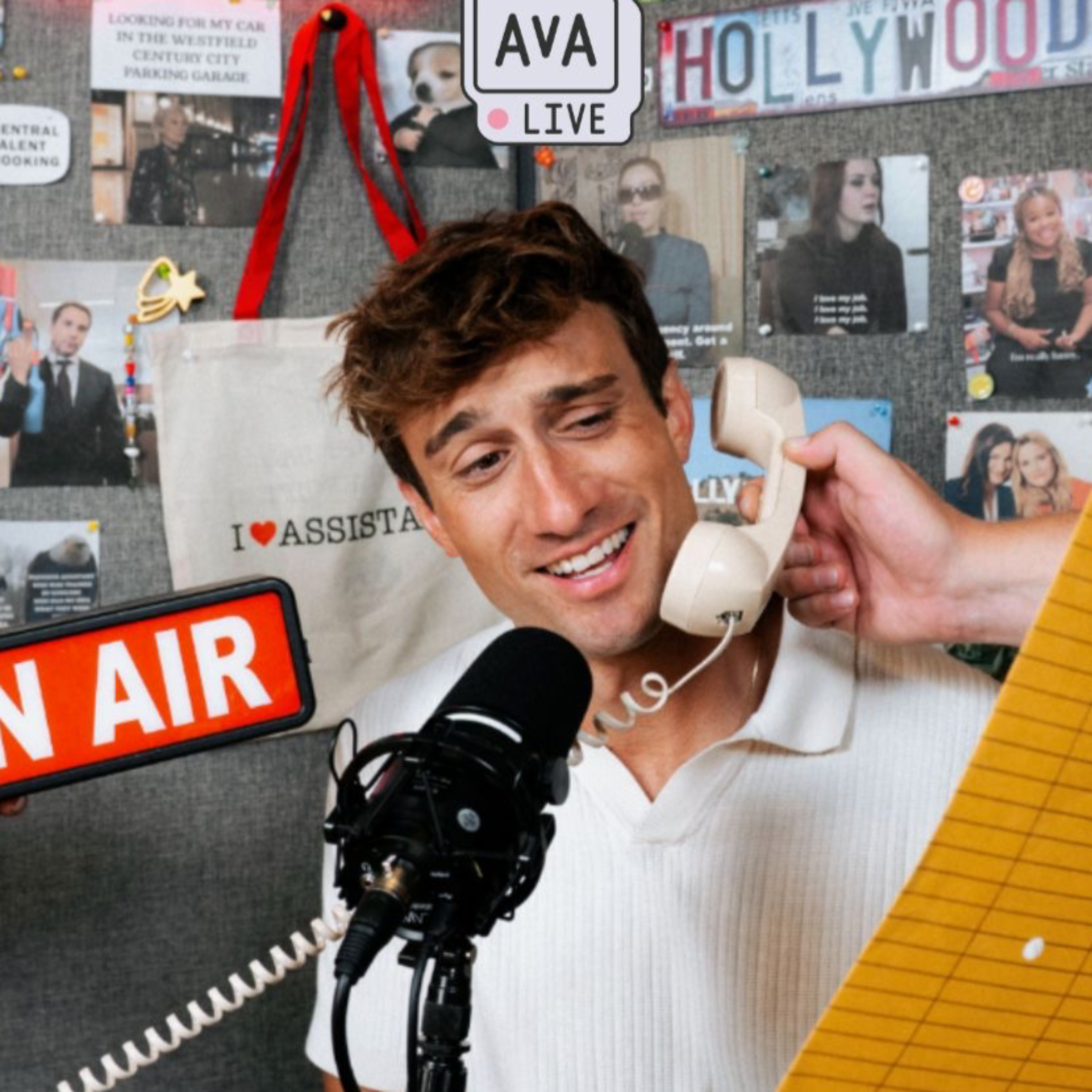
What It Takes to Win in Hollywood: Former Head of TV @ Sony Pictures + Producer of The Hangover
1h 21m 51s
AVA Live features a groundbreaking segment with live interns, marking a new era of youth engagement in entertainment. Hosted by Steve Mosko and featuring Scott Budnick, the show explores pivotal career shifts, from TV station operations to impactful social initiatives like prison reform. Budnick’s journey—from producing *The Hangover* to working with incarcerated individuals—demonstrates how personal experiences can fuel meaningful change in the industry. The discussion emphasizes the importance of authenticity, resilience, and real-world experience over traditional credentials. Key insights include the power of failure, the growing influence of Gen Z in shaping music and culture, and the necessity of inclusive, behind-the-scenes voices in policy debates like California’s film tax credits. Guests stress that true success comes from passion, not just achievements, and encourage young people to take risks, build networks, and take action in their communities. The show concludes with a powerful call to action: to embrace challenges, lead with empathy, and use entertainment as a tool for social transformation.
It is Wednesday, July 15th. Welcome to AVA Live.
We have someone sitting about five foot to my right that I'm excited to introduce.
He's got his mic off right now, but we have a star-studded lineup presented, as always, by Central Talent Booking.
Today, we go from TV presidents to interns to red carpet hosts.
We have Steve Mosko, who's sitting, as I said, right next to me.
We're going to kick it off to him in a sec.
We're also bringing on interns live to the chat for the first time in show history.
We got Scott Budnick, who is a film producer behind the number one R-rated comedy of all time, The Hangover.
We got Naz Perez, who went from the producer of The Bachelor franchise series for seven years.
She now does red carpet segments, one of my favorites out there.
She also co-hosted and was a presenter for the AVA Awards back in January.
Before we go into our interviews, I wanted to cover four quick news stories that we're going to revisit with some of our guests this week.
The first, California just capped its own Hollywood taxis.
And lawmakers are pissed.
That's the headline, at least from us.
If you remember, we rose, California did, our TV and film tax credits to incentivize projects staying within the state and the city of L.A.
It was expected to bring in $6.6 billion in spend, 35,000 jobs.
But there's been a buried budget cap that's going to limit individual companies to $5 million in credits.
So it's threatening to gut that program.
And we're going to cover that on the show today.
The second.
Story taking over Hollywood.
Paramount.
I feel like we cover them on every show.
Same with Warner Bros.
There's now a coalition of 12 states, led by our own California, who have formally filed an antitrust lawsuit to block the Paramount $110 billion takeover of Warner Bros.
They argue that the deal is going to mean fewer movies, higher prices, and even more power concentrated in fewer hands.
But we see that all the time anyways.
Next story.
We partnered up with the team.
The collective at the team did a global study of nearly 15,000 music fans and what is new.
Women are driving the growth, they're driving the expansion, and they found that 83% of female fans are playing a key role in creating a group's live music experience, dictating the future of music.
So shout out, women everywhere.
We connected with Thayer Lavelle, who's the managing director over there, who said the biggest opportunities for young women will be in the areas shaping how fans discover, experience, and live.
So, shout out, women everywhere. I mean, who knows what would have happened?
I'm sure it all worked out fine, but
I'm not sure I'd be sitting here today if that woman had made that recommendation.
How much do you believe in fate?
Because it sounds like. 100%.
Yeah.
100%.
When else has it shown up in your life?
When else has it showed up?
Well, I was. So, I lived in Philadelphia for eight years and worked at a TV station.
See, this is how much I love this city.
There's my phone ringing.
I was hoping someone. I'd love to know who that was.
I was hoping someone was going to call me so that would. You'd hear how much I love this city.
We're going to clip the hell out of that.
No, so I was having a breakfast with these guys.
Again, my dream in life was just to work in a TV station.
And I knew from the time I was in high school when I went to a taping of It's Academic
and I went into a TV station, WBAL-TV in Baltimore,
and the smell, the energy, I said, this is what I want to do with my life.
So, now I'm working in Philadelphia.
I'd worked at Channel 29, TAF.
Then went to work at WPHL-TV as part owner and station manager.
I'm in my mid-30s and I just thought, man, this is as far as I'm ever going to get in Philadelphia.
So, I'm having a breakfast with some guys from what is now Sony,
but it was Columbia TriStar at the time.
And I was just BSing.
I said, you know, if anything ever comes up, I always wanted to live in California.
So, if anything ever comes up, I'd love to talk to you about it.
Well, they responded.
And originally, they called me about the ad sales job
and then worked its way into, you know, running the West Coast Indication Office.
But it was just a BS throwaway line.
Like, yeah, maybe I'll move to California.
Maybe I'll work for, you know, what is now Sony.
But, you know, it's just I thought, wow, I just, if I had never brought that up,
I'd still, I'd be.
I'm fat, drunk, working in the same job in Philadelphia.
I'm from Philly, so.
Yelling at the Phillies.
We'd probably be together at some bar right now.
But how much of an identity shift was it for you?
Because being from Philly myself, never having been to L.A., you know, moving here,
I never totally felt like I fit in or belonged.
In Philly or in L.A.?
In L.A.
When I started at WME, went to Live Nation.
Even now, walking around, I still feel like I, you know,
struggle to feel like I'm fully immersed in the industry.
But I think that's the thing.
I think that's the thing.
I think that's led to why, you know, we're seeing some success
or finding an identity outside of it.
But did you immediately resonate with the people around
or, you know, find yourself, you know, immersed within the industry?
Or how long did that take?
Right away.
It worked for me immediately.
So I think the good news is we came to Los Angeles.
I didn't come here in my early 20s where, like, I was overwhelmed by celebrity.
I was in my mid-30s.
I had two kids, you know.
And we chose, I love the business, but we chose to live 40 miles north of here in Westlake Village
because I wanted to raise my kids a little away from the business.
Our irony is they're all in the business now.
But, you know, so from a personal perspective, it was a very grounded life.
We lived in a, you know, nice neighborhood in Westlake Village.
Kids played in the street.
It was great.
Like, we weren't.
We weren't in Brentwood or any of the, no, not, but, like, we weren't around them.
So that was that.
And then when I came to work at Sony, like, I was in the syndication business.
I was, most of my job was revolved around traveling the markets and Sony programs.
Can you talk about syndication?
Because we have a lot of young people that may not totally understand what that means.
Basically, syndication is, well, so shows, I'll use Seinfeld as an example
because that was the most successful one I was involved with.
But shows run.
They run on a broadcast network, the original airing.
You accumulate 100 plus episodes or so.
Then you go sell those individual episodes to run on the Fox affiliates and on the local TV stations.
That's where you make the money.
That's where money was made back in the day.
And that was off network syndication.
So typically, when you sold a show to a network, you were deficit financing.
So you were losing money during the network runs.
And you'd make your money back by selling it to local TV stations.
And then the other part of syndication is a first-run syndication,
which is Wheel and Jeopardy and Oprah and those things,
where you're creating original programming, which airs directly on local TV stations.
But the process is you sell market by, back in the day, you sold market by market.
But anyway, just to get back to the other, we were talking about syndication.
So I was, you know, I was traveling a lot.
But, you know, I couldn't.
I couldn't believe I was actually working for a studio.
I was so grateful and loved every minute of it.
And I, you know, so it was, you know, someone said to me once, oh, was it a risk moving out to L.A.?
You're in your mid-30s and you had a cushy job running a TV station.
I go, no, the risk for me was staying because I would have peaked at 35.
And I just wanted to do so much more with my life that, you know, I just saw the opportunity there.
What did you learn?
What did you learn about yourself in that era?
I mean, moving out here?
Just through your mid-30s, like while you were starting to rise up at the company, what did you really learn about yourself?
My wife, we always laugh because my senior year in college, I wasn't, I had no clue what I wanted to do.
And I was a nervous wreck because I had loans to pay.
I didn't have any money.
I was sleeping upside down on the bed at night.
And I just, I didn't really probably believe in myself.
As much as I should have.
And not in an arrogant way, but just believing, you know, what I could accomplish.
And, you know, I barely, I say this with, you know, no regret.
I didn't work as hard as I should have when I was younger in school.
So I struggled to get through high school, to get into college.
But I knew the one thing I did have working for me is I loved the TV business.
Loved it.
The other thing I knew I had going for me is I was.
No one was going to outwork me.
Like, I had jobs since I was eight years old.
I mean, I cut lawns.
You know, I've had every shitty job known to me.
I was a janitor.
Worked in an ice cream store.
Friendlies.
Worked in a shoe.
I mean, you name a bad job, I had it.
Because I, there was, you know, my dad, God bless him, you know, he wasn't, he didn't have enough money.
And they had six other mouths to feed.
So.
Probably, I'd learned that, you know, I can do it.
There's one specific instance, though.
I think my first week I'm in Los Angeles, I'm in a Seinfeld meeting with the guys from Castle Rock who own the rights to Seinfeld.
And my Sony guys and Jerry was there and Howard West and George Shapiro, Jerry's managers were there who were my Jewish fathers I never had.
They're my closest friends later in life.
But at the time, they were like.
Jerry's managers.
I'm sitting in this room going like, what the, what am I doing in this room?
I got, do I deserve to be here?
And I remember a line my football coach in high school told me.
Jerry Gray is an old Notre Damer.
And I scored a touchdown one time.
I started doing my Billy White Shoes Johnson dance and got a penalty.
And I run off to the sideline all happy.
And he grabs me by the throat and says, act like you've been there before.
And I never forgot that.
Because, you know, not that you have to fake it till you make it.
But like, you know, I brought something to that room that they didn't know.
Like I knew how to make money.
And I came into the business from the buyer's perspective, which no one in the company had, which was like, I actually bought their stuff.
So I knew how the economics worked for the TV station.
So when we prepared our sales plan to sell these shows, I knew like, I know how the game worked, you know.
With that in mind, how important?
What do you think it is?
And I would say the answer is very important is to be a consumer of what you're selling.
Oh, well, yes.
I mean, I think it helps if, first of all, it helps you understand the product a lot more.
I mean, I go back, this may not be a direct analogy, but if you look at writers that write to their story, they're the best TV shows.
I mean, Larry, Dave, and Jerry, like they were, like they were, you know, that was them.
Ray Romano and Raymond.
That was Phil Rosenthal who wrote Raymond.
I mean, you know, you're kind of speaking from your heart.
So, yes, I think it's important.
Like, I can tell people who hate the business that are doing it for the money.
And, you know, you see people like they're just not knowledgeable about things or they don't have a passion for it.
It's hard to fake that.
Flip that, though.
So when you look at younger people, how do you, what makes you really want to bet on them?
Well, I'll tell you.
I'll tell you, there's, you know, my kids, they mean they have to deal with the fact that they're all working their asses off.
But they deal with the fact that their dad was in the business.
I didn't have that.
And I'm not sure, you know, whatever.
It's just a different dynamic.
But when I interview people, I don't care where they went to school or what job they were looking for, I'd always say, like, what's the most difficult thing you've ever had to overcome in your life?
And the people who are successful are the ones who are backed into a corner and figure
way out you know because everybody's great when things are good things are good man things are
good yeah you learn the most about yourself and whatever when the shit hits the fan your back's
against the wall i mean i'll tell you a great story i won't drag this out but i was talking
some guy who was interviewing for a sales job one time he came in like you know guns blazing like
he's like you know he looked good every answer was a flashy answer and i said uh so like what's
the most difficult thing you've ever had to deal with in your life and his face just dropped he
goes well he goes my dad owned a midas muffler franchise in roanoke virginia and might have
showed up at his door and said they want to franchise it he said no so they built one down
the street to mess with him so
you
i had to sweep the floors every night with my dad to help him save the front the store which he did
but he goes i learned more about my dad i learned more about business
it humbled me whatever i said okay listen to me that's your lead that's your narrative it's not
this boom boom boom you know fancy stuff that's who that's who you are and you've saw your father
goes through something very very difficult and come out on the other side of it and he's like
that's who you are not this other person who's i think a lot of people especially young people
try and protect themselves from those failures because you look at social media you see a lot
of success you see people around you succeeding you rarely see the failures which you know the
first couple years of my career i tried to be pretty pretty down the middle and not take risks
and try to get those easy wins but when i started to put myself out there and fail more and more i
found myself seeing more success and i think that's what i'm trying to do is i'm trying to
grow and growing as a person i think young people don't always take those risks because in a fear of
it being so public now and i think we're you know i come from a different area you certainly and
um what advice would you have for people out there who who are nervous to take a big leap or a big
risk it's the only way to have enjoy your life you gotta take the big swings i mean look the uh
i i don't want to downplay education but the greatest uh what made me successful
in business was playing sports yeah because if you look at this dynamic in sports you don't win
every game you don't lose every game hopefully but it's a team sport like the business is a team
sport you know and uh we can talk more about that later but you got that who's your competition what
how do you what's success there's a scoreboard there's winners and losers you know that's life
people don't understand that you know you need to be in shape you need all the things that go into
being successful in
business you know carry over or carry some sports i mean i whenever i give a speech i viewed it like
a sports competition like where i'd practice practice practice i mean we did um we had an
investor day at sony one time i put a teleprompter in the conference room with my speech and for the
month out before i went home every night i did the speech well by time the speech by time the
i knew it my i memorized it for the most part but those things carry over i mean i i think in a great
way because you know we we the problem is today sometimes we've raised a generation of people to
get you know what's the uh you get a trophy um participation thank you there you go life isn't
you don't get participation store uh trophies in life after you're a kid and um there are winners
and losers and it's okay
to lose i mean i look the the world i came from in production uh you know it's it's like you know i
get tell people i was involved with breaking bad or whatever well go into that go into that but
but hold up so people just think well that's all you've done no we had several failures
prior to that and you just hope that your wins yeah outperform your losses
that's that's that's the key i mean you look at any successful you know i saw an interview with
chris nolan this week on 60 minutes and he's talking about some of the things he screwed up
and now he's like the guy you learn from your mistakes that's the only way you learn and um
and you just can't be afraid of it you just you can't be fearful and like you know for baseball
fans like ted williams is in the hall of fame and he's screwed up six times out of ten you know and
but he got on base right around four weeks ago and he's like you know i'm not gonna be afraid of
four times but no i i've you know i look back at my life and um my career um i've learned like
when we got hit with a sony hack yeah i mean i won't get into it but it was horrible but
you know my line to our group was our team was if we can get through this there is nothing nothing
that's going to beat us down because there's nothing going to be worse than this then of course
it hits and then i i said uh when i was a village road show at the time i said you know what it
seems horrible now but it's eventually going to come to an end and we're going to be the most
prepared on the other end of it so you can define losses a lot of different ways or struggles but i
mean it separates the the great executives and the great people in life from the mediocre ones and
the bad ones the ones who are able to get through the obstacles and get past the obstacles
obstacles and it's you know there's a great saying which is it's not what you achieved in
life but what you've overcome i'm a huge believer in that you have overcome a lot but you've also
succeeded a lot where you're sitting behind breaking bad you've talked about shark tank
and we sat down over breakfast you've had many wins throughout your career are there any that
stand out in your mind maybe you thought weren't going to be successful at the very start or maybe
any of them time yeah you never know i mean i we did show you know queen latifah for a lot of
reasons no one's fault like it didn't work i thought man this is a slam dunk and yet then
you get to breaking bad and you know you look at the um log line for that and you go you know
because when we did our um we did the green light meeting for that our our finance person goes like
this is the worst idea i've ever heard in my life you just don't know you really don't know and um
it's a craft shoot but you gotta use your instincts um but i
i wish i could think of one where i thought oh this is absolutely a slam dunk and they it just
you know you just don't know yeah and you're surprised on both sides like surprised when
things work um and surprised when things uh they don't work but it's but again you just want to
hope your wins are greater than your losses that's the trick that's the secret to the business
i love it we actually since we're a live show we have some live questions coming in
you asked i love it do you remember anyone named ben brown of course so we have a live i know i know
ben yes there was i know the whole family so who is ben brown ben brown he works with uh uh oh god
payton right now omaha productions yeah but what was he when he started his career a young person
trying to figure out what to do with his life he was he was a former a former intern of yours and
he wrote a question and he said a lot of studio heads come from the creative side you had a
differentiator help you in your job specifically can you talk about comedians and cars getting
coffee which at the time was a really revolutionary model right well two things one i didn't come up
through the development side so i didn't work at a desk at an agency and get yelled at by everybody
all the big agents i came up i ran tv stations which were buyers so you know i think uh
that i think that was good training what it allowed me to do though is i
understood the business yeah so when i came into the job and the so imagine like the world was
starting to shift back then from you know basic cable getting into the business doing original
programming and broadcast network doing things a certain way so like i said i understood the
business in a big way but i didn't know the nuances of the necessary of development so when
it came time to doing pilot season for broadcast network whatever
i could actually ask questions like why are we doing things this way i might might so i wasn't
the guy like well this is the way we've always done it so i'd ask questions like well if a pilot
almost made it on the air this year why did we throw it away and start over with a whole new
group i mean so there are things that i would ask so being having the ability to ask intelligent
questions in a way that like i don't know i'm this is new i mean not new to me but like
knowing the business but being able to ask intelligent questions
that that about things that were kind of done the way they were doing so that was that um so
comedians and cars i don't know i i will just say this is one of the great experiences of my life
jerry seinfeld's a genius you know he came off of um doing the most successful comedy in the history
of television and um he was looking to do this show where the log line was i want to call a
comedian pick him up in a car that you know a nice car that i like go have coffee and talk about the
business and
That was it.
So initially, you know, we had talked about, you know, I was helping.
They came in and talked to us and his managers and CAA, whatever.
And, I mean, I knew the whole group.
They came in and talked about the show.
And before Jerry could get finished his sentence about what he wanted to do,
I said, I'm in, like Jerry Seinfeld, like do whatever you want.
And, anyway, I'll never forget, we met in his apartment.
And kind of it was a handshake deal.
And I think if he were, I think, well, he said this publicly.
I mean, I think it was just an amazing experience for him.
Because he and I made a deal where I wouldn't give him any notes.
He had no notes.
I said, you do whatever you want.
But I'm always available to have a conversation.
And what was the beauty of that was he would call me, like, on a Sunday night
and talk about the week coming up
and the previews and stuff like that.
Like, hey, I just talked to Steve Martin and we did this.
And, you know, he talked to, and he knew he could have the conversation.
He was looking for feedback.
But because of our agreement, like, he didn't have to listen to me.
So he would enjoy talking about it.
And, no, I mean, and it was, and the other thing which I loved about his view of it
was he wanted this to be like, he wanted people to discover this.
Yeah.
So he was coming, think about it, he's coming off the biggest show
in the history of TV, or one of them.
So he didn't want to come out with, like, Jerry's next big hit.
So we did very little marketing.
It ran on Crackle, which was another thing that we had at Sony,
which was ahead of its time because it was an AVOD service that really, you know.
But I said to Jerry, I said, look, you know, this is going to help market Crackle.
So we had, anyway, it worked out great.
But we just said, you know, we want, and his comment was,
I want this to be like people finding a wallet on the side of the street, on the curb.
You know, wow, look at what I found.
And so it was a slow grow, and everybody had the patience to have it do that way,
and it ended up winning awards, and, I mean, people love it.
And if you watch, there's some amazing episodes there.
I mean, the Michael Richards episode is amazing, and just, it's great television.
Actually, in a very strange way, Jerry was so far ahead of his time in terms of, you know,
producing digital content because it really wasn't that expensive to produce.
He did the editing.
He did it all, the music.
It was, what, 15, 18 minutes long.
No, I love the fact that he loved it so much, and it really made an impact,
and people viewed it for its quality, and I was very proud to be part of it.
And I would argue many people are trying to replicate the success now,
but we only have a couple minutes left.
That's it?
Yeah, I know, it's sad.
We've got to do another breakfast meeting and come back on, and I'll pay this time.
We talked before.
Let's get a sponsor.
Let's get a sponsor.
Hey, since we plugged them, we should get a free breakfast.
I agree.
We've got DoorDash as our sponsor today.
You know someone from DoorDash, I heard.
Maybe.
We got one question I had, and we talked about this at the start, right before we started rolling,
that you remain optimistic about the future of the industry,
but also the ability.
The ability for people to break in right now.
In your eyes, you said you're more optimistic than ever.
Yeah.
What about the opportunities for young people?
What makes you optimistic?
How much time do we have?
I don't want to get this.
We've got three minutes.
Okay, good.
We're living in the golden era of the industry,
and I know that sounds absolutely nuts to a lot of people,
but I was talking to someone this morning who I have a great deal of respect for,
who's dean of a film school at a big university in town,
and we were just sharing the fact that this is the most exciting time to be in the business.
Yeah.
And the reason I say that is,
in 1978 when I was looking for my job, first job,
the only place to go was local TV and local radio,
kind of like that's in terms of you wanting to get in the media business, right?
Well, not many options.
There weren't that many jobs.
The world we live in today, it is changing at warp speed,
right?
If you really embrace the change and really try to find and figure out,
I mean, look at what you're doing.
I mean, people said radio was dead 20 years ago.
It's the audio business.
Well, the audio business right now, it's now on demand, and it's called podcasting.
It's huge.
It's a multibillion-dollar business.
Why?
Because people were smart enough to figure out how to take advantage of the audio space.
So I don't know.
I mean, look, for folks my age,
it's hard pill to swallow that the business has changed.
It's not like it used to be.
But if you think about it from a content side, it's all going to get figured out.
AI is going to get figured out, whatever.
But if you have something, a TV show, movie,
you have the ability to go direct to the consumer.
It's possible.
I mean, there's ways to do that.
Unheard of 30, 40 years ago.
So, look, it's a tricky time.
There's lots of change.
You know, corporations are trying to figure out their role in the world.
But in the meantime, entrepreneurs are,
you know, zigging and zagging and doing very, very well
and disrupting the business.
I think that's great.
But I think if you take a step back
and just really be clear-headed about where the opportunities are
and find something you're passionate about,
like I said, maybe I'm nuts,
but I think there's a career to be had.
There's fun to be had.
But you just have to be passionate about what you believe in.
And, look, I'm an old man, kind of.
But I've. I've never been more enthusiastic about the business.
I love the fact that my kids are involved in it.
I love working with them directly and indirectly.
And I'm not prepared to give up on this business
because I think it's too much opportunity
and it's too exciting.
And it'll, like a lot of things,
it'll figure itself out.
But, yeah, it's always good to shake things up a bit.
If you're nuts, I'm wacko.
I can't wait to be growing and building in this business.
I look up to you.
But also, you know, as a friend now
and someone that we can have these conversations with
and cross, you know, someone that's in it and done it
and someone that's just started to buy in
and I'm inspired by people like you
that continue to hold that optimistic flag
because a lot of people aren't.
I'm going to tell you one quick sentence
which is kind of like one of my mantras
is don't let other people tell you what you can and can't do
because they're going to be pessimists
and they're going to tell you what you can't do
and it's all BS.
Do you think you can do it?
I mean, look at. Anyway, that's one of my mottos.
So, I'll leave you with that thought.
Appreciate you.
Steve Mosca, ladies and gentlemen.
Thank you.
I appreciate you.
My pleasure.
We'll see you soon.
Where's the buffet?
Buffet's out.
We don't have the buffet catering.
All right.
Shout out DoorDash.
Sponsor today.
Maybe we can order some DoorDash in real time.
We're going to get set up here
because we go from Steve Mosco
and we mentioned 20 plus years at Sony TV,
president to some interns.
So, for the first time,
maybe in talk show history,
we're going to bring on some interns.
I'm going to put on my little headset here.
Get set up.
We'll see you later.
Appreciate you.
And we're going to take calls live from interns.
So, we have an ambassador program
with interns on 200 plus campuses
and we're going to bring some of them on
to ask me questions in real time.
So, I actually don't know what the questions are.
I don't know who's going to come up.
We're going to have some fun with this.
So, the first ever AV Live intern segment.
Let's bring. Let's bring them up.
Here we are.
So, I'm currently interning at Big Ass Kids
and trying to build a career in the music industry.
And I was wondering,
how has launching AVA changed your perspective
on the entertainment industry,
particularly the skills that you need to succeed?
Well, first off, thank you so much for joining.
You've been amazing.
Savannah is one of my favorites.
They're all my favorite, but ambassadors
and very active in the chat.
So, it's cool to actually meet you face to face.
But,
you know, it's a great question.
I think, for me,
I spent time in the industry at WME as an assistant,
spent time at Live Nation as a project manager
working in touring.
There, I learned a lot of the hard skills.
So, the hard meaning,
the skills to review a contract
or understand what deal memos look like,
the things that, you know,
make you promotable from a knowledge standpoint.
When I then went off on my own,
I wasn't very good at networking
or building a network,
but I had a lot of people around me early on.
I was forced to do that when I went on my own
and started AVA and I had to go and meet people, network.
I didn't, I couldn't rely on just my @wmeemail.com
or @LiveNation.
I had to really build a brand for myself.
And that was challenging at the beginning
because it took me probably 1,000, 2,000 emails
to, you know, start getting in touch with people.
But what I really learned about building there
is how important your network matters.
And I know I say it all the time.
I know people say it all the time,
but I found out from that, you know,
firsthand when I was pretty much left
with no safety net, no backing,
that was the one thing that stuck out to me really early on.
And it's amazing that you have an internship at your age.
I didn't never had an internship in music,
never had one in entertainment.
So kudos to you.
What's your favorite part about the internship?
- We get to create playlists
and we're doing like a whole re-switch of the playlist,
but it's really exciting to like listen to the music
and then create the playlist and then just write about it
'cause I love music.
- Who's your favorite artist?
I'll put you on the spot.
Okay.
that's a hard question but for right now i would have to say avicii i've been listening to all of
these things again i love that well we were just talking about at the top of the show that um gen
z gen off which i'm not assuming but i think might be going back to the earlier stage of music not
the 90s but love avicii grew up in that era and that's actually funny enough one of the first
shows i ever saw that got me into music so we can connect on that but thank you so much for joining
the show this was the first time we've ever done this i had a blast it's great to meet you face to
face it was great to be here thank you so much thanks so yeah so we as i mentioned we have an
ambassador program with students from i think almost 200 campuses now um ranging from from
seven countries as far as uh france germany and it's been cool to see this next generation and
hear from them they've been asking questions all year i think we got one more coming up
live and we're gonna we're gonna bring them up how's it going thank you unmute i think we're
and there we go how are you i'm good how are you i'm good it's so great to meet you what's your name
where do you go to school and where are you from so my name is sarah weisberg i'm currently entering
my last semester at william patterson university in jersey i'm from new york like an hour outside
new york city but i go to school in jersey and my major is popular music studies with a minor in
music business and i'm currently interning at the capitol theater in portchester shout out great
venue i'm a mark why they're marketing interns there what's your favorite part about the job
i i love the work environment this the internship i have now is actually my first in-person
internship since i've only had remote ones in the past so i love coming into the office a few days a
week and working on different projects and i love music marketing i'm very passionate about it so
i love to do fun stuff with good people i love it and so ask your question and also i got a story
about the theater that you work at but would love to hear your question okay so my question is
so since it since i'm entering my last semester and i'm graduating in
end of december beginning of january my question is when so i'm looking to go into either the music
industry or the theater industry so i'm looking to go into either the music industry or the theater
industry so i'm looking to go into either the music industry or the theater industry so my question
is when so i'm looking to go into either digital marketing digital marketing fan engagement or
promotions so what do you think is the first step when looking for a post-grad job and when do you
think is the right time to start looking for that job yeah i mean it's a great question as i said
on this last question i don't think you could hear but i did not have an internship in music
entertainment when i was in college very jealous of the opportunity that you all have that are
very well deserved but what do you think is the first step when you're looking for a post-grad
job yeah i mean it's a great question as i said on this last question i don't think you could hear but
i did not have an internship in music entertainment when i was in college i'm very jealous of the
opportunity that you all have that are very well deserved but what do you think is the first step
deserved but what i did do was get as much experience as i could possibly get
outside of the classroom it sounds like you're doing that too so i would urge you
if you're between a couple different areas try and get experience go volunteer at a show you're
already at a theater go talk to the people in those roles it's easier than ever to reach out
to people on instagram find their titles on linkedin go to events we actually have an
event in chicago and nashville and la next thursday we got to throw some in philly and
jersey and new york because i'm from the east coast as well but go and immerse yourself
in those roles and talk to people early on and try and figure out not only what you like but what you
don't like and i think that's really important at your age to be thinking about and it's never
too early to be thinking about when you're applying but maybe not just applying broadly
and definitely not just applying to every job possible but if you have some time think really
critically about what are the jobs that you really want to do and how can you put yourself in the
best possible situation to get that job and real quick i we have people working for us now i don't
know a single class or grade they ever got or took in college what i focus on is what have they done
in the real world so try and build a real paper trail for yourself as you do get those experiences
and talk about them um and put them on paper so it's a great a great question and when i first
started wme i booked the east coast for all of our artists and that was one of the venues we booked so
very full circle moment and uh congrats to you on getting that role thank you and thank you for your
great answers and great advice yeah appreciate you joining us we've been fun um and yeah hopefully we
see you soon yes have a good one i feel like i'm in both the therapist chair and the hot
chair this is the first time i've ever been peppered with questions but um i think we do have
one more um ambassador or also intern that's going to join the show on ava live let's bring
him up how's it going good how are you i recognize this face you were one of our first first
ambassadors as well to join but i'd love to hear and you share who you are where you go to school
and the question you have yeah so my name is phoenix ichinowski i'm one of the ava campus
ambassadors i go to school at western michigan university and my question for you is i'm currently
interning at interlock in and doing hospitality management work i'm looking to improve my leader
skills and i'm wondering how your leadership style has changed over the time of building ava
and what are the best ways to put leadership into practice when building a team
really good question so i will say you know i'm still learning how to to lead and manage a team
because i ran ava anonymously for probably five or six years and now taking it from a side gig
when i had you know roles at different companies to my full-time job i've had to learn a lot about
managing people and what it means to be a leader but for me really thinking about always giving and
empowering those around me it takes a lot of time and energy to train new hires or people that are
just joining our team members but that time that you're investing will yield amazing outcomes long
term so leaving for me is always making sure that everyone that works for me and works around me
has a seat at the table and that's extremely important as we start to scale this company and
i would urge every leader to think about that and and and um owner of any company to think about
ensuring that that next generation has a seat at the table so i think it's always just about hearing
out every single idea and being open to know i want to surround myself with people who tell me no
who are smarter than me or better ideas than me and making sure those voices are heard so i'm learning
a lot about myself through this process i'm certainly not perfect at it yet but hoping to get better and
and learn from those around me but great question phoenix you've been amazing in our group chats
we have a big whatsapp group and you're always leading those and i always see you in the comments
in this show so thanks for joining thank you so much good luck we'll see you phoenix is the best
um three we gotta we gotta redo that uh segment again on on future episodes and get more people
involved we're gonna do an episode of just assistants and circle back as they say
to more interns uh but from interns to a a producer that i deeply admire
and i've loved his his stuff project x the hangover the number one r-rated comedy of
all time but what i admire most about what he's done scott budnick it's the impact he's created
outside of hollywood so we're going to bring him up we're going to hear his story we have scott
budnick joining us live on av live how are you warner how you doing man it is great to
meet you i feel like i've i know you just through the research i've done but
and and our guy brandon who set this up but thanks so much for joining
Of course, man. I absolutely love what you guys are doing, so it's great to be connected, and I hope this is just the beginning.
Same here. I just gave you a brief intro, but I would love for you to introduce yourself because you're so multifaceted with so much going on.
How do you describe what you do and what you've done as an intro?
I mean, I say that I started out as Todd Phillips' assistant or even a casting assistant, got promoted to being his assistant, and then after old school, got promoted to run his company and made some incredible comedies with him for 15 years.
All the Hangover movies, Project X, Due Date, Road Trip, Old School, War Dogs, then left the business for five years to work with kids in the criminal justice system and spend.
An outrageous amount of time in prisons, which is a crazy place to be, but insanely inspiring, to be honest.
But then realized that we have an incredible power in this business to change people's hearts and minds and create empathy and entertain.
And I thought I could make impact in the world through continuing to tell meaningful stories, so I ended up raising $75 million to start one community, which is kind of the intersection between entertaining films and films that can make an impact.
And now it's just like, this is my whole life, this is what we do, making six movies right now.
Crazy. Before we get to the movies, I want to go back to your purpose and the purpose that you found through, I believe, a Rolling Stone article when you were younger.
For me, I will say, I didn't connect 99% of the classes that I ever took, but I took a prisons and punishment class in Georgetown, D.C., and visited a maximum security prison.
And it is one of the most memorable things that I've ever done.
In my entire life, I still am close with the professor who taught that class.
I think I know your professor.
Who is it?
Is it Mark Howard?
It is Mark Howard.
Shout out Mark Howard.
We got to get him on the show, but we'll have to do a business together.
But the question here is, you found your purpose through that and have acted on it, not only acted on it, but been a leader in prison reform and criminal justice.
Can you talk about how you did that?
you found that purpose and what it's meant to you through your life. Yeah, well, I mean, as you said,
it started with reading a Rolling Stone magazine. I was an intern on Baywatch while I was still in
college. I came from Emory. I came out here. I worked on Baywatch on the beach in Marina Del Rey
and read this article about four kids, 15, 17, and 18, who got life without parole sentences,
meaning the only option is to die in prison for like a backyard weed deal gone bad,
where a fight happened and one kid pulled out a pocket knife, stabbed a kid in the chest,
and that kid tragically ended up dying. But the three kids who never touched the knife
during this backyard fight got life without parole in prison. And I just thought that was
so disproportionate. So I got involved in their case. And then just it was kind of my side hustle
while I was making that decision. And then I got involved in their case. I started making movies and working for Todd Phillips. And I started teaching in Juvenile
Hall and then hiring them on our movies. And then after Hangover 3 and when we were doing
War Dogs, I'm like, you know what? I'm getting so much joy from this work. I'm not getting as much
joy from the movie work. So I ended up leaving the business entirely for five years to only work
with people in the criminal justice system. And I'll tell you this, and I think this is important
for the people listening, especially young people listening. I took a
90% pay cut. I left my position of power. I couldn't cast anyone. I couldn't hire anybody.
And those were by far the best five years of my life. Because every day was inspiring. Every
moment was inspiring. Because it's like, everyone knows it's like this business can be such bullshit.
And like, this was not bullshit. Like this was real life. And so coming back into the business,
I like came back on my own terms. Like I'm not dealing with 80% of the
idiots in this business and the snakes. Like I'm working with the people I want to be working with
honest people, good people. And I found a lot of them. So yeah.
One of the ones you found is named Vic blends. Can you talk about that relationship and what
you've all done together? Yeah, man. Vic blends. I think you guys
know him as the like barber motivational speaker online. He's got 25 million followers between
TikTok and Instagram. We met through a friend in the NBA during COVID. And like, I had
seen a bunch of the kids I mentored that had come out of prison. They were all posting them up on
their stories because he was doing all this like inspiration and motivation stuff. So I hit him up
and I'm like, let's do some stuff together. And it took a few years and we became very,
very close friends in the process. But we just opened a barber, the first ever barber school
in a state prison where the guys in the prison can actually get licensed as barbers. So when
they come home, they can have a real career where they can make a hundred thousand plus.
Um, as barbers in a shop. Um, and it was great. And now we're kind of scheming on some digital
media stuff together. And, um, he just started a podcast and Tom Brady was his first guest where
he cut Tom Brady's hair and interviewed him. And I got him president Obama and he interviewed
president Obama and cut president Obama's hair. And, uh, it's just been, it's been a great
friendship. Yeah. And you have some fans in the chat, David bro, six, seven said, you're the man,
Scott. Um, you have a lot of fans in the chat, but one of the questions that we're getting live,
is how do you balance a passion project on the side with your day-to-day job?
Well, I'll say this. It's like, I think some of the mistakes that people make in the,
in the entertainment business on like wanting to make impact is they make things that feel
like medicine or vegetables that do not feel like entertainment. Um, and I think we're being very,
very cautious here to like really be focused on genre comedies, thrillers, horror, big four
quadrant family stuff. Like, I think there's ways to make massive impact. Like I'll tell you this,
this is, I think this is the right example. Um, when I was doing the criminal justice stuff, um,
I had lunch with Toby McGuire and he said, I think you're leaving like your biggest tool in your
toolbox. Like you should be making movies and telling stories that move people. And that same
week I went to a party and I met the guy that led the political movement for marriage equality.
And I'm like, what was the game changer? Like, how did you legalize gay marriage
throughout the whole country when it was illegal before?
And he's like, Will and Grace, Ellen, modern family. Um, it was glee, right? It was very
commercial television that humanized gay people to people that were maybe clutching their Bibles
or whatever it was and saying, that's not traditional marriage. And it softened their
opposition or made them in support, right? It wasn't a small documentary that nobody sees.
It wasn't a prestige drama. That's very hard to put out these days, right? It was big,
commercial TV shows, right? So I think that's a mistake people made. And then like in balancing
my life, listen, I get a lot of sleep. I sleep seven hours a night. I'm very disciplined. I wake
up at 4 15 in the morning. That means I go to bed at 9 15 at night during the week. Um, and from 4
15 in the morning till 9 15 at night, I'm going right. But I, there's not one moment in my life
where I feel like I'm at work. I got, I'm in my film office right now in Santa Monica. I don't
have a job. I'm at work. We have a very young, cool team. Like, so none of it feels like work.
So from 4 15 in the morning to 9 15 at night, I'm going. And some of it is calls from people
that just got out of prison, right? Some of it is calls with studio heads, right? It's just back
and forth, back and forth. Um, doing the stuff I love to do. I'll get about studio heads. We
just had on Steve Moscow was in office. He also in studio, he also wakes up at 4 15. So I guess
that's the life hack on how to be successful, making me feel like a piece of shit. But that
energy and passion for it warner a lot of like artist brains do that at night right and they're
best yeah i cannot function at night like i can't even think i i after like seven o'clock i'm done i
can't watch a movie after seven i can't have an intelligent conversation so it's like i'm done
but if you wanna if i wanna have my cup of coffee and you wanna talk at 5 15 in the morning like i
do my east coast calls at 5 15 in the morning i was on a conference call with london at 4 45.
like i'm great then not good at night one of the and one of the projects moving more towards uh
right now in the projects that you're working on one of the big things that
i'm hearing about is this next documentary taking advantage of cultural moments
in time also just mercy can you talk about the projects that you're working on
and how you tie in the true passion as you said you re-entered the industry with the newfound
passion focus on things you want to do those two projects in particular can you talk about them
well i mean i the next documentary was just fortuitous because uh trayvon free who won
an academy award for his short two-distance strangers and has produced a lot of sports
content like he called me and he's like we're gonna be in the streets and in madison square
garden filming x y and z um during this series like do you want in and it was a very low price
point and like i loved the energy of what was happening i was in new york um when that was
happening so um i'm like yes we went in and just like threw in for half the budget so i it was just
a filmmaker i supported in like a moment where like the culture was just like like like fire um
but like i've been also like i've been traveling to latin america a lot and
was was kind of went to bad bunny's residency in puerto rico and now producing his movie um
his next movie where he's starring and an incredible director named uh renee uh andre
aka residente is directing but like i just i followed him since 2008 um and like it's just
been incredible watching like him do his thing and then like while i was down there gina rodriguez
pitched me like an incredible like latino boxing story that was like a huge big sports movie
um but very like very gen z like very young anthem so we're doing that now so you know i just like
very young team right so like the stuff that is getting to me through them is stuff that is like
cultural spear type stuff um and also like i'm starting a digital media company with a lot of
some of the biggest influencers in the world online so like having a lot of young people in
my company that are putting me onto these influencers way before they're at 25 million
followers or 50 million followers i think i think it's important it's like us old heads like we
don't know anymore it's like to me it's just like listening to the young people about like
where culture is all the time like i'm just always having those conversations there's a lot of young
people listening right now who may be nervous to speak up at work to talk about things they're
passionate about what advice would you have to them i mean if you have ideas and if you're trying
to put your bosses or people at the at the places you work onto the the next talent it's like why
would you keep that quiet if they don't want to listen because they have huge egos or they're
narcissists like a lot of people in this business like that's their problem but like
you you're leaving a lot on the table if you're not putting all these ideas forward because
something's going to stick from the now to the future you've done a ton of work with california
tax credits we talked about it at the the top of the show there's some news this week and some
lawmakers pushing back can you talk about the work you're doing what makes you optimistic and also
what makes you potentially pessimistic about the the way that film and tv the industry as a whole
is going not pessimistic at all i'm not pessimistic at all i'm not pessimistic at all i'm not pessimistic
at all um uh not pessimistic in terms of tax credit stuff very optimistic um we've
were like super involved i was in sacramento like 28 times on on the tax credit stuff and like to be
honest with you it's like at this point like a decade later like i have like 100 150 young people
that i worked with who are incarcerated that are now in the unions working on films and like i had
like a dozen guys and and women working on the mandalorian and then george lucas decided to pack
up and move everything to london right and they were all out of a job and having and there were
grips and electricians and set dressers and hair and wardrobe like they were all over the board
so to me that tax credit fight was very very personal it was people that i knew
who was trying to who were trying to support their family and a lot of
ogs in the union right who have been in the union for 20 30 years they were thinking
about mortgaging their home because they couldn't find work so it became very personal for me and
i had already
passed a lot of bills around criminal justice stuff in sacramento so i knew the mechanics
of how things worked so i'm like i'm gonna start going up all the time but like i'm gonna change
the narrative of like what this credit is so it was me going up with crew members right it wasn't
me going up with like brad pitt and like movie stars it was crew members for the first 20 times
right it wasn't until the last day that we needed to like do the final push where like patty jenkins
who directed one
under woman and jonah nolan who created fallout and damon lindelof who created lost and graham
taylor from fifth season and the academy award-winning warner core jefferson like they came
and like they were able to kind of do that a-list thing and by the way i'll endorse all five of them
exceptional human beings exceptional human beings um that are aligned with everything
that you're about you should have all of them on the show i can help with that
um but it was all crew members and it was a lot of my crew members who were formerly in car
raided going up there and telling a double story right like i had this time in my life i grew up in
poverty i was incarcerated i changed my life i got out i found this organization hollywood cpr
i trained for two years i got into the union and now this is my life and this is my dream
right and that's a compelling story a lot of people have those dreams and passions never
take the first step i mean you know i'm for me when i was in the more corporate side of
the industry wme live nation i didn't feel as fulfilled as as i possibly could because i was
in the more corporate side of the industry wme live nation i didn't feel as fulfilled as i possibly could
because i was in the more corporate side of the industry w me live nation i didn't feel as fulfilled
filled as I possibly could. I joined the board of Save the Music, ran a music festival with 100%
nonprofit. And what I'm going to challenge you on is you need to bring me into a prison. I'd love
to go with you and give back. But I think there's a lot of people out there who are unsure, unaware
of how to actually get involved in their communities. What would you plunge them with
or tell them to do in order to take that leap and actually get involved? Well, it's funny. You
mentioned our movie Just Mercy, which was Michael B. Jordan and Jamie Foxx and Brie Larson telling
the story of an innocent man on death row and the lawyer that saved his life. And Michael B. Jordan
played one of my heroes named Brian Stevenson, who wrote the book Just Mercy and has been one
of the greatest death penalty, death row lawyers that the world has ever seen. And Brian Stevenson
always talks about if you want to impact people's lives, if you want to change the world, if you
want to make an impact around the world, you've got to be a lawyer. And I think that's one of the
things that we need to do. And I think that's
an issue. You've got to get proximate to the people that are suffering, right? He always talks about
proximity, right? You can read about it in the paper. You can watch about watch it on the news.
You can watch movies about it. But when you take that step of proximity and you're face to face
with a human being and you can shake someone's hand and you can look into their eyes and you can
hear their story, everything begins to change because it becomes very personal and very human
and very visceral. And not until I walked in for the first time that I really get it and that I
really feel comfortable. There's nothing scary about it. Every day it's inspiring. I'm bringing a massive, like one of my favorite
actors on the planet into the same juvenile hall in prison that I work in on Friday. And I'm really
excited about that. But I mean, anyone can get involved and it doesn't need to like, if you want
to get involved in prison, just look up the ARC website, which is arc-ca.org, anti-recidivism
coalition. And it's in downtown LA and we can get you involved.
But if you, if immigration's your thing, there's a lot of issues and people like my friend,
Elsa Collins, this is about humanity, incredible people doing things around immigration. There's
obviously climate change organizations and LGBTQ organizations and issues that are involving
poverty and economic inequality. So just get online, do your research, reach out. Like everyone
needs volunteers. It's like the one thing I'll say about my world is when I take any young person
that I work with, let's talk about all the ones that I have in the film business. And I ask them,
like, how did you change? Every single one of them has the same answer. And it it's, there was
somebody in my life that cared. There was one person. And like everyone listening today can be
that one person. Inspiring. And to wrap this segment, we do actually have a segment called
Unsung Heroes. So I'd like to flip that question back to you. Who is someone in your life who
changed the trajectory of it or that you'd like to give a shout out to?
man um i would say uh the first woman that ever hired me uh in casting in this business cynthia
stillwell uh was unbelievable i gotta give it up for todd phillips right todd phillips
hired me as a casting assistant on road trip promoted me to his assistant on road trip
and then made me his producing partner and was loyal to me for 15 years um so like todd phillips
gets it and then like the people like matthew mizell who used to work in the business brought
me into my first juvenile hall and got me involved in this and i wouldn't be doing this work if it
wasn't for him so those are some of the people that really that really did it shout out to them
shout out to you thanks for the inspiring messages that you've passed along both directly now to our
audience but to the world and the difference that you're making it's tangible it's um it's seen
and hopefully it inspires others that are younger to get involved because it's not
you know it's not something where one person can't make a big difference one person can and i think
it takes the team and effort but you've proven that just taking that first step to get involved
can can you know become you know truly industry changing so i give you credit and i will be
in a prison visit with you soon and mark hopefully i haven't seen him in a bit but
thanks for joining the show reach out warner come on let's go let's go i'll see you guys
scott budnick been excited for that one um before we have naz present a lot of people
are joining because we're doing a quick giveaway there's a logo up here doordash
shout out doordash we use them all the time to get our sad salad lunches we want to give a quick
giveaway of two doordash black cards what are those they got a bunch of perks with them we
ran a sweepstakes as well as a ava live sweatshirt that you can't get you can't buy and we ran
sweepstakes hundreds of submissions and the two winners are amber doll and jessica spencer i wish
they were here to celebrate with but they're the winners um we'll be reached out directly
we'll be doing giveaways
every week um and giving those sweatshirts out periodically i don't have one yet but
last segment of the day we got a fun one we got a good friend i see her in the corner over there
naz perez we first met when i cold get over here you're the best naz naz naz like jazz i messed
that up on the award show too we first met naz perez we first met when i cold dm you when we
were on the lead up to our ava awards that we planned in six weeks and i said we need someone
who's iconic we need some experience hosting who can it be naz like jazz answered the call and
presented an award first annual ava awards the first award the first ever well it's gonna first
award at the first ever award show for the biggest moment in your career yeah it really was it really
i actually was so full circle because we all start and not we all but most of us who aren't nepo babies
start at the bottom and work our way up and so i just love what you're building and doing so hi
everyone i appreciate it i appreciate it i appreciate it i appreciate it i appreciate it i appreciate
it can you give a bit of background on yourself yeah yeah so if you don't know me i um am a
cultural conversationalist um tv host journalist interviewer red carpet i started out in the career
at the ellen degeneres show as a pa which is what i shared about at the ava awards from ellen i was
juliana ransick and ryan's pa on the red carpet at eli from the red carpet when that was like
you know huge when he was like the thing and then from this
i produced seven seasons of abc's reality show number one prime time reality show the bachelor
and so for two and a half years i worked on the bachelor the bachelorette bachelor in paradise
i left that show in 2017 and i was like i want to be a host and the only hosting jobs available to
me were like anything i could find so i hosted at this youtube channel called clever where it's just
like a bunch of wanted like people that wanted to be entertainment hosts on e just got together and
it was on youtube and i was like i want to be a host and i was like i want to be a host and i was
on youtube and it was like very new at the time and then i became an in stadium host for the
dodgers and so i hosted for the dodgers for four years we went to the world series three times and
that was so fun because i learned how to interview live in front of 50 000 people with no teleprompter
like old one of the oldest stadiums in mlb so you have to like anything you say gets reverberated
back to you because at the time they hadn't changed the speakers out they've now renovated
the stadium since but then when i was at dodgers i was like well i really want to cover film and
Rotten Tomatoes and so I went to work for Fandango and Rotten Tomatoes for six years
and really built myself up as an interviewer and conversationalist and interviewed like
the biggest stars for the biggest films. I did the first interview for Barbie, the first one for
Dune. And then, um, from there ended up being live on E. So it was like full circle after being Ryan
Seacrest and Juliana's PA ended up being that person on E for three years, covering award shows
live on broadcast TV. And I'm also a contributor on the today show, but in the last few years,
I haven't worked for any of those companies anymore. I'm completely on my own, made a course
on how to interview people. I want to help people because now everyone has, I also had a podcast
for eight years with someone that I produced on the bachelor. It was called, I don't get it. So
yeah, I feel like I've been everywhere. And what's so funny is I was just watching your conversation
with Scott and I just want everyone to realize how incredibly small this inner, this industry is
because he mentioned Trayvon free, who's working on the next documentary. And I'm like, Oh, Trayvon's
a friend of mine that I met.
When I first came to LA, you know, who's comedian, writer, Oscar winner. And then you guys were
talking about just mercy. And literally yesterday at the lighthouse, I was interviewing, um, Destin
Daniel Cretton, who's the director of Spider-Man who directed just mercy. So it's just so funny.
The industry is so small, but anyways, that's me in a nutshell. I'm a conversationalist. Now I don't
go by TV hosts interview or anything because I'm now moving into more Oprah sphere where I'm
interviewing authors and designers and athletes and not.
Just like actors in Hollywood, but I'm still doing that too.
Let's do a quick session here. I'm just starting. I'm about 13 weeks into this 14 at this point,
maybe 15. What would you, and a lot of people trying to do what you've mastered,
what would be some tips or pieces of advice? So I love this. Yeah. So I have all these in my course,
but one tip that I start off with, it's the first thing I teach Warner, which is be a human.
Most people aren't a human. They think they have to be like this broadcast journalism person or
very professional. Um,
I walked into the first interview for Barbie. It was such a massive interview. It was like Margo,
Robbie, um, Kate McKinnon, Issa Rae, America Ferreira. I had 20 minutes. I had my inner,
you know, like I had everything planned on what I was going to say. And I walk in and you walk
into these rooms and it's like a million people behind the camera. Every, every person has like
a stylist, a glam person, a publicist, a manager, and they were running behind and the energy on set
was frantic. It was like, Oh my God, we're cutting your,
your time from 20 minutes to 15. And in the moment I was like,
what do I cut out? You know what I mean? And you have to do it live. You can't just like,
it's not like they have all the time in the world. You just have these 15 minutes. So I sat down and
I remember feeling so frazzled and I started and I kind of like messed up and it was so off. I like
took in the energy and I stopped Warner and I just said, and I, and I didn't care about all these
people in the room. And I just said, you know what? And I looked at Margo, Robbie and Issa Rae
and all of them. And I just said, I'm actually really nervous right now. And I think I want to
start over. And I looked at the camera person and they were all like, and the energy in the
room shifted. And in that moment, Margo and Issa and all these act huge actors looked at me as
Naz Perez, the human and not this journalist that was trying to get stuff out of them.
And because I was human in the moment, I got so much humanity out of them. So my first tip would
be, be a human. It kind of translates into my second tip, which is meet people where they are.
And I just experienced this with Coleman Domingo on the red carpet for disclosure,
day Spielberg's team flew me out to do interviews, which was like, so sick. I was like,
Oh my God, I'm interviewing Steven Spielberg. But, um, I was so excited to interview Coleman
Domingo because Coleman's in everything this year, you know, like he's in the Michael Jackson
movie. He's on the four seasons on Netflix. He's in disclosure day. Like he started the,
the, the year off with dead man's wire. And so out of everyone on the carpet, I had the most
questions for him. I was so excited. And he seems like a high energy person. Right. And so I was
like, Oh, I can't wait. Like I'm gonna have like a cool, like, and he, I was the last person for the
last press run. New York was their last press tour. And he was exhausted Warner. Like I could
tell you could see in his eyes and I could have just gone with what I had. And I met him where
he was, which is tip number two. And I threw away everything I prepped and I took my ego out of it.
And I was like, what is this? You're a hundredth and 48th premiere. Like you look so tired. I was
being a human. And I asked him just a really thoughtful question, which was off the top of my
head, which is like, had nothing to do with the movie. I was like, how are you doing this? Like,
it's a dance. You just like, are like flowing through life and magnetic and attracting. And
he had the most beautiful answer and got energy. And people were like, how did you do that? And
it's because I met him where he was. I didn't stick to like what I had prepped or thought that
I was going to meet, you know, the flamboyance of what is Coleman Domingo. So that would be my tip.
Number two. So be a human, meet people where they are. Tip.
Number three is, um, I always have some sort of icebreaker with anyone I meet on the red carpet
or for a long form interview. And I don't always use it in the edit. If it's not live, it's something
and it's always the first thing I think of about that person. So I don't have to like chat GPT it
or, you know, use AI, which I don't really use in my process, but like, it's always just the first
thing you think about a person. And so with Spielberg, I remember I hadn't come up with it.
I was actually going through a lot of stuff personally and Spielberg was walking up and I was
like, Oh my God, what am I going to use?
To connect with him. And he walked up and I know Spielberg's Jewish, but I said to him,
I feel like I'm meeting Santa Claus right now. He's like, I'm not Santa Claus. And we both go,
you're Jewish. And then we laughed. I didn't use it in the edit of the reel,
but immediately we connected. We were both laughing. We're on the same frequency. So tip
number three would be to have some sort of icebreaker connective thing and let it be genuine.
Don't make it up. Let it be the first thing you really think of when you think of that person.
And the last one,
I'll share is, um, research, you know, everyone is like access to AI. Everyone has access to the
internet. The reason why I'm able to get stuff out of people in all the I've been interviewing
celebrities for the last 14 years on red carpets on, you know, in studios exclusive, uh, on podcasts.
And, um, what I do is I use humans as libraries. And so visa hired me to interview, um, athletes
at the super bowl this year. And I don't know anything about football and all I could find was,
was stuff about football, about them on the internet. Right? Like that's all there really
is about athletes. I don't really care about that. I care. I'm always trying to extract truth
from the person I'm interviewing. I'm like, what is the truth of this person? And how can I help
inspire the people watching, which is a lot of why you have this show. Right? So I was like,
I want to know who the real Saquon Barkley is. And I watched his documentary and everything,
and everything was just about football. So I called his high school football coach
and I was like, hi, I'm Naz. And, uh, and this is of course, part of my journal. I'm not going to
background, but anyone can do this. And I asked his high school football coach about
what Saquon was like in high school. And he told me that Saquon loves musicals.
And so I'm at this live fan event, you know, for at the super bowl in San Francisco with one of the
best, you know, NFL stars. And I was like, Hey, so, uh, I heard you love a musical. And he was
like, Whoa, no one's ever asked me that before. And then it, we got like, it was, he was so
animated and excited to talk about this thing. No one ever asked him before. And so
when it comes to research and again, I go through this in depth, you know, in my course, but like
it's, it's really is, there's these little things I do to really connect to people and using humans
as libraries is one of them because no one else has access to that. Everyone has access to AI and
the internet. Yeah. I love it. Well, I feel like I just got a cross course, took a bunch of notes
every year. So we're going to go, let's restart this and I have a nice breaker. And I'm kidding.
I wasn't going to ask about those orange sunglasses. Those fit pretty well in the
background. What's the story on that? So funny. I was going to ask Alex if I could wear them
because it made, you know, when you have sunglasses that like make like, uh,
dent and it did that for me, but orange is my favorite color. So, but the thing about orange
is you can't wear it all the time. It's like so much. And so I'm always like, how can I incorporate
orange into my life? And so I had an orange water bottle before I left it on a plane. And now it's
like my orange sunnies, you know, but I got these off revolve. I love it. Orange also breaking news
here. Orange is also my favorite color. Wait, is it really? It is. And so that should have been
the icebreaker. This conversation would have went totally different. Do you see if you were
genuine and you were like, tell me about those orange sunglasses first, we would have got
into this and we would have connected exactly. I'm being like, orange is our favorite color.
What, what do you love? That's orange. And then you get into the interview and you could have
easily cut that out. But now we're like more connected, but if it wasn't, yeah, I love live
though. Live is the best live. I, what I resonated most with all of it, but being human. And I think
so much of why we do this is I, and I talk about this, I've written about it. I've never really
talked about it, but I was very nervous to get on camera for many years. And for me, it was the fear
of what others would think. But the way that I overcame that fear was saying, screw it. I'm going
to do a live show with no co-host with no fallback with the technical difficulties happening. And
they've happened, you know, a couple of times and, and, and as Colin and Samir, who I know,
you know, them as well as they throw your backpack over the fence. And for me,
and I've said this throughout my entire time running AVA, I am a human. I'm not an expert
on anything. I'm just, I'm jumping in on the, in the deep end and try to bring others up around me
on this journey. And you do the same. And that inspires me. And I've read a lot about the things
you wrote, watched a lot of things you talk about. And now sitting across from you, it's cool to hear
from you. I mean, I love the brand you built. You are so human. I mean, the, the memes of like,
even just assistants texting their boss is really what drew me into AVA because it's so human and
it's so real and it's so present, but no one was talking about it. Yeah. Not me, but you got a
of me is there.
Got to sue DoorDash for the defamation over there.
No, but--
Or sponsors.
me, but, uh, thank you for joining. And to end this, there's a lot of, um, you know, looking
ahead and thinking, um, about the current, but looking back, who is someone who has inspired
you or you look up to? I love this question. Um, you know, and it's so cliche, but Oprah really
does because Oprah carved out a niche that I'm trying to break into as like a millennial Gen Z
version of that, where Oprah hasn't, she built something that had never existed before. She's
able to sit with people who are expanding consciousness, you know, like, like Pima
children and all these like spiritual leaders. And then she's also able to like get the exclusive
interview with Adele for Adele's new album. And she's just so deep. And I feel like we're lacking
that in our generation. We have a lot of big podcasts, like the caller daddies of the world,
the chicken shops of the world. And I, it's really been a passion of mine. Um,
and it's been a passion of mine. Um, and it's
great that those exist, but to bring more depth and substance to our generation, you know, and
like mix all these amazing things in culture together, which is why I'm a cultural conversationalist.
I love it. Cultural conversation is Naz like jazz. I will never F that up again.
Thanks. Yeah. Nazareth is my full name. My parents are Jesus freaks. So they named me
after Jesus of Nazareth. I love that. We have an ongoing bit on this show that I mispronounce
everything. So, uh, I won't let it happen again, but I appreciate you joining. It's been so fun.
When we first met, I'm like, we got to do something together. This is it. Um,
I hope that'd be on again, but congrats to the course. Congrats on all the success you're having
in the carpets and we'll see you soon. Thanks for having me. Thanks guys. Appreciate you.
Well, that's the show Warner like Warner. Thank you for joining AVA live. We are going to see you
next week. We have Jeremy Zimmer, the co-founder of UTA joining and some surprises in store. So
we'll see you at the same time, same place on AVA live.
Podcast Summary
Key Points:
The show features a historic first with live interns joining the conversation, highlighting emerging talent and fresh perspectives in entertainment.
Steve Mosko shares his journey from TV station management to industry leadership, emphasizing the importance of understanding business economics from a buyer’s perspective.
Scott Budnick discusses his shift from comedy film production to prison reform and community impact, driven by a pivotal experience in a maximum-security prison.
A major focus is on the California film tax credit debate, with Budnick advocating for crew members’ voices in policy to ensure equitable industry growth.
The panel highlights how passion, resilience, and failure are critical to success, with guests emphasizing that overcoming obstacles builds true leadership.
Industry optimism is rooted in digital innovation, audience shifts (especially Gen Z), and the power of entertainment to drive social change.
Success stories like *The Hangover* and *Jerry Seinfeld’s Coffee Car* illustrate how creative freedom and authenticity resonate with audiences.
Key advice for young people includes embracing risk, building authentic networks, and prioritizing passion over prestige in career development.
Summary:
AVA Live features a groundbreaking segment with live interns, marking a new era of youth engagement in entertainment. Hosted by Steve Mosko and featuring Scott Budnick, the show explores pivotal career shifts, from TV station operations to impactful social initiatives like prison reform. Budnick’s journey—from producing *The Hangover* to working with incarcerated individuals—demonstrates how personal experiences can fuel meaningful change in the industry.
The discussion emphasizes the importance of authenticity, resilience, and real-world experience over traditional credentials. Key insights include the power of failure, the growing influence of Gen Z in shaping music and culture, and the necessity of inclusive, behind-the-scenes voices in policy debates like California’s film tax credits. Guests stress that true success comes from passion, not just achievements, and encourage young people to take risks, build networks, and take action in their communities.
The show concludes with a powerful call to action: to embrace challenges, lead with empathy, and use entertainment as a tool for social transformation.
FAQs
The lawsuit, led by California and 12 other states, argues that the deal would concentrate too much power in fewer hands, leading to fewer movies, higher prices, and reduced competition in the entertainment industry.
A global study of 15,000 music fans found that 83% of female fans play a key role in shaping live music experiences, indicating that women are central to the future of music discovery and fan engagement.
Syndication involves selling aired episodes of a show to local TV stations after their original broadcast. Revenue comes from selling these episodes, with the most successful shows like Seinfeld generating income through both off-network and first-run syndication.
Working at TV stations like WBAL-TV and WPHL-TV gave Steve Mosko a deep understanding of the business, including the economics and buyer's perspective, which helped him succeed in roles like syndication and later at Sony.
He emphasizes that failure and overcoming obstacles are key to growth, urging young people to embrace risks, learn from mistakes, and not be afraid of setbacks, as success often comes after struggle and resilience.
After spending five years working with incarcerated individuals, Scott Budnick founded a community-driven film initiative focused on empathy and impact, and now integrates cultural moments and justice reform into his filmmaking projects.
Chat with AI
Loading...
Pro features
Go deeper with this episode
Unlock creator-grade tools that turn any transcript into show notes and subtitle files.
 PodcastTranscript AI