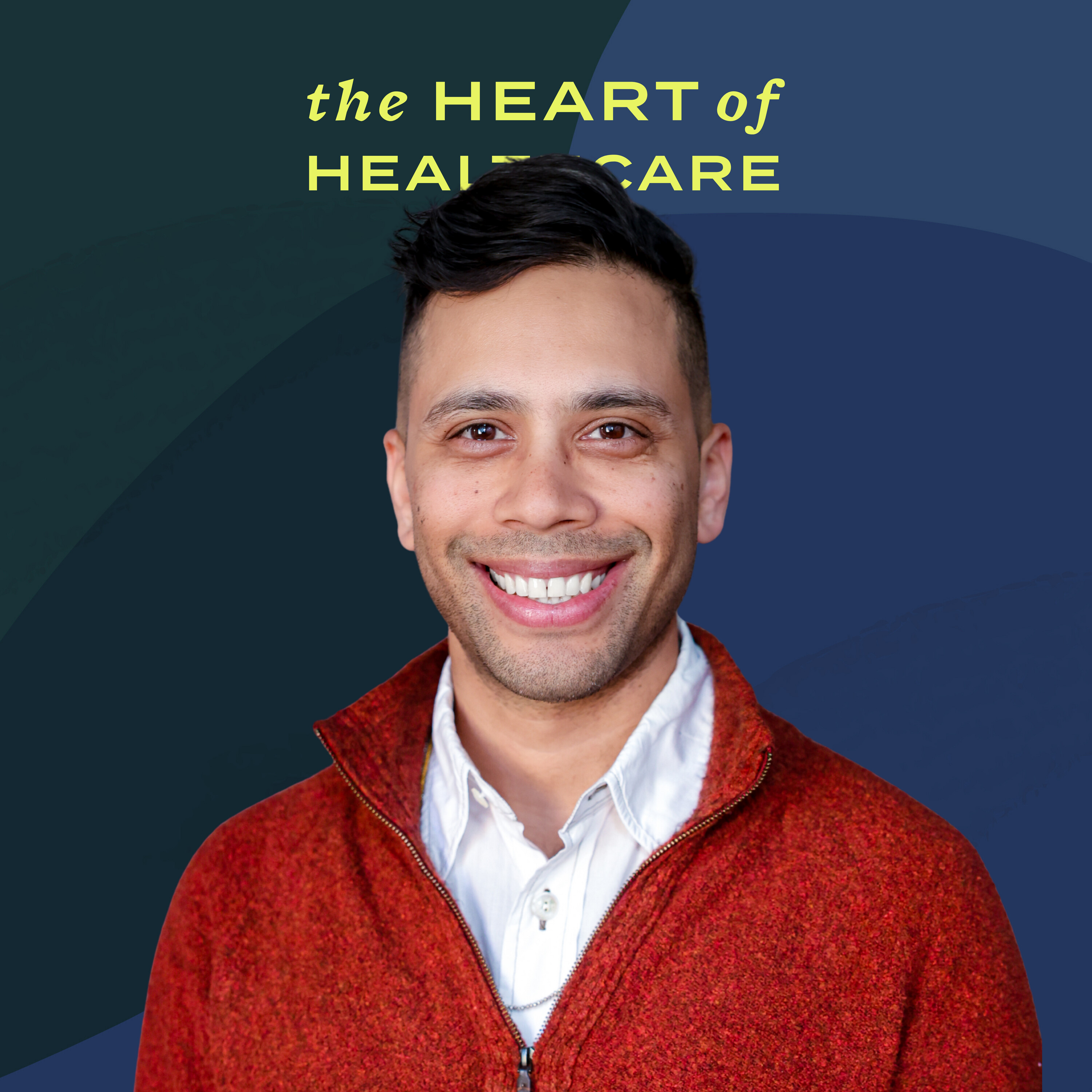
What It Takes To Scale Care With AI | Akido Labs CEO Prashant Samant
from The Heart of Healthcare | A Digital Health Podcast
39m 33s
Peshant Samant, CEO of Akito Labs, describes his company as a full-stack AI-driven healthcare system with 96 clinics serving over 500,000 patients. Unlike most healthcare AI that only makes existing systems more efficient, Akito Labs builds its own technology and operates care delivery from the ground up. Their AI, SCOPE AI, is trained on 10 million synthetic clinical case studies—created from integrated data from various health and social service systems—and uses reinforcement learning from real patient visits to provide attending-level investigation across 26 specialties. The AI drives intake, documentation, and assessment, which is then reviewed by a physician. Akito Labs prioritizes serving difficult populations, like the unhoused, to ensure democratized care. Their street medicine program uses pods with one provider and eight community health workers per 350 patients, focusing on trust and coordination. Samant emphasizes human-centered design, iterating technology in live settings based on care team feedback, and notes that technical capability must align with operational adoption. By building in-house, they can adapt quickly and solve real problems, such as improving follow-up and optimizing time for both providers and community health workers. This approach, he argues, ensures that AI expands care capacity for those most in need.
I think the limiting factor isn't whether or not we can build better tools. It's whether the health care system can absorb them and operationalize them at speed. And I think that when that infrastructure lags, the people who suffer the most are the people who have the least to add access. It's that simple. Today on the show, Halley speaks with Peshant Samant. The co-founder and CEO of Akito Labs, they are a full stack AI-driven health care system with 96 locations and serving over 500,000 patients. Welcome to the Heart of Healthcare Podcast. I'm Halley Teco. I'm Michael Eskivel. And I'm Steve Krause. And every Monday, we bring you the latest in healthcare innovation as we sit down with entrepreneurs and industry experts. So buckle up and join us as we figure out how to improve healthcare for all. [Music] Peshant, welcome to the show. Thanks for having me, Halley. Good to be here. So your company runs a full stack AI-enabled medical network of 96 clinics that currently supports 500,000 patients. I want to talk about the AI-enabled part. What are you doing unique here? So there's two parts of it. One is that we build our own technology from the ground up. And two is that we're not selling AI into someone else's workflow. We operate the care delivery system ourselves. That means we design to visit the staffing model, the follow-up process around AI from the ground up. Most healthcare AI makes existing systems a bit more efficient and we're using AI to expand care capacity itself. So what is scope AI? Sure. So scope AI is a suite of neural networks that's trained on a massive amount of proprietary data, as well as a reinforcement learning system that we've built in-house that uses our electronic health record and takes information from visits that happen, that are quantified, qualified, and fed back into the system. You can think about it as a training environment where we've created one of the world's largest medical textbooks, as well as one of the world's largest multi-specialty residency programs to be able to train a specific medical intelligence. So scope AI is a medical intelligence that spans 26 different specialties and performs at an attending level of investigation and diagnosis in those specialty areas. So how does it actually work? Like walk us through what that experience is like in a patient encounter? Sure. So in a scope-enabled visit, a medical assistant or a care manager or CHW is with the patient and scope helps drive the intake, the clinical investigation in real time. It guides the conversation, identifies follow-up question, pulls together the relevant history, generates the documentation, proposes assessment, and plan, then a provider of physician reviews at its if necessary and approves. And that is the full cycle. Yeah. And you guys have your own EHR or are you using EHR? We have our own EHR. So all of this is trained. Everything is trained on the data that you guys have collected over half a million patients over the years. No, well, before you even more than that. So for the first five years of the company's history, our thesis when we built the organization was that we were going to need a massive amount of organized clinical information and as you're well aware in 2010, 2011, that didn't really exist. So it was really exist. So we spent the first five years the company's history integrating data across a wide variety of systems, healthcare systems, social service systems, and then stitching that together into creating this collection of over 10 million clinical case studies that are longitudinal. Wait, wait, wait, wait, wait, you need to pause for a second. Did you just you just like said, Hey, can I have your data? Or can I buy this data? Basically, so we started the University of Southern California Digital Health Lab. A Surner was just implemented at Keck and was a really exciting moment because all of a sudden we had data that was going to be available in theoretically a better way to be able to build models and students to professors. We could create technology. We quickly found out that that isn't enough data and it's not organized properly enough. And we also need to enrich that information with social context. And the more you can do that, the better tools you can build that are predicting worsening health and social conditions as well as being able to automate care. So those the kind of the core asset that you need there is a huge amount of data. And so when we spun this company out of the USCT Health Lab, our North Star was how do we create a really valuable synthetic but organized clinical data asset. And we started working with healthcare organizations around the country for wide variety of initiatives from from disease management for the CDC to homeless and services coordination for the city of Santa Monica to vaccination coordination for the state of Delaware. And that required integrating a wide variety of different data sources that we fused together. And then we created a representative data population with that inspired by that real collection of information. So you were you were doing research and got access to it. It was essentially part of other projects and work, but it has then gone on to be the input for scope AI. Well, that it became a training environment for first scope. So we turned we created a synthetic data system off of which means what what does that mean, which means it's not it's not it's fully anonymized. It's representative information, but it's not real patient information, right? So it's like you're creating a virtual it's like you're making a textbook out of out of a bunch of clinical case studies. So it's not it's not Halliteko's information that I'm training off of, but I'm using a large that like a large amount of data to create a representative enough population that that looks and feels and smells like humans on earth, right? Yeah, with enough that how do you know you could trust it? How did you know that because it's synthetic? How did you know that like yeah, that's where we can do a huge amount of back testing with the live implementations of data coordination and integration that we were doing in the field. So that was a critical part of the process, right? It's you're integrating data to be able to integrating data, deploying a solution to help a program like care coordination for people experiencing homelessness in Santa Monica work and then you're also creating a synthetic data population and then you can basically test the efficacy of like this is representative enough, right? You need a lot of scale for this. You can't just do it with like a small subset. So we have to my knowledge the largest collection of longitudinal clinical case studies that are enriched with social context that are representative of how human beings operate at about 10 million. And so that's what I would call like in this analogy like the medical textbook part of it. And then the residency program is our our online training system, which is the R E H R that our doctors use our providers use that sees real patients. And so as we bubble up and allegory the recommendation whether it's working in the moment or whether it's working in the background a physician's interaction with that whether it's you know accurate and accurate feedback into our system, right? Kind of like how a you know a resident shadows an attending and the attending asks them a question and they say nope you're wrong. They have to learn that's their feedback system, right? But unlike our scope is trained to be an omnispatch specialist, right? So you're getting that feedback from all of the doctors, all the providers across our system. And that's fed into one brain as opposed to multiple different brains, which is how it happens in a residency program. You guys have a huge dev team, but you have no intentions of selling the software to other providers. This is the software is for you guys to be the best at what you do. It is our current approach in bringing this to the world. I mean, I think that there is like in healthcare one workflow is the product ultimately. Software is enable or workflow is the product. So we feel pretty strongly about that. I think that whether we provide the software, take scope AI as a technology, software-ified and deploy it, will we see the same impact that we're getting from being able to re-engineer the workflow around this technology? I don't think so in the short run. So I just think that purely from a social machine standpoint, I don't know if it's the best way to get this into the world and actually see substance-div-effect. So I think that's mostly where it comes from where it's like, again, leading innovation at an economic medical center, which we have done. I've seen how challenging it is to really drive trans-transformation with new software adoption. So it feels like we can achieve our mission better, faster and more comprehensively and full-stop. Yeah, also with the right kind of moral guardrails. We want to focus on difficult populations. That's where we need to make the stuff work first. I don't know if we saw the software, if it would find its way into that same sort of use case area.
You've tested out a lot of things in terms of all of the other work that you've done to make your providers at the 96 clinics better prepared and work faster. Like what have you tried that has worked? And then is there anything that you tested out within your clinics that did not work? Constantly. Constantly. And in healthcare, if you're actually deploying technology in the real world, a lot of learning comes from what doesn't work the first time. One of the biggest lessons is that technical capability and operational adoption are fundamentally different problems. Sometimes the model is ready before the workflow is. So we have to iterate in a live care setting and keep tightening the connection between the technology and the real world care model. And I think that that living laboratory reality is what allows us to build technology more rapidly because it's technology that's actually going to work in drive impact. Yeah, how does your care team know respond to that? Like you try something, maybe they start working on it six months, they get used to it. And then you're like, actually this isn't working, we're going to move on to something else. Like how do they respond to that given, traditionally clinicians resist trying new things? That's a really good question. Well, I would will bias here, but I think that we have the best care team in the world. And so you hire for this. You hire for that. I think that you have to approach it in a way that is solving their problems, whether it is problems that are associated with being overextended challenges they may be having with a particular kind of visit scenario. So you have to take a really human centered design approach here. And I think that's been an integral part of the company's history. We're over 1,200 people and half the organization looks and smells and feels like a big data found a tech organization, half the company looks and smells and feels like a multi specialty health care system. And so in that marriage, you have a lot of human centered design that goes into making that technology adoptable. So it starts with problems that are care teams face. And if you're solving problems that the care teams face practically, then it's not just, hey, let me force feed you this technology. And now you have to use it, but it's something that is absorbed because it's actually solving their problem real time. Like a very simple example that that's obviously worked is scribes, right? Like scribe these, describing technology revolution that's happened is solving a real problem. And you chose not to buy one of the many vendors that offer that out of the box. Correct. We feel like capturing the conversation and the dialogue and how that conversation develops and flows between a care team and a patient is an important part of being able to is an important part of our data assets. We can understand how to better train models that are going to investigate more thoroughly, more, more completely. So it was really important for us to be able to build that in house and have that. Interesting. So it's a strategy decision versus like a financial like it's not that it's cheaper to build it on your own, but like it, it goes towards your strategy of owning and to end the data piece. I think it's a bit of both. I mean, I think that, you know, healthcare is one of the spaces where once you are in if you are able to create an environment that is operating at scale from a health system point of view. And you're again, really able to adopt the human center design approach in improving that environment and then build technology, technology organization engineering product management that is truly in service of that. It's pretty amazing how, how, how much you can build more cost effectively and more optimized for your particular care environment. I think that for a lot of vendors in healthcare, you are selling into a alien care environment. And I think that's what makes it much more challenging. But once you're on the inside of it, yeah, you can build more efficiently too. Let's talk about the street medicine work that you are doing. You just published a study about this work. You wrote a paper we're going to share in the show notes and it you argue that if AI powered care can work on the streets of LA, it can work anywhere. I want to know, tell us about this project because this is not your initial target population. This is something that you guys have been doing more recently and then reporting back on why start with the unhoused population. I imagine they have a very deep seat of mistrust. Imagine they're very hard to follow up with. Might not have phones or email. I mean, you could have picked literally any other easier demographic like tell us why, how this project kind of came to be. And then we can get into kind of some of your findings. Yeah, I think part of it, you know, at a high level connects to the mission of the organization, the oriental, we're a social enterprise. Been that way since we've found the organization. And so it's being not just able to not just bring technology to the folks that have service right now, but to be able to democratize the benefit of technological improvements to equalize care. And as you mentioned, you know, the people experiencing almost population is a very, very challenged population for all the reasons you mentioned, not to mention the fact that they have a lot of comorbidities as well. And so if our model only works on easy patients, quote unquote, it's not a healthcare breakthrough. It's a convenience product. And we wanted to make sure that as we designed the workflow around this technology, you wanted to focus on populations that, you know, that the system fails most visibly. And if you can build a model that works here, you're solving a real access problem in American health care. And philosophically, these populations are often the latent beneficiaries of this kind of technology. And so starting there, not only, you know, is aligned with the mission, but it's ensuring that we're building technology in a way and designing technology in a way that is truly going to be inclusive. If you're using design principles that only benefit, again, the people that may be able to spend additional dollars on being able to get access to more care, then you're going to be tilting design in that direction versus solving the challenges around how do we build better trust? How do we build more comfort? How do we solve problems like being able to record in the field? Like these are challenges that exist because this population is very unique. And you know, your foundational unit for this is this pod with one provider, eight community health workers for every 350 patients just doing the math in my head, you know, my primary care physician has a patient panel of over 2000 patients. How do you make that math work? Because that's actually not as efficient as like a traditional primary care model. That's right. I mean, it works because it's designed for a very different job, you know, a traditional PCP panel may look large on paper, but a lot of those patients don't get the intensity of engagement they actually need, especially in a high complexity population. Our pod is built for trust for follow up for coordination and the community health workers who are not extra overhead. They're part of how care model actually works. So it's creating a pod structure and specialized labor that's solving the unique needs of this particular population. Yeah. And what are the community health workers? What are their backgrounds? Where are you finding them? I mean, a lot of our focus is on lived experience and some level of exposure to this population, some level of exposures of vulnerable communities in general. One, it helps build a tremendous amount of trust and empathy with the individuals we're trying to serve and two, we want to be able to provide, you know, a system for being able to help the population we're trying to serve not just get better from a health and well being standpoint, but from a financial standpoint as well. Are they reporting into the provider then? The care pod is overseen by a provider and there's a care management infrastructure that we have that is sits alongside as well. Okay. Yes, but they also have kind of a separate, a separate, the related boss, I guess. Yeah. Okay. So tell me what the community health worker does on a day to day basis. What does their job look like? So field medicine is inherent to our street medicine program and you have people community health workers as well as practitioners that are in the field going from 10 community to 10 community shelter to where our patients are. And in that setting, they're engaging with them, building trust, building rapport, checking in on them, both personally as well as medically as well as socially. So not just ensuring that they're getting the medical treatment, the need but also being connected to various social service that are a part of improving the well being of this, this population. Yeah. And do they have like, they're going into, let's say a street with like a number of folks who are living there. Do they have like, these are my patients, I need to go find these specific people or is it more like, I'm going to sign you up and now you're part of our community. It's a combination of both. I mean, we're in being able to increase the capacity of this program. The goal is to work with our partners. It could be for instance, topics in the LA area, which is a social services infrastructure that provides housing, for instance, to show up there, make sure that their benefit. there benefit.
fisheries are able to access this program. So that might mean a combination of enrolling new patients into this program and starting them on this process as well as doing follow-ups on existing patients. And I think the benefit of technology like SCOPEI and how that transforms the nature of this care model is that we can better optimize the time of not just the physicians but also optimize the time of our case workers so that they're doing follow-ups for the right population, for the right segment of patients. They're able to optimize their time enrolling new patients and just makes the entire system work better. I mean they're bringing what would otherwise be like a doctor's office to the street and serving people kind of where they are. But as we've said, like this is a mobile population. These are folks who might you know just like pick up and start walking and go somewhere else. How do you keep like geographic ties to these folks and then how many kind of just like drop off and disappear versus how many are you able to maintain contact with? Gosh, we have an incredibly high level of enrollment. You know, I think that the like over 80% of our patients are retained and that's largely because of the increased level of touch points that we can provide through a AI native care model. You know, I think there's a couple of things you touched on there. And I think what our street medicine team does with this technology is it's like bringing the best of what science fiction allows for as well as the best of community organizing. And so when you're going out into the field, these people that we're able to work with are motivated to be able to engage the community in an earnest honest direct way. And the reach that we can allow them to leverage now changes quite significantly. So if you ask to travel, let's say two hours into a rural part of a region that we're providing care to, you have like 20 minutes to both build rapport with that individual with that with that patient, get the medical investigation down that you have to and then also figure out what social service follow ups are necessary, right? And our team is willing to do that right now. And that's that's just the nature of these people that that we're blessed to work with. But by being able to have technology like scope AI that allows a case worker to be in that field. And like you said, bring a medical office to that destination means that our physicians can oversee a much wider territory because they aren't having to necessarily go out and do that two hour drive there and back. Also, it's not just one kind of care we're able to bring to that situation. It's a multi-specialty care because scope is trained across 26 different specialties. And so you're not just bringing cardiology care or endocrinology care or general PCP oversight, but you're able to do a full medical visit across a multiple range of issue areas which these patients are going to be dealing with all within that 20 minute time horizon. And once that time horizons, once we're past that window, that person's gone. They probably moved on to a different area. So those moments and touch points are really important to maximize. What's in front of the provider is it a cell phone and iPad? What is it that they're using to engage with scope AI? Generally, it can operate on an iPad, on a phone, also the repair audio system. As often as the circumstance allows for, have an iPad that has like a full ongoing list of next best questions to ask that are navigated by scope. And so you can think about it like an intelligent teleprompter that's listening to the conversation that's updating the next best question. Similar to how you might imagine a physician's office visit being, where you show up with a chief complaint, maybe a couple of, what they would call a chief complaint and a couple of symptoms. And then it's on the onus of the physician to ask you the next best question to go to to tease out with that full case study is what's happening to you, right? Scope is doing that and it's navigating the care manager, the case worker to ask that next best question and collect that answer so we get a full differential done. I truly need that for this podcast too. So when you guys are like done tackling healthcare, like that would be so helpful to have like, here's the next question you should ask. So speaking of the next question I should ask. So the data that you guys published shows a 31% reduction in emergency department visits amongst these patients are Medicaid managed care plans actually paying you for these savings. Do you have some sort of value based contract in place or are you still fighting the like structural deficit of traditional reimbursement? Yeah, well, healthcare reimbursement often lags behind care innovations. So the answer is yes. Some places yes and in some places the system still hasn't caught up, but the direction is very clear. You know, plans are under enormous pressure to improve outcomes and lower costs for high needs populations and models like this can do both. That can do both. Excuse me. We'll become increasingly important. So are you working with Medi-Cal? We are working with Medi-Cal. Medi-Cal is a big partner of ours. Well, one of the principles in designing this technology and designing scope and scope orchestrated workflow and the care models that are possible because of scope orchestrated workflow. One of our design principles is we wanted to make sure that everything can operate in today's payment rails. So not having an out of pocket requirement that is abnormal to a patient, not requiring some magic new way of getting paid for, but work within the existing reimbursement regime on both the Medicaid side, on the commercial side, on the Medicare side, the Valley-based Care side, the fee for service side. So you can think about it as like we are just a health system. We have a lot of patients across all different kinds of reimbursement regimes. But Medicaid is probably the most notoriously difficult to make work financially, not to mention all of the recent cuts. But you're running towards that, whereas others would look at this time in Medicaid and say, and people literally are pulling back and saying, "I can't serve this population anymore." And you're doing the opposite. You're running towards it. We are running towards it. I think that the traditional way to respond to Medicaid is to cut capacity. And yeah, we think that's exactly backwards. In our opinion, we might wonder what you mean by that. It's for a provider to cut capacity. Yeah, you generally have to find some ways to reduce services, reduce staff, try and. Like bare bones care. Yeah, that has historically been the response to increasing Medicaid pressure because of just one, the existing reimbursement construct to it. And also the challenge of the patient population oftentimes. We live in a world of healthcare scarcity. That's just the underpinning here. That's what the fundamental issue is here. And so when your most challenging revenue environment has increasing pressure, like the best, the only option you generally have historically is to find ways to cut that capacity or to cut the cost structure associated with servicing that needs area. And yes, we think that is exactly backwards. We think the only durable answer is to lower the cost of delivering high quality care while increasing access. And if you can redesign a workflow so that a provider can care for more patients effectively and reduce avoidable downstream utilization, the economics start to work much, much better. And there are both value-based care programs that start to make sense financially. There are incentive programs like ECM here in California that are really powerful. But I think there is a world we can imagine that is both sustainable and high impact, but it does require increasing the capacity and the capability of our providers. Yeah, I mean the irony of it, as we talk about all the time in healthcare is that we're paying for it one way or the other, right? So if someone ends up in the emergency department, we're paying for that. If someone is out of work because not because they can't work because they're sick, we're paying for that. It's an economic problem for us yet very few programs are willing to invest what they need to to actually keep people healthy. I think you're absolutely right about. I think that that's something that I think sometimes people think that if we make it less, let's say we're saying we want to cut costs in Medicare as a society or in Medicaid as a society and that's going to be better for our taxpayers. The practical truth is that these are all interconnected systems. So it sounds simple on paper, but the reality of what you're doing is you are resulting in increase ed utilization and a lot of other social services that aren't even going to help get into me. The lower productivity, it's bad for our economy. Like sick people. They're not productive. So it's yeah. And here's the thing, right? If you're a specialty care provider within a geography and you're an organization that employs a specialty care provider, say cardiologist and a chronologist, and you're a very good person. So you're a very good person. If all of a sudden a third of your patient base since it's gonna be Medicare, Medicaid and commercial, but a third of that stack is gonna be less revenue per patient. It doesn't just mess up, it messes up your entire business model. Your practice may not be able to survive because you have to see the patients, right? There isn't somebody else, there isn't a magic place they can go to. So I think that it's pretty short-sighted thinking and creates a huge amount of strain on our safety net, which includes the entirety of the healthcare spend, as well as other social infrastructure. - Yeah, absolutely. So you talked about kind of the provider shortage and we have these enormous constraints. There's a projected deficit of 86,000 doctors by 2036 and you have said that we can't just train our way out of the crisis. So do you think that AI is the only way to prevent just like a total collapse of our safety net? - I think that AI is, this AI the only way to prevent total collapse of our safety, the way, yeah, I think it is. I think I can be pretty binary here, yeah, I think it is. I think that the problem is that there is a reality of intelligence and capacity required to provide care services. That's just necessary. We have to be able to, and even the most hardworking, overextended physicians like right now, oftentimes they're just not gonna be able to provide the full scale of medical knowledge that a patient needs to be able to determine what the next best well-being step is holistically. Partially because we also have siloing medicine. So it's not just it's an undercapacity issue, it's also a siloing issue. My parents are, my mom's a gynecologist, my dad's an ER doctor. They have two different fields of knowledge. My dad will be like, I do not know exactly what to do with all the patients that your mom deals with. I think that what AI allows for is to be able to disconnect medical intelligence, availability's reliance on an individual human. Not the responsibility side, not the oversight side, but just the availability of being able to bring that medical knowledge into a situation. When you're able to do that, you can imagine a far greater level of applicability of that knowledge than is possible. Even if we had 10x the amount of humans, right? A lot more availability than 10x the amount of humans. You make things like continuous monitoring more possible. You make things like whole person care possible for everybody, you know, as opposed to people that are just ultra wealthy that can afford to have a personal chief medical officer and then 10 different specialists that they're paying for on an ongoing basis like that. That reality of being wrapped in medical knowledge as a human as individual patient is now possible for everybody. So I think that it is the best answer that we have to being able to cloak every individual person in continuous medical monitoring. - Yeah, I mean, humans are expensive inherently. You know, some people worry though that we're gonna create this healthcare system where those who can afford it will see humans and the rest of us will see AI and probably folks like you and me will be like, great, like I love a AI doctor that's around the clock. But I think that there's a lot of fear around creating this two-tiered system. How would you like respond to someone who has that concern? - For starters, right now we have a two-tiered system that exists where somebody gets care and someone doesn't get care. So let's start with that. Like for me, the most important thing to solve there is how can we get care at a base level for everybody, period, full stop, you know? And bridge those issues between kind of not just lifespan of the people who have and the lifespan of the people who have not, but the health span, like the quality of life they have over a period of time. I think that increasing the availability of care period will be the most impactful thing in reducing that gap that we've ever seen in human history, period, full stop. And number two is that I think that once you're able to increase the amount of available medical intelligence that's standardized, science-based, unilaterally applicable, I think the nature of the healthcare system is going to shift. And I think we've seen this in other disciplines as well. In the future, you're gonna have the nature of what a knowledge worker in healthcare is gonna be doing and what our physician's gonna be doing, it's just gonna be very, very different. So I don't think it's gonna be like, I don't think it's gonna be a world where I have my personalized technician, and then everybody else gets an AI robot that they have to chat with. I think it's gonna be that we're all going to be using some level of interface with technology and that physicians are going to be being, you know, how do you think what engineers now? They're gonna be doing technical work as well, but they're also gonna be doing kind of broad-based field general work for everybody. That's my take. - So how do your parents feel about you not becoming a doctor? - Well, very disappointed for a very long time, but I think what I'm really excited about, so my mom was a physician in Alameda County Medical Center, most for career, which is, I don't know, if you're familiar with that health system, but in the '90s, it was a tough place to work, and she's really, you know, she pushed me to, I had to volunteer at the AIDS clinic there pretty much every summer and just saw her work in sane hours. And, you know, because it was important there, like she is one of those people that's like born to be a medicine, a born to be a doctor. And what I'm really excited about is that, as we launch our Bay Area program, she's going to be part of that whole person care team that's going to be treating a patient population she really cares about, you know, recently incarcerated and vulnerable women as part of the Akito Care system. So I think her last job in medicine is gonna be working for her. - Oh, I love that. - Yeah, are you gonna be a tough boss for her? Are you gonna go crazy? - I think she's still in my boss, and I don't know what I'm gonna do. So yeah, I think that they're, - And your dad, you said emergency room doctor. - Emergency room doctor, yeah. I think that they acknowledge that the, you know, I think that they acknowledge that if we really want to systemically address the inequities in healthcare access and quality that it isn't just a problem that we can solve with more bodies. It's a problem, it's a problem you have to re-u-f-free - We need to be upset. - Yeah, we need to be upset. We need, we need to figure out how to cure bodies. So, Pshant, one last question I like to ask all of my guests, if you could wave a magic wand and change one thing about how the US healthcare system works, what would it be? - I would change the system so that it could adopt better care models as fast as technology makes it possible. You know, you talked about this with things like the access program and other innovation kind of sandbox constructs that's been done both not for technology, but also for different care models. I still think that it is too slow. It's whether the healthcare system can absorb them and operationalize them at speed. And I think that when that infrastructure lags, the people who suffer the most are the people who have the least amount of access. It's that simple. If you have means, you can circumvent the lagging system and get your hands on the best technology, whether that's in a payout of pocket, whether that is travel internationally, whether that is by the next coolest wearable, you know, whatever means solves that. And so I think that there's no secret that there's technology that we've experienced in our personal lives that we still don't experience the healthcare system. The average consumer web app is better than like the most expensively built patient portal. (laughing) And so I think that would be the major thing that I would address. I think that being able to absorb technology faster. - Awesome. Walt Percent, thank you so much for your time today. - Thank you for your time. Thank you, Graveneer. (upbeat music) Thanks for listening to The Heart of Healthcare. If you enjoyed this episode and you'd like to support the podcast, please leave a rating and review and don't forget to subscribe. The Heart of Healthcare is produced by Halle Teco and hosted by Michael Eskabel, Steve Kraus and Halle Teco. The show is engineered, edited and mixed by Kyle Moore. Visit our website, HeartofHealthCarePodcast.com for show notes and details. [BLANK_AUDIO]
Podcast Summary
Key Points:
Akito Labs operates 96 AI-driven clinics serving over 500,000 patients, building its own technology and care delivery system from the ground up.
Their AI system, SCOPE AI, is trained on 10 million synthetic clinical case studies and uses reinforcement learning from real patient visits to perform at an attending level across 26 specialties.
The company prioritizes serving difficult populations, such as the unhoused, to ensure AI democratizes care rather than becoming a convenience product for easier patients.
Akito Labs focuses on human-centered design, iterating technology in live care settings and addressing care team problems to drive adoption, rather than selling software externally.
Their street medicine program uses pods of one provider and eight community health workers per 350 patients, emphasizing trust, follow-up, and coordination for high-complexity populations.
Summary:
Peshant Samant, CEO of Akito Labs, describes his company as a full-stack AI-driven healthcare system with 96 clinics serving over 500,000 patients. Unlike most healthcare AI that only makes existing systems more efficient, Akito Labs builds its own technology and operates care delivery from the ground up. Their AI, SCOPE AI, is trained on 10 million synthetic clinical case studies—created from integrated data from various health and social service systems—and uses reinforcement learning from real patient visits to provide attending-level investigation across 26 specialties.
The AI drives intake, documentation, and assessment, which is then reviewed by a physician. Akito Labs prioritizes serving difficult populations, like the unhoused, to ensure democratized care. Their street medicine program uses pods with one provider and eight community health workers per 350 patients, focusing on trust and coordination.
Samant emphasizes human-centered design, iterating technology in live settings based on care team feedback, and notes that technical capability must align with operational adoption. By building in-house, they can adapt quickly and solve real problems, such as improving follow-up and optimizing time for both providers and community health workers. This approach, he argues, ensures that AI expands care capacity for those most in need.
FAQs
The limiting factor is whether the healthcare system can absorb and operationalize AI tools quickly, not the ability to build better tools. When infrastructure lags, those with the least access suffer most.
Akito Labs builds its own technology and operates its own care delivery system, using AI to expand care capacity rather than just making existing systems more efficient. They design workflows from the ground up around AI.
SCOPE AI is a suite of neural networks trained on a massive proprietary dataset and a reinforcement learning system. It was developed using a synthetic data system based on 10 million clinical case studies and a live EHR training environment.
A medical assistant or care manager guides the visit with SCOPE driving the intake and clinical investigation in real time. It generates documentation and proposes a plan, which a physician reviews and approves.
Akito Labs believes that workflow is the product, and re-engineering the care model around AI is more impactful than selling standalone software. They focus on serving difficult populations first to ensure moral guardrails.
They learned that technical capability and operational adoption are different problems. They iterate in live care settings to tighten the connection between technology and real-world care, often solving problems the care team faces.
Chat with AI
Loading...
Pro features
Go deeper with this episode
Unlock creator-grade tools that turn any transcript into show notes and subtitle files.
 PodcastTranscript AI