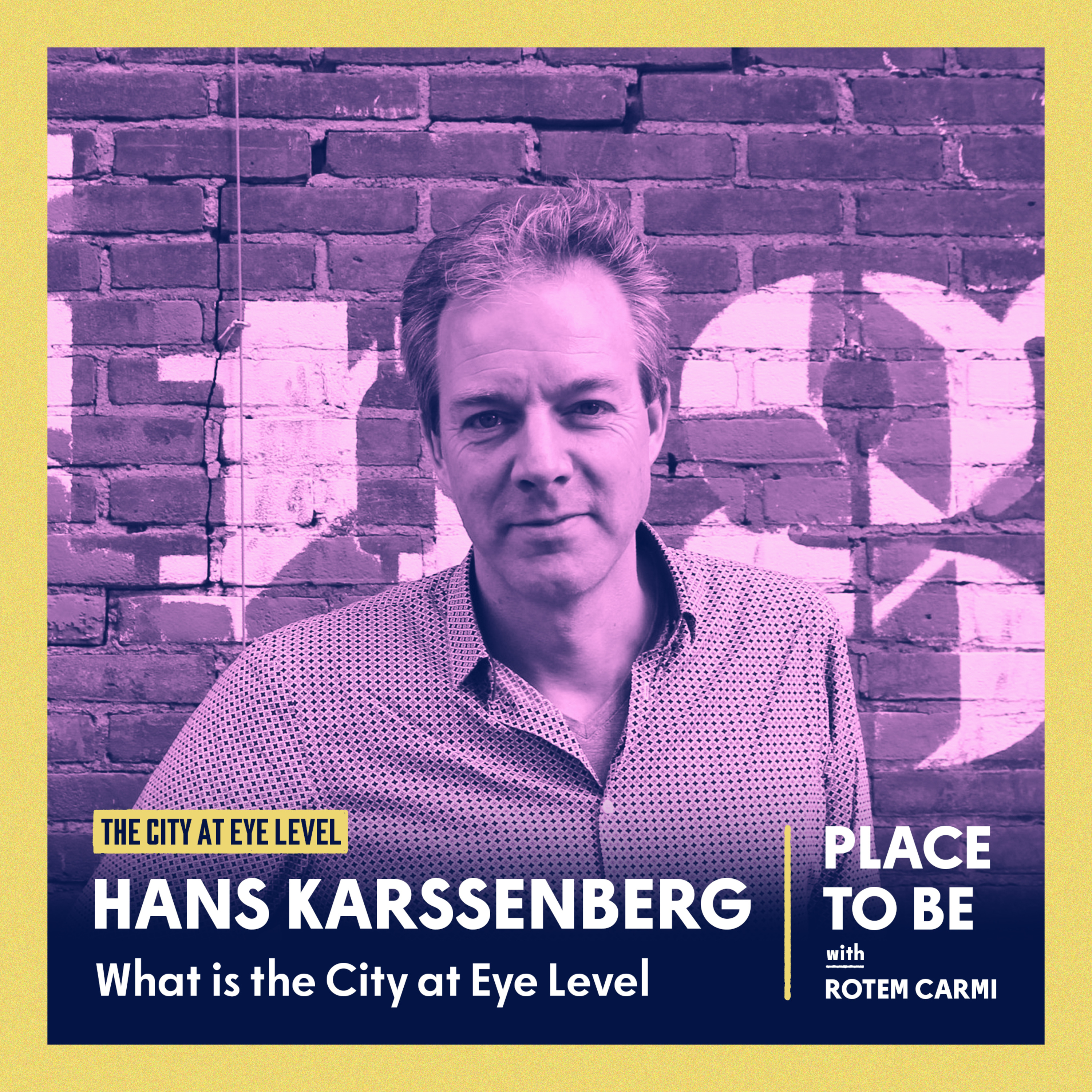
What is the City At Eye Level? | Hans Karssenberg | CAEL #1
53m 7s
The transcription highlights a podcast episode discussing the concept of the city at eye level, which prioritizes the human experience in urban spaces. The conversation delves into bottom-up urbanism, placemaking, and the importance of creating cities that are more human-centric and livable. The guests, Rotem Karmi and Hans Karstenberg, emphasize the social quality of cities alongside the physical aspects. They stress the need for collaboration among various stakeholders, including municipalities, building owners, residents, and designers, to create vibrant and people-centered urban environments. The podcast explores how understanding human experiences in cities can lead to better design, planning, and programming of public spaces. Additionally, it discusses the significance of community involvement and the shared responsibility of all stakeholders in shaping cities that work for everyone.
Transcription
8413 Words, 44826 Characters
But it really puts the the experience of the human being first
It's the the city you see feel experience around you the fellow citizens of course the fellow people you experience around you
And that's really the at the heart of what we want to do with this concept is to think about more human-skilled city
The social quality of the city just only the physical quality
Welcome to place to be a podcast about bottom-up urbanism, placemaking and now all of us whether we think work live or just exist in the city
Shape and build the urban spaces we call home
I am Rotem Karmi an expert in people centered urban development and the founder of city makers
So in today episode this episode is part of a special series dedicated to exploring the book and concept of the city at high level a
collaborative effort led by the steepo team alongside many partners and contributors
In this series we dive deep into the principles stories and practical lessons that help make our cities more human centric livable and vibrant
Today, I'm happy to introduce Hans Karstenberg co-founder and partner of steepo whose work and vision have been instrumental in shaping this concept
Together, we'll begin uncovering the essence of creating cities that truly work for people
Whether it's how we experience public spaces how design shapes our communities or the small but impactful details that brings a city to life
And a minute before we begin
I just want you to know this podcast have the newsletter that you can get the new episodes straight to your inbox
With a practical and professional article about the episodes and the insights and challenges we talked about
So make sure to check the description to subscribe this newsletter and now let's begin a new episode
Okay, so I Hans. Hello. Hello. Nice that you are here with us today. I'm very happy to be here. Nice. Yeah, and the
So that's that's the beginning of
Something a bit special that I'm gonna do in the podcast. It's a serious about
The book the concept the city at high level and I think to give the listeners
the opportunity to dive deeper
This concept that starts with steepo and different partners. You will tell us
So in this episode we've just first start with with the concept the city at high level. What is that?
What do you mean by that?
But as in every in every episode that I do I
truly believe that
All of us the people that work live
Enjoy the cities are the ones that makes the cities. So I I'll be happy to start
first
With you with your story
Yeah, how do you have a story to the today also? So how do you want to and present to you are what you do?
So I'm Hans Hans Karsenberg. I'm one of the partners at steepo
I'm an urban planner
And I love
cities, yeah, and I love people. So I think I
Bring to my profession what I like in my personal life as well
I've been working in practice for over 30 years now
throughout the Netherlands, but also internationally
and
steepo was started to
out of frustration
Very often things come out of frustration. Maybe that we were frustrated with the terrible quality of urban development in the 70s and the 80s
Also felt it was not going to be sustainable and we felt we had to find an alternative
For that and that drives are still today. I would say
Nice. Yeah, it's worth mentioning that we are sitting now in steepo offices steepo's office
in Amsterdam, Nord and
And I think if we dive deep to the city at a level, I
Think like just by the name some people can have kind of a notion. What is that and
The last decades has been a lot of kind of different concepts just like pop around like the 15 minute city and
The sustainability like everything and so
What is the city at eye level?
in for you like in the deep context as a concept and
Is it something different than what we know and these days?
I'm very happy. We chose the title of the city at eye level
I think we learned it from young girl to be honest
But it really puts the the experience of the human being first
It's the the city you see feel experience around you the fellow citizens, of course the fellow people you experience around you
And that's really the at the heart of what we want to do with this concept is to think about more human-skilled city
the social quality of the city not just only the physical quality and
It really places the the human experience as a as a central focal point and wants to understand the concept wants to understand how do we
How do we experience the city? How do we see? How do we look? How do we feel? How do we hear the city and
What can we learn from that for the new parts of the city that we develop in order to make them more human-scaled?
And I always like to say that you know the feeling when you're on holiday and you're just walking around a new city
And you have all the time in the world and all of a sudden you you pass by a street and your God feeling tells you
I want to go there
So that God feeling is
What we're trying to understand why what makes your God tell you that it's a nice place to be and you want to spend time there and linger and
Hopefully meet with other people and etc
Because if we understand that then we can create more of those streets
And I'm always quite critical of new development. I think 90% of the development that we're seeing today
Both in the Netherlands as well as internationally
Does not create environments where you would have that God feeling that hey, I want to be here
We're not doing good enough. We should we should really
Get to the point where this is part of of the system much more
Yeah, and I think
This concept also help a lot of people in different layers of
Professionality or society to to connect in means like even if I'm a mayor or a city official
but also if I'm someone from the neighborhood and
I think I really like the concept of the the
Title when I just first met and just heard about the city at high level
But I think when it comes to
Practice practice. So
It's it's a big question. How do you actually do it?
And that's why I want us to get together to break it down because it's easy to it's not easy
But it's it makes sense to to plan an area to plan a city to plan a street to design it
but to grasp to grasp the the
Complexity or the everyday life of the experience of people when they walk in the street
That's something I guess many people many professionals that don't necessarily know how to do. Yeah, very often
There's a lack of awareness. Yeah, you might be trained in
design without having had all the
Urban anthropology or urban environmental psychology
Elements that are equally important. So
There is a lack of awareness, I would say and there's also a lot of mechanisms
working against
The values that we stand for and those are important to understand because if you want to change your system, you need to
Get into those mechanisms and more. Yeah
And getting back to your first question of what is unique about the concept. I think we're very much a family of
Tactical urbanism, place-making
We shared the same values the 15 minute city
All the books of Jane Jacobs the books of young gill. I mean luckily there are more people thinking about this more human-skilled city
I think maybe that's the kind of the the common focus. Yeah, and it is
To a degree a counter reaction to the the
dominant paradigm of modernism in
in urban
design urban development urbanism and
I'd like to be not black and white here because I think there's a lot of values in the
Thinking of modernism and a lot of modernist buildings are my most favorite buildings in the world
They have a kind of a universal language very often that is that is really brilliant
However, we also need to realize that a lot of the modernist movement was
sponsored by the car lobby
creating cities for cars rather than for people and
We also need to realize I think that the modernists. I think they make one fundamental mistake
It's that they thought if we create an environment that is rational then people will behave more rationally
so they more or less their paradigm there their
View of humans is only one part of the brain. It's only the rational part of the brain and
I really think and that's what I think all those other
Like the 15-minute city the
Placemaker have in common is that we really want to see people in as complete people with two parts of their brains
Who want to be inspired as well who want to be happy who want to be healthy in the city as well, so?
Yeah, it's based on a more complete view of what human beings are maybe
Okay, and and so let's
Start to break it down because we start we we spoke about how we get here. I mean I know sometimes you also
raise the question about
What cities and that we have before the modernist the modern era
and and back in the day I
Think that it's it's something that some people know many professionals
Maybe know but not not all the awful listeners. No
It's it's just about how we get to the point that we create those like ancient cities that we like to go and
Be sometimes true is there or live there and we came to the point that
It's not necessarily only plan for cars
It's maybe also and I'm not sure how it done in the past
But I like to call it like some people plan for people that they are not them
we just plan for other people and
Yeah, when we get to plan for other people as we do these days as professionals
If you want to break down the the concept of city at eye level the idea
Where should we start how should we understand the public space or cities in different way that we understand today or most
professionals or the or the
The decision makers how they understand today. What are the steps or the different ideas that
We can do to to actually create cities that
Feels better for for people that walk around them
It's a good question because it's it's you know, it all starts by asking ourselves that question, right when you work on a project
How can we create a?
Or improve the quality of the public space in a way that will be a place for people where people feel at home where people have that
God-feeling that they want to spend time and linger
And that will function as a place of social interaction because I think that's really I
Mean it we are not talking about creating nice places just only for the sake of beautification
We're talking about people meeting each other talking to their neighbors building communities not feeling alone in the city
There's a huge wave of loneliness now in our in our cities
and more and more people living alone in their in their homes, so
We know if we create a good environment people will live a healthier lifestyle
They will walk cycle more the kids will play more
part of
Living a healthy lifestyle is also the way the degree to which you feel connected to the other people in the area
So we can be very global and globally connected
But we we also want to have our own little village around us in the city where we live, right? So
Yeah, I think the city and I love a concept is really about
How do we experience the the urban environment around us and then that a lot of that is public space?
But we look around us and it includes the facades of buildings very much it includes the
The ground floors mostly of those buildings because that's what you see the most
mostly walk on the sidewalk past the building and our
I
Side goes up 45 degrees. So I'm you know a lot of this is very contextual
Even within a city right in a residential neighborhood you expect different things that your place might be a community garden
and
Yeah, you have parks, of course and in the city center you expect different things as in terms of places
But also culturally speaking. I mean this huge differences from continent to continent from country to country within countries
There's cultural differences
But some things are universal as well. So our side goes up 45 degrees no matter where you are this goes for everybody
You walk past the buildings on the sidewalk. So what you see the most is the ground floor of the building. So I
Think that's crucial element of the the idea of the city at our level that you want to think about the entire
Three-dimensional experience space including public space as well as the facades of buildings and then predominantly
What is happening on the ground floor and not just only how it looks but also
What is happening there is there a reason to go inside the building if those blue beautiful nollie maps
That count the accessible space is open space, right?
So during the day shop is open is more or less part of public space or in the evening a restaurant is open more or less
part of public life of the of the city
And does it also bring life to the outside does it?
have
Grocery store that puts the vegetables out in a beautiful way and to tempt you to go inside of course or
Cafe that pours into the street with nice terraces tables and etc
So that you experience the life on the inside of the building on the outside of the street as well
Or a home a home that has a little bench in front of the door and some some plants and the people would sit in front of the
Home in the afternoon sun
And you have a conversation with each other if you pass by
Yeah, so many thoughts just like came into my mind when you just talked because
Everything that you said I said like
It's wonderful. It's super complex in the sense of we spoke we speak about design
We speak about planning. We speak about the psychology of people. We speak about regulations
When and how people can open businesses what businesses stuff like that. So I want just to like
Like put on the table. We may dive into it
in this concept in different episodes, but
As someone that read the the book, I know there is just the the three
triangle of a hardware
Software and or where and I think it's just crucial for those who listen for the first time for that
just to understand those ideas because they encapsulate a lot of the stuff you just said and
For me it made sense to start to think about
The professional urban plan. I hate to say open planning because it's not just about planning
But let's say use this term
To to to urban to to to plan the city in the in the eye level for the eye level of people
So maybe you can elaborate a bit about those three ideas
Yeah, very good point because you know, it is complex on the one hand, but we it is it's also not rocket science
I think we all feel it with our guts
When we are in a great place we often have to experience as human beings
The question is maybe why don't we get more of that, right? So?
But to make it super simple
We'd like to talk indeed about
Software first and nowadays like to say software first before I say hardware software then hardware than or where
Software is the urban life is
The social experience of people the activities the functions that are there the kinds of shops the kinds of
Houses the the community that's all part of the software
and
Then the hardware is the design are the buildings the public spaces the kind of the hybrid spaces the transition from public to private
Everything you can touch basically right and and the designers would design and the kind of building owners would build or street
creators would
Make a street and etc. So that's all part of the hard way
in a good process
the hardware is designed to
Facilitate the software it has the software in mind
When the hardware is created in practice unfortunately, that's one of the reasons why
Although it's a no-brainer. It's not rocket science
We often don't get what we want to aim for because there's a whole lot of mechanisms here that are
really only in the hardware world for instance, so
we tend to design a new area by
starting to play around with phone blocks and and and
Trying to maximize floor space for developers for instance, and I'm putting this a little bit black and white
Of course, it's not black and white, but yeah for the sake of the podcast
And then we don't think about who are the people who are going to use that
What is the value of the places in between those buildings and what kind of space is it going to be and how can we program that?
So very often those elements don't really play a role in the in the process of urban planning
And they should I think
and as
Areas are not created overnight
Very often the planning process takes a long time the development process takes a long time
And then you have the use phase in which the city still develops of course, right? So
And that requires
Collaboration between people and that I would say is the orgware is what kind of coalition do you have to make it good to keep it good?
Is there somebody getting up in the morning thinking how are we going to organize more activities in this public space?
Is there somebody getting up in the morning to think?
How am I going to create a better city at eye level very often those people don't even exist in urban areas?
Or they are residents who feel powerless and need to be empowered to to be brought in that position a
very often again
Thinking about the orgware is not part of an urban planning process interestingly enough
Because it's complex enough as it is you need to think of so many things you need to think about parking about
Son about sustainable use of materials about the business case and about the feasibility about who's the floor
Etc. So it involves a lot
But yeah, what we try to do is to also think about
How do we create the process of creating the city together developing together together with the users?
And then also
How do we keep it good once it's there?
And that's the orgware
Hey, so a short break if you like this episode or this podcast
I will be grateful if you can pause for a minute and just go and rate the podcast five stars
it would be very helpful for me to reach more people and
expand our community and expose more people to those ideas to make better cities and better places and
If this episode really blows your mind as you can also share it on your social media and say something about that
I will be grateful and very interesting to hear your opinion
Yeah, and let's go back to the episode
It sounds like you
It sounds the city at a level invites
Municipalities and I think more than municipalities
To rethink how actually they work because what you just described it's it's a
For example cross department work a lot of municipalities in different local governments in different
countries, I mean you have the Department of Culture Department of Planning and
What you just described? It's a new way of think how
It's not just a I like how
Charles standard put it. It's not about city planning. It's about city making
That everyone has a parts even the water engineer and the planner and the social worker and the maintenance guy
Exactly, yeah, like thinking of themselves as city makers and I think that's that's something that
It's more than to understand to think of cities as in a new way
It's about to think of how we work
In different departments in the municipality. Yeah, but then on top of that
There is the element of the the partners outside
Yeah, because the city at our level implies that not only the government is
Responsible for public space but also for instance building owners shop owners
Residents the designers of buildings developers of buildings. It's a shared responsibility
So to create a great place you need everybody to be on board
So yes between departments, but also between departments and
Owners of buildings developers of buildings designers of buildings the users the residents the shops that are there, etc
So in that sense, we also come to the point of
What is what is the role of of the community?
By the way, whatever it means the community. It's sometimes different
But when we speak about the community, we mean the community in the largest the broadest sense of the word. So
Sometimes you might think community is only residents
But community is also building on us is also developers is also
People with an initiative is also shops. So it's everybody you need in order to create a better place
Yeah, and and also we come to the point of like kind of moving and correct me if I'm wrong
I see it moving from public participation to what we call co-creation
Which I guess it's also interesting in this podcast. I speak a lot of with people about about place making
Also something also a term that sometimes we fight to keep its its true meaning and you just take a lot of people
use it evenly, but
What is for you place making and how do you see this part of the city at high level? I mean, is it like a
Like quote-unquote like serious tool for you in the city at high level or is it like something? I mean
is it as a place in this
Again, you know when I've been working on public spaces a lot and what I found in the Netherlands
Let me speak from my own context is that a lot of the planning for public spaces is only in the hardware
It's only in the physical the spatial
design of it and
Then we spend a lot of money on getting a new design getting it implemented
And then nobody's there
So I was very curious about how can we
Get a bit of view on the social use the social part of public space
And and that's what I really like about place making is that they have a body of knowledge developed since the 60s already
coming from urban sociology
to really think about public space through the eyes of the users of the
social quality of it and
That for me in essence is place-making and I really like Fred Kent's quote on this here
Who's one of the family fathers of this whole idea of place-making of course together with William White and
Kathy Madden and so many others
But he likes to say that every community deserves a heart of the community where people a place where people come together
right and and no matter if you're in an inner city area or you're in an outside neighborhood you won't have a
Heart of the community somewhere and I think that's how I like to view place-making. So in that sense, it's very
Much overlapping with the idea of the city at eye level and and also if you want to create a great place
You need the the the ground floors of buildings to be active
It's just maybe slightly different angles of looking at the same topic
Yeah, and and it's it's also interesting. I think the ground floors here play a really big role
in in different ways
Let's just they'll dive a bit into different examples
And I guess you can from from steeple's projects, but any examples that you want to bring
First I think for people that it's the first time they hear it or or they're already familiar with the topic
But they struggle in their everyday
work to actually
implement that
Tell us about like a challenge that's in a project that you encountered and
this project represent for you like okay, I
Took the idea of city at eye level a bit forward with this project
I think we very much started out with trying to understand how you can improve the quality of existing streets
Yeah, and I'm very often
High-street shopping streets that we're not functioning the well anymore
We learned a lot from the best practices all over the world
Where people have done something special in order to to revitalize a street to bring new life to a street
There's a lot happening, of course because we have more and more internet shopping for instance
So it's not a given anymore that you have enough shops to fill a street up with so then what are you going to do?
Are you going to accept the vacancy? Are you going to let the streets shift to a residential more or or do you?
Find other businesses and who's the person taking care of that and very often in existing streets
of course the problem is that you have
mixed ownership and every building owner more or less tries to find a ground floor use for themselves
so that nobody really is
Focused on this or specialized in this and that's again where the or where it comes in what we learned very much from the Harman Strad
for instance when Nel de Ager
She unfortunately passed away two three years ago, but she kind of invented the the profession of street manager
Because she said I'm going to be the one connecting all the all the real estate owners to potential
tenants new formulas
At the street level to get from the building level the individual building level to a more street level
mechanism, so I
Mean that's where we very much started. I think and then we were invited to
In newly built projects
To say hey, hey, how can we get those qualities here more I?
Guess that was a next step and one of the projects there was the site us the business district of Amsterdam
Now more developing into a mixed use area because they they realized that we shouldn't be creating only a multifunctional office area
thankfully
But and and we could do a lot there. I mean we kind of introduced the Nel de Ager there
Introduce the idea of you know
Have somebody who is walking around in the area and making the combination between the the the real estate owners
Because a lot of the ground floors were standing empty there and and and the tenants
But it also came with a new
let's say frustration because
Some of the parts
The public space wasn't really functioning it was because it was too windy and they had built high-rise towers and with a facade from top to bottom
to the to the ground floor and
in the Netherlands the wind does blow and
If you create a high-rise high-rise like that and it will bring the wind
Via the facade to the public space and then the public space is always going to be windy and and that's to begin with
It's not comfortable for users, so
You can design all the nice drawings you want
but if you're not taking care of this and
This made us realize that okay, of course if somebody wakes up at the end of the project and thinks oh
How can we make the project more lively fine? We can do a lot still
But preferably we would be present already with the criteria of the city at our level from the in the planning stage in the
before the design even starts
because the way to solve this high-rise example for instance and it's of course just of one of the two hundred things you need to do to get it
right you need to make a
Setback in the facade on the fifth floor six floor where the facades jumps back has
Pushed three five meters behind backwards
And then the higher part can be
Can be a little bit more backwards from the street
Creates more human skill, but it also diverts the wind on the fifth or sixth floor
And they will never reach the public space and make the public space more comfortable
I understand and you know, it's it's a super practical example, right? It's and it's it's not the silver bullet
It's not the only thing you need to do but
We took out so many lessons
Working on this area that we felt
Hey, we would like to be present
In new developments from the start not at the end when somebody wakes up in the project team and things
Oh, but we wanted the area to be vibrant. Let's do some place-making
So and I think we were lucky enough in the Merweide project in Utrecht
Which we've been working on with many many others
To get it right from the start
With Bureau as an urban design office with the municipality of Utrecht with the real estate developers who already bought the land and are collaborating with each other
How can we create an area with super high density?
That has a great social quality has a great city at our level has a great public space because if you're only going to create the
High-density without those other qualities that comes to be a quite a nasty area
So again, we're learning a lot from from being involved there
And I'm not part of the supervision team there to make sure that all the developers in their development phases really
Live up to the promise they made in the plan, right?
That's like a long we will speak everything just for the listeners
It's come kind of like ten years six years down the road. Okay. Yeah, and nothing has been built yet
Yeah, so I think we spent about
Two years in the planning process
then about
Four or five years now in the development process the development of the individual plans the designs in the various stages
We would hope that in the coming five to ten years. It's actually going to be built
So, you know, that's how long these processes taken and this is an area for the listeners of
6,000 new dwellings or 12,000 new people living there and
About a hundred thousand square meters of work and amenities. So that's around 6,000 people working there as well
I just want like to to have a comment about that that
That's also kind of part of the whole
Should we call the city at a level philosophy concepts? I mean, what is the right term?
But let's say the concept is one of like the sub concepts. It's what you just spoke about
You call it a place like development. It's a
Something pretty new that
You and a whole team and partners and people that want to push it forward
working on these days and I think that's just something that I
Want to say because that's also part of making cities more like
Good for the high level of people. You just don't start after everything was built start in the beginning
Which is another challenge and a lot of questions
What are the rules? What are not even the rules the way of thinking to to design in a new area for that?
but
Yeah, for those
In design, but it also program, right? So it's an organized
So software hardware and organ
And you know, I'd like to always challenge the the idea why in urban development does
The project manager and the whole team need to come only from the physical the spatial
Yeah, yeah, yeah, exactly why cannot not be led by somebody from the social department because what is the aim?
Is the aim to create as much floor space as possible?
Yes, and no, I mean, it's not back and right again or is the aim to create a community what what do we want to achieve and
Of course, it's both, right? So you ideally you would want to have them work together, but very often
The social department is not even invited to think along or if they are invited to think along
They find it hard because they don't have the answers. So I guess a lot of our work is in
to
curating this conversation between
Software and hardware. Yeah, and I think it's also
demand
new professionals like people from the social aspects and stuff like that to start and actually
understand kind of like an open design open planning and
Yeah, we'll be I'm an urban planner myself, but I must say that I learned a lot in recent years from
Urban economy from urban anthropology from urban sociology from
environmental psychology
There are a lot of lessons that we need to understand in those professions and we need to
Make sure we have mixed teams of people working on these areas as well
I think one of the big biggest challenge again, and we do a very
quick like overview of over this thing, but
For the long run I
I
Think a lot of people see the benefits of the city at high level and that's one of the thing
One of the things that you
Asked try to promote about we have to think of the long run because we create massive crises and
Will it be social crises?
economic
Ecological when we don't think about the stuff because cities like encapsulate all the big
Crisis challenges of our times inside them, but we also in many countries
we are in the phase of a very rapid urbanization and
I think a lot of
Professionals or decision-makers under a lot of pressure just to do something and how do you see in that sense?
Or maybe you have any kind of of example not even your project even another another one
How do you make?
This process of place that development of the city at I'll FL hardware software or where in those
Like a professional atmosphere of a lot of pressure a lot of political pressure
That's a lot to actually understand how to do that while
The world become more urbanized very very very fast
Yeah, one of those fast-growing
countries maybe is
Malaysia and
We have a wonderful partner working with us. They are jumping Lee
She brought us to a workshop of an area development
in Johor Bahru and
We did a workshop there with the people representing the local municipality the people representing the real estate developer
other people involved and
It was very interesting to see because it's totally different context, no
But they were they were about to develop a whole area right next to a metro station and they are looking for answers
how to do this transit oriented development and
that comes of course with
Trying to tempt as many people as possible to use public transit rather than sit in the car and all the roads are jammed and
You know, you can't just add more cars really
and then for people living in that area the
Walking the walkways towards that transit station towards the shops
You should basically create this 15-minute city, right?
You should have a place where everything is within walking distance or the kind of the daily needs at least
They are within walking distance. You can go to the store. You can go to the playgrounds. You can use public transit
And that requires a great city at our level. So and it was wonderful to see that during this workshop
It was an eye-opener for a lot of people, but they were really keen and open to it to develop their city in that way
So I guess people are looking for this
In in a lot of different contexts. Yeah. Yeah. Yeah, I'm I'm I totally agree and
Yeah, I think my biggest question these days is is how I show more and more people about how to create
Bet like to create more cities in their daily daily life to make those cities more at high level and
In some sense, I just feel a lot of us
just
Kind of loose touch with with the people on ground with the community
We don't really want to because that's that's messy
It's easier to sit in there in the office and it's not easier, but it's easier to just sit and plan and
I think that's a lot. I mean, yeah a lot of like questions of how you you
Bring those things together and how you create a mutual language even for these people
Yeah, so in the in the in the I'm always trying to understand why
is a certain planning culture there and
Because it has a reason it has a good reason
In the Dutch context, let me speak from my own context
We have come out of the war in the Second World War and and since then have been developing a lot of new
Areas and there was a shortage in housing. So we needed to develop houses fast and work places fast and we did that by
Extending the cities into green fields
So there was a lot of green field development. It was the kind of the dominant way of development
What is greenfield development in the Dutch context the government buys land very often?
Tenders it for real estate developers and over the course of let's say ten years with a group of ten people
You're more or less develop an entire new neighborhood and
Then only after all the physical people have been working on that from behind the desk
Because there was nobody there only a couple of cows you needed to chase away
Put it bluntly a little bit
Only once the planners had gone already and the buildings had been built then a society or an economy would move in so
In time these disciplines would basically never have to meet
Now the coming decades we see here and it's already fully happening now that the real urban development is happening in existing areas is
densification
transformation of existing areas
Generation of existing areas and that means that there are already people living there
There is an economy in place. There is an ownership structure that you should respect
So the culture is understandable from the time of the greenfield development that you do things from behind your desk in a top-down linear way
In a more or less mono-disciplinary way as well
Now you need to be interdisciplinary because otherwise you don't have a project if you don't address the economy and the social
challenges in the area then
People are going to feel that are going to object to it
If you don't relate to the the current users the people living around
You're going to have a lot of conflicts and so I guess this context changing means that we need to learn new stuff
Right all of a sudden is not enough anymore to be a good designer or a good planner and to understand the planning system in
Legal sense you need also need to be a people person. You need to be networking person. You need to think understand how you build coalitions
Makes us more complete as a professional I think because you it taps more into your
your sense of being a human being and not just only a professional and that's again
What I like in the world of place making a city at Oliver. We like to say that
You can't just only be a professional in this you you're also there as a human being right and
But it does bring new challenges for us to learn
So I think we're all very much in this learning process of how do we build coalitions? How do we shift from the
Classical kind of participation where we would still make the plan and then invite others to think what they think of it
But really shift to co-creating co-investing and do that in a super networked way. Yeah, and I think
we are getting towards
Tow towards the end of this episode and but but I think one of the things that I want to say is that
Right now we sit in the kind of the library of of steeple's office and we have
some books
In front of us and the city at eye level is not just like one book at some point you
again with
With in Malaysia and in different places you published also the city at eye level
Asia and also the city at eye level Netherlands and then the city at eye level kids and I think
Those publications is just like kind of off of an example that you can't just speak
About the city at eye level you want you need to say, okay
Let's every country should have a city at eye level of itself every city
Maybe to have like those how in the local context how what have we done and what can be done to actually work
to take this kind of like
Rules way of ways of thinking and implement them
But then also there we have kids and we have elderlies and so we we don't believe in the concept of copyright
We believe in open source
Because our aim is not to sell our own books. Our aim is to hopefully
inspire people to make a better city everywhere and
To be impactful in that way, hopefully and then you need to share and I think the city at eye level was very much set up in
This open source way in this shared knowledge way because we need to tap into a lot of knowledge of best practices
People who have thought about this are thinking about this from very many angles
So it is a network by itself so to say
and being open source and sharing also puts you into a position that people will respond and say hey
But you haven't written about this
Which is nice because then you learn something new I always love that and it often starts the new
Leads the new collaboration. So for instance the city at eye level Asia was very much driven again
By jumping Lee our partner there and the people then in the team of think city who said, yeah
wonderful book, but we are kind of
We've had enough of always getting the western examples
We have our own good practices here in Asia now and we have our own context
We have a different climate with different culture. We have different mechanism of urban development
So can we please make a book based on our own context and
Yes, of course. I mean the super valuable note. So that's how the city at eye level Asia was born
It also means that this is very much still a learning journey and
We've been on it now for about 15 years
And the more the deeper I go the more I realize we basically don't know anything
So there's a lot to learn still. I mean a lot of the
How do we experience cities as human beings there? There is more and more of an evidence base
But there's a lot of research still in in different contexts in different cultures
The research base is also fairly small to this. So
In order to understand this more deeply, I think we need to go deeper even yeah
Yeah, I totally agree and and and for me. I also think one once I read the first book. I think the the Asia book
You can see the the involvement. It was like four years after the first book
you can see like there is a
It's there's more layers the different chapters different
Concepts and I really like that and it gave me a lot of new ideas and and new thoughts about
Yeah, different examples. Yeah, I think that's maybe for next episode, but we are shifting more to
Thinking about the systemic elements. What are the the mechanisms working against us because I think if you talk about
Do you want to humans get city or do you want a place where your kids can play? It's a no-brainer, right?
So in itself the concept is not that hard. What is hard are the mechanisms working against us?
Why this is not mainstream
And and to change those mechanisms to change those systems. That's where really the hardware comes in. It's funny
It's like almost the city at eye level. It's like when it evolves it invites the world fix itself
because it's like just growing and growing because you just start to touch different mechanism different ideologies different
stuff that you said I you need to also
Change that in order to change your cities. Yeah, so that Prince is a more recent
Element we didn't talk about money
but money is a big driver of urban development, right and
The Excel sheets are important in urban development
So you may have all the nice plans and desires, but it's not going to happen if it doesn't fit into the Excel sheet and
One of our more recent
Findings is that one of the reasons why the city at eye level is not a given is because we're caught in a short-term profit-oriented system
That tends to externalize the extra investments you need to make
On the short term come with an extra cost, but in the long term come with a lot of benefits social benefits
But also economic benefit benefits
But those are very often not part of the financial system that we use now right now
So so we're now working on changing the financial system in the projects that we work on
But that's maybe for our next episode. Yes
no, that's very very
Impressive inspiring and I would like to hear more about it
So as we go as we come to the end of the episode
Of course, it's a part of a series, but if if you would want the listeners from this episode to
Have one or two
Takeaways something that they need to keep the it's important they to keep for a way to to themselves and in their thoughts
I mean, what would be around this?
Let's say first of all the the experience you have as a human being in
the joy of walking around great streets and sitting in great places in the city enjoying life I
Very often start a discussion with professionals with the question
What is your favorite place in your daily life and then people start to smile when they talk about that daily that that favorite place
Bring that smile to your profession bring that smile into your work. That's what you need to do right that feeling
How can we create that if we're working on a super complex rational functional urban plan?
That's I think the the most important thing you can do walk the streets observe talk to people and then bring those lessons
And just try to understand why is this place working?
Why is this place not working and what does that mean for what I am doing in my daily life as an urban developer urban designer, etc
so that would be my most important takeaway I think and
Then you can feed that with the lessons of those many disciplines that we're trying to gather in the in the city at eye level
And I really like that framework of software hardware or where I think of the software first
Then try to think how the hardware can facilitate that and how you create the organ in order to
Create this co-creation of the urban environment in in the course of the course of 10 20 30 years
Nice, thank you very much. That was a very good takeaway. I think
It's again, it sounds obvious, but we don't do it enough. So that was a great one. Thank you very much and
Okay, thank you for your time for today, and we see you in the next chapter and thank you
Thank you
You
Podcast Summary
Key Points:
The concept of the city at eye level focuses on the human experience in urban environments.
The podcast discusses bottom-up urbanism, placemaking, and creating human-centric cities.
The city at eye level emphasizes the social quality of cities, not just the physical aspects.
Summary:
The transcription highlights a podcast episode discussing the concept of the city at eye level, which prioritizes the human experience in urban spaces. The conversation delves into bottom-up urbanism, placemaking, and the importance of creating cities that are more human-centric and livable. The guests, Rotem Karmi and Hans Karstenberg, emphasize the social quality of cities alongside the physical aspects.
They stress the need for collaboration among various stakeholders, including municipalities, building owners, residents, and designers, to create vibrant and people-centered urban environments. The podcast explores how understanding human experiences in cities can lead to better design, planning, and programming of public spaces. Additionally, it discusses the significance of community involvement and the shared responsibility of all stakeholders in shaping cities that work for everyone.
FAQs
The concept focuses on prioritizing the human experience in urban environments, emphasizing social quality alongside physical quality.
By understanding how people experience urban environments, such as what they see, feel, and hear, the concept seeks to create more human-scaled and vibrant cities.
The concept includes software (urban life and activities), hardware (design and physical spaces), and orgware (collaboration and maintenance) as key elements in creating people-centered cities.
Collaboration ensures that all parties, including municipalities, building owners, residents, and designers, work together to create and maintain high-quality urban spaces.
Communities, including residents, building owners, and businesses, have a shared responsibility in creating vibrant and inclusive urban environments.
By focusing on creating public spaces that facilitate social interaction and community building, the concept aims to combat feelings of loneliness and isolation in urban areas.
Chat with AI
Loading...
Pro features
Go deeper with this episode
Unlock creator-grade tools that turn any transcript into show notes and subtitle files.
 PodcastTranscript AI