Speaker 1Sports writing powerhouse Howard Bryant on the state of athletic protest. I got spicy things to say about the evils of sports betting. I've got a sports scholar that's going to blow your mind talking about the Women's World Cup. You got to see it on Edge of Sports.
Speaker 2A champion is bred from hard times, scarred minds standing on a ledge. The squad grind all time, victory in spite of opposition. Welcome to competition. You pick a side, I pick a side, they pick a side. Take a knee against abuse, they rather you die. Pushing through dark tunnels, trying to shed light. The fight is on the moment, we're in the game of life. Get it right before the whole thing gone dead. Let's go ahead and take it dead. Meet me on the edge.
Speaker 1Welcome to Edge of Sports, the TV show only on the Real News Network. I'm Dave Zirin, and we have on our program one of the best sports writers by any measure. I actually have a shelf in my house dedicated to his books. His name is Howard Bryant, and we're talking about where all the athletes from all over the world are. The activist energy in the sports world has gone. I've also got choice words about the social cost of smartphone sports gambling becoming the economic lifeblood of the sports industry. And in our segment, Ask a Sports Scholar, I've got Hofstra prof Brenda Elsey, whose research is about the development of women's soccer internationally, which is kind of timely given that this tournament is coming up, you might know about, called the Women's World Cup. But first, the author of The Women's World Cup, The Heritage, Black Athletes, A Divided America, and the Politics of Patriotism, and the forthcoming Kings and Pawns, Jackie Robinson and Paul Robeson in America. Ooh, I'm excited about that one. Howard Bryant. Howard Bryant, thanks so much for being here. Good to be here, Dave. All right, so just to background this critical conversation, I want to read a line you wrote in The Heritage. You wrote, The black athlete wanted to stick to sports. It was white America that would not let him. Can you explain that, please?
Speaker 3Sure. I think that what it means is that when you think about the conversations of where black athletes fit in the political realm, and so much of it is accusatory, so much of it is why won't you stop talking about politics and why do you have to ruin our games? Why do you have to ruin our games by talking about these things? And this isn't the place where for you to choose that this is a topic that should be discussed. Now is not the right time. The historical roots of all of this come from white America. It comes from the, it comes from World War II. It comes from the 1936 Olympics. It comes from all of these different places where it was important that mainstream America hear from black athletes. That they supported the country. It was the Jewish athletes who were starting a boycott who wanted black athletes to support them and join them in the 36 boycott of the Munich Olympics. And it was the black athlete who was actually caught in the middle because there were athletes, there were black athletes who sided and who were on the, you know, in support with the Jewish Americans. And it was the American athletes in boycotting the Olympics. And it was the mainstream press, the Westbrook Peglers of the world, who would write columns saying that the best way to show Hitler is for our guys to go over there and perform. This is politics. This isn't black athletes talking about their own rights. This is them being thrust into the political arena. It was Joe Louis. And once again, when we think about the, the way, the way that the United States government had been treating black soldiers, it was a segregated military. There was huge percentages of, of military thought in America. They didn't even want to arm black citizens who were soldiers, give them menial tasks, kitchen mess, all of that stuff that they were going to swab the decks, do not give them guns. And so then what do we see? We see Joe Louis on a poster, with a rifle and a bayonet in his hands, which is antithetical to actually what a lot of folks want. But it was the one way you weren't going to, you weren't going to get the war effort drummed up by handing a 19 year old black male, a mop and a poster. You had to let them fight. And so once again, the Joe Louis is the guy, Jackie Robinson. There are so many examples where what we wanted from black athletes, right? Athletes was their voice. And then when they took control of that voice, nobody liked it.
Speaker 1White America, the power in America, they want black athletes speaking out during the context of taking on, whether it's Nazism or whether it's communism, the cold war, they want to, they want to counter the idea that the United States is an inherently racist society by saying, look at the black athlete. But when black athletes started using that voice, for their own self-determination, that's when you start to hear shut up and dribble. Am I, am I encapsulating that? Right? No, that's a hundred percent,
Speaker 3right? They want you to speak when they want you to speak when they need you. And let's remember that in these, within these frameworks, you had the United States foreign policy being criticized heavily by access powers saying, well, how can you criticize our society? Look at your own, look at how you treat black people. You have an underclass of second-class citizens as well. So who are you to criticize? So of course, to counter that, the, it was important that black athletes spoke up.
Speaker 1So let's go to summer of 2020 after the police killing of George Floyd. It was so common to say back then in the sports world that we were living in a time with more, what we can call sports activism than any time since 1968. What did you think of that 68 comparison? In 2020 and did you find that historical parallel to be helpful?
Speaker 3I thought it was helpful from the standpoint that you needed some form of touchstone and the 1960s is always the touchstone. I thought it was important from the standpoint to, to show that the 1960s was a long time ago. So if you're in 2020 and you're saying, well, we haven't really seen this since 1968. It's 52 years. And so you're looking, so I thought that was very important benchmark to realize just how quiet things have been. And I thought it was important for the athletes as well in their own minds to empower them that they felt like they were part of this heritage. That maybe it would spur them to do more things if they were linked to the Muhammad Ali's and, and the Tommy Smith's and the John Carlos's and really linked to real people who did real things. And that might affect them in a positive way. And I thought that those, I thought those comparisons were appropriate. I wasn't sure they were completely appropriate because the times are so different, but I didn't have a problem with it.
Speaker 1So that energy of 2020, I mean, you spoke about the, the importance of, of raising the issue of 68 with regards to modern times in the hopes that more athletes would learn from it, feel a sense of connection, be inspired by it and get that energy of 2020. We're not feeling that right now in the sports world.
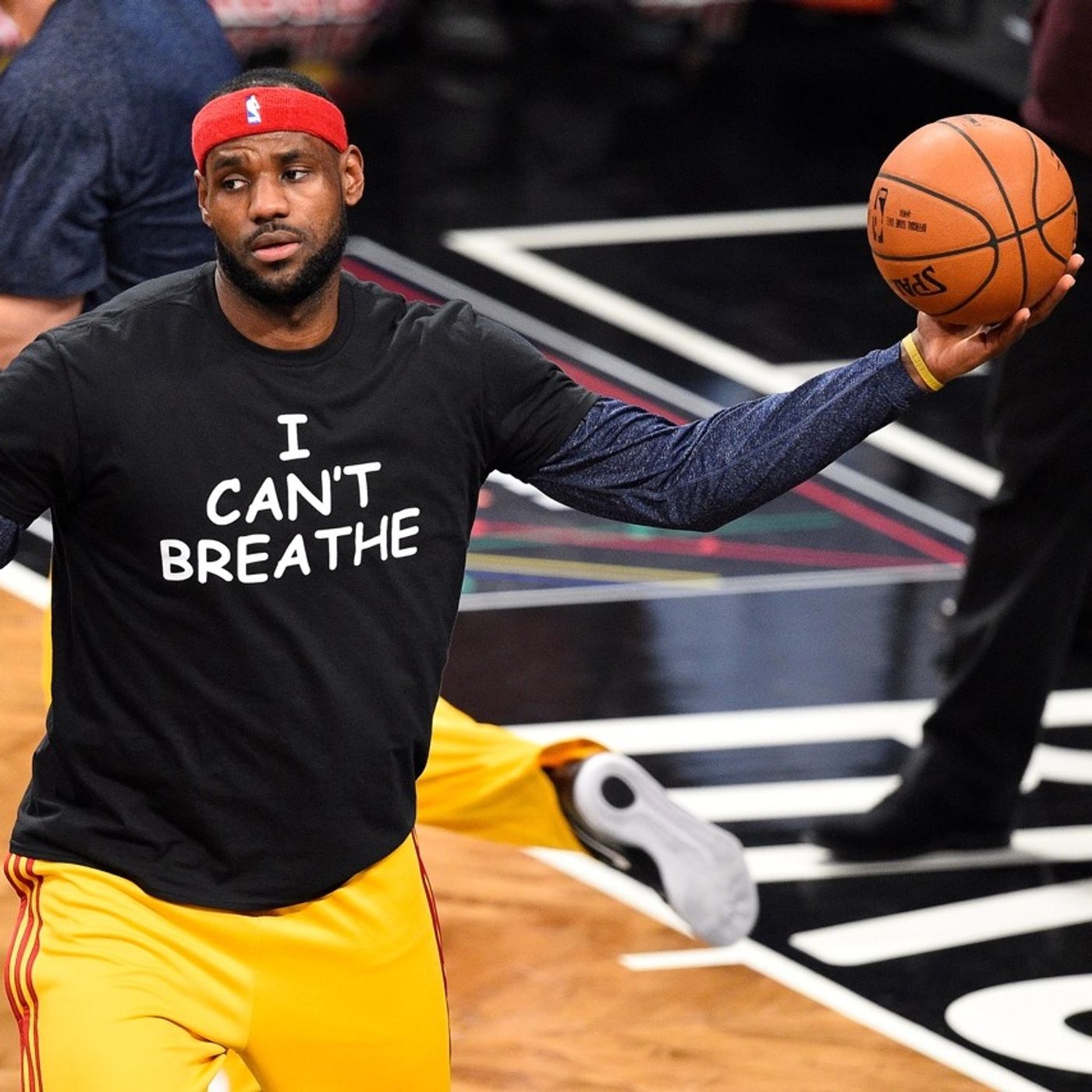
Speaker 3I think it's very important to recognize what has been happening. And I think it's important to realize the speed in which things are happening. 2020 was a perfect storm. 2020, you had a pandemic with everybody locked down. No one's going anywhere. You also are still part of a remarkable decade going all the way back to the Miami heat and Trayvon Martin with the hoodie. So we've been through this, whether it's that or, or Freddie gray or, or Ferguson, there are so many examples, nevermind Colin Kaepernick taken his knee in 2016. So you have that as a backdrop, you have an incredibly polarizing election cycle on top of that. And so everything is happening at once. And at the same time, people are afraid to go outside. So that energy was not going to be sustainable, but what I thought was really interesting about 2020, wasn't just that, you know, you knew that you weren't going to have that kind of energy over this much time, the speed in which that energy was co-opted, the speed in which that energy was co-opted, not just by the pandemic, but by the athletes response to the pandemic, that the players who had spent the last decade, really positioning themselves as forces for good, that they were going to be citizens suddenly became individualists. And suddenly they became libertarians. And suddenly they were not interested anymore in being part of the public solution. Now you've got LeBron James, who has been, and credited with building schools and getting people out to vote, and he's more than an athlete. And now he's sending out memes countering the vaccine effort by sending out memes equating COVID to a common cold. And so what's been really, what's interesting about this, and we're going to see over the next several years, is how those transitions affected the previous years. You know, did they undermine their own movement? And I think the answer for now is absolutely yes.
Speaker 12020, going back to it, is that the sort of thing where the wine is out of the bottle, the cork is out, and 2020 should be seen, you know, with ebbs and flows as the beginnings, and of course going back years, Kaepernick, the response to Trayvon, so this whole period, should we look at it as the beginnings of something that with ebbs and flows is now part of the sports landscape? Or are they in effect putting the wine back in the bottle?
Speaker 3Well, I think it's the beginning of the end of something. I think that when you're looking at eras, just as you looked at the early 1970s as the end of the 1960s in terms of political movements, I think 2020 was the beginning of the end of something. And I think that it was, and I say that because of two events. I think the first one was the realization in 2020 that the players had taken, collectively, they had taken a step from 2016. 2016, Donald Sterling, in the Los Angeles Clippers scandal, the players are threatening to boycott a playoff game. But they don't boycott. They throw their jerseys, they turn them inside out, they toss them out at half court, but they keep playing. The machine keeps rolling. Jacob Blake gets shot in Kenosha in August of 2020, and the players stop playing. The machine comes, comes to a halt. That was a moment that we're going to remember in the response to that moment. Because the players then went to former President Obama, who essentially stopped their strike, told them to go back to work, lean in more deeply into the democracy, even though they weren't, the players weren't protesting the lack of access to voting, they were protesting Jacob Blake's shooting. And they went back to work, and they dug in more deeply, and the Milwaukee Bucks set up polling centers, and LeBron James set up voter registration, and the Atlanta Dream got involved. And so all of the, all of the movements got back involved more deeply into the democracy. They became, be even better citizens. And then six months after that, you get January 6th. And the very people for the past decade who have told you to shut up and play, who told you to shut up and play, told you to stand for the flag and kneel for the cross, who told you to do all of these things, they are doing the most undemocratic thing we've seen in this country's history for a very long time. They are attacking the most symbolically important legislative building in the world. These are the people who were offended by you, protesting, taking a knee, raising your fist, and you said nothing. And I think we're going to remember their silence in response to that. It was to me the biggest slap in the face to every black athlete in the country. And none of them said a word. And I was really surprised by that. Maybe they weren't connecting those dots, or maybe the moment was over, or maybe they were thinking about vaccines or whatever, but the bottom line, is you want to talk about irony, about doing things the right way, about the time being inappropriate. They did everything that they were accusing the players of doing, and the players didn't do anything close to that. All the players did was have a little silence during the national anthem. -
Speaker 1Damn. Do you feel like in some respects, the players lived through a, you could call it a rhyming version of that infamous time when the March on Washington had been called and Bob Kennedy said to John Lewis, "Why don't you stop all this freedom riding, "sitting in shit and protesting, "and in return, you can do voter registration "and we'll give you tax-free status." - Yeah. - It feels like that. - Once again. - Let's ingest you into the system. - Absolutely. - To avert a challenge. -
Speaker 3Well, no question. And what you end up with, is a weakening of your movement. - Yeah. - It's a constant weakening and a diluting of your standing. And I think that that was something that, that moment, at least to me, in looking at it, was a huge missed opportunity on the part of the players. Even if they didn't produce any protest, just to call it out. - Yeah. - To say something, to have some form of sustained response, to have some sort of response to it, that this is what you were doing. You are the very people who told
Speaker 1us not to protest. - Yeah. So is it fear? Is it the quietude of broader resistance movements in recent years? Is it post-pandemic malaise? Is it the right wing feeling on the offensive and that actually scaring people? How do you understand putting a button on 2020? - I thought, oh, this is about a birth of something even bigger when it was more the end of something that was big, but maybe not as transformative as it could have been. -
Speaker 3Yeah, I thought it was the end of something because of the Obama presence. - Got you. - I thought that this is what the players had been threatening to do for 50 years. We saw this in Missouri at the college level. Back in 2015. -
Speaker 1Yeah, 2015, that's right. - And they averted, this was averted by actual movement.
Speaker 3So the players had an opportunity to really assert some control and then that was diluted. And I think that there's one school of thought that showing that you could do it and doing it for one day or for a weekend was enough. And enough was enough. Or there's another school of thought that says, now's the time if you want something to demand it because they know that you're serious. - Right. - And what I always found interesting about that time period was Naomi Osaka was an individual, an athlete playing an individual sport, tennis. And she had simply said, I'm not playing. And the tournament Western and Southern in Cincinnati had pretty much co-opted her protest. And said, we're all not playing. We're going to just take a break. We're going to, what did they call it? They called it a pause. And then the whole sports world took a pause, which tells you how much the industry was aware both of what the players can do and the optics of it. So it suddenly wasn't a strike. It was a collective breather. It was a collective timeout, which is not what it was at all. It was an, it was the athlete saying, we're not playing very different messaging.
Speaker 1You know, I'm constantly scouring the landscape and trying to see, okay, when's the next energy going to come to the fore and where is that energy going to come from? Is it going to come from women athletes? Is it going to come from the college ranks? Like just looking to see what's bubbling and what's not. And I'd like to say that because the attacks on the right have been so intense against transgender athletes that you might see some broader solidarity in the sports world. The whole, anyone can play, anyone should play slogan, which took root about a decade ago. And you're not seeing that much at all. I mean, to me, one of the most poignant parts or sad parts of the recent NBA finals was heat players not really saying anything about the fact that the most famous heat player of all, Dwayne Wade, just had to leave the state of Florida because he didn't feel safe with his daughter. And the only person to say anything on the heat about Ron DeSantis or anything was Udonis Haslam who might've been playing in 1968. So you didn't get any of the leaders stepping up to saying anything about a governor who's basically on a wrecking mission of all marginalized communities in the state of Florida. That to me, the contrast of that to the Trayvon Martin response was pretty sharp. -
Speaker 3Well, once again, what do we always say in sports? The smartest guy in the room is the guy with the biggest number of zeros on his paycheck. Who do we follow? We follow the guys with the biggest number of zeros on this paycheck. So you look at the leaders of the Miami Heat in 2023 are very different than the leaders of the Miami Heat in 2012 and 2011. And so the question has always been for me, how much are we asking of these athletes? And is it foolish to ask that much of them? them. I could not disagree more that the transgender movement is going to be the spot. It should be because this is the reality for this new generation coming up. But when you combine the religious elements to it, when you combine the attacks, you look at the legislation that is being passed in different places around the country, whether it's Montana or Utah, places where this isn't even an issue, per se. It's an assault. The right wing is always on the offensive, as we're seeing with the Supreme Court. The best defense is a good offense. You're constantly on the defensive to make it seem as though you're the aggrieved party. I don't think the players are going to rally around this because I don't think the players know. And I think you've got other athletes in the game who don't know what to say yet. They don't know how they feel. And you talk to them about, all their notions of fair competition, et cetera. I don't think anyone over there yet feels, and at least en masse, feels comfortable taking a leadership position because the opportunities have been there to do that, and they haven't.
Speaker 1Yeah. And you mentioned the recent Supreme Court rulings. Again, a large silence in the face of that, which becomes jarring when you start. This is part of the problem, too, when we start looking to athletes habitually, for the response, as opposed to looking to ourselves, looking to protest movements, because I find myself getting caught in that trap. You start looking for athletes to say and do things that you don't see broader society playing in the hopes that they'll be ahead of the pack and leading. But that is a lot to ask from people who in 2023, a lot of them are corporations with legs. That's right. Well,
Speaker 3we can't have it both ways. One of the things that I've always talked about, whether it was, in The Heritage and then also the book that followed that, Full Dissidence, more so in Full Dissidence, is the athletes, if we're really being honest, the athletes never lead. They've really never led in a lot of ways. There are a handful of examples over the course of the century where you can say the athletes led. Normally, what the athletes do is they amplify an existing movement. Mm-hmm. Muhammad Ali was amplifying an existing anti-war sentiment. When you look at what the players were doing during the last decade, it was the people who were actually in the street first. The people were the ones blocking traffic and stopping, blocking traffic at the airports and standing in the middle of the highways and doing all these things and protesting Freddie Gray. It didn't start with the players. The players recognized that they were. Reacting to Ferguson as well. So the reason why we look to them so much is because they have these massive, massive, massive platforms of accessibility. People listen to them, but they're never leaders. I'm not really sure I can think of too many movements historically where it started with a professional athlete. Normally, what happens is they're following. Obviously, inside of their own business, you may see some of them, but they're not following. You may see some leadership, Kurt Flood, for example. But Kurt Flood was not a larger labor leader. Kurt Flood was a labor pioneer in his industry.
Speaker 1Well, you've been so generous with your time. I'd be remiss if I didn't mention that your next book, interestingly, is about two people who were part of movement leaderships and were people who spoke at rallies. Two of the most important examples of that and two of the lonely examples of that, I'm talking about Jackie. I'm talking about Jackie Robinson and Paul Robeson. The book is called Kings and Pawns, Jackie Robinson and Paul Robeson in America. Why take on this as a writing topic? I think it's fascinating. I can't wait. Can you speak a little bit about the highlighting of Robinson and Robeson when they came together, when they collided, and why you think that moment is so evocative?
Speaker 3Yeah, well, I think, thank you for that. I think that their biggest reason for me is because of fascination. I think that's the biggest reason for me is because of fascination. Fascination with these two giants and certainly fascination with Paul Robeson in terms of what we do to people in this country and how he has essentially been erased and erased from Black America in a lot of ways at the hands of Black America, which I'm very interested in exploring. I'm fascinated by this moment in time because the moments that we're in right now, and you're talking about Ron DeSantis and the political movement we're in now, is not that different in some ways. from the hysterias of the 1950s and 40s and McCarthyism. So these two giants were obvious. And also for the writing that I've done over the course of my career, it's always fascinated me that that moment, July 18th, 1949, when Jackie Robinson testified against Paul Robeson in front of the House and American Activities Committee, has always been whittled down to a sentence. It's a pretty damn big sentence that this moment happened. And I'm guilty of it myself. And when I've written about it, it's just a line. It's not just a line. What happened? And what happened to us? What happened to those two individuals? I think what this book really is about is how you have these two people who are essentially on opposite sides of a political spectrum wound up within 50 minutes of the election. And I think that's what it's about. 15 years on the same side of political disillusionment as black Americans. And this is the story of that day and how they both ended up wounded pretty fatally by this country.
Speaker 1Wow. So I'm imagining like an isosceles triangle. They start in two different places, but with some hope in humanity, if not in America, and they end up in a very similar place you could call it a radical disillusionment.
Speaker 3That's right. And that's exactly what the project is all about. And that's why I'm really excited about it because you look and you see all the opportunities and you get to pinpoint. And that's what we do as writers and as people who love history as well. You pinpoint these moments as the great David Halberstam used to tell me all the time. You think about these intersections where history could have gone this way and history or history could have gone that way. You take those moments and you examine those moments and it will tell you so much about where you are today.
Speaker 1Wow. Howard Bryant, thank you so much for joining us here on Edge of Sports TV. I know you got a great book topic because I'm totally jealous that you're writing this. And I'm also like super excited and jealous. It's like some odd combination of emotions. So you got it going, man. I'm just proud to know you and proud you're writing this. Well, I thank you.
Speaker 3And thank you for having me on, Dave. And all I can say whenever I think about this book is I can't wait for it to be done because now you're like in the middle of it and you're saying, OK, did I take on a little? It's an incredible subject and it's really, really fun. And you know how that is when you have a book project that you just love. It's a great subject.
Speaker 1Every day is a joy. Those rare moments where that happens when you're really in the sweet spot of loving something. Howard Bryant, thanks so much, man. I really appreciate you.
Speaker 3My pleasure. Thanks, Dave.
Speaker 1And now some choice words. OK, look, we need to talk about the new national pastime, sports betting. I'm old enough to remember, lo, the many years ago when Pete Rose was banned for life from Major League Baseball for placing bets on his own team. I remember when Sports League said they would never put a team in Las Vegas because of the very physical proximity to legal gambling. I remember when the official line was that the integrity of the game and placing bets could not even exist in the same zip code. Well, fast forward a few decades, hell, a few years, and it's remarkable how much has changed. Now gambling is as much a part of sports as beer commercials. Smartphones have opened the door to sports betting apps and the leagues have embraced the lucrative bounty created and generated by smartphone gambling. They've jumped on this with the wanton shamelessness of a puppy licking its bowl. It's dizzying how quickly the commissioners have made this turn from gambling is evil to selling it to fans is all fun and Americana. I won't insult your intelligence by explaining this radical shift. It's money, a ton of it. But it's not just the league owners panting with their puppy bowls out. Sports media, like the trendsetter ESPN SportsCenter and its tall, smoothly-balled host Scott Van Pelt, are always ready with a special sports betting segment. Also, the most esteemed commentators in the sports media world, like TNT's Studio Hoops team, led by Charles Barkley and Kenny Smith, now do their own giggly gambling bits. In other words, a massive portion of the economic lifeblood of pro sports, from the leagues to the top of the media food chain, is being underwritten by sports gambling. Actually, that's not quite right. It's being underwritten by fans making bets they overwhelmingly lose. It's a regressive tax on fans, sort of like the lottery, except with one vital difference. It's privatized. So instead of money going to build roads or schools, it goes into the pockets of billionaires. Now, I know some, clearly most, will say it's all good, clean fun. But this isn't just about sports betting. It's about access to betting. And it's about the apps. Yes, anyone, especially in the digital age, can gamble whenever one likes. But there's something called a hassle cost that has been eliminated by the apps. Now, if anyone wants to lay down some money, there is no need to find a bookie or even navigate a casino website. Just swipe your finger and as quickly as checking text messages, you are done. They have taken the most dangerous part of gambling, and I do speak from experience here, and that's that it's addictive. And they've combined it with that other great modern addiction, the smartphone. And for the leagues, it's been like cracking open Fort Knox. Now, the phone app giants do have a warning label for gambling addicts, but it's about as sincere as a lung cancer warning on a pack of smokes. The leagues do not care. And as long as the sweet dough trickles down to players and a now compromised media, no one else is going to raise a stink about this either. But as Neil Young wrote, the devil fools with the best laid plans. And wow, as old Satan fooled with the plans here, because something incredibly predictable has taken place. The players are deciding in every violation of every league rule to place their own bets. As a result, the NFL has just suspended four more players for gambling, and they didn't get any slap on the wrist either. These players are suspended for the entire 2023 season. It's an incredibly harsh punishment for doing what everyone in the sports world is promoting from the bottom of their pockets. The media interviewing these players after the game. The sports owners, let's be clear about this, are terrified that if fans think players are operating in a way that compromises the alleged integrity of the games, the financial hit could be catastrophic. That makes referees as well who make a fraction of the players' salaries particularly vulnerable to the allure of gambling, and players know it. The ugliest scene from the NBA season, on the court, was, for me, when Dallas Mavericks superstar Luka Doncic, late in a close game, started to make dollar signs with his fingers in the ref's face to indicate that he thought the fix was in. Expect more of that. So it's Vegas for the fans, owners, and media, and the Vatican for the players and the refs, and this is a recipe for future disasters. Players will gamble. The media, and the media will get in deeper with gambling companies they should be covering instead of profiting from. The early sports organizers, way back in the late 19th century, were terrified of sports betting, fearful that fans would leave in droves if they felt like the outcomes were manipulated. A little more healthy fear, a little more introspection, a little more critical thinking, and a little less blind devotion to taxing fans would be a step in the right direction. But until there is a massive scandal, and that day is coming, we can only sit back and watch gambling swallow the sports world whole. We'll be back right after this with Ask a Sports Scholar. And now in our segment, Ask a Sports Scholar, as promised, we have Dr. Brenda Elzey from Hofstra. How are you, Dr.
Speaker 4Elzey? Good. Thanks for having me.
Speaker 1Thrilled to have you, and I can't think of anyone else I want to ask this question to more. As we approach the Women's World Cup, which we're all very excited about over here, how would you summarize the state of women's soccer in Latin America?
Speaker 4I think uneven is a really fair word. You have amazing things happening in the professional leagues in Mexico, for example, which is breaking attendance records and has been for several years, and yet we won't see their national team. And yet, on the other hand, you have Colombian professional leagues in shambles, and we will see their professional team. So there's a lot going on, a lot of work being done at the grassroots level. Very little of that gets the glory it should. So we're in a place where, as always, you do not lack for talent. You lack for support.
Speaker 1Wow. You call it a corrupt system steeped in could you speak to that? What is it about the system that's steeped in misogyny? How does the misogyny operate to prevent full flowering of women's soccer?
Speaker 4Oh, I mean, that's that's like my life's work, Dave. It is a corrupt system, and it is one that requires misogyny and misogyny requires like they work together. So what happens is things like the normalization of violence, the normalization of inequality happens through gender relations in Latin America that really feeds into corruption, right? Lack of accountability, even the kind of promises that are made to young players of just, you know, we operate in this system. You will never get in trouble for anything. There is no accountability. Right. And so I think the two work together. I study. And in this space, the two go hand in hand. And women are also very powerful in terms of making the federation look good and making them look like they care about development. Well, what's happening on the ground is very different.
Speaker 1You just wrote an amazing article that I'll put out on the show's feed so everybody can read it. It's called Cafe con Malaleche, Colombian women's football in crisis. Cafe con Malaleche means coffee with spoiled milk. I was hoping you could explain the title and the current state of affairs in Colombia.
Speaker 4The Colombian team often comes with different kinds of nicknames related to coffee, cafeteras, las cafeteras. And of course, because Colombian coffee is such a national icon, you know, piece of identity that often goes with the team. And the team itself is wonderful and made up of amazing people. Linda Castedo, people are really looking. To her as sort of the breakout star for Latin American soccer in this World Cup with good reason. She is a phenomenal player. And yet what we know is that since 2015, this is a program that has actively avoided grappling with very serious charges of sexual assault, harassment, and other kinds of, you know, negligence in terms of fields, in terms of scheduling matters, matches. I mean, it's a really wide range. And that's part of the problem is that you might say, hey, what's the big deal? Women don't get the same kind of fields. And what I'm trying to argue is that that all exists on a spectrum. And of course, the most horrific charges are ones of sexual assault of minors, which has been ongoing since 2017. And yet we have the same federation president in Colombia, Ramon Gessarun. Who has faced nothing. No, even under under investigation from the Colombian government all this time. And he just continues to be promoted within FIFA and Comebol.
Speaker 1Wow. A bigger question for you. Sports has always been integrated into feminist and women's movements in the United States for almost as long as there have been women's movements in the United States. In Latin America, are we seeing sports becoming integrated into pushes for women's rights and autonomy? Has it been a part of women's movements in the past? If so, how recent could could you speak about that particular intersection?
Speaker 4I'm so glad you asked, because that I think when people are are sort of looking for progress and looking for change, the most success that we've seen in the case of equal conditions for women's sports is when it comes with feminist agendas and, you know, grassroots support from the feminist movement, going back to like the very first case of a professional woman who was unfairly fired from her club, Macarena Sanchez in Argentina, that became a really big feminist cause as part of New Nomenos. In Brazil, that's probably been more true than anywhere else because of the law that banned women from playing football in Brazil. It was very early on a feminist cause. And, you know, a lot of women in Brazil were not looking to be feminist, but the feminist movement itself, which was like in most places dominated by some some very elite Latin American women that were more interested in things like education, perhaps, and didn't really see sports always. Not all of them, of course. I'm speaking very broadly as, you know, central to their cause. But like right now, you saw the Brazilian women's team arrive. They've been convoked and they
Speaker 1come with a that. That was that was incredible.
Speaker 4So the whole region is has had a ton of feminist solidarity. since, you know, years. I was on your show a while ago talking about the very first friendly, official friendly of the Puerto Rican women's team when they played Argentina and they did an on-field protest. And they asked the Argentine team, is it okay if we do this? And the Argentine team was like, oh my gosh, yes, we're just going to let that ball sit there until you're done. So there's really wonderful solidarity among these teams. And not all of them might call themselves feminist, but I think it's fair to say they're challenging a patriarchy and their actions are feminist. The last
Speaker 1World Cup, the political cry that rang out was very U.S. centric. It was about equal pay. It was beautiful. It was progressive. It was also, to repeat, very U.S. centric. Are there reform measures on an international scale that those of us who are going to support and enjoy and cheer for the Women's World Cup, are there reform measures that we can champion in the process? That are international in scope?
Speaker 4I think the number one area that has been really successful in terms of international organization is FIFPRO. FIFPRO, the International Players Union, has taken a really strong interest in women and said, hey, just because they're not professionalized in Colombian labor law doesn't mean we can't advocate for them as workers. And so FIFPRO has put a number of measures out there. Some have been picked up. I think we have to keep our eye on where that FIFA money goes. There was that big announcement a few weeks ago by FIFA that said we're going to play the pairs directly after a number of federations, Nigeria, Colombia included, and others complained they weren't paid. They said we're going to pay the players directly. It's still not clear. I mean, do they have their bank account details or is this really going to go through the federation? So I think we need to just keep watching and listening to the aftermath, too, because the tournament's going to be so exciting, but we have to make sure that they that they're adequately compensated after. One last question.
Speaker 1You've been so great with your time. Earlier in the episode, I did a rather hard polemic against sports betting. So excuse my hypocrisy, but for sports bettors out there, what is the team that you see giving the best opportunity to knock off the United States? Who are the the teams that you think we should be looking at that have a real shot at sending the U.S. home without the top?
Speaker 4OK, so you know that I as an historian, not only am I totally against sports betting, but I'm also terrible at predicting the future in any way, shape or form. I have heard almost nothing about Germany, and I'm surprised about that. Ada Hergeberg is back for Norway. So I'm interested in that. I always want Brazil to do better than we think they're going to do. They're friendly and they're going to do better than we think they're going to do. So I'm excited about that. But I'm with you on sports betting. I can't wait
Speaker 1for you to see my little rant. Yeah, I'll send it to you without question. Dr. Brenda Elsley, it's such a joy. Thanks so much for being on the show.
Speaker 4Thank you. It's so wonderful to see you, Dave.
Speaker 1Well, that's all the time for this week's show. I love doing this show. I love what we're doing like any sports show out there. And that's what makes it fun from my perspective, at least. Yo, thank you so much, Howard Bryant. Thank you so much, Dr. Brenda Elsley. Thank you to everybody at The Real News Network. For everybody watching, please stay frosty. We are out of here.
Speaker 5Peace. Thank you so much for watching The Real News Network, where we lift up the voices, stories and struggles that you care about most. And we need your help to keep doing this work. So please tap your screen now, subscribe and donate to The Real News Network. Solidarity forever.
 PodcastTranscript AI