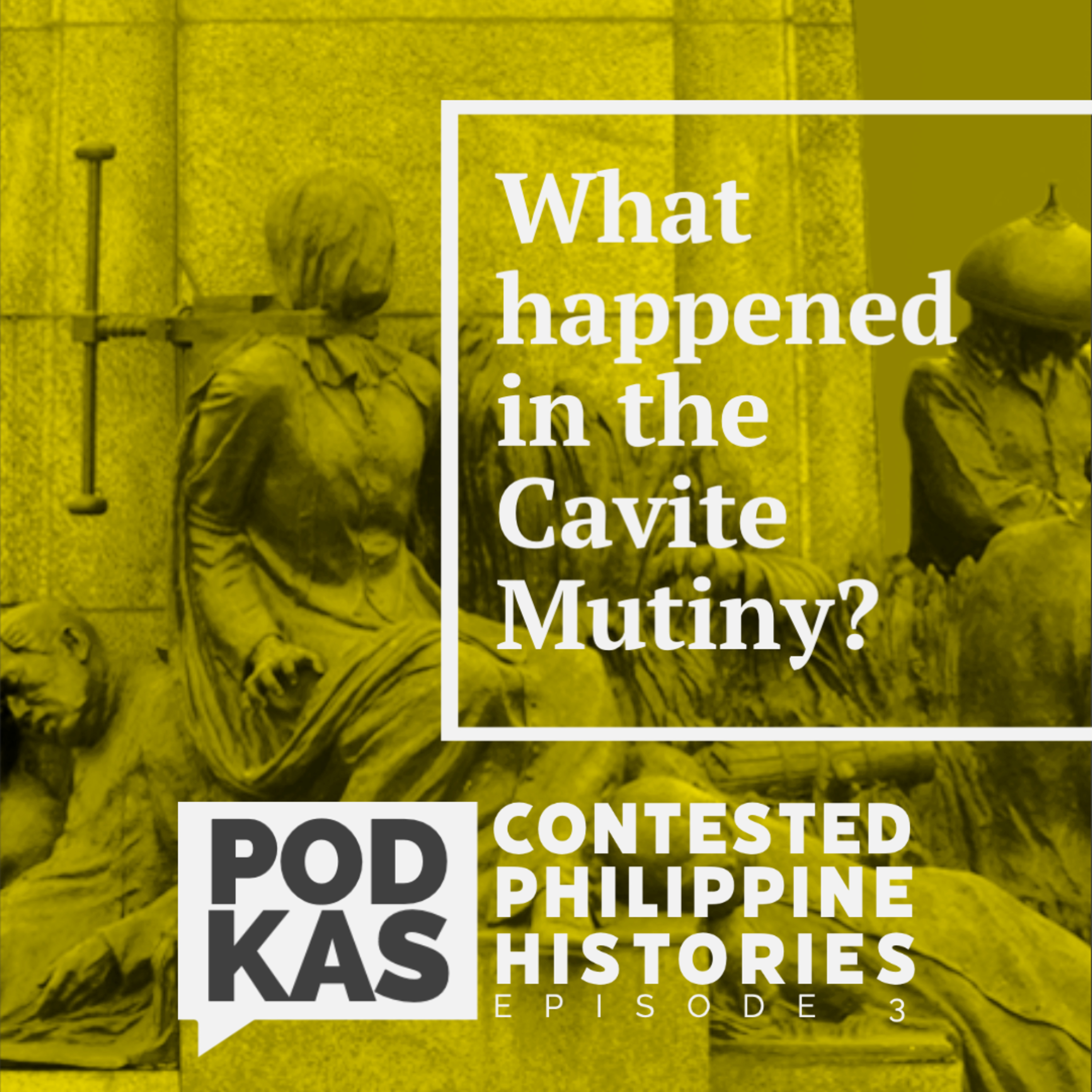
The transcription discusses the upcoming 150th anniversary of the martyrdom of Filipino priests Jose Burgos, Mariano Gomez, and Jacinto Zamora, who were executed following the Cavite Mutiny of 1872. Historians, notably Father Jan Schumacher, have analyzed various accounts to understand the mutiny's true instigators. Schumacher points to individuals like Francisco Zaldua as key figures in planning the separatist revolution, rather than the executed priests. The mutiny was part of a larger movement seeking to release control of the Philippines from Spanish rule. The events of 1872 were crucial in shaping Filipino nationalism and understanding the country's quest for independence in the 19th century.
Transcription
2771 Words, 16759 Characters
In 2022, the martyrdom of the three priests Jose Burgos, Mariano Gomez, and Jacinto Zamora
will reach its Sasky Centeno. Almost 150 years since that critical year of 1872,
the events that led to their death still needs clarity, while their demise had indeed left
indelible marks on the progress of nationalist sentiments. The nature of the preceding events
that are often cited as the cause of their arrest is still somehow contested. The Cavita Mutiny of
1872 is both an enigma and an explanation, while it sheds light as an inflection point
in the continuously brewing clamor for change characteristic of the latter half of the 19th
century. The incontrovertible proof related to its true motive and goal remain shrouded with
shadows of doubt. In this episode, let's revisit 1872 and ask what happened in the Cavita Mutiny.
This is the third installment of Contested Philippine Histories.
All right, here we go again. Last episode, we discussed an important event in the history of
Spanish colonization, the first Easter Sunday Mass. Today, we will discuss another event that again
showed how inextricably linked the church, state, and society were during the Spanish period in the
Philippines. That's right, and the bangitnya sa intro natin next year, landmark here again historical
commemoration, dahil Sasky Centeno, or 150 years na, since naganap yung Cavita Mutiny and the subsequent
martyred dome of the Gomburza. Yes, and actually we can even say na minsan, hindi masyadong malawak,
or hindi masyadong malalim, the knowledge ng madami sa atin when it comes to these events.
I agree no, actually admittedly akoren hindi masyadong, hindi ko masyadong gamay yung event na to.
Akoren no, pero we need to note na kapa kaa importantin itong events na ito. To the effect na
Tidoro Agoncilio, the prominent nationalist historian, at one point remark that, you know,
Philippine history only truly began in 1872 on words at bago yan, bago ang taong yan, what we had,
ay ano lang, history of Spain in the Philippines. So we can definitely say that the 1872 Cavita
Mutiny and the subsequent execution of the Gomburza were very important in periodizing our history.
But what do we know or commonly know about these events? Many textbooks would describe the event
as a localized uprising, as a mutiny of Filipino soldiers, in response to a decree of the then
Governor General Rafael de Escierto, taking away the exemption of arsenal workers from paying tribute
and serving polo. Many are convinced that the Gomburza, lalo na Siburgos, played a decisive role
in the planning of the mutiny, and these accounts, according to Jesuit historian John Schumacher,
were inspired or cited from their writings of Antonio Rejidor, a liberal reformist in the 19th
century. Yes, and what happened was, or what supposedly happened was, on the night of January
20, 1872, a mutiny would be launched beginning a few hours past midnight and involved soldiers in
Manila and Cavite. A certain surgeon called La Madrid was the leader along with some Spanish
officials, Marquetto and Montesino. So the plan was, the people in Manila would burn parts of Tondo,
supposedly to distract the Spanish infantry, so that the mutiners could take over Fort Santiago.
So the plan actually involved killing all Spaniards, except women and children. And then,
after that, reinforcements from Cavite would come after a signal was given from Manila.
Unfortunately for the mutiners, Scarredo received an anonymous tip. So this anonymous tip is a good
example of the content. I make known to you that, as I was informed this very night, in the market
here and in the walls, on Friday or Saturday of this week, they will fire a cannon shot in Fort
of Manila, the sign of a revolt against the Spaniards. They are taking this occasion since
this quadrant is not here. The one who is acting as the head of this revolt is the very Reverend
Father Burgos in Manila, and in Cavite, there are artillery sergeants and the corporals of the
native marines. So because Scarredo received a tip, we can surmise that it is really possible to
prepare for it and maybe a claim that he will go to the arsenal to fear the supposedly mutineers.
So after suppressing mutiny, arrests and interrogations were carried out.
Along with the leaders, parents, lawyers, and businessmen, who became prominent people
in that time for being "activists" in campaigning for liberal reforms in the Philippines,
especially for the priests, the continuing campaign for secularization.
So with the leaders, the Gomboorza, and they, by February of the same year, were executed,
along with many of the others charged, being sent to exile in the Marianas and other places.
So that's the very, very brief summary of the events that can be material for an exciting
film or Netflix mini series. And the impact of those events is profound because many of the
witnesses and survivors of these 1872 incidents were to become the leading figures in the later
propaganda movement and even during revolution. So what is the source of the contention?
A major plot twist that we can say is the records of the actual trial of Gomboorza,
which unfortunately remains unavailable and possibly forever lost.
Many versions of the events of 1872 were lost. So the historians are also having a hard time
to have a definitive account. One historian who have dedicated time and produced
important contribution to investigating these events, as we mentioned earlier,
Father Jan Schumacher, so maybe we can be a bit of a homemaker in this episode.
As early as 1960s and 1970s, when they were commemorating the Centennial,
or when they commemorated their 1872 events, Father Schumacher had already devoted effort
to unpacking the historical conundrum that is the Cavite Mutiny and the Gomboorza execution.
And along with his many works on Father Burgos, these are the sources we will use for this discussion.
Okay so in the 1972 article, Father Schumacher titled the Cavite Mutiny, an essay on the published
sources, he identified several first hand and second hand accounts of the events in 1972.
So in the first hand accounts, he mentioned three important accounts. So he said the first one
was an account written by Jose Montero Ividal, a Spanish official in Manila,
and he wrote "Historia General de Filipinas" where pages 566 to 602 were about the mutiny.
And this is the possibly called "official interpretation" because Montero is a Spanish
official. And this was published in 1895 and given the context of the publication in 1895,
where the sentiments were already rising. It was really obvious, according to Schumacher,
that it was very hostile to Filipino reformist aspirations. So the second account, according
to Father Schumacher, was from the French man named Edmonds Plouchaud, in his series La Chepelle
de Philippine, which was published in the French journal Web U de Dumont in Paris in 1877. So
this is a little closer to the 1872 event. So this is the meaning of the quote "The Filipino side
of the story" because this account of Blauchu was republished and reproduced by illustrators
like La Solidaridad. So the third account that Schumacher is saying is that it came out in 1900
in a Madrid newspaper by Filipinas Ante Europa, which was published by Isabelo de los Reyes.
So Schumacher asserts that the articles in this newspaper about the 1872 events were written by
Antonio Rejidor. Aside from these, Schumacher also published second hand sources that supposedly
based their recollection of the event on primary accounts. But for the purposes of illustrating
the historical dilemmas surrounding the events of 1872, the first hand account that Schumacher
wrote. Because he also has interpretations and comments on how we can appraise these sources.
Yes, and here we can see that if you watched the first season of the podcast about the nature of
history, the complexity of the historical methodology of source criticism. So in the appraisal of Schumacher
of sources, he noted of course the motivations of the authors and the veracity of their claims,
and he pointed out important comments. So similar to the account of Montero, the first one mentioned
earlier, because he is a Spanish official, the bias against the mutiny and the assertion that
Gomborza really knows. Meanwhile, in the account of Blauchu, it complicates the account because
while it hedges, the account mentions that the plant mutiny was known to many in Manila and Cavite,
belaying the assertion that localized apprising out of grievance. So in execution then, Schumacher
maintains that Blauchu could not have been an eyewitness and could have gotten his information
from other sources. Plus, possibly not in the politics of reform of this period.
And finally, with regard to Rehidor's account, Schumacher of course underscores that he was a
liberal reformist. So he also has biases.
Yes, right? Here we can see in Schumacher's writings how complex and also exciting
the history. Because if you look at it, the production of the actual primary sources themselves
need to be scrutinized because there is only one past, but many histories.
And because Gomborza's trial documents are unavailable, all the historians can do for now
is extrapolate and try to piece together the available sources to come up with the most possible
likelihood of events that transpired. So given these sources that also mutated across time
as they were translated and quoted, how do we make sense of the 1872 events?
That is the bone of contention, especially that almost 150 years ago, and it could have resurfaced
other claims.
Alright, so in 2011, Father Schumacher published another article that sought to settle the debates.
So, our night before, the exposition of Father Schumacher of 1972, which is his article,
basically lay out the available sources and how we should be critical of these sources.
Actually, in the article, he said that there is no definitive account. So in 2011,
Father Schumacher's article was released, with the title of "Dakavita Mutiny Toward a Definitive
History." So in this article, Schumacher sought to settle
the score. And in this paper, he made use of another important source, the same account
of Governor General Rafael de Esquierto. In light of the historiography of the 1872 events,
how do we see this account to definitively determine the events and who are the instigators
of mutiny? I think the major assertion in the Esquierto account is that Takavita Mutiny was not
an isolated event, but really was a part of a bigger movement to release his control of the
colony from the Spaniards. So, especially now when appreciated in light of the charge debates
during that period about liberal reforms and secularization of churches, it made sense
that the event was called "Tuag Mali Itin" as Esquierto saw it.
The other thing to mention here is that the cited reason for the exemption of arsenal workers from
Tribute and Polo is that they contributed, but this is not the motivation. Because the decree
announcing this was only published 20 days before the revolt. So, Takavita Mutiny could not
be organized in 20 days. So, Schumacher notes that it could be possible that the presentation of the
events in Cavite as a localized event were accepted by many Filipino authors and sources
during the 19th century, like Antonio Rejedor, since they were defeated because of the event. So,
if a bigger event will be released, they will really be defeated. Correct, so that's why a big question
is who really planned it. So, in the accounts of interrogations and reports of Esquierto,
based on these documents, it came out that the planning of Mutiny actually happened as early as
November or December 1871, and that there was a list of names on a document that called for the
revolt, and this document supposedly came from a Cavitenio named Francisco Zaldua. Atlana Basna,
the researcher of Schumacher, really did not know the name of Gumburza in Cavite Mutiny, and that
Borgos in particular was just singled out as a probable instigator. Schumacher also asserts that
the key role rests on Zaldua because the other testimonies from the interrogations would point
that they had Zaldua as source and baselang din sa claim ni Zaldua kaya na implicate Siburgos at Zamora.
Yes, and it had credence during the 1872 investigations, kasinga very vocal Siburgos about the
causes of the Filipino clergy. He even headed a campaign to have reforms within the church,
but as Schumacher sees it, Borgos was trying to work with the system, not moving to overthrow it
actually, at least in the beginning, at least ng panahon na iyon. Pero kasi komplex na context yung
among the laymen kasi may mga businessmen and lawyers and illustrados na may sizable campaigns
na rin for reforms. So nakakita siyempre ng Spain na may seeming concerted effort at
possible collisions dun sa mga sectors na nananawagan ng pagbabago. So in analyzing the events
further, Schumacher is of the opinion talaga that it was Zaldua who was behind the planning along with
three other men named Enrique Paraiso, Maximo Inocencio, and Crisanto de Los Reyes. And actually
another historian Celestina Boncan of UP Manila also considered these people as the more probable
instigators rather than the Gomboorza. So what happened after the revolt erupted and eventually
was suppressed? It appeared that Iskier really had enough reason to launch an attack against three
groups. First, the reformers, yung mga illustrado and secular priests. Second, those who were
publishing newspapers, and those na halos parang pareho ng mode ng first group. And third and final,
yung mga lumitao na instigator ng mutiny. However, siyempre Paraiso, de los Reyes, and Enocencio
were not sentenced to death, but just exiled. Kasi according to Schumacher, they were masons
like Iskierdo. So may factor yung kapatiran. Kaya ang nabitay lang kasi lumabas atinuro
sa mga account ni Zaldua ay ang Gomboorza. So given these interpretations, Schumacher summarized
key aspects of the 1872 events, lifted off from his 2011 article. First, the revolt in Cavite was not
a mere mutiny. It was a part of a planned separatist revolution. Second, the revolution as a whole
failed because of a defection of the committed filipino troops. Third, the partners of the
revolution were Enocencio, de los Reyes, and Paraiso. And next, although sentenced to death,
they were secretly commuted by Iskierdo for being fellow masons. The immediate instigators in
Cavite were Zaldua and Sargent La Madrid. We can also say that the three priests executed really
had nothing to do with the revolt. Nor did the priests, the lawyers, the businessmen, banished
the Marianas. They have really nothing to do with it. The accounts stemming from Antonio Rejidor,
although containing many factual names and events, are not actually reliable narratives of the revolt
and its causes. And the removal of the exemption of Arsenal workers from the tribute and compulsory
labor was not the cause of the revolt, even though it may have contributed to the unrest.
And finally, neither Arsenal workers nor any naval personnel took part in the revolt. So
whether these definitive statements would stand, again, we never know because there may be other
sources in the future. But for now, it seems that these are credible and historically grounded
assertions, really. Indeed. So regardless, if this is a refute in the future, I think what is
evident, first of all, is the importance of the 1872 incidents in understanding the birth of the
Filipino nation in the 19th century. I agree. I think it is really important to also broaden our
understanding of the profound change that happened in the 19th century leading to our independence
and find connections between the 1860s, 70s, and even before that, to the 1880s, 1890s, when the propaganda
and the catepunal movement proved instrumental. And that is really important. So in the next episode,
we will talk about the revolution, and in particular, the first sigau and the surrounding
contentions here. We will continue our discussions in the third season of the podcast. So don't forget
to follow us in our social media accounts and visit our website, podcast.org.
And the article to Father Jan Schumacher cited in this episode is available online
in the Journal of Philippine Studies, Historical and Ethnographic Viewpoints,
where they also reprinted primary sources on the Kavita mutiny. So if you're interested,
you can search. So once again, thank you for listening. Please share your comments and suggest
podcasts to your friends, and have a good day.
Podcast Summary
Key Points:
The 1872 martyrdom of priests Jose Burgos, Mariano Gomez, and Jacinto Zamora is approaching its 150th anniversary.
The Cavite Mutiny of 1872 marked a turning point in the nationalist sentiments in the Philippines.
Historians like Father Jan Schumacher have delved into primary and secondary sources to understand the events surrounding the mutiny.
There are debates on the true instigators of the mutiny, with Schumacher pointing towards individuals like Francisco Zaldua.
The mutiny was not a simple uprising but part of a planned separatist revolution, involving key figures like Enrique Paraiso, Maximo Inocencio, and Crisanto de Los Reyes.
Summary:
The transcription discusses the upcoming 150th anniversary of the martyrdom of Filipino priests Jose Burgos, Mariano Gomez, and Jacinto Zamora, who were executed following the Cavite Mutiny of 1872. Historians, notably Father Jan Schumacher, have analyzed various accounts to understand the mutiny's true instigators. Schumacher points to individuals like Francisco Zaldua as key figures in planning the separatist revolution, rather than the executed priests.
The mutiny was part of a larger movement seeking to release control of the Philippines from Spanish rule. The events of 1872 were crucial in shaping Filipino nationalism and understanding the country's quest for independence in the 19th century.
FAQs
The events leading to their martyrdom were related to the Cavite Mutiny, a planned separatist revolution in response to the control of the colony by Spaniards.
The Cavite Mutiny was not a localized uprising but part of a larger movement aiming to release control of the colony from the Spaniards.
Historical research points to Francisco Zaldua and three other men, Enrique Paraiso, Maximo Inocencio, and Crisanto de Los Reyes, as the probable instigators of the Cavite Mutiny.
Gomburza had little to do with the Cavite Mutiny, as they were not immediate instigators, and the priests executed were not involved in the revolt.
The Cavite Mutiny was part of a planned separatist revolution, failed due to defection of Filipino troops, and the immediate instigators were Zaldua and Sargent La Madrid.
Chat with AI
Loading...
Pro features
Go deeper with this episode
Unlock creator-grade tools that turn any transcript into show notes and subtitle files.
 PodcastTranscript AI