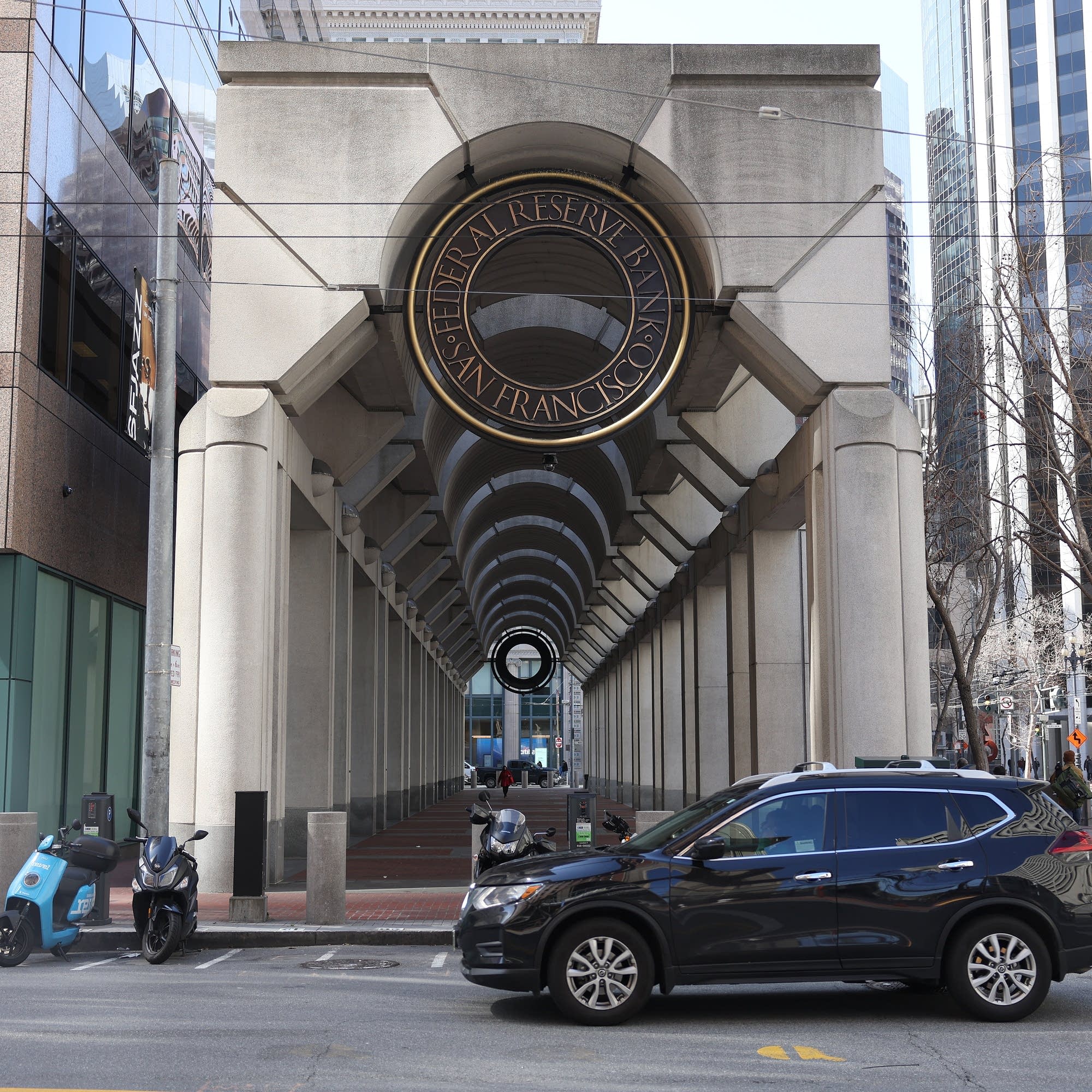
The transcript covers various economic topics discussed on the show "Marketplace," including increased imports in July 2025 due to impending tariffs, falling shipping costs attributed to excess vessels and weakened import demand, and the significance of regional Federal Reserve banks in shaping monetary policy and conducting economic research. The discussion also delves into the process of analyzing economic data, particularly focusing on the Consumer Price Index release and its implications for economists at financial institutions like Wells Fargo. Concerns are raised about declining survey response rates impacting the accuracy of economic indicators, such as the employment growth data. Additionally, insights are shared on the lending activity reported in the Federal Reserve's beige book, showcasing a modest rise in loan demand, particularly among small businesses.
Transcription
3959 Words, 22277 Characters
Well, let's see now, trading tariffs, the regional Federal Reserve banks, and economic
data as an economist sees it.
Sounds like a show to me, huh?
From American public media, this is Marketplace.
In Los Angeles, I'm Kai Rizdal. It is Thursday to day 4 September. It is always to have
you along, everybody.
From the Bureau of Economic Analysis today came news of imports into this economy. Technically,
the report is called International Trade and Goods and Services for the month July 2025.
They were up, actually, about 6 percent, which, if you think about the timing, does kind of
make sense. Importers in July trying to load up on inventory before most of the president's
tariffs actually hit in August.
But, but, one data point does not sufficient analysis make, as we all know, and there is
other more recent data that suggests imports have been slowing down. Among them, Exhibit
A, shipping costs. Container rates have been falling for 12 weeks straight now. That's
according to the Drury World Container Index. Supply demand, of course, being the operative
economic model there. Marketplace Justin Ho gets us going and explains what it all means.
One reason shipping costs are down is because there are just a lot of ships out there floating
around.
Simon Heaney with Drury Shipping Consultant says a couple years ago, when a tax in the
Red Sea clogged up shipping routes, shipping companies ordered new vessels to add more
capacity.
"We're getting a very steady flow of new ships at a time when demand growth is slower."
Heaney says demand for shipping is slowing because importers aren't bringing in as many
products from overseas.
"Because of the tariff story, a lot of cargo was brought forward to beat the deadlines.
Once those warehouses are full, your ordering slows up."
And that sluggish demand has been showing up in other parts of supply chains.
"We're seeing, because of the slowdown in imports in August, a real softening of the
upstream freight market."
That's Zach Rogers, a professor of supply chain management at Colorado State University.
He says prices have been falling for many of the transportation services that are connected
to ports.
"So this is long haul, over-the-road trucks. It's also rail."
And Rogers says that's a sign that imports are going to stay weak through at least the
end of the year.
"Because essentially what it looks like is that most of the stuff that retailers are
going to need for the holiday season is already in the United States."
But the slowdown in shipping costs isn't only a sign that importers have already purchased
the goods they need.
"That could be reflective of the fact that they're anticipating that their buyers are
going to have a lot less demand going into the rest of the year."
That's Megan Schoenberger, Senior Economist with KPMG.
She says consumers have already been pulling back this year.
"We've seen that sort of in the GDP, that in the first half there was a pretty large
slowdown from the second half of last year."
And Schoenberger says there are plenty of signs that consumer spending will keep slowing
down this quarter and maybe into the next.
"It's not as if the consumers are flashing red, but there are some metrics that are flashing
yellow.
Consumers are pushing back against price hikes.
There are particular signs of stress in low-income households and that's starting to creep up
into the middle-income households as well."
Schoenberger says that slowdown will continue once the cost of tariffs pushes consumer prices
even higher.
I'm Justin Howe for Marketplace.
There's a whole lot going on this week, Fed-wise.
There's President Trump trying to fire Lisa Cook from the Board of Governors and take
control of the central bank.
We're waiting on next steps from the court on that one.
Stephen Myron had his confirmation hearing today.
He's the White House economist who is Trump's pick to replace Adriana Kugler, the Fed governor
who resigned unexpectedly last month.
But there is more to the central bank than just the seven people who sit on the Board
of Governors.
Every time the Federal Open Market Committee meets, that's the group that actually sets
the interest rate that the Fed controls.
Five of the 12 people on the FOMC are presidents of the Regional Federal Reserve Banks.
Most of the time, when we talk about Fed presidents, it's because I'm interviewing one of them
or because the beige book, the eight times a year collection of regional economic anecdotes
has just come out like it did yesterday.
Here's the thing, though, with so much of the Fed focus being in Washington, this does
kind of seem like an important moment to talk about those other people who get a vote and
the ways that they help shape monetary policy.
And to do that, we've got to go back to the Federal Reserve Act of 1913.
At the time, remember lending was very localized and deposit taking was very localized.
Halem Anderson is a research economist used to be with the Bank Policy Institute.
And back in 1913, she says Congress wanted a central banking system where interest rates
could vary by region.
It made sense that like each region would have like own a reserve bank that can accommodate
economic conditions of that place.
Think about it.
For a second, the economy in, say, New York was really different from the economy of St.
Louis or San Francisco or Dallas.
So Congress created 12 regional banks in big population centers based on the 1910 census,
by the way, if you're wondering how that distribution worked.
And those banks got to set their own monetary policy until the 1930s.
During the Great Depression, you know, like there was no centralized policy.
Each district was doing its own thing.
And the policy makers thought maybe we should make it more consistent across different regions.
Which is how we got the Board of Governors and more centralized central bank power in
Washington, as Halem said.
You fast forward to today and regional banks do still got a vote on interest rates, yes,
but they do a bunch of other stuff too.
Jeremy Pyger is a professor of economics at the University of Oregon.
Back in the day, though, he in turn worked for both the Federal Reserve Board in Washington
and the St. Louis Fed.
They were actually quite different positions.
Economists at the Board of Governors are there mostly to support the chair and the other
six governors.
At the regional banks, though, there's more time given to production of economic research
that is meant to be published in scholarly journals.
And the banks do tend to carve out niches for themselves.
The Philly Fed, for example, focuses on publishing consumer finance research.
Cleveland makes daily inflation forecasts.
San Francisco?
It's cash services.
Galena Hale is an economics professor at UC Santa Cruz.
She worked at the San Francisco Fed for 14 years.
The research the regional banks put out helped contribute to the Fed's overall understanding
of the economy region by region and centralized as well.
Regional Fed presidents are chosen by independent boards of directors at those regional banks.
We had the chief marketing officer of Cusco, CEO of Panda Express, CEO of Alaska Airlines.
They make their pick.
It goes to the Board of Governors in Washington, which then gets to make the final choice.
Regional Fed presidents don't need to go through congressional approval.
They're just approved by the Board of Governors.
So there is this insulation, but it's not impermeable.
Speaking hypothetically here, if you were to have a Board of Governors highly compromised
in people's assessment of their independence, then the Reserve Bank presidents become even
more important in that just the basic math of FOMC decisions, they can provide a counterbalance
to the Board of Governors.
That counterbalance, though, that insulation is going to be not hypothetically tested in
February when all 12 regional bank presidents are by statute up for reappointment by the
Board of Governors.
The Board that President Trump is trying right now to take control of.
Layoffs are usually something people kind of whisper about like he got let go last week
or she just lost her job.
But layoffs are in the headlines now more than they usually are because the job market,
as we've been telling you, is getting kind of meh.
So for the latest installment of our series, My Economy, a writer who is trying to end
that stigma through her sub-stack.
My name is Melanie Aaron Kranz.
I am the creator of laid off the coolest place on the internet to talk about being laid off.
I come from journalism, and so I am not a stranger to layoffs.
I have witnessed a lot of my like endlessly cool, smart, talented friends lose their jobs
and realize there wasn't a lot looking deeper into the experience of the layoff, looking
into what was going on in that person's life at the time.
And I was like, I want to start laid off.
I want to talk to people.
It's going to be a newsletter.
Let's just see how this goes.
When all of the news around federal worker cuts were in the headlines, I pretty quickly
knew these were people that I wanted to talk to.
And after I posted just the first interview with a federal worker, a lot more people came
out of the woodwork and I think seeing the response to those initial stories really
emboldened people to want to share what happened to them.
Given that my audience is primarily people experiencing job loss, I try to be really
mindful about how I'm monetizing the actual content and that's why all the interviews
are always free.
Brands can sponsor a newsletter and baked into the cost of the sponsorship.
Brand readers are treated to coffee on the brand.
They get digital gift cards to a local coffee shop.
So really just trying to figure out ways that are true to the mission.
So I am making money.
It is definitely a side hustle and what I imagine it will be for the foreseeable future.
But that is okay because it's a project I'm really passionate about.
I definitely think there's still a lot of shame around the experience but I think that's
changing especially as more and more people are sharing what's happening to them.
I get a lot of emails still of people who find the newsletter and say I've never told
anyone that this happened or I maybe just told my partner I felt like it was a personal
failure but they're now seeing I think through laid off but also through LinkedIn posts and
through people being a lot more vocal about what they're going through.
I think that is a step towards eradicating the shame around the experience and really
showing people that it's not a personal failure and has nothing to do with their value as
a person or a worker.
Melanie Aaron Kranz there.
She lives here in Southern California.
You know this series.
I know I say this all the time but it's true it just does not work without you.
So whether you are staying the course or making a pivot tell us about it marketplace.org/myeconomy.
Coming up.
It's not so bad where I keep track of my receipts and look at my monthly inflation figures.
How an economist does economic data but first let's us do the numbers.
The Nasdaq added 209 points about 1% 21707, the S&P 500 gained 53 points 810s 65 and
2.
Goldman Sachs wants a slice of Americans 401k so it's investing up to a billion dollars
in T-Row price that will give the latter's clients a chance to put some of the retirement
savings into the former's private investment vehicles now that the Trump administration
is making that possible.
T-Row price added 5 and 810s Goldman Sachs back to about 2.5% today.
Bonds up.
Yield on the tenure.
T-Note down.
4.16% you're listening to Marketplace.
This is Marketplace.
I'm Kai Rizdal.
The Federal Reserve published the beige book yesterday.
We talked about that a little bit tariffs being mentioned 100 times in its 51 pages overall
though most of the 12 regional fed banks reported and this is a quote little or no change in
economic activity.
But there was a shift in one particular corner of this economy that is of note and that corner
would be lending.
Nearly every district reported a modest rise in loan activity.
Daniel Ackerman looked into who's getting those loans and what it might mean.
The surveys that go into the beige book aren't exactly scientific.
So Charles Calamaris professor emeritus at Columbia Business School doesn't read too
much into the rising loan demand.
Still he says it shows that the economy hasn't collapsed and small businesses are doing their
share says David Schiff of FTI Consulting.
One of the largest upticks that we've seen in this last quarter has been in the really
small community banks which tends to be small businesses going for the loans.
That rings true for Robert James II CEO of Carver Financial Corporation which owns community
banks in Georgia and Alabama.
Just in the past few days we started to see some promising small business loan applications
health care related projects community development projects like affordable housing.
The reason for these new loan applications is what James calls the settling in factor
after months of chaotic policy from the White House.
The business community is starting to get a little bit more comfortable with where the
economy is going to be going from a policy perspective and so some of those projects
that we're sitting on the sidelines are starting to come back around.
But not everyone is off the sidelines just yet.
Brad Bolton is CEO of Community Spirit Bank in Northern Alabama where he often lends to
businesses in the timber industry to help them buy new machinery.
We're talking about bulldozers, skitters, log loaders that kind of stuff.
And he's seen a slowdown in these loan applications.
It seems like everyone is just trying to make use of what equipment that they have.
Bolton says his clients don't want to finance anything new until borrowing costs come down.
That's the main thing that I hear right now is unless they just absolutely have to replace
something because of age repair or just breakdown in general most folks are just saying I'm
going to wait a few months and see what interest rates do.
And if interest rates fall later this year Bolton expects a surge of new loan applications.
I'm Daniel Ackerman for Marketplace.
Wednesday as regular listeners to this program know is a big one for economic journalists.
So the arrival of the August jobs report tomorrow is going to be a big deal especially since
the kind of downer one that was July.
But it's not just us who are glued to our screens awaiting the release of the newest
economic data.
There are people in all sorts of industries who rely on those measurements.
So we got Nicole's survey on the phone.
She's an economist at Wells Fargo and she's going to walk us through what it's like for
her on a big economic day to day in this case the July consumer price index that came out
just a couple of weeks ago.
And Nicole it's good to have you on.
Thanks for having me.
Let's go back to Tuesday morning and you get out of bed at whatever time you get out of
bed.
Is your first thought ooh CPI comes out today?
Yes.
Not coffee, tea, I have to walk the dog but CPI.
This CPI comes out today therefore I should probably get a coffee on the way to work.
And what are you as as you approach getting this data right 8 30 in the morning Washington
time 5 30 for those of us on the West Coast.
What's your thought process going in?
So going in so in my role as an economist going in I make sure that I know what my expectations
are.
And then when the data actually hits at 8 30 first thing I'm doing is Googling like
everyone else BLS CPI pulling up this you don't have a bookmarked I don't actually.
Okay pro tip bookmark it I'm just I'm just saying alright so so here's what I want you
to do if you don't mind share your screen with me and let's pull up that CPI report
and I want you to sort of walk me through first of all how you scan this thing.
Yes so once I get to once you Google BLS CPI and for the bookmarking you come at the consumer
price index landing page here and then on the BLS website you can look at the report
in different ways but I guess I'm also old school here I always scroll straight down
and I do the PDF version.
Okay. Because that gives you all of the tables in one go and so if you're control f'ing through
this report you can find everything because all the tables will be listed in the PDF.
Is that how you do you basically control F?
Yes if I'm looking for a particular series so for instance what's been interesting to
us or what we've been keeping an eye on is some import heavy items because we know that
they're subject to tariffs and we want to see if those tariffs are being passed on to
consumers via higher selling prices and so you can kind of cherry pick a little bit and
look through the report and try to find some of those items so one that we've been looking
at is household furnishings for instance so I'll do that.
Right. Okay so you go through you do your control f'ing and all of that. How long on CPI day
do you spend in these data tables?
So in my job we have indicator reports that we we release and so what we do is we get
the press release we try to digest it I would say I probably spend usually about 10 minutes
looking at table one and then table two and then we start to write a report so I over
here Sarah House Michael Puglisi and I we share the coverage of inflation we write a
report the three of us all together and try to get it published for a distribution within
an hour so usually that's that's how I'm digesting that.
You're banging it out you got a little bit of a deadline.
Yes.
Yeah Wells Fargo has I'm sure reams and reams and reams of data at its disposal in in-house
right its own data what does the BLS do for you that that your own stuff can't do?
Yeah that's a great question and I think this speaks to not just the BLS but all all government
data you also have the Bureau of Economic Analysis.
So as you said Wells Fargo massive bank we're a GSIB we're one of those globally systematically
important banks and so we do have access to a lot of data but we don't have access to
all consumers all businesses whereas the government is in a better position to have a sample that
really truly represents most of businesses and consumers better than even a large institution
like Wells Fargo can.
Setting aside then for a second the I don't want to play this down at all because it's
really serious but the brouhaha over the politicization of government economic data there are well
known problems with data collection now right survey response rates and lack of resources
and all that stuff where is that on your list of things to be worried about?
Pretty high if I were to say top ten it's probably rising to three two I think especially
with the payroll report that we got a few weeks ago you saw that the size of the revision
that was that was shocking and if we look underneath the details we know it's because
you see the survey response rates are falling and the natural conclusion from that is maybe
we're not serving well and so my immediate gut reaction is maybe I should not take that
initial preliminary estimate for July literally because we know that perhaps the preliminary
quality is not great because of these issues with surveying.
Does that give you a little bit of feeling?
It does especially when in my world we serve institutional clients who are trading on this
information the minute it drops and so that's what makes it very difficult is when you're
kind of grappling with what do I think the underlying trend of employment growth actually
is and when is that actually going to show up in the data.
So let me ask you this then as a sort of a way to bring this home are you able to when
you are out at your local Wiggly Wiggly shopping for eggs or milk or whatever it is can you
can you separate all this data that you see from from sort of how you think about your
daily life.
I don't think I can honestly I'm so deep in this now when I'm out I don't that's not
so bad where I keep you know tracking my receipts and look at my monthly inflation figures.
Nicole's personal inflation figure right.
But I do notice it so for instance I remember in the CPR report before this one I knew that
avocado prices were just through the roof because I was making a guacamole and I was
so glad to see it validated when I saw the report things like that where I will make
note of prices that I'm noticing when I'm at the grocery store and I'll go ahead and
check it when I get the CPR report the next month.
The economy is real life people.
Nicole's survey at Wells Fargo thank you Nicole thanks.
This final note on the way out today it comes to us from the Senate banking committees hearing
this morning for the aforementioned Stephen Myron President Trump's nominee to the Fed's
Board of Governors Myron as I said already has a job he's the chair of the White House
Council of Economic Advisors.
It's a subject that came up when Rhode Island Democrat Jack Reed took his turn asking questions.
Europe permit the Council of Economic Advisors if you are confirmed will you resign from
the council.
Thank you Senator I have received advice from council that what is required is an unpaid
leave of absence from the Council of Economic Advisors and so considering the term for which
I'm being nominated is a little bit more than four months that is what I will be taking
if I as long as that is the advice of council I'll follow the law.
It is really important to be really clear about what this means Myron will still be
a White House employee working for a president who's been vocal about wanting lower interest
rates when as seems likely Myron is also going to be voting on interest rates.
Conflicts of interest do not seem to come much more starkly than that.
Our daily production team includes Andy Corbin, Nicholas Guillaume, Maria Hollenhorst, Eru Ekpenobi,
Cheryl Leeson, Sean McHenry and Sophia Torenzio.
This is APM.
Podcast Summary
Key Points:
Imports into the economy were up by around 6% in July 2025, with importers trying to beat tariff deadlines.
Shipping costs have been falling due to a surplus of ships and slowing import demand.
Regional Federal Reserve banks play a crucial role in shaping monetary policy and conducting economic research.
Summary:
The transcript covers various economic topics discussed on the show "Marketplace," including increased imports in July 2025 due to impending tariffs, falling shipping costs attributed to excess vessels and weakened import demand, and the significance of regional Federal Reserve banks in shaping monetary policy and conducting economic research. The discussion also delves into the process of analyzing economic data, particularly focusing on the Consumer Price Index release and its implications for economists at financial institutions like Wells Fargo. Concerns are raised about declining survey response rates impacting the accuracy of economic indicators, such as the employment growth data.
Additionally, insights are shared on the lending activity reported in the Federal Reserve's beige book, showcasing a modest rise in loan demand, particularly among small businesses.
FAQs
Importers in July increased imports by about 6% before the President's tariffs took effect in August.
Shipping costs have been decreasing due to a surplus of ships and a slowdown in demand for shipping caused by importers bringing forward cargo to beat tariff deadlines.
Regional Federal Reserve Banks have a vote in setting interest rates through the Federal Open Market Committee and provide regional economic insights to shape monetary policy.
Regional Fed presidents are chosen by independent boards of directors at regional banks, with final approval by the Board of Governors.
The 'Laid Off' newsletter aims to destigmatize layoffs by sharing personal stories of job loss and providing a platform for discussion and support.
Economists at Wells Fargo analyze CPI data by reviewing the BLS report, focusing on specific items impacted by tariffs, and writing a comprehensive report within an hour of the data release.
Chat with AI
Loading...
Pro features
Go deeper with this episode
Unlock creator-grade tools that turn any transcript into show notes and subtitle files.
 PodcastTranscript AI