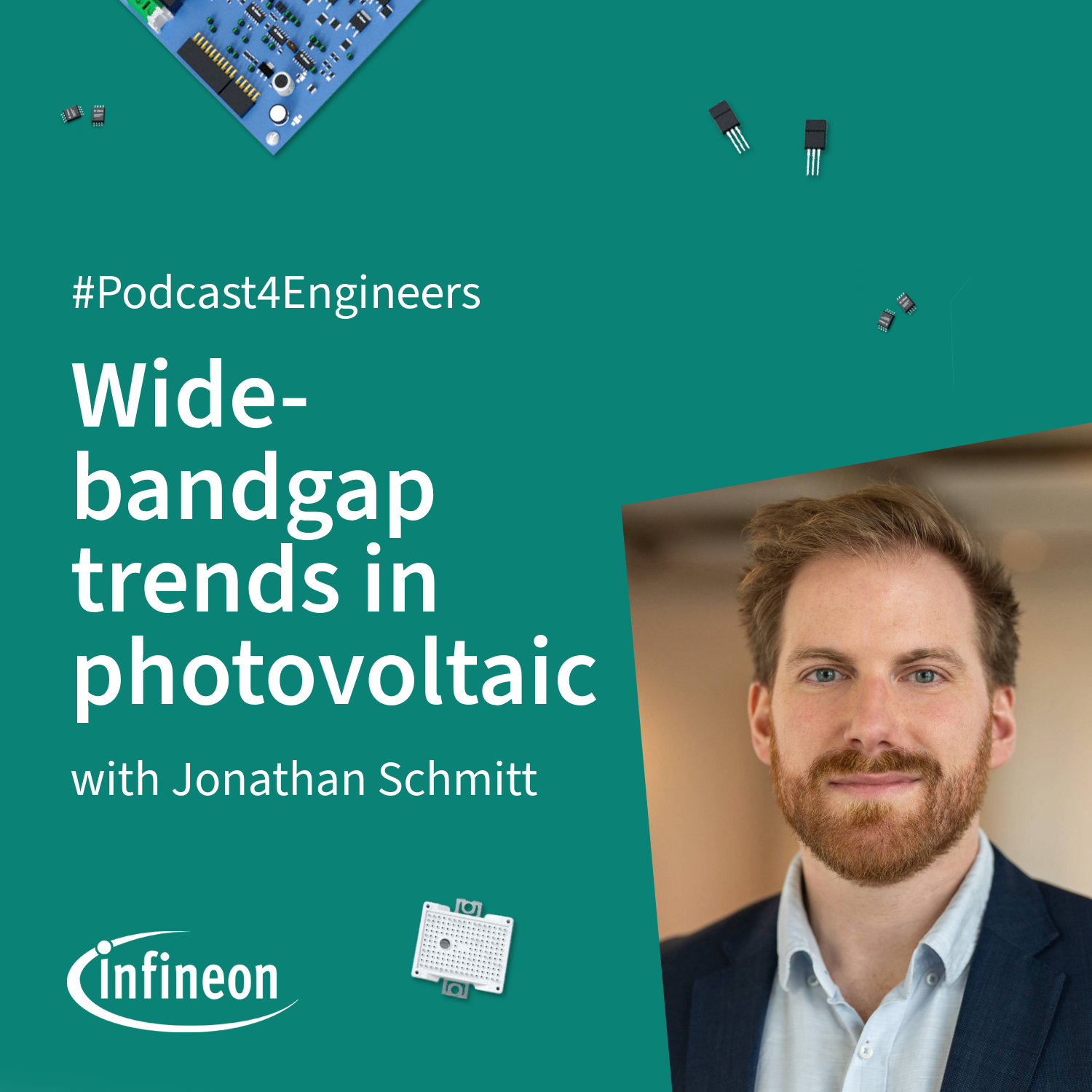
This podcast discussion highlights key trends and developments in the photovoltaic industry. The sector has seen tremendous growth across residential, commercial, and utility segments, driven by innovations like hybrid inverters, integrated energy storage, and smart energy management using AI. A major focus is on wide-bandgap semiconductor technologies: gallium nitride (GaN) is reaching a market tipping point, enabling smaller, more cost-effective systems for residential applications through higher switching frequencies. Silicon carbide (SiC) remains more mature and prevalent in higher-power systems, such as commercial inverters and energy storage stages, due to its efficiency and high-voltage handling. The market is intensely competitive and cost-driven, with challenges including reducing system prices, implementing grid-forming capabilities for better grid integration, and ensuring reliability. Designers have access to various topologies and evaluation platforms to leverage these technologies, with the industry moving towards more consolidated, software-defined solutions that offer complete system integration.
[Music] Innovation can be on a system level, of course. Smart energy management, the AI algorithm to maybe detect some kind of arc folds, but also when it comes to semiconductor solutions as such. So talking about silicon carbide, talking about gallium nitrate, we can, let's say, using this kind of materials we can shrink down more the size. I would say we're just at this tipping point in the market where the first players will come with gallium nitride and big market players are about to adopt such technologies. [Music] This is the podcast for engineers. The podcast you just have to listen to if you're interested in what's going on in the semiconductor market. My name is Kelsey Markle, your host. And today I'm joined by my colleague, Yonat Inchmit, who is the Global Application Manager for Photovoltaic and Residential Energy Storage, which is quite a mouthful, but Yonatten, thank you so much for being here. Thanks for having me. Yes, today we've, well we've talked about Photovoltaic in the past, but it's been a year, more than a year, I think, since we've covered the topic. And today we wanted to talk about some newer developments in the Photovoltaic space, also look at wide-band gap technologies, but let's start with the big picture. What's going on in the Photovoltaic industry? So generally speaking, the industry was growing tremendously over the last years, in residential, commercial and utility. We see a lot of complexity, a lot of different systems involved. So we started with a pure solar inverter, then we have this hybrid inverters. We have a DC coupled with the energy storage, maybe even DC coupled with the EV charging. We have new materials coming in, which are bringing more power dance, more efficient systems, such as silicon carbide, such as gallium nitride. And also we see a lot of innovation in the higher power classes, where we see in the central inverter, but also the string inverter, they were getting pushed to more and more power, so from initially 300 kilowatt to 400 kilowatt to 500 kilowatt. So it's quite an exciting time for this industry, and we saw this rapid growth. Let's see how this further will go. Yeah, okay, and I'm sure you saw a lot of those trends at the inter-solar, which happened a couple of months ago now in Munich, right? Did you attend? Yes, I was there. Any impressions? Yeah, I was hoping you asked me, so at the inter-solar, we saw all the big players of the industry being there. Actually, it's not the biggest event in Europe, and one of the biggest globally. What we could see is that a lot of the big players, they are now serving the complete market, from residential solutions, if it's an optimizer, a micro-inverter, to the commercial solutions, 100 kilowatt, 150 kilowatt string and hybrid inverters, and then also utility solutions, central inverters, high power string inverters. We see more and more, I also adopt the energy storage, and there are a few best words going around, such as AI, smart energy management, and how they can, let's say, optimize the system, charge discharge, and also in regards of the grid-forming capabilities. So that's big best words out there in the market, and we had all the players there showing their new solution, was very exciting. Sounds very dynamic, if I say. I assume the market itself is also quite dynamic. Can you explain a little bit about how the players are acting? Well, we were now coming from a huge growth over the last year, so we were more than 30, more than 40% growth for some years. I've always described it a little bit as the S-curve, so we had a slow start, 2015, and then we had this exponential growth, especially over the pandemic, till now. Even from last year to this year, we saw, I think, +13% growth of installations. We have more than 600 gigawatts of solar capacity being installed in 2025. What we expect now is that we stay at this high level, and the growth will, let's say, plateau a little bit, but we are still on the growth path, on a very high level. But of course, the industry needs to compensate that the grid needs to also being developed in a similar pace, because that's also the solar is very much connected to the grid. The energy storage needs to also catch up with this one. And when all of this is coming place, also we expect maybe some more consolidation in the market. Correct, that's basically the high level of yield. And you mentioned consolidation and all of this opportunity for invertebrate manufacturers. Is there a lot of players out there? Is it competitive? Very, very competitive. Even we can hear, let's say, differentiate a little bit between residential commercial utility. Most players are surely in the residential area where we see a huge competition, hundreds of hundreds of players from all the regions globally. Of course, China has a little bit of special role because they are by far the most players bringing up the solutions they developed very, very fast their solar industry over the last years. For the export markets, but also China is the market who has the most installations domestically. Then going to the let's say higher power classes, the competition gets a little bit less. But still that's a super competitive market. Solar is in a way also price driven. So we want to have the energy coming for less and less money. And we actually achieved it already. So solar is the cheapest energy form globally, which is very, very good news. And therefore we also see this rapid growth coming forward. And a huge development just over in the last 10, 20, 30 years. So you mentioned that there were a lot of players and both in residential, photovoltaic, but also utility commercial. Pricing might be one side of things, but what about innovation? Where's the innovation coming from in the market? Yeah. So currently innovation can be on a system level, of course. And we see more software-defined systems, of course. So this is one part of the innovation. I said it already. Let's say smart energy management, the AI algorithm to maybe detect some kind of arc folds. That is clearly innovation, but also when it comes to semiconductor solutions as such. So talking about Silicon Carbite, talking about volume nitro, we see this today being slightly more relevant to the residential solutions. Because here we can, let's say using this kind of materials, we can shrink down more the size, for example, and bring down costs. And this is to an end consumer where cost matters again, a little bit more after all. But then also especially Silicon Carbite, we see also in the higher power classes. It's not only in residential, also commercial utility can be used. Otherwise, we see a lot of IGBT solutions there as well. And then again, coming back to volume nitride. So today, I would say we're just at this tipping point in the market where the first players will come with volume nitride. I just named a few applications, the micro inverter application, as is very big in the US market, but also coming more to the mere market. So there we see on the secondary side of the micro inverter a clear value proposition of of gallium nitride. Not only to say there's also some special new switch technologies, the bidirectional switch, I believe we will elaborate this still a little bit. And then also for the power optimizers, shrinking them with with gallium nitride or the string inverter slash hybrid inverters. This is very exciting. Again, it's at this tipping point, the first players already adopted. And big market players about to adopt such technologies, while having a little bit also an Ion Silicon Carbite, and would even say Silicon Carbite is a bit more already mature in the market, especially when we look to residential energy storage. The bidirectional DC DC stages to the battery, we see that often already by today already being done. So the value propositions are very clear. The technology is there for a long time. And so this is the major technology trends we're seeing being adopted right now in the market. Okay, we've talked about Silicon Carbite a lot in the past in both terms of ESS and also photovoltaic in the past. You'd be charging these systems that you were describing earlier with the integrated ESS and solar and maybe even a bidirectional DC wall box, for example. But let's look again, because for, like you said, this is where the tipping point and it's new. What are some of the clear advantages of GAN and inverters? Well, the technology as such are the physical properties, let's say, electrical properties. They already show that they have less losses, that I can handle maybe better heat. I can, I can, let's say bring
up the switching frequency much higher in the system and this has a huge impact on the oval design of such a system because there's a relation between the passive component, the filter size and so on and so forth. So when I push up or when I go with gallium nitride and I let's say push up the switching frequencies, I can of course reduce the system size so it's more power dance but not only power density it's maybe not even the most important point but what I'm talking about is the overall system cost which can go down and this is then a win-win situation because on one side you have a let's say under certain circumstances more efficient system or you have a equally let's say efficient system but let's say for reduced cost and for smaller size so this is a clear value out of this this kind of technology. Okay reducing system costs often comes hand in hand with changing the topology is at the same case when you use GAN? Correct so we see depending on the sub applications a lot of different topologies when we look let's say start with the with the optimizer says a back boost topology here we see that that let's say mid voltage GAN can maybe replace the silicon switches which are in there but also the silicon we are on a very very good level already so it's a bit the decision between price performance and the highest efficiency solution in the market and then where it's even more shining by today is the micro inverter solutions where we have classical topologies in the past some kind of flyback plus unfolding stage and we see more and more topologies like single stage topologies we call it also cycloconverter topologies and here on the secondary side we have so to say this this back to back switches depending on of course on the setup let's say they're like two back to back switches which can be today to silicon super junction switches it was in finia our cool most devices for example and there we see a huge benefit because it can be a one-to-one replacement or two-for-one replacement with our GAN by directional switches so where we replace two of the back-to-back silicon super junctions switches with one of the GAN by directional switches so I have the system benefit there with going down and shrinking the size and so on so forth but then I have also two-for-one replacement which is of course also in PCB size it's just smaller and and eventually also the pricing is going to a more attractive level for our customers yeah of course fewer components is also a benefit for the system size right you mentioned though a word cycloconverter which I have to admit is a completely new term for me can you explain a little bit about what a cycloconverter is correct yes let's do so so when we when we look in the past the typical topologies where I would call it now two-stage topologies without the there a bunch of them which are current source of voltage source topologies but let's keep it like this and now there's this shift to a single-stage topology so I don't have this intermediate DC DC conversion so I have a direct DC to AC conversion in my in my cyclotopology which makes it more attractive in a way of less power conversion steps less losses less semiconductor content which is also reducing cost after all and this is paired with a very high efficiency already plus then the usage of gallium nitride I can even let's say bring this up and yeah it's so to say I have a lot of wind situations in this kind of topologies not saying that the other topologies let's say a bad but we see clear improvements going in this direction and using such kind of topologies okay well we've given a good stage to GAN so far but I don't want to forget GAN's sister silicon carbide when would silicon carbide make more sense in in the photovoltaic space well usually we see and I last comment on gallium nitride gallium nitride being applied to to lower power systems I talked about optimizers micron verters residential size so yeah but silicon carbide is also on the residential side but there's a difference because an optimizer can be let's say a 500 watt solution or micron verter can yeah push up 600 800 watt whatsoever this is the range I can also put gallium nitride in a 6 kilowatt inverter but then we see suddenly silicon carbide more shining currently so being clearly above 10 kilowatt 20 kilowatt and so on so forth we see more and more silicon carbide that also has to do with with the availability of voltage glasses so higher power systems are often three phase systems three phase system require 1200 volt devices and what is out there today in the market for gallium nitride solutions is rather below 1000 volt so 1200 volt silicon carbide is super mature in the market where we reliable technology and seeing this so there's naturally already the room for silicon carbide and then we see it a lot applied in the in the direction of DC DC stages for the energy storage that apologies like CLLC DAB topologies but also in in the classical back boost topologies it can be used what we now witness is that a lot of the inverter stages be it now a single phase with heric or three phase with an NPC2 as for example that there's also now more of an adoption of silicon carbide be it 750 650 volt or be it even 1200 volt or above so this is residential when I look now in commercial and utility scale systems we in this higher power so we see more and more modules also coming into play so in the past that was a lot of IGBT based modules so IGBT is a silicon based technology but also there we see at some customers that they use silicon carbide because they can push the efficiency let's say a little bit more and the return of investors coming coming also earlier so this is also where the silicon carbide is getting into so really really high power classes or silicon carbide based power modules and then of course in the in the classical three phase systems which which started a residential let's say six kilowat or higher and can go up to 2050 100 kilowat this is where silicon carbide is then also shining and and Gelyonitri naturally is then more on the on the lower than 10 kilowat arena okay so it seems like there's a lot of options for designers when looking at topology technology different packages you can go with is there anything that can help designers get a head start when designing their system correct um actually this is this is a very very interesting topic because um also I was personally involved in a very interesting project which we had here internally where we designed so called modular hybrid inverter platform so that is a platform from a PV boost stage to inverter stage to bi-directional DC DC stage which can help players in the market to ever evaluate quickly the technology and and bring this in their own design so we have done this on a silicon IGBT basis so silicon the the H7 technology the fast switching technology from infinity and um and then we did the same basically with our uh silicon carbide gen two so we saw one option is definitely um kind of price performance option um going in the IGBT area we see nevertheless a very very solid results going in this direction IGBT is a the very robust technology uh proven in the market and known for for years to come um but now we also show with the silicon carbide what the designers can actually reach um in in this kind of well with this kind of technology um when it comes to of course efficiency um a power density and but also we bring in new innovations such as topside cool packages because also the IGBT we see a lot now is a t2222 for seven very classical through a whole devices and now we see with the topside cool packages um where we can uh let's say bring them on the backside of the of the PCB and then we mount on on one side the heat sink and on the other side are all the electrical components there's also quite quite beautiful in a way that you um let's say separate the thermal path and also the electrical path because the gate drivers will come from the other side and that just brings you some system advantages and with this design we we bring all this design considerations into account and can showcase this quickly for evaluation and a quick head start to our to our customers okay yeah it's a lot of options that designers must be weighing in their hands so good that we offer some
something. If we take a step back completely again then and look at the whole market as a whole from residential to commercial to utility, what are the biggest challenges that the market's facing right now? Well in the residential area would say the biggest challenges is definitely price, price, price, price. The systems need to come down in cost and- Which it has a lot right? Which it has a lot but still it's under a lot of pressure because one of the first statements was also where also that the market is pretty crowded. That means also reducing costs and also their target market such as India, South America, Africa which require very cost competitive solutions. And now while let's say the white band gap devices come maybe for a slightly premium price, we have to now account the system benefits coming with it because with that you can really bring down the cost. So this is at a moment the challenge designers have on hand to come to this new technology is to fully leverage their benefits in order to bring down the cost. So this is something to solve in the residential area. Software is a big topic which is over all the, over all the let's say power classes a really, really important topic because that's core IP of the players out there. And if they have the better let's say software defined inverter system where you have a grade let's say communication between the inverter, the power stages, the let's say even the apps for the monitoring and the end user. So that can make really a difference to bring that in. Collect this data, use this data and prove with this data the inverter performance. And then coming to higher power classes, I think there's one best word which is a big challenge is grid forming because the solar energy of course needs to be a, I mean it's a clean energy but for the grid it can be a slight burden. And if I have this grid forming capability it's a much cleaner energy and it doesn't, it's like easier, let's keep it in simple words, easier for the grid to digest to get into the grid and getting then distributed. Otherwise of course it can also get stored in energy storage. And then again there's the same challenges with the grid forming capabilities as for example. So this is the higher you go, this is usually the challenges on hand. Well there's also this kind of over voltage, over current events where a lot of players are concerned on and this comes down again then to reliability or to the quality reliability topics of our semiconductor solutions. That's what we see as a basic feedback in the market. And if you with all of that in mind of these challenges that they're facing, all of the options that they have when designing new systems, where do you see the industry developing over the next few years? So we see more and more players doing basically everything. So while we want to be in one stop shop for our players or for our customers, our customers want to be a one stop shop for their customers of course. So being very relevant in all the different segments with all the different solutions, that is something which will happen of course. While I talked about how the market is growing, so we went from this exponential curve to more let's say single digit growth. We reached this plateau over 600 gigawatt, maybe reach 700 in a soon future. There will be more consolidation in the market. Even at some point we have already consolidation, so I just saw the newest market data that for example in 2024, the top 10 players account for let's say 80% of the market share. Nonetheless in this 20% there are hundreds of players. So it's clear that not all of them can survive and it's also clear that some of them are the rising stars of the future. So we will come to a more healthy ecosystem. Players will come out of the market. Maybe some more players will join the market. That's also something we see that not only the inverter players try to do everything. We also see from sometimes even from home appliances coming, coming over more players and going into the solar. Also the the battery makers as for example in the industry, they are already doing this because they have for example a core component which is the battery of course and doing the power electronics around to come to an energy storage is not such a far step. So things like this will happen but always in mind it's a very cost-driven industry. It was a very very dynamic in the past. I think the players who are most agile, who can adapt the fastest, they will win and this might be the future of this industry. Okay thanks a lot. Thanks a lot for your insights and sharing about photovoltaic and how things are changing. And to our listeners, thanks for listening, thanks for watching and please stay tuned for more episodes from the podcast for engineers. [Music]
Podcast Summary
Key Points:
The photovoltaic (PV) industry is experiencing rapid growth and innovation, driven by trends like integrated energy storage, AI for smart energy management, and the adoption of wide-bandgap semiconductors like silicon carbide (SiC) and gallium nitride (GaN).
GaN technology is at a tipping point, offering benefits such as higher switching frequencies, reduced system size, and lower overall costs, particularly in residential applications like microinverters and optimizers.
Silicon carbide is more mature and dominant in higher-power systems (above ~10 kW), such as commercial and utility-scale inverters and energy storage DC-DC stages, due to its high-voltage capabilities and efficiency.
The market is highly competitive and price-sensitive, especially in residential segments, pushing for continuous cost reduction. Key challenges include system cost pressure, the need for advanced software and grid-forming capabilities, and ensuring reliability.
Designers have various technology and topology options (e.g., new topologies like cycloconverters with GaN), and platforms are available to help evaluate and integrate these innovations quickly.
Summary:
This podcast discussion highlights key trends and developments in the photovoltaic industry. The sector has seen tremendous growth across residential, commercial, and utility segments, driven by innovations like hybrid inverters, integrated energy storage, and smart energy management using AI. A major focus is on wide-bandgap semiconductor technologies: gallium nitride (GaN) is reaching a market tipping point, enabling smaller, more cost-effective systems for residential applications through higher switching frequencies.
Silicon carbide (SiC) remains more mature and prevalent in higher-power systems, such as commercial inverters and energy storage stages, due to its efficiency and high-voltage handling. The market is intensely competitive and cost-driven, with challenges including reducing system prices, implementing grid-forming capabilities for better grid integration, and ensuring reliability. Designers have access to various topologies and evaluation platforms to leverage these technologies, with the industry moving towards more consolidated, software-defined solutions that offer complete system integration.
FAQs
Key trends include the adoption of wide-bandgap semiconductors like silicon carbide and gallium nitride for higher efficiency and power density, along with system-level innovations such as AI-driven smart energy management and grid-forming capabilities.
GaN is typically used in lower-power systems like microinverters and optimizers below 10 kW, offering size and cost reduction. SiC is favored in higher-power applications above 10 kW, such as three-phase systems and energy storage, due to its higher voltage capabilities and maturity.
GaN enables higher switching frequencies, reducing passive component size and overall system costs. It can also replace multiple silicon components with fewer bidirectional switches, improving power density and efficiency.
A cycloconverter is a single-stage topology that directly converts DC to AC, eliminating intermediate conversion steps. This reduces losses, semiconductor content, and costs while maintaining high efficiency, especially when paired with GaN technology.
Key challenges include cost pressure, particularly in residential segments; the need for advanced software and grid-forming capabilities; and ensuring system reliability amid grid integration and overvoltage events.
The market is highly competitive, especially in residential segments with hundreds of global players. Competition decreases in higher power classes, but price sensitivity remains a driver as solar aims to be the cheapest energy source.
Chat with AI
Loading...
Pro features
Go deeper with this episode
Unlock creator-grade tools that turn any transcript into show notes and subtitle files.
 PodcastTranscript AI