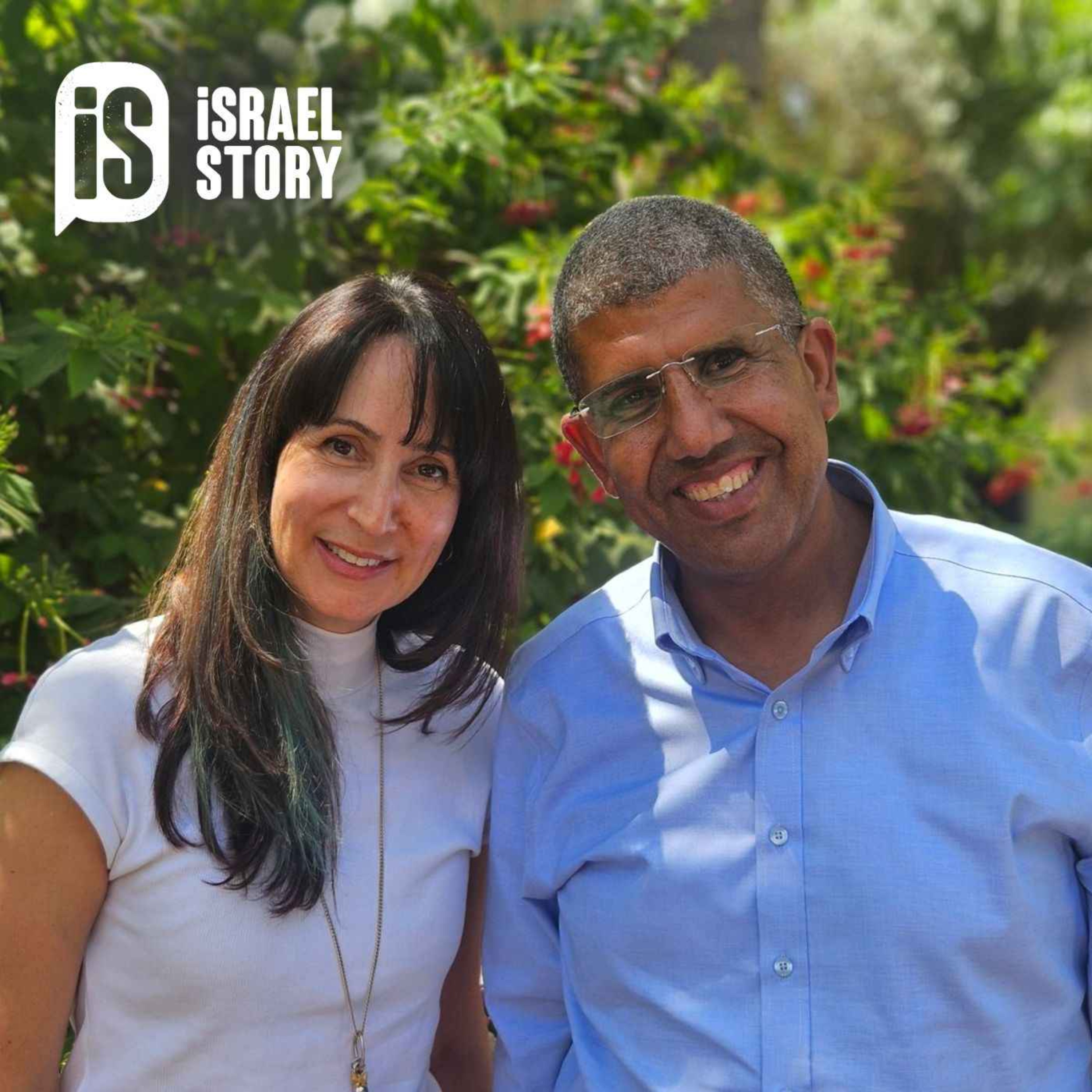
164: Wartime Diaries - Pazit Noyberger and Radwan Abu Arara
22m 13s
The story narrates the heartwarming account of Pazit Noiberger, a Jewish woman, who defied cultural and societal norms to donate her kidney to Radoan Abwarara's daughter, Bayan. The bond formed during this kidney transplant journey showcases the power of compassion and unity amid conflict and division. Despite initial skepticism and challenges, the successful surgery not only saved Bayan's life but also transformed her future, enabling her to pursue studies and thrive. The act of kindness and selflessness displayed by Pazit not only impacted Bayan's life positively but also served as a symbol of hope for bridging divides between different communities. This extraordinary tale highlights the potential for unity and understanding to emerge even in the midst of adversity and longstanding conflicts, emphasizing the transformative impact of compassion and human connection.
Transcription
2061 Words, 11279 Characters
I remember the cleaning lady, Aida, from my work that heard about the donation and she
went into my office crying and she said, "You've got a heart.
I've got a heart.
So why we all like this?"
And she was crying, crying, crying, and all I have to do is just hug her and be quiet
because I have no good answer.
Hey listeners, I'm Ishi Harman and this is Israel's story.
It's inconceivable on so many different levels that nearly 700 days, 700 days after
October 7th were still living a reality of war, that new pages are added on a daily basis
to this heartbreaking tale of pain and loss that's become the story of our times.
It's a story that's changed and evolved from one of shock and confusion to one of anger
and action to one of condemnation and desperation, but throughout one thing hasn't changed.
It's a story of death and death and more death.
A story that will, no doubt, shape the rest of our lives and those of our children and
grandchildren.
Long after, God willing, the hostages will return home and the carnage and devastation
in Gaza will cease.
But amid all this darkness, amid all the grief, crushed hopes, and impossible moral questions,
there are also islands of hope.
And as an optimist, I think there's value, real value, in reminding ourselves of those
islands.
Which is why we bring you this wartime diary about the unlikely bond between Pazit Noiberger
and Radoan Abwarara.
Pazit and Radoan met through work.
He was on the board of the Lod Water Company where she worked, and they both sat down with
our producers Adina Karpuch and Mitch Ginsberg to share their tale.
Adina then edited and produced the episode.
Here we go.
Okay, we're recording.
Can you start by introducing yourself?
Yes, I'm Pazit.
My name is Radoan.
I'm married to Haggai.
I am married to Ensaf.
And I have four kids.
We got six children.
Oh wow.
And I grew up in Batiam.
In Benakiva it's Noat Noa.
Yes, very Zionist, Orthodox, we love the people of Israel, the nation, the country.
And I think most of my values were planted there.
And I grew up in Lod.
Lod is a mixed city.
There's about 30% Arabs and the other is Jews.
People live there in harmony.
My husband is from Kiryat-Arabah.
Can you tell us a bit about Kiryat-Arabah?
Yes, it's a settlement near Hebron.
It's very, very complex area, deep behind the checkpoints between hostile Arab places.
And I come from a really conservative background.
I am Muslim.
I believe in Islam.
I've been in Mecca for Hajj.
I would consider myself as believer.
And can you tell me about your daughter, Bayan?
Bayan, she's the eldest one.
The story started when she was in the first grade of the school.
The teacher called us and said that she's over-hyper.
Over-hyper?
Yeah.
And may we consider to give her some treatment like retellin or something like that.
So we done a blood test and they call us from the clinic and say that he should come to
do another test urgent.
At the end of the day, they say she got a chronic medical problem with the kidney, kidney
failure.
How old was Bayan at that moment?
About 8.
And I understood that we are going to transplia.
So without telling anybody, I start to do the test.
But they say that I cannot donate for her.
So instead of my wife, she decided to step up and to do the test.
And fortunately, she was matched with her and she donated to her the kidney and everything
started to get really well.
So was she like back to herself?
Yeah.
She got a new life until the coronavirus.
After that, her kidney got worse and worse.
So one day, he showed up at my office, he looked very sad.
Yes.
And I asked him what's going on and then he said we understood that we are going through
the transplantation again.
And he doesn't match.
Her mother already donated her kidney and in their culture, it's not often some people
donate kidneys.
It's not a popular thing to do.
And there are many Jews.
I don't know if many Jews, there are some people who doesn't want to donate the kidney
to an Arab and I told him I come.
I will donate her a kidney.
I didn't expect it.
Silence.
That's it.
To donate a kidney, it's something else.
You're giving part of your body.
So he's a very strong guy, very tough guy.
But the declaration that I made that I agreed to come and donate my kidney was enough for
him to start to cry.
In Hebrew, they say, she gave part of herself.
And when the tests started, I need to make the appointment with all the clinics, one
it is in Jerusalem, one it's in Ashdod, one it's in Tel Aviv, one it's in Petachikva.
So it really depends on my energy and my motivation to do it.
And at this time they are waiting at home for me and by hand conditions getting worse.
So it's all this journey was against the clock.
So the summer passes, you're in the midst of doing all these preliminary tests.
And then October 7th happens.
What was that day like for you?
We of our family was murdered by the Hamas group.
And they bring all the bodies some place near Ramle and you met with the Jewish, with Arabs
who come looking for their relatives.
At the same day in Simchat Torah, my husband got a phone call from the army, from his commander
that tell him that he had to go to the service and putting on his army uniform and drove
away.
He's doing his job, he's doing the job, dealing with it.
There is no other way to deal with it.
I don't know other way.
And because we are an octodox family, we are not driving, etc.
So the trauma and the understanding that something big happened for my children was very clear.
And it was some weeks that they all frozen.
We cannot do anything besides think about the war and Gaza and everything was just about
it.
But eventually you get used to everything.
And for me, it was no question.
And we are going on track to the transplant.
So at this point, it was the point that I need some company to take me to the medical
exams.
Because your husband, Haggai was in Gaza?
And when Radoan came to take me from home, I need to make advance notice to the soldiers
at the entrance that some Arab friend needs to come to my home, that they will let him
in with no problems.
And my neighbors that knew who I'm going to donate to ask questions.
Are you sure?
Maybe you need to think about it.
There are soldiers now who needed kidney.
And my fears was about my husband because I knew that if something even minor going to
happen to him, I could not donate my kidney because I need to go and treat my husband.
So it was very, very delicate time, very anxious that you have that all the stars will be fixed
and no surprise will happen.
And I remember I said to some coffee house with a friend and then I get a phone from
the hospital and they tell me, "Hello, Pazit, yes, this is Estef from Bellinson.
We have a schedule for your surgery.
You can write, 25th, she talked to me about the date and I couldn't breathe.
Suddenly it's hit you, okay, it's going to happen.
And since this day until the surgery, you feel the pressure of the situation and Radoan
and in Saf, they want to hug me, but they are afraid of me because all of their happiness,
it depends on me.
It's a very big responsibility and there are always the fear, their fear that I'm going
to regret because of the situation.
And at this time started dialysis which is really, really a hard treatment for kids.
You are connecting to the machine three days a week.
And the night before the surgery, I got hospitalized, my husband just came from Gaza and then Bayan
came.
You understand?
This is our moment.
It was very exciting for me and her parents.
And then we went to the coffee house at the hospital to drink some coffee and Bayan and
also in Saf, her mother, both of them are wearing hijab and my husband with his uniform
and weapon and the people go through the coffee house and they're looking and they don't understand
what they are seeing.
Two Muslim women, one soldier with a weapon sitting in a table drinking coffee.
The war is outside, so what's going on?
It was very absurd scene.
It was really a feeling that you are doing, you are the normal one, the world is crazy.
The world is crazy.
From my point of view, it could be a normal picture, what you have described.
But from point of view, from a lot of people would say it's weird, strange.
But you didn't feel it?
No, never.
And then sooner after that, you went to the surgery?
Yeah, and I remember me crying all the way.
And the look, I will never forget, it's Radoan's brother that walked with me until the surgery
room and his looks and his hands hold his hands like you want to say thank you with
no words.
And if I say like this, wow, I will not forget it forever.
And then I get to the operation room with my husband, and then I woke up with one kidney.
And how is the medical staff, how did they react?
One of the Arab doctors came to me.
It was after the surgery.
And she asked me, did you know who are you going to donate the kidney to?
I said yes.
Did you know she's an Arab girl?
I said yes.
So why?
She couldn't accept it.
This one kind of reaction, another kind came one of the Jewish, some cleaning lady or something
like that.
She closed the door and she asked, can I tell you something?
Okay, I wouldn't do it if I was you.
All of them, they are Hamas.
I'm telling you, all of them, they are Hamas.
And a couple of hours after the surgery, lying in bed, one kidney, we cannot reverse.
And the donation itself didn't work?
Yeah.
Chagai went back to Gaza.
My cousin took Bazeet home.
And Dayan?
She had to stay in the hospital about one month.
And after that, everything is okay.
She's now feeling really well.
And what is she doing now?
She's studying at college.
And she wrote me a message that she would never dream to be a student, regular student
in the university for many years.
She was isolated because she was always needed to be kept in a very clean area.
She was solitary and lonely with no future because she didn't know what future holds.
And she's very shy girl because she doesn't have many interaction with her own peers.
But after the surgery, she became another person.
Her parents told me that because she'd get my kidney, and I'm pretty star-brown with
a big mouth, suddenly Bayan became star-brown.
In each holiday, her mother used to send me, "Thank you.
I remember when last year we were hospitalized and now we are celebrating in each junction
that last year Bayan was in this point.
And now she's in another good point."
They don't forget to say, "Thank you."
Yeah.
All the surrounding people, when they saw a Jewish woman donate a kidney for my daughter,
they can see that there is something which can unite us, not dividing.
[Music]
[Music]
[Music]
[Music]
[Music]
[Music]
[Music]
[Music]
[Music]
[Music]
[Music]
[Music]
[Music]
[Music]
[Music]
[Music]
[Music]
[Music]
[Music]
[Music]
[Music]
[Music]
[Music]
[Music]
[Music]
[Music]
[Music]
[Music]
[Music]
[Music]
[Music]
[Music]
[Music]
[Music]
[Music]
[Music]
[Music]
[Music]
[Music]
[Music]
[Music]
[Music]
[Music]
[Music]
[Music]
[Music]
[Music]
[Music]
[Music]
[Music]
[Music]
[Music]
Podcast Summary
Key Points:
The story revolves around the unlikely bond between Pazit Noiberger and Radoan Abwarara, who came together for a kidney transplant.
Pazit, a Jewish woman, decided to donate her kidney to Radoan's daughter, Bayan, despite cultural and societal barriers.
The surgery was successful, transforming Bayan's life and bringing hope for unity between different communities.
Summary:
The story narrates the heartwarming account of Pazit Noiberger, a Jewish woman, who defied cultural and societal norms to donate her kidney to Radoan Abwarara's daughter, Bayan. The bond formed during this kidney transplant journey showcases the power of compassion and unity amid conflict and division. Despite initial skepticism and challenges, the successful surgery not only saved Bayan's life but also transformed her future, enabling her to pursue studies and thrive.
The act of kindness and selflessness displayed by Pazit not only impacted Bayan's life positively but also served as a symbol of hope for bridging divides between different communities. This extraordinary tale highlights the potential for unity and understanding to emerge even in the midst of adversity and longstanding conflicts, emphasizing the transformative impact of compassion and human connection.
FAQs
The decision to donate a kidney was made when Bayan's health deteriorated, and there were challenges in finding a suitable donor within her family.
The donation process involved tests and preparations for surgery at different clinics in various cities, and it required overcoming cultural and logistical obstacles.
After receiving the kidney donation, Bayan's health improved significantly, allowing her to pursue higher education and lead a more fulfilling life.
The kidney donation from a Jewish woman to an Arab girl was seen as a unifying gesture, breaking down barriers and fostering a sense of unity.
The donation process involved fear, pressure, and uncertainty, as well as moments of doubt and conflicting reactions from medical staff and others.
The kidney donation transformed Bayan's life, boosting her confidence, social interactions, and overall well-being, leading to a brighter future.
Chat with AI
Loading...
Pro features
Go deeper with this episode
Unlock creator-grade tools that turn any transcript into show notes and subtitle files.
 PodcastTranscript AI