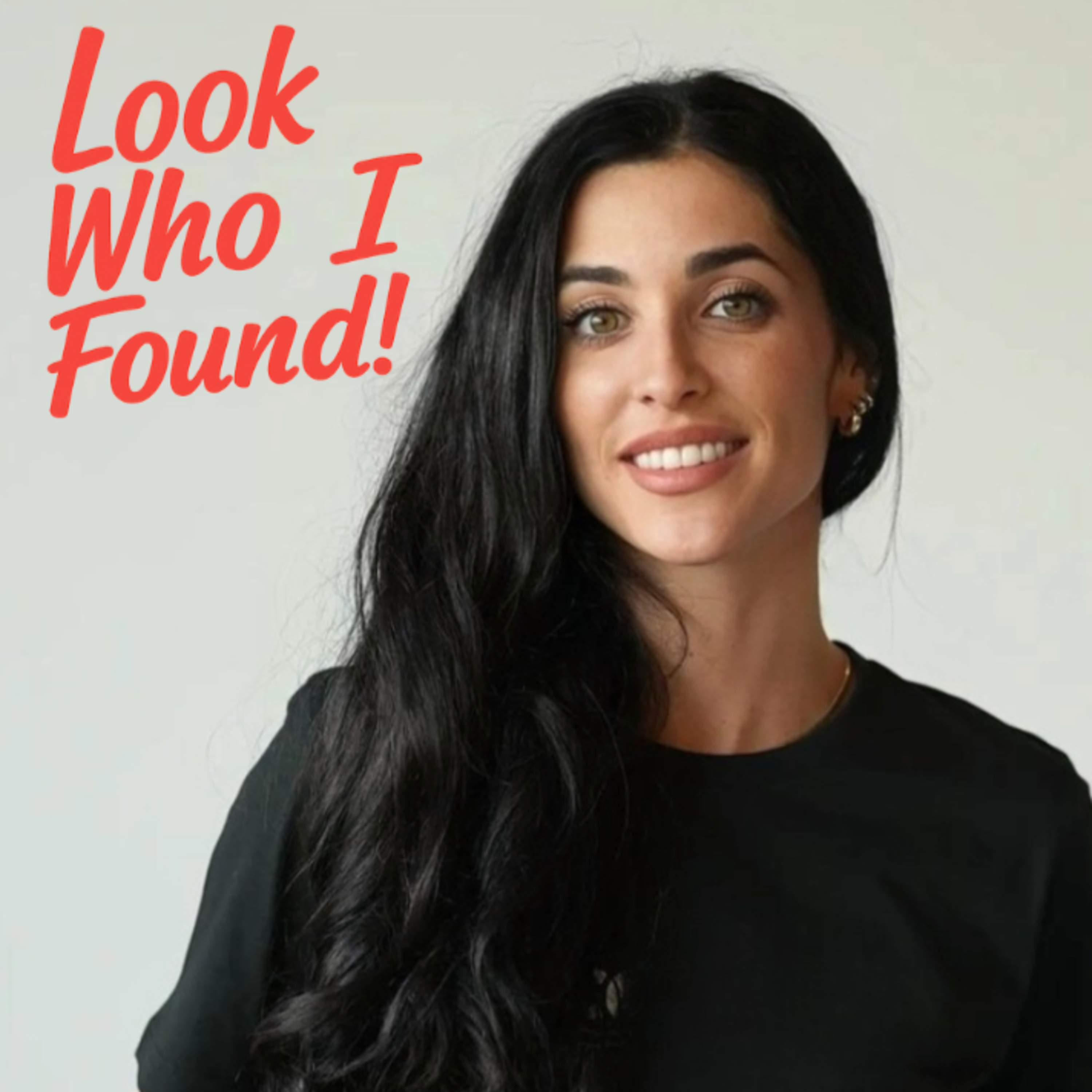
Walking with John Vincent, Founder of LEON - He built a $50 MILLION healthy fast food empire!
from Look Who I Found
26m 27s
John Vincent, founder of Leon Restaurants, discusses his journey in the fast-food industry, emphasizing that his real reason for starting was to have fun and help people, not just to serve healthy food. He argues that anyone can be an entrepreneur if they overcome their fears, which are often based on distorted self-stories rather than reality. Vincent compares entrepreneurialism to therapy, allowing individuals to test themselves freely and reconnect with hunter-gatherer instincts of freedom and responsibility, rather than being controlled by societal structures. He advises not to judge dark moments, as they are crucial for eventual success, and shares that selling Leon was a low point that ultimately led to him owning 100% of the business again. Vincent regrets not prioritizing his health earlier and recalls being warned against starting Leon by colleagues, which he considers the worst advice he received. His life motto is "do what you say you're gonna do."
Today I'm walking with a new friend of mine, the founder of one of the most interventual restaurant chains of our generation. I'm Tarikini and this is Likui found. I walk with the world's most ambitious founders to have unscripted conversation and uncover the human side of the people building, the biggest companies in the world. This week I'm joined by John Vincent, the founder of Leon Restaurants, and one of the people who completely changed about how we think about fast food. Let's go! Hi, how are you? Let's start. Oh, is that like the clap? No, no, I just want you to get really pumped up. Oh, you pumped up. Oh, you pumped up. Oh, you pumped up. Pumped up. Don't you mean serotonin? What's that like? John, tell us. Tell us. What are you building? Oh my gosh. Come on. What are my buildings? Come on. That's amazing. You know what? I had to enter workshops that I needed to answer that. How much is that? Am I building the Earth's favourite fast food? Am I building a business based on love? Am I building a business that tries to restore harmony? Yes, all of those. Yay, yes, as I see my peer would say, my old PA, yes, yes. Anyway, so what we building? What? Where are we now? What we doing? You're walking so fast. It's just a walk fast. No, but I'm not fitting up. Okay. Tell us. I'm building. I'm China build, the Earth's favourite fast food. Cools? Leon. Yes, and what is the reason you started? The reason I started is, well, you know, JP Morgan said, "Everyone has a good reason for doing something." Yes. Then there's the real reason. That's what he said. I love that. Okay. Anyway, so I think the good reason was to help people eat well so that through naturally fast food. Okay. The real reason was I wanted to have fun and help people. And that's why I think life is about having fun and helping people. Amazing. That's why one needs to do it. That's the real reason. Okay. You chose to go into one of the hardest industries in the world. Yes. What gave you the courage? Well, I didn't know it was the hardest. It was really nice. I was nice. I thought it was nice, nice industry. You didn't know that the restaurant industry was the hardest. We were quite romantic. We wanted to just have a nice life to good fast food, enjoy ourselves. Look, we also didn't know that when we started, you probably could get a good 35%, 40% return on capital on a building, on a restaurant. Now it's way lower because rents have gone up. Price, you know, cost of goods have gone up. The government takes 36 P out of every pound that we get, which is ridiculous. So, so, so, we didn't know it was so bloody horrible and difficult at the time. But look, we did, look, I think all businesses, it's really important that if you're starting a business, that you don't have a grassy greener attitude. Because I remember when we started, when you were doing our business plan and someone had a pharmacy, natural pharmacy, natural dispensary and above it, they had an office, they let us do our business plan there. I remember looking, some people were going to do these locks that opened with your fingerprint or your eye, right? And they said that all normal locks in houses or whatever, are going to be placed by this biometric locks. And I was like, that makes sense. Oh my god. I looked at their business plan. They were going to do like four million profit within two years. Wow. And I'm like, oh my goodness. What are we doing doing our crappy fast food business? There's going to make no money. And then, of course, no one's, everyone still uses keys. So, yeah, yeah. So, that business didn't go anywhere. Yeah. I think it's really important that you don't think, oh my goodness, I'm in a rubbish industry. I think it's a question of how well you lead and how well you're doing that industry. Yeah. It's a much bigger, a much bigger factor than the industry you're in. Whether you're any good or not is the biggest driver. I don't think you have to choose an industry because it's good or bad. There's always some money to be made in any industry if you're the best in that industry. Do you think anyone can be an entrepreneur? Can I just say this is pretty? No, this is so pretty. This is pretty. This is so nice. This is pretty. Why are we? If you can't, I think any, do you know what? That is a great question. It's a great question. I think any, okay. Talent. Talent. Talent, are you really feel? Right. Okay. If you give up your fears and you focus on love and true self and you don't let your fears get in the way then anybody can be an entrepreneur. The question is, have you given up your fears? That's the question. How do you do that? Not everyone has given up their fears. How? You've got the first thing to do is understand what your fears are. So I could, would highly recommend, okay, this gets psychological. Psychology and your own ability to self-destruct and to get in your own way is what would stop you being an entrepreneur. Agreed. And so it's all about the stories that you tell yourself. So if you're going to take a penalty, if you're in the Wormers World Cup, Mins World Cup, it doesn't matter. If you're about to take a penalty, the thing you've got to do is not imagine the ball going in. You've got to remember a story. I remember a time that it did go in. So what we now realize, don't we, is the stories that we tell ourselves that drive our success. It's not the actual, so much the circumstances we find ourselves in. Although circumstances we know have a huge impact because you know, some people get easier starts than others, right? Yes. But and I'm not, I'm not trying to decry that. But what I'm saying is that if you're telling yourself a story that says, I can't do it or people like me don't do that sort of thing. Yes. Then you're obviously sabotaging yourself from the beginning. If you actually realize that most of the things that we believe about the world are not true, most of them are imagined. There is the toll tech tradition talks about we're standing in front of a mirror. The mirror is a true reflection of reality. But there is smoke in between us and the mirror. And that smoke is the distortion of all the untrue stories that we tell ourselves about the world, about ourselves, about our friends. Most of our perceptions are not based on physics or reality. They're based on stories that we've told ourselves. I can't sing. I'm not good at that. My mum doesn't like it. My dad doesn't like it when I do this. The smoke. Everything is the smoke. So what you've got to realize is it's often the smoke that gets in the way of us doing what we think is right. And the biggest thing that you've got to recognize is that your fears you will always have certain fears. Look at the enneagram. Go on to a collecting energy's enneagram test 2 and do the enneagram. And you'll work out what mask you are putting on, which is how your true self is relating to the outside world. Persona, personality comes from the Latin and Greek mask. Your personality is not you. Your personality is a mask that you put on to relate to the outside world. Bloody hell, this is so deep. I'm like, I'm like, I'm like, I'm like, it's it. Your true self is your most loving self. That self when you feel most contented, most supported. And when you do that to yourself, you know, former chemist is that if you do this to yourself, it releases happy hormones because it's how you're a hug for the kid. Right? So, so that true self, that safe self that feels whole, connected and loving, that's the self that we were born with. Most of the fears that we have developed and built in our lifetime, we did not inherit. Fundamentally, we have two most fundamental inherited fears. One is fear of heights. That's why if you put a baby on a table, the baby doesn't fall off the table. Because the baby hasn't innate fear of heights, right? My knees can really fling herself. Okay, good navigation. The second is loud bangs. That's the other thing that a baby inherits as a fear, right? Almost every fear, fear of fire, fear of public speaking, fear of flying. Okay. All of those other fears, we've inherited because of stories we were told as a young kid. So, what you've got to do to answer your question, can anyone be an entrepreneur? Anybody can, but not anybody can be an entrepreneur, but only if you, in the long run, let go of your fears. Or rather, decide not to be controlled by your fears. So, that is the biggest thing. I love that. The reason that most people don't, is that they don't let go of their fears. It's easier said than to do it. Come on. Well, I think the first thing you've got to do is to understand what those fears are. And understand, and understand that they are not you. Most people think that they are their fears. Does that make sense? Yes, that means that you are not your fears. You are not your fears. Let's let you weaken to its inner fear. You, okay. I'll shout it. One, two, three. You, you are not your fears. When you start a business, it's a bit like when you learn a martial art, like winging the martial art that I do. Sometimes you start something, but ego reasons. - Yes.
But then you realize that ego and fear reasons, toxic, are toxic motivators that can only take you so far. So a lot of people start out in the business because I want to have money, I want to have a car, I want to have better holidays. I don't want to be controlled by others, right? Those are toxic motivations. Those are motivations based on your fears. But what you want to do quite soon is to realize that if you use those fears as their fuel for your motivation long term, you become toxic. So what I'm saying is you can use it as an initial spark, but quite quickly you've got to put those fears aside. Yeah, because the fears, if the fears, if you act based on your fears, your business and your life becomes toxic. So what you've got to do is to realize that there's a bigger, more powerful reason that you're doing what you're doing. And the reason that is good to have genuine purpose in your business, if that purpose is based on love, wholeness, harmony, right? Then you find a much more powerful, a much more sustainable and a much more universal way to motivate yourself when everybody else. I actually love that. If you're leading an organisation and you're like, look, the real reason I'm doing this is because of my toxicity. Yeah. Then that's not a way to lead an organisation. You've got to have a genuinely powerful motive, which can align everyone in even very early on when you've got two employees, three employees, four, five. You've got to find something true, something powerful, something much more based on love. Otherwise, your organisation will end up being toxic. As a kid, I felt that I saw the world for what it was. So even age five, I remember looking at my teacher and thinking, "Oh, I think I know what your fears are. I think I know what's motivating you." I remember thinking that a lot of what gets taught in schools is doesn't understand or look after humanity. Our medical system is not based on humanity. It's built on profit and a very narrow Western scientific paradigm. So a lot of Western thinking is based on mistrust of nature and an ability to dominate nature rather than a desire to live more symbiotically in balance with nature based on harmony. Leon was very much in the vein of someone like Anita Rodic who started the body shop, who would go and find and work with indigenous tribes in Africa or South America, recognizing the fact that they've got a lot more things right than we have in what you might call the Western world. So my point is that entrepreneurialism, finally, she wants to know, how do I make my money and get a Ferrari? Why is he waning on about all this shit? My point is this. Entrepreneurialism is therapy. Entrepreneurialism is therapy, right? It's how you test yourself, unfettered, free, living with freedom and responsibility and testing your variability to learn and compete in a world where you're not coseted by a corporate blanket. So it becomes the ultimate therapy and that's what entrepreneurism is because we're not meant to be controlled by others the whole time. We're not meant to be in this agrarian society and this Newtonian industrial society where we've become zombies. Our bodies, our brains, our happiness is built on a shamanic and a hunter gatherer tradition where if we don't catch the animal or find the berries, we die. And that's how we're built and entrepreneurism is the closest to that shamanic and that hunter gatherer experience that we have in the modern day. And otherwise you'll be controlled by the agrarian paradigm or the Newtonian industrial paradigm. Take a take of that. That was a fantastic answer. By the way, I know what everyone's thinking, right? They're thinking he runs and actually fast food business. How come he's so fat and how come he's going so old and going to go to bed? Explain, explain, explain. You didn't let me get my hair cut before. No, we're going to get hair cut. We're going to get hair cut. We can walk then out. Okay, I might as well get in with it, but carry on. Okay, so to conclude, you think that everyone has it in them to become an entrepreneur. 100% and it's really poor, by the way, that not everyone is the same entrepreneur that they see that they know about. Yeah, everyone can be an entrepreneur in their way. Every personality type has the opportunity to be an entrepreneur. You don't have to be an entrepreneur like Richard Branson or Elon Musk. Don't look at the famous ones and think that's what an entrepreneur is. And so the reason that most people are feeling that something's wrong, there's a great phase where I wrote on the website. I've read on when we bought it back, which was I've bought it back, it said that we're all homesick. Home sick for a divine earth, right? And that divine earth is the divine earth where we are not subject to the power, structures and controls of the agrarian or the industrial revolution. We are meant to be hunter-gatherers in spaces like this, free as free beings. Yeah. That's what our happiness depends upon. And the reason that most people are feeling like they're a reason of dark energy is that increasingly we are feeling powerless. We are not, we're feeling we are not living based on freedom and responsibility. We're constantly being controlled. And I think lockdown did us a major disservice in killing the human spirit. And the fact that most people didn't question why are young people having so many anxiety issues. And I went on the today program in 2021 because I didn't want people to say to me which they are now. Oh John hindsight is a wonderful thing. I went on the today program in 2021. Between lockdowns to say we must stop locking down now. There is now a much greater argument for not looking down than there is for locking down. And we became controllable. We became lalleable. We, my shoe is why are we allowing our fears. So, are you allowing us to be controlled and stopping doing the entrepreneurial things which is innately in our DNA? Yes. Do you see everyone's watching the snap? They're like, "Fuck yeah, I'm going to leave." They're all these fans. They see you. No one's here. I'm going to be like, "Why are there no train drivers?" Yes, because they're all being there. They're all fucking podcasters. We're going somewhere. I mean, everyone's squeezed. That's funny. I was thinking the other day, what would happen if we knew that an asteroid was coming towards us and they're going to destroy it in the year? Definitely. We're doing that. No, no, no. Do you think no one would be running the train? The only one would fall apart if he's finally running there. We're quite funny to watch. Let's not manifest that. No, we're not. That's where the king lives. I know, but the flag's not up, so he's not. He's not. He's not in. Okay. Three more questions. One is you sold Leon to Azda, right? Two EG groups that then within the group sold it to Azda. So EG and Azda were both in the same group. Yeah, and there must have been hard, right? Selling your baby and seeing it change. And obviously you must have had some low moments, some dark moments as everyone's open to the dud. Right. The real part of this is how do you get back up when it's really low? When it feels horrible, when you're in a dark, dark day, what push would you? What motivates you to get back up? What do you got to remember is that life is shit. I once, okay, Leon, this works. This works. This works. This works. Right? There's a longer answer, which is the story of Troy, which we're definitely in the cover. Okay. But what I used to remember was my Brazilian investor first, and if I was ever down, I'd call him. And one day he goes, "John, I can't do the position too." Yeah, I don't. Yeah, yeah, yeah. I'm going to be counter-appropriation. Anyway, so he goes, he goes, "John, John, what do you got to remember is life is shit." And I thought, "Ah, see, that's him, yeah, that's him, yeah." Because if you go through life thinking, "Oh, everyone else is having a great time." And I am the only one that's having a shit time. You got to remember that everyone is having some form of shit, right? So if you're having a shit time, just remember, life is shit. I'm not. Okay, fine. But when you're down, when you're down, when you're down, when you're down, when you're down. We've just got to go through the game. We're crashing it. We had such a nice copy anyway. So my point is you can't judge where you are now, because a low moment is just an absolutely essential part of the process to get you to what you might see as a high point. So what is really important is entrepreneurs don't judge what you perceive as down moments. Because some of the most amazing things in my life have come from what I thought at the time was a down moment. Oh, my goodness. If I had a soul Leon, right? Yeah. I wouldn't now own 100% of it. If I hadn't had the shit if I wanted to sell it, out there.
wouldn't now own a hundred percent of it. It's wouldn't have happened. - So basically silver lining has come out of really dark things. - That's a short amount of stuff. Just do your other stuff. - Basically everything for less than or alone. - Yeah, choy, choy it's story of choy. And that genuinely got me through remembering that, got with your dark moment. And then later on I realized it was true. It wasn't, I perceived it as a dark moment. - Yeah, but it wasn't. - It turned out to be essential. - What's your life motto? - Do what you say you're gonna do. - Ooh. - You ready? - Yeah, I wish not. - If you could go back, what's one thing you wish someone told you? - I think I personally wish that I hadn't compromised, I feel like I compromised my health a little bit when I was younger. And I think that I wish I'd looked after my health and listened to the people that probably advised me to look after my health in my 20s. I think I slightly, I worked, I worked too hard, I was a bit too stressed, I probably, - You really know what it was about. - Yeah, probably, yeah, yeah, yeah, yeah, me, yeah, good question. I wish I'd probably wish I'd been a bit, like I wish I had looked after my health at an early age. - What's the worst piece of advice you ever got? - I got told not to do Leon. - It was pretty bad, you know? I got told not to do Leon. - Bye, too. - By two people I was working at a consultancy firm. - Okay. - And they were like, they were like, one person said it won't work. And then the person said, it will be modulately successful and then you'll have to come back to the consulting firm. And they did date that turned out not to be true. So I think, I think you would always have people who are fearful on your behalf, or their behalf telling you not to do it. I mean, remember the guy that started Subway, the first one failed. And his friend said, are you not gonna do another one are you? And he did another one and that failed. And then his friend said, are you not gonna do a third one are you? And he did. And that one was successful. - So it's been. - So I think it's, - Is it so? - Yeah, don't listen to even people who love you might try and encourage you not to go for it. And so you need to be brave enough to say to them, thank you for your concern, but I'm not gonna let your concern stop me. - Everyone watching this wants to be a millionaire, eh? - Do they? Why? - Because everyone wants to say. - Would they rather not be successful? - Well, it's kind of, yeah, I mean, it's just to find what you, to find success at. - My biggest suggestion is do not define your success as having money. It's just not what success is. And the bottom of the most, I define success as being yourself. - Yeah. - Happy in the present moment. - Yeah. - And giving up the fruits. - If you look at fruits is things like, fruits are the need of ego. Fruits is recognition, money, validation. - Validation. - All of those are toxic motivations based on fear. So what you don't, what you want to do. - I'm circling back. - I'm circling back. - Oh, the circle of life. - Circle of life. - So if you are driven by a desire to be a millionaire, it's the wrong reason to be an entrepreneur. What you want is spiritual growth and freedom. That's what you want. - Hell yeah. - If you're chasing money, money is not, of course, if you have no money, it's horrible, right? - Yeah. - But a speaker, anyone that's banked a million quid, five million quid, a hundred million quid, a billion quid, they look at their bank balance. And for one second, they are happy. And then it's the same worries that they had yesterday. Surface the next day. It's the same worries. It's not, it doesn't, it doesn't make you fundamentally successful or fundamentally content. It just doesn't speak to anyone who has, who, who's Bill Gates. I believe I am much, I believe I am much, much happier than most billionaires. - Are you crazy? - It's not, it's not. - The bad parts. - Yeah. - Are you crazy? - I'm in the bad parts, there we go, there we go. - I'm sorry, I just don't really know how to keep it. - So it was a question. - The last one, then, how do you know enough is enough? How do you know when you're like, I've made it. I'm successful, I've got a beautiful wife, kids, family, great job. How do you know to be content and stop chasing and looking at other people and turning left and right? And like, when is enough enough? - I think enough has to, if you're really spiritually healthy, enough is enough from the very beginning. Because life is absolutely not a destination to a place of enough. There's a really good film by Alan Watts, who died in the early '70s. It's worth, it's good to go to life is not a journey. And one of the explains is because there is no destination where I'm going to have enough. There's life is not a journey either. People say it's not about the destination, it's about the journey, yeah, yeah, yeah. But if there was no destination, there was also no journey. - Enjoy the ride. - It's literally a series of play, the universe is inherently playful, right? - Yeah. - It's a series of present moments in which we must be playful. It is not a destination to a place of having enough and it's not a journey towards that destination of having enough. It's about, it can't totally be in present now and being inherently playful, having fun and helping others in the present moment. If you're having fun and you're helping others in the present moment, then you already have enough. - Did you like it? - Did you like it? - Yeah, yeah. - Thank you. - Yay! - Okay guys, that's it for "Lictoy Thane" this week. A huge thank you to John Vincent for such a fun conversation. Follow the show wherever you're listening and for behind-the-scenes clips. Find me on Instagram and TikTok @Tarikene. I'll be back next week with another founder worth knowing all about. Until then, see you on the next walk.
Podcast Summary
Key Points:
John Vincent founded Leon Restaurants to make healthy fast food, driven by a desire to have fun and help people.
He believes anyone can be an entrepreneur by letting go of fears, which are often based on untrue stories, and focusing on love and purpose.
Entrepreneurialism is described as therapy and a way to reclaim freedom and responsibility, akin to hunter-gatherer instincts.
Vincent advises not to judge low moments, as they are essential for growth, and emphasizes the importance of health over overwork.
He regrets compromising his health in his 20s and recalls being told not to start Leon, which turned out to be bad advice.
Summary:
John Vincent, founder of Leon Restaurants, discusses his journey in the fast-food industry, emphasizing that his real reason for starting was to have fun and help people, not just to serve healthy food. He argues that anyone can be an entrepreneur if they overcome their fears, which are often based on distorted self-stories rather than reality. Vincent compares entrepreneurialism to therapy, allowing individuals to test themselves freely and reconnect with hunter-gatherer instincts of freedom and responsibility, rather than being controlled by societal structures.
He advises not to judge dark moments, as they are crucial for eventual success, and shares that selling Leon was a low point that ultimately led to him owning 100% of the business again. Vincent regrets not prioritizing his health earlier and recalls being warned against starting Leon by colleagues, which he considers the worst advice he received.
FAQs
The good reason was to help people eat well through natural fast food, but the real reason was to have fun and help people.
No, he thought it was a nice industry and didn't realize how hard it would be due to rising rents, costs, and taxes.
Yes, anyone can if they let go of their fears and focus on love and their true self, rather than being controlled by fear-based stories.
He means entrepreneurship allows you to test yourself freely and responsibly, akin to a hunter-gatherer experience, which helps overcome modern societal controls.
He remembered that 'life is shit' for everyone and that low moments are essential parts of the process that can lead to future highs.
Do what you say you're gonna do.
Chat with AI
Loading...
Pro features
Go deeper with this episode
Unlock creator-grade tools that turn any transcript into show notes and subtitle files.
 PodcastTranscript AI