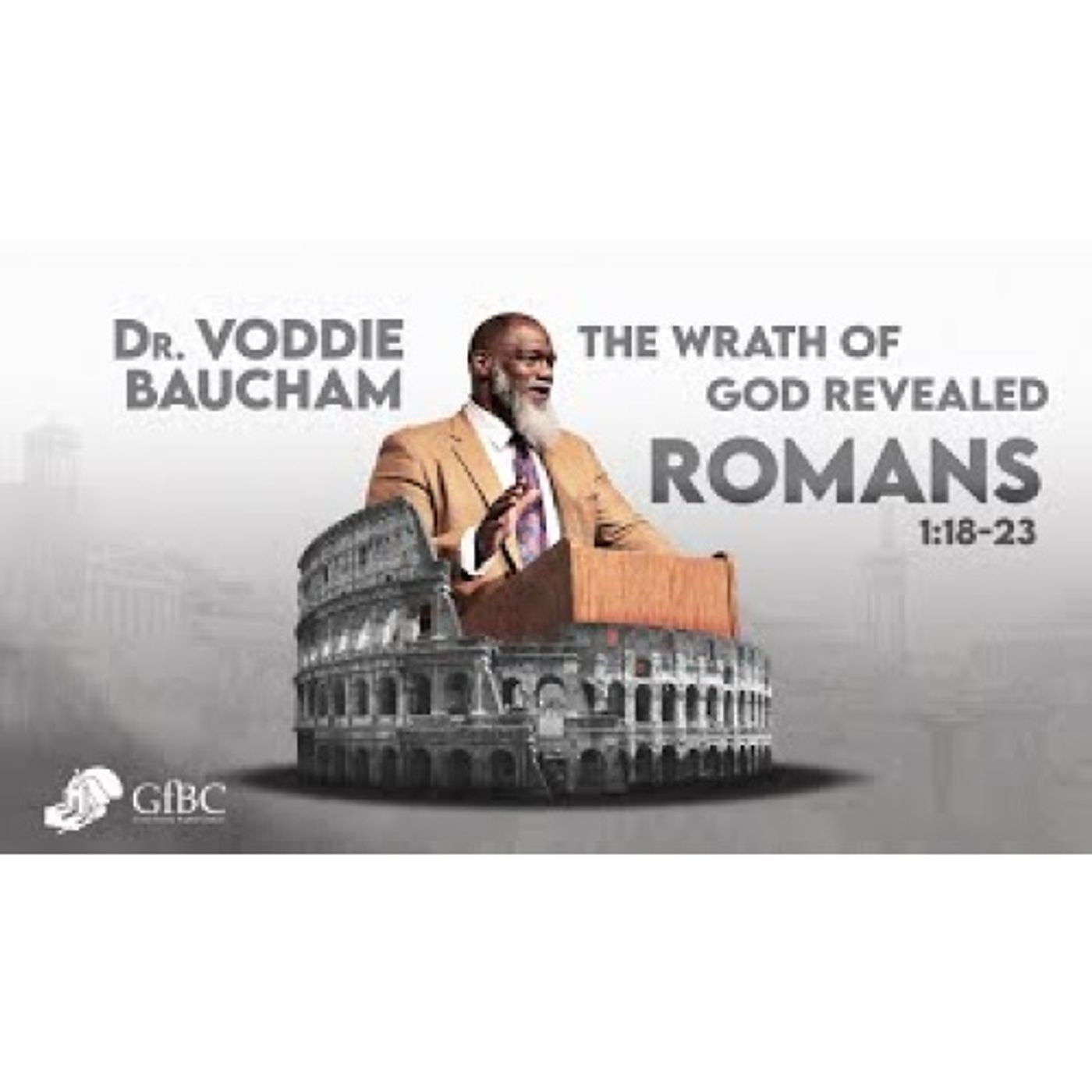
El pasaje de Romanos 1:18-23 sirve como fundamento para la doctrina de la justificación por la fe, estableciendo primero la culpabilidad universal de la humanidad. El apóstol Pablo revela que la ira de Dios se manifiesta continuamente desde el cielo contra toda impiedad e injusticia humana. Los seres humanos, lejos de ser ignorantes, suprimen activamente la verdad de Dios mediante su maldad. Esto se debe a que el conocimiento de Dios—sus atributos invisibles y poder eterno—ha sido claramente percibido por medio de la creación, dejando a todos sin excusa. A pesar de conocer a Dios, la humanidad no le glorificó ni le dio gracias, sino que su pensamiento se volvió fútil y su corazón se oscureció. Cambiaron la gloria del Dios inmortal por imágenes de criaturas mortales. Este pasaje subraya la necesidad desesperada de salvación, ya que el hombre es culpable, merecedor de la ira divina e incapaz de salvarse a sí mismo, preparando así el terreno para la solución de la justificación que se presenta más adelante.
Transcription
7409 Words, 40002 Characters
Father, may we glory in You alone, our Redeemer, and actually anticipate that day when You will indeed call us and it will be paradise. And we will indeed behold Your face forever. In the meantime, keep us by Your grace. This we pray for it is our great need and desperate desire. So we ask it in Jesus' name, Amen. As we continue our journey through the Book of Romans, we have come to Romans chapter 1 and verse 18, we will look at 18 through 23 this morning. But I want to orient us as we begin this section. There is a section here that deals with the issue of justification by faith. And it is really from Romans 1, 18 on through Romans chapter 8 that's the broader section. We've had the introductory section and there is a turning point, a thesis statement which is the paragraph that we looked at on last week, Romans chapter 1 verses 16 and 17. That's the thesis statement for this treatise on justification by faith before we get into some other issues in Romans chapter 9, 10 and 11. So, really from one 18, after this thesis statement in 16 and 17, we are dealing broadly with the doctrine of justification by faith. Now in a smaller section from 118 on down through the first half of chapter 3, chapter 3 and verse 20, there is another section that we are entering into dealing with man's guilt and the universality of man's guilt. Here in chapter 3 and verse 21, you have the words but now. Those words but now enter a different section. So, what we are dealing with here is the first part of this largest section in the book of Romans. It is chapter 1 verse 18 on down through the end of the first chapter. And this first section has to do with the cause of man's guilt, the source of man's guilt if you will. Specifically we are dealing with the guilt of the Gentiles. We will also in chapter 2, deal with the guilt of the Jews, bring that to a crescendo in the first half of chapter 3 where he talks about the universality of the guilt of the Gentile and the Jew before we enter into the response to man's guilt. Today as we introduce this what will be a four part kind of many series dealing with the rest of chapter 1 on this sort of devolution and degradation of man, today we look at the juxtaposition of two issues. The wrath of God and the will of man. The wrath of God and the will of man, both of these being extremely important. Because as we deal with this first section and as we deal with the question of God's wrath and the universality of man's guilt in order for us to grasp this concept of justification we have to come the grips with the fact that man is indeed guilty worthy of the wrath that is to come in desperate need of salvation and completely unable to do anything to save himself but there is a problem because when we deal with this issue of man and his inability to do anything to save himself and the question of God's wrath there is also the broader theological question of God's sovereignty and man's responsibility. How's man responsible if God is sovereign? How does he hold man accountable for his sin? This paragraph today answers that question, yet this is a difficult issue for many of us, not because the scriptures are unclear. The scripture could not be clearer. This issue is not difficult because the Bible is unclear. This issue is difficult because of our philosophical presuppositions that we bring to the text. That's what makes it difficult because we really don't understand what freedom is. We really don't understand what sovereignty is. We really don't understand what guilt is, so we make assumptions, even God is the sovereign Lord of the universe and everyone is robotically and mechanically carrying out what they're supposed to carry out and therefore it's really quite crude for God to hold man accountable or man is a free moral agent that is absolutely capable of making any and every choice including choosing God. By the way, our predisposition is toward the latter, not the former. Our predisposition is toward man as a free moral agent whose will is free enough and uncorrupted enough to somehow do something to at least aid in his own salvation. That's our predisposition. So again, it becomes difficult for us and murky at times. Listen to this from A.W. Pink in his book The Sovereignty of God. By the way, if you want to read something on this particular issue, just chapter eight of A.W. Pink's book The Sovereignty of God deals with the question of God's sovereignty and man's responsibility and it is masterfully done, also available online so you can go online and find it. Just look up A.W. Pink, The Sovereignty of God. Go to chapter eight if you're interested in this issue, but here's a statement from Pink in that chapter. Free moral agency is an expression of human invention and to talk of the freedom of the natural man is flatly to repudiate his spiritual ruin. No where. Let me repeat. No where. The scripture speak of the freedom or moral ability of the sinner. On the contrary, it insists on his moral and spiritual inability. Those who have ever devoted much study to this theme have uniformly recognized that the harmonizing of God's sovereignty with man's responsibility is the gordian knot of theology. It is a tough issue, but it's an issue with which we must wrestle nonetheless. Here's the cop out. The cop out is, well who can know such things so let's just leave them alone. The cop out is, well these are just mysterious things far beyond us so let's just all get along and not talk about those touchy difficult subjects that have been the source of such debate for so long because obviously since great minds disagree on this issue, they must just be so well hidden in God's word that there is simply no answer to be had. I'm not satisfied with that. This issue is far too important for us to be left in the dark and we can get there from here and part of getting there from here is walking through this larger section and this particular section in the book of Romans. So let us roll up our sleeves and begin. Everyone beginning in verse 18. For the wrath of God is revealed from heaven against all ungodliness and unrighteousness of men who by double predestination suppress the truth. No. Who by their unrighteousness, not because they have no choice. But by their unrighteousness they suppress the truth. For what can be known about God is plain to them because God has shown it to them. For his invisible attributes, namely his eternal power and divine nature have been clearly perceived ever since the creation of the world and the things that have been made. So they are without excuse. Verse 21, 4, that's an important 4. Although they knew God, they did not honor him as God or give thanks to him, but they became futile in their thinking and their foolish hearts were darkened. Being to be wise, they became fools and exchange the glory of the immortal God for images resembling mortal man and birds and animals and creeping things. There you have it. One single paragraph wrapped up rather neatly and nicely for us all. Not convoluted and really not all that complex in this paragraph. We see three things, three doctrinal truths as we look at the rest of this chapter. The goal today is to lay the foundation, which is what Paul does here in this first paragraph, to lay the foundation for what it is that we are examining here for the rest of chapter one in the book of Romans. So there are three issues here that we need to wrestle with. Issue number one is the wrath of God. Issue number two is general revelation versus special revelation. And issue number three is the doctrine of reprobation. Those are the three issues with which we must wrestle here in this paragraph. Number one, the issue of the wrath of God, number two, the issue of general revelation and its role, an issue number three, the doctrine of reprobation. We have to get these as we go forward or we will not understand the doctrine of justification. We have to get these or we will not understand the message of the book of Romans. We have to get these or we will not understand our own salvation and what it is that God has wrought in those of us who are saved and what those who are not saved are in desperate need of. We've got to get this. So let's begin. First of all, the wrath of God. This is a phrase that is very uncommon in our day. It is very uncomfortable for us because we live in this time and in this era that says things like this. We are all God's children, which by the way is not true. We are not all God's children. We're all God's creation, but we are not all God's children. There is no such thing as the universal brotherhood of man. That is not true. Men stand in two camps. There's the seed of the woman and the seed of the serpent. That's it. Well, I don't know that I agree with that. Okay. That's fine. Let's talk about it for a moment. According to John, chapter 1 and verse 12, "To those who received him, even to those who believed on his name, he gave the power to become the children of God." Let me ask you a question. Why do I need the power to become something that we all are anyway? The answer? I don't. That is why, within this broader doctrine of salvation, there is the doctrine of adoption, which we don't talk about much anymore at all. We talk about election, we talk about regeneration, we talk about justification, and then we jump right across and talk about sanctification. But there is a step between justification and sanctification in the order salutes, or the order of salvation, that step between justification and sanctification is the doctrine of adoption. We are adopted as sons, and we have to be adopted as sons, because according to Ephesians chapter 2, we were all by nature, what? Children of wrath. Not children of God. Jesus was able to look and say, "You are all of your father, the devil." How could he say that if we were all the children of God? The answer is he could not. So it is necessary for us to be adopted as God's children. So the first problem we have with this whole thing with God's wrath is this idea that we're all God's children. And God loves us all the same, when the Bible makes it clear that God hates the wicked. Not loves the wicked, He hates the wicked. And no, the Bible doesn't say God loves the sinner and hates the sin. He hates the wicked. And what they do, just marinate on that for a moment, because again, we don't like it. It is extremely uncomfortable for us. The other problem we have with that is this, that God is love. And then with the Bible says, God is love, yes He is, love, and wrath. Amen. The wrath of God is revealed from heaven. Well, how can there be wrath if God is love? News flash. I love my babies, all of them. And sometimes I love them enough for there to be some wrath. If the case of amen, you'll say, "Out." Now in those moments do I no longer love? No, I do, I love. So in other words, you can be both a loving person and there can be wrath. In fact, as a loving person, you can love your children and have wrath for those who would come against them, could you not? And it would be an expression of your love for your children to pour out your wrath on those who would come against them, would it not? Extremely loving. Extremely loving. But the text is clear. It says, verse 18, "For the wrath of God is revealed from heaven." By the way, it's a takeoff on what just went before. There is a righteousness that is revealed. Now there is a wrath that is revealed. Both of them being revealed. Remember, that last paragraph was the umbrella under which all of the rest is about to come. And in that last paragraph, there was this idea, this term of this righteousness that is revealed. We will see this throughout the Book of Romans. But now the righteousness of God has been revealed. We will see that again and again and again. But in order for us to grasp that, first, we have to recognize that the wrath of God has been revealed. The wrath of God has been revealed from heaven against all ungodliness and unrighteousness of men. That word unrighteousness in the Greek is quite simply a negation of the word righteousness that was revealed in the verse before. Just like we would put "un" in front of it. In the Greek, you put "a" in front of it. And that makes it a negation or the opposite of what just went before. So we have the wrath of God being revealed from heaven against all ungodliness and unrighteous
ness. God is revealing His wrath. Now, newsflash, here's why this is essential. If we don't understand the wrath of God, we don't understand the doctrine of justification. We don't understand biblical salvation. Why? Here's why. What do you think you're saved from? You're thinking about that? I'm saved really from what? Well from going to hell when I die, really? What's that? Well, that's a bad place that nobody wants to go, really? Where did that come from? What? You're from God, the creator of all things? Oh, yeah, really. What's that for? You know this bad place that nobody wants to go to? What's that for? Well, that's actually for God to pour out His wrath on the unrighteous, really. So now let's go back to the first question. What do you save from? God? Give that man a prize. You are saved from God by God. You are saved from the wrath of God. If you don't understand the wrath of God, you don't understand salvation. If you don't understand that God is holy and He is just and He is righteous, and if you don't understand that He must pour out His indignation on unrighteousness, then you don't have a clue why you need justification. Why? Do we need to be declared righteous? Why? Do we use these forensic terms, these legal terms, of standing before a judge and having a declaration made on our behalf? Why is that important? Unless there is something from which we have a desperate need to be saved. And that something from which we have a desperate need to be saved is the very wrath of Almighty God. It is both temporal and eschatological. The Bible talks about both. So when we talk about the wrath of God, we do talk about the wrath of God in an ultimate sense in an eschatological sense, the consummation of all things when all things are made right, but what's being discussed here in Romans chapter 1 includes that idea, but is also dealing with this temporal concept. Listen to it in the eschatological sense, Psalm 21-9. You will make them a blazing oven when you appear. The Lord will swallow them up in His wrath and fire will consume them. Nayhum, 1-6. Who can stand before His indignation? Who can endure the heat of His anger? His wrath is poured out like fire and the rocks are broken into pieces by Him. Romans 5-9. That's therefore, we have now been justified by His blood. Much more shall we be saved by Him from the wrath of God. Amen. Revelation 16-19. The great city was split into three parts and the cities of the nations fell. And God remembered Babylon the great to make her drain the cup of the wine of the fury of His wrath. But there's also this temporal sense, Psalm 2-12, "Kiss the sun, lest He be angry, and you perish in the way, for His wrath is quickly kindled." Jeremiah 10-10, "But the Lord is the true God. He is the living God and the everlasting King at His wrath, the earth quicks, and the nations cannot endure." There's also John 3-36, "Whoever believes in the sun has eternal life where it does not obey the sun shall not see life, but the wrath of God remains on Him, even now Ephesians 5-6. Let no one deceive you with empty words for because of these things here and now the wrath of God comes upon the sons of disobedience." There is a sense in which the wrath of God is that which ultimately is to come against the sons of disobedience. But there is also a sense in which the wrath of God is being revealed even now. The tense of the verb even that He uses here, the wrath of God is revealed. This present tense Greek verb is an action that is ongoing and continuous. In other words, the wrath of God is being revealed. The wrath of God is continuously being revealed from heaven is what He's literally saying here in the Greek. The wrath of God is being continuously revealed from heaven. Why? Because of unrighteousness and ungodliness, two separate terms here. Some equate these two terms to the two tables of the law. First of all, ungodliness, which is sin against the person and holiness of God, and then unrighteousness, which is sin that is carried out then in the second table, which is the sin against our brother, our fellow man. And there is a sense in which this passage that is going to unfold in just that way as we begin with man's sin against God and specifically here in the first commandment. And then as we get down toward the end, the last paragraph, it is specifically man's sin against man. So we're speaking here about man's ungodliness, which is not being like God. His unrighteousness is not being in right relationship with God and not being in right relationship with man. So God's wrath is being poured out. I want you to understand this. We don't like the concept of wrath because we always think about this concept within the context of one man pouring out wrath against another man. And we think, well, shouldn't God be self-control? Doesn't, doesn't, doesn't Proverbs teach us that it's a fool that gives full effect to his wrath? Not when your wrath is righteous. His holiness and his righteousness requires that he pour out his wrath against sin. If God does not pour out his wrath against sin, then God has called his own righteousness into question. So far from the wrath of God, bringing God's righteousness into question, it is the lack thereof that actually brings God's righteousness into question. He is a holy God, a righteous God. He must consume all unrighteousness. He must destroy all unrighteousness. It has to happen. His very being and nature requires it. Listen to this from Robert Raymond. Because of man's corruption and inability to please God, he is deserving of punishment for his sin is not only real evil, morally wrong, the violation of God's law, and therefore undesirable, odious, ugly, disgusting, filthy, and ought not to be. It is also the contradiction of God's perfection cannot be met with his disapproval and wrath and damnable in the strongest sense of the word because it dishonors God. God must react with holy indignation. He has to. His very godness requires it and so the wrath of God is revealed from heaven. But look, against the ungodliness and unrighteousness of man, who by their unrighteousness suppressed the truth, by their unrighteousness suppressed the truth. Here's the word picture. Man is unrighteous and truth comes to man and it is man who exerts his unrighteousness against the truth in order to suppress the truth. Man actively suppresses the truth. The Bible does not teach that God has to keep his hand over man's eyes in order to blind man so that man can be guilty. The fact of the matter is man desires unrighteousness. He is born and sinned. He is shaped in an equity. It is the product of the fall. In chapter 5 we will read that because of one man Adam sinned under the world and death through sin. It is because Adam was our federal head that all men are fallen in him and so our natural predisposition and inclination is toward all things evil all the time. But we are getting ahead of ourselves talking about refurbation but know this. The wrath of God is being revealed from heaven against all ungodliness and unrighteousness of man. Not who are just ignorant but who actively suppress the truth in their unrighteousness. And so you ask, how does man actively suppress the truth in his unrighteousness. I am glad you ask. Verse 19, 4, often times we look at 4 and we think it is just a throw away word. Every word everywhere is important. That is why we talk about the importance of essentially literal translations of the Bible. This for is not a throw away word. There is an explanation here. How is man suppressing the truth in his unrighteousness. How is man coming against holding down, holding back God's truth in his unrighteousness. For his invisible attributes, namely his eternal power, his divine nature, have been clearly perceived ever since the creation of the world in the things that have been made. Here is the answer. The answer is general revelation. The answer is that God has shown himself to man and man has rebelled against that which he has been shown. That is the answer. general revelation is clear according to this text. It is clear. Look at what the text says. What can be known about God is plain. General revelation is clear. By the way, the difference, general revelation, special revelation, general revelation, the heavens declare the glory of God as the Psalmist says and Psalm 19. That is general revelation. You look at the world around you and God has clearly perceived in the world around you. Special revelation is God's revelation to us in his word. God's revelation to us through his prophets. That special revelation. Now here is what is interesting. General revelation is enough to condemn us, but it is not enough to save us. Let me say that again. Listen to our own confession of faith, the London Baptist confession, chapter 1, paragraph 1 of the Holy Scriptures. The Holy Scripture is the only sufficient, certain, and infallible rule of all saving knowledge, faith, and obedience, although the light of nature and the works of creation and providence do so far manifest the goodness, wisdom, and power of God as to leave men inexcusable, see what that comes from, yet they are not sufficient to give that knowledge of God and his will, which is necessary on disavasion. Therefore, it pleases the Lord at sundry times and in diverse manners to reveal Himself and to declare His will unto His church and afterward for the better preserving and propagating of the truth and for the more sure establishment and comfort of the church against the corruption of the flesh and the malice of Satan and the world to commit the same holy underwriting, which makes the Holy Scripture to be most necessary, those former ways of God's revealing His will unto His people, being now completed. So general revelation is enough to condemn us, but it is not enough to save us. It is clear, it is also universal. What can be known about God is plain to them because God has shown it to them for His invisible attributes, namely His eternal power and divine nature, have been clearly perceived ever since the creation of the world and the things that have been made. It is universal. All people in all times and in all places have had and continue to have a general revelation of God. All people in all times and in all places, general revelation is clear. General revelation is universal and general revelation unfortunately is insufficient. It is enough to condemn us because the text says therefore they are without excuse. There is no excuse, ignorance is no excuse, anybody ever got one of those tickets. Ignorance is no officer, I didn't see the sign, really, that's too bad. You go and show up and pay this now, have a nice day. Always have a nice day. Ignorance is no excuse. People are not ignorant, God has revealed Himself in nature and by the way, this is not what God is saying, God is not saying, let's be very careful here. I revealed myself in general revelation, you didn't take general revelation and make it more sufficient than it was supposed to be and thereby figure out who I am and who Jesus is and what the whole deal is by just general, it's not what he's saying, no, no, no, no. You had general revelation and you didn't even respond to that. You had general revelation and you suppressed that. Now what did it look like when they suppressed that, glad you asked? For although they knew God, they did not honor Him as God or give thanks to Him, but they became futile in them thinking and their foolish hearts were darkened, claiming to be wise they became fools and exchanged, here's what they do, the glory of the immortal God for images resembling mortal man and birds and animals and creeping things, that's what man does. There's more on that next week, specifically, man worshipping the creature rather than the creator. But this is in essence what man does. Here's the general revelation of God. Man takes the general revelation of God and because of his wickedness, he takes the general revelation of God and exchanges the glory that God is screaming to Him and creation for something else. And he does that because of what? He does that because of reprobation, which is the third issue that we need to understand. Listen to this from Wayne Grudem in the systematic theology. I love Grudem's definitions, it's wonderful, just the definitions that he has of terms. Reprobation is the sovereign decision of God before creation, to pass over some persons in sorrow, deciding not to save them and to punish them for their sins and thereby to manifest his justice. Marie that again. That's different than the double predestination that we're off an accused of. What do you mean? You believe in predestination? That means you believe that God just created some people just so that he could send them to hell? Know what I mean is that God made a sovereign decision before creation to pass over some persons in sorrow and not to save them and to punish them for their sins because they are sinners and they desire sin, they don't desire God and he chose to do this for his own glory. That's what I mean. I mean he decided to give some people exactly what they want. We don't want to get too far ahead of ourselves but we have to look here and just glance at chapter 3 and look at chapter 3 beginning in verse 10 because this is important when we talk about the doctrine of reprobation because when we talk about it often I mean people get offended you know as though somehow God is just making people not come to him. As it is written none is righteous no not one no one understands no one seeks for God. The doctrine of reprobation is not that God saying there's some people who seek for me that I'm just not going to have no one seeks for God no one is righteous no one is seeking after God. There is not one human being anywhere on the face of the earth who is seeking after God unless God has regenerated that person in order to call them to himself. God does not have to make anyone run away from him. God does not have to make anyone choose hell. God does not have to make anyone choose their own sin. We are all bent in that direction from the word go. We have all the seeker services we want but the fact of the matter is there's no such thing in the universe as a seeker no one seeks for God no one. So the doctrine of reprobation is about God allowing men to have what they desire. That's the doctrine of reprobation. God does not have to do anything to cause men not to desire him. It is the natural inclination of the heart of man. No one is righteous no one does good no one seeks for God not a single solitary one. And so what is happening here in Romans chapter 1 is we are seeing that reprobation carried out but we are basically seeing this picture God's wrath is being poured out is being revealed from heaven against what against ungodliness and against unrighteousness but what really what what I mean men don't have a choice yet they do have a choice but unfortunately because their will is marred the choices are always and everywhere against God man does not have the ability to move toward God in and of himself that's the extent of the fall he does not have the ability it doesn't exist which is why we were all by nature children of wrath listen to this I'm going to read it from Ephesians chapter 2 verses 1 through 6 because here's what this does this doctrine of rep reprobation makes the grace of God shine more brightly when you understand there's nobody righteous there's nobody who seeks extra God that the only way anyone is ever going to be saved is that God for his own purposes and by his own will has elected before the foundation of the world to save some in spite of the fact that all of us all of us deserve to be left in reprobation. So the question is not how can God let some people go to hell the question is how can any of us be saved Ephesians chapter 2 and you were dead in the trespasses and sins in which you once walked following the course of this world following the prince of the power of the air the spirit that is now at work in the sons of disobedience among whom we all once lived in the passions of our flesh carrying out the desires of the body and of the mind notice what he says carrying out the desires of the body and the mind as Luther says sinners are not dragged along by the scruff of the neck as it were kicking and screaming in the sin no they do it willingly and if you want to see somebody dragged along by the scruff of the neck what you do is you give them God's law and make them do that that's when they're being dragged along by the scruff of the neck but nobody's dragged along in the sin that's what we want that's what we're bent toward that's what this text teaches and where by nature children of wrath like the rest of mankind but God being rich and mercy because of the great love with which he loved us even when we were dead in our trespasses made us alive together with Christ by grace you have been saved that's the grace of God people that's the mercy of God so again the the doctrine of reprobation it is not is though you know God's over here going I'm gonna send you over there and I'm gonna send you over here I'm gonna send you over there and I'm gonna send you over here no here's the doctrine of reparation everybody every last human soul is fallen in Adam and everybody has entered the white gate everybody on the broad road everybody leading to destruction and God by his grace in his mercy and in his kindness and for his own purposes has elected to save some that's the message that's the message not this evil capricious you know double retest an Aryan view of which we're often accused those who hold to the doctrines of grace man is guilty and completely and utterly without excuse and every man who tastes the wrath of God deserves it and then some and newsflash those who don't taste the wrath of God deserve it here's the irony the irony is those who believe in election and predestination are often accused of being arrogant oh you believe that God tells you and not other people that that makes you arrogant really so you don't believe in the doctrine of election which means that you believe men are saved because of something in themselves which means by the way they have a reason to boast but I'm arrogant you believe God looked through the corner of history and you believe the pressing view of election he looked through the corner of history and he saw which people would be good enough wise enough smart enough holy enough whatever to choose him and then based on him seeing who would choose him he chose them because of their choosing him first which means every person who saved is saved because there was something in them that God saw that's not grace that's merit there is none righteous no not even one there's none who does good there's none who seeks after God God looks down the corridor of history looking for somebody who's going to choose him he'd be looking a long time because there's not one we're all deserving of this wrath that is being revealed from heaven against the ungodliness and the unrighteousness of men and there has only been one in whom this was not seen no ungodliness no unrighteousness no suppression of the truth this one is the God man Jesus Christ by the way when we get to chapter three there is a word and I keep saying when I'm going to get too far ahead of ourselves but when we get to chapter three trust me by the time we get there you guys won't remember this anyway all right but when we get to chapter three whenever I go and grab a Bible and I'm looking for a Bible to read or study whatever whenever I go grab one I open up to Romans chapter three and I look for a word I look for the word propitiation if it's not there I put the Bible down I don't want a translation it doesn't have the word propitiation in it I just don't because without propitiation this stuff doesn't all come together see here's what happens in chapter three look with me if you will chapter three beginning verse 21 but now here's where we're going okay this is where we're going after we finished this section on man's guilt and we cover everybody up in guilt and there's nobody left we just wipe out everybody Gentiles you're gone Jews you feeling real good right now chapter two you're going to chapter three in case anybody feels like they've been missed first half of the chapter everybody's gone so by the time we get to chapter three verse 21 we so desperately need these two words but now the righteousness of God has been manifested apart from the law although the law and the prophets bear witness to it the righteousness of God through faith in Jesus Christ for all who believe for there is no distinction for all have sinned and fall short of the glory of God there's the summary statement of this whole section and are justified by his grace as a gift for the redemption that is in Christ Jesus whom God put forward as a propitiation by his blood to be received by faith what does that mean here's what that means that means that word means that Jesus Christ satisfies the wrath of God through his death on the cross that's what it means so we start this section with the wrath of God is being revealed from heaven against all ungodliness and the unrighteousness of men and where we're going to end up after the Gentiles guilty and the Jew is guilty and then after all men are guilty we end up with that but now statement that gives us this wonderful doctrine that shows forth the propitiation that Christ offers satisfying the wrath of Almighty God so that God pours out his wrath on sin against Jesus Christ so that those who are found in him can be justified his righteousness imputed to us remember the wrath of God is revealed against what ungodliness and unrighteousness that's me so I need some righteousness do I not I get that the imputed righteousness of Christ which we talked about on last weekend last weekend that alien righteousness that is imputed to us so now I stand before God as righteous because the righteousness that Christ earned by keeping the whole law where the first Adam failed will get there in chapter 5 is then imputed to me but beyond that there is this wrath to be dealt with what do we do about the wrath the answer to that is the same Christ his active obedience allows him to impute righteousness to me his passive obedience takes in his body the wrath of God that was due to me so that I stand forgiven and righteous because he was punished in my stead and because he was righteous in my stead you don't get the wrath of God you don't understand this you don't understand general revelation as opposed to special revelation you don't understand this you don't understand the doctrine of reprobation you don't understand this but when we get all of this we understand the glorious grace of God and the majesty of the gospel so does that mean that we just sort of sit and soak and believe that we're better off than other people nope because we get the doctor chapter 10 and when we get to chapter 10 what we get to hear about beautiful feet whose feet are beautiful those who proclaim the gospel how can they believe in what they've not heard how can they hear without a preacher how can they preach unless they are sent so far from killing our zeal for the proclamation of the gospel this is actually the source of our zeal for the proclamation of the gospel because God is not finished saving sinners and the glorious gospel remember is the power of God on disalvation to the Jew first and also to the Greek it's interesting the Jew and the Greek what's that about why is he talking about the Jew and the Greek well look right now these next four weeks and the next three weeks after this week we're going to talk about the Greek world and it's guilt then we're going to talk about the Jewish world and it's guilt then we're going to talk about the University out of the guilt for all people so that umbrella statement in chapter 1 verses 16 and 17 is going to make more and more and more sense as we get into the beauty and glory of the doctrine of justification by faith and it's going to make less and less sense for you and for me to try to justify ourselves you can't get there from here we don't get it let me close with this pink again because we still have this issue of freedom and we say here that these men are exercising their freedom they are exercising their freedom but they're not free moral agents because they can't choose good they can't choose right they're falling and depraved they can't do that so they're being allowed to do exactly what they want to do but they don't have real freedom the real freedom belongs to those who are the redeemed hey whom the sun sets free is free indeed listen to this there are three chief things concerning which man in general greatly air misery and happiness fall in wisdom bondage and liberty the world counts non-miserable but the afflicted and unhappy but the prosperous because they judge the present ease of the flesh again the world is pleased with a false show of wisdom which is foolishness with God neglecting that which makes wise under salvation as to liberty men would be at their own disposal and live as they please they suppose the only true liberty is to be at the command and under the control of none above themselves and live according to their hearts desire but this is a throldrum and bondage of the worst kind true liberty is not the power to live as we please but to live as we ought hence the only one who has ever troved this earth since Adams fall that has enjoyed perfect freedom was the man Christ Jesus the holy servant of God whose meat it ever was to do the will of the Father and not amazing man wants freedom and because of sin there is none for him Jesus is the only man since Adam who ever ever experienced freedom and what was his greatest desire to do the will of the Father therein lies the great freedom of man free to do the will of the one who created us for his purposes are you free are you truly free or are you continuing to fight for your freedom against the only one who can make you free he whom the sun sets free is free indeed the only way to freedom is coming to God and repentance and faith trusting holy and completely on the person and work of Jesus Christ his infuted righteousness and his payment and propitiation of God's wrath on your behalf when you walk therein you are free until then you're in complete and utter bondage and you fooling yourself my admonition to you today come to Christ and be free let's pray Father as we bow we thank you for your word thank you for your truth and thank you for the freedom that we have in Christ every person in this room who has now entered the narrow gate for walks the narrow road was inclined toward the broad every person in this room whose life now leads to life was once living a life that led to destruction and it is by your mercy alone that we are not numbered among those who suppressed the truth in unrighteousness but we know that there are also those here under the south of my voice who continue to live under your wrath that is being revealed from heaven against all ungodliness and unrighteousness of men that there are those in this room who continue to suppress the truth in unrighteousness who continue to pursue their own way and God it is our prayer that you would bring them to salvation that you would make them whole for your glory for your honor and for your namesake
Podcast Summary
Key Points:
La sección de Romanos 1
Se presentan tres temas clave
Comprender la ira santa de Dios es esencial para entender la salvación, ya que el hombre es salvado precisamente de esa ira. El hombre suprime activamente el conocimiento de Dios a través de su injusticia, no por ignorancia.
Summary:
El pasaje de Romanos 1:18-23 sirve como fundamento para la doctrina de la justificación por la fe, estableciendo primero la culpabilidad universal de la humanidad. El apóstol Pablo revela que la ira de Dios se manifiesta continuamente desde el cielo contra toda impiedad e injusticia humana. Los seres humanos, lejos de ser ignorantes, suprimen activamente la verdad de Dios mediante su maldad.
Esto se debe a que el conocimiento de Dios—sus atributos invisibles y poder eterno—ha sido claramente percibido por medio de la creación, dejando a todos sin excusa. A pesar de conocer a Dios, la humanidad no le glorificó ni le dio gracias, sino que su pensamiento se volvió fútil y su corazón se oscureció. Cambiaron la gloria del Dios inmortal por imágenes de criaturas mortales.
Este pasaje subraya la necesidad desesperada de salvación, ya que el hombre es culpable, merecedor de la ira divina e incapaz de salvarse a sí mismo, preparando así el terreno para la solución de la justificación que se presenta más adelante.
FAQs
The passage introduces the wrath of God and man's guilt, laying the foundation for understanding justification by faith. It explains how mankind suppresses the truth in unrighteousness.
Understanding God's wrath is essential because salvation is fundamentally being saved from God's wrath by God Himself. Without recognizing God's righteous anger against sin, one cannot grasp the need for justification.
It means God's wrath is continuously and actively being revealed against all ungodliness and unrighteousness. This is both a present reality and a future eschatological judgment.
People suppress the truth through their unrighteousness—actively opposing and holding down the truth about God that is plain to them, making them without excuse.
This is a challenging theological issue where God's sovereignty and man's responsibility coexist. The passage emphasizes that man is responsible for suppressing truth, not mechanically controlled.
No, the Bible teaches we are all God's creation, but only those who receive Christ become children of God through adoption. By nature, people are 'children of wrath' (Ephesians 2:3).
Chat with AI
Loading...
Pro features
Go deeper with this episode
Unlock creator-grade tools that turn any transcript into show notes and subtitle files.
 PodcastTranscript AI