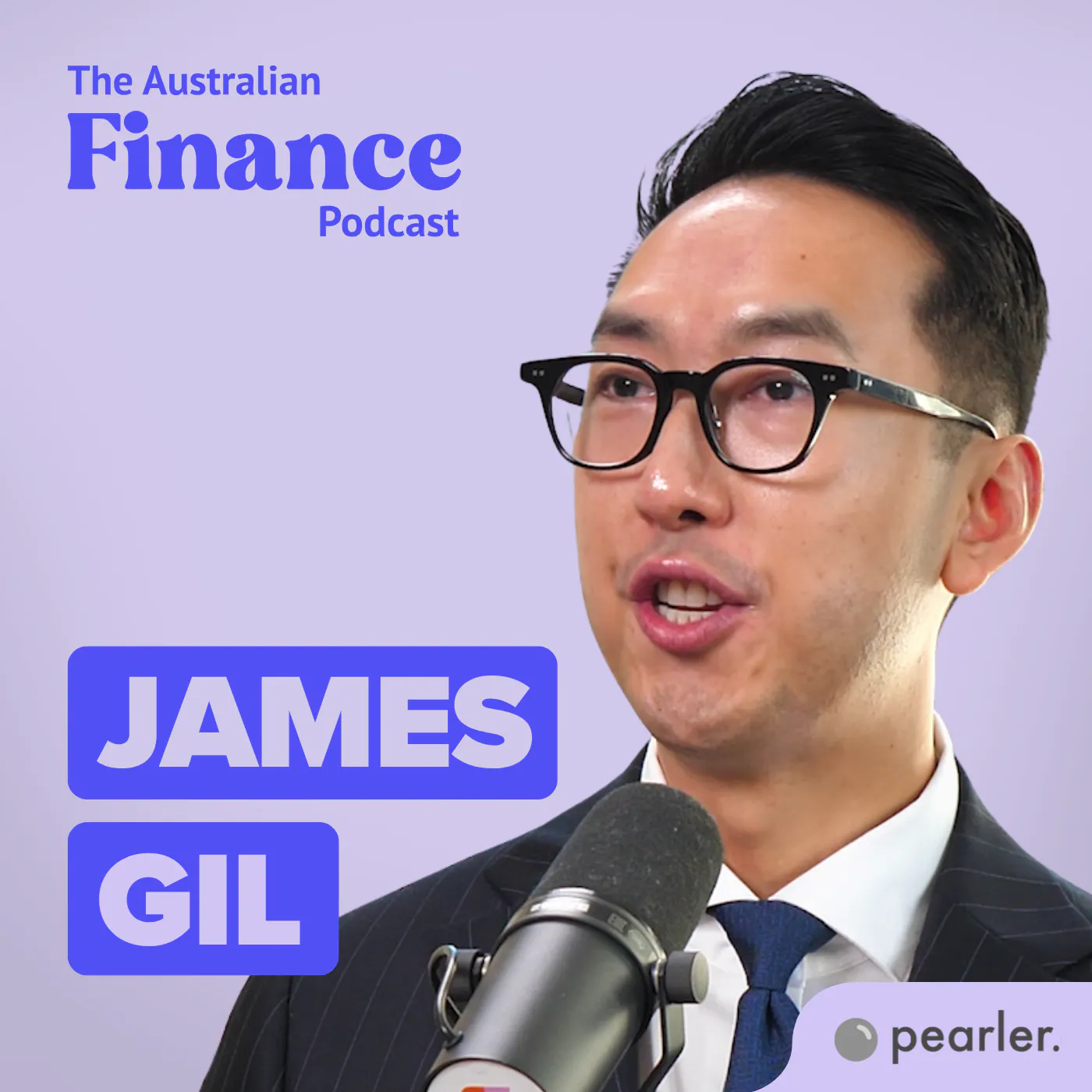
VanEck’s GOAT ETF: how AI is changing ETF investing, with James Gil
37m 10s
The conversation introduces VanEck's GOAT ETF, which has been transformed into Australia's first true AI-driven ETF, marking a shift from traditional investing methods. VanEck, a global asset manager with US$250 billion under management, has a history of smart beta and systematic investing, exemplified by products like the equal-weight ETF (EWY) and the quality-focused QOAL. GOAT, originally launched in 2020 as a global wide-moat strategy, now leverages artificial intelligence to construct its portfolio, a departure from merely investing in AI-themed stocks.
The AI engine, developed by South Korea's Acros AI, processes over 100 terabytes of data, including a century of market history, company fundamentals, technical indicators, and macroeconomic factors. It operates through a four-step process: generating thousands of potential signals, scoring them based on historical returns and risk, learning via reinforcement learning to refine ideas, and validating them against live market data to adapt to changing conditions. This approach allows the ETF to identify the top 150 companies from a universe of about 1,200 developed market stocks, excluding Australia.
The ETF is fully transparent, with holdings like Micron Technology, Caterpillar, and Lockheed Martin, reflecting a diversified set of sectors. James positions GOAT as "ETF 3.0," combining the benefits of an ETF—rules-based, transparent, and low-cost—with an active, adaptive outcome. This makes sophisticated, data-driven investing accessible to individual investors, offering a dynamic alternative to static index or factor-based strategies.
It's like a printed map. It's going to tell you how to get from A to B And it's a very reliable map and it's going to give you that same route every single time and get you there But how I like to think about AI being incorporated into the actual investment process is you're now really using satnav Right, it's the same map that's going to take you from A to B But what's important is it's going to be collisions or there might be some natural disasters or for whatever reason and it's going to It's going to adapt. It's going to tell you to go a different way I think that's really powerful in the sense that we haven't really had that kind of optionality when it came to investing There I say it the first true AI ETF in Australia and I have so many questions that are going to fall out of this conversation So and I'm sure our listeners and viewers will too the first thing I wanted to say though is that James welcome to the show. Thanks for having me on it. It's great to be here in the the vanneck Australia headquarters Looking over Sydney. It's lovely. Yeah, it is so Sydney's definitely turned it on for us and hopefully this conversation will for a lot of people too because we're talking about There I say it the first true AI ETF in Australia and I have so many questions that are going to fall out of this conversation So and I'm sure our listeners and viewers will too the first thing I wanted to say though is that I Think it was about six years ago when I went back into the archives and I looked and saw how long ago was it when a vanneck Representative was on the show and I think it was that far back so I just want to get quickly get you to give us and all listeners a bird's-eye view of Vanneck how big is it? What do you guys do so on and so forth? Yeah, no unreal learn and all and thanks for thanks very much for having me on the show You know you're right, you know vanneck, you know We've been a bit of a ninja when it came to when it comes to this kind of stuff But you know we we do have a history going back to 1955. Oh well We were founded in you know in New York back then And you know believe it or not we've got about US quarter of a trillion dollars under management You know, well, I think we're number eight globally when it comes to you know size perspective, but you know we've got offices around you know us Europe and of course Asia Pacific as well And I suppose if we talk about Australia right, you know, we were founded in 2013 You know, we are run by a local team And I suppose our pedigree is very much in systematic at smart beta investing So we've built out a bit of a a bit of a niche for ourselves You know, it's really you know based on that kind of mantra like you know if you if you stand for nothing you'll fall for anything So I suppose we try to take a very different sheet of approach when it comes to you know making our ETFs So I suppose you know you might be familiar with some of our ETFs, you know Quoll our our in-misc international quality ETF. You know, that's Australia's largest smart beta International ETF Also, Australian equal weight ETF envy W. Yep. That's certainly served investors quite well over the past you know 12 or 13 years So yeah, I mean we don't we don't really do too much in that you know market capitalization space You know we we as I said earlier we have built out a bit of a carve out in terms of smart beta. Yep De-frenchative approach. Yeah, and I Sort of say James I think those two ETFs you call that highlight that perfectly like envy W When I was learning about ETFs that was the one that was always the first one that I learned about after like the standard market capital like Index style ETFs like I was like okay. I get my head around that This is envy W thing which is really cool and so is QAL or Quoll Yeah, yeah, and then massive ETFs today. Yeah, so it's super impressive We're gonna talk a little bit about goat G-O-A-T is the ETF ticker symbol and We're gonna spend a lot of time on this because While the ETF has been around for a while. It's changed recently and it's changing a really exciting way I read an AFR article about it not too long ago And it kind of went into it But I'm hoping this conform kind of like the definitive conversation of what this ETF is and why it's so unique For folks hearing about goat for the first time can you give us like the high level picture and then we'll dive into it What does it do? What is it investing? Yeah? Yeah, absolutely. So I mean goat as you correctly pointed out on you know, we launched it back in September 2020 You know, we launched it as an as an international version of our moat ETF. Yes, no M O A T And that's certainly built out a quite a bit of a track record You know, not just in the US, you know, which has about $12 billion in assets on the management our European office has it as well You know, we launched it here in Australia back in 2016 so I suppose you know God was really an extension of that philosophy of that wide-mode philosophy And I guess from an Australian perspective, you know, I like to look at things from an from an ecosystem perspective You know, as I said earlier so with an international equity You know, we have coal as we spoke about you know, which gives investors a very targeted exposure to that quality factor Which has served investors quite well We also have VLUE which is value and it gives again a very targeted exposure to value And also growth as well G W T H So you know, we've got this ecosystem that is giving investors a very specific and nuanced exposure to international share investing Now what goat, you know, was intended to do was really add to that be a complimentary addition as we as we approach all of our You know kind of product development philosophy in and that was to really give you a high conviction strategy that isn't really As opposed swayed by a by a factor outcome or or a style for that matter You know, it was really meant to give it that high-convition strategy that a typical active fine manager would and you know, it certainly has you know, it has really delivered on that objective But I suppose I think Like you know, this really caused a really well with this research that we've been doing a long time because as we said earlier Systematic and smart-beater investing which is really using rules processes Data more importantly to build out a differentiated, you know product offering and We've been working on this for years AI has been the buzzword for a number of years now And I suppose this was really a bit of an intersection on the road where like that research and and I suppose our our review of goats Really came together and this was an opportunity for us to really convert goat while holding onto that philosophy But really leveraging that next step of I suppose systematic investing which is which is AI I remember when moat first launched it was my favorite ETF I actually named it publicly was my favorite ETF for basically three years in a row And it's performed so well and for folks that don't know moat moat 80 it's wide-mote focus and Effectively captures us companies and you're the master here so correct me if I get any of this wrong Companies with a wide-mote or competitive advantage that also happen to be good value Which those two things those two factors can't combined like the quality of the business and then the valuation of the shares Combined into that portfolio super effective and still is today exactly right. I couldn't I couldn't say it better myself. Oh well But goat which was which is the global variant has like you said undergone this shift from that approach on a global stage to Effectively using AI to construct the portfolio now James most people will be familiar with Investing in AI companies like you've got you know Googles on the stock exchange for example But this is not necessarily about targeting AI companies is it it's about using AI in the process I've got there right that's exactly right and I think that's a very important differentiator Owen because I mean like I said earlier I mean most of the conversation you know that that has been around AI has been around around as a theme or a set of stocks to own And you know it certainly made a lot of headlines with its crazy returns right yeah, and certainly a lot of our funds have been beneficiaries of that But I think the most interesting when more long-term way of thinking about AI. I mean it's so ubiquitous in our in our lives now You know chat GPT Claude what have you? But people are really thinking about well, how do I use AI to actually guide my investments? And I feel like goats as you said earlier is truly the first of its kind on the ASX. I really want to Peel back some of the the literature that I've read about it. So there's one thing that Is in the marketing material that I saw a quote unquote AI driven ETF. So Let's take it slow What does that actually mean when we say AI driven? So it's a good question. So previously I mean let's let's think about modes for example, right? So what's behind the engine of modes? It's about there's morning so equity research analysts who are brilliant at researching stocks That research is being used in the index to moat tracks. So effectively In an ETF wrapper you're getting a very active outcome. You know, you're getting these stocks that have been heavily researched by very Capable equity research analyst in the exact same way That capability is now going over to AI So AI is pretty much doing all the work for you in the back end and it's really allowing you to look at the names That has been identified by AI as being the most compelling investment opportunities. Okay, so it's kind of like Not maybe not necessarily completely replacing the human in the loop here because we'll talk about that in the second But it's using that as kind of the research basis on which to pull together all of these stocks and select them for the ETF That's okay. Okay cool So I got this real kind of Maybe it's like a finicky question, but in in investing in particularly in ETFs these days We've got index ETFs you mentioned smart beta, which is another thing that we will definitely talk about we've got active investing which is Basically humans picking stocks and determining all those things You know there's a range of different labels we get
to these things. How would you categorize, go, how do you think about it? That's a great question. So I mean, at the end of the day, this is still an ETF, tracking a transparent rules based, you know, publicly available index. So in that regard, it is very much an ETF. It doesn't aim to outperform a particular index. So in that regard, it's not an active ETF in that regard. So I really think this is an intersection between a smart bit of strategy because it is waiting and selecting stocks, not just by simply looking at how big a certain company is. So in that perspective, I think this is definitely the next stage of smart biter investing. I know I like to call your typical ASX200 or your Michigan or what an extraceater tracker as ETF 1.0, smart biter investing, ETF 2.0. And I think this is really that next stage, ETF 3.0, where it's still giving you all the benefits that come with an ETF, but with an active outcome. Yeah, yeah. You've partnered with a company called Acros AI. And this is a company based out of South Korea. Correct. And they have a lot of pedigree in this field. My understanding is that effectively, there's all of these companies over a thousand of them throughout the world that this kind of engine, this model behind the scenes, this AI tool is analyzing. Can you give us a sense of what is it actually doing? So in practice, how does it go from that, I could invest in like over a thousand different stocks to something that's way more manageable. Yeah, no, and that is really the question is not. And I suppose, I mean, before we even get into this whole AI architecture, that's really powering this engine. And it behind it's sitting this crazy amount of data. Right, I'm talking like 100 terabytes of data. And to be honest, I don't know how big that is, but let's help me visualize that is it's equivalent to about tens of millions of books sitting in a library. Right. So this is a truckload of data. And the reason why it's so big is because it's effectively looking at pretty much like the past 100 years worth of market history, as well as every single metric and fundamentals related to a particular company. So this is really how it works. Right. It's really a four step process. Now, the first step is generating. Now from a complete blank slate. So this isn't like this active fund manager that is telling this model, hey, I'm trying to construct a portfolio that is only going to be within value quality or growth. Right. This right like right now, this AI model has no objective. It is just simply trying to create as many signals as possible based on this crazy amount of data that is sitting in the back end. And each signal is effectively a different way to hold a company, wait a company, you know, blending a company together. Right. And each signal is effectively an investment strategy or an idea. Now we move on to the second idea, the second step, which is scoring. So each of those signals that have been generated from that first step is given a report card, a score. And how is it scored? It's looking at what has this particular signal generated a return. And if it has, what was our journey like? Was it bumpy? Was it smooth? And was it observable through a persistent period of time? Or was it just a one off lucky lucky return? So everything gets a report card. Then we move on to the third step, which is the learning part. And this is really where the AI kicks in because it's really putting that learn in generative reinforcement learning. And how does it do that? Now, oh, and I'm not sure if you're, you know, you're a fan of sport, but effectively, you know, there's a lot of debate around who's the goat. Right. Now all of those goats or professional athletes for that matter, look at their tapes, their learning. Okay, what could I have done better? Right. And they use that not just to learn about what went wrong, but also to guide what they're going to do better next. So what this step is doing is it's looking at every single possibility that's happened. And then trying to learn from that and effectively trying to filter and create better signals or ideas next time around. So it's kind of like exactly the same step, you know, we've seen the headlines around machines beating like a chess grandmaster. That's exactly the same process that this is going through in the back end. And then we get to the final step. And this is really what gives it the dynamic nature or the adaptive nature. And it's really validating it. You know, it's all well and good to find signals that have done very well for the past 50 or 100 years. But the reality is markets constantly changing. It's evolving. No two market events are ever the same. So it's constantly being validated against live information. So it's kind of like a pilot who's gone through thousands of rounds on a pilot simulator. But then it's that's like that's going to prepare you for the real thing. But it's not exactly the same. Right. So this this four-step process is really also the reason why this isn't just like a robot that's just chilling in the back end just spitting out names. It's it's following a very much systematic and structured process to give you this final portfolio. It's kind of remarkable. I to think about that process. You're probably familiar with this but for a lot of listeners there's previously there would be there's companies like a Renaissance technologies from the United States which was this kind of secretive fund manager that had allegedly like a hundred PhDs that work there and would control this data. And now but that you could never get access to something like that right as an individual investor. But now you can kind of get this packaged up just in an ETF for the brokerage account. It's really really like a game changer in that respect. When you when you said for step one before you said like there's all this data is it just including like company data is it like a lot more than just like the profits and the losses and those types of things. Yeah. And and and that's really the crux of it isn't it because like you said like an all their investor oh and I don't know what kind of information you have access to but not much for myself right I mean I might look at a company's annual statement that just came out and I'll look at the numbers and go oh yeah that you know that's pretty good yeah but I don't know if that's going to result in the share price going up or down right you know you see examples of companies release like you know blockbuster profits but the share price falls like 5% right so what this is really looking at is it's it's it's three key categories of signals so the first is company fundamentals so it's looking at your mainstream metrics like return on equity you know leverage you know interest service ability so it's looking at those signals and then the second bucket is technical and page rating signals now this is something that you know like you know the company that you mentioned earlier might be looking at like those really you know multi-billion dollar hedge funds might be looking at this kind of momentum signals you know price behaviors you know relative strength index all of these indicators that have an impact on share price returns and then the third bucket is macroeconomic fundamentals right you know there are GDP prints you know inflation prints unemployment figures that are coming out all of these things have a meaningful impact on a share price return as well so between all of these three categories of signals there are tens of thousands of signals that are being collated and aggregated at any given moment in time to effectively give a score for each of the companies within that investable universe what happens then when it accompany or all these companies go through this AI filtering analysis process so you've got I think from memory it's like 1200 companies or more yeah that go into this process but how many come out the other end and get in the portfolio yes great question so invest in a universe as 1200 because at the end of the day we're looking at developed markets x Australia so this is really the same universe as you know some of your mainstream international equity strategies which isn't including Australia so from that universe you know we're of the view that certainly not all of them can be desirable from an investment standpoint so it's going through this filtration process as we described earlier and at the end of it you're getting the top 150 companies that have scored the best against pretty much this information this vast amount of information that the AI engine has said is going to probably you know result in our performance so we are recording this what's the day today the 23rd of June the ETF has just launched correct what can you give us a sense of which countries are represented like what types of I guess overall mix is there inside the ETF yeah that's great question and and you know mind you this is an ETF fully transparent you know daily holdings uploaded on our website so I guess to give you a bit of a flavor on so the top holding right now is micro technology you know micro technology you know we it's been a bit of a market dialing over the past year or so and then you're also getting names like you know Sandisk you know C-Gate technology so that memory and technology hardware names are being well represented but you're also getting companies like caterpillar and industrial company fortenet so I was security companies and Lockheed Martin the defense company so you're getting quite a well represented set of themes in that top 10 and from a from a sector perspective you know you are getting the largest wedding to IT but what we're seeing is we're actually seeing a bit of a modest underway to IT relative to Michigan World Existralia so and and that's quite interesting because a lot of the names that are really driven the market over the year or so has has really been the tech names yeah but what we're really seeing right now is we're seeing quite a bit of an overweighed allocation to energy you know industrials materials so certain sectors of the economy that are really putting into work or way from those crowded trades that you see in that in that tech sector and the reason for this is because in the index yes we're asking the AI engine for the for the top 150 you know scoring names but we've also put in certain
in constraints from a diversification perspective. For example, we've got a 5% stock cap, meaning that no one stock can go more than 5% as at each monthly rebalance. We've also made sure that from a sector perspective, you can't go more than plus or minus 10% relative to the Michigan World Existralia. And from a country perspective, we know that US typically makes up the highest weighting. So plus or minus 10% from a US weight perspective and plus or minus 5% from every other single country perspective. So, you know, but I think what's quite most interesting is if you look at the previous 21 years of simulated data for the index, you do typically see more from a US allocation perspective. But I think what's interesting is the width of that range. It's not always overweight. It's been as low as at the very bottom of 10% underweight. And sometimes as most as 10% overweight as well. And the same as sector. This hasn't just been a tech play for the past 10 years, although it would have served you very well right. You know, it's been as low as single digits from an IT perspective. And you see other names like energy, for example, which is a bit of a cyclical sector, taking those kind of tactical allocations to those sectors as well. - I'm just thinking in the back of my head, I'm thinking how many tokens it would take to control this data. The AI is running continuously in the background. How much open AI or anthropocreative core to these types of groups are getting paid to run these constant back tests and control the data. But then I'm glad that you brought up the constraints, the kind of mandates or rules that it sits within. Because I think a lot of people would think there's this AI tool running the background, creating all these things. And then how do we know it just doesn't hallucinate, quote unquote. But then you've got these portfolio checks in place. And then I'm like obviously the humans here in the building that need to trade these as well, right? - Correct, correct. - That's exactly right. - I was going to say one thing I did see is that the, and this is probably a bit more of an education piece for our audience mate, which is the back tests was done. Because the data's been around for a long time, right, AI might be a new thing, but the data's been here for a long time. Can you, in simple terms, can you just explain what you, what we mean when we say back tests or simulated returns? And maybe it tells us how it performed in the back tests. - Yeah, absolutely. And I suppose I want to fall for any kind of institutional grade issue, are the discipline needs to be there from the perspective of, okay, well, I want to see how this strategy would have performed over a long period of time. And why is that discipline important? Because we want to be able to see how it's behave across different market cycles. So 21 is, that's since July 2005. And if you think about it, you can see how it's behave since GFC, since the Euro debt crisis. The US and China trade war, COVID, liberation day. So there's certainly a lot of events that we can draw conclusions upon to really look at, well, we're promoting this as a dynamic strategy. Has it been dynamic? And that's certainly what we've observed. So to give you the short answer, it has our performance, it's going to be an extra layer by about 3.2% per annum over the past 21 years. But I think for me, what's most important, compared to the headline return, because let's face it on, there's never such a thing as a bad back test. - Yeah. - But I think what's most impressive is the fact that the our performance has been most pronounced in those stress periods, such as the GFC, COVID. That's when we really saw the most pronounced excess return or the our performance. And I think to answer your first part, how does a simulation work? Well, you take that exact strategy or the methodology that we just described, and you essentially go back in time. And what's most important here is you need to really have that discipline and the process to make sure that there's no survivorship bias firstly, which is most important. So meaning that if you're going back to 2015, you need to really do that analysis as if you don't know what's happening in the future. - Yeah. - You really can't include companies that are going to be listed, because that's going to effectively skew towards the companies that are surviving. So you need to make sure that you're really, really doing this analysis as if you existed back then and then really going through that discipline of them moving forward to the present day. - That's really cool. I'm glad you brought that up. I've only got a few more questions, but one thing I didn't close the loop on was the weightings in the portfolio. So you mentioned some names, like Mark Brown, and Caterpillar, these types of businesses perform. The list of 150, how does that end up, like what is it? Like Mark a Cat weighted, how do you put them in there, percentage terms? - Yeah, sure. So you get to top 150 scoring names. So these are the names that are the best investment opportunities for that particular month. - Yep. - And then you rank them. But then we also for investability purposes, we multiply them by their free float market cap. So effectively, you're getting the score times free float market cap. So you're effectively getting the largest and best scoring names and then you're making that way down the list of 150. - That makes sense, yeah. How do you, when you thought about this, because your role is head of product. So your folks that don't know, that's a pretty important title inside an ETF business. When you thought about this for goat and this strategy, how did you think people would be or will be using an ETF like this practically in their portfolio? - Yeah, and I suppose that's really the question that we try to answer within our product development process. And I suppose there's a few angles to answer that question. For us, we believe that our alpha can be generated. We believe that our performance can be achieved. And just because an ETF is tracking an index, it doesn't mean that you have to forego that potential. So we think about, well, how do we put in an active outcome into an ETF distribution wrapper? - Yeah. - And I think, the first questions that come to mind as an investor is, well, can I trust this AI? How do I know what's actually happening? And it's a fair question to ask. - Yeah. - But I think from our perspective, where we get comfort is the fact that, well, you've heard the term black box, how do we know what's in? And well, what we've really done as part of our due diligence is, well, boxes can be opened. We've opened that black box. We've peered inside. And what's happening consistently and at any given point in time is that, there's actually a very disciplined, forced-to-process that is happening. And this is really no different to how some of our smart beta strategies are constructed as well. It's very rules-based. It's very disciplined. You're getting that transparency as well. So I think the question that investors should be asking is, well, if I can get comfortable with the process, what is the outcome that this is trying to achieve? And what we're really trying to achieve is in the name. It will try to give investors a dynamic portfolio outcome when it comes to international shares. We're saying that, well, if you want to invest in, simply the 1200 largest names, then so be it. If you want to invest in 300 highest quality names, then we've got an ETF for that, quote. But if you want an ETF that is truly adaptive by design, it is constantly working in the background to find out whether your opportunities are emerging, then go, it could be the strategy for you. It's kind of cool. I'm thinking about it as you're talking. I'm thinking about a lot of people that use in their portfolio, they might have an active fund manager as one way that they get exposure to international shares. Effectively, this is almost like, well, that's great. But also, there's an AI version effectively now where it is scanning all of these signals around the world continuously. One of the things you mentioned before was monthly rebalancing. How does it work in terms of inside the ETF, like buys and sells? I'm thinking like transactions or turnover as we call it as a profession. Can you give us a sense of that, some things? Yeah, sure. And it's the right question to ask all of them, because the fact that it's dynamic means that there is going to be quite a bit of a turnover happening. And of course, we are trying to find whether the opportunities are emerging. So that means every month, new signals are coming in that are now stronger drivers of return. And then signals that were strong drivers a month ago might not be so anymore. We have to remember that the model isn't trying to pick the strategies that are going to be the best for the long term. It's picking the strategies that are the best right now. So effectively, there is going to be quite a bit of an elevator level of buying and selling in that regard. And that's really to position itself based on the newer set of information that's been received for that particular month. And I think it's like, this is the thing that people always struggle with with investing, isn't it? That the human in the loop doesn't always make the right decisions, because there's like behavior biases and these types of things. So actually trusting it to do what it's been told to do is why you invest in it in the first place, isn't it? If you tasked it with, say, finding the best companies now, you wouldn't necessarily want it to hold for 12 months and then rebalance. It kind of misses the point of it all. And as you say, I think it's going to be fascinating to see how this evolves through time and see what kind of companies end up in the portfolio.
I know people can go to the website. I'll put a link in the show notes to all the usual legal docs, like the PDS, TMD, and all the literature, including the latest fact sheet as well. It's all available on the Vanack website. And you guys have done like a fair bit of literature around this to try and educate people, right? - Oh, yeah. - Yeah, I've seen a fair few things that I was reading in anticipation for today. So I can link to those as well. - Right. - All right mate. So as we come to the end of this conversation, I think this is going to open people's mind to probably what the frontier of ETF investing and everything that's happening in investment world is going to be, if you could leave our audience with something to think about, if you could leave them with a message about like, here's what goat is going to do or is doing, what would that be? - That's a good question. And I mean, this example is slightly before my time, but as I understand it, there used to be printed maps. And I think printed maps, they're very reliable. They're going to take you from A to B. It's a good map. It'll get the job done. You'll always tell you to go that same route, irrespective of what's happening. But how I like to think about AI being incorporated into the actual investing process, is kind of like a sat nav. It's like a Google maps in your pocket, in the sense that it's going to tell you how to get from A to B. But on one day, that might not be the best part for whatever reason. There could be traffic, there could be road works happening. It might tell you real time to go to a different way. And I think that's really powerful in the sense that we haven't really had that kind of optionality when it came to investing. And I like to think of it as ETFs have democratized access. It's made diversification cheaper. But if you think about a lot of these technological advancements, it hasn't really helped us answer the what? It's really helped us with the how, how do I get that process easier? But for ordinary investors, it's still really been a challenge as to, how do I know that the stock that I'm picking is going to be the best investment opportunity for that period of time? And I think that's what really makes it interesting. I love that. I always see that in the car where it updates my route. Because you can go five minutes quicker this way because there's traffic on that road. Yeah, those are those I am slightly old enough to remember those books, the sit ways or the malways or whatever variant you have in your major city. They're probably like a antique now for a lot of people, they probably frame them. But this has been heaps of fun. And I'm so glad that we got to do this because it's just really cool to be able to profile many of these vanic ETFs, including this newest one, which is really, really great. If people wanted to find out more information, where could they go? Yeah, I mean, we really pride ourselves in a lot of education. We do want to engage a lot with our investors as well. But I think the most important thing is, please come to our website, vanic.com.au. We've put a lot of literature, a lot of information about the fund and the process behind that as well on there. So please feel free to visit our website. Great, well mate, this has been a pleasure. So, first time on the show, I really appreciate you nailed it. Thanks for joining me. Thanks so much, John. Well, so much fun. Thanks for listening to this episode of the Australian Finance Podcast. Don't forget that any of the information you hear in a Rasp Podcast is strictly limited to general financial information only. It's not personalized financial advice. So always speak to a financial planner before you act on the information. You can find financial planners on the Rasp website. Another thing that should take note of is our F-S-G or financial services guide that's also available at rasp.com.au/fsg. If you want to continue your educational journey, don't forget that we have loads of free courses available on our websites. Simply type in Rasp Courses in Google and they'll come up for you. Finally, the best compliment you can give to us isn't a review in Spotify, Apple, or anywhere you listen to this podcast. The best thing you can do is help us change someone's life. Don't forget to share this episode with a friend or a family member who you think it can help. That's the biggest compliment you can give to us. As always, thanks for listening to this Rasp Podcast. (upbeat music)
Podcast Summary
Key Points:
VanEck, founded in 1955, manages about US$250 billion globally and specializes in systematic and smart beta investing, with an Australian presence since 2013.
The GOAT ETF, launched in September 2020, was originally a global version of the wide-moat MOAT ETF, focusing on competitive advantages and value.
GOAT has been converted into the first true AI-driven ETF on the ASX, using AI to construct the portfolio rather than targeting AI companies as an investment theme.
The AI engine, powered by Acros AI, analyzes over 100 terabytes of data, including 100 years of market history, company fundamentals, technical indicators, and macroeconomic signals.
The process involves four steps
The investable universe includes about 1,200 developed market companies (excluding Australia), which is filtered down to the top 150 stocks based on AI scoring.
The ETF is fully transparent, with daily holdings; top names include Micron Technology, Sandisk, Seagate Technology, Caterpillar, Fortinet, and Lockheed Martin.
GOAT is positioned as "ETF 3.0," bridging smart beta and active outcomes while remaining a rules-based, index-tracking ETF.
Summary:
The conversation introduces VanEck's GOAT ETF, which has been transformed into Australia's first true AI-driven ETF, marking a shift from traditional investing methods. VanEck, a global asset manager with US$250 billion under management, has a history of smart beta and systematic investing, exemplified by products like the equal-weight ETF (EWY) and the quality-focused QOAL. GOAT, originally launched in 2020 as a global wide-moat strategy, now leverages artificial intelligence to construct its portfolio, a departure from merely investing in AI-themed stocks.
The AI engine, developed by South Korea's Acros AI, processes over 100 terabytes of data, including a century of market history, company fundamentals, technical indicators, and macroeconomic factors. It operates through a four-step process: generating thousands of potential signals, scoring them based on historical returns and risk, learning via reinforcement learning to refine ideas, and validating them against live market data to adapt to changing conditions. This approach allows the ETF to identify the top 150 companies from a universe of about 1,200 developed market stocks, excluding Australia.
The ETF is fully transparent, with holdings like Micron Technology, Caterpillar, and Lockheed Martin, reflecting a diversified set of sectors. James positions GOAT as "ETF 3.0," combining the benefits of an ETF—rules-based, transparent, and low-cost—with an active, adaptive outcome. This makes sophisticated, data-driven investing accessible to individual investors, offering a dynamic alternative to static index or factor-based strategies.
FAQs
GOAT is an ETF launched by VanEck in September 2020 as an international version of their MOAT ETF. It has recently been converted to use AI to construct its portfolio, making it the first true AI ETF in Australia.
The AI uses a four-step process: generating signals from 100 terabytes of data, scoring each signal based on historical returns, learning through generative reinforcement learning, and validating against live market information. This results in a portfolio of top-ranked companies.
No, it doesn't primarily target AI companies. Instead, it uses AI in the investment process to select stocks from a universe of about 1,200 developed market companies, excluding Australia.
The AI filters the investable universe down to the top 150 companies that score best against the vast amount of information analyzed by the AI engine.
The AI analyzes three key categories of signals: company fundamentals, technical and pricing signals, and macroeconomic fundamentals. This includes metrics like return on equity, momentum indicators, GDP prints, and inflation data.
Top holdings include Micron Technology, SanDisk, Seagate Technology, Caterpillar, Fortinet, and Lockheed Martin, representing themes like memory and technology hardware, industrials, cybersecurity, and defense.
Chat with AI
Loading...
Pro features
Go deeper with this episode
Unlock creator-grade tools that turn any transcript into show notes and subtitle files.
 PodcastTranscript AI