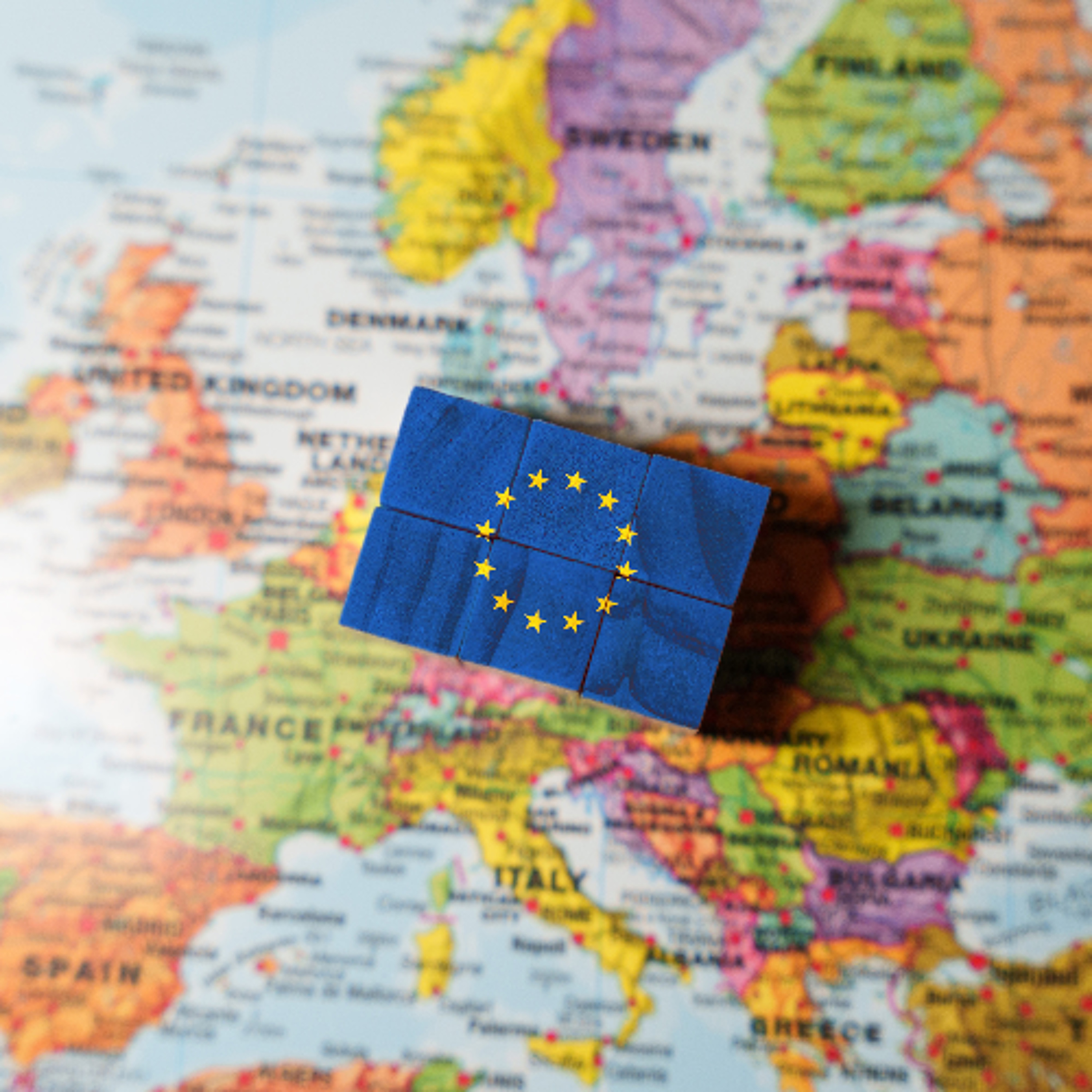
The podcast discusses the recent flurry of EU enlargement proposals, including German Chancellor Merz's "associate membership" for Ukraine, the Commission's failed "reversed enlargement" idea, and gradual integration plans for the Western Balkans. These proposals are driven by the war in Ukraine and the need to politically anchor Kyiv, but they also reflect the EU's inability to advance traditional enlargement due to internal divisions, budget negotiations, and a lack of consensus on institutional reforms. The state of play among candidates varies: Montenegro is the most advanced, close to finishing talks, but ratification will take years; Albania and Moldova are frontrunners; Serbia and North Macedonia are stalled; and Georgia's candidacy is dead. The debate remains fragmented, with no clear leadership. Key obstacles include Hungary's veto on Ukraine, French elections requiring a difficult ratification process, and public opinion skepticism. The most realistic outlook is that one or more countries may approach membership by 2029-2030, but this hinges on resolving domestic political hurdles and achieving internal EU reforms. The next few months will be crucial, with the June European Council and Western Balkans summit potentially shaping the path forward.
[Music] Hello and welcome to the CER podcast on Packing Europe. My name is Jeca Chackey and I made senior research fellow at the CER. I will be your host today and we will be discussing the latest on enlargement. Because in recent weeks there have been quite a few ideas swirling around from a German plan on associate membership to various versions of graduate integration to participation in certain parts of a European project or membership without wether rights. So to make sense of all of this I'm joined by Milan Nietzsche, a senior research fellow at the Gapé, the German Council on Foreign Relations and an expert on EU enlargement, centuries to Europe and the Western Balkans among other things. So Milan welcome to the show. Thank you Jeca, thank you for having me. Let me start by asking you to describe the state of play to make sense of all of this. Basically what are the proposals that have come up in recent weeks or maybe even last few months on enlargement and how different are they from previous proposals if they are different at all? Well let me start by saying that there are too many moving pieces in this debate so it's still quite fragmented debate and there is also the other side of this coin is that there is still a lack of leadership and lack of decisions. So before I come to Translomerz sletter on special status for Ukraine and other ideas maybe on the operative side it makes sense to to look at the playing ground like what we are talking about like who is there from the candidates and then also why is it so difficult on the side of the of the EU leaders and when we can have even a proper discussion among EU leaders on enlargement and therefore some guidance outside of the usual cycle which is that conclusions on enlargement are dealt with at the December European Council and there is the Commission sort of proposes upgrades as part of its annual so-called enlargement package by G. E. G. Oli Kams in October November but we are outside of this cycle for reason to simplify I would say the reason was Hungarian Vito and the Viktor Orbán on Ukraine which is now lifted but I would start by taking the stock where we are and looking at what's happening with the candidates. So as people might know there is one group of candidates countries which are called by Commission front runners. There are two Balkan countries Montenegro which is very advanced in the accession process in the membership negotiations that they closed about half of the territory negotiating chapters and they want to finish by the technical part of accession process by the end of the years which is too ambitious but even if they will manage few months afterwards they are the only credible candidate that might move on towards membership within the mandate of this Commission. Then the second Balkan front is Albania. Albania hasn't closed any single chapter yet but it opened formally all negotiating clusters of the territory chapters. We might come to it why these days and this week is also a turning point for them because they were issued a positive interim assessment so E-Barr, Interim, the Bedgemark report from the Commission which clears them to close chapters. Then there are two Eastern candidates front runners Ukraine and Moldova. Formerly they haven't opened any cluster yet because of Hungarian Vito and Ukraine and they are still sort of tied together. There is a hope from the Commission that this will change and that formerly under the Cyprus presidency they will be able to open the first cluster by the end of June as Commission for Enlargement Marta Kosbus also saying in financial times today and where we are recording this. I would say that the new Hungarian government is proving not to be so easy on lifting up the Vito because they want some guarantees on the I think I got in minority in Transcarpathia but the Commission still hopes that at least formally one cluster can be open and others under the Irish presidency during the summer. Then they are the other candidates. I would say formally Serbia and Nord Macedonia are in the accession process but Serbia is really regressing on the rule of law and Nord Macedonia is blocked by its bilateral quarrel with Bulgaria and not much change even under the new Bulgarian government. Then you have the rest with Bosnia Herzegovina really blocked by its own process although formally in the accession part. Kossovo not even a candidate and really again another election so difficult difficult development and then you have Georgia which I think killed the whole process even as a candidate. So I think this assessment is important before we start looking at the member states and the EU institutions and the proposals. Thank and just wanted to add that there's also Turkey. We forget but also. Oh yeah. Oh yeah but that process was frozen and there is a different opinion among the member states, the key member states. Yes there is a new initiative also from the Commission to do something about it but I'm not very optimistic about the formal accession process being reopened. Yes I agree on that. Then on the frontrunners especially we have heard these ideas from Chancellor Mertz and from others to have some kind of a different accession process for them especially in the case of Ukraine. So can you just go a bit into detail on that? Yes so you have a match of actually a rigidity of EU accession process and institutions on this with the difference of opinions and quite fragmented sort of approach in the capitals. The Commission tried to speed up all of this at the beginning of the year with the set of options. This was driven by the expectation that there will be a peace talks on Ukraine with Russia coming soon peace plan and the EU needs to be ready with Ukraine in particular. They offered the idea among the three options the most sort of discussables reverse enlargement which meant that Ukraine could become a formal member without fulfilling all the criteria and without sort of having access to all institutions or programs. This was killed by the member states. Second not very developed idea was a gradual integration plus programs and the third performance was sort of status quo. So there was an interesting activity sort of from the beginning of the year starting by the proposals of the European Commission on how to move forward. Then recently there was a letter of German Chancellor Merz on special status for Ukraine and then there was a non-paper of group of friends of Western Balkans led by Austria and Italy on how to develop gradual integration. I think submitted fully at the level of General Affairs Council. I'll start with the Commission because that was the big pitch and it came I think against the backdrop of things evolving on the war in Ukraine, expectation that there might be a ceasefire, broken by Americans and perhaps a peace talks coming soon. And the EU needs to be ready because part of the political anchoring of Ukraine and some kind of guarantees will be a political sort of future of Ukraine in the EU as part of sort of security guarantees. It was clear that Ukraine would not be ready for membership in such a speedy time a few months or a year so that regular accession process will not make it. So that's the background against which the Commission came with the idea of very controversial idea a new idea very innovative of reversed enlargement. This is not their name they don't like the name they were I think talking about phased-in membership and the idea was that Ukraine would be a political member before fulfilling all the criteria and having access to institutions or or programs and it would be a phased process. The second option on the table for member states was gradual integration with access to programs and the third one was status quo moving as as it is. Now the way how these proposals were handled by the Commission President's Foreign Library Cabinet and the member states were also peculiar. There was some leaks and it was hastily prepared and all of a sudden there was a informal dinner by the head of the Cabinet of von der Lyon, Björn Zybert, with the RM reps on which he presented the options to test the ground and support and immediately the main option was killed. This was at the beginning of March and I think that opened door to other to initiative from the capitals to other ideas and proposals. I think the most significant out of that is the recent letter of German Chancellor Merz that spelled out so-called associated membership for Ukraine. I'm saying it's important because it's not only because it comes from Germany but because it is also innovative, far reaching and I think Germany is pushing to have a discussion about this proposal at the European Council and June. The other idea is I think we'll feed it into discussion but Chancellor Merz said that he used the informal summit in Ecosia to discuss this with leaders and also there is some reason why they didn't wait for consensus with France or other group of member states and sort of stick their neck and throw it in the letter to President Kosta and von der Lyon and Cypriot presidency alone which is not ideal also. We can go into the proposal what is there but basically it outlines I have a letter in front of me and out of 4.5 pages, 3.5 out of the United States and this to outline to this new political status called associate membership. It includes participation in various formats of the council including European Council for Ukraine at the Commission, Observer Status at the Parliament and other institutions and then state by step application of a keys to
Ukraine progress, some programs, two caveats. Number one, the final objective remains the same, full membership. This is just an interim political stage, and second, no implications for the EU budget. - Right, so before actually discussing how realistic this proposal is, which is something that I want to do, I just want to go back a bit and reflect on the fact that some of these ideas have been around for some time, especially in the think-tank circles, to SAP, SENS, CEP, in Belgrade, they develop much of the gradual integration idea under different names. So this is not new in the sense, and what I'm wondering, whenever there's discussion about this, that right now they are being discussed at the member state level, but it's hard to see whether there's progress. So I think the question for me is that, is it fair to say that these ideas just represent the basic inability by the EU to actually advance enlargement, because somehow they're trying to work around it, and they are mostly just a cover-up for the fact that most member states actually are not ready for enlargement or don't want enlargement. Or would you push back? Would you say that that's not fair? - No, I think there is a lot to it, because the global development and developments in war with Ukraine dictate the fact that you have to deal with enlargement. And I would say also Montenegro's progress coming close to finishing the closing of the chapters sort of pushes this, but then you have political reality in the member states. I'm not in the public opinion, which the recent barometers show that there is lack of sufficient support for enlargement. But I think it would be a mistake not to mention two other big sort of elephants in the room, which are so of part of the enlargement debate, but not directly linked. One is that the big battle in the EU will be the annual negotiations over the multi-annual financial frame of the EU budget. And there is because of the mandate of French president Macron limited to next spring, this is a priority for Germany, for instance, to try to have a deal on the big budget negotiations with the consensus of EU27, which is always complicated and is very complex by the end of the year. This will be more important than enlargement. And the second thing is that for some member states, the debate on decisions on enlargement were linked to also decisions on internal reforms, how to prepare EU institutions and functioning for a larger EU. And the commission was supposed to publish a communication on the pre-accession policy reviews, which has been postponed. Originally it was supposed to be within 100 days of Ursula von der Leyen's second commission, because they want to figure out Ukraine first, what to expect from Ukraine. And then as the largest or largest candidate country, largest economy than anybody, then all other candidates together, first they need to have clarity on that. They don't have clarity, so they are postponing. So also then there is not much progress on internal reform and these things are tight for governments and also public opinions, I think. Because the mantra was, "What about witerites?" How shall we prepare? There will be a new generation of accession treaties starting with Montenegro, and that discussion is delayed. And also I think you have different approach on this between Berlin and Paris to start with. - Yes, indeed. I wanted to add that France is also an issue on its own right, because there will be French elections next year, and in France you need a referendum on enlargement. - Eventually. Yes. - Yes. - Or three fifths majority vote in National Assembly or in the parliament and the Senate, which is even more-- - It seems, yes. - In the rest of the world. - At least as difficult as a referendum. Yes, yes. So then let's go into discussing what you think is realistic in the next year. And let's talk about whether you think this proposal by Meritz on a Societ membership has any chance of succeeding. And then separately what you think that we should be watching out for in the next few months. - I think this is crunch time on enlargement. So what is realistic? We will see after I think June, European Council. And the first days of it we will have on 5th of June at the EU-Western Balkans summit in Tibet, Montenegro. Because what I really liked about Meritz letter is, after a long time, it's a good sign that Germany wants to solve something, wants to lead. But only to an extent, what I missed in the Meritz letter was reassurance of the Balkan front runners that he will spend some political energy to push them, especially Montenegro through the finishing line. That reassurance is not there. I also noticed that German foreign minister was not sent to the Balkan region to prepare the summit discussions or to reassure them. So I think from German sound chancellor, it's basically limited to what needs to be done soon before the end of the year, which is Ukraine piece. I'm quite optimistic that there will be something on Ukraine, some interim status rather soon. But what does it mean for the others? What it entails, there is a lack of consensus on this among the 27. You will have quite sort of heated discussion, I think also France, for instance, wants to include the treaty article 42.7 on defense because they want to develop that. Germany is against it and others. You have lawyers coming into it. You have commissions, especially out of that discussion yet. So it needs to be consolidated, I would say. It's quite far apart, some positions. I am pessimistic rather on the gradual integration, which is moving but slow. What was in the letter, non-paper led by Italy and Austria. I think it's plus on what was already outlined and discussed and demanded one year ago or previously. So beyond the CPAS, sort of banking sector and rooming, I don't see what other gradual integration pieces, parts of the single market can be offered. Because it's eventually goes through rule of law. Another question is to watch is Montenegro. Which member stays will have objections when it goes to the nitty gritty and final chapters, France and Netherlands, especially. And then also Albania. How fast Albania will be moving after they will, I think they reached a positive interimagine mark assessment report on the chapters 23 and 24 on rule of law these days. They can start closing chapters. But how fast they will go. Otherwise, we are talking only about Montenegro. And final point on this potentially Iceland, there will be a referendum at the end of August of membership. And that can speed up. It can be another sort of surprising candidate, which is part of the single market. And it can go fast so you have a package. Ultimately, the big question mark in the air is whether the enlargement this debate will survive next year with a series of elections in a number of member states, not only in France. Yes, I very much agree on that. And thank you for mentioning Iceland, because I think most have forgotten that vote is coming this summer and can potentially provide a boost for the current accession countries. So then I think if we summarize and let me know if you don't agree with that. But in the next let's say year, what we need to watch out for is whether there is actual movement on Ukraine, which really depends on a piece deal. And that movement can mean many things. Then whether with Montenegro, whether there is an actual accession, so the accession treaties will be hopefully drawn up when we are there. And then whether anything happens without being here. Am I correct or should we also forget? Well, yes, yes. And I think on Montenegro, I would divide two phases, which is finished accession talks and then the ratification, which will take first. There needs to be a treaty. There needs to be consensus on the safeguards. And then a treaty ratification, which in itself will be two years. So I would say the big question mark is whether Montenegro will finish before French elections. And there are elections in May or June next year. And then the rest, and let's not forget Moldova, because Moldova also is a front runner that under the Danish president, that was his front loading of clusters. So they have-- they are prepared to open clusters. But they have their own thing on Transistria. They have-- there is a lack of formal process of integrating Transistria with-- which is this enclave with Russian soldiers. And unlike Serbia, also, there is no formal process, no formal dialogue on that. So Moldova knows this is a big challenge. In all this discussion, you notice that I haven't mentioned a date. I don't want to commit to any date. But the perspective is 2030 for at least-- well, let's put it this way. The formal perspective for me is the end of a mandate of current commission and parliament next European election in 2029, by which we might have one or more countries close to membership with the ratification. And then the perspective, you know, 2029 to 2030. I think it's-- it's for the first time after a long time, a realistic one, at least for a group of countries, which would change the dynamics. Also, in the Balkans, you need to enlarge to show Serbia another that is possible. To front runners in the Balkans, Montenegro and Albania are NATO members. They already partners to mostly members in NATO. So security-wise, I think this is important that they are stabilized. Indeed, I agree. And then I would say that this is a fairly optimistic picture compared to, let's say, the past 10 years, where not much has happened on enlargement. So then my last question is, what happens if, because of the French? There is no ratification, let's say, in the case of Montenegro.
want to single out France now, everybody knows that it will be the most difficult national ratification case unless and if France is a problematic then others will jump out, but we are far away from that. In the most optimistic scenario we are talking about what three years from now and it will be different from France by then. So I think the bigger question is if this European union of 27 members with complicated domestic politics and the raise of far right, you know, in many countries and with a lack of consensus on enlargement and a public opinion that are still negative is capable of enlarging and without clarity on internal reform. So that's the other side of this coin which somehow, yes, the argument is that Montenegro and Albania in itself are Iceland to small small countries. This is what Marta Cosis saying, you don't need to change institutions or something irrelevant to enlarge with these three. Of course nobody and you need to do it without treaty change only with the ratification of the accession treaties, but I think we have a lot of homework on the side of the UN institutions and 27 member states to do before. We can credibly say we are ready to enlarge. I think that's a great way to end the discussion. So thank you for the very interesting and actually quite positive conversation Milan and thank you to our listeners as well for tuning in. If you haven't, please subscribe, follow us on socials, send us feedback so that we can reach more people. Thank you and goodbye.
Podcast Summary
Key Points:
Recent enlargement proposals include the German "associate membership" for Ukraine, the European Commission's "reversed enlargement" idea (killed by member states), and gradual integration plans for the Western Balkans led by Austria and Italy.
The main drivers for new proposals are the war in Ukraine, potential peace talks, and the need for political anchoring of Ukraine, but internal EU politics (budget negotiations, French elections, Hungarian veto) and lack of consensus among member states hinder progress.
Montenegro is the most advanced candidate, close to finishing accession talks, but ratification could take two years and faces challenges from France and the Netherlands. Albania and Moldova are also frontrunners, while Serbia and North Macedonia are stalled, and Georgia's candidacy is effectively dead.
The debate is fragmented, with a lack of leadership and decisions. The Commission postponed its internal reform communication, and member states disagree on linking enlargement to institutional reforms and budget negotiations.
Realistic timeline
Summary:
The podcast discusses the recent flurry of EU enlargement proposals, including German Chancellor Merz's "associate membership" for Ukraine, the Commission's failed "reversed enlargement" idea, and gradual integration plans for the Western Balkans. These proposals are driven by the war in Ukraine and the need to politically anchor Kyiv, but they also reflect the EU's inability to advance traditional enlargement due to internal divisions, budget negotiations, and a lack of consensus on institutional reforms. The state of play among candidates varies: Montenegro is the most advanced, close to finishing talks, but ratification will take years; Albania and Moldova are frontrunners; Serbia and North Macedonia are stalled; and Georgia's candidacy is dead.
The debate remains fragmented, with no clear leadership. Key obstacles include Hungary's veto on Ukraine, French elections requiring a difficult ratification process, and public opinion skepticism. The most realistic outlook is that one or more countries may approach membership by 2029-2030, but this hinges on resolving domestic political hurdles and achieving internal EU reforms.
The next few months will be crucial, with the June European Council and Western Balkans summit potentially shaping the path forward.
FAQs
It was an option for Ukraine to become a political member without fulfilling all criteria or accessing all institutions, but it was rejected by member states.
It proposes an interim political status with participation in EU Council formats, observer status in Parliament, and step-by-step application of EU rules, while full membership remains the goal with no budget implications.
Montenegro and Albania are frontrunners. Montenegro has closed about half of its negotiating chapters, while Albania has opened all clusters but not yet closed any chapters.
Hungary has imposed a veto on opening clusters for Ukraine, seeking guarantees on the Hungarian minority in Transcarpathia, though the Commission hopes to open one cluster soon.
Key challenges include lack of consensus on internal reforms, upcoming EU budget negotiations, and domestic political issues like France's need for a referendum or supermajority for enlargement.
Montenegro may finish accession talks within the current Commission's mandate, but ratification could take about two years, potentially aligning with 2029-2030.
Chat with AI
Loading...
Pro features
Go deeper with this episode
Unlock creator-grade tools that turn any transcript into show notes and subtitle files.
 PodcastTranscript AI