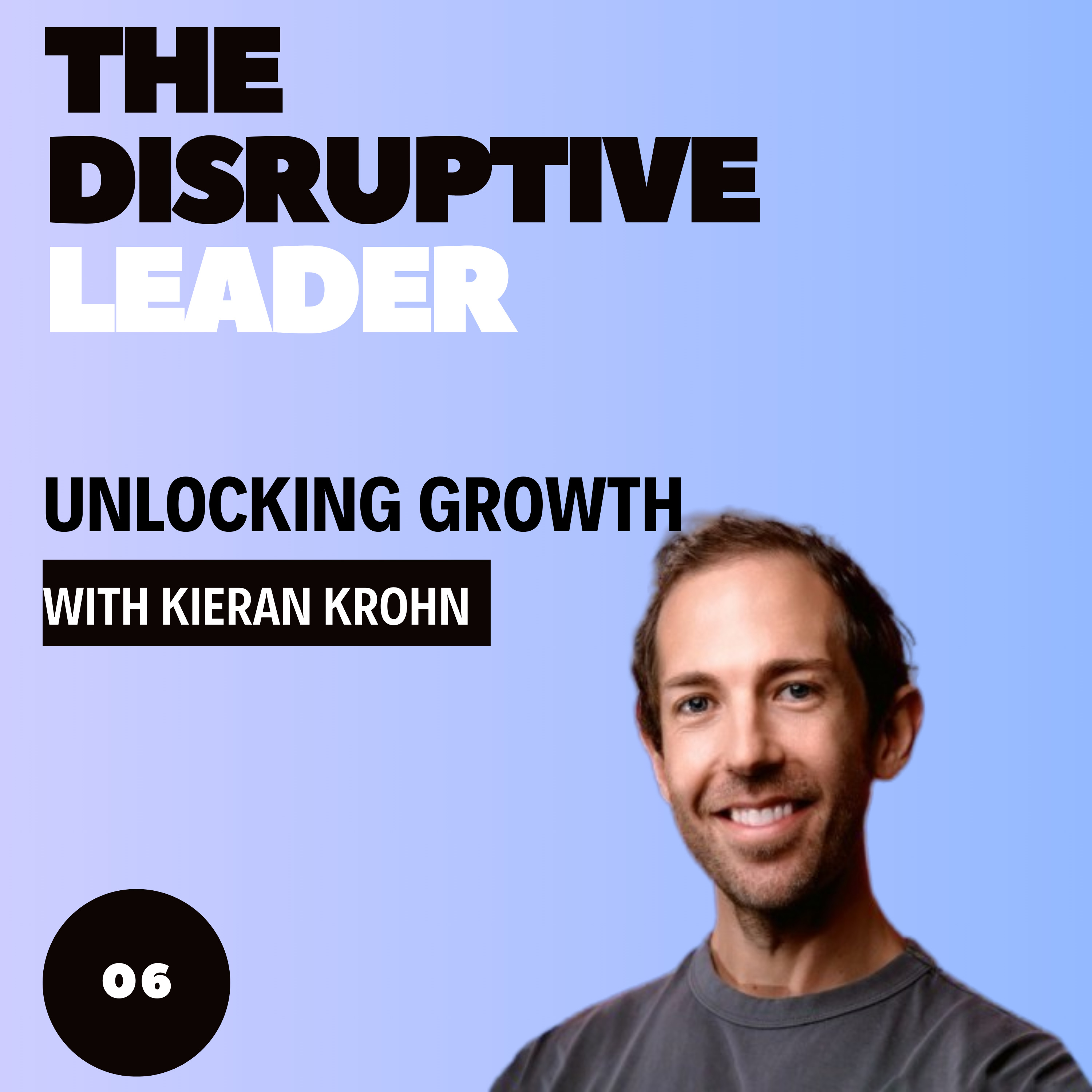
Karen, a former HubSpot "Heavy Hitter" sales champion, now leads growth at Scale Station, a startup focused on systems optimization. She transitioned from a well-resourced corporate environment to a startup, emphasizing the shift from SaaS product sales to service delivery. Karen credits her sales success to empathy, curiosity, and human-to-human conversations, prioritizing understanding customer needs over aggressive tactics. She highlights a common trend where businesses operate at only 50% of their potential due to outdated systems, inefficient processes, and siloed teams. To identify wasted resources, she advises leaders to observe their customer-facing staff directly. AI is a key focus for Karen, who shares an example of training a model to analyze sales calls and improve deal qualification, stressing the need to customize AI for specific business contexts. She also hosts the "Growth Unlocks" podcast, blending business and personal insights, and notes that podcasting requires patience. In CRM implementation, common pitfalls include rushing and mis-scoping; she advocates for careful discovery and expectation setting. Finally, Karen predicts disruption in legacy CRM systems, as AI-native platforms may overtake established players that fail to innovate quickly.
(upbeat music) - Good afternoon, Karen. How are you doing today? - I am fabulous, Ranya. How are you? - I am well. Thank you for taking time to speak with me and the listeners of the disruptive leader podcast. I appreciate it. I'd like to introduce you to everyone. So, Karen is an ex-hub spot heavy lifter who decided I'm done with that. And moved and is now the current head of growth scale station. So, Karen, why don't we start with a quick overview of your journey from Hubspot Sales Champion to systems optimization group? What's happening there? - Yeah. It's been about four and a half months now. There probably feels four and a half years. So, I'm not sure if that's a good thing or a bad thing, but I feel like we've had a lot of progress, made a lot of change. There's been some awesome stuff happening. So, yeah, it's been an absolute ride. And I guess like most things, there's ups and downs and especially when you're working in a startup. Hey, I guess there's been a fair bit of adjustment that I've gone through in terms of after working at Hubspot for eight years, pretty established company, $30 billion market cap, a lot of resource, no shortage of resource to then working for a startup. And moving from a SaaS and product into service and delivery has probably been the biggest, biggest transition that I've had to make, but really enjoyed it so far. And I feel like we've just got so much more ahead of us. - I love that. All my respect for going through such a transition and disrupting your life like that. It's. I really appreciate people that are step out of, how do we say the comfort zone if I may? Just to jump into the ocean and let's do it all. And at Hubspot, when I was doing a little bit of research, you were like heavy lifter at Hubspot, crushing it, top performer, what does that mean? Are you bench pressings here around or tell me, what did it take? What's the secret? - She's a tell you what, I'll probably be bigger than I am today if I was benching the Hubspot at the moment. I'm just got pretty heavy over the last eight years. The heavy hitter award is just something that Hubspot awards to their people, usually, on the sales side of the business. So it's essentially an award they give out every year to the top performing salesperson in the region. So yeah, they give you, I don't have it right here, but I've got a couple of baseball bats, which are nice, the old Louisville slugger. So yeah, they're all signed by Hubspot execs. It's pretty cool to have like Brian and Darmesha signature on some of those bats. So yeah, it's just a nice kind of token of appreciation and like a symbolic award for the accolade or the achievements. - Yeah, nice, congrats on that. And what does it take or what does one need to do in general to be able to excel like how you did in a high growth tech company or just a startup going through startup sales. 'Cause it's equally as hard if not harder. - Yeah, for sure. I'd be lying if I said that I was always a natural salesperson. I'd actually, a lot of people wouldn't believe me, but I think I'm a bit of an introvert. I actually really enjoy spending a lot of time by myself and that kind of helps me to recharge. But I do think that kind of having that introverted personality and probably more like curious in terms of my nature and how anything has been quite helpful. Because for me, sales is really just a human to human conversations, right? Like at the core of it, it's just having meaningful conversations, asking questions because you actually want to understand having empathy and seeing things through the lens of the customer. I think fundamentally that's what's probably helped me in sales is trying to be a good human and really recognize that we're all here just to understand. And I think the other piece like touching on that empathy part is I realize after a couple of years of being in the role that one of the most critical things to understand is really knowing your persona, the customers that you're selling to. And that is just so critical in terms of seeing things through their lens, understanding what's going on in their day to day, what the frustrations are, what they're dealing with, what fires they're having to put out all the time. And then having that understanding really helps you to frame the questions that you're asking and helps you to build credibility pretty quickly with the person. You can establish trust because they see that you know what the world looks like on their side. Yeah, spot on. There's a lot of things you said in that statement that it's just right on, I was doing an episode, I think a week or two weeks ago with all about being an introvert and being a good salesperson. And apparently there are statistics that show introverts or better sales people because of that active listening, more than actually driving that conversation. And I find that interesting compelling that you position sales as human to human and not be to age or customer centric or none of that because I feel I'm also in a sales role. And I feel that people do buy from you. It's not price, it's not product, it's not features, it's none of that. It's how comfortable are they with you in the way that they trust you that you actually sold what they need. So I guess that makes a lot of sense why you're a heavy hitter spot on. And Karen, talking about revenue and helping people. While I was doing research about you, talk to me about the 50% potential gap. I understand that you claim most businesses operate alone the 50% of their potential. So I'm just curious, are you telling me I could be twice as rich? I don't know if I'd say twice as rich, but I do think that there is this really like a wasted resource and that can be resource from a capital perspective. It could also be like human resource as well. And that's just the common trend that I've observed in that sort of eight year period of being a HubSpot bit even more now being on the part. And so I'd wear where we're actually really scoping this solution deeply and delivering on that kind of transformation because really it is like CRM and any kind of major technology like this, which is a fundamental part of the infrastructure of the business, requires you to take people on a journey. There's so much change management. You have to drag some people along. Other people are a lot more interested and keen to make that move. So it's just through my experience or our experiences where we've seen that a lot of these businesses that are looking to make this transition, they will, for starters, they've got systems that are really outdated. And so those legacy systems actually become a real burden for their people. So instead of helping them to be more efficient and effective, they actually add more administration into their day-to-day, which is crazy thinking about how much of the P&L for a business comes out of the sales people's budget, right? That head count for sales is massive. And so yeah, it's really this kind of wasted potential in terms of how people are operating. And then there's just so many friction points in terms of that whole customer journey around how things get handed over from marketing to sales. And then probably importantly, from sales into the delivery and customer success side of the business as well. And it's just mad because we live in this day and age where technology is so readily available. And it's been around for quite some time now. Cloud CRM started in 2000, so that's 24 years ago. But there's still so many businesses that are now considering it. And there's a lot of businesses that are still, they're just reluctant to it. They're like, cool, we'll just keep doing things the way they are. Which is frustrating because you're like, I know you need help and we can help you. But I guess everyone's at a different kind of stage of that maturity model or sort of curve, I guess you could say. Yeah. And just follow up question to that. How, what do you think entrepreneurs or startups, owners or founders or crew in general? How, what advice would you give them to help them identify that wasted resource? It sounds so simple, but it really spends some time with your people, yeah? Either sit with them if you're in person, if you have that opportunity or if you're a remote team, jump on a call with them on Zoom or Google Me and just observe what are they doing in their day to day? Sit with them for a day or if you've got more time, like that's great, that's a luxury. But just spend time with your people that are customer facing, particularly sales and customer service and delivery and project management. Whatever those kind of roles might be, just observe. And you'll see it pretty quickly. Good.
For example, we're working on an opportunity at the moment with the business that is using NetSuite as their ERP, they're using Shopify for their e-commerce and then they've got a SANA which is being used as a quasi-CIRM by one of their salespeople. And just we spent half an hour with two of their salespeople and within that half an hour it was mind blowing to see how much, how inefficient they were. Things happening all over the place, these systems weren't talking to each other. It was just so apparent in a 30 minute conversation that there's so much that we can help them with. Yeah, so it's like it goes back to that human to human. Yeah. It's not processes, yeah. That's what it always tries back to is what I'm finding the more I have these conversations. And you mentioned systems and CRMs. What do you think is going to happen or how is AI? I know this is a very repeated question out there. But how do you feel AI is going to change the way we work? Yeah, it's huge. We're working on a project internally at the moment for our own operations and business because we like to drink our own champagne so to speak before we start doing these things for our customers. So we can see the benefit and understand and then show these things to our customers and speak about them firsthand. Just the opportunity to leverage AI, I'll give you a specific use case that we're working on at the moment is essentially we use lifelines for our call recording, which is in this meeting today. Working on a process to essentially automatically extract the transcripts from there, push them into another system and then we're training that system. We've been training over the last probably three to four weeks in terms of the sales methodology that we use internally, making sure that it understands that methodology. So then it can analyse our sales calls based off this framework that we think is important to understand how well a deal has been qualified. And then basically passing that information back into HubSpot, populating our deal records with that and using it to create a deal score where we can look at the risk, we can identify what's been missed in that discovery because no one's perfect and we always miss things. And it even picked up something for me like I've been a sales for 10 or 11 years now and going back to that analysis of the call, it was like a light bulb moment because part of the spice framework is critical event and the C and E. And I think that's so crucial in terms of understanding the urgency or the motivation around someone making a change. And so you know, the AI picks this up and I wasn't even really thinking about it. So for me it was just like, great, I need to now pull this up in my conversation. So that's just one example but we're like, we're seeing and thinking about all these other use cases where I think the danger of it is it can be extremely vanilla when it's used out of the box. It's trained on these language models are trained on billions of different like data points and data sets, but I think it's really important to understand that you need to really like train and shape these models, contactually with information that's relevant to your business and your organization. But there's just so many opportunities to use AI across the whole revenue operations, not just sales, but even marketing, customer success, the sky's the limit really. And so we're super bullish, we're really excited about it. And yeah, it can't see how we can keep fleshing these things out. Yeah, that's a great, that's a great use case. The one you were explaining that sort of ties in sales coaching, sales assistants. I don't know if that will make sales managers and directors feel like, oh, so much going to replace me, but I don't believe AI will replace humans. That's for sure. I do. There's just something about AI. I feel like we know it's here. We know there's all of these different use cases where people are starting to add it into their business. But I just feel like it's not there just yet. So we're in this transition where the old clay book and way of doing business is broken. And the new one hasn't been developed just yet. And it's a matter of how do we survive until we cross that transition. And I'm just wondering, I know you have your own podcast. This is very new on doing here. Do you think AI could eventually be running our podcast for us? And in speakers, maybe who knows? Yeah, absolutely. I use AI in my day to day. I don't go a day of my life now when I don't use AI. It's so powerful. You just need to have the creativity to think about the different use cases and treat it like it is a human and a way like it's an assistant. That's really what it is. It's an assistant that doesn't take sick leave. It never complains. Works for you 24/7. Doesn't ask for a pay rise. But yeah, I think you've got, when you look at it through that lens and you have the patience or the understanding of how to train and give the model feedback, that's where it starts to become really powerful. Yeah. So soon we'll have not only human to human will have human to bot to bot. Even bot to bot, right? Yeah. Yeah. Right. And talking about podcasts, I know you're the host of the Growth Unlocks Podcast. If you can share your experiences or learnings that you've had launching that podcast, hosting it, learning from top CEOs and go to market leaders, what advice would you give me? Someone very new in this. Where do I start? Jason, I feel like we could almost have an all episode just done on this. I've really enjoyed it. We'd still relatively new, wherein our 10th episode, we've got a couple more that have been recorded. We'll get up to our sort of 12th and 13th pretty quickly in the next few weeks. But I think the thing that I've really enjoyed about it is having the opportunity to just again have these really human to human conversations with world class leaders that are up with their game that have achieved massive success and have got really interesting stories. And what I try to do with my podcast, at least, is bring it together at that intersection between business and personal because there's a lot of business podcasts, there's a lot of personal and I've found that there's a bit of a gap in terms of that middle point there. So yeah, it's been awesome. I think the other thing, like selfishly, is I get to learn so much by having these conversations with my guests. And that's invaluable, right? And so that's one thing I've really appreciated about it is getting to spend time with these people, ask them deep thoughtful questions and learn from them throughout that process. But I think the big thing that I'm learning now is you've got to have patience. Someone told me yesterday that I think it takes they say at least it takes 100 episodes to really start to get interaction with the podcast and like great, I've only got 90 to go so I feel your pain. Sounds like it takes 100 days to see the muscles after you've been going to the gym and working out. Yeah, I echo the what I'm enjoying about hosting a podcast is it's being able to have these real life conversations because I'm finding in the business context alone, it's always within a specific profile or box or objective or agenda. But there's so much learning that
's outside that box. And I feel that's what we're missing out. So I'm okay, that's reassuring. Maybe I'm on the right track. When talking about learning, you were in a sales role in a company like HubSpot, you were crushing it, very established and everything was great. And you mentioned, you left the sales world and you've transitioned into more of the service and delivery side in a partner. What mistakes would you highlight to new partners or anyone who's doing a HubSpot implementation? What are common mistakes and pitfalls to avoid now that you've seen the other side of it? Yeah, if I'm completely honest, I think that there's this kind of tension or like healthy kind of friction in a way between like partners and vendors where vendors have monthly or quarterly quotas that they're working towards. And the partner side is we've got a deliver and we got to ensure that we get results for this customer like we're the ones that are essentially on the line here for making sure the customer sees results because we're delivering on that project. I think it's around being aligned in terms of sometimes a bit of a mismatch between the vendor wanting to move faster and I understand because I've been on that side as well. And customers also wanting to move faster.
at the same time. I'm kind of finding the balance between those things and just making sure that we're setting the right expectations in terms of not rushing things because the last thing that you want to do is I guess, mis-scope something or uncover enough of that information during the discovery phase to make sure that you're delivering on what the customer actually needs. Yes, put on and then it's "Oh, it's but you needed this hub." "Oh, we missed that in the scoping. That's usually a really big friction." And do you feel the. My last question, I promise I could talk for hours. So just stop me when needed. Do you feel the. I don't want to say the HubSpot world. I'll say the CRM world, the legacy CRMs as we know it, including HubSpot being one of them. Do you feel there's a disruption coming in there? It's a good question. There's. I would say yes and I was listening to a podcast a couple of days ago with Mark Reverge who was pretty well known obviously the original CEO, so CRO for HubSpot. He was talking about like factually, some of these statistics about these really large Fortune 500 companies that were around in the 90s and 2000s that don't even exist anymore. Businesses has so much disruption has happened in a small period of time. Let's call it like a decade. These massive enterprise companies that had. If you think about like the seabull situation in Salesforce coming off the back of that, but that's just one example. There's. 100% is going to be more disruption and their guaranteed is going to be. So these large companies that exist today, if they're not innovating and if they're not thinking about how quickly they can move with AI and everything that's helping accelerate the pace of development of technology and new ideas, I think that's perilous, like they will potentially fail and be overtaken. There might be companies that are starting today that can displace these massive companies that have been around for 20 years and have got a $100 billion market cap. Spontan, that's an IECO that going back to AI is not there just yet because what I'm feeling, I don't know if you're still doing sales, but in general in the sales side, it's. There is change coming, like generating demand through imbounders out in a way. I hate to say it. And the current systems for the Salesforce, the dynamics, the hubspots, those zos, those that school, maybe not zos, but those schools of CRNs, they're trying to embed AI into what exists, built the old way. But my worry is when you have new CRNs that are built from scratch, with AI as the driver, think of it as the Tesla coming in as an electric vehicle, and then the Mercedes and the BMW and the Audi say, "Oh, we need to go electric as well." And it's that gap that makes me think that if I was to plan ahead, what is it that I need prepared for in terms of disruption and I just can't find it just yet? So that's why I was asking that. Yeah, and it's a great point, do you make? And I think certain companies will be able to move faster and transition quicker, just depending on their leadership and their kind of architecture of the software or whatever the platform is. But then there's also the fact that these large companies that do have a lot of cash in the bank can just acquire these startups as well. So it's an interesting battle, isn't it? Because some of these companies can move super fast, but then it is also hard to display the company that does have a ton of cash in the bank, but because they can always just come in and take them out. Yeah, spot on. And on the other side of the coin, not only am I worried, not worried, because that's big word, but talking about disruption of CRM is it stands today. If you look at the delivery side, there's a playbook for that we all learned as HubSpot partners on how to do a great HubSpot implementation, but there's also a ton of new partners that are just coming in and doing it completely differently with tools and very AIE, very automated. So I not only as there are potential software disruption, but there's also a delivery mode or style that can lead to additional disruption. So I tying that to AI, I think that there's a big gap there. Yeah, well, and if we do some closing thoughts, Kiran, what would be the top three takeaways that you would provide, entrepreneurs, startups, partners, anyone in the sort of tech ecosystem that we work in? What would be your top three takeaways to help them optimize their systems and scale for profitability? That's the million dollar question, isn't it? I think the couple that just spread to mind immediately is spend time understanding what the revenue cycle looks like from start to finish, what are all the touch points that a customer has to go through to purchase, to onboard, to activate, to renew, etc. And understands the people that you have that support that process, really looking for clarity in terms of where are the gaps, where are the friction points, where are the opportunities. That's a really good starting point that I think all businesses, if they haven't gone through that process, could do. I'd say one of the other points would be really investing in your brand is something that I think a lot of businesses don't pay enough attention to. But there's this kind of addiction or has been this addiction to demand generation because you can pump hundreds of thousands of dollars in from running ads and creating mqls for people that are probably not even buy your solution that are not a good fit. And like playing the long game, right, it's looking at you're investing in your brand now with the expectation that you're probably not going to see any tangible results for maybe 12 months, 24 months. Good even. All right, like it sometimes takes a decade to build a really strong brand. And then on the flip side to that, you can also destroy your brand really quickly as well. So it's really important to make sure you're thinking about the delivery component is so crucial because if customers purchase and they don't get value, they don't see that value fast, like the expectations are higher than they've ever been, then you're just going to have customers churning and leaving you and just dropping out the back door. Yeah, and then that will impact profitability, revenue, team morale, reputation, the whole thing tied together. The super, that's really, really wise advice. And with that, I'd like to thank you for your time. I thoroughly enjoyed this conversation. I've learned a lot. I hope our readers learn a lot and find that helpful too. Yeah. Awesome. I'm wishing you a beautiful day, Kiran, and thanks so much for sharing time and all of your knowledge and wisdom and keep crushing it out there. Thanks for having your appreciate it. It's been great. I really enjoyed the conversation today as well. Yep, super. Have a wonderful day. Thank you. [BLANK_AUDIO]
Podcast Summary
Key Points:
Karen transitioned from being a top sales performer at HubSpot (earning "Heavy Hitter" awards) to leading growth at a startup, Scale Station, focusing on service and delivery.
She attributes her sales success to empathy, curiosity, and human-to-human conversations, emphasizing understanding customer personas and building trust.
Karen observes that many businesses operate at only 50% of their potential due to outdated systems, inefficient processes, and poor integration between marketing, sales, and customer success.
She advises leaders to spend time observing their customer-facing teams to identify wasted resources and friction points.
AI is transforming sales and operations, with examples like using AI to analyze sales calls, extract insights, and improve deal qualification; however, AI must be trained on context-specific data.
Karen hosts the "Growth Unlocks" podcast, focusing on the intersection of business and personal growth, and notes that podcasting requires patience (e.g., 100 episodes to gain traction).
Common mistakes in CRM implementation include rushing, mis-scoping, and misalignment between vendors and partners; setting realistic expectations is crucial.
She predicts disruption in legacy CRM systems, as AI-native platforms may displace established players if they fail to innovate rapidly.
Summary:
Karen, a former HubSpot "Heavy Hitter" sales champion, now leads growth at Scale Station, a startup focused on systems optimization. She transitioned from a well-resourced corporate environment to a startup, emphasizing the shift from SaaS product sales to service delivery. Karen credits her sales success to empathy, curiosity, and human-to-human conversations, prioritizing understanding customer needs over aggressive tactics.
She highlights a common trend where businesses operate at only 50% of their potential due to outdated systems, inefficient processes, and siloed teams. To identify wasted resources, she advises leaders to observe their customer-facing staff directly. AI is a key focus for Karen, who shares an example of training a model to analyze sales calls and improve deal qualification, stressing the need to customize AI for specific business contexts.
She also hosts the "Growth Unlocks" podcast, blending business and personal insights, and notes that podcasting requires patience. In CRM implementation, common pitfalls include rushing and mis-scoping; she advocates for careful discovery and expectation setting. Finally, Karen predicts disruption in legacy CRM systems, as AI-native platforms may overtake established players that fail to innovate quickly.
FAQs
Karen moved from HubSpot, a $30 billion market cap company with abundant resources, to a startup, which required significant adjustment. She shifted from SaaS and product roles into service and delivery, finding it challenging but rewarding.
The heavy hitter award is given annually to the top-performing salesperson in a region at HubSpot. Recipients receive a Louisville slugger baseball bat signed by HubSpot executives like Brian and Darmesha.
Karen advises treating sales as human-to-human conversations, using curiosity and empathy to understand customers. She emphasizes knowing your persona to build trust and credibility quickly.
The 50% potential gap refers to wasted resources, such as capital or human effort, in businesses due to outdated systems and inefficient processes. Karen observes this in CRM and technology implementations.
Karen suggests spending time with customer-facing teams like sales and service to observe their daily workflows. This helps spot inefficiencies, such as systems not communicating or adding unnecessary admin work.
Karen believes AI offers huge opportunities, like analyzing sales calls using a trained methodology to qualify deals and identify missed points. She stresses the need to customize AI models with business-specific data.
Chat with AI
Loading...
Pro features
Go deeper with this episode
Unlock creator-grade tools that turn any transcript into show notes and subtitle files.
 PodcastTranscript AI