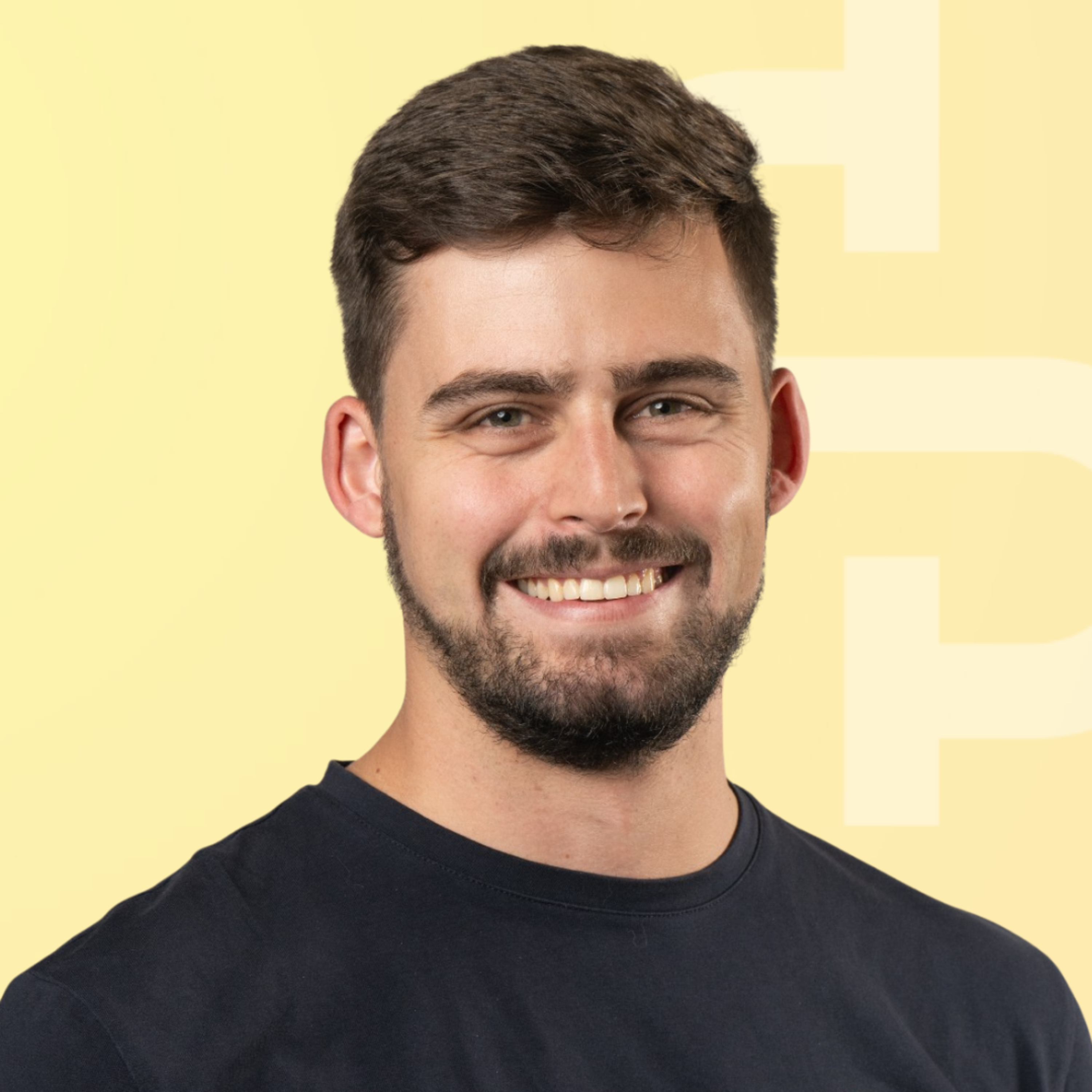
Underwater Robots From a Country Without a Sea: Jonas Wüst, Tethys Robotics (EP#568)
from Swisspreneur Show
44m 39s
Jonas Vist, CEO and co-founder of Tethys Robotics, discusses his journey from mechanical engineering at ETH to building autonomous underwater drones. He was drawn to hands-on robotics through a high school project and later a bachelor's focus project, which led to a competition in the US. The company started with seven co-founders, an unusual number, but benefited from a long trial period before incorporation, ensuring team cohesion. The drones are designed for rough waters and serve two main purposes: area search (e.g., for police, defense, and ammunition residues in lakes and seas) and infrastructure inspection (e.g., offshore wind turbines, oil and gas pipelines). They use a fiber optics cable for real-time control, combining visual and acoustic sensors to navigate limited visibility. The drones can operate up to 300 meters deep and handle currents up to 2-3 knots. Key customers include governmental agencies focused on risk and urgency, and the offshore energy industry, which is cost-driven. Tethys Robotics aims to vertically integrate solutions for turnkey reporting, though both sectors have slow sales cycles. Challenges include underwater localization and environmental forces like currents, which limit operational range. The company has grown from seven founders to 20 employees, with Jonas transitioning to a CEO role that involves managing a management team and leveraging board advisors for industry expertise.
I wouldn't recommend that we start up to start with seven founders. You could say it's going to flag we built the eyes for the underwater world. Welcome to the Swisspreneur Show, a podcast about startup stories and learnings from experienced entrepreneurs. If you enjoy listening to our show, make sure to follow the podcast and leave a rating. And now, here's your host, Madeline. Welcome to another episode of this Swisspreneur Podcast. Today I'm sitting here with Jonas, Jonas Vist, who's the CEO and co-founder of Teppis Robotics, which is building autonomous underwater drones for rough waters. And I'm very much intrigued to hear more about it, but first welcome, Jonas. Thank you very much for having me. I'm very happy to spend this hour, one hour and a half with you. It depends on how long you want to talk. You see where it's going, yes. Before we go into Tethis and hear more about your startup, I would love to hear a little bit more about you, Jonas. And I know you studied mechanical engineering and then later robotics at the TTH. But I would love to understand when you look back to your beginnings and to your education, what actually drew you toward practical robotics rather than the theoretical side of engineering? So it has a good question. I think when we're back in high school, it was more or less like we were done in Sanca, where kind of the science side or natural science physics, etc. It was always interesting. For me, not always the very theoretical side. So even for projects like Mathura, Mathura projects, that we did back then, we built very small wind turbine that was able to charge, well, smartphone back then, at least one battery all over the day. So this was kind of the things. And even back then was kind of to build something, but not alone. I think it was the only one that had kind of a Mathura project with a friend of mine that we did together. So this kind of just collaboration component plus kind of the technical hands on was quite interesting for me. And that drew me then towards kind of the engineering parts at TTH for studying mechanical engineering at the time, because I think I saw that mechanical engineering was probably the broadest study you could take when starting that. So that was kind of part of the reason why I went into or down that route at the end. And then what drew you to underwater robotics? I mean, it's probably not the most typical path. No, at least not for the first three starters. We got the question a lot why we built underwater robots in a landlocked country. So for us, well, after that we started mechanical engineering, started my studies, relatively dry studies, literally. As a physics, it's math, it's a lot of theory. And then in the last year of a bachelor's in mechanical engineering, this is called focus projects where if you have good enough grades, you can apply and get into kind of predefined projects. My grades were in that good, but I still wanted to do something. So we started our own thing. And the idea originally came from one of my friends kind of a kind of founder of the project, not in a company later. It's Christian Angler. And he built also as a Mathura project and underwater robot at a very early stage. And then after three or after two and a half years of studying, he said, yeah, let's try to build another underwater robot because there is this competition in the US. And so me, him and a few other colleagues still that we knew each other from high school. So yeah, let's try this. Then we get a few other colleagues we got along the way in our bachelor. And that's how we started. So we were about eight people just driven by kind of this handsome project with a relatively short timeline. We had about three or four months to build a robot. She'd be to the US and try to do in the competition there. But that was kind of the original. And I think of the underlying aspect for us was there is no at the time there was no active project in the underwater realm at ETH. And it was kind of this pioneering aspect, although it's a bit harder to find what's pioneering what's not. But for us, there's a lot of aerial drones and there was very fancy things from anybody like building a leg of robots like, "Well, that's maybe too far off for us." We still not only, or not even finished our bachelor's, the underwater aspect was kind of the perfect fit for us at the time. And was that also where you met your co-founders of the company today? Yes, so well, in the very, like, we were seven co-founders in the company today. And five of these co-founders were there from the day one and then two others joined along well, the very first years before we went into kind of the entire startup world, yes. So that was very important. So yeah, I think there was also part of our story that we now work together since over seven years within these kind of projects. I know a few of my co-founders, for example, Galus, are our CCO since high schools. I know, I know. Yeah, since 2012, 11-12 issues. It's quite a few years, yes. Seven years, seven people. Yes. Yes. It's not every year new guy. But that's, I mean, that's also quite unusual, right, to have so many co-founders. I totally agree. Yes. I think for us, like, the main advantage at the end was that we had a very long trial period until we incorporated. Like, we incorporated the company, not even two years ago, in summer, 2024. And until then, we had a long trial period with highs and like, with ups and downs. And we were able to kind of to figure out how we work together and if the team is right. And that's what they also, like, we started with eight guys. And they're very in the first instant and not for everyone was kind of just kind of startup group to get there. And I think that's kind of a back-and-forth that it's that certainly helps, especially if you compare that to other startups that come directly out of PhD, you don't have this trial phase and then it's maybe a bit riskier. So I wouldn't recommend every startup to start with seven founders. It's certainly not the easiest way. But if you manage and have kind of this time and, and well, the collaboration experience and it really works out, then it's a different, and you have a lot of advantage just having a lot of founders on board because they're well, we're now about 20 people. So at least half my team is kind of ensuring the vision is going forward. It's a bit of another drive if you have that as well, but it needs to balance that for sure. And was it clear from the beginning, like, who has what kind of role? Not, not per default. Yeah. Like we're all engineers. Yeah. Tim was always probably me and also later on, Braggush kind of more involved in project management in terms of now, well, who kind of pulls together all the technical projects, who pulls together the so-called very early product projects that we had or kind of more development projects for research funds, etc. that we had at the very beginning. And so that came along quite, quite naturally at the end of the day. I think there's also a little bit of luck in there that you have the people, if you're seven people, chances are that someone can, yeah. It's a better fit there, but that's the, that was in our, or in hindsight, was quite lucky that we had the right people now, at least for kind of CEO, CTO roles in there. And we never really had bigger discussions around who fits in where. And obviously, we still have founders that are very deep into our tech and generating our core IP and there's a different role than being a commercial officer in that position. Yeah. And what was it like for you when you moved to CEO because that's also, I mean, you move into a big managing role as well, right? Yes. So I think first of all, being CEO, we were responsible for the runway of the company getting funds together. That was fairly, I wouldn't say easy, but it was something I like doing. So building the network, the relationship and kind of selling the company vision was something I really like doing. So that was, was coming to me quite naturally. So that was, yeah, maybe it's lucky that way, but that's that part, the other part of it's kind of managing the company. There's especially now in the last probably 12 or 18 months was very obvious now as we built the team, the team grows from the seven founders to now 20 people. So quite a bit more, you need to build a management team. And that means for me personally that I need to understand and get the right advices and the expertise to know how to how to manage a management team today. And these people again, because they're also co-founders, they need for the first time, need the right advices to be able to manage the tech team, the commercial team, et cetera. So that's the main learning that you need these processes and you need to, to build them within the company, having your culture in mind. So I think that's kind of, yeah, that was about kind of the management part of the CEO role. Yes. Did you figure that out all on your own? Or did you have mentors or advisors? Yeah, we had some mentors or still.
have on that end. Like we, in our case, we made our best experiences in having these people in the, in the board, like we, we early on looked out for one, two, three persons that could really advise us with some industry know how, whether that's from professorship side, but especially also the industry side. Now we have, for example, Dioclumbraids, former CEO and current chairman of the Deathvilla Group, it's a multimillion company and it's, it's a lot of insights you get from someone that lets several business units and kind of, well, brings a lot of expertise in that and that's, that's then important for, for me, a CEO, but also for the commercial part to get this advice. And so we, we mostly had this kind of relatively strongly involved advisors that are active in the board and not just some random coaches that's, that never really didn't work out for us. And that helps a lot right especially at the beginning. Yes, yes. For sure. And this also, like we were lucky enough that these people really put some efforts and time into, well, sharing their expertise with us. It's not just having an hour there and then they done everything but actually work it through you. We did some workshops really understanding and putting some time in and we surely had weeks where we had one day a week, which is not, it's not the clear case that you find people at that age that, that do that for kind of for the sake of the company that we're building. Now can you tell us or describe to us what, what death is actually does? What we do, well, we did, well, first of all, easiest case, we build underwater robots. Underwater robots are normally used to search objects underwater. Like if you need to find something, I need to really kind of pinpoint where something is. So one big part is we do area search. We do that in the context of police work, we do that in the context of a special items working in the defense, but also in board control areas, etc. And the other thing is you can use the same solution for all kinds of inspection work, inspection of kind of the foundations of wind turbine in this offshore wind parks. A whole lot of infrastructure out there also in the oil and gas sector pipelines cables are kind of in between infrastructure that is critical to be there and needs regular inspections. And so you could say it's kind of like we built the eyes for the underwater world. Eyes in the sense it's not just cameras, it's acoustic so on us, etc. that all come together. So that's, at the end, it's currently the tool that can be deployed easily to gather the information to see what's what's normally covered by the water. Yeah. And it's like a swimming. Yes, it's, it's, you can picture it like like an aerial drone. So it has all degrees of freedom. I mean, like degrees of freedom in a sense, it can turn in any direction, it can drive in any direction at all times. And we don't fall on someone's head. So yeah, we're freely moving like a spaceship, so to say, but in the underwater world. So it has 10 thrusters. Thrusters are basically propellers that, well, let the robot move in any direction. So we're very, very free in how we move. And also how fast we move the robot underwater. And then that's very important. It's not like the drones we don't have GPS underwater. And generally there is nothing else than sound for communication. Okay. And that means we're very limited in communicating to the robots. And in that sense, the main difference for underwater robots normally, we use our robots, we have a thin fiber optics cable going down to the robot that can be 1,000, 2,000 meters long, which allows us to still communicate and control to the robot in real time. Oh, interesting. Yes. And then but the data that you collect is it visual or what kind of data do you? If we take a generous application, if you have, let's take this foundation of the winter, I think that's easy to imagine. And then you have to foundation and you need to look at that. And I would say about 80% of the data you collect is visual at the end of the day. But to get this visual data, you need other senses to know where the things are because the visibility is very limited normally. That means we have very good conditions. We see two or three meters far, which is not really far. And so you use acoustic senses that can see 40, 50, 100 meters to navigate close, close enough to the structure until the point where you can actually use the cameras. So that's that. And then I said, this is only the 80% part. The older 20% can be anything, can be from contact-based probing. That means we measure the thickness of coatings with ultrasound senses. We measure the electric potential. If you think about this underwater structures, they're all metallic and oxidation or rust is a big problem. And so they have this sacrificial anode that you can measure whether they're still intact or not. So we do a lot of different kind of measurements at the end of the day up to cleaning at the end, which is all kind of involved in the scope of an underwater inspection. But at the end the customer just looks 80% at the visual data plus whatever else is in the scope for outside. It ends at the end that we have over 10 payloads on the robot. So it's basically the core platform to see what's going on there, to know where something is, to find errors, et cetera. And then this is the whole second part which completes the entire task. Because otherwise you can't sell a robot if you just do 80% of the job. And then the customer. So from the, let's say from the customer journey, I, is there like a dashboard or software that I use to see the data? It's, it's basically user interface you have like in real time, right? So the robot is connected to your control unit. It's like a suitcase. And suitcase is a mobile workstation or a very fancy, ruggedized laptop. And that runs Windows on this, this platform we run our user interface. And this user interfaces like, if you picture kind of the space games or operating kind of whatever it is very similar. It's intuitive in a sense. You can, you see the avatar of the robot. You see the camera image, you see sonar images, et cetera. And kind of a mini map to know where you are. And that allows you kind of to control the entire operation. So it's kind of this real time interface that allows you to see what's going on and also kind of manage your recordings. I think that's the other important aspects, obviously. And what kind of customers do you have? I'm currently also due to the geopolitical situation. We're very much active in kind of very time-safety and security sectors. That means there's a lot of governmental clients around us, or really talking to, to a lot of police organizations. But also that's a current and big topic, but basically since the second world world, there's a lot of ammunition residues in all kinds of waters. So from German ocean like Baltics and Nordics see, we talk about 1.3 million tons of ammunition residues. But also in Switzerland, we're not, like we have about 8,000 tons of ammunition residues in our lakes. Like, ammunition residues can be anything from old grenades to, well, any kind of explosives at the end. And that gets to a point where an environmental aspect is very critical. So it's also oxidation is going on. So chemical processes that will, especially in saltwater, less in Switzerland, but especially in saltwater, can bring this explosive, these chemicals to the surface, which is quite a big problem. And so this governmental agencies, mostly they're part of the military and special forces that are used to, well, to handle these explosives, to search and identify monitor. And that's that's one big application that we currently have that we use our robots to do area search of these objects. So we have met the detectors, we need to meet this, etc. on board to map where things are. And if there is something that we can, well, either just report in monitor, reach money, pollated, etc. So that's that's probably the biggest focus and application that we currently have. Is that also the, or is there another core problem or area that you would like to get into that you see is urgent? Yes. So I think for us, besides kind of this governmental cases, we see very big potential in the energy industry, like offshore energy industry overall. We also learned over the last few months, it's not so easy. It's not necessarily easier to talk to and makes me obvious. If you try to talk to Shell, BP, to Earth, that you know, showing to RWA in Germany, they're very big corporates and they're very much comparable in the terms of what the timeline for implementation looks like compared to, say, any kind of government. So it's it's also not a very fast process there. And the main difference there is also it's other motivations behind why our solution would make sense. So it's way more cost driven, where the government sizes risk and kind of urgency driven currently. So there is stories from differences there. And in general, we
We as a company work towards the solution that can integrate more vertically in the entire value chain. And that is especially important if you look at the offshore energy industry. If you talk to any of these asset owners at the end of the day, they just want to turn key solutions so they just want to report at the end. Like it's my windpark, okay or not. And how you get that data. This is relatively open for that, but their standard eye process is how they do it today. And this will need to change in the future to kind of make a real difference in that market. And that's what we're working on as well. You mentioned before we started the podcast, I asked you like, do you do oceans or rivers or anything? And you said basically any kind of water. Is there a technical difference or a difficulty for your solution if it's used in open water? Is it in the lake in a river, etc? I think like the short answer yes. Simple case is normally if you're operating lake and whatever depth like we operate up to 300 meters of depth. And one of the biggest challenges underwater is the localization, also that you are the robot knows where he is. And that is, I think that case is very similar across all domains, rivers, oceans, tidal currents as well as lakes. But what makes it very challenging and that's kind of the second biggest challenge is once you know where you are, you could still have environmental forces on you like the currents. That's limit your operation range. For us therefore kind of operations in rivers or also out there in the offshore area if you have tidal currents, so tight coming in come out you can have quite quite high currents actually. That is kind of where we see a lot of limitations today as well, also with our solutions so we can operate up to two, three, not somewhere in the area. Relively depending on payloads we have on there and that's that's something we really need to take into account for this kind of operations. And also how we designed our solutions like we can for example if you look at the robots, it looks a little bit kind of aerodynamically or in our terms fluid dynamically optimized that it can operate actually in a river. So we can put it in a river and if it faces the current we can operate until a quite good range but that also means we are kind of limited to the into the direction we drive and we cannot drive in all directions with the same force and that also limits kind of the applications. So if you're a parade of shore you need to look into all directions etc. And that's where also today still way bigger our OVs are used but we still see there is quite a gap between 500 kilogram or even bigger robots or kind of well this is quite a big robot at the end with a lot of force and today's solution that we have with about 30 to 40 kilograms and so I think there is still a range where you could say if it would build a bit a bigger robot then it might still be very very interesting for this kind of application and so also the things we we take into account kind of what's our portfolio strategy for the future etc. And can it work easily both in sweet and salt water? Yes that's the only thing you need to take into account there is that you have some kind of day-to-day tasks so you need to rinse the robot after salt water and you need to take that into account if you're at the ratings we water you don't need almost need no maintenance which is pretty good. Yes. And what would you say are the main concerns when you talk to new customers? Taking into account we also talked to a lot of governmental clients they normally work with companies that yeah you bring your 10 years track record into tender it's like yeah that's a bit tough for us. There we on paper exists since not even two years and that's kind of something that's that's that's important that comes together with the same topic of support and I think that's where us startup can still outplay all your players on the market in a sense you're more flexible to actually listen to the clients and adapt your solution accordingly if you make sense so that's that's at the same time a big plus point so I think you can play in both directions but kind of the age of a company certainly a trust factor and then the other thing is like we although underwater robots exist since the 60s 70s due to the oil and gas market we are now changing how these robots are perceived as we put kind of the brain into the robot there is there's not a lot of underwater robots that have actually processing power or Ali as a brain and the advantages that gives the operator for the entire quality of the data collection is something they're just not used to it they're used to have kind of more basic or kind of stupid tools that don't really support the operation it's just collect data if you're not enough and then having kind of this uncertainty and comparing it to this kind of quality assurance we can get with it is something we really need to prove because they they know the underwater robot technology but not in the actual kind of like if we say to robot then we mean it's marked it has a brain on it etc and the industry uses the word robot in other terms so I think that's that's a shift we we we are challenged a little bit to to get that across and kind of to yeah to get that across to this to this clients customer and you mentioned before also that a question you get a lot is of course why do you underwater robots in a country doesn't have access to what's what's your answer to that first of all we grew up here that's where we started because we're here the very very easy answer no I think for us really what we see and that's not only in underwater but generally in robotics we see now this is strong pull towards Siric so we see new startups coming to Siric because we have very strong robotics expertise our robotics expertise come to know the terms kind of excel at sensory integration sensory integrity etc we have a lot of very good people coming from the university and now also additional very good people that come to Siric because they're good in doing robotics and they want to be at the hotspot so for building a robotics company I think the the area around Siric or maybe Switzerland is not that big so Switzerland overall is quite quite interesting for that and at the same time you need to find solutions yes we need to have trial hubs and regular trials in the offshore and wiremental why we won't have the learnings we need so it's it goes both ways but for building the IP kind of the tech core of our company that's where Switzerland really is this the place to be I would say do you have a specific area where you go for your offshore trials well anywhere from mediterrancy up to the Nordic's Baltics etc so we go currently wherever our customers draw us to so next week we'll be in the well north of Borkham in Germany so the Nordics again so yeah super interesting and I mean talking about the ecosystem you also just mentioned like it's really good for robotics there is a big a lot of expertise but I guess also a lot of support at the moment what would you say or which parts of that system have had the biggest practical impact on your journey I think for us well throughout our research phase like and the project accompanied our studies there we had very strong support Swiss Jones robotics Center is part of our Swiss that that's kind of co-founded the research and also enabled us to have access to first users so to say so that was important and then we moved into the well now let's now we we start building a startup then go you go for all the grants in our case the first when we got was the TH Pioneer Fellowship so there was certainly a mental one under the TH foundation umbrella and then what is like bridge for me Swiss SNF etc so did these kind of things to kind of survive the first month as a standalone startup and then for us essentially probably the most important step was when we went into the Vee's syriq or Vee Syriq support program that's well stands between ETH and University of Zurich right and they well until today so it was a three-year support we just running out as we speak but that's that was a very important step for us to enable the commercialization because we still it's still deep tech it's still very complex after all and you're not building a complex role but especially not in the subsidy world where it's one of the most challenging environments within a year only etc so that that was for us very very critical to have this kind of these early grants but also then this this bigger acceleration programs around in that area and that also is something that that we see is a video unique can you see all the other startups that went through very similar processes whether that's for a hero whether that's anybody's having tried as well seven cents that was now well not now few already a timeback so to a VeeB.
So these are the yeah, I think the critical things we also experience Are there any gaps that you've noticed or things that you've wish or still wish for? I think sometimes Well, it's a lot of grants around from different sources And I think one thing just directly like when starting from ETH And I think it's also better now, but it's still a little bit of a chandelier of no idea where you get your money from If you need some, but you know there are grants, but you don't know how when and and Yeah, how and when to approach them. I think that's that's kind of more kind of knowledge and knowledge sharing gap with the very early early stage founders especially for first time founders which we were as well and then Yeah, I think for kind of the entire pre-seed seed area there is there's a lot of funding around at least as well from what we experience now in the robotics space It's it's always good to have One or more one or two more programs around so happy to support I think the ideas of of having these programs also for example that the Gavot-Ryvskyvton etc. They support a quite heavily So these are the things but then the other thing we see now and we're getting into that stage will Like post-seeds towards URIs A, B as well the names also change a bit on the sizes But everything you raise after I think 20 millions or above You get very strong feeling that's very very European based and even in Europe That's not not a lot of big investors that have two three four hundred million funds that really invest Into that so there like yeah after this kind of Size of round there's there's a little bit of a like of of Swiss and then at the next stage European investors Which we see and that's also kind of the Yeah, probably one of the topics we hear a lot now in the in this we start a ecosystem Yeah, and where are you looking for now for investors? Well, we still well very much European focused on a lot of like when talking about venture capital and Also kind of family offices in our space, especially in a maritime space. So it's It's it's still very much European focused on that because we're well, we won't raise a 100 million round most probably In the next 12 months we did a three and a half million pre-seed last year, right? But then on the other ends we were quite open so we we are We're in talks also to to US and on Southeast Asian VCs as well, so it's I think it gets quite internationally quite fast Is there anything when you look back your fundraising that you would have done earlier or done differently? Not necessarily I or kind of in other words for me like we we had investor relations very early on they For whatever reason which I I think back then I didn't really had enough this reason. We just took a recall every Yeah, basically every call every contact every every networking opportunity to broaden the network And I would really suggested doing that especially as an early early early stage company because you you need that later and for us So kind of until we raised our first round now last year we were over two years in contact with a few of these investors Which at the end of the day made the entire process relatively smooth and predictable in a sense of we Had not so much uncertainty to to raise the amount of funding we needed And so for for me, but Like looking back two years ago or three years ago, I certainly was not sure is this The amount of effort I put now into these relationships, although I know I will not raise the next one half two years Is that the right decision or not and today I would say yes, it's the right decision, but then Yeah, back then I surely had or Was questioning myself whether whether that's the right thing because there's all the things There's always other things to do yeah, of course. I'm excited fundraising as well But that's yeah, alongside these these topics. I think that was What I probably would do again, but with more With less uncertainty Yeah, yeah, and I think I mean it takes it takes a lot of energy and and also long breath to be able to Work and nurture relationships for so long yes, so that you may in a couple years Yes, no of course. I think yeah, and it's also a learning process Like talking for the first time to VCs or business angels or enter arms It's it's something you need to learn a little bit how how they work how their funds work Like to see a little bit behind the curtain to understand really why Invest when they invest etc and What once you're a little bit used to that then you also know how to to handle Because the entire situation about fundraising and the network around it. Yeah, and do you think that some of the grants that you got Maybe smooth and deway or supported even With funding yeah for I would say for sure. It's kind of like we we've got the the pioneer fellowship and then The bridge etc. Then we were approved by VC Rick support and then you have kind of You can drop some names and you also will probably be listed internally and in VC lists I would suppose I'm not a VC myself so no clue, but I guess you will pop up there and also from our side like one of our investors Only venture capital company or firm is this redstone And we were also getting in contact due to their well Quite dated-driven approach why they contacted us so that's I think that's also based on the grants you win etc And I would also suggest a recompany to go into kind of The grand stage first because it will give you some approval which you otherwise don't have if you directly go for Private investors or venture capital and you don't have any Kind of funding track record Then it's probably a bit tougher and if you have one two three grants around or one of price then You can showcase that other people already kind of investigated your case a bit whether you're Yeah, but where did the startup has some has some potential or not that that makes it for sure easier Yeah, I mean of course besides the The funding and cost it like without the libel of a cushion that you have financially you also get Network and you get visibility right so we like whether that's kind of the top 100 startup list etc. That's Probably wouldn't have ended up there if you wouldn't have won some price before and then it's kind of it's tax of top each other Overall and then you get also more time or more visibility at least in this risk ecosystem Which I can't say and there is and I think that's maybe one of the things I would also say that's that's one Thing worse with Selena's a little bit potential to kind of collaborating with kind of our neighboring countries in terms of Innovation and grants etc. There's not a lot of Exchange happening to be honest, so we didn't buy any any European price yet. Yeah. Yeah, then you also have to again research like what's out there? Yeah, there's not a lot of cross-border Not so much And when you look into the future what is What is like a technical challenge or something that you feel most important to solve next? I think for kind of the underwater Operations space overall and we we try to like to solve the entire Problem of operations in the offshore world with robots That the major question is how you can robotize the entire sector that means from deployment. So how do you get things out there? And then how do you look at the infrastructure? How do you repair it like repair maintenance will be quite quite big topics at some point Because today robots are mostly used to inspect and not repair and maintain and Besides that the deployment that repair maintenance is also the entire sector of how you Automate the reporting Because today very honest there like we sell a Robotic inspection tool at the end. So it's like a tool, but you Still need the right processes internally to do the right reports. You still need to handle how you can put the robots out there And so there's a few Areas around our current core technology that we will explore quite a bit in the future because it makes sense kind of in the overarching goal And I think it supports our vision what we try to do. So at the end of the day we just want to minimize the amount of people we have offshore Yeah, it's cost-driven is risk-driven is just like I think it's the right timing now because that there is always Well, there will be more in a energy infrastructure out there. It's it's a growing demand There is the geopolitical aspect to it that is also growing currently in demand wise there is Therefore more needs for more tech out there and we pretty sure that we could should kind of look at the bigger picture of how we Solve kind of offshore operations in future And on the business side what is like what's the next step for you at tevis? Well currently scaling commercially currently
Like we currently have a product that we can actually sell, like we started shipping last year. And we are now, well, on one side, scaling the commercial side as a commercial team. That means internal hiring people to do sales quite bluntly, but also having the right partnerships, like working with the right advisors, agents. In our case, not really at fooling into the resellen network, but along these topics, we can get the right partners in the right countries, because we're still operating from Switzerland, and you need international partners for that. And once that is going, and we go back to the next topic, which will then be kind of fair how to be scaled into our production, things as also one of the reasons why we now move the offices into bigger spaces. You need space now. That's so interesting. Before we finish our conversation, we always do a round of rapid fire questions. I'll ask you something, and then you just say the first thing pops into your head. Number one is one inside from working on the water that you carry into a leadership. It's not very rapid. No, I think for it's one of the biggest challenges, something we didn't know from the beginning. How do we solve underwater navigation? And I kind of transferred directly to it. I didn't learn somewhere how to manage people. And both took time, both were solvable at the end. Maybe it's a little bit of an engineering answer to that. But we solved our ways into that in both ends. One quality that you value most when you hire early tech team members. I have process really kind of how the fit in the team is going. Do we have to write fit in terms of culture? Well, can we go out on Fridays? They can be here together and have a good time. And you need still have to be smart. I think that's important. And take ownership, but kind of to get along with aspects. Very, very important. How many people you said you're now? We're now about 20. We have a few old positions. A little pop up later this week as well. It's growing, yes. A habit that helps you stay grounded while building hardware. For us, it's well, it's being able to see the hardware you built in action every now and then. I think one funny aspect of building this robot is that we can actually go out and play with them. You can always take the robot, put it in water, see whether it works or you see the improvements. And we were always kind of the company that developed our robots, not in simulation, not in the lab, but in our case in the lab. And that sticks today. Just when I went here, I was a half my team with two cars going out for three or four robots, pecs. Fantastic. So I think that's a very important aspect, being out there seeing and resembling kind of the use cases. Yeah. One word that you want people to associate with Tethis. Well, it's kind of subsea-medium Switzerland. Also, three words. Yeah. And then I have a last one for you personally, mountains or sea? Well, it's a very good question. So I live in a place and it's very important for me where if I look out the windows, I see some mountains. And I think that's very important to kind of anchor me back in where I grew up. Yeah, that's a good answer. Alright, thank you so much. You're welcome. I was super interesting and I'm really eager to see what happens next and where Tethis will pop up everywhere. I'm happy to share more probably lately this year. Thank you. Thank you very much. Thank you. Thank you. We hope you enjoyed today's episode. If you did, you can support us by rating our show on Apple PopPath. This way, we can reach an ever-growing number of aspiring entrepreneurs. [Music]
Podcast Summary
Key Points:
Jonas Vist, CEO of Tethys Robotics, co-founded the company with seven co-founders, which is unusual but beneficial due to a long trial period before incorporation.
The startup builds autonomous underwater drones for rough waters, used for area search (e.g., police, defense, ammunition residue) and infrastructure inspection (e.g., offshore wind turbines, pipelines).
The drones use a fiber optics cable for real-time control, combine visual and acoustic sensors, and can operate up to 300 meters deep, handling currents up to 2-3 knots.
Key customers include governmental agencies (e.g., for ammunition residue in lakes and seas) and the offshore energy industry, though sales cycles are slow in both sectors.
The company aims to vertically integrate solutions for turnkey reporting, especially in the energy sector, and emphasizes the challenge of underwater localization and environmental forces like currents.
Summary:
Jonas Vist, CEO and co-founder of Tethys Robotics, discusses his journey from mechanical engineering at ETH to building autonomous underwater drones. He was drawn to hands-on robotics through a high school project and later a bachelor's focus project, which led to a competition in the US. The company started with seven co-founders, an unusual number, but benefited from a long trial period before incorporation, ensuring team cohesion.
, offshore wind turbines, oil and gas pipelines). They use a fiber optics cable for real-time control, combining visual and acoustic sensors to navigate limited visibility. The drones can operate up to 300 meters deep and handle currents up to 2-3 knots.
Key customers include governmental agencies focused on risk and urgency, and the offshore energy industry, which is cost-driven. Tethys Robotics aims to vertically integrate solutions for turnkey reporting, though both sectors have slow sales cycles. Challenges include underwater localization and environmental forces like currents, which limit operational range.
The company has grown from seven founders to 20 employees, with Jonas transitioning to a CEO role that involves managing a management team and leveraging board advisors for industry expertise.
FAQs
Tethys Robotics builds autonomous underwater drones for rough waters, used for tasks like area search and inspection of underwater infrastructure.
They started with seven co-founders because they had a long trial period before incorporating, which allowed them to test collaboration and team fit. However, the CEO advises against starting with so many founders.
The drones use a thin fiber optics cable for real-time communication and control, along with acoustic sensors to navigate in low-visibility conditions.
About 80% of the data is visual, with the remaining 20% including measurements like coating thickness and electric potential for inspection purposes.
Their main customers are governmental agencies, such as police and military, for tasks like searching for ammunition residues, as well as the offshore energy industry for infrastructure inspection.
Key challenges include localization without GPS and dealing with environmental forces like currents, which can limit operation range in rivers, oceans, and tidal areas.
Chat with AI
Loading...
Pro features
Go deeper with this episode
Unlock creator-grade tools that turn any transcript into show notes and subtitle files.
 PodcastTranscript AI