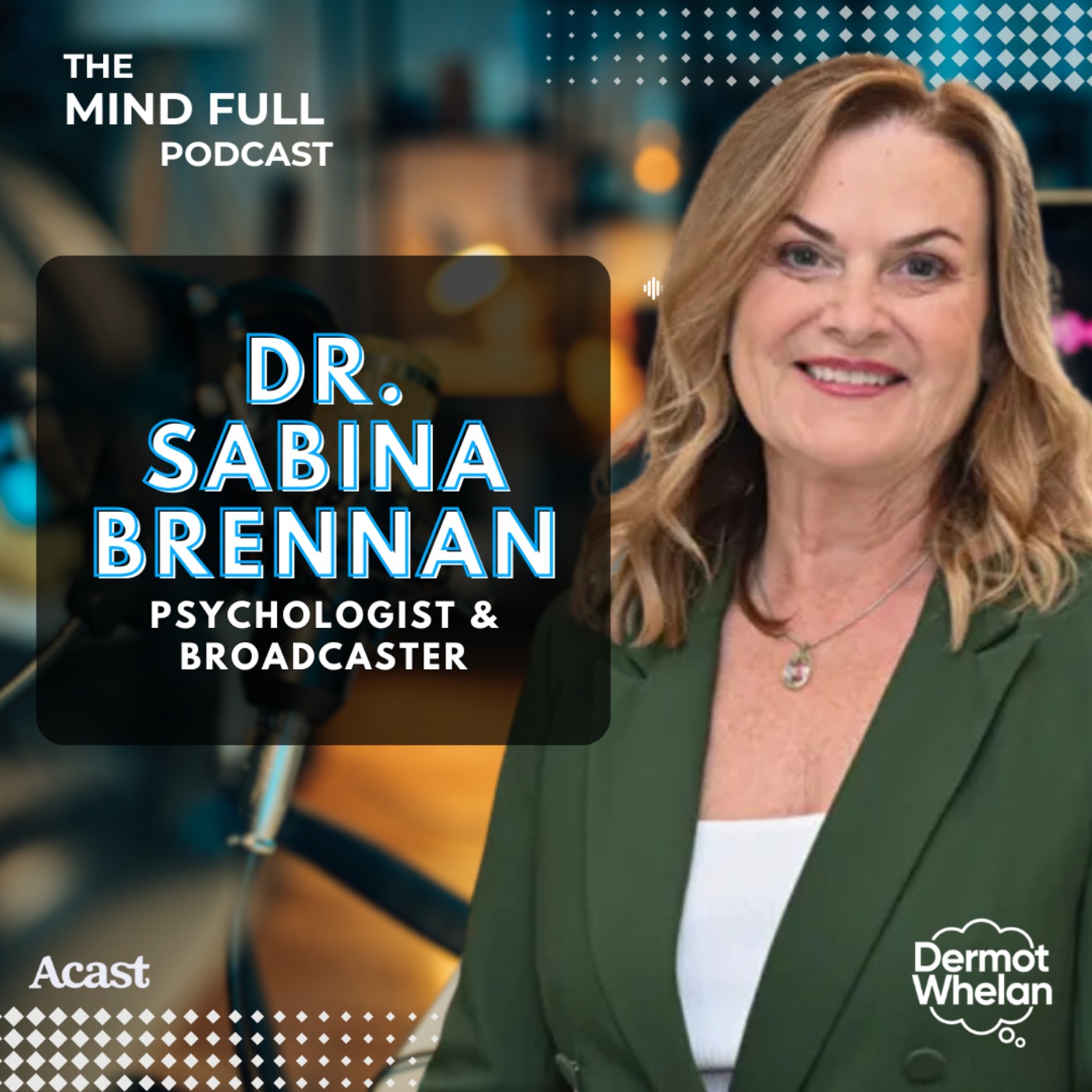
Hey, I'm Dermott Wheeler and welcome to the Mindful Podcast. If you've ever wanted to calm a frantic mind, understand your behavior a bit better and get the most out of your own potential, all of the smile on your face, then this is the podcast for you. It's serious transformation without being too serious. Something simple like forgetting where you put your keys is generally speaking. Not a memory lapse, it's an attention lapse because you just threw them down somewhere when you came in or you were busy talking about something else and you just paid no attention to where you left them. So the thing is the frontal lobes that are the last to develop in that period. They're the seat of your attentional abilities. So they also kind of can't really pay attention, you know, in the same way that you and I can. Hey everybody, welcome back to the Mindful Podcast on audio and YouTube. Don't forget all our wonderful interviews are there to watch too. My upcoming show in Sydney, Australia on November 28 is on sale. Tickets from Dermottwheeler.com. So please share with anyone out there who lives permanently in the future due to the ridiculous time difference. You know, reminds me of when my mother would make us speak to my brother at Christmas time. He left for Australia at age 22 just out of college and never came back. That was a much bigger deal back in the 80s. I was nine when he left so weirdly I didn't really get to know him until quite late into adulthood. But we used to dread those Christmas times when the phone call would be made and my mother would say, "Talk to your brother." So we'd hold the online phone in the kitchen and go, "Hello, hello Brian." And back then, phones weren't as good and there was always a really lengthy delay on the phone. And since my brother moved to Australia, he began to speak even slower anyway. So between the gap on the line and the slow pace of how he spoke, it was a really painful conversation. That sounded like, "Hi Brian, how's Christmas in Australia?" Oh yeah, good, thanks. And you can imagine five siblings and two parents had to have that exact conversation one after the other. All while your dad contorted himself into a ball because he knew how much the phone call was costing. Anyway, if you have somebody that you have uncomfortable phone calls with in Australia, let them know about my gig November 28th at the Bissian Rec Show, comedy meditation transformation. Right, today's guest is a neuroscientist, psychologist, author and all-around brain whisperer. Basically, she knows why we do the weird stuff we do and she's not afraid to explain it all in plain English. Dr. Sabina Brennan has spent years exploring the human brain, emotional health, and why teenagers in particular seem to operate like overtired raccoons with Wi-Fi access. She's the best-selling author of 100 Days to a Younger Brain, beating brain fog, the neuroscience of manifesting and her latest incredible book, It's Still Me, a neuroscientist's guide to caring for someone with dementia and she's currently an adjunct assistant professor working at Trinity College Dublin. In this episode, we dive into the teenage brain. Why your teenager isn't being lazy, they're just biologically incompatible with mornings, the terrifying truth about screen time and sleep and just how early alcohol exposure rewires the brain in ways you didn't expect. She's smart, straight talking, and full of insights that will make you rethink your own habits, not just those of your kids. Dr. Sabina Brennan is my wonderful guest this week and it's a perfect episode if you have children who are teens, who will be teens, or if you still feel a pang of guilt about how you tormented your own parents as a teen. This could help you forgive yourself once and for all. That's coming up in a second but I just want to remind you that I've got a guided meditation for you at the end of this episode, as always it's perfect for beginners and it's perfect for your teen. Also, give me some tips on how to help them engage with meditation if you feel like they're carrying a lot of stress and you want to help. There's also free guided meditations on my website to just hit meditate with me and off you go. Stating the blatantly obvious, I was a teenager. I suspect most of you were two and I also have teenagers, three of them in fact ranging from at the time of this recording 14 to 19. I have two boys and a girl, the two older ones are boys and my daughter's 14 and I can see how different they are. I can see how they have different requirements, different needs, different stressors and it's hard to navigate that sometimes. It's hard to know what to say. One of the beautiful things though is that you do start to see them emerge as they're grown up humans that they're going to be. You can see their interests bedding in, you can see their passions start to light up. You can see how they explore friendships and relationships and how they show affection differently. I know with my sons it's a little bit more straightforward. Big hugs, slaps on the back and arm around the shoulder at the right time. Or with my daughter it's a little bit different, a little bit more subtle. I have a greater sense that she needs her own space more and that she'll come to you when she's ready rather than maybe the more rough and tumble approach of the boys. It's fascinating and as a parent I don't think you ever feel like you're getting it right because I think we can remember back to when we were teenagers. It was so confusing. We didn't know what we wanted. So how are our parents meant to instinctively know what we need? Well we don't know what we need when we're teenagers. So I guess a lot of the time you play this kind of merry dance, a merry game. And I know it doesn't always go smoothly and things could change. I have friends who are really having a tough time with their teenagers as their children discover who they are and what they need. We have a school system that seems so outdated and it's as if our children and teenagers are waking up to the fact that this education model we've built just doesn't seem to work anymore or suit them anymore. But what I love about this week's episode with Sabina, it's that it has the potential to remove a lot of the blame we put on ourselves for getting it wrong for not understanding our children. There's so much happening inside the brain. You'll hear this from Sabina. There's so many changes that everyone in the family is just trying to keep up with just trying to understand the next phase. And as I always say with all these conversations that we have on this podcast, so much boils down to compassion. That self-compassion just giving ourselves a break from messing up for not getting it right for saying the clumsy thing and just keeping an open mind. And not putting that pressure on ourselves to always get it right. So let's jump into this fascinating conversation. We're so lucky to have Sabina. I love how she just lets her personality shine through as well as being an incredible neuroscientist and psychologist. She was also an actress for years. Some of you may remember her from Fair City. And as a result, she looks at something from all angles. She gets it. She understands how human behavior is complex, challenging, but fun and fascinating. So in this conversation, we chat about what's really going on inside the teenage brain. How to deal with stress, sleep, smartphones, a more your child, turning into a door slamming, eye rolling, emotional whirlwind is actually completely normal, biologically speaking. Here's Dr. Sabina Brennan. Sabina Brennan, thank you so much for joining me on the Mindful podcast to talk about more brain stuff. German Wheelan with the super brain that you have. Thank you for inviting me on. It's always a pleasure. I want to ask you this question. Is there anything you hear adults, grown adults say about younger people that annoys you knowing what you do about the development of their brains? Yeah, there's probably lots of things. But that kind of, oh, they should know better. That's kind of, you know, I keep telling them this, but they keep doing that. And it comes from a lack of understanding, you know, the teenage brain is not very good at learning from mistakes. It doesn't really have the capacity for it. That's very interesting. Because yeah, I mean, you assume that a younger brain, particularly teenage brain, is just hoovering up information all the time and is eager to learn. But yet, you're saying that even when they're making mistakes, teenagers would find it hard to actually learn from those mistakes. Yeah, it's a real kind of, a really unusual thing. And you know, it's that the, during those teenagers, and I should say the teenage brain is kind of a handy way to say it, but it's really, we're talking about the developing brain, the second big stage of development of the human brain occurs just after puberty and right up to the age of 25. So we're talking about a young adult, adult lessons to young adult brain. It's a transitionary period. Now, the interesting thing during that period is neuroplasticity. The brain's ability to learn from experience and knowledge is enhanced. So it is this amazing time. It's a great time to go to school in university because your brain is brilliant at learning. And the reason it's brilliant at learning is it's going through this huge change, which we can talk a bit now in more detail later. But your brain is kind of a prediction machine. It's constantly predicting what might happen next, next based on past experience, current input. And so it's predicting. So the more data a brain has, the more accurate it's predicting.
will be. So during this period of development, the teen brain is pushing teenagers for new experiences, new knowledge, new sensations because the brain will ultimately become better and more efficient by having those things. But then also the frontal lobes of the brain are not fully, they're actually the last to go through this remodeling and this rewiring. And they're the parts of the brain that allow us to assess risk to make wise decisions, but also to monitor our errors. So our error processing system is actually really underdeveloped at that stage. So you can learn loads of new things, but you lack disability to monitor your own behavior in terms of errors. So you and I, this little error processing system in your frontal lobes will go, oh, error and monitor and adjust behavior beforehand. So the teenagers aren't getting that message. Does this explain why I, when I say to my teenagers, I have three of them in the house. Oh, dear. For the 400th time, you've left your dishes in the sitting room and they look at you like, this is the first time they've ever even come across the concept of leaving dishes in front of a television. Is this their brain? Are they just now being lazy? It's interesting when the teenage brain is going through that period of development, certain other things are heightened. So you know the thing and I hated myself, you know, you walk down Grafton Street and there's a bunch of girls and they're just meeting each other to say hello to go shopping and it's like, it's always screams and they hug each other like they haven't seen each other in years, like you know they saw each other last night and it's just this, you know, everything is really big, everything, every little drama is this ginormous, terrible thing that's happening, your teen screaming at a concert and crying up at the stage, you know, and it just seems so, oh god, that's so over the top. But actually, they experience emotions in a much stronger way than we do and they experience things like depression and anxiety at a much greater level than we do when we're adults. So that's something that's really important to understand. It also makes them very vulnerable to, I mean you and I, you know, even as grown adults do things to avoid certain unpleasant feelings and we'll do things that are not necessarily good for us, you know, you might have some alcohol if you're something awful, you know, just happened and you go, fuck, I need a drink. And then I'll tell you about what they did to me, you know. So teens are feeling those emotions at a much deeper level and that also then makes them more vulnerable to experiences to block that out and we can talk about that more as well. So things like alcohol and other drugs to kind of nullify that experience. But the thing you're kind of saying, yeah, but forgetting to, to do mundane things, they don't have the relevance or the salience to this exciting new world that they're being pushed to experience. You know, they want things that have emotional relevance for them that are important to them. And also, the forgetting to do things, it really all touches on this, you know, we tend to talk about memory as if it's just this one thing, but there's multiple tons of types of memory and there's multiple steps in sort of creating a memory. And the first step in any memory making process is attention, paying attention. So something simple like forgetting where you put your keys is generally speaking, not a memory lapse, it's an attentional lapse because you just threw them down somewhere when you came in or you were busy talking about something else and you just paid no attention to where you left them. So you can't remember where you left something that you didn't attend to where you left it. So the thing is the front of the lobes that I mentioned that are the last to develop in that period. So they also kind of can't really pay attention, you know, they're in the same way that you and I can. That explains a lot because it always really surprises me how my kids can remember the lyrics to songs. They may have heard once or twice instantly, but yet they can't remember who any of their stuff is. Every GAA, every football training, where is my gumsheel, where are my gloves, where is my boots? And it's like, and I just say to my kids, well, where did you put them? I don't know. Yeah, that's interesting. So it's more about where their ability to put their attention and focus on something as opposed to storing memories. Yeah, but it's also a little more interesting. And I think it's a really, really astute observation that you make there because the thing is music itself. So lyrics to songs. Music activates multiple brain regions. So your songs, songs, you know, engage your auditory parts of your brain, as you would expect, maybe also, you know, movement parts of your brain because you kind of respond to the music, but also it activates your emotional centers in your brain. So that creates a much richer memory trace than a dry fact or an instruction, you know, what your shoes in the same place every time or, you know, whatever. Also then with music and lyrics, you have repetition and rhythm. So they're often heard over and over again. And actually, as a teen, I do remember that just playing the same song 20, 30 times in a row, you know, who broke up with you, Sabina? Who was he? This is so true, though, isn't it? And actually, it's funny. I think I must have something where I didn't quite get over that because it's something interesting about myself that I've always tried to understand. So my husband, absolutely, if he could have his way, he would have music blasting all over the house. He would have one of those things where there was music in every room, he constantly sings songs. I don't even allow a radio in the house. For two reasons, there's so much noise in my head that that's just, it's overload. But the second reason for me is a lot of music he wants to listen to is from that period of time for me and him with the same age. So teen early 20s. And I have such an emotional connection to those songs. It's too painful for me to listen to now at my age. Wow. Yeah. And that just tells you for some people, for whatever reason I don't, and one of my friends has to be in it, that's so sad. I suppose it is in a way. But and it's for two reasons. One less so that it brings up the sadness about breakups, less about that. But more, and I'm really a lot here, but I guess that's kind of what I do because I'm just interested in understanding the human condition of myself included. More so about the dreams that I had for my future at that point. That's when the dreams are big. But were those just to throw back a little bit to you in terms of the neuroscience and back to where we were talking? Sorry, we were talking about. This is turning into paraphrasing. I think it's really interesting though. Were those not the dreams and aspirations of a version of you with a very different brain that hadn't been fully developed? Yes, absolutely possibly. And a brain that had to go through a period of development and understand, I learned lots of things along the way. I mean, you know you work in the entertainment business. Now you've been very, very successful, but I was so focused on this singular idea that every time a door closed in my face that I was going towards, I kept trying to push that same door down, which really was just a recipe for unhappiness and a sense of failure. It took me quite a while and that's what maturity is to realize, "Fuck, every time a door slams in your face, it creates a draft and opens a whole load of other doors that if you just turn around and look, you would see, 'Oh my God, there's more than one way to skin a cat.' And I suppose that's what I've done. I became an actor because I'm fascinated by the human condition. I was never into theatre, although I'm a theatre trained actress from the age of eight. And that's why I loved film and television because it was trying to get into the characters head, why would they behave that way so that when acting stopped for me that hiatus, I went straight into study psychology because it's the same thing. Then I went on to make animated films to explain that's why Rose and directed them. And now in a sense, I'm still performing, but I'm performing information actually that has value for other people. And I now understand that that gives me much more satisfaction than acting would because I remember having a conversation with a friend when I was an actor saying, 'Oh, I wish I could do something more meaningful in life. It seems so frivolous to just be an actor.' And her saying to me, 'Well, you're acting can change people's lives in different ways.' And I remember her sort of saying that as consoling. So I think I kind of grew up to realize that whatever I do has to matter and it has to affect other people. Yeah, I'm, of course,
comfortable where I am. Like I really am happy where I am on what I do, and I don't have a desire to be a Hollywood actress. I don't have a desire to go to the United States of America ever again until things change there. But I found a different way to understand, but for some reason, the songs still kinda get me in that way. And it also acts a face going back to the real topic of our conversation. You know, why do they remember lyrics over where their shoes are? It also activates the mirror neurons in our brain, 'cause we love to imitate, and kids will not only be learning the lyrics, they'll be trying to imitate the way the person sings it, and do the movements, et cetera. So there's lots of reasons why they'd remember that. And then the reason they forget where they put their shoes is, as I said, their effective fun functioning is still developing. And there's no emotional hook to where I left my shoes. (laughing) - Oh, you know. - Maybe a parent we should sing if and go, for the love of God, with the shoes in the same place. - Maybe something else. - But also, yeah, the clearing of the dishes. So you're obviously, so another child and another family might endeavor dare to leave their dishes on the coffee table in front of the telly, because of the consequences that might happen with the parenting style they're living in. So, you know, it's definitely-- - That's true. - So more stick, less carrot required, I think. That's what I'm hearing. - I didn't say that. (laughing) - Can you take us, and I don't know how well you can do this, but like on a whistle stop, say 30 second journey of the development of the brain. What are the train stations along the way, just so people can get into their own heads. Okay, an overview of the different stages of changing in our brains. - So from the very beginning when you're born, where the only mammals really that are born with a very incomplete brain, look at a giraffe being born, and they're walking within seconds, it takes our kids up to a year to learn how to walk, some longer. So there's a lot of connections have to be made. The basic stuff is there, but through learning and neuroplasticity, which is why it is absolutely critical to give babies and infants multiple interactions with the world, take those fucking screens away from them. That is my pet hate, going to restaurants and babies being given a screen. How are they going to learn to socialize? How are they going to learn to behave in a restaurant? How are they going to learn about foods when their attention is on a screen? So that's really important state of development. Then you kind of, you know, they're learning right through, until then hit puberty, there's all these connections made in the brain, et cetera. And the brain now has to try and make that most, the most efficient brain it can be. So a pruning happens. And this again is why you need to continue giving teens lots of experiences because again for them, you've heard it for older people, use it or lose it. So if teens haven't been engaging in an activity, the brain is going to prune that information away. And it's going to enhance the connections that are being used. But essentially the brain is being remodeled from back to front. So the remodeling that first occurs is anything in which you interact with the world, touch, balance, sound, size, you know, all those kind of things. But then the process goes slowly forward to the front and lobes. And they're really not fully developed until you're about 25. And it's not about the brain getting bigger. And in fact, the brain size sort of stops, you know, kind of mid teens. It is about making the brain more efficient and more effective. And basically, you know, we really kind of need to give teens opportunity for the-- the team brain is hungry, really hungry for knowledge and experience. And you've got to give teens opportunity for new experiences in a guided safe way, because they cannot assess the risk. Also, their pleasure and reward center in the brain operates differently to ours. So they're not driven by risk taking-- they're driven by the reward from a new experience. So the pleasure system in the brain operates for a survival reason. You know, so you take eating. Eating is pleasurable. That activates the reward system. You feel good when the reward system is actually-- dopamine is released. And the real reason dopamine is released is to motivate you to do it again. And so that's enhanced in a team brain. They're being pushed to try new experiences, get reward, do it again. But without the control center. OK, yeah. So does that bring us then neatly into alcohol, drugs, risk taking and why it has such relevance to a teenage brain in terms of the, I guess, the effects that it can have? Yeah, yeah. I mean, yeah, the teenage brain is really sensitive to alcohol and other drugs. Even in simple ways, like as an adult, you might go down, you may sit around, have a few drinks, and then you go, oh, as I said, the seal is broken. You get up to go to the loo. And you stand up, and you go, woo! There's a little wish. And you might bump off a chair, and you go, oh, OK, OK. I need to slow down, have some water or whatever. I've had a little too much. Teenage brain doesn't register that. So they do not get that message you've had enough, which is why so many teenagers end up in a hospital with alcohol poisoning. And alcohol poisoning is very serious. You can die. And also then, they also don't get a bad hangover, like we do. So there isn't that deterrent. So they're kind of not getting the same messaging. Also, they're getting greater relief without the whole amount of looks from those. They tend to turn to them for relief from those very strong emotions they're struggling with. And it's also, again, about the dopamine, substances, alcohol and other drugs. They flood the brain with dopamine. And they give a feeling of euphoria and relaxation and stress release. And the thing is, it's about that because that's all not balanced. You know, if you have the right amount of dopamine in your system, you will have a happy teen, a motivated teen, an alert teen, a focused teen. If you have too little dopamine, which is also an issue, they'll be unhappy. They're lack motivation. They'll be tired. And I'm sure there's some parents listening. You have teens are just not going to be a boy. They just don't want to kind of go out there. Maybe they're just not getting enough stimulation or they're just on their laptop too much. And they're not really getting that stuff. And then too much dopamine, which can occur with-- and I'm aware I say dopamine and dopamine, because I always forget which is the correct pronunciation. And so it's one of those things-- one of those words for me that won't go in. Anyway, too much dopamine produces euphoria and energy and actually very high sex drive in teens. So couple that with an inability to assess risk. And you have teens also engaging in risky sexual behavior as well as risky drug taking. So what happens is that really when there's that overload of dopamine from taking substances and alcohol, everything else becomes unimportant. So nothing is important. Easing, sleeping, schoolwork. None of those things are as important as the motivation to seek more alcohol and more drugs. And so I guess as a parent then, or as a teacher, anything we can-- any other way of getting dopamine, a healthier way that we can encourage our young people to take part in, has got to be helpful because you're giving them so like the GMR exercise or whatever it happens to be. You're climbing, taking them off down to work low, let them go on a hike together. So you've got to less than-- they have to take risks. You have to do that. You have to learn. They have to learn from experience. You can't wrap them up in cotton wool because then you will have an adult who actually hasn't learned through experience. And that's going to cause problems. The issue is-- and I think it's a cultural issue, not just a parenting issue. The other thing I want to touch on on alcohol is there is a misconception that if you introduce your children sensibly to alcohol from a young age, they will become sensible drinkers. And that's also looking at people in France, giving their kids a glass of wine, et cetera. The research is completely turning that on its head. If you have a drink by the age of 14, you are more likely to have an alcohol addiction problem in a later life. So if anyone takes anyone away from this, and I've been doing work with where I now live, monahen and cabin youth services, they're part of the alcohol form of Ireland, just to try and get that message out to parents. So that's the science. The later they get introduced to alcohol, the more chance of them having a healthier relationship with-- Yes. And it's not just-- it's not the same for all kids, OK? So if you've already given your kid alcohol at 14 or whatever,
going, "Oh my god, I'm producing someone who has alcohol or addiction problems." That's not the case. And that's where research comes in. We want to identify who's actually vulnerable in that way. So having a family history of alcohol and other drug disorders is going to make that child more likely. Actually gender, being female, the age of onset is the important thing and patterns of drinking. Do we know the effect that screens are having on brains, particularly in younger people? Okay, so that's a very broad question. So because a huge amount of the research that's done on screen time and teens is done on people who have addiction problems to screens. So we're not kind of looking at normal. Also, one screen time is not the same as another screen time. So if someone's on a screen developing a new app or creating or learning about satisfying their curiosity, that's very different to someone who's scrolling social media where it can be impacting on their anxiety level, etc. But if we now just focus down to the impact on the developing brain in teens, there's a Japanese study that showed the impact that teens who looked at their screens, age 12, adolescence, age sort of 12 to 18, who looked at their screens before going to sleep at night. And I say that's even to adults. Aside from the content, a blue screen tells your brain that it's time to wake up, suppresses the melatonin that you need to get into that sleep. So we should all shut up off our screens, at least an hour before we go to bed. But teens who looked at their screen before going to sleep had poorer overall mental health, increased suicidal feelings and higher rates of self-injury. And those associations were insignificant even after accounting for factors like sleep duration and other potential confounders aside from that. So why that might happen? The first thing would be sleep disruption. Using phones after a lights out at night can interfere with your sleep quality and the duration of your sleep. And they're all crucial for brain health, for brain development, but also for your ability to regulate your emotions. And mental health issues are related to your ability to regulate your emotions, to manage your emotions. It's when emotions become overwhelming that you start to get into the realm of mental health issues. You know, if you're feeling stressed and you don't manage that, that can then become anxiety, you know, and then the anxiety can become debilitating. So your ability to manage your emotions is related to the quality of your sleep. So that could be doing it. And the emotional overstimulation, as I said to you, the teen brain is already hyper-emotional. And again, if they're engaging with that kind of stuff that's on social media, like I honestly wish I didn't have to be on social media. And it's probably why I'm not like a social media influencer. I could be on there all the time. I have so much interesting content. It's not me, but you know what I mean, the content. But it distresses me even as an adult when I go on and I see all these, you know, people do amazing things or whatever. And teens looking at all this stuff and also the whole environment of it, the bullying, the being nasty, the algorithms in the social media itself that decides what is a perfect body, you know. And if anyone is really interested in this, there is a fabulous book by an Irish author. It's called the Invisibility Trapp. The Visibility Trapp. It's an amazing read. Have you read it? No, I haven't. Okay, it is a fantastic read. She is an amazing, her writing is very good, but she goes really into how social media was supposed to increase our visibility and give us a voice. But now it is created a culture where we are constantly being watched and it constantly monitoring our behavior. It's a fantastic read, but she goes into things like algorithms, particularly females are very vulnerable. Algorithms that actually show more of one type of body and suppress another type of body to the extent that you think this is the only proper, you know, perfect type of body and also, you know, deciding that females can show things that are actually quite normal. Yeah, Mary McGill, the Visibility Trapp. Yes, yes, Dr. Mary McGill. And social media. And people can read after their read. It's a fantastic read. And actually you should probably have her on on your podcast. I had her on mine. And it really is an eye-opener. And I think again, I think that's something that would be really good for teens to understand. Because I think our teens today, they're very smart. Don't misconstrue that a developing brain is not a smart brain. It's just that the order in which it's develops makes things like assessing risk. Those kind of adult behaviors, really, the mature behaviors aren't developed, but they're still smart. And they can still really take in information and understand information and all that. And I think our teens today are more astute than we wear, more wear than we wear. You don't have to look at their, you know, standing up against climate change and, you know, all those kind of things. I think if teens understood how they are being manipulated on social media and how the content on social media is being manipulated, that they would be in a better place and they would, I truly believe, make better, more conscious choices to step away or to at least limit or, you know, at least understand how they're reacting to. Because I was really surprised by the manipulation. Sorry, just one more thing. Just going back to why the, you know, screen time, you know, late at night as well might be more, you know, predicated. Impact for the end. Yeah, yeah, yeah, on mental health issues is they actually, you know, have reduced coping capacity. So, you know, as a consequence of loss sleep and constant connectivity, it can impair their abilities to cope with just daily stressors. And that increases their vulnerability to mental health issues as well. So, you know, it's this, it's all this integrated sort of vicious cycle. And we do need to support our kids and we do need things when they're over what we think is over emotional. Instead of saying, no, don't be ridiculous, you know, that's silly. You acknowledge, you got to acknowledge, yes, I totally understand you are feeling this in such a deep way. But let's see if we can kind of look at it with a rational brain on. And I always say this, parents, teachers, adults in positions where they're integrating, are interacting with teens, we have to be their prefrontal cortex. We have to be their frontal load. We have to support them to assess risk. We have to allow them to take risks, but we have to support them to assess risk. Knowing what you know about how we learn, how a younger brain learns and adapts, would you have designed the Irish school system the way it is? Oh, that's a very interesting question. No, I wouldn't. Not saying it's all wrong. But I do think one thing and I talk about this over and over again. If you watch a young child who has a developing brain, they explore the world with every one of their senses. They put things in their mouth, they taste them, they touch them, they learn from experience, they learn from interaction. I'm assuming it's the same. It's a while since I've had a kid in school, but pretty much when you go to school, it's a lesson in teaching kids how not to interact with the environment. Sit down, shut up and listen. So, basically, you're restricting all learning through our learning. Now we know from a search on memory and it's something I say to people who are worried about losing memory in nature life. The stronger memories come from those where we engage all of our senses. So we should be teaching our kids through interaction, through, instead of this kind of road learning and learning things off by heart, you hear that with language. Have conversations interact with that. You don't need to necessarily learn how to conjugate verbs. Give them new experiences. And one thing I would say, I'd love to get this across to teachers. So neuroplasticity really is just a fancy word that describes the brain's capacity to learn from experience, to change what learning, grow new connections. Now what's really interesting, the teen years is the best period for enhancer. Nouroplasticity. But also what we know, and this applies throughout our life. If you have a natural curiosity for something, neuroplasticity is enhanced. That's why learning about something we love is easy. Okay, and that again applies to the songs and whatever your kid's focus is on, try and encourage that. You know, support them to do those things if you can. So curiosity.
enhances learning. The really interesting thing is that then when you move on to something else, that enhanced neuroplasticity continues for a period of time. So my feeling is in schools, if there's a subject that kids find really difficult calculus, maths, physics, I don't know whatever. Instead of spending, you know, 40 minutes trying to drum something into a kid's brain that they're struggling with, aside from other, you know, teaching methods that you could employ that are based in psychology and how kids learn, I would suggest you start every session with whatever period of time, a 10 minute period, even of letting the kids just do something that they're naturally curious about. Each kid will be individual, whatever it is, whether they're curious about how a certain thing works or whatever. So then when you start to teach them the hard subject, they have an enhanced ability to take that information in. And I would say that to kids because we have leaving the search, kids try to force learning into their brains. Your brain is brilliant, studying for hours on end and into the night is counterintuitive. There's only so much information your brain can take in it at a time. And focus detention is really draining on your brain. So focus for periods of time and then take a break. Actually go for a walk, do something different, go play hot the ball in your back garden, something that gives that brain a break from focus detention. But also if you do something that you naturally enjoy and and focus on, when you come back again, you're refreshed. So yeah, if there's parents out there or teens that prolonged and working late into the night and depriving yourself of sleep, it really is counterintuitive and you're wasting time. You are far better, study X amount, do something nice, get a good night's sleep, you need that good night's sleep to consolidate the information that came in. If you're not getting sleep, it's a waste of time because you can't consolidate it. And also you can't, if you don't get enough sleep, you can't clear all that new information out of your hippocampus. So you can take more information in tomorrow. So it really is counterintuitive. Sleep, exercise, having fun because the having fun, do go listen to one of the dermits, funny podcasts or whatever, you know, having fun and laughter are critical, particularly at times like that when you're stressing out. So parents, don't say to your kids, don't go out and have fun, you should be studying. Say you can go out today for an hour, go have a bit of crack, have fun, then come back and have study because laughter is nature's natural stress buster. So it will lower those cholesterol levels, not cholesterol levels, or cortisol levels. Oh, I wish laughing would lower my cholesterol levels. Of course, it's a bit too hard. You're laughing, I suppose, it's a bit of a bite. Well, yeah, yeah. Listen, Sabrina, thank you so much. That's been really, really informative. And I think we'll all maybe take a little step back and be less reactive if our teens aren't behaving in exactly the way we want them to because we'll have a little bit more understanding that their brains are in a different place. Thanks so much, Sabrina, fascinating, as always. Thanks, Maria Durman. Thanks so much, Sabrina, for that amazing conversation. I love how she just brings new insights and common sense to stuff. I like when she talks about good smartphone use versus bad smartphone use. That's something that sometimes I think we can forget. And I've seen it in my own kids, the things that my own children have learned through YouTube tutorials in terms of animation, editing, filmmaking, and all these wonderful creative endeavors that they would never have learned at school. These things are really good. If only we could protect that stuff and just do our best to strip away the more damaging things. Hopefully we'll get there in the end. I really hope that conversation helped you. I hope you enjoyed it as much as I did. And if you'd like to learn more about Sabina's work, go to SabinaBrennan.ie and check out our wonderful books, a hundred days to a younger brain, beating brain fog, the neuroscience of manifesting, and her latest wonderfully compassionate book, It's Still Me, and neuroscientists guide to caring for someone with dementia. And I really recommend you go and listen to Sabina's podcast, Super Brain. She's taken a little break from it for a while, but there's loads of fascinating episodes online that you can dip into. And I think if you really enjoy this podcast, you'll definitely like her one too. Super Brain by SabinaBrennan. Please, let me know what you think. If you've any thoughts about the chat or any other episode we do, I'd love to hear about it. Drop me a line to
[email protected]. Gavin actually dropped me a really lovely email. And he says, I've just listened to this week's episode with Brian Penny. And wow, ain't the human condition amazing that someone can come back from what he went through. I'm loving this season's episodes and nearly after everyone I want to talk about it. That's great, Gavin. That's my goal with these things. It's to spark things in our mind and get us talking about this stuff. Thanks so much for your message, Gavin. And if you want to drop me a line just like he did
[email protected]. So finally for this week, let's have a look at our meditation, shall we? And I get asked a lot, do you have any meditations that my teenager might like? I'm trying to get them to do something because I can see that they're stressed. And I know it's not easy. A lot of us can be resistant to this stuff. Anyway, never mind if you're a teenager and it's your parent who's telling you what they think you should do. It would be weird if they weren't resistant. So what I would say, and it's something I possibly have mentioned before on this podcast, is that if you want to get your teenager into meditation, if you can see that they're stressed and you know something like this might help, try to present it to them in a way that they can relate to. If they're not into lighting candles and sitting on cushions and listening to Bolivian Pan-Pipe music, then don't try and make them do it. When my teenager opened his mind to meditation and tried it, it wasn't because I was suggesting he'd do it. It was because he founded on his Fitbit app. And when it was presented to him in a sporting fitness environment, with all that packaging, he could relate to it. He didn't feel foolish doing it. It felt normal to him. It just felt like part of his fitness regime. So is there a way, a style, or even another person outside of the family who could present it to your teenager in a different way? Maybe it's someone they look up to in a sporting environment. At their gym, their sports team, fitness coach, a cool teacher, an interesting book that you could leave around. So see if there's a way that you can speak to them about it, but a way that resonates maybe for them and not necessarily just because it worked for you. And then in terms of the actual meditation, the ones that my kids have liked more than anything else are the body scans. A lot of you may know about the body scan already, but just to remind ourselves, or if you haven't heard of it before, it really is just a process of relaxing the body from the top of the head to the feet, or from the feet to the top of the head. And you can go up and down as many times as you like. And that is the one that has resonated most with my children. And particularly at bedtime, it can be that little thing, that little practice that can help improve their sleep, switch off a busy, or anxious brain, and help them to get the rest in recovery that they need. And of course, if it works for them, it works for us too. So I'll do a quick one with you now, and I'll point to the fact that there is a meditation for sleep and relaxation on DermatWeelyn.com. It's free, and about a quarter of a million of you have used those meditations up there. So please go and try them out, but in particular this one. So let's do a quick one together. And as I say, you can do the longer one. It's about 20 minutes on my website when you have a little bit more time. So let's settle ourselves with a nice breath into the belly. Expand that belly like there's a balloon in there. Hold and let go. Nice, relax your shoulders, relax your jaw, breathing one more time into the belly. Nice and deep. Hold it there. And with your out breath, let's sigh the breath out. Let go of anything that's holding on there. Okay. So bringing our attention to our head. Imagining that we're just bringing our breath into that area there, breathing in into our head. And then with the out breath, just relaxing all the little muscles in our head in our face around our eyes in our jaw. With the out breath letting it all go. Beautiful. Moving down into the neck and shoulders. Imagining we're breathing in there. Hold and then let go. Letting any tension go. Really good. Now we're moving down into our chest and upper arms, breathing in there. And letting go. Next we're going to breathe in. Right down our arms down into our fingertips. Now we let go. Beautiful. Moving right down into our belly and lower back. Feeling up that space and then letting it go. Fantastic. Moving down into our pelvis and upper legs. And letting go. Down through the knees into our lower legs, our calves and our shins. Letting go. And one more breath.
in. We breathe the right down into our toes, into our feet, right down to the tips of our toes. Now we let go. And now we do one breath that's going to go from the soles of our feet right to the top of our head. And with our out breath we wash everything back down the other way. From our head right down through our body and allowing everything we don't need to disappear out through the bottom of our feet into the floor. And we let it go. Beautiful. Wiggling your fingers and your toes, coming back. Well done everybody. If you'd like more of these kinds of meditations but more in depth, grab my new book, Busy and Direct, you'll get exclusive access to 12 brand new guided meditations as well as all the ones from my number one bestseller Mindful, which is also an audio book format to both of them are. Don't forget all our interviews are available on YouTube, Durmit Wheeling Meditation, they're extra long versions. So you got lots of tidbits that maybe you missed first time around in this audio version. And if you're dipping in and out of all our episodes and something resonates with you that you'd like to share with us. Just drop me a mail podcast at DurmitWheeling.com. Thanks to Dr. Sabina Brennan for taking the time to talk to us all. Go to DurmitWheeling.com for podcast news, live shows, including my Sydney one, book updates, and a subscribe to the newsletter so you never miss anything. That's it for this week. Thank you for listening. I really appreciate it. You've been tuned into the Mindful podcast with me, Durmit Wheeling. Producer is Brian Connolly, title music by Dave Moore, and all our YouTube web and social content is by Katie at Ungrateful Web. On right your head everybody, de-stress your life, don't forget to breathe and I'll talk to you next time on the Mindful podcast. And be kind to those teenagers, they don't mean it.
 PodcastTranscript AI