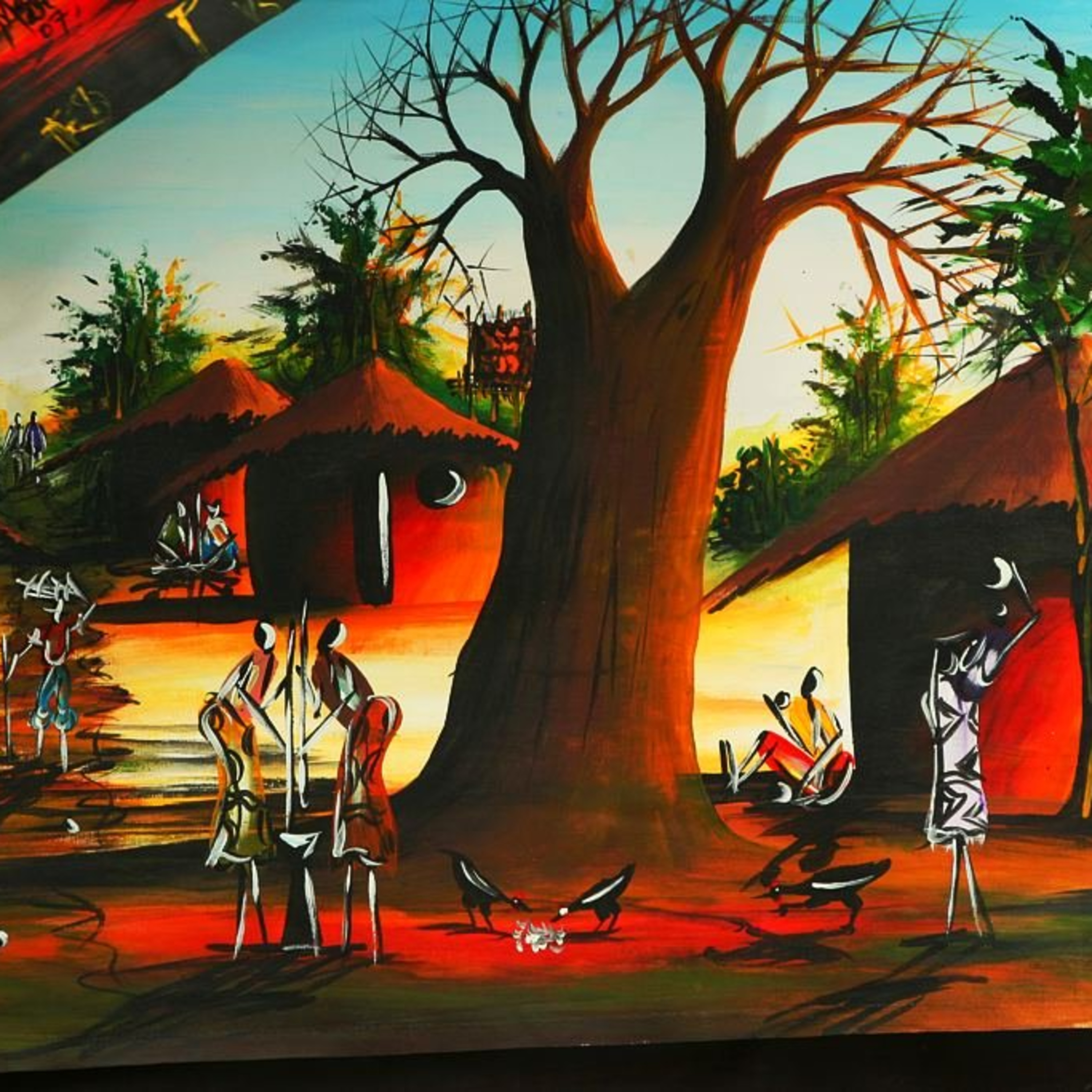
The podcast delves into the principles of customer service within the context of the Ubuntu philosophy, emphasizing key skills such as mercy, wisdom, and humanity. It explores the universal nature of Ubuntu, highlighting figures like Nelson Mandela and Desmond Tutu for their contributions to promoting forgiveness and equality in South Africa. The discussion expands to include the Ubuntu operating system, founded by Mark Shuttleworth, which embodies the principles of community collaboration and support. Despite the ongoing challenges faced by Africa, such as conflicts and economic issues, the philosophy of Ubuntu continues to inspire hope for a better future by emphasizing collective support, forgiveness, and unity among individuals and societies.
Transcription
4276 Words, 24925 Characters
Hello, I'm Kayyulsay and welcome to Demner Podcast.
As you know, the first episode of the series is the fifth episode of the series,
that is, we have come to the topic of customer service.
In order to continue from where we are,
we will talk about these skills that we talked about earlier.
What was this five basic skills that wanted to make Ubuntu philosophy a total?
One is mercy, two is counteractivity, three is wisdom, four is humanity,
and one of the basic issues of this episode is customer service.
Here, we will start by discussing this customer service issue in the second episode.
This is a topic that I think is more important because customer service is not just
a philosophy or a thought.
It is a path that lives with us since the construction of the society.
This customer service issue will open a different door for us.
Is Ubuntu a utopia?
Should there be balance between society and solidarity?
As we ask different questions, we will take the opportunity to look at the electoral perspective.
Of course, one of the most important reasons to be able to discuss all these issues today
is that Ubuntu philosophy completely covers the African borders
and becomes a philosophy instead of a cultural pillar.
Therefore, in this episode, I will also talk about the two important things that make Ubuntu a universal identity.
One of these important figures is the unique symbol of South Africa, Nelson Mandela.
The other is an activist, head of a psychologist, Desmond Tutu.
Yes, now let's continue to follow the motto of the series, which is no longer a word.
Desmond is a human being with other people.
At the beginning of the first episode, if you remember, the society was a very general opinion.
A human being is set up in the society to protect the dangers of nature,
and also to protect himself, i.e. from other people.
In this case, there is a "customer" at the very bottom.
"Customer" is an Arabic-Turkish word.
According to the Turkish language, "customer" is a common word.
It means that it is prepared with "el birli" or "el birli".
In English, the word "collective" corresponds to this meaning.
In our language, the word "collective" is now a word that carries this meaning.
But this word is more or less translated from French to our language.
Now, use either Turkish, either Arabic, either English or French.
The concept of the word "collective" directly indicates the theme of the social structure.
Therefore, this is the reason why the word is both etymology and philosophy.
You know, the social structure consists of more than one.
Yes, but it is necessary for a system that consists of individuals to work.
It requires a collective structure or the work done with "el birli".
As we said in the first episode, Homo sapiens creates a structure with "collective"
It is necessary to create a structure with "collective".
Even in the name of this period, there is a work and a "collective".
But this is not all.
To support the disabled, to go to a place, to a village, to a place,
to communicate with the children, the disabled, the heavy-weighted.
So far, we had to be in business for 300,000 years, because as I said, we need "el birli" to live in nature.
Of course, the structure after the revolution requires a much more business.
We are talking about a business like the activities in the society and its activities.
We are talking about a business like business like business like business in the society and its activities.
But we are talking about a business like business like business like business like business in the society and its activities.
But here, there is a relationship between the country and the nation.
So, the business in society acts as a business on a heavy scale.
We can say that it is a business that is a little difficult, which is not very well-known.
Now, when we compare all this history with the past 100 years of business,
there is a mutual agreement that touches the two sides of the Ubuntu philosophy.
Since Ubuntu has already come out of geography, which has been difficult for thousands of years,
the main issue of the mutual agreement is always helping, always protecting and sharing the next one.
You can think that all of us, for each of us, for each of us, for each of us, for each of us.
But Ubuntu has been building a society for the last 100 years.
So, the foundation of the society is now almost out of the middle.
It gives an effective approach to more intelligent society.
Yes, today's society has become more popular with belief rhetoric.
There is no god-like structure.
In a form that the individuals and the individual are talking about themselves.
But there are a lot of problems in modern society.
Neoliberalism and the technology have come to the fore and started to accelerate.
We are living in a tempo that we cannot control the time.
In a way, a society creates a kind of equality and hope and takes it to unity.
As we said, there is no god-like structure now.
But there are different forms of radicalization, religion, hatred, ideology, nationality.
This time, both the society distinguishes itself and the countries separate from each other.
Look, we're back to the same topic again.
Collective consensus.
Some of these factors in modern society can create collective consensus in a local context.
We see today that people are only connected to people who think like themselves or who look like themselves and share them.
But the collective consensus is now a globalized world.
All societies and countries must have common values.
We see inequality.
No one's voice comes out to the wars in other countries.
He turns his head around the comfort zone and continues his life.
As I said, this situation is not limited to the perspective of the different societies.
It also creates a consensus among the individuals living in the same society.
Turkey is one of the best examples of this.
If people in Turkey are now a part of a political ideology, belief or system,
what happens to those who do not look like themselves and do not think like themselves?
Now, the reason why collective consensus is not so widespread is not to argue in a clear way.
Ubuntu has the means to create collective consensus.
The main purpose is to talk about equality on the basis of modern society.
[Music]
In 2004, Mark Shuttle, a young developer of the word "Shuttle",
launched an operation system called Ubuntu.
What is the operation system for those who listen to me, engineers or technical experts?
Let me introduce it in a very general way.
Now, this Microsoft Windows that you use with your computer,
that is the iOS or MacOS in Apple computers,
these are one-way operation systems.
This system is a system that allows people to be used by people
who listen to you.
If we look at it in a simpler way with an analogy,
what we call the operation system, you can think like a brain of a computer.
How does the brain of a person act as a tool to calculate and talk
at the same time while handling all the fun of the body?
The operation system sees the same task as the computer.
Mark Shuttle, who runs the Ubuntu operation system on the PSA,
is an English-speaking and South African-born entrepreneur.
He is a part of the white community in South Africa.
That's why he is a part of South Africa's cultural codes.
That's why Ubuntu is called the name of this operation system that runs on the PSA.
But this name does not mean to be a joke, Shuttle World.
Ubuntu's share of philosophy and business skills
coincides with the mission of the operation system that runs on the PSA.
Ubuntu is an open source structure.
That is, it can be used both on the field and on the different places of the world.
The entrepreneurs can develop this open source to make this operation system better.
In short, we are talking about an operation system
that can be developed by sharing and helping everyone.
The mission of the Ubuntu operation system is the mission of the Ubuntu philosophy
with its business skills.
That's why I think we can do this in a clear way.
Ubuntu is trying to look at the public from the public's point of view, not from someone's point of view,
but from the public's point of view.
That's why it is looking for help and support for the mission of the customer.
Look, this is a help that comes from the help I am talking about.
That is, people formed a society.
What should we do to make this society exist?
This is our country, our people.
If we need it, we can support it.
Ubuntu is not only talking about helping people with such an idea
that requires a system established.
If someone is the witness of the society,
it is talking about supporting each and every one without opposition,
but by really wanting and feeling it.
Don't think about helping and supporting.
Or don't get bored.
For example, if you are not a teacher,
you should develop the best way to provide benefits to your students.
If you are not a teacher, you should take care of each and every one of them healthily.
Of course, I gave teachers and doctors as general examples,
because I think this is the two most important aspects of the society's mission.
But whatever mission you take,
you should do it in a way that will benefit the society
and do it in the best and most elegant way.
Whether it is politics, whether it is engineering,
whether it is working in the service sector, it doesn't matter.
For Ubuntu, you should always think about all the tasks you have here.
In fact, it creates a huge responsibility for us.
It makes everyone know how to do the best
or do the best thing to support each other.
Of course, when you look at this perspective,
it makes a two-day deal with people.
One is collectivism, the other is communism.
Especially, the same possible impact of everyone,
such as the pre-planning of the society,
whenever it comes to the agenda,
you know that communism is included in the picture in a way.
But as we said before,
Ubuntu is in the struggle to separate itself from the Western philosophy.
Once, the issue of this country, the issue of this country,
the issue of this country, the issue of this country,
the issue of this country, the issue of this country,
the issue of this country, the issue of this country,
is not in the agenda of Ubuntu's theory.
There are two main reasons for this.
First, Ubuntu does not provide a systematic approach.
There is no such a problem,
because it is a semi-humanistic place.
It is not in the epistemological approach.
Therefore, the issue of equality
is not placed into an ideology framework
such as communism or collectivism.
Because of the philosophy of the culture
and history of Devasabic,
Ubuntu is considered to be the correctness of people.
The other main reason for the separation
from Ubuntu's Western philosophy
is because of the trauma he created
on the Africa.
While the Western philosophy, science, and science
put their heads in the head,
it did not stop at any point
from polluting people in Africa.
Here, of course, I do not blame
the Western philosophers or thinkers.
What I want to say is actually
that the Western civilization,
which has the ability to put their heads in the head
for hundreds of years,
put their heads in the head
in the opposite direction of many things.
Therefore, in Ubuntu,
there is a premonition
of the Western philosophers
with a systematic understanding.
It is useful to repeat.
We are talking about a philosophy
more than a systematic thinking,
which is based on the feelings
of Sami.
The philosophy of Ubuntu,
which says this,
without talking about it.
One of the things that creates society
should be in contact with the weak,
to act for the good of society.
One of the things that creates
the characters in this good environment
is called Ubuntu.
Here, look,
the responsibility is not just
in the work section.
It is actually a responsibility
to establish on the good
without distinguishing
collective knowledge.
That is, it is a responsibility
to establish on the good
without distinguishing
collective knowledge.
You will remember,
not just the distinction
in the society,
we have also talked about the distinction
between countries.
Here, Ubuntu also
keeps the light to create
a collective knowledge.
Ubuntu, in the opposite direction of
this distinction,
of course, has a long
fight against the African continent
.
It carries the characteristics that we have
or has the potential to carry.
Fear, hatred, hatred,
violence.
The way to go ahead with this is
a collective knowledge
based on Ubuntu.
It is not a turning point,
but rather a turning point in a society,
in a philosophy like Ubuntu,
in the sense that what makes
the difference between the two
is the living of the customer,
sharing and helping each other.
Desmond Tutu, one of
the importance of collective knowledge
is this word.
My humanity is
attached to your humanity.
It is bound in an incredible way.
[music]
Desmond Tutu, born in 1931
thinks of South Africa,
as a philosopher and an English-speaking
psychologist.
He was an activist
who took his life until 2021
at the same time.
One of the figures
that makes Ubuntu one of the
most important defenders of
the philosophy's universal understanding.
So what is Desmond Tutu
so important to him?
South Africa, one of the
countries that makes the difference
between the other African countries
and the modern society,
changes with their freedom
and equality systems,
a regime called
Apartheid established by
the South Africans,
continues to oppress
between 1948 and 1994.
In the Apartheid regime,
the Black South Africans
follow the rules and policies
the white people rule in
the country.
They see their births
differently.
In addition, the Apartheid regime
limits the political activity
of the blacks.
It prevents them from having control
on their own lands
and does not avoid
applying violence
when necessary.
So Desmond Tutu
fights for freedom
against this regime.
It comes to the mind of
the names that try to
break the law.
While doing this,
it is important for everyone
to understand equality and freedom
by watching all humanity.
For example,
the entry into the Israeli and
the Philippines for years
was one of the most important
signs of this.
According to me,
Gandhi has a common way.
Tutu is also a
activist who denies
the rights of the Novel Barish
in 1884.
Now Desmond Tutu
has a book
called "No Future Without Forgiveness"
written by Desmond Tutu
and Kin Duymama.
There is even a book
called "No Future Without Forgiveness"
in Turkish.
According to Tutu,
the order of forgiveness
and the harmony between
both parties can only be
provided this way.
It is believed that
being Kin and Nefrit
on the bloodline pages of
history believes that
no one is harmful.
Even Desmond Tutu
says three themes on
the basis of this transition.
The first is
truth.
What we call truth for Tutu
is things that can be known
as truth.
In this way,
the second theme is
social reality.
So the fact that the society
is talking and thinking
together is the truth.
The last theme
of the process is
the one who creates the society.
So the third theme is
human reality.
A person's relationship
with a subject,
can be found in real life.
It is not only Desmond Tutu
who makes it available
in terms of forgiveness and harmony.
The other important name
in this topic is
Nelson Mandela
who took birth in 1990.
Mandela was born in
South Africa in 1918
and took a universal
equality struggle
with his entire life
and was born in 1987.
I remember that time.
Especially since I was born
in Turkey, I was a popular figure
in 1995
and later on.
I remember that time
even more since I was a child
because he was a hero
who made the universal voice.
In 1994,
the first black president
of South Africa was chosen.
But the journey
took a long time
to complete.
The first black president
of South Africa,
was the first black president
of South Africa,
who was born
in 1970.
He took a universal equality struggle
with his entire life
and was born in 1995.
He took a universal equality struggle
with his entire life
and was born in 1994.
Mandela's freedom struggle
begins on a land
like Desmond Tutti.
Mandela becomes a lawyer
after becoming a lawyer
at the University of Law.
But she doesn't give
the only right of the universal equality struggle
in South Africa.
She is one of the leaders
of the UN
of the Apartheid Regime
which gives the armed struggle
to the enemy.
She is 26 years old.
At this point,
Mandela's style
of understanding struggle
has completely changed.
The writings she writes
are like Desmond Tutti
and is a united way.
She starts to use
the word "forgiveness"
and "forget" the word "forgiveness".
Thanks to this,
the universal equality struggle
comes to an end.
Mandela's freedom struggle
to the enemies
is taking place in 1990.
The Apartheid Regime
was formed in 1990
by the Apartheid Regime.
Though Mandela was arrested
for 26 years,
the process of the process
which has not been preserved
has become a big figure
among the Africans.
So the universal equality struggle
has become a big figure.
After a point,
the Apartheid Regime
cannot hold the freedom struggle
in Mandela.
In 1994,
Mandela was elected
as the first black government
in South Africa.
Mandela's
every person,
every community
had a better future.
And the freedom struggle
to the enemies
has become a big figure in Mandela.
That is why
the Apartheid Regime
prefers to be forgiven
despite being oppressed
for many years.
After 1990,
the process continues.
There was no other way
to forgive the oppressed
for a lot of years.
This is a matter
to discuss.
But I think it is important
to put forgiveness in a way
and try to make peace.
Yes, what did we say?
Ubuntu is a collective
community
without looking at
the ideological,
religious and fanatic differences
in Mandela.
Mandela believes
that the way
of changing the society
is different.
Mandela's
this struggle
makes it possible
to meet the Nobel Peace Prize in 1993.
In Mandela,
in Tutu,
people who try to integrate
the culture of Africa
and the modern society
hold Mandela.
Africa
is a very hard geography
for those living on it.
Unfortunately, it continues without it.
Difficult natural conditions
make it difficult for people
to be oppressed.
For limited opportunities
and difficult conditions, Ubuntu
makes people dream of a good future,
motivates people
and aims to move forward in this direction.
In recent years,
we have often talked about the philosophy of Ubuntu.
But there is
something we need to ask.
Is Ubuntu
really a utopia for us?
The other question we need to ask
is
whether the fact that the society
is really healthy on someone
is a little bit
about Ubuntu.
[Music]
[Music]
When we look at the end of today's Africa,
it is not possible to say that
the place where Ubuntu philosophy is located
and the place where it came from
can bring the knowledge of peace and society.
In Africa,
countless people still fight with
silence and love in this area.
On the one hand, there are bloody conflicts
between African countries.
African countries have a lot of violence
in themselves.
Military coups are being carried out.
For these reasons,
hundreds of years have passed since
West Africa.
Travelling, economic problems
and impossible things are going on.
This is very clear, but
what I want to say on the philosophy of Ubuntu
is that
despite all these people's approaches,
it is not enough to bring
the knowledge of peace and society to Africa
alone.
In other words,
Ubuntu philosophy
is not a part of
the culture of Africa,
although we still have it today.
Actually, if you look,
it is not enough to change
a society to a single philosophy.
The opportunity can be created,
the economic freedoms can be created,
a society that has the power
of law, especially Ubuntu and
the philosophy of Ubuntu in which
Ubuntu and Ubuntu are founded,
thinking about it, and going to another
point.
There is no doubt that a society
that has been established to save the day
has created a society that has been established to save the day.
Ubuntu, for example,
can not be concerned with these.
Therefore, when the Ubuntu arguments
are thought alone,
they cannot go beyond a nice utopia.
In this utopia,
society is completely independent
of religion, religion,
religion, ideology.
There is a approach
that can live in peace
and we have to accept
the 300,000-year-old
homo sapiens of the symbols
we created with our own hands
like religion, religion, ideology.
We need to accept that these symbols
can still be worn out,
they are still alive in peace,
they are still alive in peace,
and they are still alive in peace,
and they are still alive in peace,
and they are still alive in peace,
and they are still alive in peace,
and they are still alive in peace,
and this is not easy at all.
And of course, let's come to the relationship
between equality and society.
The Ubuntu philosophy is
that if we keep the idea
of equality in front of the society
more than the society,
I think there should be a balance in this issue.
So, what is a point
that will bring the society together?
What is the most valuable,
most important thing in each issue?
Since society consists of
two things, we need to have
a balance and boundaries between these two.
If the population
is limited,
we are experiencing that we can even
get out of control on this day.
When people come to the point
where everything in society is important,
they can turn into a wall without even realizing it.
Giving life to society,
slogans like "forgiveness for society"
make people radicalized.
In these kinds of situations,
such slogans and feelings
come out and
form the modern times
"Tababe Padişah", "Tababe Kral" version.
When society radicalizes
in a certain way,
this "evrensel bilinç"
we are talking about on the series this time,
the "evrensel etik" gets out of the way.
People start to see
their society more valuable than others.
There is a war in another geography,
but it doesn't matter
if something happens to us.
Another society lives in the circle of disaster.
It doesn't matter what happens to us.
Or for example, other societies
don't have our faith,
whatever comes to their mind.
Societies reach a point
where they think about these things.
They think their social values
are the most valuable and most important.
The worst part is that
people start to intervene
in each other's area.
Thoughts, values, and judgments
that connect to each other
are now following the society.
Now, let's talk about society.
And let's look at the business of equality.
You are faced with
similar problems
when you put equality at the forefront.
Neo-liberalism
is always on the way
to prosperity or happiness.
It continues to market.
There are always success stories ahead of us.
Everyone is successful
and there is a need
to be a sportsman or an artist.
Expectations are created.
And that's how people
deal with each other
and the society.
Career, money, personal success
is more important than everything.
It's more valuable than anything else.
It's more important than anyone else.
It's more important than anyone else.
Personal experiences, personal successes
are of course valuable
and valuable.
But they all have to be kept in one place.
A life that can be in life
thanks to business.
That's what I've been talking about for a long time.
That's why success
can be a part of practice.
But in theory, if the success of a person
is achieved,
it's a source of success
to build a society
that can be successful
with other people.
As I said before,
I'm really a balance
because I'm a person
who creates both the society
and the society.
We have neither collective knowledge
nor mutualism
nor the ability to share
nor the ability to forgive
This series was both fun
and interesting for me.
Because after a long time,
I tried to make a sense
by going out to philosophy courses.
Of course, since it's a cultural touch
and a part of it,
it's a systematic rule according to nature.
It's fun to think about
and comment on it.
That's what I tried to say.
I hope this series
was fun for you to listen
and think about.
Yes, we're at the end of this series.
If you want to know more about me,
you can always write on Instagram and Instagram.
I try to answer
when I get all the messages sent.
While the language is open,
thank you again to everyone
who sent support messages
and see you in the new episodes.
Goodbye!
Podcast Summary
Key Points:
The podcast discusses customer service and the five basic skills linked to the Ubuntu philosophy: mercy, counteractivity, wisdom, humanity, and customer service.
Ubuntu philosophy is universal and transcends African borders, emphasizing concepts of helping, protecting, and sharing.
The podcast explores the Ubuntu operating system, its founder Mark Shuttleworth, and its alignment with the Ubuntu philosophy's principles of open-source collaboration and community support.
Key figures like Nelson Mandela and Desmond Tutu are highlighted for their roles in promoting universal values, forgiveness, and equality in post-Apartheid South Africa.
The challenges faced by Africa, including conflicts, violence, and economic issues, are contrasted with the ideals of Ubuntu philosophy.
Summary:
The podcast delves into the principles of customer service within the context of the Ubuntu philosophy, emphasizing key skills such as mercy, wisdom, and humanity. It explores the universal nature of Ubuntu, highlighting figures like Nelson Mandela and Desmond Tutu for their contributions to promoting forgiveness and equality in South Africa. The discussion expands to include the Ubuntu operating system, founded by Mark Shuttleworth, which embodies the principles of community collaboration and support.
Despite the ongoing challenges faced by Africa, such as conflicts and economic issues, the philosophy of Ubuntu continues to inspire hope for a better future by emphasizing collective support, forgiveness, and unity among individuals and societies.
FAQs
Mercy, counteractivity, wisdom, humanity, and customer service.
It is a question worth exploring further to understand its societal implications.
Nelson Mandela and Desmond Tutu.
The Ubuntu operation system is an open-source structure developed by Mark Shuttleworth.
Desmond Tutu emphasizes truth, social reality, and human reality as key themes for fostering forgiveness and harmony.
Chat with AI
Loading...
Pro features
Go deeper with this episode
Unlock creator-grade tools that turn any transcript into show notes and subtitle files.
 PodcastTranscript AI