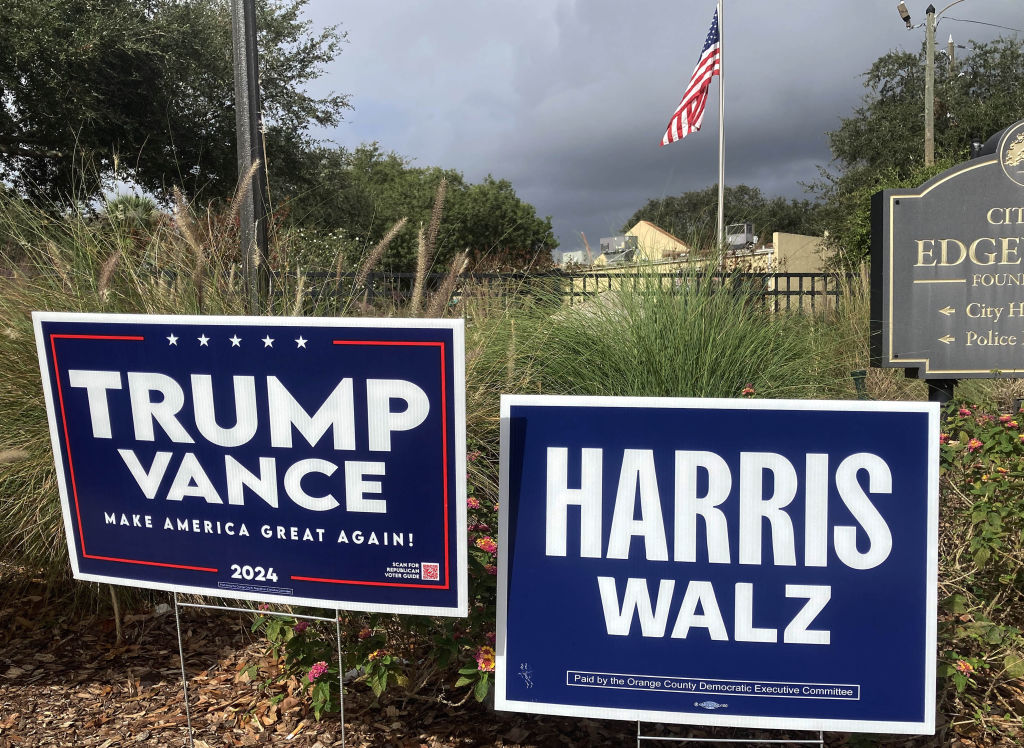
The 2026 U.S. midterms reflect a deeply divided nation, with entrenched partisan values rather than a moderate center. A major poll shows Americans linking Republicans with patriotism and Democrats with equality, revealing a moral split that transcends policy. This division is not merely political—it is rooted in fundamental differences in how people understand morality, with values clarification being replaced by objective moral principles. The political landscape has lost its moderates, especially on key moral issues like same-sex marriage and abortion, where no middle ground exists. The case of Adam Hamilton, a liberal Methodist senatorial candidate, illustrates this: despite presenting a pastoral, moderate image, he actively opposed conservative factions, leading to a denominational split. Young voters express significant anxiety about the economy and national future, with 53% fearing the country’s collapse, though many remain unengaged. Over time, public attitudes on moral issues have shifted rapidly, showing a real transformation in American values. Christians are called to emphasize genuine moral judgment over subjective "values," recognizing that political compromise is impossible on core moral questions. The nation’s political spectrum is no longer a spectrum of moderation, but a division between two clear moral visions—one rooted in scriptural authority, the other in liberal inclusion. This moral realignment underscores a crisis of shared values, with long-term implications for democratic stability and ethical direction.
It's Tuesday, October 27, 2026. I'm Albert Moeller and this is The Briefing, a daily analysis of news
and events from a Christian worldview. Midterm elections come by definition at the midpoint of
a presidential term. So you have the four-year presidential terms, you have the general elections
that produce a president or a presidential term, and then you have the midterm elections because
it's so important for Congress. So every two years, the entire House of Representatives is
re-elected. Those representatives are elected to two-year terms. Senators are elected to a
six-year term, and there are only 100 of them, two for every state, 50 states, you can do the math.
And when it comes to the Senate, about a third of senators is up every two years. But here's the
secret to American electoral politics. Everything is focused on the next election, but just before
the next election, the next election is the next election.
Everything's already shifting to the election after that. So just to put the matter bluntly,
there isn't much that can be done right now in terms of changing the meter one way or the other
on the 2026 midterm elections. And that's because at this point, millions of Americans have voted,
that's one thing. But the larger point is that most Americans have pretty much made up their
mind, number one, if they're going to vote, and number two, if they're going to vote,
for whom are they going to vote? All right, we're going to talk more about that in a moment.
But what's really interesting,
is that the professional class is really ready to move on. They're going to accept whatever comes
on Tuesday. That's going to be the new reality. But everyone is going to be focused on the 2028
election. Now, I want us to look at the larger picture and understand that there are some very
interesting things going on here. Number one, Susan Page at USA Today ran a major front page
article. It was in yesterday's edition. And the headline is, Nation Divided Over Its Values. The
subhead, The GOP Chose Patriotism.
Democrats' Equality as Poll Shows Partisan Distrust. Okay, there are several things we're
going to look at here. And it's not just this USA Today piece, but it is on the front page of the
paper. It was sometimes known as McPaper back in the old days. It bills itself as a national paper
for the United States. It's often very thin on news, but it's often very interesting in terms
of what it thinks is most important and how it presents these issues. Susan Page, who's the
Washington Bureau Chief for USA Today, has been on the front page of the paper. And she's been
at this for a very long time. She's an old Washington hand. In this piece, she writes about
the fact that a Gallup poll that was also done with a group with honor has indicated that the
two parties are associated with different virtues. So when it comes to the virtues associated with
the Republican Party, well, that's patriotism. The virtue associated with the Democratic Party was
equity or equality. The most important word there is equality. The independents were chose who
identified as neither Democrat or Democrat. And they were associated with equality. Now, in the Christian worldview perspective, there are a lot of issues here. Number one,
what are virtues? How do we name those virtues? What do we know are real virtues versus synthetic
or artificial virtues? But let's just say when it comes to patriotism, when it comes to honesty,
those are very clear moral virtues. Equality is a policy. And so if you're talking about fairness,
that would be a virtue. If you're talking about the affirmation of equality of all people,
all human beings, made in God's image, that would be a virtue. But if you're talking about
image, then that would be an issue in which you'd say, again, that's fairness, that's honor,
that's respect, all kinds of moral virtues. Equality is not in itself a virtue. It's not
unimportant. It's not without moral consequence. But it is really interesting that we're talking
about a nation that's pretty confused about all these issues. It is interesting, however,
Susan Page is really reporting something here when she says that according to this poll,
the Americans associate the Republican Party with patriotism and the Democratic Party,
with equality. The independents, again, associate at least themselves with honesty.
Well, when you're looking at virtues and you're looking at arguments, let's just talk about the
fact that political parties are really constellations of coalitions, and they are
assertions of political principles. And I know it may not look very principled at times,
but when you're talking about Republicans, when you're talking about Democrats, you're talking
about two rival visions for the future of the United States of America, two rival visions of
policies. And it really comes down to the fact that they're not the same. And so, you know,
two rival visions of morality. That's also really important. I think maybe the most interesting
thing about this Susan Page piece in the front page of USA Today is that it does recognize that
there's a moral dimension underneath and pervading all of this that, if anything, is more important
than the political and the policy issues. Remember, the headline was nation divided over its values.
Okay. Now, here's another little footnote we need to think about for a moment. When you really don't
have enough moral and political values, you don't have enough moral and political values. You don't
have enough moral and political values. You don't have
moral and political values. You don't have
it was 7, 8, 9 grades, and then I was moved to a middle school that was 6, 7, 8 grades. It was all
part of the educational experimentation of the 1960s and 70s. But it is interesting that I was
confused at the time by the fact that a part of the curriculum was about so-called values
clarification. Now, that's very different than moral knowledge. Christians understand that what
we're called to is moral knowledge, not just values clarification. You change from using the
word morals to the word values when you're really rejecting the fact that there's any objective
basis to this moral judgment. Values are subjective. They're held by individuals.
Moral principles are general, and that's why the left increasingly, and the therapeutic culture
also, just hates the idea of morality as fixed principles of right and wrong. And by the way,
if you're going to talk about a word that goes with moral, that word traditionally is knowledge,
moral knowledge. Do you know what is right and know what is wrong?
If you're going to reduce everything to mere values, well, you really don't talk about value
knowledge. Instead, that was the term used in the curriculum, values clarification. It was all about
you. It was all about the individual determining what we believe is true, what we believe is
virtuous, what we believe is righteous, what we believe is fair. And the values clarification was
supposed to be a part of just learning about yourself and your own moral self in terms of
how you apply it to different issues. Now, let me just say that in the entire
curriculum of values clarification, I want to tell you what was not at all clarified, and that is
values, because the whole thing was confusion. Now, while we're at this, let me just ask you to
note something. You often hear people on the ideological left talking about values, especially
when it comes to, say, personal morality. When it comes to social issues, they may believe in at
least the appropriateness of the word morality. But when it comes to their sexual behavior,
their personal lives, no, that's a matter of values.
Susan Page, again, the headline was Nation Divided Over Its Values. Later in the article,
we come to understand that America is morally divided. It's value divided. Regardless of the
language you want to use, there's a deep moral divide in the United States. And by the way,
it's not by accident that maps onto the political divide. Now, it doesn't map onto it perfectly,
but it does generally to such an extent that when you say red America and blue America,
and then you say something like same-sex marriage, you can pretty much,
do the math, and you can pretty much color the map. Well, at this point, I want to shift to a very
different approach. This is an article in The Atlantic by David Vondrele, and this is really
important because he asked the question, what's the matter with moderation? Where are the political
moderates, we might ask? And the reason why we use that language is because for decades and decades,
we've been told that there is a right wing and there's a left wing, and then there is a moderate
center. But you may have noticed the absence of much consideration or conversation about
moderates or a moderate middle, a moderate center to the nation in recent election cycles. And that's
because red and blue America just doesn't work that way. The political issues, by and large,
do not work that way. Instead, what you have is a very divided nation, and it's divided somewhere
approximately like 45-45 with something like 10% undecided. But undecided is not moderate. Undecided
is just basically undecided. Little footnote here, when you look at the registration patterns by party,
the Democratic Party and the Republican Party, the fact is that there have been some changes in terms
of the registrations when you look at the comparisons between the Democrats and the
Republicans. But the big, the big development over the course of the last several cycles has
been the increase of independents. But independents are not moderates. As a matter of fact, most of
them vote just as predictably as those who are registered Republican or Democrat. So again,
the reason why I believe this is true is because the issues just don't
fit a moderate category. They just don't avail themselves of a moderate option.
Are you going to legalize same-sex marriage or not? Well, maybe you could say that at one point,
the idea that you'd have legal domestic partnerships but not marriage, because that would be a moral
judgment, that that was a moderate possibility. But you'll notice, of course, that didn't work
because you're either going to have same-sex marriage or you're not, period. There's really
nothing in between. The same thing really applies to the abortion issue when you get down to the
And furthermore, it just is something that plays out on so many of the big issues.
of the day. Now, once again, if we're talking about politics as being a debate over marginal
tax rates or even some issues in foreign policy, trade negotiations, and all the rest, that's not
exactly always left and right, although it is interesting that even those issues do map out
often in the same terms. But I want to look at this piece in The Atlantic because it's asking
the question more or less, where are the moderates? The actual headline is, what's the matter with
moderation? And what's really interesting is that David Vondrela just zeroes in on one senatorial
election in the 2026 cycle. And he's looking at the candidate, Adam Hamilton, who of course is a
liberal Methodist pastor who is now the Democratic nominee. He's running against Roger Marshall,
the incumbent Republican senator, and it's going to be a very, very interesting race, and everyone
nationwide knows that. But the interesting thing here is that Adam Hamilton, this founding pastor
of this United Methodist Church, is going to be a very, very interesting race. And he's going to
by some reckoning, the biggest United Methodist Church in the United States. He presents himself
as a moderate. And the question that David Vondrela is asking is, well, number one, how does that work?
And number two, is there a way that a moderate might win? And I could say that virtually by
absolute necessity, he asked the third question, and that is, is he actually a moderate at all?
In the article, he writes, quote,
not just as an electoral strategy, but as an approach to life, end quote. Well, it's very
interesting because I think this writer for The Atlantic really wants to give Adam Hamilton the
opportunity to do his best to be a moderate. And he does present himself very much in terms of
attitude, in terms of language, where he describes himself from the political landscape. He just
wants good for everybody. He just wants everyone treated right. He just wants all the issues to be
basically diffused and let people just work things out. Let me just argue, that's not moderation.
That's a pipe dream. The reporter followed Adam Hamilton on the campaign trail. He writes about
one event, quote, a few dozen people awaited Hamilton who arrived in a blue blazer and an
open collared white shirt. He immediately went to work shaking hands and nodding thoughtfully.
After watching Hamilton campaign half a dozen or so times, the best description I can manage is
pastoral. Fair enough, I suppose, for a 62-year-old pastor. Hamilton, he says,
has a soft voice and his gaze is gentle intent and framed by horn-rimmed glasses. His head moves
constantly in tiny yeses and no's like a seismograph needle registering each quick
conversation, end quote. I think we've pretty much seen that in the campaign videos thus far.
There is no doubt that Adam Hamilton is trying to present himself as something of a moderate
in a political landscape of those who are extremists and radicals. He doesn't want
anything to do with that. Instead, he nods pastorally wearing his blazer and his open
collared shirt. And yet, I'm going to make the argument that he's not a moderate at all.
I'm going to make the argument that moderates like this don't actually even exist. And that's
because the issues do not bend to a moderate frame. Now, by the way, I paid some attention
to Adam Hamilton long before he decided to get into electoral politics. And that's because
he was very much a figure in world Methodism and in the conflicts and controversies of the Methodists.
And let's just say that he was a figure in the conflicts and controversies of the Methodists. And let's
put it clearly, he didn't side with the conservatives. Not at all. It is interesting
that the Atlantic reporter really came around to seeing that. He writes about the fact that
Hamilton claims the via media, the middle way that goes back to medieval thought with roots
in ancient philosophy, quote, society as Hamilton envisions it is a sort of Newton's cradle,
the toy that is composed of a line of metal balls suspended by threads. When the ball on one end is
lifted and released, it swings into contact with the pack, whereas energy is conducted to the ball
in the other end. And that's why Hamilton claims that the media, the media, the media, the media,
the other extreme, which swings away in reaction. Energy might come from extremism, but stability
lies with the center. See how reassuring those words are. At one point on the campaign trail,
the candidate simply said, I'm wired to see both sides. Well, that's very interesting. He's wired
to see both sides, but on the big issues, he lands not on both sides, but on one of those sides.
And let me just say, theologically and politically, predictably, it's going to be on the
Atlantic eventually saw this. He writes, quote, Hamilton hasn't shied from hard issues as a pastor
when a faction of American Methodists joined forces with culturally conservative congregations
in Africa to try to pass anti-LGBTQ ordinances for the denomination. He led the opposition.
Okay, let me just stop there. So here you have the admission that he's supposedly hardwired for
the middle to see both sides. But when it came to the issue of LGBTQ and morality and same-sex
marriage and gay clergy in the United Methodist Church, he led the fight against the conservatives.
So he may just nod reassuringly, but trust me, he's taking sides. When it comes to politics,
the same thing. But you'll notice the Atlantic reporter, this writer is really paying attention
to his role within Methodism. Quote, criticizing what he saw as a misguided focus on a few biblical
verses over a larger gospel of inclusion and acceptance, Hamilton ultimately concluded that
a schism was inevitable and he was instrumental in negotiating,
the many deals of separation. End quote. So much for being hardwired to see both sides,
so much for some middle way. He took the liberal way and they basically forced the
conservatives out. This is not a middle way. It isn't even well disguised as a middle way.
You say, where are the moderates? Well, there isn't a moderate position on these issues.
Now, here's where the Atlantic writer, I think, really is very honest. Listen to this quote.
The thing to notice about that story is Hamilton tries to turn from pastor to lawmaker,
is that the via media was not the road taken by Hamilton and the Methodists when the chips were
down. There was no middle ground and now there are two denominations where there used to be one.
End quote. Again, the conservatives left and had to form a new denomination.
You have all of this discussion reassuringly with therapeutic pose and all the rest,
nodding head. I appreciate the fact that the writer for the Atlantic notices how often he
nods his head. He nods his head in agreement, but then he kicks you out of the
denomination and he sides with the liberal side. That isn't moderate. And by the way,
let me just say, there isn't a moderate position on those issues. You either believe that the Bible
has full authority and the Bible's verdict on those issues is right and clear and to be respected,
to be certainly obeyed when it comes to Christian churches, or you just decide that in the light of
what you declare to be this, quote, larger gospel of inclusion and acceptance, you can just nullify
scripture. That's what the liberals do. He opposed the conservatives. He sided with the liberals.
And yes, as the Atlantic said, he had a leading role in basically kicking the conservatives out
the door. There are some political issues in which you can have something of a moderate middle. You
can think of some economic issues. Even those can get really tricky. You can think of issues,
as I said, in foreign policy and trade policy. But again, the big policies in both of those areas
are pretty much following one argument or the other. It's actually hard to mix these things.
You had American political science for decades saying that the great center of this
country was a moderate middle. Well, it has disappeared. Just look at the map, red and blue,
election night, 2026. The people who tell you it's not true will still be talking. I don't mean to
rhyme here, red and blue. Okay. As we have this opportunity with the midterm elections coming up,
and of course, election cycles at the national level coming every two years, just think about
headline in the New York Times, young voters pivot to Democrats worry country is at risk of failing.
Runs another piece, headline poll takes look at young voters' preferences and motivations. Okay.
So both of these are basically half page in the print edition, both of them looking at
how younger voters are sizing all this up. And both of them are saying there's a shift to the
Democrats away from the Republicans. But then as you look at the data, it's even more interesting
because it turns out that only about one third of these young so-called voters actually vote.
So about two thirds of them aren't even activated enough or interested.
Enough to vote. They do have opinions. They just don't vote. The other third, the third that does
vote it more often. Here's what's really interesting about younger voters. They more
often vote against than for that's very interesting. So even as you look at the
mainstream voters in the United States, let's just say voting for Kamala Harris or for Donald
Trump, or at least for the democratic candidate and what that represents or for the Republican
candidate, what that represents. We're being told that these young people basically say,
I dislike that person more than the other. I dislike that platform more than the other.
They really aren't making a personal commitment. Many of these young voters to these issues,
rather they're just sizing up which party they like less. Okay. Here's what's interesting. Quote,
across the most diverse generation in American history, one issue stood out, the economy.
94% said economic conditions were poor or only fair in the time CNN national poll,
more than any other age group. And 86% disapproved of the way
Mr. Trump has handled the economy. End quote. Well, that's interesting. And by the way,
I'm not saying that these younger Americans aren't facing some financial headwinds. I'm just saying
that every cycle, let me just ask you, I dare you go look at what's called the morgue of dead news
articles. If you go back and look every two years, voters basically say the same thing.
The economy is not good. Prices are too high. Wages are too low. Economic conditions are not
good. How is the president doing managing the economy? In the sixth year,
of a two-term presidency, the vast majority of Americans have pretty well decided the
president has done what he can do, and he's not working anymore. And so that's just. a norm in terms of the American political pattern. But if you're going to ask 18-year-olds,
what do you think? Well, they're 18, and they really weren't thinking about these issues two
years before that, and two years before that, and two years before that. But it is interesting that
nonetheless, there's a lot of attention to what they think. It's also clear, and I think this is
really, really important, that their dislikes are more powerful than their likes. Now, that might
be because of some of the, say, young adult cynicism, but it might also be about what we
might call a level of political realism in which they recognize, I really don't think either of
these candidates is going to be able to deliver on all these promises I hear. The New York Times
piece also stated this, quote, young adults' dissatisfaction runs so deep that they are losing
faith in the future of the country. Seventy-three percent of them said it was on the wrong track in
our poll in September. Fifty-three percent fear the United States is in danger of failing as a
nation.
Two years ago, just 38 percent of voters in the age group said that, end quote. Now, again, we're
talking about the failure of the nation. That's no small thing. That is, just to state the obvious,
an absolute disaster. We're told here that a majority of these young voters, the majority
of whom don't vote, that a majority nonetheless sees that the nation's in big trouble. Fifty-three
percent said it's in danger of failing as a nation. I want you to note something else as you're
processing all of this. Just notice, when young people, or for that matter, older people,
people of any age are asked these questions, do you think the nation is in danger of failing?
You'll notice it's pretty much a yes-no. And so, I really want to underline the fact that there is
something evident in all these surveys and in all this polling, but you're not sure what's evident.
In other words, how did the person understand the question? Did they even take it seriously?
If they talk about failing, what do they define as failing? You're not going to get answers to
those questions. What you are going to get are headlines saying, the majority of younger Americans
think the nation's in danger of failing.
And then they go home and play a video game. I'm not just pointing at younger adults who are those
featured in this survey. I mean, quite frankly, I think any number of Americans, American adults
of any age spectrum might say, yeah, I think if you ask me the question, the nation just might
be in danger of failing. But then they go and check their 401k plan. In other words, if they
really believed that, they would not just be responding to a pollster and then going on with
their everyday lives. I think we need to take a significant step forward. I think we need to take a significant discount, even when we see the
screaming headlines on so many of these so-called polls and surveys. That being said, what's
interesting then, what's interesting are the questions asked. And yes, sometimes the response
is given. There's no doubt about that. But what's really interesting is the deviation, the change
pattern with the same question over time. That's what gets interesting. Because if you ask a
question, then you ask it two years later, you ask it two years later, and you ask it two years
later, you have a baseline, and then you have projections. And you're going to understand,
how there are significant shifts. Just take an issue like abortion or sexual morality or
same-sex marriage. The vast majority of Americans polled at one point in the early 21st century
said that under no circumstances should same-sex marriage be legal. Within the period of about
eight years, a similar, almost exact majority of Americans said that same-sex marriage should be
constitutionally required. So again, you're talking about a very short amount of time
and a very great amount of moral change.
That's where Christians really do need to pay attention and understand that the vast moral
transformation of the last several years has really put many Americans in a very different
moral position. Now, they may not even recognize themselves to be in a very different moral
position, or they may not even recognize themselves as being basically reflecting
any moral position at all. But God made us as moral creatures. We're making moral judgments
all the time. We also tend, even against our own self-discipline, to be more self-disciplined.
Even against our own self-deception and our own laziness at times, we actually tend towards
eventual consistency on these issues, which is to say, blue voters become more blue and red voters
become more red. It's not just a habit. It is because the issues become more and more clear
over time. As we bring this to a conclusion, let's just remind ourselves as Christians that
values are not enough. We have to talk about genuine moral judgment, and we're talking about
genuine, objective moral principles. We're also talking about a political crisis, and we're talking
about a political spectrum with a landscape in which you do have increasingly issues that simply
don't bend to moderation. And so, it's not just that somehow in moral terms or morale terms,
fewer Americans really want to be identified as moderate. It is because on so many issues,
there really is no moderate middle. That's where I so appreciated that Atlantic article,
and just giving the fact that Adam Hamilton, that Senate candidate, the liberal Methodist pastor
wants to be known as a moderate. But when you look at his actual record, you look at his record as a
pastor and as a denominational leader, it's not moderate at all. He's moderate in the way he
presents himself. If nothing else, Christians have better recognized the difference between
moderation in personality and moderation when it comes to issues of moral urgency.
Those are very different things. Thanks for listening to The Briefing. For more information,
go to my website at albertmuller.com. You can follow
me on X or Twitter by going to x.com forward slash albertmuller. For information on the Southern
Baptist Theological Seminary, go to spts.edu. For information on Boyce College, just go to
boycecollege.com. I'm speaking to you from Jackson, Mississippi, and I'll meet you again tomorrow for
The Briefing.
Podcast Summary
Key Points:
The 2026 midterm elections are shaped by pre-existing political and moral divisions, with most voters already committed to either party.
A Gallup poll and USA Today article reveal a deep national split
Equality is a policy, not a moral virtue, and the moral divide underlying partisan identities highlights a crisis in shared values.
The political landscape has lost moderates; major issues like abortion, same-sex marriage, and religious morality do not allow for a centrist compromise.
Adam Hamilton, a Democratic Senate candidate, presents himself as moderate but actively opposed conservative factions, leading to a schism in the U.S. Methodist Church.
Young voters express strong dissatisfaction with the economy and national direction, with 53% fearing the nation’s collapse, though turnout remains low.
Over time, public opinion on moral issues—like same-sex marriage—has shifted dramatically, reflecting real, evolving moral transformations.
Christians must distinguish between personal moderation and genuine moral principles, recognizing that many political positions are fundamentally non-moderate.
Summary:
S. midterms reflect a deeply divided nation, with entrenched partisan values rather than a moderate center. A major poll shows Americans linking Republicans with patriotism and Democrats with equality, revealing a moral split that transcends policy.
This division is not merely political—it is rooted in fundamental differences in how people understand morality, with values clarification being replaced by objective moral principles. The political landscape has lost its moderates, especially on key moral issues like same-sex marriage and abortion, where no middle ground exists. The case of Adam Hamilton, a liberal Methodist senatorial candidate, illustrates this: despite presenting a pastoral, moderate image, he actively opposed conservative factions, leading to a denominational split.
Young voters express significant anxiety about the economy and national future, with 53% fearing the country’s collapse, though many remain unengaged. Over time, public attitudes on moral issues have shifted rapidly, showing a real transformation in American values. Christians are called to emphasize genuine moral judgment over subjective "values," recognizing that political compromise is impossible on core moral questions.
The nation’s political spectrum is no longer a spectrum of moderation, but a division between two clear moral visions—one rooted in scriptural authority, the other in liberal inclusion. This moral realignment underscores a crisis of shared values, with long-term implications for democratic stability and ethical direction.
FAQs
Midterm elections occur every two years and involve the re-election of the entire U.S. House of Representatives and about one-third of the Senate. They are crucial because they shape Congress's composition and influence national policy.
Most Americans have already made up their minds about voting and which party to support. The political landscape is largely set, and voter behavior is focused on the next election cycle, which is 2028.
The poll shows that Republicans are associated with patriotism, while Democrats are linked to equality. Independents tend to associate themselves with honesty, highlighting a deep moral divide in the U.S.
Equality is not itself a moral virtue. While fairness and respect are virtues, equality as a policy or abstract principle lacks objective moral grounding and can lead to moral consequences.
Major political issues like abortion, same-sex marriage, and LGBTQ rights do not allow for moderate positions. The political landscape is now divided into clear red and blue blocs, with no viable center.
Although Hamilton presents himself as moderate and advocates for a 'middle way,' his record as a pastor and church leader shows he opposed conservative efforts to pass anti-LGBTQ ordinances, effectively siding with liberal positions.
Chat with AI
Loading...
Pro features
Go deeper with this episode
Unlock creator-grade tools that turn any transcript into show notes and subtitle files.
 PodcastTranscript AI