The discussion centers on the architectural practice and philosophy of Charlotte Truan and Dries Rodette. Their work rejects architecture as the production of singular objects, instead embracing "uncertain conditions" like time, weather, and landscape. A core theme is hydrology; they view water as the primary element shaping territory and urban history, yet often absent from architectural practice. This led to an obsession with using elements like leaks not as problems to solve, but as opportunities to design evolving architectures that incorporate change and pleasure.
In teaching, they confront student anxiety and paralysis stemming from global crises, which often leads to analytical but non-design-oriented approaches. They counter this by encouraging fiction, imagination, and projecting into possible futures, shifting from a problem-solving mindset to one of proposing new qualities and collective pleasures. Their built projects reflect this, often transforming technical building services—like heating systems or radiators—into central, ornamental, and functional architectural elements. This approach, influenced by figures across architecture and art, resists nostalgic authenticity in favor of a contemporary entanglement of technology, landscape, and artifice, aiming to create spaces for collectivity and nuanced microclimates.
From the Architecture Foundation, this is Scaffold, I'm Matthew Bondrfield. My guests this week are the Basel-based architects Charlotte Truan and Dries Radette. I first encountered Truan-Rodette's work back in 2020 when they contributed to the Architecture Foundation's 100-day studio, this online lecture series that took place during the COVID lockdown. What stood out to me then and what continues to draw me to their work now is their interest in architecture, not simply the production of pure and singular architectural objects, but as an embrace of what they refer to as "uncertain conditions" like time, weather, and landscape, and the role these elements play when considered as an integral part of architectural practice. In addition to designing buildings, including the recently completed Swiss Cultural Center in Paris, Dries and Charlotte work at the scale of landscape, exhibition, sculpture, and furniture. Charlotte and Dries are both currently teaching an architectural studio at the EPFL in LaZone, and in both their teaching and their practice, they engage in this paradoxical relationship of nature and artifice. Crucially, their approach resists the nostalgic pursuit of some natural or authentic state in favor of a more contemporary condition, one in which technology, landscape, and often artificial materials are knowingly entangled. And now this is Truant Rodat. So like in an ideal world, we'd be recording this while floating down the Rhine and Bezel. Let's imagine. Yes, let's imagine. Which is in fact where we really met actually earlier this summer. And I wanted to start a conversation on this topic that's so central to your practice, it's the topic of water. How does an architectural practice come to focus so explicitly on hydrology? From the perspective of landscape and landscape urbanism, one understand actually that water has been shaping is really at the ground. It's actually the element that shapes our territory. It's kind of digging on its way and creating valley space flood plains if you think of Belgium and Switzerland lakes, et cetera. And those you realize that water, per se, is actually the form giving of our territory. So you have this different valley has a different spatial quality than I call that the flood plain in Belgium, but it's just a plain or like the delta in Marseille. And the understanding that this is actually explained afterwards and that's fascinating in urbanism, that it explains also all urban urbanism, all the sediments of cities are always tied back to water. The history of urban sediments, at least in Western civilization, is always tied to water because water is then transported and then it becomes the place of infrastructure highways and you can always relay back to water. So it's such an important element and this question then afterwards unfolded on how also all of a sudden in architecture so there's something fascinating as an element that can explain really, literally, probably until the beginning of last century, it's the dynamic of urban development. And all of a sudden in architecture it's very absent and there was also this question, how can an element like that be so absent of also the practice of architecture where else it's actually the most relevant, one of the most relevant element in the territory. And this form giving, this defining qualities I think was also this question and at the beginning we couldn't find answer to that so that's how it became a bit of an obsession. I want to, I'm building on this, I want to talk about your teaching because I feel like that might help set the conceptual ground that might bring us to a specific view of the practice work you do, the actual architecture that you design. And there is this studio cyclical tales increasing the leak that you taught at EPFL in 2023 and you shared the brief with me and I just want to read out a part of it rather than approaching water over time as a factor of degradation against which we must resist. We aim to develop architectures that have the capacity to evolve and absorb changes intrinsically. You can't deny that a leak in a garden hose lying on the ground is exciting because it's the birth of a new pond. Tell me more about the pleasure you find in seeing a leaking house. To clarify a little bit we started our practice in the late 2010s. So in a time where our main commissions were some renovation of houses from the 60s with a lot of technical problems. So it all comes down to heating, leaking roofs and actually this set of very pragmatic problems with low budgets. So automatically as a practice we were pushed into kind of thinking how can we still within this context enjoy designing, thinking about other types of projects going beyond what the client actually just asks on a pragmatic level but actually propose something more. We always talk about proposals somehow and not projects are not just solutions. I think we have also sort of fascination. We are probably a generation that we're taught. I think everyone around us we're taught to have to become an engineer. I'm being an engineer. I think it's probably a job of our generation which tended to be actually one seat this way like a problem solver. And then we've been somehow having a very large amount of people were there to solve problems. So we developed and we are facing today of course we are looking today at the results of this time of trying to solve problems and that creates new problems. So this idea of wicked problems. So the more we solve problems the more we actually create other problems because we invent new technology and we are now today in the last decades to decades we've been facing the consequences of this sort of rationalist thinking. And then it's fine. It's fine that we have to deal with the problem of our time but what we want to teach the student is how to have the capacity to imagine within those problems also like you called opportunities. So indeed it's a very it's a hard it's we just started like last week again with our new studio at EPFL. It's you realize it's very hard for everyone to see also potential. It requires a lot of imagination. It requires you have to extract yourself a little bit of your own experience and think okay how is a leak could become a palm could become a place where I can where I can swim where I can pass. So imagine imagining together with the student scenarios like that imagining that a leak had a question of mold of humidity in a building which is something we've always tried to fight. So it's another type of dealing with water. It's a bit more invisible it comes slowly through the walls through the cracks of the wall. It leaves of course some stains that are that has certain beauty in it that have a certain fascination. But it also requires maybe to define the student projects spaces that have different quality spaces that are more humid spaces that could be maybe more dry per se and to imagine that we are not constantly in the same generic environment. So accepting also this we we indeed have students working with different quality of space defined defined by either climatical or humidity level or and of course this requires also in the in the representation in the model making it's not something that's very easy because a lot of time it's invisible that's easy to transpose or translate but that's I would say are some of the some of the projects that they manage. To be very specific on just a few topics because it goes I think water in that sense is also quite rich because it goes through a lot of different layers. So there's students who worked on a transformation of warehouses into greenhouses to grow trees that will then be the start of a part of the world.
somehow as like a tree nursery that is fed by rainwater systems. There is public baths where you can at the same time have your food. That's kind of a mix of restaurants or public, like let's say public contain, slash public bath. There were water in a heating system. So how water and in the kind of canization also becomes a heating system because the center part of a very technical element in a transformation project. There's a leaking roof that became a whole inside park with a club on the ground where there was actually a workers housing on top. So it's a big diversity of program and it really just focuses on water as a central element. It's really the kind of pleasure-giving element in this game that sounds like. And it's often spaces of collective activity or participation or community. I'm curious, we talked briefly before when we met about this sense of paralysis that we've seen in students today that with these mounting and intersecting crises and environmental and political and social and economic, the whole gamut, there's this increasing anxiety around designing actually. And that at least what I've noticed amongst my students and in the crits I've been a part of, it's become much more comfortable or safe for as an architect to take on the role of a kind of analyst of conditions that you assess a system, a system of material flows for example, or changing territories, or an ecological system and you illustrate it. As opposed to rolling up your sleeves, getting down in the pit and designing something that almost design has become too heroic for contemporary tastes and that to claim authorship, singular authorship is also no longer really a part of the architects' identity to some extent. And I just wonder, first of all, have you noticed the same conditions in your students? And if so, how do you guide them back into the role of designer and to this place of feeling proud about authorship? This was really the, when we took on also our self, the position of guest professors or teaching in studio that was one of the questions that we ask ourselves because we were facing exactly the same, I don't know if it's an issue, but we came to the same conclusion that every time we attended reviews, critics, very often when students, the more they had to deal and they did analysis and they had to deal with problems that we're facing today, ecological, ecological crisis at large and specific problems that arise from these crises. The least they felt that architecture would be the answer. They realized that it was absolutely not relevant, whatever we as architects could do. One could not claim that it could help saving the world if I would say that large. So they felt all of a sudden, with power less, because they felt, well, I'm probably in the wrong profession because it's clearly not by building that I'm going to help solving this bigger problem. And this was really something that we also face frequently. And we ask ourselves, we came, we also had to look ourself for methods, for texts, to help the student actually to roll up their sleeve and also go beyond this attitude of phrasing, of thinking, I cannot do anything, everything I'll do is just going to make it worse. And that came, that comes with a certain method that comes to quote or to refer to, I think, Timothy Morton or Pierre-Rieg, I think they both at the end talk a lot about fiction, which is something we felt, maybe intuitively, that decided to project ourself into a near future to imagine that things could be better, slightly without being naive, but that one could imagine a different future, is also our capacity as architects, so to project ourself and to imagine different scenarios. So again, we go back, we go back to this capacity of seeing opportunity, the capacity of projecting oneself and imagining that things could be different. This is really at the core of the teaching methodology that we have. And this is really something to escape this hyper pragmatism. We are not just, again, solving a brief, we are not just handing over a brief and we have to organize square meters in a contained space. No, our role as architects is also to ask question, to ask yourself, how much do we need to do? Sometimes we just need to do very little. So measuring what's the measure, how much do we intervene? And to which extent can we also propose, yeah, propose pleasure to architecture and maybe through pleasure one can imagine that the problem we are facing might also go another way. So I'm saying it in a very abstract, but this idea of fiction is very important. This idea of, you mentioned before, I think to go back to the topic of water, I think what we also discussed a lot and I think the school in Luzanne is also focusing a lot on that. Now we have a PFL, I think it's also really at the core of the practice. One of the second semester around water was called Common Phantoms. So this idea of collective spaces and water is really also something that brings people together. And we also felt that socially that had also the capacity to bring people together. So maybe this idea of collective creating spaces for collectivity. And I think that those are creating, helping the student to understand also that collectivity is something that can offer where people can find more freedom, where people can come together and somehow defining, designing those spaces for collective encounters. I'm important and I'm part of the work. Just to make one more thought on it, because you were talking about this analysis that happens on the students, I think today a lot. And this comes back a lot to numbers. So there's a lot of numbers that are countered by the students. There's so much of waste, there's so much of this. And that automatically then also ends up in a lot of, when the project comes out, a lot of times it's very focused on, okay, now we solve this. It comes again with this solution based architecture where architecture is not proposing something new, no qualities that maybe are already there in the space that you can reinforce. But it's searching for solutions with the problem of a problem that then of course is very graspable when we put it in numbers. And of course, always reductive in the information they carry in themselves. And they come back to what Chalau was saying before, it's very engineering way of thinking through architecture. And I think there is this idea of fiction and maybe can open up to a bigger scope where we can actually propose again new projects. It goes back to Morton's ideas, which I think you mentioned in some of your teaching briefs that he's really arguing that environmental communication often relies too heavily on raw statistics as you're saying, which are framed for their shock value. And this is precisely what can paralyze us instead of motivating us into action. And so Morton's case, again, just to kind of rephrase what you've been saying is that ecological engagement must also involve pleasure of somehow. There's a fantastic quote you pull.
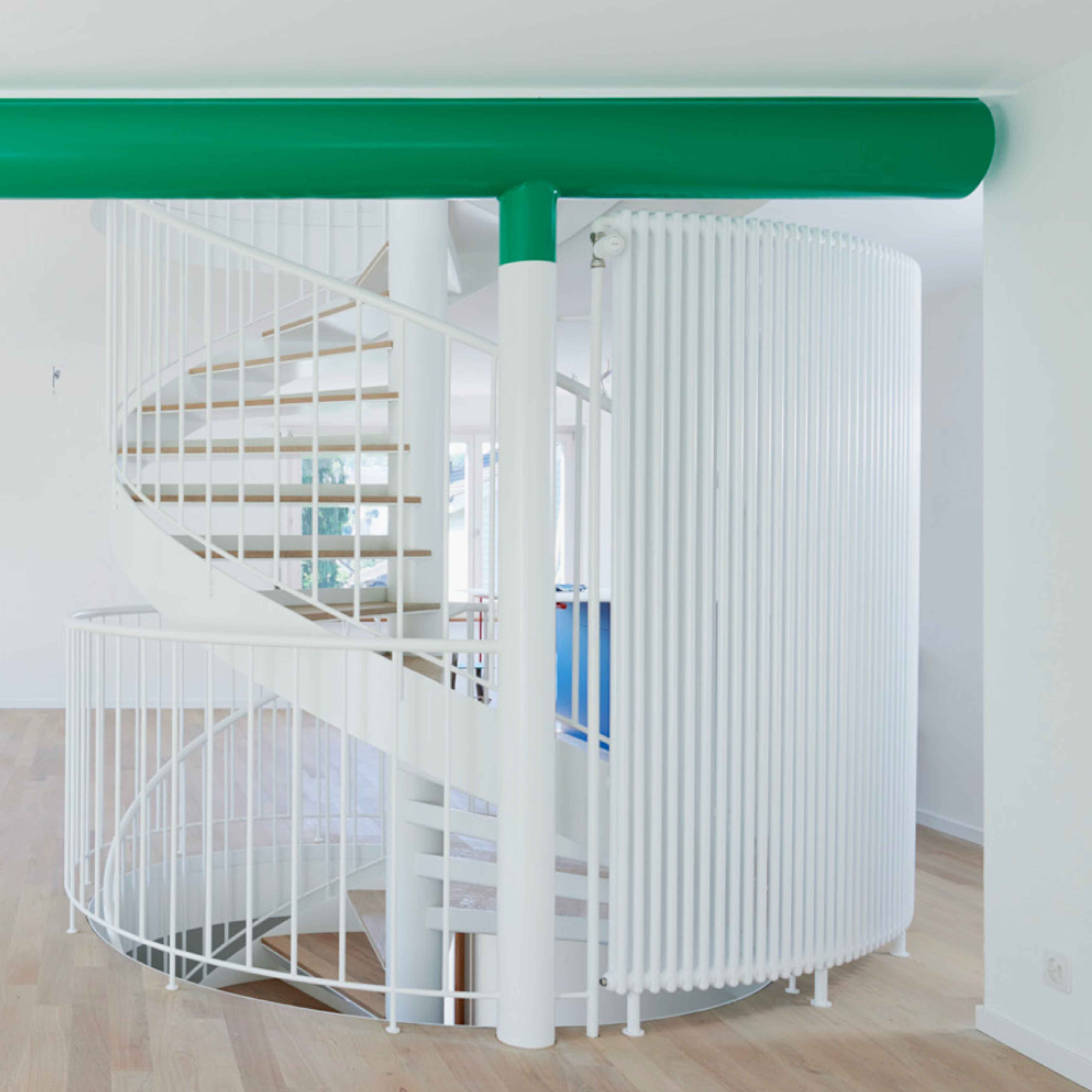
from Terry Gilliam's 1985 film, "Presil," which is that it's central services. We do the work, you do the pleasure. And I think it's that kind of satire of the engineer and their role. Not only in the kind of pragmatic kind of maintenance of society and the infrastructure that sustains us, but also actually in the kind of over-design, over-bardon, that leads to this thicket of bureaucracy that I feel like that movie is so emblematic of. Visually, this complex network of ducting and pipes and management systems is precisely the visual that points to the over-determined solution. And yet, there are all kinds of aesthetic possibilities there. And it leads me to this question about what kind of tradition you see this interest in, the kind of pleasures of building systems being a part of, because it reminds me immediately of high-tech. It reminds me of figures like Rainer Bannon, for example. This is something you're alert to. I mean, there's a project of yours that kind of, maybe we could look at it and we could ask listeners to look at, to help center this part of the conversation. It's the SPI bureau realm. It's a very small project, basically, where you strip back all the linings of a workspace to reveal the building services in a way that render them almost ornamental. I think there we see ourselves, maybe also, I would say we look a lot also at, or we're very influential for us, it's also like a Tom Vasel in this whole idea of doing less, of what is an aesthetic of something. But I think we also go a bit outside of architecture for what we look at, let's say, what our world of references, what our heritage is a bit. If you look at Michael Ashher, what he did in the Kunsthalle in Berne, where he just moves around the radiators from the wall and that's everything he does. That becomes a whole project. But the way he puts them in the space, it becomes a composition, it comes in artwork, and something that was maybe already there, by just reorganizing it, it becomes suddenly a project. Sometimes within, let's say, the art world, there's a very different way of thinking, also in the work of Biavic. That can open up this again, this kind of, a bit more than the problem solving, because there was no problem. Another project we could look at is this renovation of a home. I think it's in Basel. You call it "Stranging Countries", that's the title you get it when you present it in lectures. The focal point of this scheme is a new spiral staircase you've installed, which instead of a ballastrade, or in addition to a minimal ballastrade, its ballastrade is really an elaborate, curved radiator that follows the path of the stair. It's separating space and it's a barrier for the stair, and it's also heating the center of the home, like a hearth. It's a very flamboyant flourish in the middle of this scheme formally. It's very rare that you see a full-high curved radiator. It's just really graceful architectural element that is also a technical object. Yeah, it's a project we worked on. It's in Basel and we worked on it with Tobias Hilbert, another friend architect who we shared is Basel. I think it's a typical example for us of these different topics of like a house from the '60s already renovated in the '80s that now it had a full system of heating through hot air, which was completely dysfunctional by now, ginormous amount of tubes through the whole house with an extension on the roof. So the staircase was, that circulation was impossible to get around the rooms. It didn't make any sense. So it's already this kind of, we are self-inscribed ourselves within a set of renovations. Since we did the project, it's already renovated again by somebody else who changed the windows. You come with this project that is already a bunch of fragments in themselves with technical problems. So, yeah, the only way we could deal with it was take the heating as one of the main topics, the circulation and then bring it all together in a set of fragments that can live together, that they can also survive in themselves, creating this kind of new center in the house, still changing radically the spatial qualities of the space. It reminds me so much of Bannon's architecture of the well-tempered environment. This book, where he's arguing how mechanical and infrastructural systems like heating and cooling, lighting and ventilation are as important as walls and facades in shaping modern life. But it also brings me back to people like Bass Mets, the landscape architect that I think he both worked for in the 2010s. His ideas of, I mean, the sounds a bit hoky somehow when he said it out loud, but biosphere urbanism. And put another way, the microclimate's present in the city and the way designers can start to influence and alter these microclimate through how you plant certain species or how you moderate humidity or how you alter temperature through shadow. I want to know more about what you took from working at SMETs and whether or not some of those ideas are maybe at play in the architecture you do now. I think you worked longer. Yeah, I worked a bit longer and faster than Charlotte. I think at the time there was, it was the 2007 and 2008 it started. And at the time there was maybe the whole biosphere question wasn't so present at the time yet, which like it is maybe today more in the office. I think ecology, the question of ecology came much later. Yes. But what was it? In general, in general, just to say, just in general, I think the question of ecology arose when you talked about it and you used the word ecology in 2013 people were just laughing at you. It was taboo. They were, you would be the one doing green wool. So I think when these terms was clearly absent in general around us. But what I find quite interesting, but came really from maybe the time working there, it's much more this idea of the world as a system of layers, of complex layers that come together in certain ways and in which you can read already your project through the reading of an existing. At the time it was a landscape, let's say, by understanding, by taking it apart, you can then recompose your own reading of that landscape into a project that you then reinforce. Because with a landscape automatically you have this idea, there is everything is there. Every landscape is in itself a transformation project because you cannot make this abstraction of a landscape. As coming to transformation, I think they're relating to also the heater, the heating project. It's a set of layers, this project. There's an idea of circulation, of structure, of heating that all overlap and become this combination of the three becomes in itself a new project. I think there it relates maybe to certain techniques of landscape we were using at the time. Using architectural elements like heating, circulation and structure. Using an object that's maybe more fragmentary than a whole complete, closed form in itself. That's really interesting that you've kind of compressed this idea of layering in landscape into a reading of the building as a kind of microcosm or landscape in microcosm. I think it's worth mentioning just for listeners who are interested in other figures in this world of landscape that are also engaged in this layered reading of a place. For me it begins with Ian McCarge, who is a Scottish landscape architect who I think was teaching primarily in Pennsylvania. If you go and look at the drawings of McCarge and then look at the drawings of landscape architects like James Corner, you see this tradition of representation.
play where you start to see a landscape as a kind of layer cake of systems and bringing that lens onto architecture itself is kind of what you're describing I guess. Yeah also the project you referred before to the SNETS-A-PUSCAS SBE project the representation we use for it is basically we have to have a plan as well as one of the pictures is basically a composed picture of the whole ceiling and the whole the whole project is reduced to recomposing technical as well as spatial elements within the ceiling and even the way we represented you could somehow refer back to this idea of of layers even in its plan it's not a typical plan it's it's much more also colored planes etc just put on top of each other and it's this overlay creating something new. I think there maybe what interests us afterwards and the evolution from this layering it's funny because I'm thinking of the word layering that also appeared very early on in the 2000s. This is an architect book behind stacking and layering I think the idea of layers is something something very of course that's how you read architecture and the whole method of doing project is also clearly a engineer how you decompose layers to look at problems sometime or to look at layers a bit independently before you put it back together and I think what fascinate us afterwards is how you put things back together so to to circle back to the project of the of the heating in the house which we call strange encounters which is also the method that we are like proposing to our students at EPFL this idea what fascinates us is not at the end and to propose a whole that's kind of where you polish everything together but this idea bit of the collage the layers are somehow they can also we find also we have a fascination for the way things accidentally when you bring back those layers together something new emerge of that so this this sort of putting two things next to each other putting a title next to an image give it a new meaning I think that's something that fascinates us so I think also in the project the structure in the back the supporting beam that's actually a cylinder with the column there's a sort of arrangement and it can look like a composition but it's also partially accidental and we also like to implement this in our method it's not entirely rational that's maybe in the way we slowly moved or we are taking our own stance in it is to let also certain thing happens accidentally out of our control and there are things we cannot always explain in why exactly which layer are selected or why certain things come together is it exactly is it following rules of composition or is it something that just emerged because on the model table around around cylinder was lying around and we we just found a certain beauty in putting it together with this circle heating and that's where this irrational or things that are left open for a bit yeah new fiction imagination that's also fascinates us so the to go a bit beyond this rationalism of or this their engineered way of looking sometimes at layering in that then becomes a very opportunistic reading of it also because of course is around heating in the middle of a house becomes somehow the central fire fireplace of the house it becomes the hot center around which everything evolves so then that's also this kind of again what we were saying before this this fiction that you try to propose or project upon it to come to then to yeah a project to proposal it goes beyond the technical solution that putting a vertical hole makes the chimney effect and but you see it as a fire and as a place a heating and you kind of bring another image and which at the same time it was the cheapest solution and the smallest impactful solution yeah I guess we only had to make one tube going to the radiator and not to every window where we would have to do five different radiators I mean it's it's the minimal intervention that you're describing this kind of brings us to another character of increasing prominence a historical figure I think a lot of architects especially in Switzerland are beginning to reference more and more in its elucius barcart who shares this suspicion for the neat solution which itself seems to always engender more and more problems but I love this idea of encounter like to me to call to focus on well first of all we think of encounter is something that happens out there usually out in the world to have an encounter you need to leave the home for example but in fact in this kind of microcosm of landscape that you understand the great interior is being encounter as possible in the act of descending or ascending a sterif and I think that's so to me so exciting and maybe one of these ways of galvanizing the student or the hesitant architect the architect that's increasingly seeing themselves or their profession is being part of a problem towards some kind of action again some more some kind of productive form of expression or intervention I want to move on now because there's so many more questions here and I think the next the next kind of chapter of this discussion I want to focus on geographical influences and cultural influences of yours so I know that after working at Bass Mets I don't have my dates right but I think this is in 20 times you both left for Japan yes and initially I think we're going to seek out some kind of internship but upon realizing just how bleak and unhappy the situation would have been working for little or no pay in Japan evenings and weekends you decided to make your own project for yourselves while you were spending time there just tell me what what it was like being in Japan what you learned from that experience what the project was exactly that you made for yourselves it was yeah it was really it was a fantastic experience yeah we made exactly we made our own residence of it it was initially or it became the the goal but six months in mostly in Tokyo obviously obviously traveling going there with this fascination rising fascination in Europe also for a Japanese architecture and following up working at risk working for a longer time with Bass on landscape one could feel exactly that the topic of architecture and landscape was very present in Japan so probably intuitively beyond the curiosity and the wish to discover Japan there was also this intuition that there we might start to find means to actually bring together architecture and a certain obsession for architecture you mentioned before form and at the same time dealing with landscape but we had we saw it from our perspective in Europe I think when I was studying at EPFS and I just won the Learning Center the the understanding we had of Japanese architecture I was taught also by Jacques LeCoin it was mentioned in his class there was it was a first layered but there yet was not completely a full focus on the relationship to landscape and why was landscape in Japan so important to explain also the architecture they were producing so I think when we arrived there exactly we saw there's much more to learn by reading experiencing traveling visiting architecture project and just the ordinary banal neighborhoods or and just observing just walking around strolling maybe you talked about LeCoin's book out but strolling and just letting for six months those things digest these probably worse
still digesting it today. They always placed back. But six months were actually very important. Also, if you look at this among the time when you study. And I think it became very clear also that-- maybe what shocked us, I speak for us, but at least me, was the first-- we had decided that Japanese had this utterly full respect for nature. And that was a bit what was taught to us, what we perceive from Europe. And we arrived there in those parks in Tokyo, for instance, where everything we discovered the idea of fakeness. So they had in this park all these elements that were made of concrete, imitating nature. And they had absolutely no problem with this idea of fake. And for them, there was not something authentic. Although one would say Japanese is all about this authenticity and culture, this idea of fakeness and what is natural, what is artificial. It was not yet there, completely theorized, thinking it came later. But we already experienced that. That there was maybe-- we had a way to dogmatic approach in Europe, in Western Europe, to look at things. And all of a sudden, in Japan, they had a completely-- although they had a very clear understanding, and they were maybe-- they are much more resilient. And they were already much more resilient. They also understood when beyond this idea or this opposition, they were not dealing with this opposition, nature, culture, and it. Yeah, and I think-- In the country side. It's then we started after-- it was not the first one. So I think we took first a bit of time to actually get into even the rhythm of living there. It's also a lot of movies. I think we kind of went through all Japanese movies we could find. And then we started to also kind of redraw a few things. Like, OK, these spaces-- because I think it was an important time for us in deconstructing maybe the fixed ideas we had about certain way the world would function, because there were so opposite there of what I learned about urbanism and landscape urbanism at bus. Didn't make any sense in the Japanese context. So suddenly, you have to kind of taking it apart again and say, why do I also like this here, although it's not what I thought would actually function. And then we started to draw. We made these axos. We made a lot of photo collages already at a time to understand not to build world, but almost the space in between this continuous spaces between the little houses, where there is during dispensers, or how you call them, where you could get your chilled iced tea, or there's a-- It's full of plants. And there's the highways, the highways. It's such a mess of a beautiful mess of all these things that come together overlapping over each other. And this in a very fragmentary way. It's a mess from a European perspective. Exactly. From what we would also conceive. I think we had this quite aesthetic idea of Japanese architecture of the work of Sejima and Sana, where there it's much more rough and it's much more unfinished in itself as project. I think we also really started to appreciate. I worked for a summer in Tokyo as well, but not as an architect, as a lifeguard, actually. And spending time there, I think my perceptions were very similar to yours. I mean, what's so interesting to me is just how controlled and ordered nature can be if you think of the rock garden or the bonsai, that there's an intense amount of effort in shaping the natural world into a certain image of itself. It reminds me a bit of landscape architects like Ys Brunier as well. This is a-- someone who used to work with RMA very early on in the establishment of that practice. And in fact, he died quite young, I think, of AIDS. But looking at his work, I think it's important to bring up these kinds of references of these alternative precedents for landscape that are much more invested in the artifice of landscape. And that in a way, the architecture of Truan and Rodad is somehow related to as well. I want to talk more about working in basil. And what it means specifically to work under the long shadow of one practice in particular-- this is Herzog in Demeron-- spending some time in that city, it really struck me just how present that office is in the city, how many of their projects are visible at any given place in the city. When I was studying this one-- this was one of the big references. There was one side Herzog in Demeron. Then we had OMA and then we had Sana. That was like the weird mix coming together in where I was studying in Belgium. But these early works, they are extremely important and also for the city of basil. Kind of how they shaped, I think, the perception of how architecture can participate within the city. And already at the time, the city's architect was quite open to young practices when Herzog, the Manoevo was very-- where they were starting after practice here. And gave a lot of possibilities to explore topics within the city. And I have the impression today that this openness stays or is back or is very present within the city of exploring also the side guides of architecture where we are today and what is the future of it. And I think as a younger practice within basil, I don't have a very-- we don't have a trauma of Herzog, the Manoevo being here, let's say, because the way you describe it as a long shadow, it could feel very heavy. But I think this heaviness-- we don't experience it. It's more like one of our-- I see all the early work which we know from my studies in an everyday context. That's a bit more the situation. From my side, if I can describe it. Maybe a bit biased. No, maybe every city has this kind of offices that have been overruling. Just maybe happens that we notice it more here because there are no. No, we are also maybe the cities maybe lucky that they were-- they are talented, talented, very, very, very interesting practice. But I think beyond them, basil, geography, and again, our fascination to understand why things are the way they are, why one would stay in basil, why is it this openness? I think, again, I don't know. It's always our interpretation. But like, spending time here, living here already for maybe almost 15 years, the rain again, the question of water, territory, geography, the why was basil open? Why was it so important in Europe? It played a very important role. Zurich became a bigger city, but it's only recently. But basil historically had much more importance because it was geographically at this bend, at this-- they call that the right knee. And this bend made it also geographically an important place to go over, to cross, to control the region, and to control also the transportation of merchandising to be in between the cells and the Roman, the Celtics and the Romans. So historically, basil also had this very, very geographical important position. They are also on the other side of the Jura. So they are also-- they are kind of more vulnerable because they are not part of a sort of geographical boundary of Switzerland. So they had to be open also to France, Germany, and for a neighborhood, a neighboring city like this one, I think there's much more connection. Because there are geographical connection, I think it enforces also maybe a more cultural openness in the city, accepting being open to newness, to taking risk. And I think it traces back to why it was a rasmus. Why were there so many philosophers coming to basil? I think that's also culturally-- it was a very important place.
city and it's still it's still place an important role today took up why is the pharmaceutical that was the the cyclical tales that we did why did the pharma actually settled here it was a quality of the water that was coming from the glacier that made was perfectly for textile dying but it's also religion it and this we love that and this is a cyclical tale it's just this fascination to decode to understand why are things the way they are and that you always find the explanation in in geography in that explained and culture that explained and certain event in beyond national borders and I think also important to know for people who don't know Basel it's quite a small town and it is actually a canton of province in itself without its hinterland without the land around it which makes it very kind of a compact little political entity which makes also that it can take quite radical decisions because it's it's really like just the city and can take quite strong positions and this you see and feel in the city there's a certain ambition for such a small city like you were saying already historically on this axis between yeah the north and the south it would pass through through Basel somehow still today that also brings a certain here ambition of the town to to to to play on a much bigger scale than they then their size actually would indicate I love this idea of how this this fact really of how geography precipitates cultural conditions you're also participating in the culture of the city or war for a time in transforming your own studio into a cultural space you were hosting talks and events in your studio is that right yeah we started in 2018 I think 17 or 18 and it was the idea at the time we were somewhere in Vita herself within the context of of of giving platform to young offices kind of very it was a bit accidental how we came there but they they they suddenly gave us a stage to talk about our work and we started to realize how important it is for a practice especially maybe also young practice to to discuss their work and to to talk about it in front of an audience because you kind of have to formulate maybe things that you don't do in the daily in your daily routine so we decided in our own studio at the time which was in the dinner dinner building hammer I'm hammer I'm which is quite a known building in Basel we had a quite a small office and we decided let's in one week organize a lecture series just let's do it quickly the first one was very much let's just do this so we kind of contacted a few friends and all started to to to invite very very young offices that almost didn't speak about their work until that point making it free for everybody inside the office that's too small on chairs that were too low very much squeezed together and quite fast I even started to give we started with giving beers when people arrive and we realized maybe a bit unconscious in the beginning that we created an environment where discussion was very easy and it became kind of half an hour 45 minutes of lecture and the same if not longer time of discussion which we found very rare within institutionalized lectures where there was a very clear distinction between audience and and and personal front who has a practice for a long time stands on a stage there's a distance and then we kind of developed that in a series where we would invite artists as well as architects to mix it up to not have just a bunch of famous architects but more unknown people and people would come because they knew the lecture series would surprise and not because of the person that was coming and yeah we found it quite an interesting platform because the questions of the of the of the audience were also very very honest and very direct nothing was recorded nothing is recorded you cannot find any trace of this there's no YouTube videos you could say whatever you wanted it was just for the people who were there and we also felt at the time there was a need for this intimacy that maybe gets at a lot of time lost in lectures today where everything is recorded and you have to be certain that that's going to be the opinion you going to have for the next life for the next life you're having so you cannot come back to that because there will be proof of everything that's just speaking of the anxiety that's especially younger people face the students face part of it is the fact that everything is over documented and that I've met people in their 20s who are even concerned about letting their friends use their phones because they might alter their search history and change the algorithms understanding of who they are online and this points to this kind of growing importance of de-virtualized space offline space that can still foster and cultivate genuine discourse not discourse that's performative and framed for online distribution as sound bites or one liners or kind of artificially inflammatory statements polarizing statements that the algorithm loves and that we somehow are all drawn to, predicted to but a different kind of discourse that's probably more uncertain, more nuanced, more like the architecture that you make actually. I think there is today not much discussion anymore because of if you go into a discussion today you have to be very certain of what you want to say and you cannot be doubtful and kind of through discussion come to maybe insights about certain things that you so like you were saying like always very polarizing because you're just trying to go in your point that you're really certain that you want to keep this against somebody who has the opposite opinion and who tries to really defend this and I think there this off side I can not online formats not digitalized not recorded discussions are very important I think still today to have that doubt to show it's okay to have doubt as well in your work as well in your opinions we're all just finding out on the way and it's same. Speaking about polarization especially when it comes to the polarizing of architectural practice I personally see it a lot as manifest through materiality through material choices that practices make and you can almost organize contemporary practice into two camps along the palettes they use in their projects one is this almost dogmatic insistence on natural material so called natural materials and timber rammed earth hempcrete insulation this kind of thing that harkens back to a pre-modern idea of architecture and I think pays credence to the intelligence and sophistication of what we might call indigenous technology then on the other hand there's a school of architects who are really leaning into the artificial where the work is shiny and metallic and synthetic almost entirely and what I see in your work is probably more tendency towards the latter and you work a lot with expanded insulation firm in particular but I want you just to talk about your material palette and what it means to you to work primarily with artificial materials what's your position? biosource material versus I think we are we're kind of very curious so I think we are absolutely not limiting ourself I think material are on one hand they have equality all of them biosource material as well as more technological material or industrial materials synthetic material I think as architect we cannot just
just take a material, or we wish, or we would like to go beyond its intrinsic technological capacity, whether it's termical or whether it's for its structural capacity. I think once again, this is not, this is what these are the facts, but architect as opposed to offer qualities again, as opposed to offer something else than just architecture should go beyond just the materials. Yes, metal is shiny. That's what's also interesting about it. Metal can allow long span, so it can of allows you to have more generous space and it's cheaper, so it's economical. It needs to be more. And it's always a question, what are the opportunities a material can create and what are the opportunities in terms of, or the spatial impact? That's what interest does. If one works with Baustos material, it's not only because you need to click the box in an echo tool, have a hardy collection at the end. It's also because it allows you to create another type, maybe more organic formal architecture that you could not do with a metal framework, and that's always what interests us. And I think so, we also have quite some project with Timber. They are not yet built, but we have a sport, a renovation extension of a sport infrastructure. We are now also doing some inclusive housing that are made of Timber. It's just what does it allow in term of the project you're doing? So I think we are quite curious. We were also discussing this hemp concrete. We just lost the competition where we're actually using hemp grease. It's quite funny that you mention all these materials. But I think it's exactly this. We don't want to be very dogmatic about materials, because we also see today it becomes this very solution-based thinking. We have problems in society. We're going to use wood now. Wood is going to solve all the problems. But then we just, if we start to look at the wood and how it is applied in tower buildings, it's more glue than it is wood. So yeah, we don't have enough wood to do all of that. So this kind of approach of like, let's just now switch materials and continue what we're doing. It's not a way we like to work. Like Shadat says, first of all, what are the qualities it can bring or it can change in architecture, the material at the same time, where the switch material makes sense in which context. If you're building, we still need to build cheap housing. Building everything in hemp grease would be extremely expensive to do all of that. And it would be very difficult to build affordable housing today. So in this very complex soup, we try to keep a certain curiosity. And I think what you're referring to with the synthetic materials, also this text we wrote about expanded foam, which basically in Switzerland in the last 20 years, 90% of the buildings is built out of concrete with this foam on top. And it's again this idea of fiction that comes back. We were reading at the time about mushrooms and the power of mushrooms and how there's this kind of unexplored potential today of mushrooms destroying diapers, cigarette butts and actually digesting all of that. And we were just imagining what this would be for our own future. I look here outside of my window and see only plastered foam facades. Can we imagine also there a future for this, except of saying, okay, now we have to take all that foam off, replace it with something else that maybe in 10 years, we'll have to take off again. And like, how can we also accept this condition today and what would it mean? Where would we be able to go with this, even on a material level? And I think we're more in this realm. Is that the essay time as material? Yes, exactly. Yes. Maybe if you're comfortable with it, we can post it along with this episode so people can read it. Of course. I mean, what really stood out to me in that text actually was this seeming delight in the way in which artificial material can be corrupted, that there's a kind of pleasure in meditating on the decomposition of polystyrene. And this kind of brings us to one of the more abstract philosophical points of the conversation that I wanted to get into. And it's around this binary of pleasure and disgust that I feel in your work. And especially in that essay. And in this attraction, not to the bio source material or the romantic notion of a natural, but instead this attraction to the artificial and the ways that it's rendered, if not natural, then transformed or altered by natural processes. And I think it's important for listeners to know what kind of objects furnish your studio as we talk about this theme. Because there are a lot of these improvised sculptures, I think, trees that you're primarily responsible for. Like little totems sprouting up on top of bookshelves and podiums around your space. I say this because I visited you there last month. And these objects are both repulsive and beguiling. They're beautiful and horrible depending on how you look at them. And they're made primarily of polystyrene, I think, with layers of images, of mold crafted onto them. And in some cases, you've allowed them to decompose and grow mushrooms and decay and get moldy as well. They're really disgusting things. Thank you. But also very beautiful. No, exactly. I think that's also the goal of them. Because they're made without any clear question of outside or goal. It's really just a research that somehow very personally in a way also. And the goal is not that they're beautiful. I think it's also this interest into other aesthetics and what could it mean using these materials that maybe we know from even the architectural world in a very different form. And it goes also very much back to landscape and somehow logics of even within these very unnatural materials, how they are natural in, let's say, conventional words because they're part of our world. So they're part of nature as a world, let's say, and how they follow the same logics somehow as a landscape building through their gravity, through their formal or how they fixate in a form that's maybe closer to then landscape structure than it is to objects, although they have the size of an object. I think it brings us to this topic of purity. This thinker Mary Douglas is often on the syllabi of architecture studios and her book "Purity in Danger" and this often repeated phrase now of dirt as simply being matter out of place. But for me, coming from a background of English literature, I also think about poets like Pablo Nareuda. I shared some of his work with you before and I want to read it out. He has this manifesto, I'm called, "Towards an impure poetry." It makes me think a lot about your work. I'll just read a line from it now to put people in mind of what we're talking about here. He's saying, "Let that be the poetry we search for, worn with the hands obligations as by acids, steeped in sweat and smoke, smelling of lilies and urine, spattered diversely by the trades that we live by inside the law or beyond it." I feel like this is kind of a useful manifesto for architects as well. To tend more towards what we might see as being repulsive, to understand not only is aesthetic potential, but the way it can become a vehicle for accepting and transforming the mess that we've inherited. We're going to jump from this discussion of the sculptures in your eyes.
and this strange mixture of repulsion and attraction that they elicit, and we're going to talk about one project you're working on that to me also embodies the similar response. Or kind of affects the similar response in me when I see it, and this is the project "Fountain of Youth" that you're working on in collaboration with Fabian Marti, the artist. First of all, can you just describe for listeners what this project is? Yeah, this is in English. It's the art contribution on the percentage of art in building. So this was a competition in 2016 or '17 for a master plan that was won by Young Kinsberg and in Losehn. Together with Fabian, with whom we already worked before and already did some of this art contribution in building. We decided rather than focusing on the building themselves, which we would focus on the park, which is facing. So you have this master plan is made on this heel, quite steep heel. It's a very elongated plot with where Young Kinsberg and proposes a circle along rectangle and a cross that will hold the different university building. It's a university building spaces and student housing, and it's facing this park in the north. So we proposed rather to insert ourselves and work with the park, work with this topography, and hence our fascination for water, taking this and trying also to see how to make a sculpture, a very elongated sculpture in this park. It was 100 meters long, it got a bit shorter, the budget with budget cuts. But basically it's going on top of the heel. It's working with the topographical condition, the soil condition, trying to accommodate, trying to channel the water to different paths, and it generates on its well, long, it's with different landscape conditions and different uses. This is Bayes also, and this, the project, I would say, has been inspired quite a lot with Italian Renaissance landscape project, with the Barbarovila of Paladio, which also deal with a sort of sequence between a reservoir on top, where water is as well ornamental contemplation, but as well utilitarian. So the reservoir where you capture the water is then led into, under the villa, to irrigate the kitchen, to cool down, and then back in the fountain, and then in the fields to irrigate the field. So this idea of a sort of succession of moments that are partially utilitarian, partially matter of contemplation. Another project, and then this combined with another project that has been very influential, is this fountain of Merritt Openain in Bern, which Fabian Marti made us discovered back at the time, like 10 years ago, we went to see it, and what's beautiful is this, we proposed this vertical totem, this concrete column, really as a sort of infrastructure, it looks, it could be a column in a parking, and along this column circling spiraling down to the bottom are some metal gutter that are folded, where water from that's running under this square in Bern, that's filled with mineral, I think comes from a glacier, from the mountains, it's filled with mineral and chalk, and it's dripping, and it's flowing down along these metal gutters, and depending on the orientation, nor south, it leaves a lot of deposit along the way, a lot of sediments that kind of grow with the time, and then all of a sudden with the wind, you have a lot of seeds that are flowing, that are just flying by, and seeds are just settling on this chalk, on this sort of matter, and the fountain grows with the time, and there's an act of maintenance, the city has to come some time and cut things out, and the fountain starts to grow in winter, the water is kind of freezing, so you have this sort of stalactite hanging from, and we found this was a very beautiful translation of what was fascinating, or something that could change with the time, depending on the season, at the same time, the architectural object, the proposal is a sort of infrastructure that's very trivial or very simple, but just the thinking, the orientation, the way the type of water you put in it, it generates a sort of, yeah, it's a sort of changing ecosystem in its way, so in Lossan, what you find on the hill is a big reservoir on top, a channel that's running parallel to the topography, which is borrowed from this typologies of channel in Valiste, the BIS, which are this either timber or stone irrigation system that's transporting water from one place to another, and then it's leading the water back down in this basin at the end, so we are collecting the water through this channel in the middle on the topography, like rain water that's running on the slopes, and we are circling it back up and letting it slowly infiltrate. It drips from the reservoir, the reservoir is made of these small tiny holes, and it's going to drip very, very slowly, we also have this sort of, between cany, sockle onto which Fabian also will lay a lot of his eggs in there, so there's a lot of mythological figures and elements that are just applied back to the fountain, and then echoing back to this idea of the fountain of use, which is the name of the project, and I think the part of it of mythological figures like the snake, the egg, which also quite present in Fabian's work, at the same time a sort of rationalist infrastructure in the landscape, those are the elements we were dealing with and bringing together on this project. And I think for us this project that hovers between landscape, art, architecture is kind of a perfect opportunity to test this topics you were talking about before, about, and so the aesthetic also of, it's not going to be all nice, we don't know how it's going to end up, you know, at this uncertainty of how it's actually going to look, it could be that the moss growing on it is going to be black and slimy, this is very possible, we don't know, because this is something we cannot control, it's possible that it will be dry in summer for certain periods and everything will die and be gray and crumbly, at the same time you have the figuration that Fabian will bring through his tiny sculptures that we're working on with him, which is also something you should not do anymore today in architecture. But there's a lot of topics that somehow we can overlay in there and test because of it falling in between different categories, let's say. And I think became quite an important project for us within the office also of how to think about these topics without too much, yeah, dohrmas in our head, what can it mean? Because of course, in our teaching we talk about what happens if your plasterboards in your house start to grow fungus, it's not that easy to translate in the project directly because the clients are not so looking forward to that, but this project in itself can actually push these boundaries to a certain extent because it falls in these different categories, let's say. I've started ending these interviews with this recurring question, inviting guests to recommend a book and a building. What are your books and buildings to recommend? It's very difficult, one book, one building, but can we have each one building and each one book or do we have to join one? You can have each one. Okay. I think if I start then maybe a book that in general is quite present in our teaching as well in our own looking at our work, it's Spatia Suters, Parada and Cyclopedia. [BLANK_AUDIO]
which is somehow another way of seeing the world not through a series of categories. I had the answer, Clubedia, as kind of the typical object that tries to classify the world and organize it. She kind of re-things the whole way that you could see this object as a way more of opening up the understanding of the world and closing it down through a very associative thinking through images. Which there's a first, a second volume, and I don't know until where she can make it. It's an endless sense of Clubedia somehow. And the building next to that, because of what its recent closure, but also already since I think I was working in landscape, it's a center pompe deux in Orphardges and Piano in Paris. Already, if we not even just talk about the building, but even what it does in the city of creating that space and this kind of utopia, a topic thinking that somehow translates in a building that of course now with Wolfgang Tillman's exhibition was brought to kind of a height, let's say, before it closes down for the next 10 years or five years and will be renovated. And even just a question of how do you renovate a building that was planned with the idea of uncertainty in its head of changing machines, et cetera, how can you even deal with this? I think it's a project that stays relevant thinking about those topics and how to deal with them even today. And Charlotte, what about you? Well, now I really didn't talk about it before, but as a building, I was just thinking, it's too museum because I don't think that's necessarily the. Well, it's not about the programmer, it's more about the attitude. I think the renovation of the Palette Tokyo from Annalak et Ornge en Philippe Vassal, I think that was maybe for me and also in the practice a very, very important project. I think in terms of, it kind of enroll a whole new way of looking at architecture and also a question of attitude, a question of how one decide how much one intervenes. What is a project of architecture, I think, at the time, when it was developed, those questions were extremely radical and they are still extremely relevant today. So I think, yeah, I would say this project and you said a book, yeah. - Yes. - And for me, I think also that something that goes back to our fascination for maybe the strange encounters for this overlays, this book of Fischlian vise, flowers and mushrooms, and this beautiful, overlay of photographs between different species that kind of generate, create something new, the type of flowers. I think this already also awakened in us a certain curiosity, a certain shift into the perception of, yeah, what is beautiful, what is disgusting and finding also seeing in there beauty in this sense. And I think the overlay, there's something to it. The fact that things are neither nor, but they can be both. I think it's a very visual, important book that there are many. - Charlotte and Dris, thank you so much for your time. - Thank you very much. - You've been listening to Skyfield. I'm Matthew Bonderfield and I produce the show. The theme music was composed and performed by Luke Blair. Subscribe to Skyfield on iTunes or wherever you get your podcasts and follow the show on Instagram at Skyfield_Podcast. If you like the show, leave a rating on iTunes and support the Architecture Foundation by becoming a member on Patreon. Thanks to Charlotte and Dris, thanks as always to Scandalin and thanks to you for listening. I'll see you next time. (upbeat music) [Music]
Podcast Summary
Key Points:
The architects focus on embracing "uncertain conditions" like time, weather, and landscape as integral to architecture, moving beyond pure object-making.
Their practice and teaching explore water as a fundamental, form-giving element in territory and urbanism, and use concepts like leaks as opportunities for design and pleasure.
They address student paralysis in the face of global crises by emphasizing fiction, imagination, and proposing pleasure over pure problem-solving or technical analysis.
Their work often reveals or repurposes building services and technical elements (like radiators) as central, aesthetic architectural features.
They advocate for architecture that fosters collectivity and microclimates, moving away from nostalgic views of nature towards entangled, contemporary conditions of technology and artifice.
Summary:
The discussion centers on the architectural practice and philosophy of Charlotte Truan and Dries Rodette. Their work rejects architecture as the production of singular objects, instead embracing "uncertain conditions" like time, weather, and landscape. A core theme is hydrology; they view water as the primary element shaping territory and urban history, yet often absent from architectural practice. This led to an obsession with using elements like leaks not as problems to solve, but as opportunities to design evolving architectures that incorporate change and pleasure.
In teaching, they confront student anxiety and paralysis stemming from global crises, which often leads to analytical but non-design-oriented approaches. They counter this by encouraging fiction, imagination, and projecting into possible futures, shifting from a problem-solving mindset to one of proposing new qualities and collective pleasures. Their built projects reflect this, often transforming technical building services—like heating systems or radiators—into central, ornamental, and functional architectural elements. This approach, influenced by figures across architecture and art, resists nostalgic authenticity in favor of a contemporary entanglement of technology, landscape, and artifice, aiming to create spaces for collectivity and nuanced microclimates.
FAQs
Their practice focuses on embracing 'uncertain conditions' like time, weather, and landscape as integral to architecture, rather than just producing singular architectural objects. They work across scales from buildings to landscape and furniture.
Water is seen as a fundamental element that shapes territories and urban development, yet it is often absent in architectural practice. They explore its role as a form-giving and dynamic force in both landscape and architecture.
They encourage students to see problems like leaks or humidity as opportunities for imagination and design, moving beyond pragmatic problem-solving. They use fiction and scenario-building to foster creativity and collective spaces.
Students often feel paralyzed by global crises and doubt architecture's relevance, leading to over-analysis and a reluctance to design. They guide students toward authorship and pleasure in design through fiction and collective imagination.
They treat technical elements like heating systems as ornamental and integral to spatial composition, as seen in projects like the curved radiator staircase. This approach blends functionality with aesthetic expression.
They draw inspiration from artists like Michael Asher and filmmakers like Terry Gilliam, who rethink everyday objects and systems. This helps them move beyond conventional problem-solving to create poetic architectural interventions.
Chat with AI
Loading...
Pro features
Go deeper with this episode
Unlock creator-grade tools that turn any transcript into show notes and subtitle files.
 PodcastTranscript AI