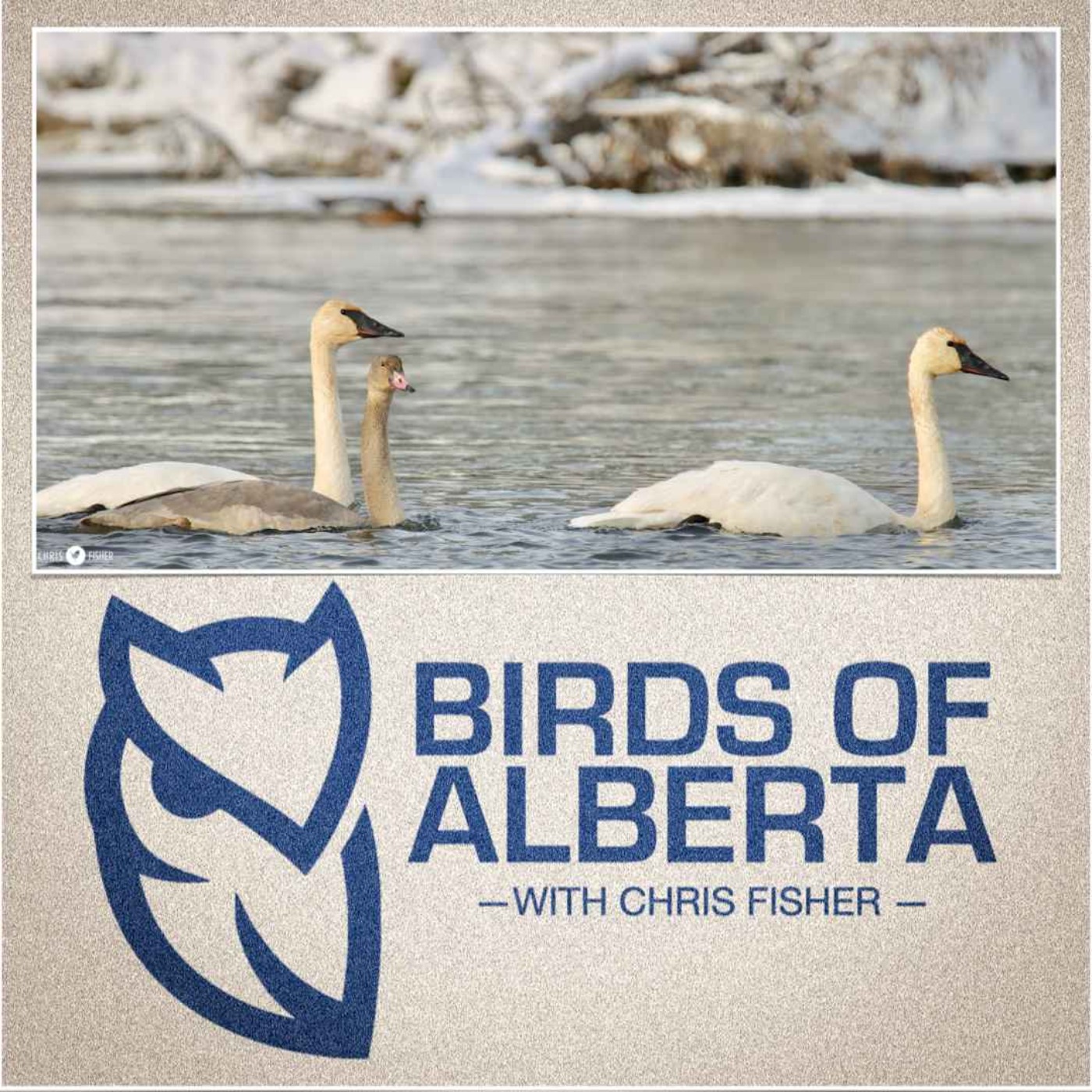
The speaker, co-author of "Birds of Alberta," reflects on early promotional activities, notably a 2000 nature festival in Grande Prairie that showcased a vibrant local naturalist community. This community played a key role in the celebrated conservation success of the Trumpeter Swan. Historically threatened, the swan saw populations stabilize around Grande Prairie. In the mid-1980s, translocation programs, led by agencies like the Canadian Wildlife Service, moved swan families from Grande Prairie to Elk Island National Park to establish new breeding populations. These efforts, along with broader North American initiatives, helped the species recover dramatically from a few hundred to tens of thousands continent-wide. Recently, climate change and increased water discharge have kept parts of Calgary's Bow River open in winter, allowing Trumpeter Swans to overwinter there since around 2020, a promising shift that may alleviate pressure on concentrated traditional wintering sites. The speaker shares a personal journey with the swans, from student-day observations to now finding them near his Calgary home, underscoring how their story represents a century of dedicated conservation and enduring natural inspiration.
Welcome to the Birds of Alberta, a podcast on Chris Fisher co-author of the best-selling field guide, Birds of Alberta. Now it was shortly after that our Birds of Alberta book was first published way back in the summer of 1998 that I started yet speaking and media requests, but even then I was fully aware that the requests had always been first offered to John Ackler, my co-author who we cheekedly referred to as the junior author of Harvard book. He was without a doubt very much the senior when it came to being a desirable nature speaker here in Alberta and honestly throughout North America owing to his rightful fame as being the nature nut from his television show. So no doubt owing to John's inability to attend, in the spring of 2000 I was kindly offered a gig for a brand new nature festival that was launching in Grand Prairie. The organizers generously flew me up to GP, put me up in hotel, gave me an honorarium and even had a rental vehicle waiting for me. Now it being GP, it was a full size monster truck which by the end of the weekend consumed the entirety of my honorarium in fueling costs. Now in exchange I gave a presentation at the newly opened center 2000 in Musk's CP Park and I sang some songs for some school kids, did some local media and of course helped out onsite with the bus tours and exhibits for the festival that was located in nearby Saskatoon Island provincial park. It was really one of the first times but definitely not the last, that I was privileged to have a glimpse into a thriving local naturalist community, worked together to celebrate the well the too often unselibrated efforts of enriching a community's vibrancy. I also remember attending now the requisite potluck dinner. This one was located at the beautiful home of Kay and May Trail who lived at a really nice acreage that bordered Saskatoon Island provincial park just to the south. Now there I enjoyed the honor of meeting many of the GP locals whose decades of advocacy not only led to the foundation of this very festival that we were kicking off but also of course many many field trips and land use agreements and policy plans that smart dedicated folks like this accomplish here and also throughout the province. But the work of these conservationists and naturalists at this festival in particular were rallied around something undeniably spectacular and successful which has turned into really one of the most dynamic stories among all the birds of Alberta and that is the triumphant return of the Trumpeter Swan. Now one of the coolest things about the story of the Trumpeter Swan it embraces a story that is continent wide throughout North America as that was the former range of Trumpeter Swans and it is a story of tremendous local engagement and advocacy and I have to thank Margo Herview who helped jog my memory of the events of several decades ago. Now Margo of course is one of the most celebrated naturalists of Alberta's northwest country she has been involved in all aspects of community building and natural history celebration in Grand Prairie and throughout the peace river district and has been involved for decades and certainly was foundational as a champion of the Swan festival in its early days and she reminded me that it wasn't only the trellis who were heavily involved in this particular effort but other individuals such as Art Rigby and Nancy Hope who were founding members of the Friends of Saskatoon Island Provincial Park and Art grew up on that land and his father was a founding member of the board that helped establish Saskatoon Island Provincial Park which plays a huge role in the recovery efforts like many large water birds in the early part of the 20th century while their populations were dwindling quite a bit and Trumpeter Swans were of course no difference they historically ranged not only throughout Western Canada well into Alaska but throughout much of Western Canada including the Great Lakes region and similar areas into the United States but like many birds of that time it was hunted not only for meat it is the largest water fowl but its meat was not the only thing that was valued its wing feathers particularly the large primary or flight feathers apparently made the very highest quality quill pins that were used a little bit more in those times than they were today but thanks but thanks to efforts like the Migratory Bird Convention Act which came into place in Albert in Canada rather in 1917 or so and grew through not only Canada but efforts in the United States while hunting was reduced in these areas such that the populations could stabilize but those early populations were by no means a guarantee of success and recovery while the northern BC Yukon and Alaska populations were likely still the largest there was still this the small stronghold in northwestern Alberta centered around the city of Grand Prairie which had oh in that population maybe 80 to 150 individuals still breeding in the lakes surrounding Grand Prairie lakes include of course Saskatoon Island where the provincial park was established but barely in the areas of Valhalla and Wembley and that area of northwestern Alberta was still a stronghold there may have been a few birds that continued to linger down the foothill region of Alberta south through to the white court area and even down as far south as the twin-butte area just north of Waterton Lakes National Park these areas had very very small populations indeed and still have populations to this very day if you were to go into the twin-butte area there are still a couple of wetlands that have breeding ponds of trumpeter swans in them and that conservation is being helped and promoted by organizations like the Nature Conservancy so that was really the situation in Alberta from the 1950s 60s 70s and then in the 1980s there was a a recognition that there was a possibility of doing something to really enhance the population for they knew particularly the wildlife agencies such as the fish and wildlife, Alberta Fish and Wildlife realized that there was a precarious situation to have essentially all your eggs in one basket even around the Grand Prairie area well they thought it would be a good idea to make efforts to reestablish the trumpeter swans in Alberta and similar efforts were being made Canada-wide and even into the United States to establish them into their former areas so by the mid-1980s Elk Island National Park just an hour east of Edmonton was selected for a trumpeter swan transplant program and this was led by Len Chandrack of the Canadian Wildlife Service located in Edmonton with with partners of course with Elk Island National Park Rob K and and others Jerry Bersberg and my friend from the CWS was heavily involved as were many many people and the idea was to transplant entire families of trumpeter swan well after the signets the signets is what we call the young ducklings of the swans once they get to a certain age and are fairly independent and consume around well these efforts were made to essentially seize these entire families and pack them into wetlands in Elk Island National Park the young and the parents and it was hoped that the parents would continue to raise the signets until they were ready to migrate the families would migrate south into the United States together but they knew that the parent birds would return to their breeding ponds in the Grand Prairie area and it was hoped that the signets now of course almost one year old and their first migratory route back north would not choose the Grand Prairie area but would return to Elk Island National Park and the Beaver Hills Lake more rain would
which contains a whole bunch of really good breeding ponds while they would establish a breeding population in that area. And these programs were somewhat successful in the fact that there were birds established in those lakes in Elk Island and surrounding areas in the 1980s and into the early 1990s. The populations didn't grow hugely, but there certainly were swans there in that particular area. Not only were these efforts centered out of the population of Grand Prairie to help an Alberta population, but Grand Prairie birds were used to recolonize populations throughout North America. So we see these birds throughout Alberta now, but also, well, all the way to Ontario and even in places like Iowa and all because of these efforts that originated from a stable source population right here in Alberta in the Grand Prairie region. So as a result of these efforts, there's a possibility of a really good possibility of seeing trumpeter swans throughout the year. You have to drive a little bit to these areas either along the foothills and the Grand Prairie area. In fact, there are trumpeter swans nesting in Crystal Lake, right in the center of that particular town, out in Oak Island and surrounding areas. And you never know where you might run into this ever-expanding population, particularly in the Northwest, you know, from white cord all the way up, quite frankly, to slave lake and lack of a bush. You have a good shot at finding populations of these particular birds. But it's probably for most of us, we see them in migration. They are one of the last migratory birds and one of the very first migratory birds. They get chased away in the fall by the freeze up of the very last wetlands and lakes in our areas. And they are, in fact, when the first arrivals as well, just as those very same wetlands, thought out in the spring. So April and October, November are good times to see them throughout southern Alberta, central Alberta, as they wing their way north from their overwintering grounds. Not too far south of Alberta, just where waters do tend to stay open. Of course, we also have tundra swans, which is a look-alike species that did not decline to the same degree. They nest way in, as their name implies, the Arctic tundra. Oftentimes we see them associated together, sometimes feeding on waste grain. In fields, they do overlap in migration quite a bit. Tundra swans, of course, breeding further north, so they disappeared during the summer months. They can be a bit tricky to tell apart. Tundra's have that fairly distinctive little yellow eye drop on the base of their bill, trumpeters, lack that, turn a little bit more robust and have a deeper, more resonant call. But if they're quiet, well, you don't really have the luxury of easily identifying them as they migrate overhead. Nevertheless, any swan citing whether it is in migration or certainly in the breeding season is a lucky day indeed. And I enjoy every last tundra or trumpeter swan sighting where I have those. So one unforeseen concern for trumpeter swan conservation was the tremendous growth that we've seen in the population, from only a couple hundred birds in the 1940s to now, perhaps over 20, 25,000 birds throughout North America, including the big sizable populations in northern BC up in Alaska. But Alberta has a big chunk, and they've been downlisted from their conservation status here in Alberta. And in Canada's result of these growing populations, there's a lot of breeding ground potential for them in North America as they were, the continental swan. They're a little bit more limited, as we've found out, in their overwintering habits. As we discuss, they overwinter just a little bit further south of Alberta, kind of in the tri-state area of Idaho Montana and Oregon, along the Snake River is one of the key areas that Alberta swans go to overwinter. The Snake River there stays open. You may be familiar with overwintering swans in the Courtney Comox area of Vancouver Island. Those swans tend to come down from northern BC and northern Alaska. So it's really along a 14 kilometers stretch of the Snake River and that's tri-state area that most of the Alberta swans overwinter. And as the breeding population piles up, well, we've seen an increase concentration of these birds, which, quite frankly, was degrading the overwintering condition of that river. You see, during the winter time, it seems the open water is a key adaptive characteristic that they key in on. Swans have that long, long neck, and they're able to wrench up a aquatic vegetation that is fairly deep underwater. So open rivers is something very key. But over the last couple of years, we have something very exciting happening in southern Alberta because our rivers are now staying open as well. In particular, the bow river in Calgary is staying open all year round, where it did not necessarily do that 50 or 60 or 70 years ago. That is the result of, of course, having warmer winters, generally only to climate change. But of course, there's more and more discharge of water occurring into the bow river, which is keeping the waters open. So we see a corresponding increase in overwintering waterfowl populations of tens of thousands of candigees, but also tens of thousands of malleards and other ducks. And now starting really around the year 2020 and 21, we started seeing small numbers of Trumpeter Swans overwintering in the southeast area of the city in these areas. And hopefully it will be a precursor of things to come. I've watched them many times in this stretch of water and feel myself thrilled and honored to observe them. And they wrench from the bottoms of the bow river, particularly in the most nutrient-rich areas of the bow river vegetation that has been growing there all summer long. And that proves to be a very, very rich and productive overwintering spot. And the numbers seem to be creeping up every year. And it is my hope and the hope of many other naturalists, not only in the city of Calgary, but throughout Alberta and quite frankly, owing to the conservation concerns of overwintering populations that are concentrated further south that we might have a growing wintering population here in Calgary for us to enjoy and hopefully for the benefit of the swans as well. Like many naturalists and bird watchers in Alberta, I have a strong personal connection to the wonderful Trumpeter Swans story that has unfolded in this particular province. I started partying in a pretty serious way while a student at the U of A. And when I had time and means, I would stop at mirror lake in cameras to see and photograph their Trumpeter swans. Now, the city of cameras, well, they received their first swans in the 1960s. They were introduced. They introduced a mute swan at that time, but also a series of Trumpeter swans were added over the decades from a breeder in Maple Ridge BC. And I remember during the early 1990s, spending time with two or three individual Trumpeter swans that had their wings clipped so they were not necessarily wild individuals, but they did. They did hold a promise of things to come based on the increase in population of the wild numbers. And eventually, well, in October of 2018, the very last of the swans in cameras, well, they were retired back to that same breeder in Maple Ridge BC. And we no longer had that small population to enjoy, but fortunately, there were others in the area by that time. So I also have a slide in my slide collection. Well, it's technically not a very good picture, but it does represent my first image of wild Trumpeter swans taken not far from cameras up in El Gai-Lan National Park near the administration building on the far side of the lake there, taken in the early 1990s, owing to the conservation and reintroduction efforts. It started just a year prior by Lynn Chantrick and others involved in it. And those swans kind of represent a little bit.
the early commitment I was beginning to make to get to know our birds in wildlife. And now, well now I'm in a very different chapter of my life and my birding quest with trumpeters. Well, they're still also playing a defining role. So now I'm, I guess I'm kind of a millaged dad in husband's living in Calgary. But I was pretty enthusiastic to seek out those very first reports of overwintering trumpeters swans that were on the bull river in 2020 and 2021. And when it came time to purchase our forever home that we now live in, well I will shamelessly admit to the fact that that our decision to purchase this place was made just a little bit easier because I had previously viewed some of these overwintering pioneering swans in that very same neighborhood. So when I go on my regular walks today and over the years, in the fall with my dog and my camera and my thoughts, well I see the incoming cold grey days of November and they are tempered somewhat by the expected arrival of the white swans of winter. And they're just a few minutes from my front door. I have found trumpeter swans over the past few years lingering for days, weeks and even months sometimes on the open waters of the bow and these trumpeter swans, well they certainly add to the quality of my life and probably add the quality of life of many others that enjoy them on really some of our bleak winter days. And that's a thing with Alberta trumpeter swans. They have come to represent through a century of story, a blend of conservation and admiration. A beauty to all of us who find promise and purpose in the birds of Alberta.
Podcast Summary
Key Points:
The speaker recounts early experiences promoting the "Birds of Alberta" guide, including a 2000 festival in Grande Prairie that highlighted local naturalist communities.
The narrative centers on the successful conservation story of the Trumpeter Swan in Alberta, detailing its historical decline, recovery efforts starting in the 1980s via translocations from Grande Prairie to sites like Elk Island National Park, and subsequent population growth.
Current developments include swans now overwintering in open stretches of the Bow River in Calgary due to warmer conditions, offering new local viewing opportunities and easing pressure on traditional wintering grounds.
The speaker shares a personal connection to the swans, from early sightings to now observing them near his Calgary home, reflecting on their symbolic blend of conservation achievement and natural beauty.
Summary:
The speaker, co-author of "Birds of Alberta," reflects on early promotional activities, notably a 2000 nature festival in Grande Prairie that showcased a vibrant local naturalist community. This community played a key role in the celebrated conservation success of the Trumpeter Swan. Historically threatened, the swan saw populations stabilize around Grande Prairie.
In the mid-1980s, translocation programs, led by agencies like the Canadian Wildlife Service, moved swan families from Grande Prairie to Elk Island National Park to establish new breeding populations. These efforts, along with broader North American initiatives, helped the species recover dramatically from a few hundred to tens of thousands continent-wide. Recently, climate change and increased water discharge have kept parts of Calgary's Bow River open in winter, allowing Trumpeter Swans to overwinter there since around 2020, a promising shift that may alleviate pressure on concentrated traditional wintering sites.
The speaker shares a personal journey with the swans, from student-day observations to now finding them near his Calgary home, underscoring how their story represents a century of dedicated conservation and enduring natural inspiration.
FAQs
The podcast focuses on birds in Alberta, featuring insights from Chris Fisher, co-author of the best-selling field guide Birds of Alberta, and covers topics like bird conservation and naturalist communities.
The Trumpeter Swan faced population declines due to hunting but has made a triumphant recovery in Alberta, thanks to conservation efforts like transplant programs and local advocacy, growing from a few hundred to thousands of birds.
Efforts included the Migratory Bird Convention Act to reduce hunting, transplant programs from Grand Prairie to areas like Elk Island National Park, and community advocacy, leading to reestablished populations across Alberta and North America.
They can be seen year-round in areas like Grand Prairie, Crystal Lake, and the foothills, with migration sightings common in southern and central Alberta during April and October-November as they travel to and from overwintering grounds.
Trumpeter Swans lack the yellow eye drop at the base of the bill that Tundra Swans have, are more robust, and have a deeper, more resonant call, though identification can be tricky when they are quiet.
Warmer winters and increased water discharge into the Bow River due to climate change are keeping it open year-round, attracting Trumpeter Swans to overwinter there since around 2020, with numbers increasing annually.
Chat with AI
Loading...
Pro features
Go deeper with this episode
Unlock creator-grade tools that turn any transcript into show notes and subtitle files.
 PodcastTranscript AI