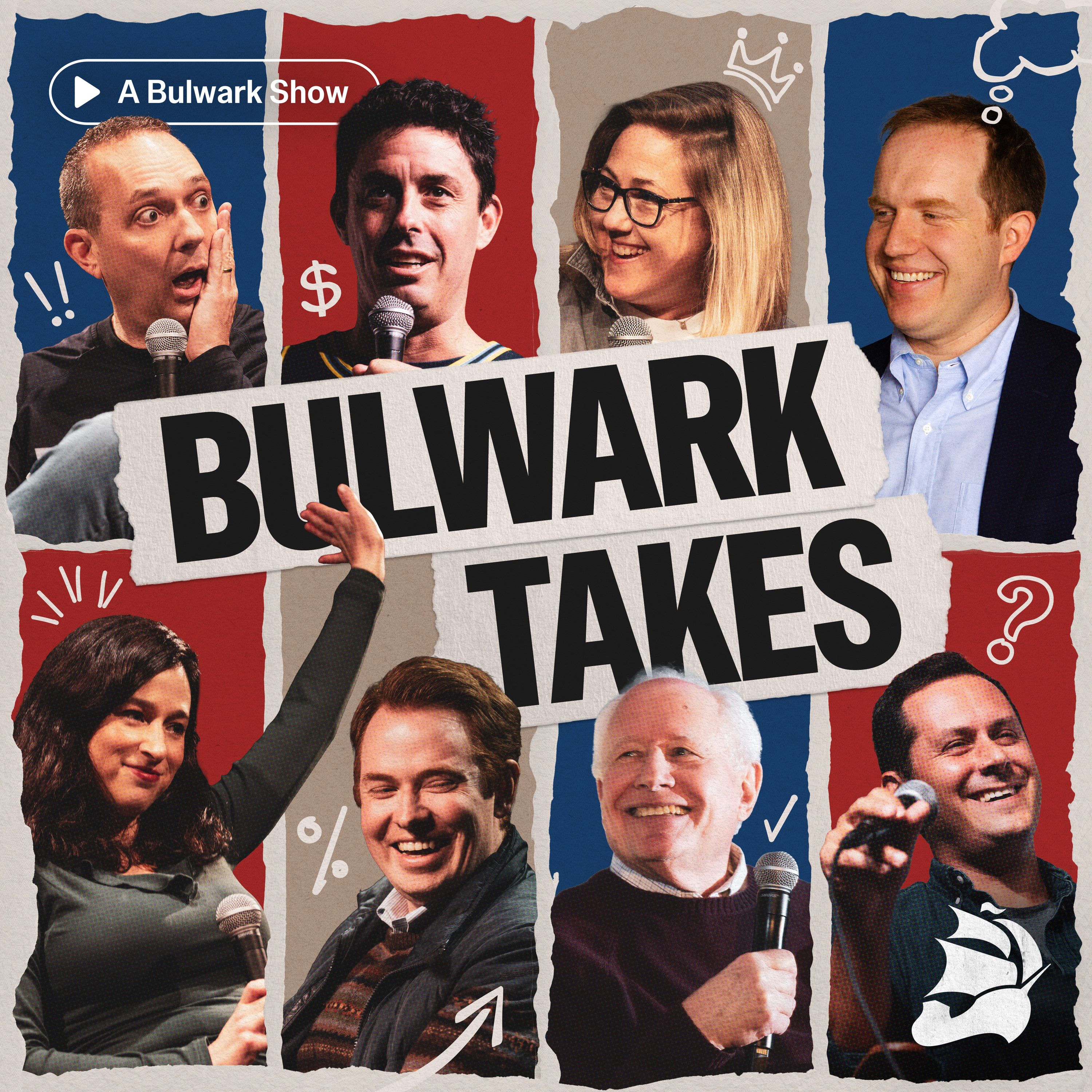
Trump’s Crushing Defeat Just Changed How the World Sees America
35m 3s
The recent political shift following the election marks the end of the Trump era’s chaotic foreign policy and a turning point toward greater accountability and stability. Trump’s administration, particularly its allies like Jared Kushner and Steve Whitkoff, now face intense congressional oversight, especially regarding corruption and misuse of national security for personal gain. In the immediate term, U.S. policy toward Iran is likely to de-escalate due to constrained executive power and Democratic oversight, with intelligence agencies emphasizing caution. The abrupt announcement to cut $3.8 billion in U.S. aid to Israel has triggered global reactions, prompting Israelis to reassess their strategic partnerships and potentially deepen ties with China, India, and Russia. Meanwhile, European allies are actively building conventional defense capabilities, recognizing that U.S. military presence is no longer guaranteed, especially if the U.S. invokes Article 5 and withdraws support. The upcoming National Defense Authorization Act will reinforce critical provisions, including limits on troop withdrawals and military aid to Ukraine, providing stronger institutional checks. This shift also signals a broader realignment of the Republican Party, with figures like JD Vance facing political isolation and a future that must embrace realism over radicalism. In Ukraine, the end of Trump-era policies has led to the resumption of energy operations and restored Starlink services, demonstrating renewed U.S. commitment. Overall, the transition reflects a return to international credibility, stronger alliance dynamics, and a more transparent, accountable U.S. foreign policy—especially in the face of past missteps and executive overreach.
Hi everyone, it's Mark Pylem Robles, a 26 year veteran of the CIA, here for another episode of "Borac Takes" with my co-host, Michael Boyce. Both of us are a little sleepy. It's been a hell of a night. Hangover too. Well, you know, I blame you for this because last year in Portugal, I fell in love with the apparel spritz. And I think by four o'clock, I might have had four or five of them, which was not good for the rest of the night, but heck of a night. And there's one thing I think that both of us should kind of acknowledge is we had this weird time period over the last several days in which, as foreign policy pundits, members of the blob, whatever you want to say it, you know, we kind of had to take a knee. This was the domestic policy superbowl for a lot of people, but now we're here. And I think for this is good because we can actually talk about the ramifications in the foreign policy world, which I think are profound and nuanced and interesting. So here we are. And we're going to get you high energy. Let's get going now. Yeah, you know, and I don't think it's true to say that this was squarely a domestic policy focused election. I mean, it is in the sense that, you know, things like the price of gasoline, which is related to the war in Iran, the foreign policy issue led sort of the complaints and helped sweep the Democrats into both houses of Congress. But, you know, corruption was another big issue that the Dems ran on successfully. I mean, awesome. He was very on message about this. And with this administration, you and I've been talking about this for months, corruption is inextricable from all of the foreign entanglements that the Trump cabal have got themselves into, particularly Steve Whitkoff and Jared Kushner, two of the biggest losers, prospective losers of this election because now they're about to face a tidal wave of oversight. I mean, the oversight committee, the Democratic led committee now is already tweeting like, you know, gangster rap videos, lawyer up. I mean, lawyer up. You know, this is this. Yes. Winner is not coming. Winner is here. Winner is here. This is what a lot of people are hoping for it. And, you know, it's fascinating. The most interesting call I got last night came from a Republican Hill staffer. And this is somebody who said to me, yeah, you know, months ago, we know the house will go blue, but the Senate, nah, come on. And then I said, well, what do you, what do you think? He said, well, in the last few weeks, we sort of saw the writing on the wall. And I said, and where are you now? He said, honestly, look, there's a sigh of relief in one respect, which is that we were warning the administration for months that the, I think that the phrase was cancerous dumb elements within the administration. And this person made it very clear that he was referring to Whit cough, Kushner, Don Jr. Eric as, you know, not technically in the administration, but going around. Maybe look at any bad stuff. Yeah. This is going to cost them dearly. And so now the hope is Democrats stick to what they can, what they can achieve. I mean, if they go for impeachment and things like that, then it polarizes. And that's sort of quicksotic. If they stick to dirty dealing, self enrichment schemes using America's national security as leverage, I think that they'll find an amenable partnership with at least some of the more traditionally minded internationalist Republicans who weren't along for this mega bullshit, or at least had to, you know, they were in a state of internal exile for two and a half years. And then the other thing that you mentioned JD Vance is this map looks horrifically prophetic if you're JD Vance. This is what the map in 2028 would look like if he is the nominee. Yeah. So look, I don't want to focus too much on the Republicans because they're the losers here. And they deserve to lose big. But I think one of the things that needs to happen in this country, you know, I like a two party system. And I don't like one party being absolutely deranged as it has been now for in effect 10 years. I mean, this has been the Trump era, right? Even with five. That was an interranium. And I mean, Trump was still looking in the background. If this is the big, the true beginning of the end of maga, if maga is now a zombie corpse stalking the land, but doesn't have any life left in it, that's a good thing. And if Republicans, you know, even cynical ones who say, oh, let's pretend this, this all didn't happen. We were just kidding for a decade. You know what, if they reset to a point where they can be normal again, and take things like NATO, American force posture in Europe, Ukraine, all of these things seriously, then that's, that's good for the country. Yeah, for sure. Let's unpack that in a set because I want to go just, I think the big, the two big issues will be Iran and Ukraine, and it's important. But just kind of a quick, quick couple, couple seconds on, on the maga obliteration because that's what this was. I was getting calls as just as you noted you were. I was getting texts in this case from friends in Europe. And, and I think it's interesting. And so there was, you know, there were no tear shed. There was almost euphoria. And nuanced euphoria, but euphoria. And I just want to say something because I do believe that, you know, there is this longing for the American ideal to return. And that's not even specific policies. Just just that America as the bright shining city on the hill, the land of economic and political liberalism. Europeans were, were really upset that this seemed to be going away. And it's, it's coming back. Does that mean the US is a dependable ally again, of course not. And we can talk about how, you know, Europe, you still has to go along this path of kind of autonomy in terms of their, their future national security strategy. But, you know, it's a good day when America is the good guys once again. And, you know, and I think that that is something to kind of sit back and say, you know what, you know, we've rated this ship. I think it's too cynical to just blow this all off. But let's jump in to where we think this goes in terms of specific foreign policy challenges, both, you know, immediate and then longer term. Your thoughts, let's start off on Iran. What are your thoughts on what happens with Iran? Well, I mean, you know, the reporting I was doing prior to the midterm all led in one direction, which is there will be an escalation. Trump is pretty keen to at least optically declare that the nuclear issue is now done and dust it, right? So I've been hearing a lot of things, including from mutual friends of ours who are keyed in with this administration that dropping the mother of all bombs on pickaxe mountain is a very likely contingency. I know Tucker Carlson was tweeting out shit about a tactical loop, which everyone lost their minds. I don't really see. Yeah, I mean, you know, that's that's and we all I think know who who is whispering sweet nothings into Tucker Carlson's ear. The aforementioned vice president J. Vance, but whether or not this chasen's Trump in some way and he he chooses not to do he has nothing to lose now, right? He was delivered this this stunning overwhelming rebuke. A normal politician might say it's time to recalibrate and pull back on some of our, you know, more reckless or provocative tendencies. He might just feel completely unencumbered, you know, he's a lame duck in his mind. He wasn't on the ballot, even though he said you should act as if I'm on the ballot. So he's already trying to distance himself from this this route. He could very well take a decision. Yeah, I want to re escalate in Iran and if the price of gasoline skyrockets or even ticks up another dollar, a gallon or whatever, who cares? You know, this is not somebody who has the interests of the American people at heart. So I think we should differentiate between what happens between now and January in the late, you know, in this period before the Democrats are seen, because then we can talk about what kind of powers they have. But in this two months, you know, there is, I think you, you know, there is some question on what is Trump going to do, you know, because he does have this window to certainly escalate. And I guess, of course, the Iranians are assessing this too. What's your, what is your assessment of the Iranian assessment of the midterms? Because they actually matter as well. The enemy gets a vote. Are they more willing to make a deal or not? Or, you know, or is it something in which they understand that that Trump actually might do something crazy now? And they could kind of go up this kind of this escalatory ladder. Well, you know, the war hawks have been telling us that it's only a matter of weeks or months before the regime runs out of money. And then it's forced to make a deal. So basically capitulate or collapses, right? So regime change is still one of these sort of romantic notions that the people who let us into this thing cling to. If you're the Iranians, though, you're thinking, all right, the straight-of-war moves remains quote-unquote open, even though they're attacking ships, only by the grace of an enormous U.S. naval blockade, which costs billions of dollars a month to maintain. So now with Democrats coming in, with more oversight, with, you know, Congress controls federal spending, they can withhold things to the president that he wants to do, maybe just wait it out longer, right? You don't have to make a deal. He's not going to be in as strong a position. But also, again, the calculation is that he could be more erratic and he could take more risks now. So we don't know. I mean, I look, if I knew what the IRGC was thinking, I think I'd be a much wealthier man than I am now. I'd be playing the CalShi markets. When you argue that this is a tie-in, so, like, as an intelligence officer, it was always really important to say exactly what you just said, "I don't know." Or we say it to the famous, "It depends." But that's why intelligence is so important. And one of the things that I think is key right now is our window into the plans and intentions of the Iranians. And does that mean that the, my old outfit, the CIA does, or the National Security Agency who intercepts communications, do we have that window into what the Iranians are going to do? Interestingly, Axios reported that Rackliffe, the CIA director, has been the one advocating patience. Do not restart any kind of kinetic campaign. I thought that was fascinating. And then, don't forget, when we talk to Jim Himes, when he's on our show, he will be the incoming chairman of the House Permanent Select Committee on Intelligence, a Democrat from Connecticut. He actually thought the intelligence that we had, the collection, might be pretty good. It's going to be interesting to see how the intel community, how rare.
and other is kind of present this. If reckless is the one saying hold off, I think in many respects, that's probably a good thing if you are worried about escalation. - This episode is sponsored by Casper. You know when you wake up and you have kinks in your neck and a sore back because you just couldn't get comfortable and then you do this all day, ah, ah, ah, well guess what? I don't do that anymore. I start every day on the right side of the bed, now thanks to Casper. Casper makes reliable high quality mattresses designed to deliver consistent, comfortable sleep night after night. That's why out of 99 mattresses, Consumer Reports names Casper's The One mattress. They're top rated all-form mattress of 2026. You know, that's a big deal. Casper's mattresses are built to be durable and long lasting. So you're not replacing your mattress every few years. Their products are designed to withstand the test of time, maintaining support and comfort over the long haul. And Casper has their 100 night risk free trial. So you can give Casper's mattress a try, risk-free, although you know what, with 110,000 five-starvers, I'm pretty sure you're going to love it, just like I did. You guys know I only share products I genuinely love and Casper has been a game changer for my sleep. Remember, the day always ends well with Casper. Right now when you go to Casper.com, get a king size mattress for the price of a queen or a queen mattress for the price of a full. And besides Casper.com, you can find Casper at retail stores all across the country. One last time, that's c-a-s-p-e-r.com and get a king mattress for the price of a queen or a queen mattress for the price of a full. - Hey Michael, one thing to note, there was kind of a remarkable comment that a President Trump made to Fox News morning the election day, essentially announcing to the world that he and Benjamin Netanyahu, the Israeli Prime Minister, have come up with a plan to immediately cease all U.S. aid to Israel and the tune of almost four billion. I think it's 3.8 billion. That's something that has been discussed in terms of phasing out aid. But this was kind of this really weird, I think, you know, open blatant transparent effort by Trump to appeal to voters perhaps in Michigan who are part of the anti-Israel camp kind of siphoned away from the Senate, well, the Senate candidate El Sayed, soon to be seated Senator. But this caused a big mess kind of in my circles. You know, a lot of former Israeli officials and others. And so, you know, what are your thoughts on that? In particular, and put it in context with Benjamin Netanyahu who completely siding with the Republicans. And while, you know, if Mago was obliterated, a BB got an ass kicking last night as well. - Yeah, I mean, you know, on the right, the whatever you want to call it, the woke right or, you know, the Tucker Carlson right, hatred of Israel and a desire for the United States to decouple from this special relationship with Israel is profound and loud. And a lot of it driven by, let us be honest, animist toward a certain ethnic group in this country. I think, though, with respect to aid to Israel, look, I mean, this has been an argument that a lot of Israeli hawks have been making for years. And the reason they make it, and this is where I think both the isolationist or Tucker Carlson asked right and the Abdul El Sayed left need to have some perspective. Why do the Israeli hawks say we don't need subsidies, we don't need charity from the United States anymore? Because that untathers them from our ability to control what they do, right? I mean, this aid package that is $4 billion whatever it is comes with strings. Now, you may say under Donald Trump, you'd be right, by the way. Those strings seem to have been snipped because BB has gotten everything that he wanted. I was at a luncheon or some kind of meeting with Moisha Yalan in 2008, who's the tail end of the George W. Bush administration. And he was saying, we really want the United States to go bomb Iran for us. We'll do it eventually if we have to, but we would prefer the US do it. And that refrain did not change throughout, right? They did it with Bush, they did it with Obama, they did it with Trump in term one, they did it with Biden, and they did it with Trump in term two, and they finally got to yes with Trump in term two. So the United States pushes back on Israeli overreach all the time. So you end this relationship, this financial flow, the Israelis say, well, we don't know anything now, right? And it means that they're gonna go out and cut stronger strategic ties with other countries. They already have pretty good relationship with China. They have a very good relationship with India, their relationship with Russia, a deep abiding source of concern to people like myself and to you because it extends to intelligence, sharing and other things. That could be expanded and strengthened, right? So, you know, look, my own view is, this is a country that is wealthy enough, it can pay for its own kit, you know? Also, it's a nuclear triad country with a conventional capability that dwarfs any of its regional adversaries. It doesn't need to be given free things by the United States. I mean, the way this works is, you know, we give them subsidies that they use to then, you know, buy American products, but they can pay out of their own GDP. We don't need to be doing that. - The thing though, so I hear what you're saying there, and I actually would agree because many on the Israeli, in the Israeli national security, do not wanna be beholden to the U.S. That's the idea of, you know, U.S. switching all of our bases to Israel. I think a lot of Israeli, Israeli national security planners that would not be thrilled with that. But here's the thing, Benjamin Netanyahu ran on the whole notion of the U.S. and Israel are tied at the hip. And that is his best friend, Donald Trump, was the savior of Israel. And then Trump, once again, just kind of tossed him right over at the bus. And so my Israeli friends, or we're going, well, hold on a second, you know, and if this is true and there was some secret agreement, not to phase out the 3.8 billion, but to cut it off immediately, BB didn't tell us this in the election campaign. So that's something in which I think we'll become an issue. - If you're, if you're, you know, in the Israeli political class, or certainly with the national security community, you see the writing on the wall. You see that America's electorate is shifting, and shifting quite dramatically in the other direction. It's not a bad thing to say that we should not be joined at the hip, right? Because being joined at the hip means that candidates like Abdul Al-Sahed, or Tucker Carlson, or whoever you want to pick on the right, can have this preternatural focus on Israel. They can be obsessed with it as the sort of overriding concern of American foreign policy or geopolitics. So there's an argument to be made if you're a pro-Israeli, or certainly if you're sitting in Jerusalem or Tel Aviv, that you know what, maybe it's time to dial down the relationship, make it a little more normal. But again, the caveat there is they become even more unencumbered to do things, right? - And then the final piece on this, I think, is that for a new Israeli government, I hope the lesson is learned that you cannot only be beholden to one American political party. I mean, yeah, I made a catastrophic error. And again, this mega obliteration, I think also can be seen as BBs downfall as well, because it ain't working, the current policy. And so I think that Israelis have to reflect on that. - The Biden administration, I mean, there are people there, Jake Sullivan, John Feiner, Brett McGurk. I mean, I'll be surprised if any of them serve in a Democratic administration again. I mean, they're considerable. - Maybe two pro-Israel. - Well, and, or they just, they rolled over and let the Israelis do things in Gaza. - I mean, they're considered enablers of genocide. Ben Rhodes wrote an essay in the New York Review of Books, and I don't have much time for Ben Rhodes, because everything in that essay seemed an act of projection, because it could apply to Ben Rhodes when he was an Obama's administration dealing with Syria, which was the worst humanitarian catastrophe of the 21st century. - When they did, yeah. - Which they did, right? But what's interesting about this is, Rhodes is basically dragging his two colleagues from whatever that progressive think tank is. I think they invited you to join it at one point, didn't they? - He's dragging them for allowing the Israelis to run rough shot over the US sort of foreign policy restraint mechanism, such as it was, right? So where does that leave the, you know, the sort of brain trust of Democratic national security, right? This is why I think, you know, if you're on the far left, you want all new people coming in. You want the AOC, AES hand picked administration. - I'm too centrist for any of these people now. - But this radical centrism that I've now embraced has made me, you know, PNGed from all sides. - Yeah, and I mean, look, you know, I'm under no illusions. I mean, Democrats are singing from the right him sheet about Ukraine and NATO, but I mean, just this morning, I mean, I want to turn this conversation back to Ukraine now. - You know, so, you know, everyone wakes up and yes, the champagne quarks are popping all over the world. In Austin, Texas, it was like the downfall of Chow Chesgu. They were honking horns. - However, however, and I happen to know something about this 'cause I spent the last two weeks researching an essay I'm doing for the Atlantic on it. What Trump represents to transit lantern system, which means our relationship with our European allies, the UK, I mean, NATO, it is the most hysterical expression of a tendency that predates Trump and it cuts across administrations, and I think the Europeans have now cotton onto is an inexorable tendency. And that is, America is receding from 80 plus years of Pax Americana on the continent. And you know, there's now a very robust debate happening within European defense, national security circles about, you know, what's known as separable but not separate. So creating a mechanism within NATO such that Europe can defend itself conventionally in the event of an attack. So Russia launches missiles or God forbid puts tanks.
in troops across the border, if the United States, if Article 5 is invoked, and the United States says, "Sorry, you're on your own," which is a likelihood under Trump, right? The Europeans have to fight on their own, right? So, the question is, how do we do it, and to what extent do we maintain a strategic relationship with the United States? At the far end of the spectrum, the U.S. doesn't send the cavalry in, but it maintains its nuclear umbrella to protect the continent. And we provide other things, intelligent sharing, and so on and so forth. But this is a very real debate that the Europeans are having, and it's a long overdue debate. Yeah, for sure. And the person who inaugurated this argument was Dwight Eisenhower in the fifties, because again, the idea of NATO was not America stays in perpetuity to protect Europe. It's America's here now. You know, we are the hard power, but this is a temporary arrangement until Europe can get up on its own two feet. So I think Europeans have realized that complacency and this sort of in the background dependency is, it's over. And the question is, they certainly have the money, and they have the resources to build armies there. I mean, if you look at just real estate in Germany, all of the sites that have been ground has been broken to build new weapons factories, Ryan Mattal, and so on and so forth, European defense is booming. However, where is the political will to act in concert, right? To gather, you know, and it's not even just the 27 countries in the EU. There's other countries that are, you know, NATO allies, but not in the EU, or EU member states that are not in NATO, Ukraine factors into this calculation, like no other, everybody who talks about a European defense force or a defense union makes Ukraine one of the lead actors in this. Well, isn't it the most power, it's the most combat effected, most powerful army in Europe by orders of magnitude? And I mean a hub, the center of gravity for military technological innovation. So drones, counter drones, cruise missiles, ballistic missiles, all of these things being produced at scale in Ukraine will go into the collective defense of Europe, right? Democrats coming back, it's not going to, and Jim Hines, do you remember, he said this at the Warsaw Security Forum a few weeks ago, he's like superficially things will change. We're certainly not going to take on this bullying, hectoring tone, we're not going to threaten to invade Greenland and do all the imperialistic horseshit that Donald Trump got up to. But in terms of policy, you know, this is a train that doesn't stop, you know. All right, so that's kind of the long term, kind of a fact in reaction to the Mago obliteration, and I think you nailed it there. But let's do exactly what we did on Iran and talk about the next two months. The next two months when Trump is not going to have that scrutiny from Democratic oversight or power of the purse or any of the things the Democrats can do. And there's this notion that the U.S. is pushing the Ukrainians for some kind of terrible peace deal. And so what do you think happens in the next two months and does, again, the shellacking that Trump took, does that affect how he thinks about Russia, Ukraine? So you're right. You don't have bums in the seats of Congress to stop things with voting and so on. However, there's already an atmosphere that this is going to happen and things are going to change. And in using that atmosphere to your advantage, if you're in the Democratic side, and also, if you are a non-isolationist Republican who believes in all of the things I've been saying, you can kind of work together. So what do I mean by this? So the NDA, the National Defense Authorization Act for fiscal year 2027 is late, right? It was due already, but it's supposed to come down the pike in the next couple weeks or before the new year. You'll recall the last NDA, 2026, had provisions in there written by Republicans to do what? To handcuff, wickoff, Kushner, bridge, colby, you know, there's a provision in there that says the president cannot draw down U.S. troop levels in Europe below the 76,000 troop threshold for more than 45 days without Congressional oversight and consultation, right? And he has to explain why he's doing it. The president cannot pull out more than half a million dollars in U.S. equipment, which is, I mean, Christ, you try to remove a company from Germany. I mean, they got way more than half a million in kit without Congressional consultation and oversight. There was a provision in there that said over the next two years, each year, $400 million in military aid should be provided to Ukraine. So if you're the Democratic Party in the Senate and House, talking to Republicans who are like-minded about, you know, our alliances and the transatlantic relationship. Which a lot of our, by the way, I mean, the hostility towards Ukraine comes from the White House. It does not come from from Republicans in Congress, yeah. You can do quite a lot of good now because you can say the Democrats don't need to roll over. These provisions can be strengthened, right? I mean, what Congress has is the funding fence, basically, that they can put into these businesses. How does it relate to in the next two months? I mean, how much mischief can Trump do? Because you can start litigating the NDAA. I mean, either it's going to get passed before the Democrats take over. Right. And the Democrats who are there now can say, excuse me, but we don't have to, we don't have to be as conciliatory as we were last year. Waited out. Right. We've been locked ourselves in to policy, we don't agree with. So they can be arguing from a more robust position now. And maybe Republicans who support Ukraine will have more courage to stand up to the White House as well. Correct. And look, I am second to none in my contempt for the cynicism and opportunism of the GOP when it's come to the last 10 years. I mean, believe me, I've seen it, you know, a lot of these people were my friends and allies because I was more of a McCain, Romney kind of, you know, center right Republican for many years. And I abandoned them and they abandoned me. However, their, their principles still obtained, right? They just couldn't, they couldn't exercise them for fear of getting primaried or, I mean, in the case of John Corden, who was first out to congratulate Tel Rico last night, hilariously. So, I mean, the most centrist, normy Republican in a state of Texas, this asshole in the White House said, you're out. And he put in some corrupt flunky who was impeached. Yeah. I mean, so these Republicans are now, the smart ones anyway are saying, the future is already post Trump. Yeah. I mean, tell us, I said, tell us as he's coming after Hexath. I mean, it's amazing. Do we want to be part of that future, or do we want to go down with the shit, and I think I know the answer, you know? I mean, these guys, look, the Senate Armed Services Committee, I've never seen grilling of somebody from your own party, the way I've seen them, Rape Bridge Colby across the Colts. Oh, yeah. In open hearings, and then I've heard closed hearings are even worse. So if they were like that for years 2.5, how are they going to be in their next years? They're spying has grown some more. And also none of them, none of them, the great secret about JD Vance. Somebody told me this from the Republican side in the House years ago. JD Vance had no friends. He had no colleagues. He had no support in his Chamber of Congress, which was the Senate. He had more influence in the House with the crazy Magal Unis that were in the House than he ever did in the Senate. So the Senate is still considered the sort of gentleman's Chamber, right? Nobody likes JD Vance. Do they want him to be the successor? I mean, if he is, if he's the anointed, then you're already thinking, okay, 2028 is gone. Now let's think in terms of 2032. Maybe we aim to retake the House and the Senate in 2030. You can't do that with this, like I said, this zombie corpse of Maga. And there's no Trump. So there's no political talent, which Trump has, I think it's undeniable. And now JD Vance, who's literally tweeting today, we lost because of the war in Iran, which you publicly supported and good luck telling people that you didn't really need it. Right. Because now you look like a hypocrite and an opportunist. We lost because of support for Israel where we've already covered both parties are moving away from that relationship and affordability and all these things. So, you know, the new Republican party is going to have to take these things and get serious consideration. You look, and, okay, Donald Trump Jr. now bear hugging the JD Vance statement, because JD is Don Jr.'s guy. But I want Donald Jr. to bear hug JD Vance, because Donald Trump Jr. is detested almost as much as JD Vance. I mean, he's the one who's actually run. There's all that. Let him run. Let him run. Let him be the VP pick. That's, that's great. That's great. That would be the red wedding scene in Game of Thrones. Oh, I like that. So, let's bookend this right here, just because there's one last piece I want us to get to, which is some viewers' comments, which we're going to have a lot of fun with. Yeah. But before we do that, just one piece, and this goes back to, you know, I know you have a ton of contacts in Ukraine, and I think back to my old life as well as CI case officer, where we would do side by side with our liaison partners. And I will just say that the events of the mega obliteration is such that, you know, I think Ukrainians, just in principle looking at the United States are breathing a sigh relief. And for CIA officers who have to work side by side with the Ukrainians who had to deal with a very rather insane president who clearly hated Ukraine, this is a very good day because it's just much easier to deal with our liaison partners when you say, you know, things may change in the future, at least for certain in tone, and then some things that a new Congress could do. It's just so much easier now when we kind of, when you eject the crazy out of this, you know, my old job is easier. So I think that's just something to note. Yes. And just on the point of Ukraine, so, you know, what two weeks ago, I was like a dog that went through the car wash with the top down. I was distraught. I was wrecked because they
rottled star link. And I thought this was the crisis that was the end of what the fuck happened. That's got to be part of the accountability abuse by Congress. But now, you know, I went out, I touched grass. I took Julia to the Harry Potter show. I breathed a few, you know, necessary breaths of oxygen. And I had a more sober assessment. Two weeks later, what's happened? Number one, Intel sharing, never severed. Number two, Ukraine said, okay, well, these energy ceasefire that existed only in Donald Trump's imagination, that's, that's over. So they start hitting refineries again. Number three, key of independent does a piece of reporting where they ask us officials, oh, he wants the Ukrainians to stop hitting refineries and the Ukrainians are hitting them. US officials says we just shrugged. So at number four, star link is back at normal speeds. And it seems to be the case, according to the Atlantic, according to the telegraph, Elon Musk kind of drove that policy. Now, of course, Donald Trump had to say, yeah, go ahead, Elon, do what you want. But Musk, Musk is one of the most, I mean, abject losers of last night. He spent $400 million trying to get Republicans elected 150 million in Texas alone, where I think he moved his whole operation. Right? Everybody moved to Texas. And now Texas is blue. It's hilarious. Elon is deleting tweets about vote red and, you know, Talleriko is a, yeah, he's deleting tweets. And there's going to be oversight. And, you know, lawyer big boy because they're going to turn him inside out. How is it that a trillionaire foreign-born oligarch, known drug addict has his finger on the lever of a major US aerospace, you know, satellite constellation. It is insane. When I asked my friends on this, you know, they would always say there's no other option, but that's not an excuse anymore because you see the damage that he can do has been profound to the United States. The damage he did was reputational damage to the United States. And he led to Ukrainians dying. No other technical option than SpaceX. But that doesn't mean the US couldn't nationalize SpaceX. Right. Yeah. Come on. And you hear Republicans talking about nationalizing industry. I mean, that's how bad it is. Look, the mega fever has broke. I really do think so. You know, a mega was obliterated. That's a very good thing. Musks and and all the kind of the bad that he has done for this country is is going to be it's more transparent now. It's going to be exposed. But what we have to do to finish the episode today is go over some viewer comments because when you hit me up the other day and you're laughing and kind of smirking, I was like, Oh, God, one of the comments was, this poor woman, I forget her name, forgive me. She watches the show on like a 72 inch plasma flat screen TV and she's like, Michael, please shave your neck. Oh, that's good. That's good. I have a neck. I'm lazy and tired and I don't I don't groom myself. And I'm like, you know, I was made for an iPhone at best. Yeah. I was not made for big screen TV. So that was one. The other, I wish I had it in front of me, but it was something like, you know, I don't understand how they compare a gentleman in a scholar like Michael Weiss with a mouth breathing meathead like Mark Paul. I love that. My life is complete now. No, and I don't get called that except apparently in contrast. I mean, I love it. So, you know, I do drive a pickup truck and I like going to die bars. Well, I like going to die bars and I used to have a Ford Explorer. So, you know, let's not lead into stereotypes. You are the upper West side kind of guy is back. What 3.0 is here to stay now? Give me a break, you know. A note to everybody watching and listening. We love these comments. I actually both Michael and I read them quite a bit. And so, you know, the back and forth with with the viewers and the listeners is really appreciated. And that's why we do this stuff. You got to have fun. And you got to be able to make fun of each other and a little kind of self reflection sometime. So I will try to to neuter some of my meat headness. Is that right? Meat headedness or not? Well, I see. I think you're very sophisticated. I'm a lovable meathead, right? Yeah, there we go. I mean, I've met some meat heads from your former organization and, you know, you don't tick those boxes from me. All right. Well, that's another episode of the Bullwork Takes. This was great kind of unpacking where we are the day after a obliteration day. And, you know, we've got to come up with some more kind of clever phrases on that. Please join us next week again for Bullwork Takes. And we're getting closer to November 22nd, which is when our show debuts, the reporter in the spy, we are super excited about that. It's going to be our own show. I think it's even going to be a little bit longer in length. And we're going to not only have guests on, but then kind of go do some more deep dives into where the US goes in the foreign policy and intelligence world. Michael, it's awesome being on with you. And I'm very excited for the debut of our show together. This is like, this is like, this is crazy because we talked about this maybe a year ago doing something like this. Now it's happening. Yeah, no, I know. I mean, from from high concept to actual podcast. Yeah. All right, everyone. Take care.
Podcast Summary
Key Points:
The recent election results mark a significant political shift, ending the Trump era's dominance and signaling a return to more stable, internationally responsible U.S. foreign policy.
Trump’s administration, particularly figures like Steve Whitkoff and Jared Kushner, face intense congressional scrutiny due to corruption and misuse of national security for personal gain.
The U.S. is likely to de-escalate its threats toward Iran in the near term, as Democratic oversight and reduced executive power will constrain reckless actions and create pressure on the Biden-era intelligence assessments.
The U.S.-Israel relationship is under renewed scrutiny, with Trump’s sudden announcement to cut $3.8 billion in aid seen as a strategic gamble that may accelerate Israeli efforts to diversify ties with China, Russia, and India.
European allies are reevaluating their dependence on U.S. military protection, pushing for greater conventional defense capabilities and autonomous NATO responses, especially in light of Ukraine’s role as a key military and technological hub.
The upcoming National Defense Authorization Act (NDAA) will include strengthened provisions to limit troop withdrawals, equipment draws, and military aid to Ukraine—enabling more consistent, accountable U.S. policy.
The political realignment after Trump’s defeat suggests a post-Maga Republican party must recommit to alliances, transparency, and strategic realism, not isolationism or opportunism.
Key developments like Starlink’s restoration and the end of energy ceasefire threats in Ukraine signal that U.S. support for Ukraine is now more stable and less vulnerable to executive whims.
Summary:
The recent political shift following the election marks the end of the Trump era’s chaotic foreign policy and a turning point toward greater accountability and stability. Trump’s administration, particularly its allies like Jared Kushner and Steve Whitkoff, now face intense congressional oversight, especially regarding corruption and misuse of national security for personal gain. S.
policy toward Iran is likely to de-escalate due to constrained executive power and Democratic oversight, with intelligence agencies emphasizing caution. S. aid to Israel has triggered global reactions, prompting Israelis to reassess their strategic partnerships and potentially deepen ties with China, India, and Russia.
S. S. invokes Article 5 and withdraws support.
The upcoming National Defense Authorization Act will reinforce critical provisions, including limits on troop withdrawals and military aid to Ukraine, providing stronger institutional checks. This shift also signals a broader realignment of the Republican Party, with figures like JD Vance facing political isolation and a future that must embrace realism over radicalism. S.
commitment. S. foreign policy—especially in the face of past missteps and executive overreach.
FAQs
The election shift signals a return to more stable and traditional foreign policy principles. With Democratic oversight now in place, there's increased scrutiny of past administration actions, especially regarding Ukraine, Iran, and U.S. alliances. This creates a more balanced and accountable foreign policy environment.
During the current window before full Democratic oversight, there's concern that President Trump could escalate tensions, potentially launching a kinetic campaign. However, the incoming administration may use Congressional spending controls to limit such actions, reducing the risk of escalation.
The announcement was seen as a strategic move to appeal to anti-Israel voters, particularly in Michigan. However, it disrupted existing Israeli-U.S. relations and raised concerns about Israel’s strategic autonomy, potentially leading to stronger ties with other nations like China or Russia.
Europeans are increasingly pushing for greater military self-reliance within NATO, especially in response to fears that the U.S. will withdraw support. This includes building domestic defense capabilities and leveraging Ukraine’s military innovations as a key asset for European security.
U.S. intelligence, particularly from the CIA and NSA, is critical in monitoring Iranian intentions. While the exact plans remain uncertain, CIA Director Rackliffe has advocated for restraint, suggesting that patience may prevent escalation.
The upcoming NDAA includes provisions that would restrict Trump’s ability to reduce troop levels in Europe or withdraw military aid from Ukraine without congressional approval, reinforcing NATO commitments and U.S. support for Ukraine.
Chat with AI
Loading...
Pro features
Go deeper with this episode
Unlock creator-grade tools that turn any transcript into show notes and subtitle files.
 PodcastTranscript AI