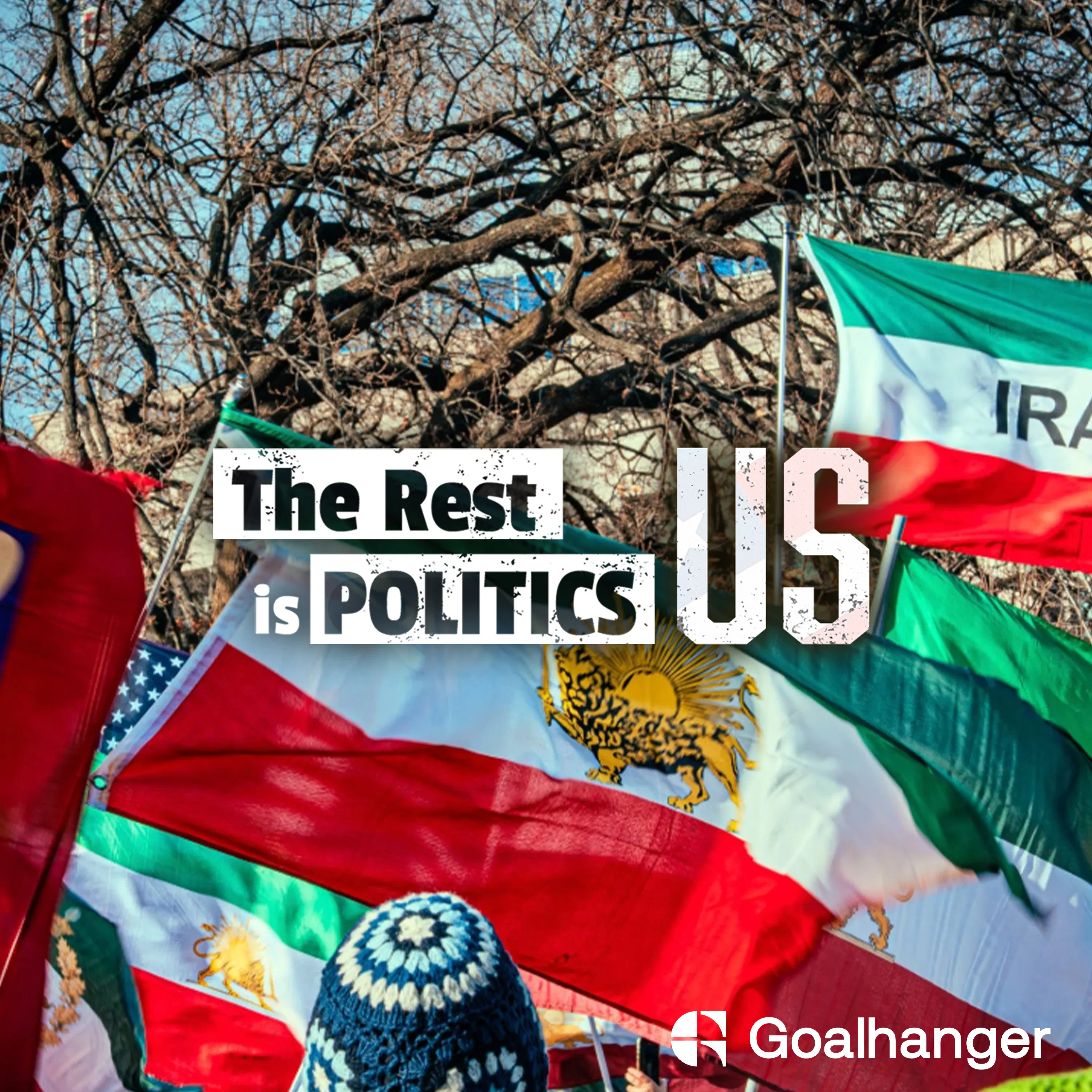
The discussion centers on a new geopolitical agreement where the U.S., following President Trump's approval, has accepted a workable framework based on Iran's 10-point proposal. This has resulted in a two-week ceasefire. The proposal grants Iran significant concessions, including control over the strategic Strait of Hormuz, the right to continue uranium enrichment, and the lifting of international sanctions. While the Iranian regime emerges with a major strategic and prestige victory—securing potential billions in revenue and regime survival—it has also suffered substantial military degradation. Israel is identified as a clear loser, deeply unhappy with the deal and actively trying to provoke its collapse. Concurrently, the conversation highlights a crisis within NATO, which is described as effectively on "life support" due to U.S. hostility and a collapse of trust in its collective defense principle. Finally, analysts note a dramatic and rapid decline in American public support for Israel across all age groups and political affiliations, which could have long-term implications for the U.S.-Israel partnership.
[music] Welcome to the rest of this politics US. We are on a live stream primarily because we have another taco situation and just to update people that are at the side. It may be rightfully to turn off the local news and their Twitter feeds and so forth. United States is agreeing to a 10 point proposal, or at least the president of the United States Donald Trump is saying that the 10 point proposal is workable and a lot of that proposal is probably not the best source of things for the United States, including it looks like the stride of her moves will likely be in the control of the Iranians. And so again, I don't want to report propaganda here, but what is on the table on that 10 point plan I will tell you, it was a commitment to non-aggression, a continuation of Iran's control over the strait and acceptance of uranium enrichment. And of course that's basically something that the war started over, not wanting to accept that. Other proposals lifting all primary and secondary sanctions, a termination of all U.N. Security Council resolution, resolutions excuse me, a termination of all board of governors, resolutions, and a withdrawal of U.S. combat forces from the region. So again, I'm not saying the United States is accepting all of those, but that's what's going on right now. But what was clear, and I think your reporting was probably better on this, so I'm going to flip it back to you, but was clear that the package, the president was looking for a way out. He didn't just want to taco himself on Twitter. So he got the Pakistani prime minister to taco for him. So go ahead, tell us, tell us how he did that, Cadi. I like the fact that the taco is now a verb that is become so ubiquitous in Donald Trump's second presidency with tariffs. And now we're the round that it's now a verb. So Donald Trump has now given him a two-week window himself another two-week extension. I think it's hard to see that he could keep giving even more extensions beyond this two week. So a lot has to be resolved in this two weeks. There's quite a lot of distance between the Americans and the Iranians, but what the Iranians have repeated from the Supreme National Security Council to the foreign minister to one other group coming out of the Iranian government is that they have control of the straight-of-hormouse, at least for this two-week ceasefire, and any passage through the straight-of-hormouse has to be coordinated with the Iranian military. The Pakistanis are very involved. I have heard from somebody with knowledge of the conversations that Israel is not happy with this ceasefire deal, this two-week ceasefire deal. We have seen guys some missiles coming into Tel Aviv this evening after the ceasefire was announced. I don't think that necessarily means that the Iranians are still from a centralized command position trying to attack Israel. Remember that we said on the podcast on Monday how all of the decision-making had really got devolved down and it may take a while, I think even the White House has just said this, I think I'm right, Anthony, that the White House has just confirmed that they would expect it to take some time for the news of this ceasefire to reach all of the people in Iran who have been launching the missiles because communications have of course have been spotty. So, yeah, so Israel, here are the winners, right? I'm going to do an Anthony's Garamucci, see if you agree with me. The winners are first and foremost we should be thinking of the Iranian people tonight. 93 million people were threatened this morning by the president of the United States with having their civilization wiped out. Whether he was planning to do that or not, whether we're all inside Trump's psycho bubble of a brain, I don't know, but at least for the Iranian people this means that they can sleep a little easier tonight and for the next two weeks. The winner is China, another winner has to be at the moment at least the Iranian government, the Iranian regime, which we can separate out from the Iranian people. The UAE will be happy if this ceasefire holds and if it's last more than two weeks, they're not going to like it if they're in the pocket of the Iranians going forwards and Iran has permanent control of the Straits of all moves. And I think the losers, the biggest losers of the Israelis, they didn't want this to happen, they're not happy with this happening. And I think President Trump, I think it's very hard to argue that President Trump is in a better position than he would have been if he hadn't done this 10 days ago. He could have done this same deal. It's based on the same 10 point plan as 10 days ago. I've gone on a bit long out to knew what you think. You know, listen, I'm just going to tell people that the unvarnished truth, some people are not going to like me for this, but I've broken it down at the four different categories. I want to talk about Iran first. Iran has been decimated to say otherwise would not be able to understand the story. Yeah. They've had billions of dollars of damage done to their infrastructure. Their intelligence has been degraded. 40 to 50 of their top political leaders have been killed. They have their Navy's been destroyed. There are lots of their Air Force, etc. They've got a ton of missiles on the side. They've got a ton of drones on them. The IOGC still has boats. So there are slightly separate minutes. So that Mosaic defense doctrine that you and I have talked about has held the country together. Yes. So the Iranians are basically planning for this attack, caddy, for 20 years. And so the commande that died is now looking down or up from hell wherever he's looking from and say, okay, all of that planning worked. We were able to survive in the regime. We were able to survive the onslaught of the Israelis and the US. And we figured out quickly that the choke point that we have, which is we can control the straight of our moves and knock out 20% of the oil. You don't have enough pass through on the pipelines that have been built. And the entire global economy has been crippled by us as a result of which as we said, tech bros, we're calling up the president saying we really don't like our data centers bombed by the Iranians. So you got to figure out a way to get out of this. As they did as we reported over Greenland as well. The tech bros were calling to say so I ran has one and it has lost just by surviving. I get one month. The Iranian people, I think have lost an awful lot. They've lost more than 3000 people have died. But it has something that's very important in that region culturally. Number one, it survived. Yes. Number two, it's got control of that economic straight. And if they're going to be charging $2 million a ship, depending on how many ships go through there, they're going to be making between 30 to potentially $80 billion a year, single point estimate at 50 billion. That is a tremendous exponential sum of money. Again, I'm not saying that's good. They've already made a lot of money. They've already made a lot of money on the increase in the in the gas oil and gas prices. So Iran has been hurt tremendously. And I'm telling you as a market participant, the markets are up and buoyant. Energy is down tonight. And the market is usually as I always say to people, there's madness and crowds, Gatty, but there's also wisdom and crowds by 3, 4 o'clock this afternoon. I was calling you Tony Pastor Fiona Gohanger and telling you before before 8 o'clock, Trump is going to announce a deal because the markets were trading in that way. Okay, not me. I'm not saying that. I'm just talking about the wisdom of crowds. So something's telling you that there's some bad stuff in Iran. They've been weakened and everyone that's going to beat the chest right now and say that regime is going to hold and everything's wonderful in Iran. I don't believe that they've got to prestige win for right now. Yeah, we're getting a lot of comments coming in saying that the Iranians have humiliated America. Okay, we're going to get there. Okay, I'll come on Iran as compete in America. And I think that is the case. Okay, so this is truth central. So we're going to definitely get there. Can we go to NATO? Okay. So I want to go to NATO first and then I want to go to US. And then we've got a guest to introduce you. Stand by. Okay, all right. But let's go to NATO as I drop my pen. Let's go to NATO. So tell me about NATO. Okay. Well, I think the NATO has got it in a position now where it's pretty clear how pissed off the Americans are with it. Actually some NATO countries have been helping in a quiet way have been facilitating some of the flights and takeoffs. Trump laid into NATO. The speculation that Trump was going to pull out of NATO. He didn't actually pull out of NATO following a conversation with President Alexander Stubb of Finland. Mark Rutte is coming on his way to Washington. I actually think this debate about whether America is going to pull out of NATO or not pull out of NATO. I've discussed this is a bit of a red herring as well because they've effectively downgraded NATO. I mean, if a NATO country were to be attacked, there is very little guarantee. I think today as we're speaking, the America would come to the Article 5 defense that NATO implies. Okay. All right. I don't know if everybody can see that. That is a tombstone. That's a tombstone. And so NATO was created on April 4, 1949. And I believe we now have the tombstone there. NATO has died on this front to the great, the light of Vladimir Putin and the great, the light of Russia.
others. Now again, I'm not saying if you notice, I have to dash their caddy. I'm not saying, I think it's dying, but it's uncertain. No, no, no, no. But the, but the, but NATO is on light, NATO is on life support because Donald Trump wanted to put it on life support. And what's happening now is the NATO guys are saying, okay, you know what? You want your bases out of your no problem. You're telling everybody we're free loaders. We're actually paying billions and billions of dollars to keep those bases. Lots of services are going to your troops from those bases. We're actually not free loaders. Like I'm going to drop the economic analysis in the chat. So for you only can put it out to show people that there's no free loading going on. But I've got NATO cup put. Okay. And that's unfortunate. Maybe an American president that comes after Donald Trump can figure out a way to revive it or to restate it. Similar to it. Yeah. But that, that system as we know is NATO. And, and by the way, Mark wrote up again, if you're going in for an ass-kissing festival, do not go in for an ass-kissing festival in Washington, stop embarrassing yourself. Call Mark Korney before you show up at the Oval Office to embarrass yourself. Don't embarrass yourself. Before we get to other points, Anthony, we have a couple of polls. Okay. Will the conditional ceasefire hold? We asked you guys, 78% of you say no. I want to ask our guests that because we've got some guests coming on. 22% say yes. And we're going to be back in that position in the two weeks time. Will the Israelis try to provoke Iran to break the ceasefire? We've asked you 94% of you say yes. 6% of you say no. That may reflect some of our listeners' share. But certainly my reporting this evening is that Israel is trying to undermine the ceasefire. Should we go to our guest, Anthony? Okay. Let's go to our guest. But I do want to get to Israel and the United States before we leave. But let's go to our guest. Let's bring in Mark Pollymeropoulos. Mark Pollymeropoulos. I should have said that right. We first saw each other at five o'clock. Mark is a very long day. Mark is an XCIA officer who served in the region and is a national security expert. Mark, Anthony and I are going through the winners and losers which may sound a little callous on an evening like this. I was saying that the Iranian people are probably the biggest losers at winners at least tonight because they get to sleep a little safer in their beds after all these weeks of bombing. What do you make of Israel's position? I know that you follow Israeli politics closely and national security and Israel's moves closely. What was the question? Anthony wanted to ask about Israel. So let's bring you into that conversation about how Israel has come out of this ceasefire arrangement. What do you think? So first and foremost, all my former Israeli friends from Mossad, their ex-carl service, 8200, their signals and tells us service are kind of sending me messages while they're not happy right now. Period. Now, in the grand scheme of things, I think the Israelis will see this as having degraded some significant Iranian military capabilities. Certainly the ballistic missile inventory, the Iranian Navy. I mean, there's a lot of damage that has been done to the Iran's national security structure, but two things have not happened. We have an action at all the entire nuclear file. And that's something that the Israelis will worry about and we can get to about about the United States as well because that was actually an original war aim. But number two, I think, you know, the Israeli -- I think in this just quickly, Mark, in my right, Anthony, in this 10-point plan that the Iranians are referring to tonight and that the Iranians are saying that Potas -- this is coming from Iran -- Potas has accepted general framework of Iran's 10-point proposals. One of those 10 points, I think I'm right, is that they should be able to hang on to their uranium. That they should be able to continue the enrichment of their uranium. Right. And that 10-point plan, that 10-point proposal, Trump tweeted out, that's going to be the basis. A lot of good things are in there or something that -- They said it's workable. He said it's workable more. So that's a problem. But the last part of it, I think, is really important. And, you know, regardless of what happens, the Israeli and the Israeli doctrine is going to be going back to Moamalon. And we've talked about -- I'm sure you've talked about it a lot. And that's what they do, either in Gaza or Lebanon. And that's the essence that they're going to have to go back at some point. So it's going to be imperfect for them. They certainly would have liked to see this go on much longer to create the Iranians as much as possible. They would have wanted regime change as well. But this -- the old adage and, and Cadi, you're a Middle East hand, you know, just like me, the old adage of -- there's no wars that end in the Middle East. It's just kind of a time for wrestling, you know, an R and R. You kind of rest. You resupply. And you get ready for the next round. And I think that's what the Israelis are going to have to look at it. I will say that you -- I think one person who has lost in this significantly is Benjamin Netanyahu, the Israeli Prime Minister, who clearly has been egging on President Trump. There was this incredible New York Times exposate today that -- certainly, I don't know if you've talked about it, but that's probably worth an entire show. But it's show -- it demonstrates how much influence Netanyahu and, frankly, the head on the side, David Barne, a hat on President Trump. And so, you know, in Israel, I think they're not going to be -- thrilled. And, of course, they're getting hit right now with ballistic missile attacks. I think, Cadi, you -- and Anthony, maybe you made the statements, we're not sure how much all of this has filtered down to kind of the lower levels of the IRGC. We're not sure they're commanding control. But there's also ongoing attacks and other places in the Gulf. And so, I think the might Israeli friends are like, "Hey, great -- great ceasefire. We're still getting hit right now." Right. Mark, just go to Israel for a second. So, did you read the New York Times article today about the setup in the in the Oval Office? So, how do you think Israel came out of that, number one, in terms of the perception of Israel in the eyes of Americans that read that article, or at least learning about that article? And then how do you think Israel is going to do, let's say, six, 12 months from now? So, the other thing is how do you think they're doing with the U.S. citizens right now? In terms of U.S. citizens who are still stranded there, or -- I mean -- In terms of their reputation -- I don't know -- -- the prestige, the prestige. -- All of the polls that are showing that Israel is really plummeted in American -- -- You know, I've pleaded with my Israeli friends. I've talked to Israeli diplomats. The number one issue for the Israeli embassy in Washington for the entire Israeli foreign ministry, which doesn't get a lot of -- you know, nobody talks about it -- is the incredible diminished support in the United States for kind of the U.S. Israeli partnership. And I think -- and the political polling, and I'm sure you all have talked about it, it's now it's across both sides of the aisle. The Democratic support was caving. Now it's happening. The Republican for young Republicans as well. And I think there's huge questions in the future in terms of how much a United States is going to give to Israel. Politicians can openly run on kind of this platform of not doing this. And it's fine. So with that -- One second. Can I just get -- I want our team to put these poll numbers up. It's a new Pew poll. Put it in the link or something. Later, guys, 60 percent of Americans have a negative opinion of Israel. That's up from 42 percent of Americans in 2022. I don't think I've ever seen poll numbers shift that fast. Amongst ages 14 to 49, 84 percent of Democrats have a negative opinion of Israel, 57 percent of Republicans. 57 percent of Republicans have negative opinions. That's the Pew poll, by the way, which -- I know people bitch about polls, but the Pew poll actually is the one that is reliable. And look, and you see -- just you see, you know, for example, Joe Kent, the former head of the National Counterterrorism Center who's come out now in this kind of viral and anti-Israel stance. He's getting platform all over on the right, whether it's Tucker Carlson, whether it's Sean Ryan, you know, every kind of major kind of, you know, right-wing podcast is having him come on. And so, you know, Netanyahu and going back to the New York Times piece is this incredible now. Now, countries do try to influence presidents. But what it appears is that Netanyahu has, you know, some kind of charm over Trump. And then you have David Barnet, the head of the Mossad, in essence saying that, yeah, we can actually go for regime change as well. The President Trump's advisors, including C.I. director John Rackliffe and Marco Rubio, both said this is nonsense, but it didn't matter. So, in essence, it looks like Netanyahu really did convince Trump to go forward on this now. No, I don't know. I read the piece a little differently, Mark, because it's pretty clear from the piece to that Trump also wanted to do this. Right. And he had advisors around him, General Cain, the joint chiefs of staff, who put some of the negatives to him, but never said to him, "You're not allowed to." Actually, should not do this. This is a very bad idea. So, I agree with you that Netanyahu weighed in, and that reporting from this situation room, all of you who have not read it, it's very worth a read, just for the drama of it. Right. It's going to make a great book when they come out with it. But I do think, you know, to suggest that Trump doesn't have agency here. I agree. I think it's a fallacy. If I can't even use United States. Here's the piece on this. So, I agree with you, but that's not the way people are going to see it. People are reading that piece and saying, "Ah-ha, I knew it." Is really a sway over this president. Israel has, you know, has, it's just to start another war, which is what I'm not sure that's fair, but that's the way it's going to be seen. And politically, this is disastrous for Israel. I keep telling my Israeli friends that Benjamin Netanyahu is not.
you know, the kind of the savior for you. And neither is Donald Trump as well. And so at the end of the day, I think that B.V. is a big loser in this. And the Israelis are gonna get some blame. And kind of the American, both sides of the American, political, I've been a big supporter of Israel. I've worked with Musaib for a long time, trying to advise my Israeli friends. But this kind of is romance. This romance, the state of Israel and Netanyahu certainly has with Trump, I think, ends up being a bit of something that's gonna hurt them down the line. Things are gonna come up. There's gonna be votes in hours. There's gonna be a lot of new representatives. If the Democrats take the house, every one of those Democrats, who in those formerly Republican seats are not going to be voting for a future aid. And I think that's a problem. - Mark, for the viewers and listeners, how many years were you in the CIA? - I was in the CIA for 26 years. I served most of my time in the Middle East. - I've met a lot of world leaders. - Sure. - And interacted with a lot of world leaders at a lot of different levels, large countries. - Sorry, large countries, small countries. - Right. - How would you assess the state of mind of the president of the United States right now, given the erraticism of his communicates on truth, social, the barking, on the press conference, et cetera? - Anything that's a great question, 'cause that's what we did. The CIA does a lot of things in terms of, we recruit spies, we try to, we have liaison relationships with other countries. There's a unique kind of niche thing that we do is psychological profiles of foreign leaders. And it's really important, because that's what's presented to our policymakers when they go meet with someone. So other countries do this too, and I've always thought, and I've asked all of my friends, you know, again, I know intelligence officers from all over the world, there are assessments of Donald Trump, and some of them would say, well, go watch the sopranos, it's a mob boss. You know, everything's very transactional. And we all kind of laughed at that, but now he looks like someone who's unhinged. And the idea of kind of threatening kind of genocide, or you know, Armageddon, what he did the other day, there's actually a piece in the Wall Street Journal, I think it was yesterday, which, or maybe this morning, it talked about how foreign leaders are kind of looking at Trump and saying, looking at America, looking at Trump, saying he's really out of his mind right now. He's totally unhinged. He said, we're only at the end of year one. Now, is it age? Is it, you know, his paranoia? Is it his vindictiveness after everything that he has gone through? But I don't think that, you know, for all the criticisms that we had over, you know, kind of present-to-earth mental capacity, I think it's very valid to look at Trump right now. I think he acts unhinged. And, you know, the United States is a great world power. We have enormous military political economic clout. And this is, I think this is scary for a lot of, a lot of our allies, like he's not reliable. What, and the question they ask is, what do we do? - Right, Mark, can I ask you about Iran a bit? Well, we have you, and I want to try to understand, because you and I have spoken about this over the last few weeks. What intelligence questions you have about Iran? What, how much do we know? How much don't we know? And how much more do we need to know to ensure that we end this whole awful enterprise with something that is better and safer for the region and for the rest of the world? So what are the questions we need to be asking? - And so, you know, that's how you judge the CIA, by the way, is that if we can answer a certain set of questions, and one of the things, Katty, you and I talked about was, you know, we became very good in the global war on terrorism at man hunting. It's something I did. It's the fine-fixing finish missions. It's finding some of them live, and removing them from the battlefield. And the CIA was great at this tactical intelligence. I remember sitting down with Bill Burns, the former CIA director, before he took office, he was my ambassador in Jordan, so I got to see him. I retired, but I went to see him at Langley, and he said, "What do I need to do?" And I said, "You know, we're really good at killing people. "We're not really good at answering key questions "from policymakers on strategic intelligence "against guard targets." So it would be right now, and Iran is, you know, what is the status, of course, of the Iranian leadership. Who, you know, who has the power? - Yes, weird that often. It seems to me, we're weird, that we still don't know that, right? - We don't know. - I mean, we've had speculation that he's injured. - In Jordan, we haven't actually seen him in public. Is he actually still alive? - Great, great. - None of this is perfect. - You know, and that means we have to have a penetration of senior members of the Iranian kind of inner circle. So, and that's hard to do. Now again, can we find, fix and finish Iranian leadership, put a hellfire missile somewhere, or, you know, a T-LAM missile, sure. But I'm talking about recruiting an agent, it was gonna answer those questions. Number two is, what are Iran's, you know, plans and intentions right now in the negotiations? So for example, the CIA would need to steal the secret of, the paper that the Iranian foreign ministry, the RGC, whoever it is, is going to write as they go into discussions in Islamabad, which apparently has taken place in several days. We need to have that, you know, information for a policy. I don't know if we can do that. And I say that because we have been so reactive into so much that has happened. And so either the President's daily brief is that's really good intelligence in it and everybody's ignoring it, or we're actually not able to answer those questions. Those questions are hard, but, you know, we've been so disjointed and incoherent on our policy on things that we should have, like the idea that the straight of our moves would be, would be closed by the Iranians. I mean, that is basic 101 stuff. I don't know. And you've said to me in the past, Mark, that it's pretty clear that Trump was given this intelligence. He would have been given the intelligence from the intelligence community that this is the risks of the straight of our moves being shut. This is the risk of allies being retaliated against. I mean, they know this stuff. They would have presented that to him and maybe chose to not listen to them all. Or they didn't do it, or they were scared to do it. That New York Times piece, going back to that critical piece is you saw a little bit of dissent in some of the National Security team, but not all that much. I mean, the chairman of the Joint Chiefs, Dan Cain, he gets the PDB. So does Mark Orubio. So does Pete Hegsett. So for those of you that don't know, the PDB is as a scaremotry. Oh, sorry, go ahead. No, it's presidential daily brief, you know. It's a high-guided on an iPad, you know. I read it, but, you know, those guys, Mark, they wanted to go on the record to say, "Brubio said it was bullsh*t." They went on the record. Ratcliffe said it was farcical. Right. Yeah, listen, you know, you know, I think the president is very unwell. Yeah. And I think the president needs to be removed from office like tonight. And I think that this is a crisis for the country now because we're so polarized in a different time in a different era with different people in the Congress and different people in the cabinet. They'd be looking at each other and saying, OK, he has to be removed. You could take the high crimes and misdemeanors, OK, or you could go with the 25th Amendment route. Of course, he would contest it. And I just want to point out to viewers and listeners outside the United States, if the president were to contest the 25th Amendment, usually like if he was incapacitated and he can't contest it, and then they remove him once they get the vote of the cabinet. And the vice president has to initiate it. But let's say that he can test it, which he likely would. You would need-- and I want to repeat this-- you need a 2/3 vote in the House, and you need a 2/3 vote in the Senate. That's a higher standard than the impeachment. Because it's just 51% in the House, and then 2/3 in the Senate. 67% in the Senate. But the president needs to be removed from office. I am an American. I love my country. I'm a patriotic American. An objective reading of this, if we were on a board of directors of the business known as the United States. And we looked at a CEO acting with this level of erratic behavior. OK. Would you vote for that removal? Mark? Absolutely. And one of the things that I always wonder is-- so obviously, in Anthony, you saw this, too. One gets into positions of power. And I think the first thing that one should do is have a resignation letter in your desk. You can't be afraid of losing your cabinet position, or your position somewhere senior in government. And there's no way these individuals behind the scenes think Trump is saying now, because he's not. Because those of us in Washington, in New York, to you watch him kind of obsessively, because he is actually-- he's out there a lot. He's definitely not well, and he's not making sense. And everything is in cohere at Ramble. If you see him in that two-hour press conference the other day, was yesterday, which started off with him talking with a Easter bunny rabbit. And he's talking about war with Iran, and then meshes into two hours of just-- he was all over the place. I'm going to obliterate Iran. I love the Iranian people. I mean, it's crazy stuff. And so-- but the question you have to-- or I would think that when you go into a senior position, is you have to be able to lose that position for the betterment of the country. Now, I don't think anybody has that kind of moral character and fortitude, because people get absolutely-- you know, just with power. And so they're not going to want to lose-- Marco Rubio is a perfect example. Marco Rubio, who I briefed, Katty, you know, I've talked about this on set. I mean, I briefed him as a senior intelligence officer. He was great on foreign policy. He was incredibly-- Yeah. --motage. --who was one of the best people in the Senate and foreign policy. And maybe I would--
right now. You supported the supported NATO, supported Ukraine. Okay, Mark, we're going to wrap it up there. Thank you for joining us this evening. It was great to get your insight, particularly all of your insight from your Mossad body. You're looking good. Everything looks good about you, Mark. Everything looks good. But the red sacks sign behind you. Two and eight. The red sacks sign now looking good. I think you're all looking like we're in good shape. There's a connective tissue that we have over somebody we all know, you know, perhaps, you know, would like a shout out. But that's for you guys to do. All right, I'm going to give a shout out. I'm going to give a shout out. Okay. I'm going to give a shout out to. The guy who keeps us looking is, you know. I'm giving a shout out to Ray Solomon. But Ray Solomon is Guguts. Okay, or as the Greeks would say, "Tray Lose." Go ahead, look it up. Okay, Lose. He's going to be lost. He's lost. People all the other day. So I got to go down to the slaughter plant. I say that with great affection. He's an awesome human being, Ray Solomon. [MUSIC] One of the things that I've been texting you about that has surprised me. And before we get to Mike Frowman, who we're going to bring in, who's the president of the council on relations, foreign relations in a few minutes. We're going to bring him into the program. I just want to talk a little bit of domestic politics with you, Anthony. One of the things that surprised me today. This is the president of the United States, saying that he's going to end a civilization. How many Republican senators came out and said the president cannot talk like that? That is threatening genocide on another country. Whether or not he's doing this for leverage is frankly irrelevant. Okay. The president cannot threaten to end a civilization. How many Republican senators came out? What is the number? Three, two, tell us. I, by my count, it's actually only two. But maybe three. Tillis may have joined them. Ron Johnson, Lisa McCalsky, who actually had to think about it for about eight or nine hours. And I don't know if Tillis has done it as well. Maybe he has. You've had a couple of Republican congressmen. But basically crickets from the Republican party. At what point? What do they need to be able to say this? Okay, Mr. President. We understand you need leverage. We understand that's the way you operate. And the White House is already trying to spin this ceasefire as this is the genius of the 5D chair that the president plays so well. No one else can play. But he threatened the whole civilization with death. Listen, listen, it's embarrassing. It's intolerable. He has to be removed from office. He's not going to be removed from office. He won't be removed from the way. Because of the state, because of the state that the country is in. And so the country is going to have to heal and repair and then redeem and then eventually renew itself from this. The country is going to have to look at this situation and say we got somebody very mad, very deranged. A mentally ill guy in the position. And we had norms and standards as opposed to direct guidelines and rules. And what if it's not about one individual? What about this is the question I hear recently. And particularly in the last few weeks. What about if this is actually about an American system that doesn't work? Because the whole point of the checks and balance of the American system was that you would be able to prevent a president. The system needs reform. I accept that. The whole civilization with death. I accept exactly what you're saying. And this is my point. You've heard me say this every 80 or so years, America gets dunked. We got 1776 civil war. We got dunked. And we got dunked again 80 years after the civil war with the Depression and the Second World War. Now we're getting dunked again. The country doesn't have the cultural history of the European countries. The result of which every time we lose a generation of memory in this country, we go into the tar pit and we got to pull ourselves out of it again. So we will do that. But the system is going to need massive reform, constitutional amendments, and all kinds of things. And weirdly and optimistically, the Trump era, which is kind of come to an end, will hopefully lead to this reflective reform. But I want to go to the United States for a second. Yes. And I just want to say three things and get you to react to them. The United States has created its Suez Canal crisis moment. And just to remind everybody what happened, the French and the British government were in a fight with NASA and the Egyptian government. And there was a Mexican standoff. And Eisenhower stepped in. Who was by nature and anti-colonialist. And he stepped in after the fighting was not going well for the French and the British. And it was a metaphor for supposed power that was actually hollowed out or the supposed power didn't understand its position in the world. What was the metaphor for end of empire? Metaphor for the end of empire. And what the United States did here. Has tremendously damaged the United States. You know, I love the United States with my whole heart, county. My grandparents love this country in a way that I cannot describe to you, which is why I'm never leaving the United States. I would like to help fix. You're never leaving long- I would. I'm not leaving long- I would like to fix the United States. But I'm just letting you know, we have to have an honest moment in the country to understand the prestige hit that the United States has taken as a result of the stupidity of these unilateral actions by Donald Trump with the assistive Benjamin Netanyahu. And I'm just going to say these three things quickly and get your reaction. Number one, we've heard our standing in the world as a superpower. Number two, we heard our standing with those Gough allies. A lot of our bases, US newspaper, the New York Times reporting, a lot of our bases are almost uninhabitable as a result of what happened. That's not me saying it. That's the New York Times saying it. Number three, and this is the most important thing, who the hell is going to trust the United States with this type of pendulum swinging decision-making. So those are the three things. And again, I'm telling you, the market's telling you that the United States could win and that the markets are going to stabilize. And Iran has been so badly weakened that you may end up toppling that regime. It's possible. But I am telling you that we've had our Suez Canal moment. And we have denialism going on in our leadership. So we've got a poll. We asked you guys, is this the end of the American Empire? 74% of you say yes. I suspect that number would have been pretty high if we'd asked you that question even before. This fiasco in Iran. But I think you're right, Anthony. Up until you had the tariffs last year that dominated last year's relationships with America and around the world. You had the, we began the beginning of the year with this military triumph of Venezuela. We then had Greenland and the fiasco around Greenland, which did enormous damage. to relations with Europe. And now we have this. And here, the real problem with this for the United States is that it risks looking like a paper tiger. It can spend a billion dollars a day or whatever it has cost the American military. They can rescue a pilot with extraordinary prowess. But effectively, as we stand tonight, the Iranians are saying, now this is Iranian propaganda as well. This is the 10 point plan. But the president has referred to that 10 point plan. The Iranians have got the uranium, the sanctions relief, the reparations, the stopping of hostilities and control of the state of Hormuz. I doubt in two weeks time if this holds and by the way, you guys are very skeptical that this will hold. And we're going to ask our next guest about that. I doubt they'll get all of that. But it's very hard to say tonight that America looks like they've come out of this looking like an empire, looking like a superpower because a small country that was being obliterated with weapons degraded has managed to bring Donald Trump to the table on Iran's terms tonight. Because six weeks ago, Iran did not control the state of Hormuz. Before we go to our next guest, how are we doing with Putin? How's he feeling about all this? I think that's the other person to talk about because I gave my list of who, you know, G-Street Agent winners, Russia is obviously a winner. Can't end the show without talking about Israel because I have a, I have a statements I want to make, Cadi Kay, I know you have to bring in, let's bring in Mike Frowman. Let's bring in Mike Frowman, the president of the council on foreign relations who we spoke to when we were in Davos as well. Mike, it's great to have you back again. Thanks for joining us. Thanks for having me. Okay, what we've been asking our audience where we end up in two weeks time does this actually hold? They seem to think that it doesn't. You're the president of the council on foreign relations. Unfortunately, perhaps not the president of the United States. Does it hold? Well, look at it. I think we're all in two weeks. This is an agreement to begin to talk, as you said. It's about to talk about the underlying issues like Iran's nuclear aspirations, what kind of military they're going to have, what kind of control they're going to have.
over the straight of our moves, et cetera. So all we've agreed through today, and we shouldn't, I don't think we should underestimate what's been agreed to today. A ceasefire is better than no ceasefire. It's good for the bombing to stop. It's good for the straight of our moves to be reopened assuming that the Iranians actually follow through on that. But this is really just the beginning of a conversation about these fundamental issues where I think the US and Iran are in really quite different positions. So will it last? So first of all, what does it mean for the straight of our moves to be open assuming coordination with the Iranian armed forces and technical capabilities, which is some of the language that's used in the Iranian statement? That it may take some time, they're suggesting. Are they going to charge a toll? Are they going to let every ship out? Are they going to control which ships get access for priority? So there are a lot of questions there. And shippers are going to have to make the judgment about whether they are willing to take the risk of going into the straight of our moves and take supplies out of there given the uncertainty there. But again, it's a good step forward, at least, to get the two parties to talk. It doesn't make the underlying issues any easier to resolve, however. Mike, it's always good to see you, by the way. You know, Mike and I know each other 30 plus years. You know, we were in law school together. I was so young, what were you in kindergarten? He doesn't have any gray hair. I don't really understand this. Well, I have a really-- I have a really good colorist. I have a really good colorist down the block from that beautiful car we're in right now. So if you need a referral-- And after Maduro got taken, I was using Maduro Black. But this is Latin American dictator brown. That's the color, by the way. I'm telling you down a little bit. Had a ton of it down at the request of Cadi Kay. It was hard to look at. OK, but serious question. I want you to talk about Israel for a second. I am a fan. I'm a supporter. I am a phylo-semite. I'm not shy of that. I'm happy to say that. But I think they've gotten hurt here, public opinion-wise in the United States. Cadi can give you the polling data about how Americans feel about the relationship. I think this New York Times article for Netanyahu was a disaster. I'm just being objective here. And what kind of advice-- first of all, do you agree with any of that? I feel like I can read you these polls. Only 32% of registered voters now view Israel positively down from 47% three years ago. 6% and 10 Americans now hold an unfavorable view of Israel. That's up 20 points since 2022. The partisan breakdown is a little bit more devastating. The Democrats are harder on Israel, frankly, than the Republicans. But listen, I-- how-- number one, do you agree with any of that? And number two, how would you help Israel in this situation? Well, look, I think it's a tragic situation. I imagine your polls are correct, at least directionally. And the Israel's reputation has over the last few years. So over the course of the Gaza War, because of the way it was prosecuted, but also because of the reporting on it, and the protests, and all that, I think has really led to, as you say, an isolation of Israel. Internationally, and it's a decline of the coalition of support that has traditionally been there for it domestically. And I think it's a tragic situation, because Israel has been a very important partner of the United States in the region, very effective in going after Iran's proxies, Hamas, Hasbola, the Houthis, and others. Very important in terms of stabilizing the situation in Syria. And of course, very important with regard to Iran itself in terms of attacking its nuclear capabilities and setting that back in a substantial way. And while a lot of the neighbors in the region will say critical things, I think they are secretly quite supportive, or behind the scenes, quite supportive of the US and Israel working together. Take care of Israel's military self-state isolation. Absolutely. It's fundamentally changed the security situation in the region with the US support and sometimes the US involvement. So-- How does what's happened over the last six weeks? And we don't know how this story ends, right, Mike. And it's very hard to see-- I find it hard to see in two weeks' time America going back to bombing, but they may have to, if the Iranians don't stand by this. But I think Trump clearly wants out. He wants this over. He wants to close the door on this chapter. But how has what's happened in the last six weeks changed Israel's relationship with countries in the region, particularly those Gulf states and Saudi Arabia? Gulf states who had already signed onto the Abraham Accords, Saudi Arabia, that was looking at signing onto the Abraham Accords? Well, look, I think it's instructive that no country that signed the Abraham Accords pulled out of the Abraham Accords during the entire post-October 7th, Gaza, war, nor in the current situation. And just like some of the countries-- including Saudi Arabia, maybe critical or urging the United States and Israel to step back privately, they have been urging the United States to, quote, finish the job, whatever that means. I think it's-- I'm actually the Gulf states in Israel are sort of on the same page as that. Well, I think that's right. And the fact that Iran decided to retaliate for the Israeli and US strikes by striking a number of other states in the region, including Kuwait, Saudi Arabia, Qatar, even Oman, I believe, has, I think, driven other countries to say, all right, Iran really is a threat to our security. And in some ways, driven them closer to the United States and Israel, even if they can't really admit that publicly to their-- to their publics. Oh, you know, Mike, everything you say, I-- I make sense to me. I want to talk about Netanyahu for a second. And I want to talk about his polling in the US. 50% of the Americans do not trust him on world affairs. And 50%, 59% of the Americans say that he's become the face of bad things, Mike. I don't want to go into all the bad things. But my point is-- Israel is a democracy. Is he the right leader right now to be running this country? And is there a chance that they will change leadership? You know, I mean, Churchill, after the war, they won't climate at least as an example. What are your thoughts on that? Look, I hardly comment on politics in the United States, let alone the politics of another country. I think it's important, though, that we separate the individual from the country and from national interests. We need to be doing in the region what is in the US national interests. And to a certain degree, those may be aligned with Israel. In other cases, they may not be identical. And we need to, I think, to just give a clear eye on where our interests lie and make sure that we're following them. I think it's unfortunate that when this most recent conflict with the ROM broke out, that there was a portrayal that the US had been dragged into it by Israel. The US should be deciding whether to deploy military force and putting our soldiers at risk for US interests. I think we do do that. And I think it's important that, as the administration laid out, what their military objectives were vis-à-vis Iran, that we stay focused on those, even if they're different than what Israel wants it. And we had bridge Colby at top Pentagon official at the Council of our relations at the beginning of the war. And he laid out what the military objectives were and indicated that Israel may have different objectives, including regime change, which they go beyond the US. I think it's a really fair answer. I have a tremendous amount of respect for you. So I'm now going to flip the question to a different side of the conversation. I've made you the war decision-making czar. You are in the situation room. It's 39 days earlier than today. That's cool. Let me give you the good news. You're the war decision-making czar. You're going to make the decision to go into war. But I have arrived with the position paper. And I said, Michael, before you make the decision, this is where we're going to be on the 39th day of the war. The straits going to be closed. This is going to be economic damage. $2 million is shipped to get through the strait. Yes, we will have degraded them and perhaps actually been more secure from military structure. But this is what's going to happen to our bases. This is how everything's going to unfold. And we're going to be in a 15-day Mexican standoff organized by the Pakistani. So I've now given you clear avoidance. And I've told you, here you are 40 days later. Here is everything. Would you have made the decision based on everything that we know today, hindsight, not being 2020, hindsight being 2010? Would you make the decision? Like I've been in the situation room, not always for the decisions like that. And you wish you had clear avoidance about the future. I hope that the decision makers or the advisors around the president did lay out, including the risk that the straight-up war moves would be closed and the impact would add on the global economy. Because that seems to have maybe not caught them by surprise, but sort of changed the dynamic. You know, like Anthony, Ron, as terrorized the region and worked against US interests for 47 years. We've tried engagement. We've tried sanctions. We crossed the threshold last year, working with Israel to bomb their nuclear power.
clear plans. And I actually think the most likely course going forward is that we will be to get at this point. We will probably be bombing Iran regularly every time we see them rebuilding their missile capability or trying to rebuild a nuclear capability or trying to close the strait of war mousse again. And I think we just have to realize that we are fundamentally different interests there and provide it as long as this revolutionary regime exists in Iran, we are likely to be in a conflict with them that requires this. So that's a long way of not answering your question, Anthony. Other than to say, other than to say, I think there were important military objectives at the U.S. laid out, I don't, I feel like there was a potential that the administration did not take sufficient account into the nature of asymmetric warfare. Henry Kissinger wrote a report article in Foreign Affairs once upon a time about Vietnam, which basically said, the Vietnamese just have to not lose. The U.S. has to win. And the same thing could be applied here. The U.S. has to basically wipe out all the missiles, all the drones, all the capabilities. What Iran has shown is that no matter how significantly their military capabilities are degraded, if they survive and have a small number of projectiles, they can wreak a fair amount of havoc on the global economy. We are not immune to that, even though we are a much bigger energy producer than we were a decade or two ago. And therefore, the pain is felt by us. And I think what the Iranians have shown, like the Chinese showed on critical minerals. And like the U.S. showed, it is controlled over the dollar financial system. When you've got these choke points, you can really use your leverage in a disproportionate way to bring others to the table. And that's exactly what Iran is saying. If other countries that have control of choke points are going to be looking at their choke points and a little bit of change out. Absolutely. Absolutely. It was after this. Okay, we have a couple of minutes left, but I want to bring up a question that's come up several times and throw this forward just two weeks forward. I'm actually demoting you either further and making Vice President David Vance. So you've gone down from President of Council on Foreign Relations to Wars, our to Vice President of the United States. You are the person at the point. You're running point on these negotiations for the next two weeks. Where are we, Michael, in two weeks time? Do we, does this turn itself into from a temporary ceasefire into something that is long term and sustainable and we can bring those American forces home and we get back to something like the status quo anti. Or do you think bombing starts again? If we are back to something like the status quo anti, what does it look like? So look, I think we're likely to get back to a certain degree to where we were before, but with the new factor that the Iranians have now realized or demonstrated their capability of using a choke point as leverage anytime in the future. So you think the two weeks turns into something more permanent? You don't think we're back to the war in two weeks time? I think there's going to be a re-looking at our negotiating objectives. So for example, the President has said Iran has to commit, not to pursuing a good weapon. So Iran has committed to that for a long period of time. I think we have to figure out whether they have any ability to refine your radium for any purpose, whatsoever, even for just medical purposes, for MRI machines and things of that sort or excuse me, for radiation machines, X-rays. And so I think we need to sort of look at all of our objectives and see if it's truly negotiable or not. I think we underestimate. We tend to underestimate how much pain the Iranians are willing to go through. They went through an eight-year war with Iraq, tremendous cost to their people, their economy, their country. I think they feel like, again, all they have to do is survive as a regime. And therefore, they may be less motivated to abandon their longstanding objectives than the U.S. thinks. So as we're speaking, Michael, the news is reporting that Iran is still bombing Israel, still sending missiles into Israel. So is that a breach? If this could be what we talked about, that they don't, that not all of the commanders know yet, right? This could be a communications issue. We don't know. I think that's right. We really don't know. But it's possible. Yeah, I mean, given the decapitation of so much of their civilian, religious, and military intelligence and military leadership, I don't think we have great visibility into how decisions are being made and communicated down. In fact, we know that at least at some point, the previous IOTOla had given instructions that if something were to happen, local commanders had the authority to act on their own. And so this may well be, as Gadi said, sort of folks just acting on their own before it's been fully implemented. And I would hope the U.S. would create at least a degree of patience to make sure that Iran has a chance to fully implement what they have allegedly agreed to. Okay, Mike. Thank you very much. Thanks for having me to see you, Mr. Froman. I'm very tempted to ask you how you like your tacos, but we'll talk about chicken. You like chicken tacos like the rest of all. We like chicken tacos. Oh, harsh. Mike, thanks very much. I wasn't, I was a criticism of Froman. That was a explanation of the president. Yeah. So, well, there's a ton to talk about, right? So, can we, let's go to these questions. That okay. I'm going to go to some of these star questions. Yeah. So do you believe NATO will persevere without the U.S. arguably there's a greater need? I think NATO will persevere without the U.S. or maybe the U.S. will still be in NATO, but not functionally known. I'll believe the article five promise while Donald Trump is president. Anthony's ceasefire purely economical decision by Trump. That is as clear. Yes. Gadi, you want to chime in on that one? Yeah. That's a yes, triple. Yes. What we said yesterday. We said he's not going to do it. And I told you. No, no, we're tank the American economy. The tech bros don't want him to do it. It's costing an awful lot of money and Americans are much more concerned about what's happening at the pump. So when is Trump's deadline on Iran? I think we're looking at two weeks time, but I think effectively it's over tonight. It's interesting to hear Mike agree with that. It seems I think it's unlikely that Trump's going to want to go back to bombing in two weeks time. Now he just has to negotiate the most elegant terms of surrender effectively or withdraw. Perhaps we don't call it surrender withdrawal that he can. Anthony, is this going to be a long term war? No. Could there be extended bombings as Mr. Froman said possibly, but I don't think so. I think that I think this is going to be this is going to be it. I think the I think the if anything, I'm worried about the long term tenure of Donald Trump. I think he is really I know people think I'm exaggerating. I think he's really unwell. You know, what's interesting is if I ask from him, which I wouldn't have asked him this question because I know Michael for 30 plus years, I would have said Trump is the Micheogane, is he crazy and should he be knocked out of office? He wouldn't have answered the question because he's at the council foreign relations. He's a diplomat. But Polly Marappalis answered the question. He said, "Bubby, the guy's nuts." Okay, and this is the problem now. I think we got to get everybody over the threshold of diplomacy and into the nut category so that we can handle this in a bipartisan way. And again, you know, if you're a Republican, if you're a Republican out there, JD Vance, up with your president, he's a Republican. There is no sign that there is any bipartisanship coming. You've got every Democrat in the country up in arms about the president threatening to destroy us. And by the way, the same they gave the same pushback. Those Democrats have no standing because they gave the same pushback with Joe Biden. Joe Biden wasn't even function. So this is an embarrassment of both sides and diving a bullseye. Let's go to this question. Where are the president's men? Kadi, you answered that. What happened to Rubio advance? So this is a very smartly teller green. My new virus. Swawning around Hungary, you might ask why he's swanning around Hungary trying to support a mega Victor Alban when he's got negotiations to sort out. But I am told that Vance is going to be the point person on these negotiations. He didn't want to have anything to do with the beginning of the war or as little as possible. But he is now prepared to be the person that tries to oversee the end of the war. So he's going to be negotiating that. Rubio, actually, we have not heard very much from for the last few days. We know that Rubio, I mean, I've known Rubio for years. I have interviewed him very many times. I was with him when he was very first running for the Senate, when he was young and accessible and very candid. There is no way he would have wanted this to happen the way that it happened. Our reporting, both of us is that there was a big split in the White House and Vance on Rubio. We're on the side of please don't do this. It's not a good idea. They got overruled by the president with the influence of Netanyahu and Hexeth, by the way. Whereas MTG will end with her. She is the one that has come out very opposed to this war. And particularly today, one of the few Republican voices, I don't know if she still calls herself a Republican, but one of the few Republican voices to come out and say that the president should be removed from office on the grounds of insanity because of the tweet threatening the end of a civilisation. So that's where they all are. And I suspect you're not going to see more partisanship. They will try to brush this under the rug from the Republican point of view and they'll fall in line. They'll call this a victory. They'll say well done to the president for playing 3D chess and getting the Straits of Hormuz back open, even though the Straits and Formals were open before
this all started. So watch the next two weeks. It's going to be an interesting two weeks of negotiations. Guys, we will be back later this week. Thank you very much. Those of you who are worried that Anthony and I are up at two in the morning, little secret. I'm in Washington, DC, Anthony's in New York. So actually it's only nine o'clock for us. I'm not letting you out of here without me answering the Froman question. Okay. Okay. Stupid war, Caddy K. And if you knew everything at the end, what I just listed, you'd be like, okay, it's hard to believe that any of them would have a guy stupid, stupid war, Caddy K. I actually think the president, if he had known where he was going to end up, he also was stupid war, Caddy K. And it's really, it's really bad on all fronts and a lot of reparations, a lot of work used to be done to repair things. It's humiliating for the United States. It's a fact and we have to, you know, we have to tell the truth here on this network. Okay. Okay. Bye. I will see you soon. Sweet. Hi, it's Steph McGuven here from the rest is money. Now obviously there are big economic consequences to all the geopolitical turmoil. Listen to us to find out how investors are reacting and whether we're heading to a financial armageddon. I'm talking to Karen Ward, a chief market strategist at J.P. Morgan Asset Management. Listen to the rest is money to get her tick.
Podcast Summary
Key Points:
The U.S. has agreed to a workable 10-point proposal from Iran, leading to a two-week ceasefire. Key Iranian demands include control of the Strait of Hormuz, uranium enrichment rights, and the lifting of sanctions.
The deal is seen as a strategic win for Iran, granting it economic leverage and survival, while Israel is strongly opposed and attempting to undermine the ceasefire.
NATO's future is in serious doubt, described as being on "life support" due to U.S. dissatisfaction and a perceived breakdown in mutual defense guarantees.
U.S. public support for Israel has plummeted according to recent polls, with significant negative shifts across both political parties.
The Iranian regime, though militarily degraded, secured a prestige victory by surviving the conflict and gaining control of a critical economic chokepoint.
Summary:
, following President Trump's approval, has accepted a workable framework based on Iran's 10-point proposal. This has resulted in a two-week ceasefire. The proposal grants Iran significant concessions, including control over the strategic Strait of Hormuz, the right to continue uranium enrichment, and the lifting of international sanctions.
While the Iranian regime emerges with a major strategic and prestige victory—securing potential billions in revenue and regime survival—it has also suffered substantial military degradation. Israel is identified as a clear loser, deeply unhappy with the deal and actively trying to provoke its collapse. S.
hostility and a collapse of trust in its collective defense principle. -Israel partnership.
FAQs
The 10-point proposal includes commitments to non-aggression, Iranian control over the Strait of Hormuz, acceptance of uranium enrichment, lifting of sanctions, termination of UN resolutions, and withdrawal of U.S. combat forces from the region.
A two-week conditional ceasefire has been announced, though missile attacks on Israel have continued, possibly due to communication delays within Iran. The ceasefire's stability is uncertain, with reports that Israel may try to undermine it.
Iran has suffered significant damage, including billions in infrastructure losses, degradation of intelligence, destruction of its navy, and the loss of many political leaders and military assets, though it retains control over the Strait of Hormuz.
Iran could potentially charge fees for passage, earning an estimated $30 to $80 billion annually, which would significantly boost its economy and influence over global oil markets.
Israel is reportedly unhappy with the ceasefire, viewing it as a setback, and may attempt to provoke Iran to break it. Israeli officials feel their security aims, particularly regarding Iran's nuclear program, have not been fully addressed.
NATO is described as being on 'life support' due to U.S. dissatisfaction, with reduced American commitment to collective defense under the current administration, raising questions about its future effectiveness.
Chat with AI
Loading...
Pro features
Go deeper with this episode
Unlock creator-grade tools that turn any transcript into show notes and subtitle files.
 PodcastTranscript AI