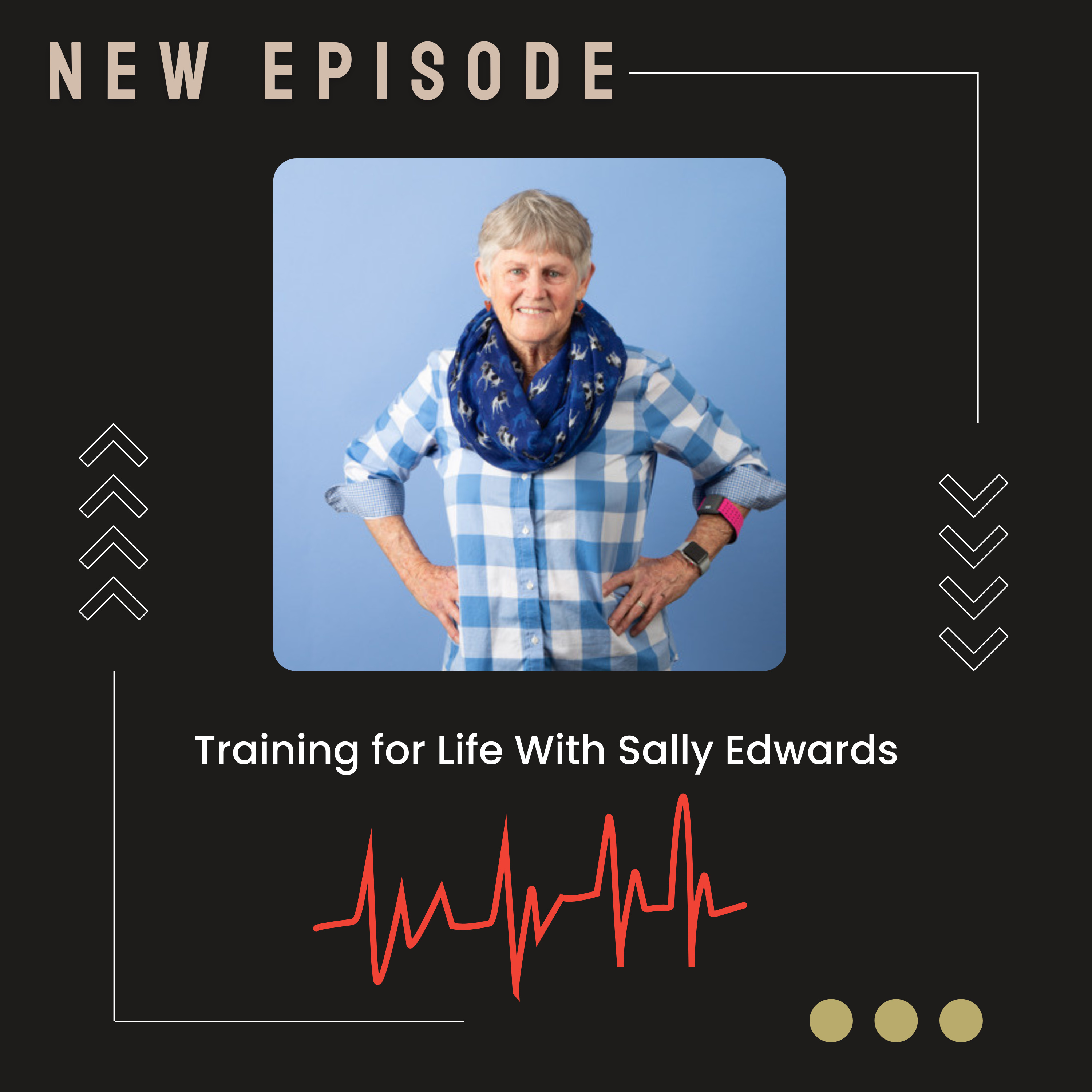
The conversation features Sally Edwards, a fitness pioneer and founder of HeartZones, discussing her mission to improve health through heart rate-based training. She explains how this approach personalizes fitness by using data to monitor, measure, and manage exercise, moving beyond perceived exertion. Edwards highlights applications in education, where heart rate technology has transformed physical education by making it inclusive and individualized. Examples include engaging resistant students and those with autism through goal-oriented activities, validating effort regardless of athletic ability. The discussion emphasizes bridging emotional, metabolic, and physical wellness, with heart rate serving as a tool for understanding body responses. Both Edwards and host Tom Horner advocate for redefining physical education to offer diverse movement options, aiming to equip individuals with lifelong skills for staying active and healthy.
(upbeat music) - Hi everybody and welcome to the Panther of Pulse. I'm Tom Horner, I'm the host and today's guest is Sally Edwards, an entrepreneur, author, Hall of Fame and Durant's athlete, and one of the true pioneers in the world of fitness and wellness. I am also lucky enough to call Sally my good friend. Sally is the founder and CEO of HeartZones and the creator of the HeartZones training method which has helped millions of people better understand how their bodies respond to movement. She's competed in over 250 endurance events, including 16 Ironman triathlons. She helped found USA triathlon and qualified for the very first US Olympic trials marathon for women. She's also the author of more than 25 books and has spent decades bringing heart rate based technology and training into schools, gyms, and everyday life. Sally's work bridges elite performance, education, and longevity and her perspective on movement and health is as relevant today as ever. Sally, I'm so grateful to have you in my life and have you on the podcast as well today. How are you doing? I hope you're somewhere warmer than Minnesota, my friend. - Yes, I'm in Northern California where our offices are in headquarters is. And Tom, I want to thank you for the introduction and the opportunity to talk to the Panthers and give share with them some life stories from both of us, I hope. And this opportunity to chat with everyone, thank you. - Yeah, so let's dig into it. So, Sally, number one, looking back, what originally pulled you towards endurance sports and how did that passion evolve into this lifelong mission around health and education and making America more fit? - So, when I was a little girl and my current age is 78, I was labeled a tomboy. I had three older brothers and they, I was faster than them and I want to thank both my parents, DNA, which if you're an athlete, that's where 50% of it comes from. And then my upbringing and Tom boys was a term that has been changed to being now for women, athletes. And it was a time when there was all of these myths about participating, particularly in endurance sports, that it would help hurt the female body and all of that's been dispelled. The best thing in the world for girls and women to do is to enjoy the fun of movement, the benefits of movement, the camaraderie of movement, and you know as a former current but physical education teacher, the benefits are enormous when you get fit. And early on I decided that I wanted to be part, regardless of the business side of what heart zones does. It was never about money, it was always about mission and how can we get America fit? And that's our company goals, my personal goal, it's your mission, Tom. And there's different kinds of fitness. There's emotional fitness. There's what I call metabolic, which is nutritional and energy expenditure fitness. And the one I love the most, of course, is physical fitness. How can we be as healthy as we possibly can, live the highest energy life we possibly can, and support other people? I mean why aren't we on the planet otherwise? - Exactly, and for me, physical fitness has been a part of my life ever since. I used to grow up watching my mom run marathons and we would always wake up and get coffee and donuts with my dad and go watch her and cheer her on. And I always thought, someday I want to run a marathon. But I was like, I don't want to put that work in. But what I ended up doing that, we all signed up for a marathon together when we were in college. And then after that, our whole family finished our first Iron Man together. And so it's always been a part of my life. And now that I'm in the mental health, fitness field, wellness, trying to help others. Usually when you put your body toward action and momentum and movement, it's pretty amazing. It's just such an upstream approach when it comes to mental health. And so I am just a huge advocate for moving and doing these proactive things to, you were one of the earliest voices teaching people to train when it comes to heart rate training, to train with their heart instead of just pushing harder. What do you think people misunderstand about effort, fitness, and listening to their bodies? - That's a really good question, Tom, because there's so many different ways to answer it. And there's a lot of myths that need to be dispel. There's a lot of old exercise science. And there's some new myths that are coming as well, particularly about heart rate training. Our heart zones solution for schools includes activity step tracking and indoor cycling and lots of different ways. But I really believe that perceived exertion, how hard you're going when you just kind of perceive it isn't as good a way of managing my exercise activities as having some data. And when I have my little wearable lawn and the word wearable didn't even exist when I started racing really hard and using this as a tool to help me perform better. Well, I can never forget when I did an Ironman one time and I got to the, it was a long one, it was over 10 hours and I get towards the finish line and I look at my heart rate data and I'm at 90% of my maximum heart rate and I just said, you know, I'm gonna run with my emotional heart because it's literally impossible to be out there for over 10 hours and be able to do that, sustain that kind of, because there's, you know, there's this connection between our heads and our hearts. And if we can make that work, we have a real opportunity to live a really healthy life and emotionally healthy life, body size, healthy life. And have you used your, any wearable data management in your training or your racing, Tom? - Yeah, absolutely. I always used a heart rate monitor, maybe because it was trendy, maybe because we brought heart zones into our schools eight years ago and I started just naturally learning more about different things. But when I did an Iron Man triathlon in 2017 and for Marathons, I use it as a guide. I don't obsess over the data, but I use it as thinking about green light, yellow light, red light, you know, like making sure that I'm paying attention not only to how I feel, but also what the data is telling me, knowing when I need to back off a little bit, knowing when maybe I got a really crappy night of sleep and my heart rate's elevated and I supposed to have a really hard run that's kind of telling me, you know what, maybe you need to back off a little bit on this. So I use it as a guide to identifying how I'm feeling and how hard I should be training on some of those days. - Good, because I use, I call it the 3Ms. I use my heart rate, which is really just my heart talking to me and sharing as much as it possibly can. And I call it the 3Ms, which is, I'm going to use it to monitor, just kind of like how am I doing? I'm going to use it to measure. I had this goal and I want to be able to achieve the goal. So I have to be able to measure it because that's how I get things done. And most of all, I use it to manage my exercise activity. So rather than how far I ran or how many yards I'm in a pool or what my speed is on a bike, my heart rate is the key component to being, for me, as an professional athlete, to be successful. And it's powerful. I've won races because I can hold back sometimes where I get excited and I want to surge forward. I use it for my sleep. I use it for lots of different ways to manage my health. And I think it's pretty powerful. And I think it's schools, it's really important. I had, when I was a young physical education teacher, this is a horrible story, but I had a student fall on the playground. And she was a not height weight proportionate. She was very short 13-year-old and 180 pounds. And I went over and immediately started CPR and I didn't fail. We were not successful. So when you have a student who, in this case, was her demise and it was her heart, if there's some way we can use a heart rate monitor to assess health, emotional health, metabolic health, physical health, then it's the most powerful tool that's ever invented in the world of exercise and performance. And I don't know if you've had an incident or maybe you can share one where a heart rate monitor motivated or engaged some of your students, Tom. Yeah, we specifically, this example, I had an eighth grade class. And we were just getting ready to start a new semester. So we had a whole new batch of 50 kids in the gym. And so we had teachers coming up to me and they're saying, hey, we've got this specific kid. He doesn't want to be here. He's not going to show up. He's not going to move. Just do the best you can. Push him into the corner if need be. Try to keep him in the gym. That's a win if you need a boot amount, send him out great. So I always like a challenge. So I would say that it takes me a while, but I can usually tap in and create a relationship and try to get some momentum going. So the first interaction I had with this eighth grade boy was, hey, how's it going today? And he just simply growled at me. He's like, what do you want? I go, oh, wow, okay. Day two rolled around and I said, hey, good morning. I'm glad you're here. And he just snarled at me again. So this happened day in, day out for about two weeks straight. And then I noticed something. I saw his name come up on a birthday bulletin and I go up to him and I said, hey, I see it's your birthday this weekend. Do you have any plans? He crosses his arms and he's like, how do you know it's my birthday? Like, I don't know. I pay attention to people's birthday. I want to wish him a happy birthday. And from this point, like zero participation in PE, it's been two weeks of me getting growled at. And I'm like, hey, do you have any plans for your birthday? And he's like, I'm going to go get a burger. I go, cool, where are you going to get a burger at? I'm going to go to Kings. Oh, I love Kings in Measville. What kind of burger do you like? I want to get a bacon cheese burger. I go, all right. I want to hear all about it on Monday when you come back. For sure enough, I was like, oh my gosh. Even this small amount of relationship building just happened. He shows up on Monday and I go, how's your birthday? Did you get a burger? And he goes, yeah, did you eat a burger? I said, you betcha. And that was the first time that we finally had some sort of connection over us both enjoying burgers. And at that time, we were using heart rate technology, heart zones. And he would never put one on. And I said, all right, here's the deal. You can bring your phone with you to class. I don't expect you to do what everybody else is doing right now. But I want to tell you one thing, okay? I want to challenge you to pay attention to your heart rate and pay attention to your points. I'm going to set a goal for you. And I want you to put the heart rate monitor on and I want you to get to 100 points. You got an hour to do it. So he got to choose how he wanted to move. He was looking at his phone because the higher his heart rate was, the points accumulated a little bit faster. So really, he just got to choose his own adventure on how he wanted to move to get to the goal. And he did that that day and the day after. I mean, this kid was sweating, he was looking at his phone, he was showing me. It was just a really cool, magical experience about how that specifically affected one kid who was not going to do anything in PE, but giving him this little external motivation helped them. That was a really superb way because you made the connection with the student first. And then the student trusted you. And once that relationship was established and you gave him something that he was interested in and engaged in, it worked. Can I share a story back? Okay. Yes, please. So some of our physical, we're approaching 3,000 schools in America now that are using our technology. And often and Tom coach, Horner, you did this too. They'll send me a short little video of how they're using this in the physical education classroom. You can use it for social, social learning and other ways to cross education. And I watched this video and then I called the teacher because there was something strange in that video. And I said, you know, I noticed that you had set up circuits. You gave everybody a fit point frequency intensity and time that spells fit, fit point goal. And as soon as I said go, all the kids went charging to the different stations except this one student. And that student, we have a display that shows students by number, not by name and what their heart rates are. And all the kids are going in yellow and orange and red. Those are higher heart rate zones who can see them in the charts behind me. Except this one student, one student went straight up to the display on the wall and stood there and just ran in place until they got the number of points. And I said, that was kind of unusual. Why did the student do that? Instead of going out and doing the circuit saw and the teacher said, oh, that student has autism. And they're very engaged with color. And as soon as they had a goal to get 100 fit points and that's the goal for, typically for 30 minutes, that student just steered, didn't move and they'd never participated in physical education. That student had always gone to the corner, sat there and done nothing until they started with this display of performance and of data. And they were the first, that was student who'd never done PE, it was the first time that they got 100 points before any of the other kids and all the other kids applauded and congratulate it. And that student continued in physical education, therefore, because they found a way that personalized and individualized their experience of what they were interested in, just like your burger kid did. Finally, it works and it works over and over and over again. So good job, Tom, coach, coach, owner. Yeah. Thanks. And I think about most people that grew up, they think of gym class as, come on in, roll the ball out, shoot some hoops. But really, I want to prove to the world that physical education is one of the most important classes that a child can take if they can figure out how to be well for themselves. And like you mentioned, individualizing PE, we can finally do that now. I think the biggest game changer for me when we had this was when Mary Mann and I, Mary was my co-teacher. We'd have 50 kids in the gym, middle schoolers, so kids would walk into the gym. They would put their heart rate monitor on. In the past, we would have them run around in a circle in the gym. During that time, it's really easy to just notice what kids are doing. Well, you've got the athletic kids who are running 10 laps to every three laps that maybe some kids who haven't even walked briskly have done over the last year. And you automatically just assume you make assumptions like, hey, that kid's not working as hard. But guess what? When we started putting on the heart rate monitors, we quickly noticed that not only are those kids working just as hard, they're in the red zone when they're power walking. So you have cross country runners doing five laps to every one or two laps that these other kids are doing. But it all equals the playing field because we can actually see how hard kids are working based on their heart rate zones. And that is not only beneficial for the teacher. Now that kid who is doing two laps to every five that his classmates are doing is actually feeling some validation like, I'm doing enough. I'm working hard and they can actually see it instead of just assuming that that kid's not working hard. That was beautiful for us because it transformed not only the way that we subjectively have taught, but also how we just let kids choose to do what they want to do. Kids don't always want to be told. So kids could come in, they put their heart rate monitor on, we would literally let them choose to do whatever they wanted to do as long as they got to the goal points. So you've had some kids doing jumping jacks, some kids doing push ups, some kids literally just boxing by themselves, girls running stairs, the dance line girls doing their dance routines. It was just a really cool, chaotic way to see 50 middle schoolers all doing different things, but all kind of just focused on it individual goal. Yeah, and if you don't have PE technology, this kind of PE technology, you have no way of knowing. I mean, even you have no way like there are something like 300 students a year in schools that die from an underlying cardiovascular condition that you can't diagnose. And on several different occasions, when I've been doing, you know, visiting schools and watching what they're doing, you're a good example coach owner. You can see from the data if there's any underlying condition or someone's taking medication or they're nutritionally, your heart's talking to you. And now it has language, it has this number. And sometimes a high number is really good, and sometimes a low number, depending on what it is that we're trying to do, if you're trying to calm down, then you want a low number. And if it's, and that's called chilling, you gotta, if you get rattled, you need to learn the skill of, how do I control my emotions? And if you want to perform, you need some really high numbers, so it's called hit training or interval training where you exert yourself to get your heart strong and pumping. That's what it's doing. It's pumping nutrients and oxygen to different parts of the body. And is that we have an opportunity to teach social emotional skills, physical skills, cooperation, all of the different in, I disagree, I think the heartbeat of the school is physical education. It's the most important class you can have. It improves academics, and in the old days, it was so sports oriented. So if you didn't like sports, but today it's an entirely different world than possibly what a lot of the children's parents experience, because of innovative teachers like yourself who say, there's a better way to teach physical education, and get the benefits and outcomes that we want. And one of those is, you know, put a little something on someone's wrist or forearm, and let's revolutionize physical education, that's what I like to see. Coach, what would you like to see in terms of quality physical education? Number one, individualizing PE, making sure kids know that physical education is so much more than sports, introducing kids to as many different opportunities. So they don't have their first time trying a yoga class, when they're 25 years old and feel intimidated being at a big gym, but being in a safe place where a teacher makes you feel welcome, where you can try so many different opportunities to be physically active. So the ultimate goal is when you leave high school, you have this menu of options of how you want to stay active. Maybe that's playing pickleball, maybe that's going to yoga classes, maybe that's running, maybe that's biking, just knowing so much more about yourself and what you actually enjoy to do, because that way you have a way better chance of staying physically active for a lifetime, isn't that the ultimate goal is to teach kids how to enjoy to be physically active for the rest of your life. So yeah, I know some of the best conversations that I was having with these high school-aged kids was when they would be sitting down before we were even moving, and I still remember there was a time that you see the screen and everybody is in their resting heart rate, or ambient heart rate, and so the screen's all blue. And then there was one that was orange, and the kid was kind of like laughing, and he's like, "What the heck, why is mine orange? I don't think my heart rate monitor is working well." And as they started the warm-up, I was having a conversation with them, and he said, "I'm like, "Hey, is everything okay? Like, sleep-wise, eat-wise, I'm not going to lie, I don't remember the last time I even had a sip of water, and I got about two hours of sleep last night. My baby sister was up all night, and I just feel like absolute crap." And so it brought up these conversations that we went normally have that are ultimately always teaching moments. Your nervous system is telling you something right now, and it's really cool to start learning about this at a young age. And I'm sorry to say it or listeners, but unfortunately we did not get to the rapid fire questions to end our podcast with Sally. So we're going to wrap up right here. Unfortunately, we lost Sally's audio to wrap things up. Sally, I wanted to say thank you for your energy and the way you continue to remind us that movement is about so much more than just performance. It's about understanding ourselves and caring for our bodies over a lifetime. To everybody listening, whether you're training for a race, trying to stay active as you age, or helping young people build healthy habits. I hope this conversation encouraged you to slow down a little bit, listen to your heart, move with purpose, and continue to find things that you enjoy doing that keep you active for a lifetime. Thanks for spending time with us on the Panther Pulse. Please be sure to hit subscribe on Spotify or Apple podcasts. And if you like this episode, give it a five-star rating. We will see you next time. Bye-bye. [MUSIC]
Podcast Summary
Key Points:
Sally Edwards is a pioneering fitness entrepreneur and athlete who founded HeartZones, promoting heart rate-based training for health and performance.
Heart rate monitoring personalizes fitness, making physical education more inclusive and effective, especially for students who may not engage in traditional sports.
The method bridges emotional, metabolic, and physical fitness, with technology helping individuals understand their bodies and manage effort safely.
Real-world examples show how heart rate data can motivate students, including those with autism or initial resistance, by providing clear, individualized goals.
The ultimate goal is to foster lifelong physical activity by offering diverse movement options and teaching self-awareness through data.
Summary:
The conversation features Sally Edwards, a fitness pioneer and founder of HeartZones, discussing her mission to improve health through heart rate-based training. She explains how this approach personalizes fitness by using data to monitor, measure, and manage exercise, moving beyond perceived exertion. Edwards highlights applications in education, where heart rate technology has transformed physical education by making it inclusive and individualized.
Examples include engaging resistant students and those with autism through goal-oriented activities, validating effort regardless of athletic ability. The discussion emphasizes bridging emotional, metabolic, and physical wellness, with heart rate serving as a tool for understanding body responses. Both Edwards and host Tom Horner advocate for redefining physical education to offer diverse movement options, aiming to equip individuals with lifelong skills for staying active and healthy.
FAQs
The HeartZones training method is a heart rate-based approach that helps individuals understand how their bodies respond to movement, using data from wearables to monitor, measure, and manage exercise for better health and performance.
Heart rate monitors can individualize PE by showing students their effort levels, motivating participation, and helping teachers identify underlying health issues, making physical activity more inclusive and effective for all fitness levels.
Heart rate data helps monitor effort, measure progress toward goals, and manage exercise intensity. It provides objective feedback to optimize performance, prevent overtraining, and support overall health.
Quality PE introduces students to diverse activities like yoga, running, or pickleball, helping them discover enjoyable ways to stay active. This builds a foundation for maintaining physical fitness throughout life.
Building trust and personal connections with students encourages participation. When students feel understood and supported, they are more likely to engage in physical activities and use tools like heart rate monitors effectively.
Heart rate training provides objective data that challenges misconceptions, such as assuming low-intensity movement isn't effective. It shows that effort is personal and helps individuals train smarter based on their own physiology.
Chat with AI
Loading...
Pro features
Go deeper with this episode
Unlock creator-grade tools that turn any transcript into show notes and subtitle files.
 PodcastTranscript AI